Category Archives: Cult

Long Weekend (1978)

By Richard Winters

My Rating: 7 out of 10

4-Word Review:  A couple battles nature.

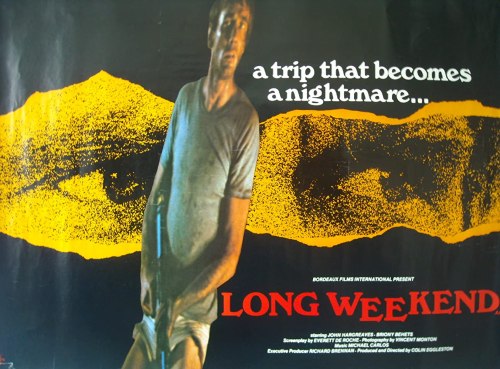
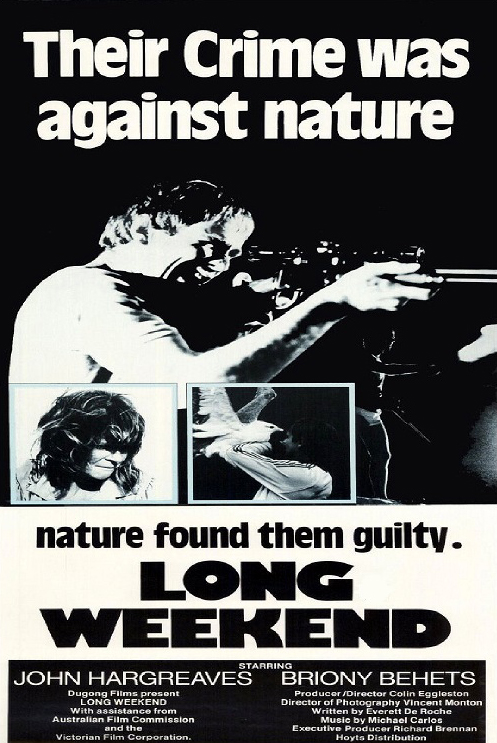
Peter (John Hargreaves) and Marcia (Briony Behets) are a young couple who are constantly at odds with each other. To help smooth things over they decide to take a trip into the wilderness and enjoy the beauty of the outdoors. Along the way they accidently hit and kill a kangaroo with their vehicle. This sets off a chain-of-events that puts them under the increasing attack of various animals. First Peter must fight off an angry eagle who swoops down at him without warning. Then a possum and even a sea cow who stalks Peter while he is swimming. The two decide they must leave the area in order to save their lives, but everywhere they turn there’s another animal waiting for them.

The story idea is certainly an interesting one, but the concept is too wide-open. Scriptwriter Everett De Roche stated that the premise was all about how Mother Earth had her own auto- immune system and when humans started acting like cancer cells she’d attack, which is great, but why just this couple? There are millions of people who behave just like them, so why don’t they end up getting the same treatment?

The plot needed an extra spin to hold it all together, but it never comes. Having this small remote place hold a mystical power that allowed animals to behave differently than they would normally do elsewhere would’ve at least given it some needed focus. Perhaps a backstory too where other people would’ve gone to this same locale and complained about being attacked. Any extra plotline would’ve helped because the idea that these animals would just randomly attack a generic couple in some isolated moment in time that they never did before or after just doesn’t cut-it.

I didn’t like either that the couple bicker right away, but then later on become lovey-dovey only to proceed back to bickering, which is too bipolar. A better approach would’ve had them getting along at the start and then with the stress of the animal attacks tear their relationship apart, which would’ve created a more interesting character arc, which otherwise is non-existent.

I would’ve preferred that the lead characters been played by macho men who arrogantly tear up the wilderness with their SUV’s and kill the animals for shameless sport. Watching these ‘tough guys’ then unravel once the animals went on the offense turning them into sniveling, frightened cowards would’ve been far more of an entertaining payoff while hitting-home the importance to respect nature  in a more stark way.

The animal attacks aren’t all that riveting and take up very little of the runtime, but the creepy atmosphere is amazing. Filmed on the island of Tasmania I enjoyed the point-of-view shots of the SUV driving through the long, tangled unique looking trees that grow down there where when captured at night and through the beams of the vehicle’s headlights come off looking like gnarled fingers protruding from the ground. The intense music and haunting call of the sea cow are also quite unsettling and get even more so as the couple continues to hear it, which helps to make this a memorable horror flick despite the few drawbacks and a great example at how strong directing can help overcome a flat script. Remade in 2008.
My Rating: 7 out of 10

Released: October 2, 1978

Runtime: 1 Hour 35 Minutes

Not Rated

Director: Colin Eggleston

Studio: Hoyts Distribution

Available: DVD, Blu-ray (Spanish), Amazon Video, YouTube
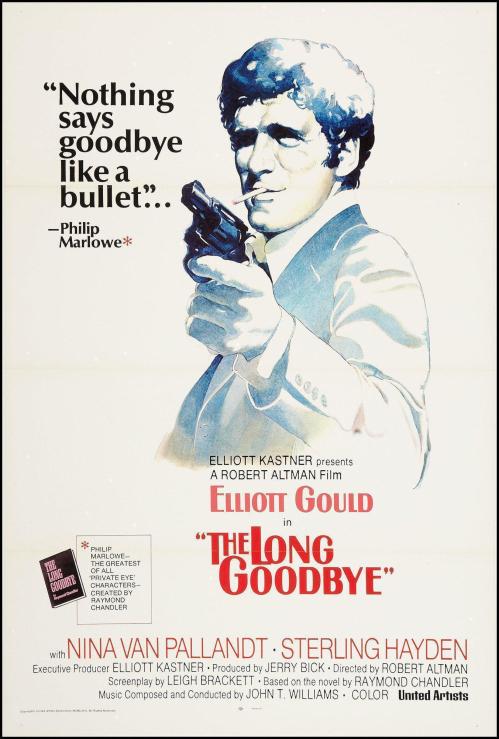
The Long Goodbye (1973)

By Richard Winters

My Rating: 7 out of 10

4-Word Review: His cat is hungry.

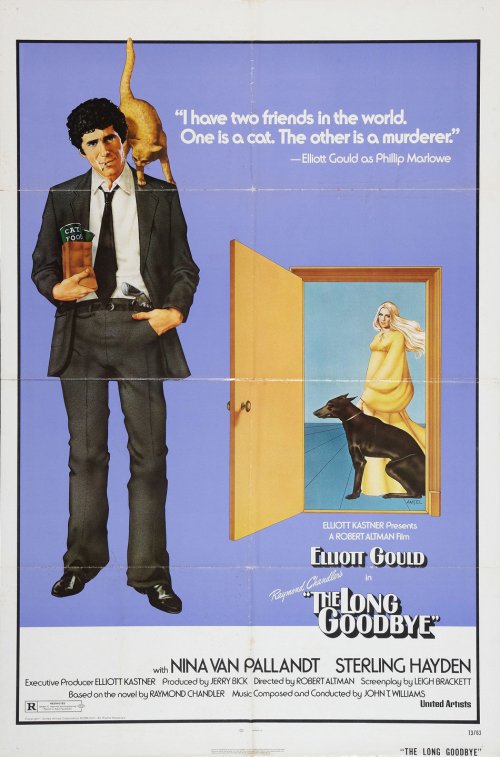
One night detective Phillip Marlowe (Elliot Gould) is visited in his home by his long time pal Terry Lennox (Jim Boulton), who informs Marlowe that he’s had a fight with his wife and asks him if he can have a ride to the Mexican border, which he obliges. When he returns home he is met by two cops (Jerry Jones, John S. Davies) who bring him into the station with questions about the whereabouts of Lennox whom they insist has just killed his wife. When Marlowe refuses to divulge anything he gets put into jail only to released 3-days later when it’s reported that Lennox has killed himself. Marlowe becomes suspicious about the suicide and determined to do his own investigation while also getting involved with Eileen Wade (Nina van Pallandt) and her alcoholic, writer husband Roger (Sterling Hayden) both of whom may hold the secret to Lennox and what really happened.

By the early 70’s only two of Raymond Chandler’s novels had yet to be filmed, this one and ‘Playback’. United Artists agreed to finance the film and commissioned Leigh Brackett, who had been the screenwriter for another Chandler novel turned into a movie 1946’s The Big Sleep, to write the screenplay for this one. Robert Altman was later approached to direct it and while he was not a fan of the Phillip Marlowe character, whom he labeled as being a ‘loser’, he agreed to take on the project due to the unexpected ending, which had not been in the novel, but that Brackett had added into the screenplay.

While Altman may have seemed an odd choice, he never even read the source novel of which the film is based, the eccentric little sidelights that he adds into the proceedings make it worth it. Some of the movies that he did towards the late 70’s became a bit too undisciplined where his films would go off on tangents with stuff that had very little to do with the main plot, but here the story is strong, so the little detours that Altman adds in helped to playfully accentuate the plot instead of drowning it out.

Some of my favorite Altmanisms included  Marlowe looking for food to feed his hungry cat, who I might add for an animal gives a spectacular performance, and how a stocker that he meets at the grocery store while searching for cat food he ends up meeting again at random at the police station. The next door female nudists, who are also into yoga and attract the attention of both the police and the bad guys who come to Marlowe’s place, are fun too.

There’s some marvelous framing by cinematographer Vilmos Zsigmond including capturing Roger and Eileen having an argument inside their home, which was filmed at Altman’s Malibu residence, through a glass patio door while at the same time in the reflection you see Gould walking along the beech. Later while Eileen and Marlowe are having a conversation by an open window you can see in a distance, which the other two are unaware of, Roger walking into the ocean in an attempt to kill himself.

Spoiler Alert!

The film also features what I feel is one of the most shocking and disturbing scenes that I’ve ever seen put into a movie and that’s a statement that I don’t use lightly. I’ve seen hundreds of gory horror films, but what happens here I’ve found far more unsettling. I think the reason is because it’s completely unexpected as it features the character played by film director Mark Rydell smashing a glass coke bottle onto the face of his girlfriend who just seconds earlier he had stated that he was deeply in-love with. Hearing her scream out in unending pain while cupping her hands over her face as blood spews out makes it come-off as very real. Even more amazing is that the part of the girlfriend was played by an amateur named Jo Ann Brody who never appeared in any other film and was a waitress that Altman and Brackett met when they went out to dinner while working on the script and who they asked on-the-spot if she’d like to be in their movie.

Altman admitted that he knew this violent scene, which had not been in the book, would upset some fans, but he felt it was important to bring the viewer back to the reality that these were violent characters at heart. This could also be seen as a foreshadowing to the surprise ending when Marlowe finds Lennox still alive in Mexico and then unexpectedly shoots him. In the novel Marlowe allows Lennox to walk away unharmed, but Altman liked the violent twist.

Personally I was ambivalent with the ending here and might actually have preferred the way it was done in the book. My main issue though with it is that Eileen spots Marlowe leaving the place where Lennox was just shot and since she was in a relationship with Lennox and also had strong criminal connections I’d think she’d end up, one way or another, going after Marlowe once she realized he had killed her lover causing the ending to leave open too many potentially interesting tangents that should’ve been followed through on.

My Rating: 7 out of 10

Released: March 7, 1973

Runtime: 1 Hour 52 Minutes

Rated R

Director: Robert Altman

Studio: United Artists

Available: DVD, Blu-ray, Amazon Video

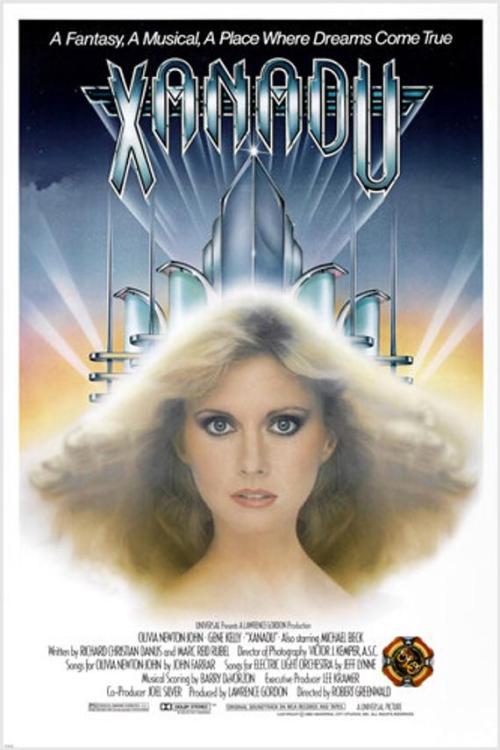
Xanadu (1980)

By Richard Winters

My Rating: 2 out of 10

4-Word Review: Artist falls for muse.

Sonny (Michael Beck) is a struggling artist finding it impossible to make a living on his own forcing him to go back to working for Airflow records where his creative aspirations are squelched by business demands. He then starts bumping into Kira (Olivia Newton-John) and begins falling for her hard unaware that she isn’t human but instead a muse sent from another galaxy to help achieve his true artistic vision. She sets it up where he meets Danny (Gene Kelly) a former big band musician. Together he and Sonny work out a plan to turn an old empty building into a live music venue.

One of the bigger problems of this flamboyant concoction is that it doesn’t seem like hardly a movie at all as the story is threadbare and features a lot of banal dialogue and sterile characterizations between the musical numbers. The chief reason for this, at least according to Olivia on the DVD commentary, is that the script was written on the fly as the filming took place almost like something a bunch of amateurs would do. There is a rumor though that producer Joel Silver early on did lock one of the writers into a room for a couple of days and refusing to let him out until he ‘delivered’ a ‘great script’, which if that were the case then the writer should still be stuck there because that great script clearly never came about.

Fans of the movie will admit that the acting and plot are poor, but insist that the songs and set pieces make up for it, but it really doesn’t. A few of them were okay like the battle of the bands segment where at one end of the warehouse a 40’s band plays while at the end there’s a hard rock 80’s band only to eventually have them both merge. Overall though I found a lot the musical numbers to be surprisingly bland and uninspired with the best ones, which include Kelly dancing alongside Olivia and an animated segment, all getting added in after the primary filming had already completed.

Olivia is quite beautiful and I love her effervescent smile, but she’s no leading lady. Her singing is excellent, but has an actress her talent seems limited to playing only perky characters, so while this film was meant to jettison her career it instead only stifled it. Kelly, whose last film role this was, is engaging in support even though he pretty much just spends most of the time smiling and not much else.

The real surprise is seeing Beck. He had just come off his strong portrayal of Swan in the mega cult hit The Warriors and was at that point a hot commodity poised to be a Hollywood leading man for years to come, but instead pissed it all away by choosing this stinker as his follow-up. Since this thing bombed badly at the box office the subsequent offers he got were of the TV-movie and low budget variety.  I’m just not sure what he was thinking. It couldn’t have been the script that attracted him since there really wasn’t any. I can only presume he thought with Olivia on board and with the success she had with Grease that this would be a big hit like that one, so he took a calculate gamble and jumped-in, but it was clearly a big mistake.

The great actor Jack Lemmon once said only take movie roles if you’ve read the script and like it never just because you think it will be a hit because you’ll usually be proven wrong and I guess Beck had to learn that the hard way. He now makes a living solely by attending fan conventions where he signs autographs, but he never talks or promotes his appearance here just his work on The Warriors. I can only presume he’s embarrassed by it and he should be. It’s one thing to be in a lousy movie, but still give a strong performance, but his acting here is just as bad as the film and was enough to get him nominated for the Golden Raspberry Award as worst actor of 1980 though he ended up losing out to Neil Diamond in The Jazz Singer. 

My Rating: 2 out of 10

Released: August 8, 1980

Runtime: 1 Hour 36 Minutes

Rated PG

Director: Robert Greenwald

Studio: Universal

Available: DVD, Blu-ray, Amazon Video, YouTube

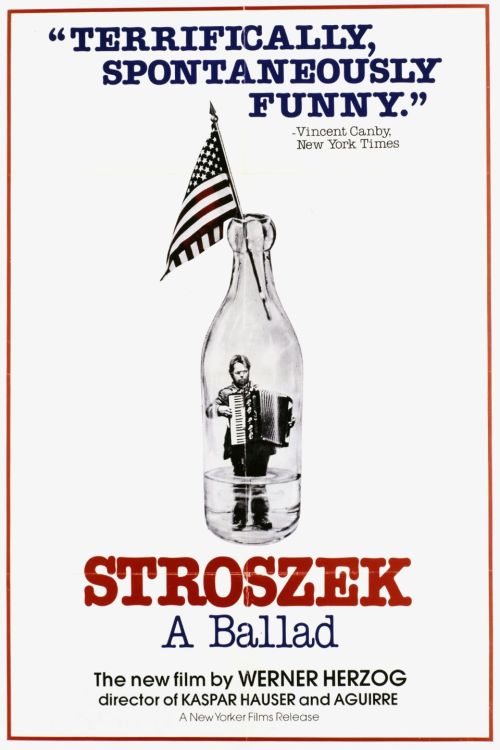
Stroszek (1977)

By Richard Winters

My Rating: 8 out of 10

4-Word Review: Germans relocate to Wisconsin.

Bruno (Bruno S.) has recently been released from prison and while warned to stop drinking as a condition for his parole he immediately goes to a local bar. It is there that he meets Eve (Eva Mattes) a prostitute in an abusive relationship with her husband (Burkhard Driest). Bruno offers to allow her to move into his apartment, but this angers her husband and her pimp (Wilhelm von Homburg)  who break into the apartment and terrorize Eva and Bruno making them believe that the only way they can escape the harassment is by moving to America, which we they do along with their elderly neighbor Scheitz (Clemens Scheitz). They presume everyone is the USA is rich and life will be easy, but find that not to be the case.

The story was based loosely on the real-life experiences of its star and the script  written specifically for him by director Werner Herzog as a conciliation for not casting him in Woyzeck as originally intended. Since Bruno had already taken a leave of absence from his job at a steel mill to star in that one Herzog decided to make it up to him by writing this script in a matter of 4 days and then filming it on-location in Plainfield, Wisconsin because that was where the notorious serial killer Ed Gein had lived.

The story should’ve been a complete downer as it focuses on some very depressing realities, but instead, thanks to the genius of Herzog, one comes away from it feeling almost upbeat at all the quirky humor that gets incorporated in. The most memorable moment, which the rest of the crew found highly offensive and refused to film forcing Herzog to do it himself, happens near the end when Bruno travels to North Carolina and uses the last of his money to insert coins into arcade exhibits featuring chickens inside cages that dance and play the piano. The amusing element from this comes when the police finally arrive on the scene and are more concerned with getting the chicken to stop dancing than with the welfare of Bruno.

I also enjoyed the moment when an auto mechanic (Clayton Szalpinski) decides to do his own oral surgery by using the same pliers that he fixes cars with to remove a painful tooth in his mouth. While more blood was needed, as there should’v been streams of it coming out of his mouth, but isn’t, it’s still quite darkly funny and was ‘inspired’ by a true-life scene in the  1972 documentary Spend it All in which a Cajun in Louisiana does the same thing to his teeth, which amazed Herzog so much when he saw that movie that it compelled him to work the scene into one of his stories.

The jabs at America are expectedely negative and to some degree are on-target while at other points goes too far. Watching the trio become overly excited at seeing their new trailer home driven onto a vacant lot and acting like this was a sign that they had finally ‘made it big in America’ is certainly sardonically funny. Yet the scene with two farmers holding rifles as they plow a field in their tractors ready to shoot the other one if either dared touch a small strip of disputed land played too much into the stereotype that Europeans have of Americans and really wasn’t needed especially since it had nothing to do with the main story.

Bruno S.’s performance, who was never formally trained as an actor, is boring as he conveys the same facial expression all the way through where a more seasoned actor could’ve given the role more needed nuance. Scheitz was an amateur actor as well, but his short stature and overall goofy appearance made him a fun part of every scene he’s in while with Bruno that same quality doesn’t exist. If anything Eva has the widest character arc and the film should’ve evolved around her instead.

Herzog casts a lot of non actors in secondary roles as well. I’m not sure if this was done for budgetary reasons, or just played into his long-standing desire to be experimental, but the results aren’t completely effective. I did however enjoy Scott McKain, an auctioneer in real-life, who plays the part of a bank employee that comes to visit the trio in their trailer home to inform them of their delinquent payments and yet no matter how bad the news is that he must convey he always manages to remain upbeat and peppy when he says it.

The film, which has been rightly placed in Steven Schneider’s ‘1001 Movies You Must See Before You Die’ is original in so many ways that it deserves to be seen just for the oddity it is and I really have no complaints with its avant-garde style, which even today comes off as fresh and inventive, but I was confused about why the Glen Campbell song ‘By the Time I Get to Phoenix’ got played so much. The lyrics are never heard, but the melody is and yet there’s no connection to the city of Phoenix in the story, for awhile I thought that was where they’d ultimately end-up, but they never do, so hearing it played so much is out-of-place.

My Rating: 8 out of 10

Released: May 20, 1977

Runtime: 1 Hour 48 Minutes

Not Rated

Director: Werner Herzog

Studio: New Yorker Films

Available: DVD, Amazon Video, YouTube

Outrageous! (1977)

By Richard Winters

My Rating: 7 out of 10

4-Word Review: Female impersonator befriends schizophrenic.

Robin (Craig Russell) works as a gay hairstylist during the day, but longs to be up on stage as a female impersonator.  Liza (Hollis McLaren) is a schizophrenic who leaves the hospital she was confine in and moves in with Robin her longtime friend. Both find ways to help each other with their problems, which allows Robin the confidence to finally get on stage in drag as Tallulah Bankhead, which makes him an instant hit and gets him a paid gig in New York City. However, when he moves away Liza’s condition worsens forcing Robin to decide what’s more important: his budding career, or his friendship.

The film is based on the shorty story ‘Making It’ by Margaret Gibson, which in turn was based on her experiences dealing with mental illness and her real-life friendship with Craig Russell whom she roomed with in 1971. The story nicely tackles the challenges of dealing with mental illness and how Robin’s support helps Liza overcome her demons that the other professional Dr’s and counselors that she sees don’t because they only view her as just another patient instead of a person.

The grainy, low budget quality works to the film’s advantage as it brings out the fringe, economically disadvantaged lifestyle that the two lived in while McLaren’s performance shies away from the cliches of mentally illness causing the viewer to see her as a regular everyday person, not just some ‘crazy’, valiantly fighting a nasty illness that she can’t always control.

The segments dealing with Russell’s onstage act are quite entertaining as well though when I first saw this film decades ago I found these moments to be off-putting as they turned it more into a documentary, or a comedy special that took the focus away from the actual essence of the story, which was the friendship. However, upon second viewing I liked the way it captures the gay club scene that was unique to that time period. Russell’s impersonations where he does Barbra Striesand, Judy Garland, Mae West and Bette Midler just to name a few are outstanding. I’ve seen some female impersonator acts before, but Russell’s far outshines any of the others I’ve ever watched as he gets the body language, voice, and facial expressions of the people he’s playing just right to the point that he completely disappears into the women characters until you can’t tell the difference.

While the film does have many touching moments I felt it should’ve shown how Robin and Liza first met instead of having it start with them already knowing each other when she moves in with him. Since they are such an odd pair capturing how and where this unique relationship all started and what element brought them together seemed crucial, but we never see it nor does it even get addressed in conversation. Having this backstory could’ve helped the film stay a little more centered on the relationship as well and prevented the over reliance on Russell’s stage routine, which while quite good, still takes up a bit more of the runtime than it should’ve.

My Rating: 7 out of 10

Released: July 31, 1977

Runtime: 1 Hour 36 Minutes

Rated R

Director: Richard Benner

Studio: Canadian Film Development Corporation

Available: DVD, Amazon Video

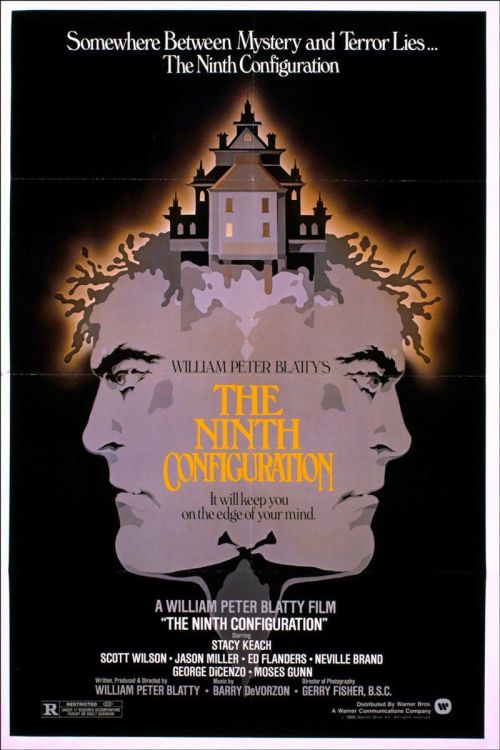
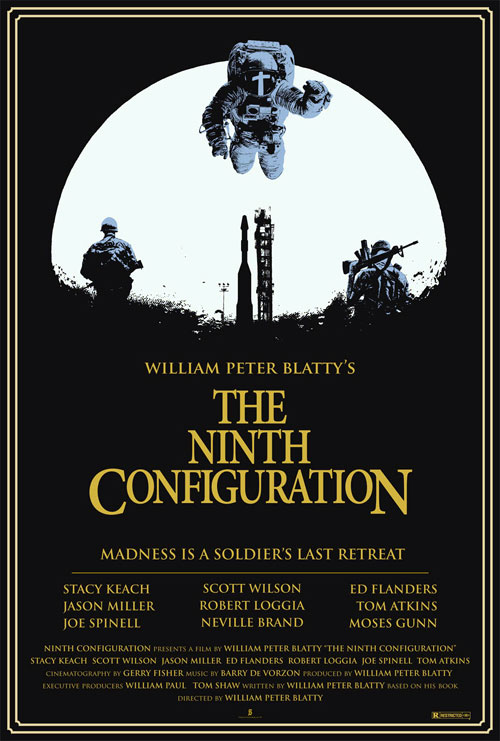
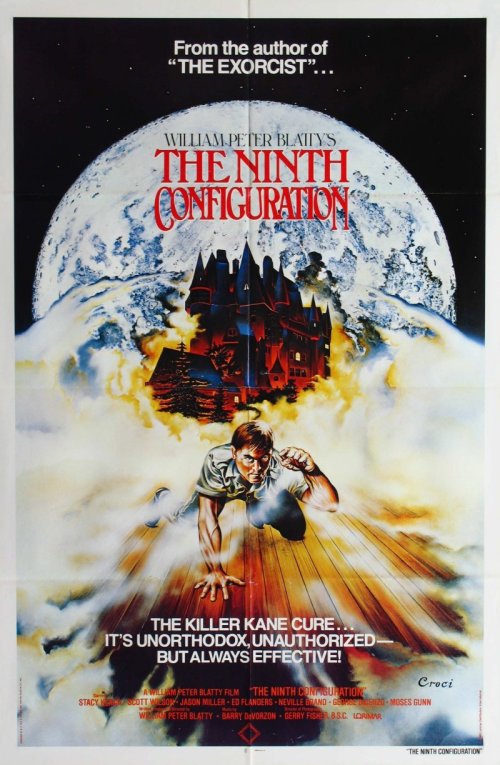
The Ninth Configuration (1980)

By Richard Winters

My Rating: 6 out of 10

4-Word Review: Insane man runs asylum.

Col. Vincent Kane (Stacy Keach), a former marine who is suffering from demons of his own, is selected to head a psychiatric institution built inside a converted castle that specializes in military personal who fought in the Vietnam war and now feign insanity. The challenge is to find if these men are truly mentally ill, or just faking it and Kane’s technique, which allows the patients to openly act out their darkest fantasies, is considered unorthodox. He begins to have an unusual friendship with one of them, Billy Cutshaw (Scott Wilson) a former astronaut who bailed out of an important mission with a nervous breakdown just before lift-off. The two begin to debate the existence of God and the correlation between faith and sacrifice.

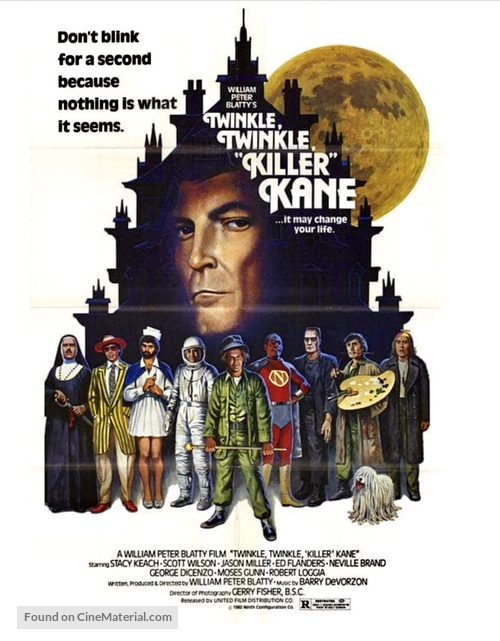
The film has a rocky tone in which part of it delves into campy humor while the other half is more serious. The reason for this is that when William Peter Blatty first wrote the novel of which this movie is based in 1966 it was called ‘Twinkle, Twinkle “Killer” Kane!’ and told in a darkly humorous vein. In 1978 he rewrote the story with a more serious tone and that version was published with the same title as this film.

For me I found the humor off-putting and not funny at all. The whole first hour becomes a complete waste with comical bits that rely too much on mental hospital stereotypes and overall campiness from the performers. There’s also long drawn-out segments dealing with the patients barging into Kane’s office and going on long circular rants that are quite boring.

The second half improves when the tone becomes dramatic, which is what I wished it had been all the way through. It also features a wild barroom fight, which is a bit over-the-top with the way the biker gang dress and behave, but also features some great choreographed violence and a creepy performance by muscleman Steve Sandor as the head of the gang that torments both Keach and Wilson. The second act also features a few surreal, dreamlike sequences, which are the best moments of the film.

The eclectic cast is interesting, but many of them, including Robert Loggia and Moses Gunn, gets wasted in small roles and little screen time. Wilson and Jason Miller are good as two of the patients, but Neville Brand is the best as a drill sergeant that at times seems to be channeling R. Lee Emery and at other moments a confused, overwhelmed man with a deer-in-headlights expression. Blatty, who casts himself as one of the patients is good too, not so much for anything that he says or does, but for his unique facial features, especially his eyes making him look like a guy possessed and the fact that he wrote The Exorcist is even more ironic.

Keach is also excellent, in  a role that was originally meant for Nicol Williamson, but who got fired from the production early-on. Keach manages to be both creepy and hypnotic at the same time. A guy you fear one minute and feel sympathetic for by the end and he does it here without his usual mustache allowing the cleft lip that he was born with to be on full display.

The setting, which was filmed at Castle Eltz in Germany and done there because Pepsi financed the film under the condition that it had to be shot in Europe, is an impressive site. Yet it’s hard to believe that such a Gothic styled fortress, which began being built before 1157, could ever exist inside the USA, which is were the setting is supposed to take place.

The discussions that Keach and Wilson have in regards to the existence of a supernatural being are fascinating and help push the film forward, but the ending, which features a mystical twist, was not needed. The tone, even with the humor, was quite dark, so having it suddenly finish with an ‘uplifting’ moment doesn’t click with everything else that came before it and comes off like it’s selling out on itself.

Alternate Title: Twinkle, Twinkle, “Killer” Kane

My Rating: 6 out of 10

Released: February 29, 1980

Runtime: 1 Hour 58 Minutes

Rated R

Director: William Peter Blatty

Studio: Warner Brothers

Available: DVD, Blu-ray, Amazon Video

Bugsy Malone (1976)

By Richard Winters

My Rating: 3 out of 10

4-Word Review: The gangsters are kids.

It’s the 1920’s and rival mobsters, who are all played by children, fight over control of a club that illegally sells liquor. Fat Sam ( John Cassisi) is the one who currently controls it, but Dandy Dan (Martin Lev) makes a play at a violent overthrow in which his men attack the club by using machine guns equipped with whipped cream that ‘splurge’ their victims. Bugsy Malone (Scott Baio) is a penniless boxing promoter caught in the middle. He tries to help aspiring singer Blousy (Florrie Dugger) get an audition at Sam’s club, but then becomes distracted by Sam’s alluring girlfriend Tallulah (Jodie Foster) who causes Sam’s ire by flirting with Bugsy.

This odd concoction was the product of Alan Parker in his feature film directorial debut who came up with the idea while driving his kids on a weekend trip to a countryside cottage. To keep his kids entertained he started telling them a story about some prohibition era gangsters based on old gangster movies he had seen as a child. It was at one point where one of the kids brought up the idea of having gangsters be children instead of adults.

The first 15 minutes or so are quite inventive and fun. I enjoyed the freeze-frames showing each victim splattered with whip cream and the pedaled powered automobiles, but after awhile it starts to repeat the same gags over and over becoming a one-dimensional, one-joke flick.

I kept wondering where the adults where and despite this being a fantasy what exactly where the ‘rules’. Is this a type of universe where there are no adults at all and the kids remain at that age forever and if so does that ultimately then make them the ‘adults’? For me it would’ve been better had the story been book-ended with some connection to the world as we know it. Perhaps with a Wizard of Oz type structure where the film starts out, maybe even in black-and-white, with adults in the parts of the gangsters and then one of them gets hit on the head or drinks something with a drug in it and has this weird dream involving kids suddenly taking over the roles previously played by the adults. Showing the differences at how kids approached things versus how the adults do would’ve been a funny contrast instead of keeping it at the kiddie-level the whole way through, which ultimately falls flat.

The performances of the young cast are quite energetic although I could’ve done without the musical numbers. Cassisi, who in real-life ended up serving jail time of his own for money laundering, steals it with his humorous send-up of a mob boss. Baio is quite good too especially with his over-the-top Brooklyn accent, but I felt Foster got shamefully underused. If anything her role should’ve been combined with Blousy’s to make one and cutting out Florrie Dugger, who now goes by the name of Florence Garland, completely. I didn’t have anything against her per say, but she didn’t have the onscreen spark that Foster did. She also apparently disliked Baio and the scene involving her hugging him required many retakes as she didn’t want to get near him and this lack of chemistry comes through onscreen.

My Rating: 3 out of 10

Released: September 12, 1976

Runtime: 1 Hour 33 Minutes

Rated G

Director: Alan Parker

Studio: Paramount Pictures

Available: DVD, Blu-ray, Amazon Video

Godspell (1973)

By Richard Winters

My Rating: 3 out of 10

4-Word Review: Jesus is a hippie.

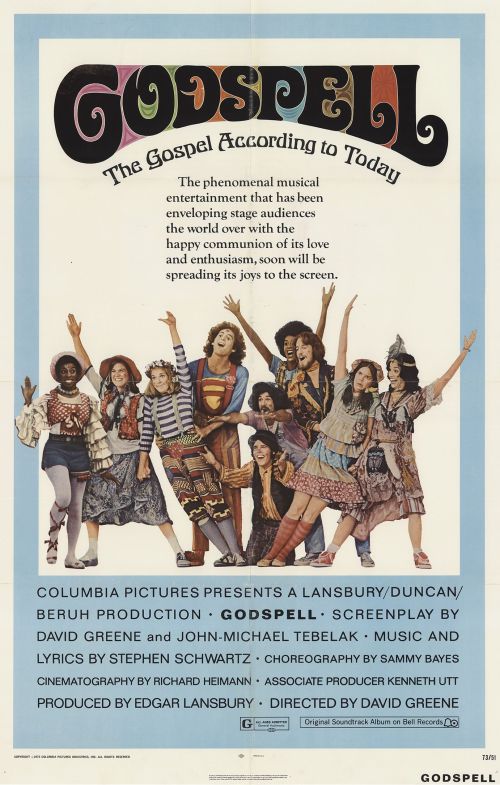
A group of modern day young adults dissatisfied with their mundane lives decide to follow the calling of John the Baptist (David Haskell) to learn the teachings of Jesus (Victor Garber). They spend their days roaming the vacant streets of New York City while doing song and dances that are inspired by the Gospel of St. Matthew.

This film is based on the hit Broadway play that in turn was the brainchild of John-Micheal Tebelak. Tebelak was a student at Carnegie Mellon University in 1970 when he attended an Easter Vigil at St. Paul’s Cathedral only to end up getting frisked for drugs by the police simply because his clothing attire resembled that of a hippie. He became incensed that the modern day Christian was out-of-touch with the younger generation and became compelled to bridge-the-gap by going home and writing this play, which lead to him getting offers to produce and direct it, first at experimental off-Broadway theaters and then finally Broadway itself.

While this film’s intentions may be noble, it doesn’t completely succeed although its ability to take advantage of the New York City locations is a chief asset. Many prominent sites of the city get used including the Bethesda Fountain in Central Park, the Brooklyn Bridge, and even a breath-taking dance sequence on top of the still being built World Trade Center. The film also manages to somehow, outside of the very beginning and very end, clear out all the other people from the city making the Big Apple seem like a giant ghost town, which in a way gives off a good surreal vibe, but it also would’ve been interesting seeing this troupe dealing with the everyday person and the reactions that would come from that.

The song and dance numbers are well choreographed, but there ends up being too many of them. The story lacks a plot and to a degree comes off as nonsensical. I realize they’re singing about parables from the Bible, but the viewer isn’t paying attention to that and instead focused on the colorful locales and comical antics of the hammy performers and it’s quite doubtful that a non-believer would suddenly get ‘inspired’ by anything that goes on here. Young children will most likely by confused and even frightened by it while teens and young adults, which was the target audience, will by today’s standards roll-their-eyes and consider it a relic of a bygone, drug-trippy era.

The cast shows a lot of energy and many of them were from the original stage version, but ultimately there’s no distinction between them. While most musicals have at least some dialogue and drama between the songs this one has none. It’s just two hours of non-stop singing and unless you’re deeply into the message this won’t really gel well with most viewers. The clothing styles, which at the time may have been ‘hip’, now look silly including having Jesus with an afro and walking around in over-sized shoes, which to me resembled a clown.

This might’ve worked better on stage where the intimate setting would allow one to feed off the vibe of the other audience members, but as a film it’s off-putting and the dazzling visual direction cannot overcome its other shortcomings.

My Rating: 3 out of 10

Released: March 21, 1973

Runtime: 1 Hour 43 Minutes

Rated G

Director: David Greene

Studio: Columbia Pictures

Available: DVD, Amazon Video

Explorers (1985)

By Richard Winters

My Rating: 2 out of 10

4-Word Review: Kids go into space.

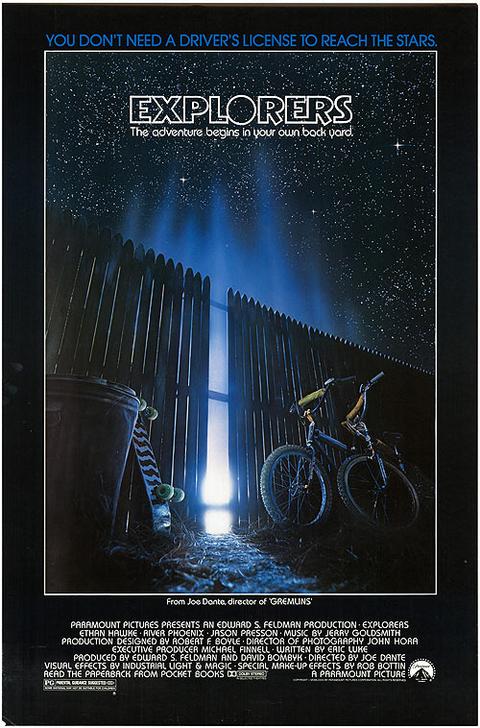
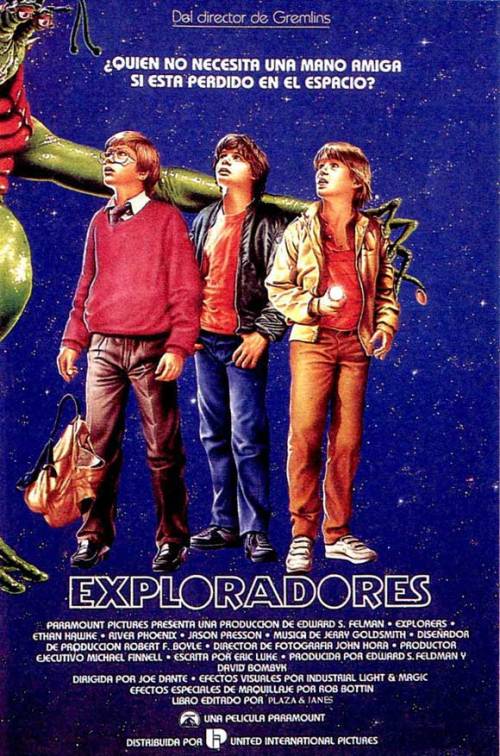
Ben (Ethan Hawke) is a teen who keeps having dreams dealing with a spacecraft and eventually writes down the dimensions of it onto paper and then sends it to his super smart friend Wolfgang (River Phoenix) who uses it as a blueprint to eventually create it in real-life using various parts that they find in a junkyard. Once completed Ben, Wolfgang, and their other friend Darren (Jason Presson) decide to take it for a ride. Initially they fly it around their coastal California town, which catches the eye of the police (Dick Miller), who chases after it to no avail. Eventually though they decide to take it into outer space where they visit aliens inside a intergalactic space station.

Out of all of the sci-fi movies that came out during the 80’s this one has gotten lost in the shuffle and wasn’t too well received by the critics when it was first released though it has achieved a cult following since then. Director Joe Dante has complained that the final cut was taken out of his hands and he was never able to complete the ending that he wanted though for the most part the film never really gels, has a slow pace and only spotty moments where it becomes even halfway amusing.

One of the things that I did like was that the cast is age appropriate for their parts and the scenes done on a junior high campus have a student body that really looks to be teens instead of older college age actors trying to look younger, which happens in so many other teen films. The three leads thankfully aren’t crude or foul mouthed and aren’t obsessed with parlaying a ‘cool’, trendy image, which is also nice, but they seem just a bit too smart and able to do things that most adults can’t like welding and carpentry and  building a craft to exact specifications without any hitch or screw-up. Sure that Wolfgang kid is supposed to be smart, but even geniuses can make incorrect estimations, but this guy never does.

Watching the silly looking contraption actually get off the ground is farcical as in reality it most likely wouldn’t and the science gets completely thrown out the window. When they go out into space on their second trip they don’t even bother to equip themselves with oxygen and since there’s none in space I wasn’t able to figure out how they could breath. There’s no explanation either for how they were able to survive the extreme drop in temperature that occurs in high altitudes nor how the craft was able to get back through the earth’s atmosphere without burning up.

Spoiler Alert!

The scenes where the boys fly the craft around their town and even disrupt a sci-fi movie that is being shown at a local drive-in is when its funny and where the story should’ve stayed. Having it venture out into space and meeting other teen aliens is when it jumps-the-shark. The first hour plays like a whimsical fantasy, which is passable, but the third act becomes too campy. It also criminally under-uses Amanda Peterson, who plays Ben’s attractive love interest, who gets barely seen at all even though she should’ve gone on the trip with the other three boys, which would’ve bolstered the entertainment value and the fact that she doesn’t makes this already weak file even weaker.

My Rating: 2 out of 10

Released: July 12, 1985

Runtime: 1 Hour 49 Minutes

Rated PG

Director: Joe Dante

Studio: Paramount Pictures

Available: DVD, Amazon Video, YouTube

Midnight Madness (1980)

By Richard Winters

My Rating: 4 out of 10

4-Word Review: All night scavenger hunt.

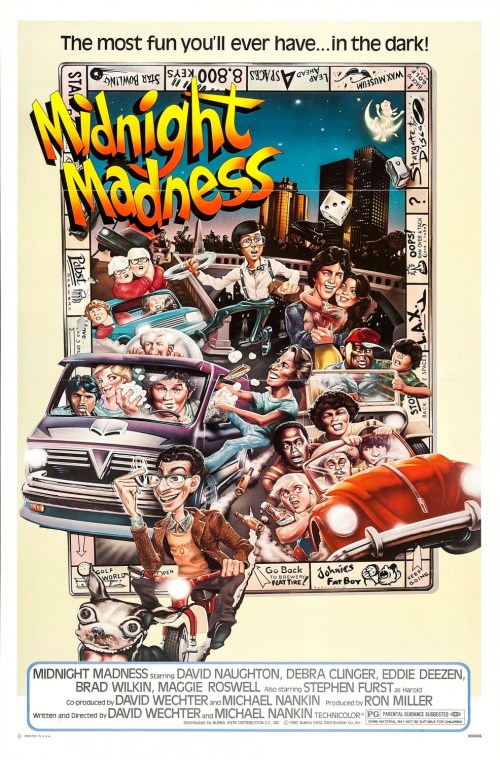
Leon (Alan Solomon) is a geeky college student who comes up with an elaborate scavenger hunt to be played by his fellow students. The object of the game is to pick-up on certain clues hidden throughout the city of Los Angeles and each team must solve the clue given to them before they can move onto the next one. The game is played by 5 teams who have 5 members each: David Naughton heads the preppy Yellow team, Maggie Roswell plays the leader of the nerdy girls red team, Eddie Deezen leads the geeky white team, Brad Wilken leads the green team, which is made up of party animal jocks, and Stephen Furst heads the anti-social/misfit blue team.

On the surface this comes off as just another crude, sophomoric 80’s teen comedy complete with gross out humor of having to watch overweight Furst constantly stuffing his face with food, which is genuinely painful to watch when you realize that in real life he had a big issue with diabetes that made him retire from acting and he ultimately died from the illness. The film fails to have anything all that funny in it and it doesn’t even show any skin from its attractive female cast, which most likely was a result of it being financed by Disney.

The game itself though is kind of interesting and posses some legitimate logic oriented clues that force both the viewer and participants to think it through in order to solve. There is also some interesting on-location shooting done in famous landmark locations throughout Los Angeles including the Griffith Observatory, Grauman’s Chinese Theater, and the Westin Bonaventure Hotel, which helps give this otherwise low budget production a bit of a visual spark.

Even with these elements in place the film fails to take full advantage of its setting. If this is all supposed to take place during the wee hours of the night then there really shouldn’t be such large crowds present at the locations they go to including tours going on at the Pabst Blue Ribbon beer plant. It would’ve been more of a surreal ambiance had it just been the players of the game roaming around an otherwise shuttered city while everyone else was fast asleep. The final part of the game takes place in the daytime, which again ruins the nightime/midnight theme and effort should’ve been made to have the entire story take place while it was dark.

The story is also full of a ton of logic loopholes including never explaining how Leon was able to get his face painted on the side of beer cartons at the beer plant as well as a wide assortment of other issues. One also had to wonder why Leon goes to such great lengths to create such an elaborate game that doesn’t really seem to benefit him directly. If this kid is so smart to create such an intricate game then why doesn’t he put his creative energies into forming a profitable business so he doesn’t have to live in a rundown apartment that has paper thin walls and a crabby landlady screaming at him every time he makes any noise?

The cast has some familiar faces in small roles including Paul Reubens (aka Pee Wee Herman) in a bit part at a game arcade and Marvin Kaplan, an aging character actor best known for his work in Adam’s Rib and the TV-show ‘Alice’, as an overwhelmed hotel desk clerk. Kudos also go out to Irene Tedrow as an elderly and quite obnoxious landlord and Dirk Blocker, who is the son of famous ‘Bonanza’ star Dan Blocker and looks just like him, as a dim-witted party animal who just can’t get enough beer.

Naughton though is quite stale in the lead and doesn’t seem to have much acting talent at all although I did like the in-joke of seeing him drink a Dr. Pepper since he’s probably best known for singing the ‘I’m a Pepper’ jingle in TV commercials during the 70’s. This also marks Michael J. Fox’s film debut who plays the younger brother to Naughton though the subplot dealing with his anger at being taken for granted by his older sibling is misplaced and heavy-handed in a film that is otherwise super silly.

My Rating: 4 out of 10

Released: February 8, 1980

Runtime: 1 Hour 52 Minutes

Rated PG

Director: Micheal Nankin, David Wechter

Studio: Buena Vista Distribution Company

Available: DVD, Amazon Video, YouTube