Category Archives: Comedy

Sunburn (1979)

By Richard Winters

My Rating: 2 out of 10

4-Word Review: Couple investigates insurance fraud.

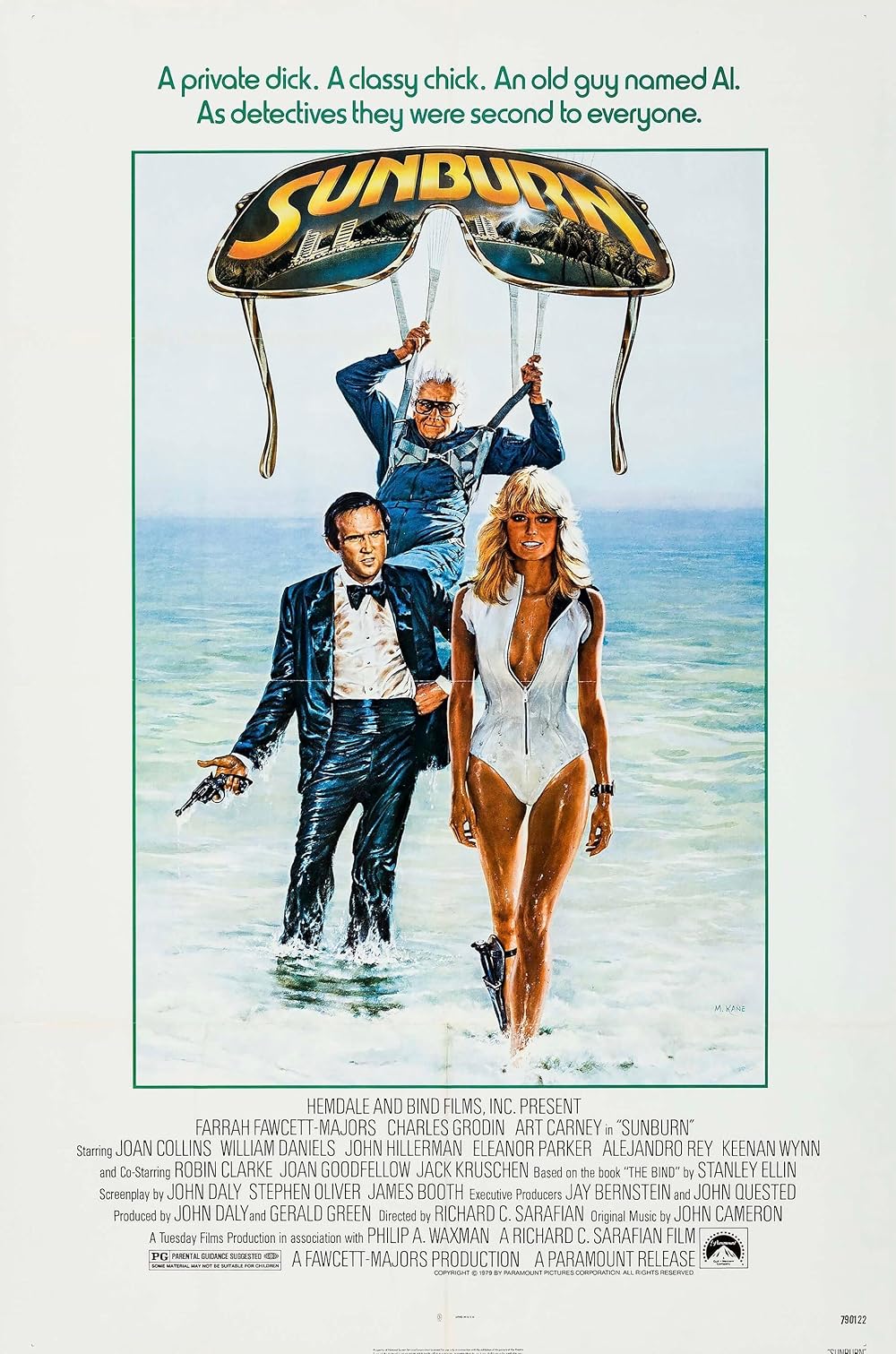
Jake (Charles Grodin) works as a private eye and gets hired by an insurance company wanting him to investigate a case that took place in Acapulco of a man who crashed his car into a building and died. The authorities have labeled it an ‘accident’, which would put them on the hook to have to pay out a large sum of money, so they’d like Jake to travel down there and find out if that were really the case, or if it could be deemed as a suicide. Jake decides to hire an actress from a modeling agency named Ellie (Farrah Fawcett-Majors) to act as his wife. Ellie takes an interest in the case and helps him search for clues while also forming a romance with him, which starts out rocky but becomes stronger as they find themselves sucked further into the mystery and the potential dangers.

The film is based on the 1970 novel ‘The Bind’ by Stanley Ellin, which had a grittier tone than the movie. Farrah’s agent Jay Bernstein felt this would be a good vehicle for her, but wanted the script turned into more of a lighter and comical story that the book did not have. This was at a crucial point in her career as the first film he got her cast in Somebody Killer Her Husbanddid badly with both the critics and public, so it was important that she prove her box office ability with this picture and when this one also bombed she fired him complaining that both movies had been ‘put together with hustle and bubble gum’.

One of the elements that really hurts it is the casting of Charles Grodin, who by his own admission was their sixth choice for the role as they had initially pursued Robert Redford and even Harrison Ford, who would’ve both been way better. Grodin can certainly be funny, but this part doesn’t give him much to work with. He has a few amusing moments when he’s trying to scare away a lizard from entering their bedroom and then in an effort ‘to protect her’ from a further ‘lizard invasion’ agrees to sleep on a nearby chair, which cause him to do nothing but toss and turn the whole night in an effort to find a ‘comfortable’ position.

His character though didn’t seem all that professional as he leaves it up to her to place a listening device into one of the suspect’s phones, but she had no background in this kind of thing, so what would happen if she screwed it up? The insurance company is promising him a lot of money so it should be up to him to do most of the legwork to make sure it gets done right and if any ditzy amateur blonde can be pulled in off the street to do what he does then what’s the point in hiring him to begin with?

Farrah does much better here than her previous film. I enjoyed her dialogue with Grodin and how just because she was hired to play his wife didn’t mean she was automatically going to be one during their off hours when he for some chauvinistic reason expects her to make him a sandwich, which she immediately declines to do. I was confused though why her character would want to get so involved in the case. She’s just there to play a part, so why not just do her job and enjoy the sun? Instead, she constantly puts herself in increasingly dangerous situations for no real reason. She’s gets paid whether the case gets solved or not, so why jeopardize her life over something that she has no emotional or financial investment in?

It’s also hard to believe that such a hot looking lady wouldn’t be in a relationship. It would’ve been far more enjoyable had there been a jealous boyfriend who secretly followed her on her mission and even threw a few monkey wrenches into the investigation, which could’ve added extra spark into a movie that’s otherwise too leisurely. For her to then fall in love with Grodin was equally dumb. The guy could’ve been her father and lacked any type of sexual pizazz. Had Redford or Ford been cast then the romance might’ve made more sense, but such a beautiful woman like her would have no reason to settle for a doofus like him and would simply be there for the payout and then be long gone.

Art Carney is great in support and actually does most of the work making it seem like Grodin’s character wasn’t even necessary and in fact having Carney and Farrah team up would’ve made it unique and more entertaining as Carney despite his advanced age shows a lot of energy particularly when he goes out onto the disco floor. The rest of the cast though gets wasted with many of them having only one or two lines making you wonder why they’d bother to sign on at all.

The film does have one memorable moment where Carney and Farrah, in an effort to escape the bad guys who are pursuing them, inadvertently crash their car into a bull fighting ring and then must avoid the bull who goes after them. This action is both humorous and exciting, but otherwise unless you’re some super Farrah fan the movie offers little else that’s interesting.

My Rating: 2 out of 10

Released: August 10, 1979

Runtime: 1 Hour 45 Minutes

Rated PG

Director: Richard C. Sarafian

Studio: Paramount Pictures

Available: DVD-R (MGM Limited Edition Collection)

Tootsie (1982)

By Richard Winters

My Rating: 7 out of 10

4-Word Review: Pretending to be female.

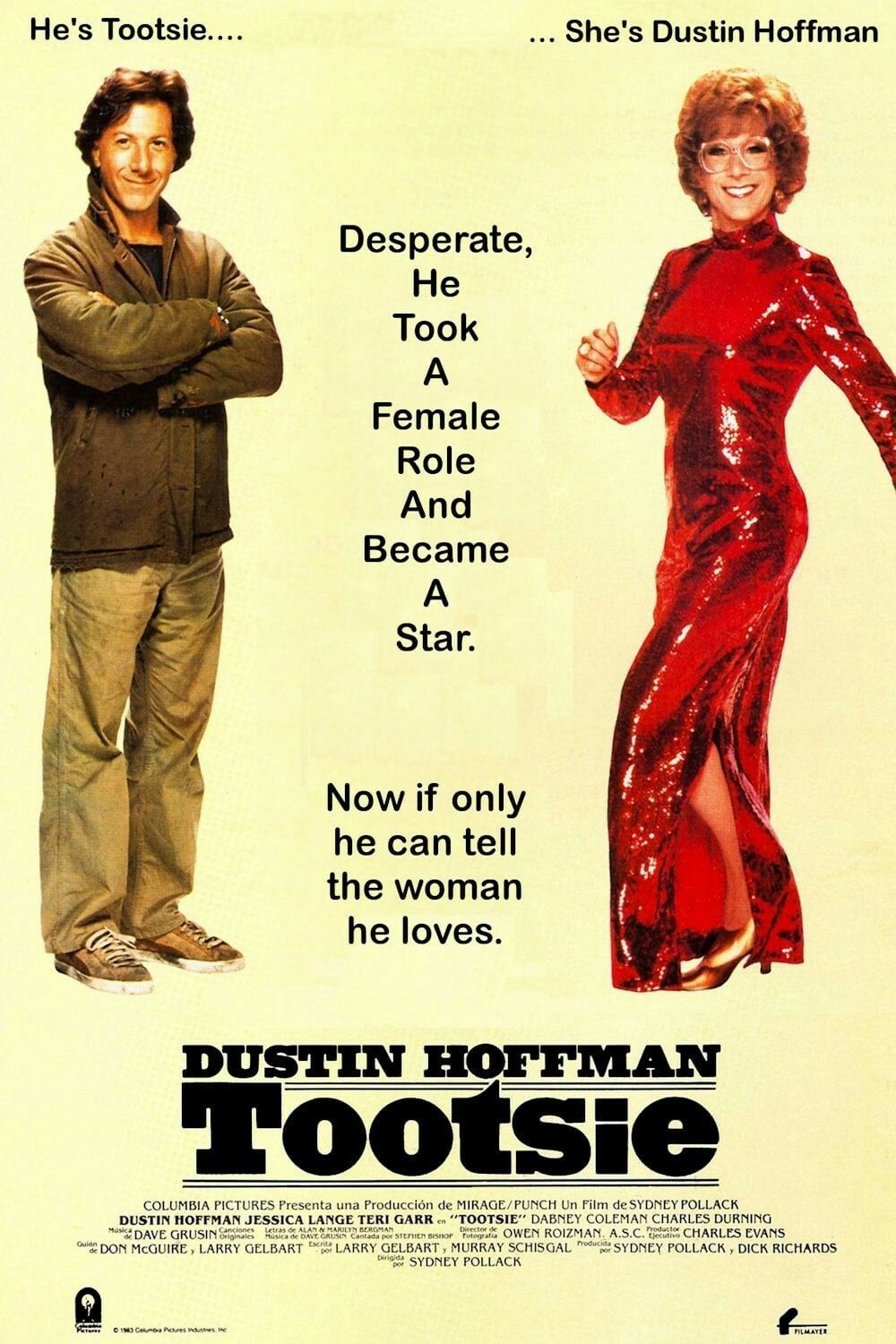
Michael (Dustin Hoffman) is a talented actor but having difficulty finding employment due to his demanding nature and inability to get along with directors. His friend Sandy (Teri Garr) is auditioning for a part in a soap opera, and he helps her prepare for the role and even takes her to the audition only to learn that she was rejected before given any chance to do a screentest. It’s at this same time that he learns his agent George (Sydney Pollack) hasn’t gotten him a chance to audition for another role because in his words ‘no one will work with him’. Michael then decides to disguise himself as a woman named Dorothy Michaels in an effort to get the role that Sandy was turned down for so as to raise money to produce a play that will star Sandy. While he does get the part, he also becomes a big star with everyone believing that Dorothy really is a woman, which cause many complications in both his personal and professional life making him feel like he wants to end the charade and go back to his normal identity, but not quite sure how to do it. 

The genesis for the story began all the way back in 1970 and was based on an off-Broadway play by Don McGuire titled ‘Would I Lie to You?’ about an out of work stage actor who dresses as a woman to get a big part. Director Dick Richards adapted the plot into a screenplay, and it got shopped around for many years, but to no avail. Then in 1980 cross-dressing actor Christopher Morley played the role of a woman named Sally Armitage in the soap opera ‘General Hospital’. The part was played straight with the viewers under the impression that it really was a female, and Sally even gained the romantic interest from the character Luke, played by Anthony Geary, only to eventually reveal that she was really a man, which was a ratings hit and thus lead to renewed interest in this script. Eventually Dustin Hoffman got a hold of it and decided he wanted to take it on under the condition that was given full creative control and even hired his own people, Larry Gelbert and Murra Schisgal, to rewrite the story to his liking. 

Personally, my favorite parts of the film come at the beginning where we see Michael’s struggles as an actor as well as all of his thespian friends giving one a glimpse at just how hard the business is and how few people can make an actual living in it. Watching both him and his roommate Jeff, played by Bill Murray, working as waiters, but still talking about their acting ambitions while on that job was on-target. Garr gives a great performance as a struggling would-be actress who is full of insecurities and letdowns and a perfect composite of many young women who find the auditioning process grueling and thankless and for this reason, I felt she should’ve won the Oscar instead of Jessica Lange as her part as the love interest wasn’t as interesting, or honest. 

Murray is terrific as the roommate in an unusual part for him as his over-the-top clownish, snarky, frat boy persona is kept under wraps and instead he plays the part straight, but his sardonic responses to things are great. Director Pollack, who took on the role of Michael’s agent at the request of Hoffman and thus making it his first acting role in almost 20 years, is quite good too particularly with how his exasperated nature feeds off of Hoffman’s hyper one and their conversation inside his office is the movie’s highlight. Charles Durning has a few key moments as well playing Lange’s lovesick father who begins to fall for Dorothy though any man that would give a woman an engagement ring before they’d even been out on a single date has to be a bit loopy.

Hoffman falls into the woman role easily and it would be hard to recognize him had the viewer not known about the disguise beforehand though I felt the way Dorothy walked and moved her hands and arms made her seem like Mrs. Butterworth the animated character from the maple syrup commercials. It’s also hard to imagine he wouldn’t have been found out a lot sooner especially since he collected a weekly paycheck from the company, which would’ve required him to give them his social security number, which in-turn would’ve exposed who he really was. Being on magazine covers where he supposedly does interviews as Dorothy should’ve been equally problematic as the reporters would’ve asked him (her) about her past like what other stuff did she act in, where was she from, and where did she graduate. Stuff that’s very much standard questions in any interview and when he (she) couldn’t come up with anything or made-up stuff that could easily be background checked would’ve then raised red flags and brought the ruse to a very quick halt.

Spoiler Alert!

Soap operas were no longer broadcast as live and hadn’t been since 1963, so that story angle doesn’t fly either. Yes, I realize the idea was that it was taped and only had to done live as an emergency when one of the tapes got destroyed, but in reality, the taping would’ve been done so far ahead (usually by several weeks) that even if a video did somehow get corrupted there still should’ve been plenty of time to refilm it before reaching the actual air date. 

The ending it a bit disappointing as well. Sure, it’s nice seeing Lange putting her arm around him as they walk down the sidewalk showing that the two had made up after his secret identity was exposed, but it doesn’t answer what happened to his career. He did this whole thing to help finance a play for Sandy, so what became of that? Also, were casting agents so impressed with the way he fooled everybody that they now were willing to hire him, or was he still blacklisted? These were all major motivations for why he did the ruse, so there should’ve been clarity to what became of it. 

My Rating: 7 out of 10

Released: December 17, 1982

Runtime: 1 Hour 56 Minutes

Rated PG

Director: Sydney Pollack

Studio: Columbia Pictures

Available: DVD, Blu-ray, Amazon Video, YouTube

Max Dugan Returns (1983)

max1

By Richard Winters

My Rating: 4 out of 10

4-Word Review: Estranged father comes back.

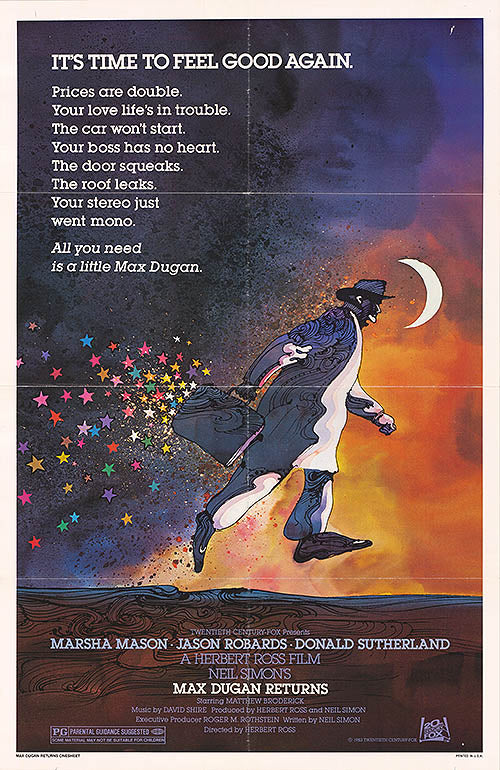
Nora (Marsha Mason) is a single mother living with her 15-year-old son Michael (Matthew Broderick) who’s struggling to make ends meet as a High School English Teacher. Things become particularly desperate when her beat-up 1964 Volvo car gets stolen and she no longer has any transportation to get to work nor the money to afford buying a new car, or even a used one. Fortunately, the officer working on the case, Brian (Donald Sutherland) takes a liking to her and offers her to use his motorbike even though she needs training on how to drive it. Once she goes through the crash course and begins using it she still has other financial concerns to worry about until one night she receives a mysterious visitor, which turns-out to be her estranged father Max Dugan (Jason Robards) who ran-out on his family 29 years earlier. Now he has returned with a briefcase full of $687,000, which he skimmed from a crooked casino that he used to work at. He tells her he has only 6-months to live and advises her to take the money, so that she and her son can live stress-free, but Nora isn’t so sure she wants to accept it, so Max goes about buying her stuff anyways including a fancy new car.

This has to be one of Neil Simon’s least imaginative efforts and the concept seems so contrived it’s like he thought it up for the 10-minutes that he was sitting on the john. I’ll admit when I was a teen and watched it when it first came out, I enjoyed it. I especially remembered the scenes dealing with Charley Lau, who regrettably died less than a year after the film’s release, where he plays himself the hitting coach for the Chicago White Sox baseball team, who Max hires to help Michael become a better hitter and these teaching scenes I found to be engaging. Unfortunately, the foundational premise has a lot of holes.

The idea that a father would suddenly want to see his daughter after 29 years of being away didn’t seem authentic. If he longed to reconnect then why not reach out earlier? Granted he was in jail for 6 of those years, but what about the other 23? If family was so important to him then why run out on them in the first place? Why doesn’t he at least make some attempts in-between those years to communicate like sending letters of phone calls before just showing up and expecting to be welcomed with open arms? The idea of throwing her and his grandson a lot of money comes-off in bad taste like he’s simply trying to buy their love and if anything seems quite shallow. During those 29 years away you’d think he would’ve met other people he’d become friends with, or other women he dated that he might’ve wanted to give the money to instead, or are we to presume that for 3-decades he lived in a cave and made no contact with anyone else?

I didn’t get why Nora didn’t recognize her father when he called. Yes, it had been awhile since she had last heard or seen him, it’s stated that she was 9 when he left, but he has a distinctive voice, so I’d think it would set something off in the back of her brain that she knows who this is, but can’t quite place it, versus having her immediately call the police in panic after getting a call from some ‘strange man’. He also tells her at one point that he may not actually be Max Dugan, but again she wasn’t a month-old infant when she last saw him, but instead someone entering the fourth grade, which should’ve given her a solid enough memory of what he looked like and thus know if this was her real father, or not.

To help solve all of this Nora should’ve been made a divorcee instead of a widow. The husband/father could’ve been the one who went to jail and then returned a 6 years later with stolen money hoping to use it to win back his wife’s and son’s favor. It would’ve made more sense because less time would’ve passed, and he’d have a more vested emotional interest in bonding with his son since he was directly his versus an elusive grandfather who didn’t even know the kid existed until being ‘tipped off’ that Nora had one by some secondary source.

Matthew Broderick’s character is problematic too. He seems just too obedient and goody-goody to be a believable teen as he promptly makes his bed every morning, even his mother’s, asks to be excused from the dinner table, and even lets his mother kiss him while in full view of his friends. Yes, there’s one brief moment where he tries to sneak a smoke, but otherwise I didn’t detect the typical rebellion to authority that most teens that age have, and it would’ve been improved had the kid been 9 or 10 where still being compliant with their parents’ wishes is a little more understandable.

Sutherland’s character was off as well as he seems way too aggressive about asking out a woman that he had just met while on-duty and actively investigating her case making it ethically questionable whether he should even be doing it. If a guy does come-on to a woman so quickly, simply because she’s attractive and single, as he knew nothing else about her, you’d presume he’s done this to other available women as well and thus should have a throng of casual girlfriends and Nora would just be one of many. The film should’ve just had him already her boyfriend from the start and thus avoided this otherwise awkward and rushed relationship. I also thought it was dumb that Kiefer Sutherland, who appears early on in a brief non-speaking role as one of Broderick’s friends, wasn’t cast as Donald’s son in the climactic baseball sequence at the end and instead the part was given to another young actor.

Spoiler Alert!

The money issue becomes yet another problem as Max spends it on so many lavish gifts that I started to wonder if there would be any left to put into savings. The idea that he could’ve had workers refurbish the house in just one day while Nora and son where in school is ridiculous as something that massive would take weeks if not months. He even ends up driving away with the car he had bought her leaving her again without a vehicle. Yes, he does open-up a bank account in her name and puts in $400,000, but her cop boyfriend was already aware of this and made clear he put his duty to uphold the law over his personal relationships making it very probable that she’d be forced to give it all back. Worse she might be considered an accomplice forcing her to hire an attorney, which would’ve sent her into even more debt making it seem like she’d be better off had the whole thing not even happened to begin with.

My Rating: 4 out of 10

Released: March 25, 1983

Runtime: 1 Hour 38 Minutes

Rated PG

Director: Herbert Ross

Studio: 20th Century Fox

Available: DVD, Amazon Video, YouTube
Night Shift (1982)

nightshift1

By Richard Winters

My Rating: 6 out of 10

4-Word Review: Hookers in a morgue.

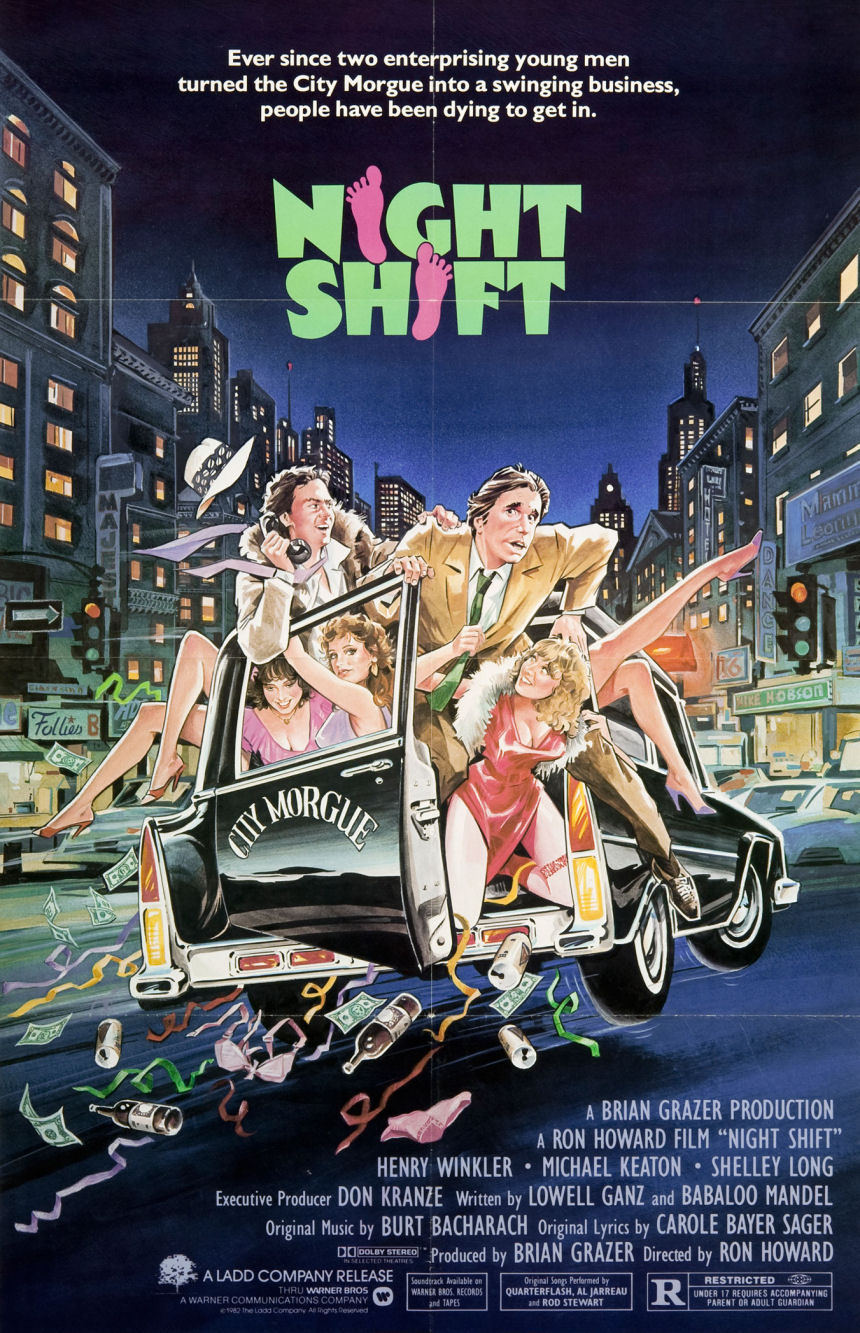
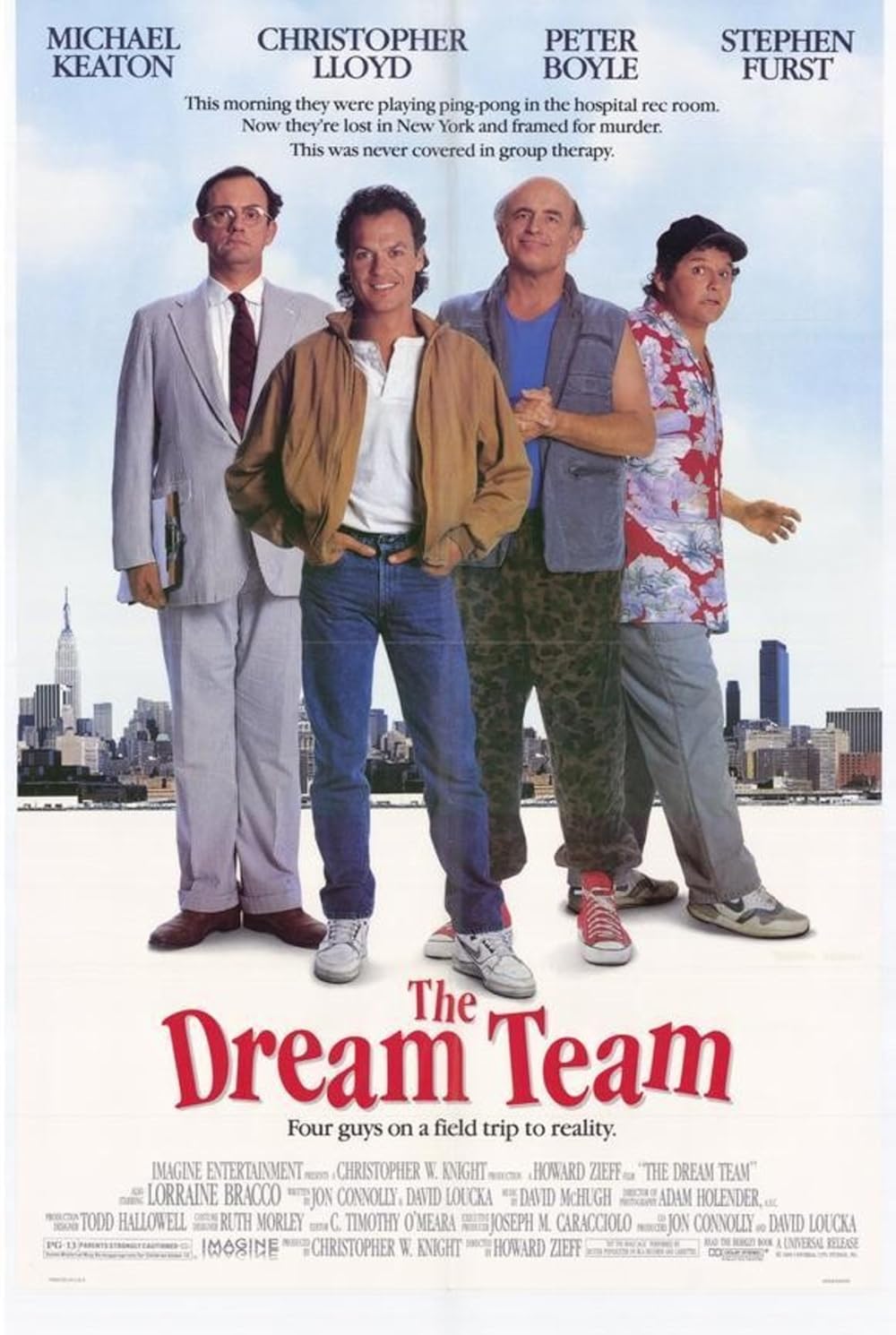
Chuck (Henry Winkler) has dropped-out of his former job as a stockbroker due to the stress and decided to work in a more tranquil setting as the night shift manager of a New York City morgue. He’s unhappy though to have to share duties with Bill (Michael Keaton) who’s talkative and partying ways are a complete contrast to Chuck’s introverted manner. Chuck’s home-life isn’t much better as he’s engaged to be married to Charlotte (Gina Hecht) though her habits and constant complaining are at odds with Chuck’s. His only solace is Belinda (Shelly Long) a prostitute whom he sometimes bumps into as she’s servicing his next-door neighbor Luke (Tim Rossovich). When Chuck finds her beaten-up inside an elevator he decides she needs to find a work environment that will afford her more protection, which gives Bill the idea to open-up a prostitution ring inside the morgue, which goes-off surprisingly well for  awhile before rival pimps become aware of it and threaten Bill and Chuck with their lives unless they agree to let them in on the payout.

This marked the second feature length film directed by Ron Howard and was inspired by a New York Times article about a real-life morgue that became a prostitution hang-out during its night hours. He decided to offer the leading role to Winkler, who had the choice of either playing Bill or Chuck but went with Chuck as he felt it would be fun playing against type, or in his words a ‘chance to play Richie Cunningham’. Winkler was still acting in ‘Happy Days’ TV-show at the time, so he’d shoot this on Mondays and Tuesdays in New York and then fly back to Hollywood to play Fonzie on Thursdays and Fridays.

While the change of pace may have shown what a good actor Winkler was it really didn’t help his image as the protagonist here is too wimpy. A somewhat passive guy is okay, but this guy lets people push him around too much making him look pathetic and his buttoned-down personality doesn’t show much energy making most of his moments in front of the camera too subtle to be either funny or engaging.

Keaton on the other-hand is too flamboyant, and his talkative ways become obnoxious instead of endearing and I personally didn’t blame Winkler for telling the guy to shut-up and leave him alone as I would’ve felt the same way. The story could’ve worked just as well if not better had Keaton not been in it at all and let Winkler carry-it alone, which would’ve allowed for a more interesting character arch at seeing this nebbish guy run a prostitution ring and thus learn to open-up more because of it.

Winkler’s relationship with Charlotte made little sense as the two had nothing in common and all she did was nag and complain. Why would anyone want to date someone like that let alone get engaged with them? I realize this was supposed to be part of the ‘comedy’ but for it to be funny there actually has to be some truth in it and these two shared no chemistry and at least one of them would’ve in reality come to their senses and broke it off and logically it’s surprising that it didn’t happen. The Charlotte character wasn’t even needed because the focus is on Winkler’s budding romance with Long, so why not just have him be a single guy who’s lonely and can’t make it with women and thus becomes entranced with Long despite her being a hooker simply because she showed him some attention.

While she gives a really good performance that’s light years removed from her Diane Chambers role from ‘Cheers’ that she’s best known for, and she sure looks great in the scene where she wears skimpy panties, her character here is problematic. She’s too wide-eyed and innocent for a woman whose been working as a call girl on the big city streets and even been badly beaten-up a few times by her pimp and johns. Seems like she should’ve formed a very hardened, crusty exterior for her own basic mental defense and the fact that she doesn’t show any of this and instead is so openly sweet seemed not remotely believable.

The premise has great potential, but it doesn’t do enough with it. For most of the way the pace is leisurely and the comedy subtle. I was expecting dead bodies coming-in amidst the sex and lots of mix-ups and confusion, but that stuff barely even gets touched upon. The prostitutes are portrayed as an extreme caricature with no distinct personalities, which reveals how shallow the whole thing is. Back-in-the-day, and I know because I was around, movies dealing with the subject of prostitution was considered ‘edgy’, but now stuff like this is looks trite and barely even touching the surface in regard to realism.

My Rating: 6 out of 10

Released: July 30, 1982

Runtime: 1 Hour 46 Minutes

Rated R

Director: Ron Howard

Studio: Warner Brothers

Available: DVD, Blu-ray, Plex, Roku, Tubi, Amazon Video, YouTube

Animal Behavior (1989)

animal

By Richard Winters

My Rating: 4 out of 10

4-Word Review: Cellist falls for biologist.

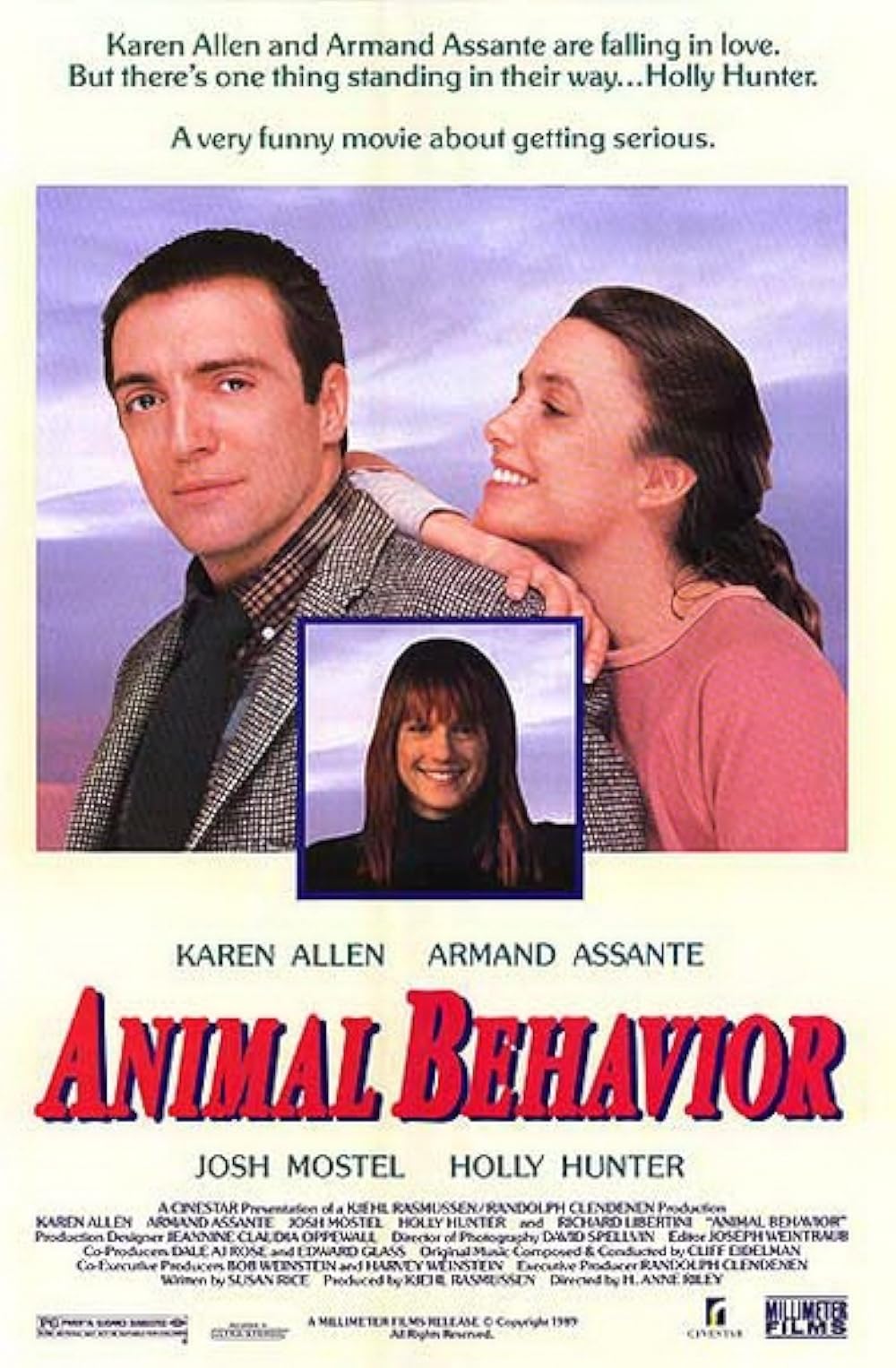
Alex (Karen Allen) is a biologist employed at a university where she is researching on finding new ways to communicate with chimpanzees including the use of sign language but finding it challenging in getting any funding. Mark (Armand Assante) works at the same school as an orchestra instructor. He meets Alex by chance and while their first encounter is awkward, he immediately takes an interest in her and tries to pursue a relationship. Alex is so involved in her work that she doesn’t pick-up on Mark’s advances initially and then when she does, she comes under the mistaken impression that he’s married which causes her to avoid him and making Mark believe that she doesn’t like him when deep down she really does.

The film, which has never been released on either DVD or streaming and can only be obtained from a very rare VHS print, is more known for its behind-the-scenes troubles than anything that goes on in front of the camera. The main issue was the squabbling, or ‘creative differences’ between director Jenny Brown and the producer Kjehl Rasmussen causing her to leave the project, which began filming in 1984. The production then ran out of money forcing it to be shelved for many years in an unfinished state before Rasmussen was able to receive enough funding to complete it with him as the director. However, out of its initial $3.5 million budget it was only able, after its limited release, to recoup a paltry $41, 526 at the box office making it a huge financial loss. It also came-out 4 years after one of its stars, Alexa Kenin who plays a not very talented cello student, died mysteriously at the young age of 23 for causes that are still unknown to this day.

Despite all of its production problems I came away finding it not too bad and enjoyed the orchestral score and the giant animated musical notes that appear during the opening credits as well as the vast New Mexico landscape. Assante is an interesting casting choice as he plays the romantic lead not in a lovesick way but approaches it instead in more as a matter-of-fact type, which you’d expect a person working in Academia might do. I did though find his ability to handle chimps as relaxed and comfortable was a bit of a missed opportunity as having him afraid of them, which is what I think most people would be like, would’ve given their young relationship more of a challenge to work through and thus more intrigue to the story.

His inability to every criticize Sheila, played by Kenin, who is a very poor cello player, made him in-turn come-off as a failure of a teacher. Granted the film wanted the viewer to like the Assante character and if his criticism of her playing was too harsh it might make them turn-on him, but the guy is her teacher and not her friend. A friend is someone that doesn’t want to hurt the other person’s feelings, but a teacher is paid to get to the source of the problem. If he is just going to allow this student to leave in a delusion that she’s a competent then when is she ever going to get better, or be motivated to improve? A good teacher is obligated to call a student’s attention to their shortcomings and by avoiding doing this he comes-off as weak and ineffective.

While Allen’s performance is also good, I had some problems with why Assante would want to get into a relationship with her. It’s clear from the get-go that she’s so into her chimps that she’s out of touch with everything else around her. Why pursue someone romantically who’s always going to put her monkeys first and make him have to constantly compete with them for her attention?

A far better love interest would’ve been Coral that gets played by Holly Hunter who is an absolute scene-stealer and gives the movie some much needed spunk. This was before she won the Academy Award, so her role is limited, but she still makes the most of it playing a single mother with an autistic child, played by Crystal Buda. She is a neighbor to Assante and the two get into a quasi-style relationship though they don’t have any sex, but I didn’t know why she didn’t want to pursue further past the friendship level as they seemed quite compatible and it would’ve allowed in more drama forcing both her and Allen to compete for the same man, which could’ve lead to some juicy confrontations.

Josh Mostel, as Assante’s friend, is fun, not so much for anything he says, but more for his big white-guy afro. The climactic sequence, which takes place in a large scale maze made out of hay bails is diverting simply because it’s never been used before, or since. However, the characterizations of the University faculty, who are portrayed as being stiff, uptight, while also a bit ‘wacky’ is too broad to be either amusing or insightful.

My Rating: 4 out of 10

Released: October 27, 1989

Runtime: 1 Hour 28 Minutes

Rated PG

Director: Jenny Brown

Studio: CineStar Productions

Available: VHS, DVD-R (dvdlady.com)

Hold-Up (1985)

holdup

By Richard Winters

My Rating: 5 out of 10

4-Word Review: Robber disguised as clown.

Grimm (Jean-Paul Belmondo) has come-up with what he considers to be an ingenious plan. He will rob a bank disguised as clown with two of his friends, Georges (Guy Marchand) and Lise (Kim Cattrall). While he’ll be a clown the other two will pretend to be bank customers and then when he agrees with the Police Commander Simon (Jean-Pierre Marielle), whom he is negotiating with via phone, to release some hostages he’ll let Georges and Lise ‘go’ and no one will know the difference. Meanwhile Grimm will take-off his clown disguise and put on a new one as an old man while pretending that the clown is still inside holding the rest of the bank employees and customers at gunpoint. By the time the police catch-on that there’s no longer any clown the three hope to have escaped on a plane and be far away. While the robbery works without a flaw the getting on the plane part becomes a major, if not impossible, challenge.

The story is based on the novel ‘Quick Change’ by Jay Cronley, which 5 years later was made into another, better known movie that starred Bill Murray. This was a French production that was filmed on-location in Montreal, Canada and one of the few movies that starred Belmondo that didn’t do well financially back in his home country and in-fact it was the first staring vehicle of his that didn’t crack the top 10 of highest grossing movies of that year, which was the first for him since 1976 when L’Alpagueur achieved only 19th place.

Belmondo is certainly a legendary actor whose long and storied career deserves to be admired, but I didn’t care for him here and felt his presence actually brought down the whole movie. He was apparently quite admired behind-the-scenes amongst the cast and crew and he did all of his own stunts including a scene where he climbs out of a moving car and manages to slither his way, while the vehicle is still going at high speeds, onto a tow truck and he did this while already being in his mid-50’s. However, his character is overly cocky and his glib conversational interplay between he and the police chief does not come-off as funny and more like you side with the chief and want to see this arrogant man caught. You’d think someone who had never pulled-off a robbery before would be much more nervous, or at least display some signs of anxiety, so his unbridled confidence seems completely out-of-place with the situation he’s in.

If anything I enjoyed Marchand and Cattrall far better as these two seemed much more human and displayed the insecurity you’d expect. They were like regular people full of foibles and someone you’d actually want to root for and thus I felt the movie would’ve been greatly improved had it just focused on the couple doing the robbing and cut-out Belmondo’s part completely. I also didn’t think the clown disguise worked as unlike in the American version his whole face isn’t covered with white paint and instead simply uses a red wig, a red clown nose, and some eyebrows, which I didn’t feel would be enough to hide his true identity and witnesses could’ve easily recognized who he was outside of the clown get-up and thus the whole disguise thing ends-up defeating its own purpose.

The first act works pretty well with shades of Dog Day Afternoon and some offbeat moments to the bank robbery theme by having one scene where the hostages are forced to get in a circle and sing a rendition of ‘London Bridges Falling Down’. The second and third acts though become protracted and seem to be the start of a whole different movie altogether. The bank segment has a crafty, sophisticated tone where the humor has a satirical bent and the main characters seem smart, savvy, and cool. In the second half the movie suddenly becomes like a live action cartoon with an abundance of car chases and the three leads, who had seemed so clever at the beginning, quickly become inept at seemingly every turn.

The biggest problem is the Lasky character played by Tex Konig. Konig is a big bearded guy that resembles Bluto from the old Popeye cartoons who’s also a tow truck driver who wants to get his hands on the stolen money and chases the three all around the city, which leads to many car stunts and crashes. Some may enjoy the smash-ups, but it comes across as unimaginative filler by filmmakers that didn’t know how to end the story cleverly, so they came-up with a lot of mindless action in order to keep it going.

The infighting between Cattrall and Marchand seems unnecessarily added in as well. This animosity needed to be introduced right at the start in order to make it consistent with the plot and not just thrown-in later to add some conflict for the sake of conflict. You’d think too that if she really resented the guy she would’ve refused to go ahead with the robbery unless someone else took his place.

Having the story then end with the three going to France and then Italy just furthers dilutes the plot, which no longer resembles a robbery flick at all, but more of a jet setting one. While not perfect the remake, which came-out in 1990, fares better in just about all phases.

My Rating: 5 out of 10

Released: October 23, 1985

Runtime: 1 Hour 54 Minutes

Not Rated

Director: Alexandre Arcady

Studio: Cinevideo

Available: DVD-R (dvdlady.com)

Let it Ride (1989)

let

By Richard Winters

My Rating: 5 out of 10

4-Word Review: Betting at horse racing.

Jay (Richard Dreyfuss) along with his friend Looney (David Johansen) are two struggling Miami cab drivers. One day Looney, who secretly records discussions that his passengers have while in the backseat of his cab, overhears a tip by two men of an upcoming horse race. He passes on the recording to Jay. Jay has not had much success in betting and has even promised his wife Pam (Teri Garr) that he will quit, but he can’t pass up this opportunity and places a wage on the horse that had been discussed. It turns out to being a photo finish in his favor and he spends the rest of the day making more bets by using all of his winnings as his wagering. Soon, he finds himself getting richer and richer even as his wife comes to the track in an effort to get him to stop. Will his luck hold, or run out?

Probably the best thing about the movie is the acting particularly by Dreyfuss, who’s known for playing aggressive, snarky types, but here comes-off as surprisingly sympathetic. You genuinely feel for the guy and his need to win at something and has one comically touching moment where he kneels at the toilet of a grimy bathroom stall and prays/pleads to God for a break. Garr, who reunites with Dreyfuss as the two starred 10 years earlier in Close Encounters of the Third Kind where they also played a husband and wife, is equally engaging though while seen right at the start disappears for quite awhile only to reappear briefly during the second act where it would’ve been better had she remained in it all the way through.

In support Johansen, better known as Buster Poindexter the lead singer of the punk band the New York Dolls, is amusing as Jay’s ever losing friend and Robbie Coltrane has some great reaction moments as the ticket seller. Jennifer Tilly almost steals it as a voluptuous vamp while Allen Garfield gets in a few funny quips as her Sugar Daddy boyfriend. A young Cynthia Nixon, wearing braces, can be seen as a underage girl trying to sneak in a bar with a phoney ID though her part doesn’t have all that much to do with the main plot and Michelle Phillips, singer from the Mama’s and the Papa’s, as a rich women who comes onto Jay at a luncheon.

The story, which is based on the 1979 novel ‘Good Vibes’ by Jay Conley, starts out well. I enjoyed the way it captures the working class life of Miami versus the usual glossy look at the chic neighborhoods of the area. All the actors including the stand-ins and those milling about in the background have a very ordinary, everyday quality, which nicely captures how people, who sometimes have very little money, will still flock to the track in a desperate attempt to ‘make it big’ even though it rarely ever happens. The shooting, done on-location at the famed Hialeah Park Race Track, one of the oldest in Florida, is terrifically done and you feel like you’re right there standing next to the track as the horses go thumping by while kicking up clumps of dirt.

The tone though is inconsistent. Instead of remaining this character study with a slice-of-life quality it instead skewers into becoming a camp comedy. Case in point comes when Jay gets arrested for mistaken identity, but still makes a mad dash to place his bet, which gets filmed in a sped-up fashion including having him crash through a wooden door with a cartoonish flair that’s jarring and out-of-place. It also gets highly exaggerated as in only one day’s time everyone at the track gets to know Jay and cheers him on, which is too quick of a turnaround for such a thing to realistically happen.

Spoiler Alert!

The ending leaves much to be desired as Jay just continues to win and win until his earnings amount to over $600,000 (or $2 million in today’s dollars), but what is causing him to have such a streak of luck? Did God really answer his prayers, or is some other mystic source at play? Everyone knows that you end up losing more than you win at gambling and a winner’s luck will eventually run-out at some point.  Showing a guy who never was good at gambling before without having earned it like learning some special skill, or insight, makes for a flimsy and fanciful movie. Getting lucky on one bet, maybe even a really, really big one that beats long odds, which is how the movie should’ve played it, might happen, but having him just continue to ‘get lucky’ with no explanation is too exaggerated and doesn’t show the harsh downside, which if you’re going to do a story about gambling in any type of realistic way, needs to be shown as well.

My Rating: 5 out of 10

Released: August 18, 1989

Runtime: 1 Hour 27 Minutes

Rated PG-13

Director: Joe Pytka

Studio: Paramount

Available: DVD, Blu-ray, Amazon Video, YouTube

Private Eyes (1980)

privateeyes

By Richard Winters

My Rating: 3 out of 10

4-Word Review: Inept detectives investigate case.

Inspector Winship (Don Knotts) and Dr. Tart (Tim Conway) are two American detectives hired by Scotland Yard to investigate the murder of two people at a country estate in the 1920’s. Despite receiving a letter from one of the murdered victims asking them to investigate their murder the two prove to be quite inept. The various members of the mansion’s staff begin to turn-up dead one-by-one, which further deepens the mystery as a figure shrouded in a dark robe menaces the two as they investigate the case.

After the surprise box office success of The Prize Fighter, which became one of the most profitable films ever released by New World Pictures, screenwriter John Myhers, who had co-wrote that one, convinced Conway and Knotts to do another one. This one also did well earning a big profit, but for whatever reason it was the last of the Conway/Knotts comedies and they appeared together only once more in a brief cameo as two highway cops in Cannonball Run II

To some degree this is an improvement over their other one because here the entire cast is allowed to be funny and there’s none of the awkward, corny drama. Conway has a few good moments like when he stuffs his mouth full of apricots, or tries to cut a rope tied around Knotts’ hands with a sword that’s still connected to a knight’s armor. These two also get to reveal that they have a sex drive as they fight with each other over who gets to look through a tiny peephole to see the ravishing Mistress Phyillis, played by Trisha Noble, undress.

On the negative end a lot of the comedy falls flat. The opening animated bit, styled after the Inspector Clouseau Pink Panther films, is especially lame and should’ve been nixed. The running gag where the killer leaves notes where the last word never rhymes with the others is amusing for awhile, but gets overplayed. The stunts, pratfalls, and special effects are cheap and despite being filmed on-location at the Biltmore Estate in Asheville, North Carolina you really only get to see a few rooms of it making it seem like a waste.

Conway and Knotts can certainly be amusing at times, but they’ve played these types of characters for so long that they now have become predictable and boring. The Sherlock Holmes-styled parody has been done many, many times and this adds nothing new to the mix. It’s also hard to understand why if these guys are really this hopeless and everyone in the world seems to know it how they’d continue to find work and why Scotland Yard continues to give them employment and doesn’t just let them go. Inspector Clouseau was also very inept, but he always managed through irony and dumb luck to solve the case and come-out still looking like the ‘hero’ to the public, which only helped to bolster his career. These guys though don’t ever get anything right and are perpetually clueless, so why are they detectives to begin with?

A much better idea would’ve been to have placed the setting into the modern day especially since none of the humor, or pratfalls are contingent to the period. They could’ve played two guys who were out of work and saw an ad in the newspaper looking for amateur private eyes and they decide taking a stab at it as a ‘fresh start’. Then all of their bungling would make more sense and actually would’ve been funnier since the comedy would’ve had a more plausible setting.

Spoiler Alert!

Beyond just the bland comedy the case itself, particularly the final explanation, is illogical as it has one of the victims, Lord Morley, played by Fred Stuthman, coming back to life at the end as he essentially faked his own death. This though doesn’t make sense as we see a screaming newspaper headline at the beginning stating that two people were killed, or two bodies found when the car that Lord and Lady Morley were in drove into a lake, so if Lord Morley wasn’t one of the bodies then whose was it?

My Rating: 3 out of 10

Released: April 17, 1980

Runtime: 1 Hour 31 Minutes

Rated PG

Director: Lang Elliot

Studio: New World Pictures

Available: DVD, Blu-ray, Amazon Video

Three Men and a Baby (1987)

threemenbaby

By Richard Winters

My Rating: 7 out of 10

4-Word Review: Infant on their doorstep.

Peter (Tom Selleck) is an architect, Michael (Steve Guttenberg) is an artist, and Jack (Ted Danson) is an actor. All three live in a large apartment in downtown Manhattan. None are married and spend most of their time, when not working, hosting lavish parties and dating beautiful women. One day a baby gets left at their doorstep while Jack is away starring in a movie that’s filming in Turkey. Peter and Michael find the infant and attached note stating that it’s from one of Jack’s previous girlfriends whom had a brief fling with while starring in a play. The two men have no idea how to take care of it, which leads to many amusing mishaps. Once Jack returns they find themselves in even more chaos when drug dealers appear at the apartment looking for a package of heroin that had also been delivered there.

This is the American version of the French hit Three Men and a Cradle and while I’ve been routinely critical of most Hollywood remakes from European films this one, which was directed by Leonard Nimoy, makes many improvements on the story. There’s nothing that’s hugely different, but there’s enough small changes to the plot that helps fill in the caveats from the first one.

One of the things this one does better is it shows the men’s partying side, which the first one didn’t do as well as it started pretty much right away with the baby’s arrival and only elaborated about their wild ways while here, in perfect movie fashion, we see it. Although a bit garish, I enjoyed Michael’s artwork that gets drawn all over the outside walls of the apartment and creates a rather surreal look. There’s also definite strong 80’s vibe that permeates almost every shot at the beginning from the colorful lettering of the opening credits to the theme of ‘Bad Boys’ by Gloria Estefan and the Miami Sound Machine, which was a big band back in the day. There’s even Guttenberg doing a corny imitation of Robin Leach from ‘Lifestyles of the Rich and Famous’ though anyone that didn’t live through the decade will most likely not get that one.

The characters are much better defined with each having a distinct personality. While his movie career never really took-off Selleck shines as the leader of the group due to him being the oldest and at times the most stern. Guttenberg, with his boyish face, is perfect as the immature and clueless one while Danson scores as the eccentric actor. I liked that the men continued to work their jobs even as they looked after the baby, while in the first one they would just call in ‘sick’, which became excessive and unrealistic. In fact probably the funniest moment in the whole movie, at least for me, is when Danson is on stage rehearsing a play with the baby strapped to his back.

Even the drug dealing scenario gets handled better. In the first one the guys return the drugs to the dealers by putting it into one of the babies diapers and then tossing it into a trashcan in a park, but here the men use the opportunity to catch the crooks in the crime by having Guttenberg secretly filming them as they take the drugs back and there’s even some legitimate tension as they try to outrun them when the bad guys catch-on to the scheme. I also liked that the dealers infiltrate the apartment while a babysitter is there as in the French version the infant gets left alone and even though it was supposedly only for a short time was still irresponsible.

There’s a girlfriend character as well, or in this case ex-girlfriend, gets added for Selleck, she gets played by Margaret Colin, and reveals how Selleck just automatically presumes because she’s a woman she’ll know exactly what to do with a baby even when she states she doesn’t. This I felt finely observed how the different sexes can misjudge the other, or project characteristics onto them that they may not actually have.

Spoiler Alert!

Even the ending is a bit better though there’s still the issue of the girlfriend leaving a helpless child at someone else’s doorstep without warning, or making sure there would be someone there to take care of it, which in the real world would be dangerously reckless. At least though there’s more action as the three rush to the airport to try to stop the plane the girlfriend is on with the baby while in the French version the three guys just sit at home moping around, which isn’t as interesting.

It’s still problematic that the girlfriend, played by Nancy Travis who speaks with an accent, moves into the apartment with the bachelors to help take care of the kid. This though goes against the title as it states Three MEN and a baby, so I felt the Travis character should’ve just given up her parental rights and let the guys do all the parenting since they had become better at it anyways.

End of Spoiler Alert!

The only change that I didn’t like is when Danson brings his mother, played by Celeste Holm, to see the baby and tries to get her to agree to take care of it for awhile. In the French version the Jacques character tries the same ploy with his mother only to learn, to his shock, she has no interest in raising another kid and wants to spend her retirement having fun like traveling the world, which I felt was a good statement on ageism and how not all seniors want to be stuck being homebodies. Here Holm’s acts like a strict parent who doesn’t want to be bothered with a kid because Danson needs to ‘grow-up’ and learn to amend for his mistakes though if she was really a proper parent she probably should’ve warned him when he was younger to always wear a condom, so he wouldn’t have gotten himself into this mess in the first place.

This is also the scene that became a bit notorious back around August of 1990 when a rumor started that an image of a little boy, who it was said had killed himself in the place where it was filmed, can be seen in the window that Holm and Danson walk past. Granted it does look a little spooky at first, but upon second glance you can plainly see that it’s actually a cardboard cut-out of Danson wearing a top hat. The whole film was shot on a soundstage in Toronto and not a house where any boy past or present had ever lived.

My Rating: 7 out of 10

Released: November 23, 1987

Runtime: 1 Hour 42 Minutes

Rated PG

Director: Leonard Nimoy

Studio: Touchstone

Available: DVD, Blu-ray, Amazon Video, YouTube

Three Men and a Cradle (1985)

threemencradle

By Richard Winters

My Rating: 7 out of 10

4-Word Review: Stuck with a baby.

Pierre (Roland Giraud), Michel (Michel Boujenah), and Jacques (Andre Dussollier) are three bachelors living in a swanky apartment who routinely bed hot women and throw wild parties. During a party one of Jacques’ friends informs him that he has a package and wants to have it delivered to their apartment for safe keeping. Jacques agrees and then goes flying off to Japan for a month as an airline steward. Pierre and Michel then find a baby at their doorstep that gets left by Jacques former girlfriend. Thinking this is ‘the package’ they begrudgingly bring her in and try caring for her despite having no idea what they’re doing. Meanwhile the actual package also gets delivered, which is a small box secretly full of heroin, which they think nothing of until the dealers arrive looking to pick it up and mistakenly take the baby instead.

A highly insightful look at bachelors and their ineptness and downright ignorance at infant care is brought splendidly to screen, at least with the first act. There’s many keen moments as they run around to pharmacies not knowing what sized diapers to get the kid, or the type of baby food, thinking it’s ‘all the same’ and needing to constantly go back and speak to the female druggist for clarity.  In fact the first 30-minutes are probably the funniest and could’ve just kept it at that theme and been a success though having Jacques away so much starts to make it seem like the title should’ve just been ‘2 Bachelors and a Cradle’ since the third one is little seen until much later on.

I also really adored the kid who is able to somehow cry on cue. Most infants are understandably hard to control, but this one reacts to the scene and situations perfectly and is in it surprisingly a lot. In most other films dealing with babies they usually get only shown in a crib for a few seconds here and there, with these shots spliced in, but here she’s like a genuine character that’s in it almost as much as the main ones. We also see her grow where at the end she’s doing her first walk and it’s cool that the ‘music’ done over the closing credits amounts to recordings of her baby blabbering.

Where the film starts to fall-off a bit is with the drug dealer side-story. I think the baby chores that the men had to go through could’ve been enough to carry it and adding in the crime thing made it seem unnecessarily exaggerated. It’s also ridiculous that the dealers tear up the entire apartment, and I mean they literally ransack the place cutting up and breaking all the furniture to the point that’s it’s an extraordinary mess. Then suddenly a little later it all goes back to normal, but how could they find the time to clean it all up while also taking care of the kid? This clean-up would’ve quite frankly taken many weeks and buying all new stuff, so this should’ve at least been shown, but instead it gets portrayed like they’re genies who can seemingly turn a trashed place into a clean one with a snap-of-a-finger.

The characterizations are rather weak as Pierre and Michel respond to things too much the same way and have very little distinction between them and could’ve easily morphed into being one person. The idea that these guys could just call off from work for not only days, but weeks at a time without even giving an excuse as to why and not lose their jobs for it seemed implausible. Granted the French culture isn’t a workaholic one like in America, but it’s pushing the bar to the extreme here and might’ve been more amusing seeing the guys taking the baby to their work and trying to somehow still get things done.

Spoiler Alert!

My biggest beef though comes with the girlfriend named Sylvia, played by Philippine Leroy-Beaulieu, who has the audacity to leave a helpless infant on somebody’s doorstep, walks away, and doesn’t think anything of it. What’s to say some stranger couldn’t come along and snatch the kid up before the occupiers of the apartment find it? What’s to guarantee that the guys in the apartment are even going to want to take the baby in, or if they do won’t inadvertently harm the child since they have no training on how to handle it? The fact that she returns months later with this bright beaming smile demanding to see her baby immediately like she’s some loving mother entitled to her kid whenever she pleases makes her seem even more outrageous. In most jurisdictions her behavior would’ve been considered reckless child abandonment and her parenting privileges taken away. Instead of handing over the baby she should’ve received a very stern lecture

Granted the film tries to make-up for this by having her return to the apartment saying she can’t keep up with the mothering duties and agrees to hand the baby over to the men. She also gets shown lying in the baby’s crib in a fetal position in order to symbolize that she’s immature, but still for a playful comedy this has some serious undertones that it glosses over, but are still readily there if you think about it.

My Rating: 7 out of 10

Released: September 18, 1985

Runtime: 1 Hour 46 Minutes

Rated PG-13

Director: Coline Serreau

Studio: Soprofilms

Available: DVD