Category Archives: Cold Climate/Wintertime Movies

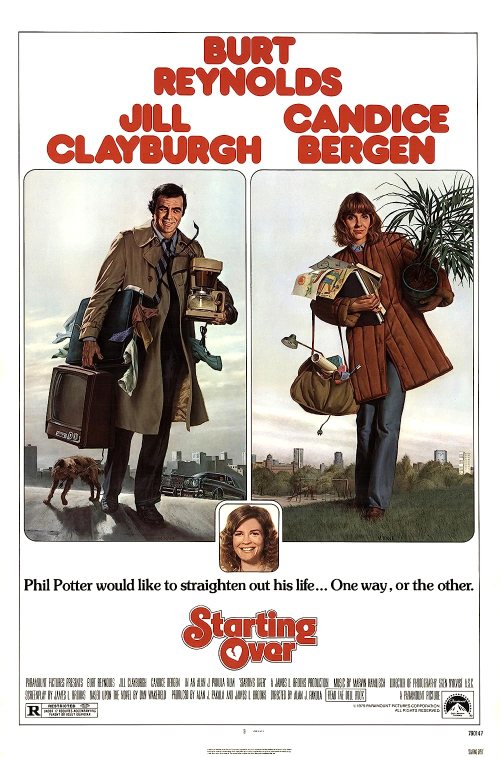
Starting Over (1979)

starting1

By Richard Winters

My Rating: 7 out of 10

4-Word Review: Can’t get over ex.

Phil (Burt Reynolds) gets a divorce from Jessica (Candice Bergen), a successful songwriter, when he finds out she’s been having an affair. He then moves to Boston where his brother Mickey (Charles Durning) and sister-in-law Marva (Frances Sternhagen) set him up with Marilyn (Jill Clayburgh) a nursery school teacher. They don’t initially hit-it-off, so he instead goes out with Marie (Mary Kay Place), but that doesn’t go over well either, so he again calls up Marilyn and this time she relents. Despite the usual ups-and-downs things between them begin to gel and soon they decide to move in together only to have Jessica reappear wanting to get back with Phil and Phil becoming torn as to what he should do.

Based on the novel of the same name by Dan Wakefield with a screenplay by James L. Brooks best known for producing the classic TV-show ‘Mary Tyler Moore Show’. Like with that show the story focuses heavily on the pitfalls of dating life with much of it on-target though it does have a serious out-of-touch quality that’s no longer in-tune with today’s generation. The big one is that they meet on their first date inside the women’s apartments, which because of safety concerns doesn’t happen much now and usually it’s always advised to meet in a public setting and not give out personal addresses until you really get to know the person better. There’s also a scene where Jessica, who wears a highly revealing outfit, meet in Marilyn’s apartment and have what we’re told is a civil three hour conversation though in this day and age it’s hard to believe two women, knowing that the other one is clearly after ‘their man’, could be that composed and most likely a fight would break-out and I’m kind of surprised knowing how emotional Marilyn was and wearing her insecurities on her sleeve, that one didn’t happen here.

On the flip side there’s some terrifically funny moments.  One is when Marilyn and Phil initially get off the bus together, before they’ve officially met, and she thinks he’s a stalker, which has a good true-to-life feel. Another great scene is when Phil and Marilyn briefly break-up and he goes to her school, where they’re having a dunk-a-teacher water party and he manages to hit the bullseye with the ball he’s throwing and she’s goes into the water repeatedly before eventually losing her cool and swearing. Phil’s anxiety attack inside a department store is memorable too as his Jessica’s call to Phil at his apartment while he’s serving Thanksgiving dinner to Marilyn and his guests, which creates quite the awkward moment. Phil’s first date with the aggressive Marie is a terrific bit too.

The acting is top notch especially Clayburgh who creates the perfect composite of single women during the 70’s who desperately wants to get into a relationship, but many times allow her fears and anxieties to get in the way. Reynolds is excellent playing against type. Normally he’s a brash womanizer, but here he’s far more reserved and indecisive.  This is also the last movie where he didn’t have his patented mustache and I felt he looked way better and younger without it. Even Bergen, in a much smaller role, is memorable particularly with her off-key renditions of the songs her character has written.

Overall I consider this one of the best romantic movies made. I will admit a modern remake would give the story a more timely update, but the situations nicely reflect the dating conundrums that affect us all.  My only complaint would be with the Clayburgh character, who seemed too insecure to be able to get into a healthy relationship. Most guys would be scared off with her constant emotional outbursts and accusations and I didn’t see why Phil stuck with it. This is one instance, especially since Phil was pretty much a hunk, that I felt the woman he fell for should’ve been better looking, or at least equal to the Jessica character that he left. I just couldn’t understand exactly why, being that there were a lot of women who could easily get into him, he’d choose, or settle for, Marilyn over all the others. Had they had more in common then maybe, but she came-off like a woman who would eventually become a cat lady and too emotionally needy to be someone you could have a long term relationship with.

My Rating: 7 out of 10

Released: October 5, 1979

Runtime: 1 Hour 45 Minutes

Rated R

Director: Alan J. Pakula

Studio: Paramount Pictures

Available: DVD-R, Amazon Video, YouTube

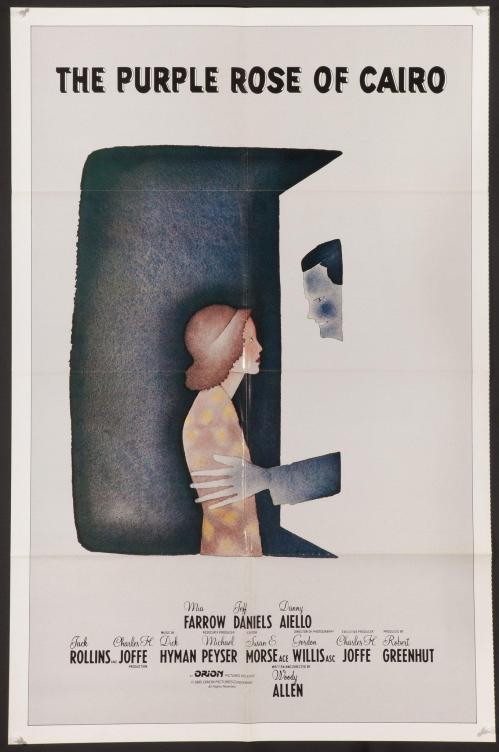
The Purple Rose of Cairo (1985)

purple1

By Richard Winters

My Rating: 7 out of 10

4-Word Review: Breaking the fourth wall.

Cecilia (Mia Farrow) is a lonely woman living in 1935 who’s stuck in a dead-end job and an abusive marriage. As an escape she regularly goes to the movies and becomes especially entranced with one called ‘The Purple Rose of Cairo’ particularly the dashing young man character named Tom (Jeff Daniels). Tom notices Cecilia continuing to attend each showing and thus breaks out of the black-and-white movie he is in and into the real world just so he can speak with her as he feels he’s falling in love. Cecilia tours him around the small New Jersey town where she lives while the rest of the cast in the movie he’s left sit around and hope he’ll come back, so they can continue on with the story. The actor, Gil Shepherd (also played by Daniels), who played Tom in the movie hears about Tom jumping out of the screen and heads to New Jersey in order to coax him back, but Tom is having too much fun getting to know Cecilia and has no intention of returning to the phony life of the movie world. In the meantime Gil also meets up with Cecilia and the two begin to hit-it-off. Will Cecilia choose Gil over Tom and if so will this get Tom to go back into the movie once and for all?

This was the first of Woody Allen’s nostalgic picture that would replicate the time and place of when he grew up and in fact the theater where Cecilia watches her movies was the Kent Playhouse, which Allen had gone to when he was 12 and which he describes ‘one of the great, meaningful places of my boyhood’. His ability to capture working class life and Cecilia’s bleak existence is completely on-target making the opening 20-minutes one of the most impactful of the whole film. Farrow is nothing short of excellent and Danny Aiello, who got this part to make-up for getting passed over in Broadway Danny Rose, is quite good too particularly with the way he’s able to show the human side of his character despite him being quite abusive and domineering to his wife otherwise.

The comedy takes off when Tom literally jumps out of the screen and Allen is very creative at thinking out every conceivable angle at not only how the other patrons in theater respond, which is some of the funnier bits in the film, to the characters onscreen, who are also quite amusing most notably Zoe Caldwell who plays the Countess and has some great zingers, but also the film’s producer (Alexander Cohen) and how he responds to the ‘calamity’. Some may argue that it’s missing a cause, since film characters don’t jump out of the screen everyday what allowed it to happen in this case, which the movie never answers, but for me that’s what made it even more amusing as everyone reacts in wildly different ways to the unexplainable and if anything Allen at least doesn’t cop-out by turning it into some sort of dream that Cecilia had, which would’ve been disappointing. I’d rather have as some odd fluke in the universe than reverting to an overused dream gimmick.

My one complaint was Daniels who’s deadly dull. He has a few amusing responses to things, but he’s bland most of the way. Michael Keaton was cast in the part initially, but after 10-days of filming Allen decided he seemed ‘too contemporary’ and thus had him replaced, which is a shame as Keaton has a more dynamic onscreen presence while Daniels seems too transparent. I didn’t like the entering in of the actor character either as that just started to make it too confusing. The actor should’ve been wildly different than the character he played, extreme narcissistic ego, which would’ve been hilarious. While he does show some of these traits it’s not enough and it gets hard telling the difference between the two. Having a rich Hollywood actor, who would most likely already be in a relationship anyways, falling in love with a nondescript housewife didn’t make a lot of sense. While the scenes between Cecilia and Tom are quite endearing, the moments between her and Gil are boring and start bogging the whole thing down.

Spoiler Alert!

Some have complained about the so-called ‘unhappy ending’, which Leonard Maltin in his review described as ‘a heartbreaker’, but I found it to be a perfect. The odds that a relationship between a up-and-coming Hollywood star and a New Jersey housewife would actually work are pretty slim. Besides Cecilia’s love affair wasn’t with people anyways, but with movies and their ability to sweep her away from her sad existence and into a fantasy world and on that level it’s a happy one as Cecilia returns to the theater all broken-hearted only to again forget her troubles when she gets wrapped-up in a Fred Astaire and Ginger Rogers flick proving that movies would always be there for her even when people won’t.

My Rating: 7 out of 10

Released: January 26, 1985

Runtime: 1 Hour 22 Minutes

Rated PG

Director: Woody Allen

Studio: Orion Pictures

Available: DVD, Blu-ray, Amazon Video, Tubi, YouTube

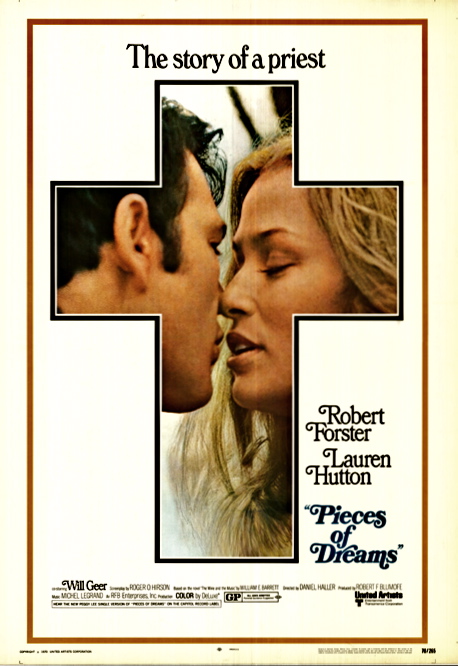
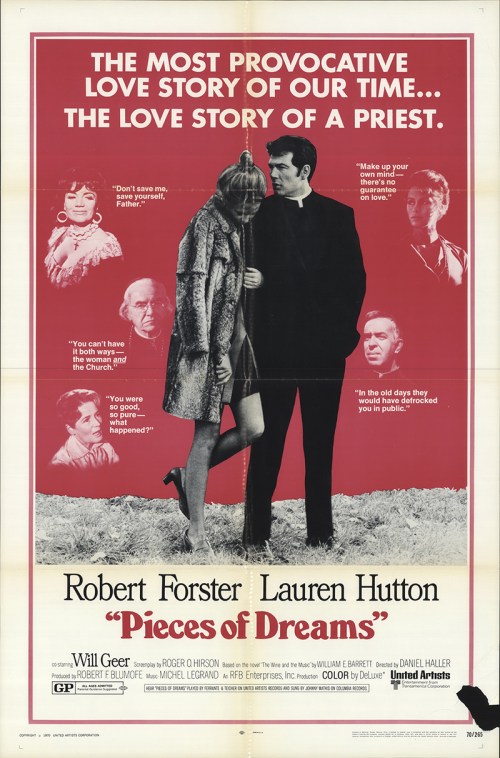
Pieces of Dreams (1970)

pieces1

By Richard Winters

My Rating: 2 out of 10

4-Word Review: Priest breaks his celibacy.

Father Gregory (Robert Forster) is a priest working outside of Albuquerque, New Mexico with a mainly Hispanic church membership. He had been dealing with a 15-year-old boy who was in-trouble with the law only to be called into the hospital late one night to learn that he’d been killed while trying to steal a car. It’s there that he meets Pamela (Lauren Hutton) a social worker from the local community center. The two share widely different viewpoints particularly on the topic of abortion, but despite their differences the two eventually fall in love and their relationship turns intimate. Gregory feels guilty about this due to his vow of celibacy and tries to hide the affair from Paul (Ivor Francis) an older priest whom he lives with and is known to have a prying eye. Gregory decides to ask for a leave in order to get his thoughts together, but learns that trying to find a job on the outside with little work experience can be a difficult task. While he avoids Pamela in order to figure out what direction he wants to take his life the other priests put pressure on her to break it off permanently while trying to guilt-ridden her that she’s destroying a ‘good man’s career’.

This was an unusual career move for Forster who had just completed his signature role in Medium Cool where he was seen running around naked with a nude woman inside his apartment during a provocative moment, so I guess he wanted to tackle a completely different type of character for his next project in an effort to avoid being typecast, but it doesn’t really work. He’s a fine actor, but his streetwise personality trickles through and he never really comes-off as being all that devout and thus making the career arch very expected and no surprise at all. The voice-over narration that he has during the first act, in an attempt to convey to the viewer his inner thoughts, was not needed and off-putting.

Hutton is quite beautiful. She hit her career peak with her work in American Gigolo when she was already middle-aged, so seeing her still quite youthful looking is a treat, at least to the heterosexual male viewer, and you could easily see why she was a former model. Ivor Francis, not necessarily a household name, but competent character actor during the 60’s and 70’s, is quite good as the domineering senior Priest who has his own character flaws that he tries to cover-up even though he’s more than happy to readily expose the ones he sees in others. Will Geer also shines, but isn’t seen until the tail end playing a clergyman who has an amusing line when he tells Gregory that the celibacy demand for Priests ‘will soon be going away’ even though 50 years after this was filmed nothing has changed.

The theme dealing with how religion in theory is meant to be comforting, but in practice can become something that torments people by making them feel guilty and fearing the wrath for what could be considered to others as being minor infractions, like having sexual thoughts, is on-target though not necessarily ground-breaking. Some of the other issues will seem quite dated like the married woman who fears using the pill, or any other type of contraception, as it goes against the teachings of the catholic church, though through the decades this is no longer considered as much of a ‘sin’. There’s also the scene where Gregory lectures a youth who’s in jail for smoking cannabis about how he’s ‘thrown his life away’ while pot is now legal in many states.

The real problem, or when the film ultimately ‘jumps-the-shark’, is when Gregory goes to bed with Pamela, which came off as way too seamless and rushed. Up until then the couple really hadn’t had much in common and were usually arguing over political issues and weren’t for that matter even officially dating. It seemed to me that if someone like Gregory is made to feel extremely guilty for even thinking about sex that is ability to actually perform it would be questionable. Having him run away from her when he started feeling the urge and then avoiding her due to the temptations that she gave him would’ve made more sense then just having him casually hop in the sack without a second thought like he’s just a regular guy on the make and wearing the priest collar is some sort of performance art.

What the filmmakers apparently thought would be a compelling question of would he, or wouldn’t he stay in the church is ultimately given the placid treatment. The romance angle isn’t convincing and despite some good conversational dialogue, and nice on-location shooting of New Mexico in the autumn, the story fails to resonate making the movie woefully trite by the time it finally ends.

pieces2

My Rating: 2 out of 10

Released: September 23, 1970

Runtime: 1 Hour 39 Minutes

Rated GP

Director: Daniel Haller

Studio: United Artists

Available: DVD-R (MGM Limited Edition Collection), Amazon Video

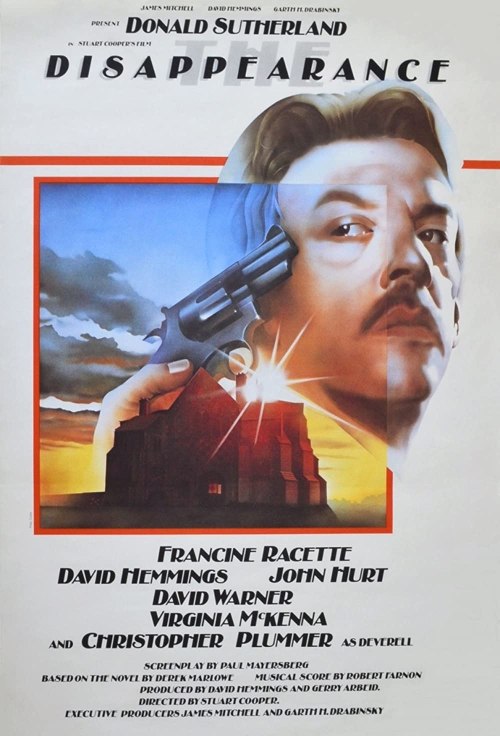
The Disappearance (1977)

disappearance

By Richard Winters

My Rating: 7 out of 10

4-Word Review: Where is his wife?

Jay Mallory (Donald Sutherland) is a professional assassin who works for a secret organization that contracts him out to do hits all over the world. After returning home from his latest assignment he finds that his wife Celandine (Francine Racette) is not there. Since they had a tumultuous relationship he initially presumes she left on her own accord, but then his friend and fellow hit man Burbank (David Warner) informs him that her disappearance may have something to do with his last hit. The organization that employs him now calls with another assignment, but this time they’re reluctant to give any details, which is unusual. Jay is afraid he’s being set-up as Burbank told him that the company is known to ‘retire’ those that are deemed no longer useful or trustworthy. He decides though to go through with the assignment as he’s curious how it will play-out and confident enough in his ability to get out of any jam, but soon finds himself faced with an entangling twist he never expected.

The film is a fascinating portrait of what can be done with creative direction. Stuart Cooper, who’s not exactly a household name and in fact this was his last theatrical film until 2010 when he did Magic Man, lends some interesting directorial touches that makes the story and characters more interesting than they might otherwise. What I especially liked was the non-linear narrative in which the movie cuts back and forth between the past to the present day. These types of storylines are typically frowned upon by Hollywood studios as they’re considered to be ‘too confusing’ for mainstream audiences to follow, but I had no such difficulty and felt it allowed in added nuance that would not have been present had the plot been approached in the conventional way. Nonetheless when the film tanked at the box office upon its initial release the studio insisted that the film be re-cut where the story would be presented in the standard linear format, but this version did even worse, so fortunately for the DVD/Blu-ray release it was brought back to its original way and labeled as being the ‘director’s cut’ though Cooper actually had no input on it, but eventually approved once he viewed it.

It’s also highly atmospheric particularly with the way it captures the cold, wintry climate of Montreal in the dead-of-winter. Having been born and raised in Minnesota I can tell a fake winter scene done on an indoor sound stage using artificial snow within seconds, but here the cold, including the mounds of snow drifts and nasty hollowing wind, is quite vivid and helps to symbolize the cold nature of the characters and the business they’re in.

I was a little more lukewarm with the acting. Sutherland can certainly be an outstanding leading man, but he seems too kind and sensitive for a person making a living killing others for money though I did like the scene where he plays memory games with his wife while at home, which brings out how crucial paying attention to detail is for his line of work. The supporting players are all familiar faces though I felt Warner was a bit wasted and underused. Virginia McKenna, best known for her starring role in the classic Born Free, is seen for only a brief bit though her interaction with Sutherland is quite pivotal while Christopher Plummer doesn’t appear at all until the final 15-minutes, but still manages to come-off with a memorable presence.

Spoiler Alert!

The film’s biggest downfall though is with the ending, which becomes one twist too many. Up until that point the twists had been a logical fit that made sense when you went back and thought about it. Then at the very end Sutherland gets shot and killed while walking home from the grocery store, but it’s never shown who did it, or why. Maybe it was the secret organization that wanted to ‘retire’ him, but this needed to be shown and explained. Just leaving the viewer hanging with a violent, but vague scenario isn’t satisfying and cheapens the rest of it.

My Rating: 7 out of 10

Released: September 17, 1977

Runtime: 1 Hour 31 Minutes

Rated R

Director: Stuart Cooper

Studio: Trofar

Available: DVD (Region 2), Blu-ray

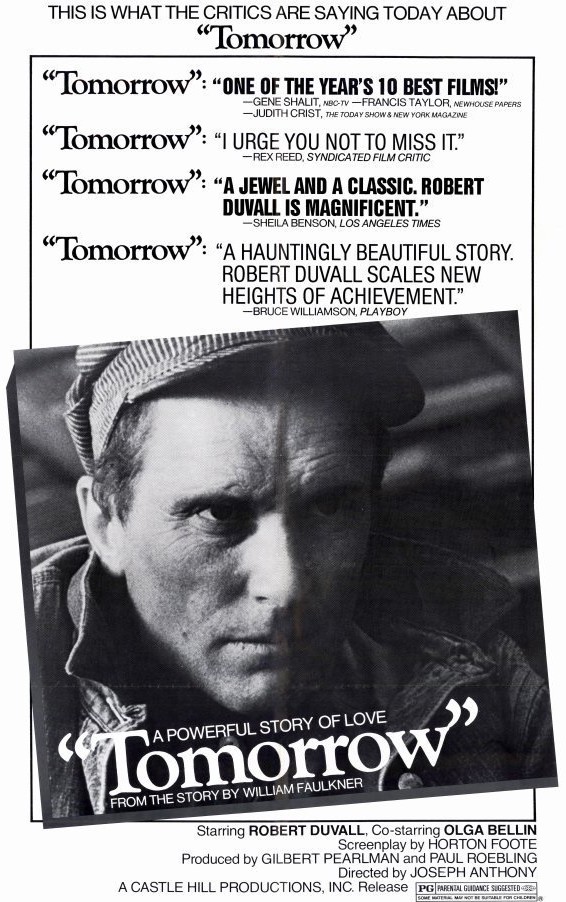
Tomorrow (1972)


tomorrow1

By Richard Winters

My Rating: 5 out of 10

4-Word Review: Aiding a pregnant woman.

Jackson Fentry (Robert Duvall) is a lonely farm-hand who has never married and lives in a tiny shack on the grounds of the farm that he’s been hired to maintain. One day he comes across a pregnant woman named Sarah Eubancks (Olga Bellin) near the property who’s been abandoned by both her husband and his family. He brings her back to his modest shed to warm her up and since she has nowhere to go he eventually agrees, with the help of a local midwife (Sudie Bond), to assist through the birth of her child. Sarah though dies soon after the baby is born, but not before Jackson agrees that he’ll raise the child. For several years Jackson is able to do just that until the brother’s of the boy’s father arrive and take the child away. Then many years later Jackson is called-in for jury duty on a trial that, known only to him, has a connection to the boy he lost contact with. 

There’s been many movies that have tried to recreate the rural 1800’s, but many for the sake of drama, or to make it more relatable to modern audiences, tend to cheat things. They may make it authentic in some areas, possibly even painstakingly so, but then compromise in others due to the entertainment factor. This though is one film that could genuinely be described as being about as minimalistic as any director could possibly make it. Filmed on a farm in rural Mississippi that was owned by the grandfather of Tammy Wynette the movie gives one an authentic taste of life back then with little to no music and no sense of any staging. The bare-bones shack that Jackson must reside in gives the viewer a stark sense of the grim, no frills existence that many dealt with back then. The slow pacing aptly reflects the slower ways of life and having the camera virtually trapped in the shed, or at most the nearby property, symbolized how people of that era had to learn to endure and expect little.

While those qualities hit-the-mark I felt that black-and-white photography detracted from it. By the 70’s most films were shot in color and only a few like The Last Picture Show, Young Frankenstein, and Eraserhead just to name some, were not, but this was more for mood, or style. Here though with everything already at an intentionally drab level the color could’ve at least brought out the beauty of the outdoor scenery of a southern winter and offered some brief striking visuals and a cinematic presence that was still needed, but missing and kind of hurts the movie. 

Surprisingly I had issues with the acting. One might say with Robert Duvall present that couldn’t be the case, but his overly affected accent, he got it from a man he met once in the foothills of the Ozarks, was from my perspective overdone and even borderline annoying. Bellin is alright though behind-the-scenes she created problems by refusing to take any advice from director Joseph Anthony. She had done mostly stage work up until then and was used to having leverage about how she approached her character once she was onstage and considered that once the camera was shooting meant the same thing. It was okay, like with a play production, for the director to give advice during rehearsals, but when the actual filming started she should have free rein over her craft and having Anthony repeatedly reshoot scenes, like in typical film production, or suggest she do things differently as the filming was going on, was all new to her and not to her liking, which caused numerous arguments not only with Anthony, but Duvall as well making them both later admit that they regretted casting her and she never performed in another movie again. Out of the entire cast it was Sudie Bond as the lady who helps with the birthing that I found to be the most memorable. 

While the story has many commendable moments it gets stretched pretty thin especially since it was based on a short story by William Faulkner and then adapted first as a play and then to the big screen by Horton Foote (the first of two collaborations that he did with Duvall with the second one being Tender Mercies 10 years later). Almost the entire third of the film gets spent on Jackson’s conversations with the woman while his relationship with the son takes-up less than 10 giving the pacing and flow a disjointed feel. It’s also a shame that, like with The Owl and the Pussycat, which came out 2 years earlier, the producers compromised on the elements of the original piece as in Faulkner’s story the pregnant woman was black, but here she gets changed to being Caucasian. Had the character remained black then what Jackson does for her would’ve been more profound as he would’ve been taking great personal risk in helping her in an era and region of the country where racism was high and by no longer being a colored woman it lessens the drama and is not as impactful as it could’ve been.

My Rating: 5 out of 10

Released: March 19, 1972

Runtime: 1 Hour 43 Minutes

Rated PG

Director: Joseph Anthony

Studio: Filmgroup Productions

Available: DVD, Blu-ray, Plex, Tubi, Amazon Video


Roseland (1977)

roseland2

By Richard Winters

My Rating: 7 out of 10

4-Word Review: Participants of ballroom dancing.

In 1976 director James Ivory, who had already collaborated with writer Ruth Prawer Jhabvala on 5 other films, wanted to turn her short story ‘How I Became a Holy Mother’ into yet another movie. The story required one scene to be shot at The Roseland Ballroom, a dancing venue in New York City, that was originally built as a ice skating rink in 1922 and then converted to roller skating only to eventually become a popular retreat for ballroom dancers. When Ivory approached potential investors none of them liked the story, but did like the idea of shooting a movie inside Roseland. They agreed to give money to the project as long as the entire setting took place in that venue.

Ivory then had Jhabvala interview the people at the club to get a better understanding of the folks who went there and to help generate story ideas. It was through these visits that Jhabvala was able to come-up with three different vignettes that is based closely on real-life events that occurred with people who attended the Roseland throughout the years and most of the dancers seen in the background were actual members of the dance hall and not paid extras.

While the owners of the Roseland were happy to give permission to shoot there it did come with several stipulations. One was they could only shoot during the day on Wednesdays and could not alter any of the interiors in any way, which included the lighting. Despite these restrictions he was able to succeed pretty well though at the 30-minute mark it’s obvious in a scene where Christopher Walken and Geraldine Chaplin are supposedly in a room alone that there’s a cameraman there as you can easily see his reflection on the wall mirror. Ivory was also forced, much to his chagrin, to hire a scenic artist and art director onto his crew even though they were unable to make any changes to the set, but union rules required one must be hired anyways, and the teamsters union picketed the production outside the building until Ivory finally relented, which resulted in 2 extra people being brought onto the crew to sit around and do absolutely nothing, but still getting paid.

As for the stories they’re okay, though the first one, ‘The Waltz’ is clearly the weakest despite excellent performances by the two leads. It stars Theresa Wright as a widow named May who keeps seeing a reflection of herself and her former husband when they were much younger in a mirror in the ballroom as she dances with her new partner named Stan (played by Lou Jacobi). No one else sees this same reflection except for May and most think she’s going nutty. Stan wants May to get over her memories of her old husband and focus solely on him, but when she doesn’t he loses interest in her though May finally comes around when she realizes that the past is the past and there’s no going back, so why not instead live for the present. This segment, unlike the others, relies heavily on voice-over narration of Helen Gallagher, who plays Cleo, a dance instructor, it also enters in weird supernatural elements as it’s never explained why May keeps seeing these reflections, is she really going nuts, or is some ghostly phenomenon trying to speak to her from the afterlife? This never gets answered and hence is why the story really doesn’t amount to much.

The second story, ‘The Hustle’, is the best one and features a terrific performance by Chaplin. It involves Russel (Christopher Walken) who is seeing the much older Pauline (Joan Copeland) not so much because he loves her, but more because she pays him to be her escort and he likes the money. He then meets Marilyn (Chaplin) who has just gone through a rough break-up. He immediately becomes smitten. Marilyn is at first reluctant in getting into another relationship, but eventually falls for Russel only to learn that he’s not quite ready to give-up Pauline, or her money and seems to want to juggle the two, which Marilyn does not want. While this segment is quite captivating I would’ve like a better, more dramatic confrontation and less of an ambiguous conclusion.

‘The Peabody’ is the third and final segment. It deals with Ruth (Lilia Skala) an older woman with a strong personality looking for a suitable dance partner to win a competition. She meets Arthur (David Thomas) a meek elderly man who agrees to partner with her despite having a weak heart. Ruth takes his friendship for granted and is quite demanding of him only to learn to regret it when he’s no longer around. Skala’s performance, of which she got nominated for the Golden Globe, makes catching this part well worth it.

My Rating: 7 out of 10

Released: October 2, 1977

Runtime: 1 Hour 44 Minutes

Rated R

Director: James Ivory

Studio: Merchant Ivory Productions

Available: DVD

Deadly Games (1989)

game1

By Richard Winters

My Rating: 7 out of 10

4-Word Review: Kid versus Santa Claus.

Thomas (Alain Lalanne) is a 10-year-old who’s a wiz with computers and technology. Not only has he set various booby traps throughout the large mansion that he lives in with his mother (Brigitte Fossey), but he can fix cars and even drive them. Despite being super smart he still believes in Santa Claus while his friend Pilou (Stephane Legros) tries to convince him that he isn’t real. Thomas goes on the computer in an attempt to communicate with Santa, but instead gets a vagrant (Patrick Floersheim) on the other end pretending to be the jolly red fellow. He gets Thomas to give out his address and also reveal that his mother is a rich corporate CEO. The vagrant goes to his mother’s company and gets a job as a Santa, but is soon fired by her when he slaps a child. In revenge the vagrant, still in his Santa costume, goes to Thomas’ house where he plans to kill him, but Thomas uses his technical ingenuity to set a trap.

The film is an unusual hybrid between playful children’s comedy, a holiday film, and a slasher horror, which only could’ve been made in France where filmmakers aren’t under a repressive studio system that forces all scripts to conform to a cookie-cutter formula and here allows them to deviate between genres. Many have labeled this the original Home Alone and in-fact writer/director Rene Manzor threatened to sue John Hughes, who had directed the other one, insisting that he had essentially remade his film without permission. There are though quite a few differences between the movies to the extent that I didn’t think it was an unauthorized remake at all. If anything it reminded me more of another French classic Le Joutabout a rich kid living in a big place with a wide assortment of toys. This is also the best of the killer Santa movies as You Better Watch Out and Silent Night, Deadly Night took themselves too seriously while this one has a playful edge that manages to be both amusing and tense.

The kid certainly has an engaging quality and his love for his elderly grandfather (Louis Ducreux) is quite endearing, but he’s also just a bit too smart. I was okay with him being keen on the gadgetry, but having him get underneath a car and able to not only fix it, but also drive it was going too far. I wasn’t sure that a 10-year-old could reach the pedals with his feet and still be able to see over the dashboard. Part of what makes horror movies intense is having a victim appear vulnerable, but right away with the kid being so incredibly ingenious it makes the odds stacked against the killer and thus their cat-and-mouse game not as intriguing. I also really couldn’t stand the kid’s mullet haircut.

The home is over-the-top as well. It gets referred to as a mansion, but really seems more like a castle that’s bigger than anything I’ve seen anyone else, even the billionaires and celebrities, reside in. It doesn’t even seem like a real place, but instead, in certain shots, a miniature model and at other points a painting. All the secret rooms gets a bit dizzying including the hidden one that can be entered via an old refrigerator (are they really expecting us to believe that a 10-year-old kid, no matter how smart he is, could build that?). Another moment has Thomas getting trapped inside a life sized maze, but who the hell would take the time and effort to build a maze in their very own home, which again ends up getting too creative for its own good and negates the tension instead of enhancing it.

The Santa character is a boring. Usually horror movies make an effort to give the psycho, whether it’s through flashback or dialogue, some sort-of backstory, but here this guy pops-up without any idea of who he is, where he’s from, or why he’s so crazy. There’s also a few segments where he gets caught in a trap, like when he falls through a trap door and stuck in a net, but no shot showing how he got out of the predicament. Seeing how he gets himself out should’ve been shown each time (it’s shown in a few scenarios, but not all) in order to make the plot seem more reality based and less cartoonish.

Overall, despite the over-direction, it’s still a fun, wild ride that could be enjoyed by the whole family. It does get a bit intense at times, but the quick-thinking kid always seems to be pretty much in-control. Outside of the pet dog getting stabbed none of the other killings are seen and only the feet of the dead bodies are captured on camera to represent their demise, which should make it palatable for most kids to sit through without having nightmares afterwards.

Alternate Titles: 36.15 code Pere Noel, Game Over

My Rating: 7 out of 10

Released: March 18, 1989

Runtime: 1 Hour 32 Minutes

Not Rated

Director: Rene Manzor

Studio: Deal

Available: DVD-R (dvdlady.com)

Mask of Murder (1988)

mask1

By Richard Winters

My Rating: 4 out of 10

4-Word Review: A copycat psycho killer.

Chief Superintendent Jonathan Rich (Christopher Lee) and Police Chief Bob McLaine (Rod Taylor) surround an abandoned home where a killer, who has sliced the throats of several women in the town, is hiding-out. When the killer makes an attempt to escape he shoots and injures the superintendent forcing Bob to return fire and kill the fleeing suspect. Everyone in the town believes that with the bad guy now dead the killings will stop, but instead they continue. Could there be a copycat killer, or is it someone on the police force who’s studied the killer’s methods and is now playing them-out?

A very odd mix that seems at times to being a wanna-be slasher film and at other points a detective thriller and even a psychological study, but on all three levels it fails. The killings lack inspiration and no effort is made for build-up, tension, or atmosphere. They’re captured in a routine way and the special effects are unconvincing. Instead of looking like the victim’s throat is getting slashed it appears more like a streak of lipstick, or bright red nail polish.

The setting is a fictitious Canadian town, but was clearly shot in Sweden, as all the cars have Swedish license plates and the vehicles are much smaller than what you’d find in the North America at that time. The ambulances have a different sound to their sirens and there’s even business signs seen in Swedish. Having Valerie Perrine, who plays Taylor’s wife, go off to Bermuda with her lover Ray (Sam Cook) looks quite fake as we never see any palm trees, or beaches making it seem more like it was shot in a hotel room in Sweden.

Lee gives a solid performance, but he disappears for long periods and only comes back near the end. Despite being several years younger, Taylor, with his very worn, lined face, ends up looking much older. His presence is dour and his inner angst that comes out every once in awhile is neither riveting or intense. Taylor doesn’t carry the movie like a good leading actor should, but instead drags it down. Perrine for her part, isn’t in it long enough to make much of a difference though she does appear nude from the back.

Spoiler Alert!

The twist in which Lee realizes Taylor is the killer doesn’t come-off as any shocking surprise since the film leads us to this conclusion from the very beginning and therefore once it gets revealed it’s more ho-hum than anything. Having Taylor shoot his wife’s lover by tricking him into wearing the mask and thus allow himself to be killed by Taylor in an attempt to make it seem like he had ‘the real killer’ when really it was just a way for him to get rid of a rival for his wife’s affections was too easy of a way out. Most likely there would’ve been some overlooked loopholes in his scheme that would’ve eventually gotten him arrested, so watching him proudly walk away in the snow as the credit’s role doesn’t gel and more a flimsy ending that leaves open too many loose ends.

My Rating: 4 out of 10

Released: December 1, 1988

Runtime: 1 Hour 29 Minutes

Not Rated

Director: Arne Mattsson

Studio: Master Film Production

Available: DVD-R (dvdlady.com)

Grotesque (1988)

grotesque

By Richard Winters

My Rating: 0 out of 10

4-Word Review: Punks versus deformed boy.

Lisa (Linda Blair) invites her friend Kathy (Donna Wilkes) over to her remote parent’s cabin for the weekend to help her get over a recent painful break-up. Lisa’s father Orville (Guy Stockwell) is a famous special effects artist for horror movies and the home is filled with all sorts of spooky masks and props. Unfortunately a gang of punks lead by Scratch (Brad Wilson) invade the home looking for money. Lisa’s parents are brutally murdered as well as Kathy. Lisa manages to get away, but eventually chased down outside in the snow. Yet the punks do not realize that another person is in the home, Patrick (Robert Apisa), who resides in a hidden room. He’s a boy with massive facial deformities that the parents kept in a secret room, but who is able to escape after the massacre. He then chases the punks down and begins offing them one-by-one while the police and Orville’s brother Rod (Tab Hunter) also go after the punks.

Filmed on-location in Big Bear Lake the film has a similar storyline to the Canadian cult classic Death Weekend and while that one had its share of faults it’s still far better than this, which has so many issues it’s had to know where to begin. The overly exaggerated performances of the punks, particularly by their leader who acts like he’s consumed way too much caffeine, is one of the bigger problems. There’s also no explanation for how they manage to find Orville’s very remote house especially since their van breaks down on the way. They try to ask Lisa for help, but she drives on, so who eventually came to their rescue to get them back on the road, or did they walk there and if so that should’ve been shown. It’s also irritating how they’re shown outside the home one second and then magically inside the place the next, but with no explanation for how they get in.

Linda Blair is certainly a fine actress, but she gets partially to blame for this monstrosity since she also co-produced. Donna Wilkes is quite appealing as usual and had she stayed in it the whole way and became the heroine I would’ve given it more points, but once she goes down it really gets bad. I felt the idea of having her sleep in the same bed with Lisa in Lisa’s bedroom looked a bit odd. If they were 8-year-olds on a sleepover that might be fine, but adult women, who were not in an intimate relationship, would most likely want more privacy and the home from the outside looked to have three stories, so you’d think there would be an extra spare bedroom, or two.

I didn’t like the addition of the Patrick character at all. Patrick gets mentioned briefly by Lisa and her mother, but I felt the viewer needed to be more fully aware that there was a secret room and someone in it long before the punks arrive. I didn’t understand why this deformed individual had such amazing strength either. If he had been cooped-up in a tiny room his whole life then I’d think the reverse would be true. His muscles would atrophy due to under use and he’d be weaker than normal instead of stronger.

Spoiler Alert!

The addition of the Tab Hunter character I actually liked. He plays a rugged, macho guy who tries to single-handily hunt down the punks and plays it with a fun style. I could’ve even tolerated the one twist ending that revealed Patrick to be his son and that Hunter himself was deformed and only able to hide it by wearing a plastic, form-fitting mask created by his brother. What I couldn’t stand was the double-twist, which has the whole thing being a movie created by Orville and as everyone is sitting in the theater watching it the film reel inside the projection booth gets messed with by a wolf man and Frankenstein, who then proceed to scare everyone out of the cinema when they walk in.

There’s no way anyone would get scared by two idiots that look to be wearing a tacky Halloween get-up and to give the whole thing a comical ending when the rest of it had been played-up as being serious is quite jarring. Normally after watching a bad movie and I feel disappointed, but in his case I was angry. It’s a genuine insult to have to sit through this and I honestly felt the writer-director should’ve been punished for having the audacity to make it and think anyone would be stupid enough to enjoy it.

My Rating: 0 out of 10

Released: September 9, 1988

Runtime: 1 Hour 29 Minutes

Rated R

Director: Joe Tornatore

Studio: Empire Pictures

Available: DVD, Fandor, Plex, Tubi, Amazon Video

The White Buffalo (1977)

white

By Richard Winters

My Rating: 5 out of 10

4-Word Review: Buffalo haunts his dreams.

Based on the novel by Richard Sale, who also wrote the screenplay, the story, which takes place in 1874, centers around Wild Bill Hickok (Charles Bronson) who’s suffering from reoccurring dreams involving a giant white buffalo. He travels to the west in order to find the beast and confront it. It’s there that he meets Crazy Horse (Will Sampson). The two initially don’t get along. Bill is not a fan of Indians and once said “the only good Indian is a dead one”, but the two share a common bond as they’re both after the elusive buffalo in Crazy Horse’s case it’s to avenge the death of his infant daughter who was killed when the beast violently attacked their campsite. Having formed an uneasy alliance the two, along with old-timer Charlie Zane (Jack Warden) go out into the cold, wintry terrain in search for it while debating over whose land this country really belongs to: the white man or the Native Americans.  

Story-wise the film lacks any explanation for why Hickok is having these dreams, or what exactly the image of the white buffalo is meant to represent if anything. The plot goes off on a lot of tangents including a segment where Hickok visits an old-flame (Kim Novak) that doesn’t have much to do with the central story, nor propel the plot along, and could’ve easily been cut. There’s also a few proverbial gun fights though they’re generic in nature, don’t add much excitement, and quickly forgotten. 

Bronson gives his typical wooden performance though seeing him with dark circular glasses and sporting long hair does make him, in certain shots, resemble Ringo Starr. The rest of the cast if filled with familiar B-stars in minor roles including Stuart Whitman and Cara Williams, who have an amusing bit as a vulgar couple whom Hickok shares a stagecoach ride with. Jack Warden, who’s almost unrecognizable, has a fun moment when he takes out the glass eye that he’s wearing much to the shock of Crazy Horse.

The only diverting element is the opening dream sequence that’s done over the credits where the viewer looks right into the eye of the beast close-up. Normally I’m not a fan of outdoor shots done on a sound stage, which always comes-off looking artificial, but in this instance it helps accentuate the surreal elements. The climactic sequence though in which both Hickok and Crazy Horse come face-to-face with the buffalo doesn’t work as it becomes painfully clear that the beast is special effects generated especially when Crazy Horse gets on top of it and repeatedly stabs it, which looks like someone stabbing into a sofa cushion with tacky fur stuck to it. We also never get to see a full-shot of the buffalo, just its head, so it’s difficult to gauge how big it really was. The truly disappointing part is that the illustration of the buffalo on the film’s promotional poster seen above is far more impressive looking than anything you’ll actually see in the movie.

Probably the only interesting aspect about the production is not what occurred in front the camera, but behind-the-scenes. Will Sampson, who’s by far the better actor and the story could’ve been centered around his character alone and it would’ve made it a more interesting movie, refused to read his lines for over 24 hours when he became aware that white actors had been hired to play the roles of the Native Americans and only went back to performing his role once the producers agreed to casting actual Indians for the parts. This then directly lead to the American Indian Registry of the Performing Arts, which he founded. 

My Rating: 5 out of 10

Released: May 6, 1977

Runtime: 1 Hour 37 Minutes

Rated PG

Director: J. Lee Thompson

Studio: United Artists

Available: DVD, Blu-ray, YouTube (with ads)