Category Archives: Buddy Movies

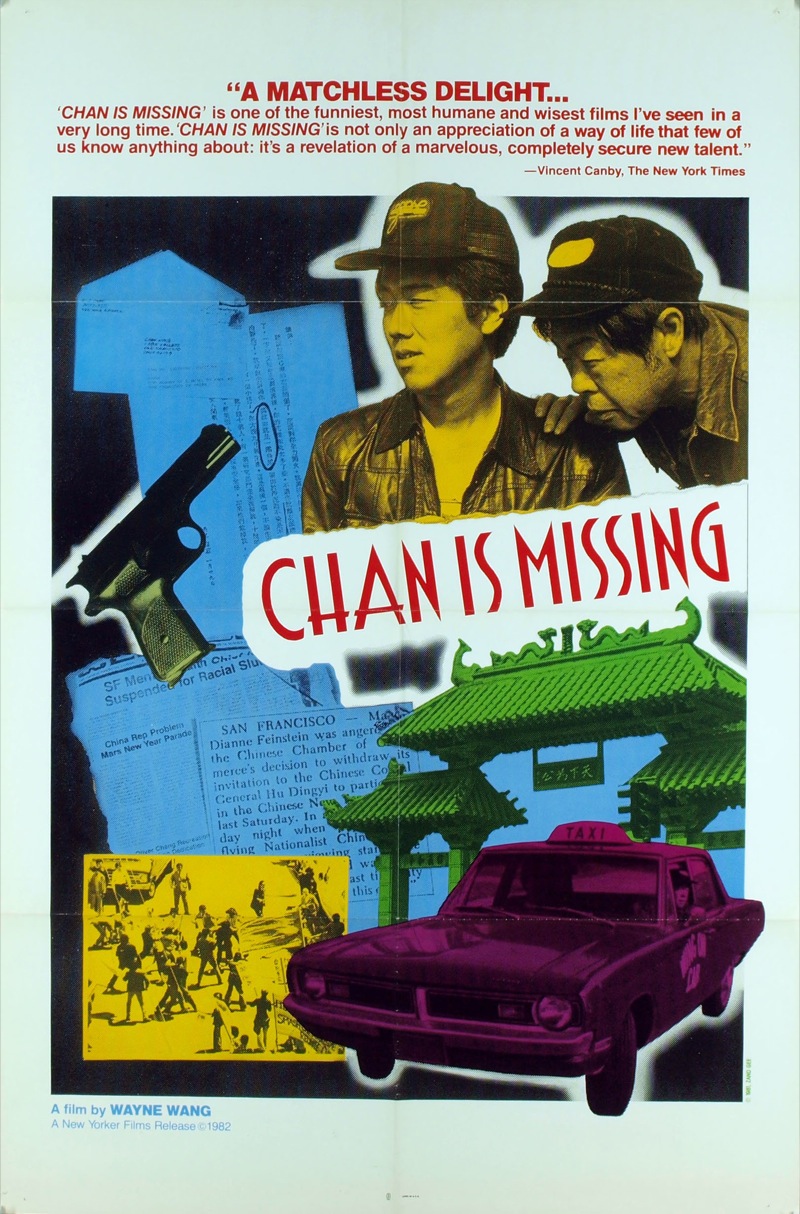
Chan is Missing (1982)

OLYMPUS DIGITAL CAMERA

By Richard Winters

My Rating: 3 out of 10

4-Word Review: Chan has their money.

This is a story about Jo (Wood Moy) and Steve (Marc Hayasi) two cab drivers who go throughout Chinatown looking for a man named Chan who took their money and then disappeared. If you have never been to San Francisco’s Chinatown district then this film gives you an illuminating look of what it is like. It shows you everything from its atmosphere, to the landscape, and even its people and their attitudes. At times it is almost like a documentary, which this probably should have been in the first place.

The main cab driver who we follow around in his search is fun in a sort of offbeat way. He is old, short, and very dopey looking. He goes about his investigation in a low key sort of way. After a while he starts to grow on you especially when he makes his wry observations.

Unfortunately these are the only two good things about this film, which on the whole is boring and heavy-handed. The search for Chan is merely an excuse by director Wayne Wang to show how difficult it is for Chinese to assimilate into American society and how they are always looked upon as ‘foreigners’, and the lack of opportunities. It is sort of like one of those movies you watched when you were in grade school where the flimsy plot was just an excuse to try to teach you something. This one works the same way where it seems more like a lecture than a movie.

Technically it is inadequate. The majority of the characters are non-actors who seem to be just mouthing the lines that they have memorized. There is also no action and a desperate need for some humor even the low-key kind could’ve helped the flow.

Certainly director Wang has gone on to do bigger, better, more sophisticated things. This film can best be viewed as an early student project, which it resembles in many ways.

My Rating: 3 out of 10

Released: June 4, 1982

Runtime: 1Hour 20Minutes

Not Rated

Director: Wayne Wang

Studio: New Yorker Films

Available: VHS, DVD

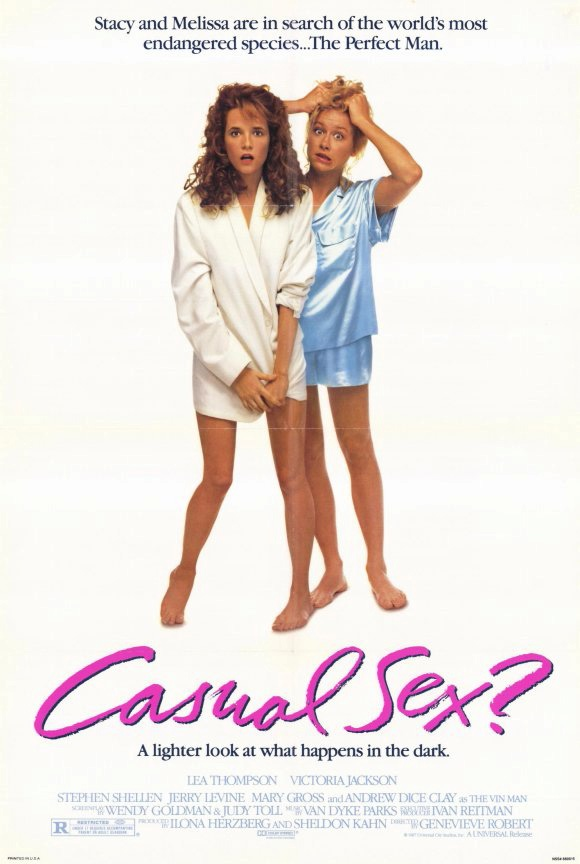
Casual Sex? (1988)

casual sex

By Richard Winters

My Rating: 3 out of 10

4-Word Review: Sex in the 80’s

Stacy (Lea Thompson) and Melissa (Victoria Jackson) are lifelong friends with very different sexual pasts. Stacy has slept with a lot of guys including some one-night-stands while Melissa has had sex with only a few and never achieved an orgasm at least ‘not when someone else was in the room’.  Because of the AIDS epidemic they decide to reanalyze their sexual mores and join a singles resort where they hope to meet their Mr. Right and settle down.

The film is based on the stage play that was originally produced for The Groundlings Theater in Los Angeles. You can tell this right away at the start where the two women stand on an empty stage and talk about some of their past sexual encounters. This proves to be the funniest part of the film with a lot of keen observations on human behavior. Unfortunately after the first five minutes of this the film digresses into a more conventional narrative by having the girls go to a single’s resort and the attempts at satire get either over-played or not played up enough. What is even worse is that it throws in a romance angle by having Stacy fall for an irritatingly perfect looking heartthrob named Nick (Stephen Shellen) who is an aspiring rock star. The two quickly move in together and then all of sudden he becomes completely clueless and harbors a lot of annoying habits that leads to a drawn-out, boring break-up session.

There are still a few funny moments including an amusing dream sequence where Stacy imagines making love to Nick while her boyfriends from the past start to pop up all around her, but overall the film fails to gain any traction, is filled with clumsy characterizations and falls flat. A much better approach would have been to structure it around a collection of vignettes with a sexual theme much like Woody Allen’s Everything You Always Wanted to Know about Sex, but Were Afraid to Ask, which is far more original and funnier than anything you will see here.

Lea is really cute and gives a good performance. Normally ditzy blondes get on my nerves, but somehow I have always found Victoria’s cute-as-a-button face and squeaky voice appealing. Her acting skills aren’t up to Lea’s level, but her more natural delivery makes for a nice contrast. Skin hounds will be happy to know that both women appear nude from the backside.

However, it’s Andrew ‘Dice’ Clay who steals the film with an engaging performance as the proverbial lounge lizard. Every scene he is in is funny and he tells a lot of lame jokes, but the way he says them is hilarious ‘they can’t all be golden’. In his attempt to get more connected to women he reads a book entitled ‘How to Pretend Your Sensitive’, which is amusing as well. My only complaint is that in the end Lea marries him and he becomes more ‘normal’, which takes away from the goofy caricature.

My Rating: 3 out of 10

Released: April 22, 1988

Runtime: 1Hour 37Minutes

Rated R

Director: Genevieve Robert

Studio: Universal

Available: VHS, DVD, Amazon Instant Video

The Fool Killer (1965)

fool killer

By Richard Winters

My Rating: 6 out of 10

4-Word Review: Kid roams the countryside.

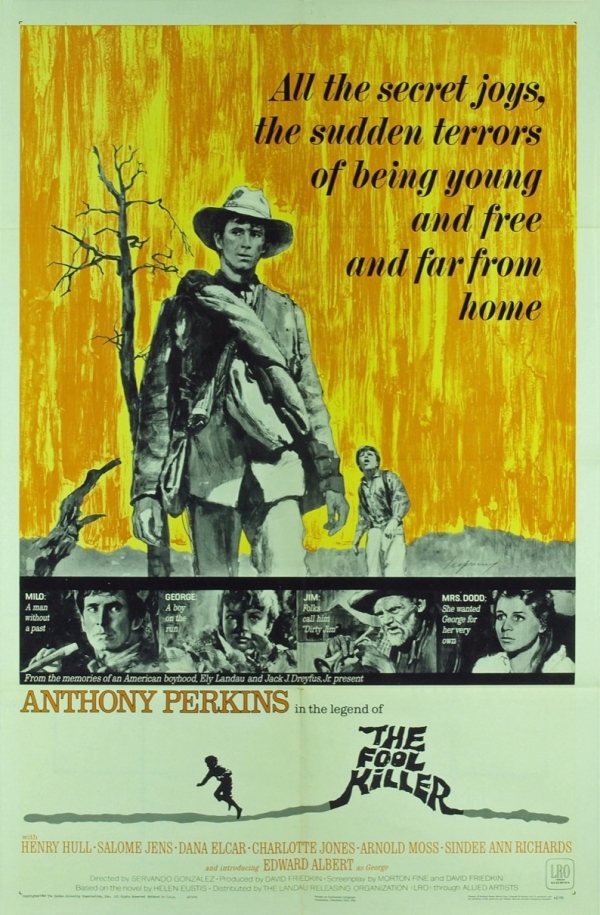
George Mellish (Edward Albert) is a 12-year-old boy who runs away from home after a particularly harsh beating at the hands of his foster parents. As he roams the Tennessee countryside he meets Dirty Jim (Henry Hull) an old man who takes him into his rundown home and fills his head with all sorts of stories about an eight foot ax-wielding man who kills people he deems to be foolish. After a bout of illness George runs away from Jim and late one night meets Milo (Anthony Perkins) a loner who carries an ax and acts strangely. Initially George thinks that he is ‘the fool killer’ Jim described, but the two soon become friends even though strange ax murders begin to occur everywhere they go.

Servando Gonzalez’s direction is excellent and the one thing that keeps this otherwise thin story intriguing. This was his only English language film and he uses a variety of different camera angles and editing styles to create a sort of hypnotic effect. The on-location shooting is vivid and their ability to recreate the look and feel of the late 1800’s is solid including having the characters occasionally speak with poor grammar, which helps with the authenticity.

The only thing about Gonzalez’s direction that I did not like is where they have a nighttime scene that was clearly filmed in the daytime, but done with a darkened lens to ‘fool’ the viewer into thinking it is night. This process has been done many times in the past, but it never works. Even with the dark lens the sky is too bright and you are unable to see any stars. I remember this done a few times on the old ‘Brady Bunch’ TV-show and I always found it disconcerting. The reason is usually because by law child performers are not allowed to work past a certain late hour, so if the script calls for a nighttime scene they try to compensate using this trick, but it always looks tacky. My solution would be to get the parent’s permission to allow the young performer to work late for one night or alter the script to have the scene done in the daytime.

Despite some good production values and an interesting narrative the story itself, based on a novel by Helen Eustis, is limp and doesn’t have enough action. The middle section, which features a lot of conversations between Milo and George, gets boring and the pace comes to a screeching halt. The George character also gets a bit annoying. I realize he is a young and the story takes place in a more innocent era, but the kid falls too easily for anything and everything he is told and seems to have no center, which eventually becomes off-putting.

For what it is worth Albert is good in the lead in what was his film debut and so is Perkins although with this he was risking getting typecast. I thought Henry Hull in one of his last roles was highly engaging and I also really liked Arnold Moss as a bombastic preacher giving a fiery sermon under a tent during a religious revival. Since the movie otherwise does not have much happening this scene tends to be pretty electrifying and vivid particularly the looks on the people’s faces as he preaches to them.

There is a sort-of surprise ending, but it is not that big of a deal and most viewers will probably see it coming long before it happens and they might also say to themselves ‘I sat through two hours of this just for that!’ as well. If the story had been a little richer with more twists or a subplot this might have been memorable, but as it is the final result is empty.

My Rating: 6 out of 10

Released: April 28, 1965

Runtime: 1Hour 39Minutes

Not Rated

Director: Servando Gonzalez

Studio: Allied Artists Pictures

Available: VHS

Going Places (1974)

going places

By Richard Winters

My Rating: 9 out of 10

4-Word Review: Guys with no morals.

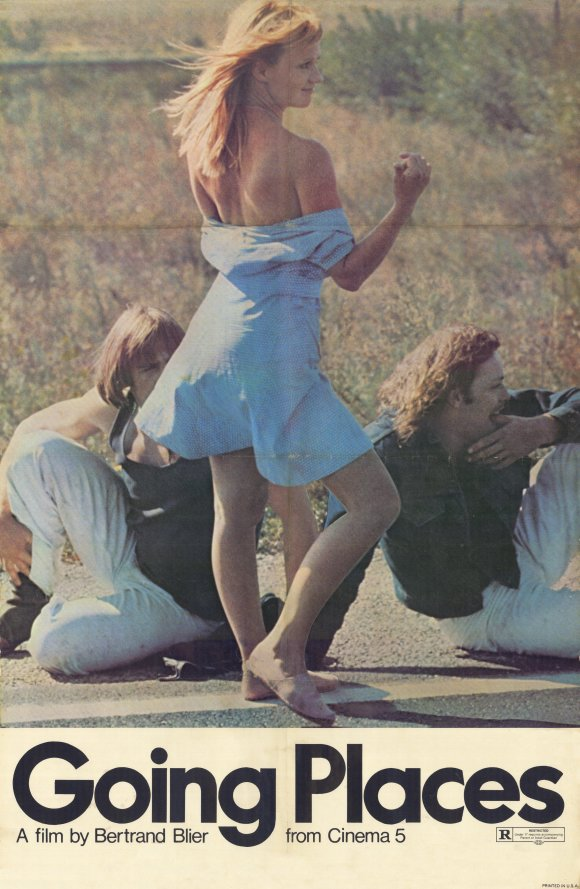
Two small time hoods (Gerard Depardieu, Patrick Dewaere) spend their days roaming the streets, robbing stores, and molesting women. In some ways this is truly an amazing film in what it is able to get away with. The two main characters are immoral, ignorant, insensitive, and brutal and the women are demeaned and degraded. The overall content is vulgar and perverse and yet somehow this thing comes off as a lyrical, offbeat delight that is pure entertainment.

It’s a definite original with every scene being an ingenious comic set-up. The scenario structure and use of locations is perfect. The pacing is fluid and director Bertrand Blier’s eye for detail near brilliant. The two hours move along like a breeze. It never gets boring and I actually almost wished it could have been longer.

The comic threads are hilarious and they get funnier and funnier as they go along. The guys’ constant, futile and very explicit attempts at getting a frigid woman (Miou-Miou) excited are a particular standout.

This is the type of black comedy that should be used as an example for all others. It’s consistently unique and manages to balance the ugly elements with the lighthearted without going overboard on either. It even throws in a surreal angle without a hitch.

Veteran French actress Jeanne Moreau has one of her finest latter career roles playing a lonely lady in desperate need of male attention. Her scene is well played out and even has a shocking conclusion. Depardieus ‘friendly’ conversation with a shopping mall security guard is another standout. The ultimate joke though may be in the film’s title as these guys are truly going nowhere.

My Rating: 9 out of 10

Released: March 20, 1974

Runtime: 1Hour 57Minutes

Rated R

Director: Bertrand Blier

Studio: Universal Pictures France

Available: VHS, DVD (Region 1 & 2), Amazon Instant Video

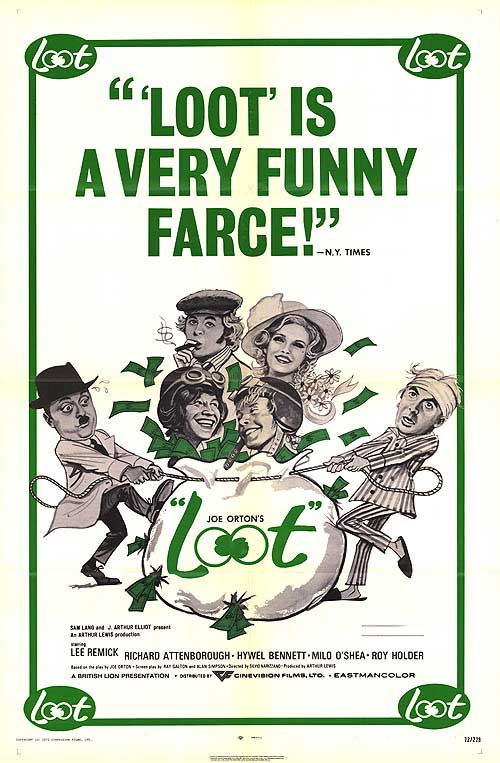
Loot (1970)

loot 3

By Richard Winters

My Rating: 8 out of 10

4-Word Review: They are all greedy.

Every Friday this month I will review the Top 5 best and most outrageous black/dark comedies from the 70’s. There were many to choose from, but these five have stood the test of time and remain as potent and hilarious as they were when first released. Today’s film was written by Joe Orton who died before ever seeing his play made into a movie and despite being top-notch in every aspect remains unjustly overlooked and hard-to-find.

The story deals with Dennis and Hal (Hywell Bennett, Ray Holder) two friends who decide to rob a bank next to a funeral home and hide the stolen money inside the coffin of Hal’s late mother. Problems ensue when Inspector Truscott (Richard Attenborough) starts to suspect the boys have something to do with it and incorporates brutal interrogation tactics to get the truth out of them. Then there is Nurse Fay (Lee Remick) who may have had something to do with Hal’s mother’s death and is inclined to want a piece of the action. All of this occurs inside Hal’s house, which is also a bed and breakfast run by Hal’s Father McLeavy (Milo O’Shea) who remains oblivious to all of the shenanigans and only worried about getting a decent burial for his departed wife.

The film is fast and funny and retains all of Orton’s dark and acidic wit. It is full of one-liners, sight gags, odd characters, and bizarre, unexpected comical twists, with ninety-eight percent of it being clever and funny. The best is the funeral procession when Dennis, who is driving a hearse that is carrying the deceased, finds out that the vehicle has lost its brakes and careens down the streets at high speeds with all the other cars in the procession try to keep up with it while driving equally fast.

Director Silvio Narizzano shows a terrific grasp on the material. Unlike Entertaining Mr. Sloane the only other film adaption of Orton’s work this film has a terrific pace that starts with a bang and never lets up. Narizzano also infuses a lot of imaginative camera angles, edits, and set design to give the thing a nice edgy, off-color feel. Outdoor action is nicely balanced with the indoor scenes to create a good cinematic feel and it never seems like a filmed stage play. There are some interesting homoerotic overtones as well including having Dennis and Hal blow a hole in the bank wall, crawl through it and take the money, then crawl back out and stuff it into the coffin while being completely naked.

Remick has one of her most interesting and unique performances in her already illustrious career as she is quite amusing looking almost like Marilyn Monroe with her dyed platinum blonde hair and authentic sounding British accent. Attenborough is memorable playing against type. Usually he is best at meek and passive types, but here he almost steals the film as the aggressive Inspector with a Hitler mustache. His best moment comes when he picks up a glass eye from the floor and in one brief second sticks out his tongue and licks it, which is done in vivid close-up.

The bouncy, psychedelic score by Steve Ellis helps give the proceedings attitude and personality. Why this film has never been released on DVD or Blu-ray is a mystery. The humor remains sharp and a whole new throng of fans could be acquired if they were just able to see it.

My Rating: 8 out of 10

Released: May 1, 1970

Runtime: 1Hour 41Minutes

Rated R

Director: Silvio Narizzano

Studio: British Lion Film Corporation

Available: VHS

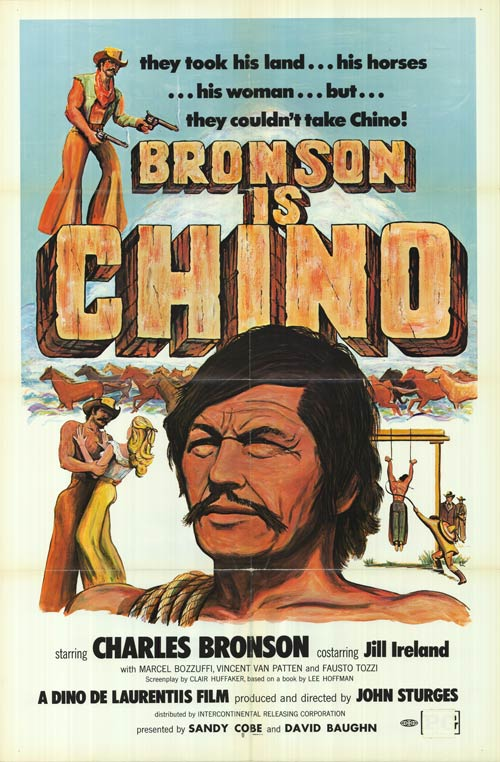
Chino (1973)

chino 2

By Richard Winters

My Rating: 3 out of 10

4-Word Review: Chuck and the kid.

Jamie (Vincent Van Patten) is a teen runaway in the old west that comes upon an isolated horse ranch run by Chino (Charles Bronson) who is ostracized by the locals for being a ‘half-breed’.  Chino reluctantly takes the boy under his wings and teaches him about how to take care of horses, but neither of them can completely escape the racism and hatred around them.

Filmed in Spain the rustic countryside has a certain visual appeal and the low-key music is a perfect score for this type of western. There is a barroom brawl and a shootout at the end, but overall this is standard stuff with little to help make it stand out. Everything this movie has to offer you’ve seen before and in most cases done better. That is not to say it is a bad movie, but it is lacking in imagination and seems content to simply borrow from an already overused formula. While the pacing isn’t exactly slow it isn’t compelling either. The characterizations, plot, and dialogue are held at the most simplistic level and if it weren’t for a brief bit of nudity by an attractive native woman I would almost say this thing was aimed solely for kids.

Bronson doesn’t show much range of emotion here and comes off in the wooden way his critics have always accused him of although he is still good in the action sequences. Jill Ireland’s appearance helps add a bit of life to the proceedings and the antagonistic banter that the two share while he tries to train her to ride a horse is fun to a minor extent as it the part where she walks in on him as he is standing buck-naked in a bathtub. However, having them fall in love so quickly and then want to get married is rushed and forced.

It is fun seeing Vincent Van Patten as a young teen, but his interaction with Bronson is dull. Their eventual ‘bonding’ is formulaic and clichéd and only helps in cementing this as a forgettable, pointless, low-budget foray.

The real stars of the picture are the horses that show much more of a screen presence than their human counterparts. In fact during the first half you see more of them than the people, which is just as well. There is even a shot showing two of them mating, which is the film’s sole unique moment and for some possibly even the highpoint.

My Rating: 3 out of 10

Released: September 14, 1973

Runtime: 1Hour 37Minutes

Rated PG

Director: John Sturges

Studio: Intercontinental Releasing Corporation

Available: DVD, Amazon Instant Video
American Movie (1999)

american movie

By Richard Winters

My Rating: 7 out of 10

4-Word Review: He needs a life.

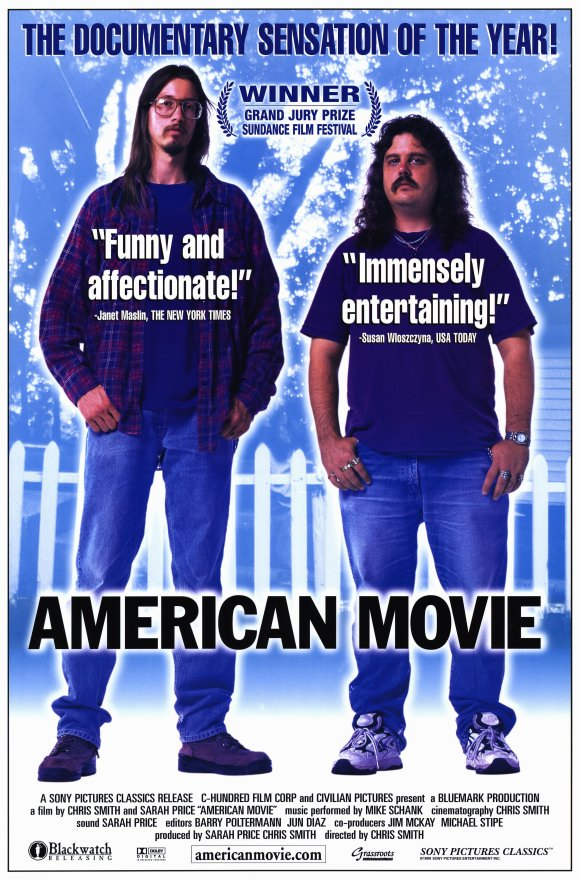
Supposedly this is a documentary about all the troubles a young would-be filmmaker has trying to film a low budget independent movie. In actuality it is the rather stark portrait of how elusive the American dream is to the low income citizen and yet how hard they still dream for it. It creates a truly absurd scenario of desperation that could only work if it was real and not the work of fiction.

The film is tightly woven without the extraneous footage one usually finds with most documentaries. We are given a well-rounded look at these people and feel like we know them. There is some question as to whether these subjects are shown so we can learn something from it or just to laugh at them, but either way it is thoroughly engrossing.

Mark Borchardt, the would-be director, is definitely the main attraction. He talks with a heavy Wisconsin accent and is the quintessential ‘pothead’. He is a man, who by his own admission spent his entire adolescence drinking and partying. Now that he must get serious about life, he resists by clinging onto his movie making dreams. His movie idea is uninspired slasher film stuff that is taken from other more successful films. He hopes to duplicate that success and thus ride it’s coattails out of his otherwise woeful existence. He is as empty headed as he looks and sounds. Yet he still puts on a mighty song and dance. He is like an aggressive used car salesman, dishonest politician and ranting street preacher who talks a lot, but says little.

He is surrounded by equally interesting people. You have his Swedish accented mother who passively supports her son in his endeavors, yet reluctantly admits he has no chance. Then there’s cantankerous frail, old Uncle Bill. He is a man who doesn’t talk much, but when he does make a peep it is a doozy. You also have a rather touching bond between Mark and his best friend Mike. A fellow ‘pothead’ who looks and sounds like he is barely functional, yet still assists his friend in all his filmmaking problems even though he himself really isn’t that interested in it.

This thing is literally amazing from start to finish. A few of the gems include: the many, many takes they have to do before old Uncle Bill can say one line of simple dialogue correctly. Then there’s the would-be director himself, who works part time as a custodian at a cemetery, describing his ‘profound’ experience at cleaning up a clogged, messy toilet. There’s even a near comatose friend Mike who breaks out and gives the shrillest special effects scream you will ever hear.

If you like to view people just being themselves then this slice of life comes highly recommended.

My Rating: 7 out of 10

Released: January 11, 1999

Runtime: 1Hour 47Minutes

Rated R

Director: Chris Smith

Studio: Bluemark Productions

Available: DVD, Amazon Instant Video
The Flim-Flam Man (1967)

flim flam man 2

By Richard Winters

My Rating: 6 out of 10

4-Word Review: Con-man finds apprentice.

Curley (Michael Sarrazin) is a young army deserter living in an over-turned and abandoned freight car in the rural regions of Kentucky. By chance he meets up with Mordecai Jones (George C. Scott) a traveling con-man who decides to use Curly as his apprentice as well as his assistance in some of his more elaborate schemes. At first Curley goes along with it, but when he fall in-love with Bonnie (Sue Lyon) one of Mordecai’s intended victims he decides he wants out much to Mordecai’s reluctance.

Scott really shines and this may be his best comic performance. Although he was only 38 at the time he looks and acts like a genuine old man even though his gray hair looks like it was frosted on much like what is done to white Christmas trees. In some way it might have been more authentic had an older actor played the role, but Scott is so much fun in the part that the movie may not have worked as well.

Sarrazin is solid in support. His quiet demeanor and understated performances never allowed him to get the recognition that he deserved, but he was always effective in these types of roles and having the character walk the moral tightrope and sometimes fall off makes him interesting and believable. Lyon is also good as the romantic interest. Although I felt the romance bogged things down a bit I still enjoyed her natural acting style that is devoid of any pretension.

Harry Morgan is fun as the headstrong sheriff who chases after Mordecai and Curly as is Albert Salmi as his dim-witted deputy. Salmi’s blank looking facial expressions are tops and the car chase that they have with the two culprits features some impressive comical stunt work and seems to tear-up the entire main street of the town.

The soundtrack by Jerry Goldsmith has wonderfully soothing melody with some great harmonica and trumpet solos. The on-location shooting in Kentucky captures the countryside and the hazy late summer sunshine of the region well.  For the most part the film is quite amiable and amusing, but predictable. The script lacks the unexpected twist or unique insight that would elevate it above being just the fluff that it is. The ending, which features Curly rigging the courthouse with dynamite and threatening it blow it up has a touching quality to it, but proves frustrating as it doesn’t show us what ultimately becomes of the characters.

My Rating: 6 out of 10

Released: August 22, 1967

Runtime: 1Hour 44Minutes

Director: Irvin Kershner

Studio: 20th Century Fox

Available: VHS 

Cattle Annie and Little Britches (1981)

cattle annie and little britches

By Richard Winters

My Rating: 6 out of 10

4-Word Review: She needs a spanking.

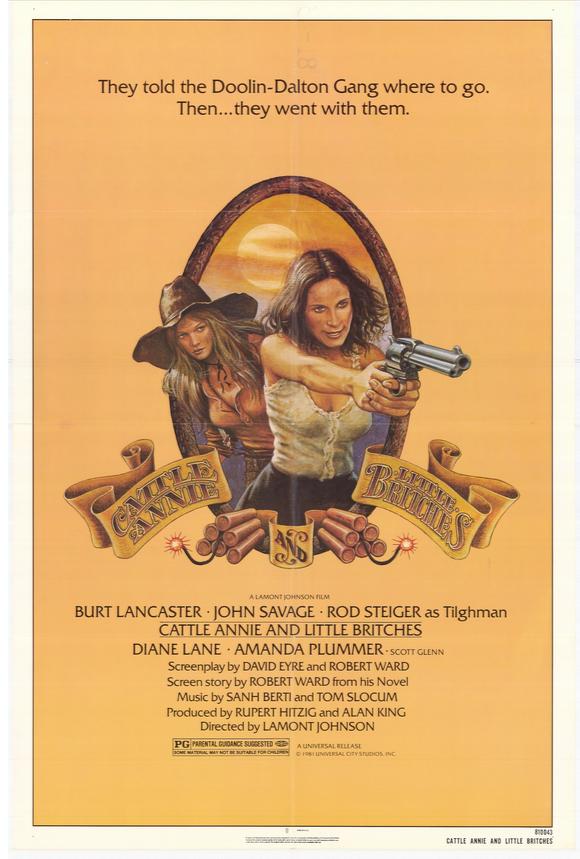
Based very loosely on actual events this film looks at Annie McDoulet (Amanda Plummer) and Jennie Stevens (Diane Lane) two adolescent girls traveling in the Oklahoma Territory of the late 19th century looking for excitement and adventure. Annie becomes transfixed with the stories that she reads about the western outlaws particularly the ones about Bill Doolin (Burt Lancaster), but when they finally do catch up with his gang they find the men to be old, haggard, and tired as well as just one-step ahead of the relentless pursuit of famed western lawmen Bill Tilghman (Rod Steiger).

Plummer, in her film debut, is nothing short of electrifying. She is the daughter of Christopher Plummer and actress Tammy Grimes and she makes her presence strongly felt here. Her vulgarity and tenaciousness are infectious and help propel the film and easily steal every scene that she is in. She has her mother’s distinctively reedy voice and although not beautiful in the conventional sense her facial features still have an alluring quality that she makes the most of.

Lane as her cohort is good as well although not as strong, or riveting. Her plus is the fact that she is simply beautiful with perfect and delicate features of a young lady blooming into adulthood. The fact that her character is more shy and unassuming plays off well against the abrasiveness of Plummer’s and the tussle that the two have near the end is fun.

Lancaster is badly miscast. For one thing the real Bill Doolin was much younger and in fact was shot dead at the young age of 38 and yet here Lancaster was already 66 when he did the part. I also felt that the character was a little bit too good to be true. It just seemed too hard to believe that a rugged western outlaw would be so kind, gentle, understanding and wise. I suppose his fans wouldn’t want it any other way and the part seems to be written to conform to his star status, but the effect hurts the film’s overall authenticity.

Steiger on the other hand is quite strong and director Lamont Johnson makes perfect use of Steiger’s legendarily intense manner. In fact I was disappointed that he wasn’t in more of the film as his presence helps create some much needed tension in a film that at times seems too slow and laid back. His finest moment, and the best part in whole film, comes when he tackles Annie and gives her a nice long hard spanking.

The score, like the film, seems unfocused and creates an unnecessary mish-mash of moods. The vocal ballads done with a minimum of instruments is good as they have a country twang and fit the period, but there are other points when a jazzed up score with modern rock elements is played, which takes the viewer completely out of the setting. There is also too much music played when the natural sound and ambience would have been better especially with a western.

Watching the girls interacting with the gang as well as surprising them with their unexpected toughness is what makes the film interesting. The climatic sequence in which the two decide to go by themselves to get Bill out of jail and the very brazen and clever way that they do it is special. Why Universal decided to abandoned what is otherwise a pleasing little western is baffling. This film is long overdue for a DVD/Blu-ray release and fans of the cast should let the people in charge know as well as taking the studio exec, if he is still around, who decided to put the kibosh on this movie and throw him into a lake.

My Rating: 6 out of 10

Released: April 24, 1981

Runtime: 1Hour 35Minutes

Rated PG

Director: Lamont Johnson

Studio: Universal

Available: None

Happy New Year (1973)

happy new year

By Richard Winters

My Rating: 8 out of 10

4-Word Review: A robbery with romance.

Stylish, moody, charming, serene, glossy, and evocative are just a few of the words that come to mind when you view this film and that’s just after the first five minutes. This is truly a French picture. It has all the ingredients that lovers of that cinema enjoy. Unlike American films, French films take their time in telling their story and everything is leisurely paced. The viewer is actually allowed to soak in the visual experience without being told what to think. Director Claude Lelouch is a master at work. He wisely realizes that film viewing is a very personal experience. What the viewer will take from that experience is unique only to them. Thus you have a picture that stays rather wide open in regards to structure. The camera takes many wide shots, thus allowing the individual viewer to focus on whatever it is that intrigues them personally. The story, while still being focused, stays elusive and subtle throughout.

To say the plot is about a planned jewelry store heist is misleading since this only takes up a part of the movie. There is also a running mix of character study, romance, comedy, satire, and even drama. Some will enjoy the amusing banter and love-hate relationship of the two male leads. Others will like the blossoming romance between one of the crooks and a beautiful antique shop owner. Still others will like the wide array of conversational topics some of which include: unique observations on marriage, hairstyles, churchgoers, psychology, men’s definition of women, and women’s definition of men. There’s even a playful critique of an earlier Lelouch film A Man and a Woman.

Overall it’s perfectly made for the viewer with distinct tastes even though when you get right down to it, it really is just a piece of entertainment fluff made more intriguing because of its sophisticated approach. Like with its Wizard of Oz-like format where the beginning and end are in black and white while the middle is in color. Why do it this way? No reason, except, why not. Same with the long slow shots of actor Lino Ventura’s very lined and expressionless face, which manages to hold an unexplainable captivation.

The rather abrupt and elusive ending seems to be the film’s only real weak point and yet when taken into context with everything else, this too has its allure. An American version of this movie was made in 1987 under the same title and starring Peter Falk, but that version is far inferior to this one and not worth seeking out.

My Rating: 8 out of 10

Released: April 13, 1973

Runtime: 1Hour 30Minutes

Rated PG

Director: Claude Lelouch

Studio: Les Films 13

Available: DVD (Region 2)