Category Archives: British Movies

The Anniversary (1968)

anniversary 2

By Richard Winters

My Rating: 6 out of 10

4-Word Review: Bette eats them up.

Since tomorrow will mark the 1st anniversary of when this blog started I wanted to choose a movie that had a similar theme in its title. The anniversary here deals with Mrs. Taggart (Bette Davis) celebrating the date of when her and her now deceased husband where married. Taggart is a bully who enjoys manipulating her grown sons and having her way. On this occasion all three of her sons carries a secret, which will all slowly come out as the evening progresses. Terry (Jack Hedley) is the oldest and is married to Karen (Sheila Hancock) their secret is that they plan on moving to Canada much to his mother’s dismay as she likes having her children close by. Henry (James Cossins) harbors a secret fetish to dress in women’s underwear. Tom (Christian Roberts) brings his fiancée Shirley (Elaine Taylor) to visit with their secret being that she is already pregnant.

If you’re a Bette Davis fan then this is required viewing as she is at her bitchy best. Although Mona Washbourne played the role when it was on stage it was revised by Jimmy Sangster for the screen with Davis’s personality very much in mind. It has all of her famous caricatures and she revels in it. Her insults are like arrows that slice through the other characters until they are mush. She gives her part just the right amount of camp and her infatuation with a statue of a little boy that is hooked up with a hose that when squeezed spurts water out of its front end like he is peeing is priceless.

Hancock makes for a good adversary and in fact out of all the other performers she is the only that seems to be able to stay toe-to-toe with Davis. Apparently Davis did not like Hancock and tried to get her replaced with Jill Bennett. Hancock was aware of this and I think that animosity comes out perfectly on the screen.

Taylor is young and gorgeous and she has one good moment when she tells off Davis, but that is about it. The three male actors are just not as effective as the females. Part of it could be the characters that they play, but on the most part they are rather blah.

Director Roy Ward Baker, who replaced Alvin Rakoff one week into the shooting at Miss Davis’s request, does his best to avoid the filmed stage play look. He opens the movie at an outdoor construction site, which is unusual. He also has a dazzling fireworks display in the middle, but my favorite is when Henry steals women’s bras and panties from an outside clothesline and replaces them with dollar bills in an attempt to ‘pay’ for what he is stealing. Yet despite all this the movie eventually gets stagy and becomes a bit draggy for it.

My biggest complaint is the fact that this type of thing has been done before. There is no new angle or perspective to any of it. Davis rants on and on with the other characters too cowardly to fight back. The little that they do is not enough. This is the type of film that screams for a big payoff, but it never happens. Taggart, as mean as she is, comes through it pretty much unscathed and for most viewers that will probably not be satisfying.

My Rating: 6 out of 10

Released: February 7, 1968

Runtime: 1Hour 35Minutes

Rated NR (Not Rated)

Director: Roy Ward Baker

Studio: 20th Century Fox

Available: DVD

Unman, Wittering, and Zigo (1971)

By Richard Winters

My Rating: 7 out of 10

4-Word Review: These students are killers.

John Ebony (David Hemmings) leaves his job in advertising to follow his dream of becoming a school teacher. He gets a job at an all-boys private school in rural England replacing a teacher who died accidently by falling off a cliff. His pupils soon tell him that they were the ones who killed the teacher and they will do the same to him if he doesn’t do as they say. John can’t find anyone who believes him even his own wife Sylvia (Caroline Seymour) laughs it off. Soon John finds himself a virtual prisoner of his own students and forced to follow their dictates while he tries to figure out who the ringleader is and bring them to justice.

Director John Mackenzie does a terrific job of building the tension slowly. The film works at a deliberate pace allowing the viewer to see things from John’s point-view-of. The slower pace keeps things realistic and therefore more effective. Geoffrey Unswoth’s cinematography is vivid. I loved the way the steep cliffs are captured at the beginning and a camera is thrown off the cliff making the viewer feel like the victim as they see the landscape swirling on screen before completely submerging in water. A nightmare sequence where John dreams of being accosted by the boys in much the same way as his predecessor is visually exciting. The on-location shooting at an actual private boy’s school in Wales only helps to add to the authenticity.

The students themselves are quite effective and much better than their counterparts in the similar Child’s Play where they came off as too robotic. Here they have more diverse personalities. Their snarky behavior and the taunting both to their weaker peers and to John was so on-target that it made me feel like I was right back in high school. Their polite and formal facades are a thin veil to their sinister side that becomes increasingly more apparent as the film goes on. The pinnacle comes when they lock Sylvia in a darkened gymnasium and threaten to gang rape her. The lighting, done exclusively with flashlights and the frenzied action make this a memorably creepy moment.

John makes for a solid protagonist. The viewer can feel and understand his unique quandary and the character is believable enough to help make the movie engrossing from beginning to end. My only quibble would be near the end when the boys ask him to come with them to look for one of the students that have disappeared and he agrees. I thought this was a little hard to believe as it was right after they had tried to attack his wife and the search was being done near the cliffs, which would put John at a vulnerable risk.

The twist at the end is a bit of a surprise and is overall satisfying. Despite what is stated in the review in Leonard Maltin’s ‘Movie and Video Guide’ there is no revelation of any kind after the closing credits. I have seen this film now twice from two different sources and both times the only thing that comes after the credits is the Paramount logo.

My Rating: 7 out of 10

Released: June 13, 1971

Runtime: 1Hour 42Minutes

Rated PG

Director: John Mackenzie

Studio: Paramount

Available: Amazon Instant Video

Sunday Bloody Sunday (1971)

By Richard Winters

My Rating: 9 out of 10

4-Word Review: A bi-sexual love affair.

Bob (Murray Head) is having a relationship with middle-aged divorcee Alex (Glenda Jackson) as well as a family doctor named Daniel (Peter Finch). He jumps between the two of them whenever the mood hits. Both Alex and Daniel are aware of the other and are not happy about it, but feel if they push the issue Bob will simply leave them. The film focuses on the frustrations and loneliness that Alex and Daniel feel in dealing with Bob and their less than ideal situation.

This film is engrossing from beginning to end. Director John Schlesinger was still in top form as the camera work, cinematography, and editing is first rate. Everything is meticulously orchestrated to the point that every shot seems to tell its own little story. The narrative is done in a fragmented style going back and forth between the present day to scenes from when both Alex and Daniel were younger. Much of it comes off like thoughts going on inside someone’s head and the film’s style is masterful and flawless.

What I really liked about this movie is the fact that it focuses not so much on each person’s time with Bob, but actually more on their time away from him. The points this film makes about the difficulties of communication that people have when they are in a relationship as well the glass wall that sometimes gets created is completely on-target. The film’s subtitles and nuances are perfectly balanced and if you are a viewer with more sophisticated tastes then this will be time well spent.

Things are revealed about the characters through visual and subtle means, which I loved. When Alex drops an ashtray and then proceeds to clean it up simply by rubbing the ashes into her rug, or the precarious way she makes herself on cup of coffee in the morning while rushing off to work nicely reflects her out-of-control life and the topsy-turvy way she approaches it. The scenes where Daniel attends a Bar mitzvah is excellent and for me some of the strongest moments in the movie.

The portrayal of the children here is above average as well. They are not cute and well-behaved, but instead realistically rambunctious and mischievous. I liked the wild, endless energy that they display and how easily chaotic they turn their household into, or how the parents had become immune and deaf to all of it. Having the 4-year-old smoke pot while Alex and Bob, who are babysitting, decide to overlook it may be pushing things a bit far, but I still liked the mod approach the film takes, which reflects nicely the unconventional lives of the characters.

The film’s biggest flaw is Head himself. The man is mainly known for his singing career and his acting ability is clearly limited in comparison to Finch and Jackson who are both excellent. The character is dull and the film does not make much of an attempt to analyze him like it does with the other two. In a way Head’s one-dimensional performance works because the character seems to be used as a ‘pretty boy’ who the other two are attracted to because of his looks and youth and therefore revealing the insecurities that they have about themselves as well as giving a pertinent warning that when one pursues someone solely based on their sex appeal the relationship is doomed.

I liked how at the very end Daniel and Alex do meet and have a brief conversation though I wished it had been just a little more extended. Having Finch talk directly to the camera at the closing is a bit disconcerting though what he says is interesting.

My Rating: 9 out of 10

Released: September 8, 1971

Runtime: 1Hour 50Minutes

Rated R

Director: John Schlesinger

Studio: United Artists

Available: VHS, DVD, Blu-ray (The Criterion Collection), Amazon Instant Video

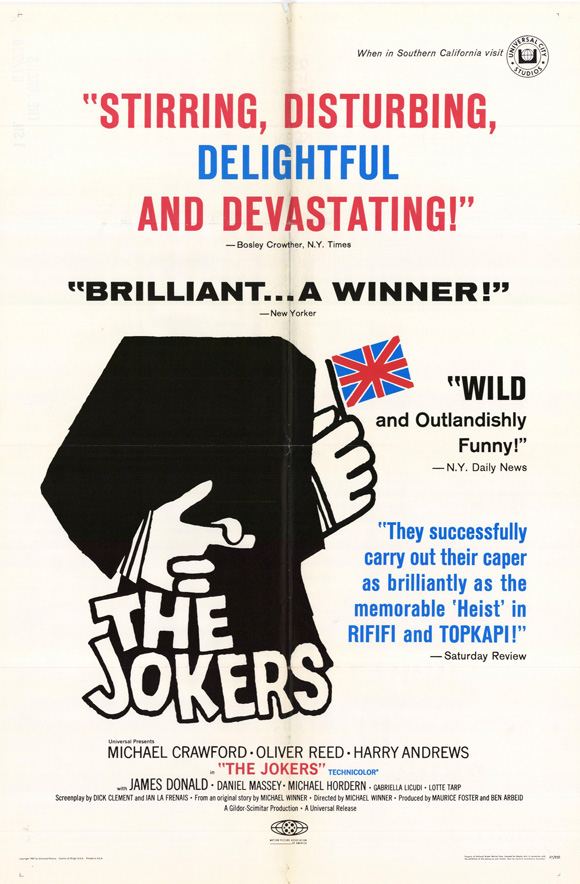
The Jokers (1967)

By Richard Winters

My Rating: 8 out of 10

4-Word Review: Rob to avoid work.

Brothers Michael (Michael Crawford) and David (Oliver Reed) decide that working life is not for them and come up with an elaborate robbery that will afford them enough money to drop out of society for good. Their plan is a clever one as they stage random bomb threats across parts of London, which creates a panic in the city. Then they threaten to blow up the tower of London, disguise themselves as military experts who can go in to diffuse the bomb and then run off with the crown jewels in the process, which they conveniently hide underneath the floor boards of their home.

The film has a great irreverent flair that was common amongst the new wave British films of the late 60’s. The quick edits, fragmented narrative, and quirky humor is similar to Richard Lester’s The Knack…and How to Get It, which also starred Crawford. The comedy, especially its potshots at the establishment, is right on target and engaging. I was surprised that it was directed by Michael Winner as so many of his later films, especially the ones he did with Charles Bronson, seemed so formulaic that I could never imagine he could show so much spunk and flair.

The crime is imaginative and plays out nicely. There is also a neat and completely unexpected twist near the middle that keeps things intriguing to almost the very end.

Crawford shows charm and his boyish looks help strengthen is character. He somehow manages to upstage Reed, which I never thought would be possible and his charisma carries the film. He does though look too scrawny and almost anorexic in parts and having him gain some weight and ‘putting some meat on his bones’ before filming began would have been advisable.

British character actor Harry Andrews is amusing as the exasperated Inspector Maryatt. However, I found James Donald as the completely clueless Colonel Gurney-Simms to be the funniest.

If the film fails anywhere it is in the fact that it loses its satirical edge and focus. It starts out making fun of the upper-crust English society, but then becomes too preoccupied with the crime itself. David and Michael’s interactions with their stuffy, conservative parents (Peter Graves, Rachel Kempson) are cute and I would have liked to see more of it as well as more jabs at ‘respectable’ society. The film’s conclusion is extremely weak. For such a clever movie I was hoping for something a little better. It is almost like they ran out of ideas and threw in some bland denouncement simply as a way to end it because they didn’t know how else to do it. Nothing is more of a letdown then seeing a writer write themselves into a hole that they can’t get out, which is what you get here and it almost ruins the entire film in the process. However, the majority of it is so slick I was willing to forgive it and almost wished there could be more movies like these coming out today.

My Rating: 8 out of 10

Released: May 15, 1967

Runtime: 1Hour 34Minutes

Rated NR (Not Rated)

Director: Michael Winner

Studio: Universal

Available: None

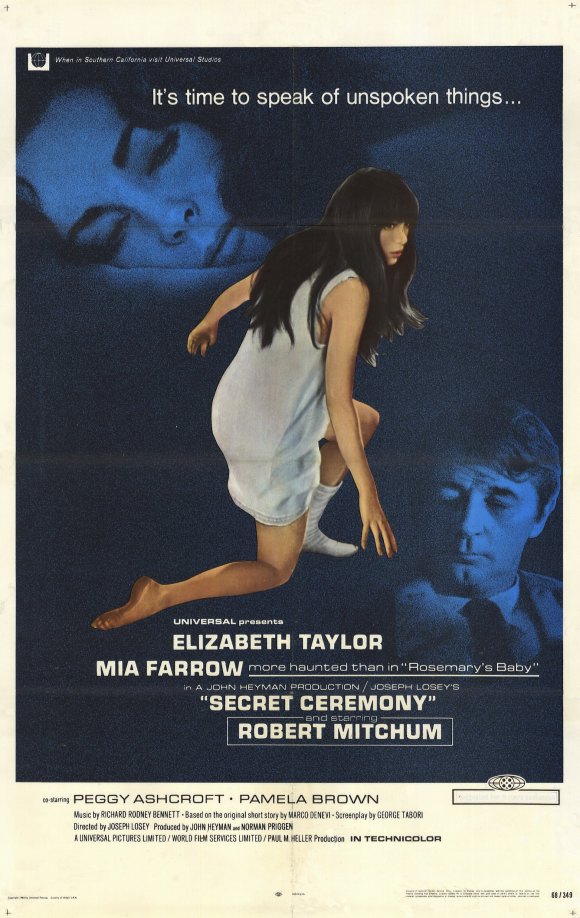
Secret Ceremony (1968)

By Richard Winters

My Rating: 5 out of 10

4-Word Review: Women in weird relationship.

Lenora (Elizabeth Taylor) is a lonely woman who lost her young daughter tragically years before and now finds herself strangely attracted to Cenci (Mia Farrow) a young woman who resembles her. The two move into a large mansion only to have things begin to unravel upon the arrival of Cenci’s weird and menacing father (Robert Mitchum).

The story is bizarre and perverse enough to keep you watching all the way through although it will certainly test the tolerance to those who do not have an affinity for the offbeat. The cinematography is excellent as is the mansion setting. The use of Peggy Ashcroft and Pamela Brown as sneering elderly sisters gives the film some added flavor.

Farrow is genuinely convincing as a grown woman stuck in a childlike trance, but Taylor doesn’t seem completely right for her part. A different actress, especially a character actress would have been much better.

Although the film does manage to come together in the end it does take a long time to get there. There are a lot of slow spots and the patience of some viewers may be tested. There are also many intriguing elements simmering underneath the surface that the film fails to follow through on, but should have.

Fans of Joseph Loosey should find this satisfying while others may be put off by the odd characters and style of narrative.

My Rating: 5 out of 10

Released: October 23, 1968

Runtime: 1Hour 45Minutes

Rated NR (Not Rated)

Director: Joseph Loosey

Studio: Universal

Available: VHS

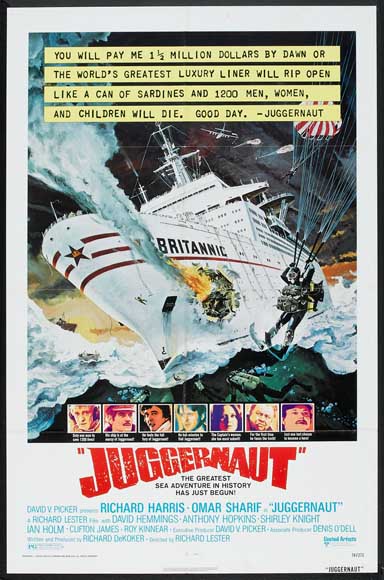
Juggernaut (1974)

By Richard Winters

My Rating: 8 out of 10

4-Word Review: Bomb on a ship.

The Britannic, a luxury liner traveling in the North Atlantic and carrying 1,200 passengers, is threatened at being blown up by a unknown man who calls himself ‘Juggernaut’ and states that he has planted a bomb somewhere on the ship. The British government decides not to give into his demands for a ransom and instead flies in bomb expert Anthony Fallon (Richard Harris) who along with his team is assigned with dismantling the 7 bombs and are given little time to do it before they are set to explode.

This film follows the typical disaster flick formula, but it does it so damn well that I was riveted and entertained from the first minute to the last. Director Richard Lester is known for his comedy and implements it into all of his films even when the genre is action. Sometimes this doesn’t work Superman III is a good example where the campiness became too much, but here it makes for a nice balance. The tension is quite strong. The scenes involving the bomb dismantling are not only gripping, but fascinating as you learn the minute intricacies to the bomb mechanics. The extreme close-ups are excellent and make you feel like you are right there. Watching the demolition experts being dropped from a helicopter and into the cold ocean where they are to swim to the liner are impressively vivid. The story moves well and consistently brings in new twists.

Harris is fantastic as the sort of anti-hero. He is gruff, brash and irreverent yet he is good at what he does and knows how to do it. I found myself captivated with him and pulling for him emotionally. Unlike the cookie-cutter pretty boy heroes of most Hollywood movies this guy is real and rugged. I wish more movies could have this type of character in the lead.

The bad guy isn’t quite up to the same level. I liked how the film keeps his identity a mystery until near the end, which helps elevate the intrigue. His weird Scottish/Irish sounding accent heard over the phone is strange and I actually thought it was actor Harris doing it and I still think it might have been. The elaborate ploys used by the police to track him down as well as the culprits abilities to outfox them at seemingly every turn is engaging. It’s just a shame that when they finally catch him it wouldn’t have been for such a stupid oversight on his part, which ruins the mystic that is created and feels like a letdown. However, the final conversation that he has with Anthony over the phone is a gem.

British character actor Roy Kinnear is funny in his role as the ship’s social director. His vintage moment comes when he insists on having the scheduled masquerade party continue despite the fact that everyone becomes aware that the ship may explode at any minute. Kinnear’s patented nervous grin is put to great use here and practically steals the picture.

The supporting characters are above average. Normally in this genre these types of people end up being cardboard and clichéd, but here they were surprisingly multi-dimensional. The dialogue as a nice existential quality and the scenes where they discuss their potential and impending doom is never contrived or forced. I got a kick out of the two kids who were amusingly much more grounded and aware of things than the hyper adults.

If you are into compact suspense films that are tightly paced and without the loopholes and clichés then this film, which is loosely based on actual events, promises to be an entertaining two hours.

My Rating: 8 out of 10

Released: September 25, 1974

Runtime: 1Hour 49Minutes

Rated PG

Director: Richard Lester

Studio: United Artists

Available: VHS, DVD, Netflix streaming 

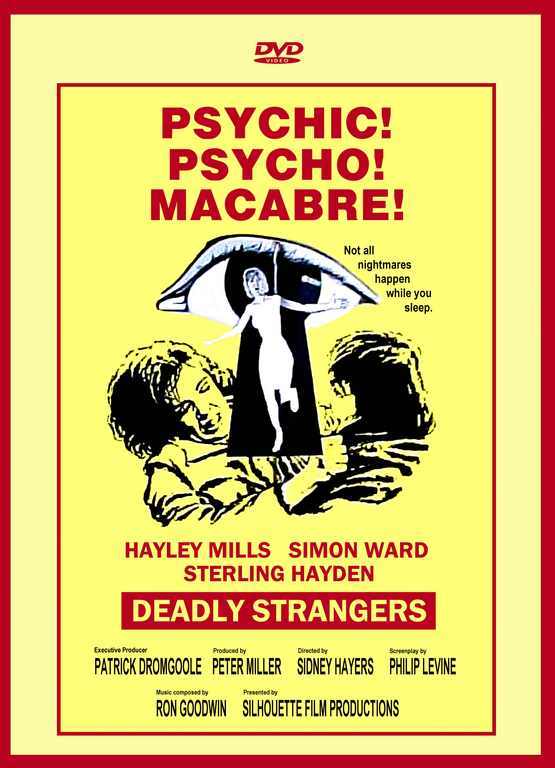
Deadly Strangers (1974)

By Richard Winters

My Rating: 5 out of 10

4-Word Review: Psycho on the loose.

A dangerous mental patient has escaped from a nearby asylum. Belle Adams (Hayley Mills) is the beautiful women whose car has just broken down and she accepts a ride from Stephan Slade (Simon Ward) who just may be that patient.

This seems very similar to See No Evil which also took place in the English countryside and also hid the killer’s identity until the very end. There though it was a big letdown finding out who he was while here it is actually what makes the movie interesting. However, some of the techniques used to conceal the killer’s identity come off as contrived. The opening escape sequence inside the institution, where you see everything from the patient’s point of view is very tacky.

The suspense is minimal and things never really get too intense until the climatic sequence. There are twists and turns throughout, but some of them seem to be put in just to keep the story moving. The overall production values are cheap and the film stock is grainy and faded.

It is nice to see a British movie that doesn’t take place in London. The brown, barren landscape, which looks to have been filmed in the autumn, gives the picture an added visual. The car they drive is another sight as it looks as flimsy as a Yugo.

Mills makes a daring film choice here and it does her well. She no longer has that mousy, awkward look. She is a pretty full grown woman with a nice short haircut. She acts more mature and streetwise without that wide eyed persona that she had in all those Disney movies. Her nude scenes aren’t bad and are even a bit gratuitous.

Ward has never seemed to be that great of an actor. He has always had a tired look on his face and plods through his parts in much the same way. Sterling Hayden is fun playing an aging womanizer and sporting a wild beard and hairstyle. He talks in a goofy Scottish accent and amusingly tries to court Hayley, but unfortunately he is on for only a short time.

The final twist is pretty good, but a real sharp viewer will figure it out before it happens because I did! The film is a nice alternative for Mills despite a tendency to be gimmicky and flat. It is also the only time I have ever seen a policeman pull over a car and when the driver is unable to find his license is simply allowed to drive away.

My Rating: 5 out of 10

Released: February 16, 1974

Runtime: 1Hour 28Minutes

Rated R

Director: Sidney Hayers

Studio: Fox-Rank

Available: VHS

A Passage to India (1984)

By Richard Winters

My Rating: 7 out of 10

4-Word Review: Unjustly accused of rape.

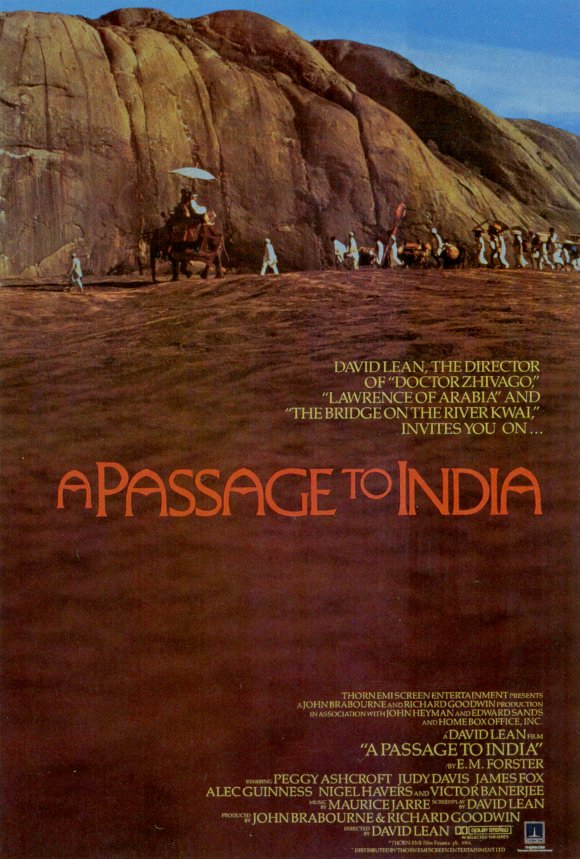
An older woman (Peggy Ashcroft) and her son’s fiancée Adele (Judy Davis) travel to India to visit him as he works as a British Magistrate there. During the course of their visit they come upon the harshness of British rule, the unusual climate, and a rather unexpected criminal trial.

Like with most of Lean’s films the gargantuan approach cannot equal the story. You sit through two hours and forty five minutes only to feel slighted when it is all over. The story plays a lot like To Kill a Mockingbird only it is stretched out more and has a different location. That is not to say it isn’t entertaining, because it is, but only in the most general of ways.

The first hour is downright breezy. It does hit on certain inhumanities and inequalities, but it is all handled with kid gloves. It also seems very similar to Gandhi, which came out only a year earlier. The second half, which involves the court trial, seems almost jarring when compared to the first. It does get more intense and multifaceted, but just when it seems to be getting intriguing it fizzles with a wrap up that is too neat and tidy.

Lean’s films have always had a sort of running theme involving the characters coming to terms with the full scope of their personalities. Yet here their changes seem too abrupt and severe. Adele starts out as a very interesting person. She is independent and idealistic and then having her turn into a confused and bullied woman without any real explanation doesn’t mesh. The same can be said for Aziz (Victor Banjeree) the man she accuses of rape. His character is so benign and affable at the beginning that having him turn so angry and vindictive in the second half seems overdone understandable to some degree, but still overdone. Of course everyone can have these traits at times, but here it gets heavy- handed.

The two best characters consist of Mrs. Moore (Ashcroft) and Fielding (James Fox). Ashcroft is compassionate and strong and it is nice to have an older character where their age isn’t completely embedded into their persona. Fielding is strong and stalwart as well and his very proper sensibilities help keep the whole thing stabilized.

Legendary actor Sir Alec Guinness is badly miscast. Although some of his dispensed wisdom is fun he never completely comes off as a native and the part should have been played by an actual native of the country.

Out of all of Lean’s films this may actually be his weakest. The cinematography is okay, but it is not as sumptuous as some of his others. I wanted to be shown more of India and given a broader perspective of the region. There also could have been a little more action and the characters placed in a little more physical danger. The part where Adele is chased by some wild monkeys is unconvincing especially when you never see her or the monkeys in the same shot.

My Rating: 7 out of 10

Released: December 14, 1984

Runtime: 2Hours 45Minutes

Rated PG

Director: David Lean

Studio: Columbia Pictures

Available: VHS, DVD, Blu-ray, Amazon Instant Video

Two for the Road (1967)

By Richard Winters

My Rating: 6 out of 10

4-Word Review: Couple examines their marriage.

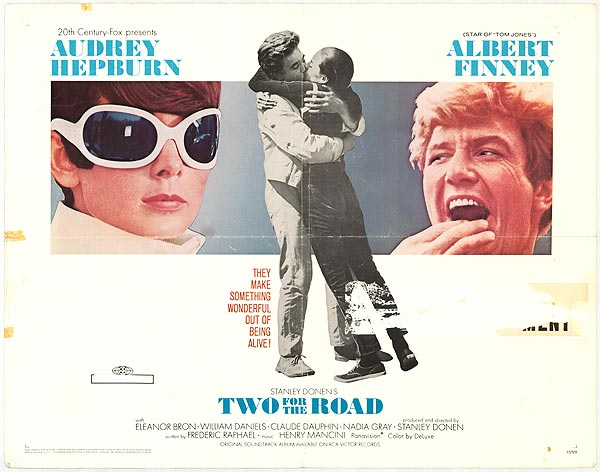
This is a unique and diverting look at a couple (Albert Finney, Audrey Hepburn) traveling the French countryside while dissecting their turbulent marriage. The road of course represents their long and winding relationship. It cleverly cuts between when they first met, which seems to have been on the same road, to twelve years later. The edits between the two stages are creative as is the majority of this fluid and entertaining movie. It wants to be silly, fluffy, serious, complex, exotic, avant-garde, and romantic all at once and most of the time it succeeds proving what an over looked, unsung genius director Stanley Donen is.

It’s a movie made for couples, but probably those who have been married for quite a while and can relate to the characters here who have been through the rough spots and have learned to accept their partner and the flaws that come with them. This film tries to dig a little bit deeper, which helps it stand out. It also has a more relaxed European attitude, especially in regards to ‘indiscretions’.

On the negative side the film contains a lot of old fashioned sexist attitudes. For instance the man is expected to be mechanically inclined and in control of every situation, which becomes very apparent in the scene where he has to get underneath the car to fix it while she sits on top of the vehicle without any care or inclination to what he is going through. The man is also expected to be the sole provider of the family while the woman does the majority of the child rearing.

Audrey, who wears an amazingly high number of stylish, chic outfits, looks more like a runway model sporting the latest fashions than an average housewife on a country drive. I realize that they wanted to accentuate her beauty, but it ends up being a distraction at the same time. If the intention of the story is about an average couple going through average marital problems then at least have them look the part.

The Henry Mancini score is pleasant as usual, but eventually gets overplayed. It’s also not as introspective as it wants you to believe, but on a slickness level it gets an “A”. Also, watch for Little Ruthie who is the world’s most obnoxious child.

My Rating: 6 out of 10

Released: April 27, 1967

Runtime: 1Hour 51Minutes

Rated NR (Not Rated)

Director: Stanley Donen

Studio: 20th Century Fox

Available: VHS, DVD

The Offence (1972)

By Richard Winters

My Rating: 8 out of 10

4-Word Review: Interrogate the child molestor.

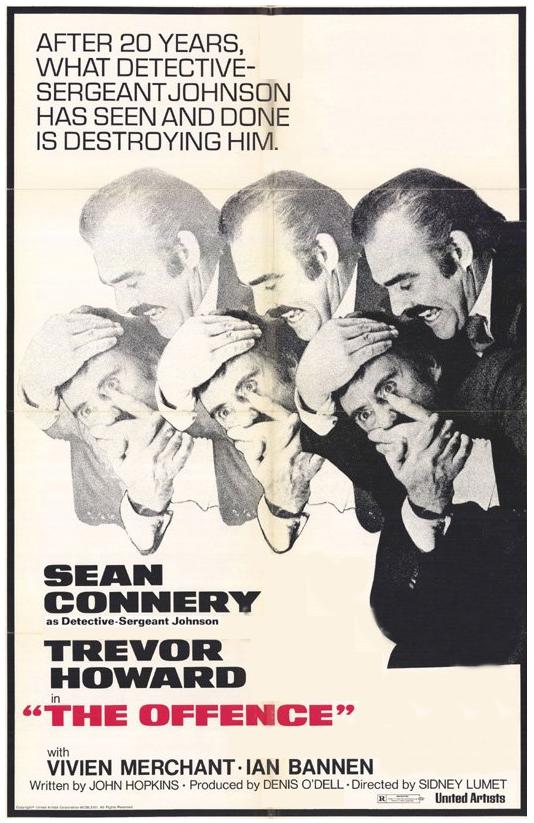
Well respected, longtime police detective Johnson (Sean Connery) becomes so burned-out by all the sickening crimes that he has seen through his career that he snaps during the interrogation of a suspected child molester (Ian Bannen) and ends up beating the man to death.

Based on the stage play by John Hopkins this film has lots and lots of talking and some may say there is too much of it. The script is split into three drawn out conversations between two people. One is between Johnson and the suspect, the second is between Johnson and his wife (Vivien Merchant), and the third is between Johnson and the man brought in to investigate the incident, which is played by Trevor Howard. By the end even the most patient viewer may feel a bit talked out and it gets especially trying when you realize that the same issues are being discussed over and over again.

Yet that is not to say that this is a poor film as the visual element is excellent. In many ways you can appreciate the production for its visual style alone. Director Sidney Lumet displays a good handle on the material and it’s technically sharp on all levels. The lighting is well composed with the center that is bright, but the corners that are shadowy much like the human psyche and society. The overall grayness helps bring out the depression and isolation of the main character. The pacing is slow, but deliberate. Each scene builds to an intense crescendo. The music soundtrack resembles that of a one tone alarm that keeps building to a higher pitch much like the alarm ready to go off in Johnson’s head. The character’s inner tension is made even more vivid by Lumet’s use of interposing the bright light of the interrogation room over the screen. It is hard to imagine this film being any better crafted and it is a terrific training tool for the inspiring filmmaker.

Despite being talky the script in itself isn’t bad as it makes you aware of the ugly side of police work. It focuses not on the system or corruption, like a lot of other police films, but more on the actual work itself. It questions whether someone who is bombarded with the daily gore and societal sickness can remain sane and whether ‘leaving it all at the office’ is even possible. Every officer may eventually suffer scars from his job experience.

In a way this may be Connery’s best role. He shows his usual tough exterior, but also has moments where he unravels into a helpless, scared man. Bannen does an equally good job as the suspect. You are never really sure if he is guilty or not. The fact that he gives off a leering grin even after being beaten gives this film an added edge.

This is an oppressive and unrelenting movie filled with stark and unpleasant imagery that may stay with you long after it is over. Yet it is also expertly crafted and brings up some serious and important issues that are as timely today as they were back then.

My Rating: 8 out of 10

Released: January 11, 1972

Runtime: 1Hour 52Minutes

Rated R (Mature Theme)

Director: Sidney Lumet

Studio: MGM

Available: VHS, DVD (Region 1 and 2), Amazon Instant Video