Category Archives: Black & White

Eye of the Devil (1966)

eye of the devil 2

By Richard Winters

My Rating: 7 out of 10

4-Word Review: Husband is a pagan.

Vineyard owner Philippe (David Niven) is called back to the castle of Bellenac when it is found that they are suffering from another dry season. Philippe’s wife Catherine (Deborah Kerr) and his two young children follow him there a few days later despite his insistence that they not come. Once there Catherine finds everyone’s behavior to be quite odd including a menacing brother and sister (David Hemmings, Sharon Tate) who make Catherine uneasy, but nothing prepares her for the real reason that her husband is there nor its shocking outcome.

Although several directors worked on this project including Michael Anderson the credit is ultimately given to J. Lee Thompson, who is probably best known for his frequent collaborations with Charles Bronson. Despite the different directors the film is very fluid and well produced. In fact it is the directing that makes this film high enjoyable. The lighting, editing, imagery and evocative camera work make this a near brilliant work from a visual level. Turning down the sound and appreciating it for its aesthetic style alone is more than enough and the on-location shooting done at the Chateau de Hautefort is excellent.

Tate is stunningly beautiful and the photography makes the most of it watching her sit out and get drenched by the rain is actually kind of sexy. She had bit parts in two films previous to this, but this is still credited as her official film debut.  Although her voice was dubbed she still is effective with a character that straddles the line between being sensual and creepy. The part where the Niven character viciously whips her while she wriggles around on the floor and then in the end turns around and smiles like she enjoyed it was year’s ahead-of-its-time and definitely pushing-the-envelope for that period.

Kerr came in to replace Kim Novak who was injured during filming and unable to complete the picture. Normally she always gives a superior performance, but her she seemed miscast. The only facial expression she seems able to show here is that of shock and fright and the character and scenario seems to be too much of an extension to the one that she did in The Innocents just a few years earlier. Both she and Niven seemed too old to be parents of such young children. He was already in his mid-fifties and she in her mid-forties and the film would have been better served had a young attractive couple in their 20’s been cast in the part.

Niven has always done so well being cast in likable roles that having him play someone with a dark personality doesn’t quite work and he looks uncomfortable in the part. Both Donald Pleasance and David Hemmings are underused and not given enough lines or screen-time.

The story itself is rather one-dimensional. The final sequence features some great shots and editing of Kerr running through some underground tunnels of the castle, but the outcome is quite predictable. The script lacks that added perspective or twist to make it truly memorable and is the weakest element in this otherwise visually arresting production.

eye of the devil 4

My Rating: 7 out of 10

Released: July 8, 1966

Runtime: 1Hour 32Minutes

Not Rated

Director: J. Lee Thompson

Studio: MGM

Available: DVD (Warner Archive), Amazon Instant Video
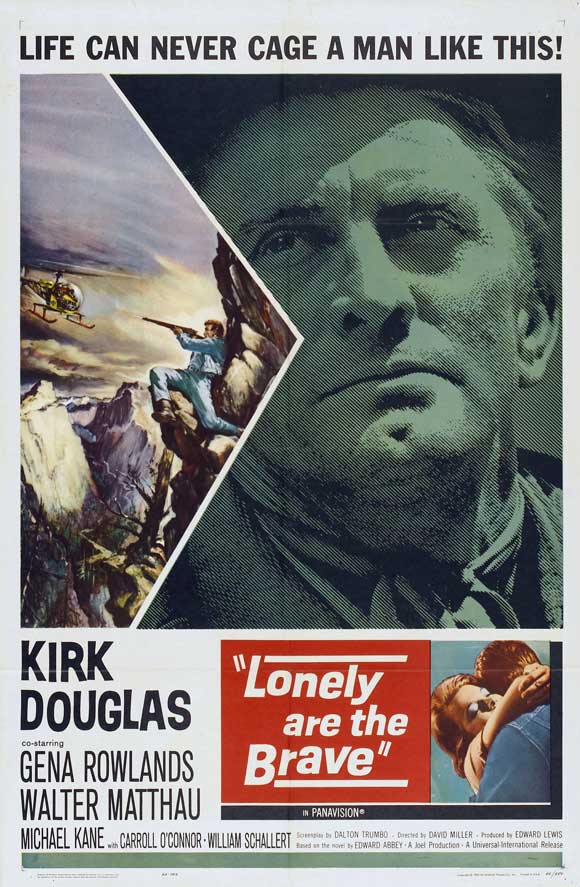
Lonely Are the Brave (1962)

lonely are the brave

By Richard Winters

My Rating: 6 out of 10

4-Word Review: A modern day cowboy.

Jack Burns (Kirk Douglas) is a loner cowboy still trying to live the lifestyle of the old west in the modern day world and who must elude the police and all of their modern technologies when he escapes from jail.

Kirk is excellent. He really connects with the character and allows the viewer to do the same. The cinematography is first rate with spectacular shots of the western landscape. The cowboy’s escape through the rugged terrain as well as the police pursuit is exciting most to the way and there is a terrific well-choreographed barroom brawl between Douglas and actor Bill Raisch who later went on to star as the one-armed man in ‘The Fugitive’ TV-series. This is also a great chance to see some young actors just starting out including Carroll O’Connor and Bill Bixby.

On the negative end I wasn’t too crazy about Walter Matthau and William Schallert as the two policemen who are played too much for laughs. Some of their goofy exchanges are amusing, but it hurts the tension. I also disliked the ending. It does indeed leave an impression and was obviously done to make a statement, but it is not completely effective and is a real downer. It also leaves too many issues open including whether the Douglas character was able to survive.

The high production values help immensely and the story structure keeps things interesting and offbeat as well as exciting. The film though cannot overcome its ending, which isn’t very original and no more profound than hundreds of other stories and movies dealing with the same subject.

My Rating: 6 out of 10

Released: May 24, 1962

Runtime: 1Hour 47Minutes

Not Rated

Director: David Miller

Studio: Universal

Available: VHS, DVD, Blu-ray, Amazon Instant Video

Chan is Missing (1982)

OLYMPUS DIGITAL CAMERA

By Richard Winters

My Rating: 3 out of 10

4-Word Review: Chan has their money.

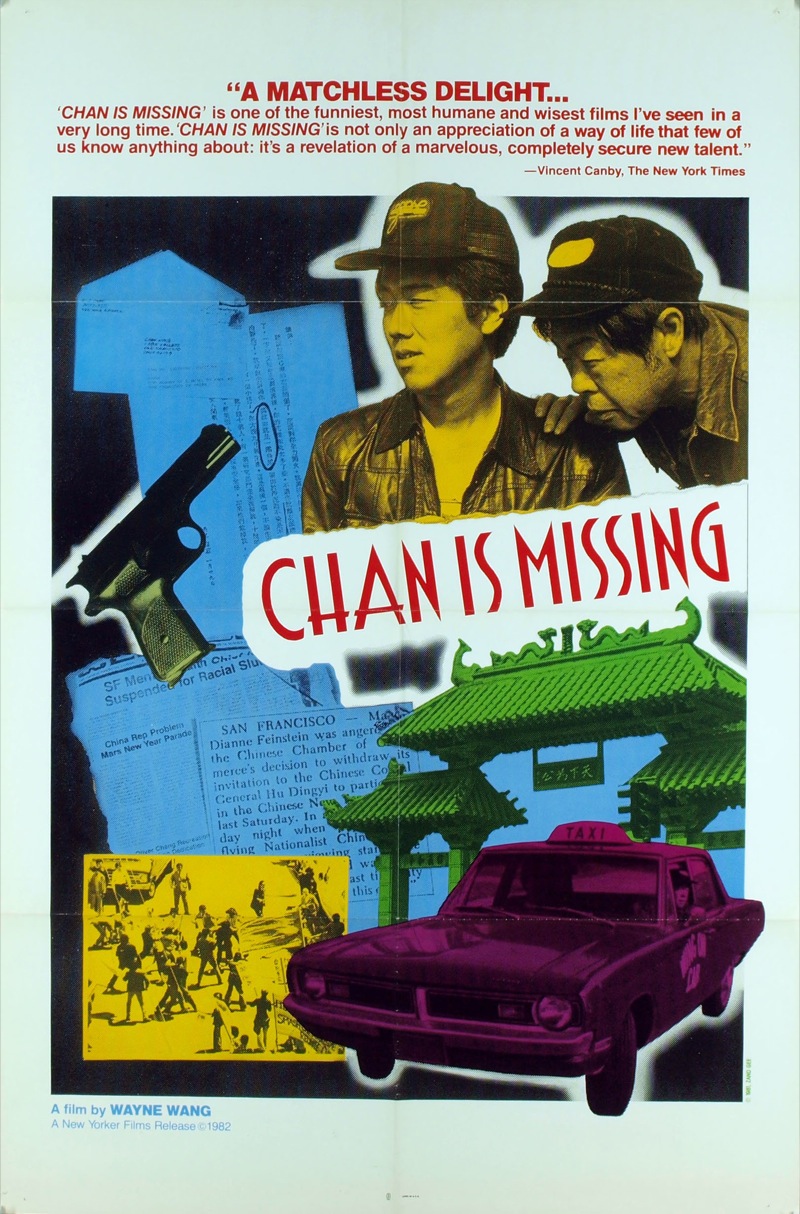
This is a story about Jo (Wood Moy) and Steve (Marc Hayasi) two cab drivers who go throughout Chinatown looking for a man named Chan who took their money and then disappeared. If you have never been to San Francisco’s Chinatown district then this film gives you an illuminating look of what it is like. It shows you everything from its atmosphere, to the landscape, and even its people and their attitudes. At times it is almost like a documentary, which this probably should have been in the first place.

The main cab driver who we follow around in his search is fun in a sort of offbeat way. He is old, short, and very dopey looking. He goes about his investigation in a low key sort of way. After a while he starts to grow on you especially when he makes his wry observations.

Unfortunately these are the only two good things about this film, which on the whole is boring and heavy-handed. The search for Chan is merely an excuse by director Wayne Wang to show how difficult it is for Chinese to assimilate into American society and how they are always looked upon as ‘foreigners’, and the lack of opportunities. It is sort of like one of those movies you watched when you were in grade school where the flimsy plot was just an excuse to try to teach you something. This one works the same way where it seems more like a lecture than a movie.

Technically it is inadequate. The majority of the characters are non-actors who seem to be just mouthing the lines that they have memorized. There is also no action and a desperate need for some humor even the low-key kind could’ve helped the flow.

Certainly director Wang has gone on to do bigger, better, more sophisticated things. This film can best be viewed as an early student project, which it resembles in many ways.

My Rating: 3 out of 10

Released: June 4, 1982

Runtime: 1Hour 20Minutes

Not Rated

Director: Wayne Wang

Studio: New Yorker Films

Available: VHS, DVD

The New Interns (1964)

the new interns

By Richard Winters

My Rating: 6 out of 10

4-Word Review: More interns more drama.

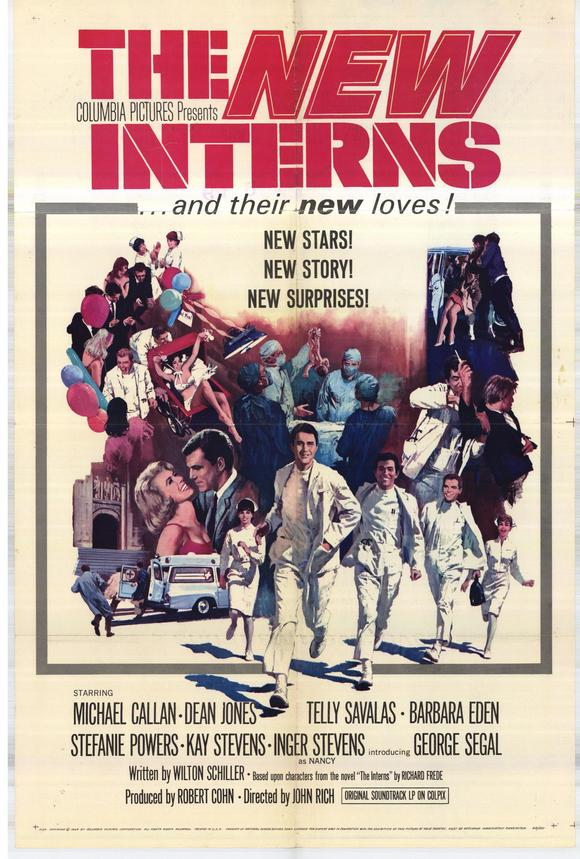
It’s another year and time for a new set of young interns to infiltrate the New North Hospital.  Lew (Dean Jones) and Gloria (Stefanie Powers) who became engaged at the end of the first film are now married, but Lew is diagnosed as being sterile and the couple cannot have children, which causes a strain on their marriage.  The caustic Tony (George Segal) who used to be a gang member on the streets and has worked his way up to being an intern looks to leave his troubled past far behind only to have his new girlfriend Nancy (Inger Stevens) attacked and raped by his former gang member friends, which sends him on a one man mission for revenge.

Although the film goes on a bit too long and isn’t quite as compelling as the first one I still felt it was an improvement.  The stories and themes are grittier and don’t have the fluffy or formulaic romance angle. The fact that the interns are housed in a rundown condemned building in order to save on costs allows for some amusing moments as the tenants must make due with all sorts of quirks that come with the old building. There is also a rather startling scene showing an actual baby coming out of the womb who is not crying or breathing  and the doctors attempts to revive it, which is both disconcerting and vivid.

The only story thread that doesn’t work is the rape one. The biggest issue here being that Nancy flirts and even jokes with Tony while she is in the hospital and only a few hours after being attacked, which seemed highly unrealistic as is her acting like the whole incident was ‘no big deal’ and they should just move on from it and not bother to catch the perpetrators. Then a couple of days later she attends a party and something there subtly reminds her of the incident, which sends her into an irreversible catatonic state, which seemed too extreme in the other way. However, Tony’s confrontation with the rapist inside the hospital and his later operation on him to save is life is good.

Segal is impressive. He played so many touch feely lead roles during the 70’s that he acquired almost a benign persona, but here his character is quite brash and acerbic and his confrontations with the equally acerbic Dr. Riccio (Telly Savalas) are fun. Stevens is also quite good as his love interest and it is a shame that she ended up killing herself in 1970 just as it seemed that her film career was ready to take off.

As with the first film one can spot a lot of up-and-coming stars including Barbara Eden, Dawn Wells, George Furth, Marianna Hill, and Adam Williams. One can also spot Bob Crane very briefly during a wild party segment. There is also Sue Ann Langdon as a drug addicted prostitute who speaks in a hip lingo and fakes paralysis simply to get some drugs that will satisfy her fix. This also a unique chance to see Jimmy Mathers the younger brother of Jerry famous for starring in ‘Leave it to Beaver’ and who looks just like him.

A few actors reprise their roles from the first one including Savalas who appears here completely bald even though in the first one he had hair. Powers is effective as the opinionated and stubborn Gloria a woman unhappy that she can’t have a baby and unwilling to accept adoption as the answer. Kaye Stevens reprises her Didi character and takes part in a funny vaudeville act. There is also Michael Callan reappearing as Alec who in the first film ended up having a nervous breakdown, but no mention of that here. The part where he dresses up as a woman to get into the girl’s dorm and his ‘conversation’ with his therapist offer some added levity.

My Rating: 6 out of 10

Released: June 1, 1964

Runtime: 2Hours 3Minutes

Not Rated

Director: John Rich

Studio: Columbia Pictures

Not available at this time.

The Interns (1962)

the interns

By Richard Winters

My Rating: 6 out of 10

4-Word Review: Training to become doctors.

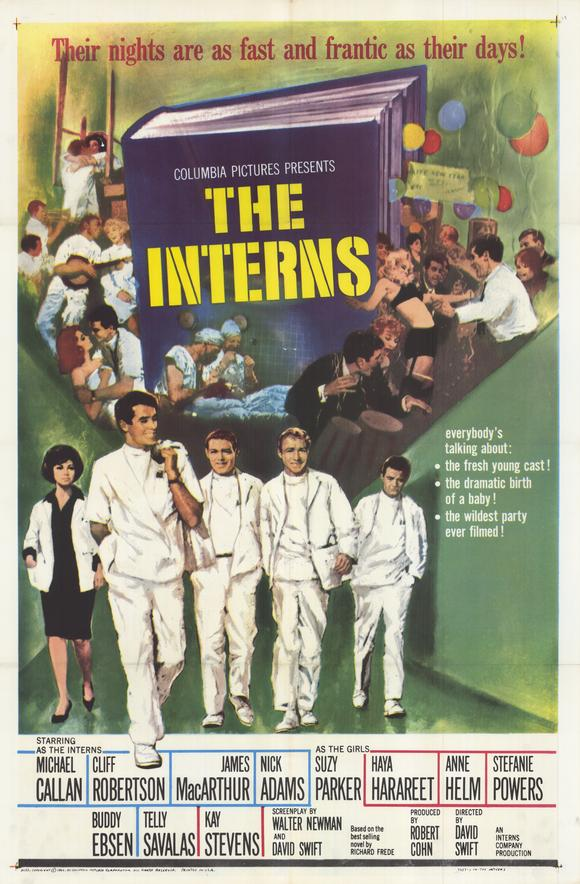
Based on the Richard Frede novel the film looks at a group of medical students going through a rigorous first year internship at the New North Hospital. All aspects of an intern’s experience are analyzed from their various moral quandaries to dealing with deaths of patients that they’ve become attached to and even sexism. We also get a glimpse of their private lives from their relationships and stresses to even their partying.

Although the film is entertaining and well-paced it is a bit too much like a soap opera. This comes to a particular head during the relationship sequences.  The characters seem to fall in love at first glance and the word ‘love’ gets expressed excessively until it becomes as irritating to hear as nails on a chalkboard.  It also has a mentality that every character ‘must’ magically find their life mate even if it seems particularly forced like with John (Cliff Robertson) who relentlessly chases after fashion model Lisa (Suzy Parker) even though she continually gives him the cold shoulder and the two can’t agree on anything including her need for an abortion from a unwanted pregnancy she had with another man. Alec’s (Michael Callan) is the only thread in this area that works as he proceeds to try to juggle two at the same time and the way he avoids a confrontation with the two while at a party is amusing.

There are some good scenes and even memorable moments. The best is when Lew (James MacArthur) finds an interest in obstetrics and delivers his first baby. The acrimonious relationship between Dr. Riccio (wonderfully played as usual by Telly Savalas who has hair here and isn’t completely bald as he usually is) and Dr. Bruckner (Haya Harareet) who he looks down upon simply because she is a woman, but eventually learns to respect is great. I also liked the party sequence the one moment in the film that gets lighthearted especially when 37 people try to cram themselves into a small closet in order to beat the world record.

The cast is interesting and eclectic. One can spot either an older veteran actor, up-and-coming star, or famous character actor in literally every shot. Robertson who sometimes comes off as stiff gives a strong all-around performance, which may be his best. MacArthur who would later costar in the long running series ‘Hawaii Five-O’ is also really good. Buddy Ebsen does well as a wise-cracking chief surgeon and it is great seeing the very young and beautiful Stefanie Powers as a nurse. John Banner who would later become famous for playing the incompetent prison guard Shultz on the long-running sitcom ‘Hogan’s Heroes’ can also be seen, but he is not given a single line of dialogue.

The film is glossy, but still compelling and if anything gives the viewer a good taste of what life of a medical intern is like. In 1965 the film was followed by a sequel The New Interns, which will be reviewed next Sunday.

My Rating: 6 out of 10

Released: August 8, 1962

Runtime: 2Hours

Not Rated

Director: David Swift

Studio: Columbia Pictures

Available: VHS, DVD

High and Low (1963)

high and low

By Richard Winters

My Rating: 7 out of 10

4-Word Review: Pay ransom go bankrupt.

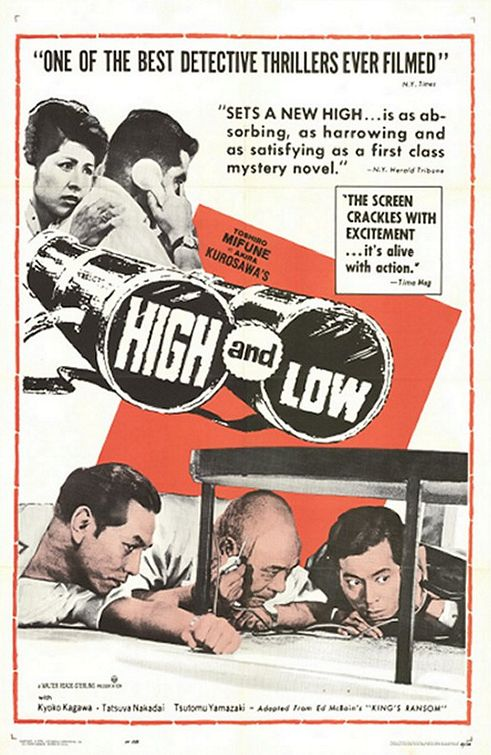
Kingo (Toshiro Mifune) is an executive of a shoe company who finds out that his chauffeur’s son has been kidnapped and comes under tremendous pressure to pay the ransom even it will make him bankrupt.

As with all of Akira Kurosawa’s films the production values are solid and the story is well paced. The very methodical police work and investigation is interesting and enlightening. It’s certainly nothing like today’s CSI shows, but well done for its period. The ending scene where Mifune faces the kidnapper leaves a strong and memorable impression.

However, on the negative side the set-up to the kidnapping happens too quickly without any type of buildup or tension. Almost the entire first hour takes place inside the living room of Kingo’s hilltop house and it would’ve helped to have some cutaways to other locales.  Mifune, who is billed as the star and gives a great performance disappears during the second hour only to finally reappear at the very end and I felt it would’ve been stronger had he been involved more in the investigation. Also, the revealing of the kidnapper is unexciting and a big letdown.  I had a hard time understanding why a guy who was so very crafty and sophisticated in every facet of his planning of the kidnapping would suddenly get so conveniently dumb and sloppy at the very end.

This is a decent Kurosawa entry, but in my opinion not one of his best. Yet it is still good enough to keep you captivated from beginning to end.

My Rating: 7 out of 10

Released: March 1, 1963

Runtime: 2Hours 23Minutes

Not Rated

Director: Akira Kurosawa

Studio: The Toho Company

Available: DVD, Blu-ray (The Criterion Collection)

Strait-Jacket (1964)

strait jacket

By Richard Winters

My Rating: 6 out of 10

4-Word Review: Giving them the ax.

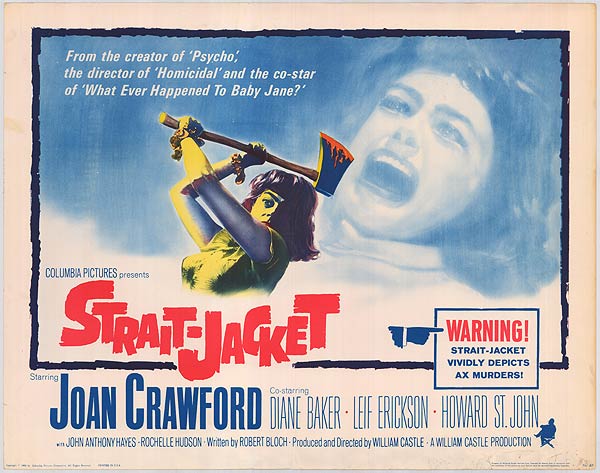
Lucy Harbin (Joan Crawford) comes home early one night from a trip only to find her husband Frank (Lee Majors in his film debut) in bed with another woman. This enrages her so much that she grabs an ax and chops off both of their heads all while in front of her young daughter.  After being institutionalized for 20 years she is released and sent home to live with her now grown daughter Carol (Diane Baker). Unfortunately the ax murders begin happening again and all signs seem to point to Lucy having a bad relapse.

Director William Castle keeps the proceedings compact enough to be entertaining, but borrows too many elements from Psycho and What Ever Happened to Baby Jane? while also adding a few to many gimmicks. Having the setting take place on a rural hog farm gives it a little extra atmosphere. The wrap-up is nice, but halfway through the film I had already figured out the twist ending and thus making the final revelation not as shocking or interesting as I think the filmmakers intended.

I realize the gore factor here is quite sanitized when compared to today’s horror movies and yet the scene where Lucy axes her hubby is actually quite effective. We see the shadow of the husband’s body with his head popping off like a cork coming out of a wine bottle. Instead of cutting away like most other films do it cuts back to Joan’s face where she continues to whack and whack and whack while her eyes get wilder with rage, which in many ways makes this far better and more fun than most other ax wielding movie scenes.

The film also brings out an interesting loophole. Namely the fact that can a woman be considered crazy for wanting to chop off her husband’s head after finding out he is unfaithful or is she simply giving the two-timing cad his just desserts.

Baker is good in support and her face is adorable. Her restrained performance nicely compliments Crawford’s more hammy and histrionic one. In fact some may consider Crawford’s acting to be over-the-top and unintentionally funny, but on a camp level it is fun. I realize both her wig and clacking bracelets become a major plot point, but I disliked both. The wig makes her look too much like an old, haggard version of her famous Mildred Pierce character and the constant clacking from the bracelets becomes annoying.

It was interesting to see Leif Erickson cast as a family friend who tries to work with Lucy and her emotional instability as he was at one time the husband of Frances Farmer an actress who also suffered from mental illness and I kept one wondering the whole time whether he was channeling those experiences into his character here. George Kennedy can also be spotted, but his almost unrecognizable as he has jet black hair here, a much thinner frame, and a pair of buck teeth.

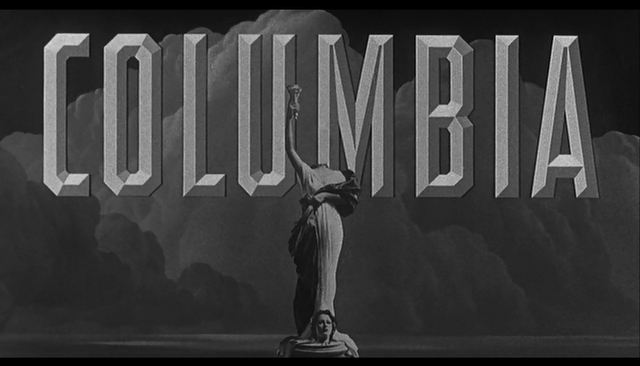
Probably the film’s best gimmick comes at the very end where the famous torch carrying lady on Columbia Pictures logo is seen with her head cut off and having it lying on the ground beside her feet.

Capture 334

My Rating: 6 out of 10

Released: January 19, 1964

Runtime: 1Hour 33Minutes

Not Rated

Director: William Castle

Studio: Columbia Pictures

Available: VHS, DVD, Amazon Instant Video

Dead Ringer (1964)

dead ringer

By Richard Winters

My Rating: 5 out of 10

4-Word Review: She kills her twin.

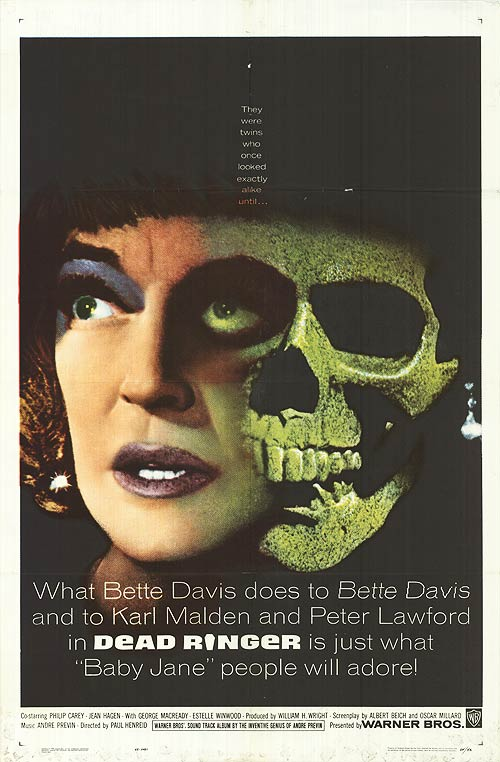
Edith (Bette Davis) attends the funeral of her twin sister’s husband a man she secretly loved and who became very rich. Edith struggles as a bar owner and is jealous of her sister Margaret’s affluent lifestyle. When she finds out that Margaret tricked her way into marrying this man it sends Edith over-the-edge in rage. She kills Margaret and then assumes her identity only to come into some unexpected complications and realize things would have been better had she just remained herself.

Davis shines in the dual role. She had already played this type of role before in 1946 in A Stolen Life. I was surprised that although she was only 56 at the time this was filmed her face looked very old and haggard almost like she was 70. Watching her eyes get all wide and roll around every time she becomes suspicious or nervous is a treat in itself.

Paul Henreid an actor turned director who is probably best known for playing the role of Victor Laszlo in Casablanca doesn’t quite give the story the zing that it needs. He employs a lot of long takes especially during the first hour that slows things down too much and doesn’t build any tension. There is a lot of extended dialogue and scenes that could have been cut out completely that would have made the movie faster paced and more exciting.

The story itself has a few too many plot holes. One is the fact that Edith meets Margaret for the first time in several decades at the funeral and then suddenly the next day decides to kill her and assume her identity, which seemed too quick. I would have expected a lot more complications than there are and the fact that she can seem to remember all the servants’ names without a hitch didn’t quite jive. There is also a scene where the detective character played by Karl Malden enters someone’s apartment and riffles through his personal belongings without any type of search warrant or probable cause, which is not realistic. They do find some incriminating evidence, but I think it would have been thrown out based on that technicality, which in turn would have completely altered the film’s ending.

The supporting cast adds some spark. Malden is good as the dogged detective a type of part he refined even more in the 1970’s TV-series ‘The Streets of San Francisco’. Peter Lawford who is always terrific is fun as Margaret’s conniving lover Tony. You can also spot in bit parts the familiar faces of Jean Hagen, Henry Beckman, Bryan O’Byrne, Bert Remsen, and Estelle Winwood. Henreid even casts his own daughter Monika in the part of Margaret’s maid Janet.

There are some fun twists that come near the end, but it takes too long to get there. The film would have been more successful had it had a more compact running time and direction that was flashy and creative.

My Rating: 5 out of 10

Released: February 19, 1964

Runtime: 1Hour 55Minutes

Not Rated

Director: Paul Henreid

Studio: Warner Brothers

Available: DVD, Blu-ray, Amazon Instant Video

Daisies (1966)

daisies 1

By Richard Winters

My Rating: 7 out of 10

4-Word Review: Girlfriends rebel from society.

Two young women (Ivana Karbanova, Jitka Cerhova) who are both named Marie decide that society has nothing to offer them and that they will not comply with its norms. They then proceed to jaunt through the streets of Prague causing havoc and destruction everywhere they go and with everyone they meet while also trying to find themselves and their true purpose in life.

This film is similar to Ingmar Bergman’s Persona, which was released the same year. Both films rely heavily on quick edits, jump cuts, bizarre imagery and unconventional narrative structures. The only difference is that at least Persona had a story behind it and two interesting characters. This film has neither. The two women behave too strangely to be relatable and the scenes seem disconnected. This is one film that takes the avant-garde, experimental approach to the most extreme. The result is a bit off-putting and took me until the halfway mark before I could get into it. Others may not even make it that far. Personal taste will gauge how much one gets into it as well as how much they get out of it.

On a completely visual level it is fascinating. The film goes from being black-and-white to color and then back again at random intervals. There is one scene in a restaurant where the scene changes to a different color filter each time a character speaks a different line of dialogue. The segment showing photos of a variety of butterflies done at a rapid fire pace is also interesting. The best part is probably near the end when the girls walk into a banquet hall and proceed to eat up all the food that is in it. In fact the film shows an amazing amount of eating. It seems like every other shot has the girls stuffing their mouths with some sort of edible. However, instead of making you hungry it ends up kind of grossing you out.

If there is anything that got on my nerves it was director Vera Chytilova’s use of sound. There was too much repetition of noises. For instance in the opening scene there is what sounds like a squeaking door that is implemented after each actress says her line that quickly becomes irritating. The slobbering, chewing sound as the girls eat the banquet food is overdone as is their background whispering that occurs near the end.

Many feel this is a movie about budding feminism and I would agree on that for the most part. I enjoyed how the women did not feel that they needed a man in their life to ‘be whole’ and in many ways seemed to manipulate and make fun of the male characters, or simply become bored with them especially when the men would convey to them their ‘undying love’.  However, to me it was more about the rebelling and disdain of the communist regime and living in an environment that promoted hard work and not much else. I liked the segment at the end where the two women proceed to be ‘good’ instead of ‘bad’ and try to clean up the mess that they made while trying to convince themselves that working hard will make them happy even though it really doesn’t.

I’ve seen a lot of weird sixties movies, but this one tops them all by a mile. It certainly doesn’t seem dated and easily transcends its era. Not only was it ahead-of-its-time, but I would maintain that it STILL is.

Although the runtime is listed as being 74 minutes the version I saw, which was from Czech New Wave, came out to being only an hour.

My Rating: 7 out of 10

Released: December 30, 1966

Runtime: 1Hour

Not Rated

Director: Vera Chytilova

Studio: Ustredni

Available: DVD

Repulsion (1965)

repulsion 1

By Richard Winters

My Rating: 8 out of 10

4-Word Review: She loses her mind.

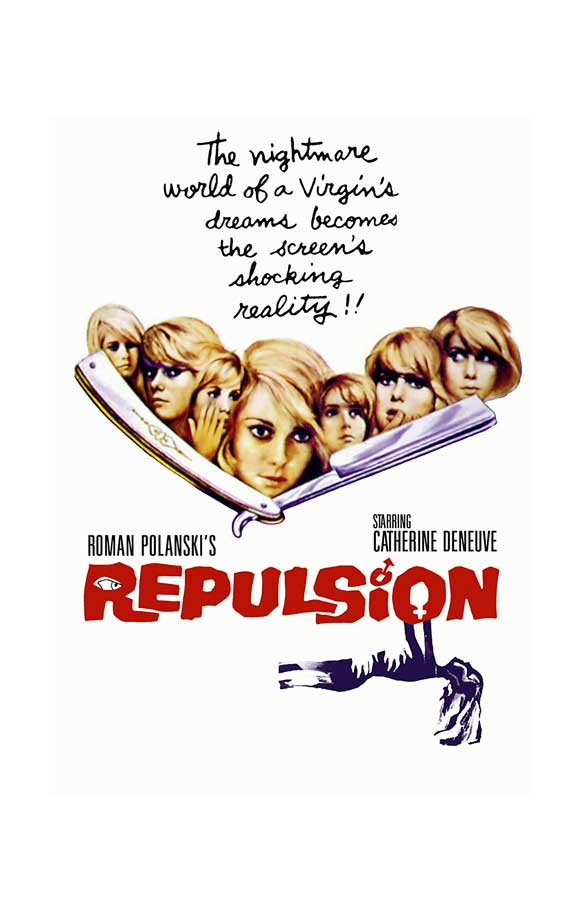
Love or loathe him one thing is for sure the controversial Roman Polanski has made some great movies and since today marks his 80th birthday I thought it would be good to review one of his films this being his first English language one. The story, which was written by Polanski and Gerard Brach centers on Carol (Catherine Deneuve) a beautiful but lonely young woman living in an apartment with her older sister Helen (Yvonne Furneaux) and Helen’s boyfriend Michael (Ian Hendry). Carol seems detached and troubled and when Helen and Michael go off for the weekend Carol begins to suffer hallucinations while inside the apartment that becomes increasingly more frightening and eventually leads to murder.

The film works at a slow and deliberate pace that some viewers may feel put-off by. Personally I felt it was effective and made it more realistic although things really don’t start to get intense until the final hour. For me it was the little things that made it intriguing for instance the way Carol becomes fascinated with the distorted reflection of herself in a teapot, or a rolling bottle of nail polish. Nothing is over-the-top, but instead subtle and restrained. This is one of the few films that seem to understand the thought process of the mentally ill and makes you feel like you are really inside their head and seeing things as they do, which is what makes it so unnerving. The low-key approach works because like with an actual person having a breakdown it starts with little things that slowly morph into bigger ones.

Polanski shows incredible control over the material. The stark black-and-white cinematography helps to heighten the ugliness of the situation. The variety of camera angles and movements creates an almost hypnotic effect. I loved the way, as Carol gets further into her demented state, that the dimensions of the apartment begins to change, or the hands coming out of the walls. My only complaint is I wished some of these effects had been played up even more. The rape sequences are quite effective and surprisingly explicit for its time period. Yet instead of hearing Carol’s screams during these moments we instead hear the ticking of a clock, which somehow makes it even more disturbing.

Deneuve gives one of her best performances and she was at the peak of youthful beauty here. The blank almost zombie-like look in her eyes is penetrating. You get the feeling that she not only truly understands the madness of her character, but actually is the character. Patrick Wymark is also memorable as the landlord who goes from being bombastic and demanding to kind and cuddling and eventually sexually deviant in a matter of only 10 minutes.

Normally I always like a background to the characters and when they are missing or vague I find it a weakness to the script while here it is strangely a strength. We can surmise that she was most likely abused sexually when she was younger, but the who, when, and why is never made clear. This though somehow makes the character and the situation more compelling and reflects back to how psychologically fragile the human condition can be and how these things can happen to anyone. The final tracking shot, which stops on a picture of Carol as a child showing an angry look on her face is great.

The imagery and psychological approach to this thing is still one-of-a-kind. The movie viewing experience on this one remains potent and aptly deserves its classic status.

repulsion 2

My Rating: 8 out of 10

Released: October 2, 1965

Runtime: 1Hour 45Minutes

Not Rated

Director: Roman Polanski

Studio: Compton Films

Available: VHS, DVD, Blu-ray, Amazon Instant Video