Category Archives: Black Comedy

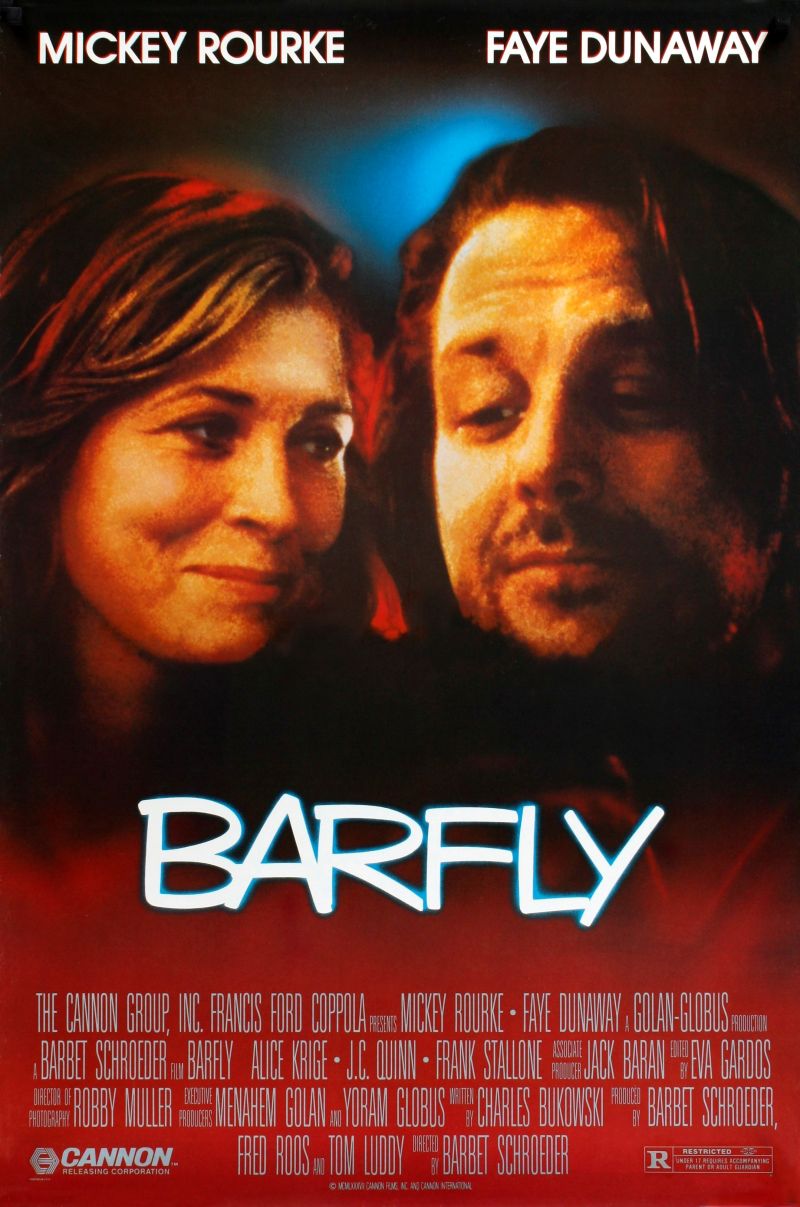
Barfly (1987)

barfly

By Richard Winters

My Rating: 6 out of 10

4-Word Review: Drunks at a bar.

Henry Chinaski (Mickey Rourke) is a bum who has very little money, lives in a small rundown apartment that’s more like a sleeping room, and spends most of his time getting drunk at a bar across the street called The Golden Horn. It’s here where he gets into arguments with Eddie (Frank Stallone) the bartender. During one of their confrontations the two go out back and have a fistfight behind the building, which Henry unceremoniously loses. Feeling embarrassed and dejected he goes on a crusade to ‘win his title’ back by finding food in order to regain his energy, but when he rips a sandwich out of another customer’s hand, since he doesn’t have money he must steal from others, he gets thrown out of the bar by Jim (J.C. Quinn) the bar owner. He then stumbles his way to another waterhole named Kenmore where he meets Wanda (Faye Dunaway) a fellow alcoholic. The two create a makeshift bond and end-up going back to her place, an apartment paid for by a married man who covers for her life necessities, as a kept woman, as long as she’s willing to put-out when he wants it. Just when Henry thinks he might be falling in-love she betrays him by have a tryst with Eddie. Feeling dejected Henry turns back to the bottle only to have Tully (Alice Krige) show-up at the doorstep. She’s a publisher offering him a check of $500 in compensation for some of the poems and short stories that he had submitted, which she found to be both gifted and profound. Henry though isn’t sure he can accept the money as he’s more comfortable being poor and not used to being liked, or a part of the upper class, which for decades he had found snotty. Then Wanda comes back into his life and when she finds out about Tully she makes a personal vendetta to ‘put her out’ as she feels rightly or wrongly that Henry is ‘hers’ and no other woman can have him.

The film is based loosely on the life of Charles Bukowski, who used the character of Henry Chinaski in five of his novels and was considered his alter-ego. It was produced by the notorious Cannon Group a production company that had a portfolio of a hodge-podge of movies some of them of a decent quality and others that were anything but. Although they had made a commitment to finance this one it almost didn’t get made as the studio was going through a period of financial distress and felt this one required too much money to fund, so they threatened to pull-out until director Barbet Shcroeder appeared at their office with a Black and Decker power saw warning that he would cut-off one his fingers to show the world that ‘Cannon was cutting-off a piece of him by pulling out of the project’, which was enough to get the execs to change their mind.

As a film it works mainly because it used authentic Los Angeles locations, many of which Bukowski frequented in real-life, as the setting. The dismal interiors really help create a vivid look making the viewer feel they’re as trapped in the skid row surroundings as the protagonist and with no discernable way to get out. The apartment sequences are especially engaging not only for the scene, that comes near the end, where Henry finally busts in on his noisy neighbors where he has a memorable confrontation, but also at the beginning when he accidentally goes into an apartment that isn’t his, but since it looks just as bleak as his sans for some decorative window curtains, he at first doesn’t even know it.

As a character study it’s revealing though it does hinge on how much tolerance the viewer will have towards someone whose decidedly self-destructive at every turn. Rourke plays the part in an over-the-top way particularly the weird style he walks almost like he’s trying to put a touch of camp to it and I don’t blame Bukowski, who stated in a later interview that Rourke was ‘too exaggerated and a bit of a show-off’ in the part, which Bukowski ultimately felt that he ‘didn’t get right’ though he later warmed-up to it and possibly other viewers may as well.

Dunaway seemed more problematic playing a woman on the skids was definitely not a part of her repertoire and she seems miscast. She almost makes-up for it by appearing topless during the bathroom scene and then getting into a climactic catfight with Krige at the end, but I didn’t understand why the woman would be wearing what appeared to me as female business attire as that was something her character was not and therefore she should’ve had something more ragged to wear even if it was just a simple jeans and T-shirt.

Spoiler Alert!

The film has many quirky moments including the two paramedics that come to visit Henry on a couple of occasions, which almost steals the movie and make this seems more like a surreal, dark comedy than a drama. The leisurely pace I liked and seems more suited for a European audience that isn’t so plot driven, but I would’ve liked seeing Henry working more at his craft. He’s only shown writing a couple of times, which is so brief that I really didn’t think he was that committed to it and almost like a novice writing words on notebook paper making it a complete surprise when a publisher eventually does show-up. You’d think if he hadn’t even bothered to type out what he had written most publishers would’ve thrown it away making the moments with the agent seem almost dream-like and more a fantasy than the intended reality.

I was a bit turned-off by the ending. I remember reading an article back in the 80’s that this movie was an example of a ‘downbeat ending’ that Hollywood studios were shying away from. During the 70’s sad endings had become the standard, but by the 80’s they tended to not register as well with the public and thus making upbeat conclusions became the norm. However, the article had specifically pointed out this movie as having an ending, which ‘wasn’t a happy one’, but I didn’t get that impression. I thought maybe it would have Henry getting knocked out by Eddie during their fight ‘rematch’, but the camera tracks out of the bar, so we never see the results of the confrontation and it’s all left open, so it’s neither sad nor happy. My only conclusion is that the article’s author felt this was a ‘sad’ ending because Henry went back to his old ways of drinking versus becoming a successful writer, but for some people success is a scary thing and falling into their familiar habits, as bleak and destructive as they may seem to others, offers a weird form of security, so I felt it ended on a high note because Henry was doing what was right for him and with the type of people he felt comfortable with. Being rich and famous would never have worked with his personality and therefore he was better off without it.

My Rating: 6 out of 10

Released: October 16, 1987

Runtime: 1 Hour 37 Minutes

Rated R

Director: Barbet Schroeder

Studio: The Cannon Group

Available: DVD, Blu-ray, Amazon Video

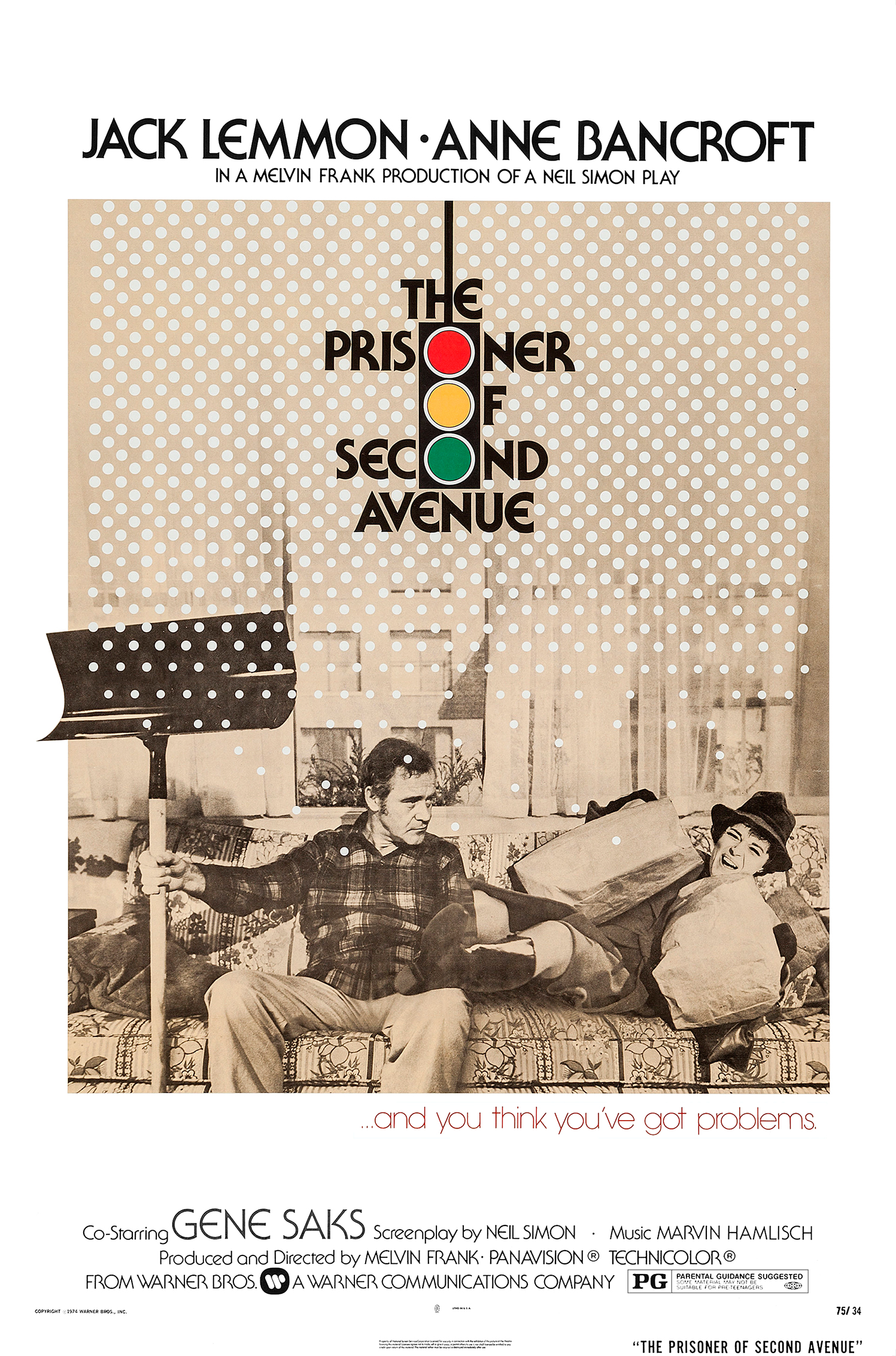
The Prisoner of Second Avenue (1975)

prisoner

By Richard Winters

My Rating: 4 out of 10

4-Word Review: Out of a job.

Mel (Jack Lemmon) has just lost his job that he’s had for 22-years and fears that at age 48 it will be hard for him to find another one. Edna (Anne Bancroft) goes out to find employment of her own in order to pay for the bills and while she’s initially sympathetic to Mel’s problems she becomes annoyed at the way he doesn’t do anything about it besides just complain about everything. Having their place get robbed in broad daylight, a garbage collector’s strike, noisy neighbors, and a massive New York heatwave all lead to Mel having a mental breakdown where he begins to believe all sorts of conspiracy theories. He also gets into loud verbal sparring with one of his upstairs neighbors. His brother Harry (Gene Saks) tries to get his two sisters, Pauline (Elizabeth Wilson) and Pearl (Florence Stanley) to chip-in to help pay for Mel’s therapy, but they’re reluctant making Edna feel like she’s in this all on her own while becoming openly frightened at Mel’s deteriorating state.  

The film is based on Neil Simon’s Broadway play of the same name that premiered on November 11, 1971, that starred Peter Falk and Lee Grant. The script was written by Simon but doesn’t do enough to differentiate it from a stage play with a boring visual design that falls flat and barely ever seems to get out of the apartment and when it does the moments are equally uninteresting. The ongoing potshots at New York City living have been done before and nothing that gets said here that is ground-breaking, or even mildly amusing. The plot and humor meanders and are too unfocused to be either riveting, or captivating. 

Lemmon gives a good performance, but he’s played this type of character before and his perpetual complaining about everything and anything quickly becomes tiring. I actually sided with the upstairs neighbor who throws cold water on him when he stands outside bellowing into the night air about his problems, which would annoy anyone. Bancroft’s Brooklyn accent is too affected and her wide-eyed responses to Lemmon’s constant shouting lends no spark making her character come off as transparent. Watching her fight-back a little or even get into a sparring match with Lemmon could’ve added some much-needed comic spark, but for the most part the scenes between them are dull and one-dimensional. 

It’s hard to feel sorry for a guy who makes no effort to help himself. Instead of him being shown moping constantly around the apartment each day in his bathrobe we should’ve seen him going out to job interviews, or even sprucing-up his resume and I was genuinely shocked why none of this happened. How does he really know the job market is so ‘tough’ if he doesn’t venture to go out and test it? Since his wife is able to get a job rather quickly it starts to seem like it’s not so hard to find one making the protagonist and his inactions all the more infuriating. 

Spoiler Alert!

What’s even more confounding is he’s able to somehow ‘snap out of’ his sorry state without actually finding another job. It’s not clear either what event gets him to change his thought patterns he just starts telling everyone that he’s ‘over it’ and back to being his old productive self, but in a good movie this should be seen by the viewer without the character having to explain it. Since he’s still not gainfully employed what’s to say he couldn’t easily fall back into the doldrums and therefore seeing him working at someplace new would’ve been a more complete ending. 

The side-story dealing with him buying a giant snow shovel in order to get back at his neighbor for throwing water on him, isn’t satisfying either. For one thing if money is so tight why waste it on something he really doesn’t need? His revenge plan is a bit confusing too. The idea, I guess, is that he’ll wait for the first big snowfall then climb up on the apartment roof and shovel the white stuff down on the neighbor’s balcony, but this is yet another thing that should’ve been put into action in front of the camera as him just alluding to what he’s going to do isn’t as satisfying. 

My Rating: 4 out of 10

Released: March 14, 1975

Runtime: 1 Hour 38 Minutes

Rated PG

Director: Melvin Frank

Studio: Warner Brothers

Available: DVD, Blu-ray, Amazon Video, YouTube

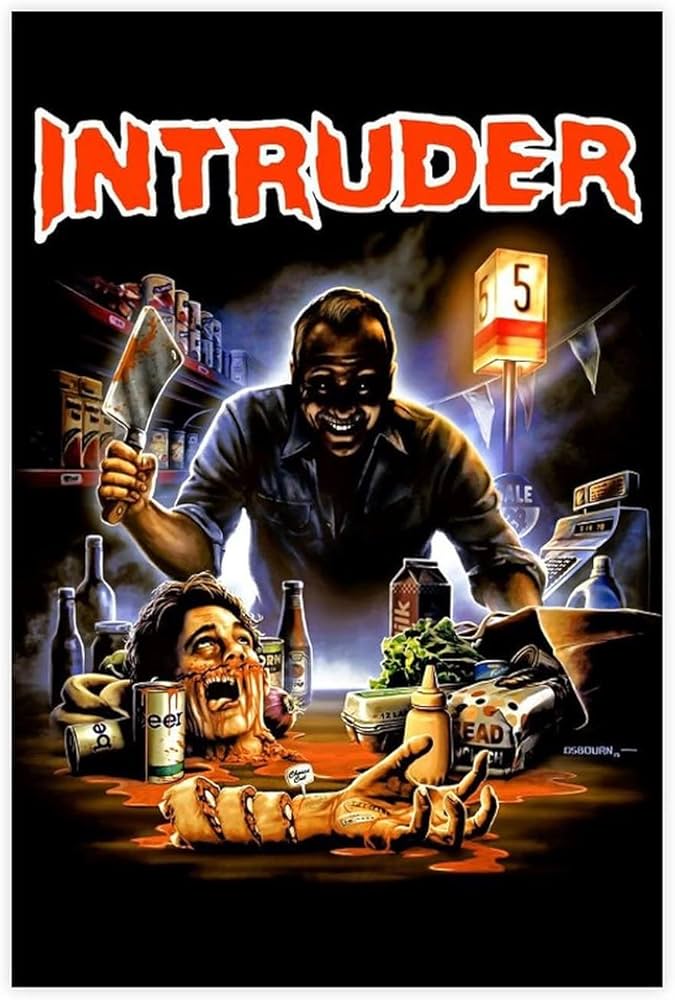
Intruder (1989)

intruder2

By Richard Winters

My Rating: 6 out of 10

4-Word Review: Killer in grocery store.

Jennifer (Elizabeth Cox) and Linda (Renee Estevez) are two cashiers working the night shift at a grocery store. Just before closing Jennifer gets confronted by Craig (David Byrnes) a man she dated briefly who pressures her to get back together. When she refuses he becomes irate prompting Linda to alert the store owners (Dan Hicks, Eugene Robert Glazer). The police are eventually called in, but by then Craig has disappeared yet as the night progresses the night crew begins being stalked by some mysterious person that they can’t see. Eventually they start to turn-up dead having been killed in gruesome and novel ways. Is Craig the one behind it, or is it possibly someone else?

The concept is an interesting one as all the action takes place entirely on the grocery store premises with the majority done inside though there’s a few scenes that happen just outside of it. Scott Speigel, who co-wrote Evil Dead II with Sam Raimi, who appears as one of the store employees, got the idea for the film after working as part of the night crew at a Michigan grocery store and in fact ‘Night Crew’ was the movie’s original title, as well as the short film that was shot before they found funding to make a feature length version, but the distributors felt a more generic horror title would help it sell better. It was shot inside a former grocery store that was now empty in Bell, California where they hired a company to deliver two tons of damaged goods in order to use that to line the shelves.

The film is well directed with a lot of unique camera angles including a shot seen through a wine bottle another one where the point-of-view from inside a telephone looking-up and another showing someone from the outside turning a lock on a door and then having the camera shot rotate in tandem to it. The killings, once they finally get going, are adequately grisly and should suffice for gore fans.

While I enjoyed the store setting and felt they did an admirable job in making it appear like a real grocery market I was put-off with the lighting. All grocery stores that I’ve ever been to always are brightly lit in order to give-off this inviting feel and make people want to come inside. This store however was very dark and shadowy looking like no grocery place I’d ever been to and as a result it hurt the believability. Some may argue that this was the night shift and hence no need for all the lights to be on since only the overnight crew was in it, but it was very shadowy from the beginning even before it had closed and customers were still in it. I also didn’t care for the cameo appearances by Aly Moore and Tom Lester, two men who had been cast members in the old ‘Green Acres’ TV-show. Not sure what the relevance was for having them appear here, but they don’t really add much to the story and their bumbling ways don’t help add any tension and if anything detract from it.

The story moves a bit too slowly to the extent I started to worry if the killings were ever going to get going, or if it all was just one of those gimmicky horror flicks that ultimately isn’t very scary, or gory at all. The tension ebbs quite a bit and it would’ve worked better had the killer had some sort of identity, even if it was just wearing a goofy mask, versus having it be someone we never see. The idea that this killer would be able to single-handedly lift someone into the air simply by grabbing the victim’s hair and then proceed to shove them completely through store shelves, or hang them effortlessly on meat hooks, is absurd and makes the culprit seem more like a supernatural entity instead of the human that he is.

Spoiler Alert!

The ultimate reveal where the killer is exposed as being Bill the store’s co-owner was a bit of a surprise, but his motivations didn’t make sense. I could understand that he was upset about the store going out-of-business and would want to kill his partner for allowing it, but why kill all of the employees? If the idea is to ‘save’ the store this isn’t exactly a good way of going about doing it. His explanation that he simply got ‘carried away’ doesn’t suffice. If he really is just ‘crazy’ then elements of his insane personality should’ve come to the surface long before just that night.

Having Jennifer and her former boyfriend Craig, the only two survivors, get arrested for the crimes does have an ironic twist to it, but then leaving everything as a sort-of cliffhanger isn’t satisfying. The original ending was to have the camera go inside Jennifer’s screaming mouth, as she’s protesting her arrest, and down her throat until it got to her heart, which would then be shown as stop beating, but because it would be too complicated to shoot the idea got scrapped, but it would’ve been a cool final shot for sure.

My Rating: 6 out of 10

Released: January 27, 1988

Runtime: 1 Hour 28 Minutes (Unrated Version)

Director: Scott Spiegel

Studio: Empire Pictures

Available: DVD, Blu-ray, Amazon Video, Tubi, Full Moon

Creepshow 2 (1987)

creepshow2

By Richard Winters

My Rating: 6 out of 10

4-Word Review: Three stories of terror.

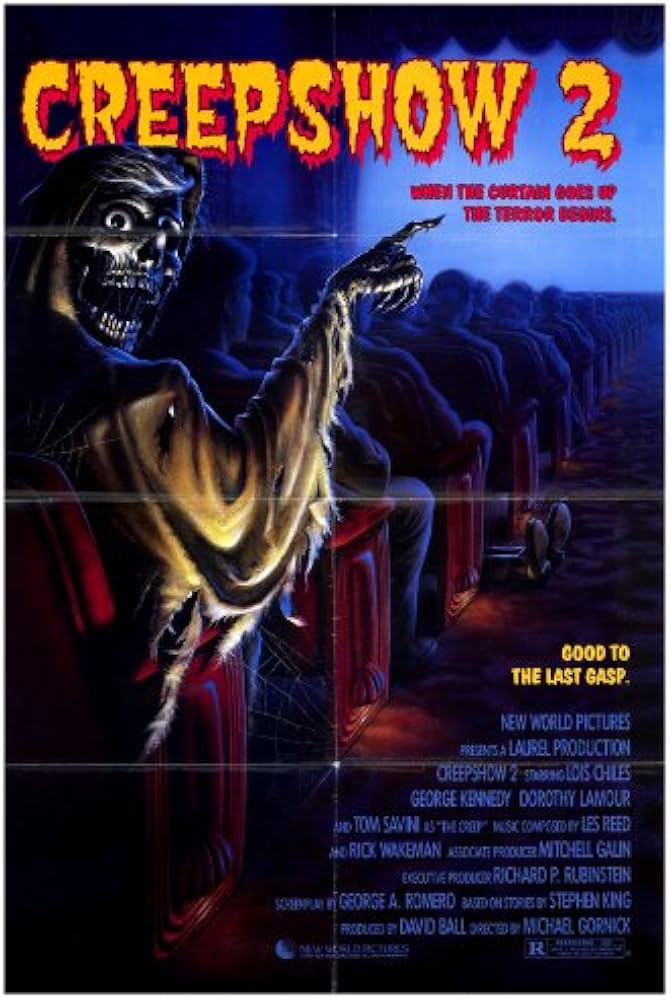
Due to the success of the 1982 installment Stephen King and George Romero got together to write a second script based on three of King’s short stories and directing duties were turned over to Michael Gornick who had been the cinematographer on the first one. The budget was much lower than the first, which hampered the special effects and critical reception though it still made $14 million at the box office and has garnered a cult following amongst contemporary audiences.

The first, which is the weakest, stars George Kennedy and Dorothy Lamour, in her last film appearance, as owners of a small-town general store that’s no longer making any profit. An Indian tribe elder (Frank Selsado) gives the couple a bag filled with jewelry as repayment for a debt and then later that night three hooligans lead by the long-haired Sam (Holt McCallany) rob the store and kill the couple. The three think they’ve gotten off scot-free, but then the cigar store Indian that stood in front of the store comes to life and avenges the couple’s deaths by murdering the three boys one-by-one.

This segment takes a while to get going and really doesn’t get interesting until the robbery happens, which should’ve occurred sooner. While the effects of showing the wooden Indian moving around is impressive as it really looks like he’s made of wood and not just somebody in a costume it would’ve been more intriguing had it not given away who the killer was. Simply shown the three being hacked by some mysterious, shadowy figure and then only at the very, very end alluded to it being the Indian.

The second story is better and deals with four college friends (Paul Satterfield, Jeremy Green, Daniel Beer, Page Hannah) going for a swim on a remote lake. They leave their car running and then all dive into the water and swim out onto a wooden raft, but then notice a black, gooey substance that surrounds them. The four feel trapped and when one of the young ladies puts her hand into the water the blob sucks her in and drowns her. The blob then seeps its way through the cracks of the raft and kills another one leaving only two left.

This one is genuinely creepy and I liked how it’s shot under a bright sunny sky making the area appear inviting and no need for anyone to be guarded until it’s too late. The constant shots of the running car sitting on the beach not far from where the swimmers are on the raft, but still unable to get to it, heightens the tension as well as the fact that there’s never any answer to just what this substance is, which in this case accentuates the intrigue. The only thing that I didn’t like is that after being stuck on the raft for an entire day the guy holding the sleeping girl lays her down onto the raft floor, but then uses the opportunity to undress her and admire her breasts, but I’d think with the situation they were in he’d be too exhausted and frightened to think about sex. The ‘twist’ at the end, which shows a No Swimming sign posted in a grove of trees, which the young adults hadn’t spotted, doesn’t totally work because if there’s no swimming in that lake then why would there be a wooden raft in the middle of it and who put it there?

The third story is the best and features a middle-aged woman, played by Lois Chiles, who goes on a drive late one night and accidentally kills a hitchhiker (Tom Wright) when her car goes spinning out-of-control. Instead of offering aid to the man she just drives-off, but then becomes plagued by visions of him constantly reappearing during the rest of her trip making her panic as she attempts to ‘re-kill’ the man, so she can be rid of him once and for all.

Initially this one seemed like a redo of the classic ‘Twilight Zone’ episode that featured actress Inger Stevens who went on a car trip and kept seeing the same hitch-hiker at various intervals on her drive, but this one takes it a step further by having Chiles use her car to literally smash the guy again and again, which gives it a gruesome over-the-top quality that deftly mixes in gore and black humor perfectly.

The film was set to have two other stories, ‘Cat from Hell’ and ‘Pinfall’, but due to budgetary limitations it was decided not to proceed with those and they were never filmed. In the ‘Cat from Hell’ one a hitman gets paid $100,000 to kill a cat that’s supposedly killed three other people. The ‘Pinfall’ one deals with competing bowling teams where the one team kills the other one, by tinkering with the van they ride in, and then the dead team coming back to life as zombies and killing the other team in unique ways by using things only available in a bowling alley, which sounded really cool and it’s a shame this segment wasn’t made as it would’ve been the best of the bunch.

My Rating: 6 out of 10

Released: May 1, 1987

Runtime: 1 Hour 30 Minutes

Rated R

Director: Michael Gornick

Studio: New World Pictures

Available: DVD, Blu-ray, Amazon Video, Plex, Pluto TV, Tubi, Roku, YouTube

Fright Night Part 2 (1988)

fright2

By Richard Winters

My Rating: 6 out of 10

4-Word Review: Vampire’s sister stalks teen.

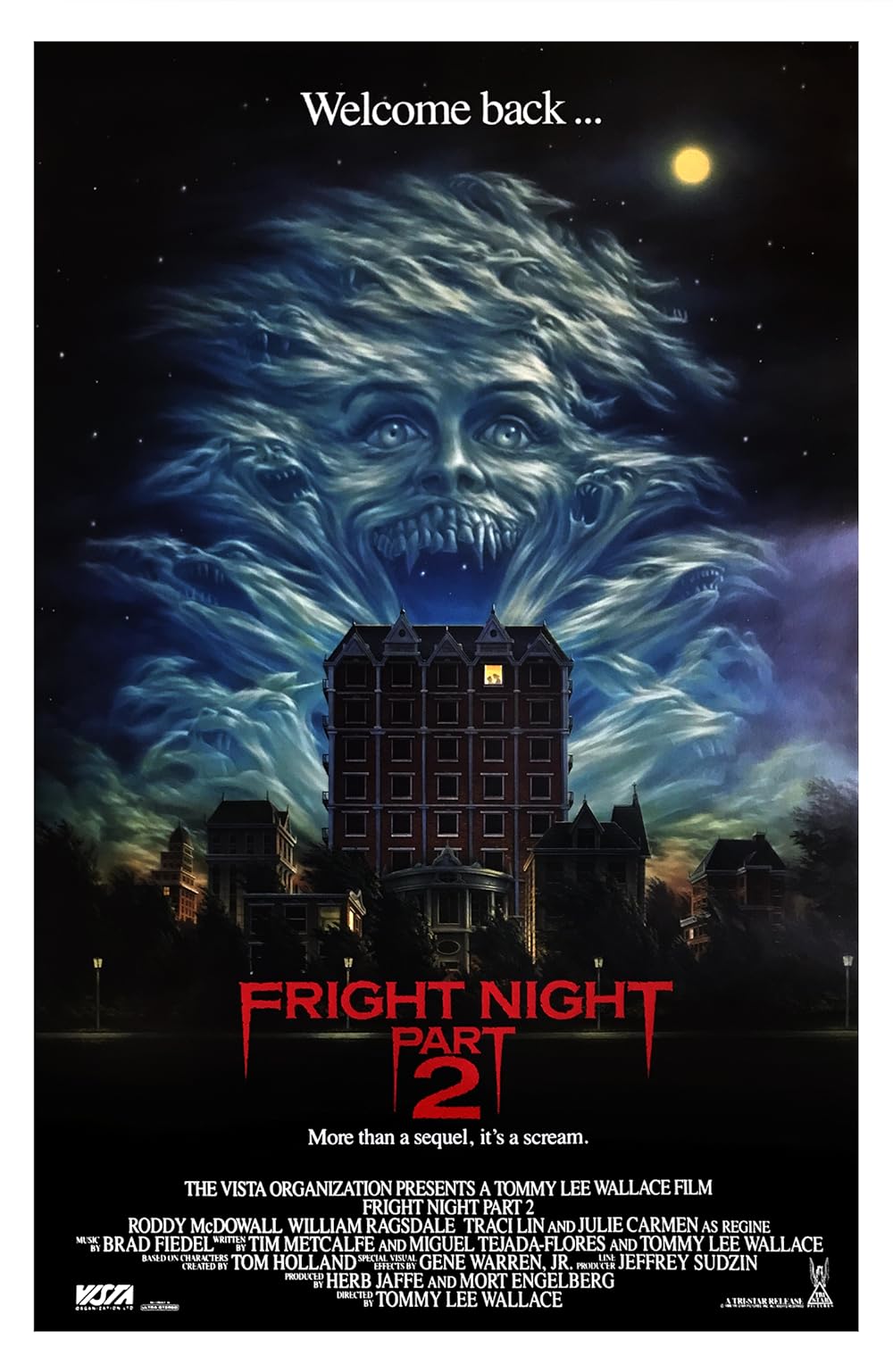
Charley (William Ragsdale) is now in college and having been convinced by his therapist (Ernie Sabella) that the ordeal he went through when he was in high school with his next-door neighbor Jerry Dandridge really wasn’t about a vampire, but instead the man had simply been a serial killer. In order to celebrate his successful ‘conversion’ he takes his new girlfriend Alex (Traci Lind) over to visit Peter (Roddy McDowall) who had been instrumental in helping Charley defeat Jerry. While there Charley looks out a window and sees movers hauling in three giant crates that look similar in size to coffins and he begins to fear the old ordeal is starting all over again. He begins dreaming that beautiful woman named Regine (Julie Carmen) visits him in his apartment one night and bites him on his neck and soon he begins showing odd traits like having to wear dark glasses because he no longer likes the sunlight. After going to a party with Peter where Regine is also in attendance, he becomes convinced that she’s really just a performance artist and no longer fears her until Peter takes out his trusty hand-held mirror and notices that he can’t see her reflection. Once Regine realizes that Peter’s on to her she admits that she really is a vampire and out for revenge over what he and Charley did to Jerry who happened to be her brother.

As sequels go this one isn’t bad though there’s quite a few things that are different from the first one, which is mainly a who slew of new faces. Amanda Bearse, who had figured so prominently as Charley’s original girlfriend is nowhere to be seen as she was working on the TV-show ‘Married With Children’ and not able to reprise her role while Stephen Geoffreys, who played Charley’s friend Ed was busy starring in 976-Evil and thus not available.  Director Tom Holland and Chris Sarandon, who had played Jerry Dandridge in the first, were involved in Child’s Play, and thus unable to commit though purportedly Sarandon did visit the shoot in order to offer emotional support.

Tommy Lee Wallace, who was best known for having directed Halloween III: Season of the Witcha film that was a critical and commercial failure when first released, but has through the years gained a cult following, got tabbed to direct this one and his background doing music videos can be clearly sensed here as it features a lot of quick edits and a moody vibe, which I really liked. Regine and her vampire clan that constantly surround her dress almost like a kitschy 80’s rock glam band, which is silly looking and campy, but also in a weird way creepy. Despite the low budget the special effects are still good particularly the monstrous transformations and the climactic sequence that takes place inside an elevator.

While Sarandon was highly impressive in the first version and there was simply no way that any other actor could’ve topped his performance Carmen is an adequate replacement. Too many times when producers can’t get a certain actor they then go out of their way to find someone similar, but here they wisely took the other route by finding someone who was quite the opposite. Instead of being verbally intimidating like with Jerry she does her stalking through being sexually alluring and the result is just as scary.

It’s also great seeing McDowall return as his presence in the first installment had been quite entertaining and his character here remains just as fun and I felt his hair looked better too. In the original the white in his hair appeared to have been sprayed on similar to how a white Christmas tree would look while in this one it’s a more natural looking gray with the white appearing on the edges, but the top part of his head still having a brownish color. I was though confused about how he was able to afford such a spacious pad in a ritzy apartment building that resembled a castle since in the first film he had been living in a cramped, dingy apartment that he was being evicted from and still working at the same job, so where he found the influx of cash to being able to move-up to a new swanky place is not explained.

The two things though that I didn’t care for was having Charley so easily convinced that what he had seen with his own eyes, Jerry being a vampire, was somehow not real, which made the character come-off as weak, easily influenced, and not reliable and like someone you really didn’t feel like rooting for if they could be brainwashed to that effective a degree. Also, having him slowly start to turn into a vampire wasn’t interesting in the least and having the bite mark continue to bleed even after it was bandaged didn’t make sense. Even if the puncture is created by a vampire the blood should still clot like it would with any other wound and not just turn the victim into a hemophiliac, which is what it kind of started to appear like.

The attempts at humor were misguided and genuinely got into the way of the scares and the whole thing would’ve been more effective had it been played straight. Overall though I felt was an effective follow-up and in certain ways even a bit better than the first. Finding a print of it though may be challenging as it’s never been released onto Blu-ray and the DVD issue, which came-out in 2003, is now out-of-print. It’s also not streamed anywhere. Even on its initial release it was only seen at select theaters for a brief time before falling off into obscurity. The main reason for this is that was produced by a production company run by Joseph Mendez, who while the movie was being filmed, was murdered along with his wife by their two teenage sons, which sent the company into bankruptcy and hampered the film from getting out. It also hurt the production of Part 3, which had already been in the planning stages. Infact both McDowall and Holland had a meeting with Mendez about moving forward with the third installment on the morning of his murder. That meeting though had proved to be a bit contentious, so when McDowall heard about the murder the next day he then immediately called Holland and said: “I didn’t do it, did you?”

My Rating: 6 out of 10

Released: December 8, 1988

Runtime: 1 Hour 43 Minutes

Rated R

Director: Tommy Lee Wallace

Studio: New Century/Vista

Available: DVD (out-of-print)

Fright Night (1985)

fright1

By Richard Winters

My Rating: 6 out of 10

4-Word Review: Vampire moves next door.

Charley (William Ragsdale) is a teen making-out with his girlfriend Amy (Amanda Bearse) in his bedroom one night when he looks out his window and sees movers carrying a coffin into the home next door. Throughout the proceeding days he becomes convinced, after eyeing what’s going on over there, that his new neighbor, Jerry Dandridge (Chris Sarandon), is a vampire. With the police refusing to believe him he feels his only option is to elicit the help of an actor named Peter Vincent (Roddy McDowall) who has starred in a lot of old movies about vampires and hosts a horror TV-show called ‘Fright Night’. Peter does not believe Charley at first, but when they go over to Jerry’s house for a visit he becomes convinced that Charley is telling the truth when he can’t see Jerry’s reflection in a mirror. Knowing that he’s now been found-out Jerry immediately goes on the offense by turning Charley’s friend Ed (Stephen Geoffreys) into a vampire and then setting his sights to do the same to Amy who closely resembles a woman he was once deeply in-love with.

The film became a surprise runaway hit despite the studio feeling it had no chance and pumped more money into the John Travolta, Jamie Lee Curtis film Perfect that was being shot at the same time. Because the execs were putting more focus on that one they left writer/director Tom Holland alone allowing him full directorial control and not forcing him to have to deal with the usual studio meddling. Holland, who had started out as an actor during the 50’s and 60’s before eventually moving into screenwriting during the late 70’s when his acting offers began to dry up, came up with the idea for this film while working on his Cloak & Dagger script and since he had won accolades for some of his earlier horror scripts that had gone onto success including Psycho IIhe was offered the chance to make his directorial debut with this one.

The film has a wonderful tongue and cheek approach, which keeps it consistently entertaining and lively throughout. While it’s funny at times it also has some really impressive special effects done well before the advent of CGI, but in many ways better. The best one and possibly best moment of the whole movie is when Ed morphs into a wolf and attacks Peter and Peter is able to pierce the dogs heart with a broken chair leg forcing the injured and dying Ed to slowly return to human form, which is both gory and realistically handled and creepy visually. If there’s definitely one part to watch again and again and never get tired of it would be that one.

The acting is stellar particularly Sarandon who displays a casual and very frightening menacing quality that makes all of his scenes unnerving. Supposedly he attempted to try and humanize his character by adding in certain traits that were not in the script like him eating apples to show how he was using it to help ‘cleanse his pallet from all the blood he had sucked’, but to me he just came off as this constant evil presence and one of the scarier film villains in horror movie history. Bearse, who has become better known for her work in the TV-show ‘Married with Children’, is entertainingly feisty as the teen girlfriend despite being already 28 at the time of filming though you really couldn’t see it.  Though not as well known Dorothy Fielding is very amusing as Charley’s daffy mom and I wished she had been in it more and of McDowall is absolutely perfect in a role that was originally intended for Vincent Price.

While the film has a lot going for it I did find its logic to be problematic. I found the fact that Amy so closely resembles Jerry’s past love from long ago to be too much of a coincidence and felt there should’ve been more of a backstory. The idea that these kids would choose some two-bit actor in their quest to defeat this vampire made no sense as an actor is just reading words off of a script and would have no more insight into vampires than your local junkman. Having Peter be some self-promoting vampire hunter and advertise his ‘vampire eradicator services’ in TV-ads, even if he was just a huckster, would’ve at least been a better choice than expecting someone starring in low budget movies from years ago to be the solution that will ‘save them’. Also, him bringing along a gun that he used in a past movie, in order to deploy it to shoot Jerry’s bodyguard, played by Jonathan Stark, is another head-scratcher because movie guns are props that shoot blanks instead of real bullets.

The use of the cross to ward off vampires gets confusing. When Peter attempts to use it on Jerry it isn’t effective and yet when Charley tries it it works. Jerry says this is because ‘you have to have faith’, but what type of faith? Faith that it will work, or faith in a deity? To help clarify this Charley should’ve been shown earlier, even briefly, as having some spiritual leanings, or just a quick shot showing the Holy Bible in his room would’ve been enough. Also, when Peter uses the cross against the vampire Ed it’ works, so why is this, or does Peter’s ‘faith’ go flip-flopping back-and-forth?

Spoiler Alert!

Having Amy transform into a vampire and to be advised by Peter that if Jerry gets destroyed before dawn  the process will reverse seems like its making up rules as most vampire movies I’ve seen seem to say the opposite like once they’re bitten there’s no going back. Having the two then go back just a few nights later after the big ordeal is over and be snuggling together in his room didn’t seem believable to me. Personally if I were Charley I don’t care how deep my feelings were for her I’d still be frightened to be alone with her especially after seeing her face turn into such a scary bloodthirsty monster. In the back of my mind I’d be paranoid it could happen again and who’s to say it wouldn’t. I realize American audiences are conditioned to expect everything to ‘work-out’ in the end and if it doesn’t they get cranky, but having things here go back to normal was too quick and seamless. Psychologically there would’ve been post traumatic stress by all and this overly smooth resolution is phony.

My Rating: 6 out of 10

Released: August 2, 1985

Runtime: 1 Hour 46 Minutes

Rated R

Director: Tom Holland

Studio: Columbia Pictures

Available: DVD, Blu-ray, Amazon Video, YouTube

Psycho III (1986)

psycho3

By Richard Winters

My Rating: 3 out of 10

4-Word Review: Norman gets a girlfriend.

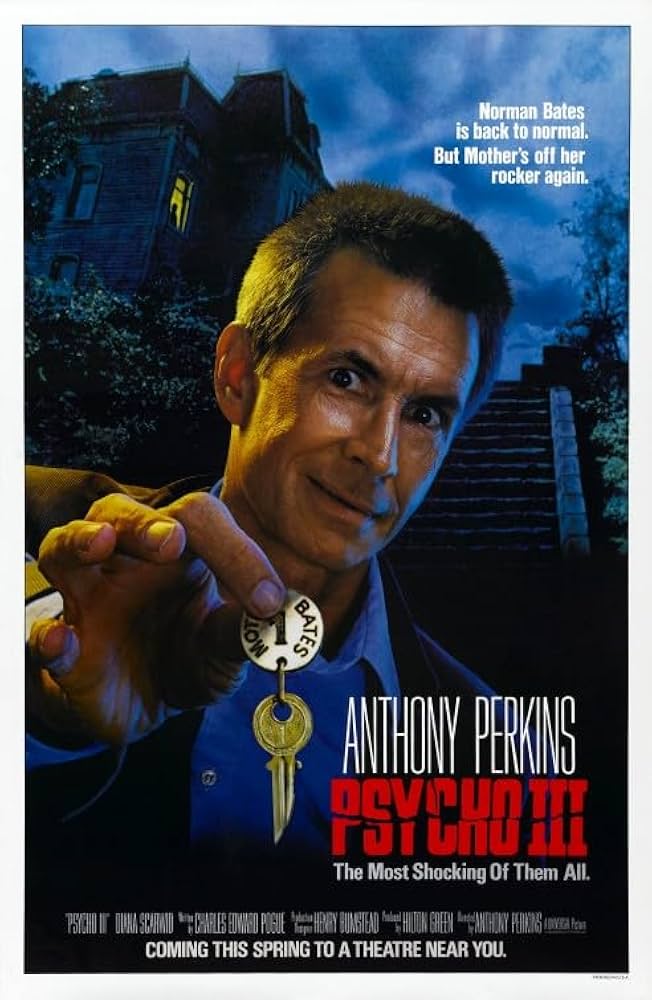
The story begins a month after the one in the second installment ended with police searching for the whereabouts of Emma Spool (Claudia Bryar) whom Norman (Anthony Perkins) killed and now keeps her preserved body in his home and yet curiously the police don’t suspect him. Meanwhile a roving journalist named Tracy Venable (Roberta Maxell) does and she keeps trying to get interviews with Norman in an effort to weed-out the truth while also snooping around his property any chance she gets. Maureen (Diana Scarwid) is a nun who’s lost her faith and thus left the convent and rents a room at the Bates Hotel. She closely resembles Marion Crane, one of Norman’s earlier victims, which sets off his desire to kill again, but when he goes into her room in an attempt to stab her he finds that she’s already slit her wrists and bleeding profusely, which sets off his emotional senses to help her and thus he takes her to the nearest hospital, which in-turn gets her to fall for him and the two begin a romantic relationship once she gets out. Norman also hires a wanna-be music artist named Duane (Jeff Fahey) to help out around the hotel as an assistant manager, but Duane becomes aware of Norman’s mother fixation and tries to use it against him just as an assortment of strange murders reoccur on the premises.

The third installment of the franchise is by far the weakest and it’s no surprise that it didn’t do as well at the box office and pretty much nixed anymore sequels getting released with the Part IV one, which came out 4 years later, being made as a TV-movie instead of a theatrical one. Perkins, who made his directorial debut here, starts things off with some intriguing segues and a good death scene of showing a nun falling off of a high ledge, but the storyline itself is getting quite old. Watching the ‘mother’ committing murders is no longer scary, interesting, or even remotely shocking. The script offers no new intriguing angles and things become quite predictable and boring very quickly.

Perkins gives another fun performance, which is pretty much the only entertaining element of the film, and Scarwid is compelling as a young emotionally fragile woman trying to find her way in a cold, cruel world. Maxwell though as the snooping reporter is unlikable and thus if she is meant to be the protagonist it doesn’t work. Fahey’s character is also a turn-off as his sleazebag persona is too much of a caricature and having him predictable do sleazy things as you’d expect from the start is not interesting at all.

The whole mystery angle has very little teeth and the way the reporter figures out her the clues comes way too easily. For instance she goes to Spool’s old apartment and sees a phone number scrawled out several times on a magazine cover sitting on the coffee table, so she calls it and finds out it’s for the Bates Motel and thus connects that Norman most likely had something to do with her disappearance, but wouldn’t you think the police would’ve searched the apartment before and seen that same number and made the same connection much earlier? Also, what kind of landlord would leave a place intact months later after the former tenant fails to ever come back? Most landlords are in the business to make money and would’ve had the place cleaned-out long ago and rented it to someone new.

The fact that the police don’t ever suspect Norman particularly the town’s sheriff, played by Hugh Gillin, is equally absurd. Cops by their very nature suspect everybody sometimes even when the person is innocent. It’s just part of their job to be suspicious and constantly prepare for the worst, so having a sheriff not even get an inkling that these disappearances could have something to do with Norman, a man with a very hefty and well known homicidal past, is too goofy to make any sense and starts to turn the whole thing especially the scene where a dead corpse sits right in front of him in a ice machine, but he doesn’t spot it, into a misguided campiness that doesn’t work at all.

I didn’t like the whole ‘party scene’ that takes place at the hotel, which occurs when a bunch of drunken football fans decide to stay there. I get that in an effort to be realistic there needed to be some other customers that would stay there for the place to remain open, though you’d think with the hotel’s well-known history most people would be too afraid to. Either way the constant noise, running around and racket that these people put-on takes away from the creepiness and starts to make the thing resemble more of a wild frat party than a horror movie.

Spoiler Alert!

The death by drowning scene is pretty cool, but everything else falls unfortunately flat. The final twist where it’s explained that Spool really wasn’t his mother after all sets the whole narrative back and makes the storyline look like it’s just going in circles and not moving forward with any revealing new information making this third installment feel pointless and like it shouldn’t have even been made. Screenwriter’s Charles Edward Pogue’s original script had Duane being the real killer while the Maureen character would be a psychologist who would come to visit Norman and who would be played by Janet Leigh, who had played Marion Crane in the first film. Her uncanny resemblance to one his earlier victims would then set Norman’s shaky mental state to go spiraling out-of-control, which all seemed like a really cool concept, certainly far better than what we eventually got here, but of course the studio execs considered this idea to be ‘too far out’ and insisted he should reel it back in with a more conventional storyline, which is a real shame.

My Rating: 3 out of 10

Released: July 2, 1986

Runtime: 1 Hour 33 Minutes

Rated R

Director: Anthony Perkins

Studio: Universal

Available: DVD, Blu-ray, Amazon Video, YouTube

The Hit (1986)

hit

By Richard Winters

My Rating: 5 out of 10

4-Word Review: Not afraid to die.

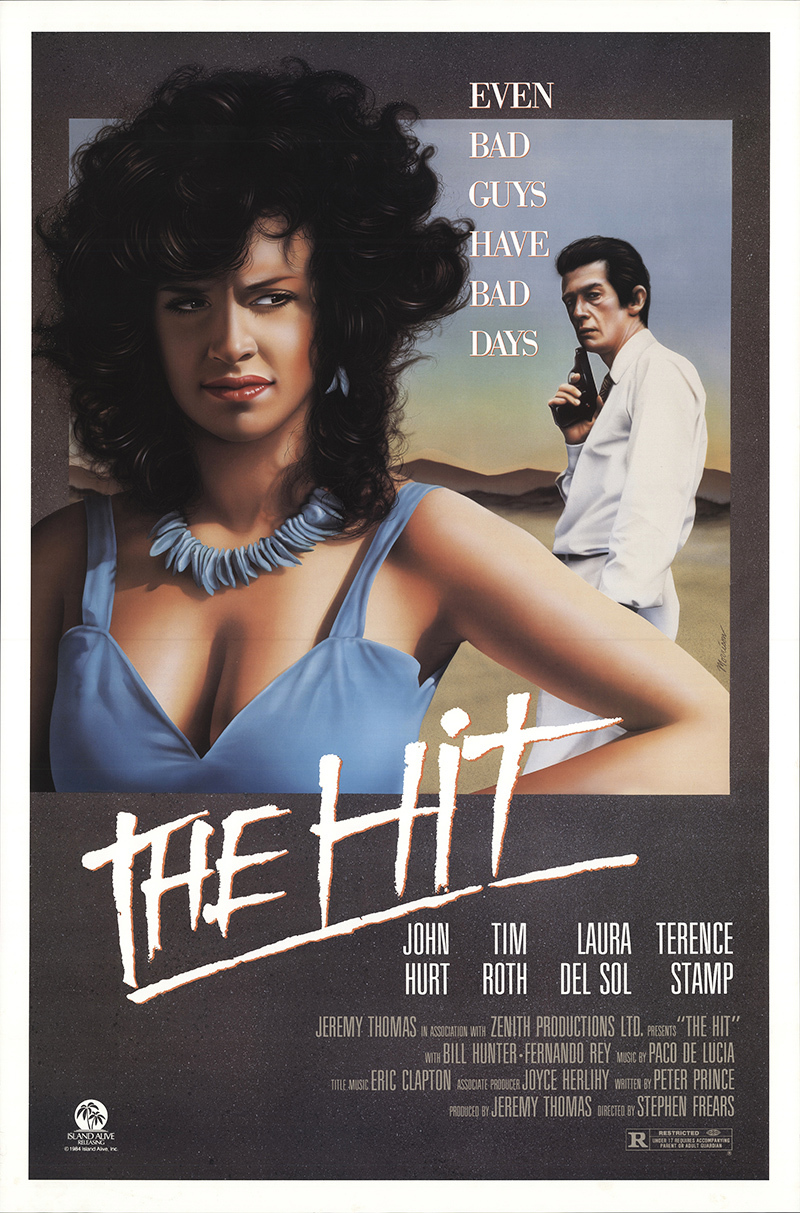
Willie (Terence Stamp) turns states evidence against the criminal underground that he’d been apart of, which then sends his former partners away to prison, but before they go they sing ‘We’ll Meet Again’ just as he leaves the court room. Ten years later Willie is living the quiet life in Spain as a part of the witness protection program only to have his home invaded by a group of teens who kidnap him and take him to hitman Braddock (John Hurt) who was hired by the kingpin that Willie helped put away. Braddock along with his young partner Myron (Tim Roth) are instructed to take Willie, via a car, to Paris where the kingpin hopes to inflict harm on Willie before eventually killing him. However, things don’t go quite as planned as Willie shows no fear of death insisting that he’s accepted it as a part of the cycle of life and this throws the two hit men off convinced that he must have something up-his-sleeve, but does he?

This is another example where a movie I enjoyed when I first watched it years ago, but doesn’t quite live up to expectations upon the second viewing. For the most part this doesn’t happen that often and there has been some cases where a movie I didn’t like when I first saw it I’ve come to appreciate when seen a second time. This one though is definitely a case of the former and I came away a bit miffed on what its point was. When I first saw it I was impressed by the scene at the waterfall where Willie, who had a chance to escape, but doesn’t and instead decides to spend his time appreciating nature’s beauty until Braddock catches up to him, I found at the time to be quite memorable and unique moment as it revealed that the bad guy in this instance was the one more afraid and insecure of death than the intended victim.

However, there’s a lot of stuff that doesn’t mesh, or could’ve been more convincing. I had a hard time understanding why this sophisticated criminal group would hire a bunch of teen boys to break into Willie’s home (hideout). How could they trust these novices to get the job done and the fact that they’re able to do it so easily makes it seem that Willie’s ‘protection’ as it were wasn’t too impressive. It also negates the effect of the criminal unit. They’re supposedly this cunning, evil, underground group relentlessly pursuing their man against this supposedly intricate government program, but if literal kids can just break down the door with just a bit of effort then the whole operation from both sides comes-off as rather amateurish.

The casting of Hurt as the bad guy isn’t effective mainly because of his meek stature. Stamp was originally intended for that role and with his big build and piercing blue eyes would’ve been perfect, but it was ultimately decided for both actors to play against type and thus the parts got reversed, but it really doesn’t work. Hit men should have an intimidating presence, but with Hurt’s slim figure and quiet, exhausted looking demeanor that doesn’t happen. Roth as his quick-triggered, youthfully naive henchmen makes matters worse as he’s a walking cliche of a teen in over-his-head just biding time before his knee-jerk reactions to do them in. Thus the psychological games that Willie plays with them are not that interesting, or impressive since these two come-off as badly dis-coordinated right from the start and like any average person could easily outfox them.

Stamp’s character is baffling as well. During the courtroom moments he states his testimony is an almost hammy way like he’s making fun of the whole situation, which maybe he is, but it’s not clear as to why and his ulterior motivations are never answered. It’s hard to tell whether he really is a good guy, or maybe secretly a bad one as there are scenes where he puts other potential victims in definite danger and then feigns ignorance about it afterwards. He spends the whole time telling everyone how death doesn’t scare him and yet when a gun does finally get pointed at him he panics and tries to run while also pleading for his life, so which is it? The same goes for Roth’s character who during the course of the movie he seems to be falling for the lady hostage, played by Laura del Sol, and even protective of her and yet when the time comes for Hurt to shoot her he puts up no fight, or resistance, which defeated the momentum and missed-out on what could’ve been an interesting confrontation.

I like movies with multi-dimensional characters and the film does have that and certainly humans can be a bag full of contradictions. However, at some point it kind of needs to explain itself and it fails on that end. Intriguing elements about these people get thrown-in, but the story fails to follow through with it ultimately making it too vague, ambiguous to be full satisfying and in many ways it will most likely leave most viewers frustrated and scratching their heads as they ask themselves what the point of the whole thing was supposed to be.

I did though really enjoy the scenes with Australian actor Bill Hunter who is marvelous in support playing a man who takes over one of Hurt’s friend’s apartments while on vacation only to get the shock of his life when the hit man and his entourage show up unexpectedly. His rather pathetic attempts to mask his fear and trying to somehow carry-on a casual conversation knowing full well he could be blown away at any second is dark comedy gold and by far the film’s best moments.

My Rating: 5 out of 10

Released: May 18, 1984

Runtime: 1 Hour 38 Minutes

Rated R

Director: Stephen Fears

Studio: Zenith Entertainment

Available: DVD, Blu-Ray (Criterion Collection), Tubi, Plex

Cockfighter (1974)

cockfighter

By Richard Winters

My Rating: 6 out of 10

4-Word Review: He refuses to talk.

Frank (Warren Oates) has a passion for cockfighting. While he’s had other endeavors in his life he’s always come back to this because of the unpredictability. He can predict the way the chicken is built how it will fare in a fight, but it’s actual fighting spirit is unknown until it’s put to the test and because of that factor it keeps him intrigued with the sport. However, his bragging gets him into trouble when one of his chickens losses a battle during a makeshift fight inside a hotel room with a chicken from fellow cocker Jack (Harry Dean Stanton). After he’s forced to pay up the bet Jack tells him that he ‘talks too much’ convincing Frank to take a vow of silence and become effectively mute until he’s able to win a cockfighting championship.

The story is definitely a relic of a bygone era as cockfighting is no longer legal in the U.S. with Louisiana being the last state to ban it in 2008. Today only a few countries in the world allow it as the sport is considered by many to be animal abuse. The film pulls-no-punches and will be deemed brutal for certain viewers who’ll probably turn it off by the halfway mark if not sooner. The fights between the chickens are actual and up close. You see the beaks of one cock jamming into the eyes of another and their dead carcasses of which there ends up being many thrown into a heap onto others into a trash bin, or in one segment where the fights take place in a hotel room, into a bathtub with what seems like hundreds them. There’s even a scene where Oates hacks-off a live chicken’s head with an ax and another moment where he lays a chicken onto the pavement and then steps on its head and yanks it off from the rest of its body by sheer force, so if any of these details upset you then it’s best to stay away from the movie altogether.

For those who are game the story ends up having a darkly humorous tone. The armed robbery that takes place inside a hotel room and Richard B. Shull’s character hiding his earnings amidst the pile of dead chickens where he presumes no one would dare think to even check is amusing. The best moment though comes when Ed Begley Jr. becomes incensed when Oates’ chicken kills his during a fight and being so distraught at losing his prized possession comes after Oates with an ax.

The acting is marvelous particularly by the legendary Oates though he doesn’t say much until the very end, but he makes up for it by being the film’s voice-over narrator. What impressed me most though was his comfort level in handling the chicken’s and at one point casually dealing with one that tried attacking him, which made me believe that this must go back to upbringing in rural Kentucky where he lived amongst them as a kid so he was used to their behavior and not scared away as I’d think another actor without that type of background wouldn’t be able to pull-it-off.

The script was written by Charles Williford, who appears in the movie as a judge/ref during the cockfights and based off his novel of the same name. While the film does move along at a brisk pace and is never boring I did feel it lacked a certain context. It works more like a preview than a full story. You get a general feeling about the people and atmosphere, but not a deep understanding. My main curiosity was with the folks who come to see these fights and what motivated them to want to watch such a bloody sport. Analyzing this mentality would’ve been interesting, but never happens making the film feel incomplete and like it’s only barely tapping into the surface of the subject.

My Rating: 6 out of 10

Released: July 30, 1974

Runtime: 1 Hour 23 Minutes

Rated R

Director: Monte Hellmen

Studio: New World Pictures

Available: DVD, Blu-ray, Amazon Video, Fandor, Pluto, Tubi, Plex, Shout TV

Bone (1972)

bone

By Richard Winters

My Rating: 8 out of 10

4-Word Review: Black man terrorizes couple.

Bill (Andrew Duggan) is a slimy used car salesmen residing in Beverly Hills with his bickering wife Bernadette (Joyce Van Patten). He spots a rat in his pool and initially thinks a black man, who calls himself Bone (Yaphet Kotto), is there to remove it. However, Bone has other ideas as he accosts the couple and forces them back inside their luxurious home and begins ransacking it in an effort to find some money. When he is unable to he instructs Bill to go to the bank and take out all the money he has there and come back with it, or he’ll rape his wife. Bill immediately does as he’s instructed, but along the way starts to think he’d be better off without her and decides to not to take the money out and instead goes on ‘a date’ with a young woman (Jeannie Berlin) that he meets while standing in line at the bank. When the other two realize they’ve been had they then conspire to track Bill down and kill him in an effort to collect on his life insurance money.

This was the directorial debut of Larry Cohen who up until this time was mainly known for writing teleplays for many popular TV-series from the 60’s. While he is now famous for doing campy, low budget horror flicks this feature was far different from those and leans more in the arena of black comedy without much suspense. The story though is laced with a lot of social commentary, which is what stands it out and it’s just a shame that this has gotten lost in shuffle with all of his other efforts, some of which were quite cheesy, while this one has some impactful moments and signs of a serious filmmaker with strong potential.

The film though does have a few drawbacks, which I’ll get out of the way first. An ethically dubious car salesman is probably the oldest cliche out there as well as a bickering rich, white couple making the premise seem a bit predictable. The husband and wife are shown to be at odds immediately and thus there’s no surprise then when hubby decides not to try and save her.

While Kotto is certainly a big guy he still should’ve come with a weapon (a gun, or at the very least a knife) and the fact that he’s able to take control, so quickly without one makes it seem a bit too easy.  He just pops-in as if he were a genie, a few shots showing him casing the neighborhood would’ve helped alleviate this, and he should’ve been wearing a mask to disguise his identity, unless he was planning to kill them, but without a weapon that wasn’t likely to happen. He’s also able to find incriminating financial information about the hubby a bit too conveniently as this is a big house and yet within a matter of two minutes he comes upon it, which seemed too rushed.

The excellent acting though more than makes up for these other issues. Duggan certainly looks the part of an aging, compromised suburban businessman whose eaten up with guilt and depression. While only 49 at the time he appears more like 69 and I could’ve done without the scene where he runs down the street topless making his sagging skin and chest muscles quite evident. Van Patten is equally terrific and surprisingly goes fully nude in a well-shot and edited assault moment. Jeannie Berlin has some fine moments too as a gal Duggan picks-up who initially seems quite ditzy, but eventually reveals a very sad and painful experience from her past, which manages to be quite profound. Kotto too is good particularly his sinister smile even though Paul Winfield was the original choice and I think would’ve been better, but Cohen found his acting to be ‘too genteel’, so he went with Kotto instead.

What I really liked were the segues and intermittent cutaways that help reveal the darker side to the Duggan character like his imaginary car commercials were he starts to see bloody crash victims inside the vehicles he’s trying to sell. The imagery showing a German Shepheard dog that he used for those commercials and what he ultimately does with him is also quite alerting. The shots dealing with their adult son in jail and the climactic sequence in some sand dunes are quite strong to the extent it gives the movie a powerful punch at the end and makes it almost criminal that this isn’t better known.

Alternate Titles: Housewife, Dial Rat for Terror

Released: July 22, 1972

Runtime: 1 Hour 35 Minutes

Rated R

Director: Larry Cohen

Studio: Jack H. Harris Enterprises

Available: DVD, Amazon Video, Tubi