Category Archives: Black Comedy

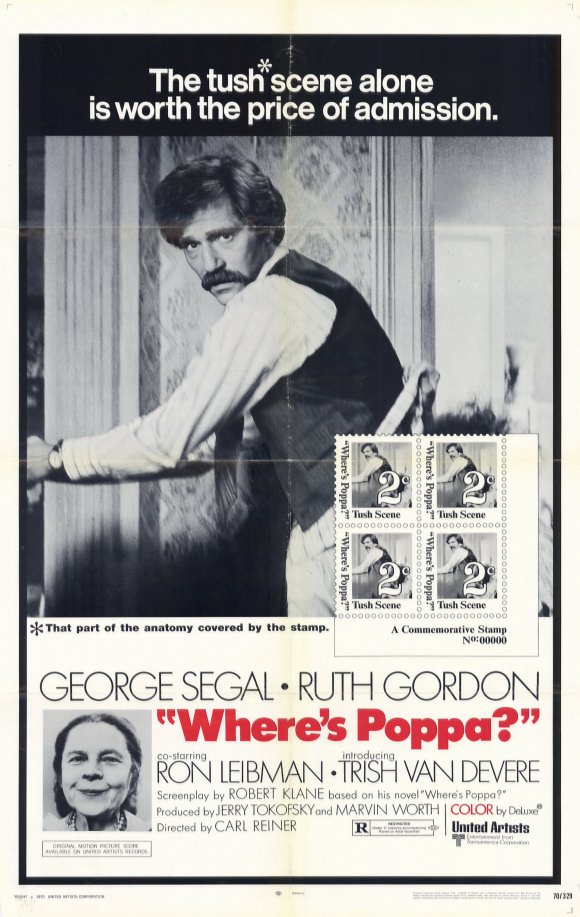
Where’s Poppa? (1970)

wheres poppa 2

By Richard Winters

My Rating: 9 out of 10

4-Word Review: Mother has to go.

A beleaguered Gordon (George Segal) is a man who must take care of his invalid mother (Ruth Gordon). Despite being a handsome young lawyer he has literally become trapped by this very difficult woman. The majority of the film takes place in a 1940’s styled apartment. It’s gray, dusty bleakness permeates every shot and shows just how lodged Gordon is in his mother’s world. He is a normal man that is slowly being sucked into madness. He is becoming mad because the world he lives in and life in general is driving him to it. The wall between what he really wants to do in life and his obligations have become so thick that going crazy may be the only real answer.

In fact madness maybe pretty much is what this film is really about. It seems to be saying that there is a certain functioning normality to it and at times even a necessity for it. Everyone in this film conveys their own unique form of madness. There’s the overzealous war general (hilariously played by Barnard Hughes) There’s also the henpecked brother/husband Sidney (Ron Leibman) who goes to almost absurd lengths to make sure everyone is happy. Even innocent, conservative Louise (Trish Van Devere) opens into the crazy world when explaining her rather unique honeymoon experience. The film delves so deeply and consistently into the world of the absurd that at times the senile Mother really doesn’t seem so nutty.

This is the film’s genius. It takes everything we have always accepted and turns it inside out. It takes some of life’s most depressing things and then makes it into an inspired and creative masterpiece. A trip to the old folk’s home has never been considered by many to be funny or memorable, yet a trip to Paul Sorvino’s old folk’s home is. In fact it maybe one of the funniest scenes you’ll ever see.

Writer Robert Klane and director Carl Reiner show an amazing grasp of their material, which is crucial for its success. Everything is fluid and consistent in tone. It shows how you can indeed have an offbeat idea, do it in an offbeat way, and still succeed without compromising.

My Rating: 9 out of 10

Released: July 9, 1970

Runtime: 1Hour 22minutes

Rated R

Director: Carl Reiner

Studio: United Artists

Available: VHS, DVD

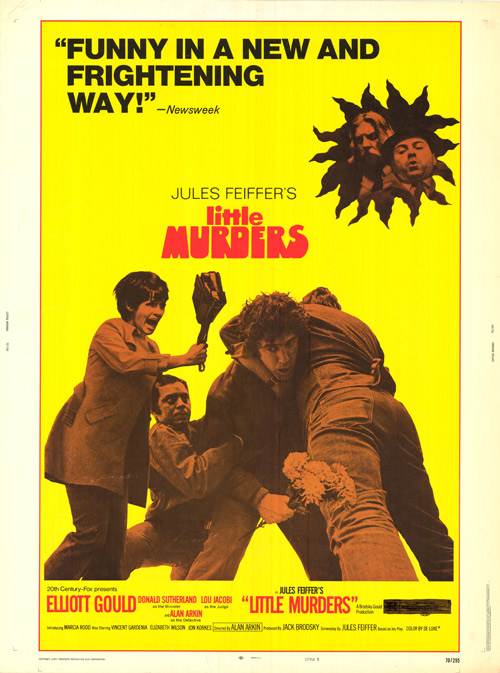
Little Murders (1971)

little murders

By Richard Winters

My Rating: 7 out of 10

4-Word Review:  They shoot at people.

Patsy (Marcia Rodd) is a woman who practices the art of positive thinking despite her dismal urban surroundings. She meets Alfred (Elliot Gould) who is very detached and dropped out of society and no longer shares any hope in humanity, but she decides to marry him anyways and ‘reform’ him.

For a black comedy this one has got to be tops. It stays on a grimly humorous level from the beginning and doesn’t let up especially with its wicked ending. Everything gets the offbeat treatment and if it starts out conventional it is soon turned upside down until it is absurd. The funniest scenes involve Patsy taking Alfred home to meet her parents where things become very odd until they are absolutely hilarious. The wedding scene is also a classic where Donald Sutherland plays a hippie minister and gives a speech about masturbation that is as outrageously funny today as it was back then. Yet it is the surreal scene of seeing Alfred riding a subway car while dripping with blood and nobody saying anything that leaves the strongest impact. The targets that this film satirizes are just as potent today as they were back then. The film also manages to dig a bit deeper than most and successfully analyzes the myriad of societal complexities while not siding with any particular social movement or philosophy.

Rodd is terrific in her film debut and Gould is good in a surprisingly restrained performance. Jon Korkes is also excellent as an infantile adult son in an over-the-top send-up of grown children still living at home. However, it is Vincent Gardenia that ultimately steals it playing a hard-liner conservative father who finds himself becoming literally imprisoned by the increasingly insane world around him.

Although still potent this outrageous story seems to have lost some of its zing through the years and doesn’t seem to be as offbeat or ‘out there’ as it once did. It also lacks any type of cinematic flair and at times seems to be nothing more than a filmed stage play.

However, for fans of black comedy and relics of a bygone era it doesn’t come much better than this. Although it has softened a bit there are still enough bizarre and funny moments to please those with an acquired taste.

My Rating: 7 out of 10

Released: February 9, 1971

Runtime: 1Hour 50Minutes

Rated R

Director: Alan Arkin

Studio: 20th Century Fox

Available: VHS, DVD

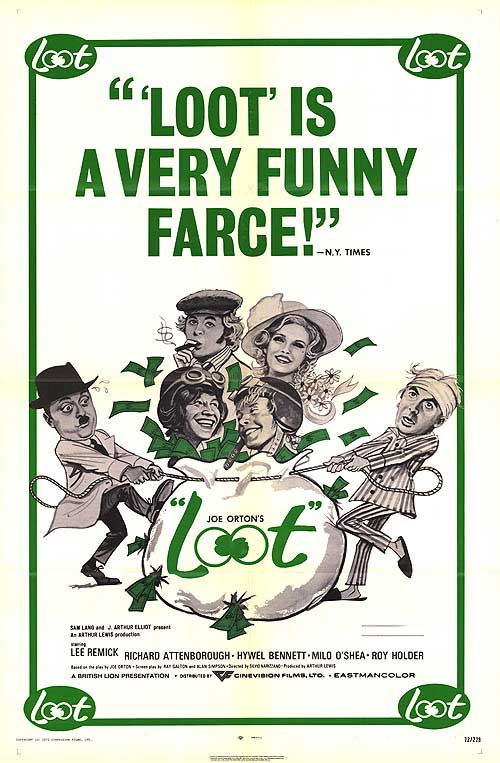
Loot (1970)

loot 3

By Richard Winters

My Rating: 8 out of 10

4-Word Review: They are all greedy.

Every Friday this month I will review the Top 5 best and most outrageous black/dark comedies from the 70’s. There were many to choose from, but these five have stood the test of time and remain as potent and hilarious as they were when first released. Today’s film was written by Joe Orton who died before ever seeing his play made into a movie and despite being top-notch in every aspect remains unjustly overlooked and hard-to-find.

The story deals with Dennis and Hal (Hywell Bennett, Ray Holder) two friends who decide to rob a bank next to a funeral home and hide the stolen money inside the coffin of Hal’s late mother. Problems ensue when Inspector Truscott (Richard Attenborough) starts to suspect the boys have something to do with it and incorporates brutal interrogation tactics to get the truth out of them. Then there is Nurse Fay (Lee Remick) who may have had something to do with Hal’s mother’s death and is inclined to want a piece of the action. All of this occurs inside Hal’s house, which is also a bed and breakfast run by Hal’s Father McLeavy (Milo O’Shea) who remains oblivious to all of the shenanigans and only worried about getting a decent burial for his departed wife.

The film is fast and funny and retains all of Orton’s dark and acidic wit. It is full of one-liners, sight gags, odd characters, and bizarre, unexpected comical twists, with ninety-eight percent of it being clever and funny. The best is the funeral procession when Dennis, who is driving a hearse that is carrying the deceased, finds out that the vehicle has lost its brakes and careens down the streets at high speeds with all the other cars in the procession try to keep up with it while driving equally fast.

Director Silvio Narizzano shows a terrific grasp on the material. Unlike Entertaining Mr. Sloane the only other film adaption of Orton’s work this film has a terrific pace that starts with a bang and never lets up. Narizzano also infuses a lot of imaginative camera angles, edits, and set design to give the thing a nice edgy, off-color feel. Outdoor action is nicely balanced with the indoor scenes to create a good cinematic feel and it never seems like a filmed stage play. There are some interesting homoerotic overtones as well including having Dennis and Hal blow a hole in the bank wall, crawl through it and take the money, then crawl back out and stuff it into the coffin while being completely naked.

Remick has one of her most interesting and unique performances in her already illustrious career as she is quite amusing looking almost like Marilyn Monroe with her dyed platinum blonde hair and authentic sounding British accent. Attenborough is memorable playing against type. Usually he is best at meek and passive types, but here he almost steals the film as the aggressive Inspector with a Hitler mustache. His best moment comes when he picks up a glass eye from the floor and in one brief second sticks out his tongue and licks it, which is done in vivid close-up.

The bouncy, psychedelic score by Steve Ellis helps give the proceedings attitude and personality. Why this film has never been released on DVD or Blu-ray is a mystery. The humor remains sharp and a whole new throng of fans could be acquired if they were just able to see it.

My Rating: 8 out of 10

Released: May 1, 1970

Runtime: 1Hour 41Minutes

Rated R

Director: Silvio Narizzano

Studio: British Lion Film Corporation

Available: VHS

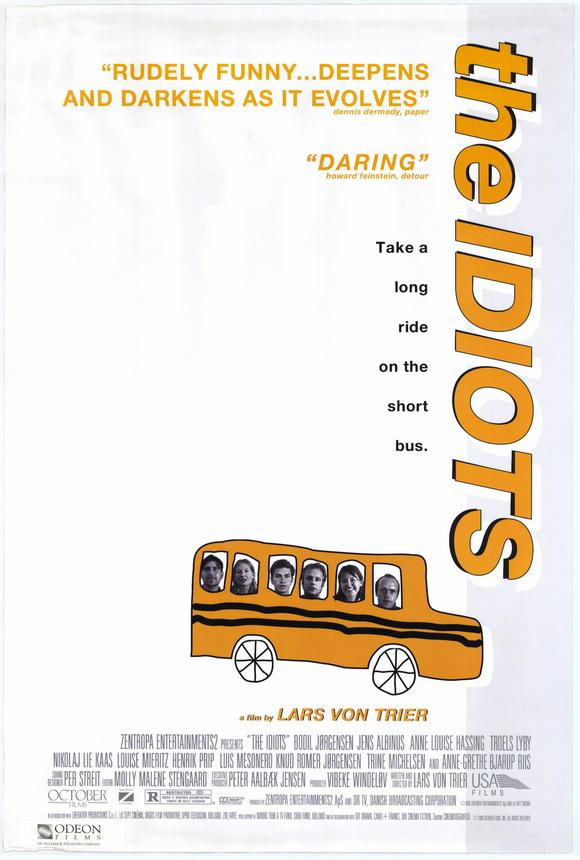
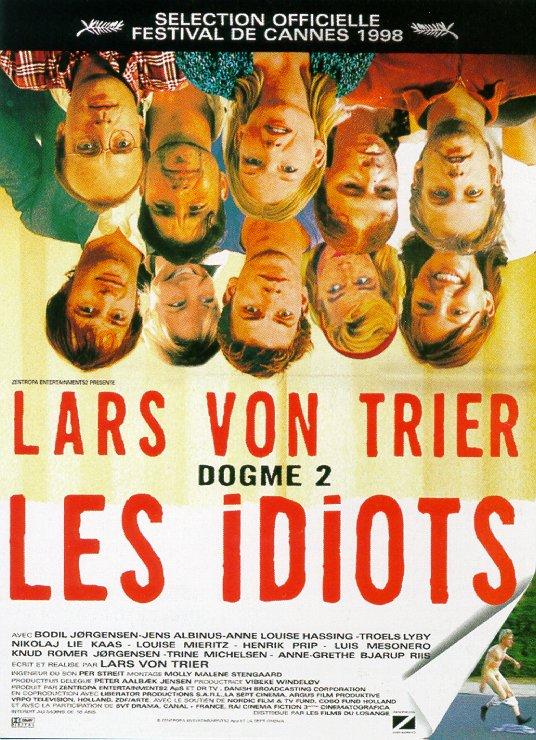
The Idiots (1998)

the idiots 2

By Richard Winters 

My Rating: 7 out of 10

4-Word Review: This is so retarded.

The Idiots is another shocking, controversial, and highly original work from filmmaking maverick Lars Von Trier.  This one involves a group of disenchanted people in their 20’s and 30’s, who decided to rebel from society by acting like they are mentally retarded.

Although certainly not in the best of taste, there are some funny bits here. The comedy works well because amidst all of the outrageousness it is also very revealing about human nature. One of the best segments involves an affluent couple who wish to purchase a large, upscale home.  As they are touring the place they are informed that a group of ‘retards’ live next door. The couple put on the politically correct facade by saying that wouldn’t be a problem even though their facial expressions say otherwise.  When the group pretending to be retarded pays them a visit the couple quickly runs off.  Another funny part, which may actually be the most outlandish of the whole film, involves a group of tough, tattooed bikers who help in very graphic fashion one of the group members pretending to be mentally handicapped go to the bathroom. The group’s visit to a factory is also hilarious.

The majority of the film though is actually quite serious and yes, even thought provoking. Von Trier does a good job of analyzing things from different angles while supplying no easy answers. It was interesting how the group mocks society for all of their rules and customs and yet when one of their own members starts to act erratic they tie him to a bed and refuse to free him until he ‘settles down’, thus proving that even they themselves need certain rules of behavior in order to function even if they don’t want to admit it.  Some other strong dramatic scenes involve the father of one of the members who tries taking his daughter from the group and back home with him.  There is also a revealing segment involving one of the members who decides to ‘drop back into society’ and return to his job as a college professor despite the protests from the other members.  The group also comes into direct contact with people who are actually mentally handicapped and how each of them responds to this is fascinating.

The characters are nicely fleshed out.  All of them show distinct personalities and evolve in interesting ways as the film progresses. Karen (Bodil Jorgenson) acts as they catalyst.  She comes upon the group by chance and acts as a sort of ‘conscience’ for the film.  Initially she is shocked and confused by the group’s behavior, but because she is stuck in an unhappy relationship and grieving the recent death of her son, she decides to tag along. Eventually she starts to see the benefits of ‘spassing out’ which is the group’s term for ‘finding your inner idiot’.

I liked how the film challenges the concept of true rebellion and shows how complex the fabric of society really is. Everyone would like to ‘drop-out’ at certain times and there is even a need for it, but finding the right place can be complicated. I have often felt that the true nonconformist is either living on the streets, is in prison, or a mental institution and the film pretty much comes to this same conclusion, but without advocating ‘fitting-in’ with the establishment as the answer either.

My complaints for the film centers mainly on the over use of the hand-held camera, which tends to get distracting after a while and gives the film a needless amateurish feel. I know with Von Trier’s ‘Dogma 95′ manifesto the hand-held camera is a major factor, but I think he could back off a little with it. There is also a ‘gross-out’ segment at the end where the group member’s start to drool out their chewed up food, which I found completely disgusting especially the way the camera captures it in close-up. The pacing is pretty good, but it does drag a little at times and I felt the film went on about twenty-five minutes too long.

Obviously this is a film that will not appeal to everyone and in fact I would say that the majority of people may find it off-putting.  That doesn’t mean it is a bad film because I think it is a pretty good one and I liked it overall.  However, what makes it a good film is the fact that it works off of its own vision and makes no compromises in doing so.  For most viewers especially American audiences who are used to a ‘mass-appeal’ approach to film-making, this type of concept may not connect. 

the idiots 3

My Rating: 8 out of 10

Released: May 20, 1998

Runtime: 1Hour 57Minutes

Rated R

Director: Lars Von Trier

Studio: Zentropa Entertainments

Available: VHS, DVD

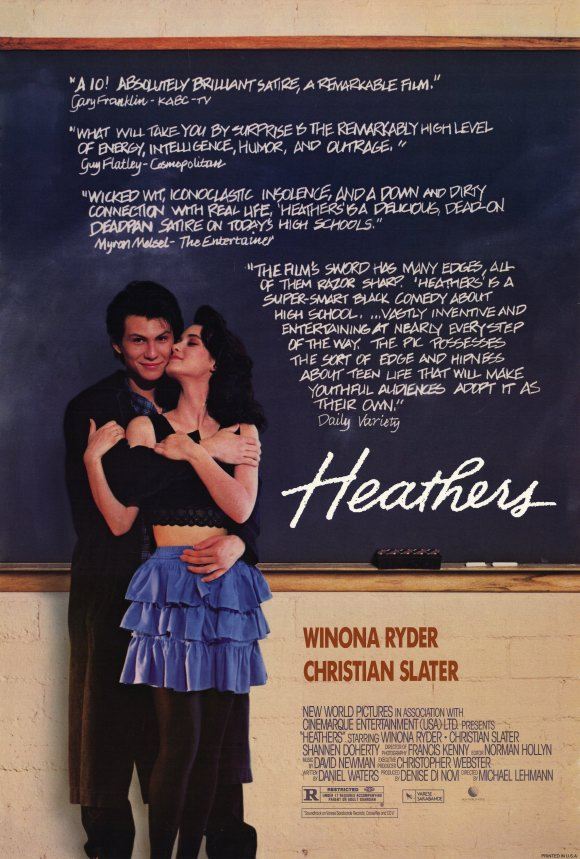
Heathers (1988)

heathers

By Richard Winters

My Rating: 7 out of 10

4-Word Review: These girls are bitches.

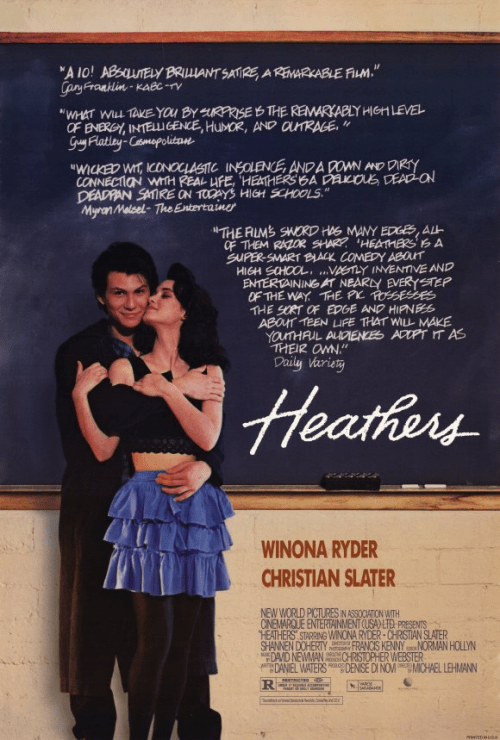
Heathers (Kim Walker, Shannon Doherty, Lisanne Falk) are three beautiful teens all with the same first name of Heather who act as the bitch queens of their Ohio high school. Veronica (Wynona Ryder) strives to be accepted into their exclusive clique and eventually does, but feels guilty about having to ignore her old friends as well as not particularly liking her new ‘friends’. In comes J.D. (Christian Slater) a rebel who decides to shake up the status system by killing off all of the snotty girls and jocks and making it look like suicides. Veronica reluctantly goes along with it, but when J.D. decides to blow up the entire school in order to make ‘a statement’ she decides things have gone too far.

Daniel Water’s dark script is incisively on-target and filled with original quotable lines of dialogue. Director Michael Lehmann gives the proceedings a nicely surreal touch with just a pinch of satire with the funeral scenes of the victims being the funniest and most creative. The characters are pretty much portrayed on the negative side, but the caricatures have a lot of truth to them and it reminded me a lot of my high school days.

What really makes this stand out from other 80’s high school movies is the fact that it transcends the teen culture by showing how the adult world really isn’t much better and this high school is simply a microcosm of a cold, screwed-up world that it inhabits. In fact Veronica’s mother (Jennifer Rhodes) says it best when she states: “When teenagers complain that they want to be treated more like adults it is usually because they are being treated like one.”

Ryder is superb and I still consider this to be the best role of her career. The fact that the character is morally dubious, but still manages to stay likable makes it all the more fascinating. Christian Slater’s Jack Nicholson impersonation is irritating, but he is still a good pick for the part. The two share some particularly good exchanges including this one:

Veronica: “I just killed my best friend.”

J.D.: “And your worst enemy.”

Veronica: “Same difference.”

I must admit that I fell completely in-love with Kim Walker as Heather #1 as she possesses an amazingly beautiful face, which would be enough to make me want to watch her regardless of acting skills. I’m surprised that her career never took off and she was relegated to supporting roles in minor productions.

kim walker 1

However, she does get two great lines including:

“Fuck me gently with a chainsaw.”

And her most famous one:

“Did you have a brain tumor for breakfast?”

Unfortunately she gets killed off much too quickly when she is tricked into drinking some drain cleaner supplied to her by J.D., but she still looks  beautiful even with blue teeth and a blue tongue. What is even sadder and more perplexing is that in real-life she died at the young age of 32 by believe-it-or-not a brain tumor.

kim walker 2

Falk as Heather #2 is attractive as well although not quite like Walker. Her career never skyrocketed either and her biggest claim to fame outside of this is that she was the model on the cover of Foreigner’s Head Games album. Doherty as the third Heather may be the most famous of the three, but she is not as attractive. For the first half she didn’t even seem all that effectual but comes into her bitchy best during the second part.

Despite the fact that the teens were not using cell phones, or texting, or had any of the other technological advances of today the film doesn’t seem dated, which is another plus. Only two scenes really stood out to me in this area. One is when J.D. shoots at a couple of mean jocks (who are characterized in amusingly dim-witted style) with a gun full of blanks and he doesn’t get into any trouble for it. Off course in 1988 school shootings were unheard of, but today the place would be put on lockdown and J.D. would not only be suspended but probably serve some jail time blanks or not. Another scene involves Veronica and J.D. planning to ‘humiliate’ these same jocks by making it look like they are gay lovers, which today would get Veronica and J.D. labeled as being homophobic.

Although I enjoyed the scene where J.D. gives Veronica the finger only to have it shot off I did find the second half not to be as slick and the concept itself seems to get stretched too thin. The script’s original ending called for a prom to take place in heaven and featuring the teens in different cliques than the ones they were in on earth, but unfortunately the suits at the studio in typically stupid fashion nixed that idea and went with a rather dopey and contrived one instead.

There is also ample argument to the fact that most investigators probably wouldn’t be fooled by these staged suicides and instead consider them the homicides that they were, but because it was all done in the satirical vein I’m willing to overlook it in what is otherwise one of the best high school movies ever made and one that enjoys a considerable cult following. There are also apparently rumors of turning the film into a TV-series where a grown Veronica returns to her hometown with her teen daughter who must now contend with a new generation of teen bitch queens named Ashley.

My Rating: 7 out of 10

Released: October 1, 1988

Runtime: 1Hour 43Minutes

Rated R

Director: Michael Lehmann

Studio: New World Pictures

Available: VHS, DVD, Blu-ray, Amazon Instant Video

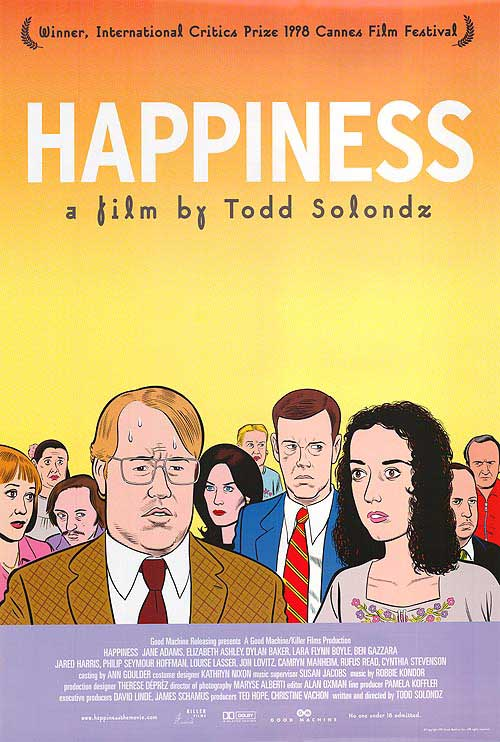
Happiness (1998)

happiness 1

By Richard Winters

My Rating: 8 out of 10

4-Word Review: Happiness can be elusive.

Sharply tuned, interweaving group of vignettes all pertaining to that elusive paradox known as happiness. Jane Adams plays the single woman who is never able to find Mr. Right. Then when she thinks she does he turns into very much of a Mr. Wrong. Louise Lasser and Ben Gazzara, who are in what is probably the funniest segment, play an older couple whose marriage has lost its zing. Phillip Seymour Hoffman, in another dynamic performance, plays the composite nerd who gets off on giving obscene phone calls. Then there’s Camryn Manheim a woman everyone overlooks, but shouldn’t because she holds a dangerous secret.

There are times when this otherwise good film tries to be a little too hip and trendy, which doesn’t help. Although the characters are quite interesting in their eccentricities, they never seem to interact with each other like real people even if they are a little strange. In the case of Lara Flynn Boyle her affected way of talking becomes quite annoying.

On the whole though this film is quite compelling and has moments that really pack a punch. Although billed as a dark comedy it is really more of a drama. In the case of the affluent psychiatrist (Dylan Baker), who has a sexual penchant for his young son’s friend, it becomes downright unsettling and disturbing.

Yet it is the inner angst of these characters and how they deal with modern daily life that truly is what hits home. These people are complex and at times very confused with themselves. They are socially and sexually dysfunctional. They may, despite your reluctance, remind you or your own friends, co-workers, and family or even yourself. It truly shows how fragmented our society is and even gives us a hint as to why. After all how can one connect with someone else when they are so disconnected with themselves?

This is, as a whole, a great movie. It has scenes and characters that will stay with you long after it is over. However, only a select few will really enjoy it. Namely those who enjoy seeing things torn down and then exposed for what they really are.

My Rating: 8 out of 10

Released: October 16, 1998

Runtime: 2Hours 14Minutes

Rated R

Director: Todd Solondz

Studio: Good Machine

Available: DVD

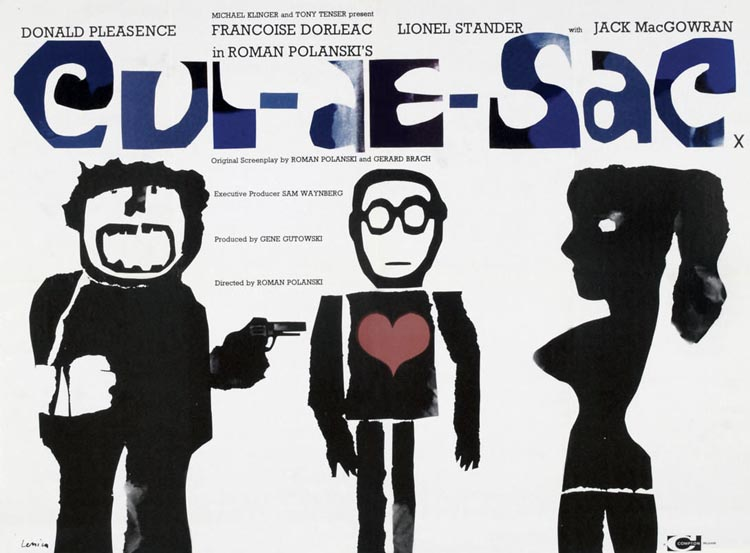
Cul-De-Sac (1966)

cul de sac 2

By Richard Winters

My Rating: 8 out of 10

4-Word Review: Bubbling beneath the surface.

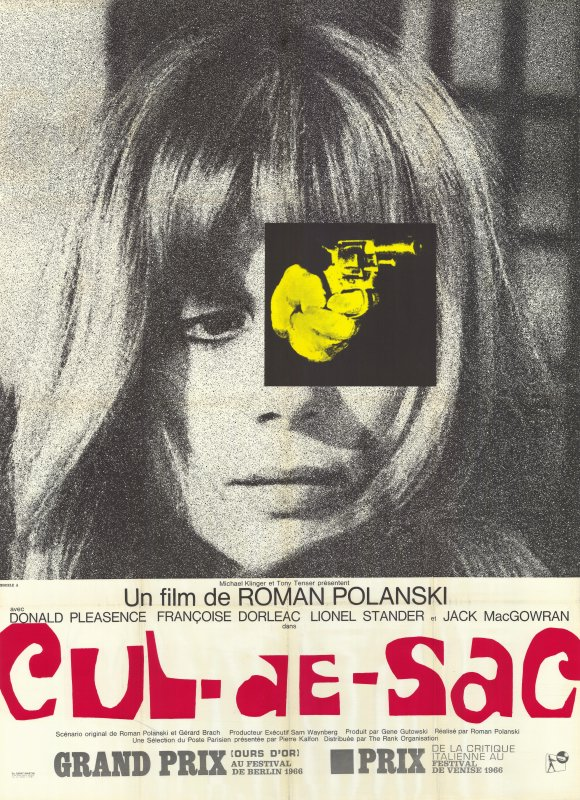
Albie and Richard (Jack MacGowran, Lionel Stander) are two gangsters on the run. Albie is injured with a gunshot wound and their getaway car has broken down. They come upon an isolated castle owned by George (Donald Pleasance) who lives there with his new wife Teresa (Francoise Dorleac, who tragically died in a car accident just one year after this film was released). George is very passive and timid and pretty much allows Richard to have his way as he takes over the place and his wife and yet as the situation progresses different shades of the character’s personalities begin to come to light.

Roman Polanski leaves his strong directorial touch from the exquisite opening shot, which shows an old car being pushed along on a desolate road amidst a very flat landscape until the end. In the hands of any other director this otherwise odd story probably would not have worked. Like with A Knife in Water Polanski makes great use of the quiet and serene atmosphere and as a viewer you feel like you are right there with the characters.  Filmed on-location at the Lindisfarne Castle on Holy Island in Northumberland, England the movie makes great use of the tranquil setting. I found it almost hard to believe that there was a film crew there as the isolation really grabs you and sucks you in. The quiet moments are the film’s strongest and I just loved the hooting owl heard in the background. The idea of filming it in black and white nicely compliments the film’s dark psychological undertones.

The film’s novelty is watching how the characters evolve and interact with one another. Donald Pleasance gives one of his best performances as the cowardly George. There have been many weak and frighten characters in cinema history, but Pleasance makes the character here quite interesting and the way he finally shows some bravado at the least likely moment is fascinating. Stander also excels with a character that initially comes off as a brute, but at strange times reveals a trusting and even child-like manner.

The movie can be viewed in different ways and doesn’t fit distinctly into any type of genre. To a degree it can work as a dark psychological character study, a mystery, film noir, a thriller, or macabre comedy. Approaching it as a comedy works best Polanski has not always had great success in that area and some of his comedies in particular the ill-advised Pirates have been complete disasters, but this one works. The best scene is when some of George’s old friends come to visit and bring along their bratty son who becomes an absolute terror to everyone.

The odd ending is open to interpretation and leaves a lasting impression. This is also a great chance to see Jacqueline Bisset in her film debut. She appears during the second half wearing glasses and saying little, but is as beautiful and alluring as ever.

cul de sac 1

My Rating: 8 out of 10

Released: November 7, 1966

Runtime: 1Hour 57Minutes

Not Rated

Director: Roman Polanski

Studio: Tekli British Productions

Available: DVD (The Criterion Collection) Blu-ray, Amazon Instant Video, Netflix streaming

The Birthday Party (1968)

the birthday party 3

By Richard Winters

My Rating: 8 out of 10

4-Word Review: Tear up the newspaper.

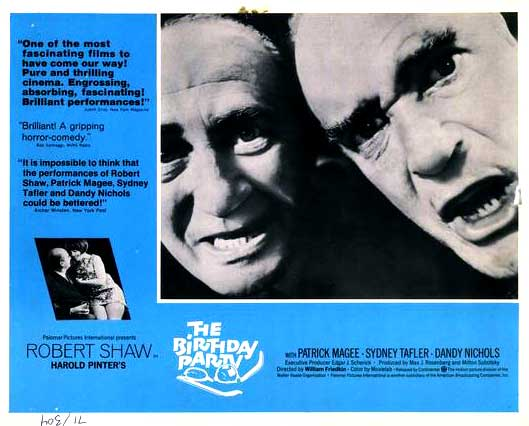
Since tomorrow will be my birthday I wanted to come up with a film that had birthdays as its theme and found this bizarre but fascinating obscurity. It is the story based on the play by Harold Pinter of Stanley Webber (Robert Shaw) a mysterious and private man who takes up lodging in a rundown British seaside house. He rents an upstairs room from Mr. and Mrs. Bowles (Moultrie Kelsall, Dandy Nichols) who are quite odd themselves. One day two men dressed in black suits (Patrick Magee, Sydney Tafler) come to pay Stanley a visit. They know something about Stanley’s past and their presence frightens him to the extent that it causes him to have a nervous breakdown.

On the surface this film shouldn’t work. There is an excessive amount of talking with dialogue that doesn’t say much and at times seems absurd. The set is drab and dirty with the camera seemingly locked down inside of it. There is never any explanation about Stanley’s past or what he is running from nor who the men are or what they know about him. The ending is elusive and the viewer will go away feeling more confused than they did at the start.

However, it is these ingredients that make the film so thoroughly intriguing. The seemingly banal dialogue is simply a façade for underlying thoughts and feelings. What Stanley is trying to run from is unimportant because it is really not about him at all and is instead more about ourselves, human nature and the quandary of our existence. It’s an examination of people’s futile attempts at trying to escape from who they are only to have society and life catch up with them. The set could be a metaphor for the inside of Stanley’s head. The grimy and decayed place symbolizes his decayed soul and the men in black suits are his conscience coming to haunt him.

Once you adjust to the eccentric narrative it then becomes a fantastic film for observing subtitles and nuance. Director William Friedkin shows a keenness for detail not only visually, but with the sound as well. The way the Magee character tears up a newspaper and the sound used for it could actually unnerve some viewers. Stanley’s meltdown scene is very unique and overall the direction is superb for such difficult material.

This movie was years ahead of its time, but for some it may be off-putting. However, it should be enjoyed by those who crave the avant-garde. It is also a rare chance to the see the normally strong-willed Shaw playing a very weak and vulnerable character. Nichols is also a stand-out playing an Edith Bunker type with a perverse streak lying just beneath the surface.

the birthday party 1

My Rating: 8 out of 10

Released: December 9, 1968

Runtime: 2Hours 3Minutes

Rated G

Director: William Friedkin

Studio: Palomar Pictures International

Available: VHS, DVD (Region 2)

Welcome to the Dollhouse (1995)

welcome to the dollhouse

By Richard Winters

My Rating: 7 out of 10

4-Word Review: She doesn’t fit in.

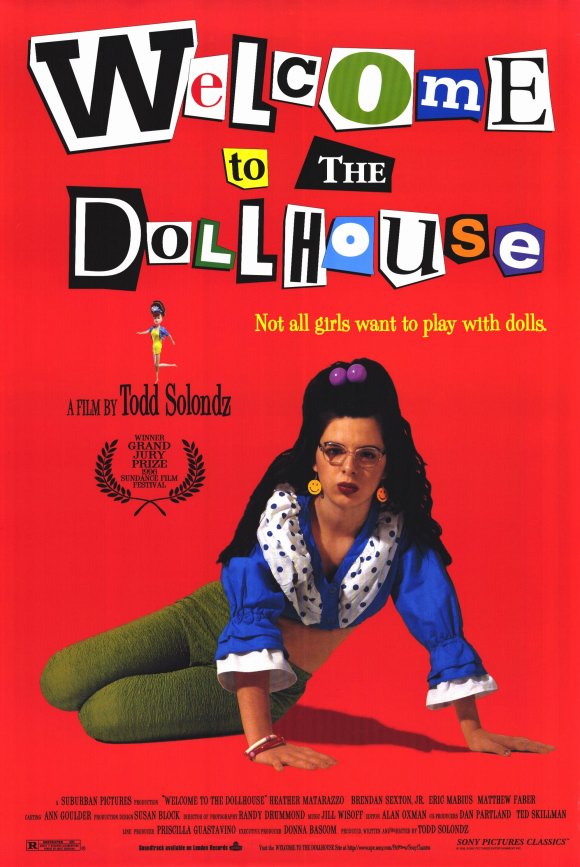
Another flick about the trials and tribulations of high school life. There is the shy, sensitive, and alienated girl, the bitchy cheerleaders, the bullies, the name calling, the not being able to find a seat at lunchtime, the stupid teachers, the too busy to listen parents, the bratty siblings, and yes even the spitballs. This is a very accurate and concise portrait of Junior High. It will make you soooooooo glad that you are past that age and will never have to go back to it.

It’s the pinpoint accuracy that makes this film stand out the most. Every scene and segment ring true. Even the little stuff from the way the little sister answers the phone to the way our protagonist Dawn Wiener (Heather Matarazzo) always seems to get blamed even when it really isn’t her fault.

Although the film displays many of the ugly elements of that age it doesn’t wallow or sensationalize them. In fact this film has a nicely balanced perspective. It shows scenes from both Dawn’s high school life and family life. It weaves a nice tapestry and observes how interconnected everything really is. The family life scenes are probably more interesting and in many ways just as difficult.

The film has a good ability at bringing out all the confusion that permeates that age. It is interesting how it shows that everyone is a bit alienated and lost. A big fish can simply get eaten up by an even bigger one. For example there is Steve a good looking kid with a nice singing voice. He is ‘cool’ and when in school everything goes his way. Yet when he drops out so as to ‘make it big’ in New York he suddenly realizes how stacked the odds are against him. There is also Brandon the class bully. He is a composite of all those other bullies. At first you really dislike him, but then you witness his very sad home life. You learn to understand not only why he acts the way he does, but also begin to feel sorry for him.

The film also scores by not letting the adults off the hook either. They are in many ways very much of the problem. They suffer from their own type of confusion and have their own type of code. They lack the ability to really communicate as much as the kids do. Junior high may be a mean, ugly, and crazy place, but that is only because it is a byproduct of very mean, ugly, and crazy world.

If the film has a weak point it is with the ending that fails to give any type of closure. Of course it doesn’t have to, but it would have given it more of an impact and made it come more full circle. Yet even if it doesn’t show it we still know that Dawn will make it. There are many scenes that show her to be very resourceful and strong willed when she needs to be. She is, like a lot of us, a survivor.

My Rating: 7 out of 10

Released: September 10, 1995

Runtime: 1Hour 28Minutes

Rated R

Director: Todd Solondz

Studio: Suburban Pictures

Available: VHS, DVD, Amazon Instant Video

You Better Watch Out (1980)

you better watch out

By Richard Winters

My Rating: 1 out of 10

4-Word Review: This Santa isn’t jolly.

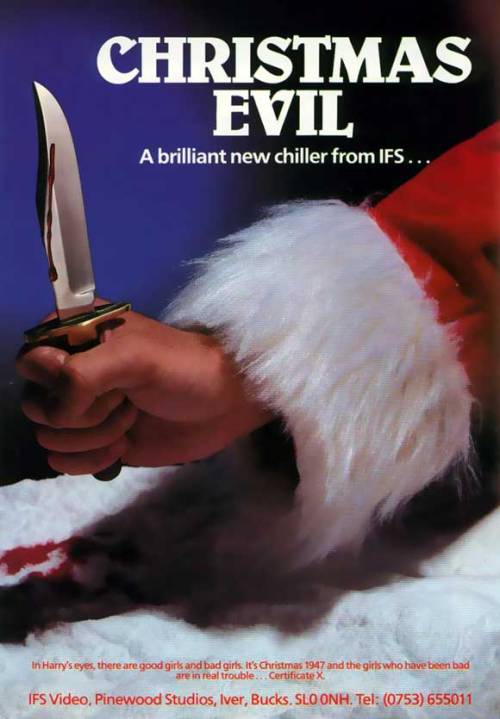
As a young boy Harry Stadling (Brandon Maggart) witnessed his mother being groped by Santa Claus, which was apparently his father in the disguise, but it nonetheless created a disturbing image in his mind that shattered the ideal he had for the mythical man. Years later as an adult working a thankless job at a toy factory Harry starts to believe he is Santa Claus and even spies on the neighborhood children to see which ones have been naughty or nice and keeps meticulous records on each. Then on Christmas Eve he dresses up as Santa and delivers presents to some needy kids at a hospital, but also comes into contact with a group of condescending people outside of a church who he then kills. This sends out a police alert where everyone in the city including the regular townspeople is on the hunt for him and Harry tries to avoid them while continuing to deliver his gifts.

For some reason this film never created the controversy of portraying Santa Claus as a killer like Silent Night Deadly Night did even though this film came out 4 years earlier.  Critic Leonard Maltin came down hard on that one in his book, but seemed to like this one, which is the whole reason I gave this one a chance 25 years ago, but I remember disliking it. Since this film has managed to inspire a small cult following I decided to give it another chance, but I didn’t like it any better.

Part of the problem is that it is very slow and plodding with the majority of the film focusing on Harry as he goes through the daily routines of his pointless and lonely life. Nothing that he does is compelling and sometimes it is even confusing. It is hard to call this a horror film even though that is what it is considered because there are really no scares at all and the gore is at an extreme minimum. Maggart gives a solid performance in the lead, but as my acting teacher in school once said a good actor cannot save a weak script, or as he put it ‘you can’t shine shit.’

There are only two killings and neither of them is effective. The killing done outside a church is captured in a choppy editing style with bloody special effects that look fake and it is carried out by Harry while using a toy ax, which seemed ludicrous. I also didn’t think it made a lot of sense for the victims to have such a snarky and sarcastic behavior especially when they were just coming out of a church service. What is worse is that when the victims are killed no one comes to their aid to see if they can save them they just stand on the church steps and stare at their lifeless bodies. An APB is also put out which is broadcast on the TV news stating that the killer escaped in a white van with Christmas sled painted on its side, which is distinct enough that somebody somewhere would have spotted it and yet Harry continues to drive around unheeded.

SPOILER ALERT!

The ending is the weakest part. For one thing some townspeople recognize Harry as being the killer Santa and chase him down through the neighborhood streets while carrying torches, but just where in this modern day and age are people going to find torches? Some fans of the film insist that this is homage to the film Frankenstein, but to be clever it still has to make sense and this doesn’t.  There is also the issue of when Harry drives his van off a bridge instead of going into the river below it instead flies off into the sky like Santa on his sled. Now, since the majority of the film was done from Harry’s perspective this might simply be his last delusional moment before he dies, but the film needed to confirm this and doesn’t, which makes it more annoying than anything.

Writer/director Lewis Jackson has stated in later interviews that he got the idea for this movie while smoking a joint and I think he was still smoking them when he made this thing. The majority of people come away from this thing feeling the same way about it that I did, but I know there are a few that insist it is ‘brilliant’ and if you are one them feel free to leave your comments below and let me know what it is you think I am missing because after two viewings I just don’t see it.

My Rating: 1 out of 10

Released: November 10, 1980

Runtime: 1Hour 40Minutes

Alternate Title: Christmas Evil

Rated R

Director: Lewis Jackson

Studio: Edward R. Pressman Productions

Available: VHS, DVD (Special Edition and in 3D), Amazon Instant Video