Category Archives: 80’s Movies

Gloria (1980)

gloria

By Richard Winters

My Rating: 8 out of 10

4-Word Review: Protecting a young boy.

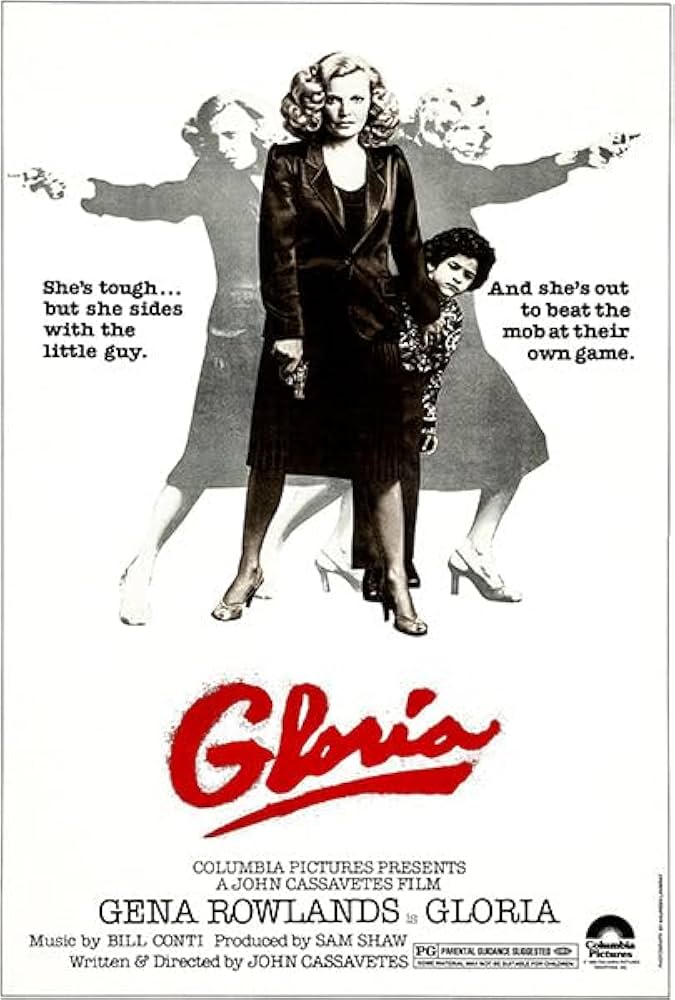
Phil (John Adams) is a young boy whose father (Buck Henry) works as an accountant for the mob and has become an informant for the F.B.I. causing him and his family to become marked for retaliation by the criminal underground. In desperation Phil’s mother (Julie Carmen) pawns the child off on Gloria (Gena Rowlands) who’s their neighbor from across the hall. Gloria initially refuses to take the child as she’s adverse to kids, but eventually agrees as she takes the boy away and into her apartment just as the mob moves in on the hit. Phil was also handed by his father the ledger listing in detail the mob’s incriminating financial corruption and when they’re unable to find it after annihilating his family they then go after the pair. Gloria, who has mob connections from her past including having been in relationship with a mob kingpin, feels she can’t go to the police and must defend the child on her own using only her street savvy and gun, but where ever they go in the city the hit men remain right behind them.

John Cassavetes, who has described this as “a thoughtless piece about gangsters and I don’t even know gangsters” was never intending to direct it and though it’s become his most popular work among mainstream audiences it was one of his least favorites and something he felt embarrassed about doing. He wrote the script simply to sell it and make enough money from it to help him finance his other projects. He completed it in early 1979 and was meant as a vehicle for Ricky Schroeder who was just coming-off doing The Champ and MGM studio was looking for other projects for him to do. Cassavetes intentionally gave it a very commercial feel, much more than any of his other scripts, because he felt it would give it a better chance to sell, but when Schroeder and Barbara Streisand, who was the original choice for Gloria, both turned it down Cassavetes then shopped it around to Columbia Pictures who agreed to take it on, but only if Rowlands played the lead and since she was his wife he then reluctantly took on the directing duties.

The film doesn’t seem like the usual Cassavetes material as I was quite impressed with the location shooting, which takes the viewer to all sorts of New York City locales and makes you feel like you’re right there with Gloria and the boy as they try to maneuver their way around the unpredictable and very dangerous urban jungle. The opening bird’s-eye shot that tracks from the city’s skyline to Yankees Stadium is downright breathtaking and the grimy, rundown interiors of the family’s inner city apartment building effectively illustrates on a purely visual level the fear, stress, and tension of living in the inner city is truly like. Leonard Maltin, in his review, labeled this as being possibly done ‘for laughs’, but I didn’t find anything funny about it except for one amusing comment Gloria makes when she gets stuck in a slow elevator, but otherwise it’s a nail-bitter all the way through.

Rowlands gives her usual stellar performance, but I was hoping for more of an arch with her character. She states right up front to Phil’s mother that she hates kids and yet is pretty much warm and friendly to the child the second she takes him back to her apartment and it would’ve been more interesting to see her cold and indifferent to him initially only to slowly warm-up to him as their shared adventure went on. Buck Henry is also surprisingly good in an unusual casting choice as he’s typically known for his deadpan humor and had very little dramatic acting in his background. It was strange though why such a small, squirmy guy who was hitting 50 would be married to such a hot young Latino woman who looked to be only 24 and I felt this needed to be explained, but isn’t. I also felt the shooting of the family should’ve been shown, it gets implied, but that wasn’t enough. Seeing them shot in graphic style would’ve really hit home how dangerous and serious these people were and would’ve made the tension even stronger.

Critics at the time of the film’s release didn’t like the kid nor his acting and in fact Adams got nominated for the first razzie award for worst actor, which traumatized him so much he decided never to pursue anymore roles and to date this has been his only film appearance. I for one happened to like the kid and yes his character isn’t exactly ‘cute and cuddly’, but real children rarely ever are. They can be as rude, indifferent, and crabby as any adult and since he was brought-up in a troubled neighborhood having him be a bit ‘rough-around-the-edges’ made sense and was realistic. The only acting that I really didn’t care for was from Basilio Franchina who plays a crime boss that Gloria used to date and while he may have looked the part his performance is stiff like he’s just regurgitating lines he’s memorized and there’s no sign of a chemistry between them and their conversation is stilted and unconvincing.

Spoiler Alert!

The mob’s ability to be constantly on the pair’s tale no matter where they went seemed a bit implausible especially being in such a big, congested city, but I was willing to forgive it since the rest of it is so good. The ending was a little problematic too as it has Gloria reappearing disguised as an old lady after it was presumed she was dead. She then reunites with the kid in the middle of a cemetery, but it leaves more questions than answers like how did the two evolve? Did they become like mother and adopted son and where did they ultimately move to since New York for them was no longer safe? This might’ve gotten answered in the sequel that Cassavetes had written, but unfortunately never got green-lit. Remade in 1999 with Sharon Stone in the lead.

My Rating: 8 out of 10

Released: October 1, 1980

Runtime: 2 Hours 2 Minutes

Rated PG

Director: John Cassavetes

Studio: Columbia Pictures

Available: DVD, Blu-ray, Amazon Video, Tubi, YouTube

The Hit (1986)

hit

By Richard Winters

My Rating: 5 out of 10

4-Word Review: Not afraid to die.

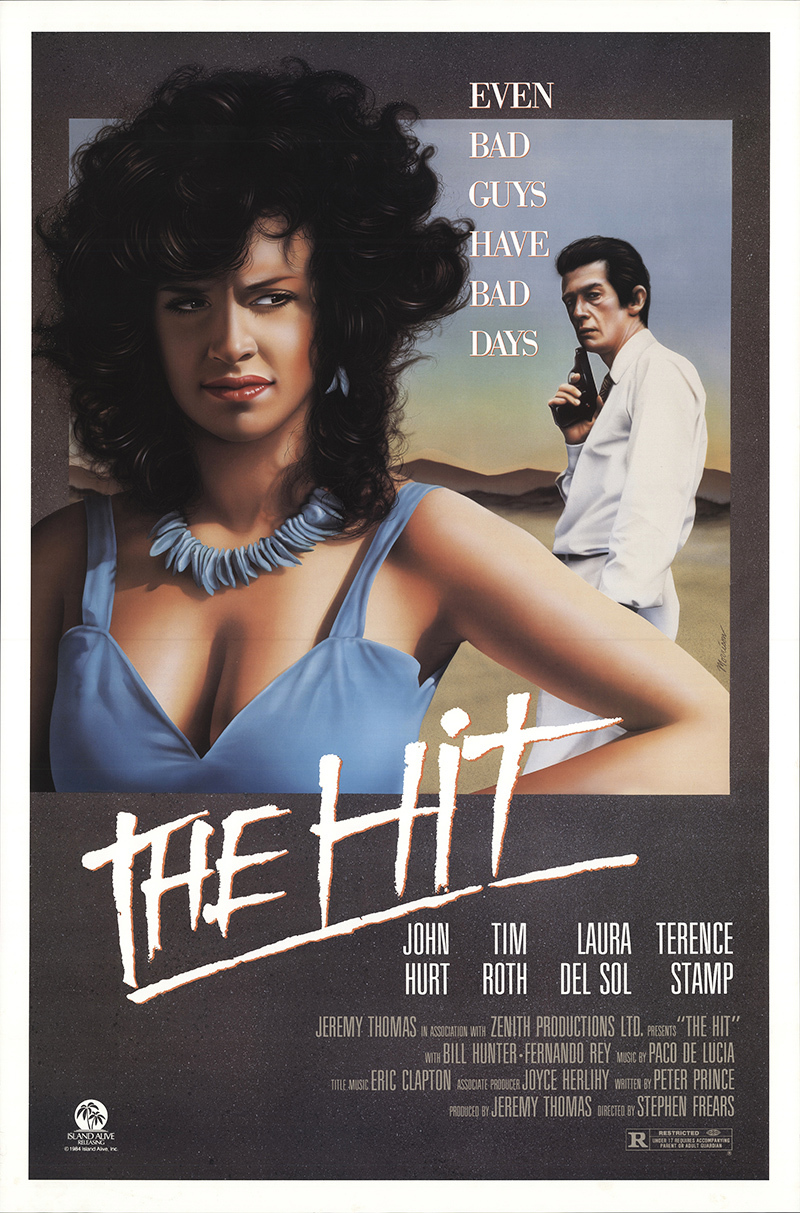
Willie (Terence Stamp) turns states evidence against the criminal underground that he’d been apart of, which then sends his former partners away to prison, but before they go they sing ‘We’ll Meet Again’ just as he leaves the court room. Ten years later Willie is living the quiet life in Spain as a part of the witness protection program only to have his home invaded by a group of teens who kidnap him and take him to hitman Braddock (John Hurt) who was hired by the kingpin that Willie helped put away. Braddock along with his young partner Myron (Tim Roth) are instructed to take Willie, via a car, to Paris where the kingpin hopes to inflict harm on Willie before eventually killing him. However, things don’t go quite as planned as Willie shows no fear of death insisting that he’s accepted it as a part of the cycle of life and this throws the two hit men off convinced that he must have something up-his-sleeve, but does he?

This is another example where a movie I enjoyed when I first watched it years ago, but doesn’t quite live up to expectations upon the second viewing. For the most part this doesn’t happen that often and there has been some cases where a movie I didn’t like when I first saw it I’ve come to appreciate when seen a second time. This one though is definitely a case of the former and I came away a bit miffed on what its point was. When I first saw it I was impressed by the scene at the waterfall where Willie, who had a chance to escape, but doesn’t and instead decides to spend his time appreciating nature’s beauty until Braddock catches up to him, I found at the time to be quite memorable and unique moment as it revealed that the bad guy in this instance was the one more afraid and insecure of death than the intended victim.

However, there’s a lot of stuff that doesn’t mesh, or could’ve been more convincing. I had a hard time understanding why this sophisticated criminal group would hire a bunch of teen boys to break into Willie’s home (hideout). How could they trust these novices to get the job done and the fact that they’re able to do it so easily makes it seem that Willie’s ‘protection’ as it were wasn’t too impressive. It also negates the effect of the criminal unit. They’re supposedly this cunning, evil, underground group relentlessly pursuing their man against this supposedly intricate government program, but if literal kids can just break down the door with just a bit of effort then the whole operation from both sides comes-off as rather amateurish.

The casting of Hurt as the bad guy isn’t effective mainly because of his meek stature. Stamp was originally intended for that role and with his big build and piercing blue eyes would’ve been perfect, but it was ultimately decided for both actors to play against type and thus the parts got reversed, but it really doesn’t work. Hit men should have an intimidating presence, but with Hurt’s slim figure and quiet, exhausted looking demeanor that doesn’t happen. Roth as his quick-triggered, youthfully naive henchmen makes matters worse as he’s a walking cliche of a teen in over-his-head just biding time before his knee-jerk reactions to do them in. Thus the psychological games that Willie plays with them are not that interesting, or impressive since these two come-off as badly dis-coordinated right from the start and like any average person could easily outfox them.

Stamp’s character is baffling as well. During the courtroom moments he states his testimony is an almost hammy way like he’s making fun of the whole situation, which maybe he is, but it’s not clear as to why and his ulterior motivations are never answered. It’s hard to tell whether he really is a good guy, or maybe secretly a bad one as there are scenes where he puts other potential victims in definite danger and then feigns ignorance about it afterwards. He spends the whole time telling everyone how death doesn’t scare him and yet when a gun does finally get pointed at him he panics and tries to run while also pleading for his life, so which is it? The same goes for Roth’s character who during the course of the movie he seems to be falling for the lady hostage, played by Laura del Sol, and even protective of her and yet when the time comes for Hurt to shoot her he puts up no fight, or resistance, which defeated the momentum and missed-out on what could’ve been an interesting confrontation.

I like movies with multi-dimensional characters and the film does have that and certainly humans can be a bag full of contradictions. However, at some point it kind of needs to explain itself and it fails on that end. Intriguing elements about these people get thrown-in, but the story fails to follow through with it ultimately making it too vague, ambiguous to be full satisfying and in many ways it will most likely leave most viewers frustrated and scratching their heads as they ask themselves what the point of the whole thing was supposed to be.

I did though really enjoy the scenes with Australian actor Bill Hunter who is marvelous in support playing a man who takes over one of Hurt’s friend’s apartments while on vacation only to get the shock of his life when the hit man and his entourage show up unexpectedly. His rather pathetic attempts to mask his fear and trying to somehow carry-on a casual conversation knowing full well he could be blown away at any second is dark comedy gold and by far the film’s best moments.

My Rating: 5 out of 10

Released: May 18, 1984

Runtime: 1 Hour 38 Minutes

Rated R

Director: Stephen Fears

Studio: Zenith Entertainment

Available: DVD, Blu-Ray (Criterion Collection), Tubi, Plex

I Am the Cheese (1983)

iam

By Richard Winters

My Rating: 6 out of 10

4-Word Review: Dealing with past memories.

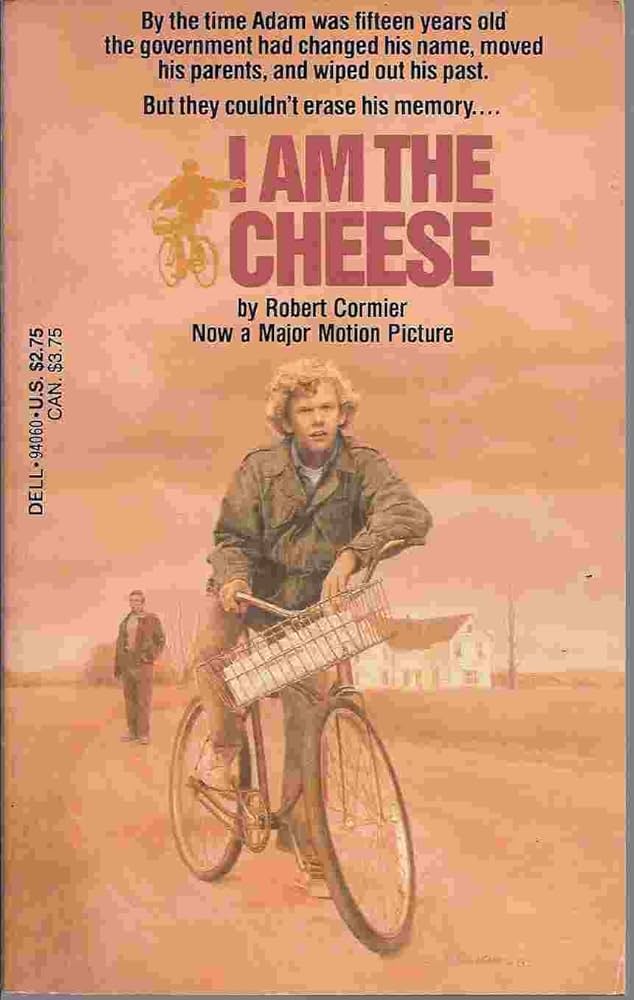
Adam (Robert MacNaughton) is an adolescent boy taking a bike trip through Vermont in order to deliver a present to his father (Don Murray). During his ride memories from the past that had been stuck in his subconscious come to the surface including his on-and-off relationship with Amy (Cynthia Nixon) as well as the sometimes odd behavior of his father. Helping sort through these things including him finding in his father’s desk drawer two different birth certificates with his name on it, is Dr. Brint (Robert Wagner) a therapist at a mental hospital that Adam is currently residing in.

The film is based on the book of the same name written by Robert Cormier, who appears briefly as Amy’s father, who wrote many young adult novels with his best known one being The Chocolate War. The screenplay was written by David Lange, who was also the producer, and the brother of Hope Lange who gets cast as Adam’s mother and is a reunion of sorts for her with Don Murray, who plays Adam’s father, and whom she’d been married two from 1956-62. She had also co-starred with Robert Wagner in The Young Lions in 1957 though here they don’t share any scenes together.

The film, which was the one and only directorial foray of Robert Jiras who worked as a Hollywood make-up artist for many years, is decidedly low budget though since most of the action takes place with Adam on his bike it really doesn’t hurt the effect of the story and the lush summertime New England scenery becomes an added benefit. MacNaughton, who’s better known for playing the older brother in E.T. before leaving the acting business after the 80’s and becoming a mail sorter, is quite good as he effectively channels his character’s inner anxiety and confusion. Nixon is also a stand-out playing against the cliche of a typical teenage girl, who are usually portrayed as being giggly, insecure, and into the latest fads, but instead she is cultured, poised, confident, and smart and she adds a wonderful addition to the movie and it’s just a shame she wasn’t in it more.

The plot follows the book pretty closely including the constant shifting between the present and the past and also the therapy sessions. While I usually like non-linear narratives I initially found this structure off-putting. The publishers in fact felt, when the they read the initial manuscript, that it would too confusing for young readers and pressured Cormier to simplify the structure, which he refused. Despite this it does become genuinely riveting by the second act.

Spoiler Alert!

The twists are good and makes sitting through it worth it though the moment when the bad guys catch-up with Adam and his parents should’ve been played-out more since it’s such a traumatic moment. It’s possible that because this was aimed at teen viewers the producers felt this violent element required being toned down, but crucial scenes like these have to stand-out and the way it gets done here it just doesn’t.

In the film, like in the book, the psychiatric sessions are ultimately revealed to be a sham where Robert Wagner’s character isn’t a doctor at all, but instead part of the government conspiracy to make sure Adam doesn’t know more than he should about his parent’s past as otherwise he would be deemed a ‘risk’ and ‘terminated’. However, in the movie they have Adam escaping from the place and riding off on his bike like he’s now ‘free’, but he really isn’t. He has no job skills, no family, no money, and no place to live. He’s be better off just staying at the clinic even if it was a fake one, as he at least had a roof over his head and food to eat. Being on his own at 16 was unlikely to end well and such a sophisticated government operation such as this one was at some point going to track him down, dead or alive, so the tacked-on ‘happy ending’ doesn’t jive.

My Rating: 6 out of 10

Released: November 11, 1983

Runtime: 1 Hour 36 Minutes

Rated PG

Director: Robert Jiras

Studio: Almi Pictures

Available: VHS, DVD-R

Runaway Train (1985)

runaway

By Richard Winters

My Rating: 8 out of 10

4-Word Review: Trapped on speeding locomotive.

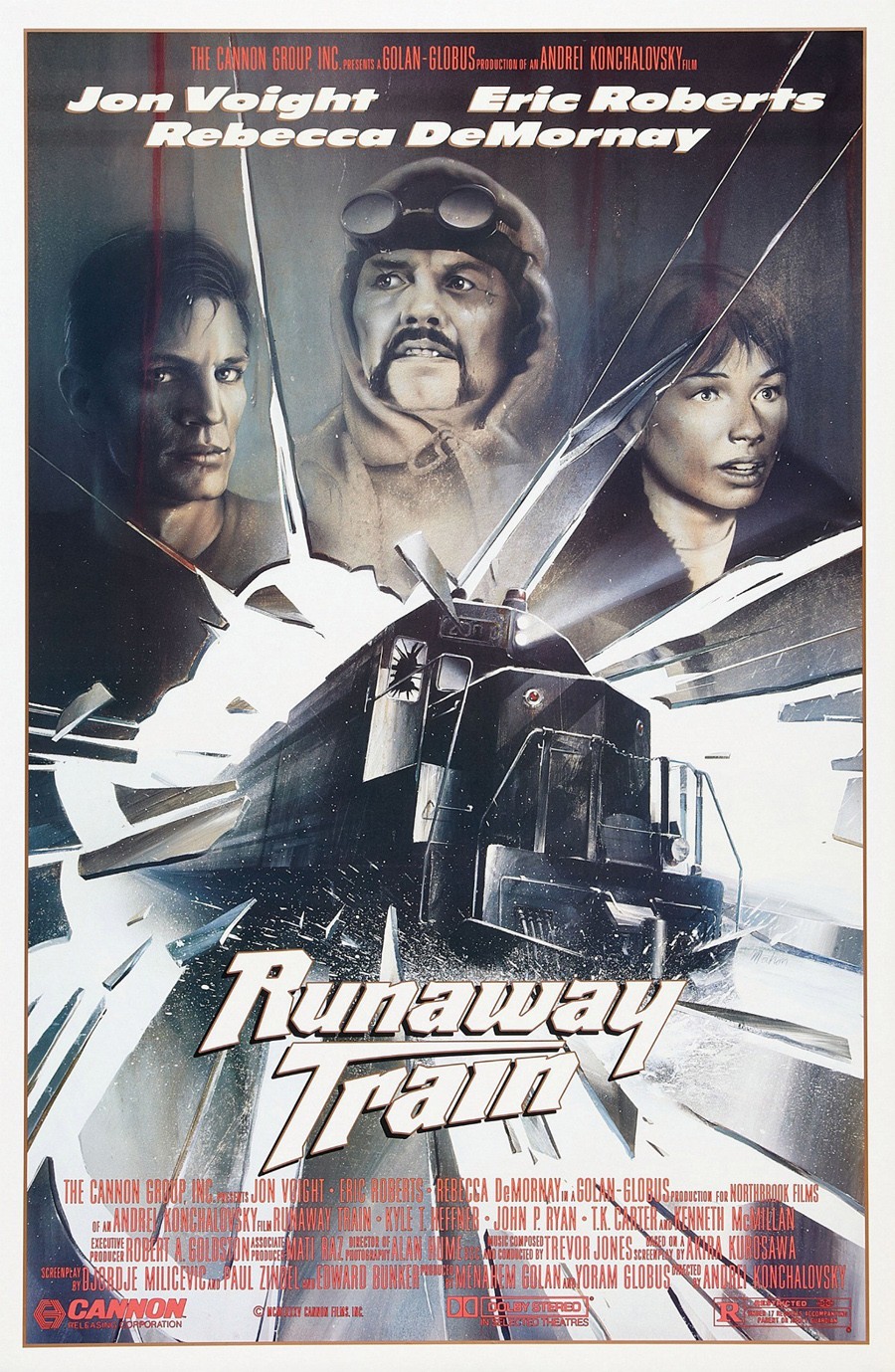
Manny (Jon Voight) is a robber locked away in solitary confinement at a maximum security prison because of his two previous attempts at escape. He plans on making a third try with the help of a younger, more naive prisoner named Buck (Eric Roberts). Their breakout this time proves successful, but they find themselves having to fight the bitter cold and hike along the frozen Alaska landscape. They come upon a rail line and board a train by sneaking onto one of it’s four empty locomotives. However, unbeknownst to them the engineer, (Reid Cruickshanks) suffers a fatal heart attack while starting up the train and causing it to accelerate at high speeds, which is too fast for them to jump off. Later the two meet Sara (Rebecca De Mornay) an employee of the train company and three devise a plan to climb onto the lead engine and press the kill switch, but while this is going on the two fugitives are being pursued by police bounty hunter Rankin (John P. Ryan) who’s determined to board the runaway train via a helicopter and arrest Manny and bring him back to prison.

The story is based on a script by Akira Kurosawa who had read an article written in Life magazine about a runaway train and decided it would make for a good movie and planned to have this be his first American film. The shooting was to take place in the fall/early winter of 1965 with Peter Falk playing Manny and Henry Fonda as Rankin. However, the location, which was upstate New York received some early season snowstorms, which caused many production delays and eventually the financers pulled-out and film ultimately was never made. The project sat dormant for many years until 1982 when the script’s current owner managed to get Russian director Andrei Konchalovsky, at the suggestion of Francis Ford Coppola, interested in reviving it.

The film is for the most part masterfully done and quite suspenseful with kudos going to filming it in Alaska where the snow and ice are real and so vividly captured that you can almost feel the cold permeate through the big screen. Originally it was to be shot in Montana where the prison is, the same one that was also used in Fast Walkingbut the weather conditions proved to be mild and attempts at fake snow weren’t successful, so it was eventually decided to move the production further north.

I did though have some quibbles with the escape sequence, which gets done by having them hide in a cart of laundry, which is awfully predictable and unimaginative and you’d think a maximum prison such as this one would be on the lookout for such a thing making it all seem too easy. Voight having a gadget that could bend bars was equally too convenient. I realize prisoners can be adept at smuggling in many things, but if it’s so simple to get something that can literally bend steel bars then why doesn’t every prisoner use to breakout?

The casting of Voight was in my opinion a mistake, or at least not as effective as another actor in the part. He looks too thin and not threatening at all despite him wearing false teeth, tanning his skin in more of a darker tone, and putting on a fake scar around his eye, but for me this all came-off as highly affected and just didn’t seem gritty enough. While his performance improves as he gets on the train I couldn’t buy-in that this was a real bad ass as the movie wants you to believe and I really wish Voight had listened to his first instinct and not taken the role as he felt it wasn’t he type of character he could play, but eventually changed his mind when Konchalovsky convinced him that great actors play against type. I also didn’t like screenwriter Edward Bunker changing him into a bank robber as in the original script he was a killer, which would’ve made for a far more intriguing character arch as it would then attempt to humanize someone that is perceived as being quite viscous.

The train scenes are quite intense as it takes on a man vs. the elements theme with Roberts, who usually plays sleazy characters, doing quite well as the conscientious person here. De Mornay is fantastic too wearing very little make-up, which makes her look younger and almost teen-like and far more youthful than in Risky Businesswhich is a film she did 2 years before this one. My only complaint is that the character gets introduced in an awkward manner where she just literally ‘pops-in’ without any warning in the middle of it and the film should’ve given the viewer some hint that there was someone else on the train right from the start.

The scenes inside the dispatch office are highly engaging and become almost like comic relief, which for a film that’s as tension filled as this one, is a welcome addition and helps give the viewer a bit of a breather between moments on the train. I loved how oblivious the dispatchers, played by the talented T.K. Carter and Kyle T. Hefner, are initially to the situation and are seen at the start being quite laid-back. Hefner is even in the bathroom when the news hits and the film misses a great opportunity, similar to the one in Catch-22where he would be seen sitting on the toilet as he got updated on the situation. Kenneth McMillan, one of the all-time great character actors, comes-in later to lend advice and he really should’ve been given more screentime and possibly replaced Hefner altogether as he has a way to create amazing energy that his co-stars just didn’t.

Spoiler Alert!

The ending in which Manny goes down with the train, we don’t actually see it crash, but know it’s coming, with Manny raising his arms in the air like he somehow has achieved something I found disappointing. I didn’t care for it back when I first saw it during my college days and had the same response to it this time around. This was in the original script as well and was intentionally done to go against the theme of most American movies were the protagonist must always come out as the perceived winner, but either way it comes-off as all wrong for this time of film. We spend so much time watching him do whatever it takes to survive and going to great risks to accomplish it that to see him ultimately give-in to his inevitable circumstances and simply accept death to come and take him kills all the momentum that had built-up and becomes a letdown for the viewer. I kind of wonder if this is the reason why it didn’t do well at the box office as it only managed to recoup $7 million of its $9 million budget.

My Rating: 8 out of 10

Released: December 6, 1985

Runtime: 1 Hour 51 Minutes

Rated R

Director: Andrei Konchalovsky

Studio: The Cannon Group

Available: DVD, Blu-ray, Pluto TV, Roku, Tubi, YouTube

On the Edge (1986)

ontheedge

By Richard Winters

My Rating: 5 out of 10

4-Word Review: Disqualified runner enters race.

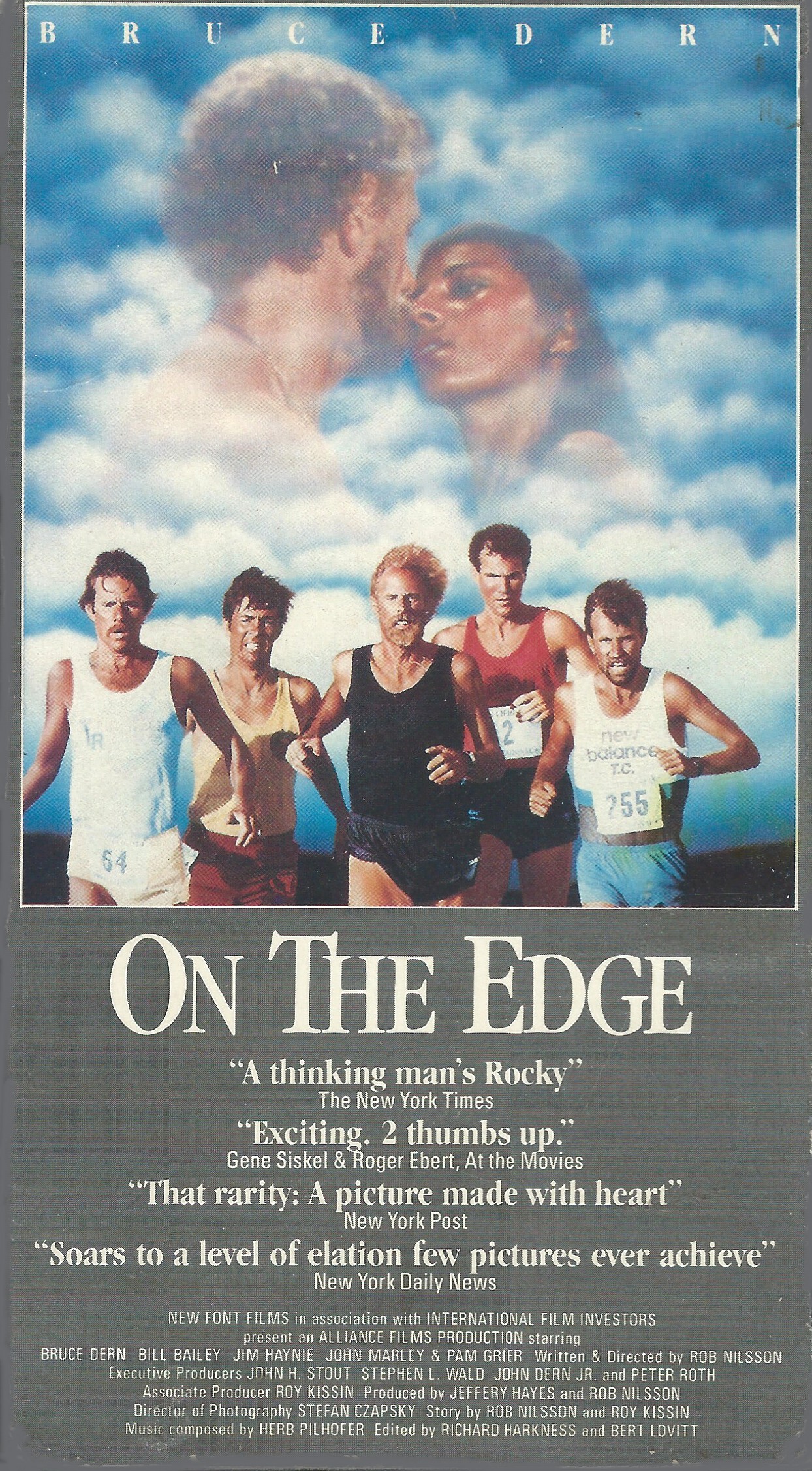
Wes (Bruce Dern) was at one-time a star, long distance runner who ended up in 1964 being banned from competition after calling out the secret practice of paying amateur athletes under-the-table. He’s now nearing 40 and wants to take one last stab at entering the grueling Cielo-Sea cross-country race and hires his old coach, Elmo (John Marley), to help him train for it. The runners are much younger than him by a couple of decades, but they’re aware of his history and look up to him. Unfortunately the race organizers still use what he did in the past against him and refuse to allow him to enter, but Wes decides to join the race anyways illegally, which forces the organizers to try and knock him out of it as the race is going on and being broadcast live.

Surprisingly for a movie that is so little known and hard-to-find the quality isn’t bad. Director/writer Rob Nilsson conveys some wonderful bird’s-eye shots of the climactic race including seeing the runners going along a winding route as it scales a high hill, which is dramatic and exciting. The character building and his personal mission is fairly well done and the strenuous preparation that he must go through to get ready for the race is handled in a way that makes it quite vivid for the viewer. After watching what he must go through you feel as mentally and physically drained as he does especially the shots showing the things from the runner’s point-of-view as they bound down the rugger trails with the camera tied directly to their bodies.

Dern, who was at one time a long distance runner himself and actually ran the race that gets depicted here, which in real-life it’s called the Dipsea race the oldest race run in America, back in 1974, does a fine job though his dialogue is limited and I missed-out on some of his patented, ad-libbed ‘Dernisms’. His character is marginally interesting though in a lot of ways not all that well defined. There’s no real explanation of what he’s been doing for the past 20 years that he’s been away from the sport and the film makes it almost seem like he’s been wandering around as a vagabond all that time. It would’ve been interesting had we seen him stuck in some boring office job and his secret longing to ‘break free’ and do something, no matter how high the odds, that he felt passionate about, which would’ve helped the viewer get more into his mission that is otherwise emotionally lacking.

It would’ve been intriguing too had he been married with a family and the wife was not in agreement to what he was doing, which would’ve added some extra dramatic conflict. Instead we get treated to his casual relationship with Pam Grier, who’s a marvelous actress in her own right, but here is mostly wasted. She pops in and out almost like a fantasy character who’s dialogue is limited, so we learn little about her as a person, and their semi-erotic love-making is cheesy. Their moments together was considered so inconsequential that the distributors cut-out her scenes entirely for the theatrical release only to restore them for the DVD version, but overall they really don’t add much.

The movie is only marginally captivating for the first third, but it does become more appetizing when it finally gets to the actual race.  I’ve never seen a race movie where the person we’re meant to be rooting for isn’t even supposed to be in the event in the first place. The attempts by the organizers to ‘take him down’ and literally drag him out via physically tackling him, or at least trying to, at various points in the race, are memorable particularly as they fail each time. My only gripe is that the other runners intervene to protect him, which I wasn’t sure was completely plausible. After all he wasn’t wearing a number, so it was obvious he shouldn’t be there, and he was competing with them for the title, so one less person would better their chances, so why not allow him to be taken out? Of course there is a scene earlier where Dern hitches a ride and everybody inside the van, made up of young runners who recognize him and even treat him as a sports hero, could explain that he was idolized by his competitors and therefore decided to stick-up for him, but in the moment where you’re only focus is winning you’d think some of them might not care what happens to him and more concerned about getting to the finish line and not doing anything that might slow them up.

Spoiler Alert!

The film ends with the seven runners all holding hands as they cross the finish line. While some could consider this novel, as most movies dealing with competitions will rarely celebrate a tie, it still seems hard to imagine that all seven of them would, in the spur-of-the-moment, agree to share the prize and there wouldn’t be at least one of them who would take advantage of it and run out in front at the last second in order to achieve all the glory and money, or at least lean his head out to get that ‘photo finish’. Maybe having one, or two hold hands and agree to finish it together might come-off as passable. It’s Dern who slows up to let the others catch-up to him, so they might be grateful that he let them share the spotlight, but let’s face it there’s always a black sheep in every bunch who for selfish reasons, these are athletes conditioned and trained to win after all, who would attempt to exploit the situation making the final image too romanticized for its own good.

My Rating: 5 out of 10

Released: May 2, 1986

Runtime: 1 Hour 35 Minutes

Rated PG-13

Director: Rob Nilsson

Studio: Skouras Pictures

Available: VHS, DVD (Out-of-Print)

Hold-Up (1985)

holdup

By Richard Winters

My Rating: 5 out of 10

4-Word Review: Robber disguised as clown.

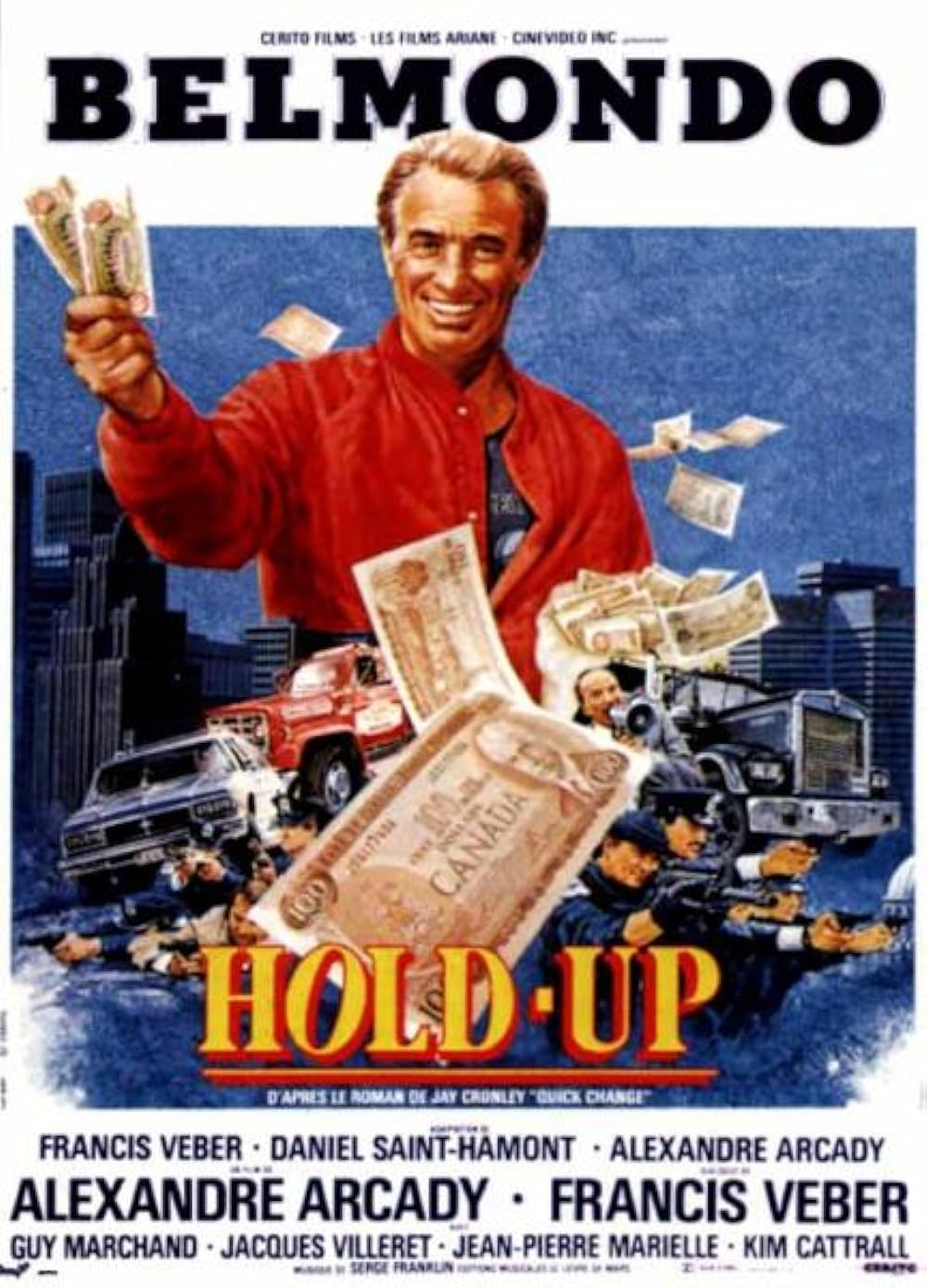
Grimm (Jean-Paul Belmondo) has come-up with what he considers to be an ingenious plan. He will rob a bank disguised as clown with two of his friends, Georges (Guy Marchand) and Lise (Kim Cattrall). While he’ll be a clown the other two will pretend to be bank customers and then when he agrees with the Police Commander Simon (Jean-Pierre Marielle), whom he is negotiating with via phone, to release some hostages he’ll let Georges and Lise ‘go’ and no one will know the difference. Meanwhile Grimm will take-off his clown disguise and put on a new one as an old man while pretending that the clown is still inside holding the rest of the bank employees and customers at gunpoint. By the time the police catch-on that there’s no longer any clown the three hope to have escaped on a plane and be far away. While the robbery works without a flaw the getting on the plane part becomes a major, if not impossible, challenge.

The story is based on the novel ‘Quick Change’ by Jay Cronley, which 5 years later was made into another, better known movie that starred Bill Murray. This was a French production that was filmed on-location in Montreal, Canada and one of the few movies that starred Belmondo that didn’t do well financially back in his home country and in-fact it was the first staring vehicle of his that didn’t crack the top 10 of highest grossing movies of that year, which was the first for him since 1976 when L’Alpagueur achieved only 19th place.

Belmondo is certainly a legendary actor whose long and storied career deserves to be admired, but I didn’t care for him here and felt his presence actually brought down the whole movie. He was apparently quite admired behind-the-scenes amongst the cast and crew and he did all of his own stunts including a scene where he climbs out of a moving car and manages to slither his way, while the vehicle is still going at high speeds, onto a tow truck and he did this while already being in his mid-50’s. However, his character is overly cocky and his glib conversational interplay between he and the police chief does not come-off as funny and more like you side with the chief and want to see this arrogant man caught. You’d think someone who had never pulled-off a robbery before would be much more nervous, or at least display some signs of anxiety, so his unbridled confidence seems completely out-of-place with the situation he’s in.

If anything I enjoyed Marchand and Cattrall far better as these two seemed much more human and displayed the insecurity you’d expect. They were like regular people full of foibles and someone you’d actually want to root for and thus I felt the movie would’ve been greatly improved had it just focused on the couple doing the robbing and cut-out Belmondo’s part completely. I also didn’t think the clown disguise worked as unlike in the American version his whole face isn’t covered with white paint and instead simply uses a red wig, a red clown nose, and some eyebrows, which I didn’t feel would be enough to hide his true identity and witnesses could’ve easily recognized who he was outside of the clown get-up and thus the whole disguise thing ends-up defeating its own purpose.

The first act works pretty well with shades of Dog Day Afternoon and some offbeat moments to the bank robbery theme by having one scene where the hostages are forced to get in a circle and sing a rendition of ‘London Bridges Falling Down’. The second and third acts though become protracted and seem to be the start of a whole different movie altogether. The bank segment has a crafty, sophisticated tone where the humor has a satirical bent and the main characters seem smart, savvy, and cool. In the second half the movie suddenly becomes like a live action cartoon with an abundance of car chases and the three leads, who had seemed so clever at the beginning, quickly become inept at seemingly every turn.

The biggest problem is the Lasky character played by Tex Konig. Konig is a big bearded guy that resembles Bluto from the old Popeye cartoons who’s also a tow truck driver who wants to get his hands on the stolen money and chases the three all around the city, which leads to many car stunts and crashes. Some may enjoy the smash-ups, but it comes across as unimaginative filler by filmmakers that didn’t know how to end the story cleverly, so they came-up with a lot of mindless action in order to keep it going.

The infighting between Cattrall and Marchand seems unnecessarily added in as well. This animosity needed to be introduced right at the start in order to make it consistent with the plot and not just thrown-in later to add some conflict for the sake of conflict. You’d think too that if she really resented the guy she would’ve refused to go ahead with the robbery unless someone else took his place.

Having the story then end with the three going to France and then Italy just furthers dilutes the plot, which no longer resembles a robbery flick at all, but more of a jet setting one. While not perfect the remake, which came-out in 1990, fares better in just about all phases.

My Rating: 5 out of 10

Released: October 23, 1985

Runtime: 1 Hour 54 Minutes

Not Rated

Director: Alexandre Arcady

Studio: Cinevideo

Available: DVD-R (dvdlady.com)

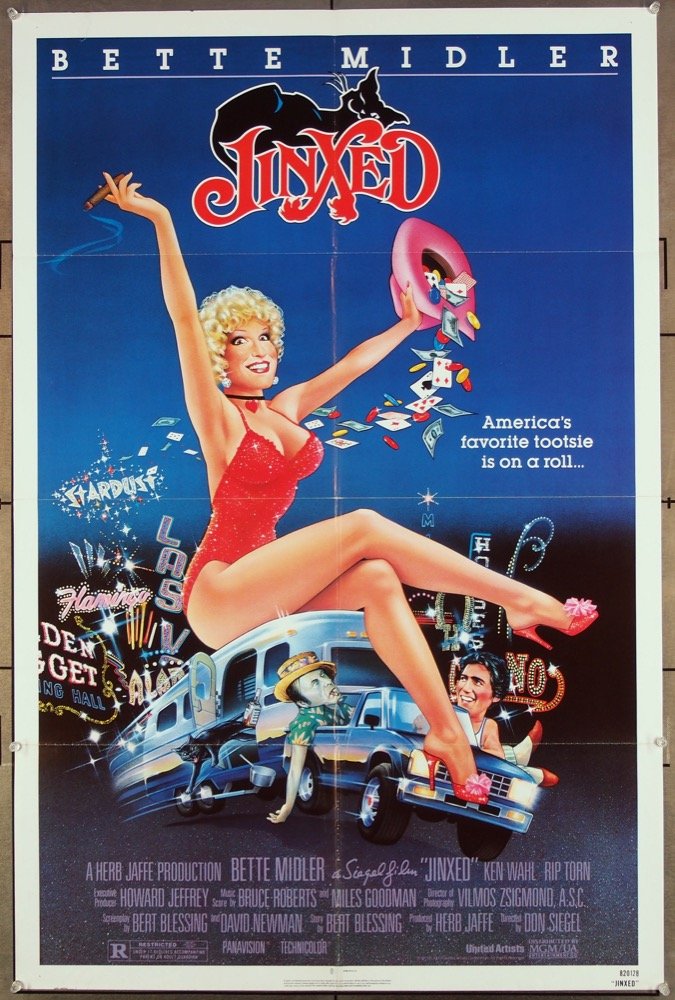
Jinxed! (1982)

Version 1.0.0

Version 1.0.0

By Richard Winters

My Rating: 3 out of 10

4-Word Review: Blackjack dealer is cursed.

Harold (Rip Torn) is a gambler who can never seem to lose whenever he goes up against one Vegas blackjack dealer in particular, Willie (Ken Wahl). In fact Harold’s winning streak versus Willie becomes so extended that it gets him fired and he’s forced to find a similar job in Reno. Harold follows him up there and Willie’s losing ways start all over again. His supervisor (Val Avery) doesn’t think Harold is doing anything unethical and instead becomes convinced that he’s put some sort of jinx on Willie and for Willie to end it he needs to get something of Harold’s. He drives out to Harold’s isolated trailer where he resides and realizes he has a wife named Bonita (Bette Midler) who also happens to be a lounge singer. She’s sick of dealing with Harold’s abusive ways and makes a deal with Willie that they kill him and then spend the proceeds of his life insurance payout afterwards.

The movie is appropriately titled not so much for what occurs onscreen, but more with what happened behind it. The story was based on the Frank D. Gilroy novel ‘The Edge’, which was published in 1980 and then had the screen rights sold for $300,000. While Gilroy wrote the first draft it was then handed over to David Newman who did a second rewrite and from there passed onto Jeremy Blatt who did a third version before director Don Siegal and Bette Midler began doing further revisions until Gilroy finally asked for his name to be taken off the credits as the plot no longer resembled anything from the book.

The real issue though started with Siegel who was at odds with the leading lady and then eventually became stricken with a heart attack where he ceded directing reins to Sam Peckinpah who completed many of the remaining scenes uncredited. Star Wahl also found getting along with Midler to be difficult and the two feuded throughout making no secret of their disdain for each other even after the shooting was long completed.

From my standpoint the biggest problem was the casting. Midler can be a funny lady, but not in this type of role. She’s known for her snarky, brash, and outgoing personality, but here plays someone who’s shy and pensive something that just doesn’t connect with who she is at all. Maybe she wanted to step out of her comfort zone and that’s why she took the role, but she doesn’t play it convincingly and thus it’s hard to get into. Wahl isn’t up to the demands of being a leading man and it’s no wonder he retired from the business in 1996. His delivery is flat and nothing that he says, or does is engaging. He has a few amusing lines here and there, but overall seems to be phoning it in and the romantic moments between him and Midler come-off as clearly awkward and out-of-place.

There were a few elements that I did like. It captures the rustic side of Nevada quite nicely and not just Vegas, but also Reno and the rural portion of the state. You also get to see an actual, in fact there’s two of them, $10,000 bill, which the fed no longer prints making it the coolest moment in the whole movie. Torn also gives a energetic performance and could’ve put on a clinic for the other two if they had paid attention. Though during his character’s death scene he does blink his eyes and make some brief facial gestures when Midler kneels beside him and slaps him making it seem like he really wasn’t dead even though technically he was. There’s also a few too many shots of his hairy butt crack, which I didn’t particularly care for. A funny scene done inside an adult bookstore, where director Siegel gives himself a cameo as the porn shop clerk, which I found to be a highlight.

Spoiler Alert!

Unfortunately the third act veers off in a weird way where Midler goes on a scavenger hunt using cryptic letters that her deceased husband wrote her before he died, which as critic Roger Ebert describes in his review of the film, ‘paralyzes’ the movie. If anything Wahl should’ve gone along with her as they follow the clues, which might’ve strengthened their chemistry and made them seem more like real couple who could work together to solve things instead of these two individuals doing things mostly on their own.

There’s also no explanation for what exactly was causing the whole jinx thing. Supposedly the luck as it were was coming from the cigars that Torn was smoking, and which Midler later does as well, but why would these cigars bring good luck? Normally smoking cigars can’t help one win at blackjack, so what secret cosmic power did they possess, so that it made a difference in this case? There’s no answer either as to who Torn was calling on his pay phone outside of the trailer he lived in after he lost to Wahl and was now broke. It made it seem like he was conspiring, or in connection with someone else, or maybe some sort of behind-the-scenes organization, criminal or otherwise, and the film should’ve made it clear what this was about, but ultimately doesn’t.

My Rating: 3 out of 10

Released: October 22, 1982

Runtime: 1 Hour 43 Minutes

Rated R

Director: Don Siegel

Studio: United Artists

Available: DVD, Blu-ray, Amazon Video

Eye of the Needle (1981)

eye

By Richard Winters

My Rating: 7 out of 10

4-Word Review: Spy infiltrates isolated family.

Henry (Donald Sutherland) is a German spy stationed in England during WWII, who comes upon an airplane site that he thinks is the Allied commandment post for the eventual invasion of Normandy, but upon closer inspection he finds out that the planes are all made of wood and the place is simply a decoy. With this information he tries to charter a U-boat to get back to his homeland, so he can hand his findings directly to Hitler and thus potentially change the course of the war. Instead his boat gets hit by a storm and crashes on the beach of Storm Island. Only four people reside there including Tom (Alex McCrindle), a lighthouse keeper and owner of a 2-way radio, which Henry needs to communicate back to Germany, as well as a young family made up of Lucy (Kate Nelligan), her husband David (Christopher Cazenove) and their 5-year-old son Jo. The family allows Henry to stay in their home while he recovers from his accident.  Lucy is sexually frustrated because on their wedding the couple got into a terrible car accident, which has left David paralyzed and unable to perform in bed. Henry catches onto to Lucy’s despondent situation and soon becomes her lover, but David suspects Henry of being a spy and the two have an ugly confrontation, which sends the situation for all those on the island to go spiraling out-of-control.

The film is based on the 1978 novel ‘Storm Island’ by Ken Follet, with the script staying pretty faithful to its source material. The story though kind of acts like two movies in one. The first half almost fully focuses on Henry’s spy exploits with lots of action and thrills while the second-half settles into being more of a subdued romance. Watching Sutherland playing this cold-blooded killer willing to callously off anyone that even slightly gets in his way without any remorse when for most of his career he played peace-loving hippie types, or at least that’s what he’s best known for, makes for an interesting contrast. It also shows as opposed to James Bond movies how being a spy can be a very lonely and unglamorous endeavor where a person is forced to constantly be on the run and can rely on no one, but themselves.

Spoiler Alert!

The shift during the second act where the tone becomes more of a drama doesn’t work as well. I couldn’t understand why Henry, this spy on-the-run and under extreme stress, would suddenly pick this time to get into a romance with a perfect stranger that he’s known for less than a day. If he wants to try and exploit the situation to feign romance so she will let down her guard and possibly defend him when and if the authorities arrive then fine, or maybe he’s just looking for some cheap sex to unwind him, which I could understand also. However, being in extreme survival mode where the welfare of himself and his top secret film are of the uppermost importance and then suddenly to pick this time to get sidetracked, and put himself in a an evermore and needlessly vulnerable position by trying to start-up and an affair while also simultaneously hiding-out made absolutely no sense.

I couldn’t buy into Lucie openly admitting her painful marriage to a perfect stranger either, which she candidly divulges to Henry less than 24-hours after first meeting him. Most people have pride and ego and thus won’t want to admit the harsh truth about their lives when somebody, in this case Henry, exposes it to them. They instead would want to ‘keep up appearances’ and maybe even become defensive, or resentful of someone they don’t know bursting into their home and openly telling them unflattering things about themselves and yet here Lucie melts completely when Henry confronts her about her flawed union and gushes out all the personal details like he’s her own personal therapist, which happens too quickly to being even remotely believable.

Spoiler Alert!

The affair angle didn’t seem necessary anyways since during the third act when she finds out he’s a spy she goes after him violently without any pause. You’d think if she had been intimate with him she might want to ‘hear his side of things’ or consider escaping with him from her dreary life instead of her immediate response being that he’s the mortal enemy.

With all this said I did like the climactic foot chase where Lucie goes after Henry with a gun alongside this rocky cliff ( in the book she throws a stone at him, but the shooting gun makes it more dramatic). Yet even this and some of the other twists that come about during the third act aren’t as effective as they could’ve been because all of the secrets are given away right from the start and instead having it start out in the cottage, where the relationship between Lucie and Henry could’ve taken more time to be realistic, and where Henry’s true identity wasn’t known upfront would’ve made what happens at the end more riveting, shocking and even profound, which with the way it gets done here doesn’t fully gel.

There’s also some problems on the technical end. The music is way too loud and at times obnoxious to the point it becomes heavy-handed and could’ve easily been left out altogether. The scene showing Henry chasing after Lucie who’s driving away in a car gets badly botched. The faraway shots of him running are okay, but the close-up, showing him from the waist up, looks like he’s jogging on a treadmill. The scene too inside the lighthouse where Lucie unscrews a lightbulb in order to insert a key into the socket and cause the fuse to blow looks phoney because if she were handleling a live bulb bare handed, as she does, she would’ve flinched and even let out a bit of a yelp from the scorching heat, but instead she doesn’t.

My Rating: 7 out of 10

Released: July 24, 1981

Runtime: 1 Hour 52 Minutes

Rated R

Director: Richard Marquand

Studio: United Artists

Available: DVD, Blu-ray, Freevee, Roku, Tubi, Amazon Video

Butterfly (1982)

butterfly

By Richard Winters

My Rating: 0 out of 10

4-Word Review: Family has genetic birthmark.

Jess (Stacy Keach) takes care of an unused mine outside of a small Arizona desert town. One day Kady (Pia Zadora) shows up at his doorstep. Jess doesn’t recognize her at first, but then realizes she’s his 17 year-old daughter the product of his marriage to Belle (Lois Nettleton) who abandoned him 10 years earlier for another man named Moke (James Franciscus). She is pregnant by a man who refuses to marry her, so she  wants to steal silver from the mine that Jess protects in order to help her financially with the child who’s on the way. At first Jess disapproves, but Kady uses her provocative body and looks to essentially seduce him and get him to relent. However, a local man named Ed (George Buck Flower) witnesses their stealing from the mine as well as their lovemaking later on, which gets them arrested for incest.

The story is based on the 1947 novel ‘The Butterfly’ by James M. Cain, who at the time was an immensely popular author, who had many of his books made into movies, but due to the controversial nature of this one it had to wait 35 years until it finally went to the big screen. He was inspired to write the story when years earlier, in 1922, he got a flat tire while driving through a mountainous area in California and a farm family that had moved there from West Virginia helped him fix it, but at the time he speculated that the young daughter they had with them was a product of incest.  The movie makes several deviations from the book. In the book Jess was the overseer of a coal mine and the plot took place in West Virginia while the Kady character was 19 instead of 17.

While the plot has some tantalizing elements, and on the production end it’s well financed, the whole thing comes crashing down due to the really bad performance of its lead actress. Zadora at the time had done only one other film before this one, Santa Claus Conquers the Martians, which was universally lambasted. It probably should’ve killed anyone’s career who had been in that, but she continued to struggle on in the business. Then in 1972 while performing in a small role in a traveling musical show, she caught the eye of a rich businessman named Meshulam Riklis, who was 29 years her senior. The two began dating and eventually married in 1977. Her new husband was determined to make her a star even if it meant buying her way in. He put up the entire $3.5 million budget for the film while demanding that she be placed as the star forcing director Matt Cimber to cast all the other parts around her. Riklis even put up big money to help get her promoted to winning the Golden Globes Newcommer of the Year Award, but all of this didn’t get past the critics, or audiences who rightly saw her as undeserving of all the attention and while she did a few other movies after this, which were equally panned, and even a few music videos and singing ventures, she is overall largely forgotten today and hasn’t been in a movie in 30 years.

To some extent her performance isn’t completely her fault as her character is poorly fleshed-out, which is my main gripe. I just couldn’t buy in that this chick on the verge of adulthood would be so extraordinarily naive that she’d come-on to her own father and not see anything wrong with it. First of all why is she sexually into her dad anyways as majority of girls tend to want to go for guys their own age and if not there has to be a reason for it, which this doesn’t give. In either case she should have some understanding that the rest of society doesn’t condone this behavior nor having her aggressively flirt with literally any guy she meets. The fact that she’s so blissfully ignorant to the effects of her behavior made her not only horribly one-dimensional, but downright mentally ill. Sure there’s people walking this planet that harbor some sick, perverse desires, but virtually all of them know they’re taboo and not dumb enough to be so open about, or if they do they learn real fast. Having her unable to understand this, or never able to pick-up on even the slightest of social cues is by far the most annoying/dumbest thing about it.

Keach, who gives a good performance and the only thing that holds this flimsy thing together, has the same issue with his character though not quite as bad. The fact that he doesn’t even recognize his daughter at first is a bit hard to believe. Sure he left the family 10 years earlier, but that would’ve made her 7 at the time and although she has clearly grown I think she’d still have the same face. He gives into his temptations too quickly as at one point he massages her breasts while she’s in the tub. Now if he weren’t religious then you could say he didn’t care about the taboos and had been living so long alone that he’d be happy to jump at any action he could irregardless if they were related, but the fact that he goes to church regularly should make him feel guilty and reluctant to follow through. In the book he’s portrayed as fighting these internal feelings by turning to alcohol, which is the way it should’ve been done here as well.

The eclectic supporting cast does make it more interesting than it should. Orson Welles caught my attention not so much for his role as a judge, but more because of his wacky combover. James Franciscus, who usually played sterile good guys is surprisingly snarly as the heavy and Stuart Whitman has a few good moments as a fiery preacher though even here there’s some logic loopholes that aren’t explained like how did he know Kady was Jess’ daughter, which he mentions while at the pulpit much to the surprise of Jess as he hadn’t introduced her to anybody.

My Rating: 0 out of 10

Released: February 5, 1982

Runtime: 1 Hour 48 Minutes

Rated R

Director: Matt Cimber

Studio: Analysis Film Releasing Corporation

Available: DVD-R

Second Thoughts (1983)

second thoughts

By Richard Winters

My Rating: 1 out of 10

4-Word Review: Lawyer considers an abortion.

Amy (Lucie Arnaz) is in a relationship with Will (Craig Wasson) a former political activist who found out trying to change the world was too difficult, so now he settles for just being a street musician, who at times gets in minor skirmishes with the law and needs Amy’s assistance as she’s also a lawyer. Amy then also gets ‘hired’ by her ex-husband John (Ken Howard) to represent him in his divorce from his second wife that’s really a ploy to try and get back together with her. Will and John know each other when Will applies for a loan from a bank that John manages though neither of them know about either of their relationships with Amy. Then Amy gets pregnant and considers an abortion. John is fine with her decision and even agrees to drive to the hospital while Will sneaks into the facility and kidnaps her in an attempt at preventing it from happening.

This was the second movie directed by famed producer Lawrence Turman whose first foray behind-the-camera was 12 years earlier with Marriage of a Young Stockbrokerwhich was panned by most critics though I found it interesting. This one got savaged as well and for the most part rightly so. The main issue is the disjointed tone that starts out as a drama with a TV-Movie of the week theme and then by the second act slides over into becoming an offbeat comedy. The unimaginative title and misleading movie poster, which makes it seem like two horny adults frolicking around, which it isn’t, was more than enough to confuse potential audiences and keep them away and thus lead it into being a financial disaster at the box office with a very limited release before falling off into complete obscurity.

To its benefit it does have some unique moments. The segment where Will puts a dead fish into the bank’s safety deposit box as revenge for them not giving him a loan and then stinking up the place to the point that they bring in a whole bunch of cats in order to sniff out where the odor was coming from is commendable. I also enjoyed Lucie’s attempt to escape from the isolated cabin that she’s in, where she’s handcuffed to a bed, by trying to drag the entire bed frame down the stairs, which could’ve been played-up more. I also got a kick out of the scene where John’s ex-wife, played by Ann Schedeen, threatens his beloved potted plants, even holding one ‘at gunpoint’ unless he agrees to pay for her cosmetic surgery.

Unfortunately Lucie Arnaz’s performance kills it. She had the option of either doing this one, or Poltergeistand decided on doing this because she felt it lent her greater dramatic work, but in the end she should’ve gone with the other one as that has obtained a cult following while this one is completely forgotten. Her character is too much of a composite of the modern career woman. There’s nothing unique, or interesting about her and thus you never get emotionally invested in her journey and if anything find the times she is on the screen to being the film’s most boring moments.

Wasson has been lambasted on this blog before with the other movies he’s been in and his appearance here proves no exception. He’s supposed to be playing an American Indian, but doesn’t look the part at all and somebody with an actual Native American ancestry should’ve been given the role. The songs that he sings, many of which have a ragtime quality, I found to be just as annoying as his acting and his character isn’t likable. The way he holds this woman against her will until she agrees to have ‘his baby’ I found genuinely creepy. Now of course if one is on the Pro-Life side of the fence maybe they’d consider what he does to be ‘heroic’, but while having a civil debate on the issue and him voicing his concerns on why he feels she shouldn’t terminate the pregnancy is fine, but then confining someone to a small room against their will is where I feel he takes things too far and is no longer just this benign guy with good intentions.

The film’s ultimate message becomes a murky as its tone. Initially I thought with the casual way that the abortion option gets discussed that this was a typical liberal minded film with a pro-choice sentiment, then by the third act this all seems to get reversed especially with the female doctor character played by Peggy McCay. She has performed abortions before, but now is reluctant to do it on Arnaz while using the excuse that she no longer ‘feels comfortable’ with it, which seemed to be the filmmaker’s attempt to insinuate that abortion doctors know what they’re doing is ‘wrong’ and ultimately start to feel guilty about it afterwards.

There’s another doctor played by Arthur Rosenberg, who has no qualms performing abortions, but is also portrayed as being incredible callous and obnoxious. At first I thought this was just done for misguided comedy, but eventually it seemed that this was the filmmaker’s way of trying to show how doctors that do this type of procedure without an regrets are ‘bad and crass’ people inside and his constantly rude demeanor was just a way of ‘exposing’ this.

In either case both sides will get alienated by it. A pro-lifer won’t want to sit around watching a movie that at the beginning seems to be taking a different viewpoint  just to wait until the very end when it then seems to finally come around to their position. Pro- choice people will dislike the movie for the exact opposite reason and therefore you have to wonder what type of viewer this movie was meant to attract as I can’t think of anyone that would like it.

My Rating: 1 out of 10

Released: February 6, 1983

Runtime: 1 Hour 38 Minutes

Rated PG

Director: Lawrence Turman

Studio: Associated Film Distribution

Available: DVD-R (dvdlady.com)