Category Archives: 80’s Movies

Back to the Beach (1987)

By Richard Winters

My Rating: 3 out of 10

4-Word Review: Couple revisits surfing culture.

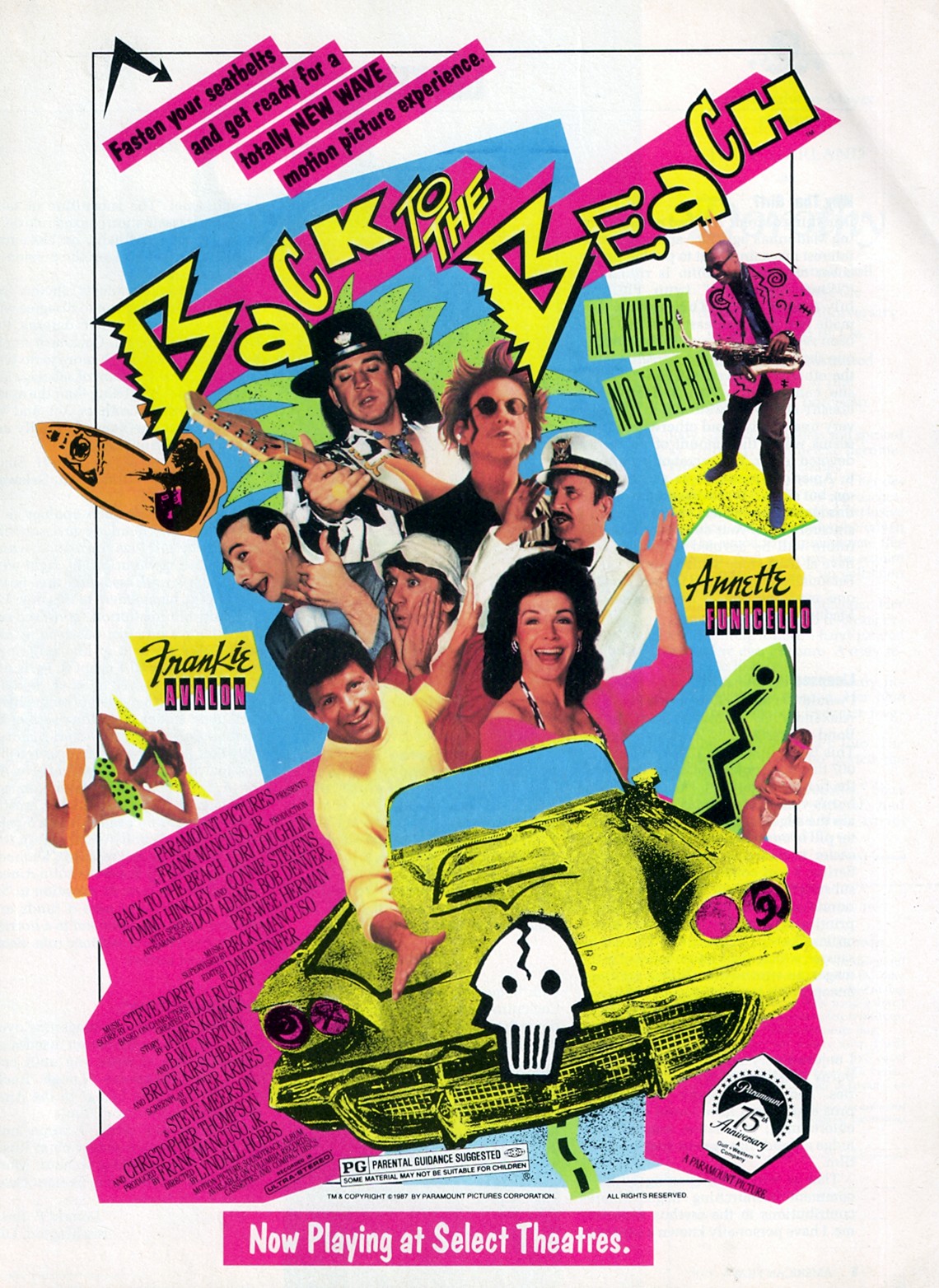
25 years ago, Frankie (Frankie Avalon), was a hot shot surfer known as the ‘Big Kahuna’, but now he’s a middle-aged, frustrated car salesman living in Ohio.  His wife Annette (Annette Funicello) was also a part of the surfing culture and that’s where the two first met, but now she’s a suburban housewife raising a rebellious kid named Bobby (Demien Slade). Frankie longs to revisit his old stomping ground, so the family takes a trip to California to visit their daughter Sandi (Lori Laughlin) not knowing that she’s living on the beach with her boyfriend Michael (Tommy Hinkley). Frankie also runs into Connie (Connie Stevens) his old sweetheart that still has a crush on him. Annette becomes jealous of all the attention Connie gives him causing a rift between the two, so they spend the rest of their vacation doing things on their own. Annette then catches the eye of Troy (John Calvin) who chases after her while Tommy gets in with a group of punk surfers who try to take over the beach prompting Frankie to challenge their leader to a surfing contest.

The film came out at a time when many 60’s shows and movies were getting revisited usually with the same cast members, or at least those that were still alive. Frankie had been shopping around the script for many years before finally finding a taker though the studio had insisted on more campy approach, but producer/writer James Komack resisted insisting that having it a light comedy dealing with the travails of growing into middle age and being a modern-day parent was enough.

It starts out almost like Airplane!, with visual sketch-like comedy, but then meanders into being almost all talk with not a lot happening. More confrontations or dilemmas, even the comic variety, would’ve helped, but instead the second half stagnates. Frankie and Annette ‘breaking up’ is a good example as the minute after having their spat they secretly long to get back together. It would’ve been a more intriguing story had the two genuinely went their separate ways only to decide at the very end that being a part wasn’t worth it and then make an attempt to reconcile, so there would at least be some dramatic tension, which is otherwise totally lacking.

Frankie is amusing and looks almost like he hadn’t aged a day and the potshots at his ‘perfect hair’, which looks suspiciously like a hair piece, are fun. Connie enlivens things as the beach blonde bimbo and Bob Denver is fun playing off his Gilligan persona, this time as a bartender known as ‘little buddy’. Some of the other cameos don’t work as well including Don Adams as The Harbormaster who initially seems like he’s going to ruin the festivities but gets neutered away too easily making his presence seem rather pointless. Having the son Bobby dressing and acting like a punk right from the start is off-putting and not funny. Would’ve been better and allowed for some character arch had he been super clean-cut, maybe in an effort to emulate his dad, only to get ‘corrupted’ when he meets the punks and then changing his look.

Funicello’s presence was disappointing. She hadn’t been in a movie in a while and was better known to younger audiences for being a spokesperson for Skippy peanut butter, which the film does parody, but her acting is rather stiff. This was when she began experiencing MS symptoms, so that may have had something to do with it, but her character is one-dimensional. She never says or does anything outrageous and is too ‘goody-goody’ making her moments flat and forgettable. It’s possible she didn’t have the acting chops to play anything different though it would’ve been nice had she at least tried to go against her image a little.

The film ends on a high note. I enjoyed seeing Frankie back on the surfboard even if he does it in front of a green screen, but I really felt there needed to be more jokes and a faster pace. Trying to turn it into a ‘dramedy’ was not what these cartoon characters needed. A surreal edge was necessary and though it teases this concept at times it wasn’t enough turning it into a misfire that never quite takes off.

My Rating: 3 out of 10

Released: August 7, 1987

Runtime: 1 Hour 32 Minutes

Rated PG

Director: Lyndall Hobbs

Studio: Paramount Pictures

Available: DVD, Blu-ray, Amazon Video, PlutoTV, YouTube

Beyond Therapy (1987)

By Richard Winters

My Rating: 3 out of 10

4-Word Review: Therapists nuttier than patients.

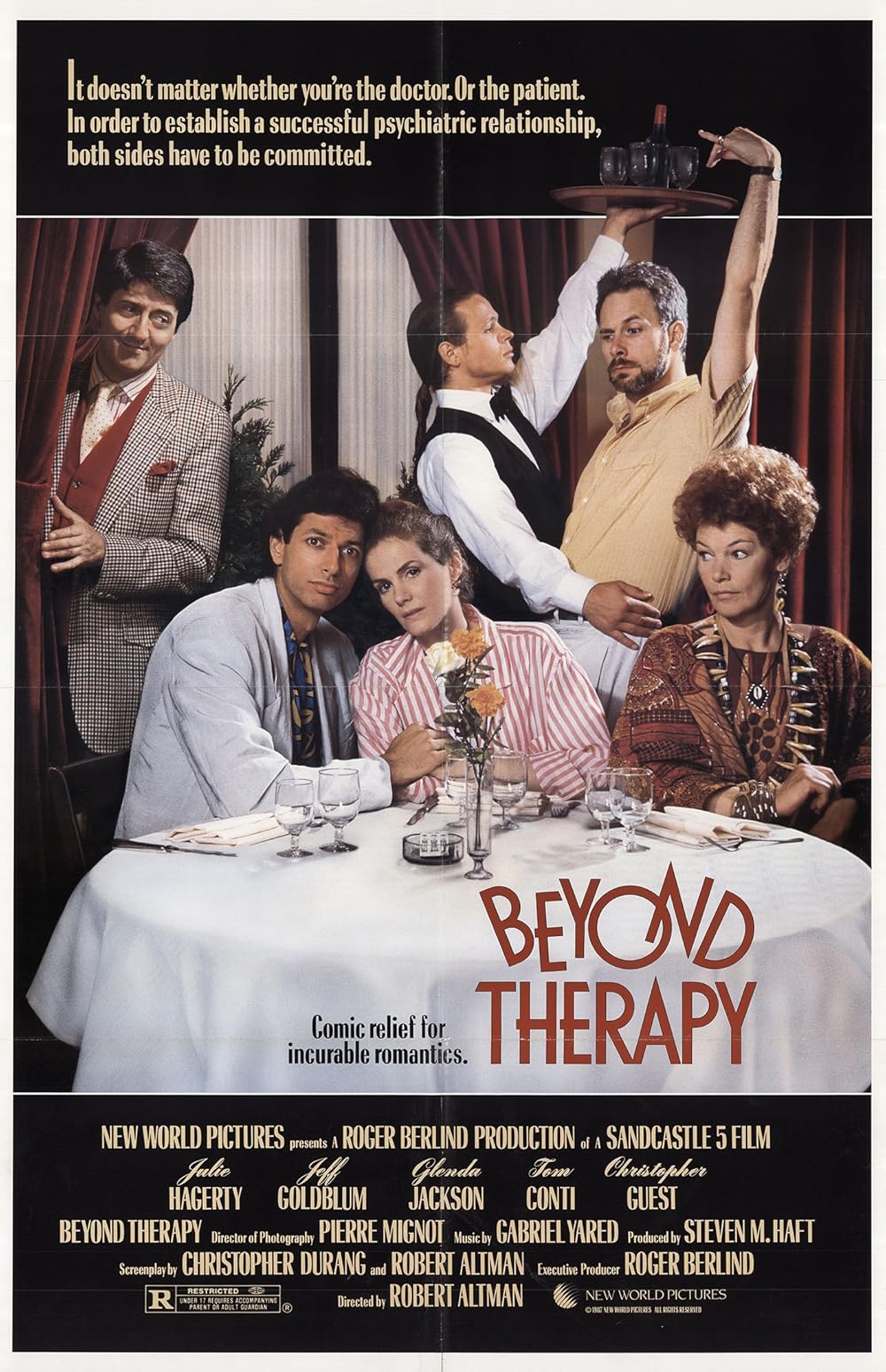
Bruce (Jeff Goldblum) is a bisexual who’s tired of his relationship with Bob (Christopher Guest) and thus decides to place a singles ad looking for a female companion. Prudence (Julie Hagerty) answers and the two meet-up at a restaurant, but they find there’s too many differences between them and fail to hit-it-off. Bruce then goes to Charlotte (Glenda Jackson), his therapist, while Prudence visits Stuart (Tom Conti) who’s her therapist and works in the next room beside Charlotte’s. After some counseling, and at Charlotte’s suggestion, Bob places another ad, but changes some of the personal details, causing Prudence to again answer it thinking it’s a different person. They meet at the same restaurant, but this time things click and they agree to go out again, but Bob and his meddling mother Zizi (Genevieve Page) don’t like the fact that Bruce is seeing somebody else and become determined to ruin the potential relationship as does Stuart, who once had a fling with Prudence, and wants to rekindle the old flame, but only if he can get Bruce out of the way.

The film is based on the hit stage play of the same name by Christopher Durang and while that one got rave reviews this version falls off its hinges right away and a lot of the blame should be pointed at director Robert Altman who rejected the screenplay that Durang had written and instead revised it severely causing Durang to feel that very little of his original work was left and lamenting in later interviews that his experience working on this project was an unhappy one. The story is supposed to be set in New York City, but because Altman was living in Paris at the time he choose to shoot it there, but New York’s ambience, where the single’s scene is quite strong, would’ve helped accentuate the theme and allowed for a more vibrant backdrop versus here where everything takes place in a bland cafe, or in the therapists office, with the exception of a few scenes done in Bruce and Bob’s pad, that hampers the visual flair and makes the production look stagnant and cheap. It also ends with a bird’s eye shot of the Paris skyline, but since everyone was speaking in English and without a French accent it makes it off-kilter, and they should’ve at least pretended it was New York even if it wasn’t.

Goldblum comes off as too detached and thus isn’t effective for this kind of role. Hagerty has her moments and at least gets some laughs, but her open disdain for gay people, along with some of her character’s other quirky hang-ups, may not go over well with viewers. Guest plays the gay lover role in too much of a cliched way making him seem like a walking-talking parody, while Page, as his overprotective mother, is excessively hammy and her exaggerated behavior gets in the way and doesn’t add much.

Jackson is a big disappointment though it’s not all her fault as Altman insists on shooting the majority of her scenes through the window of her office making the viewer feel cut-off from her and like she’s intended to be a caricature. Her confusion over words is more disconcerting than funny. Having a therapist that’s a bit daffy is okay and might even be good enough for a chuckle or two, but here she seems genuinely nuts to the extent that you wonder why Bruce would continue to see her. How she’s able to pick-up words said by Stuart in the other office is never made clear, they also seem to have sporadic sexual rendezvous in the room that’s in-between their offices, but this only gets implied and never actually shown though it should’ve been. Conti’s performance is annoying as he speaks in this fake sounding Italian accent, which he finally drops near the end, but should’ve done way sooner.

There are a few in-jokes in regard to Jackson that I did like. One is a refence where her son, played by Cris Campion, asks her to cry, which she does in a comic sort-of way and I think this was alluding to her performance in A Touch of Classwhere the script asked for her character to cry, but she refused insisting that crying was just something she didn’t do, so here you finally get to hear her do it, which is fun. Later there’s another bit where Bob talks about the movie Sunday Bloody Sundaya film that Jackson was in, though here he describes her as being ‘that English actress’, which is amusing, but would’ve been even funnier had, when he later meets her, he could’ve said ‘you look exactly like the English actress in that movie.’

Spoiler Alert!

While the film does become semi-engaging even with its rough, awkward start it manages to blow it up with a dumb conclusion, which has Bob shooting at Bruce with a toy gun while inside the restaurant. We already know it’s a toy because he tried to use it on Charlotte earlier, so having this extended slow-motion sequence where all the customers duck for cover, doesn’t work and becomes overdrawn instead of funny, or suspenseful. Having the group then remain in the restaurant afterwards and even get served food was equally ridiculous as anyone that would’ve caused that much of a melee would most certainly be asked to leave or arrested by the police for causing a disturbance.

My Rating: 3 out of 10

Released: February 27, 1987

Runtime: 1 Hour 33 Minutes

Rated R

Director: Robert Altman

Studio: New World Pictures

Available: DVD, Blu-ray, Amazon Video, YouTube

Double Negative (1980)

By Richard Winters

My Rating: 4 out of 10

4-Word Review: Who killed his wife?

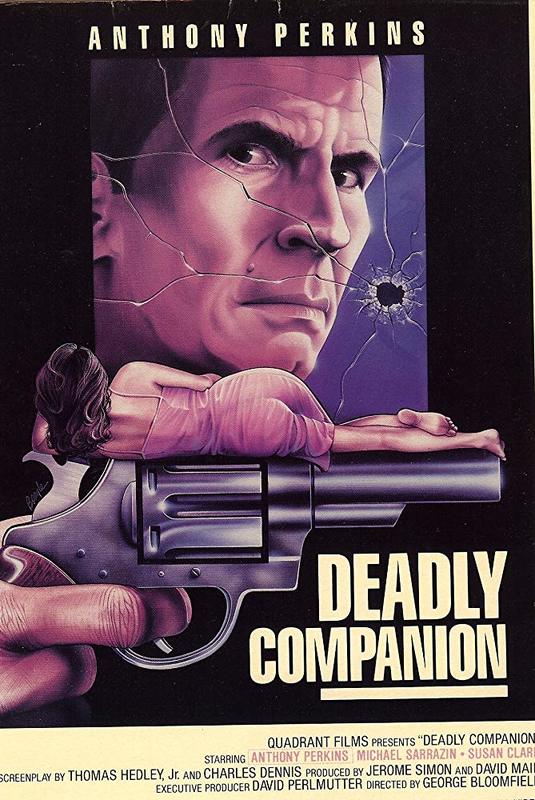
Michael (Michael Sarrazin) is a photojournalist tormented by fragmented memories of his wife’s murder. Paula (Susan Clark) is his girlfriend who’s trying to help him sort through these flashbacks, so he can find some answers. However, she too has things to hide as she’s busily paying off a man named Lawrence Miles (Anthony Perkins) who threatens to go to the police about what he knows about the killing. There’s also Lester (Howard Duff) a private investigator who sticks his nose too deeply into the case and finds himself at deadly odds with both Lawrence and Paula.

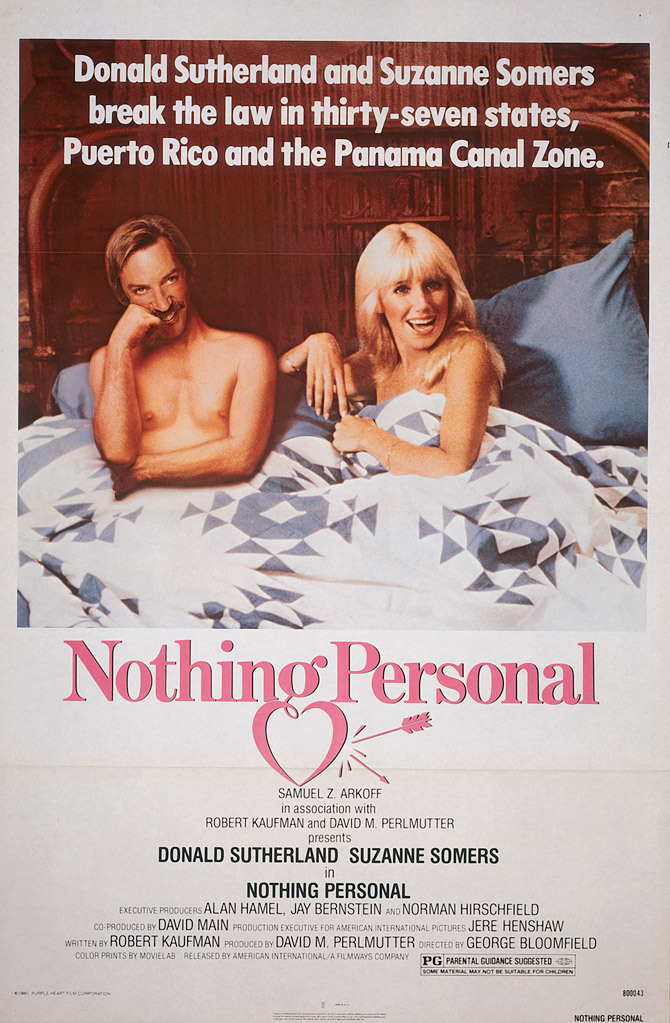
The film is based on the 1948 novel ‘The Three Roads’ written by Ross Macdonald under his real name Kenneth Millar. Macdonald later went on to have a stellar career writing novels about private investigator character Lew Archer and this story has plenty of potential but gets mishandled and ultimately becomes a misfire. A lot of the problem stems from the production employing three different writers who all had different perspectives on where they wanted the story to go and then relying on director George Bloomfield to cram it all together, which he doesn’t succeed at. The result is a fragmented mishmash that takes a long while to become intriguing and even then, remains interesting only sporadically. Lots of extended scenes particularly at the beginning that should’ve been trimmed and a poor pacing that barely manages to create any momentum.

It doesn’t help that the main characters are wholly unlikable and uninteresting. Clark especially comes off as arrogant right from the beginning when we see her drive by what appears to be Amish people in a horse and buggy fighting through the snow and cold while she enjoys things in her warm ritzy car, which makes her seem detached and uncaring. The scene where she’s trying to procure an important real estate deal and then gets hampered by Michael playing loud music in the other room, so she then excuses herself and promises to be right back. I was fully expecting her to yell at Michael for his misbehavior, but instead she strips off her clothes and the two make love, but it seemed like sex should be the last thing on her mind during such an serious business meeting and what would happen if the clients, who were just a door away and waiting for her return, would walk in on them? 

Sarrazin doesn’t cut it either. I know he’s been lambasted by critics in his other film appearances for being too transparent and forgettable and yet I’ve usually defended him as I feel he can sometimes be effective even given the right material. Here though he falls precariously flat. Some of it is the fault of the writing which doesn’t lend him to create a character with any nuance, or likability, but in either case he’s a complete bore and the viewer isn’t emotionally invested in his predicament. His flashback moments where he sees himself in some sort of prisoner of war camp doesn’t make a lot of sense, or have much to do with the main plot, and seems like something for a whole different movie. 

On the other hand, Perkins is fantastic and the only thing that livens it up to the extent that he should’ve been given much more screen time as the film sinks whenever he’s not on. It’s great too at seeing SCTV alums like John Candy, Eugene Levy, Joe Flaherty, Dave Thomas, and Catherine O’Hara in small parts where with the exception of Candy they’re not comical but instead make a rare turn at being dramatic. Duff is kind of fun and has one great moment, really the only good one in the movie, where he gets trapped in an elevator and must escape being shot by Perkins, who has his arm lodged in the otherwise closed doors, by desperately running back and forth in the closed space that he’s given. Michael Ironside has a memorable bit too as a bar patron who becomes incensed at Sarrazin when he refuses to allow him to buy him a drink. 

Spoiler Alert!

The denouement just leaves more questions and fails to tie up the loose ends as intended. For one thing it shows Sarrazin as being the one who strangled his wife, which I had started to suspect a long while earlier, so it’s not a ‘shocking surprise’ like I think the filmmakers thought it would. It also has Perkins leaving the scene, as he was having an affair with the woman, and even briefly speaking to Clark who witnesses him going, so why he’d insist Clark needs to pay him hush money didn’t make much sense. Sure, he could still go to the police and say that it was Sarrazin that did it, but Perkins fingerprints were at the scene of the crime, so I’d think either way he’d get implicated, and Clark could come forward saying she was a witness who saw him leaving. If anything, Clark should’ve been pushing him to go to the cops versus bribing him to stay away.  

Also, the way it gets shown, Clark comes into the bedroom after Sarrazin has already strangled his wife, so all she sees is him weeping over his wife’s dead body. For all she knew, from that perspective, is that Perkins really did kill the woman and Sarrazin was simply the first to come upon her dead body and thus for it to be crystal clear Clark should’ve entered while he was still in the middle of the act versus when he was already done.

Beyond that is that question of why would Clark want to stay with someone she knew had such violent tendencies? Wouldn’t she be afraid he could get upset at some point and do that to her? Sarrazin even asks her at the very end if she is afraid and her only response is: ‘aren’t you’? This though only muddles things further cementing it as a botched effort. 

Alternate Title: Deadly Companion

My Rating: 4 out of 10

Released: May 12, 1980

Runtime: 1 Hour 36 Minutes

Director: George Bloomfield

Studio: Quadrant Films

Available: Amazon Video

Real Genius (1985)

By Richard Winters

My Rating: 6 out of 10

4-Word Review: House full of popcorn.

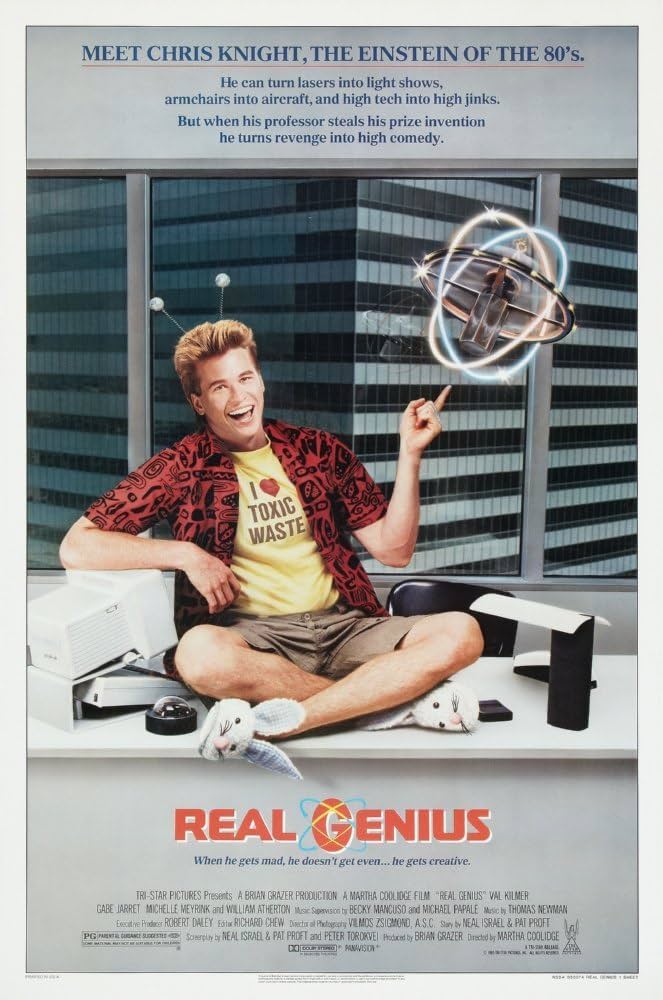
Mitch (Gabriel Jarret) is a 15-year-old prodigy who attends college at a young age and rooms with Chris (Val Kilmer). The two though don’t hit-it-off as Chris is rebellious and irreverent while Mitch takes his studies seriously but doesn’t know how to have any fun. Both are assigned to work on a project called ‘Crossbow’ that is headed by an arrogant Professor Jerry Hathway (William Atherton). Neither student realizes that the laser project has been commissioned by the CIA that will allow them to commit political assassinations from outer space. Once they find this out, they band together to infiltrate the headquarters in order to corrupt the weapon and not allow it to function properly.

The film is best known as being the second starring vehicle for Val Kilmer who plays the type of smart ass that some may find amusing while others could consider it obnoxious. While he does have his moments, I did find it hard to believe that he was ever the studious type, which he insists he was during a ‘heart-to-heart’ conversation with Mitch and only became the goof-off after burnout, but if that really were the case the viewer should’ve seen that versus having it described. Since he plays the party personality so well it’s hard to imagine him being any other way and it would’ve been interesting to have witnessed the transition.

The real star is Mitch, and I’m surprised why he wasn’t given top billing as he’s more three dimensional, relatable, and has a genuine character arch while Kilmer seems brought in mainly just for comic relief and throw some spice into the proceedings. Atheron is a major scene-stealer that almost knocks the other two out playing the snobby jerk of all jerks, in an even more pronounced way than in Ghostbusters, which I didn’t think could be topped and in fact he plays it so well you don’t see the acting and begin to wonder if that’s the way he really is and in his case start to fear being potentially typecast.

While these characters are all engaging in their unique ways the supporting cast doesn’t work as well. Mitch’s parents, played by Paul Tuller and Joanne Baron, are just too dumb to be believed particularly when Atherton asks in snarky fashion if their son is adopted and for them not to catch-on that he’s insulting them was for me not plausible. Jordan, played by Michelle Meyrink, I felt was a bit over-the-top as she’s this super nerdy girl who spends seemingly every waking moment working on her inventions making it almost like it was a compulsion and it would’ve been nice seeing, at least for a few seconds, her doing something else.

The way Mitch, who has a crush on her, and she consummate their fledgling relationship gets completely botched. For one thing it didn’t need to turn sexual as I thought it worked better having things evolve between them slowly and not have it get serious until after school year was over and they could focus less on their studying. Either way the genesis that motivates them into sex is when Sherry, played by Patti D’Arbanville, appears in his dorm room and comes-on to him, but there’s no explanation for why she’s there and just popped-in out-of-the-blue. What’s worse is that you never actually see Mitch and Jordan get-it-on as the film cuts away, but seeing them in bed under the covers struggle to do it, as the first time could be quite awkward for many young people, could’ve been comical exposing how these geniuses were dumb at something to the point they decide it’s not worth it.

The pranks, which the film is best known for, are amusing, but seem a bit exaggerated. Coating the dorm floors with ice would cause massive damage once it melted and the water seeped through the floorboards making me believe the pranksters would’ve been kicked out. Same with Kilmer breaking one of the windows in his dorm room, which in the next scene is fixed, but no explanation with who fixed it, or more importantly paid for it. Getting the car of one of the students inside a dorm room was for me a jump-the-shark moment as there was simply no way that vehicle frame would’ve been able to fit through the doorway. Some may argue that because these pranks were based on real incidents that had occurred in other colleges, I’m being overly picky complaining about them, but I suspect they weren’t carried out in the exact same way as shown here, nor is there anything said about the aftermath because once the jokes are over somebody’s going to be paying for it. Here nobody ever gets into trouble or deals with the consequences, but in real-life they would.

Spoiler Alert!

The ending in which the students are able to infiltrate a military complex was wish fulfillment particularly the way they’re able to get in using ID cards they had made themselves, which I’m pretty sure would not have passed professional scrutiny. Just because these kids are smart doesn’t mean they can’t make mistakes or have oversights.

I did however love the house getting filled up with popcorn. Actual popcorn was used and had to be popped continuously for three months and then treated with a fire retardant so as not to combust. A 2009 episode of Mythbusters tried to recreate it and found that it wouldn’t be possible as the popcorn was not able to break glass or knock the home off of its foundation like in the movie, but it’s still a fun sight regardless and the film’s top moment.

My Rating: 6 out of 10

Released: August 7, 1985

Runtime: 1 Hour 46 Minutes

Rated PG

Director: Martha Coolidge

Studio: Tri-Star Pictures

Available: DVD, Blu-ray, 4K, Amazon Video, YouTube

Cheech and Chong’s The Corsican Brothers (1984)

By Richard Winters

My Rating: 1 out of 10

4-Word Review: Feeling pain from sibling.

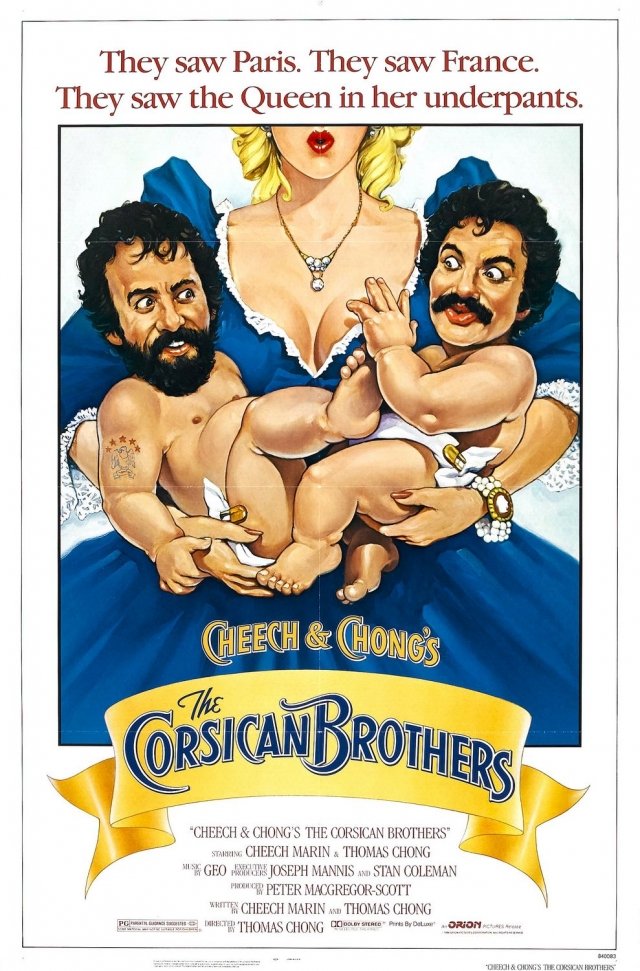
In France during the 1840’s two brothers, Luis and Lucien (Cheech Marin, Thomas Chong), are orphaned when their fathers die during a duel. Over time they realize they can feel the other’s pain and then split up and go their separate ways at age 9 after they accidentally burn down their house. 20 years later they meet up but find that their personalities are quite different with Lucien upset about the treatment of the pheasants and hoping to start a revolution while Luis wants to avoid all confrontations. Both of them draw the ire of the Queen’s henchman Fuckaire (Roy Dotrice) forcing them go in disguise in order to visit the Queen’s two daughters (Shelby Chong, Rikki Marin).

If there was ever a movie idea that cried out impending disaster during the planning stages it was this one and how it ever went into full-fledged production is a mystery, but far more interesting to explore than anything that’s actually in the film. Possibly the two got the idea after having brief cameo’s in Yellowbeard, another period piece parody, but the red flags should’ve gone up immediately. The whole reason Cheech and Chong became such a hit was their stoner caricatures and without that there’s nothing to watch. The two have proven in previous installments of the film series to be very good at playing different characters, but they were always in support. It was the stoner comedy routine that made it a hit and getting completely away from that and even changing the time period to the 18th century was too extreme and fans of the duo’s earlier work rightly stayed away.

The only possible chance it could’ve had would’ve been if the stoners had found some sort of time machine and went back into history where their mentalities would clash with those from the different culture though even this could’ve backfired, but at least it would’ve kept some slim thread from the other films in the series versus this way where there’s no connection. Yes, it still has the two stars, but their roles here just aren’t funny or engaging. Clearly their egos had them thinking it was all about them, but it really wasn’t and without the right material these two really struggle with a lot of the attempted humor coming off as strained.

The running gag dealing with their ability to feel the other’s pain runs out of steam fast and outside of that there’s really no laughs with many of the bits seeming better suited for a TV-sitcom if even that. The ending scene where Cheech imagines what the women he’s about to marry will look when they get older is the only unique moment with everything else being borrowed from some other movie, or show, which in almost all cases did it better than here. Only Edie McClurg and Dotrice have anything that is even faintly memorable, and their presence help keeps it slightly afloat.

It’s also fun to see Rae Dawn Chong, Tommy’s daughter, in a small bit as a gypsy that they meet while at a restaurant. Rae has always seemed to have a much different mentality than her father who’s predominantly goofy while she comes-off as serious, so I liked the idea of them sharing some scenes together but wished it hadn’t been so brief and that she’d been given a bigger role.

The only good thing to come out of this is that it finally became clear to everyone involved that it was time to put the whole thing to rest and both men decided to split-up and go their separate ways. The reason for this came when the two had a falling-out during postproduction when Chong decided to dub Cheech’s wife’s lines with a voiceover expert. Both were able to find success individually and finally reunited to bring back their stoner characters in an animated film in 2013.

My Rating: 1 out of 10

Released: July 27, 1984

Runtime: 1 Hour 30 Minutes 

Rated PG

Director: Thomas Chong

Studio: Orion Pictures

Available: DVD, 

Still Smokin (1983)

By Richard Winters

My Rating: 2 out of 10

4-Word Review: Stoners travel to Amsterdam.

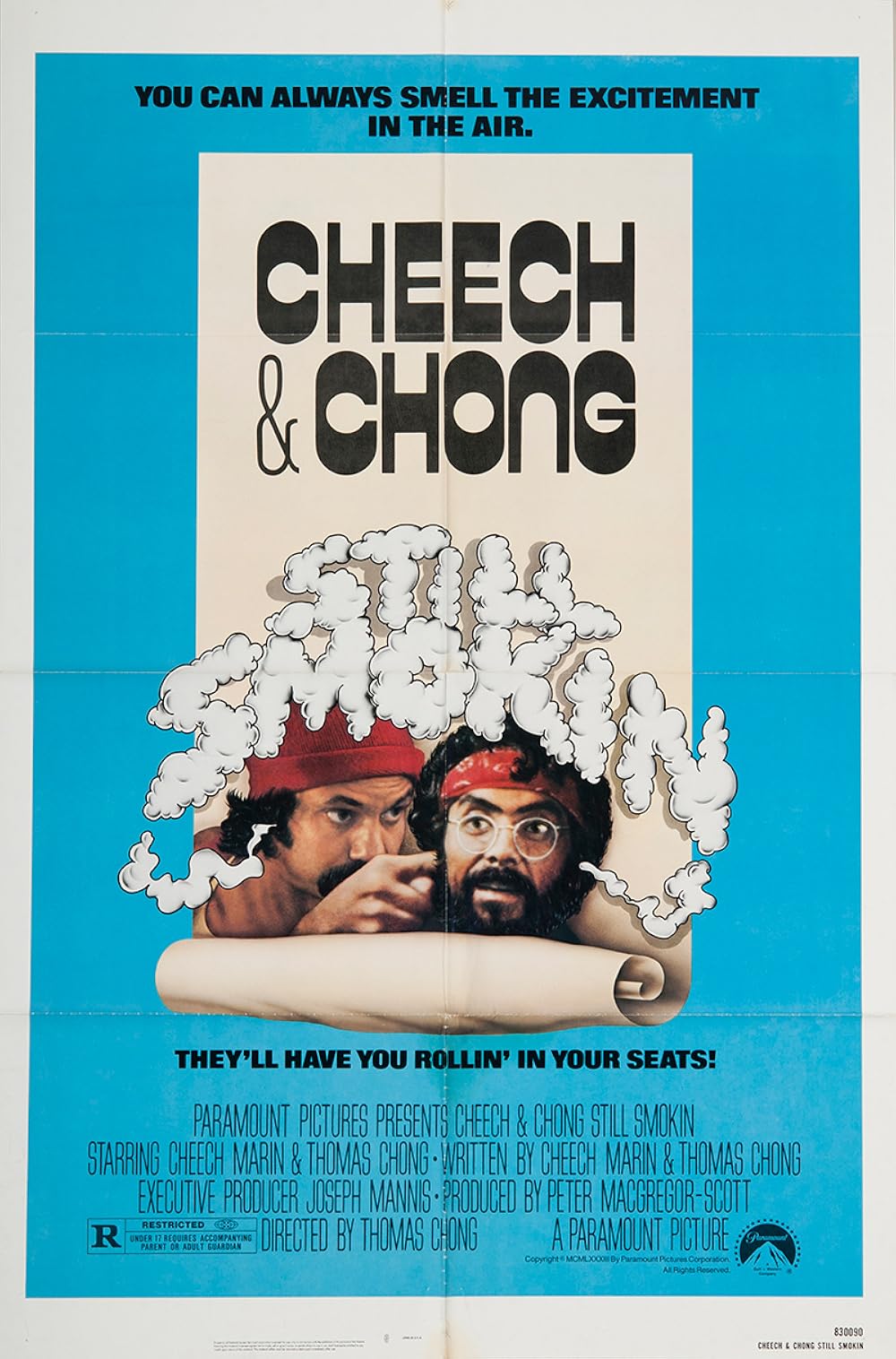
Cheech and Chong (Cheech Marin, Thomas Chong) travel to a film festival in Amsterdam dedicated to Burt Reynolds and Dolly Parton. Along the way Cheech gets mistaken as Reynolds and afforded the luxurious hotel room that should’ve been for him. The two take full advantage of it by ordering expensive dinners and drinks while signing it off on the hotel bill to be paid by the promoters. The promoter (Han Man in’t Veld) learns that the real Burt and Dolly won’t be showing up leaving the entire festival in shambles, but then the two stoners decide to save it by agreeing to do an improv comedy routine live in front of an audience where the Queen Beatrix of the Netherlands will be present. 

While the two may still be ‘smokin’ the film series has by this point completely lost all of its fire. My biggest complaint, which I’ve had with all of the previous installments, is that there isn’t enough story going on and had there been it would’ve been funnier. For instance, instead of the movie starting out with the two already celebrities it should’ve shown how they got into improv and learned the craft. Maybe it could’ve been because their drug dealing was no longer feasible and they were tired of constantly being harassed by the cops, so someone suggested improv as a side hustle. The two might’ve resisted at first, but then with nothing to lose decide to go on stage and try it out. To their surprise they become a hit, and this would then lead to fame and offers. Had it been done this way we would’ve at least had a plot and character development, but instead we’re just informed that they’ve become stars already, which makes it disjointed from the previous installment where they were driving around in the desert, still employed by the Arabs who wanted them to get into the adult film business.

The routines are flat almost shockingly so, as I’ve been involved in improv since moving to Austin 10 years ago and to be honest total amateurs stepping onstage for the first time and just coming up with a bit on the fly are far funnier than anything these supposed pros do here. I’m still impressed with their ability to change characters and speak in different accents, but their interplay doesn’t go anywhere. The skits as they are deals with an undercover cop (Chong) trying to arrest a drug dealer (Cheech), there’s also a gun debate between the two, a wrestling match where the two try to take on an opponent who’s invisible and yet another where they’re gay men trapped in a sci-fi movie, which may be deemed as offensive by today’s viewers as it relies heavily on gay stereotypes and mannerisms.

I remember in our improv group, like with most, somebody would usually yell out ‘scene’ when it was deemed that it had gone on too long and needed to end and I felt somebody should’ve been jumping into this movie and doing the same thing. The set-ups are okay and have potential, but don’t go anywhere that is interesting, or even slightly amusing. There are also certain bits that have no payoff at all but could’ve really used them. The best example of this is when the two continue to ‘sign-off’ on all of their elaborate room service expenses, but by the manager’s own admission, runs out of money, so who ends up paying for all those lavish meals and luxuries? I was fully expecting some moment to come where a massive bill showing of what they owed to come back to haunt them and their eyes getting all big, which could’ve been humorous, but it never happens proving how poorly thought the whole thing is. 

The final 20-minutes relies solely on concert footage of the two reenacting past skits that had been made famous from their record albums. These I found gross as the humor focuses too heavily on body fluids and stuff that would amuse only a seventh grader. I can be game for a dirty joke, if it’s clever, as anyone and have never been accused of being a prude, but when you have two grown men onstage crawling around pretending to be dogs who go through the motions of taking a shit and then smelling it, is when I checkout. Yes, the audience in the movie appears to be enjoying it, but I believe that was more from the shock value as back then some of this stuff was still considered pushing-the-envelope, but by now the edge has worn off and will be passee for many of today’s viewers. 

My Rating: 2 out of 10

Released: May 6, 1983

Runtime: 1 Hour 31 Minutes

Rated R

Director: Thomas Chong

Studio: Paramount

Available: DVD, Blu-ray, Amazon Video, PlutoTV, YouTube

Things Are Tough All Over (1982)

By Richard Winters

My Rating: 5 out of 10

4-Word Review: Stoners on the road.

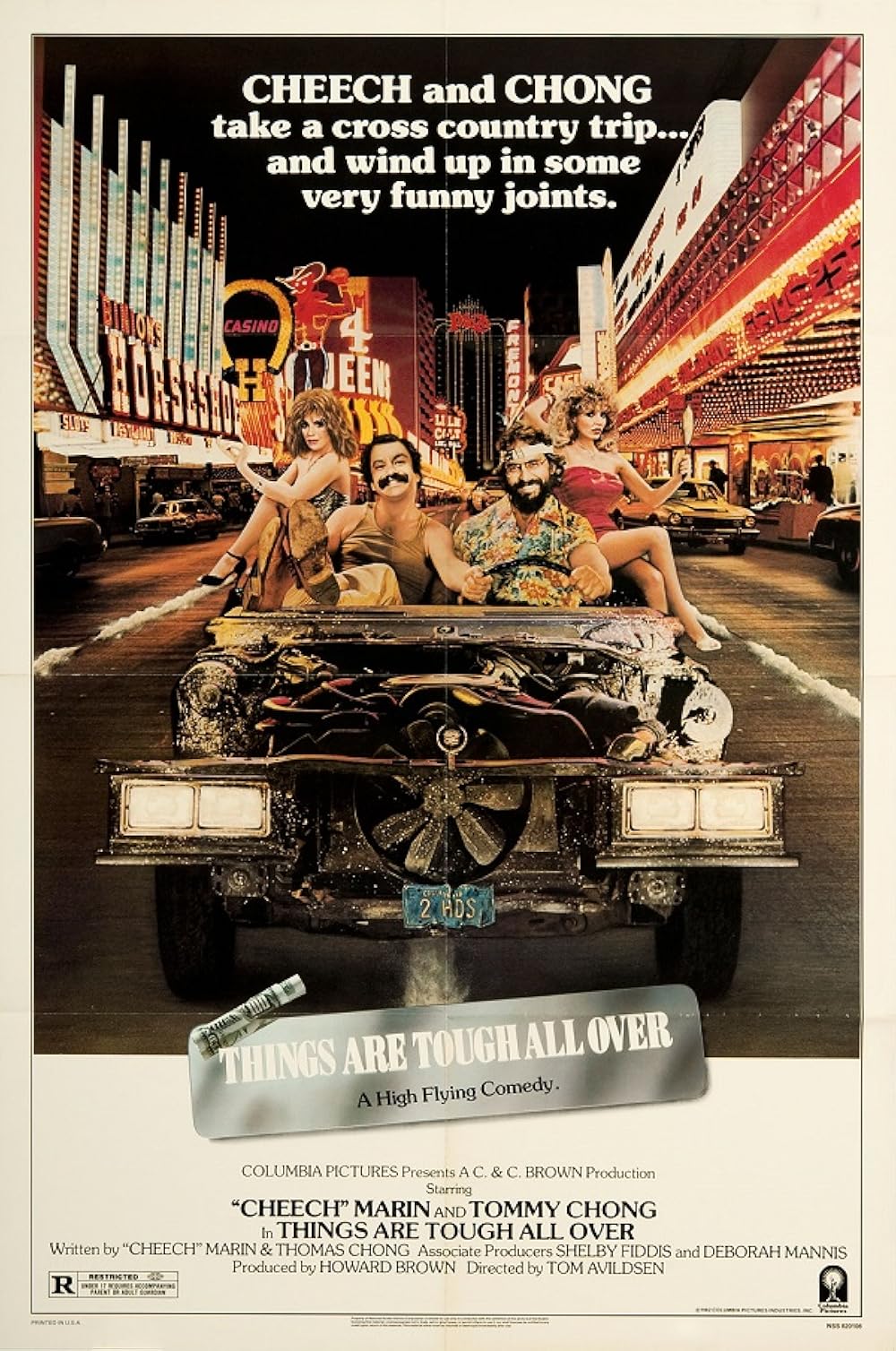
Cheech (Cheech Marin) and Chong (Tommy Chong) have moved to Chicago and are working at a car wash, but when they accidentally destroy a customer’s car they are fired. The owners of the car wash Mr. Slyman (Cheech Marin) and Prince Habib (Tommy Chong) hire the two for another job, which is driving a limousine across the country to Las Vegas. The two stoners think it will be an easy task but are unaware that the seats of the vehicle are stuffed with illegally collected cash. The boys though are given no money for gas, so each time they have to fill up the tank they’re forced to do away with a part of the car as payment forcing them to eventually have to drive down the road with only the vehicle’s main frame left. However, along the way they give up the seat with the money in it to an old-time gas station owner (John Steadman) and when the Arab owners find out that the money is gone, they set out to kill the two, who have become lost on foot inside the burning hot desert.

Cheech and Chong’s fourth installment is a definite improvement thanks mainly to the fact that it wasn’t directed by Chong, but instead the reins were handed over to Tommy K. Avildsen who had worked as an editor on their previous two movies. The pacing is much better, the gags come about in a more rhythmic order and the scenes don’t seem to go on forever. Avildsen’s editing background clearly helps keep the pace going and it’s nice to have a bona fide plot versus just trying to string together a bunch of comedy bits like in the first three films. Here there’s a better structure and focus. Things are still quite zany and surreal, but at least weird stuff don’t just get thrown in for no reason. 

Of course, there’s still the issue of why these guys are suddenly in Chicago. When we last left them, they were hanging out in East L.A., which served as the duo’s cultural and atmospheric background. If they are to move to a different city then we need to see if occur in the movie and not just between installments and there needs to be a reason why, which is never given. As I’ve explained before in my reviews of their past movies having each new film change the settings and their living circumstances so drastically makes it seem like we’re not really seeing sequels that’s progressing things forward, but more just starting things over from scratch. Same goes with Cheech suddenly having to do voice-over narration, which they had never done before, and in this instance added little and could’ve been skipped. 

However, it’s at least funny. Watching these guys shivering in the snow is a good change of pace from they’re pampered beach surroundings. The way they destroyed the car as it goes through the wash had me laughing as did the dismantling of the limo. Planes, Trains, and Automobileswith Steve Martin and John Candy, is the most well-known movie for having two guys riding down the highway inside a skeleton vehicle, but this movie did it first and in just as hilarious way. A couple of other comic highlights are when the stoners pick-up Donna (Evelyn Guerrero), who’s hitch-hiking, and she brings along a bunch of Mexican illegals who crowd into the limo like they’re stuffing themselves into a bus. The scene where the two sit in a movie theater and watch themselves star in a porno film, that was captured without them knowing it, is another great moment. 

The best thing about the movie though is that it features C&C in dual roles as they also play the rich Arab businessmen and it’s really impressive how these two can get into other characters and speak in completely different accents. They play the stoner parts so well that you start to believe that it’s really them and they’re not acting until you witness how seamlessly they can morph into other roles. Chong had me especially surprised as for a while I didn’t think it was him, he puts on a prosthetic nose that completely changes his appearance when he plays the prince, and it took me awhile before I caught on. Having them play the so-called heavies gives the movie a much-needed bump of energy and the only thing that’s missing is seeing all four in a scene together with some sort of over-the-top confrontation between them in the desert, which could’ve easily been done using trick camera work. 

This is also the first C&C movie where the drug use gets played down. This was apparently Chong’s idea as he felt it had become too much of a prop and they needed to challenge themselves and prove to audiences that they could still be funny without it. I also liked how Chong goes through a bad drug trip while inside a restaurant as the negative side of taking drugs had never been shown in any of their previous movies, but here does at least get lightly touched upon, which helps create a better balance especially for young and impressionable viewers.  

My Rating: 5 out of 10

Released: August 6, 1982

Runtime: 1 Hour 30 Minutes

Rated R

Director: Thomas K. Avildsen

Studio: Columbia Pictures

Available: DVD, Amazon Video, YouTube

Nice Dreams (1981)

By Richard Winters

My Rating: 3 out of 10

4-Word Review: Ice cream side effect.

Cheech (Cheech Marin) and Chong (Tommy Chong) have become rich by driving around in an ice cream truck that appears to be selling ice cream, but in reality, it’s marijuana and the side effect of taking too much of it is that it can turn people into lizards. Sargent Sardenko (Stacy Keach) who has been on the two’s trail since the first installment has been smoking the weed for a while in order to get into the mindset of a dope user and thus better able to figure them out, but in the process, it has turned himself into a stoner and no better than the people he’s chasing after. When he takes Cheech and Chong’s stuff the lizard side effects become apparent, and he tries to conceal from his two deputies (Tim Rossovich, Peter Jason) who become increasingly more suspicious of his bizarre behavior. Meanwhile the duo’s fortune takes a bad turn when Chong, under the heavy influence of cocaine, signs away all of his fortune to Howie (Paul Reubans), a mental patient. In an effort to get their money back they track him down to the hospital where he resides, but Cheech gets mistaken as being a fellow patient and is soon strapped into a strait jacket and locked into a cell. 

The third installment of the series made a lot of money, $35 million at the box office, but the majority of that was in the first 2-weeks where loyal fans flocked to it, but it leveled off after that making it apparent that for general audiences it wasn’t received as well. The biggest problem for me is that it’s too disjointed. The surreal effect worked in the first two, but here it gets in the way and a more conventional storyline was needed to make it compelling. Case in point is the fact that it starts out with the two already in the business and making cash while residing in a posh, oceanside pad. I liked the messy, rundown shack that they lived in in the second film and kind of wanted to see them stay there as its extreme cluttered state made it bizarrely eye catching and like a third character. If they had to move that’s fine but show that occur in the movie as well as them attaining their newfound fortune versus them already in the new lifestyle when the film begins, which doesn’t make it seem like a continuation from where the second left off, but instead a completely new story altogether. 

I didn’t like the way the Sardenko character got portrayed here at all. In the first film he was the main source of the energy and his almost insane passion to catch the two and his by-the-book brash manner made him a fun heavy and somebody you liked to see get rattled. He was also the perfect overblown caricature of how the counterculture viewed cops during that era, so his presence had a definite point, but here all of that gets thrown out by having him just laying around smoking pot and behaving like every other stoner out there. The irony of him becoming who he despises is lost, had we seen the transition during the course of the film where he at least starts out the way we remembered him from the previous movie and then became a stoner by the end, it might’ve worked better, but as it is it seems like a whole new character connected by name only and isn’t half as fun to watch. 

There are still some funny moments like when Chong gets mistaken for Jerry Garcia while eating inside a Chinese restaurant and when Cheech runs around a hotel naked while trying to escape the clutches of a jealous boyfriend, but there’s no momentum as the plot doesn’t really seem to be progressing anywhere. Part of the reason for this is that the two relied heavily on storyboarding while keeping the script to a minimum, which in fact was only 3 1/2 pages in length and Cheech stated in interviews it was only this long because it was double-spaced. 

Improv can be wonderful if done right and there are moments here when it hits the mark, but the slow bits in-between hurt it. Had it been tied together inside a more cohesive storyline it would’ve really helped and just coming up with wacky scenarios on the seeming fly starts to wear thin.  The climactic scenes inside the asylum don’t work at all and the cameo by Dr. Timothy Leary, a friend of Cheech’s, is more annoying than funny especially with his incessant laugh and monotone delivery. Yet because this one made money, they continued to make more with their next film, which will be reviewed next, being a definite improvement. 

My Rating: 3 out of 10

Released: June 5, 1981

Runtime: 1 Hour 27 Minutes

Rated R

Director: Tommy Chong

Studio: Columbia Pictures

Available: DVD, Amazon Video, YouTube

Cheech and Chong’s Next Movie (1980)

By Richard Winters

My Rating: 6 out of 10

4-Word Review: Chong meets Cheech’s cousin.

Chong (Tommy Chong) and Cheech (Cheech Marin) have moved in together in a decrepit place that puts new meaning to the word pigsty. Chong doesn’t have any interest in finding a job and spends his days playing his electric guitar at an ear-splitting level that disrupts the rest of the neighborhood. Cheech does work but gets fired forcing the two to go to the unemployment office where Cheech meets-up with his old girlfriend Donna (Evelyn Guerrero). The two get-it-on inside her office, which soon gets her fired. She then calls Cheech later on and the two agree to a date at his house. To get Chong out of the way Cheech has him get together with his cousin Red (Cheech Marin). Red is getting kicked out of his hotel room for nonpayment, so Chong helps him get his stuff out including a 20-pound bag full of marijuana (in the edited TV-version it’s described as a bag full of ‘diamonds’). The two then spend the rest of the night meeting up with different people and attending various nightclubs before ultimately being kidnapped by some outer space aliens while Cheech sits home alone dreaming of his rendezvous with Donna, who to his knowledge, never gets there.

This is, in my opinion, the best installment of the Cheech and Chong film series and an upgrade from their first film. This one has the same cinema vertite approach as that one but is able to tie it in better with a more consistent atmosphere that at times becomes almost surreal. Chong travels with Red late at night and the goofy people they meet along the way becomes very similar in theme to After Hoursor at least the Los Angeles version of that and had it been amped up just a little more it might’ve been just as good and memorable but just misses the mark yet kooky enough to keep it engaging. Thomas Chong’s direction is leisurely paced, which helps add to the offbeat vibe and his character is more engaged. In the first film Chong was strung-out most of the time making him boring and giving all the funny lines to Cheech, but here it’s more equal, making it a true buddy movie. The drug use isn’t emphasized as much either and doesn’t come off like it’s promoting the use of it like in the first one.

Some of the set pieces are impressive especially their messy house, which is so dirty and unsanitary that it’s almost like an art form the way the production team got it to look that way. I’ve seen some cluttered places before in movies, but never in quite the authentic way as here as it seems great care was taken to give it a legit look and making the scenes shot inside the place both fun and jaw-dropping at the same time. There’s no doubt though that had slacker stoners with no cleaning skills moved in together it would end up looking very similar to the place here. I also enjoyed seeing their neighbor’s place, played by Sy Kramer, who’s overly efficient ways are a far cry from theirs and the confrontations between them needed to be played-up more especially after the two steal and destroy his car and while his vehicle does get returned to him it’s in a highly damaged state, but without seeing his reaction shot we miss half the comedy potential.

It’s fun seeing Cheech play dual roles, speaking in a voice that sounds entirely unlike his own and proving he’s a much more talented actor than one might initially suspect. Edie McClurg gets one of her best roles as a rich uppercrust suburbanite who with only a few drinks becomes increasingly ditzy as the night wears on. Paul Reubens is entertaining as a no-nonsense hotel desk clerk and Michael Winslow has some engaging moments doing ‘sound effects’ while inside the unemployment office and old man John Steadman laughing at every single thing Winslow does.

This film also supposedly is the final onscreen appearance of veteran actress Mary Anderson, who is probably best known for her work in Alfred Hitchcock’s classic thriller Lifeboat. Here she has an uncredited bit as an old lady inside a music store, but the woman is seen for less than two seconds and within a group of other people making it hard to fathom why she’d come out of retirement, her first acting work in 15 years, just to give off an annoyed expression for a brief second and then call it a day. The woman doesn’t really look like her either making me think that since Mary Anderson is a very common name, they got the wrong one and it’s a different actress entirely.

I also can’t end this review without mentioning a glaring continuity error in which the car that Chong and Cheech are riding in goes out of control and ends up crashing into somebody’s front yard but the fence surrounding the yard remains intact. However, for the car to have gotten onto the lawn it would’ve had to have crashed through the fence, so showing it with no damage at all makes no sense.

My Rating: 6 out of 10

Released: July 18, 1980

Runtime: 1 Hour 35 Minutes

Rated R

Director: Tommy Chong

Studio: Universal Pictures

Available: DVD, Blu-ray, Amazon Video, YouTube

Superman IV: The Quest for Peace (1987)

By Richard Winters

My Rating: 3 out of 10

4-Word Review: Fighting for nuclear disarmament.

Lex Luthor (Gene Hackman) escapes from prison with the help of his nephew Lenny (Jon Cryer). He is then able to create a powerful villain named Nuclear Man (Mark Pillow) by stealing a strand of Superman’s hair from a museum and using its code to create a genetic matrix. Nuclear Man has many of the same powers as Superman, but, unbeknownst to Superman, he’s only powerful when he’s in sunlight and without that he becomes weakened. Meanwhile Clark Kent is having battles of his own when the newspaper he’s working for, The Daily Planet, gets taken over by a rich tycoon named David Warfield (Sam Wanamaker) who degrades the paper’s integrity by insisting only stories with a salacious bent get printed. David’s daughter Lacy (Mariel Hemingway) takes a liking to Clark and the two soon become an item.

The fourth installment was the first not to be produced by the Salkinds who decided to give up on the franchise after the box office flop of Supergirl and sold the rights to the Cannon Group who were suffering financial strain, which caused the budget for this one to be cut from $36 million down to $17 million. Many have complained that the result of this compromised the special effects though I didn’t find the drop-off to be quite a bad as I feared. The biggest drawback are the flying scenes where it clearly looks like Superman is matted in front of a greenscreen and isn’t nearly as slick looking as the first two. The opening bit though that takes place on a Russian space station I thought was alright, but I did wonder how Superman was able to know that the cosmonauts were in trouble, as he appears to the rescue out of nowhere, and what would tip him off that they were in danger?

The dumbest addition is the Nuclear Man. In the 45-minute deleted footage there were actually two with the first one being portrayed by Clive Mantle and resembling the comic book villain Bizarro. This one gets defeated by the Man of Steel prompting Lex to create a another one. The second creation is the only one shown in the studio cut version and this one looks like a male model wearing a tacky get-up stolen from Clash of the Titans. He speaks with Lex’s voice and I’m not sure why it was done this way outside of actor Mark Pillow, who plays the second incarnation, not having any acting experience, so they had his lines dubbed by Hackman, but the explanation that he has Luthor’s voice because Luthor made him doesn’t make sense. Why just stop at the voice? If he’s going to replicate his creator then he should have the same eyes, ears, and body as Luthor as well.

I was happy that Margot Kidder gets more screentime as in Part III she was relegated to being not much more than a cameo appearance. However, having her Lois Lane character constantly getting into extreme danger, this time on a subway train where the driver passes out, causing the car she’s riding in to accelerate to dangerous speeds, starts to get a bit overbaked. How many times statistically can one person accidentally walk into a life-threatening situation? Once sure, could happen to anyone, but even just twice would be a stretch. However, this lady inadvertently falls into a scary mess seemingly every other day making her more like a walking-talking bad luck charm that everyone else should stay away from for their own protection.

The scenes that she shares with Superman are stupid as he takes her on a flight with him into the night sky, but this was already done in Part I, so why redo it? Then when they land back at her apartment after revealing to her that Clark is really Superman, he does something that makes her forget that, but why even bother to let her know about his secret identity if he’s just going to make her lose her memory of it right after?

Initially I liked the addition of Hemingway as the new love interest as I thought the bratty persona of her character would lend some spice. Unfortunately, she loses her entitled attitude right away becoming benign and boring like everything else. The scene featuring her getting kidnapped by Nuclear Man, who takes her into space with him, is ridiculous because she’d never be able to survive outside of the earth’s atmosphere as there would be no oxygen, which along with the frozen temperature, would’ve had her dead instantly.

I really liked Hackman recreating his role as Luthor, who adds a much-needed campy charm. Cryer isn’t bad either as his young henchman and he does have the film’s one and only funny line. The story isn’t as political and preachy as I thought it was going to be either, which is good, but everything else falls flat. The initial runtime was supposed to be over 2-hours, but I was thankful it got cut down to a mere 90-minutes and even then, it was a drag to sit though. The franchise came to a merciful end after this, and I feel it was for the best.

My Rating: 3 out of 10

Released: July 24, 1987

Runtime: 1 Hour 30 Minutes

Rated PG

Director: Sidney J. Furie

Studio: The Cannon Group

Available: DVD, Blu-ray, Amazon Video, YouTube