Category Archives: 70’s Movies

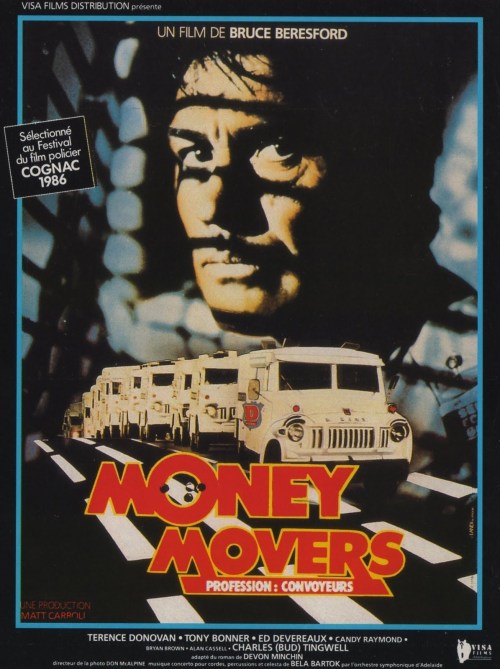
Money Movers (1979)

money movers 2

By Richard Winters

My Rating: 8 out of 10

4-Word Review: Employees become the thieves.

Lionel Darcy (Frank Wilson) runs an Australian armored truck business that transports payroll funds from one location to the other. After there is a robbery to one of his trucks he tries to increase security measures in order to prevent another one from occurring unaware that his own employees, with help of a local crime boss (Charles ‘Bud’ Tingwell) are planning an even bigger attack and everyone, even the police detective hired in to investigate the first crime, are in on it in one or the other.

The film is based on a novel by Devon Minchin, who worked as head of security for The Beatles when they were on tour in Australia and also owned at one time Australia’s largest armored car security company. The story itself is based on two real-life robberies that occurred in Sydney during the summer of 1970.

To me what stands out most about this film is how everyone, with the sole exception of Darcy, is thoroughly corrupt. There is no ‘good-guy’ in this movie, but instead of that being a turn-off it becomes almost like a running-joke where the viewer waits to find out what dark vice each new character will reveal to have. Fortunately they and their vices remain strangely engaging and this is mainly because none of them are portrayed as being inertly ‘evil’, but instead people sucked into an already screwed-up system and simply trying to make a living and doing it in the only way they know how.

Ed Devereaux , who plays a retired cop named Dick Martin, becomes the film’s reluctant protagonist although his presence gets refreshingly underplayed while having him look worn, aged and genuinely overwhelmed yet still remaining dedicated to his cause and ultimately managing to put a monkey wrench into the proceedings. Darcy, the only other non-corrupt character, is equally engaging albeit in an unconventional way as his utter cluelessness as just how criminally overrun his own company is, is a perfect comical testament to how many business owners and CEOs are thoroughly detached from the companies they run and the people they supposedly control.

The violence is graphic and impactful and one of the most memorable elements of the movie particularly during the final shootout that occurs inside the garage of the armor car company. There is none of this staged nonsense where the men have ‘manly’ fistfights that always get coupled with that annoying smacking sound-effect. Instead it gets captured in quick, ugly ways where the men desperately do whatever ugly tactic they can to stop the other one. The action is stark and unglamorous while given a bestial quality like starving animals fighting over a last piece of meat that leaves the viewer feeling like they’ve just witnessed an actual crime as it happened.

The film’s beginning is admittedly confusing and there should’ve been some backstory given before it jumps right away into the crime that features a dizzying array of shootings and double-crossings before the viewer is even able to figure out who is who. Yet after this awkward first part it manages to settle down while becoming a rapid-paced, in-your-face crime thriller that has proven to be highly influential and years-ahead-of-its-time.

money movers 1

My Rating: 8 out of 10

Released: February 1, 1979

Runtime: 1Hour 32Minutes

Rated R

Director: Bruce Beresford

Studio: Roadshow Film Distributors

Available: VHS, Amazon Instant Video 
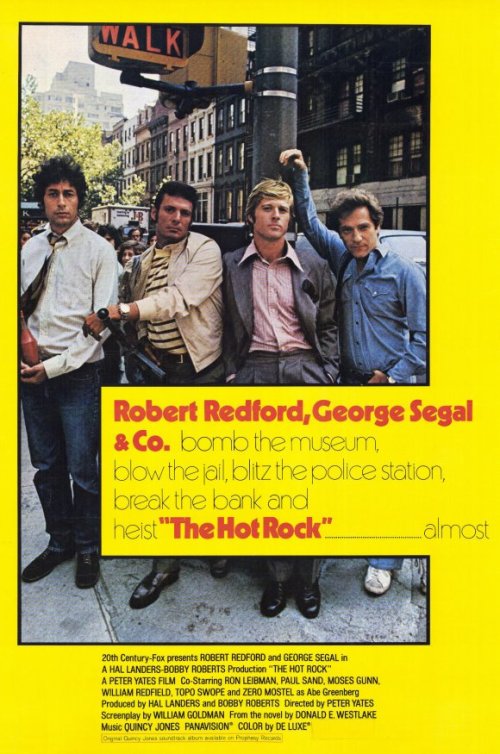
The Hot Rock (1972)

hot rock

By Richard Winters

My Rating: 6 out of 10

4-Word Review: Stealing back stolen gem.

Having just been released from prison Dortmunder (Robert Redford) has no intention of ever going back because if he does it will be life, but even so he still can’t help but get caught up with the enticing offer that his brother-in-law Kelp (George Segal) has planned. The idea is to steal a valuable jewel from a New York museum where Dr. Amusa (Moses Gunn) will pay top dollar for what he believes was stolen from his African ancestors during colonial times. He even offers to help fund the mission and everything goes well until Greenberg (Paul Sand), who is one of the men on Dortmunder’s team, gets caught with the diamond and forced to swallow it. He then hides it inside the police station after he was forced to relieve himself. Now sitting in prison he promises the others he’ll show them where it is, but only if they agree to break him out of jail, which they do only to find further complications involving Greenberg’s dubious, double-crossing father (Zero Mostel).

Based on a Donald E. Westlake novel this film has all the trappings of being a fun, breezy outing and for the most part it is. The actors are game and Redford gives a surprisingly strong performance and maybe one of the best of his career while the supporting cast fall into their roles perfectly especially Mostel who easily steals it from the rest despite having only limited screen time. Director Peter Yates nicely paces the material although the set-up could’ve been more extended as the film spends only a few minutes on the planning phase and then jumps jarringly right into the actual crime making me feel more scenes of the preparation were filmed and then excised for possible shorter runtime purposes.

Spoiler Alert!

The actual crime is where the film falls apart as it starts getting a little too creative for its own good by incorporating too many offbeat touches that it can’t logically get its characters out of without going overboard into the implausible. The first issue comes when Dortmunder and Kelp try to break into prison in order to break Greenberg out of it. To me it just seemed too easy and they routinely open up prison doors that should certainly sendoff loud alarms almost immediately, but strangely don’t. I also couldn’t believe that Dortmunder would ever break into a place he so dearly wanted to stay out of. One misstep and he’d be stuck there for the rest of his life, so why even take the chance?

Later we learn, after they manage to get Greenberg out, that he has hidden the diamond inside the police station, which involves them flying a helicopter onto the roof of the police building, cutting off the power and phones lines and then releasing smoke bombs in order to get the officers out, which they do only to find that someone else has already gotten to the diamond, which was hidden inside the grimy sewage pipes. Later they find that it was Greenberg’s father, but how could some old man have been able to get to it when it took these four men a lot of effort just to get into the building?

The biggest implausibility though and the one that ‘jumped-the-shark’ for me is when, in an attempt to retrieve the diamond which Greenberg’s father has hidden in his safety deposit box in the bank that only he can access, they have a hypnotist hypnotize one of the bank employees, so that all Dortmunder needs to do is say a magic word and the bank employee will open up the father’s box for him.

I’ve tried hypnotism in the past and I can assure you that there is no way that someone can put anyone else into a trance-like state like they do here. It just doesn’t work that way a person’s conscious state doesn’t shut off nor can they be ‘tricked’ to do something against their will or that they are not aware of. If it was so easy to manipulate people in this way then we’d have robberies all over the world committed like this, but we don’t.

It also brings out more questions than answers like how were they able to get this woman to help put this bank employee into a trance? Did they offer her a part of the cut in order to keep her quiet and how would they know that they could trust her to begin with?

End of Spoiler Alert!

I really wanted to like this movie and the production is slick with a nice jazz score by Quincy Jones and a thrilling look at New York’s skyline from a helicopter, but the numerous plot holes became too much to overlook and ultimately made the story impossible to believe at all.

hot rock 3

My Rating: 6 out of 10

Released: January 26, 1972

Runtime: 1Hour 40Minutes

Rated GP

Director: Peter Yates

Studio: 20th Century Fox

Available: DVD

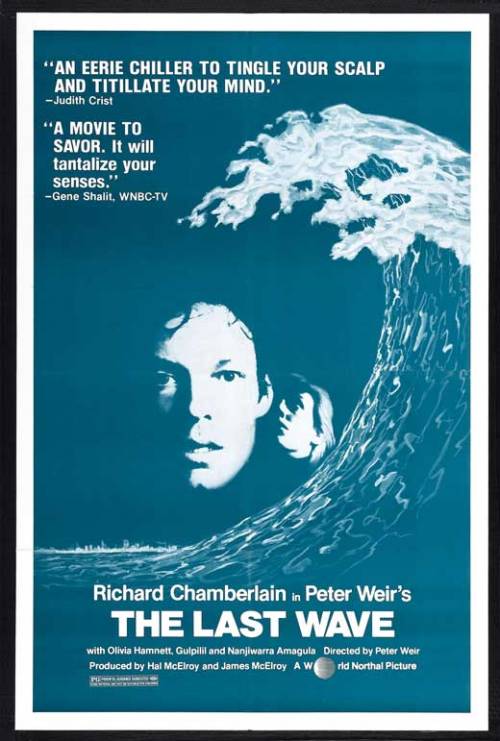
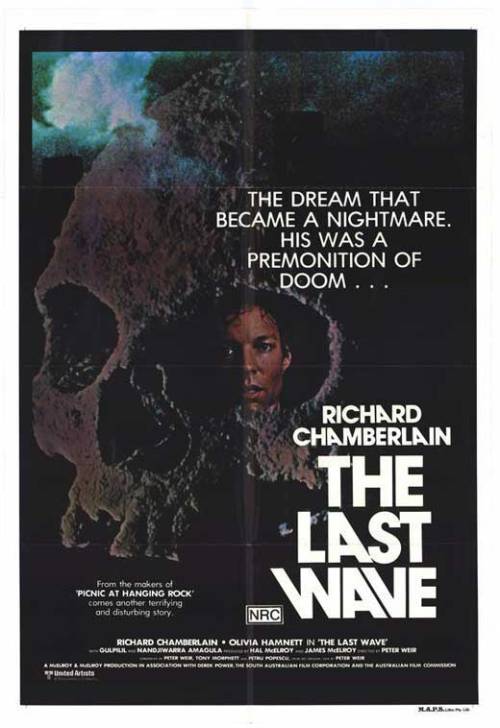
The Last Wave (1977)

last wave 2

By Richard Winters

My Rating: 6 out of 10

4-Word Review: Suffering from strange premonitions.

David Burton (Richard Chamberlain) is a lawyer working in Sydney, Australia who is hired to defend some aborigines that have been accused of murder. David’s specialty is taxation law and he feels overwhelmed in this new role, but still takes it on with an earnest dedication, but in the process begins to experience strange dreams and even sees one of his clients, Chris (David Gulpilil), in them. This coincides with weird weather events that begin occurring all over the continent including the phenomena of black rain. David can’t help but feel that somehow this is all connected and after doing extensive research finds that tribal aborigines have a belief system involving what they call dreamtime in which spirits from another world communicate with us through our dreams and David has been the chosen recipient due to his lifelong ability to dream of events in his sleep that eventually occur later in real-life.

The film, which is directed by the gifted Peter Weir, has terrific imagery that almost makes-up for its other shortcomings. There have been a lot of movies that have tried to create creepy nightmare segments, but the ones here work much better than most and gave this viewer an effectively spooking feeling. The silhouette of the aborigines in the pouring rain, the shots of a large seismic wave and use of tribal music all get used to ultimate effect. Even the rain storms become fascinating to watch. None of them were actual ones, but instead large firehoses were employed along with giant fans to create a sort-of surreal stormy effect that actually looked better than the real thing.

The story though borders on being convoluted and would’ve worked better had the movie been given a longer runtime. The first hour is spent with the viewer seeing a lot of strange events that make no sense and are given no explanation. It is only after about an hour in that some expert, who’s given no formal distinction to what their line of study is or degree, explains to David the importance that dreams have to the aborigine culture, which helps tie things together, but this should’ve occurred earlier as some viewers will probably find it too confusing and off-putting otherwise.

Chamberlain is his usual bland self, but okay in this type of role as it doesn’t demand anyone who is colorful. The character though is supposed to be this very pragmatic individual, but he seemed to buy into the mystical qualities of the aborigine belief system much too quickly. A person with a practical approach to life would most likely be quite cynical to the events as they first occurred and even reluctant to base any value on his own nightmares, at least initially.

The ending is a major letdown. For one thing we have the main character inside an ancient sacred site beneath a sewer system where he suddenly has to start ‘thinking out loud’ by explaining what he is seeing on the drawings along the wall even though the viewer could’ve figured this out for themselves without the ‘narration’. The ambiguous conclusion is frustrating and makes sitting through the rest of it feel like a big waste of time.

last wave 1

My Rating: 6 out of 10

Released: November 13, 1977

Runtime: 1Hour 45Minutes

Rated PG

Director: Peter Weir

Studio: Cinema International Corporation

Available: DVD (Criterion), Blu-ray (Reg. B), Amazon Instant Video

Catch-22 (1970)

catch 22 2

By Richard Winters

My Rating: 8 out of 10

4-Word Review: The insanities of war.

Having to fly numerous combat air missions has sent Word War II fighter pilot John Yossarian (Alan Arkin) to the brink of insanity. He goes to his unit’s psychiatrist Dr. Daneeka (Jack Gilford) asking him if he can be sent home. The doctor admits that anyone who feels that they are going crazy shouldn’t be flying, but there’s a problem known as ‘Catch-22’, which states that anyone who no longer wants to fly combat missions isn’t crazy but normal and therefore John’s request is denied and he is forced to remain while observing how utterly ridiculous everyone else is, particularly his military superiors, even though they’re considered to be the ‘normal’ ones.

The film is based on the best-selling novel by Joseph Heller, who started writing his novel in 1953 and would only spend 1-hour each day working on it until finally completing it 8 years later. The story is very loosely based on some of his experiences and emotions that he had as a fighter pilot during the war and it’s always nice watching something that was done, no matter how satirical, from an insider’s perspective and his numerous potshots at the nonsense that makes up the military hierarchy could easily be parlayed to anyone who has had to deal with bureaucracy at any level.

Certain changes were made in the novel’s transition to the big-screen, but overall screenwriter Buck Henry does well in bringing the fragmented narrative vibe of the book to the film. I was really impressed with the aerial sequences, which used the B-25 Mitchell and took 6 months to film. The cinematic style was years-ahead-of-its-time as well including having things occur in the background of a scene that has no connection to what the characters in front of the camera are discussing and at times even oblivious to.

The film features many laugh-out-loud segments with my favorite being the part where Yossarian attends a military award ceremony and accepts his medal while being, to the shock of the military brass that is handed out the medal, stark naked. Anthony Perkins, who plays the hopeless chaplain, is also quite funny in a rare, but interesting turn in a comedic role.

One of the things that I didn’t like about the film, although it didn’t bother me quite as much as it did when I first saw the movie many years ago, is the way the tone shifts from being quirky and hilarious at the beginning to somber and serious towards the end. I realize that the novel works in the same way, but the first half of the film successfully balanced the line of exposing the absurdities of war in a comedic vein while still showing the serious consequences without ever getting overwrought, so it’s a shame that the second half couldn’t have worked the same way instead of leaving the viewer with a gloomy, depressed feeling when it’s over and almost forgetting completely about the comedy that came before it. I also believe this is why this film failed at the box office while the similar M*A*S*H succeeded simply because that movie remained funny all the way through.

Arkin, in the lead, is miscast and seems too old for the part. His nervous, hyper persona doesn’t work and would’ve been more effective had it been toned down by being played by a younger actor who was more emotionally detached. The rest of the supporting cast though is great including Martin Balsam who makes cinematic history by being the first actor to ever appear sitting on a toilet in a movie.

My Rating: 8 out of 10

Released: June 24, 1970

Runtime: 2Hour 2Minutes

Rated R

Director: Mike Nichols

Studio: Paramount

Available: DVD, Amazon Instant Video, YouTube

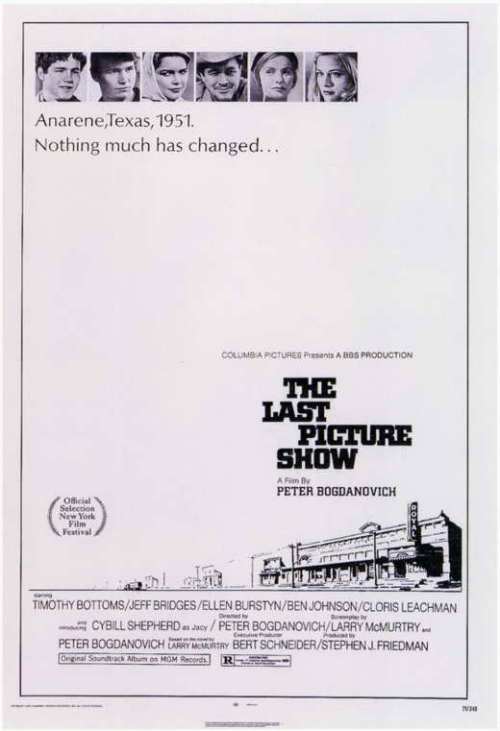
The Last Picture Show (1971)

last picture show 1

By Richard Winters

My Rating: 9 out of 10

4-Word Review: A Texas sized drama.

Based on the Larry McMurtry novel, who also co-wrote the screenplay, the story deals with the inter-workings and relationships of a people living in a small Texas town known as Anarene during the years of 1951 and 1952.  There’s Duane (Jeff Bridges) and Sonny (Timothy Bottoms) two high school seniors who are also best friends. Duane dates the highly attractive Jacey (Cybill Shepherd) who seems more geared to playing the field with every guy in town and even makes a play for Sonny, which seriously affects his relationship with Duane. There’s also Ruth (Cloris Leachman) the lonely coach’s wife who begins a brief affair with Sonny until he decides to bail-out for the more attractive Jacey. Sam (Ben Johnson) makes up part of the older generation still stuck in the dusty town and trying to make ends meet by running the local movie theater and pool hall both of which come to a halt when he dies suddenly.

I saw this film just recently outside on the big screen as part of the Texas Film Heritage and Preservation Society here in Austin. Although I had seen it before I was hit with how much more impressive and visually sumptuous it is on the big screen. Robert Surtees’ black and white cinematography is top-notch and the main ingredient to what makes it so spellbinding, so much meticulous attention is taken into each and every shot that one could almost watch this with the sound down and still find it thoroughly compelling.

Director Peter Bogdanovich takes great care to make sure that all of the elements are there and spins them together like a well-crafted machine so the viewer learns bit and pieces about these characters and their attitudes through each shot and camera angle that comes along. Filming it on-location in Archer City where McMurtry grew up helps accentuate the authenticity as does playing the country music from the period although I could’ve done with a little less of that and more of the sound of the wind and dust crackling across the barren region instead.

What surprised me most was how interesting and varied the love making scenes where and how instrumental they became to the film as a whole. One of the most memorable ones is when Sonny first tries to make love to Ruth, but is quite awkward about it. We see the pained expressions on both of their faces, hear the rusty springs of the mattress, and then finally witness Ruth’s attempts to shield her crying and frustration from Sonny. Duane’s futile attempt at sex with Jacey later on is also good particularly the fiery look of anger spewing from Jacey’s eyes when he is unable to perform. The scene involving a mentally challenged young man pushed into attempting sex with an obese and caustic prostitute inside the backseat of a cramped car is both darkly funny and sad, but the most provocative love making moment comes near the end when Jacey has sex with her mother’s boyfriend (Clu Gulager) on top of a pool table inside a dark and lonely pool hall while bracing the table’s side pockets with her hands for leverage.

The performances are all-around outstanding and both Leachman and Johnson won the Academy Award for their work here, but I still came away feeling, just like I did twenty years ago when I first saw this film, that Shepherd does the best job and leaves the most lasting impression. I love how her character slips between being insecure and indecisive to cunning and conniving and Shepherd’s facial expressions are completely on-target all the way. Her striptease done on top of a diving board is still pretty hot and my only complaint about the character is the way she elopes with Sonny and then completely bails on him the next day. I realize she didn’t love the guy and she’s just used him like she did others, but I didn’t understand what her motivation was in this instance as she seemed to get little if anything out of it.

I was also a bit disappointed that the Coach Popper character played by Bill Thurman didn’t have a bigger role in the story. The way he berates his players during practice is amusing and would most likely get coaches in today’s more sensitive world in hot water. I also found his constant spitting of tobacco juice into a cup that he carries around with him to be grotesquely amusing, but my biggest beef is the fact that we have a main character screwing his wife and the whole town knows about it, but never any reaction from the man himself. Maybe he was aware and didn’t care, but the movie should’ve made an attempt to show this, or at least some interaction between Sonny and the Coach since Sonny was at one time one of his players, which would have to make things quite awkward whenever they would bump into each other and in a small town that would most likely happen on more than a few occasions.

Overall though this is a great movie and I was surprised at how frank and explicit it was despite its 1950’s setting. Some may argue that it was done with too much of a revisionist mindset and things weren’t quite this wild, but others, like myself, will insist that it probably was, but just not talked about as much.

My Rating: 9 out of 10

Released: October 22, 1971

Runtime: 2Hours 6Minutes (Director’s Cut)

Rated R

Director: Peter Bogdanovich

Studio: Columbia Pictures

Available: DVD, Blu-ray, Amazon Instant Video

Life Size (1974)

life size 1

By Richard Winters

My Rating: 5 out of 10

4-Word Review: A sex doll obsession.

Michel (Michel Piccoli) runs a successful dental practice, but finds that his life is empty and his marriage to his wife Isabelle (Rada Rassimov) is no longer working. He has cheated on her before, but those affairs left him with the same empty feeling, so this time he decides to take a different route by purchasing a life size sex doll that looks so real that she almost seems human. He takes her everywhere and even brings her along to a visit with his mother (Valentine Tessier) so she can meet his new ‘girlfriend’.  The doll becomes the centerpiece of his very existence and he spends every waking moment he can with her until he sees footage, from a closed circuit camera that he has set-up in his house, of one of friends having sex with her while he was away. He becomes outraged at her ‘betrayal’ and decides that her punishment will be ‘death’.

The film, which can best be described as an early, distant cousin to Lars and the Real Girl, definitely has its share of unique and memorable moments. Writer/director Luis Garcia Berlanga does an admirable job of analyzing just what might happen if sexual fantasy gets taken to its most extreme level. The scenes showing Michel taking the doll to a clothing store in order to be measured and fitted with the latest fashions and marrying the doll in a makeshift wedding are by far the film’s two best segments.

However, it’s Michel’s scenes with his wife that I found to be the most unsettling. The scene where he fondles his wife’s naked breasts late at night as she sleeps while looking at a picture of the doll is quirky enough, but then later on, in the film’s most disturbing moment, she tries immersing completely into his sexual fantasy by pretending to be a sex doll herself in a desperate attempt to win him back.

What is initially considered the sexual substitute to the real thing soon becomes the preferable choice here and it reminded me of an article I read in a science journal a few years back about young men in their 20’s forced to be prescribed Viagra because they were no longer able to achieve erections with their wives/girlfriends because the proliferation of porn on the internet had somehow dulled their senses to real sex to the point that they found it to be a ‘turn-off’. Now, if you are a fan of porn then that’s great and I don’t mean to be appear like I’m trying to knock it, but I did find it fascinating that elements of that article correlated to what this film was showing and how successful this movie was at foreshadowing the phenomenon’s that we are now seeing in our modern day culture.

Although the film is adequately directed and more of a psychological study than a perverse sleaze feast it’s still not an overall success. The main issue is that the main character acts overtly freaky about the doll from the very beginning without enough backstory to tell us why and simply saying it’s due to a unhappy marriage is not enough. A far more compelling concept would’ve been to portray the main character as being more ‘normal’ by having him feel awkward about the doll and even a bit embarrassed only to grow increasingly more obsessed as the film progresses until his ultimate infatuation with it shocks even him.

Alternate Titles: Grandeur Nature, Love Doll, Tamano Natural

My Rating: 5 out of 10

Released: August 21, 1974

Runtime: 1Hour 41Minutes

Rated X

Director: Luis Garcia Berlanga

Studio: Cinema International Corporation

Available: None at this time.

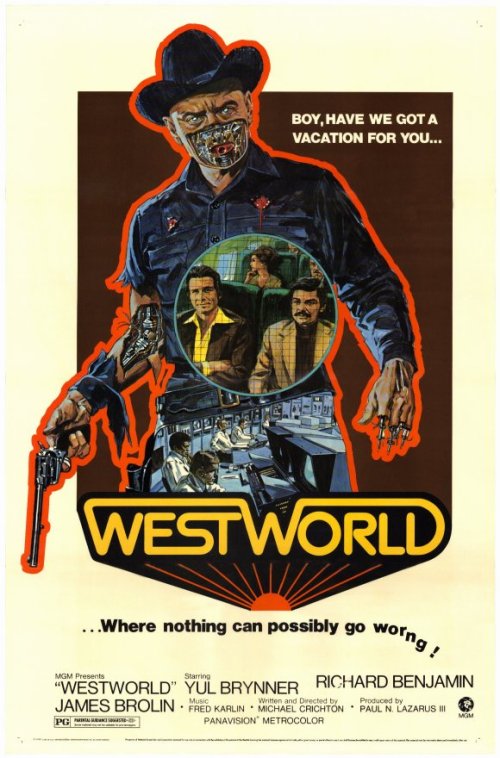
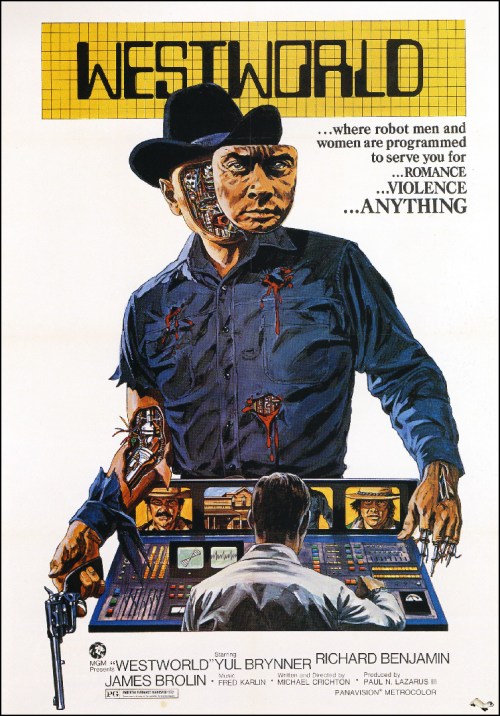
Westworld (1973)

westworld 2

By Richard Winters

My Rating: 8 out of 10

4-Word Review: Cowboy robot goes berserk.

Peter and John (Richard Benjamin, James Brolin) are two buddies who decide to take the vacation of a lifetime by visiting an amusement park that replicates the old west. The people inside the park are actually robots who are so lifelike that it’s almost impossible to tell them apart from humans. Gunfights, barroom brawls and even whorehouses are the name of the day. At first both men enjoy their stay, but then the robots begin to act erratically especially the nameless gunslinger (Yul Brynner) who chases Peter throughout the park determined to kill him and no one, not even the technicians running the place, are able to stop him.

Michael Crichton’s directorial debut is a smashing success. The film is compact making for maximum use of tension and excitement and I liked how some sequences were done in slow motion. What I liked most about the film though is the way it gives the viewer a three dimensional viewpoint. Not only do we see things from the perspective of the main characters, but also the technicians behind the scenes and at one point even the robots.

The story brings out many interesting themes. Most people will jump on the man-versus-machine concept, but the one I liked better was how we have these suburbanite males living otherwise cushy lifestyles deciding they want to ‘prove their manhood’ by roughing it in some sort of adventure setting. However, pretending to be ‘rough and tough’ cowboys means nothing when ultimately it’s all still in a safe and contained setting where ‘nobody gets hurt’. In the real west there was no such things as ‘time outs’ or ‘safe places’, which is why I actually found it quite amusing when the robots do go berserk because it was the one thing that kept these suburban softies egos in-check and gave them a true taste of what the west was REALLY like.

A few things though that did bother me was the scene where Peter has sex with one of the female robots and enjoys it, which seemed weird to me because I would think having intimacy with a machine would have to feel way different than one with a human. We are told earlier that the only way to tell these robots apart from real people is by looking at their hands, which the technicians apparently haven’t yet been able to perfect and yet they were somehow able to get the vagina ‘just right’?!

I also found the idea that these robots would be given guns with real bullets to be absurd. Apparently the humans are also given real guns, but they’re equipped with sensors that detect body heat and therefore will shut off if aimed at a real person and if that were the case then the robots guns would do the same and therefore the scene where the gunslinger shots and fatally injures one of them would be negated.

I also found it equally preposterous that these same techs who were able to create such brilliant life-like robots would be dumb enough to make a control room that would lock-up when the power shut off and not allow them to escape. Certainly someone during the building stage would’ve had the brains to think up a secondary, emergency route to use should that situation occur, which makes the scene where they all suffocate seem quite laughable.

Having the robots all malfunction due to some ‘contagious-like disease’ that runs rampant amongst them didn’t really register with me either. To me it’s an overblown concept that would’ve worked better had it just been the gunslinger robot that goes crazy and relentlessly chases the two. He may even kill others who do try to stop him, which I think would’ve heightened the menacing quality of the Brynner character, which is already strong, even more.

Overall though it’s still a great movie with a terrific performance by Brynner as well as Benjamin playing a sort-of everyman who seems wimpy at first, but eventually learns to survive by using his brains over brawn.

westworld 1

My Rating: 8 out of 10

Released: November 21, 1973

Runtime: 1Hour 28Minutes

Rated PG

Director: Michael Crichton

Studio: MGM

Available: DVD, Blu-ray, Amazon Instant Video, YouTube

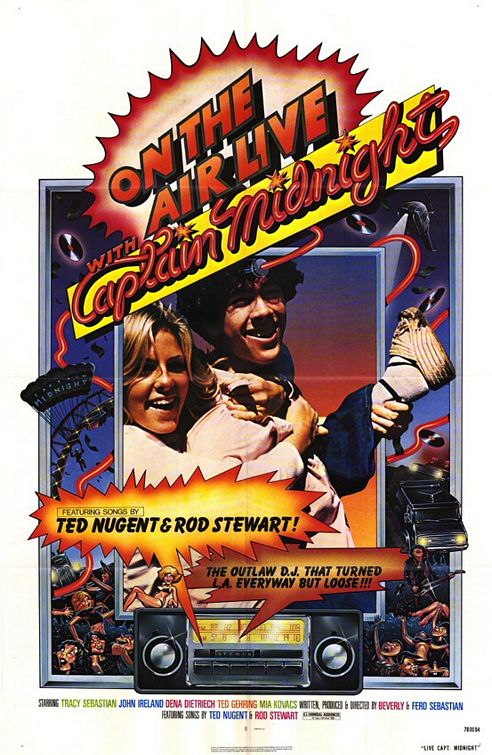
On the Air Live with Captain Midnight (1979)

on the air live with captain midnight

By Richard Winters

My Rating: 2 out of 10

4-Word Review: A renegade radio station.

When high school teen Ziggy (Tracy Sebastian) finds himself fired from a radio station he decides to get revenge by setting up his van with equipment that will allow him to broadcast his own pirate radio station from it. To his surprise it becomes a hit especially from the area teens who even pay him to play their favorite songs. Things seem to be going great until the FCC catches on and they send out a very determined agent (John Ireland) to catch him.

This film, which isn’t too great to begin with, might’ve had a shot had it not starred such a pathetic actor in the lead. This guy, who is the son of the husband and wife team that directed this and therefore the only reason anyone in their right mind would’ve given him the part, is just downright terrible. A dead, rotting corpse would’ve had more charisma than this guy and he conveys his lines like he is reading them directly off a cue card, which really gets annoying. Having his presence take up almost the entire runtime when he isn’t even deserving of a brief walk-on bit is what categorically kills this film and makes it almost a wretched experience to sit through at all.

The idea that this bland kid would somehow create such a fervent teen following is equally ludicrous. He does nothing creative, or interesting when he is on-the-air and basically just introduces songs with his monotone voice that wouldn’t excite anyone, so seeing these kids go wild over him and even tear off his clothes when he parachutes out of a plane and then lands on the ground is just plain dumb and unintentionally funny in a bad way.

Barry Greenberg, who plays his chubby friend Gargen, is a little bit better, but the way he stutters every time he gets nervous is hooky. Mia Kovacs plays Spunky who is Ziggy’s girlfriend and was the only child of legendary comedian Ernie Kovacs and Edie Adams. This was her one-and-only film appearance as she ended up dying tragically in a car accident a few years later that was eerily similar to the one that killed her father.

The veteran performers help a bit. Although Ireland, whose career plummeted badly in his later years to the point that he was forced to place a full-page ad in Variety that literally begged agents/producers to hire him, does not play up his antagonistic part enough. However, Dena Dietrich, as Ziggy’s mother, is a delight and the best thing about this otherwise limp movie.

Ferd and Beverly Sebastian had made a few drive-in flicks before this one including the cult-hit ‘Gator Bait, which starred Claudia Jennings and that is the type of genre they should’ve stayed in as anything else was clearly out-of-their-league and the ultimate result here is pretty flat.

My Rating: 2 out of 10

Released: November 24, 1979

Runtime: 1Hour 25Minutes

Rated PG

Director: Ferd and Beverly Sebastian

Studio: Sebastian International Pictures

Available: VHS

Wanda (1970)

wanda 1

By Richard Winters

My Rating: 8 out of 10

4-Word Review:  How the poor survive.

There is a scene near the beginning that shows our main character played by Barbara Loden from a distance walking through mounds of coal to get to her father so that she can ask him for some money. The shot stays on her for what seems like several minutes with the camera slowly panning forward as she progresses. Some may say this is boring or the work of an amateur that doesn’t know when to cut. Yet this shot becomes the essence to the plight of the character and what this film is all about. In life she is constantly moving unable to fully grasp the true dissolution of her existence she searches for something, anything while becoming a victim to life’s cruel riddle that has no answer.

This may be one of the saddest movies you will ever see because Wanda’s condition is not unique and makes up more of what the working poor go through than we care to think. It helps clarify the desperation that people in these circumstances feel while also explaining why they get into bad situations and at times make such misguided choices.

Here drifter Wanda meets up with a two-bit crook named Norman Dennis (Michael Higgins). The two create an odd relationship, which proves to be beneficial for both. She brings out his long dormant tenderness, while he, in one truly touching moment, actually gives her some confidence. Of course it doesn’t last, but it is an inspiring scene and shows that even the most pathetic of people in the bleakest of situations can still transcend themselves.

This is a powerful film with a stark, home movie-like look that is actually an asset. No stylized interpretations here. The dingy bars, restaurants, homes, hotels, and factories are all very real and the viewer feels as trapped in the grayness as the characters in a film that is far more emotionally taxing than one might initially expect.

My Rating: 8 out of 10

Released: September 2, 1970

Runtime: 1Hour 42Minutes

Rated GP

Director: Barbara Loden

Studio: Bardene International

Available: DVD

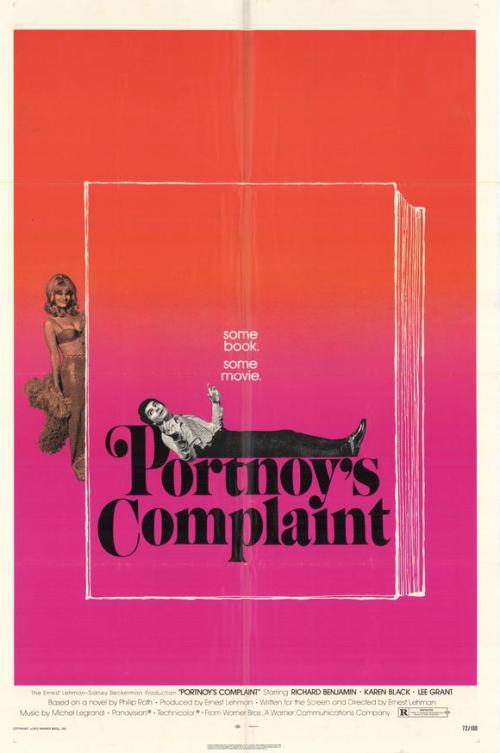
Portnoy’s Complaint (1972)

portnoys complaint 1

By Richard Winters

My Rating: 4 out of 10

4-Word Review: Jewish man digs prostitute.

Alexander Portnoy (Richard Benjamin) is a man who no longer believes in a God or any of the other conventional ways of life taught to him by his old-fashioned Jewish parents (Jack Somack, Lee Grant). He enjoys the ‘art’ of masturbation and will routinely find excuses to go do it when his parents aren’t looking. As he grows older he finds that his sexual appetite broadens in a way that regular women won’t be able to fulfill. Then he meets Mary Jane (Karen Black). She’s a prostitute nicknamed ‘The Monkey’ due to all the wild positions that she can get her body into during sex. The two enjoy a lot of kinky times, but then she ends up falling in love with him and wanting to get married, but Portnoy resists as he considers her to be intellectually inferior and fears she’ll become an embarrassment to him with his other friends.

Philip Roth’s landmark and controversial novel comes to the big screen with only lukewarm results although it does start out funny. I laughed-out-loud at the scene where Portnoy pretends to have a bout of diarrhea just so he can sneak into the bathroom to get-off and his parents misinterpret his moans of ecstasy as being that of gaseous agony. The dream segment where Portnoy finds that his penis has fallen off and onto the kitchen floor while his parents come into to inspect it is pretty good as is the bit where Jeannie Berlin tries to give Portnoy a hand-job.

Unfortunately the film shifts too much in tone. It starts out as this quirky, dark-humored, sex-laden comedy only to end up being a brooding drama. The novel was written as a continuous monologue spoken by Portnoy while talking to his therapist, which doesn’t effectively come off here. We see a few scenes in his therapist’s office, but they are brief and I didn’t like the fact that his therapist never speaks a word of dialogue, which seemed weird and unnatural.

Screenwriter Ernest Lehman, in his one and only foray behind the camera, implements too much of a slow pace to the proceedings. Many scenes go on far longer than they should and at certain points the camera gets nailed to the ground giving it a static presence. He also hired Michel Legrand to do the film score, which is beautiful and majestic, but the lush tones are better suited for a romantic flick, which this definitely isn’t.

Karen Black gives an outstanding performance as ‘The Monkey’, but her character is too one-dimensionally dumb almost to the point that she seems mentally handicapped, which I don’t think was the intention. Either way it is never funny, touching, or even real while bordering into the stereotype that all prostitutes ‘must be really stupid’.

One of the most annoying elements of the film is that it keeps cutting back to a matted image of Black jumping from a skyscraper and towards the viewer while she screams. The image looks very hooky while giving the film a real amateurish feel. I also didn’t like how at the very end we spot Black walking amongst a crowd of people from a bird’s eye perspective. The supposed demise of the character was meant to be murky as she threatens to jump from a building and Portnoy leaves her without ever knowing if she ended up doing it or not, which then causes him a major source of guilt afterwards. By having her suddenly appear at the very end ruins the mystery and brings up far more questions than answers.

Roth’s novel was very much ahead-of-its-time and deserved a film that could match it, but Lehman’s staid approach doesn’t do it justice.

My Rating: 4 out of 10

Released: June 19, 1972

Runtime: 1Hour 41Minutes

Rated R

Director: Ernest Lehman

Studio: Warner Brothers

Available: DVD (Warner Archive), YouTube