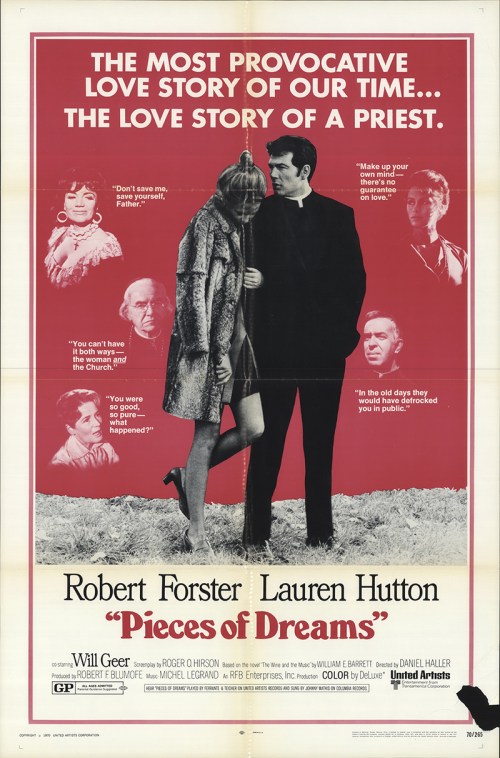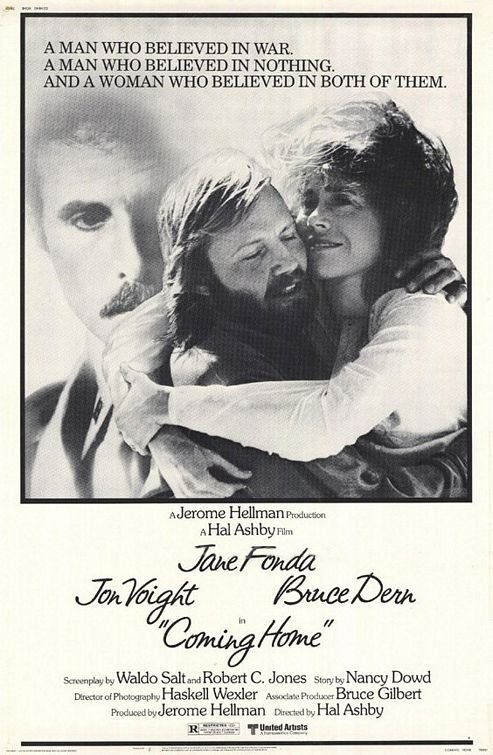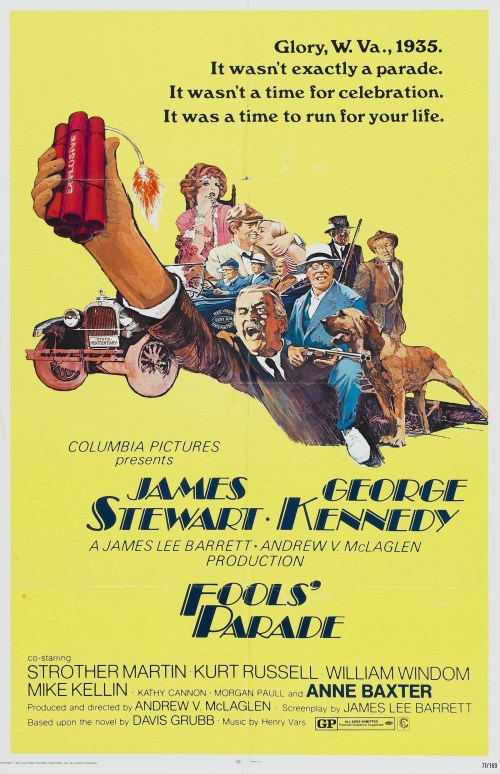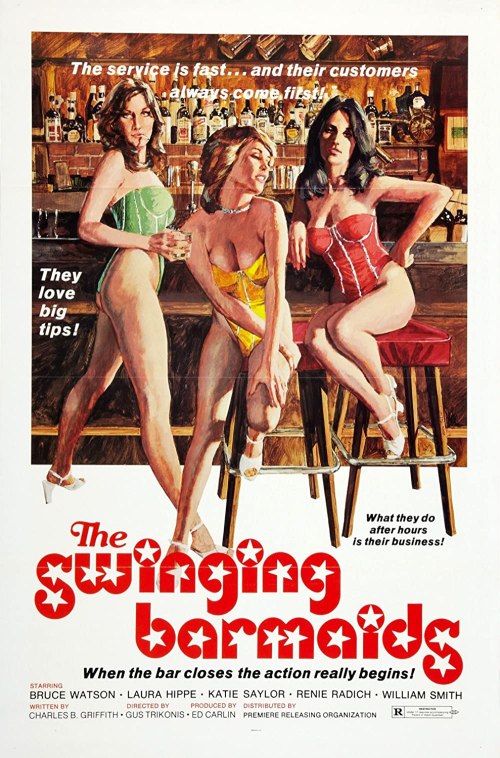
Category Archives: 70’s Movies

Murph the Surf (1975)

murph1

By Richard Winters

My Rating: 6 out of 10

4-Word Review: A brazen jewel heist.

Jack Murphy (Don Stroud), a successful surfer known as Murph the Surph, and Allan Kuhn (Robert Conrad) who is also a surfer and becomes friends with Jack where they decide to team-up to commit some daring robberies.  They start out robbing people’s homes during the day, but then graduate to even bigger heists including New York’s American Museum of Natural History taking the precious gemstone the Star of India and the Eagle Diamond. However, once they have the jewels in their possession they’re immediately tailed by the police, but Allan comes up with the perfect hiding spot where no one can find the stolen loot, but as the pressure from the cops mount one if not both seem liable to crack.

The film is based on the actual incident, which occurred on October 29, 1964, where three men, Jack Roland Murphy, Allan Kuhn, and Roger Clark robbed the New York Museum of 24 precious gemstones in what was called at the time The Jewel Heist of the Century. However, in retrospect the crime wasn’t as sensational as it originally seemed since the alarm systems, including the ones on the display cases, were all non-operational. All 19 of the exterior windows were left open 2-inches overnight to allow in ventilation and there was no security staff, which seemed to be almost inviting a robbery to happen. The film also changes the story a bit in that in the actual crime three men were involved, but for whatever reason the story here whittles it down to only two.

The unique way the plot gets structured where the heist is broken up into segments and the narrative handled in a non-linear way is what makes the movie interesting. In fact it’s the relationship between the two leads, and the amoral girlfriend that’s wonderfully played by Donna Mills, who sleeps around between the two and eggs them on to commit more and more daring crimes, keeps it engaging. The robbery itself, especially with how easy it becomes, is almost anti-climactic and the other robberies that they do including an amusing one where they rob a rich couple’s house while they are away and then initially get stopped by a cop during the crime only to then have the cop turn his attention to fighting off the homeowners guard dog, which allows the two men to escape, is funny. There’s also an amazing boat chase that’s as exciting as any car one out there.

The performances, particularly by Don Stroud, who used to be a surfer himself before entering into acting, is quite good. Conrad, best known for his work in the TV-show ‘Wild Wild West’ is not bad either though not as engaging. He’s usually best at doing macho types, which is what he is here too. The contrasting personalities of the two, and their constantly competitive natures where they try to one-up the other is entertaining as is how their friendship ultimately begins to dissolve.

The film’s one drawback, outside of  having a modest budget look better suited for a television movie, is there’s no tension. A heist film really needs that and while the irreverence is nice a balance is necessary. A distinct nemesis would’ve helped. There are an array of cops/detectives that are constantly haranguing them, but they don’t have much of a presence. All of the cop roles should’ve been combined into one and then have this person constantly on the radar hounding the guys at every turn, which would’ve then have given it the extra drama and clash that’s otherwise missing. Still it’s a neat idea for a movie and one that should be revisited.

Alternate Title: Live a Little, Steal a Lot

My Rating: 6 out of 10

Released: July 11, 1975

Runtime: 1 Hour 41 Minutes

Rated PG

Director: Marvin J. Chomsky

Studio: American International Pictures

Available: VHS, DVD-R

The Greek Tycoon (1978)

greek

By Richard Winters

My Rating: 4 out of 10

4-Word Review: Marrying a rich man.

Originally intended as a fact based bio of Aristotle Onassis and his marriage to Jacqueline Bouviar Kennedy where Jackie was offered $1 million to play herself, but when she turned it down the producers decided to turn it into a ‘fictional’ story where the names of the characters were changed, but many of the elements remained the same. The plot deals with a Greek shipping tycoon named Theo Tomasis (Anthony Quinn) who is known to fool-around on his wife Simi (Camilla Sparv). One day while hosting a posh party on his yacht he sets his sights on Liz (Jacqueline Bisset) who is the wife of a politician James Cassidy (James Franciscus) who’s running for the democratic nomination for the U.S. Presidency. While Theo and Liz are able to get away from the rest of the guests and talk he’s unable to admit how smitten he is with her due to her marriage. Liz returns to the states with her husband and he’s elected President, but then is assassinated. Now widowed she decides to return to Greece and meets-up with Theo. Theo in-turn leaves his wife, who was tired of his philandering ways, and marries Liz though their marriage ends-up being a rocky one as well as Theo is unable to change his old habits making Jacki feel she’s just another ‘notch-on-his-belt’.

Producer Nico Mastorakis is probably better known for having directed the controversial horror film Island of Death, which to this day remains one of the most notorious movies ever made, but before he got into filmmaking he was a reporter, who under the guise of being a musician for a rock group, gained access to Onassis’ yacht the Christina while Aristotle was hosting a party with guests Jackie and Ted Kennedy. He hid a small camera inside the his guitar and was able to take pictures of the event before having the negatives confiscated by Ted Kennedy’s security detail. Nico though remained fascinated with Onassis and his experiences while on the his yacht convinced him he’d make a perfect subject for a movie. Quinn, met with Onassis just months before his death where he reportedly gave him blessing to play the role, so Quinn initially agreed to do it only to back-out later when he spoke with Jackie who asked him not to do it. However, months later, she then publicly snubbed him at a restaurant, which got him so angry that he changed his mind and called Nico to tell him he wanted to go through with it and play the part, of which he was paid the handsome figure of $500,000.

As a soap opera, which is all this amounts to, it’s watchable with the biggest asset being the exotic European locales. The plot moves along breezily enough to keep it mildly compelling though no effort is made to make it conform to the early 60’s time period when it all began making it seem instead like it could’ve all occurred during the 70’s. The assassination is especially surreal as James gets shot as he and Jackie are walking along the beach, but no sniper is ever seen. The camera pans over to where the shots were fired and all we see are trees like some phantom gunmen came out of nowhere to kill him and then just disappeared into thin air with no explanation for who did it, or why.

Quinn’s acting though is really impressive and one of the few reasons to watch it. Quinn has always had a magnetic energy that grabs the viewer into  his characters and makes you fascinated enough in them to keep you engrossed though the dark glasses he’s seen constantly wearing was a distraction. He wears them all the time even while inside and at night, which seems weird and makes him appear almost like he’s gangster. There’s a few times when the glass lenses inside the frames are clear and not darkened, but no explanation for why, or how they changed. His propensity for Greek line dancing only succeeds in reminding viewers of another more famous movie that he was in, Zorba the Greek, and for that reason alone it should’ve been avoided altogether.

Bisset on the other-hand doesn’t have much of a presence. Normally she’s a great actress, but her character here isn’t fleshed-out enough to make anything that she says or does interesting. It’s a transparent composite of what one might deem a First Lady to be, but with nothing unique, or distinct added into it and thus making her time onscreen seem quite blah. She does have one energetic moment when she gets into a fight with him after he embarrasses her in front of a few men and even proceeds to attack him physically, but other than that her performance, like the rest of the movie, is sterile with very little to recommend.

My Rating: 4 out of 10

Released: May 12, 1978

Runtime: 1 Hour 47 Minutes

Rated PG

Director: J. Lee Thompson

Studio: Universal Pictures

Available: DVD, Blu-ray

The Boys in Company C (1978)

boys1

By Richard Winters

My Rating: 7 out of 10

4-Word Review: Going through boot camp.

Tyrone (Stan Shaw), Billy Ray (Andrew Stevens), Alvin (James Canning), Vinnie (Michael Lembeck), and Dave (Craig Wasson) are five young men from varying backgrounds and wildly different temperaments who get drafted into the army in August of 1967. Their experiences in boot camp, which is harshly run by the demanding Sergent Loyce (R. Lee Ermey) and the equally stern Sergeant Aquilla (Santos Morales) prove challenging both physically and psychological, but the real test comes when they’re put out onto the battlefield and their personalities begin to disintegrate.

While the film acts like everything that goes on is based on fact and even includes specific dates for each event and at the end small bios of what occurred to the characters after they returned to civilian life it’s actually all fictional and based on a screenplay written by Rick Natkin in 1972 while attending a film class at Yale and then later expanded. It’s noted as being the first film in the 70’s to deal with the Vietnam War on the field of battle as well as the film debut of R. Lee Ermey playing a similar role to the more famous one that he did in Full Metal Jacket. Here though he’s thinner and while the things he says are certainly still aggressive it’s not in quite the over-the-top way as in the Stanley Kubrick film. In fact I sympathized with him here and the challenges he faced in trying to get the rag-tag group conditioned and how he supported the Tyrone character and the racism he had to deal with. Morales also plays the same type of drill sergeant and found it ironic that both men had some missing front teeth in the same areas of their mouths and wondered what the story was behind that.

Shot in the Philippines where its similar type of topography to Vietnam lends an authentic look and the viewer is given a vivid feeling for what wartime life was like where things could be calm and peaceful one moment and then bombs going off the next. While I’ve had my issues with Wasson, Stevens, and Lembeck in some of their other films where I considered their acting to be weak here their performances are solid and the transitions their characters go through during the course of the movie are compelling though without question Shaw is the standout.

While the first half shows the realities of war the second part becomes mired in the darkly comical absurdities. This was clearly inspired by the era where such films as M*A*S*H took the Korean conflict and turned it into a surreal comedy, but mixing the grittiness with moments of levity cheapens the reality. Scott Hylands’ character is particularly off-putting. He plays a captain who makes one insane blunder after another until he becomes more of a caricature. I’m sure it’s quite possible for high-ranking officials to make the occasional misjudgment, but this guy becomes clownish to the top degree making it almost farcical in the process. The climactic soccer game has the same issue where the soldiers can get out of fighting on the front line if they just agree to lose the game, but this scenario never actually occurred to any veteran I’ve ever known and it’s jarring to go from action on the battlefield to kicking a ball around like a war movie that suddenly turns into a sport’s one.

It’s still well enough directed to keep it engaging and there are some strong even profound moments despite the severe shifts in tone, but it would’ve been better had it maintained the realism from the beginning and not thrown-in stuff that would’ve been better suited for satire.

My Rating: 7 out of 10

Released: February 8, 1978

Runtime: 2 Hours 5 Minutes

Rated R

Director: Sidney J. Furie

Studio: Columbia Pictures

Available: DVD, Blu-ray, Amazon Video

The Take (1974)

take1

By Richard Winters

My Rating: 4 out of 10

4-Word Review: Black cop accepts bribe .

Terence Sneed (Billy Dee Williams) is a San Francisco cop brought to Paloma, New Mexico to help take down local crime boss Victor Manso (Vic Morrow). The only problem is that Manso invites Sneed over to his place and offers him a significant amount of cash to get on his ‘payroll’ and thus allow him to get away with his crimes. Sneed is also informed that another top official in the police department, Captain Frank Dolek (Albert Salmi) is on the take as well. Sneed accepts the cash, but then double-crosses Manso by having Dolek secretly tailed where he finds out who all of Manso’s connections are and uses this info to try and bust Manso’s drug operation, which ends up being a tall order that gets Sneed in hot water not only with Manso, but with his police supervisor Chief Berrigan (Eddie Albert) as well.

The film is based on the 1970 British novel ‘Sir, You Bastard’ by Gordon Frank Newman, which became a bestseller and set-off a series of three books that he wrote around the Sneed character. There were though differences between the book and movie as in the novel Sneed was white and worked in Scotland Yard. The one thing though that remained the same was Sneed being unscrupulous and working outside the system.

The fact that the protagonist accepts bribes and most of the way it’s unclear whether he’s even a good guy at all is what makes the movie interesting and helps differentiate it from the other early 70’s cop action flicks. This is the complete opposite of Serpico where the cop refused all bribes and vigorously fought against it. Here we see the other angle. Instead of the main character being on the outside looking in he’s a part of the corrupt system and in order to survive in it must be willing to play along, which I found more realistic and insightful as someone who’s able to totally rise above the evil environments they’re in is rare and therefore we get more of an everyman’s perspective here. It also works against the ‘Save the Cat’ book, which has become the bible of today’s screenwriters, which insists that the main character must be likable for the movie to work. Here Sneed is anything but and at certain points when he forces an overweight suspect (Robert Miller Driscoll) to take-off his clothes and do jumping jacks in humiliating fashion to the amusement of the other cops he becomes downright nasty, but in-turn it makes the movie less formulaic, which too many movies today have become.

Williams’ skill as an actor helps to keep the character engaging and he gets great support not only by Eddie Albert as his exasperated superior, but also surprisingly by Frankie Avalon who has a small, but memorable bit as a drug dealer who initially comes-off as quite cocky, but melts dramatically once inside the interrogation room. Unfortunately for Vic Morrow, who’s played some classic villains in his career, his presence here doesn’t work. This is mainly from his get-up including dyed blonde hair and at one point a pseudo cowboy outfit, which looked campy. I also didn’t like that it’s shown right away that his character has heart problems, which telegraphs a major vulnerability that instantaneously sets the viewer into expecting that this will predictably lead to his eventual demise.

As for the action I felt it started well particularly the opening courthouse ambush, which is well choreographed with a funky score, but it becomes rather pedestrian after this. Having the main character misjudge things like when he tries the intercept Manso’s transporting of illegal goods, but ends up chasing down the wrong van each time, which were intentionally being used as decoys, was refreshing because in too many other police movies the hero cops always gets things right the first time and his hunches are never proven wrong, which again is just not how things work in reality. Either way it’s not as exciting as it could’ve been with a lot of car chases and action scenarios that ultimately prove to be generic in nature.

My Rating: 4 out of 10

Released: May 5, 1974

Runtime: 1 Hour 32 Minutes

Rated PG

Director: Robert Hartford-Davis

Studio: Columbia Pictures

Available: DVD-R

The Disappearance (1977)

disappearance

By Richard Winters

My Rating: 7 out of 10

4-Word Review: Where is his wife?

Jay Mallory (Donald Sutherland) is a professional assassin who works for a secret organization that contracts him out to do hits all over the world. After returning home from his latest assignment he finds that his wife Celandine (Francine Racette) is not there. Since they had a tumultuous relationship he initially presumes she left on her own accord, but then his friend and fellow hit man Burbank (David Warner) informs him that her disappearance may have something to do with his last hit. The organization that employs him now calls with another assignment, but this time they’re reluctant to give any details, which is unusual. Jay is afraid he’s being set-up as Burbank told him that the company is known to ‘retire’ those that are deemed no longer useful or trustworthy. He decides though to go through with the assignment as he’s curious how it will play-out and confident enough in his ability to get out of any jam, but soon finds himself faced with an entangling twist he never expected.

The film is a fascinating portrait of what can be done with creative direction. Stuart Cooper, who’s not exactly a household name and in fact this was his last theatrical film until 2010 when he did Magic Man, lends some interesting directorial touches that makes the story and characters more interesting than they might otherwise. What I especially liked was the non-linear narrative in which the movie cuts back and forth between the past to the present day. These types of storylines are typically frowned upon by Hollywood studios as they’re considered to be ‘too confusing’ for mainstream audiences to follow, but I had no such difficulty and felt it allowed in added nuance that would not have been present had the plot been approached in the conventional way. Nonetheless when the film tanked at the box office upon its initial release the studio insisted that the film be re-cut where the story would be presented in the standard linear format, but this version did even worse, so fortunately for the DVD/Blu-ray release it was brought back to its original way and labeled as being the ‘director’s cut’ though Cooper actually had no input on it, but eventually approved once he viewed it.

It’s also highly atmospheric particularly with the way it captures the cold, wintry climate of Montreal in the dead-of-winter. Having been born and raised in Minnesota I can tell a fake winter scene done on an indoor sound stage using artificial snow within seconds, but here the cold, including the mounds of snow drifts and nasty hollowing wind, is quite vivid and helps to symbolize the cold nature of the characters and the business they’re in.

I was a little more lukewarm with the acting. Sutherland can certainly be an outstanding leading man, but he seems too kind and sensitive for a person making a living killing others for money though I did like the scene where he plays memory games with his wife while at home, which brings out how crucial paying attention to detail is for his line of work. The supporting players are all familiar faces though I felt Warner was a bit wasted and underused. Virginia McKenna, best known for her starring role in the classic Born Free, is seen for only a brief bit though her interaction with Sutherland is quite pivotal while Christopher Plummer doesn’t appear at all until the final 15-minutes, but still manages to come-off with a memorable presence.

Spoiler Alert!

The film’s biggest downfall though is with the ending, which becomes one twist too many. Up until that point the twists had been a logical fit that made sense when you went back and thought about it. Then at the very end Sutherland gets shot and killed while walking home from the grocery store, but it’s never shown who did it, or why. Maybe it was the secret organization that wanted to ‘retire’ him, but this needed to be shown and explained. Just leaving the viewer hanging with a violent, but vague scenario isn’t satisfying and cheapens the rest of it.

My Rating: 7 out of 10

Released: September 17, 1977

Runtime: 1 Hour 31 Minutes

Rated R

Director: Stuart Cooper

Studio: Trofar

Available: DVD (Region 2), Blu-ray

Foul Play (1978)

foul

By Richard Winters

My Rating: 7 out of 10

4-Word Review: Beware of the dwarf.

Gloria (Goldie Hawn) is a recent divorcee who takes a car trip along the San Francisco coast where she comes upon a stranded motorist (Bruce Solomon). Since she is looking to meet new people she decides to give him a ride. The man says his name is Scotty and that he’s looking to give up smoking and gives her his pack of cigarettes in an effort to stay away from them. Unbeknownst to Gloria the pack holds a microfilm that a secret organization is after. That evening the two meet-up at a theater to watch a movie, but Scotty, who has already been stabbed, dies while sitting in his seat. Gloria runs to notify the theater manager (Chuck McCann), but when they return the body is gone. Later that night Gloria gets attacked in her apartment by a man (Don Calfa) with a facial scare. She stabs him with her knitting needles and he falls over dead, at least she thinks so, before she herself passes-out. When the she comes to two policemen are in her place, but with no evidence of a body. One of the officers (Brian Dennehy) thinks she may be nutty, but the other one (Chevy Chase) finds her attractive and therefore makes an effort to research her story and while Gloria and he work together to investigate the case they begin a romantic relationship.

While Leonard Maltin, in his review, or whoever wrote if for him, describes this film as ‘Hitchcock plagiarism’ I found it similar to High Anxiety that came out a year before, and more of a homage. Many other films that try to replicate Hitch’s style usually fail because they go overboard with the theatrics, or too much parody, but this one has a nice balance that is both intriguing and funny.  Another great quality of the film is the way it lovingly photographs the city and landscape of Frisco Bay from its beautiful shore line, to row houses, to the scenic boat houses where the Chase character resides. It’s almost enough to compel one to move there if only a person who wasn’t super rich could afford to live there.

The supporting cast is delightful and everyone of them has some really laugh-out-loud moments. Dudley Moore is the best, in a part written specifically for Tim Conway who shockingly turned it down, as a sex starved bachelor who brings Gloria to his pad filled with blow-up sex dolls thinking the two will have sex only to learn that’s the last thing on her mind. Marilyn Sokol as Gloria’s fiercely feminist friend is quite amusing as is dwarf actor Billy Barty as a bible salesmen who Gloria mistakes as being the killer. Burgess Meredith, as Gloria’s kindly old landlord, doesn’t come-off as well and gets upstaged by his pet python. It also would’ve been good had his character brought-up his judo skills earlier in the story instead of having it introduced later on when they must confront the bad guys, which was just a little too convenient though the karate match that he has with Rachel Roberts is quite entertaining and something I wished had gone on longer.

I did though have some issues withe the two leads. Goldie is as enjoyable as ever, but her character makes what I felt were grossly misguided decisions. One is picking-up a stranded male stranger on an isolated road, which from a simple common sense perspective is a major no-no. She also later-on blithely walks into her apartment even after she becomes aware that the front door has been broken into. In another scene she’s given mace and a pair of brass knuckles from her friend Stella to use for protection and Gloria is able to escape from a locked room and knock-out the bad guy with the help of these items, but then she throws them away before running out, but any logical person would hold onto them in-case they were needed again.

Chase playing a police detective was something that I just couldn’t buy into. He initially comes-off, when Gloria first meets him at a party, as a lecherous lounge lizard looking to hit on hot babes and not serious about much else. He’s also seen as being highly klutzy, so having this clownish womanizer suddenly turn into a dedicated cop doesn’t jive and seemed more like two completely different people. Brian Dennehy gives a far more realistic portrayal of a policeman and is actually funnier in his exasperated responses to Gloria’s crazy story, so he should’ve been the sole investigator and Chase could’ve been this ordinary doofus that she meets and because he has the hots for her he agrees to ‘humor her’ and help her out on the case. The story and romance could’ve remained the same, but casting Chase as a regular Joe, which he’s far better playing at, would’ve made better sense.

The story does become strained at the end with a speeding car sequence that’s more nerve-wracking than fun, though the elderly Asian couple that can speak no English and sit in the back seat of the speeding limo are amusing. The whole reason behind the crime and attempted assassination of the Pope is hooky and it would’ve been better had no explanation been given at all than explaining it away the way they do. However, the climactic sequence done during a performance of ‘The Mikado’ at the San Francisco Opera House, is terrific and a nice finish to what is otherwise perfect escapism.

My Rating: 7 out of 10

Released: July 14, 1978

Runtime: 1 Hour 56 Minutes

Rated R

Director: Colin Higgins

Studio: Paramount

Available: DVD. Blu-ray

Good Guys Wear Black (1978)

good

By Richard Winters

My Rating: 4 out of 10

4-Word Review: He’s marked for murder.

John T. Booker (Chuck Norris) was once the head of an elite CIA assassin group known as The Black Tigers. The group was sent into Vietnam on a mission to rescue American POW’s, but instead finds that they were set-up and marked for demise. Only Booker’s brave and cunning leadership allowed the group to survive. Five years later Booker now works as a UCLA professor where he lectures about the problems with the Vietnam War and how it should never have happened. During one of his classes he meets Margaret (Anne Archer) a beautiful, young reporter who works in Washington and relays to him some troubling information: his buddies that were a part of that unit are now being picked-off one-by-one and Booker is most likely the next target. He decides to team up with her to not only warn the remaining members, but also to weed-out the culprit, or secret organization, who are behind it.

This was Norris’ second starring feature with a story based off an outline written by one of his friends, but the biggest problem with it is that there isn’t enough action sequences and I was genuinely shocked. I’ve not seen too many of his movies, so I’m still new to the formula, but I was honestly expecting fights every 5-minutes. Instead it isn’t until an hour in before Chuck displays his karate expertise and even then it’s brief. This was apparently because he wanted to do it differently than with the Bruce Lee movies he had been in, in the early part of his career. He described those as being ‘all karate with a little story thrown-in’ and he wanted to do something that had a lot of story and only some karate scenes.

While this may sound good in theory the plot is weak and the budget sparse to the point that adding in a few more exciting sequences to make-up for the otherwise anemic production would’ve been a good idea. This really comes into play during the rescue mission where The Black Tigers are in Vietnam looking for the POW’s, but the lighting and camera work are so poor that you can barely see what’s going on. The film also cuts away, so we never see how Norris and his buddies manage to escape from their enemies and make it out. It just immediately jumps to them 5 years later working regular jobs and having moved-on from the traumatic experience, which makes the whole thing seem too rushed.

The story has a few logic loopholes as well. Namely the fact that these assassins seem intent to kill their targets in broad daylight with a lot of people around. Most professional killers can find more subtle ways to off their targets like through poisoning, which can work slowly and harder to trace back to the original source. Shooting someone in big crowds is just asking for trouble because it brings in many potential witnesses and no guarantee they’ll be able to get out of there in time before the authorities arrive. If they must do away with their target through shooting then at least have it done when the victim is alone and the fact that this supposedly slick organization thinks of doing it the other way makes both them and the movie seem pretty dumb.

While Norris’ fighting skills are excellent his acting is not and even he admitted that he felt like ‘hiding behind a chair’ while watching it every time his character came onscreen. His voice inflection is poor and he seems unable to convey any type of emotion. Pairing him with Archer helps as her performance anchors it. I thought too that James Franciscus was terrific as the villain as his dashing good looks effectively reflected a slimy politician willing to accept any underhanded agreement in order to close a deal, but he should’ve been in it more. I was disappointed though with Jim Backus’ appearance as he’s given a very nondescript part as a doorman at an upscale condo building. You’d think bringing in a well-known celebrity he’d have something amusing to say, or do, but it’s a bland bit that could’ve easily been done by a no-name actor. He probably needed the work so that’s why he accepted it, but the producers could’ve at least allowed him to ad-lib, in order to jazz the scene up a bit.

My Rating: 4 out of 10

Released: March 23, 1978

Runtime: 1 Hour 35 Minutes

Rated PG

Director: Ted Post

Studio: American Cinema Releasing

Available: DVD, Blu-ray, Pluto, Freevee, Amazon Video

Tomorrow (1972)


tomorrow1

By Richard Winters

My Rating: 5 out of 10

4-Word Review: Aiding a pregnant woman.

Jackson Fentry (Robert Duvall) is a lonely farm-hand who has never married and lives in a tiny shack on the grounds of the farm that he’s been hired to maintain. One day he comes across a pregnant woman named Sarah Eubancks (Olga Bellin) near the property who’s been abandoned by both her husband and his family. He brings her back to his modest shed to warm her up and since she has nowhere to go he eventually agrees, with the help of a local midwife (Sudie Bond), to assist through the birth of her child. Sarah though dies soon after the baby is born, but not before Jackson agrees that he’ll raise the child. For several years Jackson is able to do just that until the brother’s of the boy’s father arrive and take the child away. Then many years later Jackson is called-in for jury duty on a trial that, known only to him, has a connection to the boy he lost contact with. 

There’s been many movies that have tried to recreate the rural 1800’s, but many for the sake of drama, or to make it more relatable to modern audiences, tend to cheat things. They may make it authentic in some areas, possibly even painstakingly so, but then compromise in others due to the entertainment factor. This though is one film that could genuinely be described as being about as minimalistic as any director could possibly make it. Filmed on a farm in rural Mississippi that was owned by the grandfather of Tammy Wynette the movie gives one an authentic taste of life back then with little to no music and no sense of any staging. The bare-bones shack that Jackson must reside in gives the viewer a stark sense of the grim, no frills existence that many dealt with back then. The slow pacing aptly reflects the slower ways of life and having the camera virtually trapped in the shed, or at most the nearby property, symbolized how people of that era had to learn to endure and expect little.

While those qualities hit-the-mark I felt that black-and-white photography detracted from it. By the 70’s most films were shot in color and only a few like The Last Picture Show, Young Frankenstein, and Eraserhead just to name some, were not, but this was more for mood, or style. Here though with everything already at an intentionally drab level the color could’ve at least brought out the beauty of the outdoor scenery of a southern winter and offered some brief striking visuals and a cinematic presence that was still needed, but missing and kind of hurts the movie. 

Surprisingly I had issues with the acting. One might say with Robert Duvall present that couldn’t be the case, but his overly affected accent, he got it from a man he met once in the foothills of the Ozarks, was from my perspective overdone and even borderline annoying. Bellin is alright though behind-the-scenes she created problems by refusing to take any advice from director Joseph Anthony. She had done mostly stage work up until then and was used to having leverage about how she approached her character once she was onstage and considered that once the camera was shooting meant the same thing. It was okay, like with a play production, for the director to give advice during rehearsals, but when the actual filming started she should have free rein over her craft and having Anthony repeatedly reshoot scenes, like in typical film production, or suggest she do things differently as the filming was going on, was all new to her and not to her liking, which caused numerous arguments not only with Anthony, but Duvall as well making them both later admit that they regretted casting her and she never performed in another movie again. Out of the entire cast it was Sudie Bond as the lady who helps with the birthing that I found to be the most memorable. 

While the story has many commendable moments it gets stretched pretty thin especially since it was based on a short story by William Faulkner and then adapted first as a play and then to the big screen by Horton Foote (the first of two collaborations that he did with Duvall with the second one being Tender Mercies 10 years later). Almost the entire third of the film gets spent on Jackson’s conversations with the woman while his relationship with the son takes-up less than 10 giving the pacing and flow a disjointed feel. It’s also a shame that, like with The Owl and the Pussycat, which came out 2 years earlier, the producers compromised on the elements of the original piece as in Faulkner’s story the pregnant woman was black, but here she gets changed to being Caucasian. Had the character remained black then what Jackson does for her would’ve been more profound as he would’ve been taking great personal risk in helping her in an era and region of the country where racism was high and by no longer being a colored woman it lessens the drama and is not as impactful as it could’ve been.

My Rating: 5 out of 10

Released: March 19, 1972

Runtime: 1 Hour 43 Minutes

Rated PG

Director: Joseph Anthony

Studio: Filmgroup Productions

Available: DVD, Blu-ray, Plex, Tubi, Amazon Video


The Duchess and the Dirtwater Fox (1976)

duchess2

By Richard Winters

My Rating: 5 out of 10

4-Word Review: She steals stolen money.

Amanda (Goldie Hawn), who goes by the nickname Bluebird, works as a dance hall girl in the old west, but dislikes having to entertain the leering male clientele and looks for an opportunity that will allow her to live the ‘easy life’. She finally finds it in the form of a rich Mormon family from Utah who are looking for a nanny to watch after their large brood. In order to disguise herself as being one she’ll need to buy herself a suitable outfit, but she has no money. Then Charlie (George Segal), who goes by the nickname Dirtwater Fox, and who has just absconded with over $40,000 of stolen loot from the infamous Bloodworth Gang, walks into the saloon where Bluebird works and immediately starts flirting with her as she performs a dance routine on-stage. Bluebird finds him annoying, but agrees to go up to his hotel room as a prostitute performing a sexual service in order to get the money for her nanny outfit. However, once up there, Dirtwater refuses to pay her, so she drugs his drink, which knocks him out, and steals the briefcase with the stolen money. When Dirtwater wakes-up he goes after her and the two eventually meet back up, but find despite their mutual dislike that they must work together in order to avoid the vengeful clutches of the Bloodworth Gang who are hot-on- their-trail. 

The film was directed by Melvin Frank with a screenplay by Jack Rose, two men whose career peaks was during the 40’s and 50’s, but by the 70’s their senses of humor were quite dated and story ideas placid. After finding inexplicable success with the highly overrated A Touch of Classwhich starred Segal and Glenda Jackson, director Frank became convinced that he had a winning chemistry and wanted to re-team the two in a western romantic comedy. Jackson though rejected the offer and was replaced by Hawn, who quite honestly is the only good thing about the movie. She had been up to this time known for her dumb blonde, ditzy persona, but here goes against type by playing a sharp-tongued, no nonsense lady who takes little crap from anyone. She plays the part perfectly and in the process grows as an actress. Her use of different accents is fun as well as being spot-on and the song and dance routines that she does despite Leonard Maltin calling them in his review ‘misplaced’ are actually quite entertaining and deliciously bawdy. 

Segal though is the film’s detriment. His acting is weak and a good example of this is when he’s caught cheating at a card game and strung up by a noose by an angry mob and yet even as the rope is put around his neck he remains cool and calm when anyone else in that situation would be panicked and struggling to get away. His character is totally unlikable and never grows on the viewer. It should’ve been a signal when Jackson backed-out to have Segal replaced with a younger charismatic actor who was more Hawn’s age instead of forcing her character to fall for someone who was 12 years her junior.

For a western the action is light and fleeting and there’s several scenes including the extended one with the two inside the hotel room where the pace slows up to a complete halt and becomes visually stagnant making it seem almost like a filmed stage play. The film does not play-up the character’s relationship, or illustrate how it grows. When the stagecoach they were riding in goes off a cliff, which they were able to jump out of it in time, they must climb down a steep ravine to get to it in order to retrieve the briefcase of money that was still on it. Instead of filming the scene showing the two helping each other navigate the rocky terrain, which could’ve been both amusing and romantic, the film just immediately cuts to them already there without ever showing how they were able to make it down.

Spoiler Alert!

The most annoying aspect, at least story-wise, comes at the end when Dirtwater and Bluebird find the Bloodworth Gang’s hideout. Dirtwater sneaks into it and immediately detects a loose floorboard, which signaled a hidden trap door leading to where the money was stored, which came-off as too easy. What’s the point of attempting to hide the loot if some stranger can just walk in and in a matter of seconds detect where it’s located? It’s also unrealistic to expect that the money would still be in the bag as most likely the gang members would’ve already split-up the loot amongst themselves.

There’s also the issue of Segal getting shot several times at the end by the gang as does his horse. The horse then collapses to the ground and seemingly dies only to mysteriously, after laying motionless for quite awhile, get up and magically comes back to life without any explanation. Segal on the other-hand is ‘kept alive’ by being coaxed to keep crawling after the money bag, which Goldie holds-out in front of him, but are we to believe that he’s going to manage to continue to crawl hundreds of miles through the desolate wilderness in a bullet-riddled body before they’re able to find medical help?

The idea that Goldie would even want to keep the schmuck alive is dingy. The guy refused to give up the money even as he lay dying and no longer had any use for it instead of just handing it over to someone he supposedly ‘loved’. Anyone else in that same situation would’ve been incensed at his selfishness and just grabbed the money out of his hands and been on their merry way while letting the son-of-a-bitch rot where he was. 

My Rating: 5 out of 10

Released: April 1, 1976

Runtime: 1 Hour 43 Minutes

Rated PG

Director: Melvin Frank

Studio: 20th Century Fox

Available: DVD-R (20th Century Fox Cinema Archives)


A Wedding (1978)

wedding2

By Richard Winters

My Rating: 7 out of 10

4-Word Review: Guests at wedding party.

Muffin (Amy Stryker) marries Dino (Desi Arnaz Jr.) at a wedding ceremony that is non-eventful. However, during the reception afterwards, held at the mansion of Dino’s family, the Correllis, everything begins to go wrong including having the family’s elderly matriarch, Nettie (Lillian Gish) promptly die just as the guests arrive. Snooks (Paul Dooley) and Tulip (Carol Burnett) are the parents of the bride, while Buffy (Mia Farrow) is Muffin’s jealous older sister. During the party Buffy lets Dino know that she’s pregnant with his baby, which sends the family into an uproar once word gets out. Meanwhile Mack (Pat McCormick), the cousin of the groom, makes it known that he’s ‘madly in-love’ with Tulip and wishes to have an affair with her. Tulip at first resists, but then devises a scheme where the two can meet in 2-weeks, at a location in Tallahassee, Florida under the ruse that Tulip will be going to visit her sister who lives there.

While director Robert Altman made some great movies and revolutionized movie-making with his over-lapping conversations technique, he did also produce a few duds. Most of them came during the 70’s when he was given too much free rein to make whatever he wanted in however way he wanted to do it, which culminated in a lot of over-indulgence. This one though, which came right in the middle of his down cycle, is one of his better efforts The idea came as an accident as he was tired of being hounded by a reporter asking, while he was still working on finishing up on 3 Women, what his next project would-be and he joked that he was set to ‘film a wedding’, which at the time had come into vogue for people to shoot the weddings of their family members in a home movie style. Later that night, after speaking with the reporter, he partook in a drinking session with the crew of 3 Women, where they discussed the possibilities of making a movie about a wedding where ‘everything would go wrong’ and by the end of the night he had already come-up with an outline for his script.

This film though, like with all of Altman’s movies, does come with its share of detractors. Gene Siskel in particular did not like the characters, who I admit are a cliche of the nouveau riche and too easy a satirical target. He also complained that there was no one likable, which is true, though films where one person in a large group somehow manages to rise-above-the-fray and being morally virtuous when all the rest aren’t, is unrealistic and having an amoral climate such as here where everyone gets dragged down to the same level as everyone else makes more sense.

The edginess of the comedy is dated as well as what was considered ‘pushing-the-envelope’ at the time, like introducing the characters who are secretly gay, smoke marijuana on the sly, have had multiple sex partners, or (gasp) had sex outside of marriage, is no longer even remotely the scandal, even amongst the most conservative, as it once was, so to enjoy the film one must put themselves in that time period to totally appreciate it. With that said, it still works beautifully. It’s amazing, when considering the massive amount of characters and intersecting story-lines, how well it flows and it’s never confusing, nor do you ever lose track of any of the characters, or their issues, even if they’ve not been shown for a while. The humor gets exaggerated just enough for comic effect, but always within the realms of reality, which is what I really enjoyed about it, is that this could easily remind people of their own real-life weddings, and wedding parties, that they’ve been through.

The cast is splendid and perfectly game to the script’s demands with many of them allowed to freely ad-lib. Howard Duff probably gets the most laughs as the chain-drinking doctor of a dubious quality and Viveca Lindfors as a caterer who becomes ill, takes a pill, and then breaks-out into a loud song during the reception. Burnett is superb as a middle-aged housewife looking for more excitement in her life while also juggling the difficulties of raising a promiscuous daughter and Paul Dooley is quite enjoyable as her brash, and never shy to speak-his-mind husband. I also got a kick out of Amy Stryker, who was cast on-the-spot simply because she wore braces and resembles a young Burnett in many ways and was therefore perfect to play her daughter. Though the ultimate scene stealer is Mia Farrow, who although well into her 30’s at the time, looks amazingly still adolescent-like and pulls off the part of a young daughter quite convincingly. She utters very few words, but makes up for it with her shocking topless scene (she looks great) and the bit where she openly tries to count everyone she has slept with to the stunned silence of the others, including her parents, in the room.

wedding3

My Rating: 7 out of 10

Released: September 12, 1978

Runtime: 2 Hours 5 Minutes

Rated PG

Director: Robert Altman

Studio: 20th Century Fox

Available: DVD