Monthly Archives: March 2025

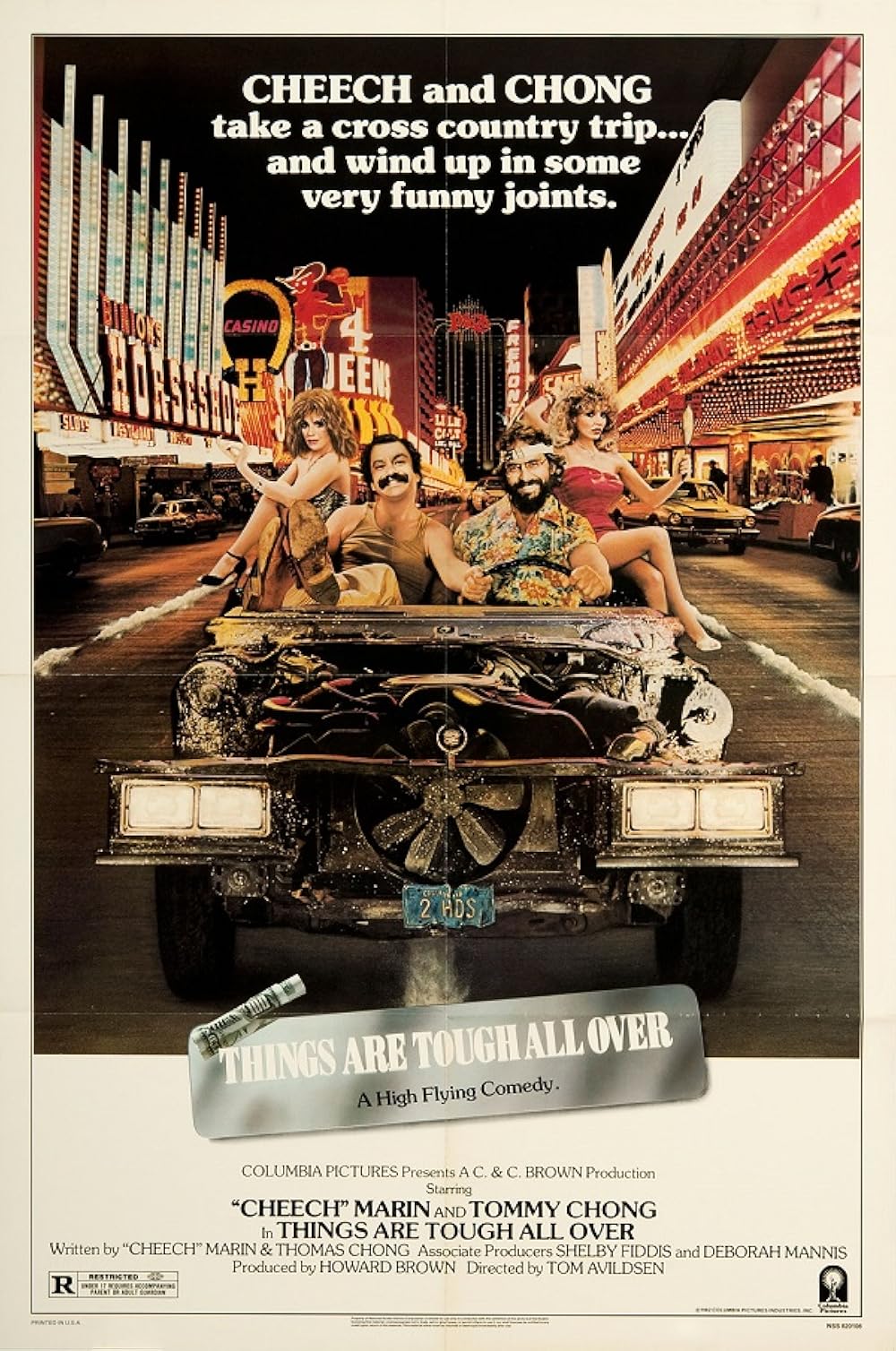
Things Are Tough All Over (1982)

By Richard Winters

My Rating: 5 out of 10

4-Word Review: Stoners on the road.

Cheech (Cheech Marin) and Chong (Tommy Chong) have moved to Chicago and are working at a car wash, but when they accidentally destroy a customer’s car they are fired. The owners of the car wash Mr. Slyman (Cheech Marin) and Prince Habib (Tommy Chong) hire the two for another job, which is driving a limousine across the country to Las Vegas. The two stoners think it will be an easy task but are unaware that the seats of the vehicle are stuffed with illegally collected cash. The boys though are given no money for gas, so each time they have to fill up the tank they’re forced to do away with a part of the car as payment forcing them to eventually have to drive down the road with only the vehicle’s main frame left. However, along the way they give up the seat with the money in it to an old-time gas station owner (John Steadman) and when the Arab owners find out that the money is gone, they set out to kill the two, who have become lost on foot inside the burning hot desert.

Cheech and Chong’s fourth installment is a definite improvement thanks mainly to the fact that it wasn’t directed by Chong, but instead the reins were handed over to Tommy K. Avildsen who had worked as an editor on their previous two movies. The pacing is much better, the gags come about in a more rhythmic order and the scenes don’t seem to go on forever. Avildsen’s editing background clearly helps keep the pace going and it’s nice to have a bona fide plot versus just trying to string together a bunch of comedy bits like in the first three films. Here there’s a better structure and focus. Things are still quite zany and surreal, but at least weird stuff don’t just get thrown in for no reason. 

Of course, there’s still the issue of why these guys are suddenly in Chicago. When we last left them, they were hanging out in East L.A., which served as the duo’s cultural and atmospheric background. If they are to move to a different city then we need to see if occur in the movie and not just between installments and there needs to be a reason why, which is never given. As I’ve explained before in my reviews of their past movies having each new film change the settings and their living circumstances so drastically makes it seem like we’re not really seeing sequels that’s progressing things forward, but more just starting things over from scratch. Same goes with Cheech suddenly having to do voice-over narration, which they had never done before, and in this instance added little and could’ve been skipped. 

However, it’s at least funny. Watching these guys shivering in the snow is a good change of pace from they’re pampered beach surroundings. The way they destroyed the car as it goes through the wash had me laughing as did the dismantling of the limo. Planes, Trains, and Automobileswith Steve Martin and John Candy, is the most well-known movie for having two guys riding down the highway inside a skeleton vehicle, but this movie did it first and in just as hilarious way. A couple of other comic highlights are when the stoners pick-up Donna (Evelyn Guerrero), who’s hitch-hiking, and she brings along a bunch of Mexican illegals who crowd into the limo like they’re stuffing themselves into a bus. The scene where the two sit in a movie theater and watch themselves star in a porno film, that was captured without them knowing it, is another great moment. 

The best thing about the movie though is that it features C&C in dual roles as they also play the rich Arab businessmen and it’s really impressive how these two can get into other characters and speak in completely different accents. They play the stoner parts so well that you start to believe that it’s really them and they’re not acting until you witness how seamlessly they can morph into other roles. Chong had me especially surprised as for a while I didn’t think it was him, he puts on a prosthetic nose that completely changes his appearance when he plays the prince, and it took me awhile before I caught on. Having them play the so-called heavies gives the movie a much-needed bump of energy and the only thing that’s missing is seeing all four in a scene together with some sort of over-the-top confrontation between them in the desert, which could’ve easily been done using trick camera work. 

This is also the first C&C movie where the drug use gets played down. This was apparently Chong’s idea as he felt it had become too much of a prop and they needed to challenge themselves and prove to audiences that they could still be funny without it. I also liked how Chong goes through a bad drug trip while inside a restaurant as the negative side of taking drugs had never been shown in any of their previous movies, but here does at least get lightly touched upon, which helps create a better balance especially for young and impressionable viewers.  

My Rating: 5 out of 10

Released: August 6, 1982

Runtime: 1 Hour 30 Minutes

Rated R

Director: Thomas K. Avildsen

Studio: Columbia Pictures

Available: DVD, Amazon Video, YouTube
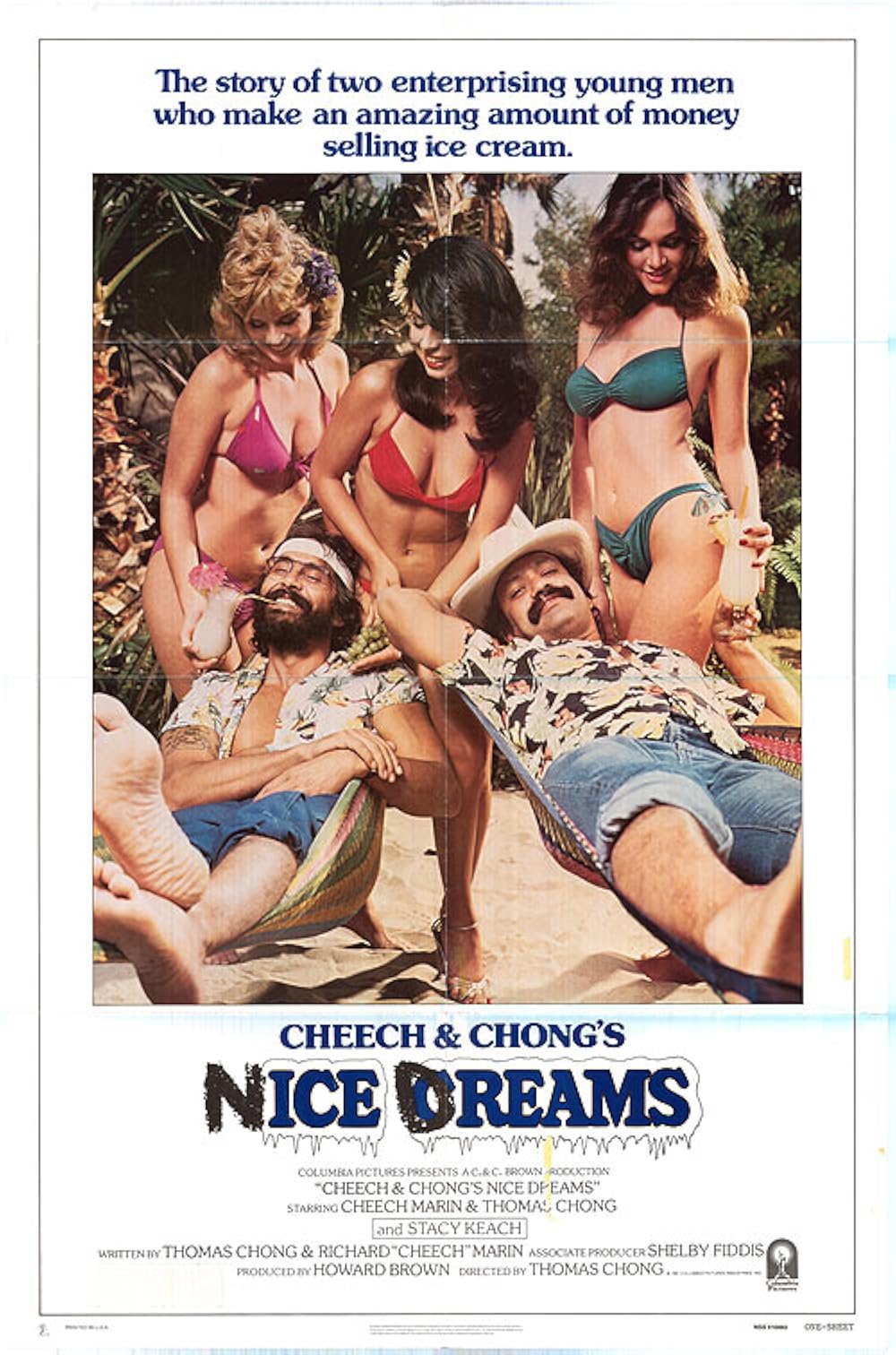
Nice Dreams (1981)

By Richard Winters

My Rating: 3 out of 10

4-Word Review: Ice cream side effect.

Cheech (Cheech Marin) and Chong (Tommy Chong) have become rich by driving around in an ice cream truck that appears to be selling ice cream, but in reality, it’s marijuana and the side effect of taking too much of it is that it can turn people into lizards. Sargent Sardenko (Stacy Keach) who has been on the two’s trail since the first installment has been smoking the weed for a while in order to get into the mindset of a dope user and thus better able to figure them out, but in the process, it has turned himself into a stoner and no better than the people he’s chasing after. When he takes Cheech and Chong’s stuff the lizard side effects become apparent, and he tries to conceal from his two deputies (Tim Rossovich, Peter Jason) who become increasingly more suspicious of his bizarre behavior. Meanwhile the duo’s fortune takes a bad turn when Chong, under the heavy influence of cocaine, signs away all of his fortune to Howie (Paul Reubans), a mental patient. In an effort to get their money back they track him down to the hospital where he resides, but Cheech gets mistaken as being a fellow patient and is soon strapped into a strait jacket and locked into a cell. 

The third installment of the series made a lot of money, $35 million at the box office, but the majority of that was in the first 2-weeks where loyal fans flocked to it, but it leveled off after that making it apparent that for general audiences it wasn’t received as well. The biggest problem for me is that it’s too disjointed. The surreal effect worked in the first two, but here it gets in the way and a more conventional storyline was needed to make it compelling. Case in point is the fact that it starts out with the two already in the business and making cash while residing in a posh, oceanside pad. I liked the messy, rundown shack that they lived in in the second film and kind of wanted to see them stay there as its extreme cluttered state made it bizarrely eye catching and like a third character. If they had to move that’s fine but show that occur in the movie as well as them attaining their newfound fortune versus them already in the new lifestyle when the film begins, which doesn’t make it seem like a continuation from where the second left off, but instead a completely new story altogether. 

I didn’t like the way the Sardenko character got portrayed here at all. In the first film he was the main source of the energy and his almost insane passion to catch the two and his by-the-book brash manner made him a fun heavy and somebody you liked to see get rattled. He was also the perfect overblown caricature of how the counterculture viewed cops during that era, so his presence had a definite point, but here all of that gets thrown out by having him just laying around smoking pot and behaving like every other stoner out there. The irony of him becoming who he despises is lost, had we seen the transition during the course of the film where he at least starts out the way we remembered him from the previous movie and then became a stoner by the end, it might’ve worked better, but as it is it seems like a whole new character connected by name only and isn’t half as fun to watch. 

There are still some funny moments like when Chong gets mistaken for Jerry Garcia while eating inside a Chinese restaurant and when Cheech runs around a hotel naked while trying to escape the clutches of a jealous boyfriend, but there’s no momentum as the plot doesn’t really seem to be progressing anywhere. Part of the reason for this is that the two relied heavily on storyboarding while keeping the script to a minimum, which in fact was only 3 1/2 pages in length and Cheech stated in interviews it was only this long because it was double-spaced. 

Improv can be wonderful if done right and there are moments here when it hits the mark, but the slow bits in-between hurt it. Had it been tied together inside a more cohesive storyline it would’ve really helped and just coming up with wacky scenarios on the seeming fly starts to wear thin.  The climactic scenes inside the asylum don’t work at all and the cameo by Dr. Timothy Leary, a friend of Cheech’s, is more annoying than funny especially with his incessant laugh and monotone delivery. Yet because this one made money, they continued to make more with their next film, which will be reviewed next, being a definite improvement. 

My Rating: 3 out of 10

Released: June 5, 1981

Runtime: 1 Hour 27 Minutes

Rated R

Director: Tommy Chong

Studio: Columbia Pictures

Available: DVD, Amazon Video, YouTube
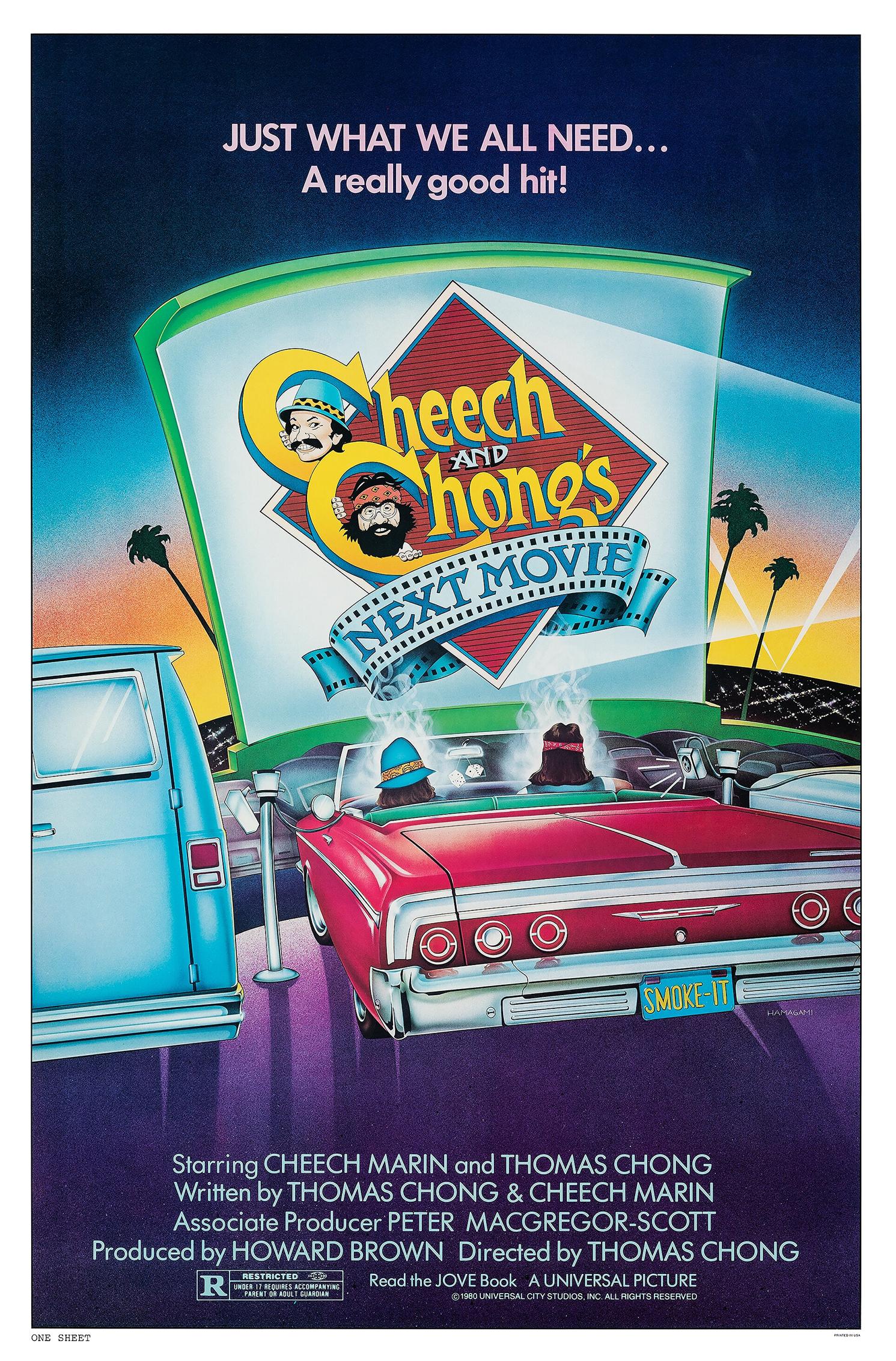
Cheech and Chong’s Next Movie (1980)

By Richard Winters

My Rating: 6 out of 10

4-Word Review: Chong meets Cheech’s cousin.

Chong (Tommy Chong) and Cheech (Cheech Marin) have moved in together in a decrepit place that puts new meaning to the word pigsty. Chong doesn’t have any interest in finding a job and spends his days playing his electric guitar at an ear-splitting level that disrupts the rest of the neighborhood. Cheech does work but gets fired forcing the two to go to the unemployment office where Cheech meets-up with his old girlfriend Donna (Evelyn Guerrero). The two get-it-on inside her office, which soon gets her fired. She then calls Cheech later on and the two agree to a date at his house. To get Chong out of the way Cheech has him get together with his cousin Red (Cheech Marin). Red is getting kicked out of his hotel room for nonpayment, so Chong helps him get his stuff out including a 20-pound bag full of marijuana (in the edited TV-version it’s described as a bag full of ‘diamonds’). The two then spend the rest of the night meeting up with different people and attending various nightclubs before ultimately being kidnapped by some outer space aliens while Cheech sits home alone dreaming of his rendezvous with Donna, who to his knowledge, never gets there.

This is, in my opinion, the best installment of the Cheech and Chong film series and an upgrade from their first film. This one has the same cinema vertite approach as that one but is able to tie it in better with a more consistent atmosphere that at times becomes almost surreal. Chong travels with Red late at night and the goofy people they meet along the way becomes very similar in theme to After Hoursor at least the Los Angeles version of that and had it been amped up just a little more it might’ve been just as good and memorable but just misses the mark yet kooky enough to keep it engaging. Thomas Chong’s direction is leisurely paced, which helps add to the offbeat vibe and his character is more engaged. In the first film Chong was strung-out most of the time making him boring and giving all the funny lines to Cheech, but here it’s more equal, making it a true buddy movie. The drug use isn’t emphasized as much either and doesn’t come off like it’s promoting the use of it like in the first one.

Some of the set pieces are impressive especially their messy house, which is so dirty and unsanitary that it’s almost like an art form the way the production team got it to look that way. I’ve seen some cluttered places before in movies, but never in quite the authentic way as here as it seems great care was taken to give it a legit look and making the scenes shot inside the place both fun and jaw-dropping at the same time. There’s no doubt though that had slacker stoners with no cleaning skills moved in together it would end up looking very similar to the place here. I also enjoyed seeing their neighbor’s place, played by Sy Kramer, who’s overly efficient ways are a far cry from theirs and the confrontations between them needed to be played-up more especially after the two steal and destroy his car and while his vehicle does get returned to him it’s in a highly damaged state, but without seeing his reaction shot we miss half the comedy potential.

It’s fun seeing Cheech play dual roles, speaking in a voice that sounds entirely unlike his own and proving he’s a much more talented actor than one might initially suspect. Edie McClurg gets one of her best roles as a rich uppercrust suburbanite who with only a few drinks becomes increasingly ditzy as the night wears on. Paul Reubens is entertaining as a no-nonsense hotel desk clerk and Michael Winslow has some engaging moments doing ‘sound effects’ while inside the unemployment office and old man John Steadman laughing at every single thing Winslow does.

This film also supposedly is the final onscreen appearance of veteran actress Mary Anderson, who is probably best known for her work in Alfred Hitchcock’s classic thriller Lifeboat. Here she has an uncredited bit as an old lady inside a music store, but the woman is seen for less than two seconds and within a group of other people making it hard to fathom why she’d come out of retirement, her first acting work in 15 years, just to give off an annoyed expression for a brief second and then call it a day. The woman doesn’t really look like her either making me think that since Mary Anderson is a very common name, they got the wrong one and it’s a different actress entirely.

I also can’t end this review without mentioning a glaring continuity error in which the car that Chong and Cheech are riding in goes out of control and ends up crashing into somebody’s front yard but the fence surrounding the yard remains intact. However, for the car to have gotten onto the lawn it would’ve had to have crashed through the fence, so showing it with no damage at all makes no sense.

My Rating: 6 out of 10

Released: July 18, 1980

Runtime: 1 Hour 35 Minutes

Rated R

Director: Tommy Chong

Studio: Universal Pictures

Available: DVD, Blu-ray, Amazon Video, YouTube

Up In Smoke (1978)

By Richard Winters

My Rating: 5 out of 10

4-Word Review: Two stoners become friends.

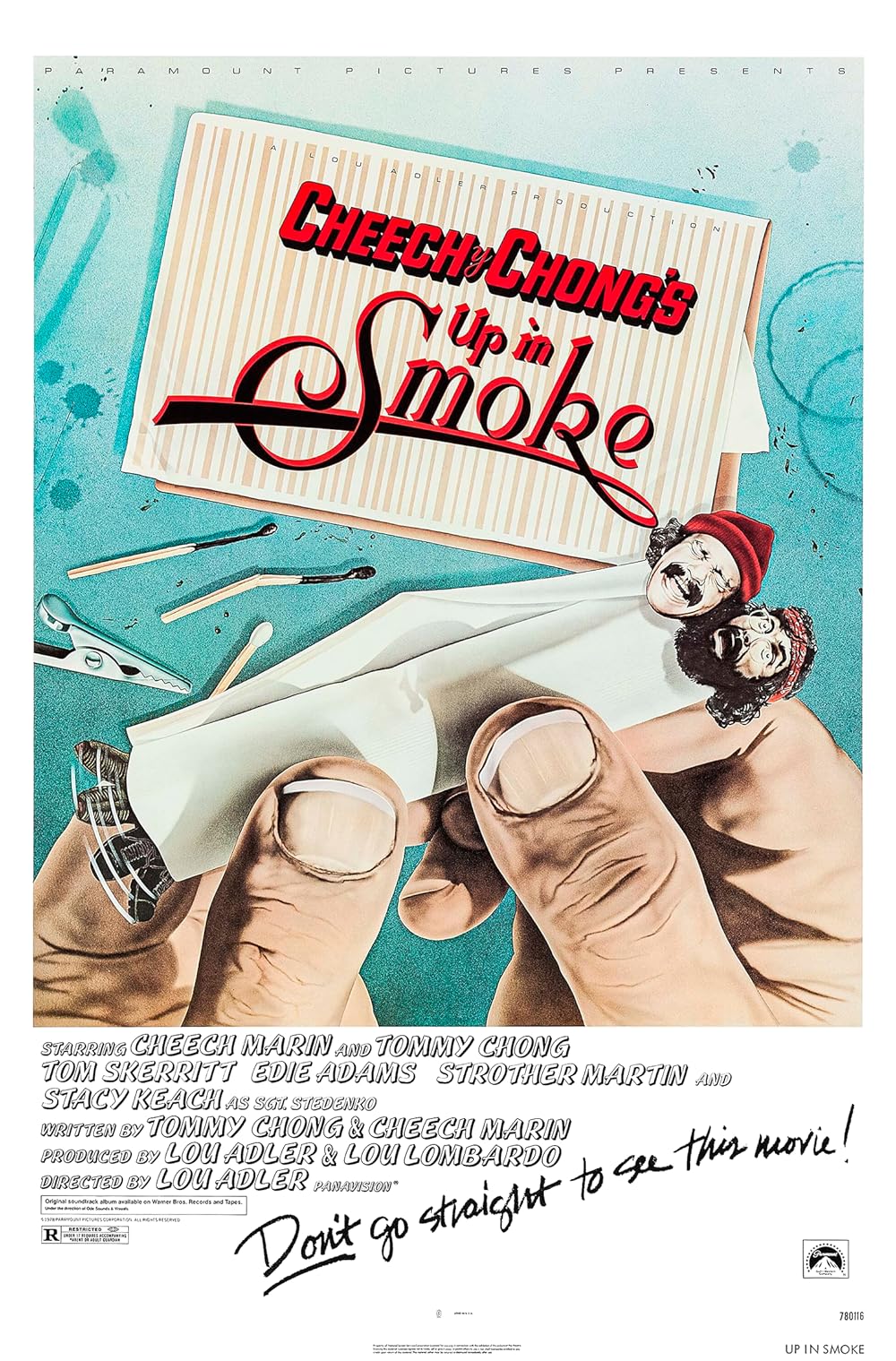
Anthony (Thomas Chong) is told by his father (Strother Martin) that he must find a job, or he’ll be kicked out of the house. Anthony then hitches a ride with Pedro (Cheech Marin) and the two quickly become friends based on their mutual interest of getting high on drugs. Soon they’re involved in many adventures including being shipped off to Tijuanna. In order to get back into the country they agree to drive a van that unbeknownst to them, is made completely of hardened marijuana, which gets them quickly put on the radar of Seargent Stelko (Stacy Keach) who along with his crack team of incompetents chases the two relentlessly in order to haul them into jail and make the country’s streets safe again. 

Cheech Marin was trying to avoid the draft when he went to Canada in 1969, which is where he met Thomas Chong, already a Canadian citizen who was starting up his own improv called ‘City Works’ after seeing Second City improv in Chicago while touring as a musician. The two became a comedy team who would come out to warm up audiences before concerts, but in many cases were more popular than the bands they were introducing. This then caught the attention of producer Lou Adler, who signed them to a contract to create record albums, which were so profitable that they graduated into making a movie, which Adler directed, that recreated many of the same skits they had used during their stage routines.

The movie upon its initial release with its open drug use was considered quite controversial and lead to many critics at the time to condemn it but nonetheless proved to be a big money-maker grossing $104 million on a $2 million budget.  Today the film is seen in a much softer light and in 2024 was elected for preservation by the National Film Registry by the Library of Congress.

I remember watching this when it came out and laughing at much of it particularly the car scene where the two smoke a giant marijuana cigarette and then get pulled over by the police. The film also does a terrific job of showing the East L.A. vibe possibly better than any other movie out there. You feel immersed in the culture and get a vivid feel of the era and setting especially at the end when the two go onstage and take part in the Battle of the Bands at the Roxy Theater. The film also has a leisurely pace, much like a French film, where it doesn’t feel the need to have a highly structured plot like in most American films and putting the emphasis more on atmosphere, which is a refreshing change of pace. Some of the supporting players, including Strother Martin who refers to his son as the ‘anti-Christ’ and Stacy Keach as the hardnosed police detective as well as his loyal, but bumbling deputy, played by Mills Watson, but without his patented mustache, who later went on to play the same type of role in the TV-show ‘The Misadventures of Sheriff Lobo’, are all perfect and help add to the fun.

On the negative end the two leads and their interactions, are poor. Cheech never even bothers to learn his buddies name and just continues to refer to him as ‘man’ for the duration of the pic, which might be the intended comedy, but offers no character development. They never grow or change and instead are paralyzed in a permanent caricature. Marin is funny, and in fact the only source of the humor, but Chong is underdeveloped. He spends most of the time strung out on drugs, or going through a bad trip, to the point that he seems catatonic and allowing all the energy to go to Marin, which is fine as he makes the most of it, but it barely seems like a buddy pic when it’s only one guy getting all the laughs. 

Without sounding like somebody’s old-fashioned parent I must agree with the initial sentiment that found this movie to be glorifying drug use and thus toxic to the day’s youth. The film acts like using drugs is just harmless fun. The scene involving actress June Fairchild, who later became homeless due to her own real-life addictions, where she sniffs some Ajax by mistake thinking it’s cocaine, but has no bad reaction to it and instead gets just as an enjoyable high is a problem. Granted I realize it’s supposed to be ‘funny’, but I could see a parent being concerned that it’s sending the wrong message to impressionable teens. 

My Rating: 5 out of 10

Released: September 15, 1978

Runtime: 1 Hour 26 Minutes

Rated R

Director: Lou Adler

Studio: Paramount Pictures

Available: DVD, Blu-ray, Amazon Video, YouTube

Diversion (1979)

By Richard Winters

My Rating: 5 out of 10

4-Word Review: Sex fling becomes problematic.

Guy (Stephan Moore) is a writer who is happily married to Annie (Morag Hood) with a toddler son named Charlie (Dickon Horsey). Annie decides to take a trip with Charlie to visit her parents and Guy stays home to work on a writing assignment. While he’s typing away, he remembers meeting Erica (Cherie Lunghi) at a party some months earlier where she gave him her phone number. Now with the wife gone he concludes this would be a good time to give her a call. Erica is excited to hear from him and they go on a mini date before ultimately ending up in her bed. The next morning, he tries to leave but she won’t let him go easily and insists that she’s not a one-night-stand material and instead wants to have a relationship with him. Guy reminds her that he’s married, but she says he can divorce her, which Guy is reluctant to do as he still considers himself content in his marriage and simply had sex with another woman as a diversion. Erica continues to call him, and his phone is constantly ringing even after Annie returns. Guy tells her it’s a wrong number, but Annie becomes suspicious and the next time Erica calls she decides to pick-up. 

If this synopsis sounds familiar it’s because it was the basis for Fatal Attraction. Producer Stanley R. Jaffee became aware of this short film and was convinced it could be expanded into a feature length movie. He even hired James Dearden, the writer-director of this one, to write the script. However, Paramount, the studio that agreed to finance the film, ordered all existing copies of this one to be destroyed, but fortunately a few survived including a bootleg version that was recorded straight off of an A&E broadcast from several decades back. 

I’m a big fan of Fatal Attraction and didn’t feel this version was as good. Too much time is spent at the beginning of Guy taking his wife and child to the airport, which I didn’t think was necessary. The party scene where Erica gives Guy her phone number should’ve been shown in flashback and the Guy character comes off like a geek that probably would only be able to fantasize about having sex with a hot woman like Erica, but not brazen enough to follow through nor would a woman like Erica want to go to bed with him as she could’ve found a better looking guy just about anywhere. In Fatal Attraction, both participants were equally attractive and working at the same firm, so their fling was more organic and made far better sense. 

Fortunately, in this one we don’t see any of the wild sex, which I felt was good as I thought that got in the way in the remake and became a distraction from the main story. Much of the dialogue though between Erica and Guy is almost word-for-word from what gets said between Glen Close and Michael Douglas though here Erica is portrayed as being this cold psychotic while in the other one Close played the role more as a desperately lonely woman, which humanized the character and helped the story be three-dimensional. 

Spoiler Alert!

My biggest grievance is that it leaves open too many loose ends. There is one scene where Guy calls Annie, while she’s still on her trip and supposedly knows nothing about what is going on, to touch base, but Annie is strangely aloof, and Guy doesn’t know why. She had always been very peppy before, which made it seem like Erica had called Annie and informed her of the affair, at least that’s what I thought, but this never gets confirmed and Annie arrives home later back to her perky self, so why did she behave differently during that one call?

The ending works like a gimmick as it has Annie answer the phone, which may or may not be Erica, while Guy stands nervously by. However, once Annie picks-up the receiver the film cuts to the closing credits, so we never know what happens next, which to me was a cop-out. 

My Rating: 5 out of 10

Runtime: 40 Minutes

Not Rated

Director: James Dearden

Studio: Dearfilm

Available: None at this time. 

The Further Adventures of the Wilderness Family (1978)

By Richard Winters

My Rating: 1 out of 10

4-Word Review: Family battles the winter.

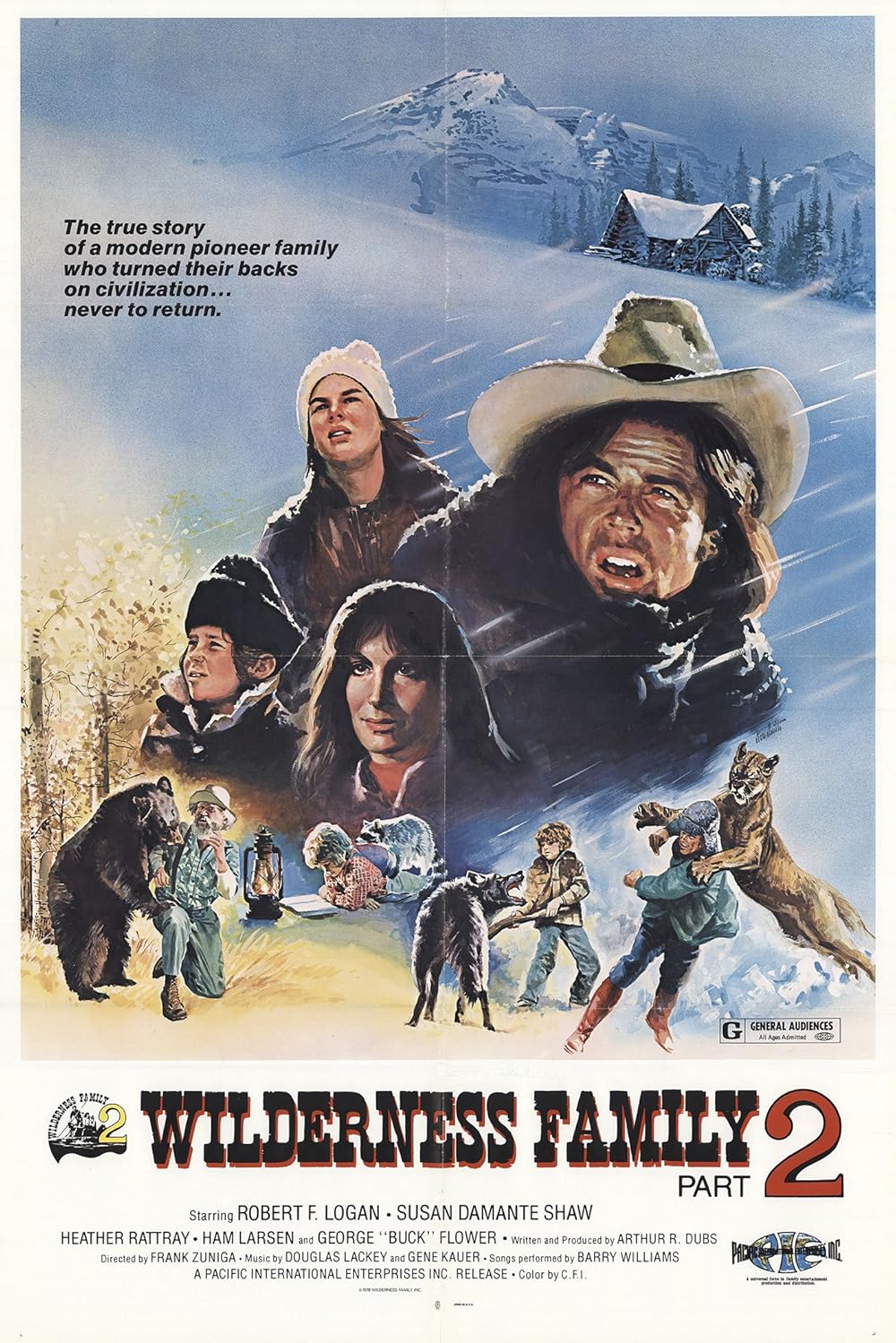
The Robinson family (Robert Logan, Susan Damante Shaw, Heather Rattray, Ham Larsen), who moved from Los Angeles to the wild of Colorado during the summer, now must contend with their initial winter there. The first snowfall they find beautiful and enjoy sledding down the hill, but once the holiday season has passed, they face the coldest month and excessive snow. This brings out a hungry pack of wolves lead by ‘Scarface’, which is a black wolf with a disfigured appearance. The wolves are so desperate for food they try breaking into the cabin while the father is away forcing the young boy of only 8 to try to shoot them with his rifle while his sister and sick mother take cover.

At this point it’s hard to believe that the family ever even lived in a city as they seem so well-adjusted to the wild it’s like they must’ve been born there. In fact they’re more able to rough-it than Boomer (George ‘Buck’ Flower) an old-timer who has been living in the mountains his whole life and yet when he sleeps alone as a guest in their back cabin and he becomes scared at seeing bear cubs and raccoons come in during the middle-of-the-night it’s actually the family that is shocked why that should bother anyone even though you’d think them originally being from an urban area it would be the reverse. The father also displays an uncanny knowledge like knowing that when a wolverine sprays a scent onto some meat that they had stored they can no longer eat it, but how the hell does somebody who had lived in Los Angeles his whole life prior be aware of that fact? It’s like he has a direct line to Wikipedia before cellphones, internet, or wi-fi was even a thing.

Like in the first there are more animal attacks though this time it all comes from roaming pack of wolves. However, since they had been through some hair-raising attacks before you’d think they wouldn’t venture back outside unless everyone was armed with a rifle. Yet they foolishly go out in the snow with no guns and then become frozen in terror when the wolves move in, but how many times does this same thing need to happen before they learn to come prepared? The previous attacks from the first movie had been so traumatic I was surprised they weren’t looking over their shoulders at every second versus frolicking around in the open without a care in the world until of course it’s too late.

The mother continues to be the only one who has any misgivings about the move, but then all the father needs to do is remind her of the traffic jams of the city and she immediately backs-off. However, those aren’t the only choices. They could just move to a small town, which wouldn’t have traffic congestion either, but still have running water, electricity, neighbors, and no wild animals breaking into their home in the middle of the night, so why not consider that option?

Spoiler Alert!

The climactic sequence is quite similar to the first one where the two kids and the mother are left fighting off animals’ intent on getting inside though here the anti is upped a bit by having the mom bedridden with illness and a raccoon accidentally setting fire to the place, which just makes it more contrived and isn’t gripping, or exciting. What’s worse is that a doctor flies in afterwards via a helicopter to take a look at the ailing mom and announces she is suffering from pneumonia, but then instead of taking her to a hospital he just leaves her there in the cabin with a big gaping hole in the roof with snow and cold pouring in, which will only make her condition worse.

End of Spoiler Alert!

I’ll give some credit to the picturesque wintertime scenery, but the corny song segments, sung by Barry Williams better known for having played Greg on the ‘Brady Bunch’ TV-show, act as nothing more than filler, which bogs an already anemic story down even further. Young children may be a little more forgiving, but adults should find it flat and one-dimensional. What’s worse is that they actually went on to make a third installment, which will be reviewed next.

My Rating: 1 out of 10

Released: November 15, 1978

Runtime: 1 Hour 45 Minutes

Rated G

Director: Frank Zuniga

Studio: Pacific International Enterprises

Available: DVD, Amazon Video, Tubi, Freevee, YouTube

The Adventures of the Wilderness family (1975)

By Richard Winters

My Rating: 3 out of 10

4-Word Review: Living off the land.

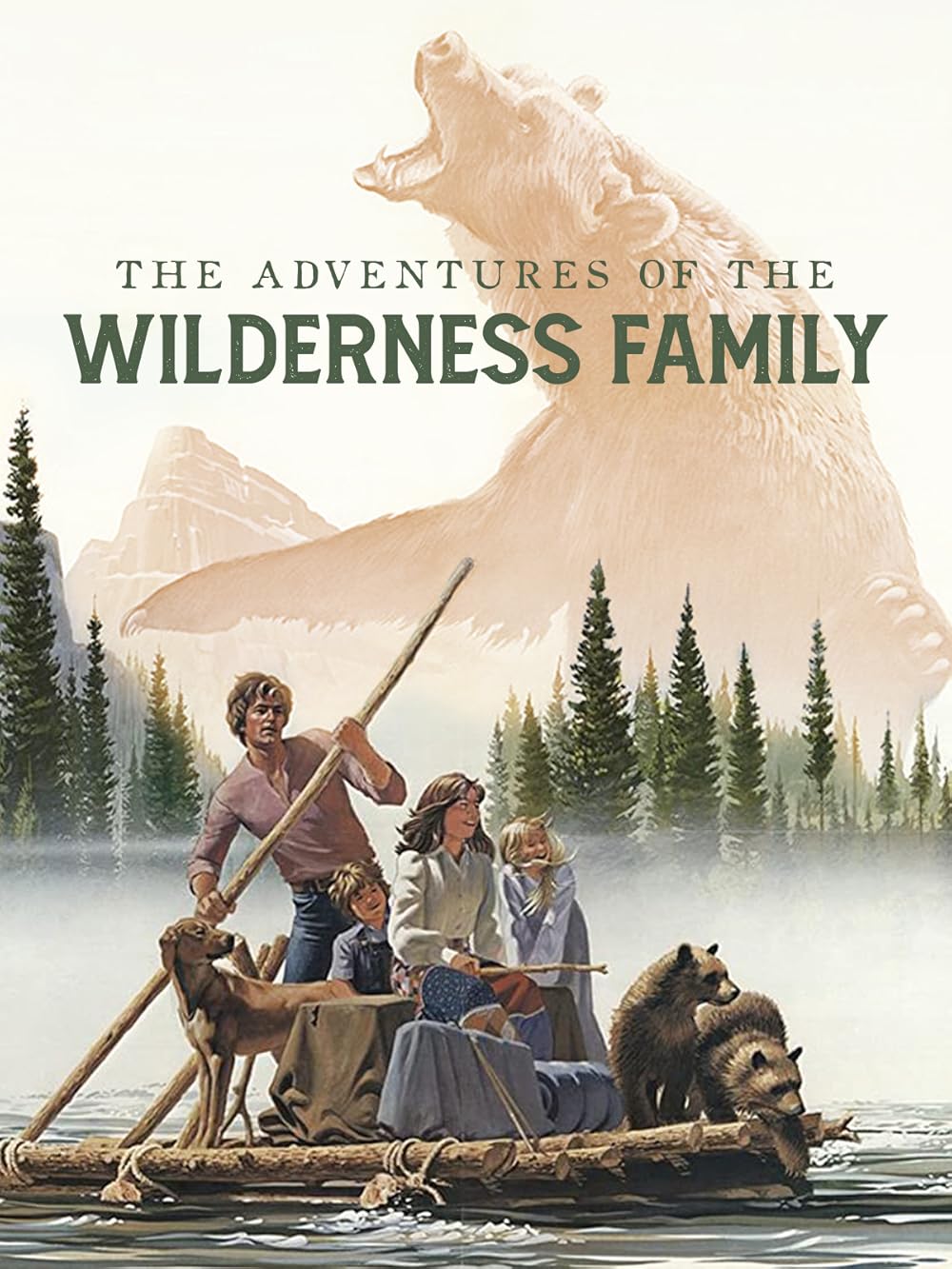
Skip (Robert Logan) is a married father of two who finds his job as a construction worker a thankless routine. The smog of Los Angeles, which is where he and his family reside, is affecting his daughter Jenny (Hollye Holmes) who’s having breathing issues and nothing her doctor has prescribed is helping. He’s also tired of the traffic, which is why one day he tells his wife Pat (Susan Damante-Shaw) that he wants to get out of the city and move to the countryside. After some brief thought she agrees. The family then takes residence in an isolated Colorado cabin that’s rundown and filled with rodents. They’re able though to build a new cabin and move in but then must learn to fight the elements including mountain lions, wolves, and even grizzly bears.

Loosely based on the true-life story of a family that moved from Los Angeles to the remote regions of the Pacific Northwest that was written about in a 1974 New York Times article the film takes too much of a glossy approach to what should’ve been a deeper, more complex drama. The family makes their decision to move too quickly, literally on a ride home while in their pick-up. No scenes showing them having to say goodbye to their friends, selling off all of their belongings, or how they come about choosing the piece of open land that they eventually settle on. I felt for satisfactory emotional impact; to be able to fully appreciate the changes this family was going through those scenes should’ve been shown.

There’s also too much agreement amongst them. They’re all cool with leaving the city and don’t show even a fleeting second thought about it. As a kid that would mean giving up all their friends and playmates, TV-shows, and music and all the other conveniences of suburban living that I’m just don’t believe most children would roll with like here. It would’ve been much more of an interesting story had at least one of the kids been opposed to the move or put up a big fuss only to then maybe soften to the idea once they got out there. It could be done in reverse too with a child really excited to only to change their mind once they came face-to-face with the harsh reality of being in a wilderness long term. Going on a vacation to the woods is one thing but permanently leaving the only life you know to relocate to the middle of nowhere would certainly bring I would argue a lot of tears and adjustment and yet absolutely none of that occurs here making it vapid and lacking any type of character arch. 

What had me even more flabbergasted was that these kids get attacked by wolves and even bears and still don’t want to go back to the city. Yes, there would be smog, but I might be willing to begrudgingly accept that if it meant no more wild animal attacks. I was a kid once too, growing up in that time period, and if I got uprooted like that and went through all the hardships they did, I’d be screaming to go back home making the kids here seem unrelatable. The mother does to some extent put up a meek argument about wanting to go back, but it’s done in a light and gentle manner, and she immediately backs down when the others don’t agree, which makes for non-compelling interactions. 

The scenery is pleasant, filmed at the state park near Gunnison, Colorado, but it becomes like a nature propaganda movie where the only accepted opinion is that living in the country is great, even with the challenges, and no other point-of-view is allowed. Having a debate about the pros and cons of both would’ve added more subtext and made it less one-dimensional. The sappy songs done over the action is nothing but a time filler and proves how overall threadbare it is.

Sure there are a few intense moments including the climactic bear attack with the mother and children trapped in a cabin trying valiantly to fight him off, but whole thing works in a loop where every 10-minutes or so there’s some sort of confrontation with a wild animal, the family then considers giving up on the whole wilderness thing, only to agree to stay and then it starts all over again. Eventually by the third act it becomes quite uncompelling.  

My Rating: 3 out of 10

Released: December 19, 1975

Runtime: 1 Hour 39 Minutes

Rated G

Director: Steward Raffill

Studio: Pacific International Enterprises

Available: DVD, Amazon Video, Tubi, Freevee, Plex, Roku, YouTube