Monthly Archives: September 2024

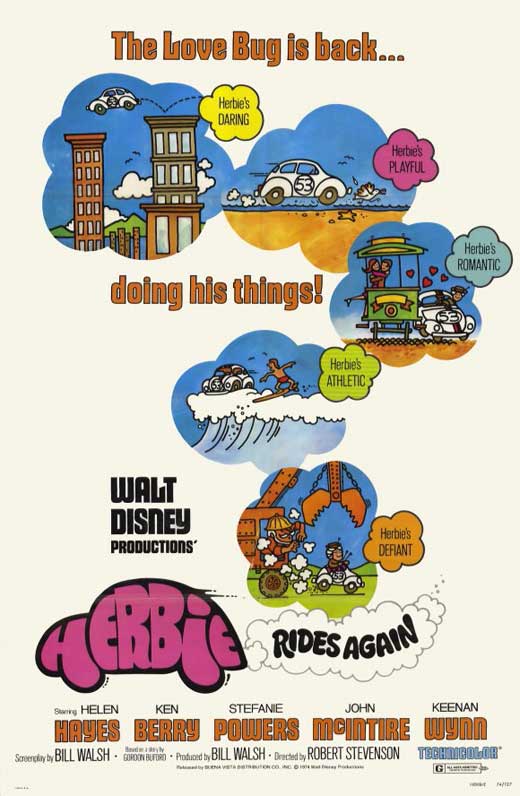
Herbie Rides Again (1974)

herbie1

By Richard Winters

My Rating: 3 out of 10

4-Word Review: Saving home from demolition.

Alonzo Hawk (Keenan Wynn) is a rich man who wants to build the world’s tallest sky scrapper on land that is currently occupied by a little firehouse built in 1892 and owned by an old lady named Mrs. Steinmetz (Helen Hayes). So far she’s refused all offers by Alonzo’s lawyers to sell, so Alonzo decides to have his nephew Willoughby (Ken Berry) go visit her as he has a very clean-cut image and hopes his nice-guy approach may be what it takes to persuade her. However, once he’s there he gets introduced by Mrs. Steinmetz former neighbor Nicole (Stefanie Powers) who’s now living with the old day due her place being demolished by Alonzo. When Nicole realizes Willoughby is related to Alonzo she immediately takes a disliking to him and even punches him in the face. Her feelings towards him though begin to change when she gives him a ride in the Volkswagen beetle that Steinmetz is taking care of for its owner while he’s away in Europe racing. Willoughby at first doesn’t believe that the car, who’s named Herbie, has a mind of its own, but soon realizes it does after his trip in it and this eventually gets him to side with Nicole and Steinmetz on the issue they’re having with his uncle and he begins fighting with the other two and Herbie to stop Alonzo from tearing the place down.

This was a rather odd idea for a sequel to the Love Bug that came-out 6 years earlier and had the VW Beetle involved in racing, but now apparently was ‘retired’ and no longer able to race effectively even though in the third entry to the series, which came-out 3 years later he does go back to racing.  The plot here though doesn’t really need the car involved to help propel it, yes the vehicle does ‘come to the rescue’ a few times, but the story could’ve easily worked with just the humans fighting Alonzo in various ways and would’ve been just as funny. To make-up for this the film does show archived footage, which goes on for several minutes, of the car ‘dreaming’ about it’s racing days though some of his race ‘victories’ could be called into question like when it decides to go off the racing track in one and cut through a forest and then back onto the track where it’s now at the front line of the other cars, which most would deem as cheating and not really an honorable win.

Overall though I really didn’t find any of the scenes with the car to be all that interesting. It’s hard to get emotionally attached to some machine that doesn’t speak, or show any expression and the only sign that it’s ‘alive’ is through its car stunts. The fact that it has seemingly no limits to what it can do, at least driving wise, I felt worked against it. To create even the modicum of suspense, or believability, there needs to be some rules to what it can and cannot do and yet here it defies all probability like driving on the side of cliffs without falling off, or being able to somehow pull vehicles, that are much bigger and weigh more, around like it does during a ‘tug-of-war’ scene with a cop car that’s attempting to tow it. It’s even able to smash through walls without receiving any damage to its front-end. I’m okay with the car having a certain ‘personality’, but when the car is able to get out of any predicament in a seeming magical way then there really isn’t any intrigue at all.

The acting by Hayes, Powers, and Wynn are good and I was especially impressed with Wynn’s ability to essentially shout out all of his lines in a consistently snarly way and yet never get any laryngitis and he certainly adds energy to all of his moments. Berry though is so vanilla that he’s just plain boring. It might’ve worked better had he remained loyal to his uncle longer, but he sides with the two ladies so easily that his character quickly becomes quite benign to the point that it would’ve been more interesting to have just the two women, and the car of course, fighting the bad guys and his presence excised from the script completely.

The nightmare segment where Alonzo dreams of being attacked by not only Herbie, but several clones of Herbie whose front hood opens up to reveal a mouth with giant teeth, which also includes a take-off of King Kong, where Alonzo is on top of the Empire State Building as he fights off the Herbie’s that are flying in a circle around him is genuinely inspired and the best part of the movie. Everything else though falls painfully flat including the cheap special effects where the exterior of the firehouse looks like it’s a painting on a back-drop, which I’m sure it was, or the scene where Herbie goes up the Golden Gate Bridge, which you can plainly tell was a miniature model matted onto a picture because as the car goes back down it starts to lose its pixelation and fade-out and disappear into thin air.

My Rating: 3 out of 10

Released: June 6, 1974

Runtime: 1 Hour 28 Minutes

Rated G

Director: Robert Stevenson

Studio: Buena Vista

Available: DVD, Blu-ray, Amazon Video, YouTube
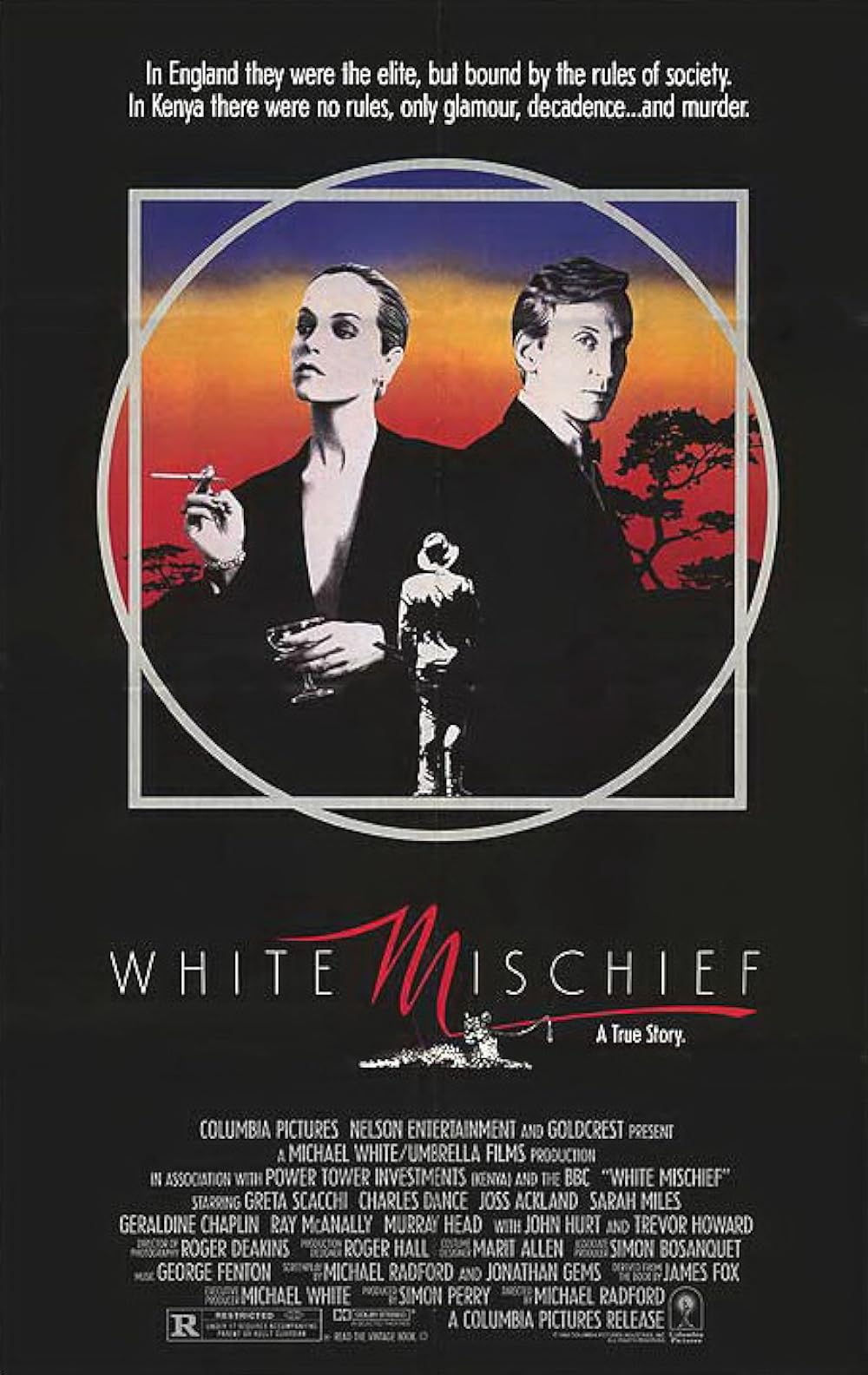
White Mischief (1987)

whitemischief

By Richard Winters

My Rating: 7 out of 10

My Rating: Unsolved murder in Kenya.

During the Second World War many British aristocrats with money escaped the tensions and horror in Europe by relocating at a settlement in Kenya that became known as Happy Valley. Here without the typical societal restraints of back-home they were able to indulge in all their provocative desires including rampant drug use and promiscuous sex. One such philanderer, possibly the most notorious of the bunch, was Josslyn Hay the Earl of Erroll (Charles Dance). He had already had various trysts with many of the women there including Alice (Sarah Miles) before dumping her due to her drug addiction. He then sets his sights on Diana (Greta Scacchi). She is married to Jock (Joss Ackland) who is older than her by several decades, and the two share a marriage of convenience with a pre-nuptial agreement that if either falls in love with someone else the other person will not impede it. Earl goes after Diana aggressively and despite some initial reluctance the two eventually become an open couple. Jock puts up a stoic front and allows her to go with him without any resistance, but internally he seethes with rage. Then one night Earl gets shot dead while driving his car in an isolate area. Did Jock pull the trigger?

The film is based on the book of the same name written by James Fox that was published in 1982 and in-turn based on the real-life incident that occurred on January 24, 1941 where the Earl of Erroll, like in the movie, is was found dead in his car and Jock, being the prime suspect, was put on trial, but then found not guilty due to a lack of evidence. For decades it sat as an unsolved case with no answers to what really happened until 1969 when Fox, along with fellow writer Cyril Connelly, became fascinated with the subject and began researching it vigorously. The book contains many interviews with people who lived through the ordeal and give first person accounts of the trial proceedings. Fox even traveled to the Kenya region to get a better understanding of the area and people and came to the conclusion that Jock had been the culprit with new evidence he unearthed, which makes up the book’s entire second-half though officially the case remains open.

The movie’s best quality is its visual element especially its ability to capture the expansive beauty of Africa as the film’s director Michael Radford proudly proclaimed before production even started that “films of Africa should be made by Africans” and you really get that sense here. The screenplay by noted playwright Jonathan Gems is also superb with it’s use of minimalistic dialogue where the conversations and characters never say too much, many times just brief sentences, and the emphasis is much more into what is implied.

On the negative end the attempts at eroticism are pathetic and overdone. The most absurd moment comes when the Sarah Miles character, during the open casket viewing portion of Earl’s funeral, reaches under her skirt and masturbates in full view of everyone before eventually putting her ‘love juices’ on the deceased, which came off as ridiculous and simply put in for a cheap laugh, or misguided ‘shock value’ and hard to imagine it occurred in reality. Both Scacchi’s and Dance’s characters are quite boring and their love scenes lack spark making the whole affair angle seem quite predictable.

The film’s saving grace though is with Ackland’s character where you really get inside his head and see things from his perspective. Normally in most films the jilted spouse is portrayed as someone to fear and a one-dimensional jealous machine who serves no purpose other than to get revenge. Here though we feel his quandary and sympathize with his internal struggle of trying to take the high road while also wracked with hurt and betrayal. Instead of being the culprit we ultimately see him as a sad victim even as his personality completely unravels by the end and because of this aspect I felt the movie works and is worth seeking out. Director Radford probably said it best when he stated that the film was about “people who have everything and yet have nothing. It’s about people who want to possess what they can’t possess” and with the excellently crafted Josh character you can really see that.

This is also a great chance to see acting legend Trevor Howard in one of his last performances. He was suffering severely at the time from his alcoholism and cirrhosis that he comes-off appearing like a wrinkled corpse put upright and there’s several scenes where he’s seen just standing there, but says nothing due to the filmmakers fear that he wouldn’t remember his lines, or if he did wouldn’t be able to articulate them. However, he does come through during a pivotal moment inside the prison when he visits Ackland and what he says and does there is great. John Hurt’s performance is the same way as initially he’s seen little and says no more than a couple of one word responses to the point I thought he was wasted, but then at the end he reappears and comes-on strong in an unique way.

My Rating: 7 out of 10

Released: November 10, 1987

Runtime: 1 Hour 47 Minutes

Rated R

Director: Michael Radford

Studio: Columbia Pictures

Available: VHS, DVD (Import Reg. 2), Amazon Video, Roku 

Once is Not Enough (1975)

once

By Richard Winters

My Rating: 0 out of 10

4-Word Review: Having a father fixation.

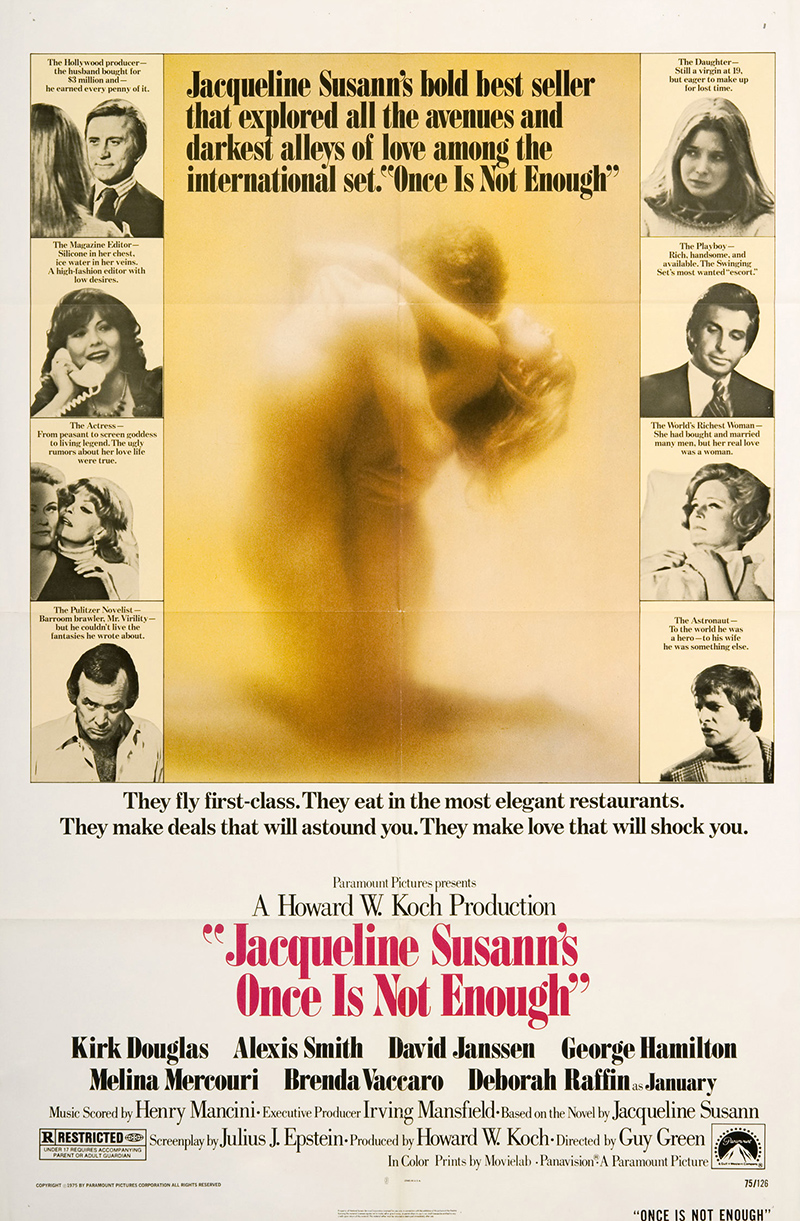
January (Deborah Raffin) is the college-aged daughter of wealthy Hollywood producer Mike (Kirk Douglas) who spent time recovering from a motorcycle accident in Europe and now returns to the states excited to see her father of which she adores immensely. Unfortunately things have changed since she’s been gone. Mike no longer has the clout, or capital that he once did and now can’t get any of his projects off-the-ground. He’s married rich socialite Deidre (Alexis Smith) simply as a way to get his hands on some money as he no longer has any of his own, but she’s more into her lesbian affair that she’s having with Karla (Melina Mercouri). Feeling dejected at how things have turned-out January falls into the arms of Tom (David Janssen) an alcoholic semi-successful novelist who suffers from impotency. When Mike learns of this relationship he becomes enraged as Tom has long been one of his biggest adversaries and so he goes to the apartment where the two are staying determined to have it out with the both of them.

The film is based off of the final novel written by Jacqueline Susann who became famous for having penned the popular Valley of the Dolls 7 years earlier. This book, like her two other ones, shot-up immediately to the top of the Best Seller’s list and she became the first author to ever have her first three novels achieve this, but her ability to savor her success was short-lived as she was diagnosed with cancer shortly after the book went to press and she never lived to see it made into a movie.

The book, like her other ones, was widely panned by the critics, but this movie here does it no justice. When compared to Valley of the Dolls this thing has absolutely no zing and nothing that’s truly salacious or tawdry, which were the main elements that gravitated folks to read Susann’s books in the first place. The only ‘shocking’ moment comes during the lesbian segment, which was considered ‘pushing-the-envelope’ at the time, which shows two older actresses kissing each other on the lips, which by today’s standards will be seen as quite trite and forgettable. The other potentially spicy moments never come to play and it ends flatly making you wonder what were they thinking when they made it.

Raffin, a former model, is quite beautiful and the best thing in it, but her character is too innocent to be believed. She’s a virgin despite being raised in the fast lane of Hollywood, which seemed hard to believe. Supposedly this is because she’s so infatuated with her father she’s subconsciously ‘saving herself’ for him, but a person could have sex outside of a romantic context and I’d think since most of her other friends would’ve have likely done it she’d be at least curious enough to try it out. The same goes for her inexperience with drugs, alcohol, or even dealing with womanizing men such as George Hamilton’s character who fills her glass to the brim with brandy and when she asks why he says so he can ‘get her drunk, so she’ll lose her inhibitions’ and she’s shocked to hear this, but any young women living in L.A. during the swinging 70’s should conditioned and prepared to this age-old ploy and having her so taken aback by it makes her too painfully naive to be believable. Instead of being a producer’s daughter she seems more like some nun snatched from a  convent she’s been living in her whole life and completely out of whack with her surroundings.

Douglas is a complete bore and I can only imagine he took the role simply because he was on a career decline and needed the work, but despite being center stage during the first half, his character slowly fades out and is completely forgotten by the end. Alexis Smith, whose acting work had also been in a downward spiral, this was her first movie role in 16 years, and was only given the part because Lana Turner, who was the producer’s first choice, turned it down as she objected to having to do the lesbian kissing scene, is sufficiently bitchy, but overall wasted.

Brenda Vaccaro won accolades for her performance and was even nominated for the Supporting Oscar for her work, but I was a bit surprised. I’ve always found her an impressive actress, but playing some jaded California gal that likes to openly sleep around isn’t that interesting and her character lacked depth. The part where she tries to quickly clean-up her cluttered bedroom before letting a new man into it was kind of amusing, but otherwise her presence, like all the others, was quite tepid. I did though enjoy Hamilton, this marked his last serious role before he then began to venture into comedy, not so much for his acting, but more because I felt this role most closely resembled his true personality. Janssen has some potential as this brash, abrasive guy, but then having his lifelong impotency suddenly and magically ‘cured’ after seeing Raffin nude in the shower is just downright laughable.

Spoiler Alert!

The biggest letdown is the unexciting ending. In the book January gets into acid and then partakes in a sex orgy only to eventually walk into the ocean and drown after seeing a vision of her dead father. The movie though, in an attempt to be ‘hopeful’, doesn’t show any of this. It just has her walking around the city in a daze and that’s it. A movie like this needs, especially with this type of soap opera material, some sort of salacious pay-off and seeing a once innocent, naive girl in an acid driven orgy would’ve been just the ticket, so for the filmmakers not to give the viewer even that much makes this whole vapid thing pathetic beyond belief.

My Rating: 0 out of 10

Released: June 20, 1975

Runtime: 2 Hours 1 Minute

Rated R

Director: Guy Green

Studio: Paramount

Available: DVD, Blu-ray, Amazon Video, YouTube
Inchon! (1981)

inchon1

By Richard Winters

My Rating: 3 out of 10

4-Word Review: Turning point in war.

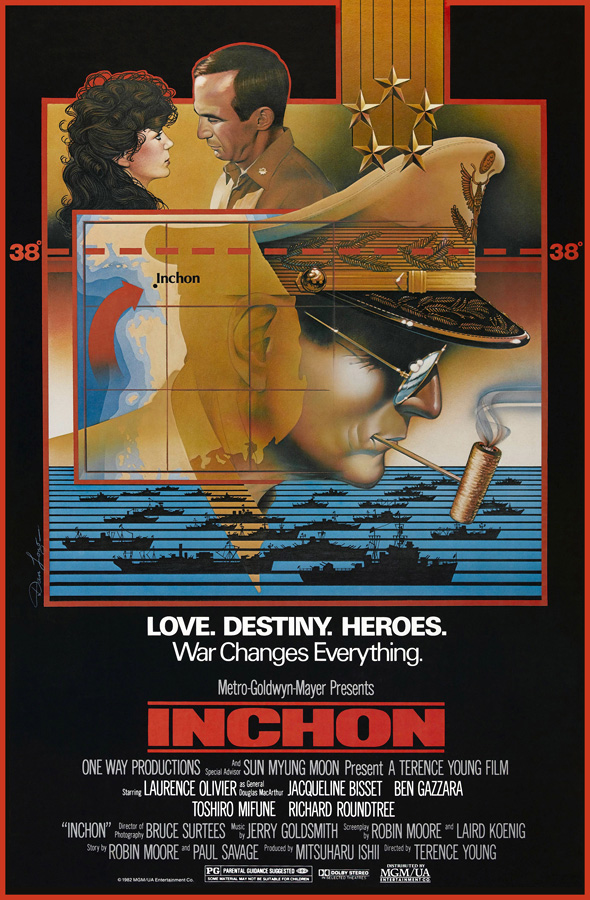
Inspired by actual battles during the Korean War the film centers on the Battle of Inchon, which many consider the pivotal turning point that allowed American forces to achieve victory and was lead by General Douglas MacArthur (Laurence Olivier). While he exudes great outwardly confidence to others he does confide to his wife Jean (Dorothy James) that his age is creeping up on him and he fears he may no longer have the energy or mental acuity to take on the same types of challenges like he had done in the past. The film also has several side stories including that of Barbara (Jacqueline Bisset) whose husband Frank (Ben Gazzara), a Major in the U.S. army, is openly having an affair with a Korean woman (Karen Kahn). When the war fighting breaks-out near her she quickly tries to hitch a cab ride to get out, but soon finds herself straddled with some young Korean children who want to use her car to escape from the war with her.

The film is notorious for having been financed in large part by Reverend Sun Myung Moon who was head of the ‘Moonie’ cult that hit it’s peak during the 70’s and 80’s and gets credited with being the film’s ‘Special Advisor’ during the opening credits. He even used the help of psychic Jeanne Dixon who said she spoke with General MacArthur’s spirit and this spirit reiterated that he approved of the production, which was enough to get Moon put down a whooping $46 million to get it produced, but the film failed badly when it was released and was savaged by the critics. It was shelved for a year and then rereleased in a much shorter 105 minute version, which did not improve things and audiences stayed away causing them to only recoup of meager $5.2 million and turning it into a huge financial loss.

Overall the original 140-minute cut is the better version, if you can find it, and the movie wasn’t quite as bad as I had feared going in. The scenario dealing with Bisset and the kids is the best and I found the children to be genuinely appealing. I liked how well behaved they were and respectfully bow their heads when coming into contact with adults and won’t eat their dinner, despite being really hungry, until Bisset is sitting at the table with them. While this storyline does have a lot of similarity to The Inn of the Sixth Happiness, and in fact the hotel they stay at is named this, I still felt it was engaging enough to keep me semi-involved and had the film centered solely on this it would’ve done better though it’s still filled with some incongruities like having Bisset shoot and kill a man right in front of them where she’s not concerned about the psychological effects this may cause them, but then later when they come to a battlefield with dead soldiers laying about she warns the kids to ‘shield their eyes’, but if they’ve already witnessed one dead body and gotten through that what’s the harm of seeing a few more?

The drama dealing with her husband Gazzara and his affair is a bore and her conversations with him about it goes nowhere and slows the pace up badly as it offers up no spark and I found Gazzara’s constant smirking no matter what situation he was in to be annoying and wished someone else had been cast in the part. Olivier’s moments as MacArthur are equally cringey and should’ve been a source of complete embarrassment. However, he was at least honest about it and admitted in interviews he was only doing it for the money, so that his family would have something to keep them comfortable after he died, which he felt was coming soon and thus ‘nothing was beneath him’ as long as the ‘price was right’, which in this case was a payout of $1.5 million and included a $250,000 signing bonus.

Much of the problem with his part is with the ghoulish looking make-up that was put on and took 2 and a half hours each day to apply, but makes him look like some wax figure, his hair literally shines off his head every time it comes into any light. The effect makes him look like a walking dead person, or a strange alien from another planet and his moments come-off as either creepy, or laughable. His attempts at replicating MacArthur’s accent, which he had been informed sounded like W.C. Fields, is ineffective especially when you hear the real MacArthur speak during archival footage that appears near the end.

David Janssen as a crotchety and cynical news reporter, whose scenes were entirely cut in the abbreviated prints, is terrific and gives the movie a much needed sense of brashness and I wished his character was in it more though due to his death during filming he’s not in it as much. Everything else though unfortunately falls flat including the battle scenes that become quite redundant and surprisingly uninteresting to watch. The finale that deals with the illumination of a lighthouse and MacArthur’s reliance of banking on the ‘spirit of God’ to get it lighted was fabricated making it corny and forgettable.

My Rating: 3 out of 10

Released: May 4, 1981

Runtime: 2 Hours 20 Minutes (Original Cut) 1 Hour 45 Minutes (Reissue)

Rated PG

Director: Terence Young

Studio: MGM/UA

Available: DVD-R

Mandingo (1975)

mandingo1

By Richard Winters

My Rating: 7 out of 10

4-Word Review: Slave turned into fighter.

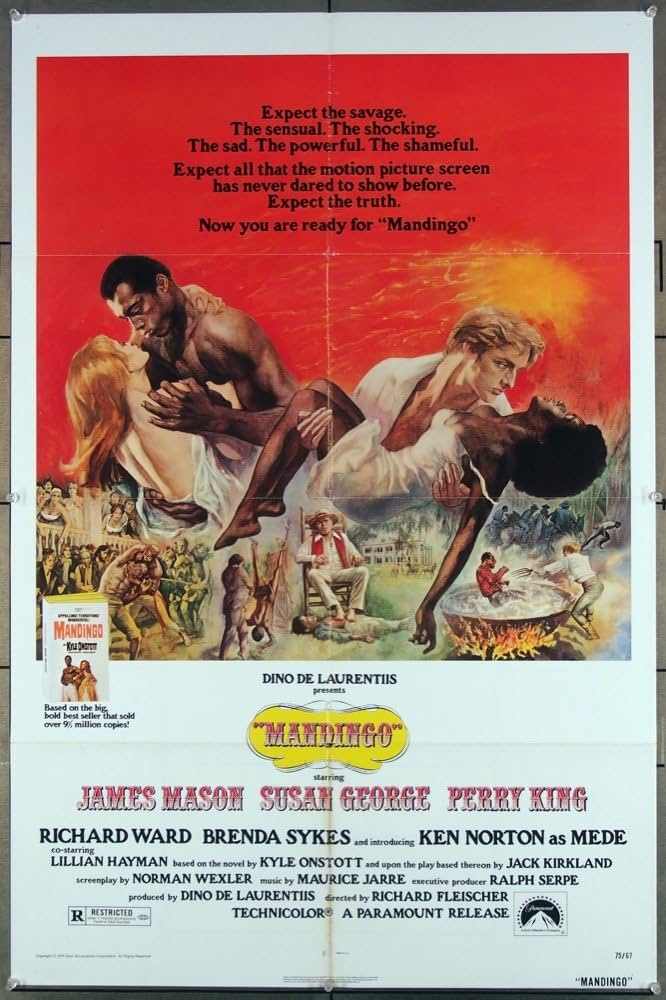
Hammond (Perry King) is the son of aging plantation owner Warren (James Mason) who purchases a Mandingo slave named Mede (Ken Norton). Mede proves himself as having superior fighting skills, so Hammond turns him into a prize fighter and makes money off of him. Meanwhile Hammond is also having an ongoing sexual affair with a slave named Ellen (Brenda Sykes), but his father orders him to find a white woman in order to supply him with an offspring, so Hammond marries his cousin Blanche (Susan George), but on their wedding night he rejects her when he realizes she is not a virgin. Blanche becomes jealous of Ellen, whom is secretly carrying Hammond’s child, and causes her to miscarry. She then forces Mede to have sex with her, so she’ll become impregnated with a black baby and bring humiliation to Hammond. After the birth, when Hammond realizes what has happened, he then goes on a violent revenge not only against Blanche, but also Mede whom he once considered his prize possession, but will Mede just accept his punishment, or use his strength to finally turn on his master?

The story is based on the 1957 novel of the same name written by Kyle Onstott. Onstott had written a book about dog breeding with his adopted son, but that didn’t do too well, so at the age of 65 he became motivated to write a book that he hoped would be a bestseller and make him a lot of money. He decided a sensationalistic material was the way to get attention and thus choose to write a story based on many ‘bizarre legends’ he had heard growing up. It was printed by a small publisher and it soon got him the national attention that he craved and sold 5 million copies that not only lead to a series of books on the same theme, but also a 1961 stage play that starred Dennis Hopper. The film rights was purchased by noted producer Dino De Laurentiis and became a very rare exploitation film that was given a big budget and a major studio release.

Critics at the time gave it almost unanimously negative reviews including both Roger Ebert and Leonard Maltin, but today it’s seen in a slightly more favorable light. Personally, if you’re going to do a movie on slavery, a notoriously dark moment in human history, and you’re want to do it honestly, then a graphic portrayal of it such as this should be in store. It may make the viewers cringe throughout, but that’s kind of the purpose. On a purely shock value scale this thing delivers in an almost mechanical sense. It’s just one scene after another that should leave even the most seasoned audiences with their mouths agape. While it’s hard to pick just one moment that’s the most shocking as there are an incredible amount of them I felt the fight sequence where both men literally bite the flesh off the other until blood spurts out of the one’s neck is for the me the infamously top moment though having Mason using a black child as his own personal foot stool, or hanging a 60-year-old black man, played by Richard Ward, naked and upside down to be paddled not only by Hammond, but also by Charles (Ben Masters) who stops by to visit and immediately takes part while another black child looks on amused by it, comes in as a close second.

On the technical end I liked the way it was shot by cinematographer Richard H. Kline. Initially I found the decrepit look of the mansion, which was filmed at the Ashland-Belle Helene Plantation in Geismer, Louisiana, to be problematic as everything looked old and rundown, but you’d think if it had really been done in the time period it was lived-in then it should look new and just built. The overgrown lawn was an added issue as it made it seem like it was an abandoned place, but back then maybe they didn’t all use manually powered lawn cutters, or care to, so I was willing to overlook that portion. I did though love the use of natural lighting, electricity wasn’t a thing, so sunlight coming in from the windows was about it and the use of shadows nicely illustrated the dark personalities of the characters.

The acting is excellent and I was especially impressed with Mason who can seem to go from playing nice guys to villain with an amazing ease as most actors are usually just good at doing one or the other. Some complained about his attempt at a southern accent, but for a guy born and raised in Britain I thought he disguised it pretty well. Susan George, most noted for playing frightened damsel-in-distress types, does a terrific turn as an evil bitch who’ll stop at nothing to get her revenge. King is also impressive as he shows at times to have a certain conscious and appalled at what he sees, but ultimately is unable to get over the hump and becomes just as evil as the rest despite convincing himself and his slave girlfriend that he’s somehow ‘more reformed’.

My Rating: 7 out of 10

Released: July 25, 1975

Runtime: 2 Hours 7 Minutes

Rated R

Director: Richard Fleischer

Studio: Paramount

Available: DVD, Blu-ray, Amazon Video, YouTube
Gloria (1980)

gloria

By Richard Winters

My Rating: 8 out of 10

4-Word Review: Protecting a young boy.

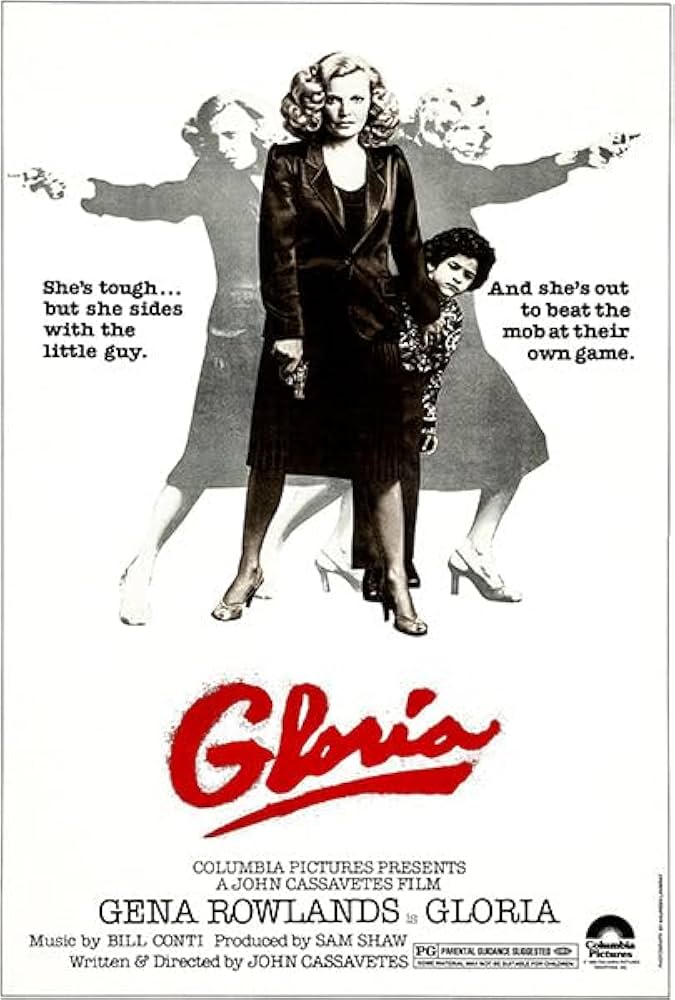
Phil (John Adams) is a young boy whose father (Buck Henry) works as an accountant for the mob and has become an informant for the F.B.I. causing him and his family to become marked for retaliation by the criminal underground. In desperation Phil’s mother (Julie Carmen) pawns the child off on Gloria (Gena Rowlands) who’s their neighbor from across the hall. Gloria initially refuses to take the child as she’s adverse to kids, but eventually agrees as she takes the boy away and into her apartment just as the mob moves in on the hit. Phil was also handed by his father the ledger listing in detail the mob’s incriminating financial corruption and when they’re unable to find it after annihilating his family they then go after the pair. Gloria, who has mob connections from her past including having been in relationship with a mob kingpin, feels she can’t go to the police and must defend the child on her own using only her street savvy and gun, but where ever they go in the city the hit men remain right behind them.

John Cassavetes, who has described this as “a thoughtless piece about gangsters and I don’t even know gangsters” was never intending to direct it and though it’s become his most popular work among mainstream audiences it was one of his least favorites and something he felt embarrassed about doing. He wrote the script simply to sell it and make enough money from it to help him finance his other projects. He completed it in early 1979 and was meant as a vehicle for Ricky Schroeder who was just coming-off doing The Champ and MGM studio was looking for other projects for him to do. Cassavetes intentionally gave it a very commercial feel, much more than any of his other scripts, because he felt it would give it a better chance to sell, but when Schroeder and Barbara Streisand, who was the original choice for Gloria, both turned it down Cassavetes then shopped it around to Columbia Pictures who agreed to take it on, but only if Rowlands played the lead and since she was his wife he then reluctantly took on the directing duties.

The film doesn’t seem like the usual Cassavetes material as I was quite impressed with the location shooting, which takes the viewer to all sorts of New York City locales and makes you feel like you’re right there with Gloria and the boy as they try to maneuver their way around the unpredictable and very dangerous urban jungle. The opening bird’s-eye shot that tracks from the city’s skyline to Yankees Stadium is downright breathtaking and the grimy, rundown interiors of the family’s inner city apartment building effectively illustrates on a purely visual level the fear, stress, and tension of living in the inner city is truly like. Leonard Maltin, in his review, labeled this as being possibly done ‘for laughs’, but I didn’t find anything funny about it except for one amusing comment Gloria makes when she gets stuck in a slow elevator, but otherwise it’s a nail-bitter all the way through.

Rowlands gives her usual stellar performance, but I was hoping for more of an arch with her character. She states right up front to Phil’s mother that she hates kids and yet is pretty much warm and friendly to the child the second she takes him back to her apartment and it would’ve been more interesting to see her cold and indifferent to him initially only to slowly warm-up to him as their shared adventure went on. Buck Henry is also surprisingly good in an unusual casting choice as he’s typically known for his deadpan humor and had very little dramatic acting in his background. It was strange though why such a small, squirmy guy who was hitting 50 would be married to such a hot young Latino woman who looked to be only 24 and I felt this needed to be explained, but isn’t. I also felt the shooting of the family should’ve been shown, it gets implied, but that wasn’t enough. Seeing them shot in graphic style would’ve really hit home how dangerous and serious these people were and would’ve made the tension even stronger.

Critics at the time of the film’s release didn’t like the kid nor his acting and in fact Adams got nominated for the first razzie award for worst actor, which traumatized him so much he decided never to pursue anymore roles and to date this has been his only film appearance. I for one happened to like the kid and yes his character isn’t exactly ‘cute and cuddly’, but real children rarely ever are. They can be as rude, indifferent, and crabby as any adult and since he was brought-up in a troubled neighborhood having him be a bit ‘rough-around-the-edges’ made sense and was realistic. The only acting that I really didn’t care for was from Basilio Franchina who plays a crime boss that Gloria used to date and while he may have looked the part his performance is stiff like he’s just regurgitating lines he’s memorized and there’s no sign of a chemistry between them and their conversation is stilted and unconvincing.

Spoiler Alert!

The mob’s ability to be constantly on the pair’s tale no matter where they went seemed a bit implausible especially being in such a big, congested city, but I was willing to forgive it since the rest of it is so good. The ending was a little problematic too as it has Gloria reappearing disguised as an old lady after it was presumed she was dead. She then reunites with the kid in the middle of a cemetery, but it leaves more questions than answers like how did the two evolve? Did they become like mother and adopted son and where did they ultimately move to since New York for them was no longer safe? This might’ve gotten answered in the sequel that Cassavetes had written, but unfortunately never got green-lit. Remade in 1999 with Sharon Stone in the lead.

My Rating: 8 out of 10

Released: October 1, 1980

Runtime: 2 Hours 2 Minutes

Rated PG

Director: John Cassavetes

Studio: Columbia Pictures

Available: DVD, Blu-ray, Amazon Video, Tubi, YouTube

The Dogs (1979)

dogs

By Richard Winters

My Rating: 4 out of 10

4-Word Review: Canines on the attack!

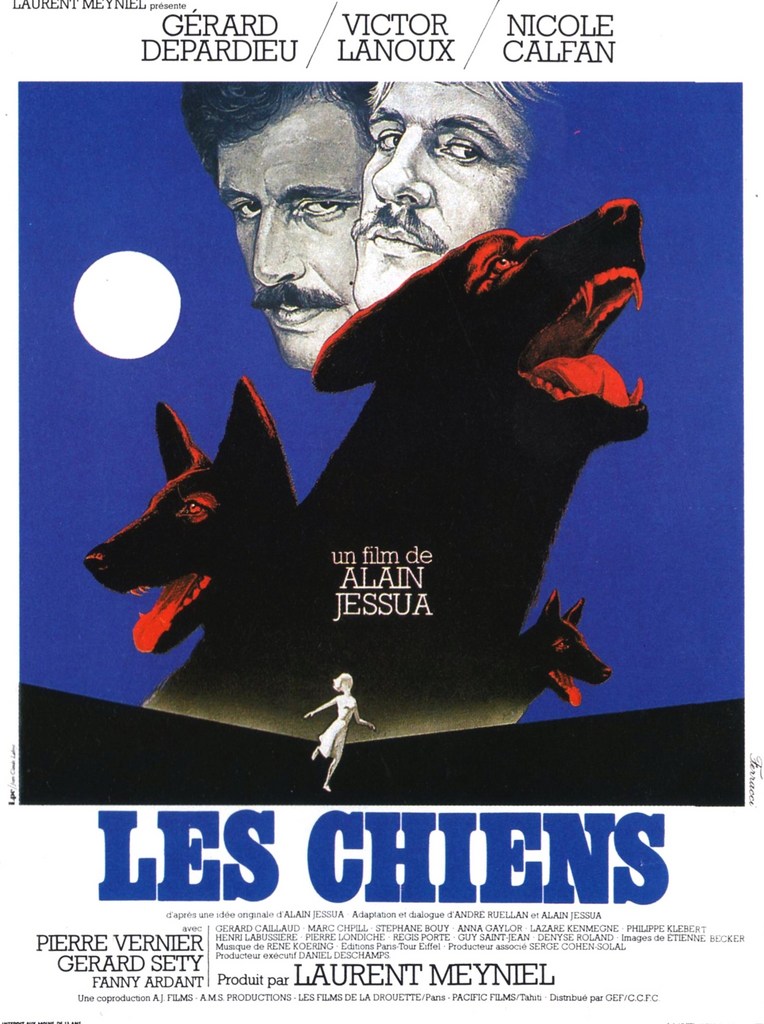
Henri (Victor Lanoux) is a doctor who opens up a clinic in a planned community. He finds to his surprise that many of his patients are coming in complaining about dog bites. He then becomes aware of Morel (Gerard Depardieu) who runs a club were participants learn how to train their dogs to protect them from attacks. However, these same dogs have now become more of a menace that’s putting other citizens in the town in danger including the mayor who becomes a victim. Henri is soon at odds with his girlfriend Elisabeth (Nicole Calfan) who gets a guard dog after she is raped and she is more attached to the dog than him.

The story certainly has some interesting ingredients including the fact that the dogs themselves  aren’t really the threat, but more their owners who train them to be aggressive, which is a nice change of pace from other films from that era that would show animals attacking for seemingly no reason, or that they had become possessed by something evil. Here the set-up is more realistic and plausible and the residents are wealthy living in plush homes helps convey the idea that even ‘nice’ neighborhoods can have evil dwelling underneath and no place is ever completely ‘safe’.

Depardieu goes against type playing the villain and he approaches the part in a fascinating way where he’s not outwardly creepy at the start, but more just an awkward individual who genuinely believes, which is a mindset that he continues to have to the very end, that he’s the ‘good guy’ who’s simply helping vulnerable people find ways to adequately protect themselves. He also has a profound love for his dogs whom he likes more than people, that comes to prominence during a graphic birthing seen where the mother dog isn’t able to come through it. His performance is even more impressive when you factor in that he suffered a dog attack of his own in real-life just a few months before being offered the role and he took the part hoping it would alleviate his pent-up fears and he certainly goes all out here including allowing the dogs to attack and bite him while wearing protective clothing during the training exercises that he conducts.

On the other end, as his adversary, I didn’t find Lanoux to be half as impressive. For one thing he never comes-off seeming like much of a doctor nor ever seen wearing a white physician jacket and works inside a place that resembles a rented out business office than a legitimate clinic. He looks and behaves more like a detached business man walking through his role and never being as emotionally charged as the part demanded.

Calfan, as the girlfriend isn’t convincing either. She leaves her job late at night all alone even though she’s well aware of the crime in the area, which makes it seem like she’s foolishly walking into trouble and the subsequent rape attack gets played-out in a cliched and mechanical way. He recovery is too quick as she’s back to be her normal self again almost instantaneously without showing any of the post traumatic effects that victims of the crime typically do. Her character’s arch offers some intrigue as she at one moment ‘jokingly’ tells her dog to attack Lanoux and then at the last second calls him off, which understandably frightens Lanoux and made me believe she was mentally moving into a dark mindset and she would become the source of danger, but this doesn’t lead to anything. By the end she ‘snaps out of this phase’ and goes back to being her normal self even to the extent turning into the hero, which I didn’t find interesting at all and it would’ve been far more memorable had she slowly became the threat.

The film is too leisurely paced. We know upfront that these dogs, and the people who own them, are something to be feared, but the actual attacks take too long to get going and when they do they’re too quick and ultimately start to play-out in a redundant fashion. The chills and thrills are limited and there’s not enough surprises or twists. There are also some disturbing segments including a dog getting kidnapped and then bound with a muzzle while dangling in the air by a rope as it whimpers, which many viewers including animal lovers will most likely find highly unsettling.

Alternate Title: Les Chiens

My Rating: 4 out of 10

Released: March 7, 1979

Runtime: 1 Hour 40 Minutes

Not Rated

Director: Alain Jessua

Studio: A.J. Films

Available: DVD (French), DVD-R (dvdlady.com)

The Hit (1986)

hit

By Richard Winters

My Rating: 5 out of 10

4-Word Review: Not afraid to die.

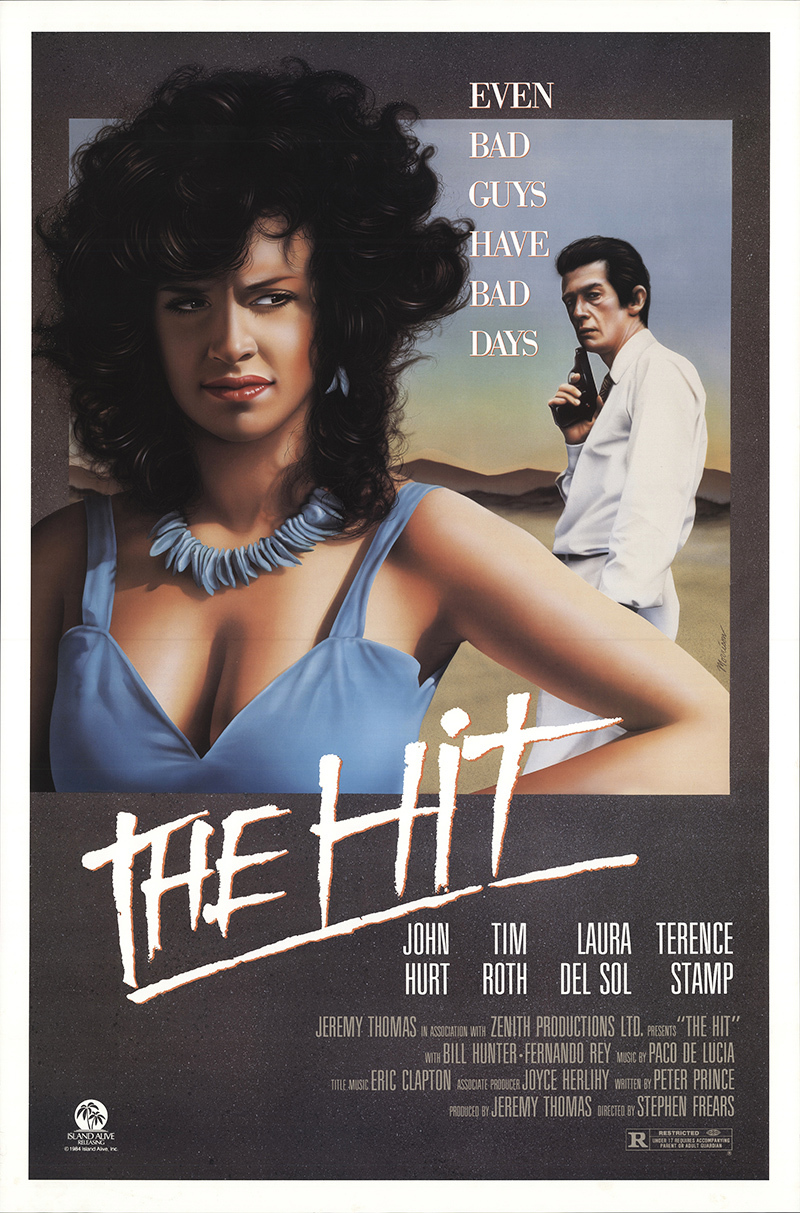
Willie (Terence Stamp) turns states evidence against the criminal underground that he’d been apart of, which then sends his former partners away to prison, but before they go they sing ‘We’ll Meet Again’ just as he leaves the court room. Ten years later Willie is living the quiet life in Spain as a part of the witness protection program only to have his home invaded by a group of teens who kidnap him and take him to hitman Braddock (John Hurt) who was hired by the kingpin that Willie helped put away. Braddock along with his young partner Myron (Tim Roth) are instructed to take Willie, via a car, to Paris where the kingpin hopes to inflict harm on Willie before eventually killing him. However, things don’t go quite as planned as Willie shows no fear of death insisting that he’s accepted it as a part of the cycle of life and this throws the two hit men off convinced that he must have something up-his-sleeve, but does he?

This is another example where a movie I enjoyed when I first watched it years ago, but doesn’t quite live up to expectations upon the second viewing. For the most part this doesn’t happen that often and there has been some cases where a movie I didn’t like when I first saw it I’ve come to appreciate when seen a second time. This one though is definitely a case of the former and I came away a bit miffed on what its point was. When I first saw it I was impressed by the scene at the waterfall where Willie, who had a chance to escape, but doesn’t and instead decides to spend his time appreciating nature’s beauty until Braddock catches up to him, I found at the time to be quite memorable and unique moment as it revealed that the bad guy in this instance was the one more afraid and insecure of death than the intended victim.

However, there’s a lot of stuff that doesn’t mesh, or could’ve been more convincing. I had a hard time understanding why this sophisticated criminal group would hire a bunch of teen boys to break into Willie’s home (hideout). How could they trust these novices to get the job done and the fact that they’re able to do it so easily makes it seem that Willie’s ‘protection’ as it were wasn’t too impressive. It also negates the effect of the criminal unit. They’re supposedly this cunning, evil, underground group relentlessly pursuing their man against this supposedly intricate government program, but if literal kids can just break down the door with just a bit of effort then the whole operation from both sides comes-off as rather amateurish.

The casting of Hurt as the bad guy isn’t effective mainly because of his meek stature. Stamp was originally intended for that role and with his big build and piercing blue eyes would’ve been perfect, but it was ultimately decided for both actors to play against type and thus the parts got reversed, but it really doesn’t work. Hit men should have an intimidating presence, but with Hurt’s slim figure and quiet, exhausted looking demeanor that doesn’t happen. Roth as his quick-triggered, youthfully naive henchmen makes matters worse as he’s a walking cliche of a teen in over-his-head just biding time before his knee-jerk reactions to do them in. Thus the psychological games that Willie plays with them are not that interesting, or impressive since these two come-off as badly dis-coordinated right from the start and like any average person could easily outfox them.

Stamp’s character is baffling as well. During the courtroom moments he states his testimony is an almost hammy way like he’s making fun of the whole situation, which maybe he is, but it’s not clear as to why and his ulterior motivations are never answered. It’s hard to tell whether he really is a good guy, or maybe secretly a bad one as there are scenes where he puts other potential victims in definite danger and then feigns ignorance about it afterwards. He spends the whole time telling everyone how death doesn’t scare him and yet when a gun does finally get pointed at him he panics and tries to run while also pleading for his life, so which is it? The same goes for Roth’s character who during the course of the movie he seems to be falling for the lady hostage, played by Laura del Sol, and even protective of her and yet when the time comes for Hurt to shoot her he puts up no fight, or resistance, which defeated the momentum and missed-out on what could’ve been an interesting confrontation.

I like movies with multi-dimensional characters and the film does have that and certainly humans can be a bag full of contradictions. However, at some point it kind of needs to explain itself and it fails on that end. Intriguing elements about these people get thrown-in, but the story fails to follow through with it ultimately making it too vague, ambiguous to be full satisfying and in many ways it will most likely leave most viewers frustrated and scratching their heads as they ask themselves what the point of the whole thing was supposed to be.

I did though really enjoy the scenes with Australian actor Bill Hunter who is marvelous in support playing a man who takes over one of Hurt’s friend’s apartments while on vacation only to get the shock of his life when the hit man and his entourage show up unexpectedly. His rather pathetic attempts to mask his fear and trying to somehow carry-on a casual conversation knowing full well he could be blown away at any second is dark comedy gold and by far the film’s best moments.

My Rating: 5 out of 10

Released: May 18, 1984

Runtime: 1 Hour 38 Minutes

Rated R

Director: Stephen Fears

Studio: Zenith Entertainment

Available: DVD, Blu-Ray (Criterion Collection), Tubi, Plex

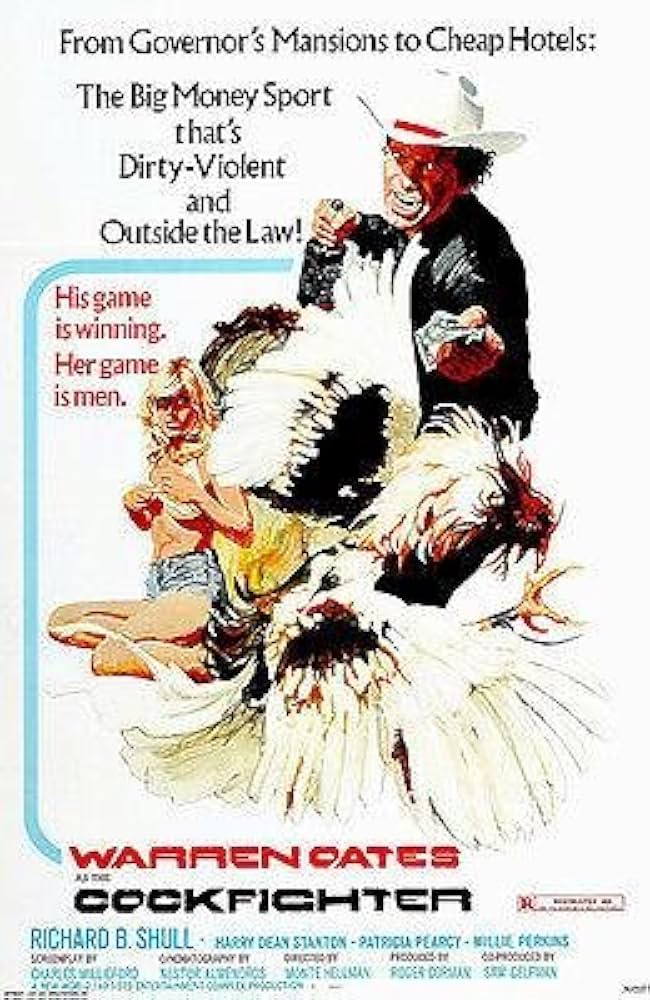
Cockfighter (1974)

cockfighter

By Richard Winters

My Rating: 6 out of 10

4-Word Review: He refuses to talk.

Frank (Warren Oates) has a passion for cockfighting. While he’s had other endeavors in his life he’s always come back to this because of the unpredictability. He can predict the way the chicken is built how it will fare in a fight, but it’s actual fighting spirit is unknown until it’s put to the test and because of that factor it keeps him intrigued with the sport. However, his bragging gets him into trouble when one of his chickens losses a battle during a makeshift fight inside a hotel room with a chicken from fellow cocker Jack (Harry Dean Stanton). After he’s forced to pay up the bet Jack tells him that he ‘talks too much’ convincing Frank to take a vow of silence and become effectively mute until he’s able to win a cockfighting championship.

The story is definitely a relic of a bygone era as cockfighting is no longer legal in the U.S. with Louisiana being the last state to ban it in 2008. Today only a few countries in the world allow it as the sport is considered by many to be animal abuse. The film pulls-no-punches and will be deemed brutal for certain viewers who’ll probably turn it off by the halfway mark if not sooner. The fights between the chickens are actual and up close. You see the beaks of one cock jamming into the eyes of another and their dead carcasses of which there ends up being many thrown into a heap onto others into a trash bin, or in one segment where the fights take place in a hotel room, into a bathtub with what seems like hundreds them. There’s even a scene where Oates hacks-off a live chicken’s head with an ax and another moment where he lays a chicken onto the pavement and then steps on its head and yanks it off from the rest of its body by sheer force, so if any of these details upset you then it’s best to stay away from the movie altogether.

For those who are game the story ends up having a darkly humorous tone. The armed robbery that takes place inside a hotel room and Richard B. Shull’s character hiding his earnings amidst the pile of dead chickens where he presumes no one would dare think to even check is amusing. The best moment though comes when Ed Begley Jr. becomes incensed when Oates’ chicken kills his during a fight and being so distraught at losing his prized possession comes after Oates with an ax.

The acting is marvelous particularly by the legendary Oates though he doesn’t say much until the very end, but he makes up for it by being the film’s voice-over narrator. What impressed me most though was his comfort level in handling the chicken’s and at one point casually dealing with one that tried attacking him, which made me believe that this must go back to upbringing in rural Kentucky where he lived amongst them as a kid so he was used to their behavior and not scared away as I’d think another actor without that type of background wouldn’t be able to pull-it-off.

The script was written by Charles Williford, who appears in the movie as a judge/ref during the cockfights and based off his novel of the same name. While the film does move along at a brisk pace and is never boring I did feel it lacked a certain context. It works more like a preview than a full story. You get a general feeling about the people and atmosphere, but not a deep understanding. My main curiosity was with the folks who come to see these fights and what motivated them to want to watch such a bloody sport. Analyzing this mentality would’ve been interesting, but never happens making the film feel incomplete and like it’s only barely tapping into the surface of the subject.

My Rating: 6 out of 10

Released: July 30, 1974

Runtime: 1 Hour 23 Minutes

Rated R

Director: Monte Hellmen

Studio: New World Pictures

Available: DVD, Blu-ray, Amazon Video, Fandor, Pluto, Tubi, Plex, Shout TV

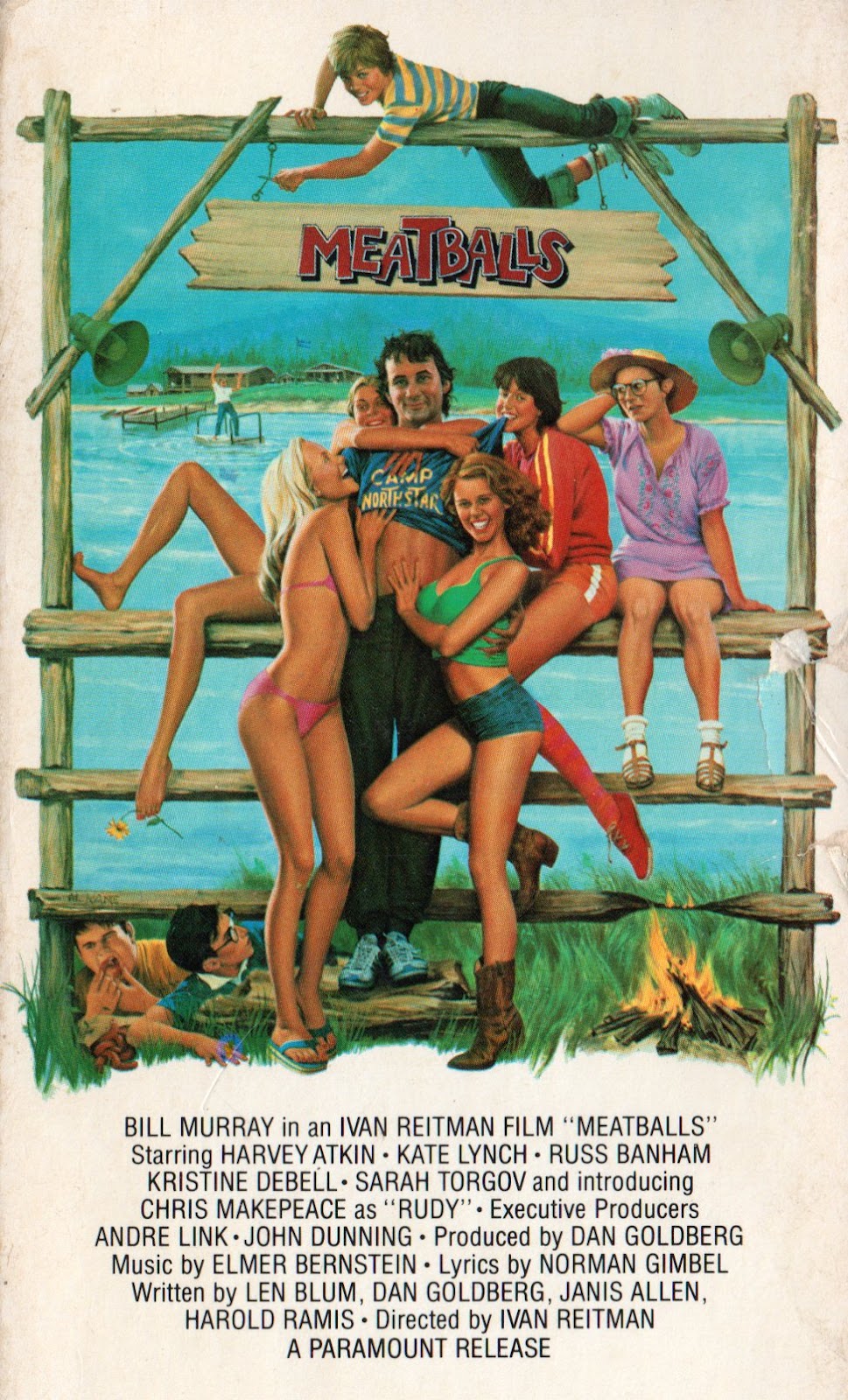
Meatballs (1979)

meatballs2

By Richard Winters

My Rating: 3 out of 10

4-Word Review: Shenanigans at summer camp.

Tripper (Bill Murray) has been assigned to lead a new group of counselors-in-training while simultaneously pulling pranks on camp director Morty (Harvey Atkin). He also takes shy camper Rudy (Chris Makepeace) under his wings and giving the kid some confidence, so that he can play in sports and feel that he has a chance to win. Tripper also gets involved in the annual Olympiad between his camp, Camp North Star, and their rival Camp Mohawk, which sits across the lake from theirs. Camp Mohawk has won the title the past 12 years, but this year Tripper thinks things will be different mainly because he’s trained Rudy on how to be a cross-country runner due to their early morning jogs together and assigns him, much to the disagreement of the other campers, to run against Mohawk’s top runner in the crucial final race.

This was the fourth film directed by Ivan Reitman and while he went on to direct a lot of big hits I felt here he was still learning the craft and it would’ve been a better movie had someone with more experience been at the helm. Originally it was intended for John Landis to direct, but he was too busy working on The Blues Brothersso Reitman reluctantly took the reins, but the pacing and tone is all off. To some degree it seems to want to be an Animal House wanna-be filled with off-color humor and slapstick, but at other points it tries for sentimental drama. Nowhere is this more evident than it’s eclectic choice of music featuring bouncy tune by Rick Dees and then turning around and having a sappy song by Maureen McGovern that seems out of place for a film that most of the time dwells in low brow humor.

Story-wise it’s incredibly vapid and seems to almost be plotless most of the way. The main crux of the script is apparently centered around Rudy and Tripper’s attempts to help him find some confidence in himself, but even these moments come-off as trite and thrown-in at haphazard intervals. In-between we get treated to a lot of silly hijinks and benign characterizations that mostly fall flat. There’s a lot of potential story threads that the could’ve been funny, but the movie fails to follow through on.

There’s a segment where the parent’s come to visit for a day, but this lasts for a minute and then it’s over. I also wanted to see the reluctant Rudy give out the morning messages of the day via an intercom set-up that had been traditionally done by Tripper. Since Tripper was going to be out he handed over the duties to Rudy who seemed nervous about the responsibility, so it would’ve been interesting to watching how he ended up approaching it and how the other campers responded, but instead we aren’t shown any of it. The same goes for a little boy who brings a frog with him that doesn’t ever move because he’s ‘tired’ yet we never get any follow-up to this, so why even have the scene, which isn’t funny or interesting anyways, if it has no real point to the plot?

The running gag involving the camp director named Morty who’s constantly referred to as ‘Mickey’ gets overblown and rather dumb. It has him being such a sound sleeper that the other campers, under Tripper’s guidance, move him and his bed, along with his bedside table, out of cabin and into various other parts of the campsite including at one point on a raft on a lake. When he wakes up he then finds himself in a very precarious situation, but it’s hard to believe that someone could sleep that deeply that they would’ve wake-up while they were being moved. Even if that were the case you’d think they’d come-up with some way to prevent it occurring in the future like bolting their door shut, or constructing some sort of booby trap that would catch the pranksters in the act. This could actually make it even funnier as it would be upping the ante each time versus just replaying the same old prank. At the very least you’d expect an ultimate angry confrontation between Morty and Tripper who he knew was behind it, which at one point he threatens to do, as he states ‘we’ll talk about it later’, but we never see the ‘talk’ actually happen, which again makes it seem like the movie really isn’t going anywhere.

Bill Murray, who reportedly wasn’t sure if he wanted to do it due to his SNL obligations at the time, but finally did show up to the shoot on the third day of production, is genuinely quite funny and the only things that saves it from being a dud though it comes close to being one anyways. However, his character does prove to be a bit problematic in the scene where he aggressively tackles an attractive counselor he wants to have sex with, played by Kate Lynch, which would be deemed sexual harassment in this day and age and not the ‘good natured, boys will be boys’ fun that it was considered at the time.

The film though does manage to elicit nostalgic homage to the camping experience, so those that look back to their summer camp days with fond memories may bond to this better. Otherwise I found it highly overrated and genuinely surprised that it did so well at the box office.

My Rating: 3 out of 10

Released: 1 Hour 34 Minutes

Rated PG

Director: Ivan Reitman

Studio: Paramount Pictures

Available: DVD, Blu-ray, Amazon Video, Freevee, Pluto, Roku, Tubi, YouTube