Tag Archives: Trevor Howard

Hurricane (1979)

hurricane

By Richard Winters

My Rating: 3 out of 10

4-Word Review: Tropical cyclone strikes island.

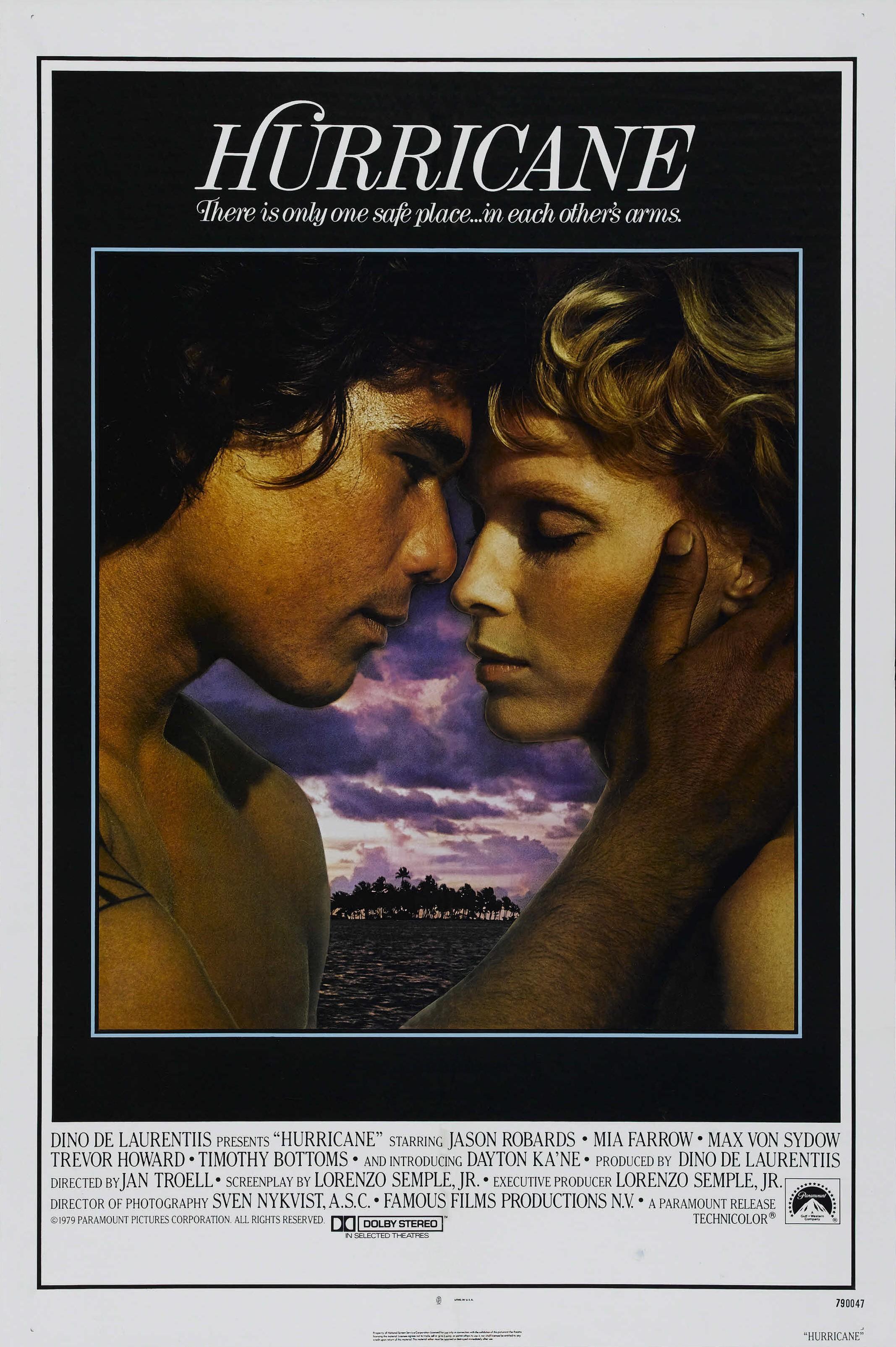
Charlotte (Mia Farrow) is the daughter of Navy Captain Charles (Jason Robards) who was appointed governor of a small island of Alava, which is under U.S. control. She comes to the island for a visit as she hasn’t seen her father in quite a while and immediately becomes attracted to Matangi (Dayton Ka’ne) who works as a houseboy at her father’s estate. A romance blossoms between the two and when her father finds out he puts Matangi in jail on trumped-up charges, but Charlotte is able to find a way for him to escape, but as they go on the run her father sets out to find them and put Matangi back behind bars just as a massive hurricane descends.

The film is a remake of the 1937 movie that was directed by John Ford and in itself an adaptation of the novel of the same name by James Norman Hall and Charles Nordhoff. After completing the runaway hit King Kong, another remake of a 1930’s movie, producer Dino De Laurentiis became inspired to tackle a second classic from the same era. He was most enthused with this one due to the hurricane effects as he was convinced that with modern technology it could be more vivid than the original and even hired the same man, Glen Robinson, who did the special effects for that one to recreate it here, but with modern film capabilities that had been unavailable when the story was first produced. So much focus was admittedly put into the ending that things like character development, which director Jan Troell had come onboard to work-on, were largely ignored causing Troell to consider it an unpleasant experience and he spent the remainder of his career making films in his homeland of Sweden as he felt after this that working on a Hollywood project wasn’t to his liking.

The casting of Farrow is part of the problem as the role called for a woman in her 20’s even though she was already well into her 30’s, but since she had what Dino described as an ‘eternal face of an 18-year-old’ he decided to hand her the part anyways. Her character though is so one dimensional that her time on the screen isn’t captivating. Ka’ne, who was an Hawaiin surfer with no acting experience, does better than expected though he only did one other movie after this before retiring from the business and working the rest of years as a compost truck driver and hotel doorman. Max Von Sydow is good in support playing a doctor who utters the film’s best line, most likely ad-libbed from his well-known atheist roots where he asks why a painting of Adam would require him to have a belly button since if he was created from dust then he’d have no need for an umbilical cord.

The biggest issue is the romantic angle as it occurs too quickly. An interesting relationship is one that has a challenge and this one should’ve had several as Mia’s father was clearly not going to be happy about her seeing Ka’ne and therefore she should’ve been apprehensive about getting involved, or even suspicious as how did she know he wasn’t just using her for leverage to get the old man to soften his stance on policies Ka’ne wanted changed? Instead, they fall into each other’s arms in a seamless few minutes and the whole first hour is spent with them dreamily swimming around in the ocean in a lovesick fashion, which is dull. Having the character of Moana appear, played by Ariirau Tekararere, who was the woman Ka’ne was arranged to marry, offers some potential, but since she barely speaks and when she does it’s in her native tongue without the benefit of subtitles, her presence doesn’t offer much.

Spoiler Alert!

The finale, which is all about the hurricane, is somewhat exciting, but it’s not perfect. The destruction of the homes appear like they’re miniature models and seeing constant shots of blowing rain becomes tiring, but watching the people leave the church while Priest Trevor Howard continues to pray at the pulpit is kind of funny and having the ship burst through the wall was cool too.

However, I wasn’t exactly sure that the couple really got ‘saved’ at the end like the viewer is supposed to believe. Yes, they survived the storm but were now stuck on a tiny sandbar in the middle of the ocean with no source of food, or transportation. Unless some help came along, which wasn’t guaranteed, they weren’t going to survive long. Thus, it’s not a real ‘happy’ ending because although they weren’t killed right away like the others doesn’t mean they won’t die an even more painful death of starvation.

My Rating: 3 out of 10

Released: April 12, 1979

Runtime: 2 Hours

Rated PG

Director: Jan Troell

Studio: Paramount

Available: DVD, Blu-ray (Import Reg. A/B/C)
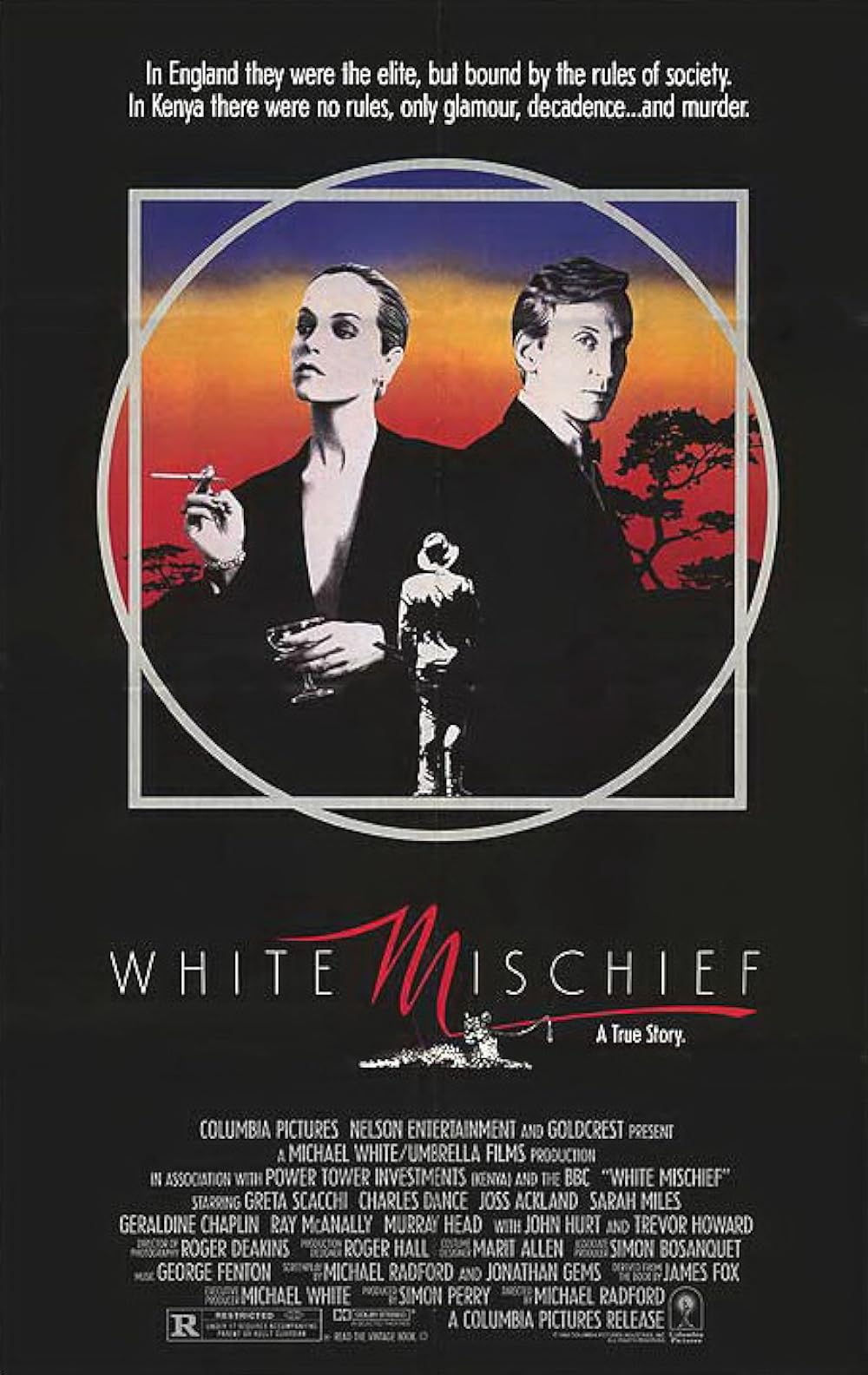
White Mischief (1987)

whitemischief

By Richard Winters

My Rating: 7 out of 10

My Rating: Unsolved murder in Kenya.

During the Second World War many British aristocrats with money escaped the tensions and horror in Europe by relocating at a settlement in Kenya that became known as Happy Valley. Here without the typical societal restraints of back-home they were able to indulge in all their provocative desires including rampant drug use and promiscuous sex. One such philanderer, possibly the most notorious of the bunch, was Josslyn Hay the Earl of Erroll (Charles Dance). He had already had various trysts with many of the women there including Alice (Sarah Miles) before dumping her due to her drug addiction. He then sets his sights on Diana (Greta Scacchi). She is married to Jock (Joss Ackland) who is older than her by several decades, and the two share a marriage of convenience with a pre-nuptial agreement that if either falls in love with someone else the other person will not impede it. Earl goes after Diana aggressively and despite some initial reluctance the two eventually become an open couple. Jock puts up a stoic front and allows her to go with him without any resistance, but internally he seethes with rage. Then one night Earl gets shot dead while driving his car in an isolate area. Did Jock pull the trigger?

The film is based on the book of the same name written by James Fox that was published in 1982 and in-turn based on the real-life incident that occurred on January 24, 1941 where the Earl of Erroll, like in the movie, is was found dead in his car and Jock, being the prime suspect, was put on trial, but then found not guilty due to a lack of evidence. For decades it sat as an unsolved case with no answers to what really happened until 1969 when Fox, along with fellow writer Cyril Connelly, became fascinated with the subject and began researching it vigorously. The book contains many interviews with people who lived through the ordeal and give first person accounts of the trial proceedings. Fox even traveled to the Kenya region to get a better understanding of the area and people and came to the conclusion that Jock had been the culprit with new evidence he unearthed, which makes up the book’s entire second-half though officially the case remains open.

The movie’s best quality is its visual element especially its ability to capture the expansive beauty of Africa as the film’s director Michael Radford proudly proclaimed before production even started that “films of Africa should be made by Africans” and you really get that sense here. The screenplay by noted playwright Jonathan Gems is also superb with it’s use of minimalistic dialogue where the conversations and characters never say too much, many times just brief sentences, and the emphasis is much more into what is implied.

On the negative end the attempts at eroticism are pathetic and overdone. The most absurd moment comes when the Sarah Miles character, during the open casket viewing portion of Earl’s funeral, reaches under her skirt and masturbates in full view of everyone before eventually putting her ‘love juices’ on the deceased, which came off as ridiculous and simply put in for a cheap laugh, or misguided ‘shock value’ and hard to imagine it occurred in reality. Both Scacchi’s and Dance’s characters are quite boring and their love scenes lack spark making the whole affair angle seem quite predictable.

The film’s saving grace though is with Ackland’s character where you really get inside his head and see things from his perspective. Normally in most films the jilted spouse is portrayed as someone to fear and a one-dimensional jealous machine who serves no purpose other than to get revenge. Here though we feel his quandary and sympathize with his internal struggle of trying to take the high road while also wracked with hurt and betrayal. Instead of being the culprit we ultimately see him as a sad victim even as his personality completely unravels by the end and because of this aspect I felt the movie works and is worth seeking out. Director Radford probably said it best when he stated that the film was about “people who have everything and yet have nothing. It’s about people who want to possess what they can’t possess” and with the excellently crafted Josh character you can really see that.

This is also a great chance to see acting legend Trevor Howard in one of his last performances. He was suffering severely at the time from his alcoholism and cirrhosis that he comes-off appearing like a wrinkled corpse put upright and there’s several scenes where he’s seen just standing there, but says nothing due to the filmmakers fear that he wouldn’t remember his lines, or if he did wouldn’t be able to articulate them. However, he does come through during a pivotal moment inside the prison when he visits Ackland and what he says and does there is great. John Hurt’s performance is the same way as initially he’s seen little and says no more than a couple of one word responses to the point I thought he was wasted, but then at the end he reappears and comes-on strong in an unique way.

My Rating: 7 out of 10

Released: November 10, 1987

Runtime: 1 Hour 47 Minutes

Rated R

Director: Michael Radford

Studio: Columbia Pictures

Available: VHS, DVD (Import Reg. 2), Amazon Video, Roku 

The Last Remake of Beau Geste (1979)

beaugeste

By Richard Winters

My Rating: 4 out of 10

4-Word Review: Brothers join the army.

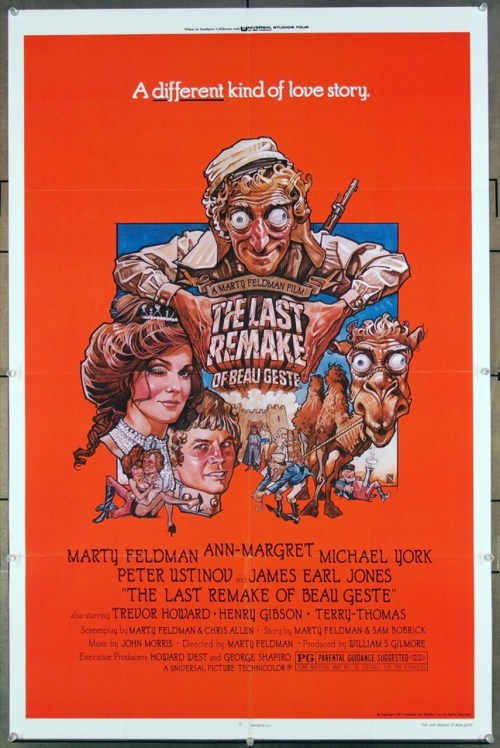
Sir Hector Geste (Trevor Howard) decides to adopt a son to be his rightful heir and carry on the family name. He goes to an orphanage where he spots Beau (Michael York) a dashing young boy who shows immense prowess. Hector immediately decides he wants him, but it comes with the caveat that he must also take on Beau’s twin bother Digby (Marty Feldman) who’s not nearly as handsome, or brave. After bringing both boys home Hector then gets married to Flavia (Ann-Margret) a much younger woman who’s more in-love with the Blue Sapphire diamond that’s in Hector’s possession than Hector himself. In order to keep Flavia from absconding with it Beau decides to take it out of the family home and bringing it along with him to Africa where he joins the French Foreign Legion. Digby eventually joins and they go on to have many adventures, but Flavia catches up with them determined to get the diamond using any means necessary.

The film is based on the 1924 novel of the same name written by P.C. Wren that had already been made into a movie three other times: in 1926 starring Ronald Coleman, 1939 starring Gary Cooper, and finally in 1966 starring Guy Stockwell. In 1976 when Marty Feldman signed a 5-picture deal with Universal to write, direct, and star in any film project he choose he decided to do a parody on a film he had seen growing up. He mistakenly thought it was Beau Geste, but came to realize once he watched the movie that it was really The Four Feathers that had a similar storyline and came out around the same time. He eventually went with doing this version since he felt ‘The Last Remake of the Four Feathers’ didn’t sound right.

The production, which was filmed in both Ireland and Spain, was met with many obstacles, including having Feldman getting sick during the shoot and putting the production on-hold for many weeks. It eventually went over budget and over schedule and the studio was not happy with Feldman’s final cut and determined to re-edit it while giving Feldman a 2-week vacation under the guise of letting him rest and recuperate. When Feldman returned and found out what the studio had done he became irate, so the studio heads decided to make him a deal; they would show both versions to a test audiences and which ever one rated better would be the one that would be released. Feldman agreed to this and to the studios shock Marty’s cut got much higher ratings, but the studio then went back on their word and released their version instead, which did not fare well with either the critics, or public. To this day Marty’s version has never been seen, but by only a few people even though those that have viewed say it’s much funnier and efforts have been made to find it and give it a proper Blu-ray issue though this has never come to fruition as of yet.

As for this version it’s okay, but it starts out better than it ends. There’s some funny gags here and there, but the humor tends to be quite broad and many of the jokes fall flat especially after the midway point. The best moment comes when Feldman splices his character into the 1939 film version and we see his character speaking to Gary Cooper and they even share a scene together, which I found to be quite innovative for the time period. Everything else though is hit-or-miss and suffers from not enough people being familiar with the source novel and thus the in-jokes involving the story will most likely go over  most viewer’s heads it also makes many changes from the original plot with the biggest one being that in this movie there’s only 2-brothers, but in the book there was 3.

The array of famous faces making cameo appearances is fun for awhile though I felt Peter Ustinov camps it up too much as the evil General Markov and the part would’ve been better served had it been played by Roy Kinnear who instead gets wasted as Markov’s assistant. Howard is quite amusing as the elderly father and I wished he was in it more, but ultimately his character gets confined to his bed for the second and third act. Ann-Margret offers some sexiness, but really has nothing to say or do that’s funny until the very end when she tries to challenge a guy to a fist-fight, which should’ve been played-out more. Terry-Thomas gets some work before his Parkinson’s condition, which is very obvious here with his trembling left hand, became so severe that it forced him out of acting and into a retirement home not more than a year after this was filmed.

Feldman himself is quite good, but I felt he needed to be seen more, which is the biggest problem with the movie in that it’s neither character nor plot driven. Too much nuttiness and wackiness for its own good. If the comedy had been better disciplined and a smaller cast it would’ve worked better, but the barrage of constant craziness all in the name humor eventually gets overblown.

My Rating: 4 out of 10

Released: July 15, 1977

Runtime: 1 Hour 25 Minutes

Rated PG

Director: Marty Feldman

Studio: Universal

Available: DVD-R (Universal Vault Series), Blu-ray

Gandhi (1982)

By Richard Winters

My Rating: 9 out of 10

4-Word Review: Fighting for India independence.

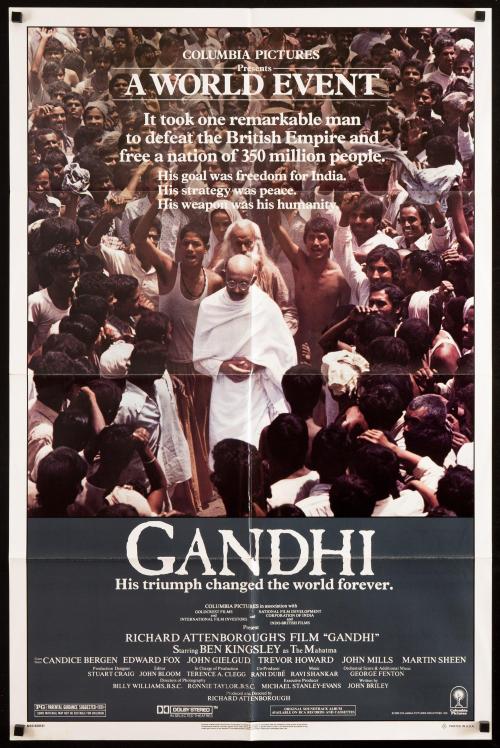
The film follows the life of Mohandas K. Gandhi (Ben Kingsley) starting at the age of 23 when he gets thrown off of a train in South Africa simply for being Indian. After spending many years fighting for Indian rights in that country he then moves back to his homeland of India. It is there that he takes up the challenge of fighting for its independence from Britain by advocating for his followers to practice peaceful civil disobedience.

This film project took director Richard Attenborough 20 years in the making as all the Hollywood studios refused to back it. He also went through many different casting choices in regards to who would play the lead and at one time seriously considered Dustin Hoffman and Anthony Hopkins in the title role. Due to the difficulty of finding backers and other hurdles some of the stars that do appear here were offered their parts many years before the filming actually took place including Candice Bergen, who plays Margaret Bourke-White, who first got approached about it in 1966.

Yet the long wait proved to be worth it as the film comes close to being a masterpiece in just about every conceivable area. I was surprised too that for  such a long runtime it hardly ever seems slow and clips along at a brisk pace. The story is filled with many strong scenes even a few harrowing ones like the recreation of the Amritsar Massacre that is quite disturbing, but thoughtfully handled.

After making his film debut a decade earlier as the bad guy in Fear is the Key and then moving back to the stage Kingsley shines in his Academy Award winning performance . The rest of the cast gets filled with a lot of big names, but many of them have brief appearances that almost amount to walk-on parts. My favorite though was Trevor Howard, who plays a judge and despite have little dialogue and only 2-minutes in front of the camera still manages to make the most of it, which is what great acting is all about.

The film though lacks a complete oversight of Gandhi’s character as we only get introduced to him when he is already 23 even though the crucial formative years are during childhood and it would’ve been revealing and insightful to have seen some scenes of him during that period. His family life also takes a backseat. We see only one scene of him with his children and then they just disappear. He also discusses marrying his wife when he was very young, but a flashback showing it would’ve been stronger.

The film also has its share of dissenters who feel it’s biased as it only shows the positive side to Gandhi’s personality. It even instigated three novels, which paints Gandhi in a much different light by arguing that he fought for Indian rights while in South Africa, but not for the blacks and there’s evidence that he had the same disdain for the blacks in that country as the whites did.

Some also argue that his involvement in the push for India independence was much more minimal than the film portrays and that India most likely would’ve eventually broken off from British rule one way or the other had Gandhi existed or not. All of these counter arguments could have some merit, but I don’t think that was the intended point of the film, but instead the focus was on how peaceful non-violent resistance can make a difference and in that regard the movie succeeds nicely.

My Rating: 9 out of 10

Released: December 6, 1982

Runtime: 3 Hours 11 Minutes

Rated PG

Director: Richard Attenborough

Studio: Columbia Pictures

Available: DVD, Blu-ray, Amazon Video, YouTube

Hennessy (1975)

hennessy

By Richard Winters

My Rating: 6 out of 10

4-Word Review: Blow up the Queen.

This review will be the first in a month long series analyzing movies from the 70’s that starred Rod Steiger. Steiger was an interesting performer with a long and varied career who always brought a unique intensity to all of his roles. He performed in a wide variety of movies from Hollywood pictures to foreign films and from big productions to the low budget as well as going from the leading man to character actor. Every Friday during the month of January I will select films of his that will hopefully be able to spotlight a little bit of all of these.

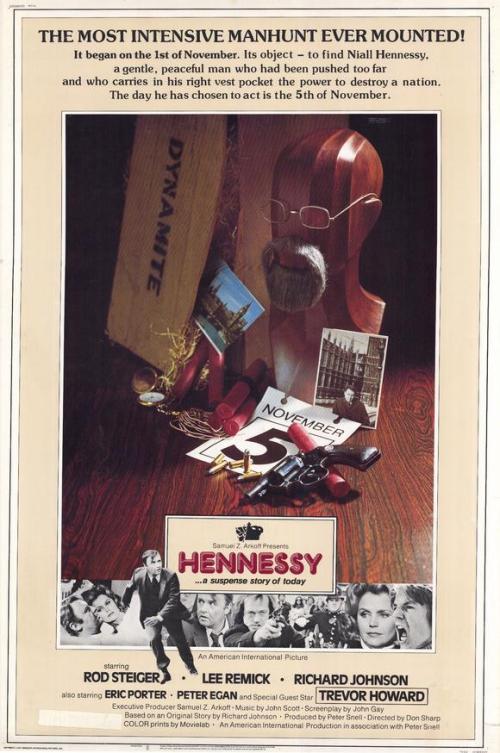
Today’s film deals with the story of Niall Hennessy (Steiger) an Irishman with ties to the IRA. When his wife and daughter are killed during a riot in Belfast he plots revenge with a plan to blow up the House of Parliament with the Queen Elizabeth inside.

The movie has a great concept, but the execution is a bit lacking. For one thing the police immediately pinpoint Hennessy as the man they are looking for as well as figuring out his plan. How they were so easily able to do this not only seemed a little farfetched, but also sapped a lot of the intrigue and tension out of the story. Having the police come to this conclusion more slowly would have plotted the suspense out longer and been more interesting.

This also opened the door to a few loopholes the biggest one being that they know Hennessy wants to blow up the Parliament so one would expect that the police would have their men staking out the place and on alert to spot Hennessy if he came near the premises, but instead Hennessy is able to go on a guided tour and able to canvas the building unheeded. Another scene later on has Hennessy trapped in an upstairs apartment by the police who have surrounded the building and yet he is somehow able to escape even though it is never shown how.

The scene showing his family getting killed during a bomb attack is not effective. We see the mother and daughter leave a nearby building and then the film cuts away from them and goes back to the fighting in the street only to go back to the two a few minutes later lying in the street motionless. However, there is neither blood on them nor any type of make-up effects to show injury making it look more like two people lying down with their eyes closed. Seeing them actually hit by the bomb and screaming would have been more jarring for the viewer and allowed them to get more emotionally attached to Hennessy’s plight. Also, when Steiger is shown standing over them I was expecting him to let out another one of his patented primal screams much like he famously did in The Pawnbroker, but here he doesn’t and the sequence is quite brief making me wonder why would they hire an actor known for his onscreen intensity and emotionalism if they aren’t going to allow him to do what he does best especially when the scene calls for it.

Steiger for the most part does well with the part although he is surprisingly restrained during most of it. It is a bit of unusual casting given that he wasn’t Irish or a native of the region however, the accent he uses is alright and I kind of got a kick out of the way he runs especially at the end. His biggest obstacle though was his wig. Rod became bald as he aged and instead of just appearing that way in his roles, which he finally did during his later years, he instead wore a variety of wigs for his parts. Some of them were okay and some weren’t and the one used here definitely wasn’t.

Richard Johnson is quite good playing the relentless Inspector Hollis and I liked seeing him with a moustache. The talented Lee Remick appears as Kate Brooke a lady friend to Hennessy who allows him to hide out at her home and although she has a few good lines she is ultimately wasted. Legendary Trevor Howard is wasted as well and only seen briefly as a police commander.

The best part about the movie and the one thing that gives it distinction is the ending when Hennessy goes into the parliament building with a bomb strapped to his body. Actual footage of the Queen is shown and it looks so authentic that many people thought she had been involved in the production, but she really wasn’t. Their ability to crop this footage in with the action is well done and almost seamless and certainly helps to heighten the tension. Seeing a young Prince Charles looking bored with the proceedings and the elaborately decorated interior of the building as well as its many large and majestic hallways and rooms is fun and interesting.

My Rating: 6 out of 10

Released: July 31, 1975

Runtime: 1Hour 43Minutes

Rated PG

Director: Don Sharp

Studio: American International Pictures

Available: Amazon Instant Video