Tag Archives: Robert Altman

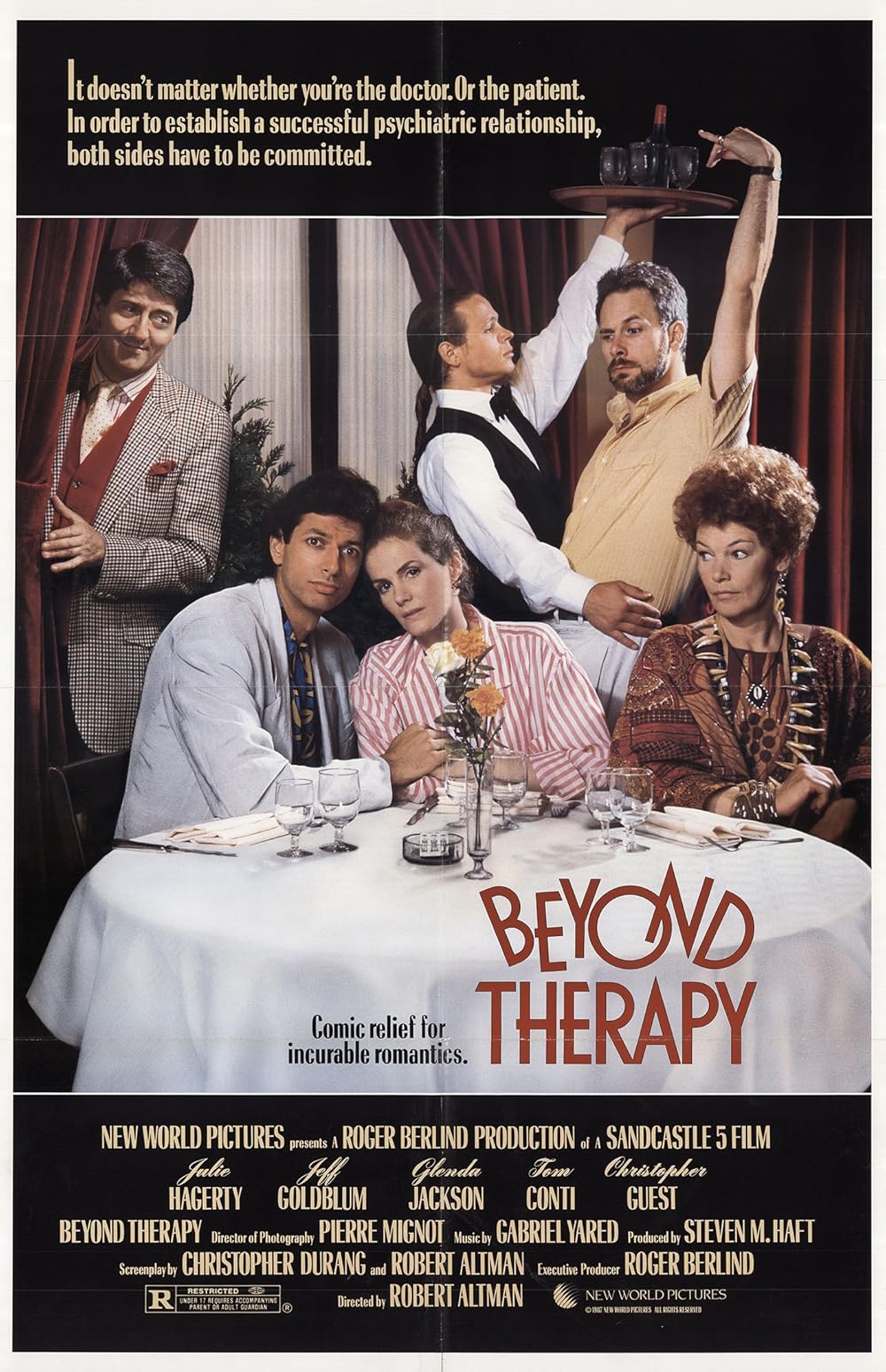
Beyond Therapy (1987)

By Richard Winters

My Rating: 3 out of 10

4-Word Review: Therapists nuttier than patients.

Bruce (Jeff Goldblum) is a bisexual who’s tired of his relationship with Bob (Christopher Guest) and thus decides to place a singles ad looking for a female companion. Prudence (Julie Hagerty) answers and the two meet-up at a restaurant, but they find there’s too many differences between them and fail to hit-it-off. Bruce then goes to Charlotte (Glenda Jackson), his therapist, while Prudence visits Stuart (Tom Conti) who’s her therapist and works in the next room beside Charlotte’s. After some counseling, and at Charlotte’s suggestion, Bob places another ad, but changes some of the personal details, causing Prudence to again answer it thinking it’s a different person. They meet at the same restaurant, but this time things click and they agree to go out again, but Bob and his meddling mother Zizi (Genevieve Page) don’t like the fact that Bruce is seeing somebody else and become determined to ruin the potential relationship as does Stuart, who once had a fling with Prudence, and wants to rekindle the old flame, but only if he can get Bruce out of the way.

The film is based on the hit stage play of the same name by Christopher Durang and while that one got rave reviews this version falls off its hinges right away and a lot of the blame should be pointed at director Robert Altman who rejected the screenplay that Durang had written and instead revised it severely causing Durang to feel that very little of his original work was left and lamenting in later interviews that his experience working on this project was an unhappy one. The story is supposed to be set in New York City, but because Altman was living in Paris at the time he choose to shoot it there, but New York’s ambience, where the single’s scene is quite strong, would’ve helped accentuate the theme and allowed for a more vibrant backdrop versus here where everything takes place in a bland cafe, or in the therapists office, with the exception of a few scenes done in Bruce and Bob’s pad, that hampers the visual flair and makes the production look stagnant and cheap. It also ends with a bird’s eye shot of the Paris skyline, but since everyone was speaking in English and without a French accent it makes it off-kilter, and they should’ve at least pretended it was New York even if it wasn’t.

Goldblum comes off as too detached and thus isn’t effective for this kind of role. Hagerty has her moments and at least gets some laughs, but her open disdain for gay people, along with some of her character’s other quirky hang-ups, may not go over well with viewers. Guest plays the gay lover role in too much of a cliched way making him seem like a walking-talking parody, while Page, as his overprotective mother, is excessively hammy and her exaggerated behavior gets in the way and doesn’t add much.

Jackson is a big disappointment though it’s not all her fault as Altman insists on shooting the majority of her scenes through the window of her office making the viewer feel cut-off from her and like she’s intended to be a caricature. Her confusion over words is more disconcerting than funny. Having a therapist that’s a bit daffy is okay and might even be good enough for a chuckle or two, but here she seems genuinely nuts to the extent that you wonder why Bruce would continue to see her. How she’s able to pick-up words said by Stuart in the other office is never made clear, they also seem to have sporadic sexual rendezvous in the room that’s in-between their offices, but this only gets implied and never actually shown though it should’ve been. Conti’s performance is annoying as he speaks in this fake sounding Italian accent, which he finally drops near the end, but should’ve done way sooner.

There are a few in-jokes in regard to Jackson that I did like. One is a refence where her son, played by Cris Campion, asks her to cry, which she does in a comic sort-of way and I think this was alluding to her performance in A Touch of Classwhere the script asked for her character to cry, but she refused insisting that crying was just something she didn’t do, so here you finally get to hear her do it, which is fun. Later there’s another bit where Bob talks about the movie Sunday Bloody Sundaya film that Jackson was in, though here he describes her as being ‘that English actress’, which is amusing, but would’ve been even funnier had, when he later meets her, he could’ve said ‘you look exactly like the English actress in that movie.’

Spoiler Alert!

While the film does become semi-engaging even with its rough, awkward start it manages to blow it up with a dumb conclusion, which has Bob shooting at Bruce with a toy gun while inside the restaurant. We already know it’s a toy because he tried to use it on Charlotte earlier, so having this extended slow-motion sequence where all the customers duck for cover, doesn’t work and becomes overdrawn instead of funny, or suspenseful. Having the group then remain in the restaurant afterwards and even get served food was equally ridiculous as anyone that would’ve caused that much of a melee would most certainly be asked to leave or arrested by the police for causing a disturbance.

My Rating: 3 out of 10

Released: February 27, 1987

Runtime: 1 Hour 33 Minutes

Rated R

Director: Robert Altman

Studio: New World Pictures

Available: DVD, Blu-ray, Amazon Video, YouTube
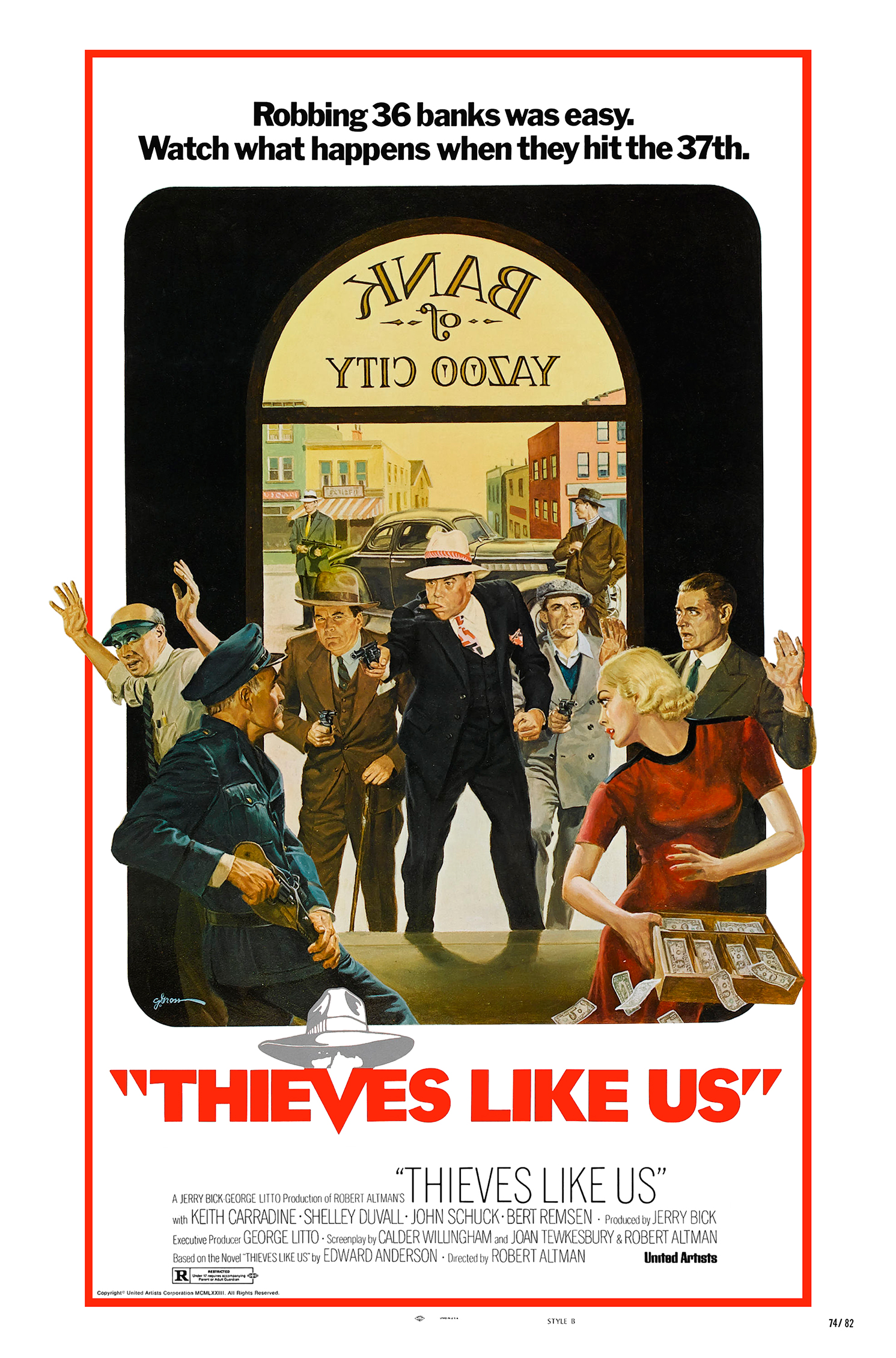
Thieves Like Us (1974)

thieves

By Richard Winters

My Rating: 6 out of 10

4-Word Review: Convicts escape from jail.

Bowie (Keith Carradine) is a young man stuck in jail due to a murder conviction from when he was a teenager. He teams up with Chicamaw (John Schuck) a middle-aged man to escape from prison and meet-up with T-Dub (Bert Remsen) an older man who has them hide-out at a local auto garage where Bowie meets the owner’s daughter Keechie (Shelley Duvall) and the two start-up a relationship. The three men return to their criminal ways by robbing banks, which goes well for awhile until the quick-triggered Chicamaw shoots and kills a bank clerk, which gets him recaptured and returned to prison. Bowie, who has now gotten Keechie pregnant, feels a loyalty to help get Chicamaw out, but Keechie wants him to settle down and get a conventional job while learning to become a family man. Bowie though resists the urge and after leaving Keechie at a motel cabin owned by Mattie (Louise Fletcher) sets out to help Chicamaw break-out for a second time, but this ultimately leads to tragedy.

The film was based on the novel of the same name written by Edward Anderson and published in 1937. The book had been adapted before in 1949 as They Live By Night, which Robert Altman was not aware of before taking on the project. Joan Tewksbury, his longtime screenwriter, adapted the book in a matter of 4-days, but getting it financied proved challenging and it was only after Altman and two of his other producers offered to mortgage their homes to help bring in needed capital that it eventually got green-lit. Unfortunately once it was completed the studio didn’t know how to promote it and ultimately released it without any advertising budget or fanfare. After a brief 3-week stay in the theaters it fell into obscurity before being resurrected by critical acclaim, which made it do well on cable television and has since gained a small cult following.

The atmosphere is probably the best thing as Altman achieves an authentic 1930’s setting. Other films that try to recreate the era always come-off a bit affected and cliched, but because Altman actually grew up during the period he’s able to give it the needed grittiness and I felt right from the start I was being transported to a different time versus feeling like I’m looking back at a bygone era through a modern day lens. The film has two very memorable moments. One of them is when Bowie goes to the prison to help Chicamaw breakout and meets up with the prison warden who’s residing in this country-style house and feasting on a large dinner. The contrast of this home cooked meal prepared by his wife like they were peacefully living out on a rural farm versus stationed right in the middle of a prison with dangerous criminals is something I really loved. The bank robbery game that the three men play with Mattie’s children where they turn their living room into a make believe bank with the children playing bank clerks and then the men proceed to ‘rob it’ is quite cute as well.

The acting is excellent by Carradine who starts to come into his own during his moments with Duvall, who is also good and does her very first fully nude scene. Lousie Fletcher, who’s first movie this was after she took a 10-year hiatus to help raise her kids, is supreme and helps give the proceedings a very definite, no-nonsense attitude and it’s just a shame she wasn’t in it more though the segments she does have she makes the most of. Tom Skeritt turns out to be a delightful surprise here. Normally I’ve found his work to be rather forgettable and under the radar, but here he stands-out as an alcoholic father who’s a pathetic character with darkly amusing lines.

The film though does suffer from Schmuck’s and Remsen’s characters seeming too much alike and I found the rapport between them to be quite unenlightening. Altman also takes a page out of Hitchcock’s directing book where like with what Hitch did in Frenzy he has the camera pull back away from the action going on inside the building and focusing instead on what’s going on outside. He especially does this during the robberies, which is initially kind of interesting, but he does it too much and then when he finally does show a robbery in progress he does solely from a bird’s-eye view with the camera nailed to the ceiling, which causes the viewer to feel too emotionally detached from what’s happening. He also completely skips over the part where T-Dub gets shot and killed and Chicamaw recaptured, the viewer only learns of this by hearing it reported on the radio, but these are pivotal moments to the story and the film is slow enough the way it is, so this is the type of action that should’ve been played-out.

Spoiler Alert!

The climactic sequence where the cabin that Bowie is in gets surrounded by Rangers and shot-up doesn’t work at all. This is mainly because it’s too reminiscent of the same type of shoot-up done in Bonnie and Clyde that was more famous and riveting. Here it comes-off like a second-rate imitation of that one and does nothing but make you want to go back and see that one while completely forgetting about this one in the process.

My Rating: 6 out of 10

Released: February 11, 1974

Runtime: 2 Hours 3 Minutes

Rated R

Director: Robert Altman

Studio: United Artists

Available: DVD, Blu-ray

A Perfect Couple (1979)

perfect2

By Richard Winters

My Rating: 5 out of 10

4-Word Review: Meeting through dating service.

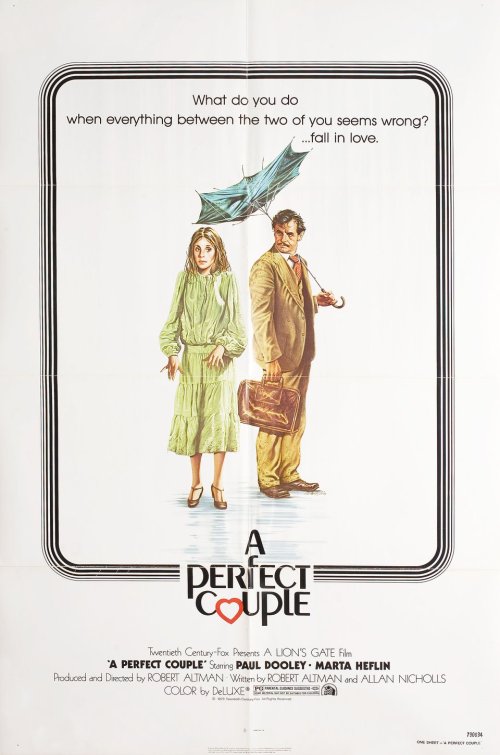
Sheila (Marta Heflin) is a singer in a traveling rock band run by Ted (Ted Neeley) who is quite demanding and openly berates and even fines members of the group who do not follow his orders. Alex (Paul Dooley) is a middle-aged Greek man still living at home with his domineering father (Tito Vandis) and extended family who berate him at every turn for not conforming to the family orthodox. Both are single and lonely and decide to join a dating service. From there they get connected and go on a first date at an outdoor orchestra concert where it rains and they both get wet. Despite the mishap Alex pressures Sheila for a second date, but miscommunication causes problems here as well. They eventually go their separate ways by dating other people they meet at the service, but Alex feels the need to try one more time to make it work and thus goes on tour with Sheila’s band as they hit the road, but finds their communal lifestyle is not for him.

The inspiration for the movie came while Robert Altman was shooting A Wedding and intrigued with the idea of what would happen if Paul Dooley’s character in that film started dating Sandy Dennis’ character and thus decided to write a whole movie about them. Problems though started right away during rehearsals when Dooley, who’s allergic to cats, could not handle being in the same room with Dennis, who was a major cat lover and would usually bring her pets to the reading, which would send him into a severe allergic reaction. Even when she quit bringing the felines with her it still caused issues with Dooley due to the cat hairs on her clothing. Altman then cut Dennis from the cast and had the part rewritten for Heflin, who was 33 at the time, but looked much younger like she was only 22 or 23 and thus accentuating the differences between the couple.

The film starts out with the two already on their first date instead of showing them viewing potential dates through the taped interviews that the service had available, which I felt was needed. As a guy I could see why Dooley would get into a young, semi-hot chick like Heflin as lonely guys, no matter their age, can instantly ‘fall-in-love’ with a woman from their looks alone, but both need to agree to the date before they go and I couldn’t understand why Heflin would to go out with a guy who was way older and didn’t seem to have much going for him. Maybe all of the other prospects were total duds and he was the best of the lot, so she decided to give it a try, or maybe she had some sort of father complex, but that’s something that still needs to be revealed and the fact that it isn’t leaves a big gaping logic hole.

The characters are palatable to some extent, but behave in ways that makes them at times quite infuriating. Dooley is especially problematic. Granted he’s playing someone who is socially clumsy and not real slick with the dating thing and trying a bit too hard to make it all work, but still insisting that he enter her apartment even when she makes it quite clear that she’s more comfortable just saying goodbye at the door is creepy. Having him show up at her place unannounced and demanding she see him for a second date and not leaving until she relents makes it even worse. There needs to be someone to tell him that his behavior is out-of-line and this isn’t a way to ‘woo a woman’ and in many cases will justifiably scare them off. Unfortunately the Heflin character doesn’t do this. Even though everything he does makes her quite uncomfortable she never protests it and lets him keep having his way, which makes her as annoying as he is.

Their unique living arrangements brings up even more issues. For Heflin I could understand her situation and it made sense. Sure the band manger is a demanding jerk, but I could see her feeling the need to put up with it because she wanted to break into the rock singing business and felt this was part of the crap she had to get through while she works her way up. For Dooley, his living arrangements are just downright baffling as he plays a 50-year-old who’s still residing at home with his father who’s highly demanding forcing Dooley to become a pathetic, obedient simp when around him. I could understand if the guy was like 20 how this might be somewhat believable, but by 50 he should’ve broken away a long time ago and the fact that he hasn’t needs to be explored and explained as it’s highly unusual and seems to intimate that there’s a serious personality disorder of some kind that begs for analyzation that never comes.

The entire runtime has the two going through every bad date moment you could think of. They have absolutely nothing in common and repeatedly talk past each other, so there’s no constructive communication whatsoever and yet somehow at the end they ‘fall in love’, but how? To make a relationship work there needs to be a connecting bond, but the film fails to show what it is making it quite shallow. There’s also an abundance of music played by the band Heflin’s a part of called ‘Keepin’ Em off the Streets’, which gets way overdone. There’s 12 different numbers, which bogs down the pace and makes it seem like a band’s demo reel instead of a movie.

The only memorable bit is when Allan F. Nichols, who co-wrote the script, appears as Dana 115, one of Heflin’s dates for the night and he has a physical confrontation with Dooley, which ended up making me laugh, but that’s about it. Nothing else happens that is either amusing or insightful. A fluffy movie that doesn’t go far enough to be either compelling or memorable.

My Rating: 5 out of 10

Released: April 6, 1979

Runtime: 1 Hour 47 Minutes

Rated PG

Director: Robert Altman

Studio: 20th Century Fox

Available: DVD

A Wedding (1978)

wedding2

By Richard Winters

My Rating: 7 out of 10

4-Word Review: Guests at wedding party.

Muffin (Amy Stryker) marries Dino (Desi Arnaz Jr.) at a wedding ceremony that is non-eventful. However, during the reception afterwards, held at the mansion of Dino’s family, the Correllis, everything begins to go wrong including having the family’s elderly matriarch, Nettie (Lillian Gish) promptly die just as the guests arrive. Snooks (Paul Dooley) and Tulip (Carol Burnett) are the parents of the bride, while Buffy (Mia Farrow) is Muffin’s jealous older sister. During the party Buffy lets Dino know that she’s pregnant with his baby, which sends the family into an uproar once word gets out. Meanwhile Mack (Pat McCormick), the cousin of the groom, makes it known that he’s ‘madly in-love’ with Tulip and wishes to have an affair with her. Tulip at first resists, but then devises a scheme where the two can meet in 2-weeks, at a location in Tallahassee, Florida under the ruse that Tulip will be going to visit her sister who lives there.

While director Robert Altman made some great movies and revolutionized movie-making with his over-lapping conversations technique, he did also produce a few duds. Most of them came during the 70’s when he was given too much free rein to make whatever he wanted in however way he wanted to do it, which culminated in a lot of over-indulgence. This one though, which came right in the middle of his down cycle, is one of his better efforts The idea came as an accident as he was tired of being hounded by a reporter asking, while he was still working on finishing up on 3 Women, what his next project would-be and he joked that he was set to ‘film a wedding’, which at the time had come into vogue for people to shoot the weddings of their family members in a home movie style. Later that night, after speaking with the reporter, he partook in a drinking session with the crew of 3 Women, where they discussed the possibilities of making a movie about a wedding where ‘everything would go wrong’ and by the end of the night he had already come-up with an outline for his script.

This film though, like with all of Altman’s movies, does come with its share of detractors. Gene Siskel in particular did not like the characters, who I admit are a cliche of the nouveau riche and too easy a satirical target. He also complained that there was no one likable, which is true, though films where one person in a large group somehow manages to rise-above-the-fray and being morally virtuous when all the rest aren’t, is unrealistic and having an amoral climate such as here where everyone gets dragged down to the same level as everyone else makes more sense.

The edginess of the comedy is dated as well as what was considered ‘pushing-the-envelope’ at the time, like introducing the characters who are secretly gay, smoke marijuana on the sly, have had multiple sex partners, or (gasp) had sex outside of marriage, is no longer even remotely the scandal, even amongst the most conservative, as it once was, so to enjoy the film one must put themselves in that time period to totally appreciate it. With that said, it still works beautifully. It’s amazing, when considering the massive amount of characters and intersecting story-lines, how well it flows and it’s never confusing, nor do you ever lose track of any of the characters, or their issues, even if they’ve not been shown for a while. The humor gets exaggerated just enough for comic effect, but always within the realms of reality, which is what I really enjoyed about it, is that this could easily remind people of their own real-life weddings, and wedding parties, that they’ve been through.

The cast is splendid and perfectly game to the script’s demands with many of them allowed to freely ad-lib. Howard Duff probably gets the most laughs as the chain-drinking doctor of a dubious quality and Viveca Lindfors as a caterer who becomes ill, takes a pill, and then breaks-out into a loud song during the reception. Burnett is superb as a middle-aged housewife looking for more excitement in her life while also juggling the difficulties of raising a promiscuous daughter and Paul Dooley is quite enjoyable as her brash, and never shy to speak-his-mind husband. I also got a kick out of Amy Stryker, who was cast on-the-spot simply because she wore braces and resembles a young Burnett in many ways and was therefore perfect to play her daughter. Though the ultimate scene stealer is Mia Farrow, who although well into her 30’s at the time, looks amazingly still adolescent-like and pulls off the part of a young daughter quite convincingly. She utters very few words, but makes up for it with her shocking topless scene (she looks great) and the bit where she openly tries to count everyone she has slept with to the stunned silence of the others, including her parents, in the room.

wedding3

My Rating: 7 out of 10

Released: September 12, 1978

Runtime: 2 Hours 5 Minutes

Rated PG

Director: Robert Altman

Studio: 20th Century Fox

Available: DVD

The Long Goodbye (1973)

By Richard Winters

My Rating: 7 out of 10

4-Word Review: His cat is hungry.

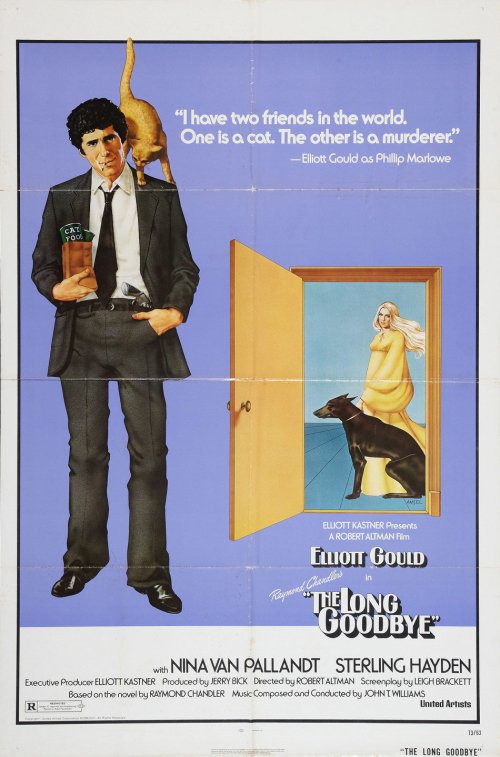
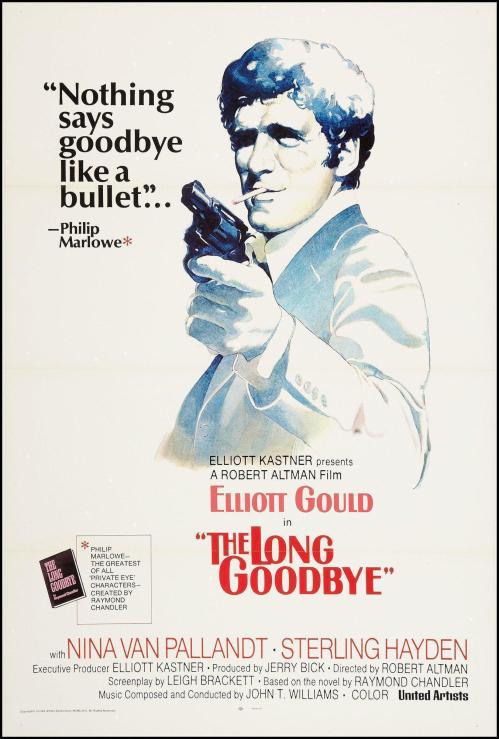
One night detective Phillip Marlowe (Elliot Gould) is visited in his home by his long time pal Terry Lennox (Jim Boulton), who informs Marlowe that he’s had a fight with his wife and asks him if he can have a ride to the Mexican border, which he obliges. When he returns home he is met by two cops (Jerry Jones, John S. Davies) who bring him into the station with questions about the whereabouts of Lennox whom they insist has just killed his wife. When Marlowe refuses to divulge anything he gets put into jail only to released 3-days later when it’s reported that Lennox has killed himself. Marlowe becomes suspicious about the suicide and determined to do his own investigation while also getting involved with Eileen Wade (Nina van Pallandt) and her alcoholic, writer husband Roger (Sterling Hayden) both of whom may hold the secret to Lennox and what really happened.

By the early 70’s only two of Raymond Chandler’s novels had yet to be filmed, this one and ‘Playback’. United Artists agreed to finance the film and commissioned Leigh Brackett, who had been the screenwriter for another Chandler novel turned into a movie 1946’s The Big Sleep, to write the screenplay for this one. Robert Altman was later approached to direct it and while he was not a fan of the Phillip Marlowe character, whom he labeled as being a ‘loser’, he agreed to take on the project due to the unexpected ending, which had not been in the novel, but that Brackett had added into the screenplay.

While Altman may have seemed an odd choice, he never even read the source novel of which the film is based, the eccentric little sidelights that he adds into the proceedings make it worth it. Some of the movies that he did towards the late 70’s became a bit too undisciplined where his films would go off on tangents with stuff that had very little to do with the main plot, but here the story is strong, so the little detours that Altman adds in helped to playfully accentuate the plot instead of drowning it out.

Some of my favorite Altmanisms included  Marlowe looking for food to feed his hungry cat, who I might add for an animal gives a spectacular performance, and how a stocker that he meets at the grocery store while searching for cat food he ends up meeting again at random at the police station. The next door female nudists, who are also into yoga and attract the attention of both the police and the bad guys who come to Marlowe’s place, are fun too.

There’s some marvelous framing by cinematographer Vilmos Zsigmond including capturing Roger and Eileen having an argument inside their home, which was filmed at Altman’s Malibu residence, through a glass patio door while at the same time in the reflection you see Gould walking along the beech. Later while Eileen and Marlowe are having a conversation by an open window you can see in a distance, which the other two are unaware of, Roger walking into the ocean in an attempt to kill himself.

Spoiler Alert!

The film also features what I feel is one of the most shocking and disturbing scenes that I’ve ever seen put into a movie and that’s a statement that I don’t use lightly. I’ve seen hundreds of gory horror films, but what happens here I’ve found far more unsettling. I think the reason is because it’s completely unexpected as it features the character played by film director Mark Rydell smashing a glass coke bottle onto the face of his girlfriend who just seconds earlier he had stated that he was deeply in-love with. Hearing her scream out in unending pain while cupping her hands over her face as blood spews out makes it come-off as very real. Even more amazing is that the part of the girlfriend was played by an amateur named Jo Ann Brody who never appeared in any other film and was a waitress that Altman and Brackett met when they went out to dinner while working on the script and who they asked on-the-spot if she’d like to be in their movie.

Altman admitted that he knew this violent scene, which had not been in the book, would upset some fans, but he felt it was important to bring the viewer back to the reality that these were violent characters at heart. This could also be seen as a foreshadowing to the surprise ending when Marlowe finds Lennox still alive in Mexico and then unexpectedly shoots him. In the novel Marlowe allows Lennox to walk away unharmed, but Altman liked the violent twist.

Personally I was ambivalent with the ending here and might actually have preferred the way it was done in the book. My main issue though with it is that Eileen spots Marlowe leaving the place where Lennox was just shot and since she was in a relationship with Lennox and also had strong criminal connections I’d think she’d end up, one way or another, going after Marlowe once she realized he had killed her lover causing the ending to leave open too many potentially interesting tangents that should’ve been followed through on.

My Rating: 7 out of 10

Released: March 7, 1973

Runtime: 1 Hour 52 Minutes

Rated R

Director: Robert Altman

Studio: United Artists

Available: DVD, Blu-ray, Amazon Video

That Cold Day in the Park (1969)

By Richard Winters

My Rating: 4 out of 10

4-Word Review: Spinster takes in boy.

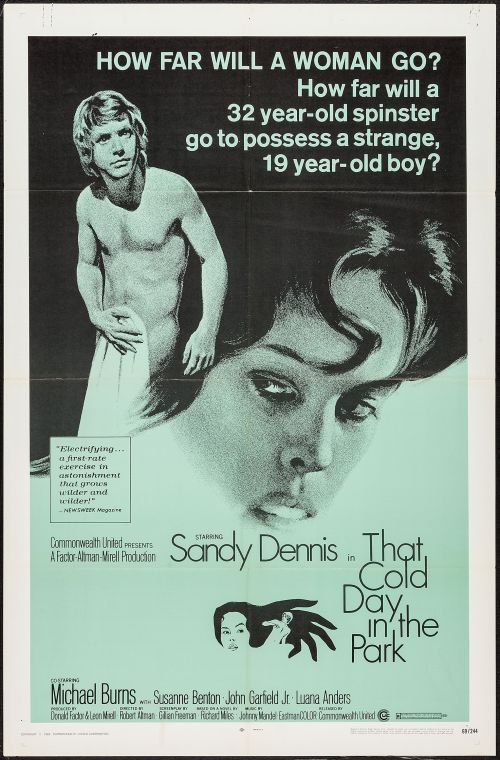
Frances (Sandy Dennis) is a rich, but lonely woman living a reclusive life inside her luxury Vancouver apartment with only her service staff to keep her company. One day she spots a teen boy (Michael Burns) sitting all alone on a park bench while it’s raining. She decides to invite him up to her apartment where she gives him food and a shower and becomes very attached to him despite the fact that he does not speak. Unbeknownst to her he has a whole other life with friends and family, but decides to exploit Frances’ generosity for his own gain only to learn that Frances has her own devious plans in mind.

The film’s only interesting aspect is Robert Altman’s direction, which is far different from the later movies that he did in the ’70’s, which emphasized conversations going on by secondary characters who weren’t always even in the scene, which here occurs only once when Frances goes to a doctor’s office, but is otherwise non-existent. Instead Altman successfully captures Frances’ isolated condition including the quiet apartment atmosphere where the viewer feels as trapped inside the four walls of the place as the character’s and the idea that there was an actual film crew on the set with the actors seems almost hard to believe. I also enjoyed the way the boy’s family life is shown by having the camera remaining outside and peering into the house’s windows to capture the action and dialogue going on inside.

The film fails though to be compelling as there is no reason given for why Frances feels so compelled to bring in this boy, or why this otherwise pretty, able-bodied woman should be so alone in the first place. One scene even has another middle-aged suitor propositioning her with a relationship, which she coldly refuses, but why? Is she more into teen boys and if so this needs to get explained and the reason given for it.

Dennis is an interesting actress, but isn’t up to playing characters with a sinister side and she’s a bit too young for the role. An older woman such as Ingrid Bergman would’ve been far better able to convey the age disparity between the two characters, but she unfortunately refused the part when offered. Burns is only adequate and the fact that he doesn’t initially speak makes the dynamics between the two interesting and the film should’ve delayed the fact that he could talk until the end, instead of revealing this in the middle part, which takes away any potential for mystery and intrigue.

Spoiler Alert!

The ending, which consists of Dennis trapping Burns inside her apartment makes no sense. The fact that she nails the windows shut is ridiculous as he would only need to pry the nails out of the wood, which he successfully does to a few of them anyways, in order to open the windows back up and get out. He is also physically stronger than her and the fact that she uses no weapon means he could overpower her if he wanted. Besides his family already knew where he was as his sister (Susanne Benton) came to visit him and would most likely come looking for him when he didn’t come home, so having it end by portraying him as a helpless hostage with no way of escaping is quite weak and unsatisfying.

My Rating: 4 out of 10

Released: June 8, 1969

Runtime: 1 Hour 46 Minutes

Rated R

Director: Robert Altman

Studio: Commonwealth United Entertainment

Available: DVD, Blu-ray (Region B/2), Amazon Video

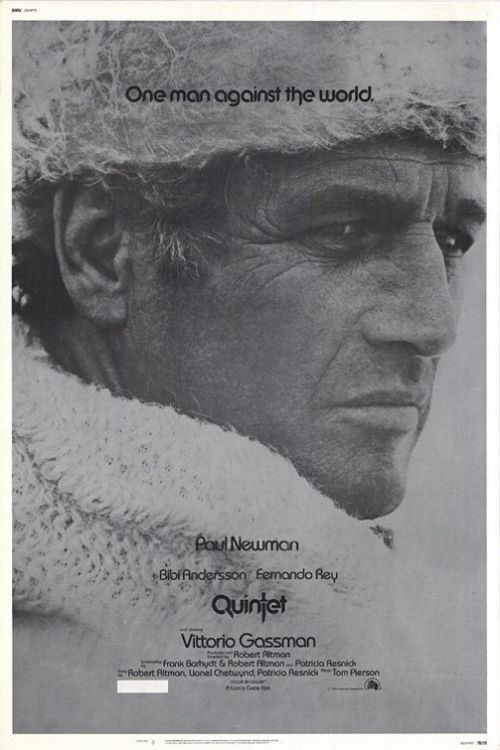
Quintet (1979)

By Richard Winters

My Rating: 4 out of 10

4-Word Review: Deadly game/frozen tundra.

During a future ice age Essex (Paul Newman) and his pregnant companion Viva (Brigitte Fossey) travel north in hopes of finding his brother Francha (Thomas Hill). They come to his apartment to find him and a group of other people playing a board game called Quintet, which has become the popular form of entertainment in an otherwise frozen, barren world. While Essex goes out to buy firewood the rest of the inhabitants in the apartment are killed by a bomb and when Essex chases the perpetrator (Craig Richard Nelson) he finds a list of five names inside the man’s pocket and realizes that the board game is now being played out in real-time with the winners killing the losers, which forces Essex to become a reluctant participant.

Although director Robert Altman had started the 70’s with the blockbuster hit M*A*S*H and followed it with Nashville his star status by the end of the decade had become severely tarnished especially after he helmed a succession of box office bombs with this film being a financial failure as well, which pretty much put the nail in the coffin for his career and hampered his ability at getting top projects afterwards, but I will at least give him credit for going outside of his comfort zone. While his past films were all dramedies this one was an interesting stab at sci-fi that if anything creates a vivid atmosphere. I particularly like the opening shot that shows nothing but snowy white and the sound of a cold hollowing wind only to slowly see the formation of two human figures walking in the far distance.

Unfortunately the other elements of the film are not as inspired. The costumes worn by the characters look like something leftover by a  Shakesperian college stage production and the board game itself played by the participants sparks no interest in the viewer because it’s never clear how it’s played. Supposedly the working rules of the game were passed out to audience members as they entered the theater, but it would’ve been nice had these same rules been explained in the movie itself.

The setting, which was filmed on-location inside  the abandoned buildings leftover from Montreal’s World Expo ’67 gives off an interesting futuristic vibe, but I was confused why despite being in the future there was no modern technology. I realized it was a new ice age, but are we to believe that all the computers and gadgets from the past generations got frozen over and the only thing left were the buildings? I also didn’t like how Altman smeared the edges of the lens with a translucent substance where only the middle part of the screen is in focus while the edges are fuzzy, which was intended to give it an ice over look, but doing this in literally every shot got to be a bit much.

Watching the characters die or wondering who will be next offers no tension at all as killing them seemed almost favorable as it put them out of their misery and away from their otherwise bleak existence. The plot needed an added angle to give it more intrigue like perhaps having a warm destination that still existed that the characters would try to get to while avoiding being killed in the process. Having it play out though the way it does with everyone locked inside this icy setting is not compelling at all. Altman proves here to be completely outside his realm while it also wastes Newman’s acting talents to the point that I was surprised why he even bothered to take the part at all. Some may wish to seek this out as a curio, but outside of its icy atmosphere there’s little else to recommend.

My Rating: 4 out of 10

Released: February 9, 1979

Runtime: 1 Hour 58 Minutes

Rated R

Director: Robert Altman

Studio: 20th Century Fox

Available: DVD, Amazon Video, YouTube

Popeye (1980)

By Richard Winters

My Rating: 3 out of 10

4-Word Review: He doesn’t like spinach.

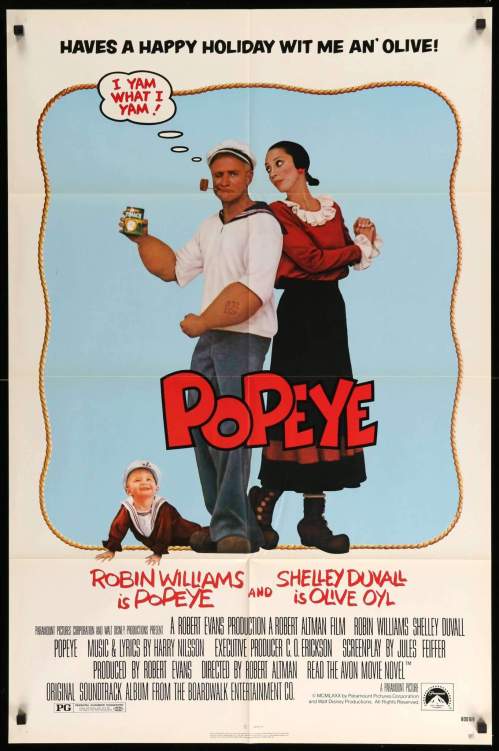
Popeye (Robin Williams) is a sailor who travels to the seaside village of Sweet Haven in search of his long lost father (Ray Walston). It is there that he moves into the upstairs room of the Oyl residence and becomes attracted to their daughter Olive (Shelley Duvall). Olive though is engaged to the gruff Bluto (Paul L. Smith) whose bullying ways is giving Olive second thoughts. When she tries to leave town in order to avoid the impending marriage she meets Popeye and they get into a relationship while also coming upon an orphaned baby that they name Swee’pea (Wesley Ivan Hurt), but Bluto becomes determined to destroy their union by kidnapping the child.

I remember watching the Popeye cartoons growing up and while I was never much of a fan this film version fails to replicate the original storylines. In the cartoons the relationship between Olive and Popeye seemed in constant flux and many times Olive would be ‘stolen away’ by Bluto’s courting and Popeye would have to win her back. Here the confrontations between Bluto and Popeye are played down significantly and there’s only two fight sequences between them and they last for only a few minutes.

The biggest difference though is that here Popeye doesn’t like spinach even though in the cartoons his spinach consumption was the whole reason he got his strength. Apparently when Popeye was introduced in 1929 he got his strength from rubbing the hairs on a magical whiffle hen named Bernice, but modern day audiences equate Popeye with spinach and changing this concept makes it seem like the film is not staying true to form. Kids who enjoyed the cartoons come to the movie expecting the same theme not watching something that’s going to take what they love into a completely different direction. What’s worse is that here there’s no explanation for how Popeye gets his amazing strength, which makes the already loopy storyline even dumber.

Williams gives a great performance, but his presence gets drowned out by the introduction of too many other characters including Paul Dooley as Wimpy who almost seems to have more screen time. Watching Walston play an older version of Popeye as the father is not funny, but instead incredibly annoying and again only helps to overshadow Williams’ great work.

I originally thought the casting of Duvall was inspired as I don’t think there’s any other actress living or dead who shares the physical traits of the Olive Oyl character quite as well as Duvall and in fact she admitted in interviews that she was nicknamed Olive Oyl by the school kids growing up. However, she overplays Olive’s nervous mannerisms which become repetitive and irritating while her attempts at singing are beyond bad.

The town of Sweet Haven, which took seven months to construct and consisted of 19 buildings built off the cost of Malta that still stands today, are the film’s strongest element, but everything else from its unfocused script evaporates into a mass sea of boredom. Robert Altman, who can be a great director at times, was the wrong choice for this type of production. He excels at doing existential adult dramas not kiddie flicks and children watching this thing will most assuredly become bored and the adults will too.

My Rating: 3 out of 10

Released: December 12, 1980

Runtime: 1Hour 54Minutes

Rated PG

Director: Robert Altman

Studio: Paramount

Available: DVD, Amazon Video, YouTube

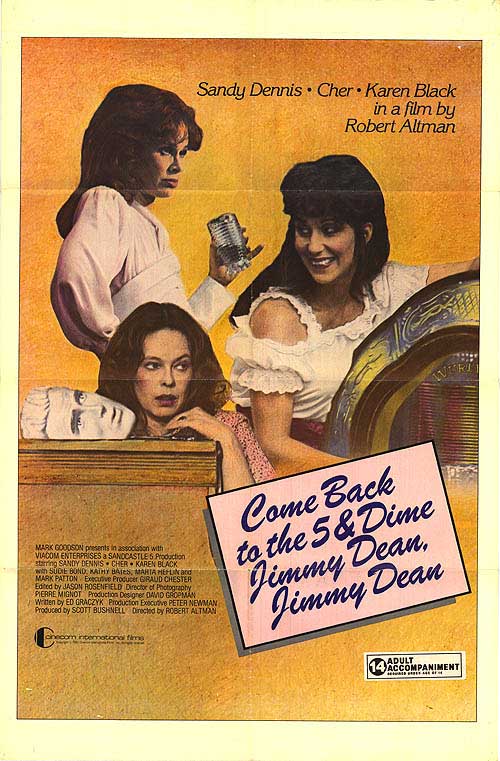
Come Back to the 5 & Dime Jimmy Dean, Jimmy Dean (1982)

COME BACK TO THE FIVE & DIME, JIMMY DEAN, JIMMY DEAN, Sandy Dennis, Cher, Karen Black, 1982, (c) Cinecom Pictures

COME BACK TO THE FIVE & DIME, JIMMY DEAN, JIMMY DEAN, Sandy Dennis, Cher, Karen Black, 1982, (c) Cinecom Pictures

By Richard Winters

My Rating: 3 out of 10

4-Word Review: Disciples of James Dean.

Twenty years after his untimely death five women (Cher, Sandy Dennis, Karen Black, Kathy Bates, Marta Heflin), who were big fans of James Dean and called themselves his disciples, decide to hold a reunion at a thrift shop in a small town not far from Marfa, Texas where the film Giant was made. However, the reunion is not a happy one as old wounds and secrets come to light that forces the women to analyze themselves and their lives in uncomfortable and unpleasant ways.

One of the things that really annoyed me about this movie and at times just downright confused me is that the characters show no signs of aging at all as it shifts between 1955 and the present day of 1975. Twenty years is a significant period of time and most everyone will show some signs of age, or at least changes to their hairstyle and outfits and yet with the exception of the Joe character there is no distinguishable differences between the others from one period to the next. The Cher character was particularly perplexing as her hair remains jet black for two decades and even the same exact style. One could argue that maybe she dyed it, okay, but she also manages to somehow retain her same girlish figure, which is even less likely.

I also found it hard to believe that she could afford to make a living by working at little thrift store for 20 years, or that she would even be needed as the place was small enough for one person to run and through the course of the entire movie never once does a single customer even enter the place. Her character was attractive enough to find a man, get married and run off to another town or place that had more potential. We learn through the course of the movie that she was married at one point, but then dumped, however I would think she would’ve been able to find someone else in a 20 year time span especially since she was still quite good looking.

Keeping all of the action inside the thrift store makes the film seem almost claustrophobic. I realize this was based on a stage play, but most plays that get transferred to film will have certain scenes, or cutaways added in to avoid this feeling. Even having some outdoor shots done over the opening credits would’ve given it a little more of a visual variety.

The performances are the best thing about the movie and probably the only reason to see it. All three leads recreate their parts from the stage version. Cher is sensational and in my opinion gives the best performance. Dennis is solid doing her patented fragile caricature and who displays some interesting emotional eruptions at completely unexpected times. Black is excellent as well. Usually she plays flaky types, but here is more reserved and steely. Bates is good as a loud and abrasive woman and Sudie Bond lends fine support as the shop’s overtly religious owner.

The script is passable, but the revelations that come out are stuff you’d find on a second-rate soap opera. I also found it hard to believe that these women would get together after 20 years and not have other things to talk about. Usually when people meet after not seeing each other for an extended period of time there’s always a lot of ‘catching up’ to do where they talk about all the things that have happened to them since, but here there’s none of that. Instead they come off like people frozen in time clinging to bygone issues that just about anyone else would’ve moved on from long ago.

The film ends with several shots of the store shown in an abandoned and rundown state, but with no explanation of what time period it was taken in. At first I thought this meant that maybe the reunion had never occurred. That maybe it had just been imagined, which is a concept that I liked and would also have filled in some of the gaping plot holes that I’ve described above, but then I saw the reunion banner still hanging in a tattered state from the ceiling. Others on IMDb have debated that it may represent the reunion that they had planned for 1995 that never came about, which is a good guess, but with business being as slow as it  was at that place I think it would’ve been abandoned long before 1975 let alone 1995.

come back 1

My Rating: 3 out of 10

Released: November 12, 1982

Runtime: 1Hour 50Minutes

Rated PG

Director: Robert Altman

Studio: Cinecom Pictures

Available: DVD

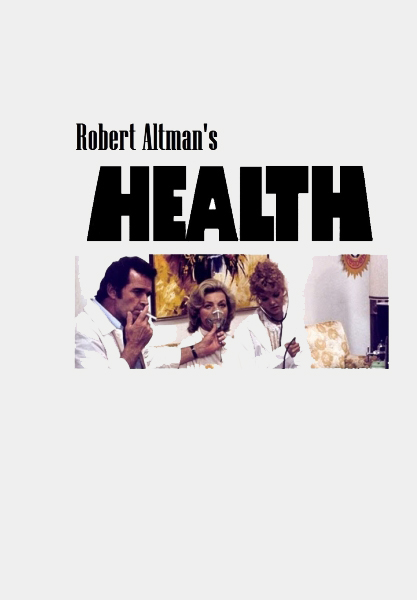
HealtH (1980)

health 4

By Richard Winters

My Rating: 3 out of 10

4-Word Review: Altman’s take on politics.

Normally I’m a big proponent of the European and independent filmmaking system that allows the director to have complete creative control over their projects, which in Hollywood doesn’t always occur and many times the studios will meddle with the film until it becomes nothing like what the director had originally envisioned. However, this film is a great example of what can happen on the opposite end when a director and his ego are allowed too much leeway until their movies become self-indulgent exercises that appeals to no one except themselves and a few of their most ardent followers.

During the ‘70s director Robert Altman had achieved such heightened celebrity that 20th Century Fox studio head Alan Ladd Jr. gave him the green light on virtually any project or idea he wished to pursue. Ladd was such a big fan of Altman’s stuff that he didn’t even care if the film made money or not, which they usually didn’t. It was during this period that Altman was able to achieve some of his most bizarre onscreen creations like Brewster McCloud, which was brilliantly quirky, while others like this one petered out before they even began.

Here Altman was clearly borrowing from his own well particularly with the way he captured running conversations going on at the same time between different people that 10 years earlier had come off as being fresh and inventive, but by this time was now derivative and distracting. The film’s parade of eccentric characters is not interesting or relatable and Altman’s stab at political satire is too soft and unfocused with no connection at all to the political scene of today.

health 3

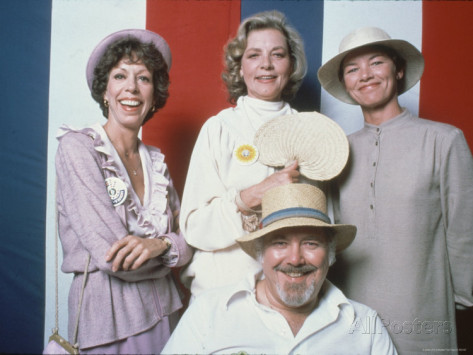
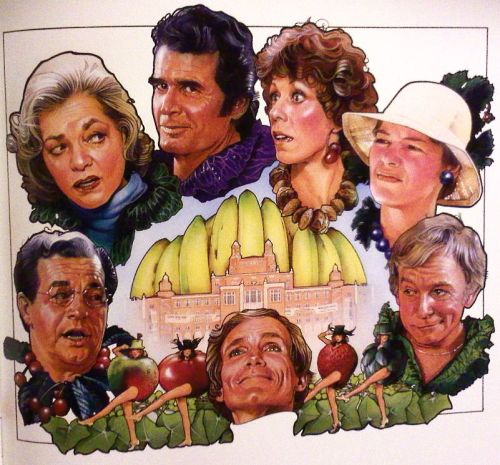
The threadbare plot, which deals with two political candidates played by Glenda Jackson and Lauren Bacall who compete for the presidency of a Florida health food convention, has too much dialogue and not enough action. It manages to be mildly amusing for the first 30 minutes, but then like with a tire suffering from a slow leak it starts to fizzle until it culminates with a dull and pointless conclusion.

It’s almost worth a look just to see Carol Burnett playing a more subdued type of character than she usually does although the part where she becomes ‘shocked’ at the rumor that her favorite candidate had a sex change operation now seems quite dated. Dick Cavett is also engaging playing himself and trying to corral all the nuttiness around him, but it’s Paul Dooley, who is also credited with co-writing the screenplay, that is the real scene stealer playing an independent candidate willing to do anything for attention.

I’m a big fan of Altman’s work, but I found this one to be slow going, uneventful and sloppy. The film’s concept could’ve used a lot more fleshing out as the whole thing plays like it was simply a lark done by a director that was coasting too much on his past successes while not throwing anything new into the mix.

health 1

My Rating: 3 out of 10

Released: September 12, 1980

Runtime: 1Hour 40Minutes

Rated PG

Director: Robert Altman

Studio: 20th Century Fox

Available: None at this time.