Tag Archives: Richard Winters

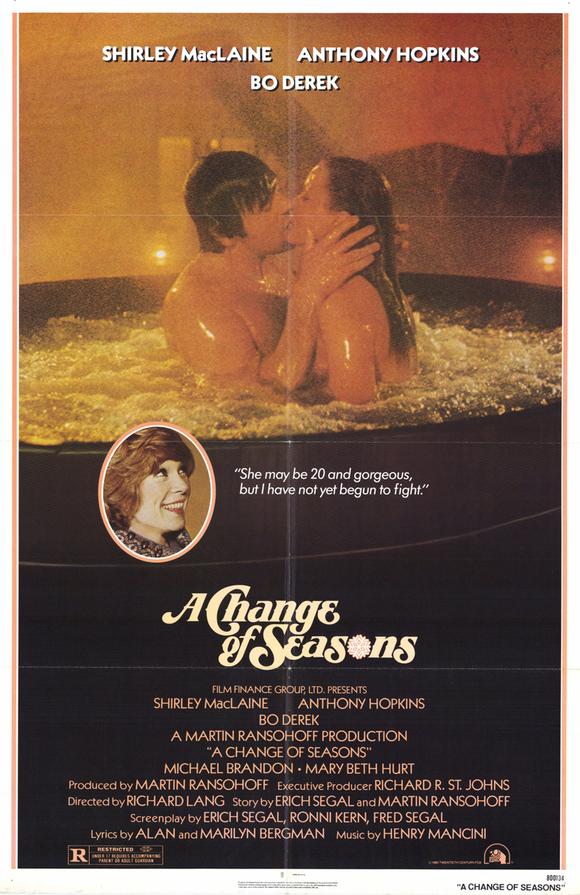
A Change of Seasons (1980)

a change of seasons 1

By Richard Winters

My Rating: 6 out of 10

4-Word Review: Everybody has a fling.

Adam (Anthony Hopkins) a middle-aged college professor who starts having an affair with a beautiful young student of his named Lindsey (Bo Derek). When his wife Karyn (Shirley MacLaine) finds out about it she decides to get her revenge by having an affair of her own with a handyman named Pete (Michael Brandon). All four decided to take a ski trip together while staying in the same house with each spouse sleeping with their new found lover. Despite a few hiccups things go surprisingly well until their college-aged daughter Kasey (Mary Beth Hurt) shows up who is none too thrilled with her parent’s new arrangement. Then Lindsey’s father (Edward Winter) appears who, after initially being shocked at the tawdry set-up, eventually adjusts and then makes a play for Karyn as well.

Although the film’s trailer and poster makes this thing look like a madcap farce it really isn’t and despite a comical set-up veers surprisingly towards the dramatic most of the way. To some extent it kind of works and I enjoyed some of the dialogue that tries to dig a bit deeper than most of the other mid-life crisis films as it analyzes why otherwise happily married men would jeopardize their union by having a mindless fling and somehow expecting to successfully juggle both relationships. However, it would have worked much better had it stayed with the comical route. Some of the funny scenarios don’t get played out enough and with such goofy characters and situations it’s hard to take it seriously even when it wants to culminating in an uneven mix of a movie that never quite hits its stride.

There are also certain scenes that don’t make much sense in either the comical or dramatic vein. One involves Adam admitting to Karyn about his affair and instead of her becoming enraged and either throwing him out or leaving they spend the rest of the night calmly discussing it and even going to bed together, which seemed highly unlikely to occur in real-life. The way Karyn hooks-up with Pete is equally stupid as he waltzes into her house unannounced and starts making himself some coffee and breakfeast. When Karyn comes downstairs to find this stranger in her home she doesn’t panic and call the police like a normal person would, but instead after a very brief conversation invites him upstairs for sex.
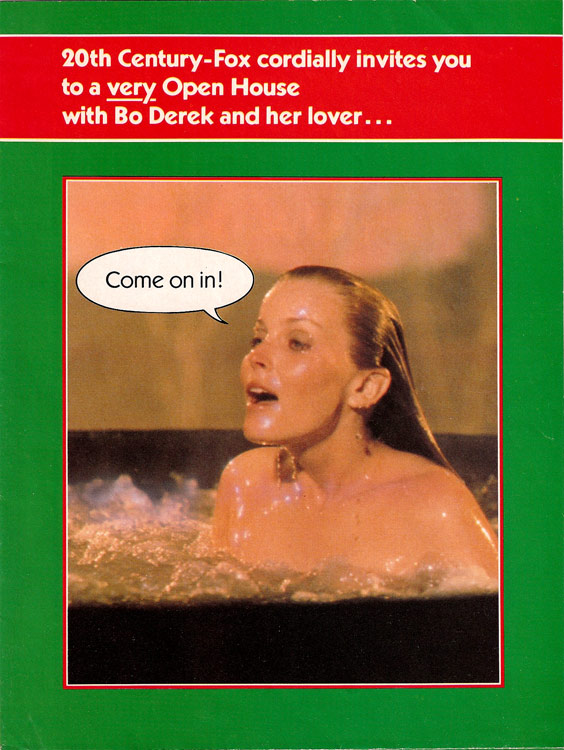
a change of seasons 3

Hopkins gives and excellent performance and the main reason the film stays afloat and is passable to watch. The way his character is forced to face his own contradictions and flaws is good and the scene where he catches Karyn with Pete is well acted on his part and makes the segment more interesting than it otherwise would have been. Winter is great as well and gives the best performance of his career where his initial shock at discovering their living arrangement is genuinely funny.

The only weak link of the cast is Derek. Yes, she certainly looks great naked and the opening sequence featuring her and Hopkins in the hot tub is okay on the erotic level, but her acting is overall quite poor and her monotone delivery eventually becomes annoying.

Overall the theme is too derivative from many other films that have tackled the same subject making this one hardly worth the effort to seek out. In fact MacLaine starred in another film that very same year entitled Loving Couples that has pretty much the exact same storyline and that one will be reviewed next week.
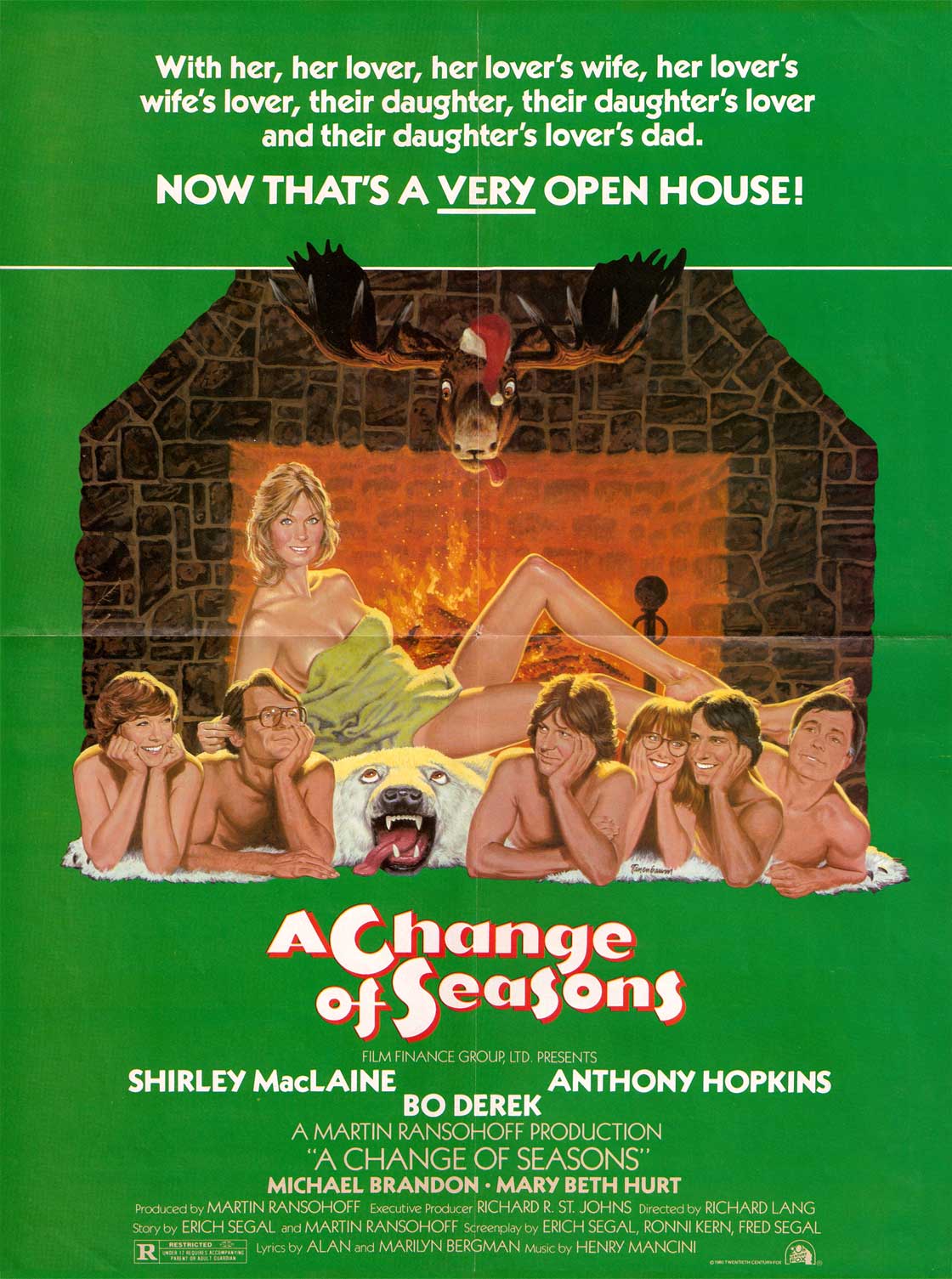
a change of seasons 2

My Rating: 6 out of 10

Released: December 1, 1980

Runtime: 1Hour 42Minutes

Rated R

Director: Richard Lang

Studio: 20th Century Fox

Available: VHS, DVD
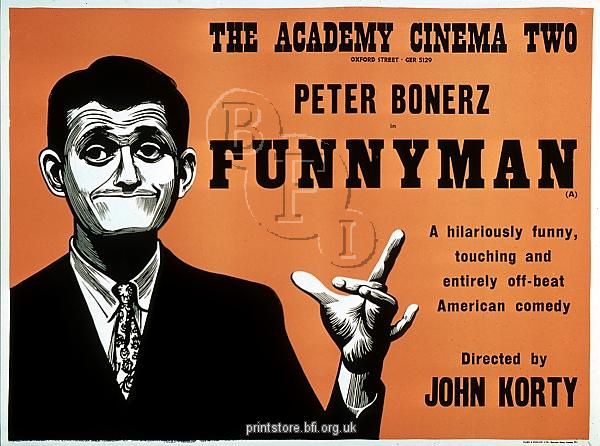
Funnyman (1967)

funnyman1

By Richard Winters

My Rating: 5 out of 10

4-Word Review: Being funny isn’t funny.

Peter Bonerz, who also co-wrote the script along with director John Korty, plays Perry a struggling comedian working with the famous San Francisco improvisational group The Committee who is finding that life onstage isn’t as fulfilling as he had thought. The story focuses on his many different relationships and behind-the-scenes activities as he searches for some meaning to what he does.

The film is a loosely based look at Bonerz’s own experiences during his time with the group. It has a definite cinema vertite feel and look, which helps accentuate the improv attitude. Some of the situations he goes through do indeed help shed light for the viewer as to the difficulties of the profession particularly the part where Bonerz and a friend stay up late one night trying to brainstorm a creative ad campaign for a bug spray and finally do manage to come up with something clever only to have it frustratingly nixed by the client over concerns that it may possibly offend their targeted audience.

I also found it interesting to see how much things have changed in regards to casual affairs and relationships as Bonerz is seen meeting woman for the first time and then going back to their place for sex and in one instance having the woman go off to work and leave him still in bed at her place without seemingly any concern about him being a potential psycho or thief.

Bonerz, who is probably best known for playing the Jerry Robinson character in ‘The Bob Newhart Show’ does well in the lead and I was impressed with his variety of voices and characterizations. However, the many skits that they do, which were filmed onstage in front of an audience weren’t all that funny or engaging. The only one that is mildly humorous involves a bit with Richard Stahl describing a new robot (played by Bonerz) that is programmed to be used as a peace demonstrator during campus protests.

Korty’s over-direction doesn’t help as too much emphasis is put on mood over substance. His attempts to instill an existential slant to the material falls flat and his use of shooting each scene with a different color filter is distracting and ultimately annoying. The final twenty minutes veers too much away from the main story as the Bonerz character decides to take a vacation at an isolated retreat where he gets into a relationship with a nude model, which meanders and is not compelling or interesting.

My Rating: 5 out of 10

Released: September 23, 1967

Runtime: 1Hour 25Minutes

Not Rated

Director: John Korty

Studio: Korty Films

Available: None at this time.

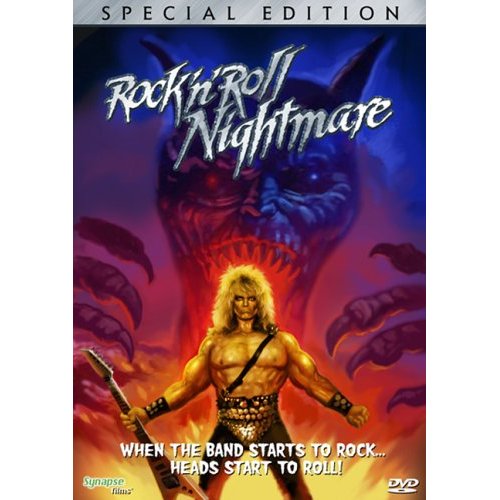
Rock ‘n’ Roll Nightmare (1987)

rock n roll nightmare 1

By Richard Winters

My Rating: 1 out of 10

4-Word Review: Rock band gets slaughtered.

In a remote Canadian farmhouse a family is killed by some evil spirits from hell. Now, years later a rock band called The Tritons uses the place as a recording studio, but soon both they and their girlfriends start getting killed off one-by-one by the same spirits. Eventually only lead singer John (Jon Mikl Thor) remains and with his big muscular physique and fashionably long hair decides to take them on singlehandedly.

This low budget cheapie was shot at an isolated farmhouse near Markham, Ontario in a mere seven days and suffers from an excessive amount of footage on stuff that doesn’t matter like spending the first five minutes watching the group’s van driving down the highway. The dialogue and characters are predictably cardboard and the special effects unimpressive except for the moment where a monster’s hand pops out of a guy’s stomach, which wasn’t bad.

The film, which ends up being nothing more than a vanity project of its star who also wrote and produced it, has a million and one holes. For one thing it is never explained why these spirits attack this farmhouse or why a big sound studio was built in a place that had a family slaughtered in it or even why the people that constructed the studio weren’t killed just like the family and band members were.

If you are going to watch it then do like I did with a few beers at hand and a group of people who make jokes at it much of which are  far more entertaining than anything on the screen.

rock n roll nightmare 2

My Rating: 1 out of 10

Alternate Title: The Edge of Hell

Released: July, 1987

Runtime: 1Hour 23Minutes

Rated R

Director: John Fasano

Studio: Shapiro Entertainment

Available: DVD

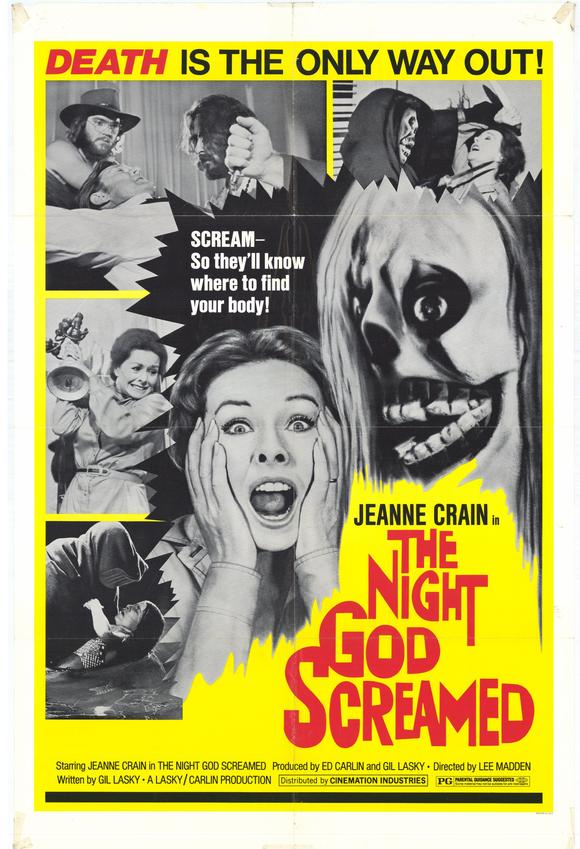
The Night God Screamed (1971)

the night God screamed 3

By Richard Winters

My Rating: 5 out of 10

4-Word Review: Nailed to the cross.

Willis and Fanny Pierce (Alex Nicol, Jeanne Crain) are an older, spiritual couple who drive along the national highways with a giant cross stuck to the top of their car. They come to a small town where Willis decides to start up a church. Unfortunately they get the unwanted attention of Billy Joe (Michael Sugich) who runs a Manson-like religious cult filled with drugged-out hippies. He feels Willis is potential competition, so late one night he and his cohorts sneak into the church and nail Willis to the cross all to the horror of Fanny who is so frightened she doesn’t do anything and instead hides in a closet. Billy Joe is later convicted of the crime and sent to prison, but his followers are not happy and seek revenge. When Fanny is hired to ‘babysit’ a group of older teens they go on the attack creating one long night of terror for Fanny and the teens.

Clearly this is a rip-off of the Charles Manson crimes, but for all of the films from that period that tried to capitalize on the fear that those crimes brought this has to be one of the better ones. The electronic music score, camera angles and shadowy lighting create an effective eerie feeling. The movie moves at a decent pace and the shot of Willis crucified to the cross is shocking and edgier than most other films from that period. The second half, which features Crain and the teens trapped in a house with the hooligans harassing them from outside manages to build up some decent tension.

Crain looks and behaves as if she were snatched directly out of the 1940’s and seems completely out-of-place with the period or other characters and yet the extreme contrast actually makes it more interesting. Sugich is great as the cult leader and it’s unfortunate he wasn’t on for the entire duration. I did think it was unrealistic though that he is seen at his trial without handcuffs, or a prison suit or even having his hair cut, which in reality I think would have happened and probably made him look even creepier.

Although the film is low budget and terribly dated I did think is was entertaining enough to be passable especially for fans of 70’s schlock. My biggest complaint comes with the twist ending, which although surprising isn’t completely plausible and leaves open too many loose ends. It reminded me too much of those ghost stories kids like to tell around a campfire that would always hinge on some unexpected ending and made this entire production seem more like a cutesy concept than an actual story.

My Rating: 5 out of 10

Released: June 4, 1971

Runtime: 1Hour 26Minutes

Rated GP

Director: Lee Madden

Studio: Cinemation Industries

Available: VHS, YouTube

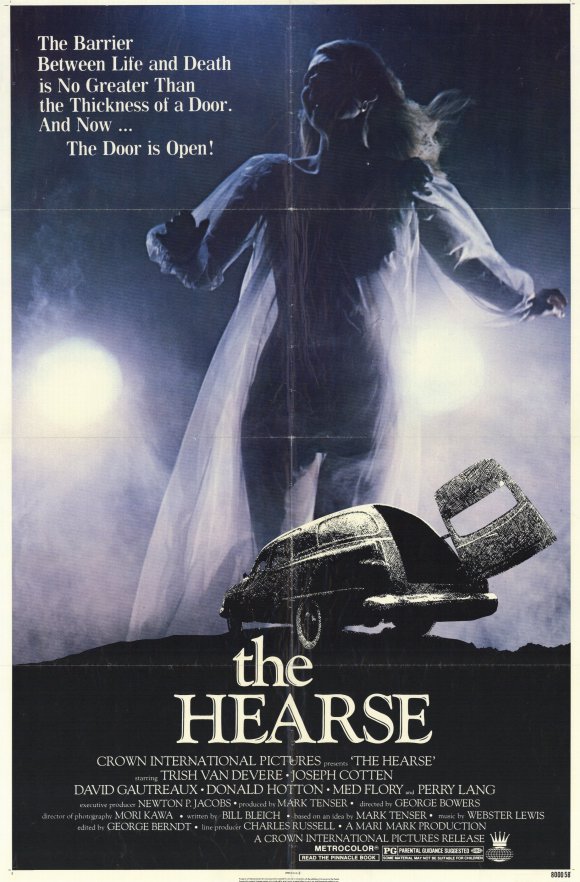
The Hearse (1980)

the hearse 2

By Richard Winters

My Rating: 2 out of 10

4-Word Review: Haunted by a hearse.

Jane (Trish Van Devere) is recuperating from a nervous breakdown and decides to move away from the bustle of big city life into a home left to her from her recently deceased aunt, which is situated in a small town. Unfortunately things do not go smoothly. The townspeople are reticent to Jane’s presence and weird things begin to occur including a mysterious big, black hearse that appears late at night and seemingly intent on running Jane over.

I remember I first heard of this film when it was shown on Showtime during the early 80’s as part of their ‘After Hours’ films, which typically amounted to soft core sex flicks and gory horror. However, this film was only rate PG, which always made me wonder how ‘adult’ or scary could it really be.

To some degree this fares slightly better than the usual low budget horror flick at least at the beginning. There are some nice on-location shots of the San Francisco bay area and the main character is likable enough. The production values are decent and the story, as thin as it is, has a certain intriguing quality to it.

Van Devere makes for a strong female protagonist as she is quite practical and doesn’t allow herself to scare easily and seeing a female character that is confident and poised and not used simply as a sex object especially in these types of films is a refreshing change. After a while though I started to think that the character became a little too stubborn as there were so many bad things that started to occur that I think I would have left and not come back and the fact that she stays past when most other people wouldn’t makes her seem a bit irrational.

The atmosphere is minimal and the scares are almost non-existent and depend almost completely on a few doors slamming and windows bursting open for no reason. Moments of intruders breaking into the home and shots of their feet silently creeping up the stairs starts to become redundant and dull. A dream-like funeral sequence can’t save what is otherwise a slow moving plot. The ‘secret’ behind the hearse’s presence isn’t very imaginative and the film borrows too many elements from other cheesy haunted house films without adding anything unique or distinctive in the process.

My Rating: 2 out of 10

Released: June 5, 1980

Runtime: 1Hour 39Minutes

Rated PG

Director: George Bowers

Studio: Crown International Pictures

Available: DVD (Drive-In Cult Classics Vol. 2)

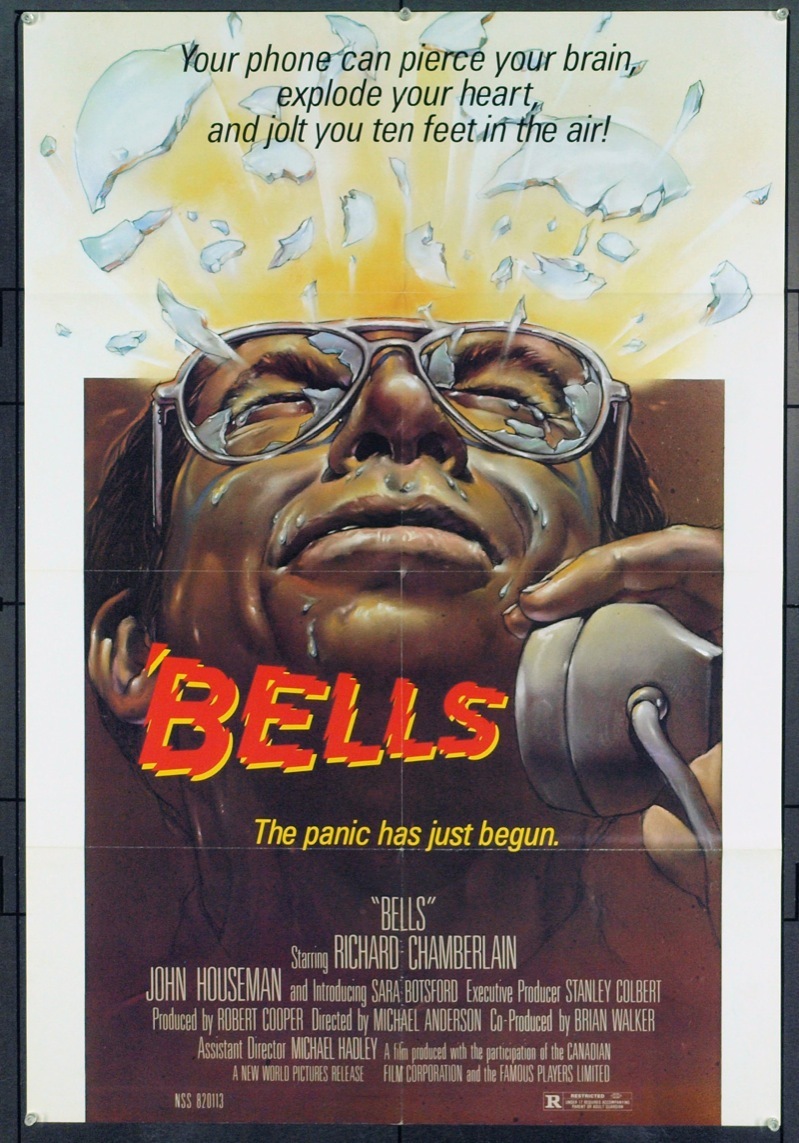
Bells (1982)

bells 1

By Richard Winters

My Rating: 3 out of 10

4-Word Review: Don’t answer the phone.

People are being killed throughout the city of Toronto by simply answering the phone. Apparently someone has come up with a device that can create a massive electronic blast that can go through the phone lines and kill anyone listening on the other end. The blast is so strong that it can even melt the receiver. Nat Bridger (Richard Chamberlain) who is a professor at a local college decides to take matters into his own hands and investigate on his own after one of his students is killed and the police seem to do nothing about it.

Initially I found this idea to be intriguing and original, but unfortunately it throws credibility completely out the window. Had it worked more with the idea of sending some loud noise at an extremely high decibel over the phone, which would then blow out the person’s ear drum, or something of that nature then I might have bought into it. Instead it has some sort of unexplained blast that literally makes the person at the other end blow off of their seat and fly backwards crashing into walls and windows, which seems utterly ridiculous and cartoonish. The film also offers no scientific explanation to how this device was created or done, which makes it farfetched and pointless.

Chamberlain’s one-dimensional acting doesn’t help and his presence in the lead role is quite generic as he plays a character that shows the street smarts and fighting ability of a seasoned cop instead of that of a college professor making things even more unrealistic. John Houseman gets a rather thankless supporting role as Chamberlain’s mentor and is pretty much wasted except for a bit where he disrupts a guided tour through a phone company which proves mildly amusing.

The technology is horribly dated making the entire thing a relic of a bygone era and irrelevant to today’s audiences.  The climatic sequence dealing with Chamberlain’s attempts to keep the bad guy on the phone while the police try to trace the number is highly clichéd and more boring than intense. Director Michael Anderson’s attempts to jazz things up a bit by photographing phones in intimidating ways with ominous music playing in the background comes off as unintentionally funny instead of scary.

This Canadian made thriller was originally released under the title above and ran for 95 minutes, but the Warner Home Video version, which was released in 1998 and goes under the title of Murder by Phone was trimmed by 15 minutes. The version reviewed here is from the original release although the film is so silly that watching the shorter cut might be preferred simply because it would mean less time wasted.

My Rating: 3 out of 10

Alternate Title: Murder by Phone

Released: May 11, 1982

Runtime: 1Hour 35Minutes

Rated R

Director: Michael Anderson

Studio: Canadian Film Development Corporation

Available: VHS (as Murder by Phone)

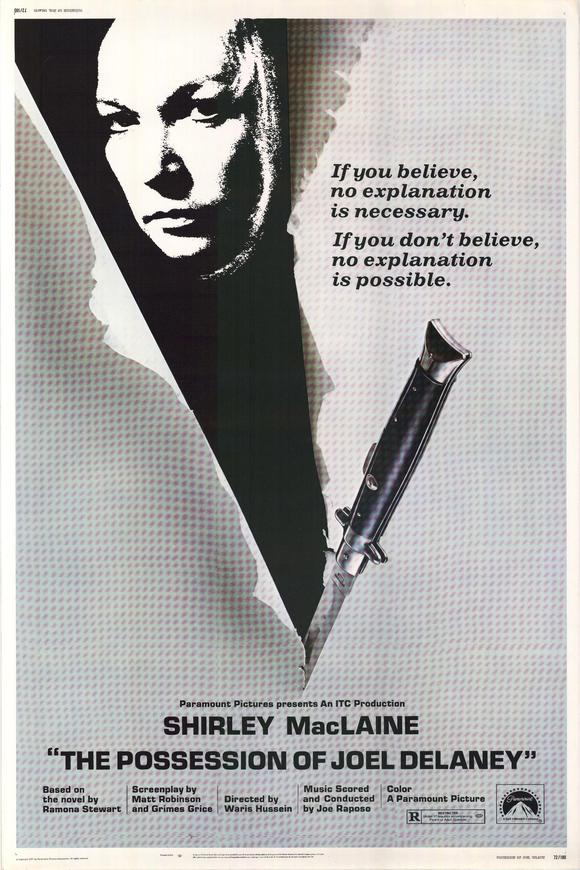
The Possession of Joel Delaney (1972)

the possession of joel delaney

By Richard Winters

My Rating: 7 out of 10

4-Word Review: Possessed by his friend.

Norah (Shirley MacLaine) is a divorced mother of two living in a well-off neighborhood of New York that is also keeping a watchful eye on her younger brother Joel (Perry King). He is a recent college grad returned from an overseas stay and still looking to find his way in the world. He lives in a poorer section of town and does so to keep a distance between he and his sister who he feels has domineering traits like his now deceased mother. As things progress he begins to show odd, frightening behaviors that at times turn violent and when conventional therapy doesn’t help Norah turns to a Puerto Rican witch doctor that is convinced that Joel is possessed.

What makes this film so intriguing is that it has far more layers than a typical horror film and its most interesting aspect isn’t the occult at all, but instead the vivid look at New York’s contrasting socio-economic and cultural make-up. It shows how buffered the rich are from the poverty stricken areas of the city and how completely helpless they become when thrown into that environment. In fact Norah’s most frightening moments are when she is taken out of the safety zone of her pampered lifestyle than in dealing with the possession of her brother.

MacLaine’s character is not too likable, but this ends up being a positive. Her exchange with a clerk at a mental hospital when she expects to receive preferential treatment is amusing as is her obliviousness to her surroundings when she walks into a rundown tenement building wearing a gaudy fur hat and coat only to later finally get the sense to take it off when walking down the street of a tough neighborhood.

King is perfect choice for the role as his clear blue eyes give off a naturally creepy look and his moments of possession are some of the most unnerving parts of the film although I would have liked more time to have been given showing him in more of a normal state. His relationship with his sister also exposes an underlying sexual theme that never gets sufficiently explored

Although the terror is more cerebral it still has some choice moments including a shot of a decapitated head of a woman hung over her nude body as well as Maclaine’s extremely odd reaction to it. The ritual involving the attempted removal of the dead soul from Joel’s body has a nice cinema vertite flair and when the man lights some kerosene on the floor and steps in it with his bare feet it looks genuine and not staged. The climatic sequence that takes place in a remote beach house is intense and includes the controversial scene showing a young boy being forced to strip as well as a young girl having to eat dog food from a dog dish that was excised from many prints, but intact on the Legend Films DVD release. There is also a cool twist that occurs at the very, very end.

My Rating: 7 out of 10

Released: May 24, 1972

Runtime: 1Hour 45Minutes

Rated R

Director: Waris Hussein

Studio: Paramount

Available: DVD

See No Evil (1971)

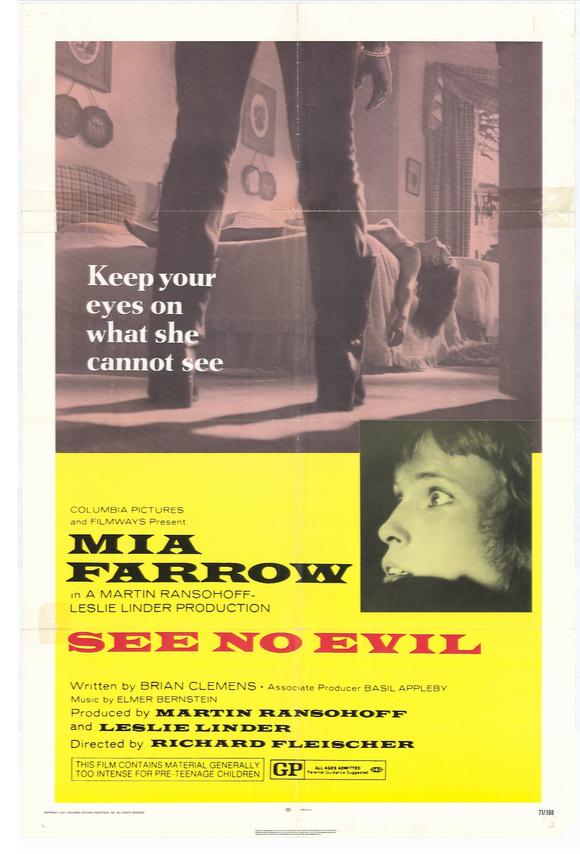
see no evil

By Richard Winters

My Rating: 7 out of 10

4-Word Review: Psycho stalks blind girl.

Sarah (Mia Farrow) is a young woman who becomes permanently blinded during a horse riding accident. After months of rehabilitation she returns to her family home in the English countryside. Dealing with her new handicap is awkward at first, but things go genuinely smoothly. Unfortunately a psychotic man harboring a petty grudge lurks in the shadows. One day while Sarah is away he murders her entire family and when she returns he goes after her, but the viewer is as in the dark as she is to his identity as all that is shown are the nifty looking cowboy boots that he walks in.

Veteran director Richard Fleischer takes Brian Clemens compact script and turns it into a visual masterpiece. The camera angles and shot compositions are not only perfect, but highly creative. One of the highlights is when Sarah comes home and doesn’t realize at first that her family is dead and only slowly becomes aware of it along with the viewer. The countryside, which was shot near Berkshire, England, is majestically captured particularly during the horse riding sequences. The pace is fast and intense and never lets up with twists that prove to be quite interesting.

Farrow has a limited range as an actress, but her delicate features and the character’s self-reliant nature make her easily likable and the viewer immediately becomes empathetic to her plight. The rest of the characters are well-rounded and believable with noted character actress Lila Kaye in a small, but memorable role as a gypsy mother.

The fact that the identity of the killer is kept a secret until the very end is an added bonus, but you actually do see his face in an earlier scene, but are not made aware that it is him, which I thought was pretty cool. The only misgivings that I had in this area is the fact that the killer supposedly murders these people in a fit of revenge for accidently splashing water on his precious boots when they drove past him in a car, but then later after he kills them he goes to bed and allows the droplets of blood from his victims to dry on his boots while he sleeps even though I felt with his obsessive preoccupation with them that he would have wiped that off right away. Also, for a man who brazenly murders a family in broad daylight for such a petty reason he seems to get a little too nervous about it afterwards even though if he is that crazy I would think that he would have remained cocky about it and felt that he would be able to murder anyone else who got in his way. He also puts up no fight in the end when he finally gets cornered making him look wimpy and making the climax a bit of a letdown.

Overall though I found this thriller to be highly entertaining and its effect has not diminished through repeat viewings. They don’t seem to be able to make them like this anymore, which is unfortunate.

My Rating: 7 out of 10

Alternate Title: Blind Terror

Released: September 2, 1971

Runtime: 1Hour 29Minutes

Rated GP

Director: Richard Fleischer

Studio: Columbia Pictures

Available: DVD, Amazon Instant Video

Runaway, Runaway (1971)

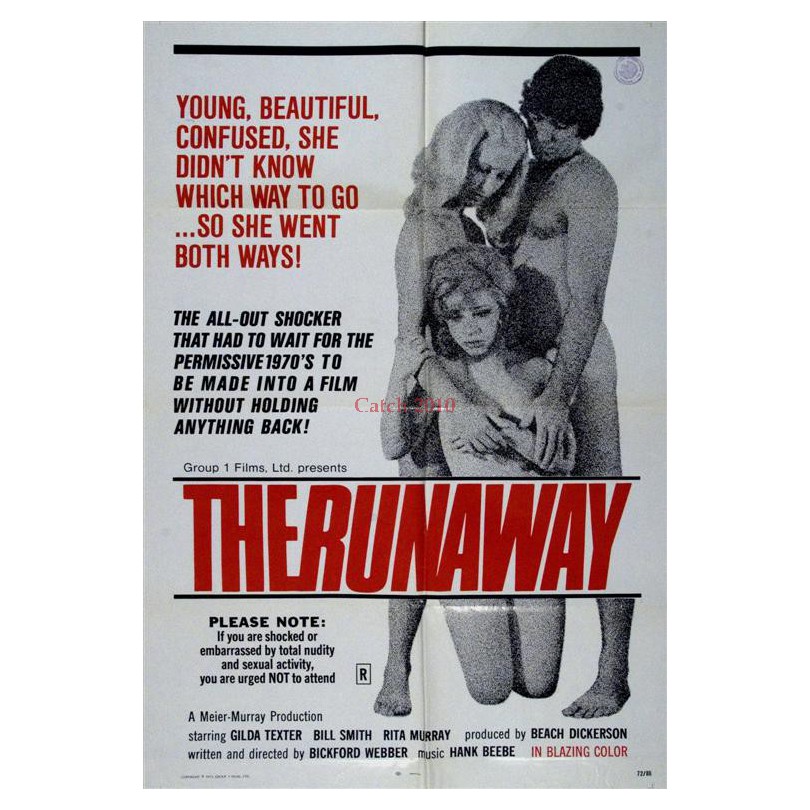
runaway runaway 1

By Richard Winters

My Rating: 4 out of 10

4-Word Review: Teen girl runs away.

Ricki (Gilda Texter) is a teen girl who has had enough of her unhappy home life and decides to run away and meet up with a guy in California who she has strong feelings for but knows little about. Along the way she takes a ride from Frank (William Smith) whose job is finding young runaways and returning them to their parents. He tries to help Ricki, but she rejects it even though they remain on friendly terms. She then meets up with Lorri (Rita Murray) who works as a prostitute, but is also a closet lesbian. She gives Ricki a place to stay and then makes sexual advances towards her. Although Ricki at first resists she eventually gives in, but remains conflicted about her feelings towards Lorri and unhappy with her situation that seems no better for her than the one she ran away from.

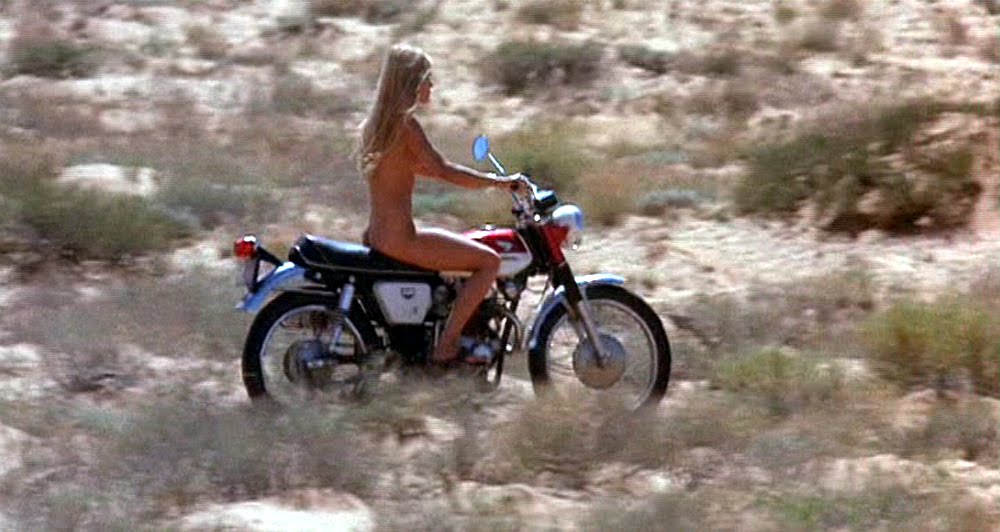
Texter rose to fame after playing the nude blonde riding on a motorcycle in the film Vanishing Point. Her scene lasted for only a couple of minutes, but most male viewers came away remembering her part more than anything else and producers were quick to pick up on it. She was soon given a starring role here, which was hoped to jettison her into a full-time acting career, which never happened and eventually she settled down into the role of costume designer for films, which she did through 2006.

gilda texter 2

Either way she does quite well and shows more flair and ability than most young beauties that get acting jobs with only limited experience or training. She speaks her lines with a nice inflection and has some good facial expressions especially during the scene where she is attacked.

Smith who has made a career playing bulky tough guys is quite good in the sympathetic role as an older father figure. However, in these more cynical times his over concern for her welfare could seem more like a dirty old man with deep seated sexual desires. The fact that they do end up going to bed together seemed quite creepy and unnatural and I didn’t care for it and felt she would have been better off had she stayed with Lorri and formed a more lasting relationship with her.

Hank Beebe’s music score is distinctive and bucked the trend of the time by not having a psychedelic or rock sound, but instead it’s more on the jazz side. The bouncing vibrant song done over the opening credits is especially good and I would love to credit the lady who sings it, but none is given.

The opening sequence features a scene where Ricki gets attacked by a man at an isolated location of an abandoned dessert building that is played by Ron Gans, who later went on to be a famous voice-over narrator for movie trailers, and it is exciting. Another part that I found interesting is when Ricki goes to a party and gets drugged, which makes good use of the fish-eye camera lens, but overall this thing gets too talky and eventually becomes quite boring.

The Ricki character seems a bit too naïve as well. Most runaways I would presume would be practical enough to have some money in their pocket, but she has absolutely none. She barely knows this guy that she has ‘fallen in-love’ with and has no idea where he lives or even his phone number, but somehow expects to magically meet up with him anyways. She also makes no attempt to find a job once she gets to her new location even though that is the first thing most people, even movie characters will do in order to help them get back on their feet and give them some independence.

The story is derivative and predictable and gives us no new insight or slant into the runaway issue. The ending offers no real conclusion and despite some good attempts at realism and well-written dialogue the film is overall sterile and forgettable.

My Rating: 4 out of 10

Released: June 13, 1971

Runtime: 1Hour 30Minutes

Rated R

Director: Bickford Otis Webber

Studio: Meier-Mayer Productions

Available: None at this time

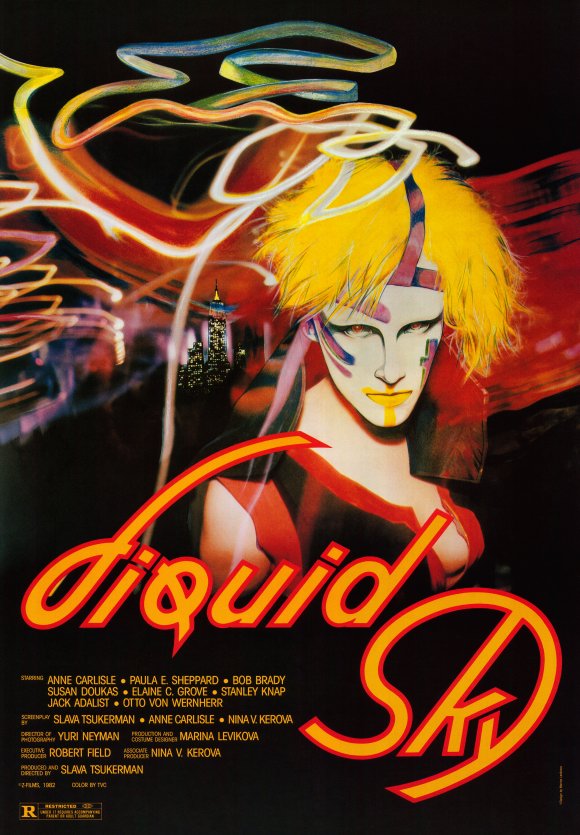
Liquid Sky (1983)

liquid sky

By Richard Winters

My Rating: 8 out of 10

4-Word Review: Aliens invade punk hangout.

No matter how many years go by this film remains cutting edge. It’s one of the few movies made in the 80’s that makes fun of its own era and those that considered themselves hip and sophisticated.

The plot has to do with a young punk girl named Margaret (Anne Carlisle) living with her lesbian roommate Adrian (Paula E. Sheppard) in a New York City penthouse. The place is frequented by the usual weirdos, vagabonds and druggiess. The two make a living by dealing drugs and offering indiscriminate sex. One day a spaceship the size of a dinner plate and filled with aliens that have no shape or form lands on their penthouse roof and zaps away anyone who has an orgasm. Margaret is unable to achieve climax so she is left remaining while everyone else is gone, which convinces her that someone or something has finally ‘recognized’ her and that she is ‘special’.

Literally every camera shot, scene and line of dialogue is unique. This film not only has an offbeat point-of -view, but reinforces it by constantly looking, feeling, thinking, and sounding different, which includes its funky musical soundtrack. There is no compromising here. The filmmakers believe in their material and keep it true to form throughout forcing the viewer to adjust to its bizarre sensibilities. Yet if you do you will not be disappointed. It’s pace and sense of humor has a fresh free-form flow not seen since the European new wave films of the 60’s.

Despite the radical style it still touches on many universals including the human need for acceptance, understanding, fulfillment, and communication. It also takes jabs at many of modern society’s fringe groups who many times can end up embodying the same hypocrisy as the mainstream.

Star Carlisle also wrote the screenplay and the novel version of this film and based it on her own experiences while involved in the punk scene during the late 70’s. She hasn’t been in a film since 1990 and today lives in southern Florida and is involved in both psychotherapy and teaching. Here is a recent pic of her:

anne carlisle

Her co-star Paula E. Sheppard, who if recent reports are correct has now changed her name and working as a nurse in the Seattle area, gives another great performance. This turned out to be her last film and one of only two that she was in her other film Alice Sweet Alice will be reviewed on Wednesday.

My Rating: 8 out of 10

Released: April 15, 1983

Runtime: 1Hour 51Minutes

Rated R

Director: Slava Tsukerman

Studio: Cinevista

Available: VHS, DVD (out-of-print)