Tag Archives: Review

Breaking All the Rules (1985)

By Richard Winters

My Rating: 2 out of 10

4-Word Review: Shenanigans at amusement park.

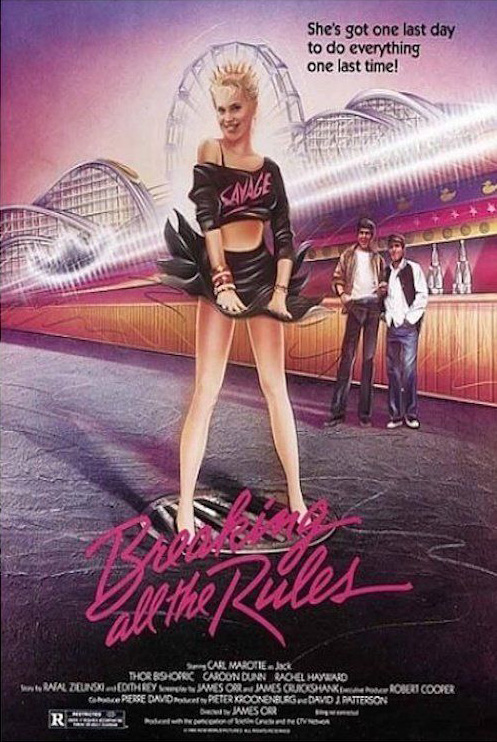
It’s the last day of summer and Jack (Carl Marotte) plans to spend it a an amusement park with his friend David (Thor Bishopric). On the bus ride there they are spotted by Debbie (Carolyn Dunn) and Angie (Rachel Hayward) two best friends who immediately take a liking to the boys. The teen foursome then spend a romantic, even sexy time, at the park, but are unaware that three criminals (Michael Rudder, Pierre-Andre LaRoque, Papusha Demitro) have stolen a diamond and hidden it inside one of the stuffed animals inside the park. When Debbie inadvertently receives the stuffed animal as a prize the crooks stalk the four in order to get the diamond back.

The best thing about the film is Carolyn Dunn, who retired from acting in 2009 and now works as a holistic therapist, and who is drop dead gorgeous especially at the start when she has a normal hairstyle, but even after she gets the ill-advised punk look she’s still a super hottie, which if you’re a male at least, should be good enough to get you through the rest of the pic, which doesn’t have much else going for it. Of course it’s Dunn’s extreme beauty that in some ways actually hurts it since she immediately falls for the very average looking Jack at first glance, which made no sense. This is the type of chick that would have guys flocking all around her and the privilege of choosing the pick-of-the-litter, so why go ga-ga over a dweeb? If dweebs are her thing then fine, but that’s something that needs to be established right up front, but isn’t, so seeing the immediate sparks fly as they do is not believable.

Angie’s romance with David is equally problematic as Angie is almost as hot as Debbie, so why is she falling for a kid that looks like he hasn’t even reached puberty? Seeing them stand side-by-side makes their physical differences even more apparent as Angie looks like she could be 20 and more David’s babysitter than his girlfriend. Had the film cast average looking women that weren’t used to getting a lot of attention from guys and therefore accepting of any dope that came along then it would’ve been more realistic, or simply hired better looking male talent to match the looks of the females.

While I did find the Jack character to be initially amusing, which includes a fantasy segment that he has near the start that is probably the only real funny moment in the movie, he does become increasingly problematic as it goes along especially for modern audiences. Some of the comments he makes, while considered possibly innocuous at the time, will be perceived as controversial today including when he says ‘when a woman says no she really means yes’ or when he states that a women is ‘just dying to get laid’ simply based off of what she’s wearing. There is also a segment where he goes on a rollercoaster ride with Angie and takes advantage of her frightened state by putting his hands underneath her dress and groping her breasts without her permission.

Even if you can get past these issues the plot itself is dumb. The three crooks look like they’re almost the same age as the four teens and older actors should’ve been cast in the bad guy roles simply to give the film a better balance. The crooks also play-off of a mafia-like stereotype complete with affected accents, which is cliched and not funny.

The logic is flimsy too including having Jack become the prime suspect of the stolen diamond simply because his fingerprints were found on the glass case that housed it, but he had been employed part-time at the amusement park, so it would’ve been expected that his prints might’ve innocuously gotten on it when he worked there. The script also shows little understanding between the differences of love and lust. For instance Jack says he ‘fell in-love’ with Debbie the second he saw her, but in reality he just got highly aroused at seeing her half-exposed ass when the wind lifted up her skirt.

I didn’t understand how the film’s title worked into the storyline either. There’s no rule-breaking going on particularly from the four leads who are all boringly transparent and not rebellious at all.

My Rating: 2 out of 10

Released: April 15, 1985

Runtime: 1 Hour 31 Minutes

Rated R

Director: James Orr

Studio: New World Pictures

Available: DVD

Thunder Run (1986)

By Richard Winters

My Rating: 3 out of 10

4-Word Review: Aging trucker hauls plutonium.

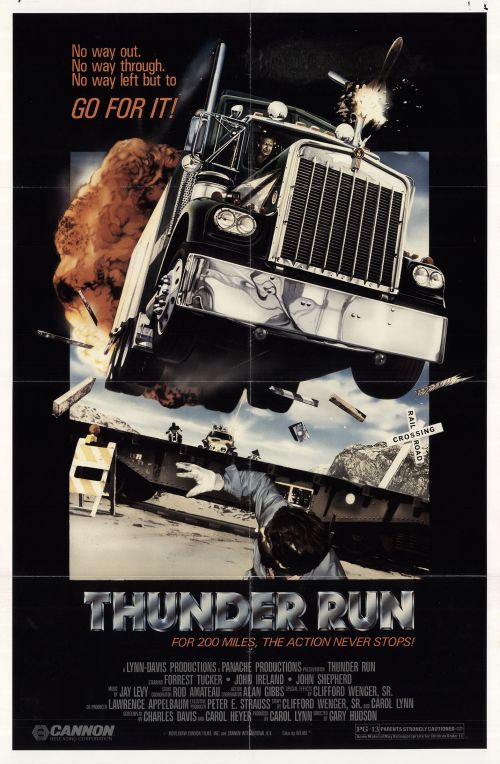
Charlie (Forrest Tucker) is a former trucker who spends his retirement working an old cobalt mine, but finds few prospects. He’s then given an offer by George (John Ireland) an old friend of his to haul some plutonium from Nevada to a top secret installation in Arizona. George warns Charlie that it could be dangerous as they’re terrorists after the cargo and willing to resort to violent means to steal it, but the $200,000 payout is too much for Charlie to refuse. With the help of his grandson Chris (John Shepherd) and his other teen friends the truck gets fitted with high tech gadgetry in order to fight off the bad guys when they attack.

The film starts out okay although it has all the signs of being a low budget direct-to-video 80’s venture complete with stock characters and generic music. The presence of Tucker, whose last movie this was, really helps. He’s the kind of actor who can give a performance that seems effortless and like he’s not acting at all just being himself and his persona is quite engaging allowing the viewer to become attached to him quite quickly and rooting him on in his challenge. There is some nifty stunt work too with my favorite moment being when a backhoe loader crushes a car that it literally runs right over and then also a trailer office. The scene has little to do with the main plot, but it’s still fun to see visually.

The film though starts to falter when it gets out onto the open-road. What should’ve been excited actually isn’t. There’s just too much high tech nonsense with rig equipped with stuff no other 18-wheeler has ever had. There’s very little intrigue at seeing the bad guys chase the truck when Tucker is able to just blow them all away with a press of a button. The truck seems almost indestructible as the villains aim a flame thrower right at the tires, which should’ve easily melted the rubber, but instead it doesn’t. The film is famous for a stunt that has the truck jumping over a train, but when it came back down onto the pavement it should’ve jostled the intricate parts of the rig in a way that would’ve most likely disabled it and the fact that the truck is able to continue on just fine starts to make the whole thing too ridiculous to be believed.

Having Tucker paired with Shepherd, who was 24 at the time, but looked more like he was only 18, is not interesting. Initially I thought this would allow the story to take advantage of the generation gap, but Shepherd is so squeaky clean and All-American that his presence allows for no nuance. I realize that in order to attract teen viewers a younger actor needed to be cast in a co-starring role, but the film would’ve been far better had Tucker been the sole driver, manning a rig that was just a regular truck without any of the techie jazz and forced to use his wits and cunning to fight off the terrorists instead of stuff dreamed up by a special effects wiz with an over active imagination.

My Rating: 3 out of 10

Released: May 30, 1986

Runtime: 1 Hour 30 Minutes

Rated PG-13

Director: Gary Hudson

Studio: Cannon Film Distributors

Available: DVD (Region 2), VHS

End Play (1976)

By Richard Winters

My Rating: 6 out of 10

4-Word Reviews: Feuding brothers hold secret.

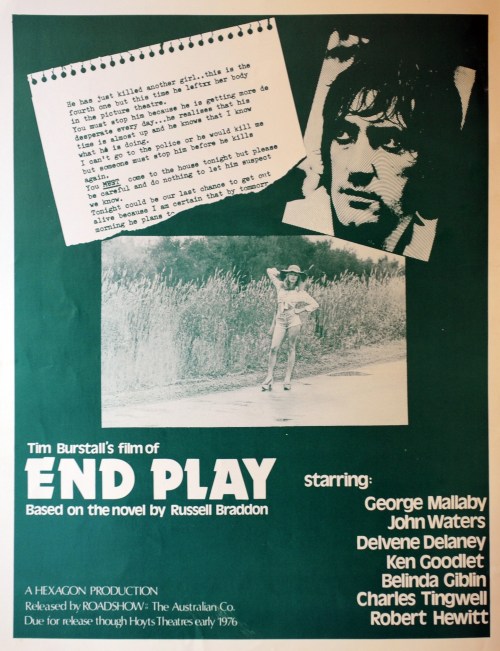
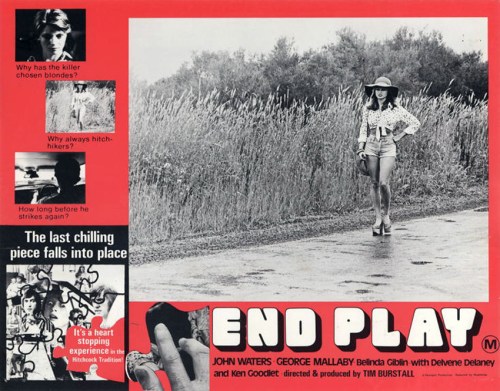
Mark (John Waters) picks up a hitchhiker (Delvene Delaney) on a lonely road and then promptly kills her. He then travels to his brother Robert’s (George Mallaby) house for a visit. When Robert leaves to go target practicing Mark brings the dead hitchhiker’s body inside and dresses her up to make it appear that she is still alive. He then disguises himself while taking the corpse to the local movie theater and once there he sneaks leaving the dead body to be discovered by others. Once the news of the grisly discovery hits the airwaves Robert immediately suspects Mark, but decides not to go to the authorities since he is already a paraplegic and at risk, due to lesions on his neck, of losing the movement of his arms, which will ultimately render him under the care of Mark. He also dislikes the police due to a childhood issue that he had with them, so for these reasons he covers for Mark’s actions, but when he realizes that his girlfriend (Belinda Giblin) has cheated on him with Mark he decides to carry out a stern revenge of his own.

The film, which is based on the novel of the same name by Russell Braddon, takes a unique spin on the mystery angle. Instead of delving into the action we get treated to the psychological interplay of the two leads and the many twists and turns their relationship takes where one minute they seem like comrades and the next enemies. Mallaby, who ironically ended up wheelchair bound in real-life after suffering a series of strokes in 1994, gives an edgy performance where his personality is so strong and aggressive that you really don’t notice the handicap at all. I liked the soundtrack by Peter Best too as it has a nice subtle quality that accentuates the creepiness without ever calling attention to itself.

While the film manages to hold interest it is somewhat slow. With the exception of a violent confrontation between the two brothers that occurs near the end there’s no action to speak of, so unless the viewer is really into the psychological aspect they may find the pace to be a bit boring. The two leads aren’t likable either. Normally the tension is created because you care about the protagonist and don’t want to see them harmed or in trouble, but in this case that’s all missing.

Spoiler Alert!

The biggest letdown though comes with its twist ending in which we find that Mark wasn’t the killer after all, but instead it was Robbie. However, director Tim Burstall completely botches this by showing the back of Mark’s head during the opening scene when the hitchhiker enters the vehicle. The two have completely different hair color with Mark’s being brown and Robbie’s being blonde and I even went back to the scene to make sure and there’s no mistaking it, it’s Mark’s head. This could’ve been completely avoided by simply having the camera act as the killer’s point-of-view where we only see the face of the hitchhiker as she enters the vehicle and is then killed. The fact that this wasn’t done was a big mistake and nullifies the intended surprise.

My Rating: 6 out of 10

Released: January 1, 1976

Runtime: 1 Hour 48 Minutes

Director: Tim Burstall

Studio: Hexagon Productions

Available: None at this time.

Getting Straight (1970)

getting straight1

By Richard Winters

My Rating: 5 out of 10

4-Word Review: Student unrest plagues campus.

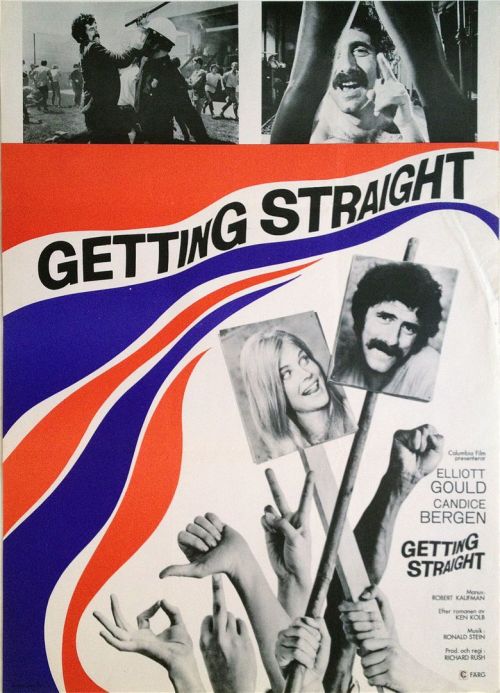
Harry Bailey (Elliot Gould) was at one time a student radical, but after returning to campus from serving time in Vietnam his perspectives have changed. Now he simply aspires to get a teaching degree, but the other students want him to take part in their campus protests, which he resists. His girlfriend Jan (Candice Bergen), who is much younger, starts to get active in the student movement, which creates further pressure for Harry. He sees the absurdity on both sides, but as the protests become more violent and the response from school administrators more inept, Harry comes to the conclusion that he can no longer sit on the sidelines.

If there is one thing that really stands out it’s Gould’s performance in a part he was clearly born to play. In fact the studio refused to go ahead with the project unless Gould made a commitment to star in it. Had he decided not to take the part the studio would’ve shelved the project permanently as they felt there was no other actor that was right for the role and they were correct. Fortunately Gould did accept and his running, raucous, irreverent commentary is the most entertaining thing about it.

Unfortunately his presence is so powerful that he dominates Bergen who comes off as transparent and overwhelmed. She certainly looks quite beautiful and I particularly enjoyed her cowgirl look with two ponytails, but her presence is blah. Maybe the producers wanted a weaker performer to expose how unequal the character’s relationship was with each other, but the result makes the conversations that the two have dull and tepid because Bergen can simply not keep up with Gould’s rapid-fire delivery.

Their fights are a little more entertaining with some of the jabs Gould throws out being downright funny especially when he accuses Bergen of being ‘just a guy with a hole in the middle.’ Yet the fact that the two get back together after flinging out some very nasty insults made no sense. There are certain things that were said here that got personal and couldn’t just get written-off as having been said in a ‘fit of anger’ like they do here. In most real-life relationships it would’ve created a rift that would never have returned things to the way it was before.

The protests come-off looking too staged, which includes one scene where Gould and Bergen stand in the middle of all of the chaos and manage to somehow hold an extended conversation even as everyone around them is getting beat-up.  In the original novel by Ken Kolb there weren’t any student protests and were only added in by director Richard Rush to give the story a more topical feel, but there were too many other films with a similar theme that  were more effective. Even The Strawberry Statement starring Bruce Davison, which had its share of faults, still at least managed to make the student’s confrontations with the police look more authentic and intense.

Some of the arguments that Gould dishes out as he battles with administrators, and sometimes with the students too, are on-target and even funny like when he challenges the new curfew rule by pointing to one of the students (played by John Rubinstein) and stating: “At the start of the school year he just wanted to get laid. Now he wants to kill somebody…you should’ve just let him get laid.”

Gould’s angry confrontation with Jon Lormer who plays one of the school board members has a riveting quality and that’s where this movie should’ve ended. Having it continue to where Gould then later confronts Leonard Stone, who plays another school board member, gets too heavy-handed and ultimately kills the film’s best moments with a lot of talky bits that seem insightful, but really aren’t.

My Rating: 5 out of 10

Released: May 13, 1970

Runtime: 2 Hours 5 Minutes

Rated R

Director: Richard Rush

Studio: Columbia Pictures

Available: DVD, Amazon Video, Youtube

High Tide (1987)

By Richard Winters

My Rating: 8 out of 10

4-Word Review: Mother meets estranged daughter.

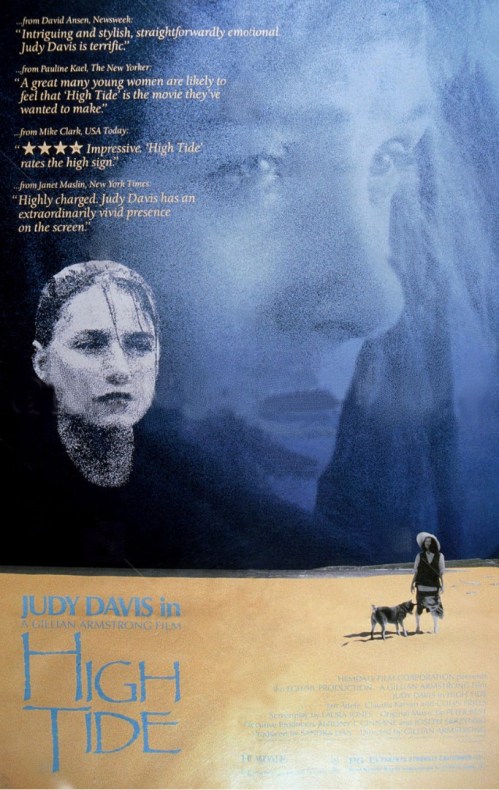
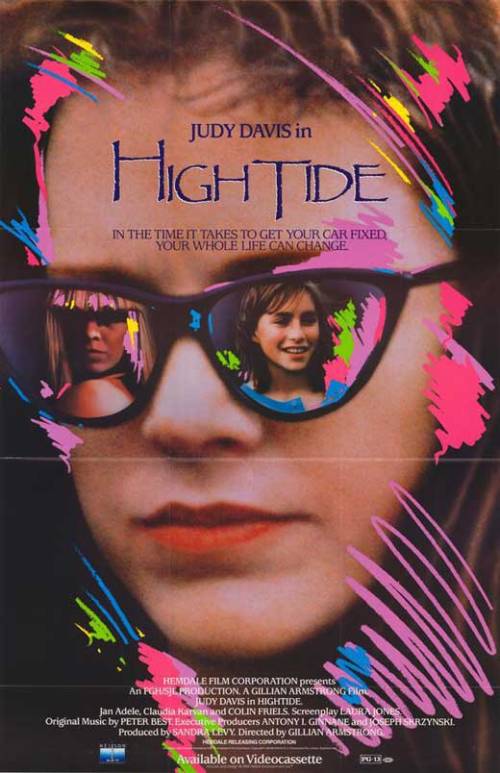
Lillie (Judy Davis) is living on the very edge of show business life working as a backup singer to an Elvis impersonator (Frankie J. Holden). Her lackluster behavior gets her fired and she finds herself without money or shelter. She moves to a trailer home park and begins drinking heavily and it is here while in a drunken state in the public bathroom that she meets Ally (Claudia Karvan). Ally is a 13-year-old girl living with Bet (Jan Adele) who is the mother of Ally’s father who died when she was just an infant. At first Lillie doesn’t know that Ally is actually her daughter, which she gave up at birth. When Bet realizes that Lillie is in the area she warns her not to go near Ally, but Ally and Lillie manage to find ways to get together anyways and form a rapport, but without Ally knowing the deep, dark secret between them. Once she does find out the two must learn to fight through the awkward and emotional state that the tumultuous new awareness creates.

Originally the script called for Lille’s character to be a man meeting up with his lost teen daughter that he had abandoned years earlier, but director Gillian Armstrong felt this had been done before and at her husband’s suggestion changed the lead into a female. In many ways this was a better idea as women are better able to reveal their emotions creating some very strong, heartfelt scenes between them that ultimately makes for a very powerful film.

Many reviewers have expounded on Davis’ performance and she does give a strong one particularly the way her character is put through some very demeaning situations, but still managing to come through them holding her head high and keeping the viewer empathetic to her. Karvan though is quite good too with a beautiful photogenic face that can display an array of emotions with very little effort and who’s likable enough that you’re able to bond with her immediately.

The story progresses casually and at first you have no idea what links these three women as the film intercuts between them in separate situations with no idea where the connecting point is, which to some extent doesn’t grab the viewer in. I did though like the way it captured the nightclub atmosphere showing how for many it temporarily opened the door for their lost and fleeting dreams by having Bet get onstage and sing to a captive audience at a talent contest during the evening only to cutaway showing her back on her drudgery job of driving an ice cream truck the following day.

Once the secret becomes clear the story gets more interesting with the dialogue between the mother and daughter quite compelling. There is however, a long lull during the second act where Lilly intentionally stays away from Ally, which I found frustrating. The main interest of the film is seeing the two working things out together and getting through the guilt and bitterness of the past and at times there’s not enough of that.

Spoiler Alert!

The third act features Ally deciding to go out on the road with Lillie, but to me this thing seemed too precipitous since the two had only begun to get to know each other, why would a young teen, even if she was unhappy in her current situation, want to start living with someone she really didn’t know if she could get along with? This situation also opens up a whole variety of new tangents: like how are the two going to survive with Lillie’s limited job skills and where would they live? I felt this situation should’ve been introduced in the second act and explored much more. Personally I don’t think things would’ve worked out and at the very least brought on, despite their best intentions, a lot of stress and disagreement before it might’ve gotten better. This is something the viewer needed to see though there’s still plenty of nice rewards nonetheless.

My Rating: 8 out of 10

Released: July 30, 1987

Runtime: 1 Hour 41 Minutes

Rated PG-13

Director: Gillian Armstrong

Studio: Filmpac Distribution

Available: VHS

Announcing Australia Sundays

Hey mate, since it’s always summer in Australia when it’s winter here I thought we could warm us up during these long, cold, chilly months ahead by visiting the Down Under, at least on Sundays. Beginning tomorrow and going all the way through March will spend each Sunday reviewing an Aussie flick from the 60’s through the 80’s. Some of these films have never been released here, or reviewed on other blogs, so this will give readers a new awakening to some of the great cinema that is down there. Plus, a chance to see the wonderful topography, animal life, and colorful people that makes up this unique continent, so I hope everyone will enjoy this new weekly series. Until then enjoy these pics.

The Hoax (1972)

hoax2

By Richard Winters

My Rating: 3 out of 10

4-word Review: Hiding H-bomb for ransom.

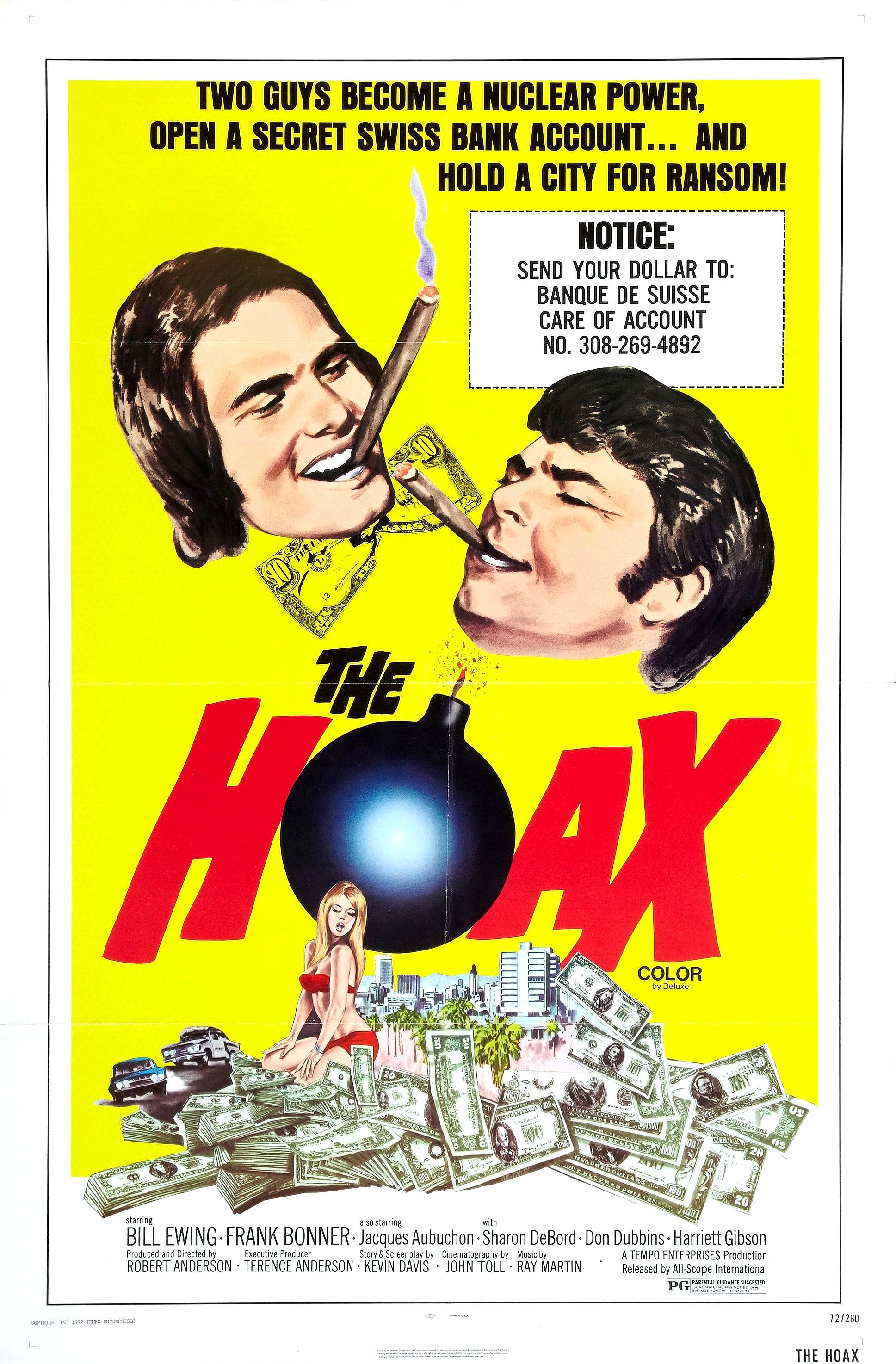
Cy (Bill Ewing) and Clete (Frank Bonner) are two friends who enjoy scuba diving. One day while at the beach they come upon a missing H-bomb hidden in some shallow water. Cy comes up with the idea of holding it for ransom by sending a letter to the press stating that they have the bomb, which has been reported missing by the military, and will detonate it unless each citizen of Los Angeles sends them one dollar to a specific bank account that they’ve opened in Switzerland. Things go smoothly at first until the police chief (Jacques Aubuchon) figures out who they are and begins tracking them down.

The only reasons that this film is worth catching is to see Frank Bonner, who later became famous for playing Herb Tarlek in the TV-show ‘WKRP in Cincinnati’, in an early role. In WKRP he played a character who wore loud suits and was obnoxious, but here that’s what his buddy does while he is more like a geek. Seeing him play an opposite type of character is amusing, but besides that there’s not much else that’s interesting.

For one thing the viewer should’ve actually seen the bomb, which we never do. We see its sharp metal edge that sticks up above the waterline, but not the bomb itself and since movies are a visual medium it’s important to use that as much as possible. The two also never remove the bomb from where they find it, which seemed dumb because anyone else could come along and take it away and then their scheme would be ruined. It made more sense to move it to a place where it could be hidden and this then would open the door for a lot of comical antics dealing with their difficulties carrying it around and keeping it undercover, but the film doesn’t take this route and becomes quite stagnant in the process.

The two friends share no comical banter either and are also in too much agreement, so there’s never any underlying tension. Sometimes onscreen realtionships/friendships are more compelling when there’s discord. It also seemed odd why they even felt the need to hatch such a scheme in the first place as both were doing okay financially. Cy was living with his girlfriend (Sharon DeBord), who had money, in a nice pad on the beach while Clete had a good job. In order for these otherwise law abiding citizens to suddenly go to criminal extremes there should’ve been a more desperate reason like having them homeless, which would’ve garnered more sympathetic from the viewer instead of just being two doofuses doing something nutty on a lark.

Turning the cops into buffoonish clowns was a mistake too as the humor becomes forced and their ineptness offers no intrigue. The running joke involving a vagabond drunk gets ridiculous as he’s always inadvertently showings up wherever the two men are making it seem like he might’ve been an undercover cop, which would’ve made more sense, but instead his occasional appearances have no bearing to the story at all and just gets thrown in for cheap laughs.

The final five minutes do offer a few unexpected twists, but by then it’s too late. I felt the script had gotten written with the ending as the starting point since that was the only inspired part of the movie, but this just proves that having a novel finish will do you no good if everything that comes before it is a bore.

My Rating: 3 out of 10

Released: April 19, 1972

Runtime: 1 Hour 23 Minutes

Rated PG

Director: Robert Anderson

Studio: All-Scope International

Available: None at this time.

The Virgin President (1968)

By Richard Winters

My Rating: 4 out of 10

4-Word Review: The President is incompetent.

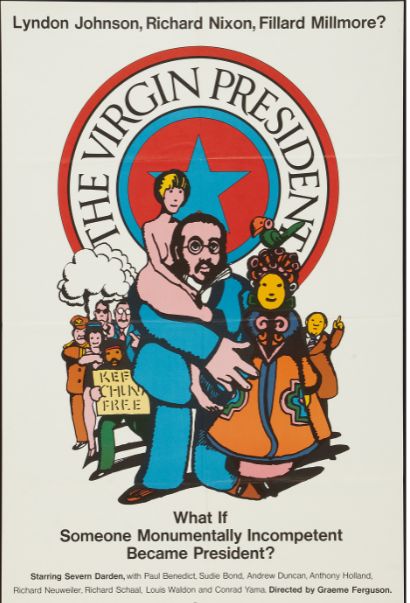
The current President (Severn Darden) has become too elderly and can no longer handle the job, but because term limits have been vanquished he keeps getting elected anyways. His staff decide he needs to go and the only way to do it is to have him killed, but make it look like an accident, so they set-it-up to where he gets bitten by a poisonous parrot. Once he is gone his young son, Fillard Millmore (also played by Darden) takes over. Fillard has lived a very sheltered life and is not privy to the corrupt ways of Washington and his advisors try to use this to their advantage. To help improve their international relations with China they have him get married to a Chinese bride (L’nelle Hamanaka), but because he’s inexperienced with sex he is unable to please her on their wedding night, which angers the Chinese officials who threaten nuclear retaliation, but the President’s advisors plan on striking China first.

The film is a low budget effort cast with members from Chicago’s Second City Improv group that has its moments, but doesn’t completely come together. One of the main issues is that it was directed by Graeme Ferguson, who specialized in doing documentaries and the opening sequence, which shows the behind-the-scenes footage of the actors getting ready for a scene underneath the credits is quite awkward. It made me feel like I was watching somebody’s home movie and not a feature film and does not in anyway help grab the viewer. It was also filmed in black-and-white and by the late 60’s almost all movies were done in color and this one should’ve been too because it just accentuates it’s amateurish quality otherwise.

Once the film gets going with the plot it does have some inspired moments. Darden is quite funny as the old man especially his death scene. I got a kick out of the little electronic box hidden inside a cabinet at the White House that would allow any American President to dial-up any country he wanted to bomb and pick the number of casualties, including a switch for ‘bonus kills’. Darden’s attempts to ‘make friends’ with the protestors outside the White House who are against his policies is amusing too.

They are unfortunately some bits that don’t work including Paul Benedict’s character who gets sexually aroused watching flowers pollinate. The pacing is off too with some scenes going on longer than they should and too much emphasis on the actors improvising their lines with dialogue that at times veers off from the main story.

The thing though that got me most annoyed, as a person who likes to be very fact oriented, was the scene where the President and his advisors are discussing which American city to nuke, which they hope to make it look like China did it and then give them the excuse to nuke China in return. Darden says they should bomb some ‘insignificant city’ like Fargo, South Dakota, but anyone familiar with geography would know that Fargo is in North Dakota and not South Dakota. What I found even more irritating is that another character instead of correcting the President on his mistake just reiterates the same thing making me believe that the entire cast and crew didn’t know what state Fargo was really in, which I found to be rather pathetic.

While this is clearly not a perfect movie and does have its share of drawbacks I still found it a fun watch simply as a relic of its era. It’s surprising in many ways how little has changed in Washington. The politicians back-in-the-day still had American imperialism on their minds and everything revolved around how to ‘brainwash the masses’ so they could remain in power, which unfortunately isn’t any different from how it is now.

My Rating: 4 out of 10

Released: November 18, 1968

Runtime: 1 Hour 11 Minutes

Not Rated

Director: Graeme Ferguson

Studio: CMB Films

Available: None at this time.

The Spider Will Kill You (1976)

By Richard Winters

My Rating: 6 out of 10

4-Word Review: Blind man with dummies.

Jonathan (Robert Palter) is a blind man living alone in a cramped apartment surrounded by two mannequins who he speaks to as if they’re his parents and in his head he hears their voices in response. One day he comes upon another mannequin made in the form of a female, which he names Christine (Shirley Anderson). Christine eventually comes to life and becomes, at least to him, human and the two fall-in-love. Christine though starts to reveal a dark side and begins taunting Jonathan while trying to break into a chest in his apartment that supposedly holds deadly spiders and that Jonathan has been told by his parents never to open.

This was a student film directed by David Schmoeller, which went on to finish in second place at the 2nd Annual Student Academy Awards festival, but ultimately losing out to another student film directed by a guy named Robert Zemekis. The concept for this film was the basis for Tourist Trap, which Schmoeller directed 3 years later.

This film is far better, even at only 30 minutes, than its big budgeted revision. First there’s no annoying generic college kids here just three characters and the setting takes place entirely inside Jonathan’s apartment, which has a really dark and creepy atmosphere. The mannequins also at various times take human form and there’s some spooky effects including having Christine remove her own arm.

There’s also surprisingly nudity and explicit sex. ( I was a bit surprised with the nudity bit since Schmoeller stated that he was ‘too shy’ to ask the actresses to take off their clothes in Tourist Trap, but apparently didn’t have any problem asking the one here to disrobe even though this was done before that one.) The sex is an odd sight to see too since we initially see it from Jonathan’s point-of-view where it appears he’s making love to a human, but then it cuts to the next-door-neighbor’s (Donald Weismann) viewpoint, who peers in from the door, and it’s clearly a mannequin that Jonathan madly humps, which is a freaky sight.

The ending is quite weird and leaves a lasting impression. If Tourist Trap had stayed more inline with this film it would’ve been far more intriguing. I liked the surreal quality and the scenes involving the mannequins are scary it’s just a shame it wasn’t played-up more. Overall though, it’s still an impressive first attempt especially when dealing with the constricted confines of a typical student project.

My Rating: 6 out of 10

Runtime: 30 Minutes

Not Rated

Director: David Schmoeller

Tourist Trap (1979)

By Richard Winters

My Rating: 2 out of 10

4-Word Review: Mannequins come to life.

A group of college kids go driving through the countryside in two separate vehicles. When one of the vehicles breaks down, Woody (Keith McDermott), the driver, decides to go off looking for a replacement to his flat tire. He finds an abandoned gas station and when he enters the backroom gets attacked by mannequins and flying objects. Later the young adults in the other car also have their vehicle break down near an old museum that features wax dummies and an eccentric owner named Mr. Slausen (Chuck Connors). Soon the same fate that befell Woody starts to occur to them one-by-one.

With the critical success of director David Schmoeller’s first film, the movie short The Spider will Kill You, which will be reviewed tomorrow, he managed to find enough funding to expand the idea into a feature film. The film though did not do well when first released and sat in virtual obscurity until Stephen King lauded it in his book ‘Danse Macabre’, which brought new attention to it and eventually garnered it a strong cult following. Now, I know everyone has their own unique ideas of what’s scary, but honestly I can’t see what King found about this that was so great.

To me it comes off as just another cheesy low budget slasher flick with very little that is original or interesting. Having the bad guy able to use telekinetic powers I thought was dumb. Why would this backwoods hillbilly be able to harness special powers that 99.9% of the rest of the world’s population doesn’t have? The original version of the script did not have the telekinetic powers present, but the filmmakers were forced to incorporate it at the behest of producer Charles Band, who refused to give the money for the project unless they did.

Chuck Connors, best known for his starring role in the TV-show ‘The Rifleman’, is a bit annoying and was the third choice for the role as the part had been offered to Jack Palance and then Gig Young first, both of whom would’ve been much better, but they turned it down. It’s not like Connors is necessarily bad, but he’s too campy and comes-off like just another tired rehashing of Ed Gein. The ultimate reveal of who the masked killer is offers no surprise at all and most if not all viewers will easily predict who it is long before you finally find out.

The cast of victims are boring too and I didn’t like the sexist undertones where the women, with the exception of the very end, never really fight back at all and almost seem to surrender to their fate and it’s only the men who show any gumption to escape and be aggressive. It would’ve been nice too had their been some nudity, as the females, particularly Tanya Roberts sporting a brunette hairstyle instead of her usual blonde one, look great. Most of these types of films would usually show some skin to help keep things interesting during the slow parts and when they all decided to go skinny dipping I was fully expecting this to happen, but instead you get nothing. Apparently Schmoeller, being a first time director, was too shy to ask them to remove their clothes, but it would’ve helped the film get the coveted R-rating as Schmoeller felt the PG-rating is what ultimately hurt it at the box office.

The only time things gets even slightly creepy is when the mannequins come to life, but that doesn’t happen enough. In retrospect the Mr. Slausen character should’ve been scrapped completely and instead featured a surreal storyline where the college kids find themselves trapped inside a warehouse filled with animated mannequins and forced to single-handedly battle them one-by-one in order to escape.

My Rating: 2 out of 10

Released: March 16, 1979

Runtime: 1 Hour 30 Minutes

Rated PG

Director: David Schmoeller

Studio: Compass International Pictures

Available: DVD, Blu-ray, Amazon Video