Tag Archives: John Hurt

White Mischief (1987)

whitemischief

By Richard Winters

My Rating: 7 out of 10

My Rating: Unsolved murder in Kenya.

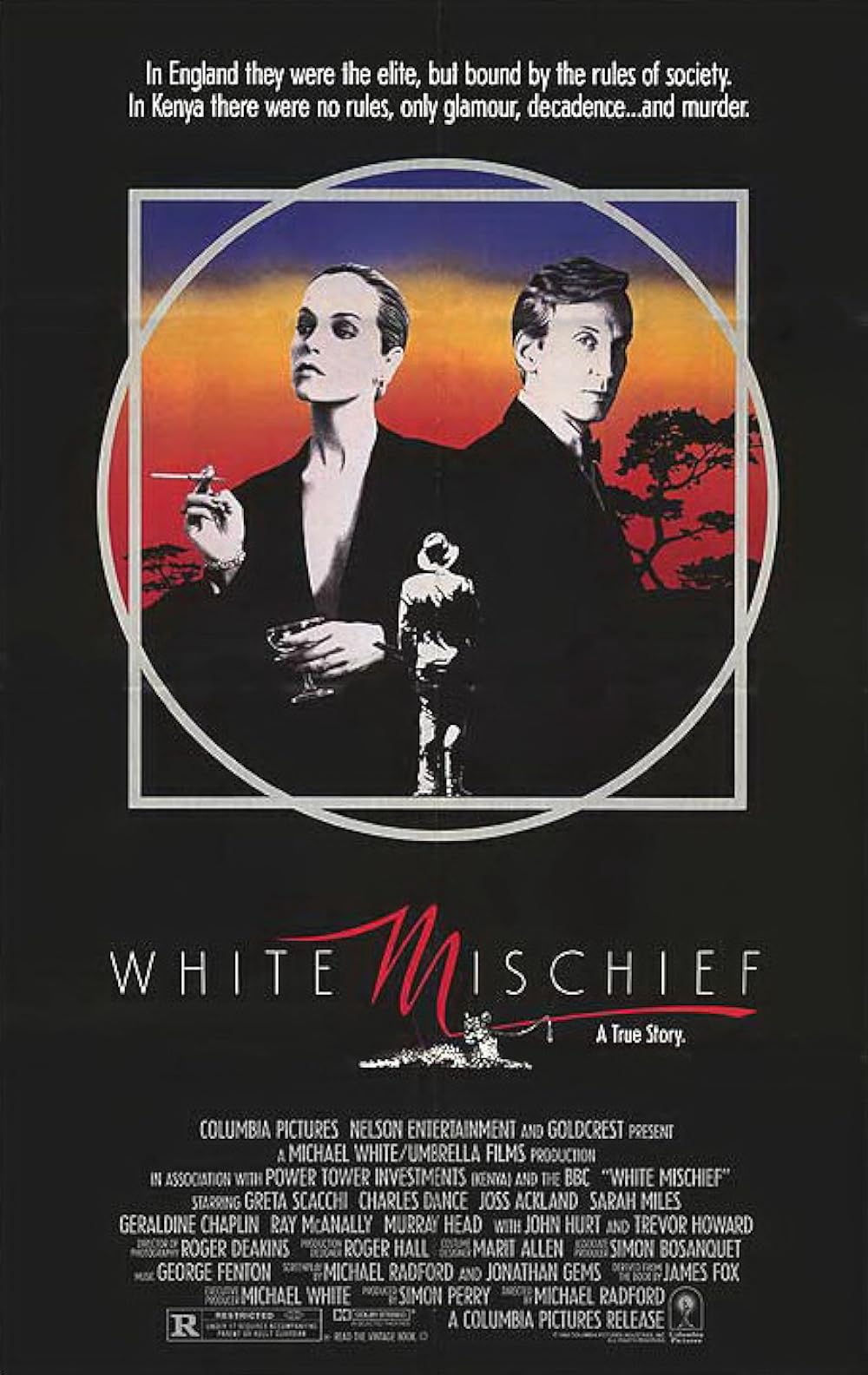
During the Second World War many British aristocrats with money escaped the tensions and horror in Europe by relocating at a settlement in Kenya that became known as Happy Valley. Here without the typical societal restraints of back-home they were able to indulge in all their provocative desires including rampant drug use and promiscuous sex. One such philanderer, possibly the most notorious of the bunch, was Josslyn Hay the Earl of Erroll (Charles Dance). He had already had various trysts with many of the women there including Alice (Sarah Miles) before dumping her due to her drug addiction. He then sets his sights on Diana (Greta Scacchi). She is married to Jock (Joss Ackland) who is older than her by several decades, and the two share a marriage of convenience with a pre-nuptial agreement that if either falls in love with someone else the other person will not impede it. Earl goes after Diana aggressively and despite some initial reluctance the two eventually become an open couple. Jock puts up a stoic front and allows her to go with him without any resistance, but internally he seethes with rage. Then one night Earl gets shot dead while driving his car in an isolate area. Did Jock pull the trigger?

The film is based on the book of the same name written by James Fox that was published in 1982 and in-turn based on the real-life incident that occurred on January 24, 1941 where the Earl of Erroll, like in the movie, is was found dead in his car and Jock, being the prime suspect, was put on trial, but then found not guilty due to a lack of evidence. For decades it sat as an unsolved case with no answers to what really happened until 1969 when Fox, along with fellow writer Cyril Connelly, became fascinated with the subject and began researching it vigorously. The book contains many interviews with people who lived through the ordeal and give first person accounts of the trial proceedings. Fox even traveled to the Kenya region to get a better understanding of the area and people and came to the conclusion that Jock had been the culprit with new evidence he unearthed, which makes up the book’s entire second-half though officially the case remains open.

The movie’s best quality is its visual element especially its ability to capture the expansive beauty of Africa as the film’s director Michael Radford proudly proclaimed before production even started that “films of Africa should be made by Africans” and you really get that sense here. The screenplay by noted playwright Jonathan Gems is also superb with it’s use of minimalistic dialogue where the conversations and characters never say too much, many times just brief sentences, and the emphasis is much more into what is implied.

On the negative end the attempts at eroticism are pathetic and overdone. The most absurd moment comes when the Sarah Miles character, during the open casket viewing portion of Earl’s funeral, reaches under her skirt and masturbates in full view of everyone before eventually putting her ‘love juices’ on the deceased, which came off as ridiculous and simply put in for a cheap laugh, or misguided ‘shock value’ and hard to imagine it occurred in reality. Both Scacchi’s and Dance’s characters are quite boring and their love scenes lack spark making the whole affair angle seem quite predictable.

The film’s saving grace though is with Ackland’s character where you really get inside his head and see things from his perspective. Normally in most films the jilted spouse is portrayed as someone to fear and a one-dimensional jealous machine who serves no purpose other than to get revenge. Here though we feel his quandary and sympathize with his internal struggle of trying to take the high road while also wracked with hurt and betrayal. Instead of being the culprit we ultimately see him as a sad victim even as his personality completely unravels by the end and because of this aspect I felt the movie works and is worth seeking out. Director Radford probably said it best when he stated that the film was about “people who have everything and yet have nothing. It’s about people who want to possess what they can’t possess” and with the excellently crafted Josh character you can really see that.

This is also a great chance to see acting legend Trevor Howard in one of his last performances. He was suffering severely at the time from his alcoholism and cirrhosis that he comes-off appearing like a wrinkled corpse put upright and there’s several scenes where he’s seen just standing there, but says nothing due to the filmmakers fear that he wouldn’t remember his lines, or if he did wouldn’t be able to articulate them. However, he does come through during a pivotal moment inside the prison when he visits Ackland and what he says and does there is great. John Hurt’s performance is the same way as initially he’s seen little and says no more than a couple of one word responses to the point I thought he was wasted, but then at the end he reappears and comes-on strong in an unique way.

My Rating: 7 out of 10

Released: November 10, 1987

Runtime: 1 Hour 47 Minutes

Rated R

Director: Michael Radford

Studio: Columbia Pictures

Available: VHS, DVD (Import Reg. 2), Amazon Video, Roku 
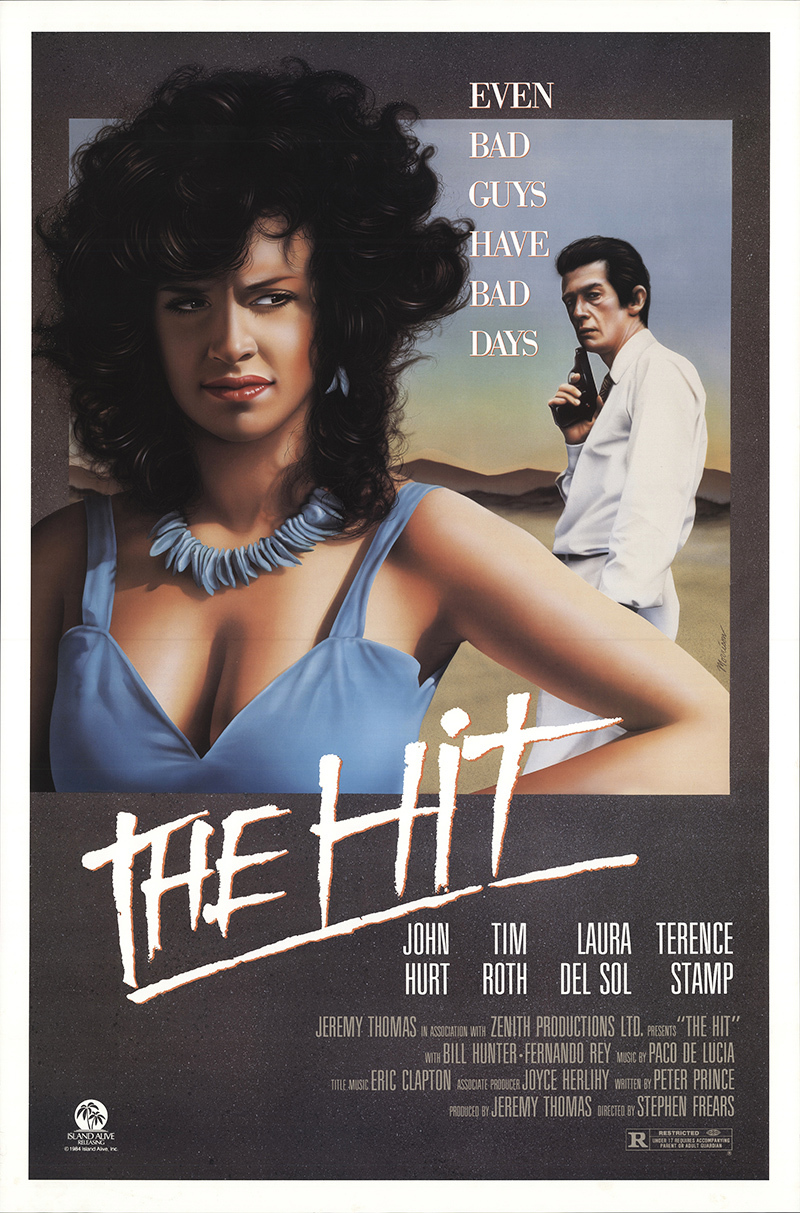
The Hit (1986)

hit

By Richard Winters

My Rating: 5 out of 10

4-Word Review: Not afraid to die.

Willie (Terence Stamp) turns states evidence against the criminal underground that he’d been apart of, which then sends his former partners away to prison, but before they go they sing ‘We’ll Meet Again’ just as he leaves the court room. Ten years later Willie is living the quiet life in Spain as a part of the witness protection program only to have his home invaded by a group of teens who kidnap him and take him to hitman Braddock (John Hurt) who was hired by the kingpin that Willie helped put away. Braddock along with his young partner Myron (Tim Roth) are instructed to take Willie, via a car, to Paris where the kingpin hopes to inflict harm on Willie before eventually killing him. However, things don’t go quite as planned as Willie shows no fear of death insisting that he’s accepted it as a part of the cycle of life and this throws the two hit men off convinced that he must have something up-his-sleeve, but does he?

This is another example where a movie I enjoyed when I first watched it years ago, but doesn’t quite live up to expectations upon the second viewing. For the most part this doesn’t happen that often and there has been some cases where a movie I didn’t like when I first saw it I’ve come to appreciate when seen a second time. This one though is definitely a case of the former and I came away a bit miffed on what its point was. When I first saw it I was impressed by the scene at the waterfall where Willie, who had a chance to escape, but doesn’t and instead decides to spend his time appreciating nature’s beauty until Braddock catches up to him, I found at the time to be quite memorable and unique moment as it revealed that the bad guy in this instance was the one more afraid and insecure of death than the intended victim.

However, there’s a lot of stuff that doesn’t mesh, or could’ve been more convincing. I had a hard time understanding why this sophisticated criminal group would hire a bunch of teen boys to break into Willie’s home (hideout). How could they trust these novices to get the job done and the fact that they’re able to do it so easily makes it seem that Willie’s ‘protection’ as it were wasn’t too impressive. It also negates the effect of the criminal unit. They’re supposedly this cunning, evil, underground group relentlessly pursuing their man against this supposedly intricate government program, but if literal kids can just break down the door with just a bit of effort then the whole operation from both sides comes-off as rather amateurish.

The casting of Hurt as the bad guy isn’t effective mainly because of his meek stature. Stamp was originally intended for that role and with his big build and piercing blue eyes would’ve been perfect, but it was ultimately decided for both actors to play against type and thus the parts got reversed, but it really doesn’t work. Hit men should have an intimidating presence, but with Hurt’s slim figure and quiet, exhausted looking demeanor that doesn’t happen. Roth as his quick-triggered, youthfully naive henchmen makes matters worse as he’s a walking cliche of a teen in over-his-head just biding time before his knee-jerk reactions to do them in. Thus the psychological games that Willie plays with them are not that interesting, or impressive since these two come-off as badly dis-coordinated right from the start and like any average person could easily outfox them.

Stamp’s character is baffling as well. During the courtroom moments he states his testimony is an almost hammy way like he’s making fun of the whole situation, which maybe he is, but it’s not clear as to why and his ulterior motivations are never answered. It’s hard to tell whether he really is a good guy, or maybe secretly a bad one as there are scenes where he puts other potential victims in definite danger and then feigns ignorance about it afterwards. He spends the whole time telling everyone how death doesn’t scare him and yet when a gun does finally get pointed at him he panics and tries to run while also pleading for his life, so which is it? The same goes for Roth’s character who during the course of the movie he seems to be falling for the lady hostage, played by Laura del Sol, and even protective of her and yet when the time comes for Hurt to shoot her he puts up no fight, or resistance, which defeated the momentum and missed-out on what could’ve been an interesting confrontation.

I like movies with multi-dimensional characters and the film does have that and certainly humans can be a bag full of contradictions. However, at some point it kind of needs to explain itself and it fails on that end. Intriguing elements about these people get thrown-in, but the story fails to follow through with it ultimately making it too vague, ambiguous to be full satisfying and in many ways it will most likely leave most viewers frustrated and scratching their heads as they ask themselves what the point of the whole thing was supposed to be.

I did though really enjoy the scenes with Australian actor Bill Hunter who is marvelous in support playing a man who takes over one of Hurt’s friend’s apartments while on vacation only to get the shock of his life when the hit man and his entourage show up unexpectedly. His rather pathetic attempts to mask his fear and trying to somehow carry-on a casual conversation knowing full well he could be blown away at any second is dark comedy gold and by far the film’s best moments.

My Rating: 5 out of 10

Released: May 18, 1984

Runtime: 1 Hour 38 Minutes

Rated R

Director: Stephen Fears

Studio: Zenith Entertainment

Available: DVD, Blu-Ray (Criterion Collection), Tubi, Plex

Scandal (1989)

By Richard Winters

My Rating: 5 out of 10

4-Word Review: Politician has an affair.

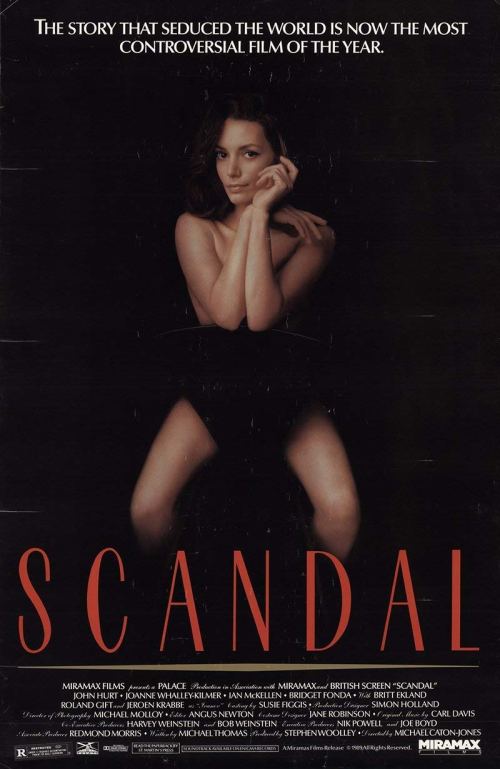
Based on the Profumo affair that rocked the British parliament in 1963 the story centers around an exotic dancer named Christine Keeler (Joanne Whalley-Kilmer) who catches the eye of Stephen Ward (John Hurt) a doctor with a thing for attractive young ladies. She moves in with him and the two share an unusual relationship where he pimps her and her friend Mandy (Bridget Fonda) out to members of the conservative party. Her sexual affair with one of the high-ranking officials of parliament, John Profumo (Ian McKellen) eventually reaches the attention of the press and leads to far-reaching ramifications for all involved.

Part of why this movie didn’t work for me and may not for others is that politicians getting involved in a scandal is no longer a big deal. We’re living in an age where political figures have been caught having affairs, even while in office, and it isn’t enough to have them removed. Yet this film expects the viewer to be in jaw-dropping shock from the first frame to the last even though in this cynical age it would be more shocking if one actually lived a squeaky clean life.

The first hour meanders along from one racy sex scene to the next until it almost seems like a soft core porn flick with no story. I had no idea where any of this cavorting around was going to lead and wasn’t really all that intrigued in finding out either. First time director Michael Caton-Jones takes too much of a detached approach to his characters. They all come off like wild sexual animals unable to control their inner urges, but with no other discernible differences making everything that goes on seem like one giant frolicking blur with no point.

Hurt gives a great performance, but I didn’t understand the motivations of his character. Why doesn’t he want to sleep with Christine and instead get more turned-on listening to her stories about her having sex with other men? What about him makes him this way, which the film should’ve helped answer, but doesn’t.

Whalley is too old for her part as she was supposed to be playing someone who was 19, but in reality was already 29. Having a true 19-year-old play the part, and have a definite look of innocence about her, may have given the provocative material a little more bite.  Her character also has the same issues as with Hurts. I got how she wanted to get away from her impoverished surroundings and sleeping with rich influential men could help her do that, but I didn’t understand why she liked her Hurt, or their unusual relationship.

The film ends with the court proceedings, which like with everything else doesn’t have the impact that it should. While the attention to detail and accuracy is impressive it would’ve worked better had it began with the trial and then worked backwards through flashback showing how they all got there instead of the linear narrative that it does take, which is too plodding. Focusing on only one of two characters would’ve helped too instead of trying to encompass so many of them where none of them are all that interesting or distinct.

My Rating: 5 out of 10

Released: March 3, 1989

Runtime: 1 Hour 46 Minutes

Rated R

Director: Michael Caton-Jones

Studio: Miramax

Available: DVD, Blu-ray (Region B/2)

10 Rillington Place (1971)

10 rillington place 2

By Richard Winters

My Rating: 7 out of 10

4-Word Review: He enjoys strangling women.

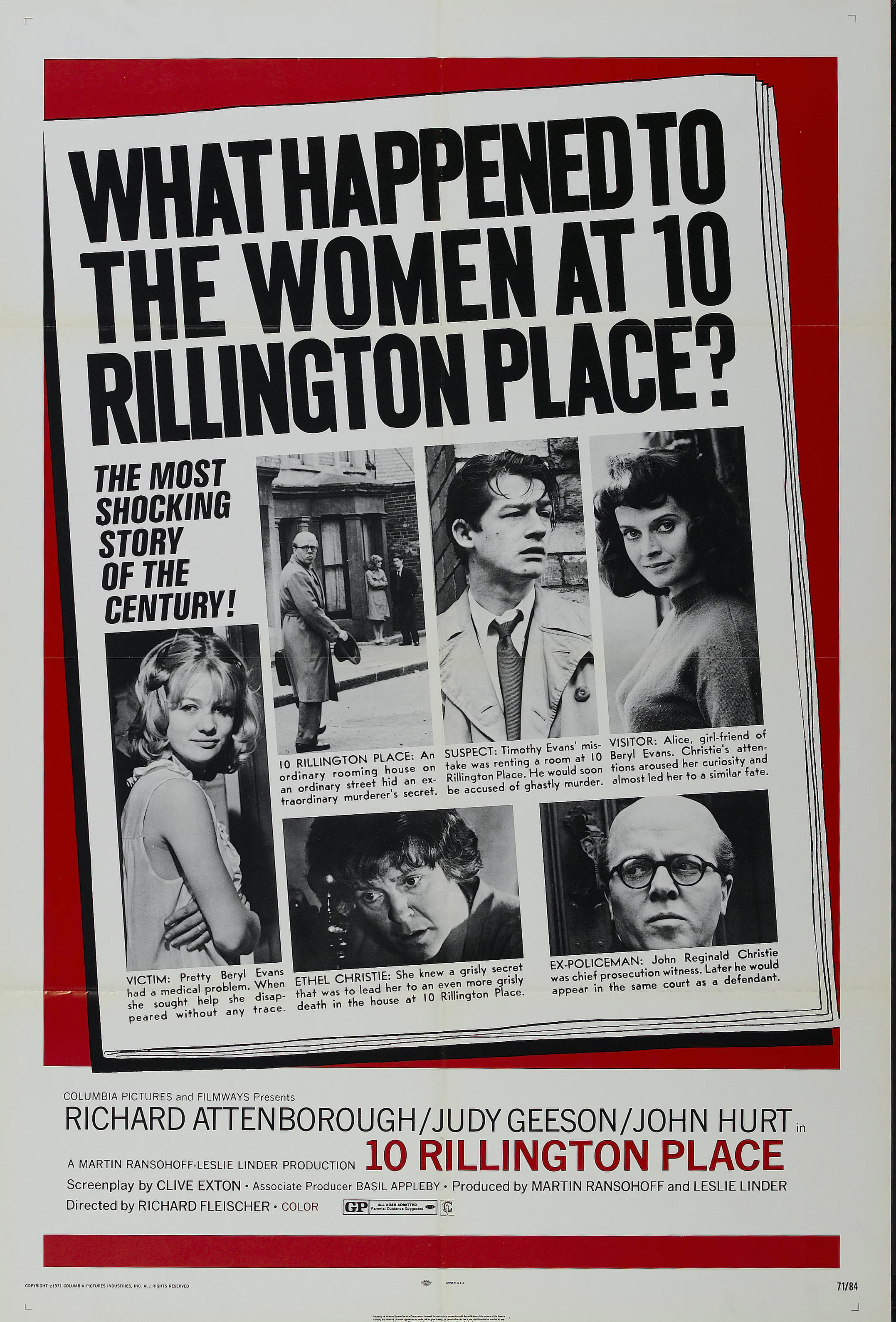
This film depicts the true life account of John Christie, played here by Sir Richard Attenborough, who strangled eight women, had sex with their corpses and then hide their bodies in his London flat at 10 Rillington Place. The story begins with Christie having already murdered several women when Timothy and his wife Beryl (John Hurt, Judy Geeson) arrive looking for a place to stay and decide to rent a room from Christie who immediately takes a fancy to Beryl. When she confides in him that she is pregnant and looking for an abortion he uses it to his advantage by pretending to be a former Dr. who can secretly perform the procedure. He then strangles her after giving her some anesthesia and tells Timothy that it occurred during the abortion and threatens him not to go to the police since it was an illegal operation at the time and Timothy was aware that she wanted it done, which would have made him an accessory. However, after moving out his suspicions continue to nag him and he eventually goes to the police, which culminate in a dramatic trial with both men accusing the other of being a liar.

The film comes off as being quite authentic to the actual events with the dialogue taken straight off of the court transcripts. The exteriors were filmed at the actual flat were the murders occurred while the interiors scenes where shot at an apartment house that was just three doors down from Christie’s real life one. Richard Fleischer’s direction is low-key with emphasis put on keeping things real almost like a documentary instead of trying to sensationalize it. The music is used sparingly and has a certain quite tone of loneliness and detachment to it almost like it is representing the feelings and mood from Christie himself.

Attenborough and Hurt give strong performances and the diametrically divergent personalities of the two characters are what drive the film. Attenborough accepted the role without even having read the script. He wore a skin-like skull cap for the part, which gives him a very pronounced bald head and a creepy alien-like quality. I also really liked the scene where he looks at himself in the mirror just before he commits the murder with his eyes conveying a frightened and ashamed look like even he himself is horrified at the murderous out-of-control obsession that drives him. Geeson does well as the sympathetic victim and Pat Heywood is memorable in an understated role as Christie’s wife Ethel who initially believes her husband to be innocent, but then slowly becomes aware of what a monster he really is.

The film would have been stronger and a more multi-faceted had it shown even in brief flashback more of Christie’s background including the fact that he was dominated by his mother and older sisters and raised by a father who showed no emotion for him as well his lifelong struggles with impotence, which all could’ve helped explain why he became the way he did. It also might have allowed for more tension had the story started with the court case and leaving it a mystery to the viewer at the beginning as to which of the men was telling the truth instead of having the narrative done in a very matter-of-fact, by-the-numbers way. In either case the film is still quite strong and great example of how a true-life crime story should be done.

My Rating: 7 out of 10

Released: February 10, 1971

Runtime: 1Hour 51Minutes

Rated GP

Director: Richard Fleischer

Studio: Columbia Pictures

Available: DVD-R, Amazon Instant Video

Partners (1982)

partners

By Richard Winters

My Rating: 2 out of 10

4-Word Review: Pretending to be gay.

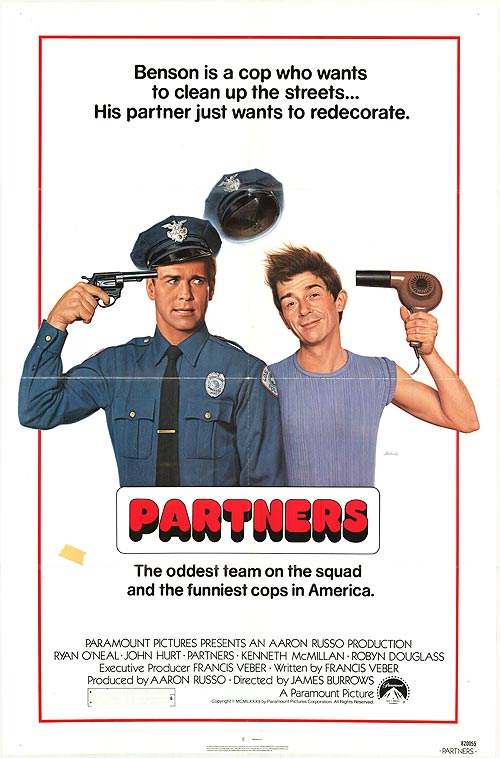
A serial killer targeting gay men is on the prowl. When one of his victims turns out to be the son of an influential politician pressure is put on the police force to find the culprit. The police chief (Kenneth McMillan) feels he has no choice but to pair Sgt. Benson (Ryan O’Neal) a straight cop with Kerwin (John Hurt) who is a gay desk clerk at the station. They are to masquerade as a gay couple in hopes of infiltrating the gay underground and find clues to the elusive killer, but their contrasting personalities and lifestyles threaten to blow their cover before they can make headway.

This film was controversial at the time of its release for its overuse of gay stereotypes and there are indeed some especially at the beginning, but the film’s biggest offense is that it is just plain boring. The idea that two cops could be forced to pretend to be a gay couple or have one of them pose naked for the cover of a gay men’s magazine as part of their investigation is dubious enough, but had it been funny I might have forgiven it. Unfortunately this thing can’t even elicit a few chuckles.

The idea that Kerwin would automatically fall in love with Benson while working together simply because he is another man is absurd and makes about as much sense as a heterosexual male falling for every woman that he meets, which of course doesn’t happen. The Benson character is also quite callous and disrespectful to Kerwin while showing blatant homophobic tendencies and being a confirmed ladies’ man, so I didn’t see what there was about him that Kerwin would have fallen in love with anyways.

Benson’s transformation to being more sensitive to gays and their issues during the course of the story might have been more compelling had it been better written. However, his liberal use of the word ‘faggot’ makes the film seem quite dated and wouldn’t be heard in a movie today especially from a character that is supposedly a protagonist.

Hurt plays the gay caricature well, but the idea of placing someone on such a dangerous mission without having any undercover experience of even knowing how to use a gun seemed stupid and unrealistic. Out of all the characters McMillan’s comes off best and he even manages to be slightly amusing, but unfortunately isn’t seen enough. Character actors Jay Robinson and Sydney Lassick can be spotted very briefly.

This was intended to be a parody of Cruising, which was released 2 years earlier and was a much more serious and graphic look at a true life killer of gay men. That film starred Al Pacino and will be reviewed next Monday.

My Rating: 2 out of 10

Released: April 30, 1982

Runtime: 1Hour 32Minutes

Rated R

Director: James Burrows

Studio: Paramount

Available: VHS, DVD