Tag Archives: Janet Leigh

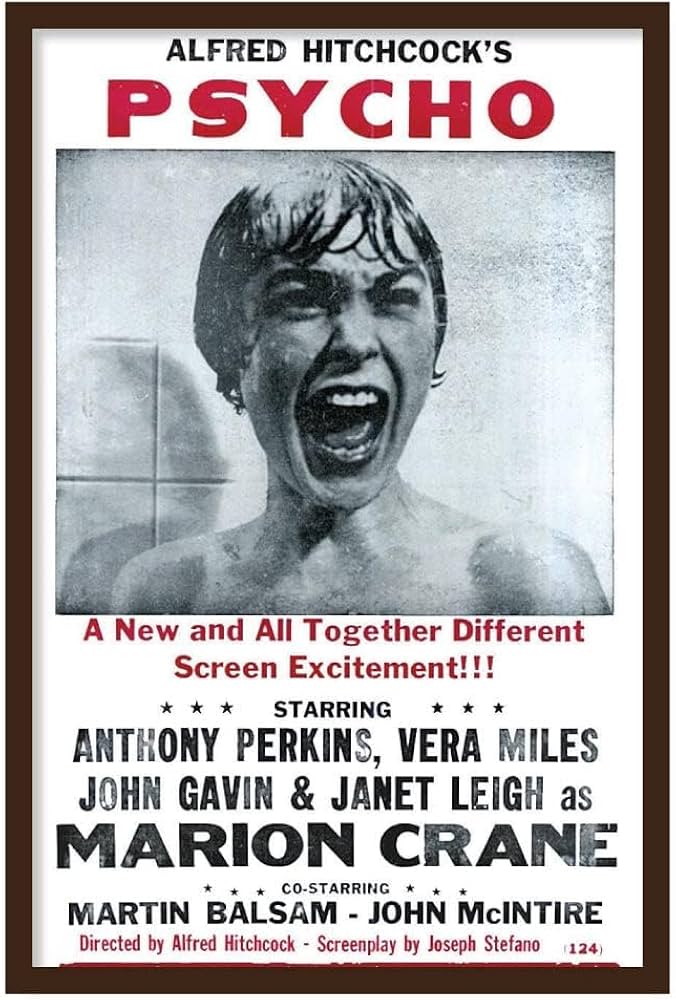
Psycho (1960)

psycho

By Richard Winters

My Rating: 9 out of 10

4-Word Review: Don’t take a shower.

Marion Crane (Janet Leigh), who works as a secretary at a real estate firm, steals $40,000 in cash from her boss (Vaughn Taylor), who trusted her to take the money to the bank, in order to help her boyfriend Sam (John Gavin) pay off his debts. As she’s traveling to where he lives she encounters a rainstorm causing her to take the nearest exit. There she drives into the lot of a isolated lodge called Bates Motel, run by a young man named Norman (Anthony Perkins) who’s still living with his mother in an old rundown house that sits ominously on a hill behind the hotel rooms.  Norman becomes immediately smitten to the woman, who signs the hotel ledger under an assumed name, and invites her to have dinner with him in the hotel office. Marion, who sees him as a awkward, but otherwise harmless guy who’s still dominated by his mother, agrees. After they eat she departs back to her room and takes a shower when what appears to be his mother, who considers all women to be ‘whores’, stabs and kills her. Norman then cleans-up the evidence by submerging the dead body and her car in a nearby swamp. Soon a private detective named Arbogast (Martin Balsam) begins investigating the case and what he finds out leads Marion’s boyfriend Sam and her sister Lila (Vera Miles) to the property where they’ll unravel a shocking secret.

The film, which at the time was considered ‘too tawdry and salacious’ to be made into a movie and thus the studio refused to give director Alfred Hitchcock the required funding and forcing him to use his own funds and crew to produce it, was based on the novel of the same name by Robert Bloch. Bloch began writing it in 1957 when coincidentally in the neighboring town not more than 35 miles from his came to the light the criminal activities of Ed Gein who killed two people while also digging up dead bodies and then skinning them in an effort to create a ‘woman suit’ he could wear so he’d ‘become his dead mother’ who had dominated him for the majority of his life. Rumors were that Gein’s crimes had inspired the book, but Bloch insisted that he had almost finished with the manuscript before he became aware of the real-life case and then became shocked with how closely it resided with his story.

While the film follows the book pretty closely there are a few differences. In the book the Marion character dies from decapitation while in the movie it’s from stab wounds. The Norman character is described as an overweight man in his 40’s while in the movie he’s thin and in his 20’s, which I felt was an improvement as it made more sense why Marion would feel less guarded around him and put herself in a more vulnerable position than she might otherwise as she still viewed him as a ‘wet-behind-the-ears’ kid. It also helps explain why Norman blunders his interview with the detective and virtually incriminates himself because he was too sheltered and not worldly-wise enough to handle pressure situations.

The film is full of a lot of firsts. It was the first to show a toilet or use the word transvestite, but what I really liked though is that it takes a different spin on the character of the victim. Typically, even today, victims are portrayed as being virginal and angelic beings particularly women, but here it works against that. Right away with the opening scene in the hotel room we see she’s definitely no virgin and what’s more she’s having sex outside of wedlock in an era where ‘good girls saved themselves for marriage’. Having her then be susceptible to corruption by stealing from her employer, or not feel frightened initially by Norman and even superior to him further works against the grain of the ‘sweet, fragile damsel in distress’ cliche and makes her seem more human since she’s not perfect and vulnerable to the same vices as everyone else, which in-turn gives the more an added darker dimension.

The film’s hallmark though is its memorable camera work from a close-up of the victim’s unblinking eye, still not sure how Leigh could’ve kept her eyes open for as long as she does, to the interesting way the house gets captured from the ground looking upward on a hill towards the sky with the creepy night clouds floating behind it.  My favorite one though is the tracking shot showing Norman walking into his mother’s room and then having the camera stop right at the top of the door frame and then spin around towards the hallway as he then leaves the room and carries his mother down the stairs. The only shot that I didn’t care for is when the Martin Balsam character gets stabbed at the top of the stairs, but instead of immediately falling over backwards and then rolling down the stairs, which is what would happen 99% of the time, he instead somehow ‘glides’ down an entire flight of stairs backwards while remaining upright and only finally falling to the floor once he hits the bottom, which goes against the basic laws of physics and to me looks fake and goofy, but other than that it’s a classic and still holds-up amongst the best horror movies made.

My Rating: 9 out of 10

Released: June 16, 1960

Runtime: 1 Hour 49 Minutes

Director: Alfred Hitchcock

Studio: Paramount

Available: DVD, Blu-ray, Amazon Video, YouTube
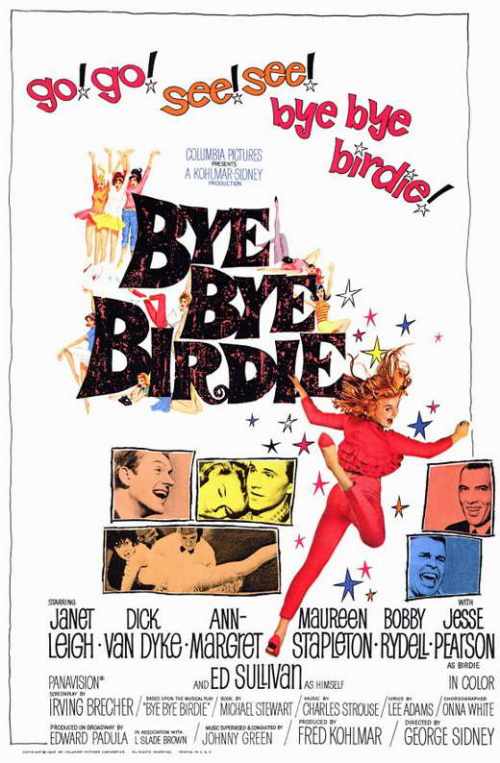
Bye Bye Birdie (1963)

By Richard Winters

My Rating: 6 out of 10

4-Word Review: Teen idol gets drafted.

Based on the hit stageplay of the same name, the story deals with Conrad Birdie (Jesse Pearson) a rock ‘n’ roll teen idol who gets drafted into the army.  As a big send off Conrad is chosen to perform in Sweet Apple, Ohio on the Ed Sullivan Show. As a special treat one lucky teen girl (Ann-Margaret) gets picked to give him a kiss while he sings the song ‘One Last Kiss’ written by Albert (Dick Van Dyke) a fledgling songwriter who hopes that the publicity of having a song sung by a big star will be just the ticket he needs to find success and enable him to finally marry his secretary (Janet Leigh) and get away from the clutches of his meddlesome mother (Maureen Stapleton).

The story was loosely based on the real-life incident in 1957 when Elvis Presley got drafted and in fact the part was originally intended for him, but his agent turned it down. While some may consider the humor here to be engaging satire I really felt it was lame and uninspired and only saved by the song and dance sequences. My main gripe was the way the teens get portrayed as being overly clean-cut kids, no leather jacket crowd here who smoked cigarettes even though they did exist, who are too benign and show no evidence of individuality. It would’ve been nice for the sake of balance to have at least one girl that was not into the rock star and didn’t faint or swoon the second she saw him, like all the others, and instead looked on with disdain at everyone who did.

While I did like Janet Leigh, who wears a black wig, and enjoyed her dance number at a Shriner’s convention I did feel overall that the adults here, with the exception of Paul Lynde, were boring and not needed. Van Dyke again gets straddled in another Rob Petrie type role who shows no pizzazz and having him a ‘mama’s boy’ at the age of 38 is more pathetic than funny. What’s worse is that Stapleton who plays his mother was in reality Van Dyke’s same age and despite some white in her hair really didn’t look that old and having the part played by an actual old lady would’ve given it more distinction.

The story should’ve centered around the teens, but in a more interesting way by entering into all the side dramas that almost always occur in these types of situations, but doesn’t get explored here. For instance there could’ve been some jealous classmates of Ann-Margaret’s upset that she got picked to kiss Birdie and not them and devised a scheme to ruin her big moment, or having all the boys, who admitted to hating Birdie because their girlfriends were so into him and not them, kidnapping him in revenge.

Despite having his name in the title Birdie has only a few lines of dialogue and needed more to do than just swiveling his hips, which becomes a derivative running joke. One idea would be to have him scared about going off to the army and secretly coming up with a plan with his fans to go undercover, so he could escape going, which would’ve added more depth to the satire, which is too placid, by showing how celebrities in private can be the opposite of their public image.

Beyond my many grievances with the story, which is even more flimsy than most musicals, I still found the songs, dances, and colorful sets to be fun and Paul Lynde has a few great lines. If one watches it for the musical quality while treating it as a relic of its time then it should still go over modestly well.

My Rating: 6 out of 10

Released: April 4, 1963

Runtime: 1 Hour 52 Minutes

Not Rated

Director: George Sidney

Studio: Columbia Pictures

Available: DVD, Blu-ray, Amazon Video, YouTube
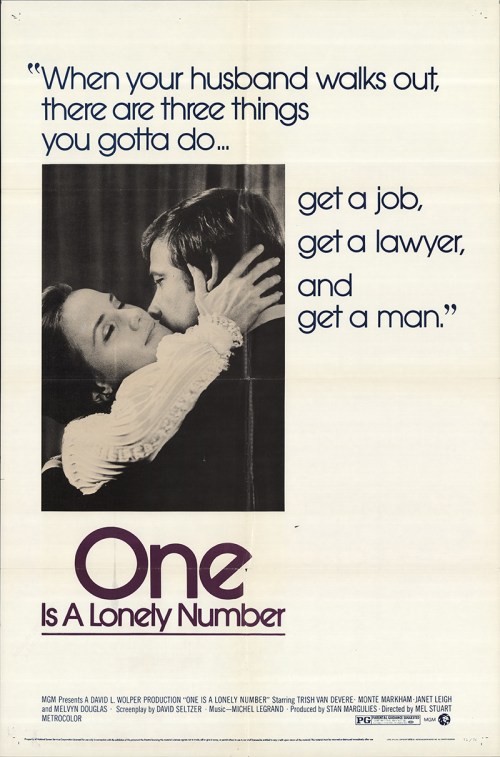
One is a Lonely Number (1972)

By Richard Winters

My Rating: 7 out of 10

4-Word Review: Adjusting to being single.

Amy (Trish Van Devere) is shocked to learn that her husband (Paul Jenkins) of 10 years wants to move out and get a divorce. She thought they had a happy marriage, but apparently he was seeing another woman on the side. Now she must learn to survive on her own and get a job despite not having any work experience.  She must also get back into the dating scene but finding quality men is tough as most are only interested in having sex while others pretend to be single when they’re really not.

David Seltzer’s script, which is based on the short story ‘The Good Humor Man’ by Rebecca Morris, is full of interesting insight on just how tough divorce can be on women particularly from that era where wives much more dependent on their husbands financially and not expected to venture into the work world as much as they are now. Mel Stuart, best known for directing documentaries as well as the original Willy Wonka and the Chocolate Factory,  proves quite adept with the material making it seem almost like a documentary and I especially liked his use of the hand-held camera and the way it would glide through the different settings that Amy was in and making the viewer feel like they were right there with the characters.

Although her name has come back into the headlines in 2017 when she and her adult son were accused of imprisoning a teenage girl in their Malibu home against her will, Van Devere has otherwise fallen into complete obscurity having not appeared in anything since 1993. I have often wondered if her career would’ve achieved more prominence had she not gotten married to George C. Scott when she did, which obligated her during the 70’s to star with him in many of his film’s which were box office bombs and critically panned and tarnished her star power. Here though she’s excellent playing an even keeled woman who isn’t sterotypically emotional. Her only gaffe comes when she breaks down crying while inside a clothing store, which didn’t come off as genuine and should’ve been taken out especially since she ends crying later on in two other scenes.

Janet Leigh is equally good as Amy’s snarky, man-hating friend. I was also impressed with Jonathan Goldsmith, who goes by the last name of Lippe here, who is better known by today’s audiences as the ‘Most Interesting Man in the World’ from the Dos Equis beer commercials. Here he plays a creep who doesn’t look or act anything like his TV- counterpart, as a job coordinator who expects to be ‘rewarded’ by Amy for finding her a job.

The film’s only drawback is that it doesn’t analyze the marriage enough as we’re never given any understanding for why Amy misses her husband, or why she would’ve fallen in love with him in the first place since he pretty much comes off as a selfish, indifferent jerk every time he is shown. Having some flashbacks to when she was married might’ve helped flesh out the character’s personality by showing her at different stage in her life instead of just focusing on the one. Otherwise this is a solid sleeper that hasn’t dated too badly and is waiting to be discovered by a new audience.

My Rating: 7 out of 10

Released: June 19, 1972

Runtime: 1 Hour 37 Minutes

Rated PG

Director: Mel Stuart

Studio: MGM

Available: YouTube

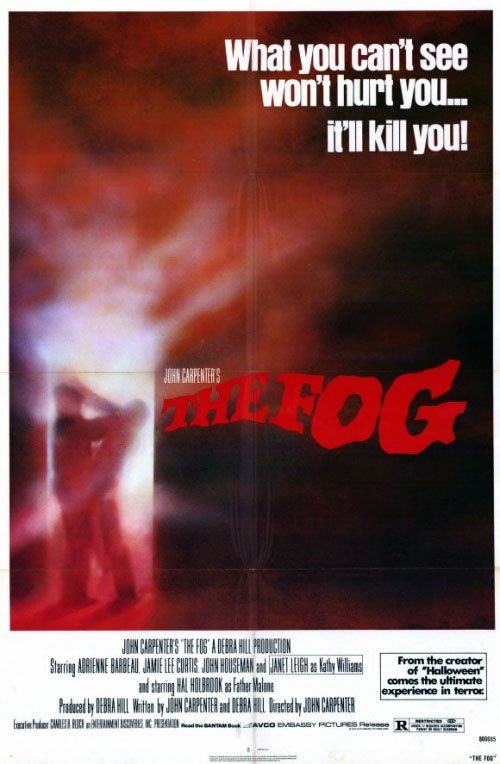
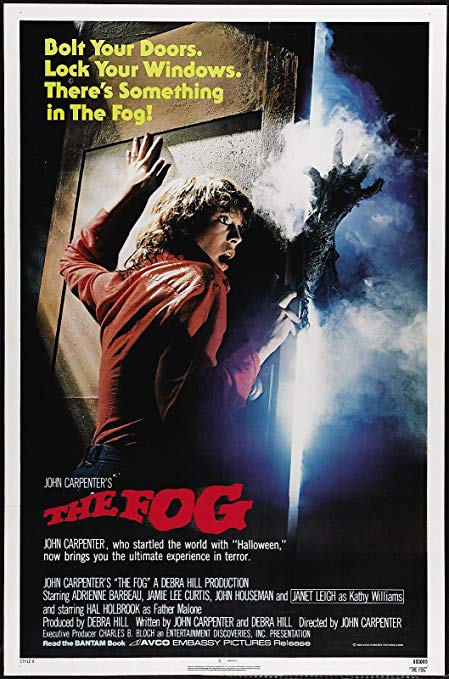
The Fog (1980)

By Richard Winters

My Rating: 3 out of 10

4-Word Review: Ghostly fog haunts town.

As the town of Antonio Bay gets ready to celebrate its 100th year of existence a mysterious fog creeps into the area at midnight and then strange unexplained events begin to occur. The town’s priest Father Malone (Hal Holbrook) finds a secret diary detailing how 6 of the town’s founders intentionally sank a ship 100 years earlier. Now the ship’s ghostly victims have returned seeking revenge by insisting that 6 people from the community must die in order to make-up for the 6 that originally killed them.

John Carpenter’s follow-up to his highly successful Halloween has gained a fervent following, but in the end it really doesn’t amount to much. Maybe my expectations were too high as I had a friend who talked this up as being great, but the scares are lacking despite a good first act that nicely builds the atmosphere and has some effective visuals particularly the shots of the fog rolling in.

The interesting premise though gets ruined by having things explained too quickly. Sometimes a little mystery can go a long way and not knowing what’s causing the strange occurrences and only having it answered at the very end, or possibly not at all, would’ve made it scarier and more intriguing. The backstory makes the ghosts come off like sympathetic victims looking for justice and therefore less threatening. Instead of being this entity with no known boundaries they become logical, emotional beings that makes the scenario too contained and civilized and less intense than it could’ve been.

You wait for things to finally gel, but it never really does. The victims get attacked in a matter of seconds and the camera then quickly cuts away before any blood or violence is shown. The ghosts aren’t seen much either and amount to shadowy figures from a distance when they are with occasional glowing red eyes, but otherwise they lack visual flair.

Having three heroines was a mistake especially since Jamie Lee Curtis seems bored in her role and almost like she didn’t even want to be there. Her real-life mother Janet Leigh conveys far more energy and she could’ve easily been the star with Curtis cut out completely. The two do share a few scenes together, but frustratingly never any lines of dialogue.

Adrienne Barbeau, who at the time was Carpenter’s wife, is okay as a late night DJ working out of a lighthouse, but her over-the-air pleas to her young son Andy (Ty Mitchell) to get out of his house to escape from the ghosts came off as unintentionally funny. The simultaneous climaxes that occur at two different locations with some cast members fighting off the ghosts inside a church while Barbeau does the same inside the lighthouse doesn’t work and if anything the finale should’ve happened completely inside the lighthouse since that was a more unique setting.

The direction is competent and it’s not like this film, which was remade in 2005, is a bad one it’s just not particularly exciting or interesting. The horror needed to be amped up and the pacing quicker particularly as it got into the second act. The only moment in the film that impressed me had nothing to do with the horror, but instead was the shot showing Barbeau walking down a long, winding outside stairwell to get to the lighthouse, which was filmed on-location at the historic Point Reyes Lighthouse in Marin County, California.


My Rating: 3 out of 10

Released: February 8, 1980

Runtime: 1Hour 30Minutes

Rated R

Director: John Carpenter

Studio: AVCO Embassy Pictures

Available: DVD, Blu-ray, Amazon Video, YouTube