Tag Archives: Gene Hackman

The Conversation (1974)

By Richard Winters

My Rating: 10 out of 10

4-Word Review: Someone is listening in.

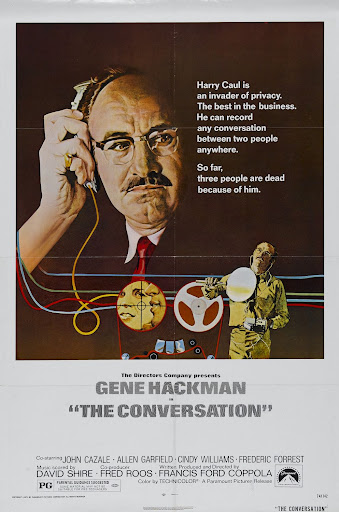
Harry Caul (Gene Hackman) is a surveillance expert who specializes in listening into people’s private conversations and has a reputation of being quite good at it. Many wealthy clients hire him to record things from their enemies that they might not be able to attain otherwise. However, one of these assignments led to the death of three people and Harry, being a highly religious man, has felt guilty about it ever since. He begins to have the same concerns with his new assignment when he overhears a couple (Fredric Forrest, Cindy Williams) who he’s recording mention that ‘he’d kill us if he got the chance’. Harry is unsure if he wants to give the tapes up to his client as he’s frightened the same scenario as before will occur. Martin (Harrison Ford) the man representing the client becomes aggressive in getting the tapes and warns Harry that they’ll get their hands on them one way or the other. Harry, a private man, soon realizes that this client is just as sophisticated in surveillance technology as he and maybe even more so as he becomes aware that his phone and even his apartment is bugged.

Inspired by real-life surveillance expert Martin Kaiser, who was a technical consultant on the production, the film deftly explores how today’s modern technology has easily evaded our private lives and how no one is safe from prying eyes and ears a concern that has become even more pronounced in the decades following its release. Many presumed that it was a testament about the Watergate break-in, which occurred a year before the movie came-out and uses much of the same sound equipment used the by criminals in the real-life event, but in actuality the script, by Francis Ford Coppola, was already complete in 1965, but was unable to get any financial backing until his success with The Godfather. 

The film scores on just about all levels especially with the way it captures San Francisco. I loved the bird’s eye-opening shot of Union Square as well as the terrific use of the fog that gets used to great effect during a memorable dream sequence. The soundtrack by David Shire is quite unique as it’s made to replicate sound waves changing frequency. I liked too that quite a bit of time is spent showing Harry inside his editing studio where he puts together the tape he’s recorded from different sources into a cohesive whole and watching him do it, even if it’s from equipment that would be deemed dated now, is impressive and makes you appreciate the expertise of the character.

Acting wise this may be Hackman’s best, and he stated in later interviews that he considers this to be his finest work, though at the time he felt it was an extreme challenge playing such an introverted person when he himself was highly extroverted, but the payoff is rewarding as he displays characteristics unlike any other role he’s played. What impressed me most was his body posture, which is hunched over, and he walks with a pensive gait, which reveals to the viewer the character’s inner angst without it ever having to be verbally explained. It’s interesting too how he’s mostly shy and stand offish during the majority of it making him seem like a wallflower, but when the subject of his sound expertise comes into discussion, he’s suddenly bragging about his state-of-the-art machinery showing how even the most unassuming of people can still have a big ego and helping to create a protagonist who’s three-dimensional.

There’s also great support from a young Harrison Ford, who appears with a scar on his chin, who despite presenting himself in a composed manner and speaking in a controlled tone of voice is quite menacing. Terri Garr is excellent as a prostitute that Harry frequents and acts as Harry’s only social outlet as well as Allen Garfield playing a huckster whose also Harry’s rival and clearly has a way about him that gets under his skin. Great work too by John Cazale who works as Harry’s assistant and their relationship runs hot-and-cold and there’s even Robert Duvall in a small, but pivotal part.

Spoiler Alert!

While the film is expertly crafted, I did find the scene where Harry’s landlady leaves him a birthday gift inside his apartment to be problematic. We see that Harry has three different locks on his door, which keenly reveals what a private person he is and how paranoid he is to protect it, and yet when he opens up his door there’s an item sitting on the floor left by his landlord. Through a subsequent phone conversation, he has with her we learn that she was able to get in by using her master key, but it’s highly unlikely that she would have three different keys for each lock.

Another issue happens at the end when Harry tears his apartment apart in desperate attempt to find the covert listening device that’s been planted by the client and is able to listen and record everything he says and does. He isn’t able to locate it despite a thorough and exhaustive search and then spends the rest of the time playing his saxophone as it’s the only thing he has left, which is where it finally dawned on me that was probably where they implanted the bug and the movie should’ve had him dismantle that too and then if he was unable to find it there, after destroying everything else, he could be seen lying in the barren, darkened room in a fetal position and completely defeated, which might’ve left an even more lasting and riveting final image.

My Rating: 10 out of 10

Released: April 7, 1974

Runtime: 1 Hour 53 Minutes

Rated PG

Director: Francis Ford Coppola

Studio: Paramount Pictures

Available: DVD, Blu-ray, Amazon Video, YouTube
Superman IV: The Quest for Peace (1987)

By Richard Winters

My Rating: 3 out of 10

4-Word Review: Fighting for nuclear disarmament.

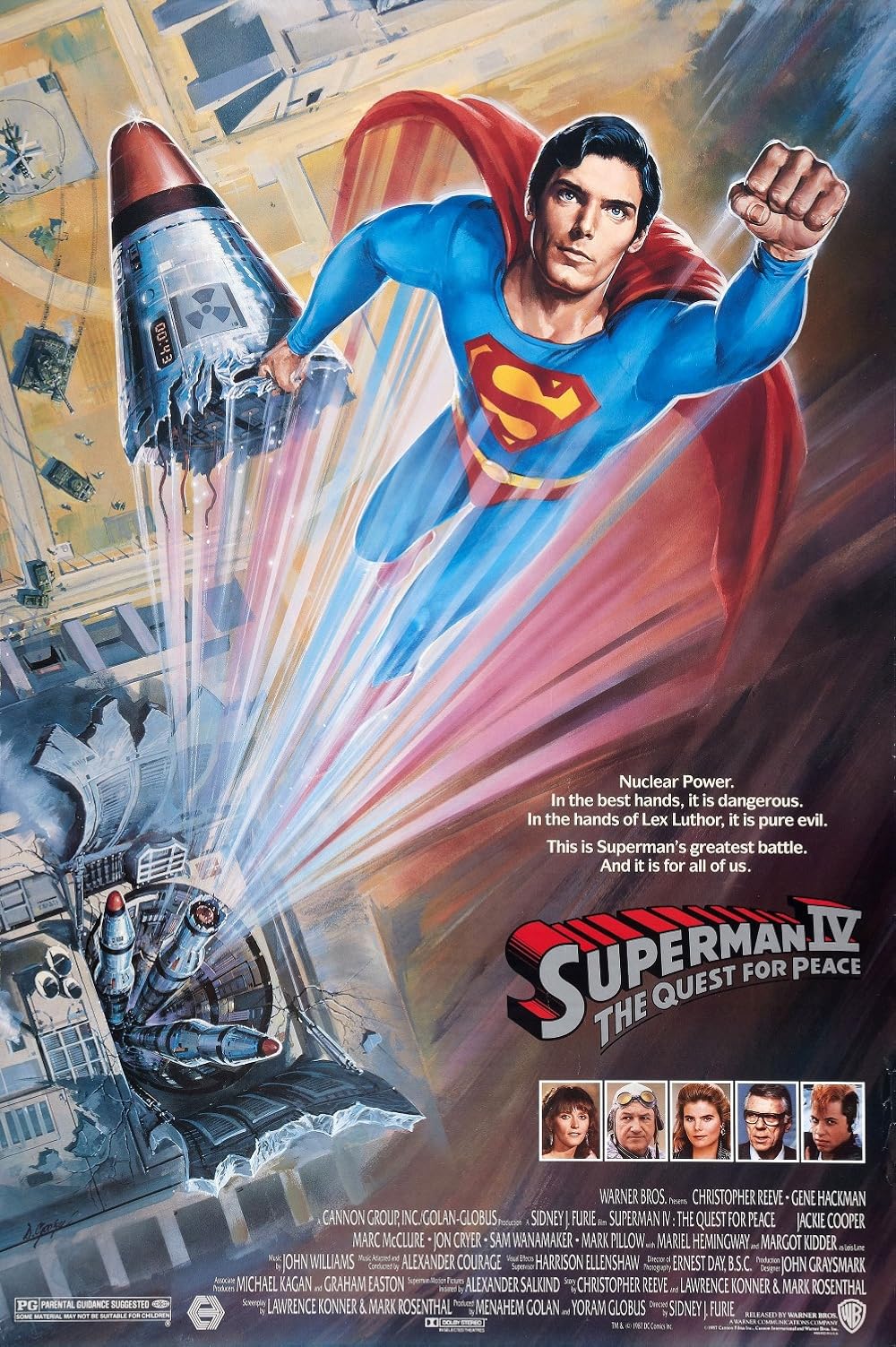
Lex Luthor (Gene Hackman) escapes from prison with the help of his nephew Lenny (Jon Cryer). He is then able to create a powerful villain named Nuclear Man (Mark Pillow) by stealing a strand of Superman’s hair from a museum and using its code to create a genetic matrix. Nuclear Man has many of the same powers as Superman, but, unbeknownst to Superman, he’s only powerful when he’s in sunlight and without that he becomes weakened. Meanwhile Clark Kent is having battles of his own when the newspaper he’s working for, The Daily Planet, gets taken over by a rich tycoon named David Warfield (Sam Wanamaker) who degrades the paper’s integrity by insisting only stories with a salacious bent get printed. David’s daughter Lacy (Mariel Hemingway) takes a liking to Clark and the two soon become an item.

The fourth installment was the first not to be produced by the Salkinds who decided to give up on the franchise after the box office flop of Supergirl and sold the rights to the Cannon Group who were suffering financial strain, which caused the budget for this one to be cut from $36 million down to $17 million. Many have complained that the result of this compromised the special effects though I didn’t find the drop-off to be quite a bad as I feared. The biggest drawback are the flying scenes where it clearly looks like Superman is matted in front of a greenscreen and isn’t nearly as slick looking as the first two. The opening bit though that takes place on a Russian space station I thought was alright, but I did wonder how Superman was able to know that the cosmonauts were in trouble, as he appears to the rescue out of nowhere, and what would tip him off that they were in danger?

The dumbest addition is the Nuclear Man. In the 45-minute deleted footage there were actually two with the first one being portrayed by Clive Mantle and resembling the comic book villain Bizarro. This one gets defeated by the Man of Steel prompting Lex to create a another one. The second creation is the only one shown in the studio cut version and this one looks like a male model wearing a tacky get-up stolen from Clash of the Titans. He speaks with Lex’s voice and I’m not sure why it was done this way outside of actor Mark Pillow, who plays the second incarnation, not having any acting experience, so they had his lines dubbed by Hackman, but the explanation that he has Luthor’s voice because Luthor made him doesn’t make sense. Why just stop at the voice? If he’s going to replicate his creator then he should have the same eyes, ears, and body as Luthor as well.

I was happy that Margot Kidder gets more screentime as in Part III she was relegated to being not much more than a cameo appearance. However, having her Lois Lane character constantly getting into extreme danger, this time on a subway train where the driver passes out, causing the car she’s riding in to accelerate to dangerous speeds, starts to get a bit overbaked. How many times statistically can one person accidentally walk into a life-threatening situation? Once sure, could happen to anyone, but even just twice would be a stretch. However, this lady inadvertently falls into a scary mess seemingly every other day making her more like a walking-talking bad luck charm that everyone else should stay away from for their own protection.

The scenes that she shares with Superman are stupid as he takes her on a flight with him into the night sky, but this was already done in Part I, so why redo it? Then when they land back at her apartment after revealing to her that Clark is really Superman, he does something that makes her forget that, but why even bother to let her know about his secret identity if he’s just going to make her lose her memory of it right after?

Initially I liked the addition of Hemingway as the new love interest as I thought the bratty persona of her character would lend some spice. Unfortunately, she loses her entitled attitude right away becoming benign and boring like everything else. The scene featuring her getting kidnapped by Nuclear Man, who takes her into space with him, is ridiculous because she’d never be able to survive outside of the earth’s atmosphere as there would be no oxygen, which along with the frozen temperature, would’ve had her dead instantly.

I really liked Hackman recreating his role as Luthor, who adds a much-needed campy charm. Cryer isn’t bad either as his young henchman and he does have the film’s one and only funny line. The story isn’t as political and preachy as I thought it was going to be either, which is good, but everything else falls flat. The initial runtime was supposed to be over 2-hours, but I was thankful it got cut down to a mere 90-minutes and even then, it was a drag to sit though. The franchise came to a merciful end after this, and I feel it was for the best.

My Rating: 3 out of 10

Released: July 24, 1987

Runtime: 1 Hour 30 Minutes

Rated PG

Director: Sidney J. Furie

Studio: The Cannon Group

Available: DVD, Blu-ray, Amazon Video, YouTube
Superman II (1980)

By Richard Winters

My Rating: 8 out of 10

4-Word Review: Superman loses his powers.

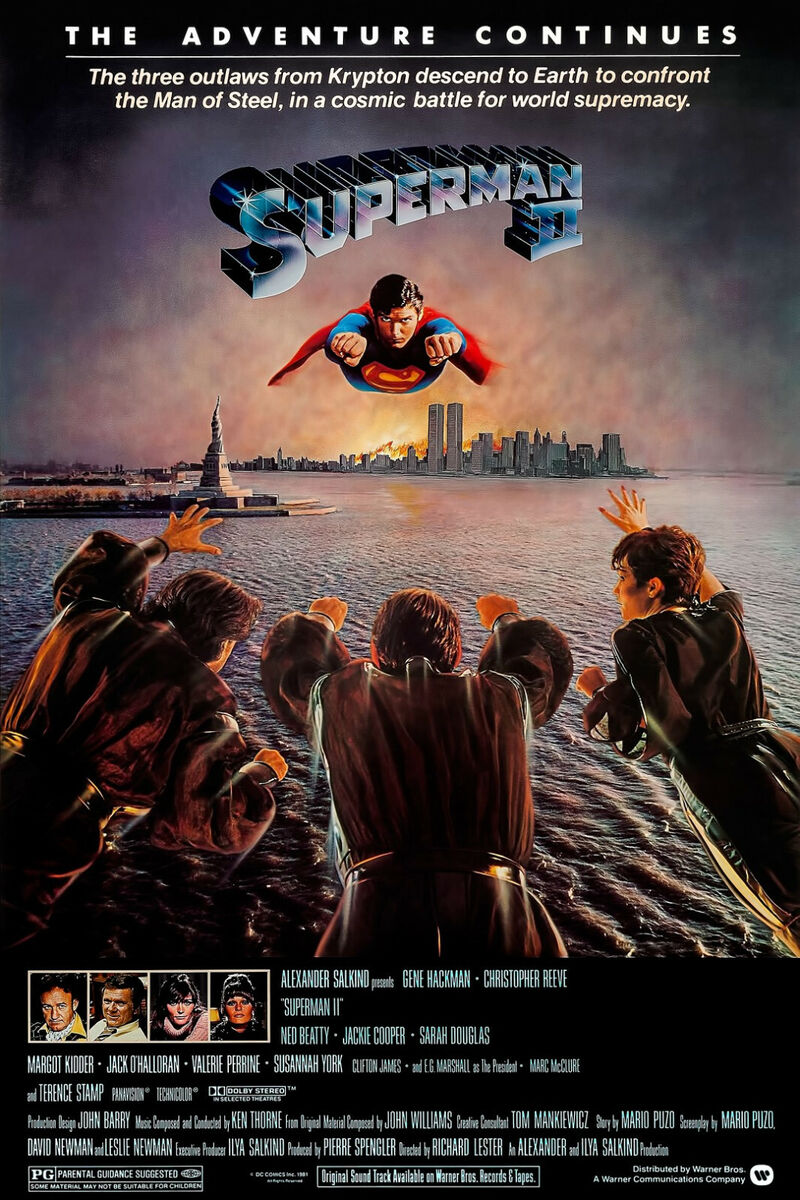
Superman (Christopher Reeve) flies to Paris in an attempt to save Lois Lane (Margot Kidder) who was assigned to go there to cover terrorists who’ve taken over the Eiffel Tower and threatening to detonate a hydrogen bomb unless their demands are met. Superman manages to take control of the bomb and lift it into outerspace where it goes off, but unbeknownst to him the explosion also releases Zod (Terrence Stamp), Ursa (Sarah Douglas) and Non (Jack O’Halloran) from their imprisonment inside the phantom zone. The three now fly towards earth planning to take it over with the superpowers they’ve been given from the sunlight. Meanwhile Clark falls in love with Lois and admits to her that he’s Superman. He takes her to the artic to see his Fortress of Solitude and it’s there that he listens to a past recording of his mother Lara (Susannah York) advising him that if he wishes to marry Lois that he will then have to enter a crystal chamber where he’ll then lose his powers, which he does. Now that Zod and his evil associates have taken over the country by invading the White House he becomes powerless to do anything about it as he desperately searches for a way to regain what he gave up.

The production had many behind-the-scenes upheaval including run-ins between director Richard Donner and the producers who insisted that he was going over budget. Initially it was deemed necessary to film both the first segment and the sequel at the same time, but due to money concerns they stopped filming part 2 with 75% of it already completed in order to finish the first part and get it out to theaters. During the pause the producers then fired Donner and replaced him with Richard Lester. Lester was known more for his zany comedies and had a different directorial style than Donner. His approach was to insert campiness into the story and move it away from the dark elements. This caused several scenes to be refilmed some of which without the original cast including Hackman who refused to come back to do reshoots causing a few of his scenes to be dubbed while Brando had sued the producers for his share of the gross profits causing all of his scenes to be taken out completely and replaced mostly with York who ended up speaking the lines that he would’ve and for the most part does a far better job of it.

While the Donner version was released onto DVD in 2006 and is a bit different this review will stick with the one that was shown in the theaters and I felt is quite well done. Unlike with part 1 this one gets right to the action without the stagy back story from the first, which I found boring. The showdown between Superman and the evil three done on the streets of Metropolis as well as the massive destruction that the villains cause the small redneck town of East Houston are very exciting with great special effects that should please anyone. The comedy bits that Lester inserted I didn’t feel went that over-the-top and in some ways were helpful as it released some of the tension as these were some really nasty bad guys, who caused massive destruction, so inserting a campy chuckle here and there I didn’t feel was that out of order.

The script doesn’t have as many plot holes like in the first one. The only major issue to quibble about is when Superman goes into the chamber that sucks away his powers. Why though is it necessary that he should have to give up his powers just because he wants to get married is a whole different discussion that’s worth questioning, but I get that there needed to be a dramatic conflict, so we’ll roll with it. However, it’s never explained how Clark and Lois get themselves out of the artic and back to civilization as they ‘flew’ into the Fortress using his flight powers, but once he was made mortal, they couldn’t rely on that on the way out and without any other mode of transportation I wasn’t sure how they were able to travel and nothing gets shown, but should’ve.

Spoiler Alert!

His long trek back to the Fortress in an attempt to retrieve the powers is equally problematic as he is shown doing it completely on foot, which could take many weeks, or longer to do. He’s also shown wearing nothing more than a light jacket while he does it without any head covering, which now that he’s human, wouldn’t be enough to shield him from the brutal elements and frigid cold and he most likely would’ve died before he got there from either frost bite, or pneumonia. How he’s able to get the powers back aren’t sufficiently explained either. Supposedly it’s because of a green crystal that Lois dropped and is still there when he returns, but if the control module was already destroyed then how would this get it to work again?

End of Spoiler Alert!

The acting is again what really makes it fun. Hackman is once more excellent as Luthor as here he plays it both ways as the ‘middleman’ between Zod and Superman where one minute he’s arrogant and confident and then the next he’s nervous and pleading. It’s a shame though that Perrine and Beatty, his cohorts in crime, aren’t in it as much as I felt the three together had a great chemistry. Gotta love Kidder as a brash Lois who manually squeezes oranges for Vitamin C as she’s become a self-described ‘health nut’ all the while a cigarette dangles from her mouth. Stamp is really good too as the main villain and his intense performance is what keeps the tension going, which again is why the comedy bits aren’t a problem here, though in Part III this does become a major issue, which will be discussed in the next review.

My Rating: 8 out of 10

Released: December 4, 1980

Runtime: 2 Hour 7 Minutes

Rated PG

Directors: Richard Donner, Richard Lester

Studio: Warner Brothers

Available: DVD, Blu-ray, Amazon Video, YouTube
Superman (1978)

By Richard Winters

My Rating: 8 out of 10

4-Word Review: The Man of Steel.

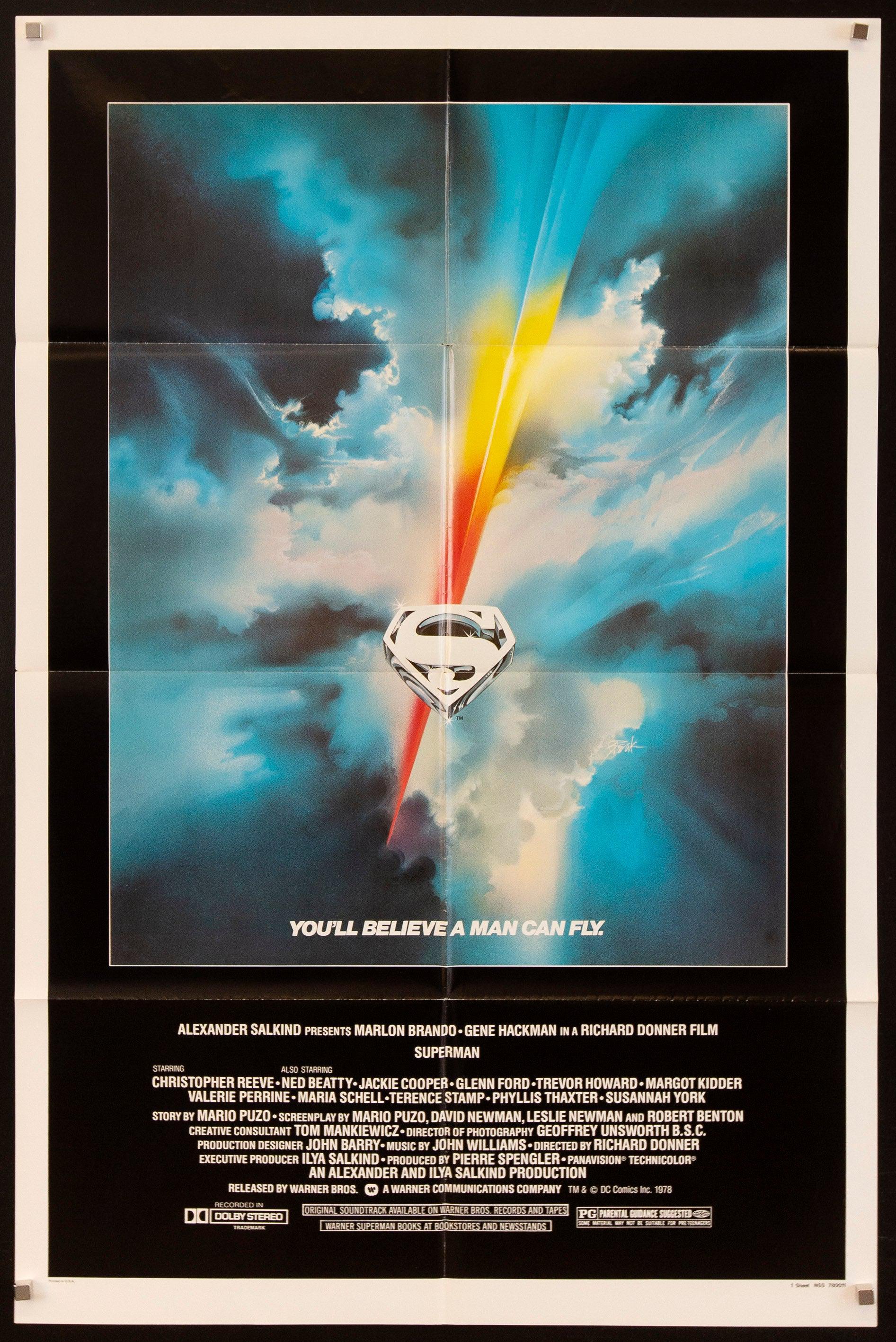
As the planet Krypton gets set to be destroyed by its exploding sun, Jor-El (Marlon Brando) and his wife Lara (Susannah York) put their child on a spaceship that takes him to the planet earth. It is there that his spaceship crash lands into a wheat field that his spotted by Jonathan (Glenn Ford) and Martha (Phyllis Thaxter) who take the child in and treat him as their own. The boy is named Clark (Christopher Reeve) and as he grows, he begins to show amazing abilities including running faster than is humanely possible and incredible strength. Once he becomes an adult, he gets a job as a reporter at the Daily Planet newspaper where he meets fellow reporter Lois Lane (Margot Kidder). He even saves her, while dressed as a superhero, from a helicopter accident and becomes known initially as the ‘caped wonder’ before finally being coined as Superman. His publicity attracts the attention of criminal mastermind Lex Luthor (Gene Hackman) who devises a plan to steal missiles and use them to create an earthquake along the San Andreas fault and thus casting off coastal California into the ocean and turning the desert land he purchased into prime real estate. Superman attempts to stop him, but Lex has found one thing that can stop him: a meteorite known as kryptonite.

At the time this film, which suffered from numerous behind-the-scenes problems and infighting, was made it was the most expensive one ever produced with a whopping $55 million budget. While the effects were mesmerizing for many back-in-the-day I don’t know if they still all hold-up. The flying segments particularly over the Statue of Liberty is impressive to a degree but can’t quite equal today’s technology and appears like two people in front of a greenscreen as does the giant red sun that moves in to destroy Kyrpton. Watching the young Clark Kent running alongside a train looks tacky too like he’s being held up by invisible wires, which he was, and his feet aren’t really ever touching the ground. In all fairness though the earthquake segment and the destruction of the Hoover Dam and the shaking of the Golden Gate Bridge remains top notch.

The script though, which takes on quite a lot and had to be slimmed down from its original 500-page version that was written by Mario Puzo, feels rushed at times and glosses over certain things that I felt should’ve been a little more drawn-out particularly when the Kents find the boy crash land in the field. The film makes it look like they just left the remains of the spaceship in the field making me think other people in the area would’ve also come upon it later and would start a panic that some alien had come out of it and invaded the town. Later on, we come to realize that the ship got hidden inside their barn, but there’s no scene showing them transporting it, or how they went about doing that, which I felt should’ve been put in for the simple sake of clarity.

Watching Superman orbit the earth in an attempt to get it to spin backwards and supposedly ‘turn back time’ is kind of cool to see and an interesting concept though not totally plausible. Making the world rotate the other way would certainly change some things like having the sun rise in the west instead of the east and have the ocean waves go in a different direction among other things, but causing everything to essentially ‘rewind’ and go back to the way they were even bringing certain people who had died suddenly back to life just wasn’t completely convincing though it’s not enough to hurt the movie as a whole.

Most fans will likely tell me I’m quibbling about the Clark Kent disguise though when you really think about it it’s not much of a disguise at all. I admit watching this muscular guy dressed in a suit and acting all clumsy and wimpy is amusing especially the way Reeve plays it but besides combing his hair in a different direction than when he’s Superman the only other difference is that he wears glasses. However, that would be tantamount to saying someone who does wear glasses but then comes to work one day without them would not be recognized by any of his friends, or co-workers especially when he’s still speaking in the same voice making me believe that Lois and Jimmy, played by Marc McClure, should and would’ve caught on to this pretty quickly. I realize the comic book did it this way, but when it got updated into a movie, they should’ve reenvisioned it a little by adding more to the Clark get-up like besides just glasses he’d also have a mustache, or goatee and speak a bit differently, so having those close to him not catch-on would be more understandable.

I think what I enjoyed most was Hackman, who didn’t play a lot of villains during his career but is highly enjoyable here. Initially he didn’t want to take the part as he felt playing a campy character would tarnish his reputation of being a serious actor, but the change of pace does him good and proves if anything how versatile he is. His refusal not to shave his head, as the Lex Luthor in the comic is bald, works in his favor as his hair gets styled differently in each scene in order to represent him wearing a wig, which creates a creative visual. Valerie Perrine is great too as his girlfriend Miss Teschmacher who helps contrast his delusional personality with her more grounded sensibilities and I just loved the way he’d yell out her name every time he got annoyed with her, which is the comedy highlight.

The rest of the supporting cast though, made up of big name starts like Trevor Howard, Maria Schell, and even Larry Hagman didn’t seem needed and given such few lines I was surprised why they’d even take the roles unless it was because of the money. Brando is an equal waste. He’s given top billing and paid an exorbitant amount of money including a percentage of the profits despite refusing to memorize his dialogue and even having his lines written on the baby’s diaper for him to read off of as he puts the child into the spaceship. Had the producers skipped the unimportant ‘star power’ and cast lesser knowns in these roles they could’ve saved themselves a lot of money, which in retrospect might’ve lessened the tensions they had with director Richard Donner for going over budget and ultimately lead to his firing and a very tumultuous follow-up Superman II, which will be covered in the next review.

My Rating: 8 out of 10

Released: December 10, 1978

Runtime: 1 Hour 23 Minutes

Rated PG

Director: Richard Donner

Studio: Warner Brothers

Available: DVD, Blu-ray, Amazon Video, YouTube
Eureka (1982)

eureka1

By Richard Winters

My Rating: 6 out of 10

4-Word Review: He discovers some gold.

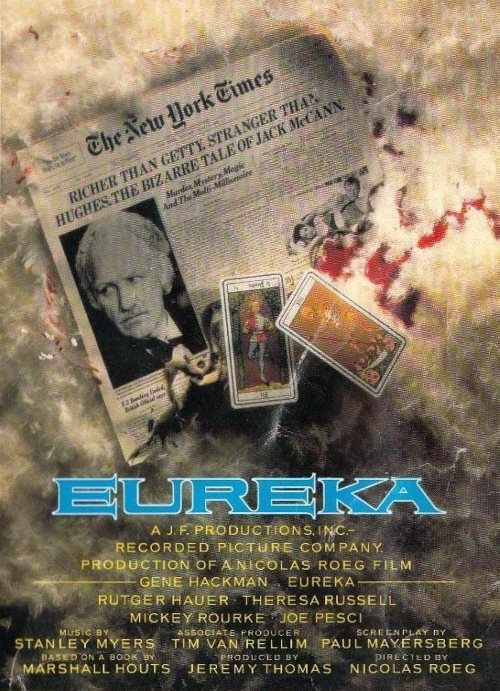
Jack (Gene Hackman) has been searching the Yukon for over 15 years in the hopes of one day coming upon some gold. Then one day he finds it and becomes super rich. 20 years later he’s living on his own island, married, and with a grown daughter named Tracy (Theresa Russell). Jack though has grown ornery through the years and has managed to alienate most of his family including Tracy’s husband Claude (Rutger Hauer) whom Jack can’t get along with and the two regularly argue to the point that it also affects his relationship with his daughter. Jack is also at odds with the local mobsters headed by Mayakofsky (Joe Pesci) who wanted to open a casino on the island and are willing to resort to any violent means necessary in order to get that done.

The film is based loosely on the life of Sir Harry Oakes who, like with the main character here, scoured many countries looking for gold for 15 years before finally laying claim to a fortune. He then retired to the Bahamas and ultimately was found murdered in 1943 in a crime that has remained unsolved. The studio though did not know what type of audience to aim the film to and thus shelved it for a year only to release it to limited theaters where it managed to recoup a paltry $123,572 out of its initial $11 million budget making it one of the biggest box office bombs in history.

As a visual exercise, given its director, its a spellbinding ride. Director Nicholas Roeg approaches it as a fable-like tale and creates the artic in a surreal type of way giving it an almost outer-worldly look and feel. To an extent this works and there’s a few memorable scenes including a barefoot man lying in the cold who blows his head-off, via a loaded gun, in one very unexpected, shocking moment that’s very realistically grisly. The death by blowtorch, which happens a bit later is effectively vivid as well. However, there’s other metaphysical elements like a mysterious stone that gets handed to Jack that alludes a bit too much to a magical quality and takes away that this is actually based on a true story and instead makes it seem like it’s all just a made-up metaphorical fable, which starts to have a pretentious quality.

The plot is too thin and the second act labors badly. Joe Pesci is a dynamic actor, but here his part is boring and he doesn’t come-off as threatening enough to give his scenes the proper tension. There’s also no insight given to why the gangsters choose to pick-on Jack, as this is a man who is quite rich and could hire his own protection and enforcers and not someone you’d think could be easily intimidated. So why bother with him at all and just find another island to build a casino on? In the real-life incident Harry Oakes went out of way to try to ban casinos from the entire island nation as he did not approve of gambling and thus caused the ire of the criminal underworld, but the movie doesn’t bother to explain this and thus makes the motivations of the bad guys confusing.

Acting-wise its a joy to watch especially Hackman. He has played so many heroes in his film career that it’s fun seeing him be a jerk and he does it well particularly when he gets on his alcoholic wife about ‘laying off the sauce’. Ed Lauter, who’s usually a heavy, is entertaining with this constant nervous look on his face as he ends up being the reluctant middle-man who gets played by both sides. Rutger Hauer is brilliant as usual giving each of his moments a creepy finesse as only he can do. Two of his more memorable bits are when he swallows a small piece of gold while in Jack’s presence and when he has a meltdown at a formal dinner party and angerly, even frighteningly, demands they all must go home.

Of course being that she’s the director’s wife you get ample visuals of Theresa Russell with and without clothes on. The two became a couple while filming Bad Timing a few years earlier and despite a nearly 30-year age difference got married. I’ve often think it’s odd though when a husband directs a movie in which she’s in bed naked with another man, in this case Hauer, who’s also sans clothes. Don’t know if many other husbands would like that idea as the erotic scenes weren’t necessarily needed though I kind of wonder if it’s not another case of the trophy wife syndrome where the old guy wants to brag to the world: look at this hot little number I get to go home to and you don’t and thus the nude scenes are just there to make all the other guys jealous.

Spoiler Alert!

The climactic court room scenes, in which Hauer is placed inside a cage during the proceedings, aren’t effective. Mainly because he acts as his own lawyer and questions Russell on the stand who goes on a long, teary-eyed, rant about her father and his perceived psychological motives, that ceases to be the proper question/answer decorum that would be expected in a regular court setting. It’s unlikely that any judge would let this go on the way it does, or that the jury, or other attorneys would be so captivated as they are and not begin rolling their eyes after awhile, or objecting to the histrionics. Having Hackman killed off doesn’t help things as he was the guy the viewer most connected with while Hauer was a creepy guy who behaved erratically and expecting the audience to suddenly emotionally side with him at the end was an overreach.

Released: May 20, 1983

Runtime: 2 Hours 10 Minutes

Rated R

Director: Nicholas Roeg

Studio: United Artists

Available: DVD-R, Blu-ray

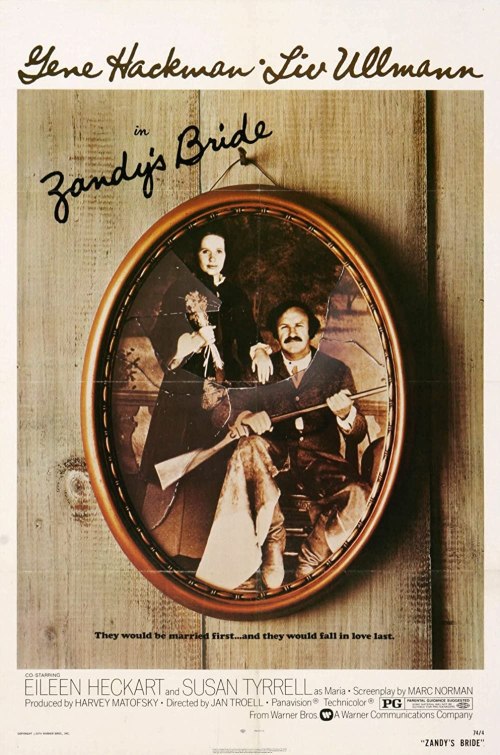
Zandy’s Bride (1974)

zandy1

By Richard Winters

My Rating: 7 out of 10

4-Word Review: A mail-order bride.

Based on the novel ‘The Stranger’ by Lillian Bos Ross the story centers on Zandy Allan (Gene Hackman) a rancher living in the remote frontier of the American west during the late 1800’s. He finds living alone while maintaining a ranch to be an arduous challenge and thus puts an ad in the newspaper for a bride. The inquiry catches the eye of Hannah (Liv Ullmann), a Swedish woman living outside of Minneapolis. She arrives in Zandy’s hometown, but Zandy is initially not pleased as she’s 32 instead of 25 and he feels she’ll be too old to bear him a son. Begrudgingly he takes her on the long horse ride back to his ranch while informing her there’ll be ‘no turning back’. Their relationship starts out rocky as Zandy expects to be able to order her around and have sex with her at will and is routinely abusive, but complains to his mother (Eileen Heckart) that he cannot understand why she doesn’t like him. Eventually the two, after many years and many fights, form a tenuous bond.

The film was directed by Jan Troell a Swedish director and cinematographer whose films The Emmigrants and The New Land gained international acclaim and won him a contract to direct a Hollywood film. Despite the presence of Ullmann, who had also starred in Troell’s other two films, and having the same frontier setting this one did not do as well either with the critics or the box office and culminated in making Troell’s foray into Hollywood filmmaking, which he said he didn’t like since union rules didn’t allow him to man his own camera like he had always done while making movies in his homeland, a short one.

A lot of the reason for this could be that it starts-off with a brutal rape scene, though not as graphic as in some other films, is still quite unpleasant particularly with Ullmann’s pleading blue-eyes and Hackman callously shouting that he ‘has a right’ as he violently strips off her clothes. While one can appreciate the film’s stark reality, as I’m sure in the remote frontier this sort-of thing could’ve easily happened, it still leaves a bad vibe since Hannah softens to Zandy despite his continually arrogant behavior too quickly. Most women would hate a man forever after that, so for the film to take the approach that love could still blossom is a bit hard to fathom. It should’ve at least taken the entire duration for this to occur instead of entering it in already by the second act.

Hackman is fantastic particularly for taking on such a unlikable role. Most other actors who’ve gained leading man status will rarely do this as they’ll feel it will affect their image, so it’s great to see an actor willing to stretch his range no matter the results. Ullmann is quite good too and it’s almost surreal hearing her speak English when I’ve seen so many films of her speaking in her native tongue. Her character though needed better fleshing-out. With Zandy we can see why he behaves the way he does when he visits his parents (Frank Cady, Eileen Heckart) and witnesses the poor way his father treats his mother, which clearly gives him the mindset that treating women that way is ‘normal’, but we get no such backstory with Hannah. Why did she choose to be a mail-order-bride when she’s so beautiful and you’d expect she’d find many suitors back where she lived? There’s no hint of her family history, or why she ended up in the situation that she does. I also felt she was too assertive too quickly and would’ve liked more of an arc where she starts out shy, but after going through the rigors that she does gains an assertiveness that she didn’t think she initially had.

Spoiler Alert!

The film ends on a hopeful note. Whether one feels this has been earned, or deserved is up to one’s subjective perspective though I was happy to see some redeeming qualities from Zandy as sitting through it watching him behave badly and never learning anything from it would’ve been too unbearable otherwise. I couldn’t help though but wonder during the many times that Zandy abandons her for months on end that one of the men from town wouldn’t have proposed to her in the process. In either case this ends up becoming the first and quite possibly only movie that could be categorized as a love story without any romance.

My Rating: 7 out of 10

Released: May 19, 1974

Runtime: 1 Hour 37 Minutes

Rated PG

Director: Jan Troell

Studio: Warner Brothers

Available: DVD-R (Warner Archive), Amazon Video

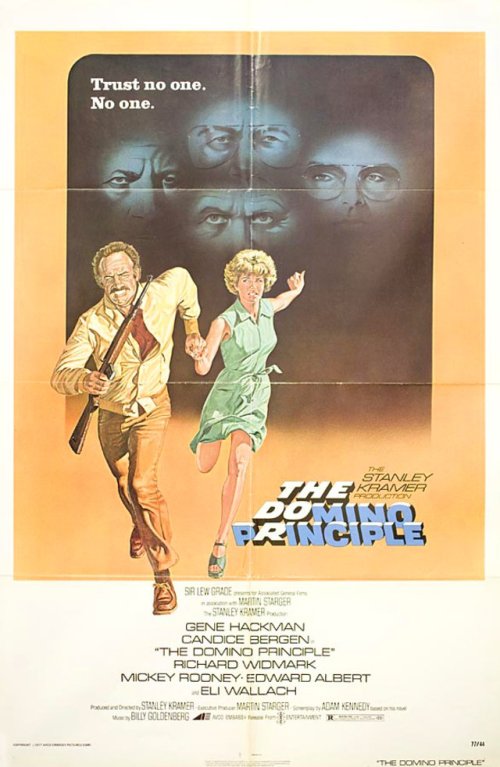
The Domino Principle (1977)

domino

By Richard Winters

My Rating: 6 out of 10

4-Word Review: Hired for secret mission.

Roy Tucker (Gene Hackman) is in prison for the murder of his wife’s first husband, but gets approached by Tagge (Richard Widmark), who works for a secret organization and who offers to get both Roy and his cellmate Spiventa (Mickey Rooney) out of jail where they can have their freedom again, but with one hitch; he must carry out a mysterious mission that they themselves don’t yet know the details to yet. Roy is suspicious of the group’s intent, but longs to see his wife Ellie (Candace Bergen), so he agrees to go along with it. After getting out of prison through an elaborate escape plan that the secret group hatches Roy is then able to travel to Costa Rica using a passport that the group made for him. It is there that he spends a relaxing week with Ellie, but then Tagge and his men (Eli Wallach, Edward Albert) return and remind him of his commitment, which turns out to being the assassination of an important political figure. Once Roy realizes this he tries to back out, but soon realizes that he jeopardizes the life of his wife, who the group insists they will kidnap an kill, if he does.

The film is based on the novel of the same name written by Adam Kennedy, who also wrote the screenplay and at one time was an actor before eventually turning to writing. While the novel got great reviews the movie didn’t with many critics panning it including Leonard Maltin, who described it as a ‘muddled thriller’. Both Hackman and Bergen, in later interviews, have called it ‘terrible’ and even director Stanley Kramer wrote in his memoirs that he’d like to disown it. Much of the problem could be blamed on the different runtimes with a heavily edited 88-minute cut being completely confusing, but this version that I saw, which ran a full 101 minutes, I found to be captivating, at least through the first 90-minutes.

The real problem I had stemmed around Hackman, who gives a one-dimensional performance. There is one moment where he assaults the Edward Albert character after he refuses to let him see his wife, which I felt was justified and entertaining to watch, but he remains surly too much of the time and it would’ve been nice to have seen some other emotions seep through, if even for a few random moments. Bergin is totally miscast as the middle-aged wife and even wears a brunette wig in an effort to make herself seem older. She stated in interviews that she took the part so she could play an ‘ordinary person for once’ instead of a beautiful, glamourous person like she usually did, but I didn’t understand why she was even offered the role as there were plenty of actresses more Hackman’s age that would’ve been a better fit.

Spoiler Alert!

While I did enjoy the movie for the most part especially its scenic location shooting including one scene that takes place directly underneath the Golden Gate Bridge I did find the twist ending to be extremely dumb. This includes having Roy deciding not to shoot the intended victim by intentionally aiming his shots short in order to miss his human target only to find that his former cellmate Spiventa was also hired for the same mission, but without Roy knowing, and he kills the person while shooting at him from a different angle. The problem is that the viewer thinks Spiventa is already dead as we see him get shot by the mysterious group while underneath the bridge. Why Spiventa would fake his own death, or not tell Roy that he was in on the plan since the two had been quite close, is ever explained. It also doesn’t make sense why Roy would decide at the last second to pull back his shots and not kill the person he was assigned to assassinate. Sure, for moral reasons he probably felt bad about it, but he knew that his wife would be killed if he didn’t follow through, so how he was expecting to save the life of his target while also somehow keeping his wife alive after the group finds out Roy didn’t do what he was supposed to?

The final shot shows Roy, with gun in hand, walking along a beach, apparently intent on hunting down whoever was the behind-the-scenes man from the group who was giving out all the orders, which we the viewer never see. Keeping some elements of the organization a mystery is fine, but what annoyed me is that we see a rifle pointed right at Roy as he walks the beach, but then the film ends without us ever knowing if Roy got shot first, or if he survived to kill the head of the group. Some sort of resolution in this area should’ve been shown and leaving it so wide-open is not intriguing and instead quite frustrating.

My Rating: 6 out of 10

Released: March 23, 1977

Runtime: 1 Hour 41 Minutes

Rated R

Director: Stanley Kramer

Studio: AVCO Embassy Pictures

Available: DVD, Amazon Video, Shout Factory TV, Tubi, YouTube

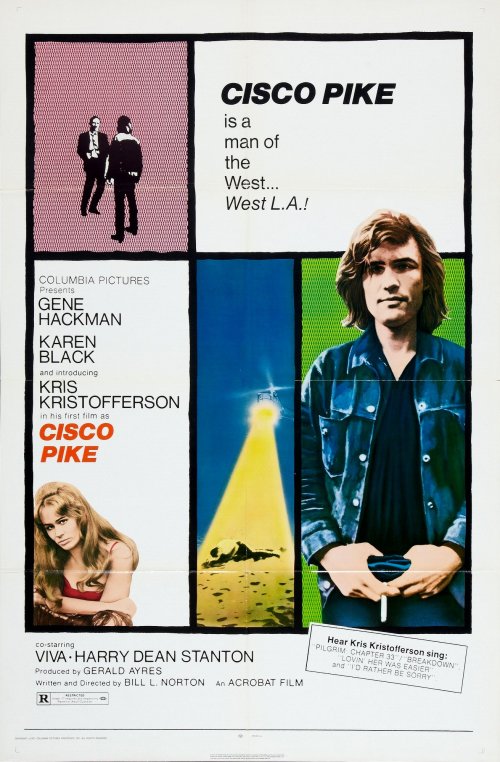
Cisco Pike (1971)

By Richard Winters

My Rating: 8 out of 10

4-Word Review: Blackmailed into dealing drugs.

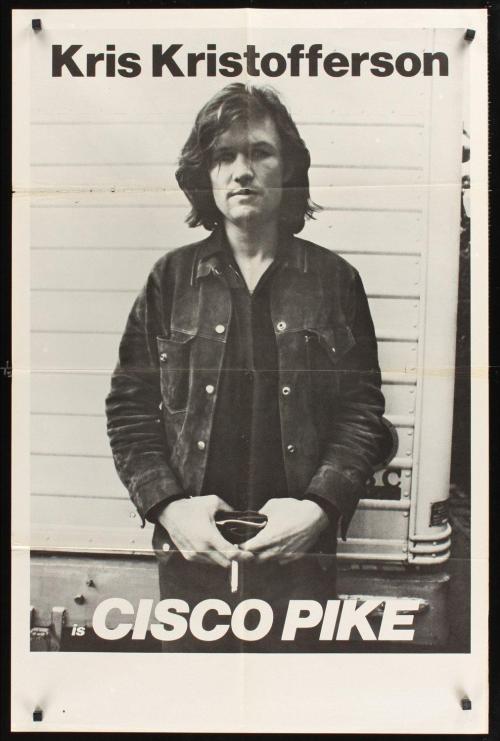
Cisco Pike (Kris Kristofferson) is a down-on-his-luck singer who once was playing to sell-out crowds, but finds his popularity declining and resorting to selling drugs to maintain a living, but under pressure from his girlfriend Sue (Karen Black) has stopped. Leo Holland (Gene Hackman) is a police detective looking to retire and needing enough money to do so. He steals a sizeable quantity of high-grade marijuana from a gang leader and then tells Cisco he must sell it within 59 hours while giving Leo $10,000 of the profits and Cisco can keep anything that he makes beyond that. At first Cisco resists knowing it will interfere with his relationship with Sue, but eventually gives in when Leo threatens to kill him unless he complies.

While this film has achieved a cult status in recent years critics at the time of its release were not kind. Many felt it promoted drug use just as the nation was starting its war on drugs, which caused the film to get a limited release and eventually bombed at the box office. Personally I found it to be a riveting look at the drug dealing culture and a fabulous directorial/screenwriting debut for Bill L. Norton the son of William W. Norton who was also a successful screenwriter.

What I liked most was the cinema vertite style that made it seem almost like a documentary. I enjoyed the camera following Cisco around in a non-stagy way and revealing the variety of people that he sold to with not all of them being hippies either, but also middle-aged suburbanites and even business executives. The film nicely shows how some of the encounters would be non-eventful while others could ended up being a trap and eventual police chase. The unpredictable quality of the transactions replicated the anxiety the dealers would face and how hyper observant they needed to be to the immediate environment around them.

Many films try to recreate things that the filmmakers themselves haven’t gone through, but here I got the feeling that the director and much of the cast had experienced the same situations as the characters which in-turn makes the viewer feel, when it’s over, that they’ve lived it too. The dialogue is excellent as well with a conversational style that doesn’t overexplain things and allows the viewer to read in a bit to what the characters are saying.

Kristofferson, who had been a singer up to that point, makes an outstanding acting debut and all the more impressive when you realize that he had no acting training before he was given the part. Many of his friends advised him not to take the role fearing his lack of experience would hurt the movie and cause him not to be given any more roles, but after reading the script he felt he could relate to the character by simply being honest with his emotions, which he does splendidly and it’s nice too seeing him in a rare appearance without any beard or mustache.

Hackman is excellent as well playing a character that was not in the original treatment, but added in later by Robert Towne when he wrote the revision. It’s unusual seeing him in such a relatively small part with large chunks of time, especially during the second act, where he’s not seen at all, but when he is onscreen he’s effective. It was fortunate that this was filmed just before he won the Academy Award for The French Connection as that turned him into leading man material and it’s unlikely that he would’ve accepted this part had it been produced any later.

Black is interesting, she usually always is, despite, like with Hackman, not having all that much screen time, but she makes the most of what she has particularly her physical reactions to Hackman when he invites himself into her apartment late at night and begins rambling on about his heart condition. Honorable mention too needs to go to Joy Bang, an attractive supporting actress during the early 70’s who later retired from show business to get into nursing. Her toothy smile always looks sexy, at least to me, and I loved when she gives her female companion, played by Viva, an open-mouth kiss while riding in a car and then turns around and gives Kristofferson, who is sitting on her other side, the same treatment.

Harry Dean Stanton, as an aging musician, doesn’t appear until near the end, but has some of the movie’s most profound moments particularly his exchange with Kristofferson were he laments about no longer being sexy enough for the stage while Kristofferson reminds him that it’s not his body that the music business wants, but his soul instead.

My Rating: 8 out of 10

Released: November 2, 1971

Runtime: 1 Hour 35 Minutes

Rated R

Director: Bill L. Norton

Studio: Columbia Pictures

Available: DVD

Mississippi Burning (1988)

By Richard Winters

My Rating: 6 out of 10

4-Word Review: Searching for missing activists.

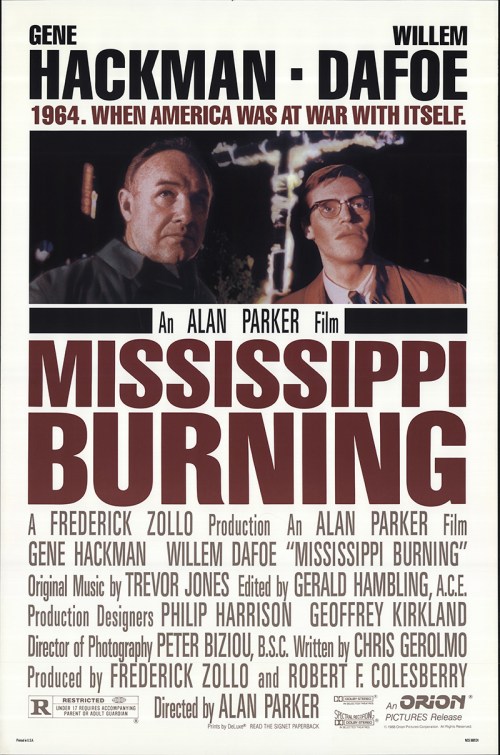
Rupert Anderson (Gene Hackman) and Alan Ward (William Dafoe) are two FBI agents sent to Jessup County, Mississippi in 1964 to investigate the disappearance of three civil rights activists who had been canvassing the area trying to get the African Americans registered to vote. The two soon find that any attempts to get to the truth are stymied by the town’s sheriff (Gailard Sartain) and his deputy (Brad Dourif) who exert a fear over the residents not to say anything. However, Rupert finds a ray-of-hope in the form of the deputy’s wife (Frances McDormand) who shows signs of harboring a dark secret. Rupert feels if he can somehow get her to talk that they could then crack the case.

The film is based on the murders of James Earl Charney, Andrew Goodman, and Michael Schwerner, who were killed on June 21, 1964 in Philadelphia, Mississippi while in the area promoting voter registration rallies.  Screenwriter Chris Gerolmo began writing the script after doing research on the incident and his intent was to keep the story as accurate as possible, but once Alan Parker was hired to direct big rewrites were made causing major friction between the two. The ultimate product, once it was eventually released, became quite controversial at the time mainly from surviving family members of the slain activists for the way the film fictionalized things.

Ultimately though I felt it was pretty well made and I was very impressed with the visual aspect that director Parker bought to it. Filmed on-location in several small towns throughout the state of Mississippi the film manages to bring to life the period in stunning detail. The only caveat being the portrayal of the white townspeople who all come-off as one-dimensional racist stereotypes. Of course we know there were bigots living there, but I suspect there had to be some that weren’t and even if the reason they didn’t come forward is because they were scared the film should’ve made an attempt to show this.

The portrayals of the two agents and the different ways they approach the case is interesting. I liked seeing Hackman in a more detached, laid-back character who isn’t as constantly intense as he usually is. Dafoe is good to with his hard-nosed, by-the-books mentality, but we learn absolutely nothing about their private lives especially Dafoe’s which makes him less interesting as we only see him in one type of setting. I thought it was a bit weird too that Dafoe, who in real-life was 25 years younger than Hackman, got cast in the role of Joseph Sullivan, who was the real-life FBI agent that he was portraying in the film, as Sullivan was in reality 9 years older than John Proctor whom Hackman portrayed.

Spoiler Alert!

Using Mrs. Pell, the deputy’s wife, played by McDormand, as the tipster that let the agents know where the dead bodies were buried, was creative license that the screenwriter used since at the time the identity of the real tipster, then known only as ‘Mr. X.’ was a mystery. Eventually in 2004 it was revealed to be that of Maynard King, a highway patrolman. Using the deputies wife in place of the patrolman was okay, but it becomes too obvious that she’ll eventually squeal since it’s made to look like she’s the only non-racist person in the town and thus signaling upfront that she’ll do the conscientious thing. It would’ve been more intriguing as she been a bigot and then to everyone’s shock ultimately reveal the secret anyways for whatever reason.

Having her husband bring home a group of men to observe him beating her when they become aware that she’s told the agents the victim’s whereabouts to me didn’t ring true. I would think any husband, even the abusive kind, would want to keep the couple’s arguments private and not let the whole world in on it. If he loved her even a little I would think he’d give her a chance to explain herself before her tore in on her, but bringing along friends to witness the event rarely occurs even in the most abusive of relationships. Even if it was done to protect his reputation (making sure the other racist townspeople knew he had nothing to do with his wife’s betrayal) I think he’d still have them stand outside the home while he beat his wife and not like it’s done here.

I was glad at least that upon Hackman’s urging a scene featuring him sleeping with McDormand was left on the cutting room floor. A law enforcement agent sleeping with a potential witness is highly unethical even if Hollywood movies do it all the time. Hackman should not have to sleep with her to get her to do the right thing nor does a budding friendship between a man and woman, especially if one of them is married, necessarily always have to automatically lead to sex because many times in reality it won’t.

The film’s second act is also problematic as it sets up the premise, agents looking for missing activists in a racist southern town, and then goes nowhere with it. No new wrinkles get entered in and too many ugly racial confrontations get shown until it becomes almost too depressing to watch. We understand up front the injustice that is going on and don’t need this to constantly get repeated like it does.

The ending scene has the whites now standing side-by-side with the blacks in unity, which is nice to see, but a bit over-the-top dramatically. Where were these open-minded white folks at the beginning, or are we to accept that this one incident as now ‘cured’ the town of it’s racist behavior and moving forward everyone will now hold hands and sing Kumbaya?

My Rating: 6 out of 10

Released: December 2, 1998

Runtime: 2 Hours 8 Minutes

Rated R

Director: Alan Parker

Studio: Orion Pictures

Available: DVD, Blu-ray, Amazon Video

I Never Sang for My Father (1970)

By Richard Winters

My Rating: 8 out of 10

4-Word Review: Father and son clash.

Based on the Broadway play of the same name written by Robert Anderson, who also wrote the screenplay, the story centers on college professor Gene (Gene Hackman) who tries to mend his relationship with his father Tom (Melvyn Douglas) a very bull-headed man who can’t seem to get along with anyone. When Gene’s mother (Dorothy Stickney) passes away suddenly it becomes a concern what to do with the father who is showing early signs of dementia and other health issues. Gene, who has recently been widowed himself, wants to remarry and move off to California, but his father prefers him to stay close by in New York. When Gene offers to move his father to California the old man refuses leading to a bitter feud between the two that also opens up old wounds.

To show just how good this movie is one only needs to compare it to Dad, which was an 80’s film starring Ted Danson and Jack Lemmon, which had a similar subject matter, but that film conveniently glossed over the many negative aspects of taking care of an elderly parent while this one tackles the downside head-on. Hearing the arguments that Gene has with his sister Alice (Estelle Parsons) and how neither one of them want to be straddled with the responsibility of being a round-the-clock caretaker I found to be refreshingly honest. Too many modern movies, in their attempt to make the lead character likable, never address these very real concerns. Also in the movie Dad the Ted Danson character flies across the country to help his father with no explanation for how this affected his job or finances while this one does touch on the economic realities. It also shows how elderly people aren’t always that lovable and can at times be genuinely nasty.

Douglas is outstanding as he manages to bring out different sides to his character. While the viewer finds him exasperating I still enjoyed the shots showing him kneeling at his bedside in prayer, which gave him, even as old and crotchety as he was, a child-like dimension. The conversations that he has about his own father and the poor relationship he had with him are quite revealing as it shows how the same issues can go across many generations with Douglas inadvertently treating his own son in the same shoddy way his old man treated him and not even realizing it.

With Douglas’ powerhouse performance Hackman gets overshadowed. He has fleeting moments where he displays his trademark anger and pent-up frustrations, but it doesn’t come-off as quite as genuine as it does in some of his other roles. It also would’ve been nice had there been some flashback scenes showing past altercations between the two, which would’ve helped the viewer emotionally connect to what he was feeling instead of having their differences just briefly touched on through dialogue. In many ways Parsons comes-off better and the reasons for her anger at her father is more clearly and eloquently explained.

The only complaint that I had with the film is when Hackman goes touring the assisted senior living homes. While the film had approached the material in a straight forward dramatic manner, which stays quiet true to the play, it suddenly shifts during this segment to becoming more artsy and cinematic by blocking out the dialogue and instead playing loud, moody score with a more subjective, hand-held camera. While this is all right I still felt it wasn’t needed and goes against the tone of the rest of the film, which had been very minimalist up until the then. The sudden pounding music doesn’t make the visuals showing the bleak living conditions of those places anymore shocking or disturbing and if anything becomes unnecessarily jarring and in-the-way.

These scenes also feature a very early appearance of James Karen as one of the directors of the senior facilities that Hackman tours. However, with the dark curly hair that he has here and the thick horn-rimmed glasses that he wears, you most likely won’t recognize him unless you look closely and even then you still might not think it’s him. With the decision by director Gilbert Cates to play music over these scenes we unfortunately never get to hear hear what he was saying or how he was trying to sell the dismal looking place to the potential customer, which could’ve been interesting.

My Rating: 8 out of 10

Released: October 18, 1970

Runtime: 1 Hour 32 Minutes

Rated GP

Director: Gilbert Cates

Studio: Columbia Pictures

Available: DVD, Amazon Video, YouTube