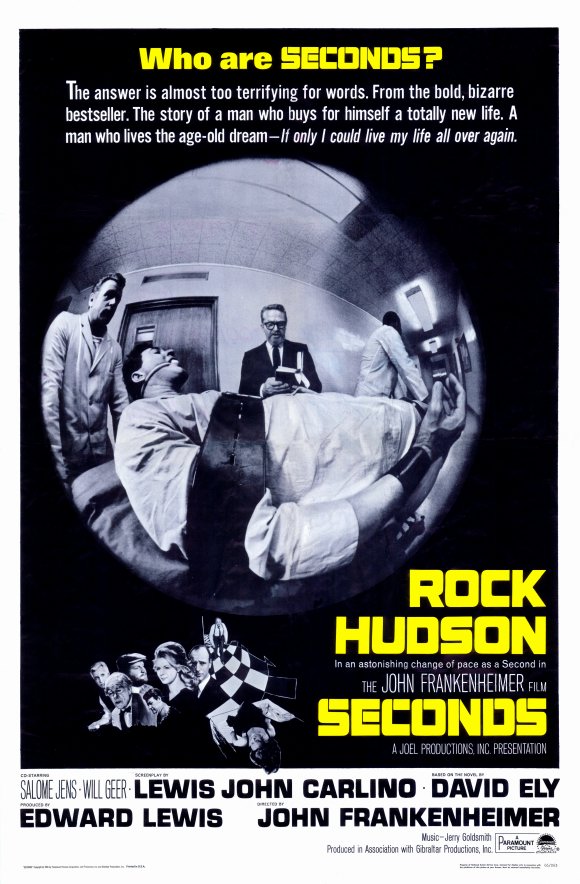
Tag Archives: Drama

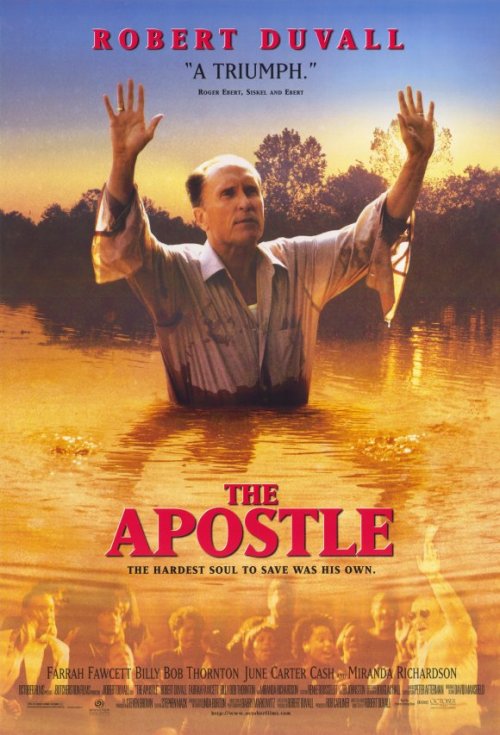
The Apostle (1997)

apostle

By Richard Winters

My Rating: 8 out of 10

4-Word Review: Preacher on the run.

As a would-be screenwriter I find it heartening knowing how many great screenplays there are out there that struggle to find a home no matter who has written or pitched it.  Actor Robert Duvall wrote the solid screenplay for this film in the 80’s only to have it rejected by every major studio and only got made when he decided to put up 4 million dollars of his own money.

The story involves a fiery evangelical minister by the name of Sonny (Duvall) whose volatile ways gets the better of him and he ends up killing his wife’s lover. He then goes on the run to Louisiana where he starts up a new church. There he begins to turn his life around and become loved and admired by the community only to have the police close in on him.

In many ways this is similar to a 1962 episode of the old ‘Alfred Hitchcock Hour’ series that was entitled ‘Bonfire’ and starred Peter Falk as the minister.  Both characters were loud and dramatic preachers.  Both men went on the run after committing homicide while continuing to start up new congregations along the way and both ended up being surrounded by the police as they gave one last fiery sermon. However, the difference comes with the fact that the Falk character was clearly a self-serving fraud while with Sonny that is not so clear, which is what makes this film and character so fascinating.

Sonny has a temper as well as other underlying issues, but he makes a genuine effort to rectify things with his new congregation.  He even brings boxes of groceries to the doorsteps of poor families. It is never clear whether he is simply trying to make personal amends for past transgressions, or just a flawed man with a good heart. The viewer is never allowed to feel sure either way, but ends up empathizing with him nonetheless. Every scene and line of utterance becomes more revealing.

Duvall gives a strong performance. I felt this may be his signature role and that comes after a long line of already brilliant performances.  I enjoyed his running ‘conversations with the Lord’ that he has when he is alone or just walking down the street.  The conversation that he has with the police is amusing as is the final scene that is shown over the closing credits.

The casting is unique.  June Carter Cash plays his mother, which is interesting by the fact that in real-life she was only two years older than Duvall.  Farrah Fawcett plays his wife, and although she was much younger than him, I felt she did a good job and made a perfect fit.  Billy Bob Thornton gets a memorable cameo as a man who initially wants to destroy the church with a bulldozer, but then with Sonny’s help becomes spiritually awakened.  I also very much liked James Beasley in the supporting role as the minister who helps Sonny start up his new church.  His calm and collected manner helped balance Duvall’s intensity.

The supporting players were all amateur actors, some of which had never performed in front of the camera before.  Director Duvall was known during filming to keep the atmosphere loose.  He allowed his cast to ad-lib, which gives the film a more authentic feel.  Just like with other actors who turned to directing, like Paul Newman and Marlon Brando, Duvall has scenes that stretch out much longer than most films.  This is done to give the actors more control over their characters and allow their performances alone to carry the scene.  I also liked the fact that the supporting cast was almost all African-American and the story centered on a white minister preaching to a black congregation.

Duvall has long been known to be an admirer of the south, so it is no surprise that the story takes place there or that the shooting was on-location.  He captures the ambience of the region and people quite well, including the sound of the heat bugs buzzing at night.

The only issue I had with the film involves the scene where Sonny kills his wife’s lover. He does this by hitting him over the head with a baseball bat during a little league game while in front of many onlookers.  In most real-life accounts when something similar to this happens people will usually gang up on the culprit and physically subdue him, or chase after him until the police arrive while here the onlookers allow Sonny to peacefully walk away.  Other than that I thought this was a great character study and I would highly recommend it.

My Rating: 8 out of 10 

Released: October 9, 1997 

Runtime: 2Hours 14Minutes 

Rated PG-13 

Director: Robert Duvall 

Studio: Butcher Run Films 

Available: VHS, DVD, Amazon Instant Video
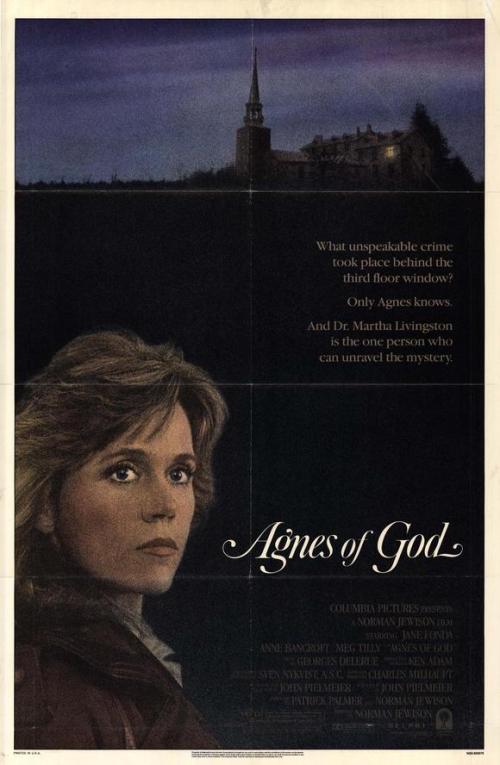
Agnes of God (1985)

Agnes of God 2

By Richard Winters

My Rating: 7 out of 10

4-Word Review: Meg Tilly is marvelos.

Sister Agnes (Meg Tilly) is a young nun found in a convent to have given birth to a baby who then dies. Martha Livingston (Jane Fonda) is the court appointed psychiatrist brought in to investigate the case, but as the investigation ensues it only seems to unearth more and more perplexing twists.

The theology is slight and the film, which is based on the Broadway play by John Pielmeier, approaches the subject matter in a very matter of fact way. It has the mindset that the majority of the viewers are non- religious or disgruntled ex-Catholics and portrays the church as a stubborn, age old institution that is slowly losing touch with our more modern sensibilities.

Yet, refreshingly, it also doesn’t try to tear down the church with every chance it gets. There is a certain level of respect and objectivity. The mother superior (Anne Bancroft) is shown to be very human and multi-faceted. She and Fonda make interesting adversaries. Their love-hate relationship is both interesting and enlightening. There is even a rare scene showing an excited young woman being inducted into the sisterhood as her proud family looks on.

Fonda, with her liberated modern woman persona, seems a very obvious choice to play the no-nonsense psychiatrist. She approaches the role with conviction, but her constant chain smoking seems affected and her emotionalism overwrought. I still say she is better suited for comedy like in Cat Ballou and Nine to Five.

Bancroft is solid as usual. Yet it’s Tilly that is really impressive. She portrays the innocence of her character with an incredible clarity and it’s almost astounding.

The mystery unravels well and keeps you intrigued. Yet the ambiguous conclusion is a bit disappointing. The drama side fares better. It poses a few good insights and ends with an interesting perspective. The film is well done on all levels even though outside of Tilly’s compelling performance there is really nothing that memorable or distinctive about it.

My Rating: 7 out of 10

Released: September 13, 1985

Runtime: 1Hour 38Minutes

Rated PG-13

Director: Norman Jewison

Studio: Columbia

Available: VHS, DVD, Amazon Instant Video

Unman, Wittering, and Zigo (1971)

By Richard Winters

My Rating: 7 out of 10

4-Word Review: These students are killers.

John Ebony (David Hemmings) leaves his job in advertising to follow his dream of becoming a school teacher. He gets a job at an all-boys private school in rural England replacing a teacher who died accidently by falling off a cliff. His pupils soon tell him that they were the ones who killed the teacher and they will do the same to him if he doesn’t do as they say. John can’t find anyone who believes him even his own wife Sylvia (Caroline Seymour) laughs it off. Soon John finds himself a virtual prisoner of his own students and forced to follow their dictates while he tries to figure out who the ringleader is and bring them to justice.

Director John Mackenzie does a terrific job of building the tension slowly. The film works at a deliberate pace allowing the viewer to see things from John’s point-view-of. The slower pace keeps things realistic and therefore more effective. Geoffrey Unswoth’s cinematography is vivid. I loved the way the steep cliffs are captured at the beginning and a camera is thrown off the cliff making the viewer feel like the victim as they see the landscape swirling on screen before completely submerging in water. A nightmare sequence where John dreams of being accosted by the boys in much the same way as his predecessor is visually exciting. The on-location shooting at an actual private boy’s school in Wales only helps to add to the authenticity.

The students themselves are quite effective and much better than their counterparts in the similar Child’s Play where they came off as too robotic. Here they have more diverse personalities. Their snarky behavior and the taunting both to their weaker peers and to John was so on-target that it made me feel like I was right back in high school. Their polite and formal facades are a thin veil to their sinister side that becomes increasingly more apparent as the film goes on. The pinnacle comes when they lock Sylvia in a darkened gymnasium and threaten to gang rape her. The lighting, done exclusively with flashlights and the frenzied action make this a memorably creepy moment.

John makes for a solid protagonist. The viewer can feel and understand his unique quandary and the character is believable enough to help make the movie engrossing from beginning to end. My only quibble would be near the end when the boys ask him to come with them to look for one of the students that have disappeared and he agrees. I thought this was a little hard to believe as it was right after they had tried to attack his wife and the search was being done near the cliffs, which would put John at a vulnerable risk.

The twist at the end is a bit of a surprise and is overall satisfying. Despite what is stated in the review in Leonard Maltin’s ‘Movie and Video Guide’ there is no revelation of any kind after the closing credits. I have seen this film now twice from two different sources and both times the only thing that comes after the credits is the Paramount logo.

My Rating: 7 out of 10

Released: June 13, 1971

Runtime: 1Hour 42Minutes

Rated PG

Director: John Mackenzie

Studio: Paramount

Available: Amazon Instant Video

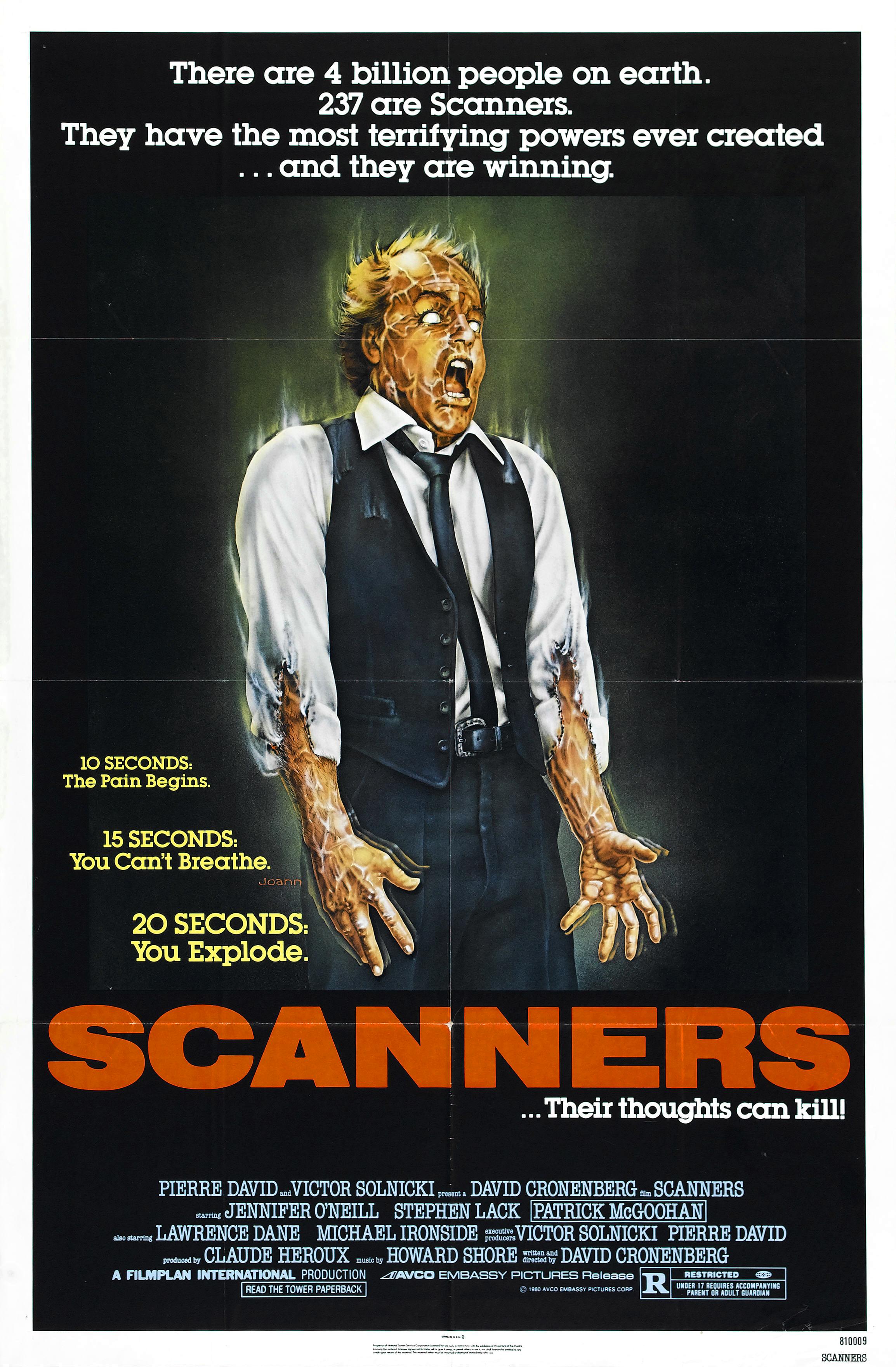
Scanners (1981)

By Richard Winters

My Rating: 7 out of 10

4-Word Review: His head will explode.

Scanners are people with strange psychic powers that can not only read other people’s minds, but also kill them and even move objects with their brainwaves. A corrupt group of scanners lead by Darryl Revok (Michael Ironside) threatens world domination. Dr. Paul Ruth (Patrick McGoohan) who works for a company that is trying to stop these dangerous people finds a scanner named Cameron (Stephan Lack) that Darryl’s groups is seeking, but has not yet located. Ruth trains Cameron on how to hone in his scanning powers and then track down Darryl’s group and destroy it.

Director David Cronenberg is still in my estimation one of the premiere cult/horror directors around. It is one thing to make a great horror movie when you have a big budget and state of the art special effects, but it is another to make an effective movie when you have little to work with and yet Cronenberg has continually shown that a creative imagination can triumph over all else. He has also shown a refreshingly daring vision throughout his career and seems to have no hesitation in tackling taboo subjects.

This film proves no exception. The story is quite creative and there are continually new and surprising twists thrown in. The special effects are excellent and imaginative. I loved the protruding, blood spurting veins coming out of the arms and heads of Cameron and Darryl during their intense scanner showdown at the end. The melting telephone receiver isn’t bad and off course the exploding head is memorable and deserves its place in the annals of gross cinema history.

With that said I still felt the film could have done a better job at setting up the story. It starts right away with a lot of action before anything is explained and makes things confusing. Some sort of prolog in this case would have been appropriate. Everything also seems rushed. This is a great plot with interesting scenarios and I as a viewer wanted a little more time to soak it all in, but wasn’t given any. The sets and backdrops are redundantly dark and grimy and lack visual design. Overall the film has a seriously dated look and although there are way too many films being remade these days and some that are not necessary this is one movie were I would advocate it especially if done with a high budget and a competent director.

Stephan Lack makes for incredibly weak leading man. He is better known in the art world as a renowned painter and his film career was quite brief. After watching his performance here it is not hard to see why. He has very much of a ‘deer-in-headlights’ look and a voice tone that shown no infliction, or emotion. His lack of charisma or stature seriously weakens the film’s overall effect and why he was chosen for the part is a mystery.

Jennifer O’Neill is gorgeous as Kim a female scanner who works with Cameron in his quest to find Darryl. The woman, who was a former model, has a face that is so beautiful it is mesmerizing no matter what angle she is shown at or emotion that she is conveying. My only complaint is the small streak of gray that was put into her hair, which I found unnecessary especially since she was portraying someone who was Cameron’s same age, which was the early 30’s.

On the villainous side Ironside certainly has the chiseled threatening features of a bad guy. However, I actually thought that Canadian character actor Lawrence Dane who plays one of Darryl’s spies was actually more effective.

The artwork done by the Benjamin Pierce character (Robert A. Silverman) visualizing giant heads and the thoughts inside people’s heads was really cool and avant-garde.

My Rating: 7 out of 10

Runtime: 1Hour 43Minutes

Rated R

Director: David Cronenberg

Studio: AVCO Embassy Pictures

Available: DVD

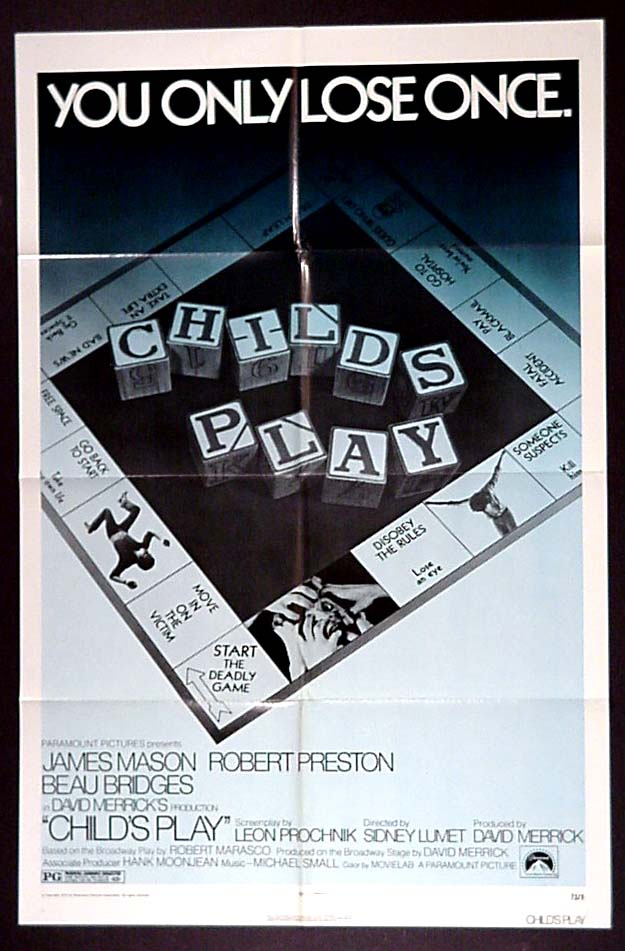
Child’s Play (1972)

By Richard Winters

My Rating: 5 out of 10

4-Word Review: Private school is murder.

If you are looking for a review about the Chucky doll then you will have to wait as that will come at a later time. This is the first film to use that title and it is based on the Broadway play by Robert Marasco who in turn based it loosely on an early Ingmar Bergman movie called Torment. The story deals with an exclusive all-boys school where bizarre unexplained random acts of violence begin to occur between groups of students. New teacher Paul Reis (Beau Bridges) becomes determined to unravel the mystery and begins to suspect that it may have something to do with a long running feud between two of the school’s older instructors Joseph Dobbs (Robert Preston) and Jerome Malley (James Mason)

The film opens right away with a nice creepy tone and a foreboding score that immediately got me wrapped up into it. The dark, shadowy lighting of the interiors helped accentuate the sinister feel. It is also great to have the film shot in an actual boy’s school instead of building sets to recreate the look. Just hearing the floorboards creak underneath the feet of the actors as they walk around helps to create an already strong atmosphere.

Mason is terrific. I think it is impossible for the man to ever give a weak performance even if the script itself is poor. He is captivating every time he is on the screen and his ability to display wide ranging emotions without flaw never ceases to amaze me. Everything always seems to come so naturally with this man in all of his performances that you never see the acting, or technique behind it. It is a shame this movie is so obscure because watching his performance alone makes the film worth seeing and the desperate, lonely character that he plays is interesting in its own right.

Preston doesn’t seem as strong. He is a good actor at times, but not for this type of part and having him wearing a moustache doesn’t help. Supposedly the part was originally intended for Marlon Brando, who would have been more interesting, but he ended up backing out.

Bridges is okay as the protagonist, but he has played the role of a wide-eyed idealist coming into an ugly situation while oblivious to all of the dark aspects a little too often making it an annoying caricature.

The movie fails in the fact that it cannot hold the tension and there are too many talky scenes with little action in-between. The students come off as robotic like and the scenes involving them attacking another student inside a gymnasium looks staged and rehearsed. Director Sidney Lumet would have done better had he used a hand-held camera and gotten right in the middle of the fray making it seem more spontaneous and vivid.

I also had a hard time believing that so many students could get effectively brain washed and sworn to secrecy. I could buy maybe a few, but having so many seemed implausible and ruined the film for me. However, the explanation for the cause to the violence is an original one that I wouldn’t have thought up myself. Also, the surprise twist at the very end is kind of cool.

A similar film to this one entitled Unman, Wittering, and Zigo that also came out in the 70’s and dealt with murder at an all-boys private school will be reviewed next Friday and fares a bit better.

My Rating: 5 out of 10

Released: December 12, 1972

Runtime: 1Hour 40Minutes

Rated PG

Director: Sidney Lumet

Studio: Paramount

Available: Amazon Instant Video

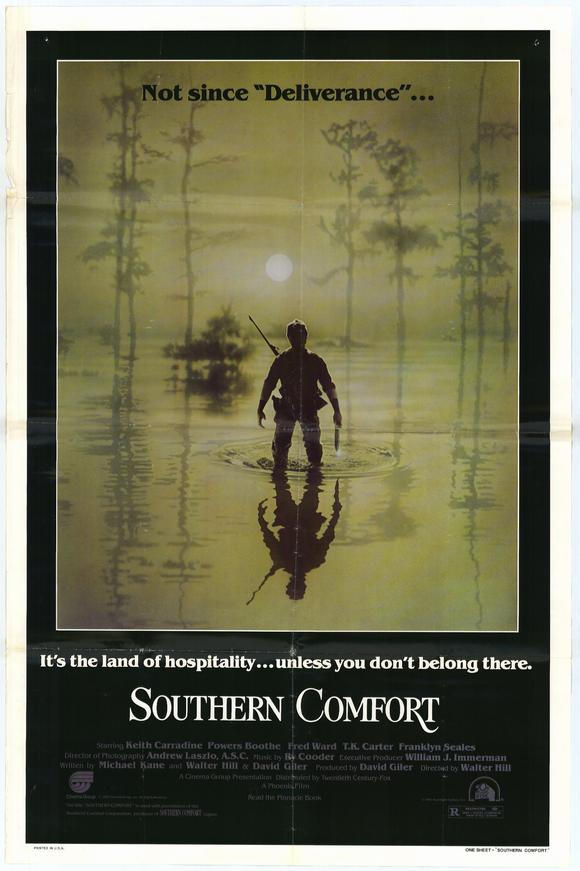
Southern Comfort (1981)

By Richard Winters

My Rating: 4 out of 10

4-Word Review: Watch out for Cajuns.

A National Guard unit goes on a training exercise in the Louisiana swamps and finds themselves fighting for their lives from a group of vindictive Cajuns that lurk in the woods.

Just about all the characters are obnoxious, unlikable, and incredibly ignorant. These guys have to be the most undisciplined and poorly managed guard unit out there. It becomes like a comedy of errors and one almost begins to side with the Cajuns. The suspense ebbs and flows poorly and most of the time there is no tension at all. The final sequence takes too long to play out until you end up not caring what happens. It would have been better had the Cajuns not been so hidden and given a face and some distinction. It also would have been a better atmosphere had the story taken place in the summer instead of the winter. The film though is really hurt by the fact that it is too reminiscent of Deliverance which is a better film simply for the fact that it created a more lasting eeriness. Also, the sequence involving the killing and gutting of what looks to be a wild hog is just about as gruesome and graphic as the infamous turtle killing scene in Cannibal Holocaust.

On the positive side there is one good scene involving a very intense attack by a group of vicious dogs as well as a nicely photographed knife fight between actors Powers Booth and Fred Ward. The Cajuns are portrayed as being more cunning and clever than in Deliverance, which makes this a little more of a slick thriller. Ward is very good in his role as one of the surly soldiers and Keith Carradine is surprisingly engaging in his part.

Ultimately this is a grade C Deliverance that despite some good attempts just never comes together. It would be best to just watch the original and avoid this one completely.

My Rating: 4 out of 10

Released: September 25, 1981

Runtime: 1Hour 46Minutes

Rated R

Director: Walter Hill

Studio: EMI

Available: VHS, DVD

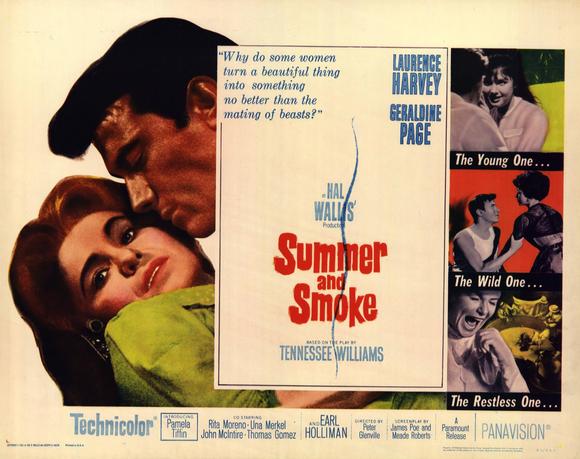
Summer and Smoke (1961)

By Richard Winters

My Rating: 7 out of 10

4-Word Review: She is sexually repressed.

Alma (Geraldine Page) is an adult woman still single and living with her parents. Her father (Malcolm Atterbury) is a minister while her mother (Una Merkel) having suffered a mental breakdown several years’ earlier acts and behaves in a perpetual child-like state. Alma yearns for the affections of John (Laurence Harvey) the dashing doctor who lives next door with his father (John McIntire). However, John’s lifestyle is much too wild for Alma’s repressed tastes, but when she tries to change she finds that it may be too late in this film version of the Tennessee William’s play.

I have been a fan of Geraldine Page for years. She has a terrific ability to play fragile and eccentric characters while doing it with a panache and style. Her characterizations are always vivid and revealing and executed in a seamless fashion. One can become so entranced with her performances that sometimes it becomes more interesting than the story itself. Her appearance here proves to be no exception. She became known for playing a lot of dark, sinister characters, so it was a nice change seeing her play this part. She even does some singing and in fact the scene where she sings to John’s father as he lies on his deathbed for me left the most lasting impression. I always love watching the woman’s body language, gestures, and facial expressions and how she uses them to create a three-dimensional character. Her acting discipline should be studied and emulated by students of the craft everywhere.

Harvey as her co-star was an interesting choice. Despite his reputation as being an over-rated actor and possessing a strange personality off-camera I have found some of his performances to be excellent particularly the one in the original Manchurian Candidate. However, he seems to be better suited playing parts with a cold and aloof presence. The role here demanded more emotion and I didn’t think he could quite hit it. By the end Page was acting circles around him and turning the production into her own vehicle.

The supporting performers aren’t bad. It is fun seeing Rita ‘Hey you guys’ Moreno in an early role playing a young vixen with eyes for John. McIntire is fine in his small role and the part where comes home to find all sorts of drunken people lying about passed out in his living room and hallways is good. Thomas Gomez is memorable simply to glimpse his large almost unbelievable waist size.

I really didn’t like Merkel’s part as the crazy mother. I found it frustrating that there really was never any explanation for why she behaved in such a strange way. Simply saying that she had a ‘breakdown’ wasn’t enough and I wanted more of a scientific or medical reason. It also would have been more interesting to see what she was like before her breakdown, but that is never shown.

Technically the film is well produced. The sets, costumes and performances are all very turn-of-the-century and it helps draw you into the mood and thinking of the era right away. I did not like that the outdoor scenes where done on a soundstage as the foliage and sky look annoyingly artificial.

Most of William’s plays deal with sad, lonely, and pathetic characters and this one proves no exception. However, I was pleasantly surprised that after the expected histrionics this one manages to have a somewhat upbeat ending, which helped distinguish it above some of his others. The characters and situations are all too real and Alma reminded me very much of someone I know and others may know someone like her as well, which on a personal level made this story all the more fascinating.

My Rating: 7 out of 10

Released: November 16, 1961

Runtime: 1Hour 58Minutes

Rated NR (Not Rated)

Director: Peter Glenville

Studio: Paramount

Available: DVD, Amazon Instant Video, Netflix streaming

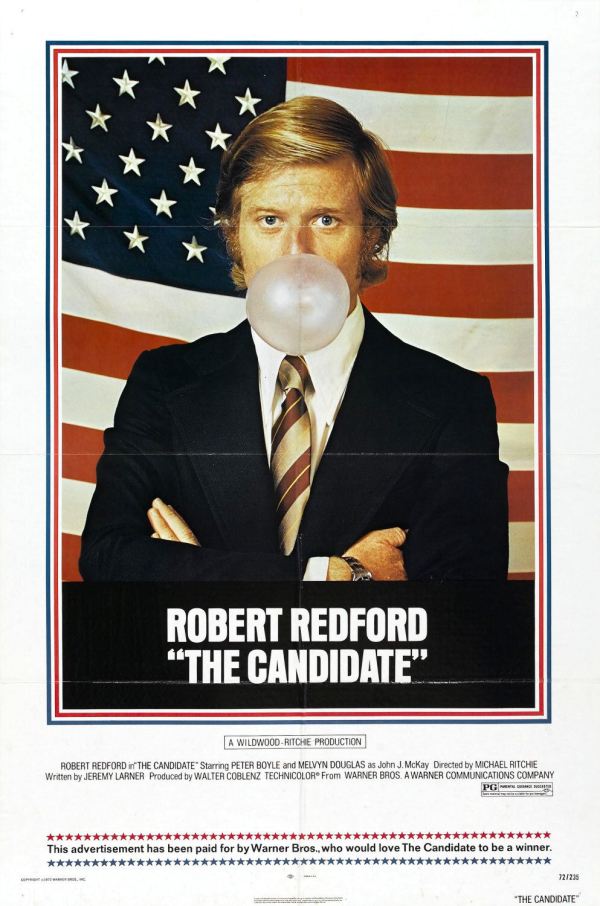
The Candidate (1972)

By Richard Winters

My Rating: 8 out of 10

4-Word Review: Robert Redford for President.

In commemoration of Election Day and the fact that all the campaigning and political punditry will finally be coming to a merciful end we present a rare Tuesday post here at Scopophilia. Although done 40 years ago this wry look at the inner-workings of the political campaign trail is as incisive and timely as ever and hasn’t lost any of its punch. The story deals with Bill McKay (Robert Redford) a young lawyer from California who is persuaded to run for senate against the incumbent Crocker Jarman (Don Porter). McKay represents the youthful idealism while Crocker is very entrenched with the establishment.

The film was directed by Michael Ritchie who may not be a household name, but he is the creator of his own genre. He took the examination of competition and how embedded it is in American culture to new heights. Through his various movies he showed how it infiltrates every aspect of our society and no one is immune to it. From Smile to The Bad News Bears and Downhill Racer he showed how even the most unlikely of individuals can become fiercely competitive when driven. He also made his characters strangely endearing no matter how sordid or ugly the competition made them become.

This film works along those same lines only it shows it from a political perspective. It is smart, fast, cynical, funny, dramatic, revealing, and entertaining all at the same time. This should rank as one of the best movies made about political campaigning. It’s still timely and cutting edge and works almost like a documentary. The quick editing creates a seamless style. The film makes interesting observations without taking away from the flow of the story. In fact one of the reasons it is so captivating is because it is downright educational. When the film is over you feel much wiser to the business of politics and as exhausted as the candidate himself.

Redford is terrific. He has a real gift for underplaying everything to the point that it looks like he isn’t even acting at all. He plays off his pretty boy looks, but doesn’t stay trapped to a heroic image. He harbors a lot of idealistic traits one would want in a candidate and yet he is still quite human. There are some definite shades of John F. Kennedy here. He has a troubled marriage and is even caught fooling around with an admiring female supporter. Although he has honorable ideas he is far from having all the answers. Probably the most interesting insight of this movie is the fact that he ends up getting as sucked into the mechanics and compromises of the political machine as his ‘old school’ foe. It perfectly illustrates how immense and encompassing the political machine is and how no one is really going to change it.

This is an excellent and well-crafted picture that not only hits the bulls- eye, but does it many times over. I love Redford’s final line and Boyle, as his campaign manager, has never been better.

My Rating: 8 out of 10

Released: June 29, 1972

Runtime: 1Hour 50Minutes

Rated PG

Director: Michael Ritchie

Studio: Warner Brothers

Available: VHS, DVD, Amazon Instant Video 
Sunday Bloody Sunday (1971)

By Richard Winters

My Rating: 9 out of 10

4-Word Review: A bi-sexual love affair.

Bob (Murray Head) is having a relationship with middle-aged divorcee Alex (Glenda Jackson) as well as a family doctor named Daniel (Peter Finch). He jumps between the two of them whenever the mood hits. Both Alex and Daniel are aware of the other and are not happy about it, but feel if they push the issue Bob will simply leave them. The film focuses on the frustrations and loneliness that Alex and Daniel feel in dealing with Bob and their less than ideal situation.

This film is engrossing from beginning to end. Director John Schlesinger was still in top form as the camera work, cinematography, and editing is first rate. Everything is meticulously orchestrated to the point that every shot seems to tell its own little story. The narrative is done in a fragmented style going back and forth between the present day to scenes from when both Alex and Daniel were younger. Much of it comes off like thoughts going on inside someone’s head and the film’s style is masterful and flawless.

What I really liked about this movie is the fact that it focuses not so much on each person’s time with Bob, but actually more on their time away from him. The points this film makes about the difficulties of communication that people have when they are in a relationship as well the glass wall that sometimes gets created is completely on-target. The film’s subtitles and nuances are perfectly balanced and if you are a viewer with more sophisticated tastes then this will be time well spent.

Things are revealed about the characters through visual and subtle means, which I loved. When Alex drops an ashtray and then proceeds to clean it up simply by rubbing the ashes into her rug, or the precarious way she makes herself on cup of coffee in the morning while rushing off to work nicely reflects her out-of-control life and the topsy-turvy way she approaches it. The scenes where Daniel attends a Bar mitzvah is excellent and for me some of the strongest moments in the movie.

The portrayal of the children here is above average as well. They are not cute and well-behaved, but instead realistically rambunctious and mischievous. I liked the wild, endless energy that they display and how easily chaotic they turn their household into, or how the parents had become immune and deaf to all of it. Having the 4-year-old smoke pot while Alex and Bob, who are babysitting, decide to overlook it may be pushing things a bit far, but I still liked the mod approach the film takes, which reflects nicely the unconventional lives of the characters.

The film’s biggest flaw is Head himself. The man is mainly known for his singing career and his acting ability is clearly limited in comparison to Finch and Jackson who are both excellent. The character is dull and the film does not make much of an attempt to analyze him like it does with the other two. In a way Head’s one-dimensional performance works because the character seems to be used as a ‘pretty boy’ who the other two are attracted to because of his looks and youth and therefore revealing the insecurities that they have about themselves as well as giving a pertinent warning that when one pursues someone solely based on their sex appeal the relationship is doomed.

I liked how at the very end Daniel and Alex do meet and have a brief conversation though I wished it had been just a little more extended. Having Finch talk directly to the camera at the closing is a bit disconcerting though what he says is interesting.

My Rating: 9 out of 10

Released: September 8, 1971

Runtime: 1Hour 50Minutes

Rated R

Director: John Schlesinger

Studio: United Artists

Available: VHS, DVD, Blu-ray (The Criterion Collection), Amazon Instant Video

Seconds (1966)

By Richard Winters

My Rating: 8 out of 10

4-Word Review: Starting a new life.

Arthur Hamilton (John Randolph) is a middle-aged man just going through the paces of life. He is stuck in a marriage that no longer has any spark and a job that is boring. His life is confined to the basic suburban rituals and he is quietly looking for a way out. Then he gets a call from Charlie Evans (Murray Hamilton) who he thought was dead. Charlie tells him that he is very much alive, but with a new identity. Arthur goes to a address that Charlie gives him and there he is told for $30,000 dollars he can be ‘reborn’ and given a completely new identity via plastic surgery as well as a whole new life with new friends and no connection to his dreary past. He would even be given a new set of fingerprints and new teeth while the death of his former self would be created in a way that it would leave no question, or suspicion.

This story is unique and fascinating on many levels. It pinpoints the monotony of middle-aged life and views living in suburbia not as the great American dream, but more as the American trap. I enjoyed the part where one of the Doctors named Davalo (Khigh Dhiegh) tells Arthur who has now been changed into Tony Wilson (Rock Hudson) that his new identity will be that of an established painter and he will no longer have to be quarantined with any responsibility and will instead be able to live the rest of his life pursuing is own individual interests, which is probably what everyone secretly desires.

The second half of the story where Tony tries to adjust to his new ‘dream’ lifestyle is equally as interesting if not more. Tony finds that his new friends and neighbors are other ‘reborns’ who will not allow him to backtrack into his old identity and seem compelled to keep in line with his new environment whether he was completely happy with it or not. During this segment I couldn’t help but think of the characters from Easy Rider and how Tony’s situation wasn’t much different. Both longed for complete personal freedom, but the more they tried to escape the societal strings the more they seemed to be dragged back into it. The part where Tony goes back to visit his wife while under the disguise of being a long lost friend of her late husband is revealing and dramatically the strongest part of the whole film.

John Frankenheimer’s direction is superb and intoxicating. The opening sequence featuring a lot of distorted imagery is excellent and creates a terrific mood for the story. The dream sequence where Arthur finds himself in a hotel room with another woman is captured in such a way that it looked almost like a Salvador Dali painting. The use of the fish-eyed lens that is put in at certain strategic moments is effective as well as stylish. The black and white cinematography is evocative and the organ playing soundtrack is distinct and moody.

Rock Hudson has always seemed to me as a weak leading man and apparently Frankenheimer considered him ‘lightweight’ as well, but when his first two choices turned down the role he decided to go with him and here it actually worked. I felt Hudson’s blank expression and confused demeanor fit well with the character’s situation. The part where he is shown tied to a bed and struggling to get out while his mouth is gagged is convincing. Veteran actor Randolph is quite good in the beginning playing Arthur a man who seems run over by life. The close-up of his nervous and sweating face leaves a strong impression. Will Geer is also excellent in support as the founder and head of the secret organization.

The twist ending is well done although I saw it coming long before our naïve protagonist did. Unlike the book it is clearer and less vague. This is one case where the film can make a great companion piece to the book, or vice versa. This is a definite sleeper of a movie screaming for more attention and has strong cult potential.

My Rating: 8 out of 10

Released: October 5, 1966

Runtime: 1Hour 46Minutes

Rated NR (Not Rated)

Director: John Frankenheimer

Studio: Paramount

Available: VHS, DVD,  Blu-ray (Criterion Collection) Amazon Instant Video