The Apprenticeship of Duddy Kravitz (1974)

By Richard Winters

My Rating: 8 out of 10

4-Word Review: Anything to get ahead.

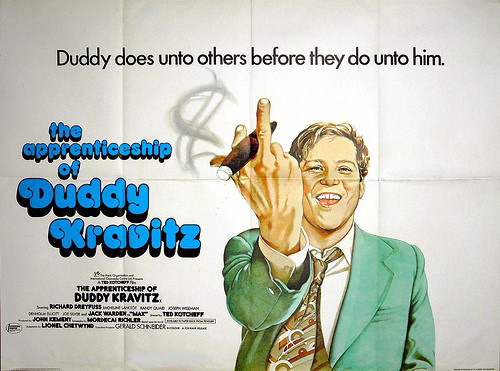
            Duddy Kravitz (Richard Dreyfuss) is a young Jewish man looking to make a name for himself and escape the working class existence of his father. He comes up with several schemes many of which aren’t legal and don’t work, but his aggressive nature drives him even as it alienates those around him.

I loved the Duddy character and I liked him because of his unlikableness. Yes, he is obnoxious, deceitful, conniving, brash, arrogant, crude, and aggressive to the point of running down anyone who might get in his way, but you are shown why he is that way. How the desperate world around him has brought out the ugliness and the allure of money and social prestige only makes it worse. Duddy is more of a victim of a capitalistic culture that promises with money comes happiness, but fails to mention all the sacrifices and compromises that must come with it.  The script by Mordecai Richler, which is based on his novel, does a terrific job on analyzing the idea of success on how the end doesn’t always justify the means and how a man who is poor but true to his values can be far richer than one who may have a fortune, but is hollow.

Dreyfuss does a terrific job and I consider this one of his best performances even though apparently he was dissatisfied with it personally. I liked the nervous energy and ticks that he gives the character that easily reveals the desperation and drive that he has inside. He manages to bring out the human side of his character making him relatable despite his many flaws. What is interesting is the way Duddy will display a certain sensitive side in brief and surprising moments.

Jack Warden is wonderful as the father a man who is well aware of his son’s faults, but remains loyal to his strive for success. The film’s final image, which features Warden is a gem especially when taken into effect everything that came before it. Joe Silver, a deep, gravelly voiced character actor has his best performance of his career as Farber. This is a man who shows deep devotion and respect to religion and spirituality, but then openly boasts to Duddy at how he cheated and back-stabbed a business partner.

Denhom Elliot is great in comic relief playing an alcoholic has-been filmmaker who makes a movie involving the bar mitzvah of Farber’s son that ends up showing everything from Adolf Hitler, to a naked woman’s breast, and even a man eating glass. He exhibits this to everyone in the synagogue and the facial reactions of Farber while he is watching it is hilarious.

The on-locations shooting in Montreal is well done. I felt like I was right there back in the 1950’s. The inside of Duddy’s home had a nice lived-in look and feel. There are images that stay with you long after it is over including the gorgeous forest and lake that Duddy hopes to one day own.

This is a perfect example of a compelling drama. Each scene works seamlessly with the others and the film continues to reveal more insight as it goes on. It also an excellent character detailing someone who is all too real and facing many difficult life decisions that we all face.

My Rating: 8 out of 10

Released: April 11, 1974

Runtime: 2 Hours

Rated PG

Director: Ted Kotcheff

Studio: Paramount

Available: VHS, DVD, Amazon Instant Video
The Year of Living Dangerously (1982)

By Richard Winters

My Rating: 5 out of 10

4-Word Review: Experiencing life in Indonesia.

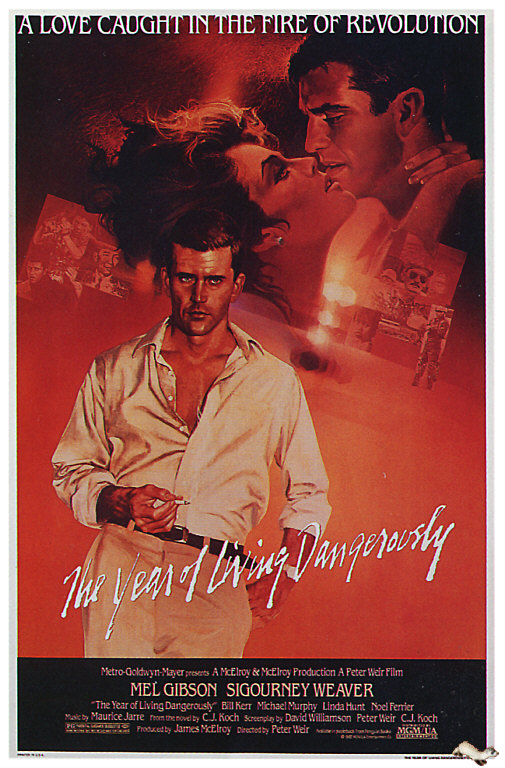
      Guy Hamilton (Mel Gibson) is a reporter who travels to Indonesia in 1965 just as the government is ready to be toppled. He experiences all the chaos as well as the poverty of the people and apathy from his fellow newsmen. He falls in love with a beautiful diplomat Jill Bryant (Sigourney Weaver) who works with a dwarf photographer named Billy Squires (Linda Hunt in her Academy Award winning performance), and eventually finds himself reluctantly thrust into the middle of the turmoil.

     The film is great at recreating the environment and atmosphere of that period. One gets a very good understanding and feeling at just how poverty stricken and desperate the Indonesian people where. Linda Hunt is unique and memorable as the male dwarf. She also has a great line when a fellow photographer asks her opinion of a picture that he took of a naked woman. He wants to know if she thinks it is art or pornography. Her reply, “If it is out of focus it’s art, if it is in focus it is pornography.” It is also fun to see journeymen supporting actor Michael Murphy playing against type. Usually he is saddled with rather transparent types of roles, but here his character is quite obnoxious.

      It would have been better had the film given the viewers a little bit more of a historical background before it just plopped the characters into a very chaotic and confusing situation. Most people probably have no clue as to the history of Indonesia let alone finding it on a map. It would have also been more interesting had the film been based on real people who really lived through the situation instead of predictable prototypes. A very young Gibson seems a bit overwhelmed with his role. His character seesaws from being boring to exasperating. He gets a huge crush on the Weaver character and chases after her like she is the only thing on his mind and then when she gives him an important piece of information he pounces on it even if it means losing her and their relationship. The pace is hurt by having the film spend too much of its middle section focusing on the romance, which really isn’t all that interesting or diverting. The ending is much too pat for a story that takes place in such a dangerous and complex environment.

      This is a grand idea that becomes too muddled and doesn’t place enough emphasis on the historical background and context. The lead character is boring and the pace is not compelling enough.

My Rating: 5 out of 10

Released: December 17, 1982

Runtime: 1Hour 55Minutes

Rated PG

Director: Peter Weir

Studio: MGM/UA

Available: VHS, DVD, Amazon Instant Video
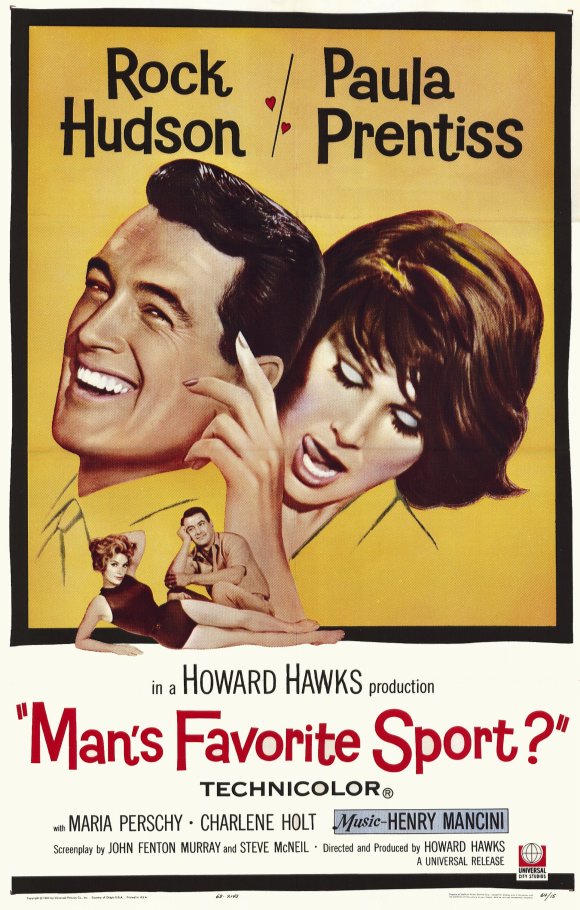
Man’s Favorite Sport (1964)

By Richard Winters

My Rating: 2 out of 10

4-Word Review: Winning a fishing contest.

            Roger Willoughby (Rock Hudson) works at a sporting goods department store and uses the information he overhears from his customers to become an ‘expert’ at fishing and best-selling author on the subject despite never having done it himself. Things unravel when his boss (John McGiver) enters him into a fishing contest and he must use the help of beautiful brunette Abigail Page (Paula Prentiss) to show him the techniques and save his reputation.

Billed as another screwball comedy much in the same vein as Howard Hawk’s classic Bringing Up Baby. However, this film doesn’t even come close to that one. It is extremely slow and the comedy bits are thrown in with a haphazard style. The pacing is none existent and the plot is far-fetched and contrived. I was willing to forgive it a little figuring that by the second half things would kick-in, but it never does. The jokes are simplistic and unimaginative.  I found none of it to be funny and mainly strained and labored. With the slight exception of the scene involving Roger’s inflatable wading pants I didn’t find any of it to be even engaging. Roger’s attempts at fishing are particularly disappointing as this scenario could have been played up a lot more.

Hudson is weak as the lead. His voice always has a hollow tone and his delivery is wooden. Cary Grant would have been a much better choice and the film could have been a lot funnier with his presence. When Grant became irritated it was always amusing, but with Hudson it comes off as forced and boring.

Paula Prentiss is the best thing about the movie. Many fans agree that this is her best performance of her career. She has a nice free-form style to her delivery and avoids having that stiff drama school touch. I liked the gaze of her brown eyes and at times it reminded me a lot of Karen Black’s. Her younger, more relaxed presence helps compensate against Hudson’s stiff older one. I’m surprised her career fizzled in the 70’s as she has an interesting and unique style that I would have liked to have seen more of. Her sparing with Hudson is the only thing that gives this film any energy. However, having them end up falling in love was formulaic and forced. The two really didn’t have the right chemistry and showing them not getting along, or getting on each other’s nerves was more entertaining.

My Rating: 2 out of 10

Released: January 29, 1964

Runtime: 2Hours 1Minute

Rated NR (Not Rated)

Director: Howard Hawks

Studio:  Universal

Available: VHS, DVD

Law and Disorder (1974)

By Richard Winters

My Rating: 6 out of 10

4-Word Review: Regular citizens become cops.

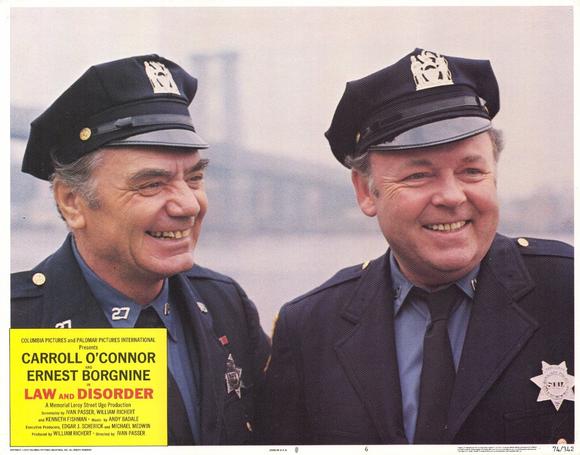
Due to the recent death of Ernest Borgnine I felt a review of this film, which features Borgnine in a very strong and effective performance, would be appropriate. The story deals with two middle-aged men named Willie and Cy (Carroll O’Connor, Ernest Borgnine) who after being robbed decide to join the police force as auxiliary cops. Their escapades start out as lighthearted and comical, but eventually they become faced with some serious consequences.

This is a rare film appearance for O’Connor who performed in a lot of movies during the 60’s, but did very little once he became a household name with ‘All in the Family’. It is fun to see him though the role doesn’t exercise his acting talents enough. He is a toned down version of Archie and comes off as boring and benign with a smiling face button on his coat that is annoying. His two best scenes come when he tries to pretend he is a young urban street punk and as a cab driver with a nice way of handling two obnoxious passengers.

It is actually Borgnine that steals the picture. Usually he is more of an unassuming supporting player, but here he comes into his realm. He is funny in a cantankerous way, but with some good dramatic moments in-between. Watching him angrily smash up a stolen bicycle with a lead pipe is intense and memorable. He proves that he might have made a good Archie Bunker had O’Connor not been available.

The female cast runs hot and cold in terms of performances.  It was fun to see Ann Wedgeworth, a native Texan, transplanted into the role of a Bronx housewife. Karen Black though is outrageously wasted in two very brief and meaningless scenes as an over-sexed hair stylist.

The story on the whole is alright. The beginning features a lot of amusing, fast paced comical adventures. The problem really begins towards the middle when the film shifts to a more serious tone, which bogs down the pace and fractures the narrative. You get roped into thinking this is a good comedy and then find it is anything but. The drama isn’t bad, but it doesn’t mesh well with the silliness. It also veers too much from the main premise making the message and point of view confusing. It tries to tackle too many topics, but fails to make any type of meaningful or lasting statement in the process.

Overall the film is good enough to keep you captivated and on the most part it is entertaining. Yet the story is disjointed and frustrating. The music played over the opening credits sounds like something for a senior citizens dance party and was a horrible choice. However, the on-location shooting of New York City is great and gives the viewer an authentic feel of an average urban neighborhood.

My Rating: 6 out of 10

Released: October 9, 1974

Runtime: 1Hour 44Minutes

Director: Ivan Passer

Studio: Columbia Pictures

Available: VHS, DVD

American Gothic (1988)

By Richard Winters

My Rating: 2 out of 10

4-Word Review: Rod needs to chill.

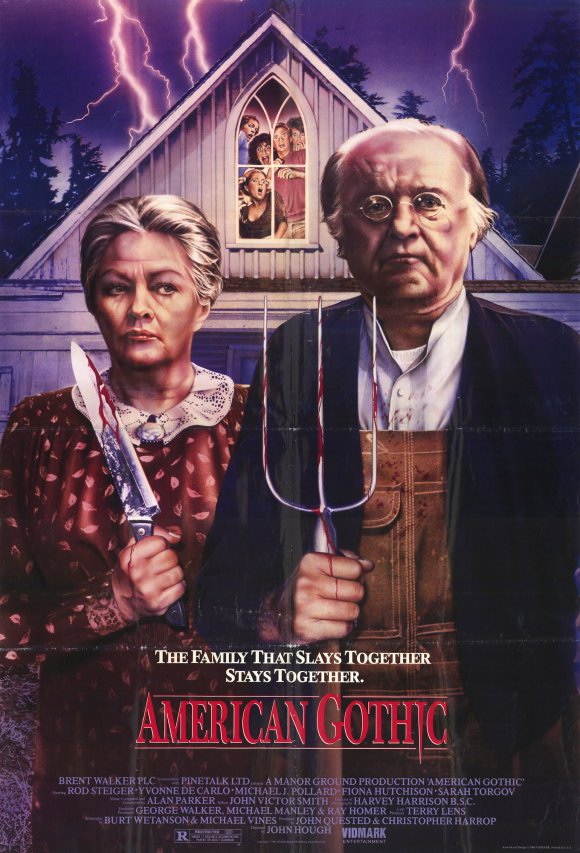
A group of young people must make an emergency landing on an off shore island when their single engine plane begins to malfunction. There they meet up with a strange family that seems locked in a bygone era and displays psychotic tendencies.

You would think a film with some big name stars of Rod Steiger, Yvonne De Carlo and Michael J. Pollard and an established director of John Hough would at least be passable, but this one is as bad as it gets. The goofy premise is taken too seriously and is too formulated. The characters are bland and stereotyped and the victims allow themselves to be killed off too easily with hardly any gore or special effects. There is also no suspense or scares. There isn’t even any good dark humor. It just plods on and on until you don’t care what happens.

It has a lot of similarities to Just Before Dawn and Mother’s Day. It even has the twist of having one of the survivors turn the tables and become the aggressor. Yet Mother’s Day had a lot more style and pizzazz.

Steiger is of course a very accomplished actor who has done a lot of good work, but seems miscast here. He should have injected more campiness into his part, but instead approaches it with his usual intensity. At the end he even gives out a loud primal scream of inner anguish much like the one he did in The Pawnbroker except here it is hollow and meaningless. Out of everyone De Carlo does the best.

The setting also becomes an issue. It has the word American in its title and yet was filmed entirely in British Columbia. Ma and Pa talk with southern type accents, but are surrounded by a northern landscape. The house is also a problem as it looks too neat and trim and like it was newly built. It would have been better had the building been taller and more foreboding and even displayed some decay or gothic style. The inside of the house doesn’t look like it’s been lived in and the furniture is nothing more than theatrical props.

Overall this is a pitiful attempt at horror movie making. It fails to be either offbeat or scary and only succeeds at becoming mind numbingly sterile.

My Rating: 2 out of 10

Released: May 13, 1988

Runtime: 1Hour 30Minutes

Rated R

Director: John Hough

Studio: Vidmark Entertainment

Available: VHS, DVD

The Monitors (1969)

By Richard Winters

My Rating: 3 out of 10

4-Word Review: They are watching us.

            Aliens, who dress in suits, long overcoats, and bowler hats, invade earth and an attempt to police everybody’s thoughts and actions while trying to quell a rebel uprising led by Colonel Stutz (Larry Storch). Working for the uprising is Harry (Guy Stockwell) who falls in love with Barbara (Susan Oliver) who secretly sides with the aliens.

The movie starts out with a lot of potential and piqued my interest with unusual montages and camera work. Unfortunately this subsides quickly and soon we are stuck with drab sets, extraneous scenes, and a film unable to hide its low budget roots. I began to wonder if the reason the rebels had their hideout in an abandoned farmhouse was more because the filmmakers could film there without having to pay for a permit than anything else.

The film should have gone completely for parody and farce and if they had done that this might have worked. Instead it seems to drift into a conventional sci-fi narrative complete with a pseudo philosophical climactic debate between the humans and aliens that we have all heard before and does nothing but slow the film down to a tedious level. Adding in the love interest angle between the two leads is contrived and formulaic.

The aliens aren’t too interesting either. There is never any explanation as to how they were able to take over the planet, but the fact that they are unable to even get through a locked door of an old crumbling warehouse made me wonder how they were able to succeed at anything. Equipping them with a little more sci-fi gadgetry would have helped. I realize they don’t have to be carrying around the proverbial ray-gun, but having them break up an angry mob by using ordinary canisters of pepper spray seemed unimaginative.

Spliced into the story are comical TV ads with famous celebrities of the day such as Stubby Kaye and Xavier Cugat promoting the monitors and convincing the public to support them. These commercials are not funny with the only exception being Alan Arkin playing a foreign man who speaks broken English. In the case of former Senator Everett Dirksen it is almost sad. He was very elderly at the time of the filming and he is clearly reading his lines from cue cards and mouthing the words and looking like he is barely functional, or coherent.

The music is another problem. Initially I really liked it as the opening credits feature a computer with a very robotic voice singing the theme. Singer Odetta sings most of the other songs and some of them have a distinctive sound, but they get overplayed and saturated by the end.

The production was shot on-location in Chicago and I loved the aerial shots showing the skyline. I almost wished there had been a little more of them although I did notice that the exact same skyline shots at the beginning get reused in the second half. I didn’t like the idea that it was filmed in the late fall/early winter as the cast is shown shivering in several shots while forced to wear light clothing and their breath is clearly visible.

Susan Oliver gives another solid performance and shown flying an airplane in one sequence as in real-life she was an avid pilot. Sherry Jackson’s presence is minimal, but she is always appealing to the eyes. Avery Schreiber, a comedian known to overact horribly in just every part he is in, comes off as rather amusing here playing the younger brother of Harry who reluctantly joins up with the resistance. Larry Storch, another notorious ham, is engaging as well especially when he appears in drag and later on dressed as General MacArthur.

This is a failed experiment that should have been a lot better. It seems to want to take on the quirky sentiments of the era, but is either too timid, or too unimaginative to go all the way with it.

My Rating: 3 out of 10

Released: October 8, 1969

Runtime: 1Hour 32Minutes

Rated M

Director: Jack Shea

Studio: Commonwealth United Entertainment

Available: Netflix Streaming

10 (1979)

By Richard Winters

My Rating: 3 out of 10

4-Word Review: Bo Derek is hot.

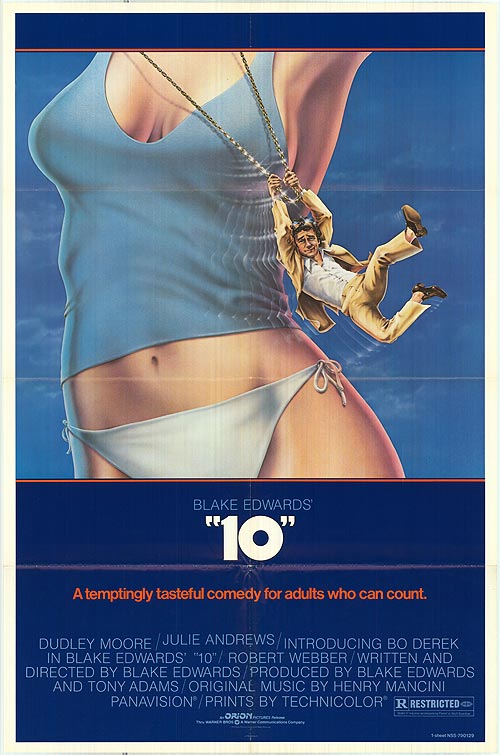
George Webber (Dudley Moore) is a successful songwriter who has just turned 42 and finds himself longing for a beautiful younger woman (Bo Derek) that he sees while driving. Problem is he meets her on her wedding day and yet he still pursues her all the way to Mexico where she goes for her honeymoon.

It’s really, really hard to believe that this was such a big hit. It meanders badly and has a lot of slow stretches. It is also not that sexy. Bo is only shown sporadically and you never really get to see her naked, or at least not from the front. Writer/director Blake Edwards incorporates his patented slapstick humor, but it’s uninspired and doesn’t mesh well with a film that is supposedly working on a more mature and sophisticated level.

The issue of middle-age, or better yet ‘male menopause’, has been handled before and better. In fact this thing can’t hold a candle to Tom Ewell and The Seven Year Itch. The issues it brings up are quite general and handled superficially. It offers no new perspective and is shockingly unimaginative.

Dudley Moore fits nicely into his role and it seems not too far removed from the man himself as it deals with a uniquely talented man that harbors a degree of cynicism and detachment. His relationship with girlfriend Samantha (Julie Andrews) has some interesting elements and it could have been a foundation for a movie in itself.

Derek is stunning, but rather poor in the acting department. Having a beautiful lady portray such a shallow person is a real turn off. Sure it’s done to give the film its point, but it seems extreme.

Overall I found the film to be weak and empty and unable to even come close to meeting its reputation.

My Rating: 3 out of 10

Released: October 5, 1979

Runtime: 2Hours 2Minutes

Rated R

Director: Blake Edwards

Studio: Warner Brothers

Available: VHS, DVD, Blu-ray, Amazon Instant Video

The Killing Fields (1984)

By Richard Winters

My Rating: 9 out of 10

4-Word Review: Journalists trapped in Cambodia.

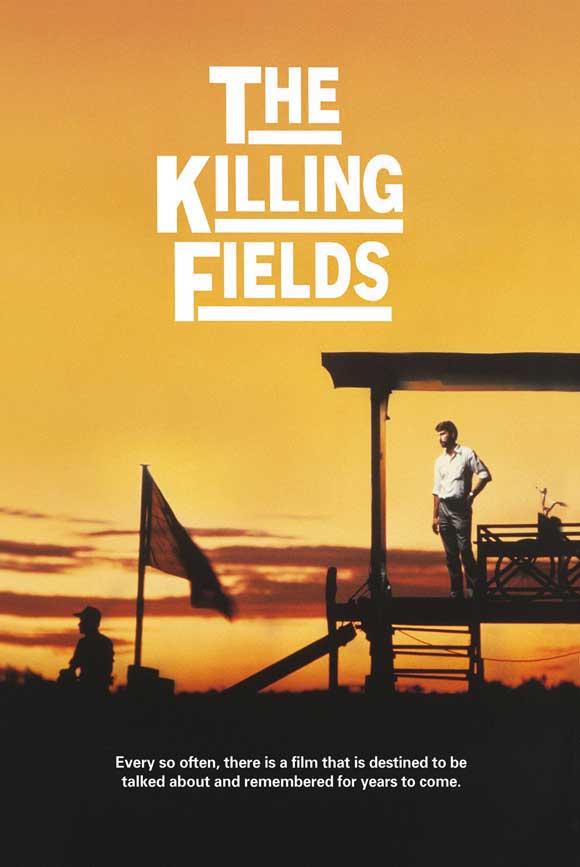
This is an excellent fact based drama of Cambodian photo-journalist and English interpreter Dith Pran (Haing S. Ngor) who gets swept up in the Khmer Rouge revolution of the 1970’s and forced to survive for four years in their harsh work camps of ‘year zero’.

This film is intense, compelling, and uncompromising. The story stays very close to the true account and it is recreated with a believable atmosphere. Mike Oldfield’s unique music score is fabulous. The music that is played during the evacuation of the U.S. Embassy is one of the creepiest sounding scores that I have ever heard and it is quite effective. Oscar winner Ngor is good in the lead role and creates a tremendous amount of sympathy from the viewer and the ending still has a major emotional impact. Yet the most lasting images of the film are from the children. During one of the battle scenes a close-up of a child is shown holding his ears and crying while another scene has a screaming child in a hospital who is having shrapnel taken out of her spine. This is then correlated with the work camp scenes where the children are protrayed to be the most brainwashed by the party line and become the biggest instigators and purveyors to the torture and mayhem making it even more disturbing. In the end this film makes you ponder and feel the ugly depths of this very bleak and historical event.

On the negative side I felt it could have used some voice-over narration to help connect the scenes especially at the beginning. Some subtitles would have also been helpful during the scenes where none of the characters speak any English. The Sydney Schanberg character, played by Sam Waterston, seems at times to be quite obnoxious. He acts like being a journalist should somehow entitle him to everything and make him above everyone else. Also during scenes when he is photographing and covering the war ravaged victims he is more concerned with getting a nice graphic picture so it will sell more copy then he does with the actual suffering of the victim.

Overall this an extremely powerful and well-staged account of a horrific event that should not be forgotten, but unfortunately probably has for a lot of people.

My Rating: 9 out of 10

Released: November 2, 1984

Runtime: 2Hours 21Minutes

Rated R

Director: Roland Joffe

Studio: Warner Brothers

Available: VHS, DVD (Region 1 and 2), Amazon Instant Video

Boccaccio ’70 (1962)

By Richard Winters

My Rating: 7 out of 10

4-Word Review: It’s all about sex.

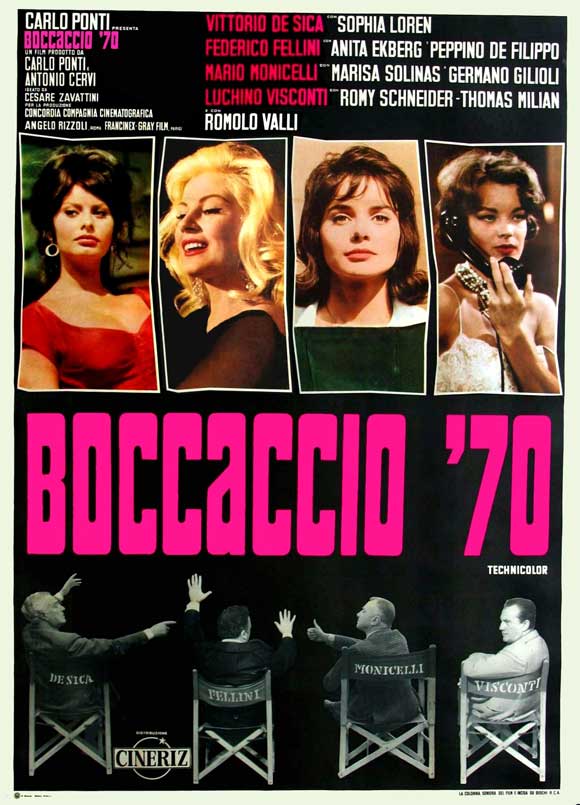
            This film, which is well over 3 hours, is a compilation of four different sex tales directed by legendary Italian greats: Federico Fellini, Vittorio De Sica, Luchino Visconti, and Mario Monichelli. The segments also star some of the most beautiful and sexiest women to ever grace the screen including: Sophia Loren, Anita Ekberg, and Romy Schneider. These ladies are at their most stunning and really light up the screen with their presence. Despite the extreme length the film moves along in a breezy fashion and I was actually surprised how quickly the time went.

The first segment directed by Monichelli and entitled ‘Renzo e Luciana’ was cut from the initial American theatrical release and it is easy to see why as it lacks the energy and flair of the others. It stars Marisa Solinas who doesn’t have the sex appeal and star power of the other leading ladies and apparently this was the reason why it was cut, but now has been restored on the recent Blu-ray release. The story is rather simple and deals with Luciana (Solinas) getting married to Renzo (Germano Gilioli), but having to move-in with her parents as they are unable to afford a home of their own. She also must keep her marriage a secret because the contract that she signed at the accounting firm that she works at strictly states that the female employees must remain single. This is so their overweight, lecherous boss can flirt and go out with them and threaten to fire them if they resist. Because of her financial situation and sparse job market Luciana is forced to put up with his advances. Although seeing two young newlyweds struggling as they start out can at times be touching this segment doesn’t have enough comedy, or drama to keep it afloat. The only lasting image one remembers from this is when Luciana goes to a public pool and sees her fat boss prancing around in nothing but a skimpy bikini bottom, which might be enough to make some viewers sick.

‘Le tentazioni del dottor Antonia’ is the second segment and directed by Fellini with his usual visual flair and style. The plot is about an older gentleman named Antonio (Peppino De Filipo) who is quite prudish and protests and tries to ban any type of public display of sexuality. When a giant billboard is erected in front of his apartment showing an alluring model (Ekberg) in a provocative pose while holding a glass of milk he becomes irate. His initial anger turns to horror as the giant model comes to life and begins to terrorize him in all sorts of comical ways. The special effects are pretty good. Filipo plays his role to a delightfully hammy level and Ekberg is striking. The ironic ending, which features a lot of surreal elements, is amusing.

The third feature is entitled ‘II lavaro’ and is directed by Visconti.  Here a rich young husband (Thomas Milian) can’t seem to avoid being caught cavorting with prostitutes despite the fact that he is married to the beautiful Pupe (Schneider). She decides that the only way to prevent this is by becoming a prostitute herself and then having him pay her to be his mistress. This segment starts out with a humorous and engaging tone, but eventually becomes talky, static, and stagy. Schneider is the best thing about it and is intoxicating in every scene that she is in. She not only speaks fluent Italian here, but German as well.

The final segment entitled ‘La riffa’ and directed by De Sica is by far the best. It is about a raffle that all the men in a small village get involved in to see who will win one night with the beautiful Zoe (Loren).  The irony here is when timid Cuspet (Alfio Vita) who looks and acts exactly like Rowan Atckinson’s Mr. Bean character, ends up winning it. De Sica nicely plays everything up to its full potential and captures the nuances and eccentricities of the characters well. Loren is both sexy and funny and shows a flair for frantic comedy. The sequence involving Cuspet and Zoe’s rendezvous is amusing, touching, and even a bit surprising.

My Rating: 7 out of 10

Released: June 26, 1962

Runtime: 3Hours 25Minutes

Rated NR (Not Rated)

Directed by: Federico Fellini,  Vittorio De Sica, Mario Monichelli, Luchino Visconti.

Studio: Cineriz

Available: VHS, DVD (Region 1 and 2), Blu-ray, Netflix Streaming

Zig Zag (1970)

By Richard Winters

My Rating: 5 out of 10

4-Word Review: Framing yourself isn’t good.

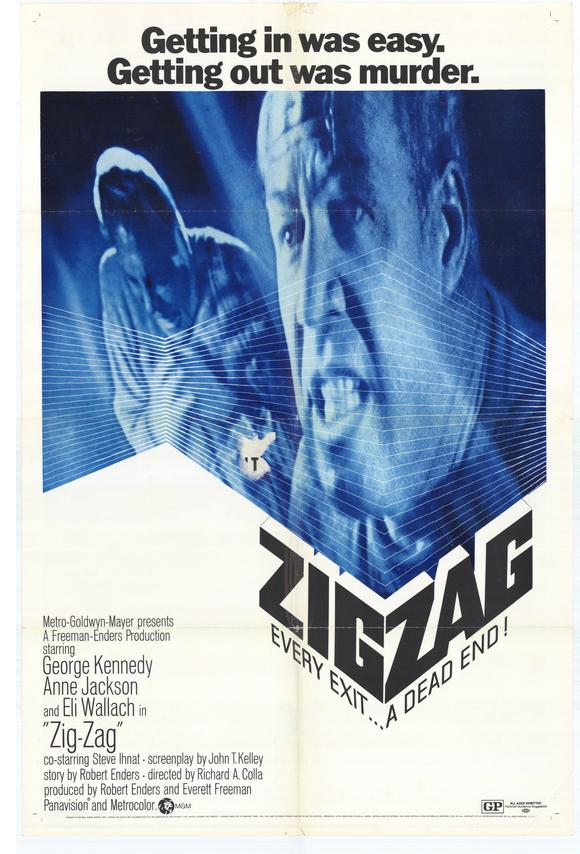
            Paul Cameron (George Kennedy) is an insurance agent and family man who learns that he is dying from a brain tumor and has only a few months to live. In order to provide money for his wife and children he sets himself up as the kidnapper of a wealthy businessman in an unsolved case that offered a $225,000 reward for anyone leading to the conviction of the culprit. After he is found guilty at his trial he faints and the doctors there decide to do experimental laser surgery to remove the tumor. The operation proves to be a success forcing Paul to go on a battle to prove his innocence, or risk spending the rest of his life in jail for a crime he did not commit.

Although he has done well in supporting roles Kennedy proves to be quite weak as a leading man as he shows almost no emotion in any of his scenes. When he is told of his tumor he takes it in a very matter-of-fact way without getting upset at all, which seemed unrealistic. His performance is dull and the few times that he does get upset it comes off as forced. His presence hurts the film and a more engaging, eccentric actor could’ve made it more interesting.

Eli Wallach as Paul’s attorney is terrific and the one thing that injects some energy. He is dynamic throughout and is fun to watch even during the slow parts. It was nice to see him doing a scene with his real-life wife Anne Jackson. As of this writing the two have now been married for 64 years, which has to be one of the longest marriages in Hollywood history.

The supporting cast features a long list of familiar character actors making it like spot-the-star. They include: Dana Elcar, Douglas Henderson, Steve Ihnat, William Marshall, Joan Tompkins, Robert Sampson, Leonard Stone, and Walter Brooke in an interesting duplicitous part.

Richard A. Colla’s direction is impressive. The film opens with a diverting cinema verite-style scene showing Paul going through the examination process before entering the prison, which seems unusually elaborate touch for what is otherwise just a gimmicky script. Another innovative part is when Paul is shown planting evidence at the scene of the crime and only the sounds and ambiance of the locale is heard without any music, which is more effective.  Unfortunately the direction and story become much more conventional towards the middle and it is not as interesting. The film tries to be too many things and does not come together as a seamless whole. The courtroom scenes were too extended for my tastes as we know Paul is innocent, but wants to be convicted anyways, so his many prolonged conversations with his exasperated lawyer who does not know of his scheme seem rather pointless. However, when Paul is cured and then goes on a mission to find the real killer it becomes exciting as the mystery itself proves to be complex and intriguing.

The twist ending did not go over well with audiences at the time of the film’s initial release. It’s a downer for sure, but after seeing so many tacky happy Hollywood endings in my lifetime I can’t say I totally hated it. As a budding screenwriter I enjoy irony and the ending here certainly has that. It’s slickly handled and although I saw it coming others may be genuinely surprised by it. My only complaint is that it’s a bit abrupt and could’ve and should’ve been extended in some way, or given a more effective closure.

If you like a movie with a lot of twists then this film may be worth seeking out. The legendary Roy Orbison sings the title tune during a party scene and it sounds like some of his best stuff. I am surprised it didn’t chart and I wished they had allowed the viewer to hear the complete son before cutting away.

My Rating: 5 out of 10

Released: September 11, 1970

Runtime: 1Hour 45Minutes

Rated PG

Director: Richard A. Colla

Studio: MGM

Available: VHS (as False Witness), DVD (Warner Archive)