Road Movie (1974)

road movie 3

By Richard Winters

My Rating: 8 out of 10

4-Word Review: Trucker and prostitute clash.

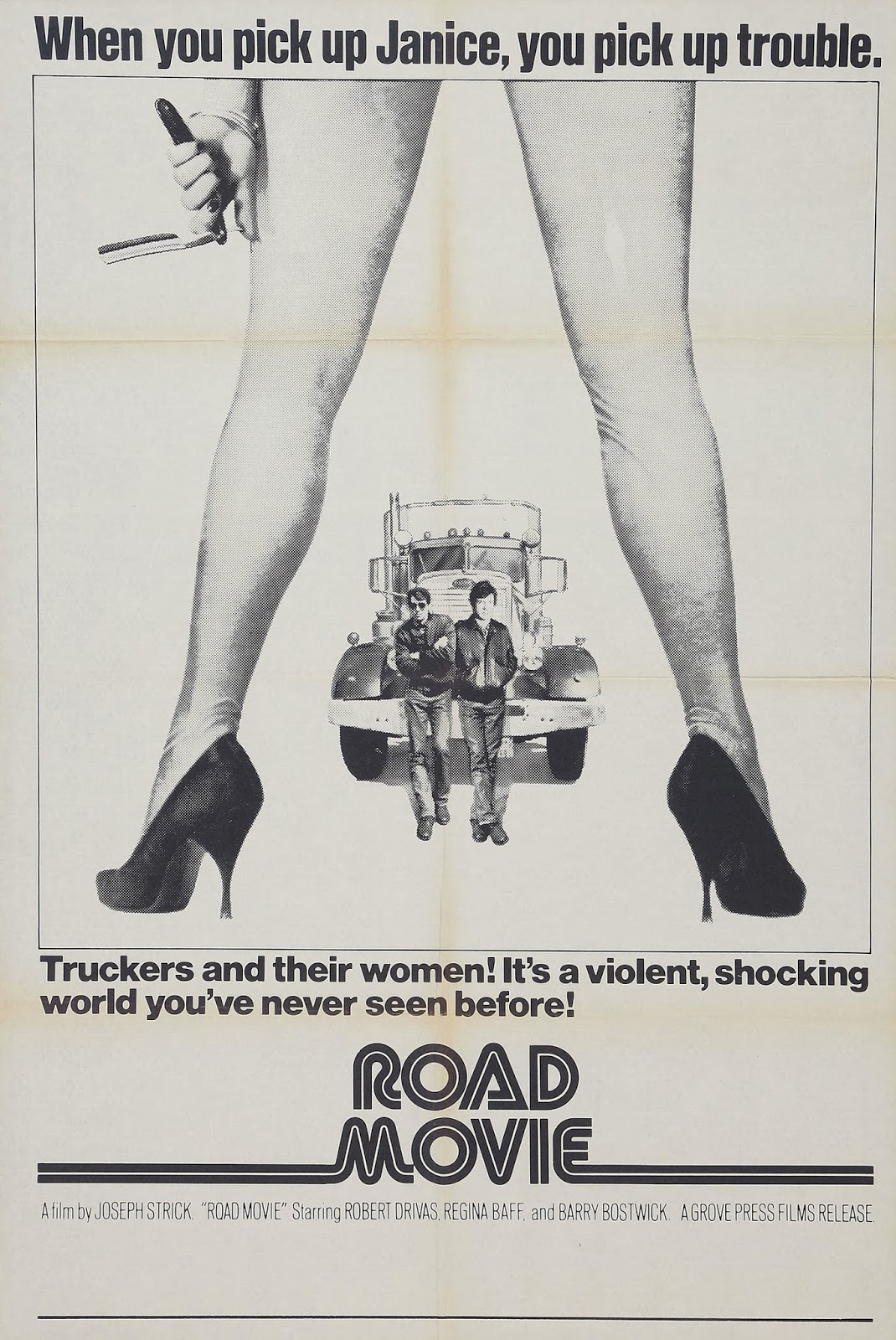
This is a captivating and interesting independent drama filmed on a shoestring budget and loosely based on director Joseph Strick’s own experiences while working one summer as a long haul driver. The story centers on Gil (Robert Drivas) and Hank (Barry Bostwick) a two-man truck driving team that pick up a prostitute named Janice (Regina Baff) who brings out unforeseen tensions and emotions.

The film is compact with characters and situations that are distinct and believable. It also gives the viewer a well-rounded look at the truck driving business and the tough, demanding job that it is.

Baff is convincing as a prostitute who isn’t pretty or educated, but sensible and street smart At times you feel sorry for her, but she proves to be quite a manipulative and shrewd when she has to.

Drivas, as the lead driver, is hardened, caustic, and controlling. He abuses the prostitute the way he feels life has abused him and thinks he can get away with it only to have her constantly outsmart him.

Unlike other road movies the scenery shown along their travels is neither exotic nor beautiful. Instead we are treated to farm fields, factories, and small towns. It’s all the sights and sounds of a working class world as this is really more about the deceptive American dream than anything else. It craftily brings out what an elusive ideal that really is and how no one is ever as independent as they would like to be and ‘moving up’ in the world can be much more difficult than at first perceived.

Strick takes full advantage of his low budget limitations by infusing a type of grittiness that Hollywood rarely touches. The interactions between the characters are interesting and the ending leaves a strong impression. For fans of obscure 70’s movies this one is worth seeking out.

road movie 2

My Rating: 8 out of 10

Released: February 3, 1974

Runtime: 1Hour 28Minutes

Rated R

Director: Joseph Strick

Studio: Laser Film Corporation

Available: DVD, Amazon Instant Video

Little Darlings (1980)

little darlings

By Richard Winters

My Rating: 5 out of 10

4-Word Review: Competing to lose virginity.

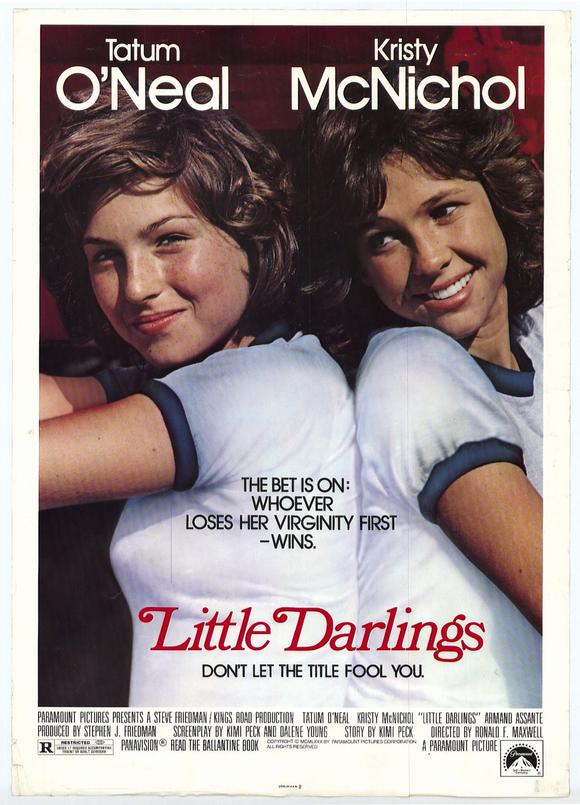
Ferris (Tatum O’Neal) is a prissy girl from a rich family who attends summer camp along with Angel (Kristy McNichol) who’s more brash and streetwise. The two get into a competition to see who can lose their virginity first. The rest of the girls in the camp take sides and place bets.  Angel sets her sights on Randy (Matt Dillon) a cute boy from a neighboring boy’s camp while Ferris goes after Gary (Armand Assante) who is one of the adult camp counselors.

The film is for the most part okay and amounts to nothing more than a slice-of-life glimpse at adolescent girls and the snotty and sometimes peculiar ways that they perceive things. Most movies that portray this age group go too much to one extreme either by showing them as being overly bitchy or too innocent, but this film manages to find just the right balance making their conversations and overall scenarios believable and amusing.

I especially liked Krista Errickson as the spoiled and snobby drama queen Cinder. Normally these types of characters can be quite annoying and overplayed, but Errickson makes it fun and a major plus to the movie.

The film also has a few funny scenes including the one where the girls steal an entire condom dispensing machine from a men’s bathroom and then take it back to camp where they have to smash it with crowbars in order to finally open it. The massive food fight in the cafeteria is a hoot as well.

McNichol is excellent particularly with the way she can become teary-eyed seemingly on cue. I also enjoyed Alexa Kenin an engaging actress that died under mysterious circumstances at the young age of 23 who plays Dana here and helps ‘coach’ the two on what it is like to have sex. This also marks the film debut of Cynthia Nixon playing the hippie girl Sunshine.

The dramatic moments between Angel and Randy help give the film a little more depth and dimension, but also completely ruins the comic momentum. I also felt the film could have been funnier and didn’t take enough advantage of its setting or plot.

The Armand Assante character is another issue. Although he does not have sex with Ferris she does let it get around the camp that he did, which these days would have him fired and thrown into jail before he would even had a chance to defend himself. Although the girls do finally go and tell the truth later on I felt seeing him still working at the camp at the end while acting unblemished from it seemed to be a bit of a stretch.

I was also stunned that this film was given an R-rating. I realize the storyline is a bit titillating, but there is not nudity or sex shown as well as no violence or foul language. The sexual conversations that do occur are never explicit or crude and overall the film has an innocent quality to it.  13 and 14-year-olds do talk and think about sex as they certainly did when I was growing up and that shouldn’t make this an ‘adult movie’.  In fact I think young teens would be the ones to find this movie the most appealing as adults are likely going to consider it rather banal. The R-rating unfairly prevented the target audience from viewing it and showed just how misguided, useless and confusing the rating system can be.

This film has attained quite a cult following namely for the fact that it has never been released onto DVD and most likely never will. Part of the reason for it is because of its musical soundtrack and the licensing agreements that come with. There are some good tunes here including Ian Matthew’s ‘Shake It’ that opens the film as well as Blondie’s ‘One Way or Another’. Unfortunately other classic rock songs that were on the theatrical version failed to make it onto VHS, which is the only format this film can currently be seen on.

My Rating: 5 out of 10

Released: March 21, 1980

Runtime: 1Hour 36Minutes

Rated R

Director: Ronald F. Maxwell

Studio: Paramount

Available: VHS

The White Bus (1967)

the white bus 1

By Richard Winters

My Rating: 6 out of 10

4-Word Review: Bizarre tour through Manchester.

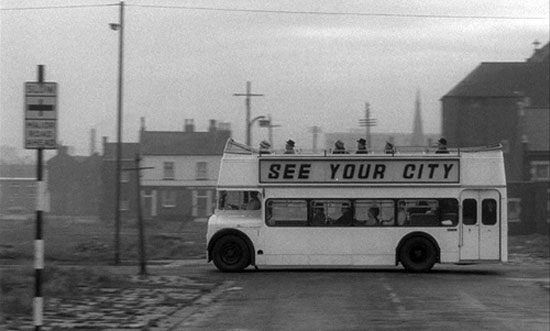
Patricia Healey plays a young lady who is never given any name that is bored with her job and looking for a diversion. While walking through some of the slum sections of the city she comes upon a white double-deck tour bus headed by the Mayor (Arthur Lowe) promising to show her the exciting areas of town. The tour group visits a factory, library and even witness a civil service drill of people saving victims from burning buildings that had been attacked during an unnamed war. In the end the young lady breaks from the group and goes wandering the streets herself looking into windows of homes where she learns a lot more about ‘the real’ city that she lives in that the tour bus could never show.

the white bus 2

This short film, which only runs 45 minutes was directed by Lindsay Anderson who later went on to collaborate with Malcolm McDowell in the classic if…., O Lucky Man! and Britannia Hospital. Anderson’s films were known for their surreal qualities, absurd situations and bizarre characters. This film proves to be no exception and part of the fun of watching the movie is never knowing what strange thing will happen next.  There are some weird moments for sure including the young lady envisioning herself hanging by the neck from a rope connected to the rafters of the ceiling at her job while the cleaning crew obliviously works around the dead body like it is not there. To me though the best moment is when she witnesses a group of people pushing a polio victim inside an iron lung through a lonely train station.

The film is mostly done in black-and-white, but occasionally for no reason or warning will flip over to color for a few seconds and then back to black-and-white again. These intervals become more frequent towards the middle of the film, but then go back to all black-and-white during the final fifteen minutes. In some ways I found this to be diverting and interesting initially, but eventually it became distracting and pointless.

the white bus 3

Healy does well in the lead and speaks only 9 words of dialogue through the whole thing. Her prominent light blue eyes look like emeralds and she exudes a nice detached quality where she at times seems a confused and curious about her surroundings as the viewer. Classic British character actor Lowe offers some moments of levity as he leads the group through a library while expounding on his opinions about ‘dirty books’.

This movie also marks the film debut of Anthony Hopkins, but to be honest I couldn’t spot him anywhere. Supposedly he can be seen in the background of one scene singing a song in German, but I couldn’t find it. I even went back through the scene selections re-watching moments that had some singing, but I still didn’t see him. If anyone knows exactly where he appears in the film and could let me know I would be forever grateful.

My Rating: 6 out of 10

Alternate Title: Red, White and Zero

Released: December 9, 1967

Runtime: 46Minutes

Not Rated

Director: Lindsay Anderson

Studio: United Artists Corporation

Available: DVD (MGM Limited Edition Collection), Amazon Instant Video

Alex & The Gypsy (1976)

alex and the gypsy

By Richard Winters

My Rating: 6 out of 10

4-Word Review: Gypsy out on bail.

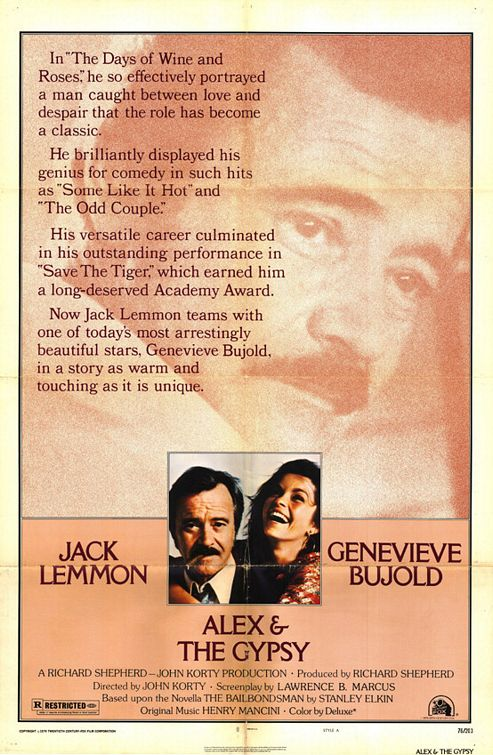
Alex is a middle-aged bail bondsman who is down on life and masks his disappointments with cynicism. By chance he meets the beautiful Maritza (Genevieve Bujold) a young gypsy woman who travels the countryside reading people’s palms and futures for a living. When she is accused of trying to kill her father and thrown into jail Alex decides to post her 30,000 dollar bail in an attempt for a brief romantic fling, but she instead spends the whole time trying to escape and keeping the overly-stressed Alex constantly on guard to prevent it.

The film has a pleasantly laid-back, free-spirited style to it that at times does meander, but nicely reflects the attitude and feeling of the decade that it is in. Director John Korty wisely pulls back and doesn’t try to over-direct, but instead allows his talented cast to carry the picture by creating well-defined and relatable characters. The dialogue and conversations are full of dry, acerbic wit and just the right amount of jaded sensibilities to keep it hip and real.

Lemon is great and has grown as an actor by taking on roles that are more world-weary and edgy  and going light years from the clean-cut, all-American young man type characters that he played in the comedies from the 50’s and early 60’s where he always was naïve and in-over-his-head. Here the character is like an extension of the one he played in Save the Tiger that being a middle-aged man who has lost his faith in everything and everyone and yet still holds out for that elusive moment of magic. His side comments are amusing making this one of his funniest and most endearing performances.

Bujold is ravishing and in fact I don’t think I’ve ever seen her looking better. Korty seems to know how to photograph her in just the right way by making full use of her prominent and alluring eyes. Her moments on screen give off a subtly sensual quality. Her nude scenes aren’t bad either particularly when she is lying handcuffed to a bed almost emotionless while Lemmon, who is under the covers, attempts to have sex with her.

James Woods is also terrific showing a surprising knack for comedy as Alex’s nerdy and timid assistant. Although his character has only limited screen time he skillfully manages to almost steal the film from his two more established co-stars especially in a scene in the bail office where Alex gets bribed by a mafia criminal as well as another one inside a hospital where he tries to explain to Alex why he foolishly allowed Maritza to get away.

The ending is the film’s only real letdown. It is not a particularly bad one, but it is a little too cute and doesn’t seem to mesh well with the rest of the film. It also offers no real conclusion and leaves the viewer hanging as to what ultimately became of these characters. A little more of a side-story particularly the one involving the bounty hunter (Todd Martin) might have given the film a bit more excitement and dimension.

I also wasn’t too crazy about Henry Mancini’s melodic and serene score. He’s a great composer for sure, but something with more of an acoustic or modern folk rock tinge might have fit the story’s theme and mood better.

My Rating: 6 out of 10

Released: October 3, 1976

Runtime: 1Hour 40Minutes

Rated R

Director: John Korty

Studio: 20th Century Fox

Available: None at this time.

Alice Sweet Alice (1976)

alice sweet alice

By Richard Winters

My Rating: 6 out of 10

4-Word Review: Murder in the church.

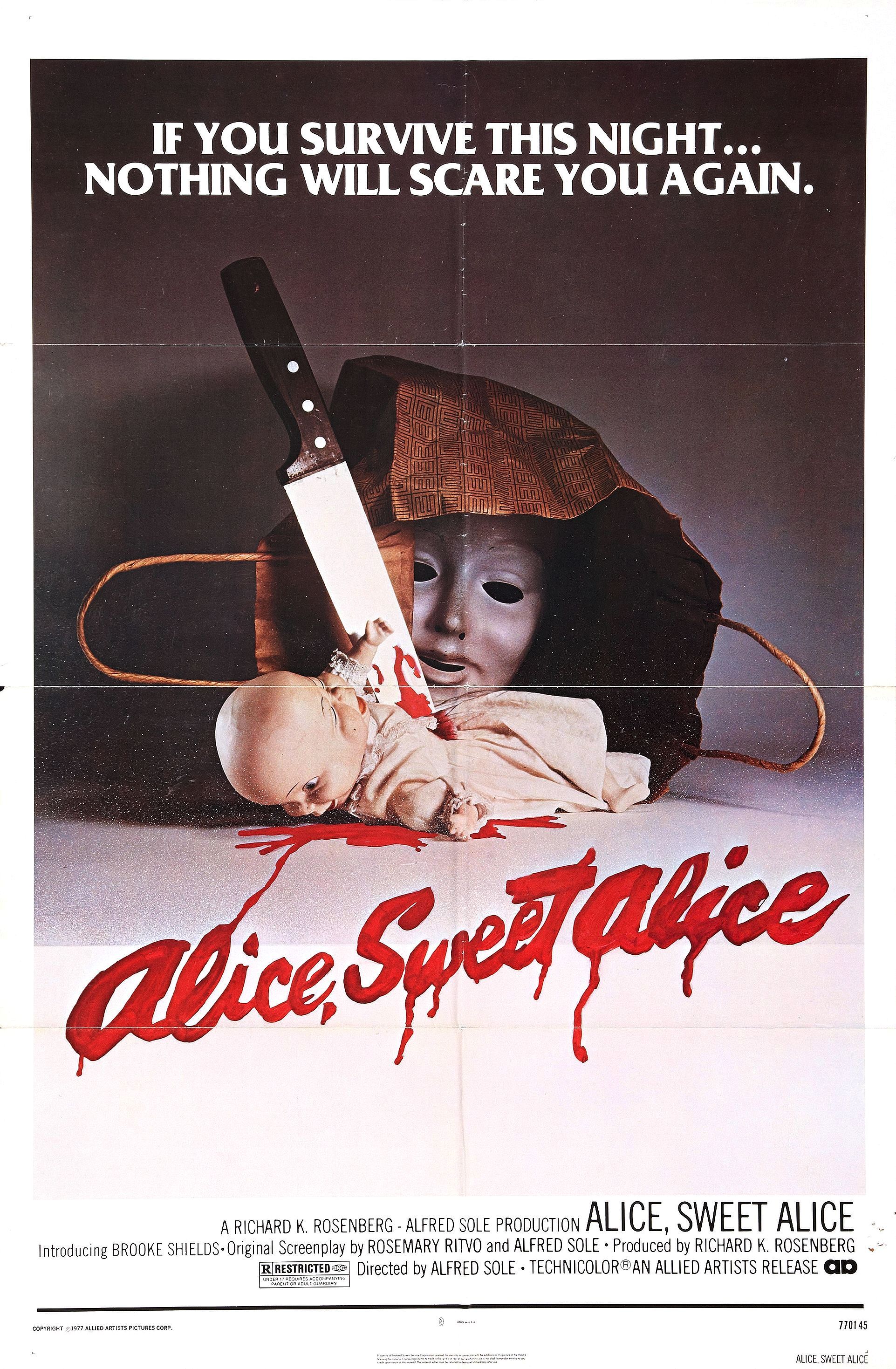
Surprisingly elaborate thriller detailing murders that happen in and around a Catholic church. It focuses specifically on a family whose one daughter Karen (Brooke Shields) is a victim and the other daughter Alice (Paula E. Sheppard) may have been the killer.

This is a well-crafted thriller and much more than just a chance to see a young Brooke Shields. The set design is meticulous with a unique look and sound that is different from just about any other horror film. There are even a few moments of truly creepy imagery. The twisting plot and suspense should be enough to get you caught up in it and keep you guessing.

This is also a multilayered film with a twisted look at the family unit, the 50’s era, and most importantly the Catholic Church. It paints a rather sinister portrait of the church and some of those who attend it while emphasizing the evilness that can unravel behind even the most pristine of pictures. It is harsh, but also revealing and at times even funny.

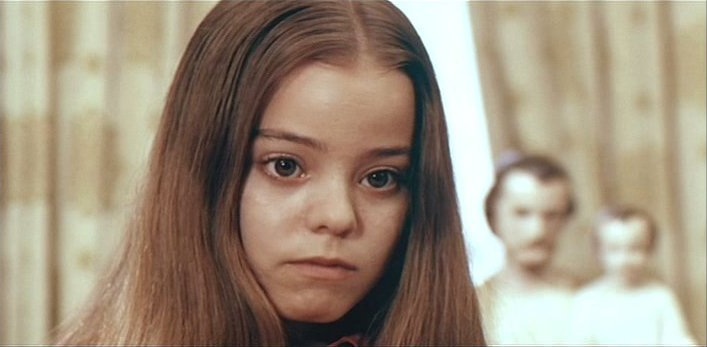
Sheppard is chilling as the evil sister and makes Patty McCormack from The Bad Seed look like a powder-puff-girl. Her unique eyes grab your attention and help accentuate her character and are able to convey both beauty and mischief at the same time. She falls into her difficult role effortlessly and it’s easy to see why she has gained such a wide cult following even though, to date, she has only done one other movie.

paula 2

Brooke of course was re-billed as the star when her fame shot up afterwards. Yet she doesn’t last past the first half-hour and her presence is really not all that significant.

The film’s first third is gripping, intriguing, and even surprising. The final thirty minutes though is a letdown and pretty much ruins the film as a whole. It gives away its final twist too early and then drags along until it culminates with a rather far-fetched climax. It also leaves open a few loopholes and no real closure.

My Rating: 6 out of 10

Alternate Title: Communion

Released: November 13, 1976

Runtime: 1Hour 38Minutes

Rated R

Director: Alfred Sole

Studio: Allied Artists Pictures

Available: VHS, DVD, Amazon Instant Video

Liquid Sky (1983)

liquid sky

By Richard Winters

My Rating: 8 out of 10

4-Word Review: Aliens invade punk hangout.

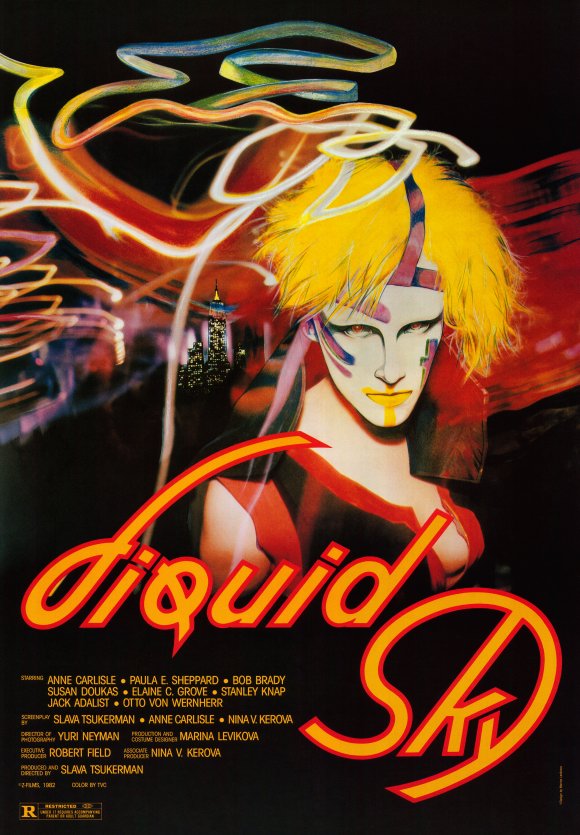
No matter how many years go by this film remains cutting edge. It’s one of the few movies made in the 80’s that makes fun of its own era and those that considered themselves hip and sophisticated.

The plot has to do with a young punk girl named Margaret (Anne Carlisle) living with her lesbian roommate Adrian (Paula E. Sheppard) in a New York City penthouse. The place is frequented by the usual weirdos, vagabonds and druggiess. The two make a living by dealing drugs and offering indiscriminate sex. One day a spaceship the size of a dinner plate and filled with aliens that have no shape or form lands on their penthouse roof and zaps away anyone who has an orgasm. Margaret is unable to achieve climax so she is left remaining while everyone else is gone, which convinces her that someone or something has finally ‘recognized’ her and that she is ‘special’.

Literally every camera shot, scene and line of dialogue is unique. This film not only has an offbeat point-of -view, but reinforces it by constantly looking, feeling, thinking, and sounding different, which includes its funky musical soundtrack. There is no compromising here. The filmmakers believe in their material and keep it true to form throughout forcing the viewer to adjust to its bizarre sensibilities. Yet if you do you will not be disappointed. It’s pace and sense of humor has a fresh free-form flow not seen since the European new wave films of the 60’s.

Despite the radical style it still touches on many universals including the human need for acceptance, understanding, fulfillment, and communication. It also takes jabs at many of modern society’s fringe groups who many times can end up embodying the same hypocrisy as the mainstream.

Star Carlisle also wrote the screenplay and the novel version of this film and based it on her own experiences while involved in the punk scene during the late 70’s. She hasn’t been in a film since 1990 and today lives in southern Florida and is involved in both psychotherapy and teaching. Here is a recent pic of her:

anne carlisle

Her co-star Paula E. Sheppard, who if recent reports are correct has now changed her name and working as a nurse in the Seattle area, gives another great performance. This turned out to be her last film and one of only two that she was in her other film Alice Sweet Alice will be reviewed on Wednesday.

My Rating: 8 out of 10

Released: April 15, 1983

Runtime: 1Hour 51Minutes

Rated R

Director: Slava Tsukerman

Studio: Cinevista

Available: VHS, DVD (out-of-print) 

Minnesota Clay (1964)

minnesota clay 2

By Richard Winters

My Rating: 6 out of 10

4-Word Review: Gunfighter loses his sight.

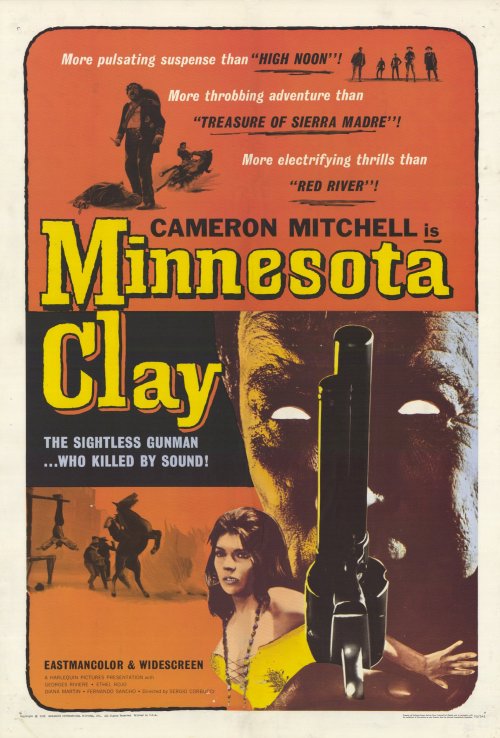
Minnesota Clay (Cameron Mitchell) is a revered gunfighter stuck in a work camp prison for a crime he didn’t commit. One day he manages to escape and tracks down Fox (Georges Riviere) the man who withheld evidence that would have gotten him off. Fox is now the self-imposed sheriff and extorting money from the citizens of a town in order to keep them ‘safe’.  One of the townspeople is Minnesota’s grown daughter Nancy (Diana Martin) although she is not aware of this and local rancher Jonathan (Antonio Casas) is the only other person that does. As Minnesota tries to figure out a way to exact his revenge while also saving his daughter and townspeople from the reign of terror he realizes that he is losing his sight and doesn’t have much time before he goes completely blind.

For a basic spaghetti western this isn’t too bad. It certainly is no Sergio Leone masterpiece, but it fortunately isn’t the cheap looking, boring mess that some of the ones on the very bottom end of the genre are. The pace is quick with enough gunfights to appease any western fan. Director Sergio Corbucci manages to camouflage the low budget with a background and sets that look reasonable authentic. The plot is nothing special, but has enough twists and turns to keep it mildly interesting although having the Estella character (Ethel Rojo) one minute set-up Minnesota to be killed and then the next minute express her undying love for him gets a bit too dizzying.

One of the chief assets is amazingly Mitchell himself. His acting career started strong in the 1950’s including his critically acclaimed role as Happy Loman in the original Broadway version and eventual 1951 film Death of a Salesman, but a rumored drinking problem lead to a decline in the quality of roles. By the 1980’s he was lodged into doing a procession of grade Z productions simply for the money including shockingly co-starring in a non-sexual role in a porn film Dixie Ray Hollywood Star. Yet here he still shows to be the solid actor that he could be. He carries the picture well and having him a bit older than the conventional gunslinger makes it interesting.

The final shootout done when Minnesota has lost his sight and must rely completely on his heightened sense of hearing is well done and the best moment in the film. It lasts for almost fifteen minutes and has a certain surreal quality due to it happening in the middle of the night and neither man able to see the other. It might have been more interesting though had the character lost his sight at the very beginning, which would have made the entire story more distinctive as the majority of it is pretty ordinary and forgettable.

My Rating: 6 out of 10

Released: November 12, 1964

Runtime: 1Hour 25Minutes

Not Rated

Director: Sergio Corbucci

Studio: Harlequin International Pictures

Available: DVD (Mill Creek)

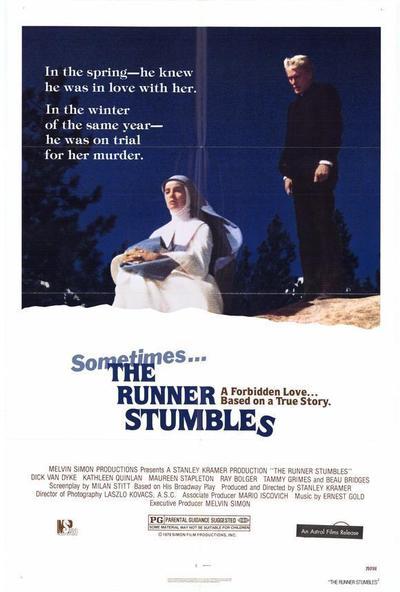
The Runner Stumbles (1979)

the runner stumbles 1

By Richard Winters

My Rating: 2 out of 10

4-Word Review: Priest accused of murder.

Based on actual events the setting is 1911 in a northern Michigan town where Father Brian Rivard (Dick Van Dyke) presides over a small Catholic parish. He feels frustrated at being stuck in such a depressed town where many of the residents are out of work. In comes Sister Rita (Kathleen Quinlan) to help run the school and the Father immediately takes a liking to her youthful enthusiasm and fresh ideas, but gossip and rumors soon abound when it is found that they are spending too much time together and possibly becoming intimate. When the Sister is found murdered it is the Father who is accused and must fight for his life while straddled with an attorney (Beau Bridges) who seems glib and detached.

One of the biggest problems with the film is the miscasting of Van Dyke in the lead. His performance is stiff, wooden and affected. The chemistry between the two stars is non-existent making the romantic angle seem completely unbelievable. The film would have been better served had a younger man that was more Quinlan’s age and trained in method acting been cast in the part.

Quinlan is excellent in her role, but her efforts become lost as they bounce off Van Dyke’s almost corpse-like presence. Maureen Stapleton adds some excellent support and it’s great to see Ray Bolger in his final film role as the intrusive Monsignor. Bridges is also great as the lawyer and the one thing that livens the film up a little. Had his court scenes been more extended it would have helped the picture immensely.

Director Stanley Kramer, whose last film this was, seems to have lost touch with the modern movie goer. The presentation is stagy and the overly melodic soundtrack does not fit the mood and gets overplayed almost like a radio going on in the background that somebody forgot to turn off. The conversations revolving around the predictably stifling atmosphere of the era add little interest and go on too long as do the debates between giving in to human desires versus religious commitments. The surprise ending hardly makes up for a film that is slow and boring and ultimately making it as stale and stagnant as the small town it tries to portray.

My Rating: 2 out of 10

Released: November 16, 1979

Runtime: 1Hour 49Minutes

Rated PG

Director: Stanley Kramer

Studio: 20th Century Fox

Available: VHS

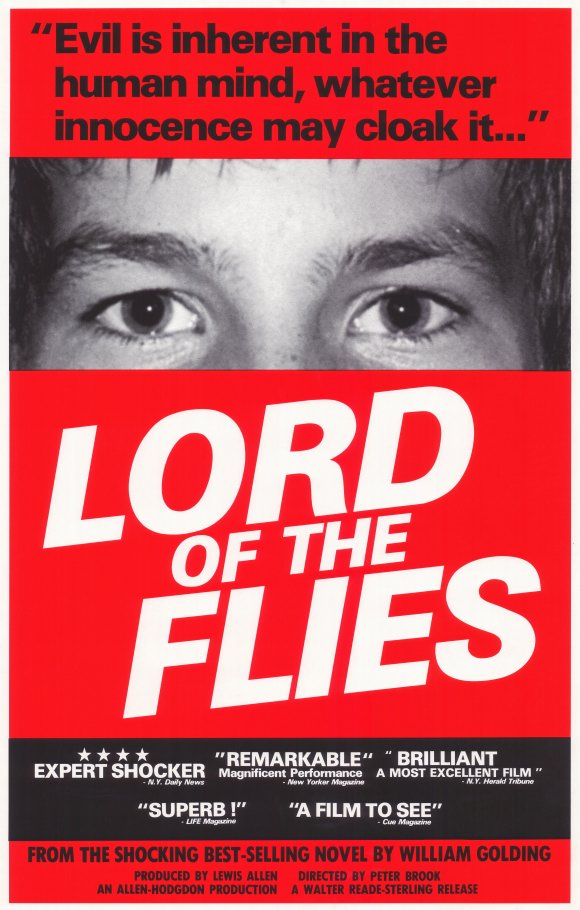
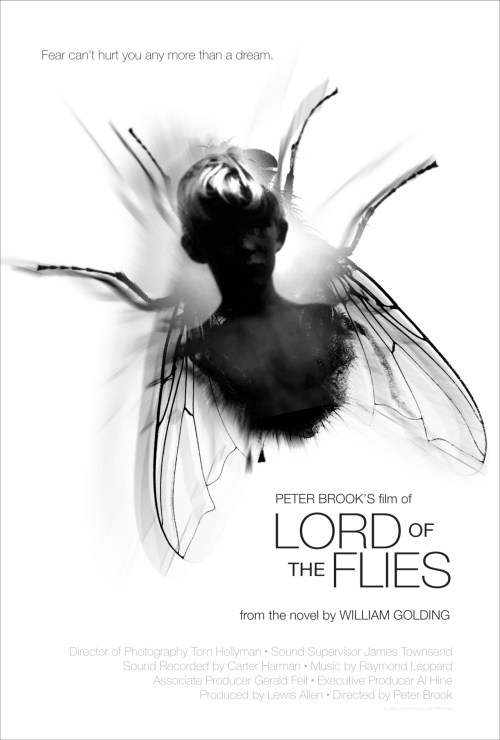
Lord of the Flies (1963)

LOTF

By Richard Winters

My Rating: 8 out of 10

4-Word Review: Kids turn into savages.

Based on the William Golding novel that has been required reading for most high school students. The story centers on a group of British schoolboys who survive a plane crash on an uninhabited tropical island. The boys are of varying ages, but none older than 14. Ralph (James Aubrey) is chosen as their leader, but finds almost immediate friction from Jack (Tom Chapin) who is an aggressive type that likes to hunt and doesn’t tolerate being told what to do. As things progress Jack breaks off from the main group and eventually starts his own following that comes to odds with Ralph’s. More and more of the boys join Jack and start to display savage behavior that leads to two deaths and puts the frightened Ralph on the run and into hiding.

It has been three decades since I’ve read the book, so I can’t really compare it with the film. The criticisms that I have are aimed solely at the film although as I remember the book had some of the same issues. One of the biggest ones is just the fact that there are so many survivors from a plane crash and all of them are conveniently the kids while all the adults perishing, which seems to play too much against the odds. There are also no scratches, bruises or injuries, which you usually come about with a crash even amongst those that survive it. Director Peter Brook does a clever job of intimating a plane disaster at the beginning over the opening credits through use of photographs, which I found to be creative, but showing an actual destroyed plane with kids getting out of it would have given it a little better foundation.

There is also another segment where the kids are convinced some sort of strange beast is on the island and as they go searching for it, it is found to a pilot in a helmet who was killed while trying to parachute to safety. Yet the kids don’t seem to realize this and remain frightened of it. I realize the setting is the 1940’s around the time of the war, but I would still think the kids of that time would have been sophisticated enough to recognize a dead man in a fighter helmet and the fact that they don’t seems pretty odd and even farfetched.

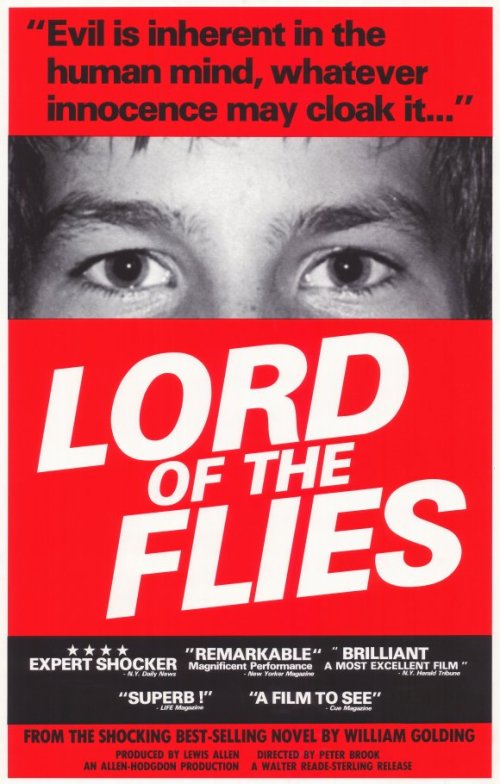
Overall though I really enjoyed the film and feel reluctant to watch the 1990 remake as I am afraid it would ruin the experience of this one.  It was filmed on-location off the island of Vieques in Puerto Rico during late August of 1961. The entire cast was made up of amateur actors who had not read the book. There was no actual script and the boys were allowed to ad-lib their lines, which helps give it an extra air of realism.
lord of the flies 1

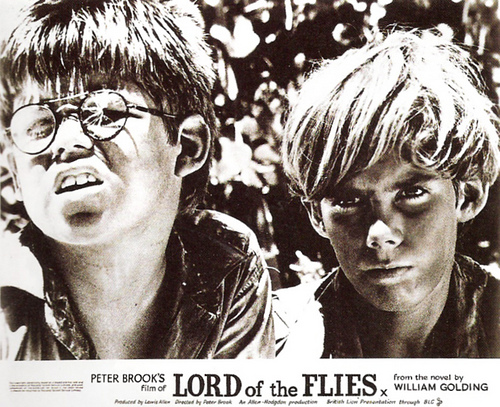
I will admit there are shots where some of the boys look bored and detached from things, but then again I suppose boys that age can be that way anyways no matter what situation they are, so in some ways it doesn’t really hurt things. Hugh Edwards who plays Piggy is a real standout and apparently got the role simply by writing a letter to director Brook and informing him that he was fat and wore spectacles.

The black and white photography helps heighten the dark undertones. The shot showing a close-up of the pig’s head on top of a stake with flies’ going in and out of its mouth and nostrils is quite impressive and a brilliant realized moment from the book. The climatic sequence where Ralph must run through the burning foliage to escape the other boys is quite intense. The shot showing a dead boy’s body floating in the water under the moonlight has an evocative flair, but fake looking to the extent that the child was stabbed to death and yet has no visible wounds or blood coming out.

On the DVD commentary Brook states that he likes to believe something like this couldn’t happen. That we have somehow evolved enough as a human race where this savagery would be impossible, but I respectively this disagree. I think this could very well happen in this day and age which is what makes this an infinitely fascinating look at human nature and ultimately a great movie.
lord of the flies 3

My Rating: 8 out of 10

Released: August 13, 1963

Runtime: 1Hour 32Minutes

Not Rated

Director: Peter Brook

Studio: Continental Distributing

Available: VHS, DVD (Criterion Collection), Amazon Instant Video

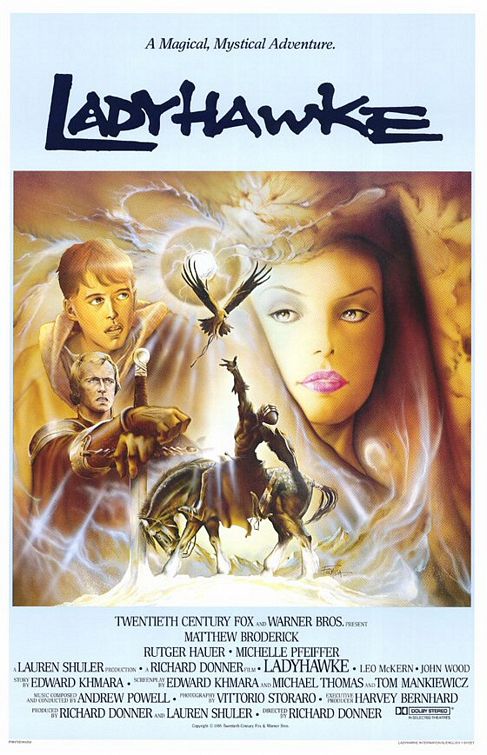
Ladyhawke (1985)

ladyhawke 1

By Richard Winters

My Rating: 5 out of 10

4-Word Review: Trying to reunite lovers.

Philipe (Matthew Broderick) is a thief who manages to escape the confines of the dungeon in Aquila by squeezing through a prison drain and then swimming through the underground sewer. When he finally reaches safety he meets up with Navarre (Rutger Hauer) who is also on the run and straddle with a very strange curse placed on him by the Bishop (John Wood). It seems that the Bishop had a thing for Lady Isabeau (Michelle Pfeiffer) and became enraged when he found that she loved Navarre and not him. As part of his revenge he made it so Navarre and Isabeau will never be able to meet in human form by having Navarre turn into a werewolf by night while Isabeau becomes a hawk by day. Now Navarre wants to use the reluctant Philipe’s knowledge of the city to help him find the Bishop and kill him, which he hopes will then end the curse.

I have to admit that medieval fantasy is my least favorite of all movie genres. The archaic living conditions always comes off as gloomy and depressing and the fact that the action is limited to only swordplay seems to make it less exciting. However, the film has some impressive cinematography and Broderick’s humorous character kept me engaged most of the way.

I also liked the pounding Philharmonic musical score. I realize that it doesn’t fit the sound of the 13th century setting and some fans of the film hate it for just that reason, but it still gives the film distinctiveness and helps boost the energy. I was actually disappointed it wasn’t used more as it seems to taper off too much after booming out strong at the beginning.

I am so used to seeing Hauer playing dark characters that I was initially thrown having him play a good guy, but pleasantly surprised at how well he did it. Leo McKern is a standout as the elderly Imperius.  His castle residence is marvelously captured and I loved all the booby traps he has in store for the invading soldiers. Pfeiffer on the other hand is a bit miscast mainly due to her model-like face that seems too glossy for the time period.

The exciting jousting sequence that takes place during the finale between Hauer and actor Alfred Molina’s character is outstanding, but it takes too damn long to get there. The simple plot could have been wrapped up in a much briefer runtime. The second hour is filled with a lot side dialogue and scenarios that add nothing to the story or characters and should’ve been cut completely. The romance angle is also handled too much from the perspective of a 14-year-old schoolgirl and the scene where the lovers reunite could be deemed as corny by some.

There is also the issue of Navarre looking directly at an eclipse that conveniently occurs through a broken stain glass window in a church. Normally a person would have to shield their eyes with their hand, squint or at the very least turn away from it after only a few seconds. Yet this character stares at it for an extended period without even blinking, which at the very least would’ve burned dark spots into his field of vision and yet strangely that doesn’t occur.

My Rating: 5 out of 10

Released: April 12, 1985

Runtime: 2Hours 4Minutes

Rated PG-13

Director: Richard Donner

Studio: Warner Brothers

Available: VHS, DVD, Blu-ray, Amazon Instant Video