Open House (1987)

open-house-1

By Richard Winters

My Rating: 0 out of 10

4-Word Review: Selling homes is murder.

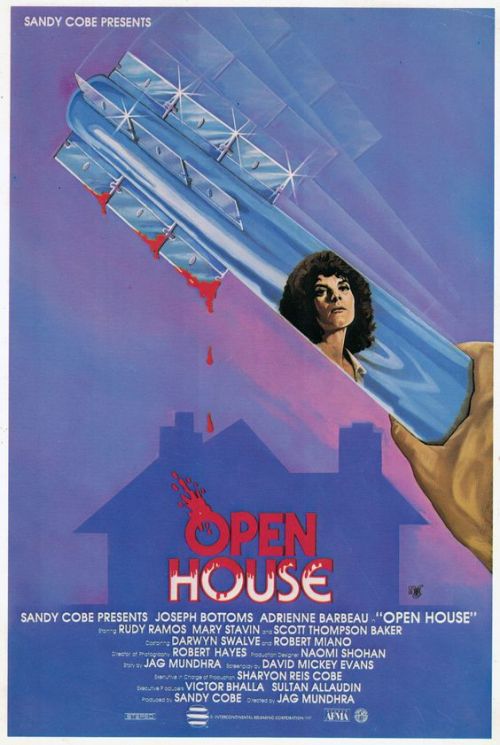
Real Estate agents throughout southern California are turning up dead and no one has a clue as to who’s doing it. Then late night radio talk show host Dr. David Kelley (Joseph Bottoms) starts getting calls from a man who identifies himself as being the killer. David and the police try to track the man’s calls before David’s girlfriend Lisa (Adrienne Barbeau), who just so happens to be a real estate agent herself, becomes the killer’s next victim.

By the late ‘80s slasher films were starting to become more like dark comedies with some of them even being outright parodies, which is what I initially thought this one was going to be. There are some comical touches at the beginning before it completely devolves into the tired old slasher film cliché. No scares or tension and a storyline that plods along at a snail’s pace. The identity of the killer and his backstory is lame and the film’s generic synthesized sounding music score is not a good fit for a horror movie.

Barbeau, who is the former wife of horror director John Carpenter and has done alright starring in films from this genre before, gets stuck with some really bland material here and has little to work with. Apparently she only took the part to help pay for her son’s tuition. Bottoms, whose career never blossomed like his older brother’s, was clearly on the down slide when he took this one and his presence adds nothing.

There’s one good murder involving the killer hacking off the fingers of one of his victim’s with a shot showing the fingers wiggling on the floor before the killer, for whatever reason, puts them into his pocket. The camera also stays locked on the victim’s dead bodies longer than what is usual including having it focus on a dead woman’s corpse hanging by its neck from a rope for what seems like several minutes. I might even give it a point for being the first horror film that has a killer who wears dentures and at one point he even takes them out, but overall this thing lacks imagination or inspiration. It was directed by Jag Mundhra who went on to do a lot of Bollywood films and I don’t think he had a true passion or interest in horror movies as his direction is quite mechanical and the overall production falls agonizingly flat.
open-house-2

My Rating: 0 out of 10

Released: October 1, 1987

Runtime: 1Hour 35Mintues

Rated R

Director: Jag Mundhra

Studio: Intercontinental Releasing Corporation

Available: VHS
Final Exam (1981)

final-exam-2

By Richard Winters

My Rating: 1 out of 10

4-Word Review: Killer stalks college campus.

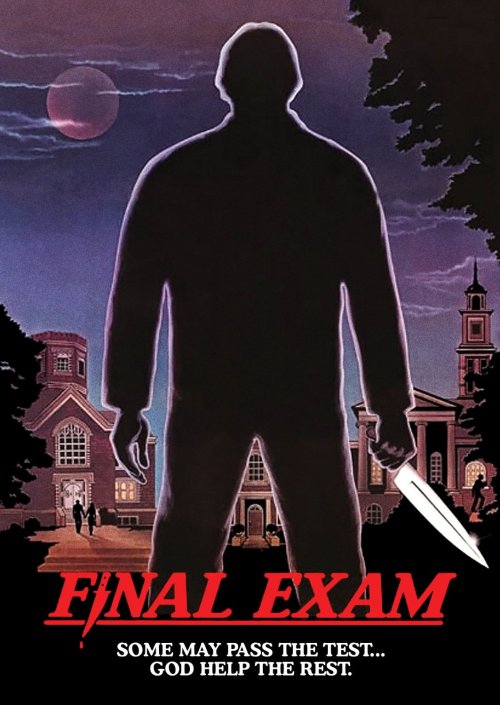
A killer (Timothy L. Raynor) is on the loose and stalking a North Carolina college campus. No one knows why he is doing it or who he is, but the body count keeps rising. It’s up to Courtney (Cecile Bagdadi) and her friend Radish (Joel S. Rice) to try and stop him before it’s too late.

I’ll start off with a few of the things that I liked about the movie, which helped set it apart from other slasher films and if it weren’t for the stupid ending I would’ve given it more points. The fact that it takes place on an actual college campus and we are able to see all aspects of it including the dorms, the classrooms and even its cafeteria is a big plus. Too many slasher films have a supposed campus setting, but it never looks like one while this film managed to give me a nostalgic feeling about my own college days and the cast are at the right age group to play the students.

The dialogue between the characters is more amped up here than in the usual ‘80s horror film. This was intentional as writer/director Jimmy Huston wanted more emphasis placed on the characterizations than the gore. Although much of what is conversed about is extraneous and does not help progress the plot it still made the characters seem more human and less like a cardboard caricature.

I was also surprised with a scene involving a group of students pretending to be masked gunmen carrying out a mass shooting on the campus. It later turns out to be a fraternity stunt, but it made the film seem ahead-of-its-time and even prophetic especially with the way the Radish character talks about Charles Whitman and others like him who indiscriminately kills large groups of people for no reason. It was also interesting to see how the characters responded once they found out it was only a joke. Many of the students laugh it off while these days most would be traumatized and when the police respond to the call of a shooting only one officer arrives while today it would’ve been an entire SWAT team.

Spoiler Warning!

The scenes involving the killer are where the film falls apart. For one thing he seems to have superhuman strength even though he doesn’t look to have gargantuan sized muscles. The opening segment has him standing on a car hood as the vehicle is moving and somehow lifting another male body out of the driver’s seat and through the roof with only one hand, which I don’t think would be possible. Also, when he lifts the driver out of the car it stops, which should’ve been enough for the killer, who is still standing on the car hood, to lose his balance and fall down, but he doesn’t.

My biggest gripe though is that we are never given any explanation for why he kills or even any clue to his identity, which makes sitting through this generic thing seem all the more pointless. Granted sometimes the backstories to the killer’s motives can be hooky and fans of this film consider it ‘refreshing’ that this one didn’t have one, but in reality everyone that lives on this planet has a backstory and the characters in movies are supposed to represent real people, so an explanation of some kind is still necessary. If it was just a random killing by a stranger with no connection to the school at the very least give the killer a name, which could’ve been done by the police in the denouncement when they came to survey the crime scene.

It’s quite possible that the filmmakers intended this to be a random killing spree due to the earlier scenes involving the fake mass shootings, which could be considered foreshadowing and Radish’s continual conversations involving the topic of shooters killing people for no reason, which is fine. However, this idea doesn’t completely hold up because there is a segment where Radish finds some dead bodies in a locker room and then runs back to his friend Courtney’s dorm room for help, but the killer is already there waiting for him, which means he would’ve had to have known that these two were friends and which specific dorm room Radish would go back to and thus negating the idea that the killer was just a random stranger.

End of Spoiler Alert!

My Rating: 1 out of 10

Released: June 5, 1981

Runtime: 1Hour 29Minutes

Rated R

Director: Jimmy Huston

Studio: Motion Picture Marketing

Available: DVD, Blu-ray

Hobgoblins (1988)

hobgoblins-2

By Richard Winters

My Rating: 1 out of 10

4-Word Review: Avoid the furry creatures.

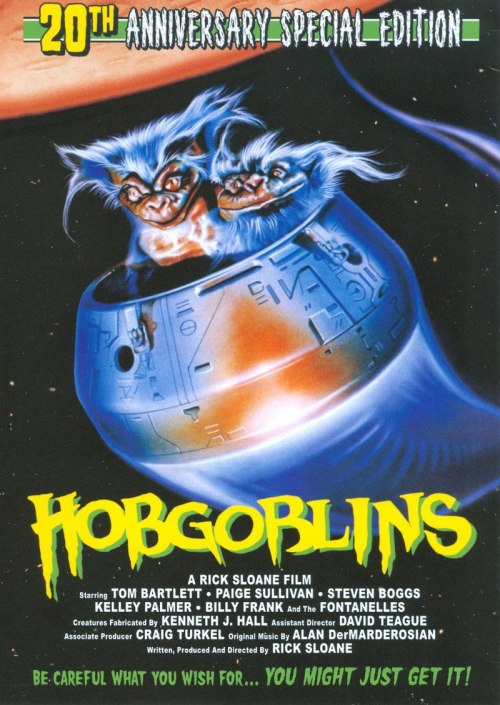
Kevin (Tom Bartlett) gets a job as a night security guard at a local factory. During his training he is told by his supervisor McCreedy (Jeffrey Culver) not to unlock the vault, but he does so anyways, which releases all these small furry creatures that apparently landed on earth 30 years ago. These aliens, which are called hobgolbins, are a nefarious bunch as they are able to delve into the thoughts and fantasies of the people around them. When a person starts thinking about their secret fantasy they are actually being controlled by the aliens, which will lead them to an ultimate death. It is now up to Kevin to try and stop these creatures before they attack his friends.

This film has attained a notorious reputation of being one of the worst ones ever made and its director Rick Sloane has become this generation’s Ed Wood. With all this considered I was actually surprised that it wasn’t quite as bad as I was expecting. In fact there have been films that I’ve seen which have been worse, which isn’t to say that it’s a good one either. The movie does take some stabs at humor and while most of it is lame the segment regarding the bouncing van, which is supposed to simulate the lovemaking actions of the couple inside, is mildly amusing.

The film’s biggest fault is its limited locations. The factory setting isn’t visually interesting and the fact that Sloane constantly goes back to shooting scenes in the same drab hallway of the place doesn’t help. The bar known as Club Scum, which is the setting for the second half of the story, has an equally bland interior. There is also the issue of the factory owner’s office being quite obviously the exact same room that is later used in another scene by a 1-900 sex operator (Tamara Clatterbuck).

The cast is made up of Rick Sloane regulars who’ve appeared in his other productions and pretty much nowhere else. Bartlett is quite weak in the lead and Culver’s old man routine especially having to watch his pathetic attempts at running are annoying and the shots showing Bartlett and Culver running in tandem side-by-side make no sense as Bartlett is much younger and could easily out run the old timer as could just about anybody else.

The plot is full of holes and the fantasies that the characters go through are generic to the extreme. The scenes inside the bar become overly extended and bog the already slow pace down until it comes to a complete standstill. The creatures are clearly just stuffed animals whose facial expressions never change and the attempts to make them look like they can move their bodies are pathetic.

The humor shifts from double-entendres to silly stuff aimed at the kids making me wonder what the intended audience was, or if they had even thought of that. About the only thing that it does accomplish is making me want to watch Gremlins again, which this tries to rip-off, since it is far better.

My Rating: 1 out of 10

Released: July 14, 1988

Runtime: 1Hour 28Minutes

Rated R

Director: Rick Sloane

Studio: American Cinema Marketing

Available: DVD (MST 3000 Vol. 8), Amazon Instant Video

Pieces (1982)

pieces-1

By Richard Winters

My Rating: 0 out of 10

4-Word Review: Cutting up the coeds.

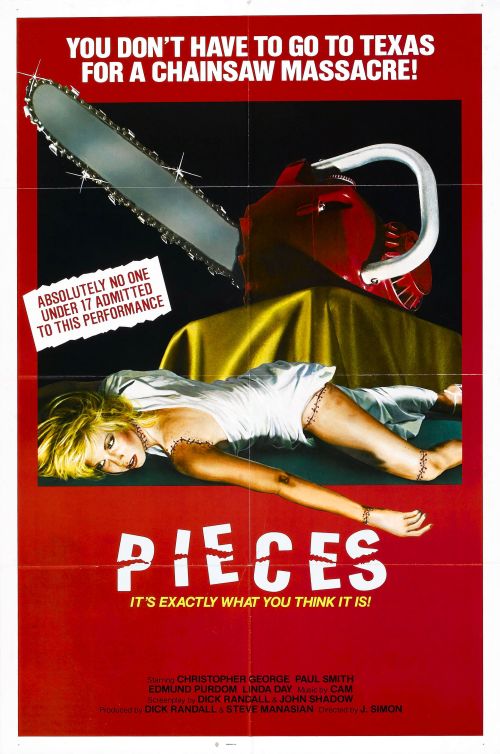
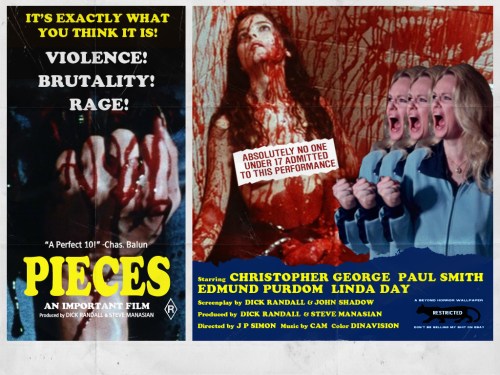
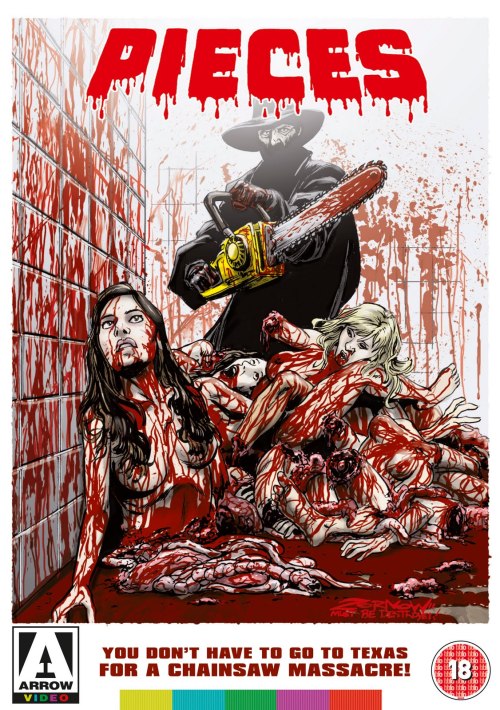
This review will be the first of many in which we celebrate October by reviewing all horror movies for the entire month. The film we look at today has managed to gain a strong cult following and deals with a Boston area college that is under attack by an elusive killer who slashes coeds to bits and then uses their body parts to create his personal human-sized jigsaw puzzle.

Horror director Eli Roth describes this film as being one of the top “horror films of all-time” and “the ultimate slasher film” with “the greatest ending in horror history”. Unfortunately I thoroughly disagree with him and was genuinely beginning to wonder if we had even seen the same movie, or if he was just joking. To me it was just another cheaply made horror flick made by a producers looking to cash in on the ‘80s slasher craze by churning out something that is completely formulaic and offers nothing new or imaginative to the genre. The plot is dull and predictable and the scares nonexistent. Even the killer is boring by appearing as this shadowy figure that has no features or distinction. Also, the film’s setting is Boston, but no one speaks with a New England accent and instead just about everyone has a European one.

The opening bit, which supposedly takes place in 1942, is full of anachronistic errors and the other killings, with the exception of the one that takes place on a water bed, fall equally flat. The one that I found particularly ridiculous features a coed, which is played by actress Cristina Cottrelli, who gets killed while swimming in an indoor pool. The killer stands on the edge of the pool and uses a long handled net to ‘catch’ her as she swims and then drags her back towards him. However, the net would be too flimsy for this and if she had given it any resistance at all it would’ve been enough to make the killer to lose his balance and fall into the pool. She also could’ve easily escaped from it by diving beneath the water. The fact that this same net also manages to knock her out is even more absurd although she does manage to regain consciousness only to see the killer coming at her with a chainsaw, but instead of just rolling back into the water for an easy escape, which is literally just inches from her, she instead passively lies there and screams while he hacks her up.

pieces-4

I might’ve given it a few points had the gore been better, but I really wasn’t impressed. There’s lots of quick cutaways before anything much is shown and the body parts were clearly just stuff taken from mannequins and then doused in red paint.

The film got some notoriety at the time for its violence and then was disown by its two stars Christopher George and his wife Lynda Day George who insisted they were unaware that this was going to be a horror film when they agreed to sign on. The truth is they were already doing a lot of horror films before this as their careers were in severe decline and it was the only thing they were being offered. Chances of them thinking this was going to be anything different was slim and they probably were simply reacting to the critical backlash and trying to save what was left of their reputations by ‘disowning’ it even though it made very little difference as George ended up dying from a sudden heart attack just 2 months after its US release.

Edmund Purdom, who was at one time a top European star during the ‘50s should’ve been equally embarrassed and apparently was equally desperate to have signed on. The only other recognizable face is Paul L. Smith who gets stuck with an insignificant role as the maintenance man and uses some over-the-top facial expressions that I found more annoying than funny.

That ‘greatest ending in horror history’ that Roth describes is also really stupid and in fact may be the dumbest part in the film. If you don’t want to read a ‘spoiler’ then look away now although it really doesn’t have anything to do with the rest of the plot anyways, which is the reason why I’m choosing not to give this paragraph my usual ‘spoiler Warning’ alert. Anyways the scene deals with a hand of a dead body suddenly reaching up and grabbing the crotch of the protagonist (Ian Sera), but the corpse was facing away from the character meaning that if it had somehow extended its arm then only the back of the hand would’ve touched the character and no grabbing would’ve occurred. Also, there were no supernatural elements ever introduced into the film, so how then does this body suddenly manage to move anyways?  ‘Surprise endings’ can be fun, but if they make no sense and have nothing to do with what’s occurred before then they become pointless and shouldn’t be added.

Some fans seem to enjoy this for its cheesiness, but for me it was a real chore to sit through and not amusing even on a bad movie level. Even if one makes a party of it by showing it with a group of friends and some beer I don’t see it getting much better.

pieces-5

My Rating: 0 out of 10

Released: August 23, 1982

Runtime: 1Hour 29Minutes

Not Rated

Director: Juan Piquer Simon

Studio: Artists Releasing Corporation

Available: DVD, Amazon Instant Video

The Walking Stick (1970)

walking-stick

By Richard Winters

My Rating: 4 out of 10

4-Word Review: Polio victim becomes pawn.

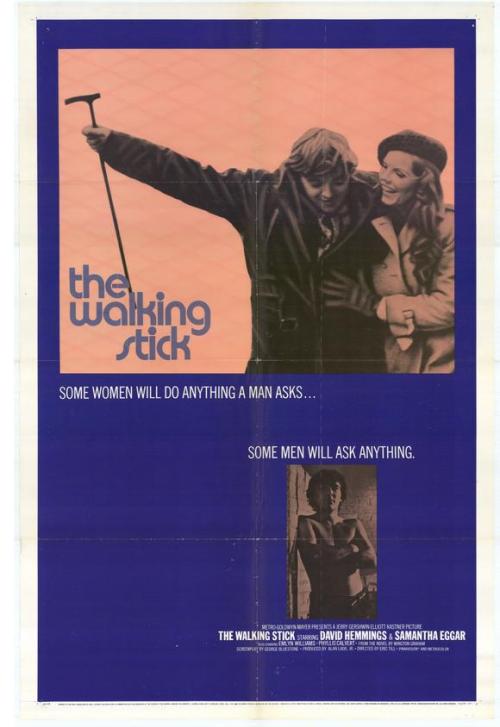
Deborah (Samantha Eggar) is a shy, lonely woman who suffered from polio as a young girl and now must rely on the use of a cane to get around. She still lives with her parents while suffering from claustrophobic tendencies due to being locked inside an iron lung as a child. She meets Leigh (David Hemmings) a struggling artist at a party and he asks her out. Initially she resists his advances, but eventually gives in. The two form a tight bound and even move in together, but her fairytale romance is short-lived once she realizes that she’s been pegged as a pawn and simply used by his gang for her inside knowledge of the auction house where she works to pull off a daring robbery.

The film, which is based on the novel by Winston Graham, is quite leisurely paced. To a degree I didn’t find this to be a problem as it still managed to hold my interest, but too much time is spent on the romance making it seem more like a drama.

The robbery and its planning doesn’t come into play until well over an hour in and seems like a whole different movie altogether. Certain hints should’ve been brought in from the beginning to make it clear to the viewer that despite all the romance this was still meant to be a thriller, which is just not obvious at all. The crime scenes do at least provide some action and quick edits, which normally would’ve made it exciting, but because it takes so long to get there it comes off as off-putting instead. The intended tension doesn’t work because we are less concerned if Leigh and his gang are going to get away with it and more upset at seeing Deborah being taken advantage of.

Eggar gives an outstanding performance and seeing this normally effervescent woman wearing a perpetual frown seemed almost startling, but she conveys her characters inner unhappiness quite well and mostly through her facial expressions alone. However, her character is also quite cold and acerbic. To a degree this is understandable as it’s clearly just a defense, but the viewer never sees enough of her softer side and therefore doesn’t emotional bond with her as they should.

Hemming’s more outgoing personality creates a nice contrast to Eggar’s introverted one, but his character is pretty benign. Dudley Sutton who plays his cohort would’ve made a better boyfriend as he is good at showing a dark side and would’ve kept the viewer more on edge.

The ending doesn’t provide any type of clear wrap-up and leaves a lot of loose ends hanging, which is a pity. The production values are decent and I liked the flashback scenes showing Debora being put into an iron lung, which is the film’s best cinematic moments, but the pace needed to be tighter with more emphasis placed on the story’s twists and turns.

My Rating: 4 out of 10

Released: April 15, 1970

Runtime: 1Hour 41Minutes

Rated GP

Director: Eric Till

Studio: MGM

Available: DVD-R (Warner Archive), Amazon Instant Video

Love with the Proper Stranger (1963)

love-with-3

By Richard Winters

My Rating: 6 out of 10

4-Word Review: He gets her pregnant.

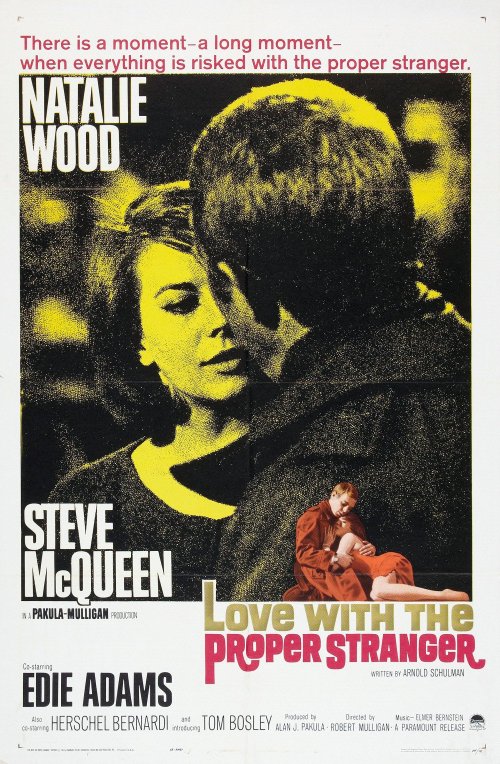
Rocky (Steve McQueen) is a bachelor enjoying his single lifestyle by having one-night-stands with a wide assortment of women while happily avoiding the responsibilities of marriage. Then he meets up with Angie (Natalie Wood) a woman he had sex with months earlier and who now finds herself pregnant. She comes to Rocky hoping that he can help her find a doctor to perform an abortion. Rocky at first barely even remembers her, but then agrees to help her and even offers to pay for half of the costs. Yet as things progress Rocky finds himself beginning to care for Angie and even considers the one thing he thought he’d never do, which is marriage.

The script, by the prolific Arnold Schulman, is certainly edgy for its time and seemed almost groundbreaking and I was surprised it didn’t elicit more controversy especially since it was released to theaters on Christmas day.  The film works for the most part though I was frustrated that we are never shown Rocky’s and Angie’s first meeting. It gets talked about slightly, but there really needed to be a flashback showing how it all came about especially since Angie didn’t seem like the type of woman who would go to bed with a guy so quickly.

Wood gives an outstanding performance and manages to dominate the film even when she’s with McQueen, which was no easy feat. I did find it hard to believe that such a beautiful woman would be stuck having to accept a pudgy, klutzy loser like Anthony (played by Tom Bosley in his film debut) as her only possible suitor. She had told no one else about her pregnancy, so I would think many eligible bachelors would be beating down her door to get at her. The fact that Rocky doesn’t immediately remember her is also absurd. Sure, he may have slept with a lot of women, but nobody no matter how many other sex partners they’ve had would ever forget a gorgeous face like Wood’s.

McQueen’s role almost seems comical especially with his character’s hot-and-cold dealings with Angie and his inability to ever communicate with her effectively. My one caveat was his constant wheezing after climbing several flights of stairs. I realize this was to represent his need to give up cigarettes and in turn the other ‘bad habits’ of his lifestyle, but it got annoying and even distracting to hear.

As a drama/romance it’s okay, but would’ve been better had it been filmed in color. The segments are too drawn out and quite talky, which made me believe that this was originally a stage play, but to my shock it wasn’t even though it probably would’ve fared better there. I was also disappointed at the lack of a suitable wrap-up for Bosley’s character who came off like a major schmuck at first, but then he grows on you as the film progresses.

My Rating: 6 out of 10

Released: December 25, 1963

Runtime: 1Hour 42Minutes

Not Rated

Director: Robert Mulligan

Studio: Paramount

Available: VHS, DVD (Region 0), Amazon Instant Video, YouTube

The Cars That Ate Paris (1974)

cars-ate-paris-1

By Richard Winters

My Rating: 7 out of 10

4-Word Review: Lots of car accidents.

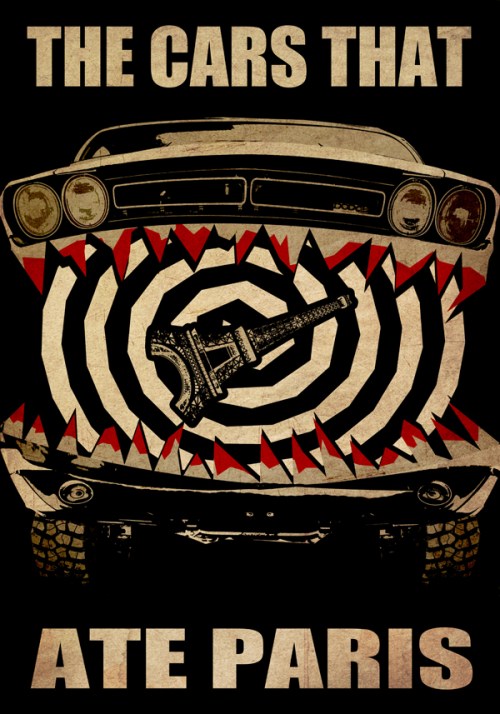
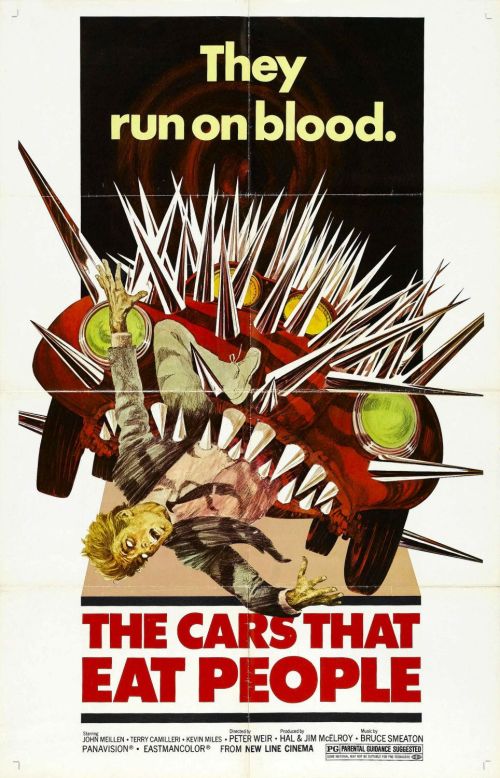
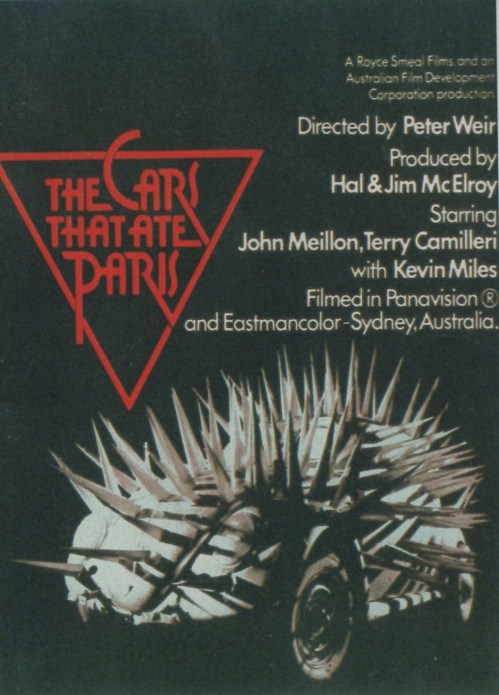
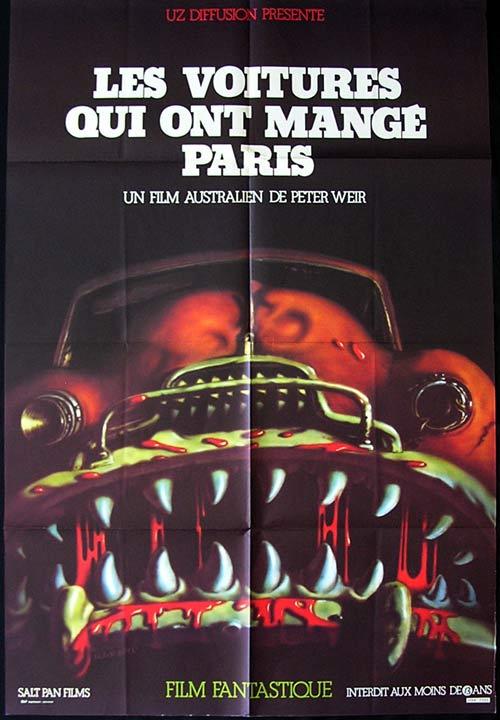
The residents of a poor Australian town known as Paris come up with a scheme to cause car accidents to those traveling through it which will allow them to salvage what’s left of the vehicle and resell it for goods or cash.  Things go smoothly for a while until Arthur (Terry Camilleri) and his brother George (Rick Scully) become victims to one these ‘accidents’. George dies, but Arthur survives and is too traumatized to get back into a car again or leave town. He takes up residence with the town’s mayor (John Meillon) who gets him a job as a parking enforcer, which causes problems when Arthur gives a citation to some rowdy young people who do not take kindly to this and seek a violent revenge.

This decidedly odd story marks director Peter Weir’s feature film debut and it’s hard to know what genre to place it into. Originally it was intended as a wacky comedy, but then dark elements were added in. Eventually it was distributed as a horror film, but it didn’t do well at the box office, so it was reissued as an art film and only fared slightly better. The film has managed to obtain a cult following and the story is original with funny moments, but the unexpectedly gory ending could leave some viewers cold as it did when it was first screened at the Cannes Film Festival back in ‘74.

cars-ate-paris-2

One of the best things about the movie is the casting of Camilleri in the lead. He’s very soft-spoken and has an almost transparent demeanor, which helps heighten the interest because you become intrigued at seeing how this schmuck is going to potentially take down this small town criminal organization, which would’ve been fun, but unfortunately the plot doesn’t get played-out in quite that way.

Meillon is solid as the mayor and I enjoyed seeing how his character puts up this calm façade while simultaneously trying to bottle up all the tension that he has inside. Bruce Spence is effective as the town crazy as well as Chris Haywood playing an average-joe who seems quite benign and good-natured at the beginning only to become increasingly more menacing as the film progresses.

The entire movie was shot on-location in Sofala, New South Wales which has a population of only 208 people and quite possibly the narrowest main street of any town in the world. Weir captures its rundown look well and helps convey how poor and isolated the residents were, which allows the viewer to understand why the people resorted to such desperate measures. However, I didn’t like how these same people immediately flee the town the minute the young adults get out-of-control. People who’ve lived somewhere all their lives become emotionally bonded to it and will not move the moment something goes wrong. They would try to control the threat if they could and only up-and-leave months or years later if they had to. Besides where would these people go as they had no money and limited job skills.

If you’re into offbeat comedy then this one may do for a slow evening although those looking for something in the horror vein will be disappointed.

cars-ate-paris-3

cars-ate-paris-4

My Rating: 7 out of 10

Released: October 10, 1974

Runtime: 1Hour 31Minutes

Rated PG

Director: Peter Weir

Studio: The Australian Film Corporation

Available: DVD

Going Home (1971)

going-home

By Richard Winters

My Rating: 6 out of 10

4-Word Review: Father and son reunite.

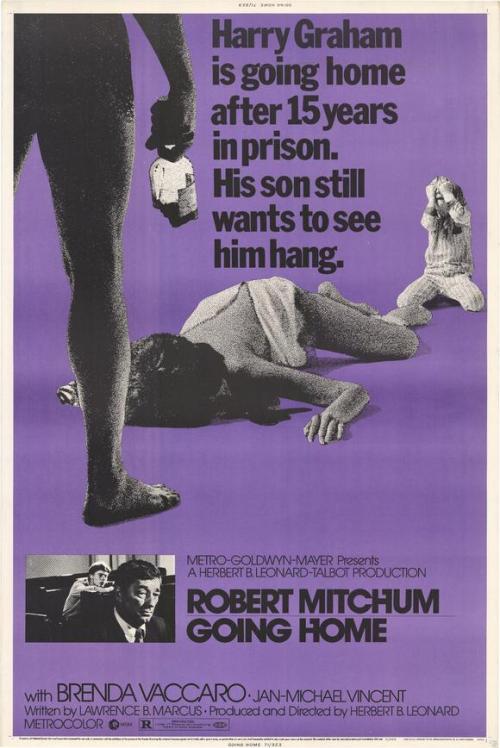
One night during a drunken rage Harry Graham (Robert Mitchum) kills his wife (Sally Kirkland), which gets witnessed by their 7-year-old son Jimmy (Jan-Michael Vincent). 13 years later Harry is paroled and Jimmy uses this opportunity to try and reconcile with his father and find out why he did it, but Harry has moved on. He has a new job and a girlfriend named Jenny (Brenda Vaccaro) and when Jimmy appears it creates an awkward tension that gets progressively worse.

One of the biggest problems with this film is that the characters and their motivations are not fleshed out enough and their actions make little sense. I’ve watched a lot of true-life crime shows and have found that in cases where this situation has occurred in real-life that the adult child will usually cease communication with their father and completely disown them, so it seemed strange why Jimmy would want to restart their relationship. If he was curious to know why Harry did it then he could’ve simply written him a letter with that question, which he never bothered to do while the man was incarcerated.

The film also fails to show what happened to Jimmy during the time Harry was in prison. He is shown arriving at an orphanage, but nothing about what does when he gets there or being put into a foster home and getting adoptive parents, or moving in with relatives, which is what usually occurs. He somehow has no friends or job and if this is because of his childhood trauma then it should get explained or more strongly implied, but it isn’t and it leaves a big void in the story.

Harry’s actions are equally confusing. The murder gets played out at the beginning and we see the stabbed mother crawl down the stairs and beg Jimmy for help and then Harry comes down and looks at the dead body before turning towards the boy with a guilty expression, but if  he feels so bad about what he has just done and the traumatic impact he’s put his son through then he should’ve thought of that beforehand. I would’ve expected to see a completely different set of emotions in the man’s eyes like anger, rage, insanity or even fear because now he knows he’ll will be going to prison, but guilt wouldn’t play into it, at least not that quickly if ever.

Mitchum’s character is straddled with conveying only one emotion throughout, which is guilt. We never tap into the other side of the man that propelled him to commit such a heinous act and his explanation, which is that he ‘just got drunk’ is insufficient. The character also pops up too conveniently at times. One moment is when Jimmy goes back to their former home, which has now been turned into a whorehouse and he hides in the basement. Harry comes looking for him and despite the fact that there are many people there and it’s a large place he immediately goes to the cellar, but how would he have known to look there? Another segment has him magically coming to Jimmy’s rescue when his son is accosted by a group of sailors underneath a boardwalk even though he was bowling in another building and would have no way of knowing what was occurring outside.

The film has solid production values and director Herbert B. Leonard shows flair with the location shooting, which was done in both New Jersey and Pennsylvania. There is also a good scene inside a chicken coop  and actor Josh Mostel (Zero’s son) has an interesting film debut playing Harry’s young, flippant parole officer who delights in demeaning his client as much as possible, but the story leaves open too many unanswered questions and isn’t impactful or relevant.

My Rating: 6 out of 10

Released: December 1, 1971

Runtime: 1Hour 37Minutes

Rated GP

Director: Herbert B. Leonard

Studio: MGM

Available: DVD-R (Warner Archive)

Persona (1966)

persona-1

By Richard Winters

My Rating: 9 out of 10

4-Word Review: Two women become one.

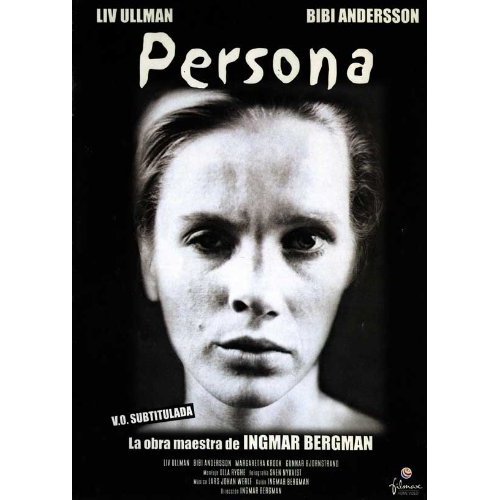
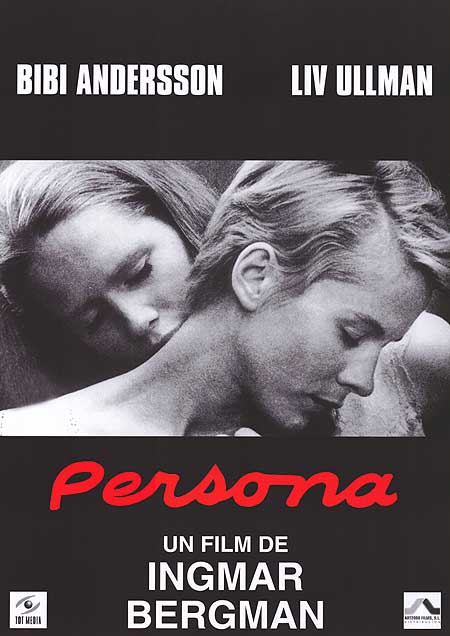
Elisabet (Liv Ullmann) is a famous stage actress who one day decides to quit speaking. Alma (Bibi Andersson) is a nurse at a mental hospital in charge of trying to get Elisabet to talk again, but her efforts prove futile, so the hospital administrator (Margaretha Krook) offers the two her island cottage hoping the quiet, secluded locale will prove more beneficial. As the days wear on Alma begins seeing Elisabet less as a patient and more like a therapist and divulges secrets about her life to her, which causes Alma to feel quite close to Elisabet and treat her almost like a confidant. Then she reads a letter that Elisabet has written where she describes Alma in a condescending way, which creates tension between the two that eventually spills over into a long ongoing confrontation.

This film was considered for many years to be one of the most bizarre and shocking movies ever made and this is mainly due to the strange and eclectic mix of images that gets shown at the beginning. Visions of a lamb being slaughtered, a nail getting pounded into a hand and a close-up of an erect penis flash before the screen while later there is even stock footage of a man setting himself on fire and moments where the film itself gets a hole burned through it.

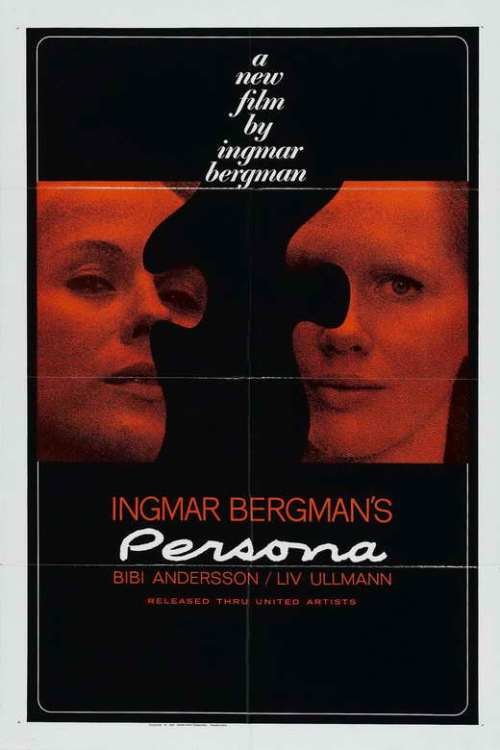
For me the more subtle moments is what I enjoyed with my favorite scene being the one that occurs in the early morning hours when Elisabet quietly walks into Alma’s room as she sleeps while we hear the distant sound of a boat horn blowing in the background. The shot where the left side of Elisabet’s face gets superimposed next to the right side of Alma’s is also quite amazing.

persona-2

There have been many interpretations through the years over what this film’s ultimate message is. For me it shows how we are more alike than different and how what bonds two people to each may not always be readily apparent and might be something that comes out much later after initially seeming like they are two opposites. I also think it is a great examination at how fragile and interchangeable societal roles can be where someone can seem like the stronger one at one point only to later be shown as the weaker. Alma’s emotional meltdown is the most striking especially after seeming so confident and stable at first while Elisabet’s silence is initially perceived as a rejection to the ugly world around her, but later gets exposed as being more of a rejection of herself and the selfish nature that she harbors.

Andersson, who ironically and sadly can no longer speak in real-life after suffering a debilitating stroke in 2009, gives an excellent performance and I enjoyed how her character exudes ugly emotions like jealousy, envy and even anger and yet still manages to remain likable and relatable. Ullmann has the challenge of keeping her character interesting despite saying very little, but with her ever expressive eyes she does.

The scenic locale of the Faro island where this was filmed is nice, but a patient and doctor sharing someone else’s seaside resort and treating it more like a retreat than a therapy session seemed dubious and almost enough to make anyone fake mental illness if it could get them time off to go there. There is also no explanation to Alma’s fiancée and his feelings about her staying with Elisabet and not him. The sudden arrival of Elisabet’s husband is equally confusing. I liked the scene due to the symbolism that it brings out, but I didn’t understand how he was able to find them at such a remote location especially since he appeared to be blind. The segment seems almost like a dream, which is how I had initially interpreted it when I first saw this film year’s earlier, but it’s never made clear.

On the whole though these issues prove minor and in many ways help make the film even more interesting. My only real complaint is when Alma speaks to Elisabet in regards to her child and the camera stays glued onto Elisabet’s face, which captures her increasingly pained expressions, which is great, but then the scene gets played over while showing Alma’s face as she says the exact same things again, which was too repetitious in a film that is otherwise quite brilliant and a landmark in many ways.

persona-3

My Rating: 9 out of 10

Released: October 18, 1966

Runtime: 1Hour 23Minutes

Not Rated

Director: Ingmar Bergman

Studio: United Artists

Available: DVD, Blu-ray (Criterion Collection), Amazon Instant Video

WarGames (1983)

wargames-1

By Richard Winters

My Rating: 7 out of 10

4-Word Review: Teen hacks government computer.

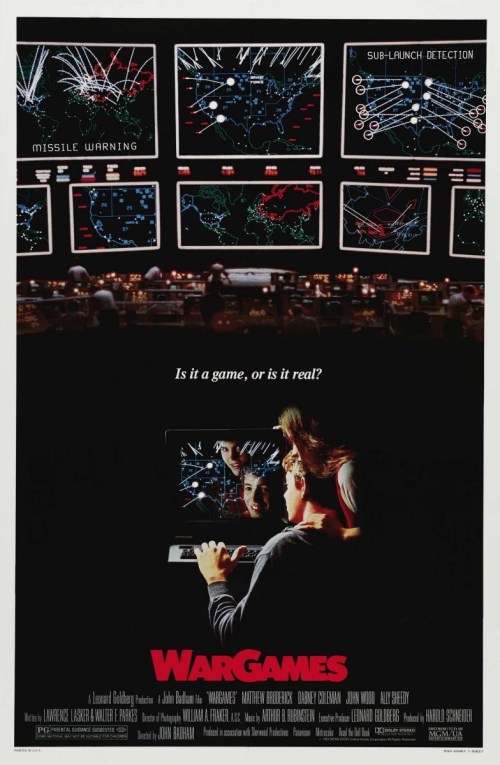
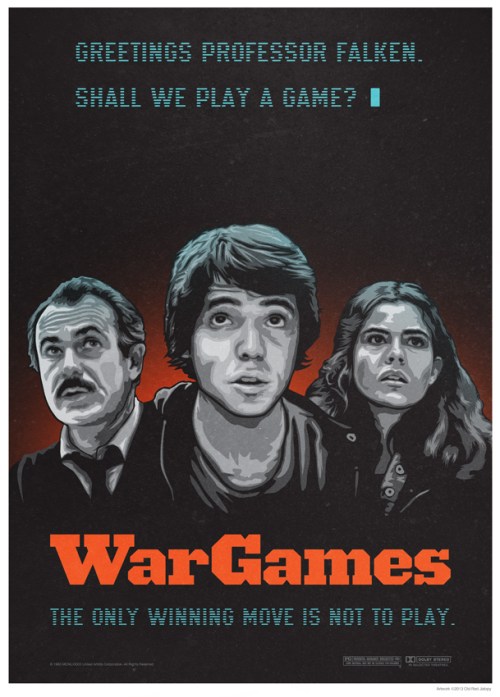
David (Matthew Broderick) is a teenager who’s a whiz with computers and even able to dial up his school’s machine and change his grades without anyone noticing. One day he unknowingly hacks into a military computer where he and his girlfriend Jennifer (Ally Sheedy) begin to play a game of global nuclear war while unaware that everyone at NORAD the military base is seeing the game as it’s being played  and thinking that it is the real thing.

The film does a great job of showing the nuclear missiles up close while still in their silos and ready to fire, which gives the viewer a frightening awareness of just how real the potential is. The NORAD command center, which is quite impressive, was built specifically for the film at a cost of one million and is apparently even more elaborate than the real one.

David’s hacking talents do seem a bit farfetched, but if you’re able to suspend your disbelief a little then it’s a pretty cool and suspenseful flick. Some of my favorite scenes in this area are when he is able to escape from an electronically locked room as well as the way he gets a dial tone from a receiver at a pay phone despite not having any money.

Broderick’s character is in many ways identical to the one that he played in Ferris Bueller’s Day Off at least with his technological smarts, but here he thankfully doesn’t have that annoying smugness as his initial cockiness realistically wilts quickly away the minute he realizes that he’s gotten in-over-his-head. I did however find it hard to believe that such a bright kid could get an ‘F’ on his biology exam. His character is described as being an ‘underachiever’, which is fine, but there’s a big difference between being that and being a complete flunky.

Ally Sheedy is fantastic and in many ways outshines Broderick, but it’s hard to figure that she would suddenly jump into her car, without being asked, and drive all the way from Seattle to Colorado on a whim after she gets a strange call from David. The fact that her character states that it took her only 3 hours to get there is a complete crock as according to Mapquest the distance between Seattle and Grand Junction is 1,122 miles with an estimated drive time of 18 hours and 9 minutes.

Dabney Coleman is good in support as McKittrick and nobody can exude nervous energy quite like he does. Yet I was disappointed that he isn’t seen more. As much as I love Barry Corbin I felt his general character was clichéd and boring and I wished they had simply combined that character with McKittrick’s and then given the part solely to Coleman to play.

There were also a few scenes that I felt should’ve been extended especially the opening scene where we see two members of the missile combat crew ordered to turn the key to launch a missile strike. One of them, played by John Spencer, panics and becomes reluctant to turn the key while the other one holds a gun and insists that he must. It turns out this was only a surprise drill, but it cuts away before we see what happens and we only learn about this later while it would’ve been more satisfying to have seen the complete scenario played out visually.

I would’ve also liked to have seen when the government agents storm David’s house and search his bedroom simply to witness his parent’s (William Bogert, Susan Davis) reactions. The film spends time introducing them and they are rather amusing, so it would’ve been interesting to get their take on the situation as it unfolded.

I also felt the way David and Jennifer find Falken (John Wood), the man who invented the military computer that David plays the nuclear game with, was too easy. I realize David gets Falken’s address from the computer, but it’s still a remote island that David has never been to, so how he is able to come upon the home so quickly without a map is questionable. I also thought Falken was too congenial with them as this was a scientist in hiding with top secret military information and no way of knowing if these two were spies or not, which makes inviting them into his house and opening up to them the way he does seem quite reckless.

The ending though is excellent and I liked how these kids didn’t have that teen ‘attitude’ nor is there any of that generation gap crap either. Instead everyone, young and old, works together to solve a mutual problem, which is what I liked about this movie the most.

wargames-4

My Rating: 7 out of 10

Released: June 3, 1983

Runtime: 1Hour 54Minutes

Rated PG

Director: John Badham

Studio: MGM/UA

Available: DVD, Blu-ray, Amazon Instant Video, YouTube