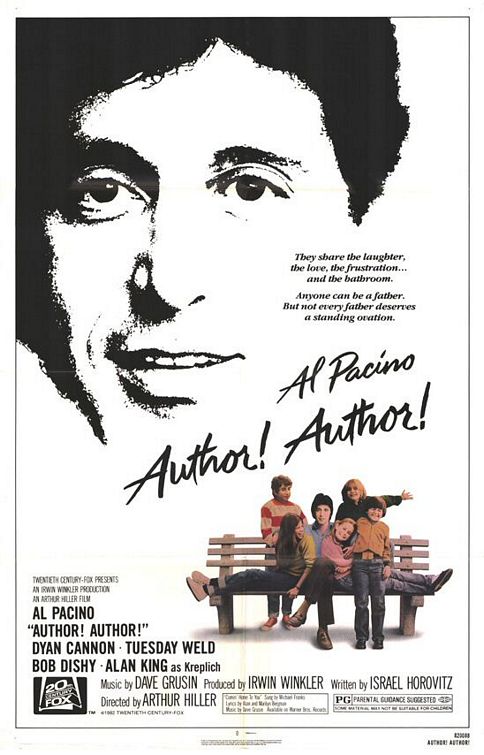
Author! Author! (1982)

By Richard Winters

My Rating: 4 out of 10

4-Word Review: Playwright has family issues.

Ivan (Al Pacino) is a playwright struggling to get his next creation ‘English with Tears’ financed and produced. While he has managed to attain the necessary funding he still has a second act that everyone feels ‘needs work’, but before he can tackle that his wife Gloria (Tuesday Weld) leaves him for another man (Frederic Kimball). Now he must contend with raising the five kids alone with four of them being hers from a previous relationship.

The screenplay was written by Israel Horovitz and loosely based on his own experiences as a single parent. Horovitz has written many plays, over 70 of them, several have been considered at least in their day as groundbreaking, so this thing seems incredibly contrived by comparison. The scenes dealing with Ivan’s struggles in regards to his play and the politics that ensue in order to get it made are the most interesting aspects of the movie and the story should’ve solely focused on this angle while the home-life stuff proves sterile and better suited for a sitcom.

The kids seem too connected to the adult world around them. Children can certainly be astute at times, but they still dwell in their own little bubbles and this film shows no awareness of that and instead has them saying lines that more likely would’ve been uttered by an adult. Benjamin H. Carlin has a few cute moments as the young Geraldo, but Ari Meyers, who would later go on to star in the TV-show ‘Kate and Allie’ gives the best performance when she breaks down into tears as she describes the hardships of being booted around from one household to the next.

It’s nice seeing Pacino doing light comedy, which is a real change of pace for him, but he’s too intense and does not play off of Weld, who is more emotionally restrained, well at all. The scene where he tries to physically drag her into a taxi cab isn’t funny, but scary instead and most likely would’ve had those who were standing around witnessing it trying to intervene, or calling the cops.

Dyan Cannon is not effective as the kooky actress who stars in his play and then later moves in with him. Had her character’s eccentricities been played up more she might’ve at least been amusing, but the script doesn’t go far enough with this and having her call him up out-of-the-blue and ask to go to bed with him seemed too outrageously forward. There was some dramatic potential when, after she moves in with him and his kids, she is then asked to move out when Weld’s character comes back into the picture. This could’ve opened the door to a lot of dramatic fireworks and given the film a real lift, but instead she just leaves quietly and is essentially forgotten, which then begs the question why even bother introducing her character at all?

The scenes where Ivan frets about his play and the audience reactions to it are the best parts of the film because it shows the inner anxieties of just about any playwright or screenwriter out there, which is why this should’ve been the central point of the movie as it is the only thing that helps the story stand out. By comparison the family life stuff is generic and filled with too much manufactured cutesiness. It also wastes the talents of Alan King who is mildly amusing, at least at the beginning, as the play’s producer as well as the legendary comedy team of Bob Elliot and Ray Goulding who play the part of the play’s financiers.

The film’s title song ‘Coming Home to You’, which plays over the opening credits as well as the closing ones is so overly sugary that it is enough to make you want to turn the movie off before it’s even begun. It got nominated for a Razzie award for worst original song and it should’ve won as there could not be anything that would be worse, but what is even more amusing is that no one gets credited for singing it, which should’ve been a signal to director Arthur Hiller not to feature it in the film because if the song’s own singer is embarrassed by it then who else would like it.

My Rating: 4 out of 10

Released: June 18, 1982

Runtime: 1Hour 50Minutes

Rated PG

Director: Arthur Hiller

Studio: 20th Century Fox

Available: DVD
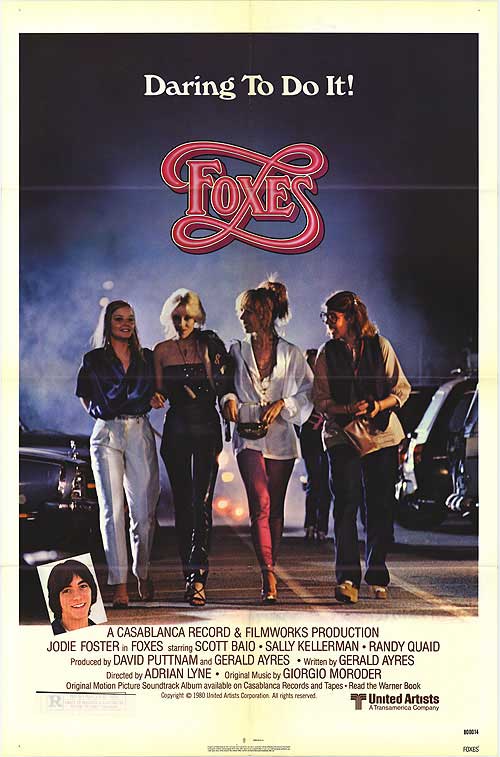
Foxes (1980)

By Richard Winters

My Rating: 4 out of 10

4-Word Review: Growing up too fast.

Four teenagers living in the San Fernando Valley face life in the fast lane. Madge (Marilyn Kagan) is the nerd who’s having a fling with a 30-year-old man (Randy Quaid). Deidre (Kandice Stroh) shifts from boyfriend to boyfriend while Annie (Cherrie Currie) is tormented by an abusive father and runs away from home only to get caught up in the drug scene. Jeanie (Jodie Foster) is the mature one of the bunch who tries to keep them from getting into too much trouble as well as getting them out of a jam when needed, but she has struggles of her own particularly dealing with her mother (Sally Kellerman) who brings home men who are virtual strangers to spend the night with and seems as lost and confused as Jeanie’s teen friends.

This marked Adrian Lyne’s feature film debut and from a purely cinematic perspective it’s intriguing. I liked the cinema vertite feel and in many ways this is an early forerunner to Larry Clarke’s groundbreaking Kids that came out 15 years later as the camera follows the teens around on their excursions without having any connected storyline nor does it try to make any moral judgement on what occurs. Instead it plays more like docudrama showing how things are without overdoing the shock value, but what I liked best was the fact that it portrays the adults as being just as screwed up and in certain ways even more lost while society at large is captured as being equally jaded to the point that the teens are simply reflecting the behaviors of the environment around them.

Probably the most surprising aspect is the part dealing with Madge, who is still in high school, having an ongoing relationship with a 30-year-old man, which the film treats as being no big deal. It’s not completely clear if Madge is 17 or 18, but many of today’s viewers will find the casual way the film approaches this topic, which includes an eventual wedding between the two that is happily attended by her friends, as being  ‘creepy’ and most likely a taboo storyline for any film made today.

The irony is that Madge ends up causing the most destruction in the relationship as Quaid’s character unwisely goes away on a business trip and allows her complete use of his place where she then decides to hold a party that gets expectedly out-of-control. It even includes a graphic fight breaking out that is portrayed quite brutally including having a girl hit and knocked down by another guy. This scene also features Laura Dern, in her first credited film role and wearing braces and glasses, as an awkward teen that crashes the place.

The casting of Foster and Scott Baio as her guy friend is interesting as the two had starred in quirky gangster comedy Bugsy Malone just 4 years earlier and the scene where the two have an ongoing conversation while walking around in a large, open junkyard is one of the best parts of the movie. Baio is initially fun as this geeky teen with limited social skills, but later on becomes this mini-hero on a skateboard that gets too cute and Hollywood-like. Foster on the other hand is solid and it’s interesting seeing her playing a more emotionally vulnerable character and even at one point breaking down and crying.

The film manages to have a few interesting scenes here and there, but it takes too long to build any momentum and it’s never as compelling as it would like to be. There are also a few too many moments where it defaults to the contrived clichés, which hurts its efforts at gritty realism.

My Rating: 4 out of 10

Released: February 29, 1980

Runtime: 1Hour 46Minutes

Rated R

Director: Adrian Lyne

Studio: United Artists

Available: DVD, Blu-ray

The Driver (1978)

By Richard Winters

My Rating: 8 out of 10

4-Word Review: A professional getaway driver.

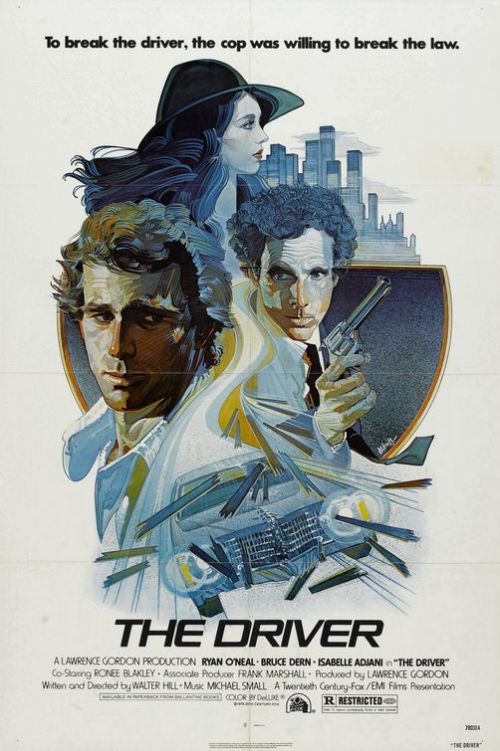
Ryan O’Neal plays a man who makes a living as a getaway driver for crooks leaving the scene of a crime. His driving skills are superior and in the criminal underworld his services are in high demand. Bruce Dern plays a police detective obsessed with catching this elusive driver. He makes a deal with a couple of bad guys (Joseph Walsh, Rudy Ramos) to hire this driver for their next robbery and then set him up for a police trap. The Driver is initially reluctant to work with the two, but eventually joins them only to ultimately look for help from a beautiful French woman known as the Player (Isabelle Adjani) to get him out of his jam.

I’ve never been much of an O’Neal fan, but here his lack of acting depth makes the movie more intriguing. The part was originally intended for Steve McQueen who would’ve given the role the stereotypically gritty treatment, but O’Neal has more of a boyish male model demeanor which makes you question whether he is tough enough, or brazen enough to handle the driving demands, so seeing him flourish when you’re not quite expecting it gives the character an interesting edge. I also liked the fact that at times even he conveys nervous facial expressions as he takes the vehicle through dangerous turns, which helps show even the ‘cool guys’ are human.

Dern easily steals the picture as he continues to find entertaining ways to give unique and memorable touches to all the characters that he plays. The dialogue that his character utters conforms yet again to his patented delivery. For instance he accuses his partner (Matt Clark) of possibly being a ‘fruitter’. In the past men of the gay persuasion were sometimes called ‘fruits’, but never a ‘fruitter’ which is a word he totally makes-up and would be considered inane and silly if said by anyone else, but when said with Dern’s patented delivery it makes the character seem even more unhinged and threatening instead. In fact Dern’s conversations with Clark are some of the movie’s best moments.

Although Adjani’s screen time is limited and I still enjoyed her presence and the fact that she doesn’t show any of the typical female vulnerability, but instead seems more stoic than any of the men makes her stand out from other female characters of that era. It’s also fun seeing her facial expression turned to an almost catatonic state during the film’s high octane final chase sequence.  Ronee Blakely doesn’t fare quite as well as she says her lines in too much of a monotone fashion though the ironic way that her character meets her demise does deserves a few points.

The chases are exciting particularly the opening one, which is done at night and the one done inside a car garage in which O’Neal intentionally destroys the car that he is driving in an attempt to teach the two other occupants that he is with a lesson. The cat-and-mouse scenario inside an abandoned warehouse that makes up the bulk of the film’s final chase is slick as well, but I felt there needed to be at least one more chase added as the film gets talky in-between and away from the action, which is what people that come to these type of films genres expect especially with the title that it has.

Writer/director Walter Hill shows a keen eye for detail and manages to capture everything, even an abandoned parking garage with a stylish allure. The script is smart and sophisticated with the character’s expressing themselves by using only the most minimum of words possible. The plot has a unique quality, but still manages to stay believable and why this thing failed at the box office and was chastised by the critics at the time is hard to understand, but it’s gained a strong cult following since and deserves more attention for being years ahead-of-its-time.

My Rating: 8 out of 10

Released: July 28, 1978

Runtime: 1Hour 31Minutes

Rated R

Director: Walter Hill

Studio: 20th Century Fox

Available: DVD, Blu-ray (Region B/2)

Amateur Night at the Dixie Bar and Grill (1979)

By Richard Winters

My Rating: 6 out of 10

4-Word Review: Five minutes of fame.

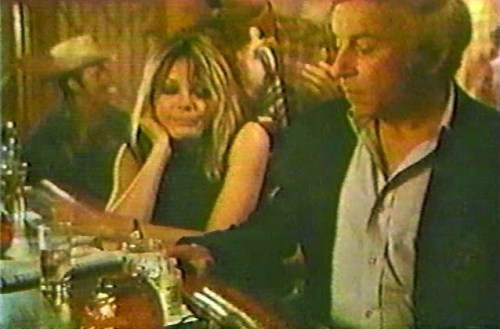
A bar on the outskirts of a nameless small town becomes the social setting for a group of everyday people who flock to it one night in hopes of winning an amateur act contest. Every one of the contestants is fighting some inner demon or insecurity and critiqued by a judge (Henry Gibson) that is being bribed by different parties to choose their candidate over the others. There’s also a dangerous serial killer lurking about known as the Disco Killer, who has shot up several other venues in the area and may be eyeing the Dixie bar as his next target.

This TV-movie, which was written and directed by Joel Schumacher, seems way too similar to Robert Altman’s Nashville to be considered original. Clearly that film was this movie’s inspiration and this one does not go far enough with the concept and would’ve been better had its runtime been extended and the characters more fleshed out. Certain actors, such as Don Johnson and Candy Clark, are underused and there’s not enough of an understanding of the town that the bar was in. Some shots of rundown buildings in an isolated area would’ve helped give the viewer a better feel for how bored these people were and why they would be motivated to go on stage and essentially make fools of themselves just for the lofty chance at somehow escaping their otherwise hopeless existence with a small shot at fame.

What I did like is that the entire story takes place in one setting. The only time the camera ventures outside of the cramped place is when it goes into its parking lot for brief periods, but otherwise this bar is the center of the universe for these characters, which for many small town people, especially before the advent of the internet, is what bars such as these represented.

The stage acts themselves were a bit disappointing and could’ve been played-up more as I was expecting something a little more along the lines of stuff seen on the old Gong Show or stupid human tricks from David Letterman. The scene where a big fight breaks out in a dressing room that is far more exciting than anything occurring on stage does allow for some irony and the part where actor Rick Hurst attempts to crack open a coconut by using nothing more than his bare teeth is engaging, but more acts in this vein was needed.

Having Tanya Tucker appear as this shy woman who lacks confidence despite possessing the talent and walks off the stage in humiliation at the start only to redeem herself later, is too manufactured. I much preferred Pat Ast as this homely, overweight woman who unexpectedly wows everyone with some rousing showstopping numbers that should’ve made her the winner instead. I also felt that the so-called prize, which was simply the privilege to appear on stage at that same bar for two straight weeks, was too skimpy. People have bigger dreams than that even in a dusty small town and want more of a reward like  a trip to Hollywood, New York or a contract with an agent in order for them to be excited enough to go through what they do.

There is also no payoff to the Disco Killer storyline. He gets discussed quite a bit and there are even TV news reports about him, but then he never appears, which feels like a letdown. I’m not saying there needed to be a bloody sequence where a killer shoots people dead, but maybe a scenario where the contestants, who are quite competitive with one another otherwise, manage to come together enough to subdue the bad guy, or some other lighthearted element that would’ve at least brought a conclusion to the subplot instead of just letting it hang.

Sheree North as an embittered alcoholic easily steals it and has some of the best lines. There is also a long tracking shot in which the camera starts out at the back of the bar and then slowly weaves its way up onto the stage that is great too. The film certainly has its share of moments and as a TV-Movie it’s impressive, but lacks finesse for the big screen.

My Rating: 6 out of 10

Released: January 8, 1979

Runtime: 1Hour 36Minutes

Director: Joel Schumacher

Studio: Universal

Available: None at this time.

The Entity (1983)

By Richard Winters

My Rating: 4 out of 10

4-Word Review: Invisible mass attacks mother.

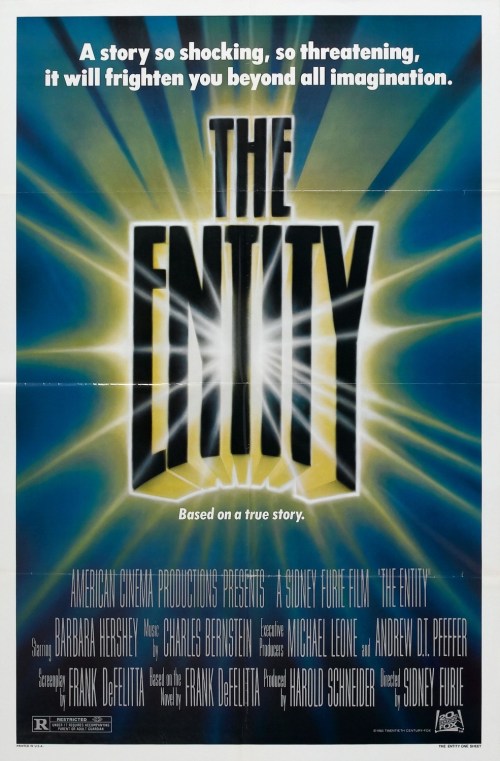
Carla Moran (Barbara Hershey) is a single mother living with her three children who finds herself attacked one night in her home by an invisible being who proceeds to viciously rape her. When she tells this to her psychiatrist (Ron Silver) he initially doesn’t believe her, so she employs the help of two parapsychologists (Raymond Singer, Richard Brestoff) who come to her home and record the paranormal activity. With the help of Dr. Cooley (Jacqueline Brookes) who heads their department, they build a life-sized replica of Carla’s home in a gymnasium complete with liquid helium, which they hope to use on the mysterious entity in order to trap it.

The ghostly attacks aren’t impressive and consist mainly of seeing close-ups of Hershey’s face being rammed against the wall, or bedsheets, flying glass, shaking furniture and a musical sound effect reminiscent of a hammer rhythmically pounding against a sheet of metal. The attack scenes quickly become redundant and the ghostly presence is never seen, which eventually makes them yawn inducing whenever they occur. There are also many long dramatic interludes between the attempted scares that try to put a psychological spin on the proceedings, but come off more like pop psychology instead.

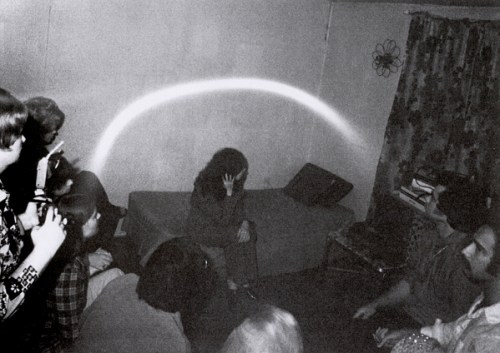
The whole thing is inspired by an actual incident which occurred on August 22, 1974, but incorrectly stated as happening in October, 1976 during the film’s denouncement. In the real-life case a woman by the name of Doris Bither (1942-1999) met two parapsychologists named Barry Taff and Kerry Gaynor while visiting a local library and told them of her repeated rapes inside her home by three ghosts who she considered to be of an Asian descent. She invited the men to her small Culver City, California home, which they found to be extremely cramped and dirty. During the event the men felt some unusual sensations and saw colorful orbs fly through the air, which was enough to inspire Frank De Felitta to write a novel about it, which later lead to this movie.

The film though would’ve worked better had the initial setting been Carla’s visit to her psychiatrist and then everything else played out in small segments as a flashback while she described her encounter. There was much speculation that these things were all just inside Bither’s head since she had suffered from substance abuse and a traumatic upbringing, but none of that gets touched upon in the movie. Instead we are left to believe that these strange occurrences are actually happening, but the film would’ve been more multi-dimensional had the viewer been allowed to question whether it was real, or simply an effect of mental illness.

Hershey gives a fine performance and shows what a great actress she is by playing a character that was completely opposite from the carefree/hippie-like ones that she played during her film appearances of the ‘70s. Silver though is annoying as the psychiatrist as his character unwisely gets too involved with his patient even though most other doctors in his position would be convinced that the woman was bat-shit crazy and keep themselves at an emotional distance from her. His attempts at trying to talk her out of going through with the experiment done at the gymnasium is irritating as it does nothing but hold up the story while failing to add an interesting dramatic tension.

The film’s freakiest aspect are the moments where Hershey’s bare breasts, in an attempt to show them being molested by the invisible hand of the ghost, start to ripple and show indentations seemingly on their own. How they were able to pull this off since this was well before visual computerized effects I’m not sure, but it is impressive and some may find it even strangely erotic.

On the whole though the film is frustrating as never explains why any of this occurs. The cause of the actual incident remains murky even though most would say that the woman was just looney, but since this film has already taken liberties with the real-life event why not at least throw in some sort of halfway plausible theory as nothing is worse than sitting through an overlong film that puts out many intriguing questions, but fails to supply them with any tangible answers.

(The Culver City, California home where the events that inspired this movie purportedly took place.)

(An actual photograph taken during the August 22, 1974 encounter.)

My Rating: 4 out of 10

Released: February 4, 1983

Runtime: 2Hours 5Minutes

Rated R

Director: Sidney J. Furie

Studio: American Cinema Productions

Available: DVD, Blu-ray

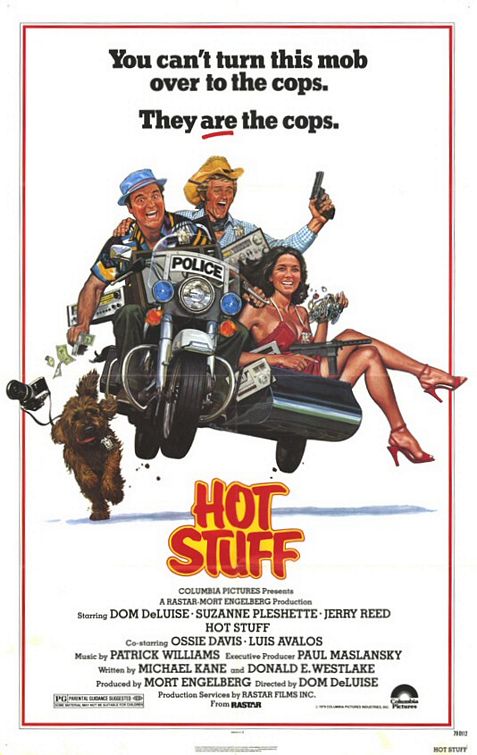
Hot Stuff (1979)

By Richard Winters

My Rating: 3 out of 10

4-Word Review: A phony pawn shop.

Tired of seeing the criminals they apprehend getting off on legal technicalities three cops (Dom DeLuise, Jerry Reed, Suzanne Pleshette) decide to turn-the-tables by opening up their own pawn shop, which will work as a front to reel in the crooks that try to resell stolen items. They use the magic of a hidden camera and video tape, which was a new thing at the time, to record the criminals as they bring in the stolen loot and therefore leave no question as to their guilt, but their plan gets off to a rocky start and only gets more convoluted as they proceed with it.

The film, which was directed by DeLuise, starts out fast and includes a car chase before the opening credits even occur, but once the premise is established it bogs down. Supposedly much of what occurs is based on real-life accounts taken from various police cases, but it lacks cohesion. There are gun battles and a wide array of criminal characters that pop up out of nowhere with the pawn shop setting being the only thing that loosely ties it together. Any element of reality gets lost during its farcical ending, which involves all the criminals attending a party that quickly turns into a long drawn slapstick-like battle that resembles something found in a cartoon and is really inane particularly the pathetic ‘fights’ that occur between the various characters where it is clear the actors are pulling their punches and not doing a very good job of disguising it.

The film does make an effort, at least at the beginning, to show the private side of a cop’s life and many of the frustrations that go along with doing the job, but by the end the characters seem too comically inept to be believable. I also found it amusing that DeLuise uses his own children to play the kids of his character even though with their blonde hair they looked more like they should be Reed’s offspring instead.

The one funny moment comes when DeLuise smokes some weed and goes off on a long laughing binge that is genuinely memorable, but otherwise this thing, which was shockingly co-written by the normally reliable Donald E. Westlake, suffers from an uneven focus that is more content at showing slapdash comedy than conveying something that is original, interesting or multi-dimensional.

My Rating: 3 out of 10

Released: August 10, 1979

Runtime: 1Hour 31Minutes

Rated PG

Director: Dom DeLuise

Studio: Columbia Pictures

Available: DVD

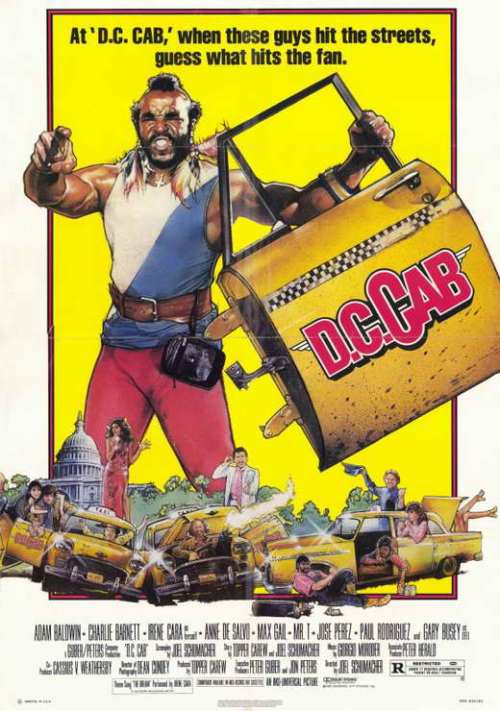
D.C. Cab (1983)

By Richard Winters

My Rating: 3 out of 10

4-Word Review: Loser cab drivers unite.

In a long ago and far away time before there was Uber or Lyft and taxi cabs where the only service there’s a story of Albert (Adam Baldwin) a young man who comes to Washington D.C. looking to start up his own cab company, but finds it to be more difficult than he thought. He gets a job with Harold (Max Gail) who runs a cab company that is sinking fast and could get shut down. Albert motivates the other drivers to work together to help save the company and in return they help save him when he gets kidnapped.

The idea of having a story set in the nation’s capital and not having it centered around politics is probably the only novel thing about this film that is otherwise crude and obnoxious with characters that are embarrassingly moronic. Writer/director Joel Schumacher seems to want to sink to the lowest common denominator with each and every shot and in that regard he succeeds brilliantly.

The film’s grimy look helps accentuate the low class farce especially the incredibly tattered shape of the cabs that Harold’s employees drive around in. I realize this was for comic effect, but it goes overboard. There is absolutely no way anyone, no matter how desperate would want to take a ride in one of those things that look like they are ready to fall apart at any second. The viewer can’t have much empathy for someone, even as likable as Harold is, who takes such little pride in his company’s product or dumb enough to expect people would consider his business with the vehicles looking the way they do when they’re clearly other better competitors to choose from. In reality the vehicles would’ve been considered an obvious road hazard and impounded by the cops almost immediately anyways.

The film tried to feed off of Mr. T’s then popularity by billing him as the star during its promotion, but his screen time is limited. Baldwin is the actual star even though he is incredibly dull and says or does nothing that is funny or amusing. His character arch where he goes from quiet, passive schmuck to inspiring speaker, as he tries to motivate the other drivers, is too extreme. Jim Carrey had auditioned for the role and wanted the part, but Schumacher turned him down because he felt he was too talented to be a part of an ensemble cast, which he probably was, but his presence could’ve helped a lot nonetheless.

Gail comes off best and should’ve been the lead, but since he was over 40 and the producers where aiming for a younger demographic he gets unfairly relegated to supporting status. His character’s relationship with his cold, bitchy wife, played by Anne De Salvo, offers a few chuckles particularly the scene where she locks herself in her house and wards off everyone else from entering by aiming a blow torch out of her bedroom window.

Seeing Bill Maher or Jill Schoelen in their film debuts might pique the interest of some, but the plot itself is too unfocused and goes off on too many different tangents with loosely connected story threads put in simply to pad the running time. The only really funny moment comes when a car crashes through a drive-in movie screen as it shows another movie dealing with a completely different car chase. I also liked the scene with Timothy Carey that comes after the credits are over, but otherwise this is one cab ride that’s not worth its fare.

My Rating: 3 out of 10

Released: December 16, 1983

Runtime: 1Hour 39Minutes

Rated R

Director: Joel Schumacher

Studio: Universal

Available: DVD, Amazon Video, YouTube

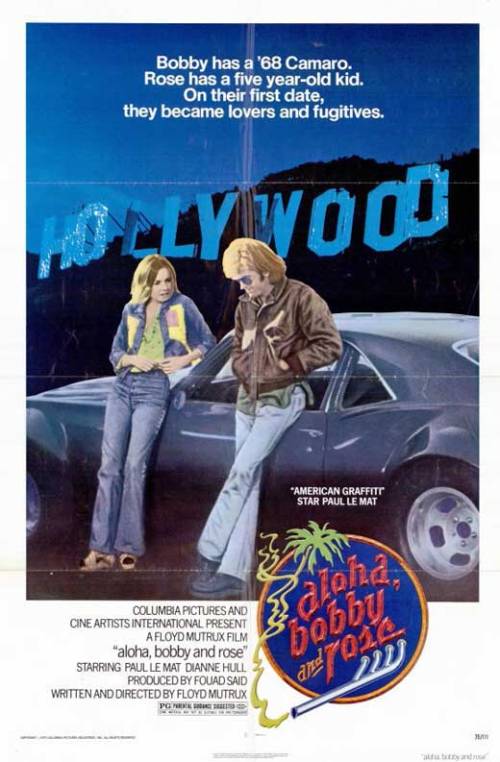
Aloha, Bobby and Rose (1975)

By Richard Winters

My Rating: 2 out of 10

4-Word Review: They dream about Hawaii.

Bobby (Paul Le Mat) enjoys racing cars and shooting pool, but resists being tied down with a steady job. Rose (Dianne Hull) is a young single woman trying to raise a small child on her own while still living with her mother (Martine Bartlett). By chance the two meet one day and instantly hit-it-off. They decide they want to run away together to the exotic locale of Hawaii, but lack the funds. Bobby tries to hold up a liquor store by using a fake gun, but the shop’s owner comes out of a back room and threatens to kill him, so Rose hits the man over his head with a bottle and the gun accidently discharges and kills the young clerk. Now the two must go on the run and evade the police who are after them.

Unfortunately the basic premise here is highly flawed making it hard if not impossible to get into it. For one thing there was no one else in the liquor store to ID the young couple, so the police would not necessarily be looking for them. Secondly the clerk was shot by the store owner, not by Bobby or Rose and the gun is clearly in the man’s hands when he falls to the ground. A simply residue test would prove that he was the one who fired the weapon and it wasn’t just planted on him afterwards. Since there was no one else in the store Bobby and Rose could simply say that the owner and clerk got into an argument and the owner threatened to kill the young man, so in an effort to save him Rose hit the owner with a bottle, but the gun went off anyways. There would be no else to refute this barring that the owner did indeed die and even if he had survived it would simply be his word against there’s and ultimately he would still be the one caught holding the gun, so in essence these kids seem to be running for no real reason.

There is another scene later on where the two crash the car they are driving and conveniently find another one sitting in a dark alleyway. The movie doesn’t even bother to show Bobby hotwiring it, which is how they usually steal cars in the movies, but later on we see him turning the ignition to the car in an effort to start the vehicle. This then signals that the keys were left in the ignition when they found it and the windows rolled down, but how many cars does one find out on the street, or anywhere for that matter, that are like that?

I did appreciate that the film shows in slow motion their heads hitting and cracking the windshield during the accident as this is what will occur especially when the occupants are not wearing their seatbelts. Yet later on they go into a washroom and wipe the blood away with a wet cloth and it’s all gone, but bleeding from the head most likely means that the skull was cracked and would require stitches, which means continual bleeding even if the dried blood gets erased.

The location is wrong as well. The setting is Los Angeles, but several characters speak with southern tinged accents and just about all of them convey small town sentiments. Very little footage is shown of the two actually out on the open road and the music that gets played is a scattershot mix of ‘70s tunes that runs the gamut of musical genres and never gives the film any unifying sound or mood.

The supporting cast helps a bit. I enjoyed seeing Robert Carradine looking like he was still in high school. Tim McIntire adds some verve as an outspoken Texan who has no qualms mixing-it-up with anyone that he comes into contact with and Bartlett is engaging as the flaky mother, but the story meanders too much and goes nowhere. There were many road movies that came out during the 70’s and many of them were well done, but this isn’t one of them.

My Rating: 2 out of 10

Released: April 29, 1975

Runtime: 1Hour 28Minutes

Rated PG

Director: Floyd Mutrux

Studio: Columbia Pictures

Available: DVD

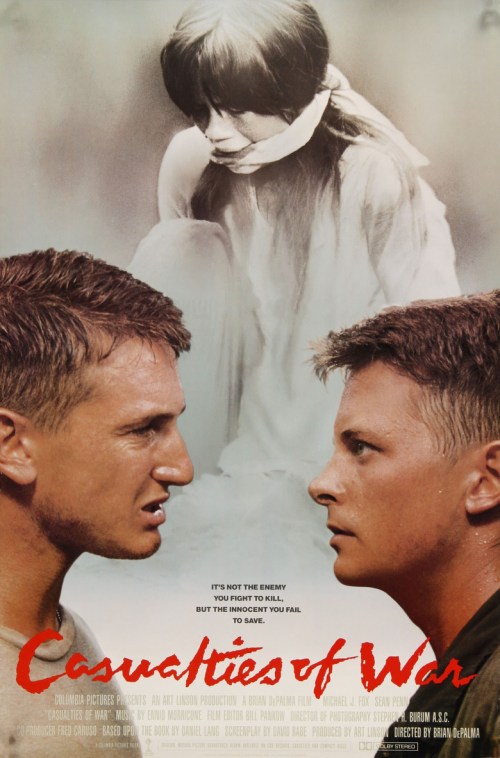
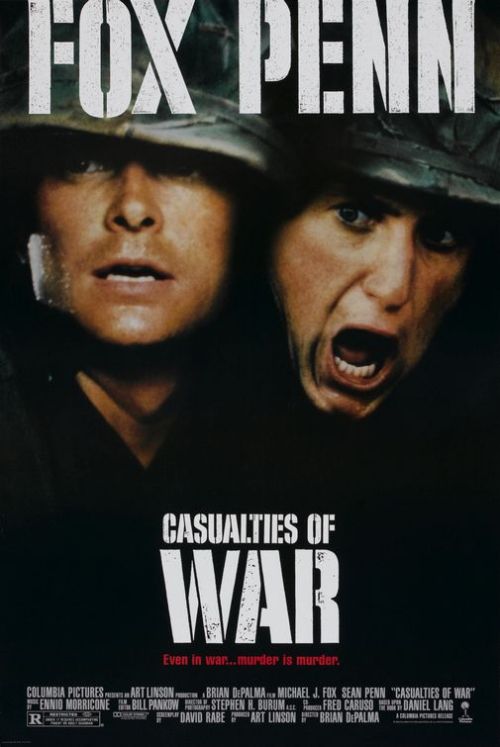
Casualties of War (1989)

By Richard Winters

My Rating: 4 out of 10

4-Word Review: He witnesses a rape.

Based on an actual incident that occurred on November 19, 1966 the story centers around five members of an American squadron during the Vietnam War where the pressures and ugliness of battle send their leader, Sergeant Tony Meserve (Sean Penn) over-the-edge. When his squad gets denied leave he decides to have his men kidnap a Vietnamese girl named Oanh (Thuy Thu Le) who is then raped by the four of them while one, Eriksson (Michael J. Fox) refuses.  The young woman is eventually killed and her lifeless body left in a field. When the men return to their base Eriksson tries to report the crime, but finds stiff resistance.

This same incident was used as the basis for another film called The Visitors, which came out 17 years earlier. That movie took a different approach as it hypothesized what would’ve happened once the men returned from doing prison time and came for a ‘visit’ to the man’s home who had turned them in. That film suffered from a lack of a budget, but still managed to have a little more tension and impact than this one. This version takes way too long to play itself out. The audience knows where it’s headed right from the start and thus makes it almost excruciating to have to sit through.

The film would’ve worked better had the story been told in a fragmented style. The horror of the situation gets lost by the plodding narrative that overplays the story’s shock element and seems to take an almost sick delight in dragging out the whole kidnap/rape sequence until it gets agonizing and even tedious.

The idea that Eriksson would mentally be going back through this whole situation while he dreams it during a nap on a bus isn’t believable. The story is supposedly told as a flashback, but people dream in a more surreal, nonlinear way that wouldn’t painstakingly go back through every detail that had occurred to them in real-life. Also, people tend to repress unpleasant experiences that they’ve had. At times certain bits and pieces of it may come to the surface, but most of it would be locked away in the person’s subconscious, which is why the fragmented approach would’ve made more sense because we would’ve seen things in the exact same way that they were being played out in Eriksson’s head.

Fox is miscast and looks more like Marty McFly stuck in a time warp and involved in a situation he has no business being in. His character’s upbeat disposition makes him seem like he’s in some sort of invisible bubble that allows him not to be affected by the horrors of war even though it has clearly taken its toll on everyone else around him.  The character is also a bit too passive and does little to prevent the rape from occurring, which will make some viewers feel that he is cowardly.

Although his character is a bit over-the-top Penn gives a strong and effective performance and the main reason if any to watch the film. John Leguizamo is also good as a shy, quiet type that initially refrains from wanting to take part in the crime only to ultimately cave to peer pressure.

The on-location shooting done in Thailand is good and I liked the way director Brian De Palma uses the point-of-view effect particularly when the men go around the sleeping village looking for a victim to choose, but ultimately the film fails to elicit much of an emotional effect. The quasi, tacked-on ‘uplifting’ ending in which a stranger tells Eriksson to simply ‘let go’ of his horrible memories and in essence ‘move on’ from it is terribly contrived as there are certain experiences one can’t simply leave behind, which only helps to solidify how shallow this potentially penetrating drama really is.

My Rating: 4 out of 10

Released: August 18, 1989

Runtime: 1Hour 59Minutes (Director’s Cut)

Rated R

Director: Brian De Palma

Studio: Columbia Pictures

Available: DVD, Blu-ray, Amazon Video, YouTube

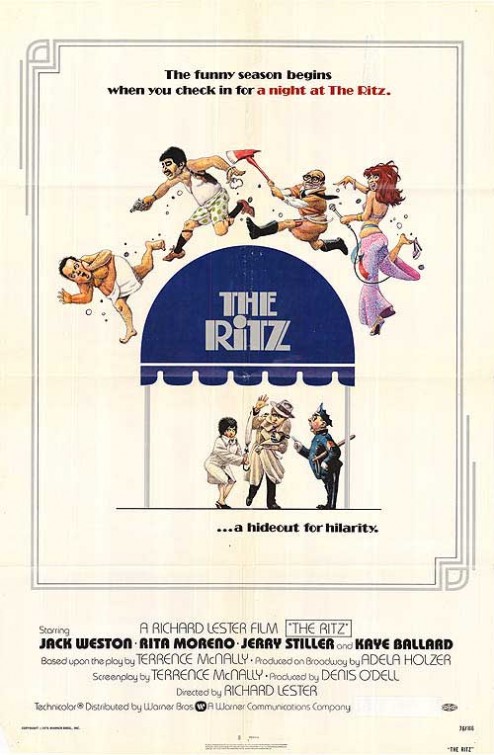
The Ritz (1976)

By Richard Winters

My Rating: 3 out of 10

4-Word Review: Hiding out in bathhouse.

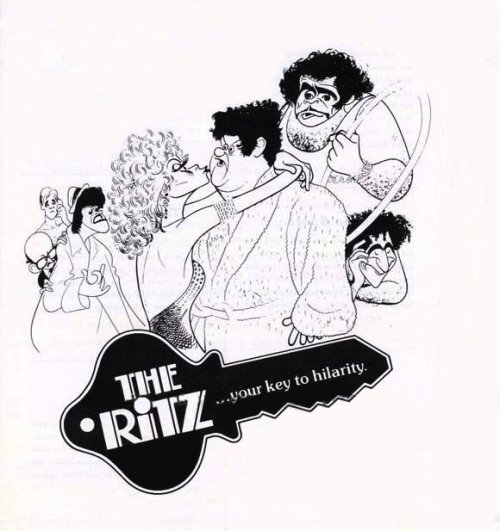
On the run from is homicidal brother-in-law (Jerry Stiller) heterosexual businessman Gaetano (Jack Weston) decides to hide out inside a Manhattan bathhouse unaware that it’s for gay men only until he’s already stuck inside. While there the overweight Gaetano gets harassed by an amorous chubby-chaser (Paul B. Price) as well as an aging starlet named Googie (Rita Moreno) who thinks Gaetano is a Broadway producer who can finally give her the long-waited break that she feels she deserves. Things get even worse when his brother-in-law finds out where Gaetano is hiding and proceeds to shoot up the place until he is finally able to weed him out.

For a farce, which is based on the hit Broadway play by Terence McNally and has much of the same cast recreating their roles for the movie, this thing is pretty much dead-on-arrival. The plot is thin and predictable and not enough happens to justify sitting through it. There are a few snappy lines here-and-there, but overall it’s effect is flat while filled with a lot of mindless running around that eventually grows quite tiring. Director Richard Lester has had success with this genre before, but the material here is unimaginative and second-rate and having everything confined to one setting gives it a claustrophobic feel.

The supporting cast gives the proceedings a boost and to some extent saves it from being a complete misfire. F. Murray Abraham nails it as a flaming queen and manages to elicit laughs with every scene he is in. Treat Williams is quite good as an undercover detective who’s a very well built man, but stuck with the voice of a 5-year-old. Jerry Stiller is surprisingly effective as the gun-toting bad guy and this also marks the film debut of John Ratzenberger.

Kudos must also go out to Moreno whose hilariously bad rendition of ‘Everything’s Coming up Roses’ is a film highlight. I also liked the precarious way that she puts on her eyelashes and the fact that her so-called dressing room is inside the building’s boiler room. The only performance that doesn’t work is Weston’s as his character is too naïve and his over-reactions to everything that occurs around him quickly becomes one-dimensional.

There may have been a time when this type of storyline would’ve been considered ‘fresh’ or even ‘daring’, but that time is long gone. In fact I couldn’t believe how tame and shallow it was. Whatever passed for farce back-in-the-day is no longer tangible, which makes this one relic that deserves its place on the back shelf of obscurity.

My Rating: 3 out of 10

Released: August 12, 1976

Runtime: 1Hour 31Minutes

Rated R

Director: Richard Lester

Studio: Warner Brothers

Available: DVD (Warner Archive), Amazon Video, YouTube