Category Archives: Sci-Fi

Deathwatch (1980)

deathwatch 2

By Richard Winters

My Rating: 8 out of 10

4-Word Review: Everyone watches her die.

Based on the David Compton novel this story deals with Katherine (Romy Schneider) who is living in a futuristic society where almost all diseases can be cured and death is very rare. When she is diagnosed with having a rare and incurable illness Vincent (Harry Dean Stanton) tries to get her to appear on his hit reality show ‘Deathwatch’ in which they film in documentary style a person’s slow and agonizing death, which is a huge TV hit. When Katherine tries to escape the publicity and hide from their cameras Vincent has a small camera surgically implanted into the brain of Roddy (Harvey Keitel) one of his cameramen, which then allows  Roddy to follow Katherine around and record her actions without her knowing it. The two then slowly form a relationship that culminates with tragic results.

Director Bertrand Tavernier is in top form. The movie is nicely paced and Tavernier shows a perfect grasp of the material. His use of music wonderfully accentuates the mood and tone. Filmed on-location in Scotland he captures the old buildings of the region with a stylish flair that gives the film an added personality and memorable image. Showing characters walking all alone in the seemingly abandoned streets hits home their loneliness and having the scenes done in decaying buildings and neighborhoods illustrates the decaying values and morals of the world these characters live in. The gray stormy skies brings out the pictures moodiness and the isolated shack in the middle of a vast empty field that the two hide out in captures visually the characters lost and hopeless desperation. The film becomes like an orchestral ensemble moved along by a talented conductor at the peak of his skill.

This is also a great example of using a hand-held camera sparingly and only to create a certain mood, or emotion. Too many films these days seem to have what I call ‘the shaking camera syndrome’ and it is annoying and loses the original intended effect. Here Tavernier employs it during a scene where Katherine is trying to elude the production crew and the viewer feels her frantic tension with each move that the camera makes as well as getting a great cultural feel by capturing the various street vendors along the way.

The story itself is fascinating and years ahead of its time. The issues it brings out about television, ratings, and the cutthroat ugly world of business of entertainment have never been more on-target. This film may even transcend the classic Network with its dire message and that is not easy to do. What I really liked though was the fact that the twists keep coming in layers and all of them are unexpected, but equally fascinating. The story is riveting and compelling from beginning to end.

Schneider is brilliant and beautiful as always giving another one of her impeccable performances. Her character is easily identifiable and the viewer immediately gains her sympathy. She shows an array of different emotions and traits making her a fascinating three-dimensional person. Her presence is the main ingredient that propels the film and without her none of it would have worked and her gorgeous natural smile is wonderful and manages to come on display briefly despite the ugly difficulties of her character.

Keitel is in fine form as well playing a character who finds that when one works for those who are more than willing to exploit others they themselves will eventually be exploited by them as well. Von Sydow appears near the very end and lends stature to the proceedings.

I hate to bring this up because I love the film’s visual design, but I did find it a bit odd that the story is about the hi-tech future and yet all we are shown are old buildings and other gadgets that look very much like they are from the 1980’s. The computer that Katherine works on is laughably archaic and I felt from that end they could have tried harder to create a little more of a futuristic impression. Also, the name of the network ‘NTV’ sounds a little too much like the cable network that used to show music videos.

The recent Blu-ray release from the Shout Factory is excellent and restores the film to its original runtime of 130 minutes. I highly recommend this to those who enjoy Sci-fi fare that is thought provoking and original.

My Rating: 8 out of 10

Released: January 23, 1980

Runtime: 2Hours 10Minutes

Rated PG

Director: Bertrand Tavernier

Studio: Gaumont International

Available: VHS (1Hour 57Minute Version), DVD, Blu-ray
Scanners (1981)

By Richard Winters

My Rating: 7 out of 10

4-Word Review: His head will explode.

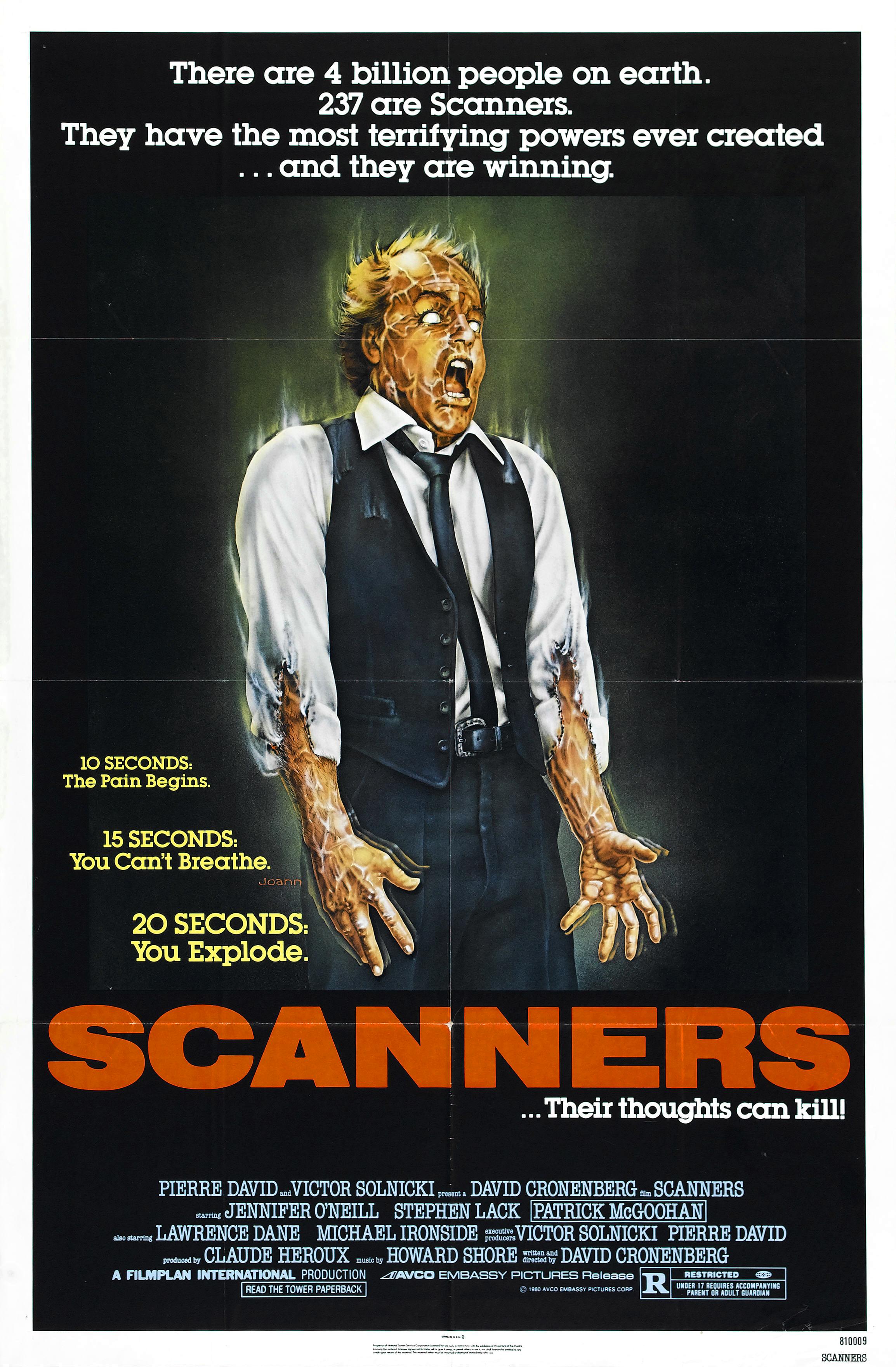
Scanners are people with strange psychic powers that can not only read other people’s minds, but also kill them and even move objects with their brainwaves. A corrupt group of scanners lead by Darryl Revok (Michael Ironside) threatens world domination. Dr. Paul Ruth (Patrick McGoohan) who works for a company that is trying to stop these dangerous people finds a scanner named Cameron (Stephan Lack) that Darryl’s groups is seeking, but has not yet located. Ruth trains Cameron on how to hone in his scanning powers and then track down Darryl’s group and destroy it.

Director David Cronenberg is still in my estimation one of the premiere cult/horror directors around. It is one thing to make a great horror movie when you have a big budget and state of the art special effects, but it is another to make an effective movie when you have little to work with and yet Cronenberg has continually shown that a creative imagination can triumph over all else. He has also shown a refreshingly daring vision throughout his career and seems to have no hesitation in tackling taboo subjects.

This film proves no exception. The story is quite creative and there are continually new and surprising twists thrown in. The special effects are excellent and imaginative. I loved the protruding, blood spurting veins coming out of the arms and heads of Cameron and Darryl during their intense scanner showdown at the end. The melting telephone receiver isn’t bad and off course the exploding head is memorable and deserves its place in the annals of gross cinema history.

With that said I still felt the film could have done a better job at setting up the story. It starts right away with a lot of action before anything is explained and makes things confusing. Some sort of prolog in this case would have been appropriate. Everything also seems rushed. This is a great plot with interesting scenarios and I as a viewer wanted a little more time to soak it all in, but wasn’t given any. The sets and backdrops are redundantly dark and grimy and lack visual design. Overall the film has a seriously dated look and although there are way too many films being remade these days and some that are not necessary this is one movie were I would advocate it especially if done with a high budget and a competent director.

Stephan Lack makes for incredibly weak leading man. He is better known in the art world as a renowned painter and his film career was quite brief. After watching his performance here it is not hard to see why. He has very much of a ‘deer-in-headlights’ look and a voice tone that shown no infliction, or emotion. His lack of charisma or stature seriously weakens the film’s overall effect and why he was chosen for the part is a mystery.

Jennifer O’Neill is gorgeous as Kim a female scanner who works with Cameron in his quest to find Darryl. The woman, who was a former model, has a face that is so beautiful it is mesmerizing no matter what angle she is shown at or emotion that she is conveying. My only complaint is the small streak of gray that was put into her hair, which I found unnecessary especially since she was portraying someone who was Cameron’s same age, which was the early 30’s.

On the villainous side Ironside certainly has the chiseled threatening features of a bad guy. However, I actually thought that Canadian character actor Lawrence Dane who plays one of Darryl’s spies was actually more effective.

The artwork done by the Benjamin Pierce character (Robert A. Silverman) visualizing giant heads and the thoughts inside people’s heads was really cool and avant-garde.

My Rating: 7 out of 10

Runtime: 1Hour 43Minutes

Rated R

Director: David Cronenberg

Studio: AVCO Embassy Pictures

Available: DVD

Seconds (1966)

By Richard Winters

My Rating: 8 out of 10

4-Word Review: Starting a new life.

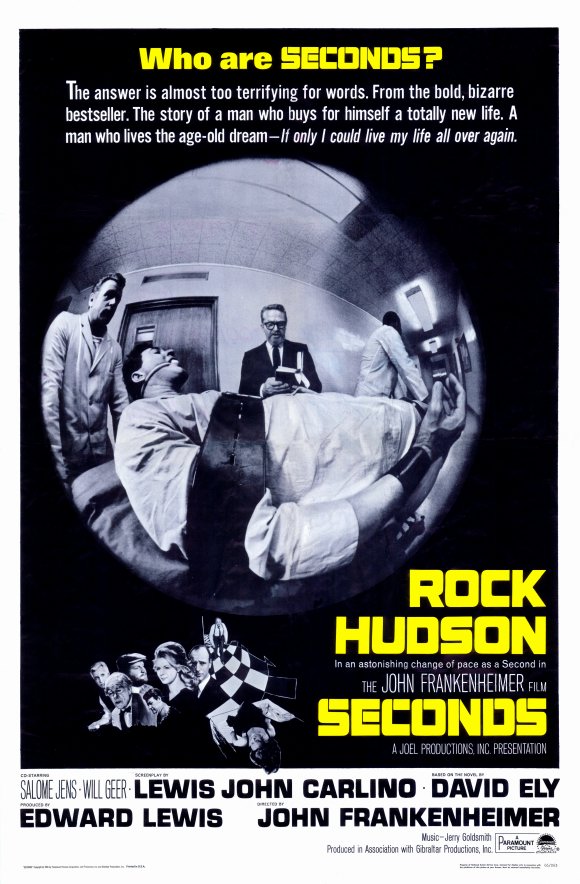
Arthur Hamilton (John Randolph) is a middle-aged man just going through the paces of life. He is stuck in a marriage that no longer has any spark and a job that is boring. His life is confined to the basic suburban rituals and he is quietly looking for a way out. Then he gets a call from Charlie Evans (Murray Hamilton) who he thought was dead. Charlie tells him that he is very much alive, but with a new identity. Arthur goes to a address that Charlie gives him and there he is told for $30,000 dollars he can be ‘reborn’ and given a completely new identity via plastic surgery as well as a whole new life with new friends and no connection to his dreary past. He would even be given a new set of fingerprints and new teeth while the death of his former self would be created in a way that it would leave no question, or suspicion.

This story is unique and fascinating on many levels. It pinpoints the monotony of middle-aged life and views living in suburbia not as the great American dream, but more as the American trap. I enjoyed the part where one of the Doctors named Davalo (Khigh Dhiegh) tells Arthur who has now been changed into Tony Wilson (Rock Hudson) that his new identity will be that of an established painter and he will no longer have to be quarantined with any responsibility and will instead be able to live the rest of his life pursuing is own individual interests, which is probably what everyone secretly desires.

The second half of the story where Tony tries to adjust to his new ‘dream’ lifestyle is equally as interesting if not more. Tony finds that his new friends and neighbors are other ‘reborns’ who will not allow him to backtrack into his old identity and seem compelled to keep in line with his new environment whether he was completely happy with it or not. During this segment I couldn’t help but think of the characters from Easy Rider and how Tony’s situation wasn’t much different. Both longed for complete personal freedom, but the more they tried to escape the societal strings the more they seemed to be dragged back into it. The part where Tony goes back to visit his wife while under the disguise of being a long lost friend of her late husband is revealing and dramatically the strongest part of the whole film.

John Frankenheimer’s direction is superb and intoxicating. The opening sequence featuring a lot of distorted imagery is excellent and creates a terrific mood for the story. The dream sequence where Arthur finds himself in a hotel room with another woman is captured in such a way that it looked almost like a Salvador Dali painting. The use of the fish-eyed lens that is put in at certain strategic moments is effective as well as stylish. The black and white cinematography is evocative and the organ playing soundtrack is distinct and moody.

Rock Hudson has always seemed to me as a weak leading man and apparently Frankenheimer considered him ‘lightweight’ as well, but when his first two choices turned down the role he decided to go with him and here it actually worked. I felt Hudson’s blank expression and confused demeanor fit well with the character’s situation. The part where he is shown tied to a bed and struggling to get out while his mouth is gagged is convincing. Veteran actor Randolph is quite good in the beginning playing Arthur a man who seems run over by life. The close-up of his nervous and sweating face leaves a strong impression. Will Geer is also excellent in support as the founder and head of the secret organization.

The twist ending is well done although I saw it coming long before our naïve protagonist did. Unlike the book it is clearer and less vague. This is one case where the film can make a great companion piece to the book, or vice versa. This is a definite sleeper of a movie screaming for more attention and has strong cult potential.

My Rating: 8 out of 10

Released: October 5, 1966

Runtime: 1Hour 46Minutes

Rated NR (Not Rated)

Director: John Frankenheimer

Studio: Paramount

Available: VHS, DVD,  Blu-ray (Criterion Collection) Amazon Instant Video

The Monitors (1969)

By Richard Winters

My Rating: 3 out of 10

4-Word Review: They are watching us.

            Aliens, who dress in suits, long overcoats, and bowler hats, invade earth and an attempt to police everybody’s thoughts and actions while trying to quell a rebel uprising led by Colonel Stutz (Larry Storch). Working for the uprising is Harry (Guy Stockwell) who falls in love with Barbara (Susan Oliver) who secretly sides with the aliens.

The movie starts out with a lot of potential and piqued my interest with unusual montages and camera work. Unfortunately this subsides quickly and soon we are stuck with drab sets, extraneous scenes, and a film unable to hide its low budget roots. I began to wonder if the reason the rebels had their hideout in an abandoned farmhouse was more because the filmmakers could film there without having to pay for a permit than anything else.

The film should have gone completely for parody and farce and if they had done that this might have worked. Instead it seems to drift into a conventional sci-fi narrative complete with a pseudo philosophical climactic debate between the humans and aliens that we have all heard before and does nothing but slow the film down to a tedious level. Adding in the love interest angle between the two leads is contrived and formulaic.

The aliens aren’t too interesting either. There is never any explanation as to how they were able to take over the planet, but the fact that they are unable to even get through a locked door of an old crumbling warehouse made me wonder how they were able to succeed at anything. Equipping them with a little more sci-fi gadgetry would have helped. I realize they don’t have to be carrying around the proverbial ray-gun, but having them break up an angry mob by using ordinary canisters of pepper spray seemed unimaginative.

Spliced into the story are comical TV ads with famous celebrities of the day such as Stubby Kaye and Xavier Cugat promoting the monitors and convincing the public to support them. These commercials are not funny with the only exception being Alan Arkin playing a foreign man who speaks broken English. In the case of former Senator Everett Dirksen it is almost sad. He was very elderly at the time of the filming and he is clearly reading his lines from cue cards and mouthing the words and looking like he is barely functional, or coherent.

The music is another problem. Initially I really liked it as the opening credits feature a computer with a very robotic voice singing the theme. Singer Odetta sings most of the other songs and some of them have a distinctive sound, but they get overplayed and saturated by the end.

The production was shot on-location in Chicago and I loved the aerial shots showing the skyline. I almost wished there had been a little more of them although I did notice that the exact same skyline shots at the beginning get reused in the second half. I didn’t like the idea that it was filmed in the late fall/early winter as the cast is shown shivering in several shots while forced to wear light clothing and their breath is clearly visible.

Susan Oliver gives another solid performance and shown flying an airplane in one sequence as in real-life she was an avid pilot. Sherry Jackson’s presence is minimal, but she is always appealing to the eyes. Avery Schreiber, a comedian known to overact horribly in just every part he is in, comes off as rather amusing here playing the younger brother of Harry who reluctantly joins up with the resistance. Larry Storch, another notorious ham, is engaging as well especially when he appears in drag and later on dressed as General MacArthur.

This is a failed experiment that should have been a lot better. It seems to want to take on the quirky sentiments of the era, but is either too timid, or too unimaginative to go all the way with it.

My Rating: 3 out of 10

Released: October 8, 1969

Runtime: 1Hour 32Minutes

Rated M

Director: Jack Shea

Studio: Commonwealth United Entertainment

Available: Netflix Streaming

Back to the Future Part II (1989)

By Richard Winters

My Rating: 6 out of 10

4-Word Review: They go back again.

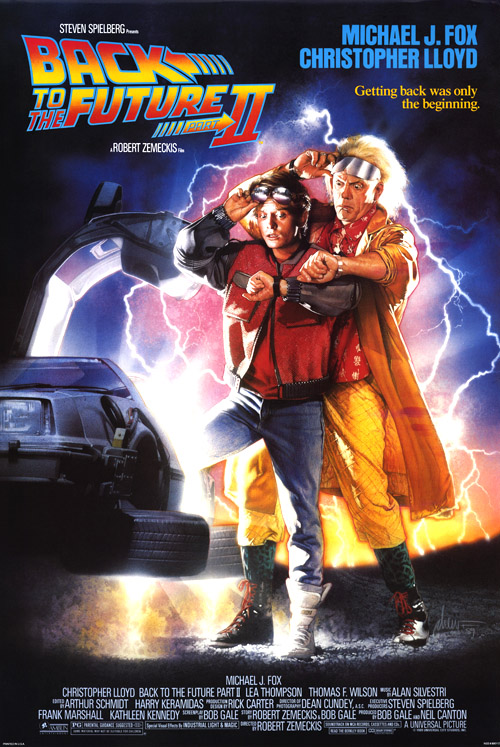
            Marty McFly (Michael J. Fox), Dr. Emmett Brown (Christopher Lloyd) and his girlfriend Jennifer Parker (Elisabeth Shue) use the DeLorean to travel 30 years into the future to help save their future son who is in trouble with the law. There Marty meets an older version of Biff (Thomas J. Wilson) who overhears about the time machine. He decides to take a discarded sports almanac listing all the scores for the past five decades and steals the machine and uses it to go back to the year 1955. The older Biff then meets up with his younger version and hands him the almanac telling him that he can bet on every winning team in every sport and make a fortune, which he does. This then changes the course of history drastically and it is up to Marty and the Dr. to go back to the 50’s and try and stop the transaction between the two Biffs from happening.

Like with the first film, I found the plot to be inventive and creative. Writer/director Robert Zemeckis has thought everything through and keeps the twists and turns coming at a fast pace making it virtually impossible to predict where it is going. Yet the story is complex and some may say convoluted. The idea of going back to the 50’s makes it seem almost like a retread of the first film. The characters even meet their counterparts going through the same scenes from the first, which ends up only tarnishing the original. Outside of the scenes from the future this film lacks the lightheartedness and fun of the first. The tone is much darker and the Biff character as well as his grandson Griff, which Marty meets in the future, are boring one-dimensional bad guys that are given too much screen time.

My favorite part is at the beginning. The flying cars and the space highway with similar road signs that you would see on a regularly highway is well done. I got a kick out of the Nike sneakers that can tie themselves and the coat that talks, can change shape to fit any size, and even dry itself off when wet. Marty’s trip to an 80’s café is fun and if you look closely you will see a young Elijah Wood in a brief part. The futuristic Texaco gas station and the movie marquee advertising ‘Jaws 19’ because this time ‘it’s really, REALLY personal’ is funny as is the holographic shark that jumps from the ad and scares Marty. Of course, as of this writing, we are now only three years away from the actual 2015 and it is safe to say that they got it all wrong, but it’s still interesting to see how they envisioned it. My only objection would be the clothing styles worn by the people that look like clown outfits, which may have been subtle satire, but I’m not sure.

I did feel the reason for them traveling to the future proved to be a loophole. In every other scene Emmett is always preaching about never trying to alter the regular course of events because this could cause unforeseen cataclysmic problems, so why then change his philosophy here? The reasoning given is sloppy and slapdash.

I did like that Marty turns out to be just a regular middle-aged suburbanite and not the famous rich rocker he dreamed of as the odds probably could have predicted. Fox is amusing as the older Marty and the make-up job is impressive for the way they get his perpetually boyish face to age.

Crispin Glover is certainly missed. He was unable to come to an agreement on the salary and thus turned down reprising the role of George McFly. A likeness of his image was used and he sued them for it and I say good for him.

Elisabeth Shue appears as Jennifer filling in for Claudia Wells who played the part in the first one, but then dropped out of acting to care for her sick mother. Shue has certainly grown into being a fine and respected actress, but here she is wasted. She does little except show facial expressions that are constantly perplexed and nervous, which eventually becomes laughable. The scene where Emmett and Marty decide to allow Elisabeth to lie sleeping amidst a pile of trash while they go off and do something else seemed questionable.

Had the film stayed in the future it would have been more enjoyable. I still found it to be entertaining, but it is easy to see why this entry is generally considered the weakest of the series. I was rather put off to see previews of Part III shown at the end, which made it seem like this whole thing was just an excuse to sell the audience on seeing the next one, which artistically isn’t a good precedent to set.

My Rating: 6 out of 10

Released: November 22, 1989

Runtime: 1Hour 48Minutes

Rated PG

Director: Robert Zemeckis

Studio: Universal

Available: VHS, DVD, Blu-ray (25th Anniversary Trilogy)

Back to the Future (1985)

By Richard Winters

My Rating: 7 out of 10

4-Word Review: Traveling back in time.

Marty McFly (Michael J. Fox) is a 17 year old videotaping his older friend Dr. Emmett Brown (Christopher Lloyd) who is planning on entering a time machine he has invented and going thirty years into the future. Just when he is about to enter the vehicle some angry Libyan nationalists with rifles appear who are upset that Emmett took plutonium from them under deceptive means. To escape the bullets Marty jumps into the machine, which is a DeLorean car, and goes back to the year 1955. Here he bumps into his father George (Crispin Glover) who is now a teenager himself and Marty inadvertently stops him from meeting his mother Lorraine (Lea Thompson) thus putting his entire existence into jeopardy. Marty must find a way to get them together while also working with Emmett on getting him back to the 80’s.

The concept is original and creative. Director Robert Zemeckis has every plot point and tangent covered. Just when you think you have a handle on it he throws in another twist that makes it even more interesting. It moves at a fast pace and a perfect blend of action and comedy. The dialogue is endlessly amusing as it takes full-advantage of the ironic scenarios and the special effects are good. The music, especially the song ‘The Power of Love’ by Huey Lewis and the News is rousing and Huey even appears in a brief cameo as a nerdy talent judge. There are a lot of great scenes that are both funny and exciting.

Fox is terrific in the lead although Eric Stoltz was cast in the part originally, but fired after four weeks of shooting. Fox is far better as he displays an intelligence and restraint that most other teen stars don’t have. His mannerisms are a plus and the way his voice reaches a high pitch whenever he is nervous is funny.

Crispin Glover is always interesting. He has such an eccentric personality and acting style that he makes every film that he is in better. However, in the early scenes he doesn’t look middle-aged and more like a skinny teenager with horn rimmed glasses.

I had the same issue with Christopher Lloyd only in reverse. Of course he is perfect for the role. His bulging eyes almost make it seem like he was born to play the part of a mad scientist. I was however surprised that no noticeable attempts were made to make him look younger when Marty meets him in the 50’s. I expected the character to be young and just starting out, but instead he already seemed established and living in a nice house making me wonder who was paying him to tinker around his home all day on his experiments?

Lea Thompson is not completely convincing as a mature woman during the first part and she looks very uncomfortable under all the heavy make-up. However, she is certainly cute in the scenes where she is younger.

In the complaint department I do have a few. First all the characters that Marty meets during his time in the 50’s seem excessively dopey. The film is too entrenched with an 80’s mindset. The 50’s is portrayed as a quaint bygone era with no relevance. There is too much of a ‘we’ve come a long way baby’ mentality and the 80’s played-up as being way ‘cooler’ than the 50’s even though some people may disagree. It would have been nice had there been a broader, transcendent approach to the story that would have been able to compare and poke fun of each era equally instead of just dumping on the 50’s like it was a joke.

The climatic sequence in which Emmett tries to connect a wire from a clock tower, which is set to be struck by lightning, to the DeLorean, so Marty can use the electricity to propel the vehicle back to the present gets overplayed. I don’t mind some unexpected mishaps to happen, but Zemeckis becomes obsessed with throwing in every type of calamity possible every few seconds until it becomes tiring and annoying. It got to the point where I just wanted the damn scene to end not so much because I cared anymore about Marty’s fate, but more because my ‘tension meter’ had become exhausted.

SPOILER ALERT

            My third and final grievance has to do with the very end when Marty returns to the present and finds that his father has turned into a much more confident and successful man then he had originally been at the beginning. This is because due to Marty’s meddling during his time in the 50’s, George ended up confronting Biff (Thomas F. Wilson) his lifelong nemesis and knocking him out with one punch, which gave George a new found sense of confidence. This also turned Biff from a bully into a patsy and thirty years later we see him as George’s mindless assistant. Now this twist may initially sound funny, but after a second when you really think about it, the humor is lost because it has absolutely no bearing in reality. No bully is going to take on a meek role for the rest of his life simply because some scrawny guy was able to knock him out with a lucky punch. If anything Biff would have become obsessed with getting back at him and even challenging George to another fight and not giving up until they did so. Or after graduation, he would have simply left that hick town and gone on with his life and leaving that embarrassing and isolated incident far behind him. Sometimes irony can be great and I usually do love it, but too much of anything is never good and at certain points this film seems to get to that level. Also, for such an otherwise clever film you would have thought that they could have come up with a more creative name than Biff for the bully.

My Rating: 7 out of 10

Released: July 3, 1985

Runtime: 1Hour 56Minutes

Rated PG

Director: Robert Zemeckis

Studio: Universal

Available: VHS, DVD, Blu-ray (25th Anniversary Trilogy)

The Terminal Man (1974)

By Richard Winters

My Rating: 7 out of 10

4-Word Review: Can’t control his impulses.

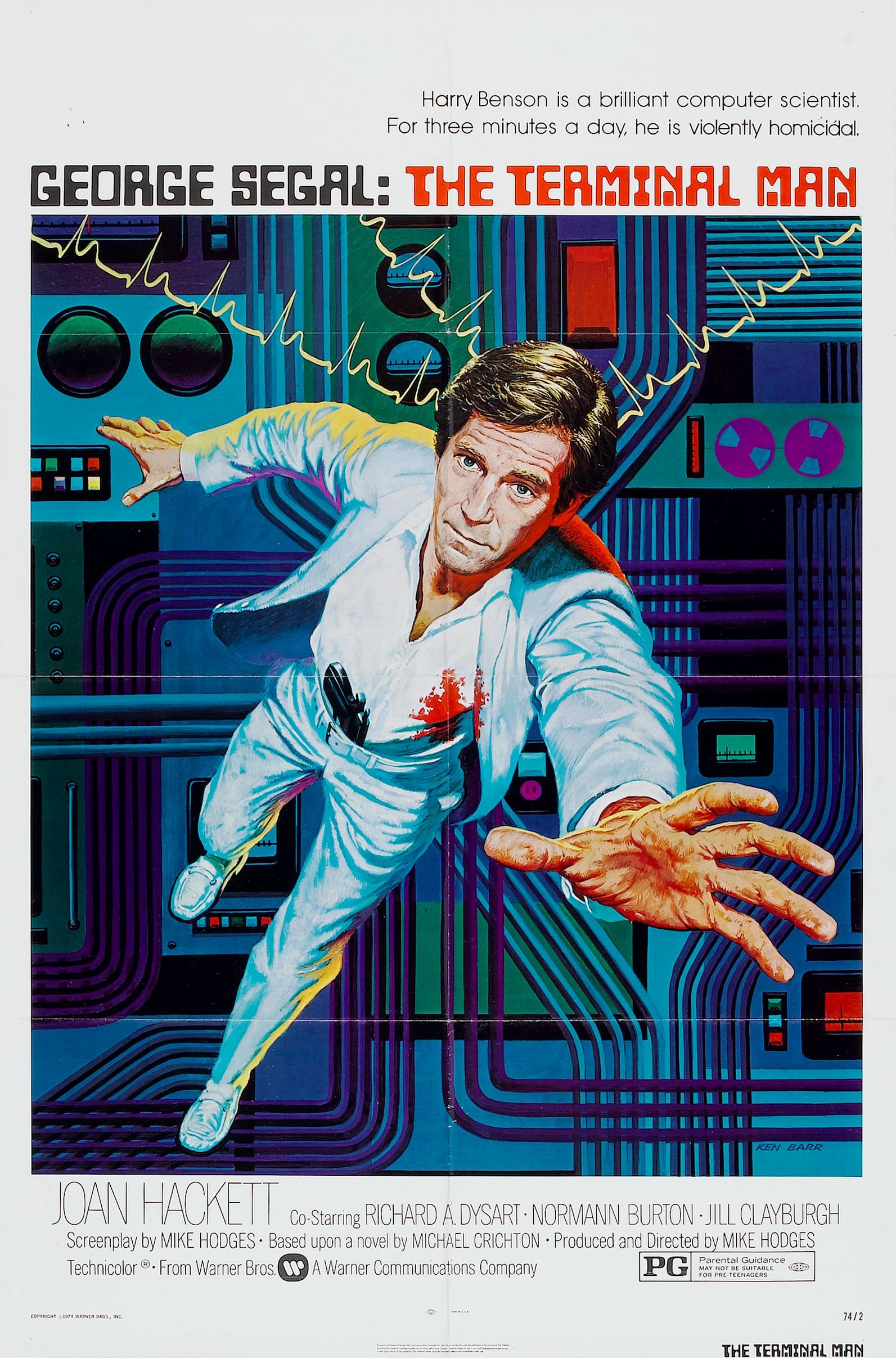
            Harry Benson (George Segal) is a brilliant computer scientist who begins to suffer from blackouts after receiving a head injury in a car accident.  During these blackouts he goes on terrifying violent sprees, which includes the abuse of his own wife and children. To help control the condition a group of doctors come up with an experimental procedure of implanting a computer chip inside his brain that will set off a signal that will alleviate these compulsions when they begin.  Unfortunately things do not go as planned and Harry’s condition becomes frighteningly worse in this cinematic realization of the Michael Crichton novel.

Director Mike Hodges visualization is the stand-out here. Every scene and camera shot fits together into a seamless whole. The first hour is filled with sets and backdrops showing a square, gray, futuristic –like surroundings while the second half features more white interiors while still maintaining the modernistic look.  Hodges shows a terrific awareness of every little sight and sound making each one an integral part of the story. From a visual perspective it is brilliantly handled and a masterpiece in need of more attention.  His use of classical music by Johann Sebastian Bach is equally effective. One particularly unique scene has Harry violently stabbing someone to death during one of his seizures, but instead of hearing the expected pounding music we instead hear the soft strains of Bach while the victim’s blood creates a red pattern on the white tiles of the floor.

The operating sequence and build-up to it is especially captivating and takes up most of the runtime.  I appreciated how a great deal of care was taken to make everything follow a very believable logic. The intricate procedure itself becomes fascinating and riveting to watch as they drill small holes into the patients head and use tiny metal tubes to literally shoot the mechanical pellets into strategic spots in the brain.

Segal, mostly know for light comedies, takes a nice break into drama here. He does a terrific job at getting the viewer to see him as a human being and feel empathy for his situation and when he has his head shaved he looks exactly like Howie Mandel . The part where he screams “Make it stop! Make it stop!” as he goes through another of his violent outbursts is especially moving and disturbing.

The supporting cast is strong as well although I didn’t particularly care for Donald Moffat and his put-on Irish accent, which was too strong and distracting and completely unnecessary.  Richard Dysart is memorable as the surgeon conducting the operation. He has two of the film’s best lines. One is when he is putting the computer chips into the brain and he states “This is the one job that can be both boring and nerve-wracking at the same time.”  Another great line of his occurs when a reporter asks him he if considers this procedure to be a type of mind control and he responds “What do you call compulsory education through high school?”

Joan Hackett gives her usual solid performance as Janet Ross the one doctor who is more concerned with the welfare of the patient then the implications of the experimental procedure. Jill Clayburgh, in an early role, plays against type here as Harry’s ditzy blonde girlfriend and the change of pace is interesting.

The film certainly makes a strong statement at the potential dangers of medical science and how the medical staff can be highly intelligent in one area, but very dense, immature and selfish in others.  The dehumanization element is pounded home to the viewer and in that respect it succeeds magnificently, but I couldn’t help but feel that it was being a bit unfair. In the years since this film was released the advancements in the medical field have improved the life and health of the patients and society as a whole. The film’s negative slant seems to conform too much to the pessimistic sentiments of its era and its unrelentingly doomful outlook is unnecessary.

My Rating: 7 out of 10

Released: June 19, 1974

Runtime: 1Hour 47Minutes

Rated PG

Director: Mike Hodges

Studio: Warner Brothers

Available: VHS, DVD (Warner Archive), Amazon Instant Video

Altered States (1980)

By Richard Winters

My Rating: 5 out of 10

4-Word Review: Blair Brown’s hairy armpits.

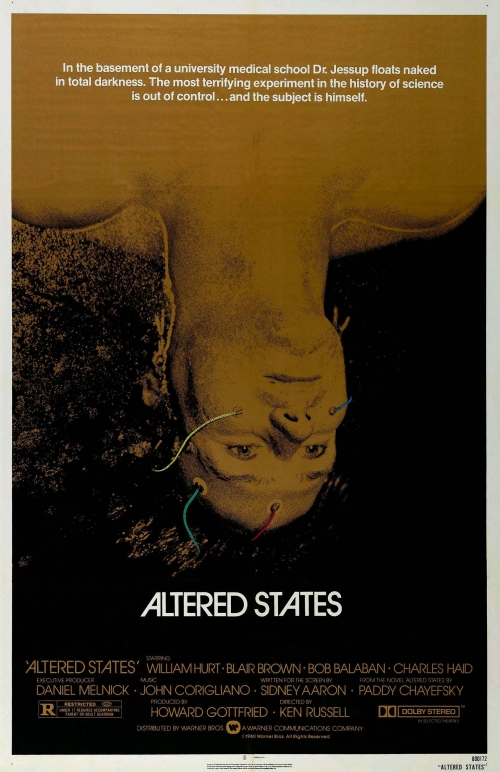
            This film, which is loosely based on the experiences of dolphin researcher John Lily the inventor of the isolation tank, and from the Paddy Chayefsky novel comes this bizarre concoction that is half sci-fi and half surreal fantasy.  The story pertains to Eddie Jessup (William Hurt in his film debut) who spends time in his isolation tank at his Harvard research lab while taking hallucinatory drugs that send him into different states of consciousness that become increasingly more frightening and vivid until they begin to externalize in his everyday life.

It was directed by Ken Russell and if you are familiar with his work you realize that means the presence of lots and lots and lots of strange visuals that come at you in quick and unannounced ways. They are confusing, cluttered, and often times make no sense. However, since the story is pretty wide-open these trippy segments work to the film’s benefit, unlike other Russell productions where I felt they became off-putting.  They also give the movie distinction and momentum. I’ve never done LSD, acid, or meth, but these segments probably come as close to the experience of a drug trip as you will find.  It is best not to demand any logic and instead sit back and allow it to become an assault on the senses, which on that level works to excellent effect. I came away wishing these scenes had been more extended and frequent as they are the best part of the movie. Of course the state-of-art special effects are no longer as impressive and look like images put on a mat screen, but some of the other stuff is cool. My favorite part is where a naked Blair Brown and Hurt are lying on the ground and a strong wind completely covers their bodies with sand and then they slowly evaporate into the air.

Hurt does a competent job and the character isn’t the clichéd kind of sensitive modern man like most Hollywood protagonists. He is emotionally ambivalent and self-centered.  His unromantic marriage proposal to Emily (Blair Brown) is one for the books, but I liked it. Most research scientists probably aren’t a socially skilled, people person to begin with otherwise they wouldn’t be shutting themselves inside a lonely, dingy research lab all day, so in that regards I felt the script hit the target and gave the film a little more of an edge.

Blair does fine in her role as the long suffering wife and it is nice seeing her looking so young and even briefly smoking a joint. She looks great naked, but her armpits where much too hairy during the love-making scene and she should have shaved them. I also found it amusing that during the time the two were separated Eddie started to have relations with a younger student of his who continued to refer to him as ‘Dr. Jessup’ even when they were in bed together.

Charles Haid plays Mason Parrish a friend of Eddie’s who helps him out with his experiments despite strong misgivings. His rants and tirades are well-played and give the film energy when it is not in fantasy mode.

To me the movie became boring and contrived when Eddie started to mutate into that of an ape man and runs around the campus and city terrorizing everyone. It seemed too reminiscent to An American Werewolf in London, which came out around the same time as well as countless other wolf man movies. The part is also not played by Hurt, but instead Miguel Godreau, who was an excellent dancer. I was impressed with his limber body and the way he could climb things, which gave him an animalistic quality, but felt that if it represented the Hurt character then Hurt should have been performing it even if it meant allowing for certain concessions.

The opening sequence showing Hurt locked in a thin, rusty tank in an empty room is terrific. There is a certain starkness and foreboding quality, especially with the eerie music, that makes this one of the better openings to a horror movie. The use of the credit titles is creative and reminded me a bit of The Shining. However, the film’s ending is horrid and one of the worst I have seen. It reeks of being a forced ‘happy’ Hollywood ending that practically ruins the entire picture as a whole. Because of this and the fact that the script seems to only skim the surface of this potentially fascinating subject matter forced me to give it only a 5 rating.

My Rating: 5 out of 10

Released: December 25, 1980

Runtime: 1Hour 42Minutes

Rated R (Language, Brief Nudity, Adult Theme, Intense Visuals)

Director: Ken Russell

Studio: Warner Brothers

Available: VHS, DVD, Blu-ray, Amazon Instant Video 

Killer Klowns from Outer Space (1988)

By Richard Winters

My Rating: 8 out of 10

4-Word Review: Clowns aren’t for kids.

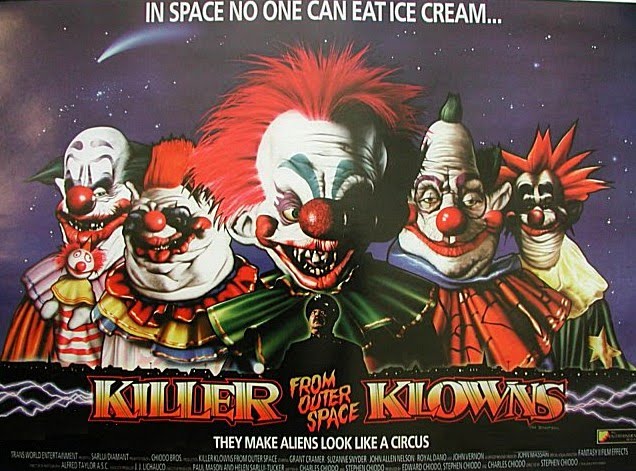
This is a fun and well-crafted sci-fi satire dealing with outer space aliens that resemble clowns and fly in a spaceship that look like a circus tent. They arrive on earth and begin killing everybody, wrapping them up in a cotton candy like cocoon and storing them in a freezer on their spaceship. When these cocoons become ‘ripe’ they stick a straw into them and suck out their blood.

It’s all a very unique parody on clown culture and those old sci-fi movies from the 50’s. There are shades of Invasion of the Body Snatchers, The Day the Earth Stood Still, War of the Worlds, and The Blob to name just a few.  Everything is fast paced with an inventive mind set. All those things that were always considered harmless and childlike have been turned into threatening and scary things here and it’s brilliant. The best one is the balloon dog that becomes a vicious barking little beast.

The special effects are outstanding. For a low budget picture this may actually be the best you will find. The circus tent spaceship is impressive especially when it takes off at the end. The popcorn ray guns and the shadow figure of a hungry tyrannosaurus are also good. You got to love the distorted features of clowns that are made to look genuinely frightening where even their bodies are misshapen and grotesque. You start to believe that these are actual creatures and not people inside a costume.

The only drawback is that it was made in the 80’s and is embedded with very bland looking, bland acting teens as the protagonists that seem like cookie cutouts from the genre. It even starts out with the very clichéd scene of having them making out in their parked cars at a secluded, wooded area. Outside of the clowns John Vernon has the only other interesting part. He plays a hardened and slightly corrupt cop who has seen it all and doesn’t fall for anything. He is both edgy and funny and gives the film some added grit. His death scene is good (like most of the others) but it would have been nice had he been able to carry the picture.

Overall this is clever and creative and sure to click with those possessed with a warped sense of humor.

My Rating: 8 out of 10

Released: May 27, 1988

Runtime: 1Hour 28Minutes

Rated: PG-13

Director: Stephan Chiodo

Studio: Trans World Entertainment

Available: VHS, DVD, Amazon Instant Video

SSSSSSS (1973)

ssss

By Richard Winters

My Rating: 6 out of 10

4-Word Review: Man turns into snake.

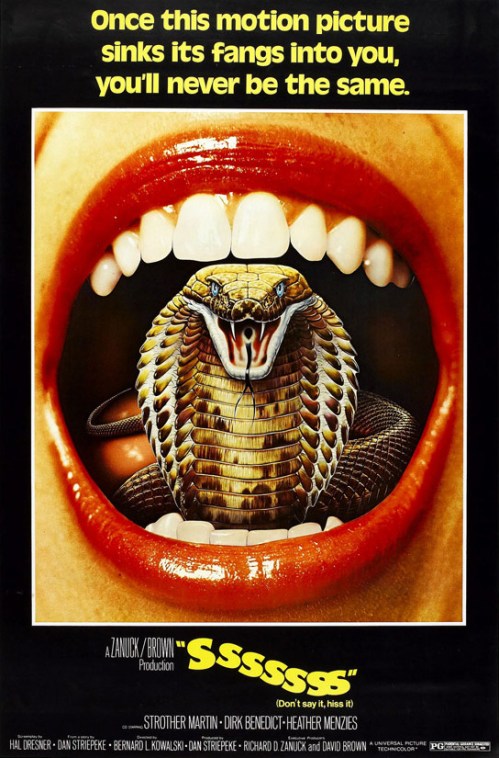
            Dr. Carl Stoner (Strother Martin) hires a college student named David Blake (Dirk Benedict) to work as his lab assistant on his research of snakes. David also finds himself attracted to the Dr.’s daughter Kristina who also works with her father on his research. However, unbeknownst to both of them the kindly Dr. has come up with a serum that can change a man, over the course of several weeks, into a king cobra snake.

Although clearly done on a limited budget, this film really impressed me in a few areas. The first was that the actors performed with actual snakes. The snake handling that Martin did was simply amazing. I found myself captivated in one scene where he takes a live Black Mamba out of its cage and grab its head and then force feeds it through a special type of mechanical tube. Another scene has him taking a King Cobra out of its cage where, while in front of a viewing audience, he is able to grab its head and make it secrete its venom into a jar. To top that off the film climaxes with a mongoose attacking and killing a cobra, which is quite violent. I almost wished that this had simply been done as a nature documentary as it could have been just as frightening and fascinating. The chilling throaty sounds that the King Cobra makes, which is all perfectly natural, would be enough to scare most people. There is even a segment where actor Reb Brown gets bitten by a snake on his foot and it is done in slow motion.

Another thing that was impressive was the make-up effects done by John Chambers. Benedict really starts to look like a snake and the final transformation is incredible.

The areas were the film is limited is in the horror portion itself. For one thing it takes too long to get going. The metamorphosis doesn’t start to get interesting until the final fifteen minutes.  The David character seems much too passive and trusting as he allows the Dr. to continue to inject him with the fluid even after he starts to have weird side-effects. The Dr. character is not menacing, or creepy enough to be scary.  For most of the movie he seemed pretty cool and I found it hard to cheer against anyone who is able and willing to handle snakes the way he does. The music is another problem as it is too soft and melodic without the jarring and foreboding undertones that is needed to help accentuate the tension. The setting is bland we get no sense of the locale outside of the Dr.’s residence, which looks too much like a studio back lot. The entire production has a cheap TV-movie quality and it is photographed in a flat, unimaginative way.

The side-story involving the budding romance between David and Kristina is uninteresting and unnecessary. The segment where the two go skinny dipping and their genitals are strategically covered by trees and plants at every conceivable camera angle looks cheesy.

            If you are into snakes, or make-up used for special effects, then you may find this film satisfying.

My Rating: 6 out of 10

Released: July 2, 1973

Runtime: 1Hour 38Minutes

Director: Bernard L. Kowalski

Rated PG

Studio: Universal

Available: DVD, VHS