Category Archives: Romance

Bronco Billy (1980)

By Richard Winters

My Rating: 4 out of 10

4-Word Review: Rich lady and cowboy.

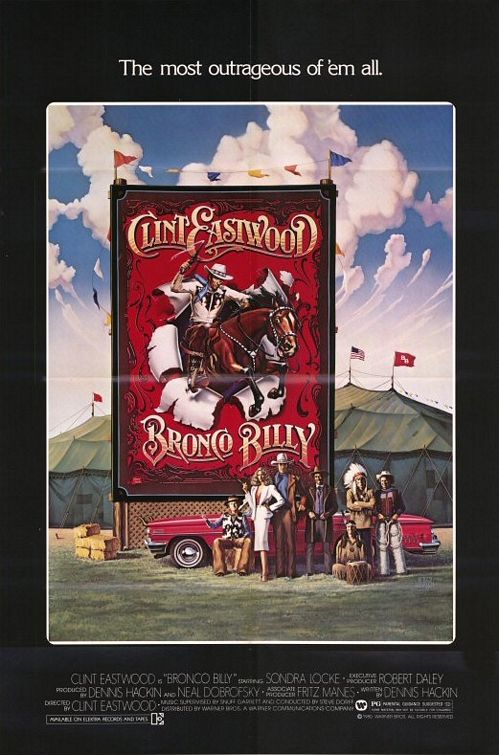
Bronco Billy (Clint Eastwood) is an aging modern-day cowboy who runs a traveling wild west show that is no longer attracting customers and making it hard for him to pay his employees. While at a gas station he meets Antoinette (Sondra Locke) a rich heiress with a haughty attitude who has just gotten dumped by her husband (Geoffrey Lewis) who also absconded with all of her money. Billy decides to hire her onto his show despite the fact that her presence causes animosity amongst the rest of his crew.

After Locke’s recent death, one person on Twitter, I don’t remember who, stated that this was the ‘greatest movie ever made’ and I’m not sure if he was joking or not, but if he wasn’t then I adamantly must disagree.  The film does start out okay and even has a certain charm to it, but the story and situations get too exaggerated until it’s impossible to take any of it seriously while also being too hokey to find funny.

The biggest logic gaps occur during the story thread dealing with Lewis being convinced to lie to the authorities that he killed Locke even though he really didn’t, so that he can get his share of her inheritance once he gets out. He’s told that if he pleads insanity that he will be ‘guaranteed’ to be released in only 3 years, but when in the history of the world has this ever happened and who would ever be dumb enough to believe it?  And that staying at a mental hospital is ‘no big deal’ and almost like a ‘resort’, which describes no mental hospital that I’ve ever head of.  There’s also no attempt by the police, or at least none is ever shown, to investigate the case to make sure Locke really has been murdered and try and retrieve her body.

The proverbial barroom brawl segment (must every western-themed film have this?) that occurs in the middle is as cliched and silly as it sounds and puts the whole rest of the film on a very cartoonish level. What’s even dumber is that during the brawl Locke goes outside to the parking lot where she gets accosted by two men, but just before they’re able to assault her Eastwood and his buddies magically appear to save her, but how could they have no known that she was in trouble when just a minute before they were shown taking part in the wild ruckus inside?

Locke’s rich-bitch personality is too much of a caricature and quickly becomes irritating to the point that when she eventually does soften, which takes awhile, it still doesn’t help. Having her able to shoot a pistol just as well as Billy seems out of character and never sufficiently explained. It would’ve been funnier had her dainty, cushy lifestyle been challenged more by throwing her into a rugged experience that she wasn’t used to, which doesn’t get played-up half as much as it could’ve or should’ve.

Eastwood’s character isn’t likable either. I would hate working for somebody that couldn’t pay me fore several months straight nor not allowing his employees to ad-lib any of their lines that he writes for them during the western skits that they put on even though people work better in their jobs when their allowed to have creativity and leeway in what they do and how they do it.

Why he would immediately fall head-over-heels for this woman is a mystery as Locke is only average in the looks department and her arrogant attitude is such an extreme turn-off that just about any guy would quickly dump her and never look back instead of continually pursuing her like Billy pretty much does here. Having them consummate their relationship should’ve only occurred at the very end while displaying much more of their personality clashes, which gets underplayed.

The scene where Billy and his gang try to hold-up a train is really funny and I enjoyed the inspired casting of having Woodrow Parfrey, who usually plays weirdo types, being cast as the head of the mental hospital, but other than that I felt the film was too predictable. You know where it’s headed right from the start and the theme of the old-fashioned, rugged individualist fighting more modern-day sensibilities has been done in so many other Eastwood films that here it becomes redundant.

My Rating: 4 out of 10

Release: June 11, 1980

Runtime: 1 Hour 56 Minutes

Rated PG

Director: Clint Eastwood

Studio: Warner Brothers

Available: DVD, Amazon Video, YouTube
Skaterdater (1965)

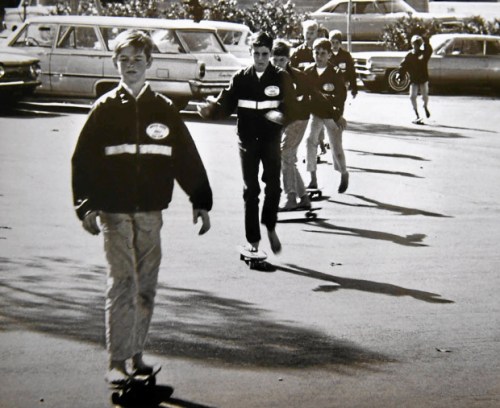
A still photo from the 1965 Academy Award-nominated short film “Skaterdater.” The 18-minute film was shot on location in the South Bay without dialog and starring a bunch of skateboarding kids.

By Richard Winters

My Rating: 6 out of 10

4-Word Review: From skateboards to girls.

Director Noel Black, who had just graduated from USC film school, wanted to put together a production reel that he could show to potential producers and studios and  after securing $17,000 for financial backing decided to make a short movie examining the then new craze of skateboarding. The story centers on some neighborhood skateboarders in Torrance, California who enjoy spending their summer afternoons skating around town. One day one of the boys (Michael Mel) spots a pretty girl (Melissa Mallory) and decides she’s more interesting than his friends, so he starts spending all of his time with her, which makes his other friends jealous and one of them (Gregg Carroll) challenges him to a skateboarding ‘duel’ along a steep, hillside street.

Despite the limited production values this still comes off as fresh and original and it’s officially the very first film ever made about skateboarding. In many ways not much has changed. The only real difference is that businesses back them did not have the sway to put up signs banning skaters from using their parking lots or sidewalks and one amusing segment shows the disgruntled look of local business owners having to put up with the distracting skateboarding noise outside although unfortunately director Black over-accentuates the noise for effect making the sound and ultimately the segment annoying to the viewer as well.

Some of the stuntwork though is impressive and the fact that there is no dialogue or names given to the characters is a benefit as it gives the thing a universal appeal knowing that this same type of scenario gets repeated all over the country from one generation to the next. The film was met with strong critical praise and has led to it getting preserved into the Academy Film Archive in 2010 as well as helping to boost director Black’s filmmaking career, which directly  led to him getting a chance to direct Pretty Poison, starring Anthony Perkins and Tuesday Weld, which has since garnered a strong cult following.

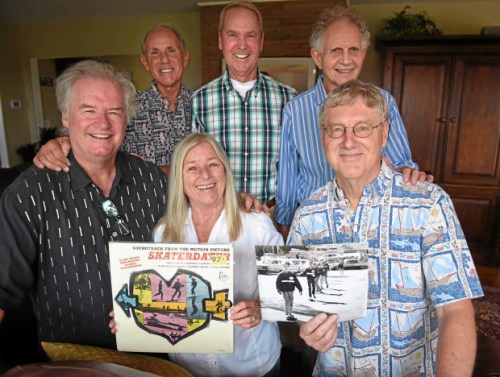
As for the cast none of them became famous or found a career in front of the camera, but they’re all still alive and recently got together for a reunion with pics showing them as they were back then and how they look today :

L-R back row Bill McKig, Gary Jennings, Marshal Backlar, producer. L-R front row Michael Mel, Melissa Mosley and Bart Jahn all reunited 50 years after making the 1965 Academy Award-nominated short film “Skaterdater.” The 18-minute film was shot on location in the South Bay without dialog and starring a bunch of skateboarding kids.
Redondo Beach June 27, 2015.
(Photo by Brittany Murray / Daily Breeze)


My Rating: 6 out of 10

Released: November 11, 1965

Runtime: 17 Minutes

Not Rated

Director: Noel Black

Studio: United Artists

Available: YouTube

Cuba (1979)

By Richard Winters

My Rating: 7 out of 10

4-Word Review: Cuba during the revolution.

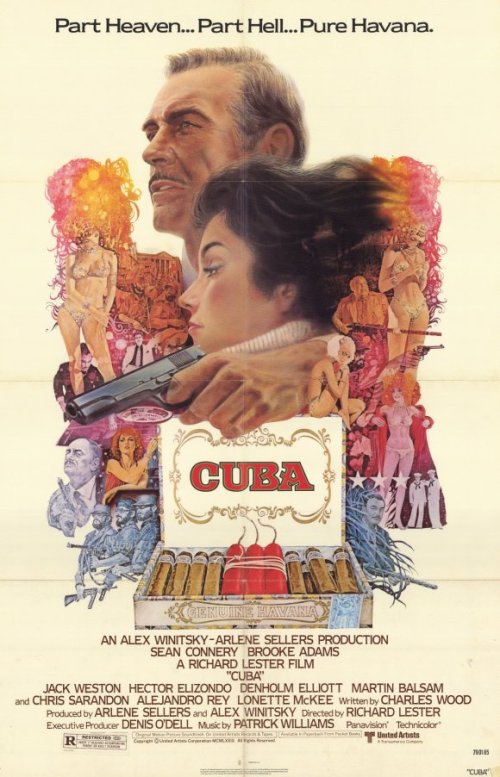
Robert Dapes (Sean Connery) is a British mercenary who travels to Cuba to train the army to resist the approaching forces of the revolution lead by Fidel Castro. While there he becomes reacquainted with Alexandra (Brooke Adams) his former lover who has 15 when he first knew her, but is now 30 and married to Juan (Chris Sarandon) who owns a rum and cigar factory that he inherited from his family, but run by Alexandra.

The film from a purely visual standpoint is a masterpiece with David Watkin’s cinematography giving a very vivid feel to the ambiance of the period by capturing not only the slums of the region, but the affluence as well. Despite being filmed in Spain it still manages to create an interesting Cuban atmosphere that has an intoxicating quality that makes it entertaining to watch even though the story especially during the first half doesn’t go anywhere.

The romantic angle really wasn’t needed. The idea was to create a Casablanca scenario, but it comes off as forced and cliched. The chemistry between Adams and Connery isn’t there and she appears far too young for him. She states that she is 30, but doesn’t even look that old and the fact that he was apparently having sex with her when she was 15, although the Connery character states that he thought she had been 17, is still something that won’t go over well with today’s audiences.

Connery doesn’t seem to be the best type of actor for this part either. For one thing the character should’ve been American as the Cuban revolution was more of a direct threat to the US than England. He also doesn’t have too much to do and his patented rugged brashness is missing. His characters usually take control of things, but here he’s passive and almost like he’s under a spell from the constant hot-and-cold act that Adam’s gives  him that eventually makes him come-off as benign and ineffectual. Jack Weston as a befuddled American businessman is much more engaging and would’ve made a better lead as he gives the thing some balance with needed light humor.

I also thought both Adams and Sarandon could’ve given more effort to create an authentic Cuban accent. Both are made to look Cuban, but they don’t sound like one. Adams seems to at times convey an accent while Sarandon makes no attempts to have one at all.

On the technical end  it works and is an impressive dramatic effort for director Richard Lester who was better known for slapstick comedies, but it misses the potential of a being a sprawling epic, which is where it should’ve gone. Constricting the whole thing to just two characters with Weston tagging along for momentary comic relief does not do the production justice. Instead it should’ve branched out into several different, interweaving story-lines that analyzed the unique perspectives and situations of the various people involved, which would’ve given the viewer a more robust viewpoint of this important moment in history.

My Rating: 7 out of 10

Released: December 21, 1979

Runtime: 2 Hours 2 Minutes

Rated R

Director: Richard Lester

Studio: United Artists

Lost and Found (1979)

By Richard Winters

My Rating: 2 out of 10

4-Word Review: Fighting keeps couple together.

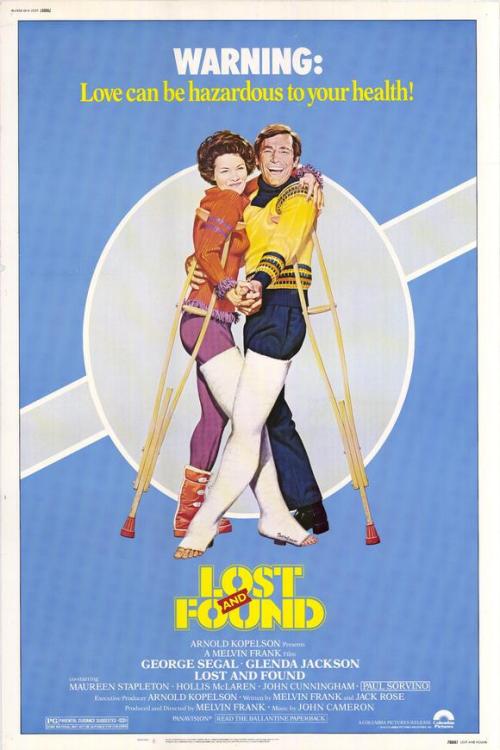
Adam (George Segal) is a college professor vacationing in France whose car collides with that of British divorcee Tricia (Glenda Jackson). He tries to get her to write a letter admitting that she was at fault, but she instead writes the exact opposite while doing it in French, so he wouldn’t know. When he finally catches on to this he tracks her down at the ski resort and again collides with her this time on skis. Eventually they find a way to reconcile and even fall in love before finally marrying yet when they return to the states they start fighting again over just about anything until it seems that is all that they do.

Sloppy, poorly structured romance should’ve never been given the green light. The characters are bland and one-dimensional and the humor cartoonish while the couple’s relationship is strained to the extreme. The story has no momentum and the inane fighting seems put in simply to give it some comical conflict that leads nowhere and eventually becomes tiring.

The main problem is that the two reconcile too quickly. Viewers who watch these types of films enjoy wondering whether ultimately the couple will get past their differences and tie-the-knot, which is what compels them to keep watching, but here any suspense of that is ruined when they get married within the first half-hour and thus the arguments that they have afterwards is anti-climactic. The film would’ve worked better had the two remained antagonistic. The conflict could’ve started in the French Alps and then continued onto the college campus by having the Jackson character work as a prof in the same department as Segal and had their animosity only slowly melt away when they’re forced to work on some project together with the wedding bells then coming in only at the very end.

What makes this movie odd is that it reteams Jackson and Segal as well as the writer/director team of Melvin Frank and Jack Rose who all did A Touch of Class together just 6 years earlier. One would presume that this would be a sequel to that one with Segal and Jackson playing the same characters that they did before, but that’s not the case. In retrospect that’s how it should’ve been played and it would’ve then avoided having to show the dumb, over-the-top way that the two meet here, which is so forced and corny that it cements this has being a bad movie before its even barely begun.

The supporting cast manages to add some life. I got a kick out of Maureen Stapleton as Segal’s free-spirited, hippie-like mother, but she was only 52 at the time and didn’t even have any gray hair making her look much too young to have given birth to a middle-aged man in his 40’s and was in fact only 9 years older than Segal in real-life. Paul Sorvino is amiable as a talkative cabbie and the segment where he and Jackson try to resuscitate Segal after a failed suicide attempt is the only mildly amusing bit in the film.

The ski resort scenery is picturesque although it was actually filmed at Lake Louise in Alberta, Canada and not in the French Alps like the movie suggests. You also get to see John Candy in a brief bit and Martin Short in his film debut, but everything else falls painfully flat and I couldn’t help but feel that the entertainment world had passed both director Melvin Frank and Jack Rose by. They had written and directed many successful comedies during the 40’s, but what passed off for funny back then now seemed seriously dated and it should be no surprise that they both only did one more movie after this one.

My Rating: 2 out of 10

Released: July 13, 1979

Runtime: 1Hour 46Minutes

Rated PG

Director: Melvin Frank

Studio: Columbia Pictures

Available: DVD-R, Amazon Video

A Touch of Class (1973)

By Richard Winters

My Rating: 5 out of 10

4-Word Review: Sexual liaison turns romantic.

Steve (George Segal) is an American businessman working in London who meets Vickie (Glenda Jackson) a divorced mother of three. Despite being married he immediately takes a liking to Vickie after sharing a cab ride with her and makes no secret that he’d like to have a ‘no-strings-attached’ sexual affair. Vickie approves of the idea, but wants a more romantic setting, so Steve whisks her off to Malaga, but things get complicated when Steve’s friend Walter (Paul Sorvino) shows up on the same trip and constantly gets in the way.

Surprisingly this limp comedy got nominated for Best Picture, which is really hard to believe since there isn’t anything all that funny or original about it. In fact it seems very similar to another picture that writer/director Melvin Frank did in the ‘60s called The Facts of Life, which starred Lucille Ball and Bob Hope and had almost the exact same plot.

The biggest problem is that it doesn’t take enough advantage of its comical potential. Having Steve’s wife Gloria (Hildegard Neil) show up with the kids unexpectedly and want to go on the trip with Steve should’ve been played out much more as it was ripe with comic potential, but instead the film nixes this idea after introducing it and nothing is more annoying than a movie, which sets-up an interesting idea only to then backtrack on it.

Paul Sorvino’s character is equally wasted and his presence could’ve created far more complications that never transpire. In return the movie falls back to a lot of lame situations that seem thrown in for cheap laughs like Steven suddenly going through back spasms, or challenging a 13-year-old kid to a golf game that has nothing much to do with the main plot and basically comes off as forced and lame. The arguments or ‘spats’ that couple have are equally inane and this culminates with the two throwing furniture and clothing at each while in the hotel room, which sends this supposedly ‘sophisticated’ adult comedy dangerously close to becoming benign slapstick instead.

The third act in which the two rent out a flat and continue to have the affair even after they return to London doesn’t improve things. Jackson is supposedly this single mother and yet after she moves into the flat she seems to essentially abandon the kids who disappear from the movie altogether. It also seems hard to believe that Steve’s wife wouldn’t at some point start to catch on to the fact that something was going on as these things eventually will catch up with a person and there’s just so many close calls one can have before finally getting caught and yet here that never happens.

The fact that Steve is very open about his marriage to Vickie and even confides in having previous affairs makes Vickie seem really stupid for wanting to get involved with him in the first place. Supposedly she just wants casual sex as much as he does, but then refers to their trip as a ‘romantic’ one making it seem like she has the idea that this will turn into a relationship. When things do finally sour one doesn’t feel sorry for her as she was old enough to know better and anyone with an IQ over 2 would’ve seen the red flags from the start, so why didn’t she?

The only interesting aspect about the movie is that Jackson won her second Oscar for it, which was highly unusual since she had just won her first one 2 years earlier and quite unexpected making many people consider a recount was necessary as they were convinced it had to have been a mistake. It’s not that Jackson gives a bad performance because it is actually quite good, but Marsha Mason, who was the predicted front-runner, gave a superior one in Cinderella Liberty and she should’ve won it.

For years many people wondered what it was about Jackson’s acting in this film, which is a very ordinary fluffy movie at best, that made her stand out to the Academy judges and beat such long odds. A few years back I read somewhere, and I can’t remember where it was at this point, that the reason she won it was for one particular moment where Segal tells her that the relationship is over, but instead of her breaking down and crying like the script asked for she puts her head into her hands and remains silent for several seconds. Director Frank argued with her about doing this, but she insisted she wasn’t the type of woman who cries easily and therefore doing it the other way seemed more natural to her and in turn this impressed the judges when they watched the movie because her character responded to something in a completely unexpected way, which apparently was enough for her performance to stand out.

My Rating: 5 out of 10

Released: June 20, 1973

Runtime: 1Hour 46Minutes

Rated PG

Director: Melvin Frank

Studio: AVCO Embassy Pictures

Available: DVD, Amazon Video

“Crocodile” Dundee (1986)

By Richard Winters

My Rating: 7 out of 10

4-Word Review: That’s not a knife.

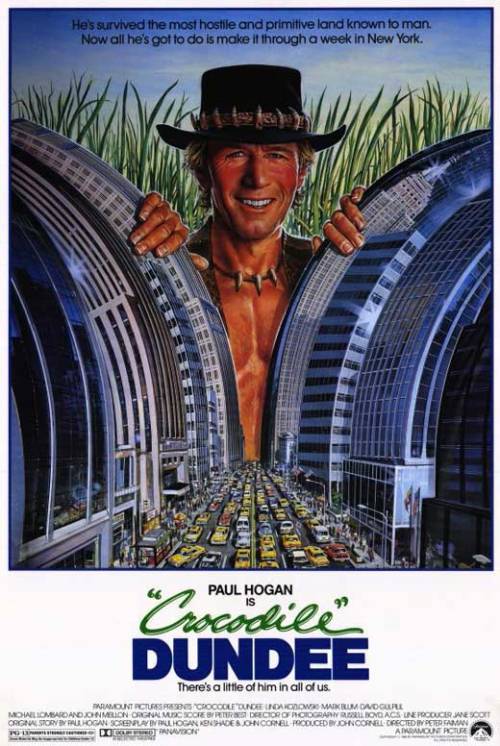
Sue (Linda Kozlowski) is a newspaper reporter who gets permission to cover a story about an Australian bushman named Mick better known by his nickname Crocodile Dundee (Paul Hogan) who was able to fight off a croc attack before successfully crawling to safety. To do this she travels to the outback, so she can learn about his way of life firsthand. After spending six weeks interviewing him she then invites him back to New York with her. Once there Mick finds the city life and the people in it quite confusing. He also takes an almost immediate disliking to Richard (Mark Blum) Sue’s fiancée.

Loosely based on actual events the laid back story goes down easy and is full of charm, but its basic premise is a bit hard-to-swallow. I thought the idea of having a reporter go clear across the globe to interview some no-name bushman over an obscure and completely unsubstantiated crocodile attack claim just wasn’t realistically worth the time or money. Crocodile/alligator attacks occur yearly all over. Why not save the money by sending the reporter to Florida instead where you could probably just as easily find and interview someone who survived a similar incident?

Most of the time a journalist will be accompanied by a photographer, but here she takes the pictures as well as doing interviews even though with most big time newspapers and many times even the small ones that is never the case. This also brings up the issue of her traveling for weeks all alone in the middle-of-nowhere and even sleeping under the stars with a man she essentially knows little about. What’s to say he wouldn’t attack her at some point and if so who would she call? I believe most women wouldn’t be comfortable in that scenario and thus having a third party present such as a photographer or other chaperone would’ve made far more sense.

The money issue, or the fact that the newspaper apparently pays him to come back to the states with Sue, seemed illogical and wasteful. Why is a newspaper spending money to bring a bushman into a foreign land? If it is to see how he adjusts to it that’s one thing, but the majority of the time Mick spends in New York he is by himself with Sue nowhere near him covering his reactions, so then what’s the point? Later Mick decides to stay in the Big Apple for a longer period, but where does he get the extra money to do that?

The scene where Mick puts a water buffalo into a trance-like sleep is baffling too. Supposedly he does this because they are driving along in a jeep and the buffalo won’t get out of the road and let them pass, but how is putting the animal to sleep where he then plops his big body onto the road going to help? The film then conveniently cuts without any explanation of how there were ultimately able to get around him.

The second act where Mick comes to New York is the funniest, but even here it doesn’t get played-up to its full potential. The amusing scene where Mick meets some prostitutes, but is unaware of what they do is hard to believe. Even a country boy should’ve been aware of the world’s oldest profession especially when he is over 40 and his naivety in that situation just doesn’t completely work. The film’s most famous scene where Mick scares off some muggers by showing them his large hunting knife also proves problematic when you realize that it is unlikely he would’ve ever been able to get that thing past customs.

Hogan’s appealing performance makes it work. However, it would’ve been better had the guy been younger like in his early 20’s instead of well over 40, which would’ve made some of his awe and wonderment seem a bit more genuine and believable.

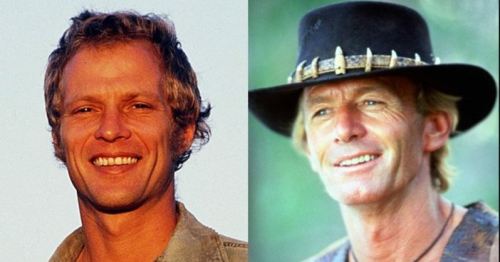
For year’s Hogan, who also co-wrote the script, insisted that the Dundee character was of his own creation, but then later it was found that it was really based on the life of Rod Ansell who in 1977 at the age of 23 got stranded in the wilderness of Australia’s Northern Territory for 7 weeks when the dinghy he was riding in capsized and in the process he fought off a crocodile whose head he kept as a souvenir. His adventures were documented in the film To Fight the Wild, as well as published in a book. He did many TV interviews about his ordeal back in the late 70’s which is where Hogan first became aware of him and then when this film became famous he sued Hogan, but lost the case and the fact that he made no money off of it became a major source of bitterness to him, which lead to his addiction to amphetamines that subsequently lead to his death in a police shootout in 1999.

Here’s a pic of Ansell alongside Hogan’s movie likeness of him:

My Rating: 7 out of 10

Released: April 24, 1986

Runtime: 1Hour 37Minutes

Rated PG-13

Director: Peter Faiman

Studio: Paramount

Available: DVD, Amazon Video, YouTube
Arthur (1981)

By Richard Winters

My Rating: 5 out of 10

4-Word Review: Rich drunk grows up.

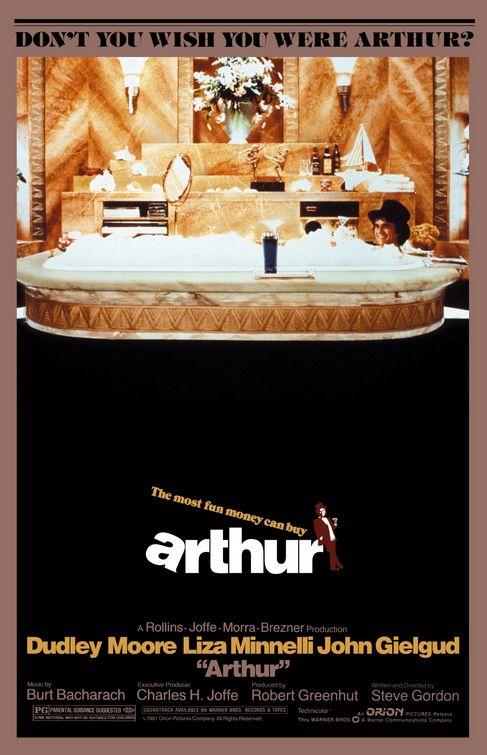
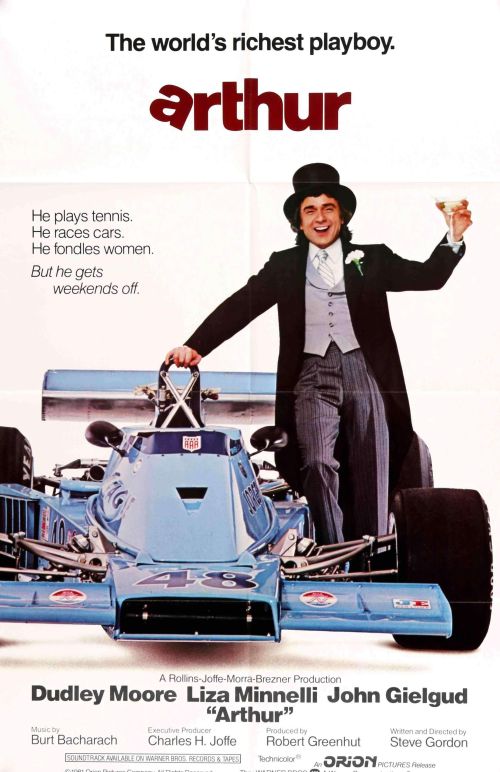
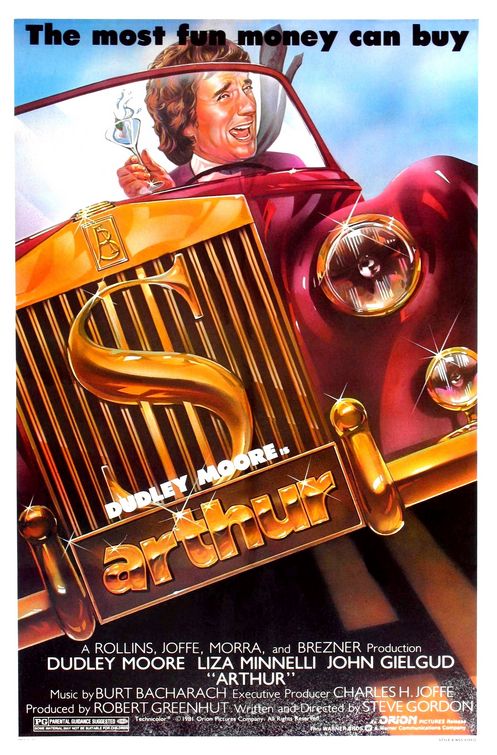
Arthur (Dudley Moore) is an alcoholic man-child and heir to a vast family fortune, but only if he agrees to marry Susan (Jill Eikenberry), which his rich father (Thomas Barbour) pressures him to do.  Arthur does not love Susan and instead falls for commoner Linda (Liza Minnelli) who works as a waitress and shares a lifestyle that is completely different from his. Hobson (John Gielgud) is Arthur’s lifelong butler who is suffering from an undisclosed illness and expects not to be around much longer, so he thinks Arthur should get married, so he’ll have a wife to look after him once Hobson is gone.

This film was a box office success, but I failed to see what was so great about it when I first watched it decades ago and remain mystified after now seeing it again many years later. The film’s garbled message remains one of the biggest problems particularly the broad caricatures of all the rich people in Arthur’s life who seem stuck in some bygone era. The movie spends half the time mocking them, but then conveys the idea that true happiness can only come from becoming just like them. The benefits of being in the working class are never touched on and instead everything gets portrayed in a shallow, simplistic manner that lacks any true bearing in reality.

I was also surprised as to why Liza Minnelli’s character had to steal a tie at a men’s clothing store, which is where she first meets Arthur, as she really didn’t seem all that bad off. Sure she wasn’t living in the ritziest part of town, but she was far from being homeless. Her apartment that she shared with her father, played by Barney Martin, was roomy and adequately furnished. She also had a job and not in any way desperate and yet the movie spins it like she is, which shows that the filmmakers didn’t have any idea of what being truly poor is really like.

The dumb arranged marriage plotline has no connection to modern society and today mostly only occurs in south Asia, so why enter in an element in a supposedly ‘realistic’ comedy that doesn’t happen to regular people? It is also confusing exactly why Arthur’s father wants him to marry Susan. Supposedly it is so she’ll get him to ‘grow up’ or ‘make something of him’, which is hard to understand since she comes off as a wide-eyed dippy that is just as immature as he is if not worse.

A more interesting plot would’ve had Arthur lose his fortune and forced him to get a real job and deal with harsh realities that he had never had to face before. This would allow for a stronger character arch as well as some incisive social commentary. He also could’ve meet Linda while working a remedial job instead of the awkward forced way that he meets her here.

Gielgud’s quips are the best thing about the movie, but everything else is pretty limp. I have never seen the 2008 reboot starring Russell Brand, but after reading that film’s plot synopsis I think it’s an improvement as they seemed to have filled in the logic loopholes as to why Arthur was forced into an arranged marriage, which alone makes that superior to this one.

My Rating: 5 out of 10

Released: July 17, 1981

Runtime: 1Hour 37Minutes

Rated PG

Director: Steve Gordon

Studio: Orion Pictures

Available: DVD, Amazon Video, YouTube
Hero at Large (1980)

By Richard Winters

My Rating: 3 out of 10

4-Word Review: Actor becomes a hero.

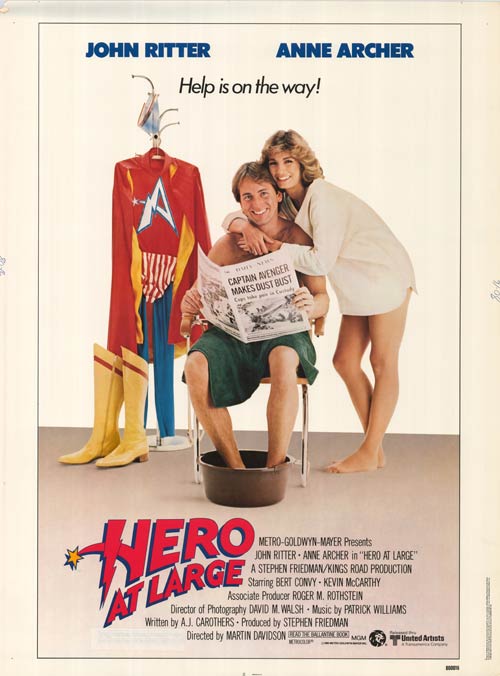
Steven Nichols (John Ritter) is a struggling actor who is hired to wear the Captain Avenger outfit in public in order to help promote the movie, which he himself is not in, that is soon to be released. While picking up a snack late one night at a convenience store he inadvertently witnesses a hold-up and decides to put on his Captain Avenger disguise to ward off the crooks and the trick works and makes him an overnight sensation. Walter (Bert Convy) who works for the mayor (Leonard Harris) decides to hire Steven to play Captain Avenger fighting off more crooks in different scenarios, but this ends up causing Steven serious conflicts with Jolene (Anne Archer) the pretty lady who lives across the hall from him and who he has just started up a relationship.

I really like John Ritter, but his appeal here gets put to the extreme test and it isn’t enough to save what is otherwise a very flat film. This was supposed to be the movie that jettisoned his career to the big screen, but instead it quarantined him back to TV-star status and he was never able to recover. By the 90’s he got a few more leading movie roles, but they were in crude, low-brow stuff like Stay Tuned and Problem Child, which were never going to win the Academy Award, but even they were better than this bland thing.

The script by A. J. Carothers, who mainly wrote for Disney and TV-sitcoms, doesn’t go far enough with its premise and misses too many prime opportunities to be funny. The most disappointing is the film’s pivotal moment where Ritter tries to stop a hold-up, but you would think someone who has never fought off criminals before would be clumsy in his first attempt, which should’ve invited in some slapstick comedy, but it never comes. You would also think hardened street crooks would laugh at Steven in his super hero getup and probably turn around and beat the shit out of him especially since he carried no weapons instead of running away from him in fright. Yet this potentially big moment gets played out like a throwaway scene that lasts for less than a minute and is quickly forgotten.

The emphasis instead gets focused on Steven’s generic romance with Jolene, who after knowing him for only a little while lets him move into her apartment where he platonically sleeps on the sofa even as she continues to see her boyfriend, which seems like quite a stretch. Her constant smiling at Steven’s ongoing ineptness makes her seem more like a parent bemused at her child’s wide-eyed naivety than as an equal love partner.

What is worse is the film’s attempts at satire, which are too obvious and it beats home its simplistic, feel good message like it’s being told to a group of eight-year-olds. The super hero costume that he wears is unimaginatively designed and barely masks Steven’s identity, which makes the subplot dealing with how almost no one is able to figure out who this super hero guy is as quite ridiculous.

Spoiler Alert!

The dumbest part though is the ending, which gets played up to a nauseatingly melodramatic degree and has Steven, wearing his Captain Avenger outfit, running into a burning building just as all the other firefighters are told to evacuate it and then somehow able to save a child unscathed even as the building falls in on him, which all helps cements this woefully uninspired flick as an excellent candidate for a bad movie night.

My Rating: 3 out of 10

Released: February 8, 1980

Runtime: 1Hour 38Minutes

Rated PG

Director: Martin Davidson

Studio: United Artists

Available: DVD, Amazon Video, YouTube
A New Life (1988)

By Richard Winters

My Rating: 2 out of 10

4-Word Review: Life after a divorce.

Steve (Alan Alda) is shocked to learn that his wife of 26 years Jackie (Ann-Margret) wants a divorce, which forces him back into the dating scene that proves awkward. He eventually meets Kay (Veronica Hamel) and the two hit-it-off while Jackie gets into a relationship with a young artist named Doc (John Shea). Kay and Steve get married, but Jackie tires of her relationship and decides she’d be better off single.

Despite sporting an afro and beard it’s still the same Alda making the same bland type of movie with this one being more vanilla than his first two directorial efforts. At least with The Four Seasons and Sweet Liberty there was a mildly amusing spin to it, but here it’s sterile to a mind numbing degree and filled with nothing but generic characters going through basic life events almost like an inoffensive TV-movie on steroids.

Cutting back-and-forth between Alda’s budding new relationship and then Ann-Margret’s doesn’t work. At least with Alda there was a character arch as he goes from being a curmudgeon to sensitive modern day male, while Ann-Margret starts out cold and then just stays that way. As an actress she seems to have a hard time showing any genuine emotion while her attempts to convey inner angst come off looking quite affected. I realize she’s had a long, solid career, but her presence here is just plain blah and her square jaw features makes her look more and more like a female impersonator the older she gets. I also never believed that these two people were ever really married as they lack chemistry and their strained ‘spats’ become as trite as the material

The most annoying thing though is the scene where Alda grabs his chest while playing tennis and complains about severe pains so he’s rushed to the hospital, which is where he meets Kay. However, the lab tests reveal nothing wrong with him and the whole event gets written off as being ‘no big deal’ and never mentioned again, which is absurd.  People don’t collapse to the ground crying out in pain over ‘nothing’ as there had to have been some cause for it, so what was it? Having a movie blithely skip over this and treat it like some meaningless anomaly simply as an excuse so his character could begin a romance with Kay is truly weak writing and makes this threadbare film even more shallow.

Hal Linden is fun as Alda’s glib, womanizing friend and he should’ve been in the movie more since he’s the only thing that gives it a modicum of life while scrapping the side-story dealing with Ann-Margret. Focusing solely on these two middle-aged bachelors trying to make a go of it in the trendy, single’s scene had potential. At least it would’ve been better than the overly pat thing we get here that fails to stand out in any way.

My Rating: 2 out of 10

Released: March 25, 1988

Runtime: 1Hour 44Minutes

Rated PG-13

Director: Alan Alda

Studio: Paramount

Available: DVD, Blu-ray, Amazon Video, YouTube

Her Alibi (1989)

By Richard Winters

My Rating: 2 out of 10

4-Word Review: Novelist falls for suspect.

Phil Blackwood (Tom Selleck) is the author of a successful series of mystery novels, but now finds himself dealing with writer’s block and unable come up with a plot for his next book. Then he meets the beautiful Nina (Paulina Porizkova) a Romanian woman charged with murder. With the help of his publisher Sam (William Daniels) they concoct an alibi that allows her to be released from jail on bond. She then moves in with him in his large home where Phil feeds off her presence to come up with his next story idea while also keeping an eye on her to make sure she won’t try to kill him when he is not looking.

Although Paulina got nominated for a Golden Razzie award for worst actress of 1989 (eventually losing out to Heather Locklear) I still came away feeling she was the best thing about this otherwise threadbare film. The former swimsuit model’s face is of course appealing and her accent is sexy, but what I liked even better is that she does not behave like most American beauties and instead is quite feisty, self-sufficient and opinionated. In many ways she upstages her more famous co-star by a mile and easily the one thing that helps propel this limp movie along.

Selleck has his charm, but he is not convincing at all as an author who should be nerdier and resemble a book worm.  The character appears to have had a very successful writing career already as evidenced by all the book covers of his novels that gets shown during the film’s opening credits, which is the coolest part of the movie. His large home makes it seem that he could retire in luxury and thus the storyline involving his writer’s block adds no urgency.

The film’s lighthearted tone makes it clear that Paulina is not a dangerous killer and that she’ll somehow be found innocent in the end making the scenes showing Selleck’s paranoia about her seem silly and adds no true tension or multi-dimension.

The romantic angle is equally botched as there is too much of an age difference between the two (20 years) making Selleck seem almost like a father figure. It’s also hard to understand why this beautiful young woman would fall for such a clueless idiot who comes off as a benign bumbling dope that she can easily manipulate. What’s worse is that she throws herself at him an hour into the runtime, so there’s no longer any question of romantic intent making the final 30 minutes virtually pointless.

Lots of slapstick scenes get thrown in that has nothing to do with the main story and simply there to pad the runtime. The dumbest of these occurs near the end where Selleck and friends think that they’ve eaten a dinner that was poisoned. In a misguided attempt to flush the poison out, Patrick Wayne, who plays Selleck’s brother, drinks Drano which is quite obviously dangerous. He spits it out, but that wouldn’t stop his mouth from burning, blisters from forming, or flesh from peeling away from his mouth, which doesn’t occur, but normally would’ve. Film characters drinking Drano had already been done before in the movie Magnum Force and it inspired real-life criminals to force their victims to drink it in the infamous Hi-Fi murders that happened in Ogden, Utah in 1974, so for that reason alone it should never be shown in another movie again and for such a superficial production like this to just randomly putting it in and acting like it’s ‘funny’ is utterly irresponsible.

The film starts out engagingly enough, but loses the air in its tire long before it’s over. Even the normally reliable William Daniels gets wasted. He is quite adept at playing pompous authority types, like in the TV-show ‘St. Elsewhere’, but not as a passive schmuck like here.

My Rating: 2 out of 10

Released: February 3, 1989

Runtime: 1Hour 34Minutes

Rated PG

Director: Bruce Beresford

Studio: Warner Brothers

Available: DVD (Warner Archive), Amazon Video, YouTube