Category Archives: Road Movies

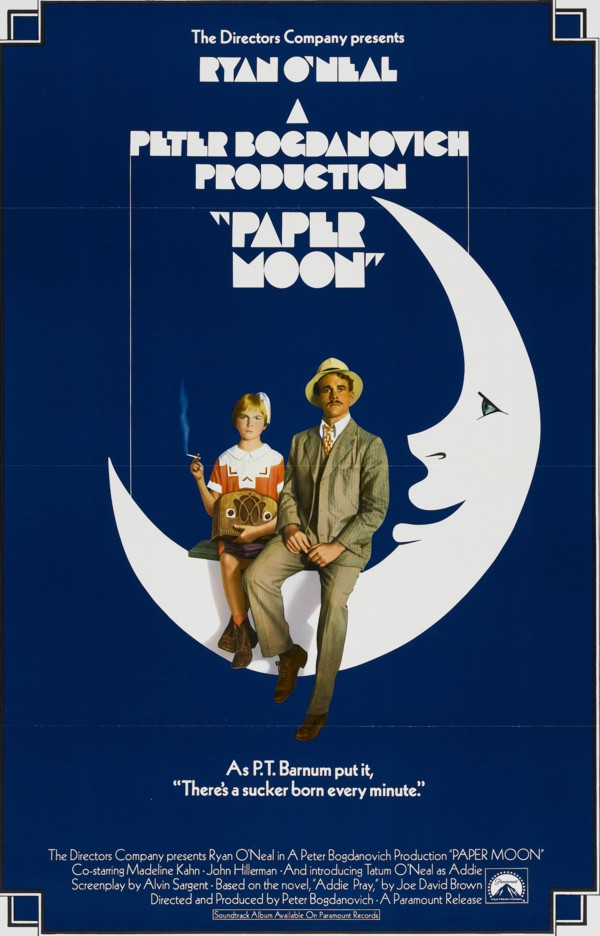
Paper Moon (1973)

By Richard Winters

My Rating: 7 out of 10

4-Word Review: Tatum is the star.

Due to the recent reality show airing on the Oprah Winfrey Network about Tatum and Ryan O’Neal trying to patch things up as father and daughter after years of acrimony I thought it was time to dig up this gem of a 70’s movie and give it a review. It is the story of  Addie (Tatum in an Academy Award winning performance) a 11 year old girl who has just lost her parents and comes into the custody of a traveling salesman/con-artist (Ryan). Their relationship starts out as contemptuous, but eventually evolves into a strong friendship as the two travel the lonely roads of Kansas selling Bibles door-to-door during the Depression.

Lazlo Kovac’s incredibly evocative black and white cinematography is the true star here. Absolutely everything is in focus and his ability to bring out the beauty and charm of the otherwise barren and stark Kansas landscape is an achievement in itself. Tatum is sensational and eats up every scene that she is in. Madeline Kahn as Trixie Delight is also great. The opening scene where she walks up with her breasts juggling up and down in her dress is memorable. The story itself works off of the cuteness formula, but somehow manages to pull it off without it becoming forced or annoying.

Ryan’s performance is a little too affected. At times he becomes badly upstaged by his daughter and seems even a little intimidated by her. The film might have been better served with someone else playing the part. Also the scene showing him in the aftermath of a big fight where he gets beat up by a group of four men looks cheesy. He comes away with only a few cuts and bruises when it reality it should have been a lot worse.

Overall this is a charming and entertaining movie that, scene for scene, hits all the right marks. On a technical level this film is brilliantly photographed and directed and effectively brings back the 1930’s period detail and feeling.

My Rating: 7 out of 10

Released: May 9, 1973

Runtime: 1Hour 42Minutes

Rated PG

Director: Peter Bogdanovich

Studio: Paramount

Available: VHS, DVD, Amazon Instant Video

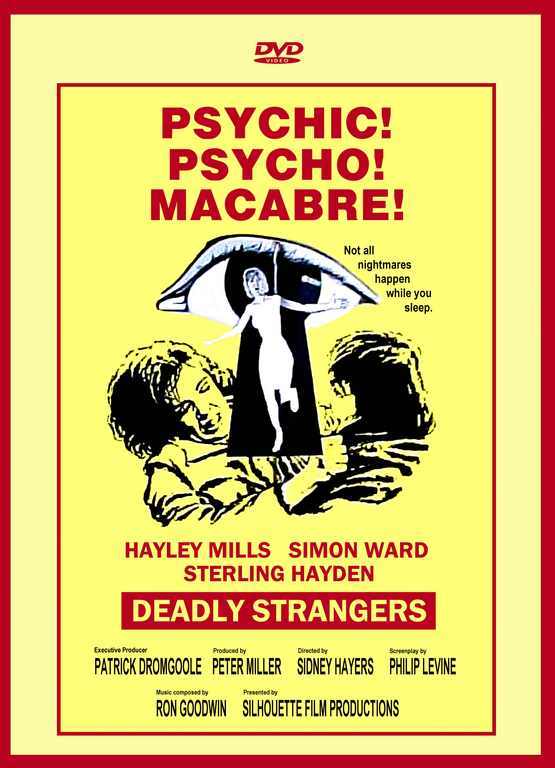
Deadly Strangers (1974)

By Richard Winters

My Rating: 5 out of 10

4-Word Review: Psycho on the loose.

A dangerous mental patient has escaped from a nearby asylum. Belle Adams (Hayley Mills) is the beautiful women whose car has just broken down and she accepts a ride from Stephan Slade (Simon Ward) who just may be that patient.

This seems very similar to See No Evil which also took place in the English countryside and also hid the killer’s identity until the very end. There though it was a big letdown finding out who he was while here it is actually what makes the movie interesting. However, some of the techniques used to conceal the killer’s identity come off as contrived. The opening escape sequence inside the institution, where you see everything from the patient’s point of view is very tacky.

The suspense is minimal and things never really get too intense until the climatic sequence. There are twists and turns throughout, but some of them seem to be put in just to keep the story moving. The overall production values are cheap and the film stock is grainy and faded.

It is nice to see a British movie that doesn’t take place in London. The brown, barren landscape, which looks to have been filmed in the autumn, gives the picture an added visual. The car they drive is another sight as it looks as flimsy as a Yugo.

Mills makes a daring film choice here and it does her well. She no longer has that mousy, awkward look. She is a pretty full grown woman with a nice short haircut. She acts more mature and streetwise without that wide eyed persona that she had in all those Disney movies. Her nude scenes aren’t bad and are even a bit gratuitous.

Ward has never seemed to be that great of an actor. He has always had a tired look on his face and plods through his parts in much the same way. Sterling Hayden is fun playing an aging womanizer and sporting a wild beard and hairstyle. He talks in a goofy Scottish accent and amusingly tries to court Hayley, but unfortunately he is on for only a short time.

The final twist is pretty good, but a real sharp viewer will figure it out before it happens because I did! The film is a nice alternative for Mills despite a tendency to be gimmicky and flat. It is also the only time I have ever seen a policeman pull over a car and when the driver is unable to find his license is simply allowed to drive away.

My Rating: 5 out of 10

Released: February 16, 1974

Runtime: 1Hour 28Minutes

Rated R

Director: Sidney Hayers

Studio: Fox-Rank

Available: VHS

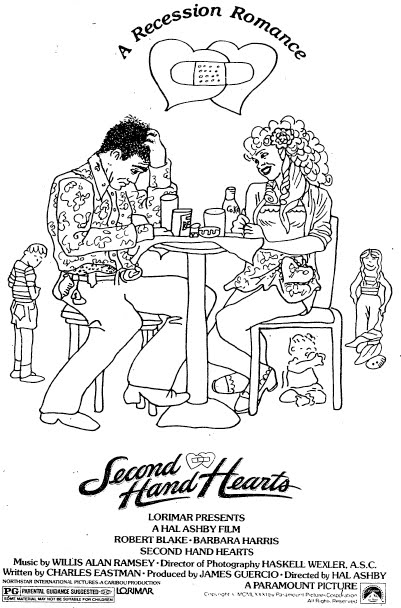
Second-Hand Hearts (1981)

By Richard Winters

My Rating: 3 out of 10

4-Word Review: Losers on the road.

                Loyal (Robert Blake) meets Dinette (Barbara Harris) and the two immediately get married. He thinks it was on a Thursday, but it might have been on Tuesday because that is the day he got really drunk. After losing his job at a car wash when he pukes all over the inside of a car that he was cleaning he piles Dinette and her three kids into a station wagon and takes them to California where he hopes to find some work and a better future. During the trip the two get to know each other and decide whether their marriage can actually work.

This was done during the time when director Hal Ashby was heavily into drugs and his behavior on and off the set was becoming more and more erratic and the results are obvious here. The first half is slow and boring with scenes that go on too long and have too much extraneous dialogue. The second half when they finally hit the road is an improvement, but not by much. I liked the gritty look of the picture. The dry desert landscape helps accentuate the raw, rough lives of the characters. The scenario is goofy enough that with a delicate touch it could’ve worked, but Ashby seems detached from the material and portrays the characters as goofballs that never seem real, or human.

The road trip itself has a lot of problems as well. The station wagon used is too over-the-top junky. I am not sure what make or model it was, but looks like something from the 50’s that was completely out of place for the time period. Obviously it was chosen to be a comic eyesore but becomes too extreme and makes the characters seem even more like caricatures than they already are. I also found it bizarre that they never ever pass another vehicle during their long trip. Wide shots consistently show them to be the only car on the road. I am a traveler myself that have been to some desolate areas of western Texas and Nebraska, but even then you will pass by another car every now and then. There is also a scene where they have a flat tire and when Luke puts on the spare he finds out that it loses its air, which sends him into a tizzy as they are in the middle of nowhere. Yet the film quickly cuts to the next scene showing them back out on the road without any explanation for how they were able to get it fixed. The only interesting scene is when they are chased down by an angry group of young Mexican men, which helps create some much needed tension, but the film doesn’t go far enough with it.

Harris is great as always. She puts on such an effective accent that for a while I thought it had been dubbed in. Blake is surprisingly good in his comic role and is actually quite funny in his constantly perplexed state. He puts a lot of energy into it and it is a shame that the film is so obscure that no one can appreciate his efforts.

The film would have worked better had it started when the two had first met and went through their whole rushed wedding. Having it begin in the middle doesn’t allow the viewer to have any understanding to the background of these characters and hence impedes any attachment to them. I also didn’t like that the film ends before they ever make it too their destination. The rule for every road movie should be that they must get to where they are going to otherwise it comes off as incomplete. I also don’t like children characters who never say a single word such as the case with the ten year old boy here named Human. This to me always seems freaky and disturbing and not funny like the filmmakers apparently thought it would be. There is also a scene insinuating child molestation that although brief still proves to be unsettling. The loud, blaring country soundtrack is annoying as well.

My Rating: 3 out of 10

Released: May 8, 1981

Runtime: 1Hour 42Minutes

Rated PG

Director: Hal Ashby

Studio: Paramount

Available: VHS, YouTube

Goodbye Pork Pie (1981)

By Richard Winters

My Rating: 8 out of 10

4-Word Review: Minis are very durable.

A middle aged man named John (Tony Barry) whose wife has just left him and an unemployed nineteen year old named Gerry (Kelly Johnson) come together through circumstance and trek across New Zealand in a yellow mini while desperately trying to elude the police.

The film has a wonderfully carefree approach and anyone who has ever wanted to ‘drop out’ or stick it to authority will most assuredly enjoy this. There are some clever chase sequences involving the mini with the best coming at a Wellington shopping center. There are also a couple of good running bits including a stressed out vacationing couple dealing with their noisy kids and police officer doing a sexual role playing game with his wife while on duty. The vast age difference between the two main characters is refreshingly different from most ‘buddy’ movies and Johnson, as the younger one of the pair, is excellent. He shows a lot of star making appeal and it is amazing that his film career never flourished. Claire Olberman is gorgeous as a hitch-hiker that they pick up along the way and she closely resembles 80’s adult film star Stacey Donovan and it is a real shame that she doesn’t stay with them throughout the entire film. I also must mention the music score, which has a nice distinct quality to it.

On the negative side I felt Barry in the role of the middle aged man was a little too laid back in his performance. He needed to show more stress and tension, especially when he is put into such crazy and hectic scenarios. I felt his mellowness hurt the film’s believability and even to some extent the excitement. The ending is not very satisfying and seems like the screenwriter wrote himself into a hole that he didn’t know how to get out of. The police are made to look too hopeless and helpless and the film goes overboard in its attempts to mock them.

Despite some flaws this is a road movie the way all road movies should be. It is fun and engaging and will bring out the free spirit in anyone. Although small the minis are a durable and fast car and this film makes prime use of their abilities almost as well as the original The Italian Job did. It also features some great stunt work that most viewers should find impressive.

My Rating: 8 out of 10

Released: February 6, 1981

Runtime: 1Hour 45Minutes

Rated R

Director: Geoff Murphy

Studio: Greg Lynch Film Distributors

Available: VHS, DVD

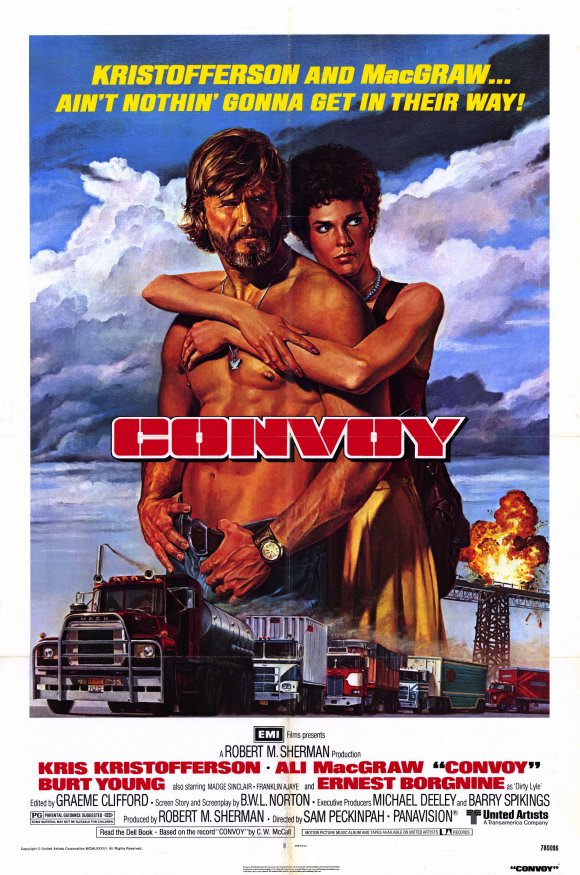
Convoy (1978)

By Richard Winters

My Rating: 3 out of 10

4-Word Review: The song is better.

Trucker Martin ‘Rubber Duck’ Penwald (Kris Kristofferson) battles corrupt Sheriff Lyle ‘Cottonmouth’ Wallace (Ernest Borgnine) by getting his fellow truckers to band together and form an unstoppable convoy that stretches for miles and soon creates a national media frenzy.

The film’s setup is weak and the ending even weaker. It has all the good-ole-boy/trucker clichés without adding anything new in the process and makes Smokey and the Bandit look brilliant and inspired. Kristofferson is much too laid back for a leading man role and cannot carry the picture. Borgnine’s character is portrayed awkwardly. At the start he is made to look like a real jerk of a sheriff who overacts to a minor contrivance that starts the whole thing rolling. Then at the end he turns more sympathetic and even secretly sides with Kristofferson, which doesn’t work at all. In either case Jackie Gleason is a much better actor for this type of role. The worst part about the movie though is director Sam Peckinpah’s attempts to throw in a ‘serious message’ into this silly action flick that does nothing but slow it down and bomb in the process.

The only good scene in the whole film is the fight sequence inside the truck stop restaurant. Peckinpah puts a funny spin to his trademark ‘slow motion’ violence and the result is amusing. Unfortunately he starts putting all the action into slow motion, which eventually becomes tiring. Ali McGraw as Melissa an attractive woman Martin picks up along the way is always a pleasure to look at, but unfortunately she is given very little to say or do.

If you’ve read the synopsis then you have essentially ‘seen’ the movie. The hit song by C.W. McCall that this movie is based on is pretty good and I would suggest listening to that instead and saving yourself 108 minutes of your time. This is all shockingly uninspired stuff for such an otherwise maverick director.

My Rating: 3 out of 10

Released: June 28, 1978

Runtime: 1Hour 50Minutes

Rated PG

Director: Sam Peckinpah

Studio: United Artists

Available: VHS, DVD, Amazon Instant Video

Two for the Road (1967)

By Richard Winters

My Rating: 6 out of 10

4-Word Review: Couple examines their marriage.

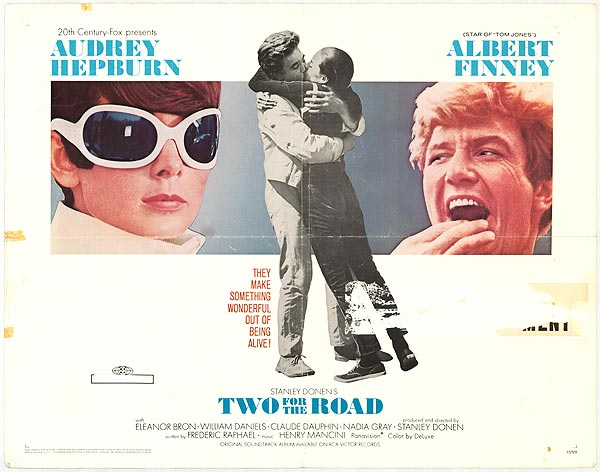
This is a unique and diverting look at a couple (Albert Finney, Audrey Hepburn) traveling the French countryside while dissecting their turbulent marriage. The road of course represents their long and winding relationship. It cleverly cuts between when they first met, which seems to have been on the same road, to twelve years later. The edits between the two stages are creative as is the majority of this fluid and entertaining movie. It wants to be silly, fluffy, serious, complex, exotic, avant-garde, and romantic all at once and most of the time it succeeds proving what an over looked, unsung genius director Stanley Donen is.

It’s a movie made for couples, but probably those who have been married for quite a while and can relate to the characters here who have been through the rough spots and have learned to accept their partner and the flaws that come with them. This film tries to dig a little bit deeper, which helps it stand out. It also has a more relaxed European attitude, especially in regards to ‘indiscretions’.

On the negative side the film contains a lot of old fashioned sexist attitudes. For instance the man is expected to be mechanically inclined and in control of every situation, which becomes very apparent in the scene where he has to get underneath the car to fix it while she sits on top of the vehicle without any care or inclination to what he is going through. The man is also expected to be the sole provider of the family while the woman does the majority of the child rearing.

Audrey, who wears an amazingly high number of stylish, chic outfits, looks more like a runway model sporting the latest fashions than an average housewife on a country drive. I realize that they wanted to accentuate her beauty, but it ends up being a distraction at the same time. If the intention of the story is about an average couple going through average marital problems then at least have them look the part.

The Henry Mancini score is pleasant as usual, but eventually gets overplayed. It’s also not as introspective as it wants you to believe, but on a slickness level it gets an “A”. Also, watch for Little Ruthie who is the world’s most obnoxious child.

My Rating: 6 out of 10

Released: April 27, 1967

Runtime: 1Hour 51Minutes

Rated NR (Not Rated)

Director: Stanley Donen

Studio: 20th Century Fox

Available: VHS, DVD

Lost in America (1985)

By Richard Winters

My Rating: 7 out of 10

4-Word Review: Living in a winnebago.

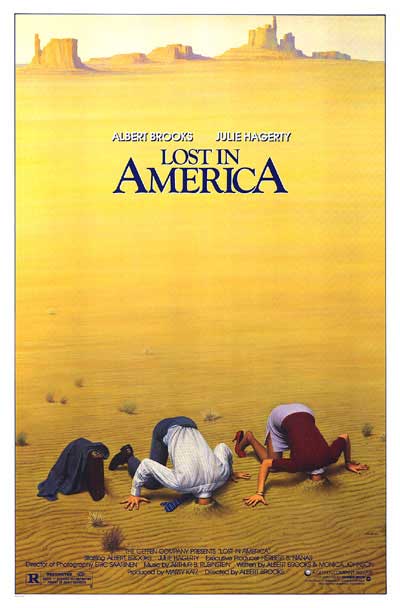
            David Howard (Albert Brooks) becomes upset when he doesn’t get his expected promotion and decides the corporate life isn’t for him and that he and his wife Linda (Julie Hagerty) will drop-out by liquidating all of their assets, buying a Winnebago, and roaming the countryside as free-spirits. Things go horribly wrong right from the start when, in a fit of gambling fever, Linda loses their entire savings at the roulette wheel. This forces David and Linda to desperately look for jobs in the first small town they come to.

The concept is fantastic. Who hasn’t dreamed of doing this at one time or another? Reportedly top executives who saw the film admitted having these very same fantasies at some point. In many ways this film is perfect testament to the 80’s where everything seemed to backtrack to the materialism and conformity of past eras and the idealism of the 60’s became lost. Writer-director Brooks plays it in a realistic and believable way with just enough subtle comedy to bring out the absurdity in each situation, which is what makes it fun.  Had the characters been over-the-top it wouldn’t have worked.

The dry, cynical wit that is Brooks’s signature is in full swing here. It may be an acquired taste to some, but it is distinct and hilarious for those that enjoy it. Some of the best moments include David’s funny rant when he tells off his boss and demands that the company give back the eight years he invested into it and won’t leave until it does. There are amusing conversations between David and the casino owner (Gary Marshall in an excellent cameo) where he begs him to give back the money Linda lost as well as his visit to an employment agency. The couple’s argument at the Hoover Dam is another highlight as is his lecture to Linda about the ‘nest egg’ concept. However, the funniest scene that had me literally laughing out of my seat was when David takes a job as a crossing guard for $5.50 an hour and some ten-year-old boys start to mock him. Even the little things, like when David tells a hotel clerk that they did not make reservations because they have ‘dropped-out of society’ and ‘just living for the moment’ is funny when done with Brooks’s impeccable deadpan delivery.

Julie Hagerty is so ingrained in my mind for her appearance in the cult-classic Airplane that I had a hard time adjusting to her here. Initially, when she is shown in the corporate setting and acting as a serious, responsible adult, I felt it didn’t work because I kept expecting her to say, especially with that high-pitched voice of hers, something dippy and spacey like her character in Airplane always did. However, when she gambles away their savings by incessantly screaming out the number twenty-two she is hilarious and when David lectures her afterwards and she looks up at him with that blank, blue-eyed, deer-in-headlights stare, she is perfect and the casting astute.

The opening sequence is probably the only part that doesn’t work. Having a taped audio interview between talk show host Larry King and film critic Rex Reed played over the opening credits is certainly novel, but David’s prolonged, whiny conversation with Linda while in bed is annoying.  A scene involving a conversation between Linda and a co-worker could have been cut. There is also the fact that everything goes downhill too quickly making the viewer feel almost cheated. It would have been nice to have seen them living the hippie lifestyle for a while and then have the problems begin gradually. There could’ve been a lot of great comedy had it been played straight without the irony of the money problem. Either way it’s entertaining, but brief. Hearing the entire rendition of ‘New York, New York’ by Frank Sinatra is worth the price as is the sight of seeing a giant Winnebago driving up a busy, downtown Manhattan street.

My Rating: 7 out of 10

Released: March 15, 1985

Runtime: 1Hour 31Minutes

Rated R (For a Couple of ‘F-Bombs’)

Director: Albert Brooks

Studio: Warner Brothers

Available: VHS, DVD, Amazon Instant Video

Easy Rider (1969)

By Richard Winters

My Rating: 10 out of 10

4-Word Review: Drop out of society.

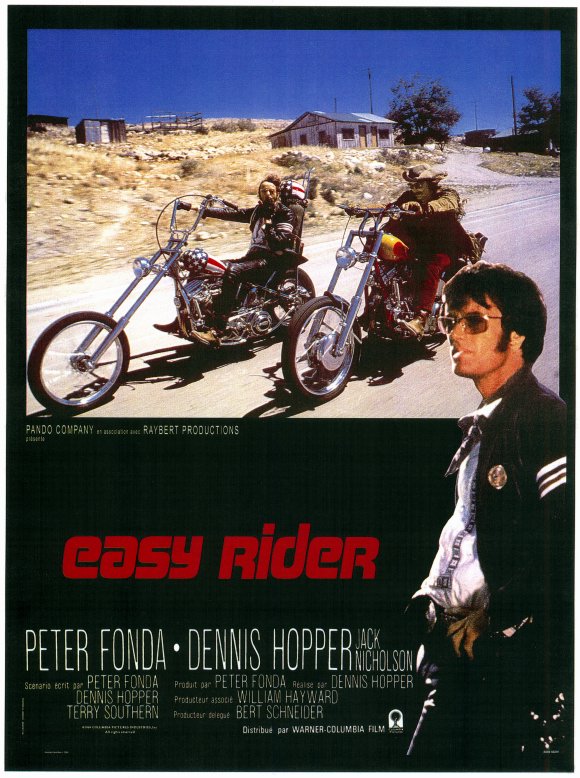
This is still the granddaddy of all road movies as it perfectly captures the era and the angst of those living in it. It examines the harsh reality of life on the open road, but does it with a deep philosophical edge. Wyatt and Billy (Peter Fonda, Dennis Hopper) are two bikers making their way to the Mardi Gras when they pick up lawyer George Hanson (Jack Nicholson) along the way. They face prejudice and apathy from others who do not understand their values, or lifestyle. Although strongly linked to the 60’s many of the statements that the film makes and ideas that it brings out are as pertinent today as ever and this is one movie that should not be overlooked by the serious film fan as it is a classic and far from being just a relic.

The script, which was written by Fonda and Hopper, who also directed, portrays the open road as an odyssey of personal discovery instead of a particular destination. It brings out how one is still always trapped within the confines of the very society they may wish to escape. Above all it questions what true freedom really is, whether anyone has it, and if it can fully exist.

Fonda and Hopper are perfect. They channel their rebellious energies well. Of course it’s Nicholson who steals it playing a slightly goofy character. He exudes a charm here that’s rarely seen in his other performances. He also sports the silliest riding helmet you can imagine.

Lazlo Kovacs cinematography is outstanding. It captures the American landscape like you’re watching a travel show. The hippy commune scene is the best as it is so vivid that it makes you feel like you are right there. There is also a memorable hallucinogenic drug scene in a graveyard that is wickedly surreal and features cult favorite Karen Black in an early role.

Some may say it’s boring, but the slow pacing is deliberate and well-orchestrated. The framing and flash editing are groundbreaking in both its vision and execution. This is a definite trend setter and most importantly a classic.

My Rating: 10 out of 10

Released: July 14, 1969

Runtime: 1Hour 35Minutes

Rated R

Director: Dennis Hopper

Studio: Columbia Pictures

Available: VHS, DVD (35th Anniversary Edition) Blu-ray, Amazon Instant Video

Two-Lane Blacktop (1971)

By Richard Winters

My Rating: 9 out of 10

4-Word Review: Drifters on the road.

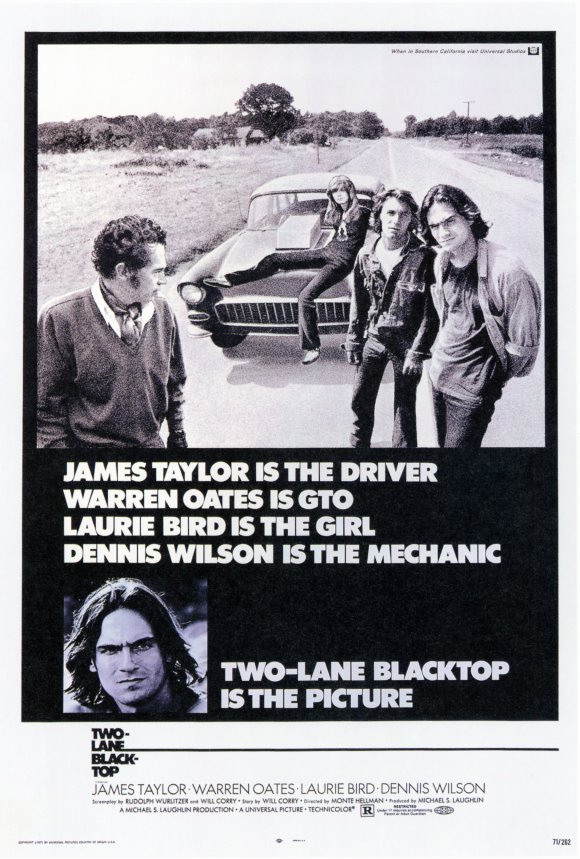
This is a cult film if there ever was one as there seems to be no other category to put it into. It has a quality and style all of its own and the same existential mindset as Easy Rider, which can encompass you with its moody, desolate, and surreal atmosphere.

The story focuses on two young men (James Taylor, Dennis Wilson) who are given no names and drive a ’55 Chevy. They make a living challenging others to races and bet a middle-aged man (Warren Oates) that they can make it to Washington D.C. before he does. The race, like many things in life, becomes only a concept that gets increasingly more fleeting as it goes on.

The two young men are remnants of their fractured society and can only relate to the world around them when it is through their car. They subconsciously use the car to differentiate them from the pack and cover up there otherwise empty existence. The vehicle becomes more like a person while they become more like an inanimate object. They are unable to convey any deep emotion or thought and, like the stick shift in their car, only able to function with certain people.

Oates is interesting in a different sort of way. He is a man desperately seeking attention and yet is alienating at the same time. His fabrications about his life become more and more outrageous and compulsive until one wonders if he knows the difference anymore “If I don’t get grounded soon, I’m going to fly into orbit”. We realize he is running from something, but unlike other stories this mysterious past may be nothing more than loneliness and failure. He drives aimlessly simply as a way to avoid it and stopping would only allow it to catch up. The hitch-hikers he picks up along the way and conversations he has with them prove to be some of the film’s most compelling moments.

Laurie Bird plays the hippie girl that shuffles herself between the three. She inadvertently brings out some of their most dormant feelings as well as their flaws. She is quintessential in her role and her face is etched with the anger, alienation, and innocence of the youth from that era.

This as evocative a picture as you will ever find. The widescreen, remastered DVD version shows the wide open outside shots in almost crystal clear fashion. Watching James Taylor walking down a lonely, nameless small town street captures the youth’s detachment better than just about anything else. Of course this is a picture that is completely dependent on personal taste. Some will say it speaks to their soul, while others will watch it and see nothing. I know when I was younger it seemed boring and aimless, but I watched it again many years later and it made perfect sense.

The film also gives you a chance to hear interesting variations of popular rock songs. They are played in the background of certain scenes and include: “Hit the Road Jack”, “Maybellene”, and “Me and Bobby McGee”.

My Rating: 9 out of 10

Released: July 7, 1971

Runtime: 1Hour 42Minutes

Rated R

Director: Monte Hellman

Studio: Universal

Available: VHS, DVD (Criterion Collection), Blu-ray (Region B)

Planes, Trains & Automobiles (1987)

planes

By Richard Winters

My Rating: 6 out of 10

4-Word Review: Thanksgiving on the road.

This movie’s plot, which is threadbare , deals with a middle-aged businessman named Neal Page (Steve Martin) who is trying desperately to get home to Chicago to celebrate the Thanksgiving holiday with his family. During his trip he inadvertently meets Del Griffith (John Candy) an overweight, slightly obnoxious shower curtain hanger salesman. Neal initially cannot stand the man, but is forced to sit with him through his plane flight when he is not able to get the first class seat that he had reserved. Unfortunately due to a snowstorm their flight is rerouted to Wichita, Kansas and the two men find themselves paired together again as they try any means of transportation possible to get themselves to the Windy City. Along the way they begrudgingly start up a friendship.

Martin is okay as the exasperated businessman. This film marked a transition for him as he was now moving away from roles where he played clownish, vapid, but lovable idiots and more into crusty and curmudgeon middle-aged men. He is basically used for his annoyed reactions at all of Candy’s crazy antics and for that part he is fine, but there are a wide assortment of other actors that could have played the part just as well if not better. Martin at times still goes back to some of his old shtick like the dopey way he puts on a clenched teeth grin when he is trying to run real fast, which I never found to be particularly funny when he was doing it way back with skits on Saturday Night Live and still don’t find it funny when he continues to do it now.

Candy is by far the best thing about the film and ends up saving the movie from being an uninspired, goofy mess. The character does at times border on being a caricature, but fortunately writer-director John Hughes pulls back just enough to let you see him as a real person. He does indeed have some laugh-out-loud moments. I chuckled at the way he tries to clear his throat when the two men are stuck in a motel room together. The part where he manages to get both his coat sleeves stuck on some car seat levers and he is forced to drive the car with his two legs is hilarious. I also liked the way he gyrates to a Ray Charles song that he listens to while driving and the conversation that he has with a policeman (Michael Mckean) when their burned out shell of a car gets pulled over is a classic.  I thought the idea of having him be a salesman for shower curtain hangers hit just the right note of absurdity and the fact that he carries around a little box displaying all the different types of hangers he has was novel. The only thing I didn’t like about the character is that at the end we find out that he is somehow rendered homeless simply because his wife died 8 years before. This doesn’t make a lot of sense, for one thing he seemed to have a lot of success selling his merchandise, so I’m sure he had money and for another thing there are many men and women whose spouses end up dying, but that doesn’t mean they no longer have a home to go to. To me it just ends up being a cheap excuse for a sloppy sentiment and it should have been avoided.

The late John Hughes’s writing and directing leaves a lot to be desired especially for the sophisticated viewer. The humor that is used is extremely broad and many times downright cartoonish. He seems to be either not confident in himself as a filmmaker, or in the intelligence of his audience to ever be subtle and subdued, but it would have been nice if a little bit of that had been thrown in. He also uses way too many poor plot devices that are simply used to propel the paper-thin story along and would be considered hack writing at most and something that a third grader could come up with. For instance why does the engine of train that the two men are riding in suddenly break down? No logical explanation is given and what are the odds of that happening as well as having Neal’s rental car missing when all the rest of the cars are there. There is also the cab driver named Wolf who decorates his cab with all sorts of pornographic pictures and other provocative ornaments, which is at first funny until you realize that he supposedly works in Wichita, which is a small conservative city and no one would be riding his cab for long and he would be out of business. If there is no truth to the joke then the joke will fail, which it does here. The same goes for the crude, gross, and very hick pick-up truck driver that relies way too heavily on stereotypes and seems to be put in solely as filler.

I did like the fact that it was filmed on-location as the stark wintry like landscapes does indeed put the viewer in the holiday frame of mind. I also liked the fact that for the most part real snow is used. I was born and raised in Minnesota and I can spot the fake stuff right away and I always find it annoying. I liked that many performers from Ferris Bueller’s Day Off appear in brief cameos including: Ben Stein and Edie McClurg although it would have been nice if they were given a little more to do. Kevin Bacon also appears as does William Windom who is amusing as a one of Neal’s clients who can’t decide on what photo layout to use. I was disappointed that he wasn’t given any lines of dialogue, but the fact that he does reappear at the very end after the credits  makes up for it a bit. I also must mention the burned-out skeleton car that the two men drive in, which is the damnedest looking thing since the bus filled with bullet holes in The Gauntlet.

The music score is awful. It has too much of that tinny, synthesized 80’s sound that is unoriginal and does not fit the mood, or tone of the picture in any way. It also gets overplayed in certain scenes and hurts the film’s overall enjoyment.

I would say this movie would be great for the whole family as it does rely a lot on the broad, fast paced humor that most kids love. However, there is one scene where Martin goes into a long, F-word laden rant with McClurg when he can’t find his rental car. The rant in itself is funny, but some might say it is not appropriate for children. Of course these days I have heard kids as young as six, or seven using the word and I have also heard it used just in casual conversation by people I pass by while walking the streets of Indianapolis, so trying to shield the child from it may be futile and they will all sooner or later hear it in abundance anyways.

My Rating: 6 out of 10

Released: November 25, 1987

Runtime: 1Hour 33Minutes

Rated PG: (Adult Language, Crude Humor)

Director: John Hughes

Studio: Paramount

Available: VHS, DVD, Blu-ray, Amazon Instant Video