Category Archives: Quirky

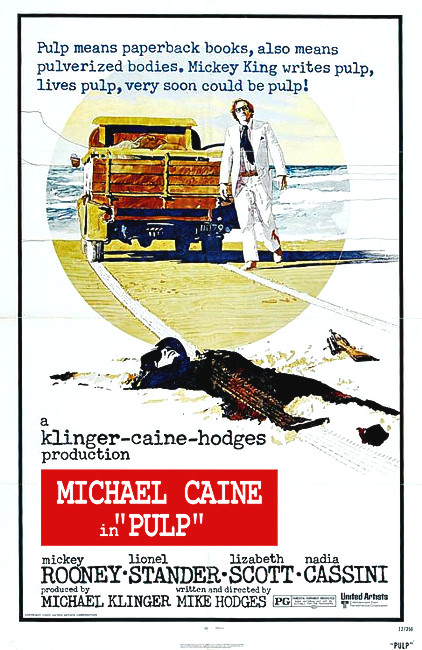
Pulp (1972)

pulp

By Richard Winters

My Rating: 6 out of 10

4-Word Review: Running for his life.

Michael Caine and director Mike Hodges teamed up again one year after doing the gritty classic Get Carter with this breezy oddity dealing with a pulp fiction writer Mickey King (Caine) who is hired to pen the autobiography of ex-Hollywood star Preston Gilbert (Mickey Rooney) who is now living in exile in Malta. The problem is that Gilbert has ties to the underworld and Mickey soon finds himself running for his life while meeting up with a barrage of oddball characters along the way.

The movie has a wonderfully quirky sense of humor with a few memorable laugh-out-loud sequences especially at the beginning. I got a real kick out of the man with a weak bladder who says a prayer to God to open up a locked bathroom door when he can’t get into it. The scene in the bus where we hear the different thoughts going on inside each of the passenger’s heads is great as well. The opening sequence featuring a row of lady typists writing up King’s latest manuscript is cute, but the one thing that holds it all together is Caine’s wry voice-over narration that remains consistently amusing.

Rooney though manages to steal the whole thing with his hilarious send-up of an aging actor. In fact this may be one of the funniest roles of his entire career. Even the scene showing him shadow boxing in his underwear is engaging although thankfully the camera doesn’t stay on it for too long. I was a bit disappointed that the character didn’t last through the film’s duration, but his death scene is so funny that it almost makes up for it.

It is nice to see Lizabeth Scott in her last film to date and first since 1957 when she was essentially blacklisted from Hollywood purportedly for her lesbian leanings. Although only 50 at the time her aging face looked like she was almost 70 and her deep, raspy voice sounded similar to the demon’s in The Exorcist. I thought she could’ve been given more to do and played a character that was more integral to the story as her screen time is much too brief.

The on-location shooting done on the island nation of Malta is another asset. The sunny weather has a nice exotic feel and the old architecture of the buildings helps give the film a visual distinction. The melodic piano soundtrack is pleasing and I wished it had been heard a little bit more.

The story is full of a lot of unexpected twists and turns that manages to be engaging for a while, but I felt it runs out of steam by the end. During the final 15 minutes I found myself a bit bored and no longer caught up in it. While I do like the scene where the gunmen gets run over by a pick-up and shown from the point-of-view of the driver I still felt that the ending lacked the finesse and quirkiness of the beginning. The offbeat ideas that writer/director Hodges showers into the film become dried up with a finish that lacks any payoff and unfortunately sullies what is otherwise an offbeat gem waiting to be discovered.

My Rating: 6 out of 10

Released: August 4, 1972

Runtime: 1Hour 35Minutes

Rated PG

Director: Mike Hodges

Studio: United Artists

Available: DVD, Amazon Instant Video

Welcome to Woop Woop (1997)

welcome to woop woop 2

By Richard Winters

My Rating: 6 out of 10

4-Word Review: Oh those crazy Aussies.

Teddy (Johnathon Schaech) is a rather clumsy con man from New York who tries to escape a murder rap by going to the most remote place possible, the Australian outback. However, after coming into close contact with the eccentric people and lifestyles, he decides what he really needs is an escape from there!

This is the type of offbeat comedy that should give all other offbeat comedies a bad name. It takes all the same ingredients from all those other films, meshes them together, and then spits them out in a mechanical fashion. Unlike director Stephan Elliot’s earlier feature Priscilla Queen of the Desert there is nothing deep here to help balance the quirkiness. The film is just made to be silly and at times goes overboard with it. The pace is also too fast. The viewer is never allowed to soak anything in or even take a breath.

Schaech is not good in the leading role. He gives too much of a breezy performance, acting as if the whole thing is a joke. He never once even for a second displays the angst, anxiety, and basic overall exhaustion that anyone else stuck in the same situation would feel.

The portrayal of the Australian people is terrible. They take all the stereotypes of the down under folks and then play it up to the extreme. Here they are not just slightly eccentric people of a rugged and hearty nature. Instead they are complete Neanderthals who live like animals and have no level of sophistication. Yes, it does try to be somewhat fair by showing that Americans may have some primitive defects as well. Specifically in an opening sequence in New York City where every pedestrian is seen shooting at some birds flying by. Still the Australian segments are needlessly overdone and a bit insulting.

The one pleasant surprise is the appearance of Rod Taylor. He plays completely against type here. He’s Daddy-O a self-imposed, self-styled dictator of the town. His performance is gruff, campy, energetic, over-the-top, and hilarious all at the same time. His appearance here may actually be his career pinnacle.
Overall the film is similar in tone to all those formulaic bid budgeted Hollywood actioners, except here it’s aimed at the offbeat crowd. Everything is perfectly packaged to its core audience and overblown all at the same. It’s so forced at points that it almost becomes ridiculous. Yet some of the humor is funny, it has a feel good attitude, and it is without question LIVELY.

Watch for a real fun cameo by Tina Louise at the beginning.

My Rating: 6 out of 10

Released: May 13, 1997

Runtime: 1Hour 37Minutes

Rated R

Director: Stephan Elliot

Studio: Goldwyn Entertainment Company

Available: VHS, DVD

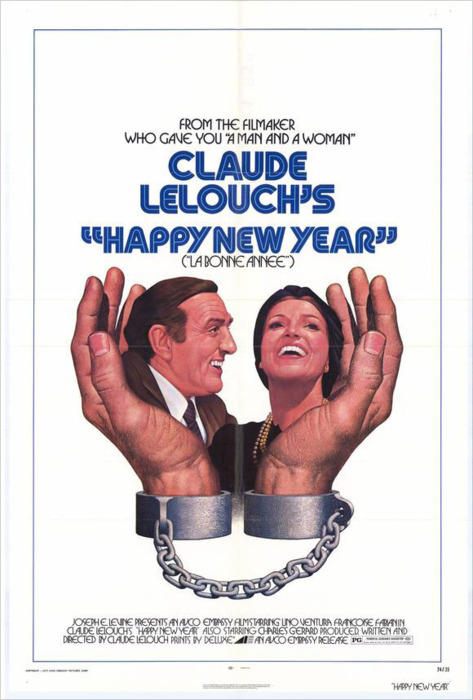
Happy New Year (1973)

happy new year

By Richard Winters

My Rating: 8 out of 10

4-Word Review: A robbery with romance.

Stylish, moody, charming, serene, glossy, and evocative are just a few of the words that come to mind when you view this film and that’s just after the first five minutes. This is truly a French picture. It has all the ingredients that lovers of that cinema enjoy. Unlike American films, French films take their time in telling their story and everything is leisurely paced. The viewer is actually allowed to soak in the visual experience without being told what to think. Director Claude Lelouch is a master at work. He wisely realizes that film viewing is a very personal experience. What the viewer will take from that experience is unique only to them. Thus you have a picture that stays rather wide open in regards to structure. The camera takes many wide shots, thus allowing the individual viewer to focus on whatever it is that intrigues them personally. The story, while still being focused, stays elusive and subtle throughout.

To say the plot is about a planned jewelry store heist is misleading since this only takes up a part of the movie. There is also a running mix of character study, romance, comedy, satire, and even drama. Some will enjoy the amusing banter and love-hate relationship of the two male leads. Others will like the blossoming romance between one of the crooks and a beautiful antique shop owner. Still others will like the wide array of conversational topics some of which include: unique observations on marriage, hairstyles, churchgoers, psychology, men’s definition of women, and women’s definition of men. There’s even a playful critique of an earlier Lelouch film A Man and a Woman.

Overall it’s perfectly made for the viewer with distinct tastes even though when you get right down to it, it really is just a piece of entertainment fluff made more intriguing because of its sophisticated approach. Like with its Wizard of Oz-like format where the beginning and end are in black and white while the middle is in color. Why do it this way? No reason, except, why not. Same with the long slow shots of actor Lino Ventura’s very lined and expressionless face, which manages to hold an unexplainable captivation.

The rather abrupt and elusive ending seems to be the film’s only real weak point and yet when taken into context with everything else, this too has its allure. An American version of this movie was made in 1987 under the same title and starring Peter Falk, but that version is far inferior to this one and not worth seeking out.

My Rating: 8 out of 10

Released: April 13, 1973

Runtime: 1Hour 30Minutes

Rated PG

Director: Claude Lelouch

Studio: Les Films 13

Available: DVD (Region 2)

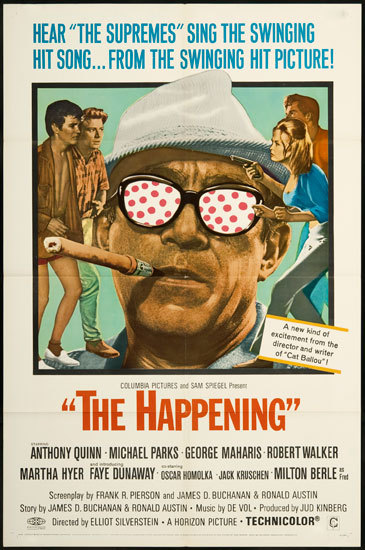
The Happening (1967)

the happening

By Richard Winters

My Rating: 3 out of 10

4-Word Review: Kidnap him for kicks.

After a night of partying a group of hippies wake up the next morning hung over. Sandy (Faye Dunaway) and Sureshot (Michael Parks) are two strangers that find that they’ve slept together outside for the night and slowly become acquainted. To escape a police raid that is rounding up the drunken partiers and arresting them for vagrancy they hop onto a nearby boat with two other men that they’ve just met Taurus (George Maharis) and Herby (Robert Walker Jr.). They happily go along the lake until some neighborhood kids who are dressed in army gear shoot at them with their toy guns. Taurus doesn’t appreciate this and docks the boat and chases them into their house. Inside is the boy’s father Roc Delmonico (Anthony Quinn) who is a former Mafia Kingpin. He thinks these four strangers are aware of his past and there to kidnap him. The group decides to play along with the ruse hoping to get some money from the ransom and also because they are just bored and looking for some kicks.

The set-up has to be one of the flimsiest I have ever seen and the fact that it took four writers to come up with something that is full of holes and ludicrous is all the more confounding.  The concept seems like something that never got past the first draft and very poorly thought out by everyone involved. The idea that four strangers who have known each other for just a few minutes could get together and kidnap someone that they don’t know on a mere lark is ridiculous. I would think a former kingpin would be better prepared for something like this and have a back-up plan instead of passively and stupidly falling into the kid’s clutches with no idea of what to do. The story would have been far stronger had this been a planned crime.

The film’s overall vapid nature is shocking when you realize that is was done on a good budget by a major studio and top director Elliot Silverstein making me wonder if anyone even cared or thought about what they were making, or simply more interested in getting into the mod mood of the times. The filmmakers portray the younger generation as being one-dimensional thrill seekers with no real or discernible personalities and in the process creates characters that are boring, unrealistic, and uninteresting. The attempts at hipness are shallow, flat, and ultimately annoying.

Despite the low plausibility the movie is slickly done making for periods of fluffy entertainment. Case in point is when the kids have their car pulled over by a policeman (Eugene Roche) when they go through a red-light and carrying Roc tied up in the trunk. In an attempt to create a ‘diversion’ Sureshot decides to get out of the car with his hands up in the air. When the cop tells him to put his hands down he refuses, which then somehow makes all the other cars on the road crash into each other. Yes, it is fun to see a big pile-up, but believing that something like that could happen over something so silly is pushing things too much to the extreme like with a lot of things in this movie.

Things improve during the second half when Roc with the help of the kids turns the tables on everyone he knows after finding out that no one is willing to pay for his ransom. The scene where they tear up his house is kind of funky despite the fact that all the furniture they smash up looks like obvious stage props. Unfortunately the ending is as weak as the beginning and offers no pay off, which most likely will make most viewers feel like they’ve wasted an hour and 45 minutes of their time.

Quinn is good and gives the script and character a lot more energy and heart than it deserves. Dunaway, in her film debut, is hot and plays the part of an immoral lady looking for cheap thrills even when she knows better quite well. Walker Jr. is good simply because he plays the only character that has any type of believability, but unfortunately he is not on enough to be completely effective. Maharis who is best known for his excellent work as Buz Murdock in the classic TV-show ‘Route 66’ is solid as the volatile and slightly unhinged member of the group.

Oskar Homolka has a few memorable moments as an aging crime boss. One scene has him in a steam room along with his henchman wrapped tightly in towels and looking like giant carrots while another segment shows him at a poolside surrounded by a bevy of beautiful bikini clad women, which like the first scene, is visually funny.

The Supremes sing the film’s theme song, which became a top ten hit, but it doesn’t get played until the closing credits and even then not in its entirety.

My Rating: 3 out of 10

Released: May 17, 1967

Runtime: 1Hour 41Minutes

Rated NR (Not Rated)

Director: Elliot Silverstein

Studio: Columbia

Available: None

Up in the Cellar (1970)

up in the cellar 3

By Richard Winters

My Rating: 5 out of 10

4-Word Review: Senior citizens watch porno.

This is a variation of the film Three in the Attic and for a time was called Three in the Cellar to try and capitalize off of the success of that one. Ironically both films starred Judy Pace. In this one Colin Slade (Wes Stern) is a nerdy college student who loses his scholarship to a computer glitch. When he can’t get college president Maurice Chamber (Larry Hagman) to help him, he decides to get revenge by seducing both his wife (Joan Collins) and daughter (Catlin Adams).

The production proudly proclaims to be filmed on location in New Mexico, which is obvious from the start and nothing to really boast about since it hurts the film as a whole. Shot in wintertime it’s dusty, desolate landscape leaves the viewer with a cold, lonely feeling, which configures poorly with a story that is supposed to be lighthearted and whimsical. The big, modern cement buildings used as the campus looks like they would be better suited for a corporation than a student body. The students themselves, or what little you see of them, look all suspiciously over the age of 24.

Director Theodore J. Flicker nicely camouflages the fact that this is a very low budget production. His script is compact and well-paced. He frames and cuts his shots so you don’t notice how lacking in personality or energy it really is. Yet he also shows little connection to the student uprisings that dominated the campuses of that era and seems to view it as a sort of silly amusement. He keeps the film at this tone the whole time and thus makes it as silly and forgettable as the characters and situations he tries to satirize

Hagman comes off best. He plays it with a fun mixture of traits from two of his best known characters. He has J.R. Ewing’s arrogance coupled with Major Nelson’s frantic anxiety.

The film also has two fun and unique scenes. One has Hagman climbing up an actual radio tower to save Stern who is threatening to jump off. The second one has a pornographic movie shown to a group of unsuspecting and shocked senior citizens

My Rating: 5 out of 10

Released: August 12, 1970

Runtime: 1Hour 34Minutes

Rated R

Director: Theodore J. Flicker

Studio: American International Pictures

Available: Amazon Instant Video

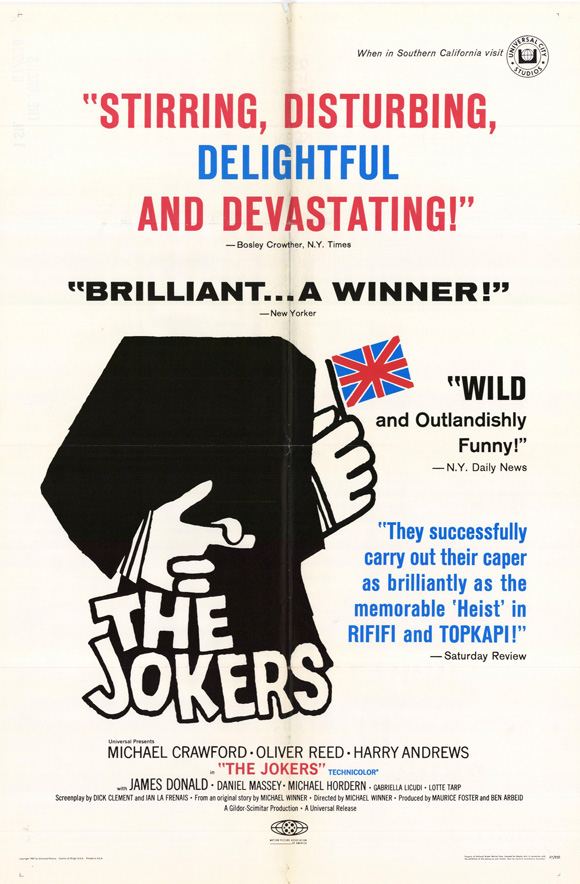
The Jokers (1967)

By Richard Winters

My Rating: 8 out of 10

4-Word Review: Rob to avoid work.

Brothers Michael (Michael Crawford) and David (Oliver Reed) decide that working life is not for them and come up with an elaborate robbery that will afford them enough money to drop out of society for good. Their plan is a clever one as they stage random bomb threats across parts of London, which creates a panic in the city. Then they threaten to blow up the tower of London, disguise themselves as military experts who can go in to diffuse the bomb and then run off with the crown jewels in the process, which they conveniently hide underneath the floor boards of their home.

The film has a great irreverent flair that was common amongst the new wave British films of the late 60’s. The quick edits, fragmented narrative, and quirky humor is similar to Richard Lester’s The Knack…and How to Get It, which also starred Crawford. The comedy, especially its potshots at the establishment, is right on target and engaging. I was surprised that it was directed by Michael Winner as so many of his later films, especially the ones he did with Charles Bronson, seemed so formulaic that I could never imagine he could show so much spunk and flair.

The crime is imaginative and plays out nicely. There is also a neat and completely unexpected twist near the middle that keeps things intriguing to almost the very end.

Crawford shows charm and his boyish looks help strengthen is character. He somehow manages to upstage Reed, which I never thought would be possible and his charisma carries the film. He does though look too scrawny and almost anorexic in parts and having him gain some weight and ‘putting some meat on his bones’ before filming began would have been advisable.

British character actor Harry Andrews is amusing as the exasperated Inspector Maryatt. However, I found James Donald as the completely clueless Colonel Gurney-Simms to be the funniest.

If the film fails anywhere it is in the fact that it loses its satirical edge and focus. It starts out making fun of the upper-crust English society, but then becomes too preoccupied with the crime itself. David and Michael’s interactions with their stuffy, conservative parents (Peter Graves, Rachel Kempson) are cute and I would have liked to see more of it as well as more jabs at ‘respectable’ society. The film’s conclusion is extremely weak. For such a clever movie I was hoping for something a little better. It is almost like they ran out of ideas and threw in some bland denouncement simply as a way to end it because they didn’t know how else to do it. Nothing is more of a letdown then seeing a writer write themselves into a hole that they can’t get out, which is what you get here and it almost ruins the entire film in the process. However, the majority of it is so slick I was willing to forgive it and almost wished there could be more movies like these coming out today.

My Rating: 8 out of 10

Released: May 15, 1967

Runtime: 1Hour 34Minutes

Rated NR (Not Rated)

Director: Michael Winner

Studio: Universal

Available: None

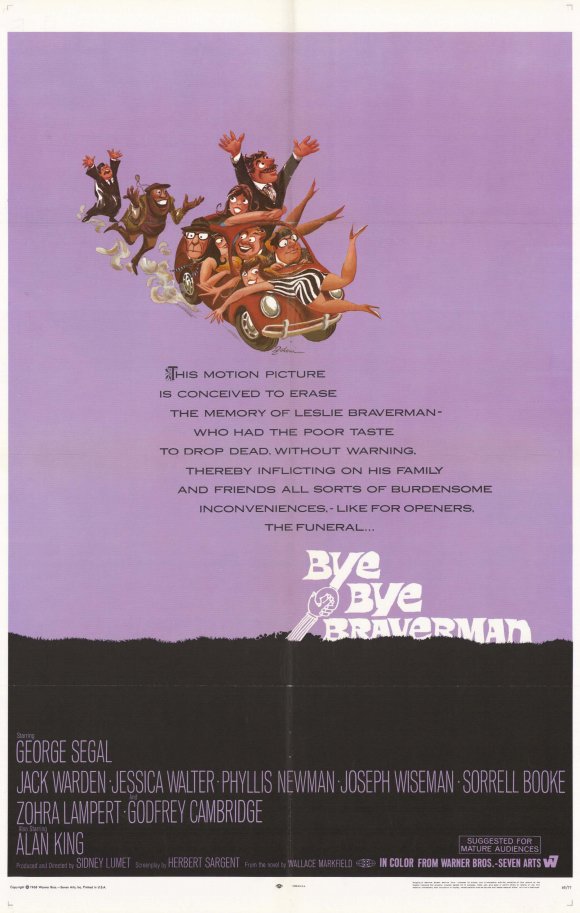
Bye Bye Braverman (1968)

By Richard Winters

My Rating: 6 out of 10

4-Word Review: Where is the funeral?

Four middle-aged Jewish men get together for a mutual friend’s funeral and find that the passage of time has changed many things between them.

There are some really nice vignettes here. The best may be Morroe’s (George Segal) conversation with all the dead people in the grave yard while amidst hundreds and hundreds of tombstones. You also have to love Alan King as the rabbi leading the funeral. Morroe as a middle-aged man becoming disillusioned with life while going through a sort of mid-life crisis is very relatable and his fantasy segments are funny. Godfrey Cambridge also has a great cameo as a black cab driver who runs into them and the group’s difficulties at finding the right funeral are amusingly on-target.

While the film does have its share of delightful moments it fails to ever come together enough to leave any impact. Some of the segments are too talky and the ending fizzles badly. There is also an extraordinarily high amount of footage given to showing a bird’s eye view of the red Volkswagen that they are in driving through the streets of Brooklyn. In some ways this does give one a great glimpse of Brooklyn during the late 1960’s, but it also screams ‘filler’ in the process.

This definitely seems to be the case where the novel by Wallace Markfield that this movie is based on would be the better choice. It’s certainly watchable and mildly entertaining, but the characters and situations need to be better fleshed out.

My Rating: 6 out of 10

Released: February 21, 1968

Runtime: 1Hour 34Minutes

Rated NR (Not Rated)

Director: Sidney Lumet

Studio: Warner Brothers/Seven Arts

Available: DVD (Warner Archive)

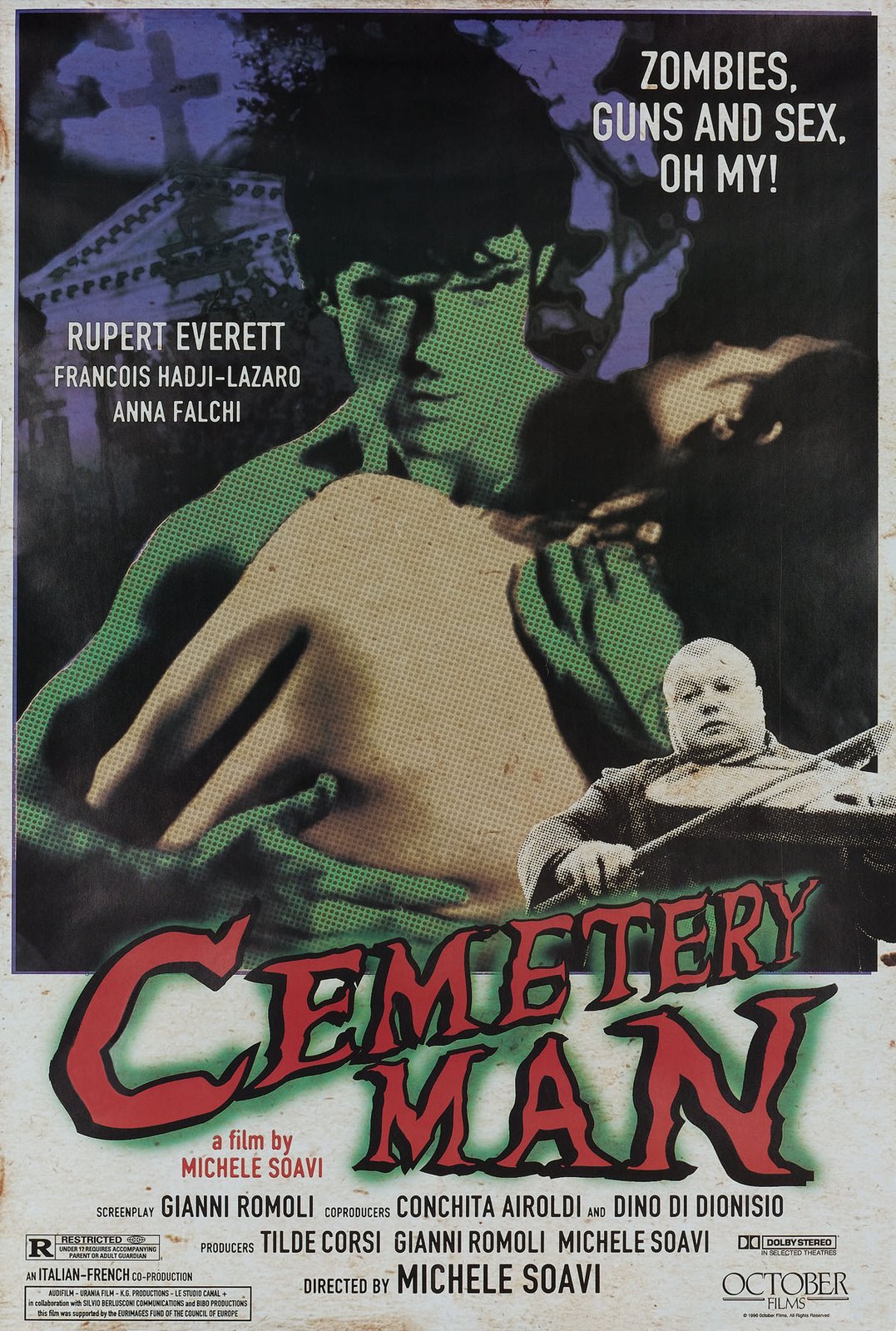
Cemetary Man (1994)

By Richard Winters

My Rating: 5 out of 10

4-Word Review: They shoot the zombies.

The film opens with a cemetery worker (Rupert Everett) talking on the phone with a friend. He hears a knock at the door and when he answers it he sees a man with bluish, decayed skin ready to attack him. The worker calmly takes out a gun, shoots the man in the head, and then goes back to talking on the phone like nothing happened.  Thus begins this very quirky horror comedy that is a send-up of all those old zombie movies and has acquired a cult following.  It was filmed in Italy and is based on the popular Italian comic book ‘Dylan Dog’ by Tiziano Sclavi.

The initial premise is fun.  The protagonist is Francesco Dellamorte, who with his mute and mentally-challenged assistant named Gnaghi (Francois Hadji-Lazaro), are stuck running a cemetery in a small Italian town where the dead will routinely come back to life. It is then up to them to shoot the zombies in their head, which will kill them permanently.  This starts a wild array of crazy scenarios that become increasingly bizarre as the film progresses.

Initially I found it to be inventive.  The tongue-in-check humor is first-rate as is the snappy dialogue.  The film though starts to bite off more than it can chew.  All sorts of weird storylines get thrown in, but are never resolved.  After about the first hour it no longer made any sense.  For instance there is Francesco’s girlfriend named She (Anna Falchi), who he accidently kills at the beginning, but then she keeps getting reincarnated as different women throughout the rest of the film.  For various reasons Francesco is forced to kill her in different ways all over again, which eventually becomes tiring. This is only one of the many convoluted surreal elements that eventually overwhelm the viewer.  By the time it got to its extensile ending I was more than happy that it was over and really no longer cared what happened to the characters.

I felt frustrated because there were a lot of cool ideas that the film brings up, but drops without explanation.  I thought the original idea was good enough that the film could have stuck with that and built around it without going off on so many tangents. The special effects were a problem as well as they looked cheap and fake.  It was obvious when they were using mannequins in the place of real people and the blood and gore were thrown in haphazardly.

I did however like the pacing, which moves quickly with no letup.  The set designs are imaginative and the dark humor is consistently funny. If I would suggest this movie for any reason it would be that one.  Even when the story was getting annoyingly out-of-control it still had me chuckling.  The best scene involves Francesco talking to a sick friend in the hospital and when anyone from the hospital staff tries to intervene he shoots them and this creates a memorably macabre imagery as the room gets filled up with bodies and blood everywhere.

I also liked the character of Gnaghi, who tends to grow on you and becomes a real scene stealer.  He is short, fat and bald and looks like a young version of Uncle Fester from ‘The Adams Family’.  He speaks only through grunts, but the way he responds to things is quite amusing and the director comes up with clever ways to make the most of it.  The fact that he was played by a rock musician and not a professional actor makes it more interesting.  The part where he falls in love with one of the corpses and wants to marry her is hilarious and should have been played out more.

I liked the character of Francessco at the beginning as well.  He comes off like a rugged cowboy from the old west with a nifty matter-of-fact attitude towards his job and is cool under pressure. However, his behavior and actions become erratic and his motivations confusing until, by the end, he is almost alienating. There are also too many segments where he gets caught off guard by an attacking zombie and panics when he does not have his gun handy, which hurts the credibility since someone who has been doing this for a long time and is as savvy as he portrayed would learn to expect the unexpected and be prepared at all times for it.

I hate to say that this film was a disappointment because it is very creative and the direction is slick.  Unfortunately it just could not sustain its potential, which makes it a misfire. The film did quite poorly with both the critics and viewing public when it was first released both in Europe and in the states. It was only after being hailed by director Martin Scorsese that it started to find new life in the DVD market. Actor Everett was in talks with American studios to do a big-budget Hollywood remake, but it fell through.  A remake would not be a bad idea and may still happen as the horror-dark comedy genre has proven to be profitable in recent years most notably with Zombieland.  A tighter script and more money on the special effects could make this a winner.

My Rating: 5 out of 10

Released: March 25, 1994

Runtime: 1Hour 45Minutes

Rated R

Director: Michele Soavi

Studio: Angelo Rizzoli

Available: VHS, DVD, Blu-ray

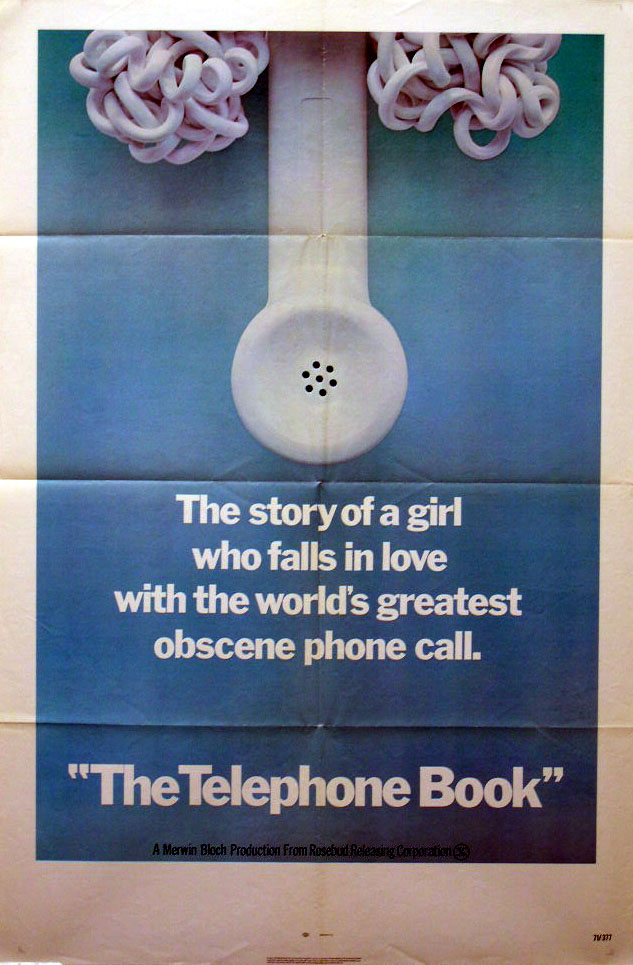
The Telephone Book (1971)

By Richard Winters

My Rating: 7 out of 10

4-Word Review: She likes obscene calls.

            Due to the recent death of writer/director Nelson Lyon on July 17th I felt it was time to dig up my old copy of this bizarre underground cult flick and give it another view. I stated in another review I made about this film that I considered it The Gone with the Wind of underground moviemaking and I still stand behind it. The film is hampered by its low budget and black and white photography, but I was impressed with it creative camera angles, editing, set design and music. Lyon showed a genuine vision and made the most out of what little resources he had. Even the content, which could be seen as pornographic by some, is presented in such a quick paced and diverting style that it becomes engaging and amusing.

The basic premise deals with Alice (Sarah Kennedy) an over-sexed young blonde living alone in an apartment with walls lined with wall paper that has hundreds of pictures of people in various sex acts. One day she gets a call from an obscene phone caller and she falls in love with him because it was the ‘most sweetest and most beautiful dirty call’ she had ever received and although she had received other obscene calls in her life this one ‘had class’. She becomes obsessed with meeting the man. He tells her that his name is John Smith and that he is ‘in the book’.  She goes through the telephone book to call him up, but because she lives in New York City she realizes there are a lot of John Smiths. The rest of the film deals with her encounters of all the various John Smiths that she meets as well as her climatic meeting with the real John Smith and the very weird conversation that she has with him.

The film’s structure is basically made up of a lot of vignettes all dealing with various forms of perversity. Some famous character actors appear in cameos and some of which prove to be quite outrageous and funny. Barry Morse best known for playing Lieutenant Gerard in the 1960’s TV-series ‘The Fugitive’ has one of the film’s best moments playing Har Poon ‘the greatest stag movie actor of all-time’. He has a scene where 10 naked ladies, at least that is how many I was able to count, all jump on top of him and begin sucking on his various body parts. There is Roger C. Carmel as a psychiatrist who enjoys exposing himself to ladies on a subway train, but when Alice decides to do the same thing in return he becomes shocked and repulsed. Character actress Lucy Lee Flippan makes her film debut here as a ‘reformed’ obscene phone caller who describes how when her husband was away at work and her kids where at school she would call up men at their jobs and talk dirty to them while masturbating  with a banana. There is also William Hickey playing a man suffering from a permanent and incurable erection.

The best appearance though comes from Norman Rose famous for narrating many films. Here he appears wearing a mask of a pig and playing the actual obscene phone caller. He describes how he calls 4 different women a night every week of the year except for two when he goes on vacation to ‘get out of the grind’. He also explains how he has perfected his obscene phone skills to the point that he could seduce the president of the United States if he wanted to, but doesn’t because he has ‘no political ambitions’. The conversation gets weirder including telling Alice about his foray into becoming an astronaut while he seductively washes her hair, but Lyon’s use of imagery during this segment keeps it interesting and even memorable. My only complaint would be that I wished he had taken off the mask so we could have seen what he really looked like.

The film ends with an eye popping animation segment dealing with a giant headless naked woman who squats down and has sex with a sky scrapper that needs to be seen to be believed. This is also the only part of the film that is in color.

Despite the fact that it was all done on a shoestring budget and with no character development I had few complaints although I didn’t understand how the obscene caller was always able to call up Alice and get a hold of her even when she was not at home and at someone else’s place. This was of course before cellphones, but I suppose demanding logic from a film that otherwise revels in the absurd would prove futile. The film did not do well on its initial run, but was rereleased in 2011 to much more positive reviews both here and in Europe. Through word of mouth it is expected to gain the cult following it deserves and maybe eventually a DVD or Blu-ray release.

Kennedy is delightful in the lead, but her appeal may depend on one’s personal tolerance. She looks and acts almost exactly like Goldie Hawn and was her replacement on the ‘Laugh-In’ show when Hawn left to concentrate on her movie career. I enjoyed Kennedy’s giddiness and child-like enthusiasm to all the perversions around her, but her voice sounds like she has sucked in helium and could prove annoying to some.

My Rating: 7 out of 10

Released: October 3, 1971

Runtime: 1Hour 24Minutes

Rated X

Director: Nelson Lyon

Studio: Rosebud Films

Available: VHS, DVD, Blu-ray 

Luv (1967)

By Richard Winters

My Rating: 4 out of 10

4-Word Review: Jump off the bridge.

            Based on the play by Murray Schisgal the film follows the exploits of Harry Berlin (Jack Lemmon) a hopeless neurotic who tries to commit suicide by jumping off a bridge only to be saved by his long lost friend Milt (Peter Falk). Milt wants to use Harry to have him fall in love with his wife Ellen, so that way she will agree to a divorce and free him up to get with a hot young blonde named Linda (Nina Wayne).  Things initially work as planned. Harry and Ellen fall in love and marry and Milt does the same with Linda, but then Milt and Ellen find that they are not compatible with their new mates and long to get back together. The problem is that Harry refuses to grant a divorce forcing them to try and coax him back out on the bridge, so he will finally jump off it and get out of their way.

Lemmon’s performance is the best thing about this otherwise strange experiment. He is like his Felix Unger character put on speed. His weird quirks and idiosyncrasies help propel the story to newer and more absurd heights. In his more straight comedies Lemmon has always seemed a bit benign and showing a nervous energy that is more annoying than funny. Here though he falls into his comic niche bringing out the bizarreness of his character with an almost creepy clarity. I thought it was interesting that although he was a leading man he chose to do an ensemble comedy. Although this film can be deemed a failure I still found it commendable that he was willing to test his acting range and image by taking on an unusual role.

Falk doesn’t fare as well. I thought it was great that he reteamed with Lemmon after performing with him in The Great Race, but his character really isn’t all that funny. May is usually great with sardonic material and has made a career out of performing and writing this kind of stuff, but she really isn’t given all that much to say that is amusing. I liked her charts that she creates for both Milt and Harry measuring all the hours they have been married with all the hours that they have had sex, which has a nice goofy element. Wayne is attractive, but her high, squeaky voice can quickly become annoying. Her acting abilities are limited and she clearly seems outclassed by her supporting counterparts. Had a stronger more established actress been cast in the role it certainly would have helped.

Director Clive Donner doesn’t show a good feel for the material. There are certain parts that are funny like when Ellen and Harry spend their honeymoon at Niagara Falls attacking and physically hurting each other just to see if the other will still love them afterwards. I also liked some of the potshots at modern day suburbia, but other than that this thing falls flat. There are too many scenes that go on forever with jokes and comic bits that are more stupid than clever. The opening sequence has a nice distinctive jazz score along with a montage of kitschy artwork and there is interesting camera work and editing during a sequence at an amusement park, but the rest of it becomes a filmed stage play. The pacing is slow and devoid of the unique directorial flair that could make an offbeat thing like this work. The climactic scene at the bridge is particularly strained and helps cement this as a hopeless misfire.

This movie is probably best known for being the film debut of Harrison Ford who has one word of dialogue and appears as an irate motorist who punches Harry in the face. I wished there had been more of him as although it is very brief he is one of the best things in it.

My Rating: 4 out of 10

Released: July 26, 1967

Runtime: 1Hour 33Minutes

Rated NR (Not Rated)

Director: Clive Donner

Studio: Columbia

Available: VHS, DVD