Category Archives: Psychological

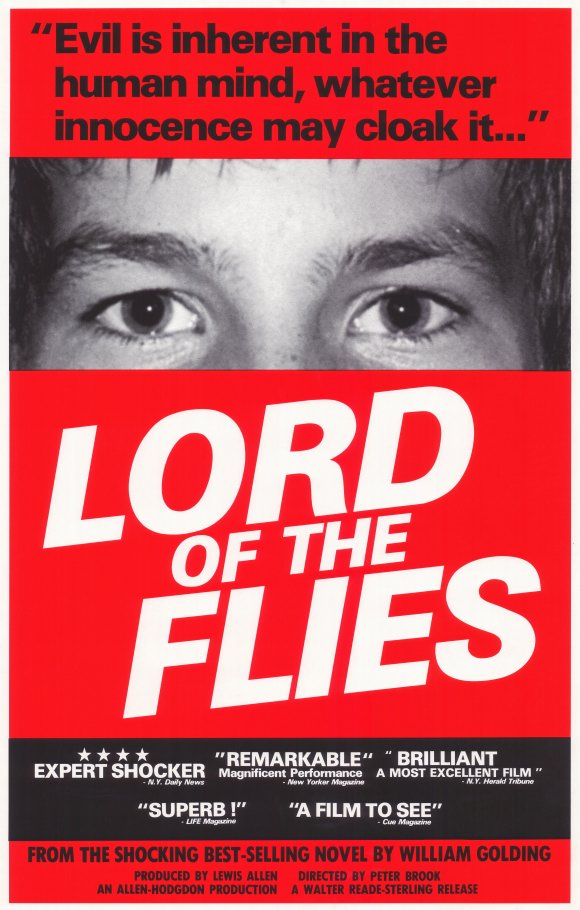
Lord of the Flies (1963)

LOTF

By Richard Winters

My Rating: 8 out of 10

4-Word Review: Kids turn into savages.

Based on the William Golding novel that has been required reading for most high school students. The story centers on a group of British schoolboys who survive a plane crash on an uninhabited tropical island. The boys are of varying ages, but none older than 14. Ralph (James Aubrey) is chosen as their leader, but finds almost immediate friction from Jack (Tom Chapin) who is an aggressive type that likes to hunt and doesn’t tolerate being told what to do. As things progress Jack breaks off from the main group and eventually starts his own following that comes to odds with Ralph’s. More and more of the boys join Jack and start to display savage behavior that leads to two deaths and puts the frightened Ralph on the run and into hiding.

It has been three decades since I’ve read the book, so I can’t really compare it with the film. The criticisms that I have are aimed solely at the film although as I remember the book had some of the same issues. One of the biggest ones is just the fact that there are so many survivors from a plane crash and all of them are conveniently the kids while all the adults perishing, which seems to play too much against the odds. There are also no scratches, bruises or injuries, which you usually come about with a crash even amongst those that survive it. Director Peter Brook does a clever job of intimating a plane disaster at the beginning over the opening credits through use of photographs, which I found to be creative, but showing an actual destroyed plane with kids getting out of it would have given it a little better foundation.

There is also another segment where the kids are convinced some sort of strange beast is on the island and as they go searching for it, it is found to a pilot in a helmet who was killed while trying to parachute to safety. Yet the kids don’t seem to realize this and remain frightened of it. I realize the setting is the 1940’s around the time of the war, but I would still think the kids of that time would have been sophisticated enough to recognize a dead man in a fighter helmet and the fact that they don’t seems pretty odd and even farfetched.

Overall though I really enjoyed the film and feel reluctant to watch the 1990 remake as I am afraid it would ruin the experience of this one.  It was filmed on-location off the island of Vieques in Puerto Rico during late August of 1961. The entire cast was made up of amateur actors who had not read the book. There was no actual script and the boys were allowed to ad-lib their lines, which helps give it an extra air of realism.
lord of the flies 1

I will admit there are shots where some of the boys look bored and detached from things, but then again I suppose boys that age can be that way anyways no matter what situation they are, so in some ways it doesn’t really hurt things. Hugh Edwards who plays Piggy is a real standout and apparently got the role simply by writing a letter to director Brook and informing him that he was fat and wore spectacles.

The black and white photography helps heighten the dark undertones. The shot showing a close-up of the pig’s head on top of a stake with flies’ going in and out of its mouth and nostrils is quite impressive and a brilliant realized moment from the book. The climatic sequence where Ralph must run through the burning foliage to escape the other boys is quite intense. The shot showing a dead boy’s body floating in the water under the moonlight has an evocative flair, but fake looking to the extent that the child was stabbed to death and yet has no visible wounds or blood coming out.

On the DVD commentary Brook states that he likes to believe something like this couldn’t happen. That we have somehow evolved enough as a human race where this savagery would be impossible, but I respectively this disagree. I think this could very well happen in this day and age which is what makes this an infinitely fascinating look at human nature and ultimately a great movie.

lord of the flies 3

My Rating: 8 out of 10

Released: August 13, 1963

Runtime: 1Hour 32Minutes

Not Rated

Director: Peter Brook

Studio: Continental Distributing

Available: VHS, DVD (Criterion Collection), Amazon Instant Video
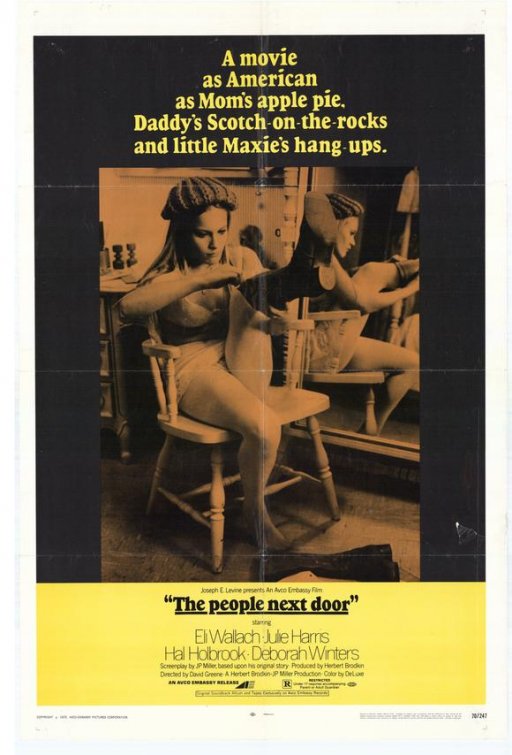
The People Next Door (1970)

the people next door 1

By Richard Winters

My Rating: 7 out of 10

4-Word Review: Daughter is on drugs.

Arthur and Gerrie Mason (Eli Wallach, Julie Harris) are a middle-aged couple living the comfortable suburban existence, which comes tumbling apart in a matter of only a few short weeks. It starts when their daughter Maxie (Deborah Winters) dabbles in acid and is sent to a mental institution. Acrimony and in-fighting commence and even with family counseling nothing helps. As both Maxie’s and Gerrie’s mental condition deteriorates it seems like their family unit is doomed while their neighbors David and Tina Hoffman (Hal Holbrook, Cloris Leachman) have issues of their own including the shock at finding out that their son Sandy (Don Scardino) is a drug dealer and was the one that gave Maxie the acid that sent things spiraling out-of-control.

There were many movies about the drug culture made during the 60’s and 70’s and many of them weren’t very good, but this one I have always liked. It is not that it doesn’t have its share of flaws like the others although not as many, but it is the performance by Winters (no relation) that knocks this to a whole new level.  Although only 17 at the time she exudes an amazing amount of composure and tackles some difficult scenes with ease and naturalism. Her blue eyes penetrate the screen, which director David Greene takes full advantage of especially during her acid trips, which get pretty freaky.

Two scenes of hers in particular really stand out and are worth catching. One is where she takes some acid and then strips off all of her clothes and goes running outside in the nude through the snow banks of their suburban neighborhood while singing and dancing to some strange song. Another is when she runs away from home and Wallach tracks her down living in squalor in a seedy, rundown apartment building with her boyfriend. When Wallach finds her she hops out of bed stark naked and walks over to him and plants him a deep kiss, which makes him violently slap her to the ground.

There are a few other interesting moments including one that takes place during a group counseling session where a young man of 20 named Wally (played by Matthew Cowles who later went on to marry actress Christine Baranski) berates in front of everyone his elderly parents who had him at a late age and he now finds them to be too old and embarrassing. The scene where David and Tina confront their son late at night about his drug dealing is also compelling.

The script by J.P. Miller has some emotionally high moments and hits on the issues of family strife head-on in a way that I felt is still impactful and relevant. Some critics argued that because Miller and director Greene were already 50 at the time that they were ‘out-of-touch’ with the youth generation, which to some extent may be valid, but the drama itself is strong and in the end that is what counts.

The only weak link is that of Wallach and Harris two very good actors who become wasted here. Both are locked in caricatures that are too broad and rigid and at times turn the thing into a heavy-handed soap opera. The correlation to the fact that while the daughter takes drugs they continue to smoke and drink becomes a bit too obvious and overplayed.

The story was originally made as a TV-movie that was broadcast on October 15, 1968 on CBS. Winters, Scardino as well as Nehemiah Persoff who plays the doctor at the institution play the same roles on that one that they do here. Lloyd Bridges and Kim Hunter played Winters’ parents and Fritz Weaver and Phyllis Newman were the Hoffman’s.

the people next door 2

My Rating: 7 out of 10

Released: August 26, 1970

Runtime: 1Hour 33Minutes

Rated R

Director: David Greene

Studio: AVCO Embassy Pictures

Available: None at this time.

The Hireling (1973)

the hireling

By Richard Winters

My Rating: 6 out of 10

4-Word Review: His love isn’t reciprocated.

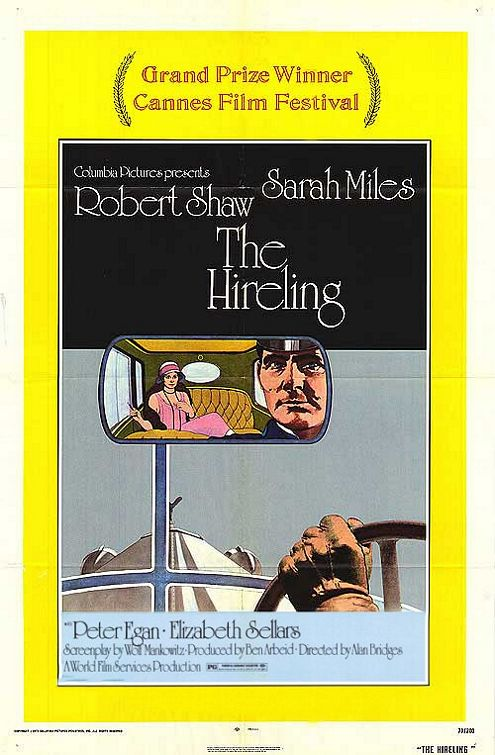
Based on the L.P. Hartley novel the film examines the unusual relationship between a rich English widow named Lady Franklin (Sarah Miles) and her chauffeur Steven Ledbetter (Robert Shaw). The setting is just after the First World War and Lady Franklin has suffered a nervous breakdown after the untimely death of her husband. Steven drives her from place-to-place and helps her out of her depression while also forming a strong attachment to her. Once she recuperates she no longer calls upon his services as much, which hurts him. She then forms a relationship with the much younger Hugh Cantrip (Peter Egan). His personality is the complete opposite of Steven’s and when Steven finds out that Hugh is still seeing another woman on the side it angers him. When he goes to Lady Franklin to inform her of this as well as profess his love for her things do not go well and soon spirals out-of-control.

The film is exquisitely photographed by director Alan Bridges with a haunting score by Marc Wilkinson that is excellent. The period atmosphere is perfect and the slow pace not only reflects that era, but the book to which it is based. Some may be put off by the pace as it is for the most part quite talky although the last half-hour has more action and final showdown is quite intense. The element I really liked about the film are the brief cutaways showing people listening in to other’s conversations and people always being careful what they say and great concern with always playing their ‘proper role’ in society. It really helps build a cloistered feeling for the viewer and gives them a better understanding to the meltdown that occurs at the end.

Miles gives another great performance and she essentially plays two characters here with the fragile, wide-eyed woman at the beginning and the more confident, emotionally distant person that she turns into at the end. Shaw is excellent as always. It is almost amazing to see how someone with such a strong personality as his could get hidden underneath the rather bland and proper character that he portrays at the beginning, but he comes through full-force at the end, which is chilling and terrifying.

The film makes some great statements about the inequities of a rigid social caste system as well as the unrealistic, rigid demands that were placed on people especially in past eras that did not completely take into account the human being underneath or their natural emotions. It is also a great testament to the loneliness of unrequited love, which is sadly a perennial element of the human experience. Although the film stays faithful to the novel the ending has been changed, which may or may not go over well with some viewers.

My Rating: 6 out of 10

Released: June 10, 1973

Runtime: 1Hour 35Minutes

Rated PG

Director: Alan Bridges

Studio: Columbia Pictures

Available: DVD (Region 1 & 2)

The Passenger (1975)

the passenger

By Richard Winters

My Rating: 5 out of 10

4-Word Review: He steals someone’s identity.

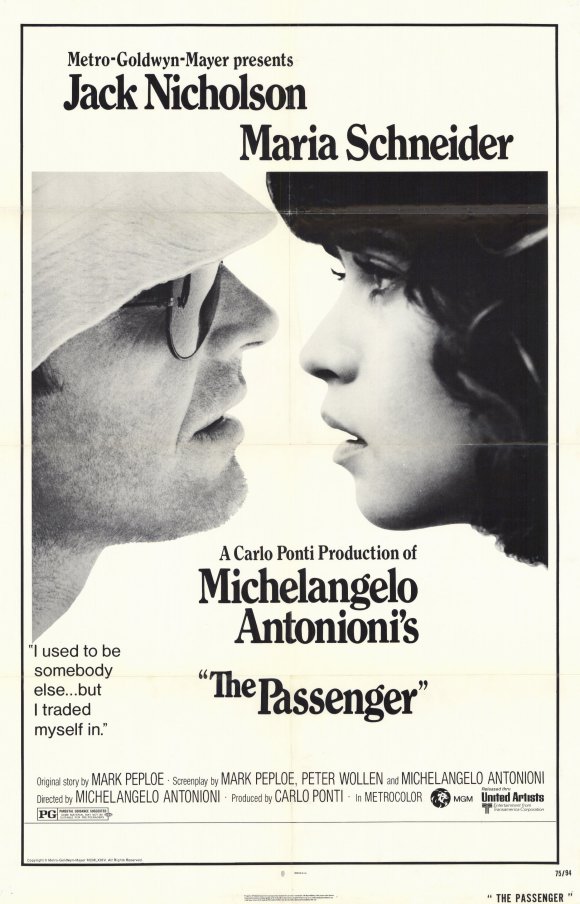
This is a low key drama detailing a world-weary reporter named David (Jack Nicholson) who comes upon a dead man in a hotel room. David is unhappy with his existence and since they closely resemble one another he decides to switch identities with the dead man. He believes that this man lives a jet setting lifestyle, but soon finds that may not be true and that everyone is trying to escape from something.

This film has the artsy flair that is typical of all Michelangelo Antonioni’s films. It tends to be quite evasive as it brings up certain points and then seems to muddle them. It’s made to make you ponder, but has a decidedly downbeat tone. There is no music until the very end, which was a mistake as it gets too quiet at points and one’s mind will eventually wander especially with the lack of strong dramatic interaction. Having some music blended in would certainly have helped the momentum and avoided the rather flat feeling you get when it is all over.

The film is not without its good points and can best be described as a kind of Easy Rider, but more from a world perspective. Like with that film it describes characters trying to escape from a world that will not let them go. I loved the wide variety of exotic locales, which in any other film would symbolize excitement and adventure yet here they become part of the imprisonment. The film though does not take full advantage of its outlets and the sense of detachment that it has eventually rubs off on the viewer.

Nicholson gives a surprisingly non-dynamic performance. Maybe he was just trying to get into his transparent character, but either way it is not riveting. Maria Schneider is interesting only because she has the face of a young girl but the sensibilities of a much older woman.

There are some interesting shots. One features the camera looking out of a barred window from inside a room. Then without taking a single cut the camera moves through the bars, makes a complete turn, and then looks back through the window from the outside. There is also footage of an actual execution of a political prisoner. This certainly will interest the morbid, but it also seems to be a bit sick and disrespectful especially when the camera stays locked onto limp, bullet-riddled body.

My Rating: 5 out of 10

Released: April 9, 1975

Runtime: 2Hours 6Minutes

Rated PG

Director: Michelangelo Antonioni

Studio: MGM

Available: VHS, DVD

The Boys in the Band (1970)

boys in the band 1

By Richard Winters

My Rating: 9 out of 10

4-Word Review: This party turns sour.

A group of gay men get together for an intended night of food and laughs as they celebrate Harold’s (Leonard Frey) birthday. Things begin to unravel when Alan (Peter White) appears who was an old college roommate of party host Michael (Kenneth Nelson). He insists that he is not gay, but Michael and the rest of the group intend to prove otherwise, which leads to many harsh and interesting revelations.

This film packs a wallop and is as relevant and daring now as it ever was back then. Director William Friedkin does a terrific job of making this story, which was originally an off-Broadway production seem cinematic. I loved the capturing of the apartment, which makes you feel like you are right there.

The performances are outstanding and all are the original cast from the stage production. Cliff Gorman as the flaming gay personality is a particular standout. The script by Mart Crowley is captivating from beginning to end as it brings out all the different personalities and myriad issues that make up the gay community and the whole thing is a tour-de-force on all levels.

My only complaint would be the character of the Cowboy played by actor Robert La Tourneaux who is the dim-witted, but good looking ‘gift’ giving to Harold for his birthday. I realize the intention is to make him a bit dumb, but it gets overdone. It’s one thing to be an ‘airhead’, but a complete other thing to sound so stupid it’s like he is from another planet. His character is the only one that does not get fleshed out at all and his utterly inane comments come off as hollow and annoying. Ironically La Tourneaux was unable to find many acting parts afterwards and became a gay prostitute in real-life by the late 70’s in order to make ends meet.

The characters are believable and the dialogue moving. It’s a compelling study of those feeling isolated from society and sometimes even themselves.  Even if you are not gay the film can still have a great impact and its quality viewing either way.

My Rating: 9 out of 10

Released: March 17, 1970

Runtime: 1Hour 58Minutes

Rated R

Director: William Friedkin

Studio: National General Pictures

Available: VHS, DVD

The Mind of Mr. Soames (1970)

the mind of mr soames 1

By Richard Winters

My Rating: 6 out of 10

4-Word Review: Man child faces world.

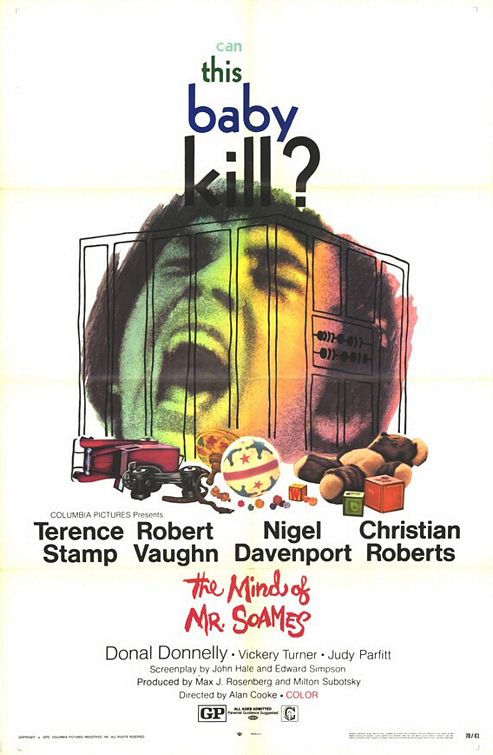
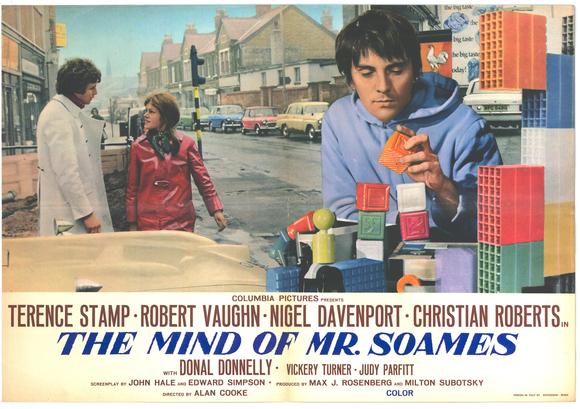
Due to a complication at birth a man (Terence Stamp) is born into a coma and for thirty years he has stayed that way. Now due to medical advancement they can stimulate the part of the brain that is asleep, thus allowing him to awaken into consciousness. The problem is that he will be a virtual infant and have to taught at a much quicker pace than a normal child.

Outside of a few implausibility’s the story is handled in an overall realistic manner. The pacing is tight and compact and the cinematography by Billy Williams is outstanding with excellent framing. Stamp plays the part with conviction and overall makes a believable grown up baby.

The story itself is much more complex than it initially looks as it takes a good examination into the science approach vs the humanistic one. It shows how truly complicated the human being is and the great balance it takes to successfully raise one. It also takes a few good potshots at the obtrusiveness of the media.

The stories most interesting angle though comes when the adult child escapes and goes out into the real world where we see what a tight inner fabric society is and the complete inability that the ‘pure’ human, with no prior connections to it would have.

However, in the end this movie is a disappointment as it gives us no conclusion and we never see the end result. Was this man child successfully raised? Which approach was the best and did he ever fully adapt to the world around him? We never know because it never tells us. The whole idea for the film looks to have been made only to bring up certain issues with no attempt at a complete story.

the mind of mr soames 2

My Rating: 6 out of 10

Released: October 12, 1970

Runtime: 1Hour 32Minutes

Rated GP

Director: Alan Cooke

Studio: Columbia Pictures

Available: DVD-R

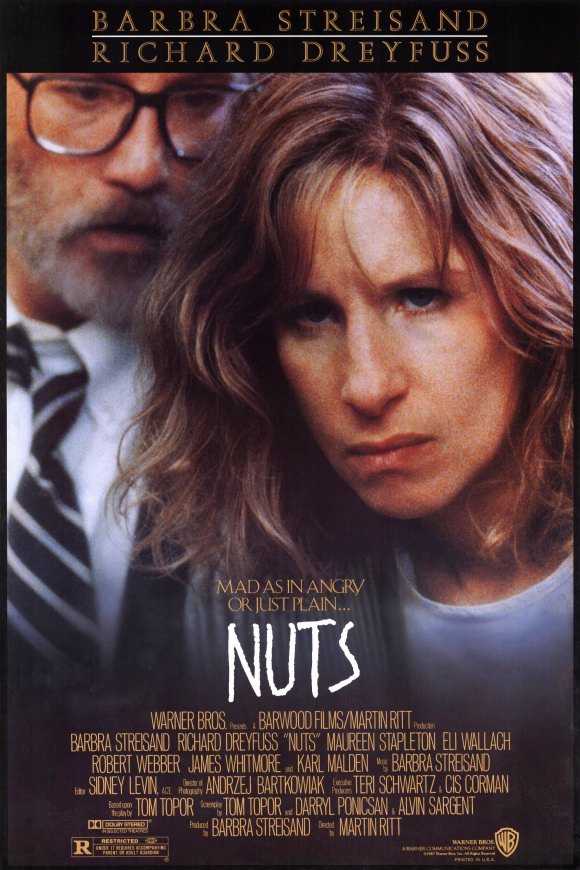
Nuts (1987)

nuts

By Richard Winters

My Rating: 7 out of 10

4-Word Review: Fighting for her sanity.

In celebration of Barbra Streisand turning 72 on April 24th we will be reviewing three of her films, one from each decade during the week. This one is based on the Broadway play by Tom Topor dealing with a high priced call girl named Claudia Draper (Barbra Streisand) who murders one of her customers (Leslie Nielson) in self-defense and is arrested. Her mother (Maureen Stapleton) and step father (Karl Malden) think she should be diagnosed as incompetent to stand trial and sent to a mental institution, but she with the help of her lawyer (Richard Dreyfuss) fight for her right to stand trial.

The story and characters evolve in layers, which I liked, but Streisand doesn’t seem right for the part. Her presence makes it seem too much like a star vehicle instead of the character driven story that it should be. Her cantankerous outbursts become a bit excessive and self-destructive making it hard at times to cheer for her or empathize. In the Broadway play the character was played by a woman in her twenties, which made more sense and would’ve worked better instead of casting someone who was already 45.

Seeing her in provocative poises in snapshots that her lawyer obtains is a bit weird but fun as a novelty as is the scene where she spreads her legs without the benefit of any underwear for Dreyfuss, but having her constantly shown with a bright spotlight around her seems disconcerting. It gives her a ghostly appearance and makes her stand out in the wrong way.

The veteran supporting cast comes off better since they wisely underplay it as opposed to her overplaying. Stapleton is quite good especially the moving scenes showing her crying as she listens to her daughter’s testimony. James Whitmore is solid as the thoughtful judge, but it’s Dreyfuss who carries it as the feisty and sometimes exasperated counsel.

This film is also a milestone as it is the last time Leslie Neilson performed in a non-comedic role. He is surprisingly chilling as the psychotic attacker who was apparently so convincing that it scared Streisand during the filming of the scene.

There are times when it gets a bit too theatrical. The judge advises Claudia to quit disrupting the proceedings, but then she continues to do so anyways, which would have gotten most people thrown out of the courtroom. The scene where she sits on the witness stand and describes being a hooker in a very sensual and seductive way seemed over-the-top in a court of law as is the part where she is allowed to wander around the courtroom going on a long rant while everyone else just sits there and passively listens.

Still on the whole I found most of it to be quite riveting and as a drama its first- rate. I just felt Striesand’s presence didn’t help it. She can be quite good in certain other roles just not here. The part was originally intended for Debra Winger who I feel would have fared better.

My Rating: 7 out of 10

Released: November 20, 1987

Runtime: 1Hour 56Minutes

Rated R

Director: Martin Ritt

Studio: Warner Brothers

Available: VHS, DVD, Amazon Instant Video

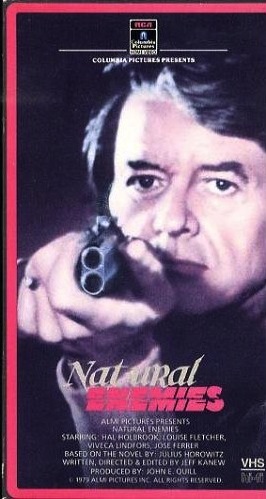
Natural Enemies (1979)

natural enemies 2

By Richard Winters

My Rating: 6 out of 10

4-Word Review:  Man kills his family.

Paul Steward (Hal Holbrook) is a middle-aged suburban father who wakes up one morning having decided that by the end of the day he will shoot and kill his wife and three children with his hunting rifle. His rationale being that life is full of inevitable disappointments and his kids are ill prepared to face life’s harsh realities, so by killing them he will be in a sense ‘protecting’ and ‘saving’ them. The rest of the film deals with conversations he has with his friends debating on whether he should go through with it or not.

Writer/director Jeff Kanew is probably best known for having done Revenge of the Nerds and this film is probably as different from that one as you can get. It is an excellent and interesting directorial debut for the most part. It is not completely successful, but you have to give him credit for putting such challenging material onto the screen. It is based on the novel by Julius Horowitz, which was probably never intended to be made into a movie, but Kanew uses the voice-over narration to its full effectiveness and I loved the quant and remote setting of the colonial home that Paul resides in.

It is really the conversations and the ongoing philosophical debates that Paul has with various acquaintances that gives it a fascinating and intellectual subtext. I especially liked his discussion with Harry (Jose Ferrer) a concentration camp survivor as well as an unintentionally amusing one with a cab driver who complains that a 247 a month rent on a 3 bedroom apartment in Queens is ‘too expensive’ even though you would be unable to find one there that cheap today. The strongest is the one that he has with his wife Miriam (Louise Fletcher) at the end that proves to be not only revealing, but riveting.

The scene where he has sex with five prostitutes is also quite well done including having classical music played over the sex scenes, which creates an unusual erotic quality. The conversation he has with them is equally interesting, but I would’ve liked to have seen a few more verbal reactions from the women.

I’ve always considered Holbrook to be one of the finest actors around and his performance here is flawless and helps give the film its impact. Fletcher is also quite good playing the polar opposite of her Nurse Ratched character. Here she is vulnerable and fragile instead of rigid and authoritative and even has a scene inside a mental hospital as a patient. The fact that she can play such different characters so solidly proves what a brilliant actress she is.

The tone is incessantly bleak and downbeat, which could easily be a turnoff for most viewers, but doesn’t lessen the validity of many of the points that it makes. There is a strong Ingmar Bergmanesque quality to this that I really liked and this film could prove quite provocative for those looking for something that is thought provoking and outside of the mainstream.

My Rating: 6 out of 10

Released: November 1, 1979

Runtime: 1Hour 40Minutes

Rated R

Director: Jeff Kanew

Studio: Cinema 5 Releasing

Available: VHS

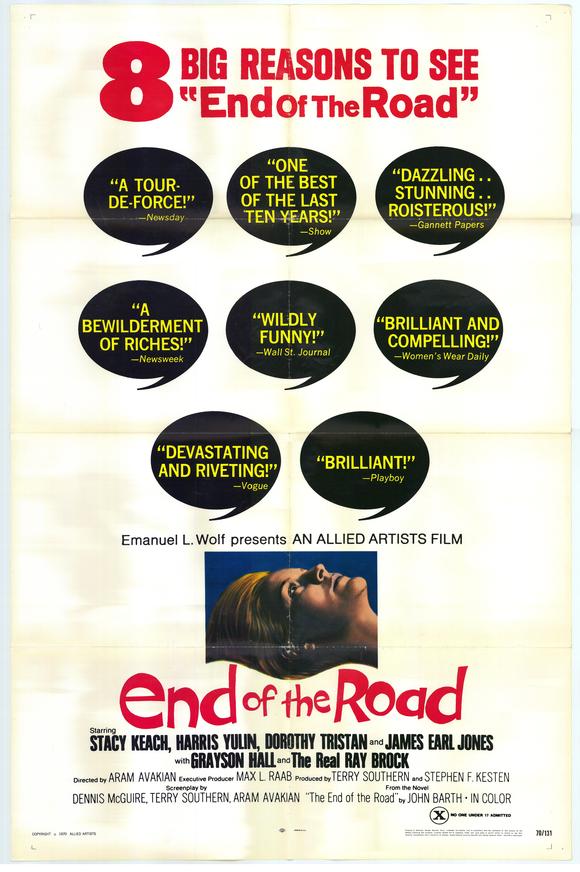
End of the Road (1970)

end of the road

By Richard Winters

My Rating: 6 out of 10

4-Word Review:  Too weird for words.

A bizarre adaptation of John Barth’s already bizarre novel detailing the story of a man (Stacy Keach) who goes into a catatonic state at a train station and is then sent to a strange mental hospital run by a weirdo named Doctor D (James Earl Jones). After he is considered to be ‘cured’ he takes a job as a college professor and proceeds to have an affair with the wife (Dorothy Tristan) of one of his colleagues (Harris Yulin).

It has been noted that author Barth disliked this film version of his novel and it is easy to see why. It gives only a basic outline of the story while leaving out all of the deeper meanings. It also tried to tie the story to the chaos and rebellion of the 60’s even though the book was written in 1955. The final result is a confusing mess that never comes together. The characters behave strangely and with no understanding to their motivations it becomes impossible to relate to them or anything else that goes on. Most viewers, especially those that are not familiar with the book, will easily become confused after the first five minutes if not sooner.

On the positive end the filmmaking style is refreshingly audacious in a way that is rarely seen anymore. Everything is thrown out there no matter how outrageous with little regard to mainstream acceptance. The kinetic imagery and music has a certain hypnotic effect that keeps you connected to it even if you don’t understand what is going on. The film culminates with a very intense, grizzly, and tasteless abortion sequence that will not be soon forgotten by anyone who sees it. Jones gives one of the most bizarre and over-the-top performances that you will ever see anywhere and anyone who is a fan of his or has an interest in acting MUST see him in this film.

It’s a misfired experiment that manages to be enough of a period artifact to make it interesting as a curio. It definitely has the ability to stay with you after it is over.

My Rating: 6 out of 10

Released: February 10, 1970

Runtime: 1Hour 50Minutes

Rated X

Director: Aram Avakian

Studio: Allie Artists Pictures

Available: DVD 

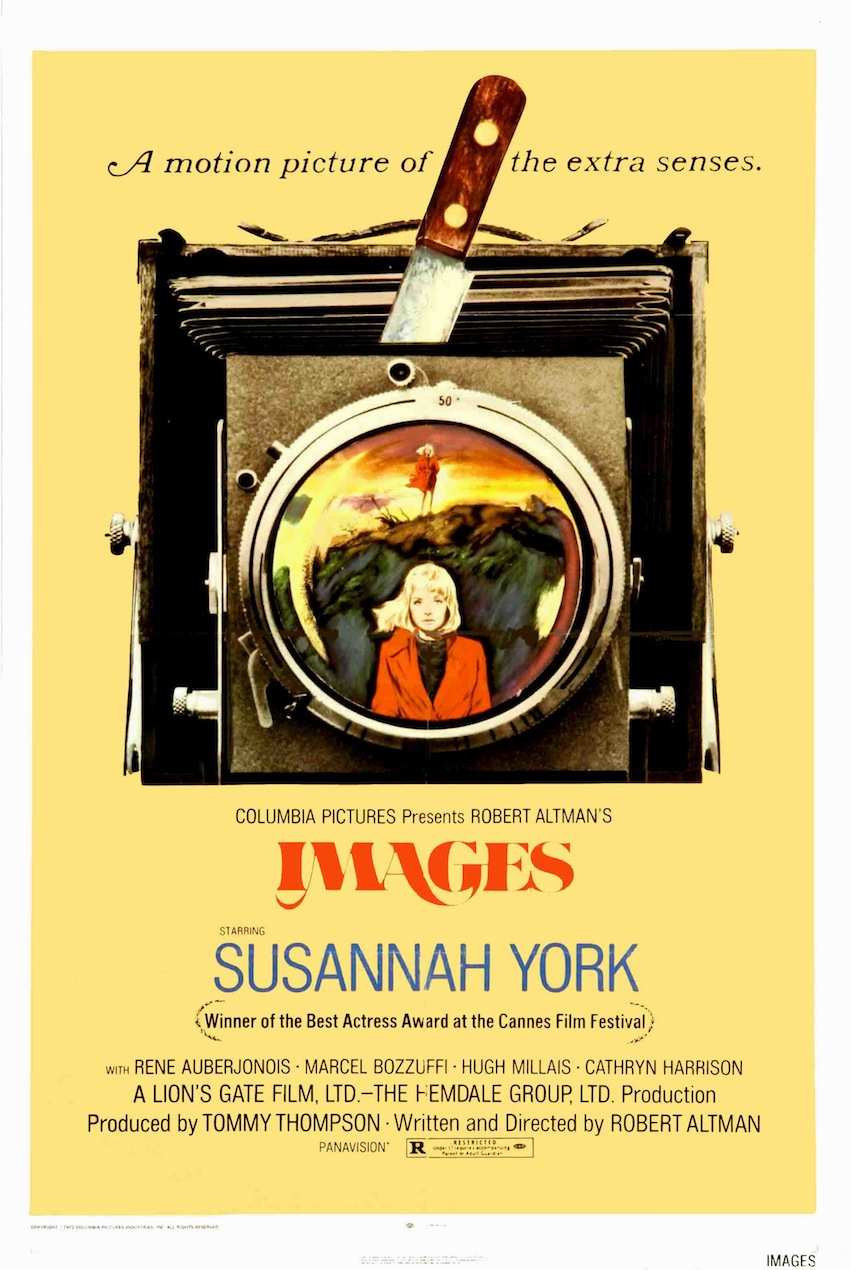
Images (1972)

images

By Richard Winters

My Rating: 8 out of 10

4-Word Review: Demons of the mind.

This is the missing link for any Robert Altman fan or detractor as this is different from any of his other films and completely original from beginning to end. Not only was it way ahead of its time, but proves that he is deftly skilled at handling any directorial task or material.

The story involves a tormented and emotionally fragile woman named Cathryn (Susannah York) who starts to see strange visions. These visions seem so real that she can no longer tell if they are all just inside her head and decides the only way to get rid of them is to mentally ‘kill’ them, but this in turn only leads to further complications.

What really makes this a unique film is that you get inside this woman’s head and actually start to understand her logic and experience her torment. The film also makes terrific use of silence and uses it to accentuate the isolation that the character feels. The setting has a sort of surreal quality and the location of the house is impressively remote.

York has a knack for playing victimized and vulnerable women. In many ways her role here seems like an extension of her character from The Killing of Sister George. Although she makes you sympathetic to her predicament her screams are too screechy and fail to attain the shrillness that would create the startling effect that the filmmakers desired.

The real star may actually be Vilmos Zsigmond and his cinematography. His framing and composition is not only flawless, but breathtaking. He makes the wintertime Irish countryside look like a whole different world and the stillness of the lake that is shown seems almost unreal.

There are a few too many obvious and clichéd shots of mirrors and puzzles and it could also gone much further with its unusual premise. Still this is a unique and entertaining movie that should keep you guessing all the way to the end. The pace is slow, but deliberate with a payoff that is worth it.

My Rating: 8 out of 10

Released: December 18, 1972

Runtime: 1Hour 41Minutes

Rated R

Director: Robert Altman

Studio: Columbia Pictures

Available: DVD