Category Archives: Police Drama

The Dead Pool (1988)

By Richard Winters

My Rating: 4 out of 10

4-Word Review: Harry marked for murder.

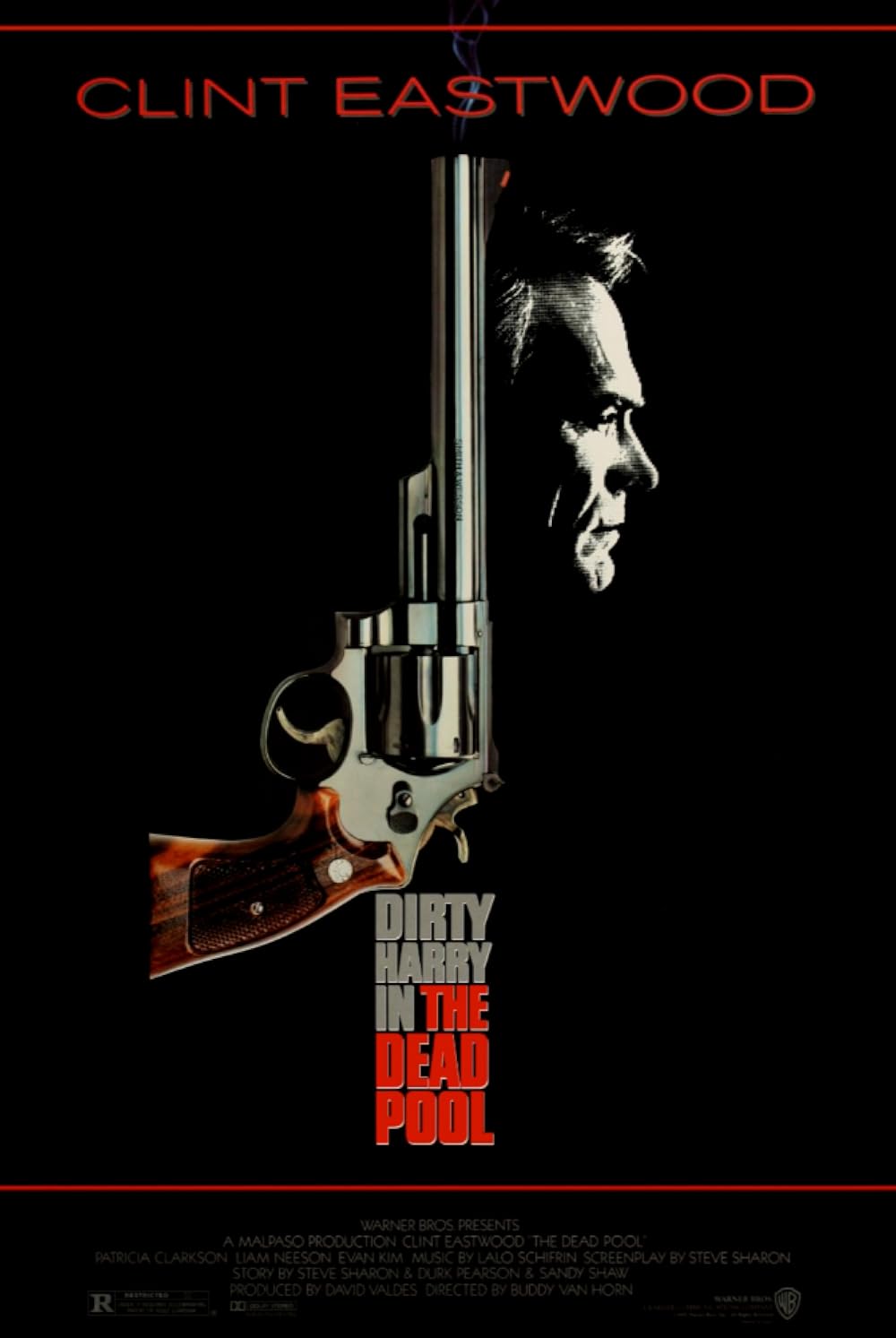
Inspector Harry Callahan (Clint Eastwood) is still getting ambushed by assassins hired by the criminals he puts away. The department decides to assign him with a new partner, Al Quan, (Evan C. Kim) who’s judo skills will come in handy. The two begin working on a case involving a dead pool, which is a list of San Francisco area celebrities that are expected to die soon either by natural causes, or by murder. The list was created by B-horror director Peter Swan (Liam Neeson) who immediately comes under suspicion when one of the stars of his own movie, Johnny Squares (Jim Carrey) turns up dead from what initially seemed like a drug overdose but later deemed murder. Harry is not happy to find his name is also on the list and this leads to an interview by local TV-reporter Samantha Walker (Patricia Clarkson) who wants to do a bio on him, but Harry resists convinced that she’s only trying to exploit the situation for ratings. 

This marked the fifth and last entry in the Dirty Harry series, which was a film Eastwood had not wanted to do, but was a part of the bargain he made with Warner studio in an effort to get his pet project Bird, which was a bio of jazz musician Charlie Parker, financed. Eastwood along with the studio were aware that that film most likely wouldn’t be a box office hit, so he agreed to do this one, which was sure to be a definite money maker. Yet this one ended up being the least successful of all the films from the series and ultimately helped hasten an end to ever producing another one. 

The formula had clearly run its course by this point, and the action is too predictable to be fun anymore. Things start out absurdly right away when the car Harry is driving gets hit with a hundred different bullets and yet our hero comes out completely unscathed, but there’s no way that could’ve realistically happened. Since the film’s theme is a movie-within-a-movie this part should’ve been done as a cameo appearance that Harry did for one of Swan’s movies, which might’ve offered a cute twist, or an even better idea would’ve had Harry getting injured by one of the bullets and no longer able to, at least for a while, use his hand to pull a trigger and thus forced to come up with creative ways to put away the bad guys, which would’ve added a needed wrinkle that would’ve kept this sequel fresh and different from the others versus the stale way that it quickly becomes.

Teaming him up with an Asian American isn’t interesting either. The other entries all dealt with him partnering with a minority, so by this time the concept lacked any edge. It also wastes Kim’s talents as it’s kind of cool seeing him take down bad guys using his karate talents, but unfortunately, it’s only shown once briefly when it should’ve been spread out all the way through. Having Kim and Harry not see eye-to-eye on things or even challenging his approach would’ve offered some dramatic energy, but overall, the scenes between them, where Kim is compliant and easy going just like all of Harry’s previous partners, makes their moments generic and dull. 

Spoiler Alert!

Harry’s relationship with the reporter is equally unengaging. At first the two sparred and I felt that’s where it should’ve remained but having them eventually ‘connect’ saps away all of the potential spice. Even the mystery angle gets botched. Granted we really don’t know who the killer is as his identity during the killings isn’t shown though we’re led to believe it’s Neeson then it turns out it’s somebody completely different, but it’s a character that isn’t shown upfront, so the viewer can’t try to figure out who it is on their own and the ultimate explanation for what motivates the killer is too pseudo psychological. The final confrontation that he has with the villain, played by David Hunt, who again is a weaker actor and not completely right for the part (Neeson would’ve been far better) is so achingly cliched that it’s almost laughable. 

It does feature a unique car chase, which was one of the few elements from Steven Sharon’s original script that the producers decided to leave in, that has Harry driving a regular sized car as he desperately attempts to outrun a miniature toy car that’s packed with explosives. Everything else though is quite formulaic and uninspired. It’s a good thing that this was the last one as any more would’ve just tarnished the brand further though it would’ve been good to have some finality to it. Instead of just having Harry walk-off after killing what seems to be his 500th bad guy he should’ve been shown handing in his badge and retiring as he was at that age anyways and after having gone through all the violent ambushes he had most would’ve done it much sooner.

My Rating: 4 out of 10

Released: July 13, 1988

Runtime: 1 Hour 31 Minutes

Rated R

Director: Buddy Van Horn

Studio: Warner Brothers

Available: DVD, Blu-ray, Amazon Video, YouTube
Sudden Impact (1983)

By Richard Winters

My Rating: 6 out of 10

4-Word Review: Harry investigates revenge killings.

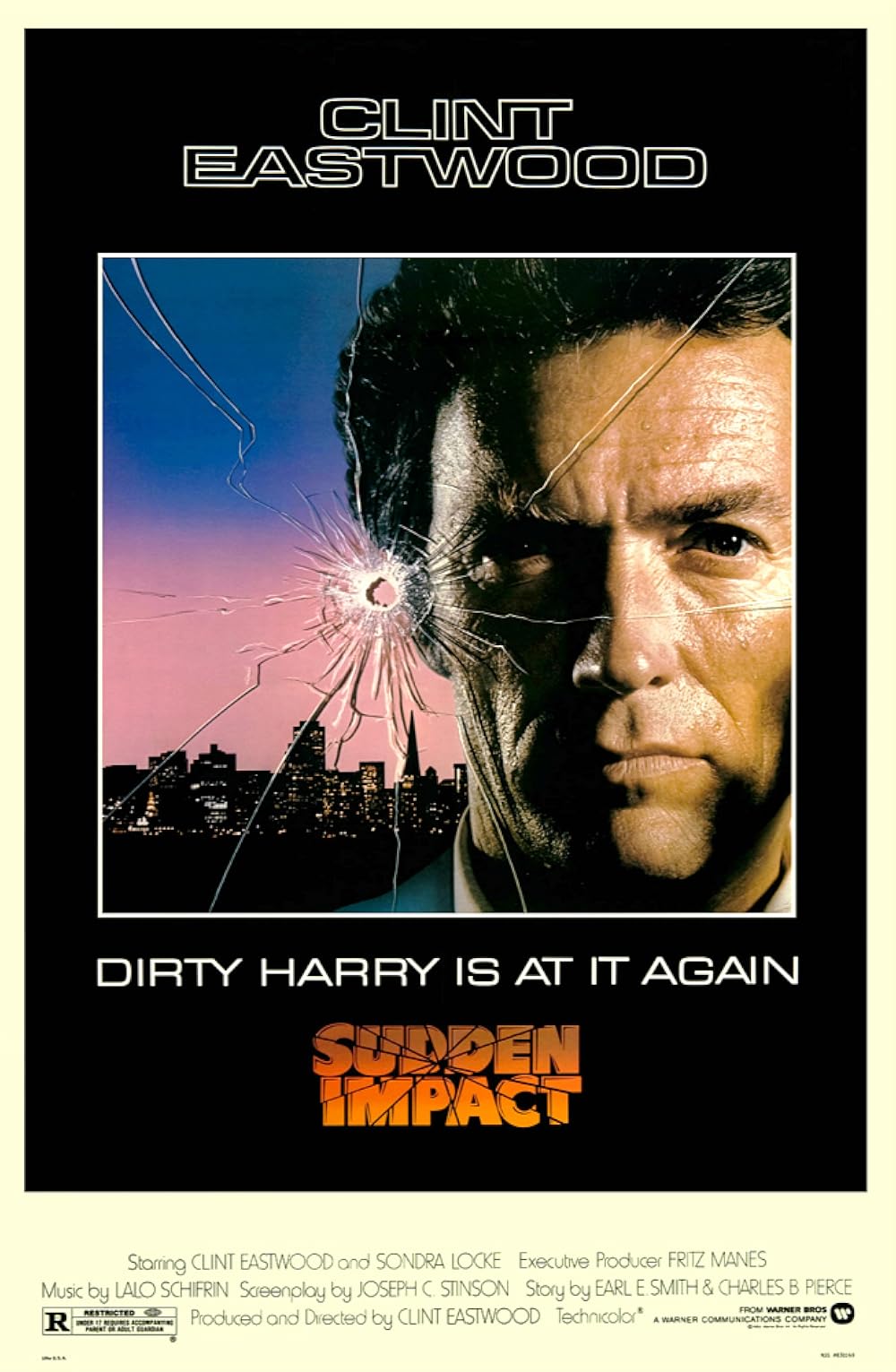
Inspector Harry Callahan (Clint Eastwood) continues working in the San Francisco police department despite his perpetual disregard of proper police procedures, which gets many of the crooks that he has arrested freed due to legal technicalities. His superiors are frustrated with him, but since he does get results keeps him on the force though reassigned to the small town of San Paulo where he works with a sheriff Jennings (Pat Hingle) in hopes he’ll be less problematic. It’s there that he comes upon a case of various men being found shot to death in similar ways. This is being done by Jennifer (Sondra Locke) an artist in residence who 10 years earlier was raped along with her younger sister by a group of men and now she’s out to get her revenge by killing them off one-by-one. Harry is starting to piece together the clues but is surprised that Jennings is reluctant to follow-up on them giving him the impression that the sheriff may have something to hide.

The story is based on a script written by Charles B. Pierce better known for his rural horror movies from the 70’s that were shot in Arkansas and loosely based off of real events like The Town that Dreaded Sundown. This was meant to be a starring vehicle for Locke, but when Eastwood decided to renew the franchise after several years of dormancy, he felt the plotline here would be a good fit for the next Dirty Harry movie and thus hired Joseph Stinson to revise it.

The result is a mish-mash that’s never quite as compelling as it should. For the majority of the runtime Eastwood’s heroics and Locke’s crimes are working in a parallel universe and not connected making it seem like two different movies. Harry’s non-stop shootouts with crooks becomes redundant and cartoonish while Locke’s killings and flashbacks make it too reminiscent of other better-known films like I Spit on Your Grave and Death Wish. The bad guys are caricatures to the extreme making their moments boring and predictable. If the violence wasn’t so over-the-top you’d be convinced, like critic Pauline Kael mentioned in her review, that this thing was meant to be a parody.

Locke and Eastwood are both good and this is the last film that they did together as a couple before their break-up. In Locke’s case I liked how her cynical and brash persona mixes with Eastwood’s brooding and quiet one. Eastwood speaks more here than in the previous entries, but the character doesn’t seem to be evolving. The opening scene inside a courtroom where Harry is shocked to learn that the criminals he apprehended will be set free because he didn’t get a search warrant seemed ridiculous as after being on the force for so many years, and going through the exact same predicaments in the earlier films, that you’d think by now he’d learn his lesson and do things that conform within the legal framework, or at the very least not be so surprised when a judge sees it differently. The number of near-death shootouts he goes through is exhausting making me wonder how he maintained his mental state and didn’t take the vacation time when he’s asked even if he’s ‘not up for it’.

My biggest grievance though is with the structure. I really felt it would’ve worked better had it been approached as a mystery. We could’ve still seen the killings being done, but the identity of the killer would’ve been masked. Instead of Locke being an artist she could’ve been on the police force working on investigating the case and Harry could’ve started up a friendship/quasi relationship with her and at the start been impressed with her work only to slowly become aware that she was intentionally mudding the evidence. Sheriff Jennings too could’ve initially been portrayed as a ‘good guy’ with down to earth sensibilities that Harry liked and then as it progressed would his intentions become more dubious. The flashback sequences, which get interspersed throughout, could’ve instead been saved until the very end.

Spoiler Alert!

The film also continues to reveal Harry’s zig-zagging moral logic. In the first film he was all for playing outside the rules, then in the second installment he came to determine that vigilantism wasn’t the answer. Now here, by letting Locke off-the-hook and not arresting here, he’s acting like street justice is okay. It makes you wonder; is he really growing as a person and seeing things differently or simply floating along with whatever way the plotline wants?

My Rating: 6 out of 10

Released: December 9, 1983

Runtime: 1 Hour 57 Minutes

Rated R

Director: Clint Eastwood

Studio: Warner Brothers

Available: DVD, Blu-ray, Amazon Video, YouTube
The Enforcer (1976)

By Richard Winters

My Rating: 7 out of 10

4-Word Review: Partnering with a woman.

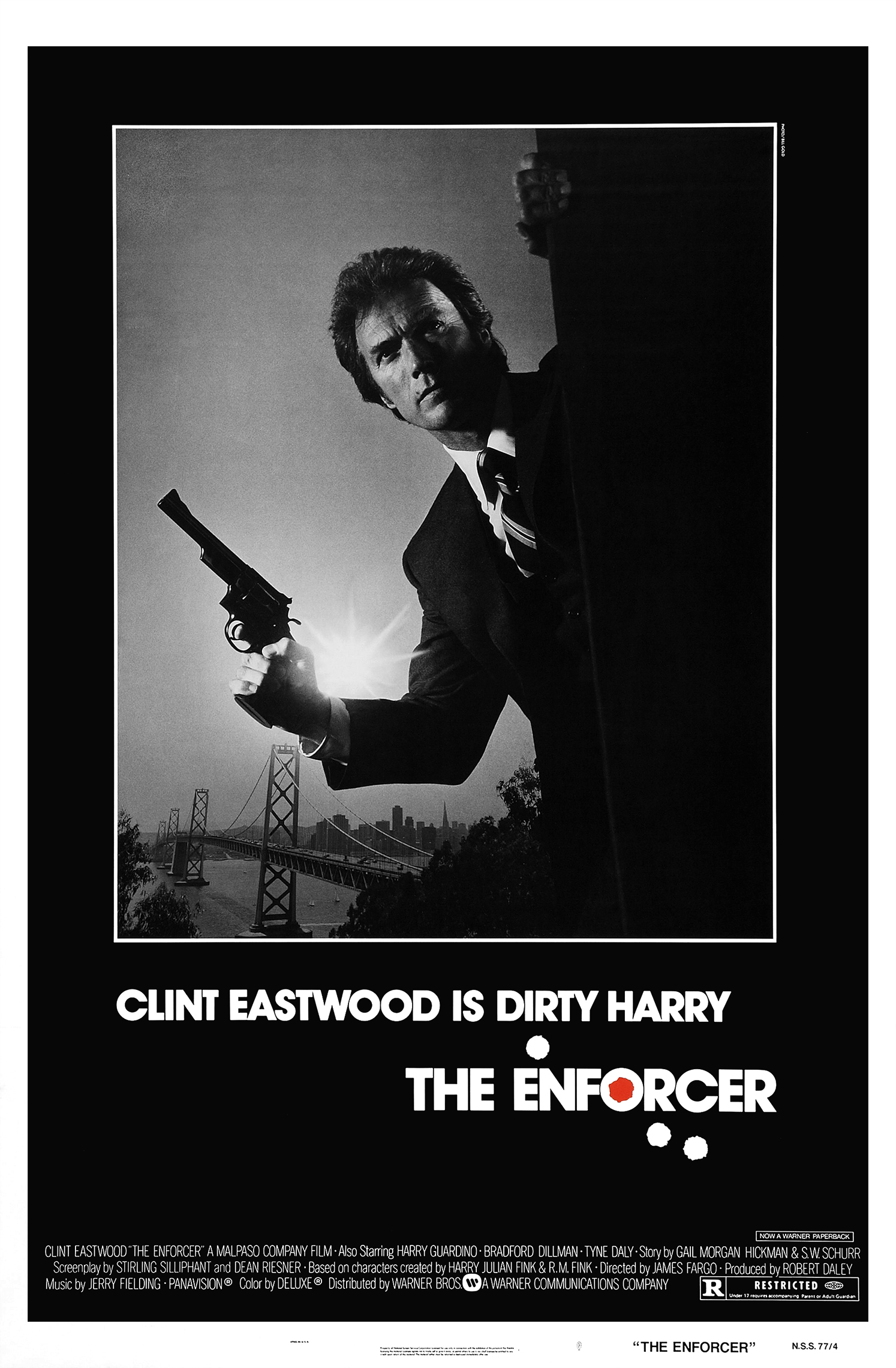
Bobby Maxwell (DeVeren Bookwalter) leads a group known as the People’s Revolutionary Strike Force that is made up of young adults engaged in underground criminal activities. Harry (Clint Eastwood) must work with Big Ed (Albert Popwell) the leader of a black militant group, in an effort to track down Bobby before they do any more damage, but his efforts are stymied by his superior Captain Jerome Kay (Bradford Dillman) who arrests Big Ed before Harry is able to get the information he needs. Things are further complicated by pairing him with Kate (Tyne Daly) as his new partner. Harry doesn’t think much of having women on the force and feels she won’t be able to meet the demands of the job though Kate is intent to prove him wrong.

The original script was written by two young San Francisco area film students who based it off of the 1974 kidnapping of Patty Hearst by the Symbionese Liberation Army. Then after watching some Dirty Harry movies, they decided to rewrite it by incorporating his character into the story. They then visited the Hog’s Breath Inn, a restaurant owned by Eastwood, and handed the script to his business partner Paul Lippman, who in turn gave it to Eastwood. Another script by Stirling Silliphant had already been given to Clint that involved Harry being partnered with a lady cop, a concept that he liked, though he didn’t feel there was enough action in it, so he hired Dean Reisner for a rewrite that would combine elements of both scripts, which is what ultimately became this movie.

The franchise seems to have lost some of its magic. Watching Harry come upon a crime in progress and casually blow away the criminals is no longer as riveting, or shocking and in many ways comes-off as predictable and even cartoonish. The first film did a good job of showing how police work wasn’t always exciting and sexy and could entail doing some boring duties, but here it creates the idea that it’s one pulverizing shootout after another. I didn’t care for the pounding score played over the chase sequences, which the first one didn’t do and was better for it as the music gets a bit distracting and more formulaic like something out of a cop TV-show. Bradford Dillman’s character, as an exasperated police chief, is a complete caricature like a puppet created solely so it can yap at Harry and get him to snarl in return. I wasn’t so crazy either about the humor that seeps in as the first two films had a very serious tone though the scene involving a group of old ladies sitting around a table writing love letters while inside a whorehouse is a definite gem. 

The casting is unique particularly Bookwalter as the head of the criminal gang, who up to this point was best known for starring in Andy Warhol’s experimental film Blow Job, which was a 35-minute movie that had the camera focus solely on Bookwalter’s face as he received fellatio. He also had a brief bit in the second installment of the series playing a naked man who gets killed in a shootout during a sex orgy. Here though he doesn’t have enough of an acting presence to make his moments onscreen interesting like Andrew Robinson did in the first one. He pretty much just seems like a male model with an angry stare and a gun. It’s the same result with popular radio deejay Machine Gun Kelly (Gary D. Sinclair) who gets cast as the priest who runs cover for the bad guys but clearly doesn’t have much acting ability and it’s quite possible that Eastwood intentionally put these guys into these roles knowing this, so that way they’d have no chance of upstaging him. 

I did though like Tyne Daly as Harry’s new partner. She had rejected the role three times due to issues with the script and how her character was portrayed but eventually agreed to get on board once her demand for revisions were met and I’m sure glad she did. She’s not sexy, or beautiful, which is good, and portrays a no-nonsense quality and genuinely seems like she wants to prove herself and dedicated and thus making her appealing right from the start. The only issue is that she’s constantly carrying around a shoulder purse, but why? I’ve never seen a policewoman have one and it seems ridiculous as it impedes her ability to chase after people as she has to grab a hold of it so it doesn’t flop against her body as she moves. 

Spoiler Alert!

Fortunately, the two don’t end up falling in love, the original script had this happening, but this was one of the things Daly insisted had to be taken out before she’d agree to do it, which is good because in real life, especially between professionals, that shouldn’t be occurring. Having her die at the end took me by surprise but is good too as it shows how dangerous police work is and how not every time is the good guy going to come out of a shootout unscathed. 

My Rating: 7 out of 10

Released: December 22, 1976

Runtime: 1 Hour 36 Minutes

Rated R

Director: James Fargo

Studio: Warner Brothers

Available: DVD, Blu-ray, Amazon Video, YouTube
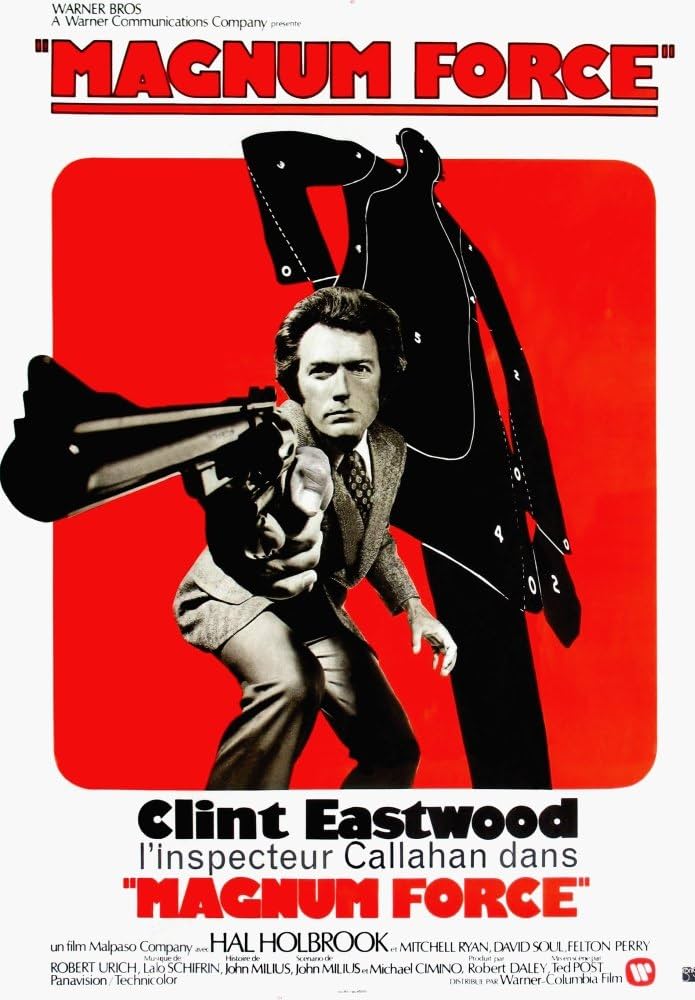
Magnum Force (1973)

By Richard Winters

My Rating: 8 out of 10

4-Word Review: Harry battles renegade cops.

Somebody is killing San Francisco’s well-known criminals who have been able to manipulate the courts in a way that they’ve gotten off and have not served any time. “Dirty” Harry Callahan (Clint Eastwood) isn’t sure at first who’s behind it, but every time he tries to get investigate his superior, Lt. Neil Briggs (Hal Holbrook) tells him to essentially ‘back off’ and go back to stakeout duty of which he’s been assigned, but in his off hours he continues to pursue it. He comes to the conclusion, after a pimp is shot at close range while sitting in the driver’s seat of his car, that a policeman pretending to be a traffic cop is behind it. He then begins to focus in on four new recruits (David Soul, Robert Urich, Kip Niven, Tim Matheson), who all show remarkable aim on the gun range, as being the ones behind it, but how does he prove it before they kill again, or set their sights on him in order to keep him quiet?

In this follow-up to the classic Dirty Harry the direction isn’t as stylish as Don Siegal didn’t return to helm this one, so the reins were handed over to Ted Post who’s better known for his TV work and which Eastwood knew through them working together on the ‘Rawhide’ TV-show from the 50’s. While not all bad there were certain segments that appeared a bit off like when the motorcycle cop pulls over the mob boss, played by Richard Devon, who’s riding in a limousine. The car clearly comes to a stop on a well-traveled bridge, but when the men inside the vehicle get shot you can see through the rear window that the car now appears parked in some urban neighborhood street. The segment where Harry drives into the parking garage of his apartment complex and then gets out of his car after parking it only to be surprised when the four renegade cops, who are also parked there on their motorbikes, begin speaking to him, is botched too as Harry would’ve seen them already there when he drove up and thus the scene should’ve been shot from his point-of-view through the front windshield of his car.

The action segments though are top notch. The scene inside an airplane where Harry disguises himself as a pilot in order stop hijackers from taking it over is both funny and tense as is his shooting down thieves trying to rob a grocery store. The gun range segment, where he and David Soul compete to see who’s the most accurate shooter, is well-handled as is the final chase inside an abandoned airplane hangar in a shipyard. There’s also a cool, but grisly sex orgy shootout in which a naked woman’s body tumbles out a high-rise apartment and then down several flights. You can also spot a nude Suzanne Somers during a poolside massacre.

The film also features the infamous Drano scene where a pimp, played by Albert Popwell, forces a prostitute, played by Margaret Avery, to swallow drain cleaner, which inspired a group of criminals in Ogden, Utah to try and replicate it when they robbed a record store and took the employees hostage on April 22, 1974 in what became known as the Hi-Fi Shop murders. However, instead of instantly killing the victims like it did in the movie it instead created blisters on their mouths and internal burning, which caused them to go through extreme suffering for hours.

My biggest complaint is how Harry is too nice and has lost some of his edge that made him so interesting. In the first film he was described as someone that didn’t like minorities, but here he’s matched up with an African American partner, played by Felton Perry, right off-the-bat with no complaints. He’s also seen with children in one segment and seems to enjoy them, but I’d think with Harry’s irritable temperament he’d find kids running around and making noise to be annoying. A downstairs neighbor lady, played by Adele Yoshioka, comes on to him quite strongly, she literally walks out into the hallway as he’s coming home and asks him what she needs to do in order to go to bed with him, which seemed too forward even for the carefree 70’s. I agree with John Milius who wrote the original draft of the screenplay where that scene was not in there but got added later at Eastwood’s behest. Harry was not the sociable type and if anything, he’d be doing prostitutes simply as a release for his sex drive. The character really didn’t have the capacity nor desire for a relationship and if he was married to anything it would be his job and mowing down bad guys making this romantic segment forced and not believable.

The bad guys are a bit too cliched and dull, especially the mob bosses, which is a far cry from the first one where Andrew Robinson made his psycho character quite distinct and intriguing. One scene has a group of mafia guys sitting around a table eating Chinese food, but none of them says a word, which to me was not realistic. Even bad people still follow sports, weather, and current events and would like to chat a little with those around them, supposedly these are their ‘friends’ since they work closely together, and not just eat in stone cold silence, which paints them too much as robots with no life, or personality outside of being killing machines.

While it’s fun seeing Urich and Soul in early roles and in Urich’s case looking downright boyish, the four renegade cop’s presence onscreen is quite flat. There’s no distinction between their personalities and no backstory given to how they came together, or what brought them to becoming vigilantes. Did they have a loved one, for family member die at the hands of a criminal who then was given a lenient sentence? This is never explained, or elaborated on, but really should’ve.

It’s also confusing to have Harry, who in the first installment was fed-up with the politics of policework and looking to work ‘outside the system’ suddenly dislike these guys for doing what he himself had previously advocated. Would’ve been more interesting had they invited him to join the group, and he initially obliged thinking this would be a good to solution to criminals getting off easy only to eventually realize the group was taking things too far and then work to stop them. 

My Rating: 8 out of 10

Released: December 25, 1973

Runtime: 2 Hours 3 Minutes

Rated R

Director: Ted Post

Studio: Warner Brothers

Available: DVD, Blu-ray, Amazon Video, YouTube
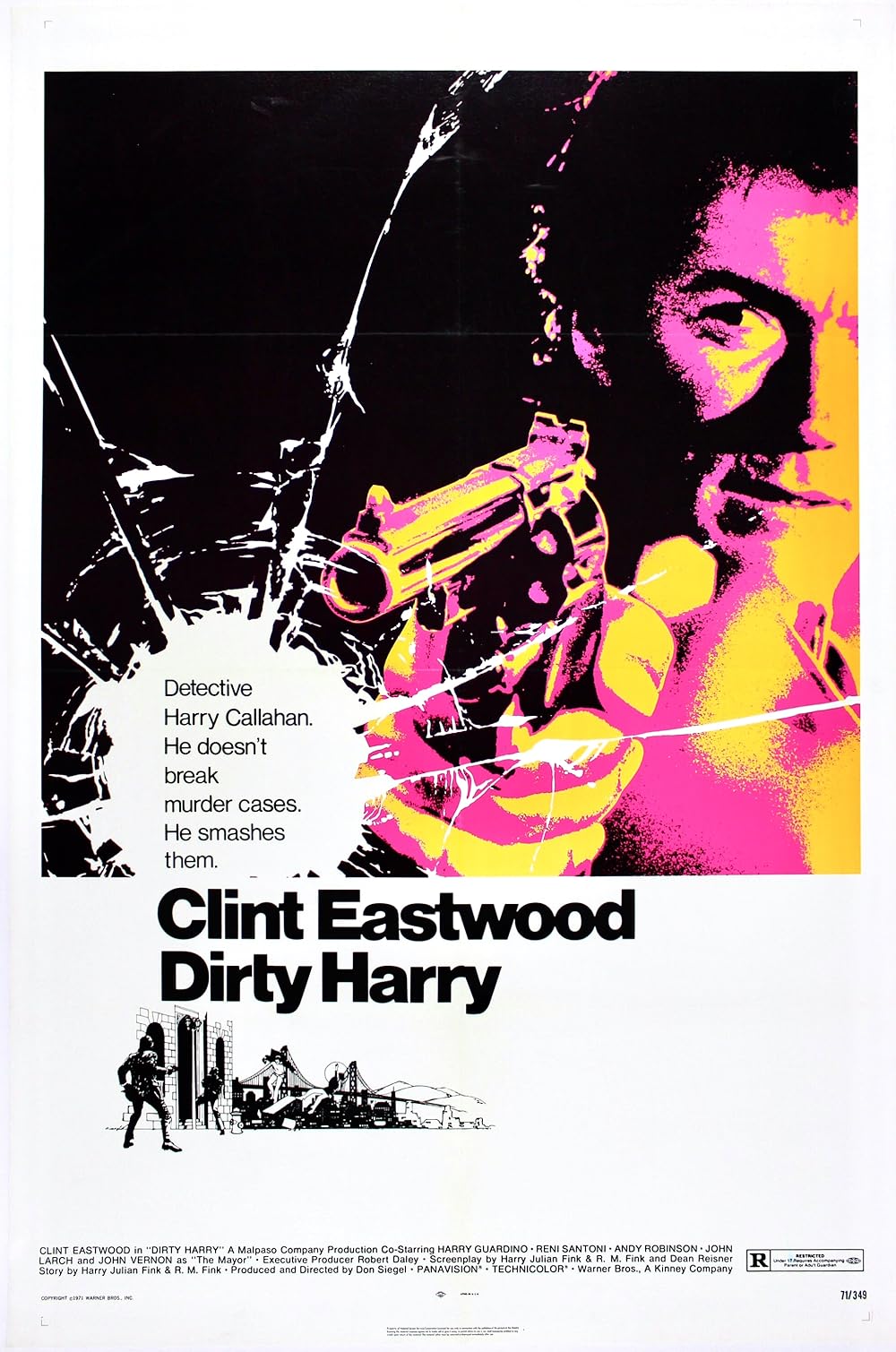
Dirty Harry (1971)

By Richard Winters

My Rating: 10 out of 10

4-Word Review: Cop doesn’t like rules.

A psychotic who goes by the nickname of Scorpio (Andrew Robinson) has pledged to kill one person a day unless the city of San Francisco forks over $100,000 with his first victim being a woman (Diana Davidson) taking a swim in a pool on a rooftop of a high rise. The mayor (John Vernon) agrees to give into the killer’s demands much to the objections of Harry Callahan (Clint Eastwood) a hard-nosed cop who believes criminals are coddled by the system at the expense of their victims. Yet Harry, who’s known by his fellow cops as Dirty Harry, which he acquired for his well-known ability to circumvent rules that he doesn’t agree with, must go along with the demands of his department forcing him to act as the delivery of the ransom. This causes him to go through the humiliation of running all around the city at the whim of Scorpio who gives him directions of where to go next via different pay phones in the area. When Harry almost gets killed by doing this and then asked to be the delivery guy again, he walks out insisting that appeasing the killer is the wrong way to go. This causes even further irritation when Scorpio is later caught by Harry and then freed on a technicality convincing him that he must work on his own time in order to get the Scorpio put away permanently.

The script was written by the married team of Harry Julian Fink and his wife Rita. The inspiration came from the real-life Zodiac case who terrorized the city of San Francisco during the late 60’s and was never caught. The main character was supposed to be someone in their 50’s and was originally offered to Frank Sinatra, who had difficulty holding the Smith and Wesson gun, and decided to bow out. It was then offered to Paul Newman, Steve McQueen, who had just gotten done playing a cop in a movie and didn’t want to have to do another one, as well as George C. Scott and Burt Lancaster who both rejected it due to their feelings that the story’s theme was right-wing.

As a cop film it’s by far one of the best and has a lot of unique moments. Because Bullit had come out just a few years earlier, which featured a very famous car chase, it was decided not to replicate that one and instead we get treated to some very exciting foot chases with one occurring inside a factory mill and another at Kezar Stadium late at night. What makes these chases so interesting is that there’s no musical score played over them like in most movies, but instead we hear the pounding of their feet on the pavement and other outside ambience that helps to make these sequences grittier and more captivating. When the music does get played it’s when Scorpio is aiming his rifle to kill someone, but has the distinct sound of female vocals, which composer Lalo Schifrin put in to represent the voice he felt Scorpio was hearing inside his head.

Eastwood has made a career of playing this type of role, but here it comes off as fresh and like it was perfectly written for him and no one else could’ve played it better. His patented grimace and squint really work here and it’s interesting seeing the way his crusty exterior softens a bit as the film progresses and I liked the contrast of pairing him with a younger, less experienced cop, played Reni Santoni, that Harry initially thinks very little of, but eventually grows to like and respect. The conversation that he later has with Reni’s wife, played by Lyn Edgington, in which they discuss the emotional toll that being a cop can do to an individual really exposes the challenging job that it is as does Harry’s night on patrol where he’s forced on the spot without preparation to take on many difficult tasks including talking a man down from jumping off a building. This all helps to unglamorized the life of a cop while also revealing the underlying stressful nature of the position and why so many men and women that do it will eventually get burned out. 

Andrew Robinson, in his film debut, is excellent as well with a distinct eyes and face that looks constantly creepy. Normally I’d complain that we learn very little about his character nor the motivation for why he kills, but keeping him as an enigma helps put the focus on the main message, which is the rights of the victims and cops who try to protect them and by making Scorpio have a distinct personality would’ve humanized him and thus deluded the theme. Even so Robinson makes the most of each scene he’s in and he consistently stands out no matter what he’s doing, like the almost comical facial expression he makes when he gets stabbed in the leg. I also liked how after he does get stabbed that he then continues to walk and run with a limp versus other films where someone gets injured and they quickly recover, and it eventually becomes all but forgotten. 

Spoiler Alert!

My only complaint is how at the very end Harry throws away his badge and walks off the job. Director Don Siegel and Eastwood argued about this with Eastwood feeling Harry wouldn’t do this as being a cop was the only job he knew and his relentless pursuit for justice and putting bad guys away would overpower his urge to quit. Even if he was unhappy with some of the police procedures, he’d still put up with it, or fight to improve things from within. This is why at the end he should’ve taken out his badge and looked at it like he was thinking of throwing it, but then eventually put it back into his pocket. 

My Rating: 10 out of 10

Released: December 23, 1971

Runtime: 1 Hour 42 Minutes

Rated R

Director: Don Siegel

Studio: Warner Brothers

Available: DVD, Blu-ray, Amazon Video, YouTube
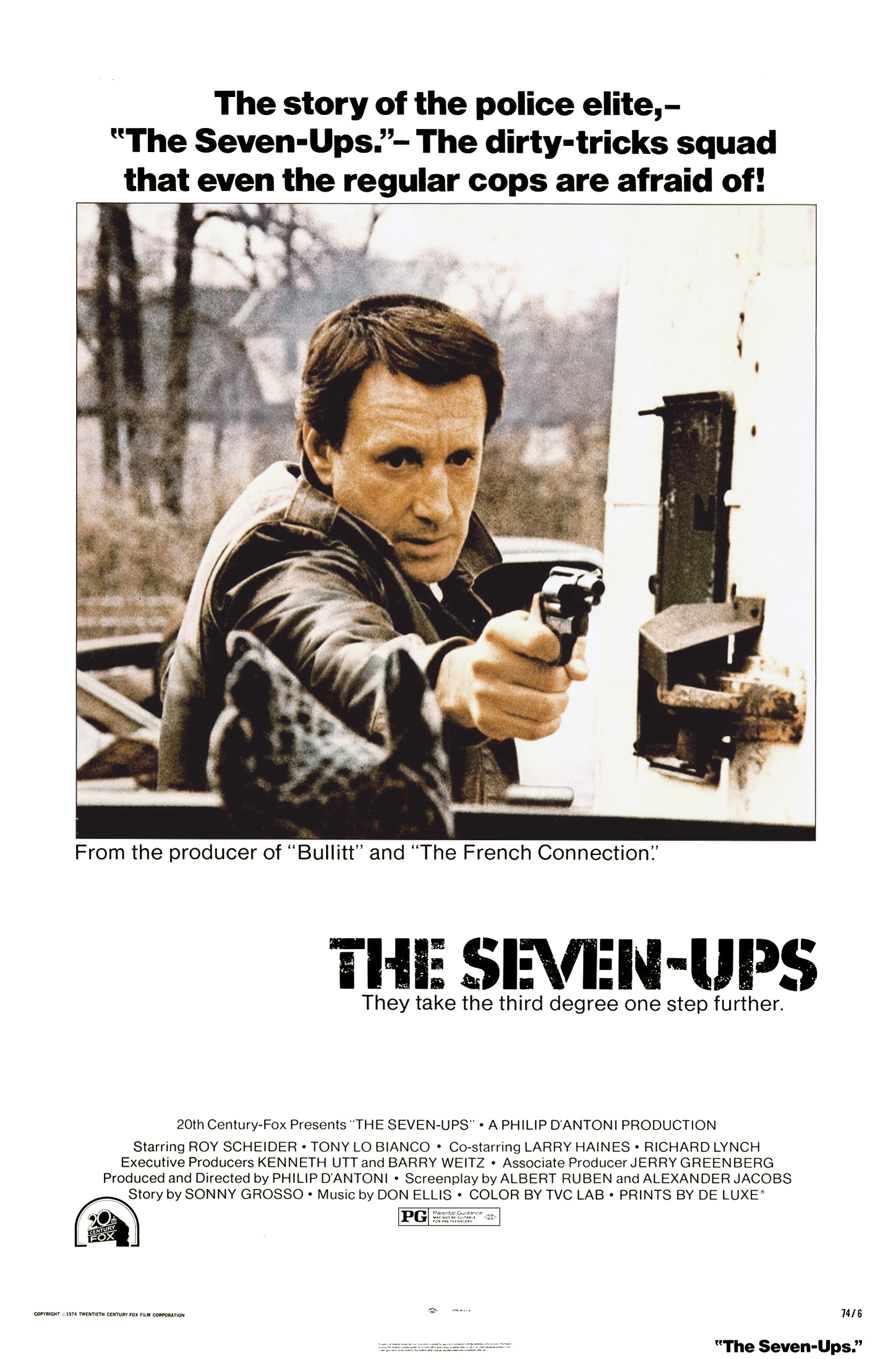
The Seven Ups (1973)

By Richard Winters

My Rating: 7 out of 10

4-Word Review: Cops use unorthodox methods.

Buddy (Roy Scheider) is a police detective who runs a group of renegade cops who employ unusual and sometimes questionable methods to nab crooks. Once apprehended the criminals they arrest usually end up serving 7-years or more in the penitentiary, which gives their group the nickname of the ‘Seven Ups’. The groups most recent mission is investigating kidnappings occurring in the city and Buddy uses the help of Vito (Tony Lo Bianco) a childhood friend who works as an undercover informant for the police, but who unbeknownst to Buddy is actually behind the recent crimes going on and even the orchestrator.

After the success of The French Connection producer Phil d’Antoni became inspired to produce another similar crime film dealing with the true-life event that occurred in the 50’s in New York that had mobsters being kidnapped by criminals posing as cops. He wanted William Friedkin, who had done so well with the first film, to direct this one, but Friedkin didn’t like the script and passed as did several other directors, which eventually lead the studio to choose d’Antoni to take the helm himself in his one and only foray behind the camera with results that are both good and bad.

The production lacks cinematic flair and shot in a flat way almost like a documentary, which to some degree actually helps it. It was filmed between January and April of 1973 and the crisp, gray, frigid look helps build an atmosphere by accentuating the grimy, cold life of the underworld and how the detectives themselves get foisted into it. The plot is basic and linear, so it’s easy to follow and not cluttered with unnecessary mystery angles and tangents as the viewer knows right away who’s behind everything. There’s also a tense scenes inside a car wash, not exactly sure the perpetrators would’ve been able to pull-off as effortlessly as they do, but it definitely keeps you riveted as you feel the same unease as the two guys in the car though having another scene come later that also takes place in a car wash wasn’t needed.

The film though doesn’t have the interesting characters like in The French Connection where Popeye Doyle’s lifestyle and temperament contrasted in fascinating ways with the man he was pursuing and in fact it was Doyle’s fractured personality that made the movie so compelling. Here, through no fault of Scheider who plays the part well for what is asked, but his character is quite one-note. We learn nothing about him, or his home life. He’s just a typical New York cop obsessed with getting the bad guys, which is fine, but doesn’t have the multi-dimensional quality to help make him memorable.

The supporting characters aren’t necessarily much better, but the actors who play them at least help give them some life. Larry Haines, probably best known for playing one of Felix and Oscar’s poker playing buddies in The Odd Couple, has a good turn here as a crime boss who’s nonchalant initially when he thinks he’s being taken to the cop station for a routine arrest only to cower in fright when he realizes he’s been duped and then when he survives shows no mercy in his unrelenting pursuit for revenge. My only quibble though is that Scheider and his cohorts are able to break into Haines’ house too easily and even able to catch him and his wife sleeping in bed, but you’d think with him being a well-known target with the police he’d have burglar alarms set-up all over his home to detect anyone trying to get in and since he’d just had a traumatic kidnapping incident earlier you’d think he wouldn’t be able to sleep soundly again, or paranoid enough to sleep lightly and aware of any noise.

The car chase sequence is by far the best moment, and some may say the only real reason to watch it. It certainly has you holding your breath, but in a lot of ways is too similar to Bullit, another film produced by d’Antoni, so it really doesn’t stand out as much as it should. There’s also the issue of Scheider pursuing the bad guys even as there’s pedestrians all around. Most real-life cops will stop chasing after a culprit’s car if they feel  it will put others at too much of a risk and this comes to a horrifying moment when school children are playing on the street and must quickly run to the curb when the bad guys drive their car through only a few seconds later to almost get hit by Scheider’s car as he plows through at high speeds without even a thought of putting on his breaks making him seem more like an irresponsible cop who’s more of a problem than a solution.

Nonetheless it’s gripping and I enjoyed how it ends with Scheider ducking under the windshield just as his vehicle hits the underside of the backend of a truck in an intended ‘homage’ to Jayne Mansfield’s wreck. It’s also great watching Richard Lynch’s facial expressions as he plays the crook sitting in the passenger’s side of the fleeing car. Some could say it’s great acting, which maybe it was, but I believe his looks of nervousness and fear was genuine, which just helps to make these shots of his face, which get intercut throughout the chase all the more entertaining and help to have a human side to the action as I and almost anyone else would be reacting the same as he does if we were in the same situation.

My Rating: 7 out of 10

Released: December 14, 1973

Runtime: 1 Hour 43 Minutes

Rated R

Director: Philip D’Antoni

Studio: 20th Century Fox

Available: DVD, Blu-ray

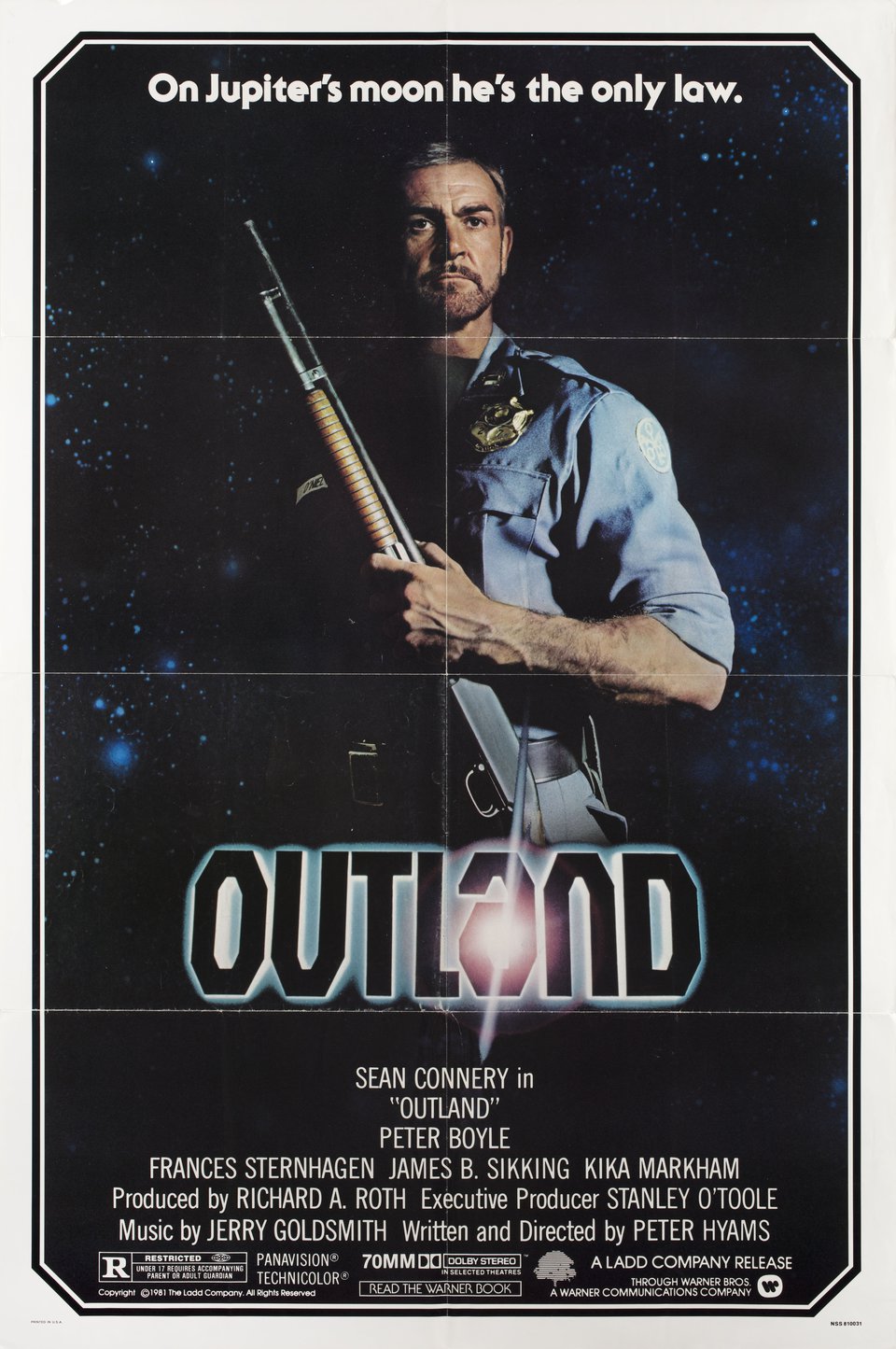
Outland (1981)

outland

By Richard Winters

My Rating: 6 out of 10

4-Word Review: Deaths at mining outpost.

William (Sean Connery) is a federal marshal assigned to an isolated mining outpost on one of Jupiter’s moons. The outpost, known as Con-Am 27, is supervised by Mark Sheppard (Peter Boyle), who boasts a high productivity from his miners, but this comes at a cost as they seem to be steadily dying-off after suffering from bizarre psychotic episodes. William brings a blood sample of one of the latest victims to Lazarus (Frances Sternhagen), a nurse stationed at the outpost, who runs it through some tests and learns that he had been taking a powerful drug that can allow the men to work long hours at a high rate, but they will eventually burn-out and be driven crazy after about 10-months of use. William learns that Sheppard is fully aware of the drug use and allows it since it helps his workers achieve high results while also paying-off the police authorities to keep quiet. William refuses to go along with this and openly challenges the status quo of the space station causing Sheppard to call-in two assassins who’ll arrive on the latest shuttle and dispose of William unless he’s able to kill them first.

The film was inspired by writer/director Peter Hyams’ desire to make a western, but was advised by studio execs that westerns were no longer profitable, but sci-fi movies dealing with outer space were, so he decided to switch the setting of High Noon, a famous western starring Gary Cooper, to that of a space station, but otherwise kept many of the story elements from that one intact. The response by critics at the time was mixed with some labeling the effort as ‘trite’ while others, like critic Desmond Ryan of the Philadelphia Inquirer calling it ‘scarier than Alien, which I found funny since that one has gone on to be a timeless classic while this is largely forgotten.

The film does score when it approaches the human factor like greed and the way management can and will exploit the workforce if it’s able and the resentment and apathy workers can have towards their jobs, which even if it’s in some distant future could still most likely be reoccurring elements that will go on no matter what the time period. The look of the space station, particularly from the outside, is cool and I enjoyed the way the film replicates the ominous silence of space especially at the beginning.

Some other futuristic effects don’t work as well like the way the computers feel the need to make little beepy noises every time it prints out a word, or message, which may have seemed high tech at the time, but is now antiquated. The television screens display the old tube models while today we have the flat HD variety making this ‘future’ seen here seem more like the past. There’s also plentiful shots of people openly smoking in meeting rooms, but since second-hand smoke was proven to cause lung cancer and outlawed now, more people vape anyways, then why would it have been brought back in the future?

Connery shouldn’t have to explain why he’s going up against this evil conglomerate when no one else will help him, as the viewer should be able to surmise this on their own, which shows how poorly fleshed-out his character is. Having him rebuff his son’s and wife’s request to come back to earth with them because he has something to ‘prove’ unintentionally works against his likability as it makes him seem selfish versus noble. Would’ve been better had his wife left him on bad terms, maybe because for example he was an alcoholic, or too focused on his job, and thus with nothing else to lose he decides to prove to himself he can do at least something right by taking down the bad guys since he’s essentially failed at everything else. The audience would’ve been more emotionally invested in his quandary if he had nowhere else to turn, instead of here where he technically does have an option.

Sternhagen is an interesting choice for the female lead in that she’s not the proverbial young and attractive heroine like viewers have come to expect in Hollywood action flicks. Had she been more romantically enticing that might’ve made the viewer dislike William, particularly if he acted upon his emotions, since he was already married, so to avoid any possible conflict they made the lady character older and sarcastic and thus not somebody to typically fall in love with. While I appreciated the concept of having two people work together without it leading into a sexual escapade, which becomes a cliche in itself, I still felt it was hard to fathom that she’d be the only one at this outpost that would offer him assistance. The work crew wasn’t real happy with management especially finding out that they were fed a drug meant to ultimately kill them, so I’d think there would be some of them who would want to help William take down their oppressive employer, which would’ve also helped it add a wrinkle to the High Noon formula, which it otherwise follows too closely to the point that it becomes predictable and redundant.

While I did like the shoot-out that happens in the giant greenhouse, which visually is impressive due to its vast largeness, I did feel overall the assassins weren’t interesting. We barely see their faces and they come-off as being no different than the other workers already at the station and this lack of distinction makes them forgettable. Initially I thought William wouldn’t be able to know which ones coming off the shuttle, as there are quite a few people who disembark it, were the killers, so there would be added suspense of him being unclear of who exactly was after him, but this quickly gets answered when William can see via circuit cameras the two men taking out their weapons, which ruins what could’ve been an added mystery. Ultimately, I felt the assassins shouldn’t have been human, but instead an indestructible killer robot, which would’ve kept it more in the space age realm and given it added excitement and special effects.

My Rating: 6 out of 10

Released: May 22, 1981

Runtime: 1 Hour 49 Minutes

Rated R

Director: Peter Hyams

Studio: Warner Brothers

Available: DVD, Blu-ray, Amazon Video, YouTube
End of the Game (1975)

endofgame

By Richard Winters

My Rating: 7 out of 10

4-Word Review: Unable to prove crime.

Richard Gastman (Robert Shaw) makes a bet with his young friend Hans (Martin Ritt) that he can commit a crime in front of him, but Hans will be unable to prove who did it. Later Hans’ girlfriend (Rita Calderoni) plunges to her death from off of a bridge. Hans is convinced Gastman did it, but just like he predicted he cannot prove it. 30 years pass and Hans is now a police commissioner with only a few months to live due to suffering from stomach cancer. His Lieutenant Schmied (Donald Sutherland) is found shot to death inside his police vehicle. He’d been assigned by Hans to keep tabs on Gastman as Hans was still intent on making him pay for what he did to his girlfriend, but he again can’t prove that Gastman killed Schmied though he’s certain that he did. Walter (Jon Voight) gets assigned to the case, but Hans can’t be completely honest with him about the case, so instead he sets Walter up to witness firsthand the brutality of Gastman for himself.

The story is based on the 1950 novel ‘The Judge and the Hangman’ by Frederich Durrenmatt who also wrote the screenplay and has a very amusing cameo as a man who plays chess against himself and always loses. The novel was first adapted into a broadcast for German television in 1957 and then again in 1961 for British TV, and then it got adapted for a third time for Italian television and then a fourth as a TV-movie for French broadcast before finally making it’s way to the big screen with this version, which so far has been the last adaptation to date.

The film was directed by Academy Award winning actor Maximillian Schell who was unable to get along with either of his leading actors with Shaw accusing him of being a ‘clockwatcher’ and ‘pocket Hitler’ while Voight described him as being humorless and overly demanding. The film is well directed for the most part, but an unusual reliance on humor almost kills it. The story itself is certainly not meant to be funny, but Schell implements comedic moments particularly in the first half when they’re not needed and almost a distraction. This is particularly evident during Schmied’s funeral and earlier when Schmied’s body is found and another cop drives the corpse to the hospital with Donald Sutherland, in an unbilled bit, playing the dead man and his body twisting around in weird ways as the car goes down the curvy road, which is humorous, but unnecessary and doesn’t help propel the plot. Initially too the corpse is spotted by some pedestrians who stare at it through the car window and seem amused by it, which isn’t exactly a normal reaction people have when witnessing someone who has just died. Possibly this was meant to show the public’s distrust, or disdain for the police, but if that were the case it should’ve been explained and elaborated.

The casting is unusual as it features Ritt in the lead who’s better known as a director, but here ultimately shines and becomes the film’s only likable character though the way he behaves throughout still makes him seem sketchy like everyone else. Shaw, who complained that he never got paid the $50,000 that he was owed for doing this, is commanding as usual, but Voight who wears a shaggy bleached blonde look comes-off as creepy right away. Technically the viewer is expected to side with his character, at least upfront and consider him a ‘good guy’, but right away Voigt telegraphs it in a way that makes him seem ‘off’ and hence kind of ruins the stories eventual twists.

For those who like complex whodunits this might fit the bill. The plot certainly does constantly unravel in surprising ways and no one should be bored, but the characters are cold and unlikable. There’s no one to root for and therefore the viewer is not as keyed into the outcome as they would’ve had they been more emotionally invested. The editing is also quite choppy and there seems to be certain key elements that get left out, which most likely due to the fact that the original runtime was 106 minutes, but the DVD version, the only one publicly available at this time, runs a mere 92 minutes.

My Rating: 7 out of 10

Released: September 21, 1975

Runtime: 1 Hour 46 Minutes (Director’s Cut) 1 Hour 33 Minutes (DVD Version)

Rated R

Director: Maximillian Schell

Studio: 20th Century Fox

Available: DVD-R

Blood Relatives (1978)

bloodrelatives

By Richard Winters

My Rating: 6 out of 10

4-Word Review: First cousins become intimate.

Based on the Ed McBain novel of the same name, but with the setting changed from New York to Montreal the story centers around police inspector Steve Carella (Donald Sutherland) who takes on the case of a teen girl named Patricia (Aude Landry). She arrives at the police station, in a bloody condition, late one night saying that she and her cousin Muriel (Lisa Langlois) were attacked in an alley by a strange man. When the cops arrive at the scene they find Muriel dead. Initially Patricia can not identify who the man was, but later after the funeral, she comes forward to say that it was her brother Andrew (Laurent Malet) that did it. She details how he and Muriel were having an illicit affair despite being first cousins and when Muriel tried to break-up with him due to having a romance with her boss (David Hemmings) he snapped and killed her and then tried to do the same with Patricia since she was a witness, but she managed to escape. Carella though still has his suspicions and when he finds Muriel’s diary he begins reading it, which confirms the affair, but also something even more sinister that was lurking beneath the surface.

This film received a very limited release and was only shown in the theaters for a few weeks before it was removed and has basically sat in obscurity ever since. Much of it may have to do with the incest theme and a couple of really odd moments. One scene was when Donald Pleasance, who appears briefly as a suspect and speaks in a Canuck accent, admits to having an on-going affair with a 13-year-old named Jean (Tammy Tucker) despite him being 46. Carella then goes to the girl’s home to interview her not so much about her being a minor having sex with an older man, but instead in order to vouch for his alibi that he was with her the night of the crime. She’s told that her answers can help get him ‘off-the-hook’ and ‘prevent him from going to jail’ if she can confirm his whereabouts and the whole sex thing she’s having with him is apparently ‘not a big deal’ (they even end up releasing Pleasance once they determine he wasn’t the killer), which for many viewers today will find quite baffling.

Plot-wise the pacing is poor. It starts out alright and is even riveting as we see this young, blood stained teen girl running through the dark streets that’s littered with trash everywhere. However, the flashback moments, done while Carella reads the diary, don’t have the same compelling impact and tends to slow everything down and even manages to turn it into a soap opera. Even though Sutherland is the main character there’s long stretches where he’s not in it and doesn’t seem to have much else to do, but interrogate the witness, particularly Patricia, again and again. His relationship with his own family isn’t captivating though here too there’s an odd moment where his own teen daughter (Nina Balogh) describes her and her father as potential ‘lovers’ as they’re walking outside in public, which again would be deemed a pretty cringey line if said between father and daughter in virtually any other movie.

The acting by Langlois I found to be terrible and helped drag the whole thing down especially during the second act when Sutherland all but disappears. Granted she’s gone on to have a rather successful career and maybe she just needed more experience in order to find her footing, but she delivers her lines in a flat monotone manner and her pretty face seems unable to show any other expression than a vapid smile. Even when she’s getting stabbed she continues to smile and doesn’t even scream, which came-off as unnatural. Though she did very little else after this I felt it was Landry who was the better actress. She is very convincing and has an angelic looking face, so you really see her as an innocent though equally effective when her character’s dark nature comes out later.

Spoiler Alert!

The twist ending I figured out while there was still an hour to go and most other viewers should start to see it well before the ‘big reveal’ occurs. The main issue with Patricia being the ultimate killer is that it really doesn’t make much sense. Supposedly she was intensely jealous of her cousin’s relationship with her brother, but why? Woman usually get envious of someone if they consider them a rival to a person that they have affections for, so is the film implying that she too was having a sexual relationship with her brother, if so it doesn’t confirm it, but should’ve.

A better way to have ended it, in my view, would’ve had Muriel get pregnant, she actually does think she’s pregnant earlier, but it turns out to be a false alarm. Instead it should’ve been the real thing and Andrew would’ve become upset at this and coerced Patricia to kill her in order to get him off-the-hook. He’d promise her that they’d get into a relationship in return (this version would make clear that she had intimate feelings for him and he knew it), but then after the killing gets done, he reneges, which gets her upset, so she implicates him to the police. This scenario would’ve at least given clear motivations to the characters, which is otherwise murky. Sure it would be pretty tawdry and sleazy, but the story was going in that direction anyways, so it might as well go all the way with it.

My Rating: 6 out of 10

Released: February 1, 1978

Runtime: 1 Hour 40 Minutes

Rated R

Director: Claude Chabrol

Studio: Filmcorp

Available: DVD (Region 2) (Dubbed), DVD-R (dvdlady.com)

Garde A Vue (1981)

garde1

By Richard Winters

My Rating: 6 out of 10

4-Word Review: Interrogation of a lawyer.

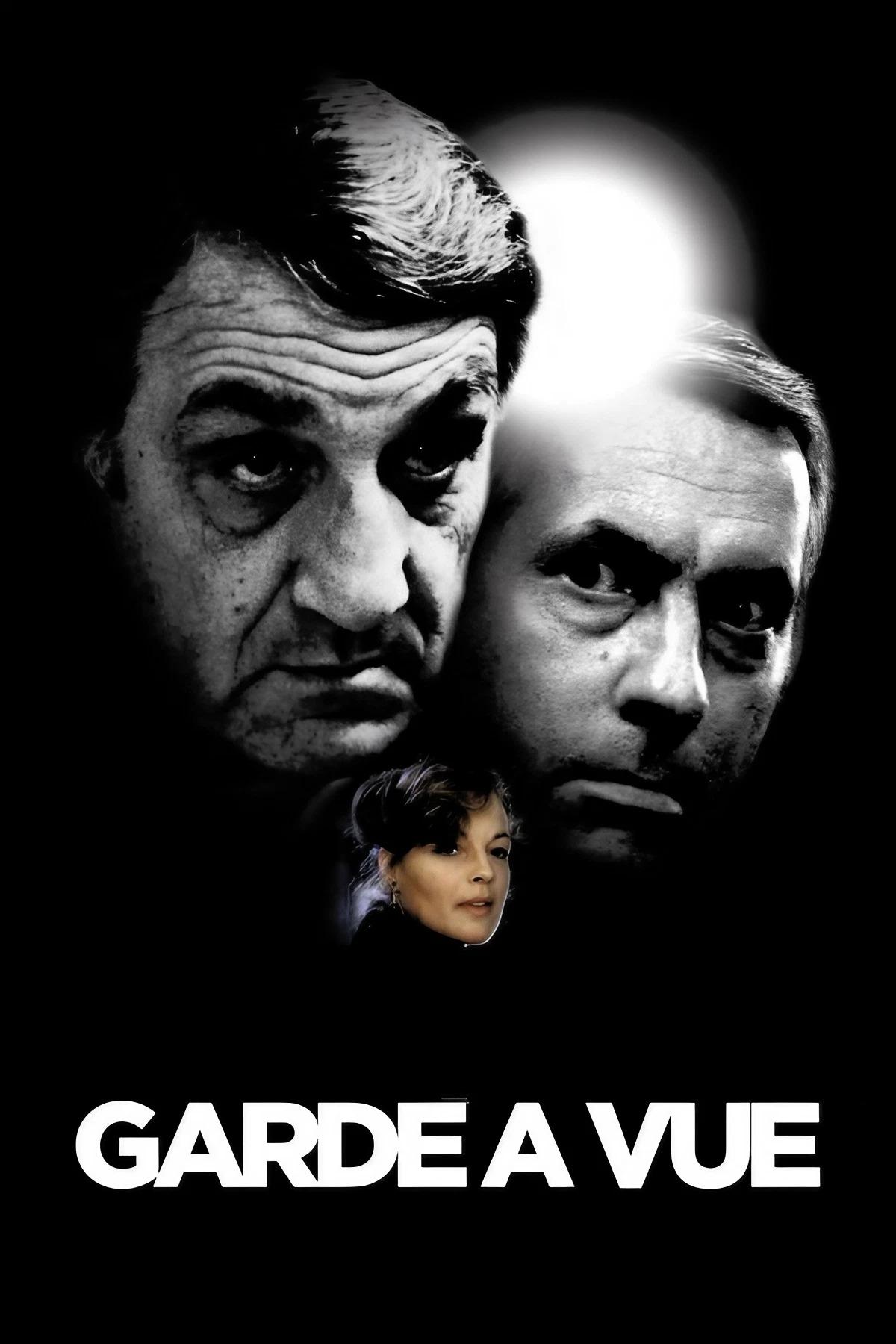
Jerome (Michel Serrault), is a rich and powerful lawyer who is brought into a police station late one night during New Year’s Eve in order to be questioned about the rape and murder of two young girls. Antoine (Lino Ventura) is the lead investigator while Marcel (Guy Marchand) sits in the back and assists him during the interrogation. At first the conversation is light and civil, but as Antoine brings more circumstantial evidence to the forefront Jerome becomes nervous yet insists he’s still innocent. Marcel even implements some physical force against him, but Jerome’s stance never changes. In another room Antoine has a conversation with Jerome’s wife, Chantal (Romy Schneider), who confides to him that she secretly suspected Jerome to be in-love with an 8-year-old girl. Once Jerome gets confronted with this his story soon begins to change.

The film is based on the novel ‘Brainwash’ by John Wainwright and shot entirely in a studio soundstage and in chronological order. Why director Claude Miller would want to film a story that had very little if any cinematic elements to it is a mystery and if anything this might’ve fared better as a stage play. I was initially impressed with the police station room as you’d swear it was an authentic building and not just a prop built for the production. The drenching rain seen pouring down outside the windows is impressive as it gives the viewer a claustrophobic feel and I liked how eventually, when the clock hits midnight, you hear car horns honking outside to represent the New Year. However, every interrogation room I’ve seen, and I watch a lot of confession videos on Youtube from real-life cases, the rooms are very small and with no windows and the film would’ve been better served had it reflected a setting like this as it would’ve brought out better the psychological tension of the suspect and his feelings of the ‘walls closing in on him’, which with here you don’t get.

You can’t help but connect this movie with The Offencewhich starred Sean Connery and was directed by Sidney Lumet. That movie came out 8 years before this one, but had the exact same theme of a suspect being brought in over the murders of some school girls. That movie was well directed but did annoy me for the fact that in that one the suspect, played by Ian Bannen, did nothing, but give off this smirk the whole time.  This one has a much better back-and-forth between the investigator and suspect, which helps keep it compelling as more evidence gets introduced. However, in the Lumet film it had constant shots of this big bright light shining into the camera giving the viewer a point-of-view feeling of what someone in that situation would feel and thus helping hype the sense of urgency of wanting to get out of there, or say anything one needed to in order to stop the pressure, which this film doesn’t do very well. Both films though have cutaways showing the dead girl’s bodies from a distance in a secluded area, which are visually creepy, though again Lumet’s film scores a bit higher in that category too.

Spoiler Alert!

Ultimately the ending is a letdown and rather baffling as it features Jerome caving and admitting to a crime that he really didn’t commit due to the perceived police pressure. For one thing it’s hard to imagine that a seasoned lawyer would be that dumb and wouldn’t just ‘lawyer up’ himself and demand counsel of his own when interrogation got to be too much. I’ve seen a lot of true life interrogations where the pressure put on the suspect was far worse and those people refused to buckle, so seeing the character fall to pieces so relatively quickly especially when he was educated to know better makes the whole thing pathetic.

Didn’t quite get why the wife shoots herself at the end either. Supposedly it’s because she feels guilty about tabbing him for the murder when the real killer eventually gets exposed, but she did it out of honesty as she really felt he had a thing for young girls, so why should she feel tortured about saying something she truly believed? It would’ve been more surprising if she had pulled the gun on Jerome himself as he got into the car and shot him as she would feel, even if he hadn’t been arrested for this crime, that he still had some dark perversions and thus should be killed before he goes and carries out his fantasies on some other girl. Of course if she lied about him having a thing for an 8-year-old in order to get back at him over their contentious marriage then her guilt and suicide would’ve been more plausible, but I didn’t get that from watching it, so if that was ultimately her motivation then the filmmakers should’ve done a better job at intimating it.

This is the rare case where I’d say the Hollywood remake, which came out in 2000 as Under Suspicion and starred Gene Hackman and Morgan Freeman was much better done. It had a better visual balance that didn’t keep the whole thing stuck inside a police room and it better tied-up loose story ends that this one leaves open.

My Rating: 6 out of 10

Released: September 23, 1981

Runtime: 1 Hour 27 Minutes

Not Rated

Director: Claude Miller

Studio: AMLF

Available: DVD, Blu-ray