Category Archives: Obscure Movies

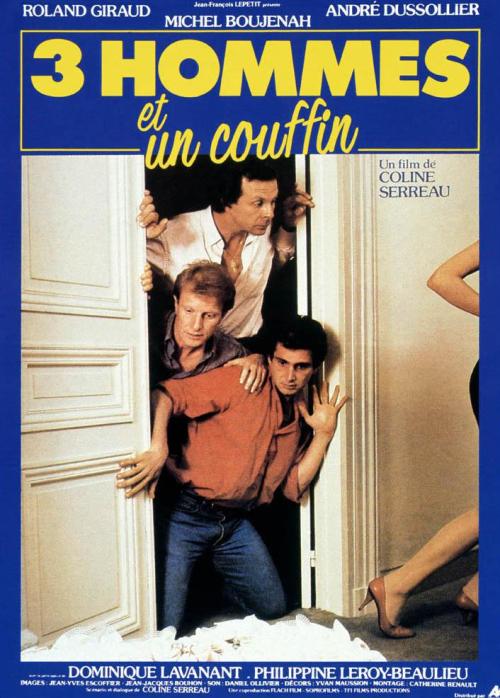
Three Men and a Cradle (1985)

threemencradle

By Richard Winters

My Rating: 7 out of 10

4-Word Review: Stuck with a baby.

Pierre (Roland Giraud), Michel (Michel Boujenah), and Jacques (Andre Dussollier) are three bachelors living in a swanky apartment who routinely bed hot women and throw wild parties. During a party one of Jacques’ friends informs him that he has a package and wants to have it delivered to their apartment for safe keeping. Jacques agrees and then goes flying off to Japan for a month as an airline steward. Pierre and Michel then find a baby at their doorstep that gets left by Jacques former girlfriend. Thinking this is ‘the package’ they begrudgingly bring her in and try caring for her despite having no idea what they’re doing. Meanwhile the actual package also gets delivered, which is a small box secretly full of heroin, which they think nothing of until the dealers arrive looking to pick it up and mistakenly take the baby instead.

A highly insightful look at bachelors and their ineptness and downright ignorance at infant care is brought splendidly to screen, at least with the first act. There’s many keen moments as they run around to pharmacies not knowing what sized diapers to get the kid, or the type of baby food, thinking it’s ‘all the same’ and needing to constantly go back and speak to the female druggist for clarity.  In fact the first 30-minutes are probably the funniest and could’ve just kept it at that theme and been a success though having Jacques away so much starts to make it seem like the title should’ve just been ‘2 Bachelors and a Cradle’ since the third one is little seen until much later on.

I also really adored the kid who is able to somehow cry on cue. Most infants are understandably hard to control, but this one reacts to the scene and situations perfectly and is in it surprisingly a lot. In most other films dealing with babies they usually get only shown in a crib for a few seconds here and there, with these shots spliced in, but here she’s like a genuine character that’s in it almost as much as the main ones. We also see her grow where at the end she’s doing her first walk and it’s cool that the ‘music’ done over the closing credits amounts to recordings of her baby blabbering.

Where the film starts to fall-off a bit is with the drug dealer side-story. I think the baby chores that the men had to go through could’ve been enough to carry it and adding in the crime thing made it seem unnecessarily exaggerated. It’s also ridiculous that the dealers tear up the entire apartment, and I mean they literally ransack the place cutting up and breaking all the furniture to the point that’s it’s an extraordinary mess. Then suddenly a little later it all goes back to normal, but how could they find the time to clean it all up while also taking care of the kid? This clean-up would’ve quite frankly taken many weeks and buying all new stuff, so this should’ve at least been shown, but instead it gets portrayed like they’re genies who can seemingly turn a trashed place into a clean one with a snap-of-a-finger.

The characterizations are rather weak as Pierre and Michel respond to things too much the same way and have very little distinction between them and could’ve easily morphed into being one person. The idea that these guys could just call off from work for not only days, but weeks at a time without even giving an excuse as to why and not lose their jobs for it seemed implausible. Granted the French culture isn’t a workaholic one like in America, but it’s pushing the bar to the extreme here and might’ve been more amusing seeing the guys taking the baby to their work and trying to somehow still get things done.

Spoiler Alert!

My biggest beef though comes with the girlfriend named Sylvia, played by Philippine Leroy-Beaulieu, who has the audacity to leave a helpless infant on somebody’s doorstep, walks away, and doesn’t think anything of it. What’s to say some stranger couldn’t come along and snatch the kid up before the occupiers of the apartment find it? What’s to guarantee that the guys in the apartment are even going to want to take the baby in, or if they do won’t inadvertently harm the child since they have no training on how to handle it? The fact that she returns months later with this bright beaming smile demanding to see her baby immediately like she’s some loving mother entitled to her kid whenever she pleases makes her seem even more outrageous. In most jurisdictions her behavior would’ve been considered reckless child abandonment and her parenting privileges taken away. Instead of handing over the baby she should’ve received a very stern lecture

Granted the film tries to make-up for this by having her return to the apartment saying she can’t keep up with the mothering duties and agrees to hand the baby over to the men. She also gets shown lying in the baby’s crib in a fetal position in order to symbolize that she’s immature, but still for a playful comedy this has some serious undertones that it glosses over, but are still readily there if you think about it.

My Rating: 7 out of 10

Released: September 18, 1985

Runtime: 1 Hour 46 Minutes

Rated PG-13

Director: Coline Serreau

Studio: Soprofilms

Available: DVD
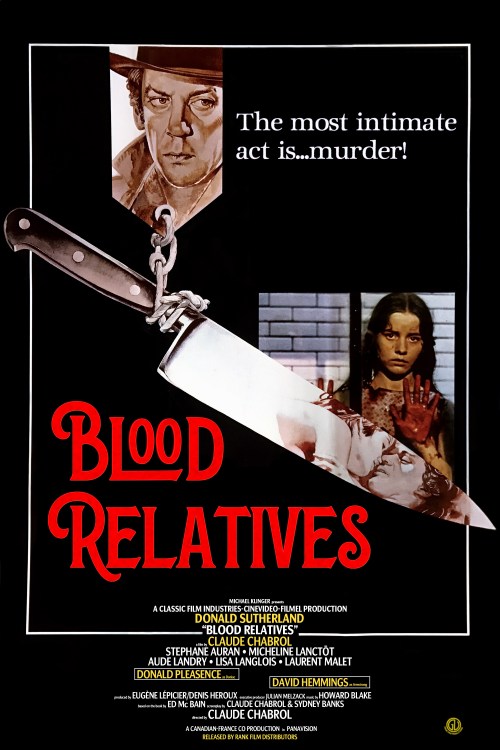
Blood Relatives (1978)

bloodrelatives

By Richard Winters

My Rating: 6 out of 10

4-Word Review: First cousins become intimate.

Based on the Ed McBain novel of the same name, but with the setting changed from New York to Montreal the story centers around police inspector Steve Carella (Donald Sutherland) who takes on the case of a teen girl named Patricia (Aude Landry). She arrives at the police station, in a bloody condition, late one night saying that she and her cousin Muriel (Lisa Langlois) were attacked in an alley by a strange man. When the cops arrive at the scene they find Muriel dead. Initially Patricia can not identify who the man was, but later after the funeral, she comes forward to say that it was her brother Andrew (Laurent Malet) that did it. She details how he and Muriel were having an illicit affair despite being first cousins and when Muriel tried to break-up with him due to having a romance with her boss (David Hemmings) he snapped and killed her and then tried to do the same with Patricia since she was a witness, but she managed to escape. Carella though still has his suspicions and when he finds Muriel’s diary he begins reading it, which confirms the affair, but also something even more sinister that was lurking beneath the surface.

This film received a very limited release and was only shown in the theaters for a few weeks before it was removed and has basically sat in obscurity ever since. Much of it may have to do with the incest theme and a couple of really odd moments. One scene was when Donald Pleasance, who appears briefly as a suspect and speaks in a Canuck accent, admits to having an on-going affair with a 13-year-old named Jean (Tammy Tucker) despite him being 46. Carella then goes to the girl’s home to interview her not so much about her being a minor having sex with an older man, but instead in order to vouch for his alibi that he was with her the night of the crime. She’s told that her answers can help get him ‘off-the-hook’ and ‘prevent him from going to jail’ if she can confirm his whereabouts and the whole sex thing she’s having with him is apparently ‘not a big deal’ (they even end up releasing Pleasance once they determine he wasn’t the killer), which for many viewers today will find quite baffling.

Plot-wise the pacing is poor. It starts out alright and is even riveting as we see this young, blood stained teen girl running through the dark streets that’s littered with trash everywhere. However, the flashback moments, done while Carella reads the diary, don’t have the same compelling impact and tends to slow everything down and even manages to turn it into a soap opera. Even though Sutherland is the main character there’s long stretches where he’s not in it and doesn’t seem to have much else to do, but interrogate the witness, particularly Patricia, again and again. His relationship with his own family isn’t captivating though here too there’s an odd moment where his own teen daughter (Nina Balogh) describes her and her father as potential ‘lovers’ as they’re walking outside in public, which again would be deemed a pretty cringey line if said between father and daughter in virtually any other movie.

The acting by Langlois I found to be terrible and helped drag the whole thing down especially during the second act when Sutherland all but disappears. Granted she’s gone on to have a rather successful career and maybe she just needed more experience in order to find her footing, but she delivers her lines in a flat monotone manner and her pretty face seems unable to show any other expression than a vapid smile. Even when she’s getting stabbed she continues to smile and doesn’t even scream, which came-off as unnatural. Though she did very little else after this I felt it was Landry who was the better actress. She is very convincing and has an angelic looking face, so you really see her as an innocent though equally effective when her character’s dark nature comes out later.

Spoiler Alert!

The twist ending I figured out while there was still an hour to go and most other viewers should start to see it well before the ‘big reveal’ occurs. The main issue with Patricia being the ultimate killer is that it really doesn’t make much sense. Supposedly she was intensely jealous of her cousin’s relationship with her brother, but why? Woman usually get envious of someone if they consider them a rival to a person that they have affections for, so is the film implying that she too was having a sexual relationship with her brother, if so it doesn’t confirm it, but should’ve.

A better way to have ended it, in my view, would’ve had Muriel get pregnant, she actually does think she’s pregnant earlier, but it turns out to be a false alarm. Instead it should’ve been the real thing and Andrew would’ve become upset at this and coerced Patricia to kill her in order to get him off-the-hook. He’d promise her that they’d get into a relationship in return (this version would make clear that she had intimate feelings for him and he knew it), but then after the killing gets done, he reneges, which gets her upset, so she implicates him to the police. This scenario would’ve at least given clear motivations to the characters, which is otherwise murky. Sure it would be pretty tawdry and sleazy, but the story was going in that direction anyways, so it might as well go all the way with it.

My Rating: 6 out of 10

Released: February 1, 1978

Runtime: 1 Hour 40 Minutes

Rated R

Director: Claude Chabrol

Studio: Filmcorp

Available: DVD (Region 2) (Dubbed), DVD-R (dvdlady.com)

A Perfect Couple (1979)

perfect2

By Richard Winters

My Rating: 5 out of 10

4-Word Review: Meeting through dating service.

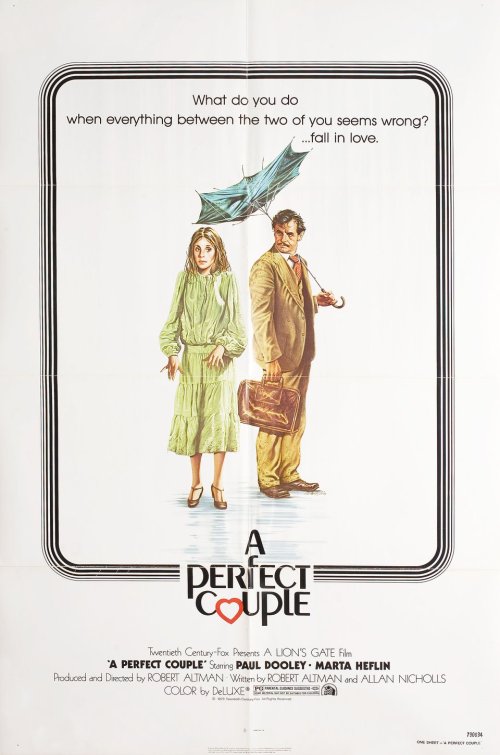
Sheila (Marta Heflin) is a singer in a traveling rock band run by Ted (Ted Neeley) who is quite demanding and openly berates and even fines members of the group who do not follow his orders. Alex (Paul Dooley) is a middle-aged Greek man still living at home with his domineering father (Tito Vandis) and extended family who berate him at every turn for not conforming to the family orthodox. Both are single and lonely and decide to join a dating service. From there they get connected and go on a first date at an outdoor orchestra concert where it rains and they both get wet. Despite the mishap Alex pressures Sheila for a second date, but miscommunication causes problems here as well. They eventually go their separate ways by dating other people they meet at the service, but Alex feels the need to try one more time to make it work and thus goes on tour with Sheila’s band as they hit the road, but finds their communal lifestyle is not for him.

The inspiration for the movie came while Robert Altman was shooting A Wedding and intrigued with the idea of what would happen if Paul Dooley’s character in that film started dating Sandy Dennis’ character and thus decided to write a whole movie about them. Problems though started right away during rehearsals when Dooley, who’s allergic to cats, could not handle being in the same room with Dennis, who was a major cat lover and would usually bring her pets to the reading, which would send him into a severe allergic reaction. Even when she quit bringing the felines with her it still caused issues with Dooley due to the cat hairs on her clothing. Altman then cut Dennis from the cast and had the part rewritten for Heflin, who was 33 at the time, but looked much younger like she was only 22 or 23 and thus accentuating the differences between the couple.

The film starts out with the two already on their first date instead of showing them viewing potential dates through the taped interviews that the service had available, which I felt was needed. As a guy I could see why Dooley would get into a young, semi-hot chick like Heflin as lonely guys, no matter their age, can instantly ‘fall-in-love’ with a woman from their looks alone, but both need to agree to the date before they go and I couldn’t understand why Heflin would to go out with a guy who was way older and didn’t seem to have much going for him. Maybe all of the other prospects were total duds and he was the best of the lot, so she decided to give it a try, or maybe she had some sort of father complex, but that’s something that still needs to be revealed and the fact that it isn’t leaves a big gaping logic hole.

The characters are palatable to some extent, but behave in ways that makes them at times quite infuriating. Dooley is especially problematic. Granted he’s playing someone who is socially clumsy and not real slick with the dating thing and trying a bit too hard to make it all work, but still insisting that he enter her apartment even when she makes it quite clear that she’s more comfortable just saying goodbye at the door is creepy. Having him show up at her place unannounced and demanding she see him for a second date and not leaving until she relents makes it even worse. There needs to be someone to tell him that his behavior is out-of-line and this isn’t a way to ‘woo a woman’ and in many cases will justifiably scare them off. Unfortunately the Heflin character doesn’t do this. Even though everything he does makes her quite uncomfortable she never protests it and lets him keep having his way, which makes her as annoying as he is.

Their unique living arrangements brings up even more issues. For Heflin I could understand her situation and it made sense. Sure the band manger is a demanding jerk, but I could see her feeling the need to put up with it because she wanted to break into the rock singing business and felt this was part of the crap she had to get through while she works her way up. For Dooley, his living arrangements are just downright baffling as he plays a 50-year-old who’s still residing at home with his father who’s highly demanding forcing Dooley to become a pathetic, obedient simp when around him. I could understand if the guy was like 20 how this might be somewhat believable, but by 50 he should’ve broken away a long time ago and the fact that he hasn’t needs to be explored and explained as it’s highly unusual and seems to intimate that there’s a serious personality disorder of some kind that begs for analyzation that never comes.

The entire runtime has the two going through every bad date moment you could think of. They have absolutely nothing in common and repeatedly talk past each other, so there’s no constructive communication whatsoever and yet somehow at the end they ‘fall in love’, but how? To make a relationship work there needs to be a connecting bond, but the film fails to show what it is making it quite shallow. There’s also an abundance of music played by the band Heflin’s a part of called ‘Keepin’ Em off the Streets’, which gets way overdone. There’s 12 different numbers, which bogs down the pace and makes it seem like a band’s demo reel instead of a movie.

The only memorable bit is when Allan F. Nichols, who co-wrote the script, appears as Dana 115, one of Heflin’s dates for the night and he has a physical confrontation with Dooley, which ended up making me laugh, but that’s about it. Nothing else happens that is either amusing or insightful. A fluffy movie that doesn’t go far enough to be either compelling or memorable.

My Rating: 5 out of 10

Released: April 6, 1979

Runtime: 1 Hour 47 Minutes

Rated PG

Director: Robert Altman

Studio: 20th Century Fox

Available: DVD

I Love My…Wife (1970)

ilove

By Richard Winters

My Rating: 6 out of 10

4-Word Review: He’s bored with marriage.

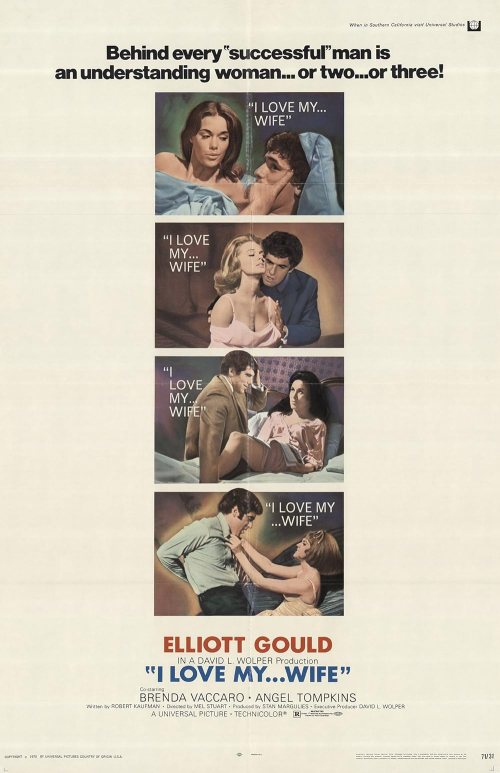
Richard (Elliot Gould) is a medical student when he meets Jody (Brenda Vaccaro) and the two quickly fall-in-love and get married. She then gets pregnant while he’s still in school and they don’t believe they have enough money to financially support a child, so they initially consider an abortion, but at the last minute Richard changes his mind and feels they should have the child. Jody though gains a lot of weight during the pregnancy, which Richard finds unattractive. Once the baby is born she’s unable to burn-off the excessive pounds causing their sex life to go even further into the tank. He has a few flings with some of the nurses before finally setting his sights on Helene (Angel Tompkins) a beautiful model who’s married to a baseball star (Dabney Coleman). At first she resists his advances, but the two eventually bed and then fall-in-love. She insists that Richard leave his wife, so that they can be together and no longer have to meet-on-the-sly. Richard tries to break-up with Jody, but because they have two kids finds that he can’t and instead begins lying to Helene as he plays both women at the same time, which soon turns into a losing situation.

The odd way this thing opens really hurts it and although it does improve a bit as it goes along some viewers may not be patient enough to stick with it. Having the opening credits deal with Richard’s relationship with his mother (Helen Westcott) and the sheltered way that she raised him isn’t funny and because the mother never appears again in the movie it wasn’t worth introducing her at all. Since the wife is the main focus I felt the opening scenes should’ve dealt with their dating period, which the movie breezes over too quickly. The clips from old movies, which get spliced in from time-to-time, add nothing and make it seem too much like Myra Breckenridge, which came out around the same time and best left forgotten. At least in that movie the clips came at predictable intervals, but here it’s sporadic making it seem, when they do get shown, as jarring and out-of-place.

Gould certainly excels at this type of role and he’s quite possibly the only actor who could play a shallow person and still manage to make it come-off as semi-likable. Vaccaro though is the real surprise as she’s usually best at drama and initially I felt she was miscast, but she comes through in making her character complex and even amusing as she goes through her tirades, some of it justified, at Gould. This is also the first movie to ever explore the issue of women who gain weight during their pregnancy, but can’t lose it afterwards and how this could affect their sex life, which I felt deserved kudos for being ground-breaking. The film makes the mistake though of showing too much from her point-of-view to the extent that we start to sympathize with her over the main character and almost start to dislike him in the process.

The introduction of Helene really does help as it’s her presence that gives the story a unique angle. Before this it comes-off more like your typical run-of-the-mill flick about a cad of a husband who can’t stay faithful, which has been done a lot and this movie doesn’t add anything insightful in that vein. However, the affair itself is interesting. For one thing she plays hard-to-get and doesn’t just jump immediately into the bed sheets at Gould’s beck-and-call, which is good as too much of the time, especially in 70’s movies, the women seem way too easy in a way that isn’t realistic. What I liked even more though is that the affair really doesn’t solve anything. Sure he finds her hot and sexy and they do get along, but she also has demands of her own and Gould finds himself in the same quandary as with his wife showing how extra marital flings really aren’t the ‘escape’ that they’re intended, but instead more of a problem.

Spoiler Alert!

The script by Robert Kaufman brings out many harsh truths about marriage and doesn’t insult us with any placid answers. Yet when the movie should go hard it goes soft instead. I liked how Vaccaro, who spent the whole time trying to win him back, finally gives up and starts seeing someone else, but Gould though upset and rebuffed, doesn’t learn anything from it. He goes back to the bar and tries picking-up an attractive stewardess he meets like he’s now making some sort of ‘fresh start’ when the film spent its entire running time exposing how this ‘cruising for chicks’ is a vicious cycle that just leads to more emptiness. Seeing Gould’s character change, or learn from his mistakes and display some regret would’ve been a far better way to have ended it.

My Rating: 6 out of 10

Released: December 21, 1970

Runtime: 1 Hour 38 Minutes

Rated R

Director: Mel Stuart

Studio: Universal

Available: DVD-R (dvdlady.com, modcinema.com)

O’Hara’s Wife (1982)

ohara2

By Richard Winters

My Rating: 0 out of 10

4-Word Review: Wife turns into ghost.

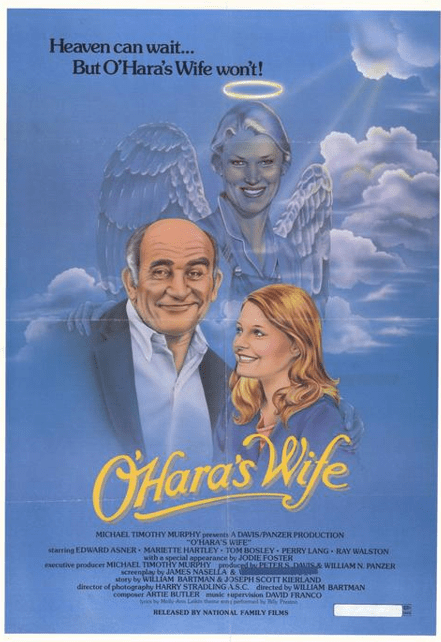
Bob (Ed Asner) and Harriet (Mariette Hartley), whom he affectionately calls ‘Harry’, share a special bond and have been in a marriage for over 20 years that has produced two children, Rob (Perry Lang) and Barbara (Jodie Foster). They plan for a second honeymoon, but just before they’re ready to leave Harry suddenly dies. The grief-stricken Bob feels he can’t go on, but manages to stay focused due to the love and support of his children. Then one day, about a month after he death, she suddenly reappears in the form of a ghost. At first Bob runs away from her thinking he’s gone crazy, but then eventually settles to the idea that she’s going to be around wherever she goes and in return she helps him to understand that life is about more than just working hard and if he doesn’t learn to relax he too will soon be dying as well.

Feeble attempt at a ghost comedy, which has been done many times before in a far better way in such classics as A Ghost and Mrs. Muir and Topper just to name a couple. Right off the bat though this thing falls flat with a long drawn out song segment sung by Billy Preston, Billy’s a good singer, but just not here, that happens not once, but twice. A movie should not slow-up the pace with a droony song especially when that’s just ‘telling us’ through its lyrics what we already know is happening to the characters visually.

The second thing where this movie really gets dumb is when the wife just falls over dead for no apparent reason. One second she’s perfectly healthy and joking around with her hubby and then in the next instant she just literally falls over dead in the corniest way possible. The doctors diagnose it as a brain hemorrhage of some sort, but normally healthy, middle-aged people don’t just ‘fall over dead’. A better, more gripping and believable way would be to have her die in a car accident, or have her diagnosed with something early on, or at least complain about certain symptoms that will eventually lead to her demise, but to just croak instantaneously without any warning or set-up is about as stupid as it gets.

The ghost angle is just as poorly thought-out. I realize having ghosts appear and disappear and go through walls may seem cliched, but at least that had a logic to it and this thing doesn’t. Here we have her opening and closing doors to get through them as if she’s a regular person. Her husband can also feel and touch her and she can even use her body to stop his movement, but if she’s just a spirit then shouldn’t she be a vision only and not able to do those other things? She also panics when she sees her husband’s medical chart and realizes he has a serious heart condition and may die, but since her ghostly existence proves there’s essentially ‘life after death’ then why should she care? She acts like death is some sort of ‘end’ even though her appearance literally proves the opposite, so why not celebrate his impending doom as that will mean they’ll be in a ghostly existence forever and thus death will be a happy ending and not a sad one like her character seems to believe.

Hartley is certainly perky, she always seems perky no matter what she’s in, but her character is one-dimensionally nice, and not fleshed-out enough to be interesting in any way. Asner has some funny bits particularly when he must deal with this ghost wife when someone else is around who can’t see her and thus making his behavior look pretty weird, but overall he’s a bit too old for her, almost like he could’ve been her father, and a younger actor more age appropriate to Hartley would’ve been better. Mary Jo Catlett, as Asner’s much put upon secretary as some endearing moments, but ultimately it’s Foster, who gets billed as having a ‘special appearance’ though she’s in a good chunk of it, that comes off best though I didn’t initially recognize her as she has darker hair here and on a bit of the chubby side  and I could only tell who she was at first by the sound of her voice.

I did like how it attempts to tackle family drama and how as children age and become adults may not see things eye-to-eye not only with their parents, but siblings as well. This becomes especially apparent with Rob who doesn’t agree with his father quitting his job and the two share a couple of raw moments, which is good because these things do occur in real-life families, but then the film glosses over this issue by having the two magically reconcile a little bit later, which like with everything else in the movie is too shallow.

My Rating: 0 out of 10

Released: December 3, 1982

Runtime: 1 Hour 27 Minutes

Rated PG

Director: William Bartman

Studio: O’Hara Cinema Group

Available: DVD-R

Fever Pitch (1985)

fever1

By Richard Winters

My Rating: 3 out of 10

4-Word Review: Sportswriter addicted to gambling.

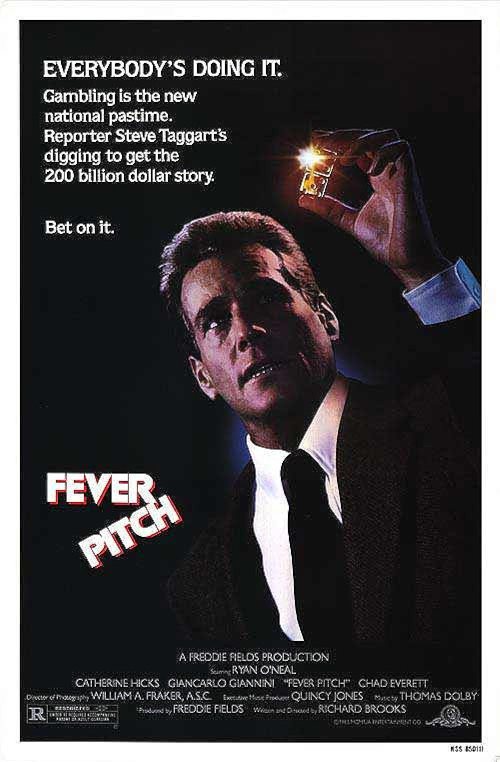
To commemorate the sad passing of Ryan O’Neal just last week we here at Scopophilia decided to review one of his more infamous outings in a film that helped to ultimately bring in his career downfall, which was already fading at the time anyways, but this one was the nail in the coffin. He plays Steve Taggart a popular sports journalist who wishes to do an expose on the gambling epidemic. His editor (John Saxon) gives the okay and so he proceeds to write articles dealing with a ‘Mr. Green’ whose addiction is ruining his life and career. Unbeknownst to his editors Mr. Green is actually Steve whose gambling habit is so out of control that he owes $31,000 to a bookmaker named The Dutchman (Chad Everett) who has a henchman named The Hat (William Smith) that follows Steve around and threatens him with violence if he doesn’t pay up. Steve’s recourse is to simply gamble more hoping somehow to get on a lucky streak and be able to pay it all back when instead he just continues to drown in an even more widening debt.

Writer/director Richard Brooks became fascinated with the topic of gambling while recovering from a heart attack and spent years writing the script, where he intended to have Sam Shephard play the lead. Unfortunately despite his great success with other films this one ended up becoming a giant flop that cost the studio over $7 million to produce, but only recouped a paltry $244,000 at the box office. Derided by both critics and viewers its become a ‘so bad it’s good’ type movie that in the ‘Official Razzie Movie Guide’ gets listed as the 100 Most Enjoyable Bad Movies Ever Made.

The movie would’ve been better had they got Shephard in the lead role as intended instead of the wooden O’Neal who doesn’t show enough emotion, or nuance to make his part interesting. The character would’ve had a better arch had we known him before he got into gambling and could see his downfall right from the beginning versus coming into it when he’s already starting to hit rock bottom. Having the viewer fooled into thinking Mr. Green was a real person might’ve made an interesting twist versus giving it all a way at the start that it’s Steve.

The dialogue is badly overwritten with the character’s regurgitating out gambling statistics like they’re a computer and there’s no conversational quality in anything that gets said. Despite being supposedly this ‘hard-hitting’ look at what goes on in Las Vegas it instead comes-off more surreal as it shows only people who are ‘captivated by the madness of gambling’ like these are the only type of people who exist without countering it with others who are not into it and thus giving it a better balance and perspective.

The story also suffers from too many coincidences and extreme dramatic arcs. The most notable is when Steve finds a soldier (Patrick Cassidy) inside a bathroom stall ready to shoot himself with a gun as he’s so depressed about losing all his money, but Steve stops him from doing it. Then gives the soldier money for airfare and a little bit extra for spending cash. The soldier uses it to continue his gambling where he wins it all back at the craps table making it seem like a ‘happy’ ending and going against the film’s own narrative that wants to show the ‘evils’ of the addiction only to laugh it all away when somebody gets on a magical win streak that somehow makes it all better. Going from potential suicide victim to happiest guy on earth in the matter of only a couple of hours is a bit of a stretch.

Having Steve get physically attacked by The Hat inside a gambling lounge as he has both his shins kicked-in and then miraculously having Flo (Catherin Hicks), a cocktail waitress whom he had a fling with, walk by at the exact same instant when The Hat leaves, so she’s able to help back to her room seemed way to coincidental and convenient. The fact that he doesn’t go to a doctor and able to still walk using only some pain pills to get by was even more absurd. What gets even dumber though is that during the melee Steve injures The Hat, using non other than salt and pepper shakers, causing him to wear a over-the-top neck brace as he goes around town trying to ‘even the score’ with Steve by attempting to kill him, but unable to do so at every turn like he’s morphed into the live action version of Wiley E. Coyote.

Spoiler Alert!

The biggest laugh, or most nauseating moment depending on your perspective, comes at the end when Steve is supposedly ‘cured’ of his addiction by having attended a Gambling Anonymous meeting only to, at the airport waiting to go home, decide to put one last quarter into a slot machine called ‘Bet a Buck for God’ in which he amazingly wins a massive payout and having his winnings immediately handed to him by a woman dressed like a nun. I thought for sure this was some sort of dream, but to my shock it’s not and we’re all supposed to take it seriously.

It then gets even worse as Steve goes on one last hot streak and able to win back all the money he’s owed and thus get out of his predicament, which does a complete injustice to the subject. Many other victims of gambling aren’t able to do this as the movie even says itself the odds are the house will ultimately win making the wrap-up completely false and thus the film’s notorious cornball status is highly deserved.

My Rating: 3 out of 10

Released: November 22, 1985

Runtime: 1 Hour 36 Minutes

Rated R

Director: Richard Brooks

Studio: MGM/UA

Available: VHS, DVD-R (dvdlady.com)

Made for Each Other (1971)

made

By Richard Winters

My Rating: 7 out of 10

4-Word Review: Couple argues a lot.

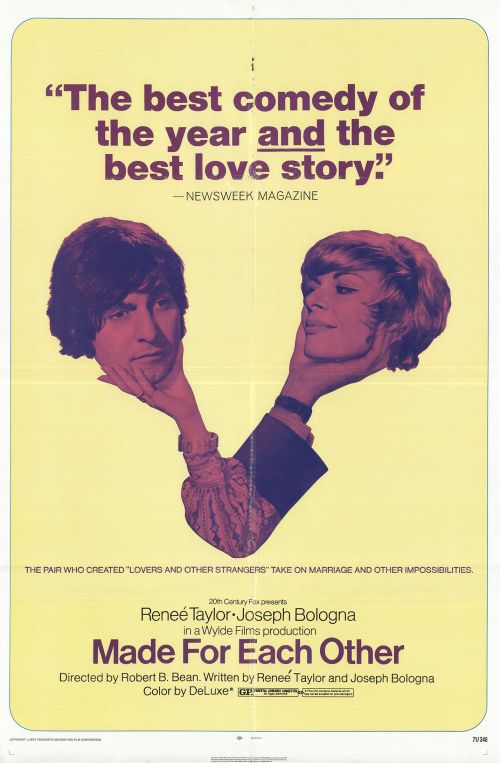
Pandora (Renee Taylor) is an out-of-work actress still clinging to her dreams that she’ll one day become famous something she has hoped for since she was a child. Gig (Joseph Bologna) suffers from not being able to find a stable relationship and guilt-ridden over sending the last one into attempted suicide. Both Pandora and Gig attend a group therapy session and this is where they meet. Initially though things are rocky. Gig does not like Pandora’s stand-up act, something she’s been working on for years, and openly tells her it’s awful. They then break-up, but Pandora eventually returns telling him that he was right and she’s worked out the ‘kinks’ from her act, so it’s now improved. To celebrate Gig takes her to his parents (Paul Sorvino, Olympia Dukakis) for Thanksgiving. The parents though don’t approve of Pandora since she’s Jewish and they’re Catholic and they eventually drive her out of their apartment. Gig and Pandora continue to argue once they’re back in the car, but find, strangely, that no matter how the other one annoys them they still like each other’s company.

After the runaway success of Lovers and Other Strangerswhich Bologna and Taylor wrote initially as a play, but then turned it into a movie, Hollywood studios were interested in them trying another script and gave them upfront money to do so. The first film had been based on their real-life experiences of dealing with all of their in-laws during their wedding, which occurred in 1965, and so they decided to base this one on their lives as well, namely what brought them together. Like with their first project the script is quite broad and focuses in on many different people including the parents of each character who have quite a bit of screentime, particularly Sorvino and Dukakis, and who are quite funny. The film also shows the leads when they were infants and many of their childhood experiences, which gets shot in black-and-white, that is also both insightful and amusing.

Unlike with most movies the scenes are quite extended and seemed better primed for a stageplay. The elusive Robert B. Bean gets credited as director, but he never did anything else, which seems a bit curious and there’s been rumors that he was just a pseudonym for Bologna who took over as the actual director. The long takes though are effective and enhance the comedy. The scene inside Gig’s parents house where the tension builds when they slowly realize that Pandora is ‘not their kind’ is quite good and not unlike what could happen in many families homes of that era who closely identified with their particularly religions and not privy to having their kids marry outside of it. Gig’s inability to appreciate Pandora’s stage act and his blunt assessment of it while at a late night cafe is comically on-targe too as any fledgling artist will tell you sometimes family members, friends, and even those really close to them won’t always connect with their artistic endeavors and regrettably become their biggest critics.

Sorvino scores as the abrasive no-nonsense father though ironically he was actually 5-years younger than Bologna who plays his son and for that reason his hair should’ve been made more gray. Dukakis is equally on-target as the super religious mother whose strong faith amounts to a lot of rituals and ends up inadvertently harming her child psychologically like when she catches him masturbating and informs him that if he continues his ‘little thing will fall off’. Helen Verbit as Pandora’s mother is equally amusing playing the over-protective type who wants so hard to shield her daughter from harsh reality that she tells her that her stage act is ‘brilliant’ when it really isn’t and that because she’s her mother that somehow makes her opinion ‘objective’.

The film’s one drawback is the yelling, which there is a lot of. Sometimes confrontational comedy can be quite amusing and this one works most of the way, but how much the viewer will enjoy is up to each individual. Bologna’s shouting is particularly loud and abrasive. It’s meant to funny and done only out of aggravation, but it does tend to get extended especially by the end. Had Taylor shouted back then it would’ve seemed like a ‘fair fight’, but having her run away and cry takes humor out of it and may ultimately ingrate on the audience. The intent is for there to be an offbeat charm, but not everyone may see it that way and thus this thing won’t be for all tastes.

My Rating: 7 out of 10

Released: December 12, 1971

Runtime: 1 Hour 41 Minutes

Rated GP

Director: Robert B. Bean

Studio: 20th Century Fox

Available: DVD-R (Fox Cinema Archives)

Tribute (1980)

tribute

By Richard Winters

My Rating: 3 out of 10

4-Word Review: Father reconciling with son.

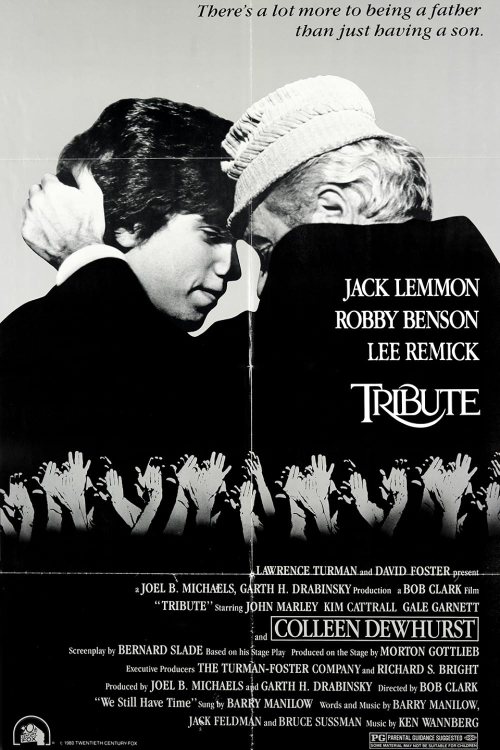
Scottie (Jack Lemmon) has been working in show business for decades and has built up many friends and fans, but finds it all come crashing down when, at the mere of age of 55, he gets diagnosed with leukemia. His greatest regret is not having a close relationship with his now grown son Jud (Robby Benson). He wants to reconcile, but not make it obvious that’s it’s because he’s about to die. When Jud comes over for a surprise visit with his mother (Lee Remick), whom Scottie has long since divorced, he tries to mend things and become the father he never had, but the hurt runs deep and Jud proves to be resistant to everything Scottie tries making him feel even more hopeless and forcing him to come to terms with his personal faults and inadequacies.

The film is based on the stageplay of the same name, which also starred Lemmon, and got sold into a $1 million movie deal before the stage version ever hit Broadway. On the surface it’s deemed a drama, but the script by Bernard Slade, who also penned the play, comes off more like a desperate comedy akin in tone to Same Time Next Year, which is Slade’s most famous work that had a strong dramedy vibe to it. This works on that same level as it attempts to lighten the poignant moments with comical bits, but it fails miserable.

Had some of it managed to actually been funny I might not have complained, but it amounts to cringe instead. The most eye-popping moment is watching Lemmon in a chicken costume run around his place going ‘balk-balk’ and even lay a giant egg on the sofa, which I felt was a career low point. What’s even dumber is his wooing of a young woman, played by Kim Cattrall, who’s also a patient at the hospital. He gets into her room by pretending to be a doctor and then gropes her breasts in a feeble attempt to check her heart rate. A normal woman of today, and even one back then, should respond with outrage for him copping-a-feel by disguising himself into being someone he isn’t, but in this stupid movie she’s instead ‘charmed’ by his antics and it’s enough to get her to go to bed with him later.

What’s worse and even more outlandish is that Scottie then sets her up with his son to have them conveniently ‘bump into each other’ in public and then begin going out. Yet how many sons are going to be cool with Dad sleeping with their girl first? Of course Scottie never tells him that he’s already ‘tested her out’, but it does end up showing inadvertently what a conniving jerk the old guy is and what the film considers to be nothing more than an amusing comic side-story really hurts the likability of the character if you think about it.

The acting is good. Lemmon is expectedly strong and so is Remick as his wife though her part is limited. I liked seeing Benson, who usually got stuck with immature parts due to his young, geeky features, play the mature and sensible, level-headed adult of which he does perfectly. Colleen Dewhurst has some strong moments as the caring nurse and Cattrall, despite the annoying nature of her dippy character, is pleasing enough. Yet the ultimate scene-stealer goes to Gale Garnett famous for the mid-60’s folk song ‘We’ll Sing in the Sunshine’, who plays a hooker and in one segment goes topless (looks great), but it’s a bit jarring when you realize it’s the same person who sang such a sweet-natured tune, tough in some ways you could say it’s also a testament that her creative talents are quite broad.

The third act, where they have this major tribute for Scotty has a touching potential, but gets overdone by filling-up an entire auditorium with all of his ‘close friends’, which even for a social butterfly seemed a bit exaggerated. The scene where the hooker gets a restaurant packed with all of her male clients who have ever slept with her has an amusing quality though again equally hard to believe that all of these men would be cool with everybody knowing that they’ve bedded a prostitute. I’ll give props though to the segment showing Scotty getting treatment in the hospital, which gets shown exclusively through still photos, which I found visually innovative.

Unfortunately everything else falls into second-rate melodramatics. It doesn’t even have the decency to tells us whether Scotty dies or not. When an entire movie deals with a character’s ultimate demise I think it should eventually get answered instead of leaving it open. It makes the whole terminal illness thing seem like a tease done to emotionally manipulate the viewer than an actual reality that it supposedly is.

My Rating: 3 out of 10

Released: December 19, 1980

Runtime: 2 Hours 1 Minute

Rated PG

Director: Bob Clark

Studio: 20th Century Fox

Available: DVD-R

The Woman Inside (1981)

woman2

By Richard Winters

My Rating: 3 out of 10

4-Word Review: From man to woman.

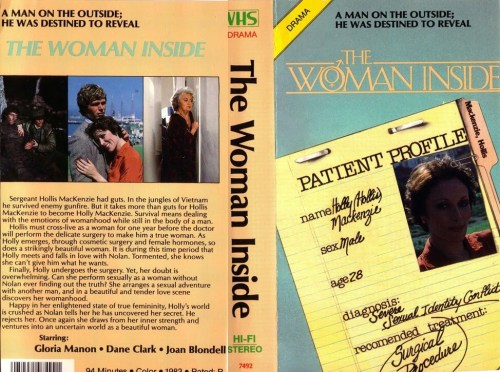
Hollis (Gloria Manon) is a Vietnam Vet. whose suffers from gender dysphoria and decides to begin the process of gender transition with Dr. Rosner (Dane Clark). The first part of the procedure works perfectly as Hollis, who changes the name to Holly, resembles a woman physically and even takes voice lessons so that her voice is higher pitched. She still has a penis, but that doesn’t prevent her from beginning a relationship with Nolan (Michael Champion) though they don’t sleep together and she’s reluctant to tell him about her condition. Eventually she schedules the surgery while telling Nolan she’ll be gone for a couple of months, but when she returns they’ll be able to fully consummate their relationship. In the meantime she begins to question her decision when she joins a therapy group with other people who’ve had the procedure while also enduring verbal abuse from her Aunt (Joan Blondell) who doesn’t agree with the transition and openly mocks Holly for going ahead with it.

While on the surface this may seem like a groundbreaking film it really isn’t as two movies The Christine Jorgensen Story, which came out in 1970, and I Want What I Want, which starred Anne Heywood and released a year after the other one all preceded this movie by a good decade. It also suffers badly, much like with the Heywood film, where the protagonist doesn’t really resemble a guy even though technically that was what he was biologically born into. Instead Hollis looks much more like a woman with short hair and padded outfits and in a lot of ways kind of like Nancy Kulp the actress best known for starring in ‘The Beverly Hillbillies’ TV-show. Her attempts to speak in a lower voice doesn’t sound authentic and I felt it would’ve worked better had a biological male actor been cast in the part as the scenes with Manon trying to come-off as a guy is awkward and not believable.

The scenes where she goes back to the gas station, where she once worked when she was still a guy, and trying to get-it-on with Marco (Michael Mancini), a man she had a confrontation with earlier while she was Hollis, is ridiculous as well. Marco apparently doesn’t recognize her as the person he knew when she was a man, which I just couldn’t buy into, as Holly’s face is essentially she same as it was when she was Hollis except her hair’s is longer and she has a very distinctive facial structure, so there’s just no way someone that knew her in the past wouldn’t at the very least jog some Deja vu if ultimately connecting the two at some point and for him to go to bed with her without a single inkling is just not plausible.

Holly’s relationship with Nolan, particularly the way it begins, is highly problematic too. She works as a taxi driver and literally picks him up on a street corner at random while he’s in a drunken state, but why on earth would she suddenly fall for a guy, especially in that condition? She also comes upon him right after having a very scary and violent confrontation with another male passenger (Louis Basile) making me think she’d be so traumatized that the last thing she’d want to do is allow another male stranger into her car. Their relationship moves too quickly as they’re already talking about ‘love’ and long term commitment by only the next day. Nolan also transforms from a bum to a well-spoken respectable member of society overnight. The scene where they try to ‘outrun an approaching storm’ is stupid too as we see them madly riding their bicycles in an attempt to escape while above them is sunshine and blue skies.

Things improve a bit by the third act particularly the scenes involving the therapy group, which the movie should’ve had more of. Some commenters on YouTube, where the film is currently streaming for free, that also suffered from gender dysphoria seemed to appreciate the movie more than others, so if you personally connect to the subject matter you’ll most likely like it better, but on a technical end it’s botched.

This too marks, at least in most reference sites, as being Joan Blondell’s final film appearance though that’s not completely true. While this was the final film to be released with her presence, in fact it came out after she had already passed away, it was filmed in March, 1978 while The Glove, another movie she was in, was shot in April of that year, so technically that was her last film appearance even though it got released before this one.

My Rating: 3 out of 10

Released: September 15, 1981

Runtime: 1 Hour 34 Minutes

Rated R

Director: Joseph Van Winkle

Studio: 20th Century Fox

Available: VHS, DVD-R (J4HI.com)

The Garden of Delights (1970)

garden2

By Richard Winters

My Rating: 6 out of 10

4-Word Review: He’s unable to speak.

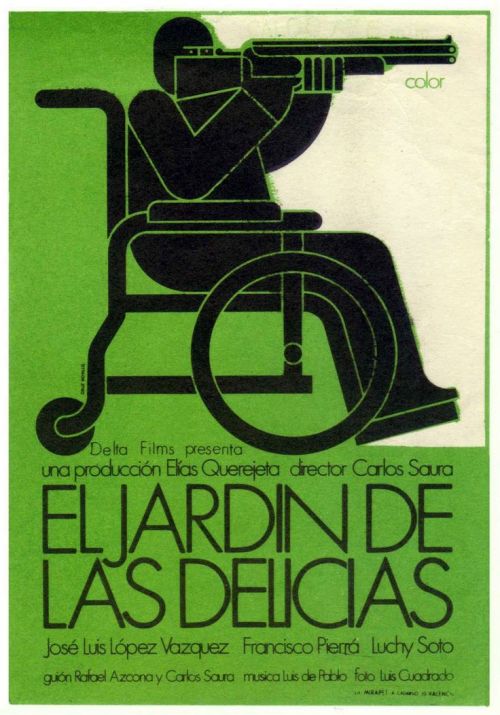
Antonio (Jose Luis Lopez Vazquez) is a wealthy owner of a construction business that he took over from his father (Francisco Pierra) years earlier. Unfortunately just as he’s ready to reap his profits he gets into a car accident, which confines him to wheel chair and unable to speak, or write, or even remember anything. His greedy family becomes determined to get him his memory back even if it means drastic shock therapy as Antonio holds all the business secrets including the combination to the safe and the Swiss bank accounts. The family’s brazen attempts seem to be working though not enough to get him to speak, but while this is going on, inside Antonio’s head, he begins experiencing surreal events that seem almost real and are both fascinating and frightening.

The film’s director Carlos Saura started out his career in the 50’s as a director of documentaries and shorts, which eventually lead to him getting the offer to direct his first feature length film in 1966 with The Hunt, a film about three middle-aged male friends who go on a rabbit hunt that starts out pleasant enough, but ends in brutal violence for all three. That film won him many accolades and gave him the opportunity to direct this one, which plays out more as a metaphor. His home country of Spain was at the time under the authoritarian rule of Francisco Franco who did not allow for free speech and often punished those who spoke out against him. To get around this Saura uses many allegories to convey his anger at the oppressive government, but in a way that didn’t make it obvious enough for him to be arrested.

The main character of Antonio is meant to be a metaphor of the Spanish people with his mute condition being similar to their inability to speak out against their country’s leader. Unfortunately many of today’s viewers aren’t going to get this either because they haven’t bothered to study up about it, or just don’t care. Because of this many viewers will miss the symbolism and leave at the end, if they managed to stay with that long, shaking their heads. Since few people of today were around when it occurred and most Americans don’t have a good grasp of Spainish history it will all be unrelatable for most.

The lead role is well played and Vasquez has a very expressive face, which helps add nuance to a character that otherwise has no other way of expressing himself. I did find it frustrating that we don’t learn much about him. The scenes where he looks around his empty warehouse that he once ran does convey the quandary of someone who once felt powerful, but now only a shell of what he once was. The viewer though is unable to completely identify with him as not enough of his backstory is given. We do eventually during the third act see him in a flashback moment where he speaks with his father and aggressively takes over the company, we also eventually witness the car accident that put him into this condition as it had only been referred to before as ‘an accident’ with no details given, but I felt both of these things should’ve been shown and introduced a lot earlier.

Spoiler Alert!

Pierra as the father gives a thoroughly delightful performance and some of the surreal moments including Antonio’s vision of being pushed into his backyard pond and the recreation of a religious ceremony being two of the best. Yet there are other moments that miss the mark including having a live pig brought into the home and then trapping Antonio inside a room with it in order to jog his memory from a painful past event, but his confrontation with the animal is never shown, which is a letdown. The family members are confusing as it’s never clear whether they have bad intent, or are just acting the way they are due to being put in a desperate situation. The ending in which all the characters become bound to a wheelchair and unable to speak just like Antonio was trying to show how all of the Spanish citizens where being oppressed beyond just him, but emotionally it isn’t compelling and a potentially good story and character study get lost with Saura’s obsession to put political symbolism first and foremost.

My Rating: 6 out of 10

Released: November 5, 1970

Runtime: 1 Hour 30 Minutes

Rated GP

Director: Carlos Saura

Studio: Video Mercury Films

Available: DVD-R (dvdlady.com)