Category Archives: Obscure Movies

Surf II (1984)

surf 22

By Richard Winters

My Rating: 4 out of 10

4-Word Review: Surfers turn into zombies.

When compared to other low grade teen comedies of the 80’s this one fares a bit better. The story is about a nerd (Eddie Deezen) who decides to take revenge on all the ‘cool’ surfers by forcing them to drink a cola that will turn them into zombies.

The idea of mixing the crude humor of the 80’s with the zany surfer themed films of the 60’s is not a bad one. The film initially avoids the sterility that the other teen comedies usually have. The first fifteen minutes are fresh and inventive and there’s even a chuckle or two. It’s nice how it mixes old B-list actors with up and coming young stars like Eric Stoltz, Corinne Bohrer, and the late and underappreciated Tom Villard. The film also shows definite venom towards the surfers and some of which is accurate while taking some fun shots at the adults particularly two of the dads of the surfers who seem very much like what happens when ‘surfer dudes’ have to grow up and actually start earning a living. There is also a garbage eating contest between one of the zombies and a fat guy that has to set some sort of gross out precedent.

The problem comes with the fact that the story has no direction and eventually loses all momentum. There are too many absurd elements thrown in that have no connection to the main plot. The film comes off as derivative and convoluted and the manufactured calamity filled finale is incoherent.

Star Deezen looks and acts so much like a nerd you wonder if he was bred in some sort of laboratory. It is almost hard to believe how scrawny his arms are. Initially it is kind of funny and diverting to hear him say such megalomaniac statements with his high pitched voice, but his act is one-dimensional and eventually becomes annoying. Lyle Waggoner is another bad actor whose only claim to fame is his chiseled good looks. However, his bumbling police sergeant character Chief Boyardee is funny and he does get the film’s best line, which he says to a group of mouthy teens. “If I need any shit out of you kids I’ll squeeze your heads.” Ron Palillo who is best known for playing Horshak on ‘Welcome Back Kotter’ plays his deputy named Lt. Underwear and even sports gray hair! Cleavon Little though is wasted in a meaningless role of ‘Daddy-O’.

My Rating: 4 out of 10

Released: January 14, 1984

Runtime: 1Hour 31Minutes

Rated R

Director: Randall M. Badat

Studio: International Film Marketing

Available: VHS

The Oscar (1966)

oscar 1

By Richard Winters

My Rating: 2 out of 10

4-Word Review: Actor’s career on decline.

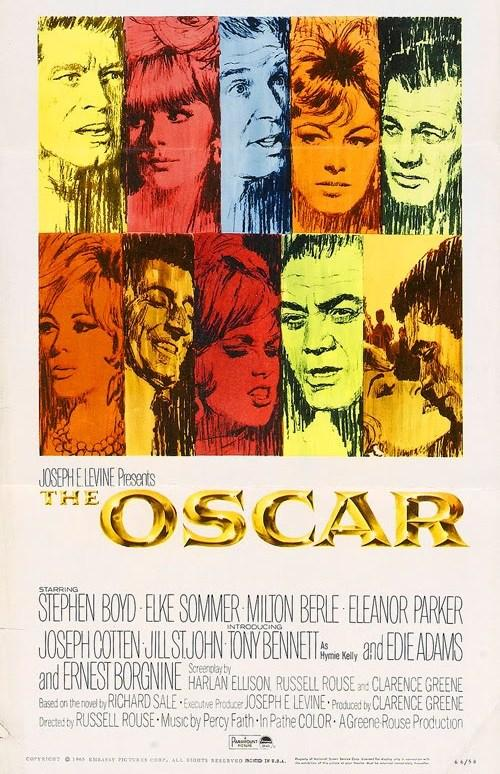
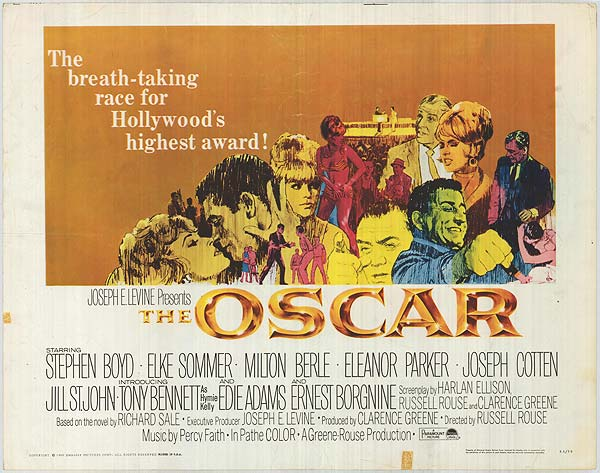
Frank Fane (Stephen Boyd) is a flippant, self-centered, and arrogant man who makes a living by setting up gigs for his stripper girlfriend Laurel (Jill St John) at local strip joints. By pure chance he watches the rehearsal of a play and in a fit of frustration jumps onto the stage to show the actors how to perform a knife fight when he doesn’t think they are doing it right. This impresses Sophie (Eleanor Parker) who uses her influence to get him signed to a contract at a big movie studio that makes Frank a star almost overnight, but as the years pass the quality and quantity of his roles diminish.  His overspending begins to catch up with him and just when he thinks his career may have faded he gets nominated for the Oscar. He feels a win will revive his career and will stop at nothing and use every dirty trick he can in order to influence the vote.

Adapted from the Richard Sale novel this is high drama at its worst. The scenarios are over-the-top and soap opera-like while bearing little relation to reality. The characterizations are on a kindergarten level and a composite of every Hollywood cliché and stereotype rolled together. The dialogue sounds like it was taken from a 50’s B-movie and comes off more like rants and speeches than anything any real person would actually say. Any attempt at gaining any insight into the behind-the-scenes world of Hollywood is lost with a script that becomes wildly off-center until it becomes absurd and ludicrous. Famed science fiction writer Harlan Ellison who scripted this mess was completely out of his realm here and the film is so botched, over-long, and redundant that it isn’t even good for laughs.

If the film had a glossy visual quality to it then it could at least be entertaining on that level, but director Russell Rouse shows no visual flair, or imagination. The scenes are lighted too brightly, which washes out the color and makes the sets look flat and one-dimensional. The music is too loud and used in a heavy-handed way similar to the canned laughter on some sitcoms. Every time there is some dramatic revelation, or shift the music comes booming out in order to alert the viewer who apparently was perceived by the filmmakers to be too dumb to pick up on it otherwise.

I did like Boyd in the lead. He has good looking chiseled features and parlays the necessary arrogance of the part, but the character is wholly dislikable and only gets worse as the film progresses and having to spend two hours watching a jerk be nothing but a jerk is too much.

The only time he shows any slight compassion is when he finds a fellow actor (Peter Lawford) down on his luck, but it is too extreme to believe that a one-time headlining movie star could one day fall to the point that he would have to wait tables to make a living and thus makes this moment as ridiculous and everything else in the movie. An ‘A’ list actor may fall down to becoming a ‘B’ list actor, or having to go from movies to guest spots on TV-shows, or even doing commercials, or infomercials, but having to become a waiter at a restaurant just isn’t plausible.

Elke Sommar gives a sincere performance and her German accent is sexy, but her character becomes too much of an emotional yo-yo. One minute she loves Frank then the next minute she hates him, only to quickly fall in-love with him again and then hate him shortly after that. Parker, as Frank’s mistress on the side, is good, but wasted despite looking as elegant as ever.

Tony Bennett is badly miscast as Frank’s best friend Hymie. This was to date his one and only film role and he may be a great crooner, but as an actor he is uncharismatic. Milton Berle fares almost as poorly playing Frank’s agent. Initially it was interesting seeing him take a dramatic turn instead of being the perennial comic ham, but his acting skills appear limited and his drama becomes as hammy as his comedy.

Ernest Borgnine gives the film’s only real solid performance as a shady and conniving private detective. The scene where Frank slugs him and it sends him flying backwards and toppling over his desk before crashing against the back wall is the film’s only good moment unless you count St John’s opening striptease.

Lots of cameos by famous stars and celebrities including famed costume designer Edith Head in a non-speaking part and gossip columnist Hedda Hopper in a part she did just before her death.

A good movie can inspire the viewer and expand their thinking and imagination, but this film had the absolute opposite effect. It made me feel like my mind had been sucked away by a giant vacuum. I felt depressed after watching it and continued to feel depressed the next day when I woke up.

oscar 2

My Rating: 2 out of 10

Released: March 4, 1966

Runtime: 1Hour 59Minutes

Not Rated

Director: Russell Rouse

Studio: Embassy Pictures Corporation

Available: VHS, YouTube

Windows (1980)

windows 3

By Richard Winters

My Rating: 1 out of 10

4-Word Review: She’s obsessed with her.

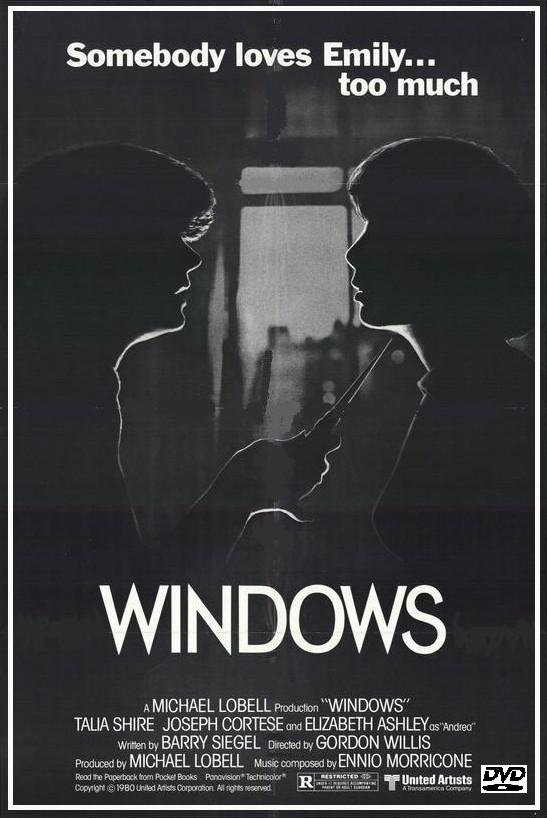
Emily (Talia Shire) is attacked in her apartment by a rapist (Rick Petrucelli) and when the police come to investigate the crime she starts to fall in love with Bob (Joe Cortese) the handsome police captain. Little does Emily know that her friend Andrea (Elizabeth Ashley) was behind the attack. She is a closet lesbian with a secret psychotic obsession for Emily who hired the man to rape her and record it, so Andrea could get-off on listening to the sounds of Emily moaning during the struggle. Now that Emily is going out with Bob it makes Andrea angry and her behavior becomes more dangerous and erratic.

For a thriller this film is extraordinarily low-key to the point that it also comes off like a drama, but fails on both ends. There is no mounting tension and little if any scares. The only one that they do have is when Andrea sticks Emily’s cat into a freezer and later it drops out of it like it was a Popsicle, which is actually unintentionally funny. There is also hardly any music. Ennio Morricone was hired to be the composer, but they don’t use him as much as they should. An amazing amount of the movie deals with the natural street sounds and ambience from life in New York, which is interesting for a while, but does nothing to elevate the tension, or create any excitement. Famed cinematographer Gordon Willis in his directorial debut seems more interested in capturing the New York skyline and creating shadowy interiors than actually making a movie with an original story, or interesting characters.

Shire is so quiet and awkward that she seems to be in a mental stupor. Her screen presence here is transparent and lifeless and it is easy to see why her leading lady status was brief. Cortese is no better as the male lead and the romantic side-story has no energy or chemistry and only helps to bog down an already boring story. Intercutting this with Andrea’s visits to her psychiatrist (Michael Lipton) successfully creates the first thriller to have no suspense whatsoever.

Ashley seems like the perfect choice for a homicidal lesbian, but the part is written in a way that doesn’t allow her to go over-the-top with it, which she should have although you do get to see her wearing quite possibly the biggest pair of sunglasses that I have ever seen. It might have worked better had the viewer not been aware from the start about Andrea’s psychosis and instead only revealed it at the end as a twist.

The climatic sequence between Emily and Andrea would be laughable if it weren’t so mind numbingly stilted and prolonged. The scene goes on for almost twenty minutes and features the two women standing in front of a window with Emily weeping incessantly while Andrea rambles incoherently. How anyone who was involved in the making of this movie would think anyone would flock to see this dull and contrived thing should have their brains checked. Has an air of pretense to it like it is trying to be a ‘sophisticated’ thriller, but it is pointless. If ‘Mystery Science Theater’ were still around this would be a great candidate for it.

My Rating: 1 out of 10

Released: January 18, 1980

Runtime: 1Hour 36Minutes

Rated R

Director: Gordon Willis

Studio: United Artists

Available: DVD, Amazon Instant Video

Turtle Diary (1985)

turtle diary 1

By Richard Winters

My Rating: 5 out of 10

4-Word Review: They free the turtles.

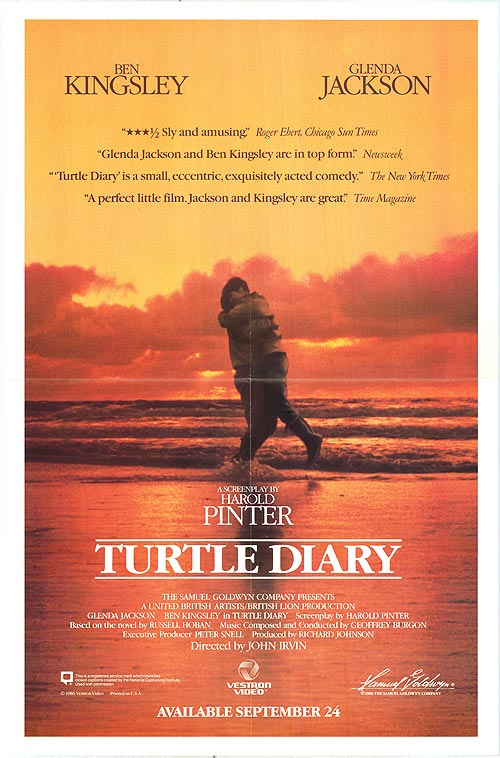
William (Ben Kingsley) becomes fixated with the idea of freeing the sea turtles at the London Zoo and returning them to the ocean. Neaera (Glenda Jackson) starts to have the same dream. The two get together and with the help of the kindly zookeeper George (Michael Gambon) begin to execute their plan.

Although well received by the critics at the time of its release I felt the film never seemed to gel. The plot is too thin and there is no explanation as to why William got so worked up about the turtles being in captivity. I felt there needed to be something shown in his history or character to explain this motivation. After all there are thousands and thousands of people that go to this zoo each year and none of them seemed to get worked up about the same idea. Also, why just the turtles? If William’s problem is seeing an animal that is not in their natural habitat then why not free all the species in the complex.

The plan also goes off way too seamlessly. What are the odds that the zookeeper would be in agreement with them and pretty much do all the work for them in setting it up to the point that all they end up doing is driving the turtles to the ocean. The story would have been a lot funnier and exciting had they somehow had to do it all themselves and behind the scenes. As it is here it becomes almost a non-event that barely holds any interest. Also, I have never heard of a zoo that decides not to press charges when they find that the turtles have been stolen or not firing the employee when they find that he had something to do with it.

The way Neaera and William get together is equally uninspired. They seemingly just keep bumping into each other and through sheer circumstance find out they have the same motivations. I was expecting something a little more creative and humorous. Neaera’s attempts at getting William’s address is particularly forced and contrived. In fact almost all of the conversations that they have with the exception of one where Neaera describes a weird dream that she had is very ordinary. The dialogue they have while traveling to the ocean is the blandest and none of it reveals much about the characters who end up being pretty forgettable.

Watching them carry the turtles to the open water has no emotional impact at all. It is not even the climatic sequence as it happens with 30 minutes left of the film. The rest of the movie concerns William’s dealings with the other people in his flat, which is mainly pointless.

The screenplay was written by celebrated writer Harold Pinter, who has an amusing cameo as one of the customers at William’s bookstore. Pinter was famous for his cutting edge and provocative plays of the 50’s, 60’s, and 70’s many of which I found to be quite fascinating, but this thing seems to be the polar opposite. The story and execution is standard while lacking any flair or pizazz. I can handle low-key and subtlety and many times relish it, but there still needs to be something more to it. More quirkiness and humor was needed as well as some tension. The film as it is here is flat and seems to waist a potentially unique idea as well as its cast.

My Rating: 5 out of 10

Released: September 10, 1985

Runtime: 1Hour 37Minutes

Rated PG

Director: John Irvin

Studio: The Samuel Goldwyn Company

Available: VHS

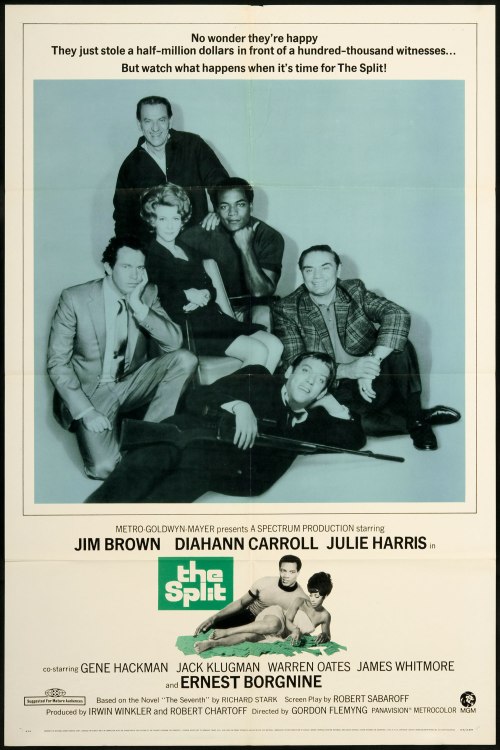
The Split (1968)

the split

By Richard Winters

My Rating: 5 out of 10

4-Word Review: Robbery during football game.

Since today is Superbowl Sunday I wanted to come up with a film from the 60’s with some sort of football theme and decided to dig this one out of the obscure pile that has just recently been released onto DVD through the Warner Archive label. The film has two special distinctions. For one it is the first movie to ever get an R rating under the MPAA’s then new rating system. It also shows scenes from two actual football games. The first one is a game between the Los Angeles Rams and the Atlanta Falcons that was played on December 3, 1967 and won by the Rams 20 to 3. The second game shown was one played a week later between the Rams and the Green Bay Packers where the Rams also prevailed by a score of 27 to 24.  Both games were played at the L.A. Coliseum with the plot of this movie taking place at another part of the stadium during these games although it is clear that the scenes involving the actors was done on a studio soundstage.

The story, which is based on a novel by the prolific Donald E. Westlake, involves a group of criminals who pull of a daring robbery during the football game, but when it comes to splitting up the money things go awry and they are soon turning on each other.

The crime itself isn’t all that interesting and tends to be a bit plodding with a minimum of suspense. Having things go wrong at the end and the group start turning on each other is redundant since they had been bickering amongst themselves from the very beginning. The characters are all unlikable making it hard for the viewer to get wrapped up into the plight of which of them gets the dough and which doesn’t. Personally I was hoping they would all just get killed off and no one would get any money because their constant yelling and fighting quickly becomes tedious and tiring.

The film’s one main highlight is a fight between Jim Brown and Ernest Borgnine, which carries the novelty of the fact that the two had a similar type of confrontation just a year earlier in the film Ice Station Zebra. Here, like in that film, Borgnine seems to get the best of Brown, which doesn’t make any sense because Brown was athletic, muscular and twenty years younger. There is also a scene where Borgnine puts his fist through a picture on the wall and shatters the glass. However, not only does he not wince in pain, which would be expected, but it somehow doesn’t even cause him to bleed.

Brown can sometimes be good in certain supporting roles, but as a leading man he can’t carry the picture. His facial expressions make him look like he is almost bored and just walking through the role. I know he was a great Hall of Fame running back, but that doesn’t mean he will turn into a great actor and casting him in lead roles of major studio pictures seemed awfully risky.

Warren Oates is terrific as always in a supporting role as one of the group’s henchmen. Donald Sutherland is also really good as another member of the group. I loved his Cheshire cat-like grin as well as his bowl haircut that gives him a creepy look. Julie Harris also sports a different style of hairdo from her usual short cut and she looks attractive as well as being near perfect in her part as an icy cold bitch that has no qualms about torturing a man to death in order to find her money.

SPOILER ALERT!

One of the biggest problems I had with the film was a plot twist that should have made it more interesting. It involves the James Whitmore character who plays the landlord of Diahann Carroll who is Brown’s girlfriend and hiding the stolen money in her apartment. Whitmore enters her place when she is alone and tries to rape her. Seeing an old wrinkled guy attacking a hot young black woman is wild in itself, but he also finds a machine gun in her dresser and holds it like he is masturbating with it and spews its bullets into her body like it is his ejaculation, which I found to be edgy and cool. He also finds the money and takes it for himself while making an anonymous phone call to the police to implicate Brown as the killer. However, when the police detective played by Gene Hackman investigates the case they quickly find out it was the landlord who did it, but it was never explained or shown how they came this conclusion as well as the fact that they end up killing him, which is completely glossed over and mentioned just briefly when the other characters read about it the next day in the newspaper. To me this created a major plot hole that needed to be filled.

The film also has a twist ending that doesn’t work and is very confusing. It happens as Brown is walking through the airport at the end with his share of the money and he hears what sounds like Diahann Carroll’s voice calling his name and he turns around with a shocked expression before the frame freezes and cuts to the credits. However, Carroll’s character was clearly killed and Brown saw the dead body, so how did she come back to life? Some viewers have stated that they think the voice was all inside Brown’s head, but that still needs to be explained and would normally prove frustrating to the viewer, but since the film is so bland it really doesn’t matter.

I feel I am being very generous in giving this picture 5 points, but the direction is fast paced and nicely compact and the jazzy Quincy Jones score is groovy. However, it certainly isn’t worth missing the big game for, nor any other game for that matter.

My Rating: 5 out of 10

Released: November 4, 1968

Runtime: 1Hour 30Minutes

Rated R

Director: Gordon Flemyng

Studio: MGM

Available: DVD (Warner Archive), Amazon Instant Video

Nice Girls Don’t Explode (1987)


By Richard Winters

My Rating: 1 out of 10

4-Word Review: Love meets spontaeous combustion.

April Flowers (Michelle Meyrink) has a serious problem. Whenever she goes out on a date with a guy and gets even the slightest bit aroused by him she starts inadvertently setting off fires. Smoke comes popping out of nowhere and before her dates know what is happening their clothes are on fire or worse her date’s fancy cars. April is always sure to bring along protection and in this case that means a small fire extinguisher, but they can’t always put out all the fires that she creates. What April doesn’t know is that it is really her mother (Barbara Harris) who is setting the fires. She buys the explosive ingredients from a pyrotechnic (Wallace Shawn) secretly follows April on her dates and then at just the right moment she uses her remote control to set them off, but now April is dating Andy (William O’Leary) who is on to what the mother is doing and determined to expose her shenanigans to April.

Had this film stayed with the idea that April had some sort of ability to start these fires herself it might have worked as there are a plethora of different and interesting avenues that the story could have taken. Having the plot take the avenue that it does brings up more questions and loopholes and doesn’t really make any sense. Are we to believe that April has now grown into young adulthood and never once suspected that her mother is following her around everywhere and doing what she is doing? And what would compel a mother to torment her daughter in such a way and does she actually believe that she can go on achieving this bizarre stunt for the rest of her daughter’s life and never get caught? None of these questions get answered or even touched upon and instead we are given corny humor that becomes increasingly cartoonish as it progresses until is insulting to anyone with any resemblance of an intellect.

The movie is basically a bad example of a one-joke idea getting stretched out farther than it can or should. After the first five minutes the novelty wears off and has nowhere to go and limps along until it becomes excruciatingly boring and mindless.

Harris gives it her all and to some extent succeeds. I have always enjoyed her work no matter how bad the script, but this one really pushes it. I found it surprising why a woman who was nominated twice for the Academy Award, won several Tonys on Broadway, and was Alfred Hitchcock’s last leading lady would have to settle for this low-grade silliness simply to make a living. Unless of course screenwriter Paul Harris was in some way related to her, so she decided to do it as a favor, but that has never been confirmed.

Meyrink is appealing. She has a geeky quality, but still pretty with a good comic delivery and it is a shame that she did only one more movie after this before dropping out of the business completely. Shawn is also fun as the fire expert, but everyone else is either dull, or has no ability to act.

Someone really should have set fire to this script. Filmed on-location in Lawrence, Kansas this may be the only film in history that lists a stunt double for a cat.

My Rating: 1 out of 10

Released: February 22, 1987

Runtime: 1Hour 28Minutes

Rated PG

Director: Chuck Martinez

Studio: New World Pictures

Available: VHS

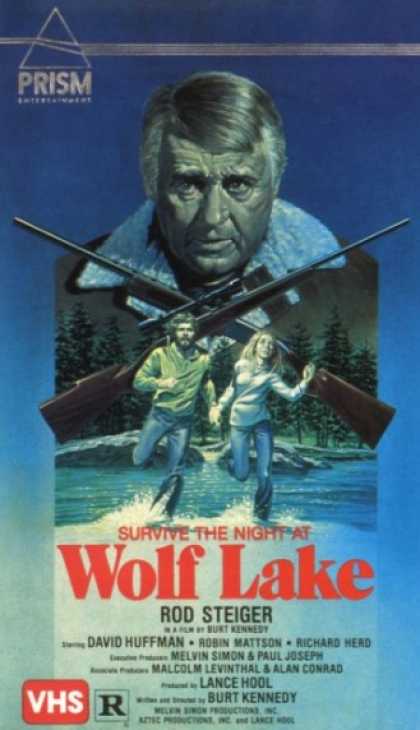
Wolf Lake (1978)

wolf lake 1

By Richard Winters

My Rating: 2 out of 10

4-Word Review: He doesn’t like deserters.

Charlie (Rod Steiger) is a hard-bitten conservative man who lost his 23-year-old son in the Vietnam War. He likes to vacation with a couple of his middle-aged buddies Wilbur (Jerry Hardin) and George (Richard Herd) at a remote Canadian hunting lodge. However, this time when they arrive they find that the regular lodge owner is not there and instead it is being run by a young man named David (David Huffman) and his pretty girlfriend Linda (Robin Mattson). Charlie and David almost immediately are at odds as they both share a wide variance in age and political leanings. What is worse is the fact that David is a war deserter and once Charlie finds out about this he flies into a rage of psychotic proportions, which culminates in a violent night of terror for both David and his girlfriend.

The film was written and directed by the normally reliable Burt Kennedy who is better known for doing westerns. After watching this I think he should have stayed in that genre as this film is too formulaic and one-dimensional. There seems to be too much emphasis to conform to the horror movie/slasher style formula of that era with a plot set-up that is too brief and character development that is almost non-existent. The story shows its cards too quickly and then proceeds to just plod on and on until it climaxes with a predictable and boring finish.

Charlie and David’s arguments and confrontations fail to elicit any type of tension. Their shouting matches are rhetorical and redundant and their points-of-view are handled at a superficial level that allows for no new insight, or intellectual debate. Charlie is so limited in his stubbornness that he becomes annoying instead of threatening, or scary.

The final 25 minutes when the two sides wage a proverbial war between their two cabins is the only time that there is any action. However, by then I was completely bored with the proceedings and so emotionally detached from the third rate material that it was a strain just getting through it. The film’s ultimate message is heavy-handed and done so much better in other films on the same subject that it renders this excursion as pointless.

Steiger is wasted. The character he plays is poorly defined and doesn’t allow him to take full advantage of his acting abilities. He gets stuck with another one of his many wigs this one looking like the same type of gray haired rug that actor Ray Milland used to wear in his later years. The producers should have just allowed him to appear bald as it would have fit this type of part better and even made him look creepier and more menacing.

Huffman is the best thing about this movie and it is a shame that his life and career were cut short when he was murdered in 1985 while trying to chase down a suspected purse snatcher. His performance here is nicely understated, which helps carry the picture as he is the only character that is multi-faceted.

Although the story takes place in Canada and the landscape certainly looks Canadian I was surprised to learn that it was actually filmed near the city of Creel in Chihuahua, Mexico, which due to its high elevation has a climate that is more similar to the North’s.

SPOILER ALERT

There are actually two different versions of this film. There is this one and another one entitled The Honor Guard. In that one there are no flashback scenes like there are here and in the end Charlie ends up killing David and his girlfriend while in this version Linda shoots Charlie before falling over dead herself. I actually liked the flashbacks that are used as it gives the film what little suspense it has and also shows a bit of cinematic flair. However, the scene where Linda miraculously comes up with a gun and killing Charlie before keeling over looked cheesy and clichéd and I might actually have voted for the alternate ending.

My Rating: 2 out of 10

Released: May 3, 1978

Runtime: 1Hour 25Minutes

Rated R

Director: Burt Kennedy

Studio: Melvin Simon Productions

Available: VHS

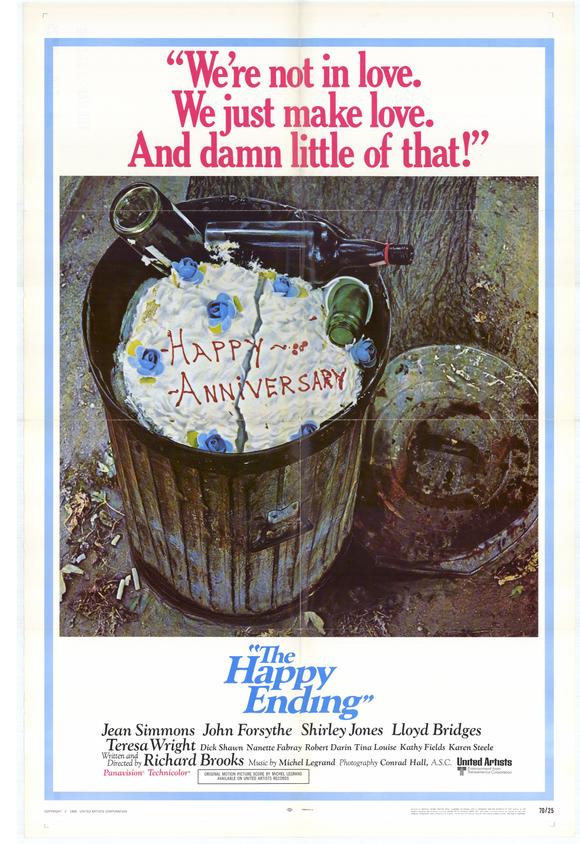
The Happy Ending (1969)

happy ending

By Richard Winters

My Rating: 4 out of 10

4-Word Review: The problems of marriage.

If there was ever a film with a misleading title it is this one. There is no happy ending here and in fact there is nothing in its entire 117 minutes that is happy as the film examines every negative and depressing thing it can think of about the institution of marriage and then rhythmically beats it into the viewer like a victim in a bar fight being pummeled by a brawler. The format works like a boring college professor lecturing endlessly about some tepid subject while tirelessly pinpointing every monotonous detail and not knowing when to stop.

The story is about Mary (Jean Simmons) who at one time was madly in-love with Fred (John Forsythe) and had extremely high ideals in regards to love and marriage when she married him. Now after fifteen years of living in a relationship that no longer has any passion she has turned into a depressed and disillusioned alcoholic looking for any way to escape the confines.

The film itself is intelligently done and well executed and makes some good hard-hitting points. The dialogue and conversations between the characters are realistic and well written and it is nice having adults acting and talking like real people. The only real issue is the question of why the filmmakers would think anyone would actually want to sit through something that is so endlessly downbeat. Sometimes these types of things work better in a satire format where they can still make the same points, but allow the viewer a few laughs as well. As it is the film is in desperate need of some levity and none is ever offered.

I also felt that film was too one-sided. I realize that there are a lot of unhappily married people out there, but there has got to be some couples that are happy with it. By never balancing it out and showing no other viewpoint makes the film come off like one long and unending rant.

Writer-director Richard Brooks infuses certain directorial touches that are novel to some extent, but heavy-handed as well. Showing clips of famous old romantic movies like It Happened One Night and Father of the Bride during Mary’s wedding is creative, but too obvious as is the segment when Mary is on a beach and a young couple asks her to take a picture of them and inside the camera’s viewfinder Brooks inserts an image of Mary and Fred when they were a young and in-love. There is also too much footage of Casablanca shown, which does nothing but make the viewer want to watch that over this dreary thing.

Simmons gives a strong performance and looks as beautiful as ever. She is also straddled with a few difficult scenes but does them well including a harrowing segment where she is rushed to an emergency room after swallowing some pills and has a hose stuffed down her throat in an attempt to vomit them out. Tina Louise is great in support as is Dick Shawn in a rare dramatic turn. Shirley Jones is also good as Mary’s jaded friend Flo and she is given some of the film’s best lines.

Forsythe is okay as the husband, but not too exciting though he never usually is. He should have had the big mole in the center of his forehead surgically removed as my eyes always seemed to fixate on it every time he was shown in a close-up. I got to admit I was amazed his character did not kill his wife on the spot when he found out that she had run up his credit card in one day on $11,421 worth of charges on clothes. This was 1969 dollars and I have no idea what astronomical figure that would be for today, but it would be beyond outrageous nonetheless. Of course he was caught fooling around, so I suppose this was her way of getting back at him and boy did she ever.

The film does have a few powerful scenes that I did like. The part where Fred defends Mary after she has run out on them and their daughter Marge (Kathy Fields) feels that her mother no longer loves her is really good as is the final conversation between Fred and Mary as well as Mary’s conversation with her mother (Teresa Wright) about the happiness of her mother’s own marriage. The moment when the very cynical Flo becomes all teary-eyed and excited when the married man that she has been fooling around with decides to divorce his wife and propose to her despite the fact that she has spent the rest of the movie considering the idea of marriage to be over-rated is savvy.

Like with the sappy and over-played Michael Legrand song ‘What Are You Doing the Rest of Your Life?’ the film goes on too long and there are just not enough good things about it to justify sitting through.

My Rating: 4 out of 10

Released: December 21, 1969

Runtime: 1Hour 57Minutes

Rated PG

Director: Richard Brooks

Studio: United Artists

Available: VHS, Amazon Instant Video, Netflix streaming

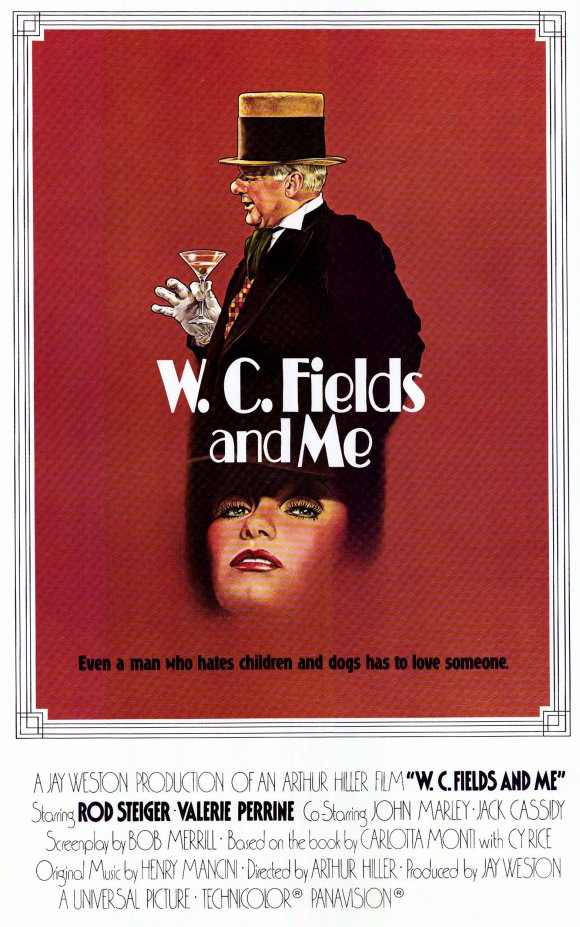
W. C. Fields and Me (1976)

W. C. Fields and me

By Richard Winters

My Rating: 6 out of 10

4-Word Review: Fields had a girlfriend.

Based on the memoirs from Carlotta Monti who was W.C. Field’s (Rod Steiger) companion for 14 years this film looks at their relationship as well as W.C.’s alcoholism and difficult personality.

This biography is highly romanticized and very light on the details. Apparently only one scene from the book is actually used in the movie. If one watches this in hopes of learning more about Field’s the man they will be disappointed. The tone seems similar to Oliver Stone’s The Doors where the intent is more on perpetuating the myth of its subject instead of tearing it down and showing the complete person. Just about everyone is familiar with Field’s drinking and cantankerous behavior, so having the film dwell exclusively in this area for the entire time is not interesting, or captivating.

The story would have been better served if it had been a complete bio beginning with Fields life as a child and then going all the way through to his death. Apparently he was born to an alcoholic father who beat him forcing Fields to run away from home at the age of 11 and live in a hole in the ground where he became dependent on stolen food and clothing for survival. He was in many fights and in and out of jail for most of his youth. Showing this could have been quite revealing, but instead the film skips past all of it and starts instead with Fields already in vaudeville and recreating a lot of corny comedy routines before having him drive off to Hollywood where his ascent to stardom seems much too easy and superficial.

Things improve during the second act when he begins his love-hate relationship with Carlotta (Valerie Perrine). Part of the reason this works is because Perrine is excellent. Her down to earth sensibilities really help balance the flamboyant ego’s around her and fit the character well. She is the one, not Steiger, who carries the movie and it was worthy of an Oscar nomination.

Steiger thought for sure that he would nab his second Oscar for his portrayal here, but instead didn’t even get nominated. His mimicking of Fields voice comes off as too rehearsed and effected. At times it gets annoying and just makes one want to watch a movie with the real Fields instead. His dialogue is too cutesy using lines borrowed from many of W.C.’s famous jokes and punch-lines. As expected he does induce the character with his famous Steigerisms and manages to not make it a complete misfire that it otherwise is. The scene, near the end, where Fields meets his now grown son that he hadn’t seen since he was three is his best moment.

Jack Cassidy is great in support as actor John Barrymore. The scene where he dies and his friends prop his dead body up into a chair and have him holding a liquor glass is amusing. Dwarf actor Billy Barty is good as Ludwig one of Field’s long-time friends. Some of the scenes the two share together are actually quite touching.

The film does a commendable job of recreating the period atmosphere. The music has a nice soothing quality to it and on the charm level it scores a bullseye. Despite my reluctance I found myself entertained by it, but as a biography it is flimsy, fictional and irrelevant.

My Rating: 6 out of 10

Released: March 31, 1976

Runtime: 1Hour 51Minutes

Rated PG

Director: Arthur Hiller

Studio: Universal

Available: Amazon Instant Video

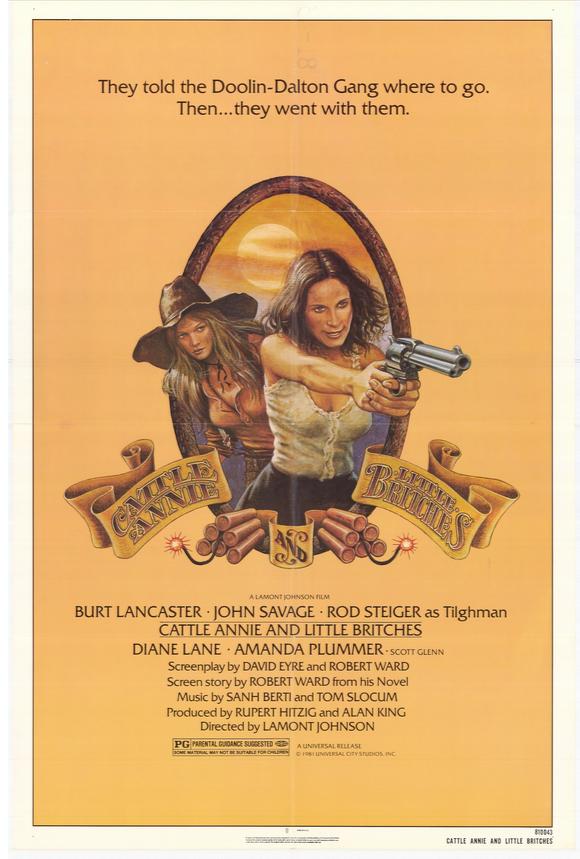
Cattle Annie and Little Britches (1981)

cattle annie and little britches

By Richard Winters

My Rating: 6 out of 10

4-Word Review: She needs a spanking.

Based very loosely on actual events this film looks at Annie McDoulet (Amanda Plummer) and Jennie Stevens (Diane Lane) two adolescent girls traveling in the Oklahoma Territory of the late 19th century looking for excitement and adventure. Annie becomes transfixed with the stories that she reads about the western outlaws particularly the ones about Bill Doolin (Burt Lancaster), but when they finally do catch up with his gang they find the men to be old, haggard, and tired as well as just one-step ahead of the relentless pursuit of famed western lawmen Bill Tilghman (Rod Steiger).

Plummer, in her film debut, is nothing short of electrifying. She is the daughter of Christopher Plummer and actress Tammy Grimes and she makes her presence strongly felt here. Her vulgarity and tenaciousness are infectious and help propel the film and easily steal every scene that she is in. She has her mother’s distinctively reedy voice and although not beautiful in the conventional sense her facial features still have an alluring quality that she makes the most of.

Lane as her cohort is good as well although not as strong, or riveting. Her plus is the fact that she is simply beautiful with perfect and delicate features of a young lady blooming into adulthood. The fact that her character is more shy and unassuming plays off well against the abrasiveness of Plummer’s and the tussle that the two have near the end is fun.

Lancaster is badly miscast. For one thing the real Bill Doolin was much younger and in fact was shot dead at the young age of 38 and yet here Lancaster was already 66 when he did the part. I also felt that the character was a little bit too good to be true. It just seemed too hard to believe that a rugged western outlaw would be so kind, gentle, understanding and wise. I suppose his fans wouldn’t want it any other way and the part seems to be written to conform to his star status, but the effect hurts the film’s overall authenticity.

Steiger on the other hand is quite strong and director Lamont Johnson makes perfect use of Steiger’s legendarily intense manner. In fact I was disappointed that he wasn’t in more of the film as his presence helps create some much needed tension in a film that at times seems too slow and laid back. His finest moment, and the best part in whole film, comes when he tackles Annie and gives her a nice long hard spanking.

The score, like the film, seems unfocused and creates an unnecessary mish-mash of moods. The vocal ballads done with a minimum of instruments is good as they have a country twang and fit the period, but there are other points when a jazzed up score with modern rock elements is played, which takes the viewer completely out of the setting. There is also too much music played when the natural sound and ambience would have been better especially with a western.

Watching the girls interacting with the gang as well as surprising them with their unexpected toughness is what makes the film interesting. The climatic sequence in which the two decide to go by themselves to get Bill out of jail and the very brazen and clever way that they do it is special. Why Universal decided to abandoned what is otherwise a pleasing little western is baffling. This film is long overdue for a DVD/Blu-ray release and fans of the cast should let the people in charge know as well as taking the studio exec, if he is still around, who decided to put the kibosh on this movie and throw him into a lake.

My Rating: 6 out of 10

Released: April 24, 1981

Runtime: 1Hour 35Minutes

Rated PG

Director: Lamont Johnson

Studio: Universal

Available: None