Category Archives: Movies with Nudity

The Burning (1981)

By Richard Winters

My Rating: 3 out of 10

4-Word Review: Cropsy doesn’t look good.

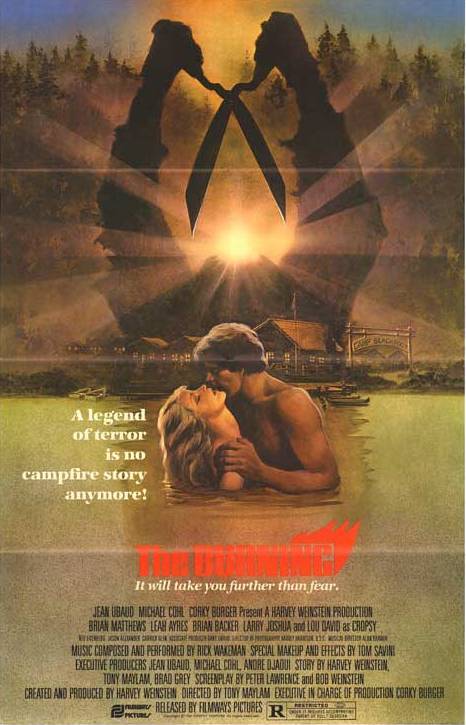
A summer camp caretaker named Cropsy (Lou David) is badly burned during a practical joke gone horribly wrong. Five years later and disfigured he gets out of the hospital and goes on a murderous rampage using a pair of gardening shears. However, he kills young campers at a completely different campsite and who had nothing to do with his accident.

Jason Alexander, in his film debut, is great. He shows a lot of charisma and pretty much carries the movie. You not only get to see him with a full head of hair, but for the lady viewers you also see his bare behind along with Fisher Stevens’s. This is also Holly Hunter’s first film, but she is seen very little. The teen characters here look like real teenagers instead of college- aged young adults like in most of the other films in this genre. They also have a little more distinctive personalities and aren’t quite as cardboard as usual. The women are good looking and there is a gratuitous nude scene involving actress/model Carole Houlihan.

On the Blue Underground DVD version make-up artist Tom Savini hosts a bonus feature, but warns everyone at the start not to watch it until they have seen the film so as not to ‘spoil’ it for them. However, it is hard to figure out what exactly it is that he would be spoiling as the movie is routine to the extreme. There are absolutely no interesting plot twists or surprises. It is also hard to believe that anyone could get a pair of simple gardening shears to do the things this killer gets them to do. The only really scary scene in this film is at the beginning where you get to see a close-up of actor Lou David’s strangely shaped nose. The camera slowly zooms into him as he is sleeping and you feel almost like you are being driven into his extremely large nostrils that seem to get bigger and bigger.

Savini’s special effects really don’t seem all that impressive especially in this day and age. There is a scene on the infamous raft killing sequence where it is quite obvious that the neck that the shears are cutting through is plastic and not really that of the actor’s. Also during the opening sequence when Cropsy runs out of the cabin while on fire he is not wearing anything on top of his head yet when the camera cuts to an outdoor shot of him it is obvious that the stunt double has something on his head.

I found this to be as bad and as uninspired as all the other Friday the 13th rip-offs. This is good only as a curio at seeing Alexander, Stevens and Hunter in their film debuts.

My Rating: 3 out of 10

Released: May 8, 1981

Runtime: 1Hour 31Minutes

Rated R

Director: Tony Maylam

Studio: Filmways Pictures

Available: DVD, Amazon Instant Video
The Nesting (1981)

By Richard Winters

My Rating: 3 out of 10

4-Word Review: House haunted by hookers.

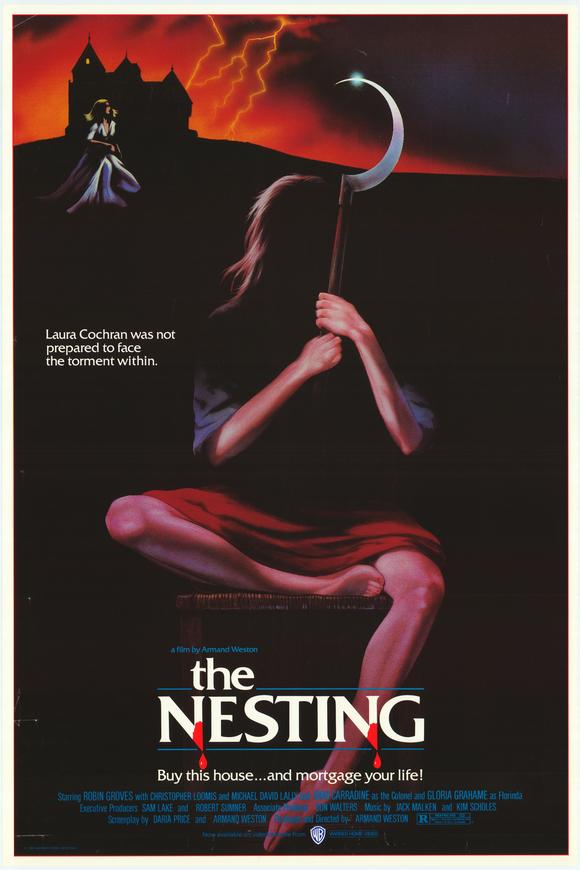
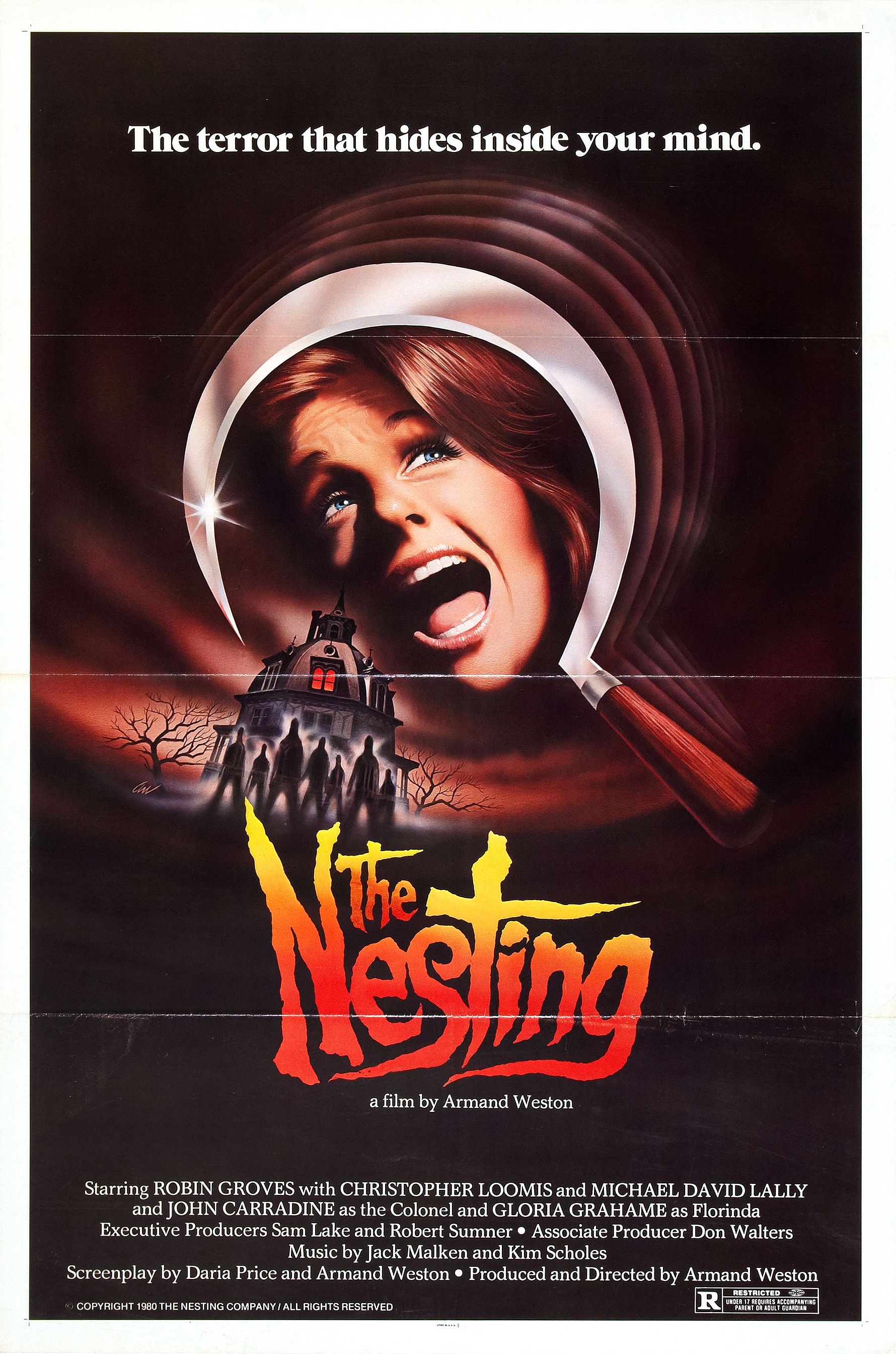
This review will start off a month long theme where in celebration of Halloween every 70’s, 80’s, and 90’s movie reviewed will be a horror one. This film sat in pretty much obscurity until being released by Blue Underground onto DVD and Blu-ray on June 28th. The story deals with Lauren (Robin Groves) a writer who rents an old house that looks strangely similar to the one depicted on the cover of her last novel. Eerie events start to happen and she learns that the building used to be a house of ill-repute and the prostitutes who were murdered there in cold blood are now coming back in ghostly form to seek revenge.

The film was directed by Armand Weston best known for directing porn movies during the 70’s including a couple of edgy, envelope pushing rape and revenge sagas The Taking of Christina and The Defiance of Good.  The directing here is competent enough that it is watchable, but the scares and horror is at a minimum. There are a few moments of creepiness and atmosphere, but it is not sustained and the film is unable to build any momentum, or suspense. The result is rather disjointed and unfocused. The premise borders on being campy and a 104 minute run time is way too long for a plot that offers a meager payoff.

Groves is an unusual choice for the lead. Usually films in this genre cast young college age girls in these roles with high sex appeal and skimpy outfits so that way they will be able to hold the viewer’s (males) attention during the slow parts of which there are many. Groves on the other hand is middle-aged, has an oversized mouth, and a hyper personality that seems better suited for comedy. She does end up having a nude scene, which isn’t bad, but I still felt she wasn’t the right fit.

I did like the idea that the character is given some unusual traits including suffering from agoraphobia (the extreme fear of the outside world) and a kooky creative personality that initially embraces the scares that she receives in the home because she feels it will help stimulate her artistic process. However, the film does not pursue these ideas enough and by the end seemed to have completely forgotten about them.

I was disappointed that Gloria Grahame an Academy Award winning actress was given such little screen time and actually doesn’t even utter a line of dialogue until the final 15 minutes of the movie. This woman was a leading lady during the 40’s and 50’s, but had the misfortune of marrying director Nicholas Ray and then having an affair with Ray’s 17 year old son from a different marriage. She eventually married the son and even had two kids with him, but the resulting scandal ruined her career and demoted her to B-movies afterwards. Still I thought she looked terrific and was better looking than Groves even though she was in real-life twenty-five years older than her. Her best moment is when she crosses a street and then gets hit in rather graphic fashion and run over by a speeding car that gets repeated several times.

Veteran actor John Carradine also appears, but I wished they hadn’t even bothered with him. He appears frail and elderly and speaks his lines in a mumbling fashion.

I did like that the movie was filmed on-location at the Armour-Stiner house in Irvington, New York. This is a unique domed octagonal residence built in 1860 and one of the few left standing. There is even an outdoor scene filmed on the home’s roof where Lauren’s analyst (Patrick Farrelly) falls from a ledge and gets impaled by a weather vane, which proves to be the film’s best gory moment.

The wrap-up and explanation for why Lauren was so strangely attracted to the home is actually kind of neat. I also liked the scene recreating the murderous events where everybody ends up getting shot one-by-one in slow motion. However, the script was in bad need of trimming and revision. There also should have been more special effects sprinkled throughout the production instead of just cramming them all in during the film’s fiery finale.

nesting

My Rating: 3 out of 10

Released: May 3, 1981

Runtime: 1Hour 44Minutes

Rated R

Director: Armand Weston

Studio: William Mishkin Motion Pictures

Available: VHS, DVD, Blu-ray, Amazon Instant Video

El Topo (1970)

By Richard Winters

My Rating: 7 out of 10

4-Word Review: Lust is not good.

This is an experimental film that has received a large and loyal following. Although considered highly controversial at the time it is pretty tame by today’s standards. The story deals with a mysterious gunman named El Topo (Alejandro Jodorowsky) who comes out of nowhere to avenge a town that has been massacred. Once finished with this he takes the perpetrator’s women and goes off into the desert. Here he must prove himself against four different masters whom all appear to be invincible. Yet it is the women and his lustful desires that turn him into a victim. Defeated and demoralized he turns to spirituality and ends up fighting to save some deformed people from a town that has barricaded them into an underground cavern.
The blood, violence, and sexuality are no big deal. The special effects are weak and the editing is choppy. In many ways it comes off looking like an amateurish artifact from a bygone era. Yet content wise it is fascinating and Director Jodorowsky shows a unique and definite talent. It bites off more than it can chew especially with its low budget, but it is far from a failure as certain scenes are guaranteed to leave a strong impression.
It has a reputation of being convoluted, but I found it to be quite lyrical. Once one adjusts to its mesmerizing use of symbolism it becomes almost riveting. The heavy allegorical nature is both intriguing and provocative and the unique vision helps raise it well above the fray.

If nothing else it will keep you engaged. It is fun and interesting to see one man go through such different stages and it effectively gives you a complete understanding of him by showing all the different sides to his personality. Besides having a lot of religious correlations and an overall negative view of women there is also, surprisingly, a lot of comedy and lightheartedness.

It does fail to leave an overall strong impact and the tone is cold and alienating with characters that are unpleasant. I also felt it gets too bogged down with its use of symbolism and need to build everything up to epic proportions is overdone. Still for those that like movies that are weird and different they won’t be disappointed. The castration of a pompous colonel is amazing. The showdowns with the masters are memorable and the game of Russian roulette amongst a group of churchgoers isn’t bad either.

The film promotes a rather curious statement made by its director and used as a tagline on most of its posters and box covers. It states “If you are great ‘El Topo’ is a great picture. If you are limited than ‘El Topo’ is limited.” This statement has always struck me as funny because it allows no room for anyone to criticize the film otherwise they will be labeled as ‘limited’. In any case I give this film 7 out of 10 points, which I guess only makes me 30 percent limited.

My Rating: 7 out of 10

Released: December 18, 1970

Runtime: 2Hours 5Minutes

Rated: NR (Not Rated)

Director: Alejandro Jodorowsky

Studio: Douglas Films

Available: VHS, DVD, Blu-ray

The Four Seasons (1981)

By Richard Winters

My Rating: 4 out of 10

4-Word Review: Car goes through ice.

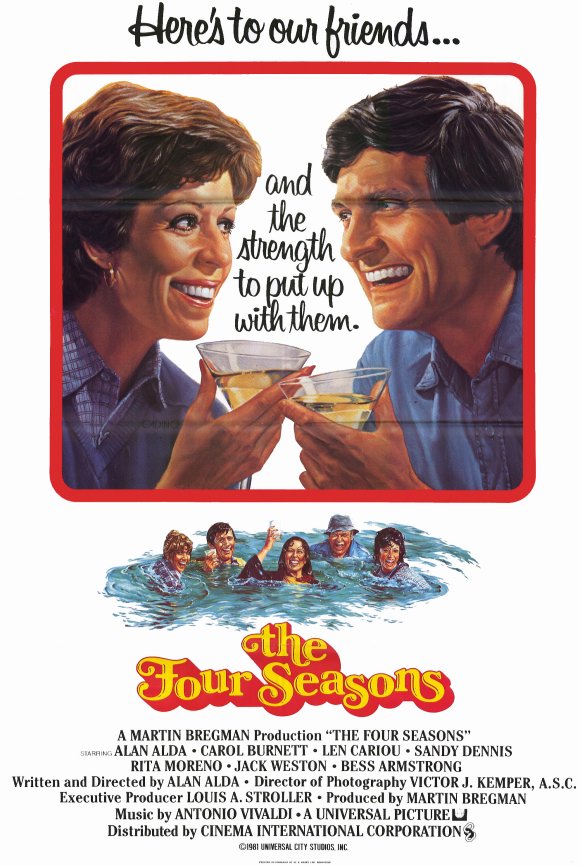
This is an easygoing comedy-drama detailing three middle-aged couples who take vacations together during each season of the year. As the seasons change so does the level of their friendships. The chemistry of the group begins to unravel when Nick (Len Cariou) decides to divorce his wife Anne (Sandy Dennis) and bring along his attractive new young girlfriend Ginny (Bess Armstrong) on their trips. The women still feel a loyalty to Anne while Ginny makes the men more self-conscious about their age and virility.

This is certainly an interesting idea with lots of potential. The film has a good handle on the politics of friendship and how even the best of them can have underlying jealousies and misunderstandings. It also shows the tendency of how friends like to smooth things over by putting on a happy face and never really getting to the bottom of the issue.

It’s also refreshing in our youth obsessed culture to have a film focus solely on middle- aged people and have them actually act the part. The situations and their responses to them as well as the conversations all seem very authentic. There’s also some terrific outdoor photography and a great classical music score by Vivaldi.

Carol Burnett is the real surprise. Usually known for her over- the- top comedic performances she puts together a good low key dramatic one here. Weston though steals the film with his somewhat hammy performance as Danny the dentist and his reactions at seeing his prized new car go through the ice is amusing.

Like with a lot of movies written and directed by Alan Alda the film is too dramatically light. There is not enough conflict and it never reaches any peak. The dialogue needs to be crisper and some of the little ‘spats’ that the couples have particularly the one between Danny (Jack Weston) and Claudia (Rita Moreno) at the end seem forced and unfunny. The final result is rather empty and extraneous.

Be warned the film also features the worst rendition of “Strangers in the Night” that you will ever want to hear.

My Rating: 4 out of 10

Released: May 22, 1981

Runtime: 1Hour 47Minutes

Rated PG

Director: Alan Alda

Studio: Universal

Available: VHS, DVD

The Big Bounce (1969)

By Richard Winters

My Rating: 3 out of 10

4-Word Review: She is really crazy.

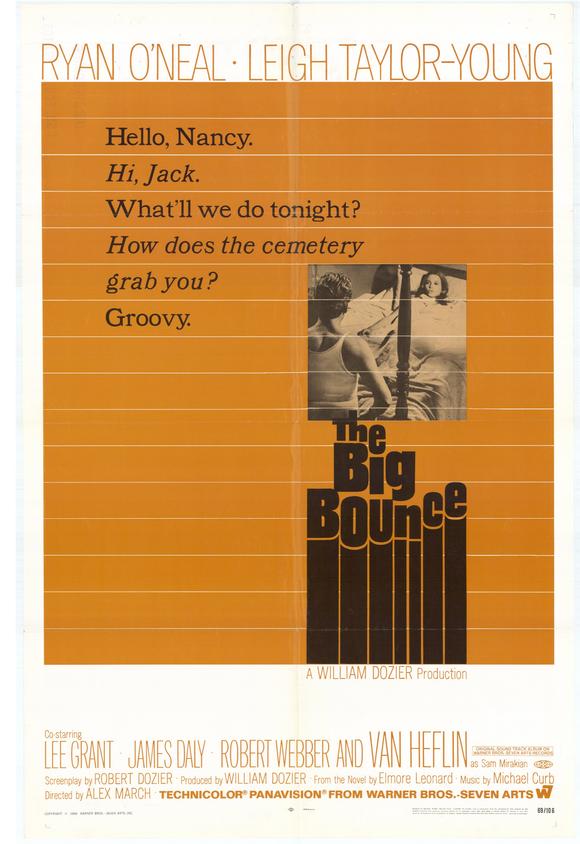
Based on the Elmore Leonard novel and remade in 2004 as a vehicle for Owen Wilson this version stars Ryan O’Neal as Jack Ryan a Vietnam vet on the run when he has a physical altercation with a player during a baseball game that leaves the other man injured and looking for revenge. He meets up with Ray Ritchie (James Daly) and his mistress/secretary Nancy (Leigh Taylor-Young) who is a bit on the wild side. She convinces Jack to help her rob her boss of a large amount of money that he has hidden away in his safe, but Jack becomes wary as Nancy displays more and more psychotic tendencies.

I enjoyed the film’s jaded sensibilities, but unfortunately it doesn’t do enough with them. There is too much talk without enough action. The plot is thin and unfocused. I spent the entire time wanted the story to get moving, but it really never does until the very end and by then it is too late. The scenes are lengthy and the production has too plodding a pace. I also didn’t like the fact that they discuss the robbery, but never go through with it. Nothing is more frustrating than an already draggy movie having a potentially interesting plot progression only to drop it.

I also couldn’t stand the music which sounded like men from a barbershop quartet and gets overplayed until it becomes annoying. The melody was too soft and mellow and did not fit the edgy tone of the script, or characters. This is the type of film that needed an up-tempo score with hard and fast beat.

For what it is worth Taylor -Young is good. She gets convincingly crazy and has a near epic meltdown at the end. She also has a tantalizing scene involving her swimming nude, which is only topped by another scene showing her standing naked in the middle of graveyard while pretending to be a statue.

O’Neal is okay although I felt some other actors might have been better, but at least he improves as the film progresses. The two stars were married in real-life at the time and I presume the producers cast them in the parts hoping that their chemistry would project onto the screen, but it never does and they ended up divorced four years later.

Van Heflin is great in a supporting role as Sam Mirakian a cynical and detached man who has seen it all. He brings the film some much needed energy. Lee Grant is also terrific and it was a crime that she wasn’t given more screen time. She makes her desperate and emotionally brittle character real and interesting. Cindy Eilbacher is quite adorable as her young daughter Cheryl. Robert Webber also deserves mention as he is amusing playing a man trying to be tough and intimidating, but ending up always looking like a schmuck.

I never saw the remake, but heard from several people that it wasn’t too great either. I dare say the novel is the best of the three and both film versions are worth skipping.

My Rating: 3 out of 10

Released: March 5, 1969

Runtime: 1Hour 42Minutes

Rated R

Director: Alex March

Studio: Warner Brothers/Seven Arts

Available: VHS, DVD, Amazon Instant Video

Deadly Strangers (1974)

By Richard Winters

My Rating: 5 out of 10

4-Word Review: Psycho on the loose.

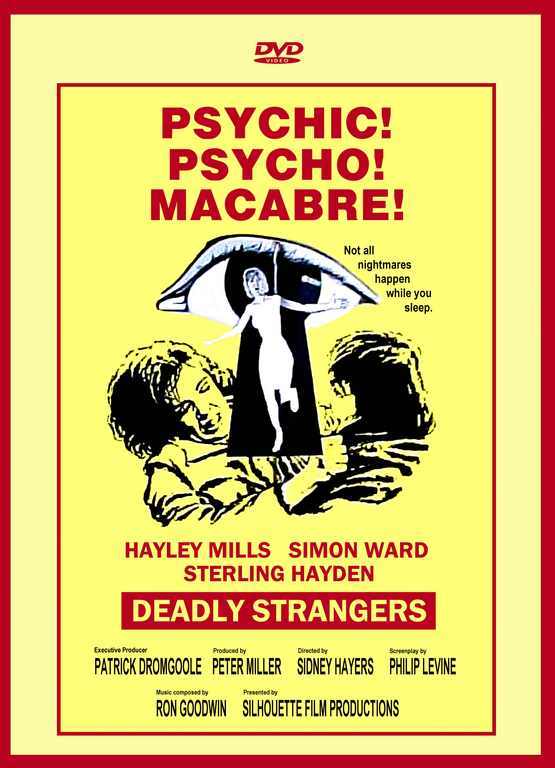
A dangerous mental patient has escaped from a nearby asylum. Belle Adams (Hayley Mills) is the beautiful women whose car has just broken down and she accepts a ride from Stephan Slade (Simon Ward) who just may be that patient.

This seems very similar to See No Evil which also took place in the English countryside and also hid the killer’s identity until the very end. There though it was a big letdown finding out who he was while here it is actually what makes the movie interesting. However, some of the techniques used to conceal the killer’s identity come off as contrived. The opening escape sequence inside the institution, where you see everything from the patient’s point of view is very tacky.

The suspense is minimal and things never really get too intense until the climatic sequence. There are twists and turns throughout, but some of them seem to be put in just to keep the story moving. The overall production values are cheap and the film stock is grainy and faded.

It is nice to see a British movie that doesn’t take place in London. The brown, barren landscape, which looks to have been filmed in the autumn, gives the picture an added visual. The car they drive is another sight as it looks as flimsy as a Yugo.

Mills makes a daring film choice here and it does her well. She no longer has that mousy, awkward look. She is a pretty full grown woman with a nice short haircut. She acts more mature and streetwise without that wide eyed persona that she had in all those Disney movies. Her nude scenes aren’t bad and are even a bit gratuitous.

Ward has never seemed to be that great of an actor. He has always had a tired look on his face and plods through his parts in much the same way. Sterling Hayden is fun playing an aging womanizer and sporting a wild beard and hairstyle. He talks in a goofy Scottish accent and amusingly tries to court Hayley, but unfortunately he is on for only a short time.

The final twist is pretty good, but a real sharp viewer will figure it out before it happens because I did! The film is a nice alternative for Mills despite a tendency to be gimmicky and flat. It is also the only time I have ever seen a policeman pull over a car and when the driver is unable to find his license is simply allowed to drive away.

My Rating: 5 out of 10

Released: February 16, 1974

Runtime: 1Hour 28Minutes

Rated R

Director: Sidney Hayers

Studio: Fox-Rank

Available: VHS

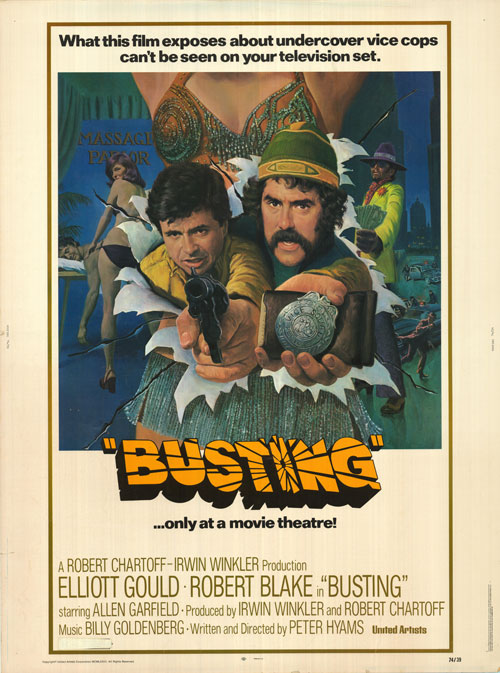
Busting (1974)

By Richard Winters

My Rating: 7 out of 10

4-Word Review: Cops on a mission.

            Michael (Elliot Gould) and Patrick (Robert Blake) are two vice cops hauling in prostitutes and drug dealers only to find that are being let go without being charged. They eventually realize that local crime boss Carl Rizzo (Allen Garfield) has an inside influence with the police department allowing these criminals to get off. Michael and Patrick decide to turn-the-tables, but this proves dicey as Rizzo’s influence is strong and could cost the two not only their jobs, but also their lives.

The film has a gritty style that nicely captures the rugged street life of its characters. Director Peter Hyams uses his background as a news producer and documentary filmmaker to give the film an authentic quality. His tendency for natural lighting is perfect for this kind of material. The film lacks music at least at the beginning, which is effective as it gives you the feeling that you watching some sort of underground police video especially during the opening sequence. The pounding soundtrack during the chase scenes is okay, but what impressed me was the haunting melody used in some of the other parts that sounded like something you might hear in a thriller, or horror film, but it works because it is an unusual sound for a cop picture. The dialogue is great as it manages to be acerbic and insightful while still remaining realistic.

The first half is hampered by the two’s preoccupation with nabbing a prostitute. I remember watching the old ‘Cops’ TV-show where there would be many episodes detailing elaborate stings that the police would use to nab some otherwise harmless schmuck who was simply looking for a little action. Most who are arrested will go right back to doing it again after being given a light fine, or jail sentence, which to me always seemed wasteful both to the law enforcement’s time and the taxpayer’s money when there are far more serious crimes out there. When the Carl character mocks the two with the line ‘You arrest ten-dollar hookers and think you are Captain Marvel’ I had to laugh and agree. What is even worse is when Michael is off-duty he ends up paying for the services of a call-girl meaning I guess that when he is in the mood himself then it is alright.

The film improves during the second half and includes an exciting foot chase at night inside a sprawling inner-city fruit market. Hyams use of tracking camera shots helps build the tension and I found it interesting that an innocent bystander ends up getting shot and killed as I don’t think I’ve seen that happen in any other police movie. Another chase that happens at the end and involves two ambulances careening down city streets is equally well done.

The cat and mouse game that they play with the crime boss was intriguing enough to keep this viewer interested. Garfield plays the part with his usual hyper-style that makes the character both repellent and human at the same time. The best thing about the film though is that fact that it chooses a somber tone and then sticks with it. Too many times ‘statement movies’ with a downbeat message end up selling-out and become an audience pleaser at the most unlikely moment, but this film doesn’t. I’m not saying that it ends on a depressing note, but it does effectively hit home the fact that police are hampered by a lot of bureaucracy that limits their effectiveness. It also examines the boredom and monotony that can come with the job, which other police dramas rarely if ever touch on.

The film was controversial because of its over-reliance on gay stereotypes during a barroom scene. I was a bit surprised by this because the scene itself is short and the stereotypes shown weren’t too different from other films of the period dealing with the same topic. Michael does refer to them by using the derogatory ‘F-word’, but I am pretty sure that a lot of cops in 1974 used that very same word and since this film was intended to show how things were I was able to go with it. The two also get ganged up on and viciously beaten by the gay patrons that I found to be amusing.

I also have to mention Cornelia Sharpe a former model who had a brief 10 year film career in mostly grade B exploitation pictures. She looks her best here not only during a nude scene that she has with a doctor at his office where she pretends to be one of his patients while really being a prostitute, but also during her appearance in court where she wears a pink hat and dress. I also liked that despite being a hardened hooker she still gives a warm smile to a lonely child sitting in the waiting room.

My only real complaint with the film is that it features one of the tackiest make-up jobs in the history of movies and seriously affects the film’s realism. The scene I refer to is when Michael and Patrick get beat-up by some of Carl’s thugs. The ‘injuries’ to Patrick’s face clearly look like it was smeared on in two seconds with some light red paint.

My Rating: 7 out of 10

Released: February 27, 1974

Runtime: 1Hour 31Minutes

Rated R

Director: Peter Hyams

Studio: United Artists

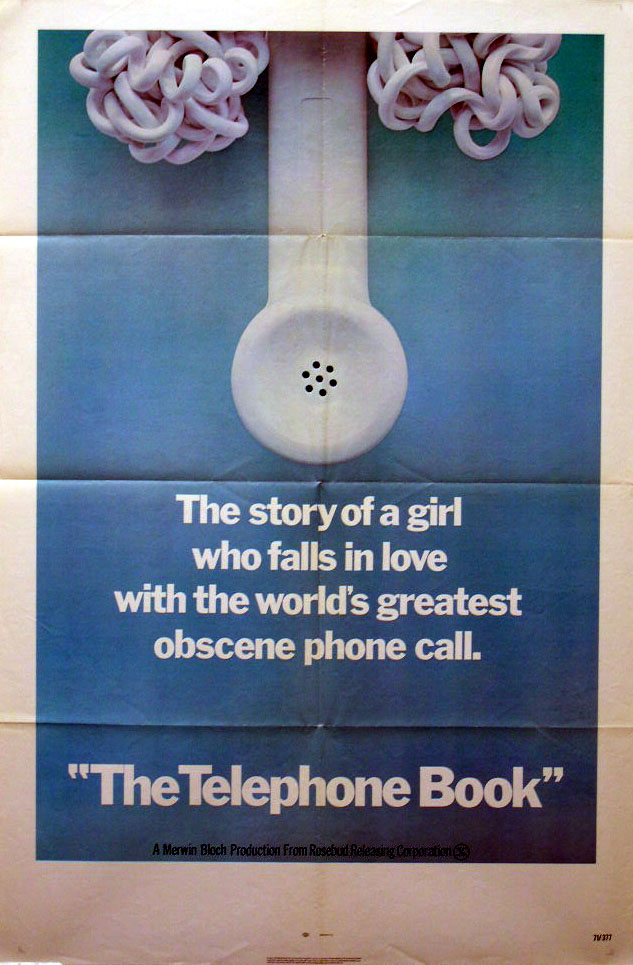
The Telephone Book (1971)

By Richard Winters

My Rating: 7 out of 10

4-Word Review: She likes obscene calls.

            Due to the recent death of writer/director Nelson Lyon on July 17th I felt it was time to dig up my old copy of this bizarre underground cult flick and give it another view. I stated in another review I made about this film that I considered it The Gone with the Wind of underground moviemaking and I still stand behind it. The film is hampered by its low budget and black and white photography, but I was impressed with it creative camera angles, editing, set design and music. Lyon showed a genuine vision and made the most out of what little resources he had. Even the content, which could be seen as pornographic by some, is presented in such a quick paced and diverting style that it becomes engaging and amusing.

The basic premise deals with Alice (Sarah Kennedy) an over-sexed young blonde living alone in an apartment with walls lined with wall paper that has hundreds of pictures of people in various sex acts. One day she gets a call from an obscene phone caller and she falls in love with him because it was the ‘most sweetest and most beautiful dirty call’ she had ever received and although she had received other obscene calls in her life this one ‘had class’. She becomes obsessed with meeting the man. He tells her that his name is John Smith and that he is ‘in the book’.  She goes through the telephone book to call him up, but because she lives in New York City she realizes there are a lot of John Smiths. The rest of the film deals with her encounters of all the various John Smiths that she meets as well as her climatic meeting with the real John Smith and the very weird conversation that she has with him.

The film’s structure is basically made up of a lot of vignettes all dealing with various forms of perversity. Some famous character actors appear in cameos and some of which prove to be quite outrageous and funny. Barry Morse best known for playing Lieutenant Gerard in the 1960’s TV-series ‘The Fugitive’ has one of the film’s best moments playing Har Poon ‘the greatest stag movie actor of all-time’. He has a scene where 10 naked ladies, at least that is how many I was able to count, all jump on top of him and begin sucking on his various body parts. There is Roger C. Carmel as a psychiatrist who enjoys exposing himself to ladies on a subway train, but when Alice decides to do the same thing in return he becomes shocked and repulsed. Character actress Lucy Lee Flippan makes her film debut here as a ‘reformed’ obscene phone caller who describes how when her husband was away at work and her kids where at school she would call up men at their jobs and talk dirty to them while masturbating  with a banana. There is also William Hickey playing a man suffering from a permanent and incurable erection.

The best appearance though comes from Norman Rose famous for narrating many films. Here he appears wearing a mask of a pig and playing the actual obscene phone caller. He describes how he calls 4 different women a night every week of the year except for two when he goes on vacation to ‘get out of the grind’. He also explains how he has perfected his obscene phone skills to the point that he could seduce the president of the United States if he wanted to, but doesn’t because he has ‘no political ambitions’. The conversation gets weirder including telling Alice about his foray into becoming an astronaut while he seductively washes her hair, but Lyon’s use of imagery during this segment keeps it interesting and even memorable. My only complaint would be that I wished he had taken off the mask so we could have seen what he really looked like.

The film ends with an eye popping animation segment dealing with a giant headless naked woman who squats down and has sex with a sky scrapper that needs to be seen to be believed. This is also the only part of the film that is in color.

Despite the fact that it was all done on a shoestring budget and with no character development I had few complaints although I didn’t understand how the obscene caller was always able to call up Alice and get a hold of her even when she was not at home and at someone else’s place. This was of course before cellphones, but I suppose demanding logic from a film that otherwise revels in the absurd would prove futile. The film did not do well on its initial run, but was rereleased in 2011 to much more positive reviews both here and in Europe. Through word of mouth it is expected to gain the cult following it deserves and maybe eventually a DVD or Blu-ray release.

Kennedy is delightful in the lead, but her appeal may depend on one’s personal tolerance. She looks and acts almost exactly like Goldie Hawn and was her replacement on the ‘Laugh-In’ show when Hawn left to concentrate on her movie career. I enjoyed Kennedy’s giddiness and child-like enthusiasm to all the perversions around her, but her voice sounds like she has sucked in helium and could prove annoying to some.

My Rating: 7 out of 10

Released: October 3, 1971

Runtime: 1Hour 24Minutes

Rated X

Director: Nelson Lyon

Studio: Rosebud Films

Available: VHS, DVD, Blu-ray 

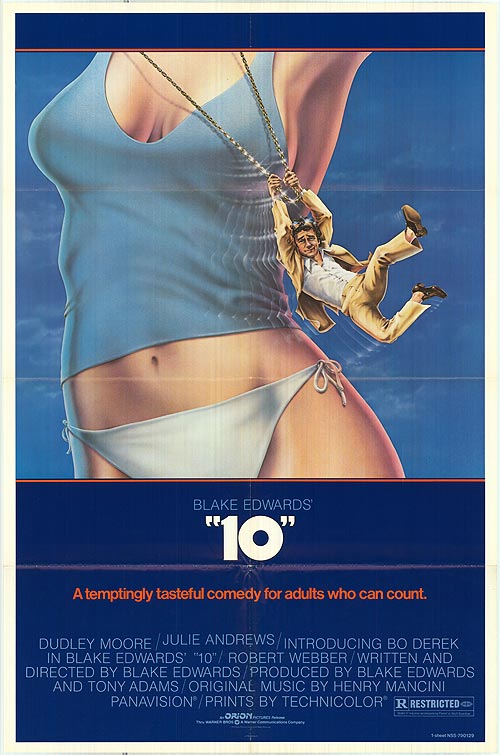
10 (1979)

By Richard Winters

My Rating: 3 out of 10

4-Word Review: Bo Derek is hot.

George Webber (Dudley Moore) is a successful songwriter who has just turned 42 and finds himself longing for a beautiful younger woman (Bo Derek) that he sees while driving. Problem is he meets her on her wedding day and yet he still pursues her all the way to Mexico where she goes for her honeymoon.

It’s really, really hard to believe that this was such a big hit. It meanders badly and has a lot of slow stretches. It is also not that sexy. Bo is only shown sporadically and you never really get to see her naked, or at least not from the front. Writer/director Blake Edwards incorporates his patented slapstick humor, but it’s uninspired and doesn’t mesh well with a film that is supposedly working on a more mature and sophisticated level.

The issue of middle-age, or better yet ‘male menopause’, has been handled before and better. In fact this thing can’t hold a candle to Tom Ewell and The Seven Year Itch. The issues it brings up are quite general and handled superficially. It offers no new perspective and is shockingly unimaginative.

Dudley Moore fits nicely into his role and it seems not too far removed from the man himself as it deals with a uniquely talented man that harbors a degree of cynicism and detachment. His relationship with girlfriend Samantha (Julie Andrews) has some interesting elements and it could have been a foundation for a movie in itself.

Derek is stunning, but rather poor in the acting department. Having a beautiful lady portray such a shallow person is a real turn off. Sure it’s done to give the film its point, but it seems extreme.

Overall I found the film to be weak and empty and unable to even come close to meeting its reputation.

My Rating: 3 out of 10

Released: October 5, 1979

Runtime: 2Hours 2Minutes

Rated R

Director: Blake Edwards

Studio: Warner Brothers

Available: VHS, DVD, Blu-ray, Amazon Instant Video

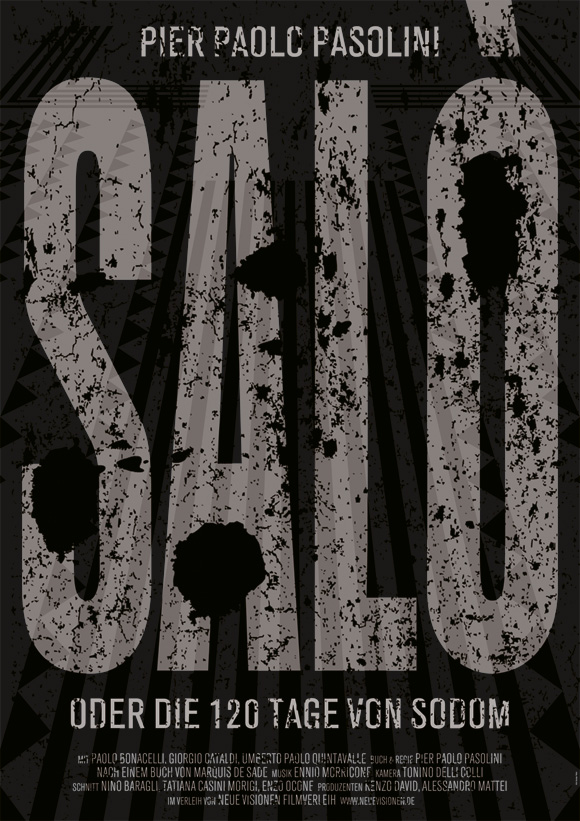
Salo, or the 120 Days of Sodom (1975)

By Richard Winters

My Rating: 5 out of 10

4-Word Review: They want sex slaves.

During the end of WW II in a northern city of occupied Italy a group of bourgeoisie men and women round up a group of teenage boys and girls and take them to an isolated mansion where they are forced to become sex slaves. They are also inflicted with cruel tortures in this story based on the writings of Marquis De Sade.

The film is interesting, but only up to a point. Director Pasolini’s natural lighting fetish really works here and he makes it into an art form. His ability to find the perfect moment in the day to shoot the scene and be able to frame the action within the shadows is amazing and along with the color schemes gives it a very distinctive look and an unusual atmosphere.

The acting by the adults is amazing as they project evilness without flaw. The perverted stories they tell in some ways is more shocking than the actual scenes and the casual way they go about their sick behavior achieves an unprecedented level.

The story itself has some good insights. It shows the veneer of civilized behavior and how the passive nature of the victims and society as a whole only helps to allow evil to flourish. There’s also the main point which is that evil is truly a part of the human make-up and hides itself in everybody and can come out if provoked including the victims themselves.

Yet the film makes its point and then hammers it home without pause. The non-stop perversity becomes excessive and the redundancy eventually makes the shock value and message meaningless. Showing the background of these captors might have helped given it more of a balance.

I have nothing against those who wish to ‘push the envelope’ and there is nothing that says movies need to be tasteful, or even entertaining, but I couldn’t help but wonder if Pasolini simply used the material as an excuse to explore his own dark fantasies. Of course DeSade’s actual writings were far more twisted and unsettling then anything you see here and the film is a significantly toned down version.

Actual teenagers were used and there is an abundance of nudity and perversity. Something like this could never have been made here in the states and exactly how it ever got made is more interesting than the film itself. If there was ever a movie begging for a “Making of…” documentary it’s this one. It is also interesting to note that Pasolini was mysteriously killed by a hit-and-run driver just a few days before the film’s official release.

My Rating: 5 out of 10

Released: November 22, 1975

Runtime: 1Hour 56Minutes

Rated NC-17

Director: Pier Paolo Pasolini

Studio: United Artists

Available: DVD, Blu-ray (The Criterion Collection)