Category Archives: Movies with a rural setting

Last of the Mobile Hot Shots (1970)

lastmobile

By Richard Winters

My Rating: 4 out of 10

4-Word Review: A game show wedding.

Myrtle (Lynn Redgrave) and Jeb (James Coburn) meet at a game show being taped in New Orleans and find themselves working together as contestants when brought up onto the stage. They end up winning some money, but are told that they cannot collect it until they’re officially married on live television, which they both agree to. After the nuptials they travel to an old mansion known as the Waverly Plantation that has been in Jeb’s family since 1840. Jeb wishes to use the money earned on the game show to fix up the place, but finds his plans being stymied by Chicken (Robert Hooks) a multi-racial half-brother that has been residing at the place and maintaining it for many years. Chicken insists that he’ll become the next owner of the place once Jeb succumbs to terminal cancer, but Jeb wants Chicken off the premises immediately and have the document stating that Chicken is the next of kin to be destroyed. He orders Myrtle to flirt with Chicken until she can get him into a compromising position so that she can steal the document. Once that is retrieved he then wants her to kill him with a hammer while Jeb waits upstairs. Though initially reluctant Myrtle decides to go through with the plan only for Chicken to turn-the-tables on them with an unexpected twist.

While playwright Tennessee Williams is celebrated for his acclaimed work like A Streetcar Named Desire and Cat on a Hot Tin Roof many people don’t realize that his biggest success came early in his career while towards the end,  especially by the mid-60’s through to his death in 1983, his output was very little and what he was able to get produced was generally not well received by either the critics, or the public. This film is based on his play The Seven Descents of Myrtle, which was originally written as a short story in 1942 and published in 1954. Williams then decided to turn it into a one-act play in 1967, but then expanded it to a full length stage production, which premiered on Broadway on March 27, 1968 with Harry Guardino as Chicken and Estelle Parsons playing Myrtle. This version though only ran for 29 performances and was generally considered a failure.

However, director Sidney Lumet saw the production and decided he wanted to take a stab at turning it into a movie. He made several changes to the story with the biggest one being that in the play the Jeb character, who was called Lot, was a closeted transvestite, which is something that the movie doesn’t bring up at all though would’ve been far more interesting had it done this. The play also doesn’t feature the game show segment, which was very surreal and makes the film seem almost like a misguided parody.

I did enjoy the way famed cinematographer James Wong Howe captured the decaying mansion, which was filmed on-location in St. Francisville, Louisiana, a famous small town known for its abundance of historic old buildings. Everything else though falls flat. The opening bit at the game show is funny, but becomes jarring with the second-half, which is more dramatic making it seem like two completely different movies with highly inconsistent tone rammed into one. The Myrtle character is not fleshed-out enough to make any sense, or even seem remotely believable and ultimately like with the rest of them comes-off as an empty composite that is not relatable in any way to real people.

The acting though by Redgrave is quite strong. Normally British actors have a hard time masking their accent, but here she’s able to speak in an authentic Southern dialect without her European voice being detectable in the slightest and she puts on a provocative striptease to boot. Hooks dominates the proceedings and ultimately outclasses Coburn who later admitted regret at doing the project and considered his appearance here to be a low point in his career. Having Williams write the screenplay might’ve helped and I’m not sure why he wasn’t asked, but Gore Vidal doing the task turns the whole thing into an absurd misfire that should never have been attempted.

My Rating: 4 out of 10

Released: January 14, 1970

Runtime: 1 Hour 40 Minutes

Rated X

Director: Sidney Lumet

Studio: Warner Brothers

Available: DVD-R (Warner Archive)
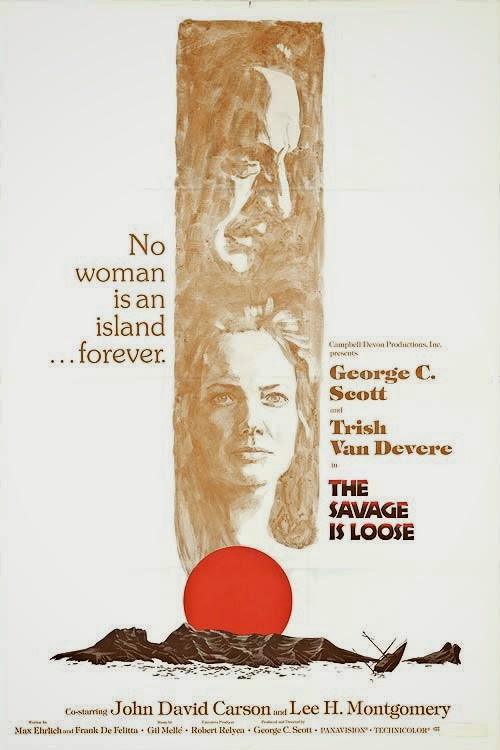
The Savage is Loose (1974)

savage1

By Richard Winters

My Rating: 3 out of 10

4-Word Review: Shipwrecked family becomes incestuous.

In 1902 John (George C. Scott) and his wife Maida (Trish Van Devere) take their infant son David (Lee H. Montgomery) on a sea cruise. Unfortunately the ship hits some rocks and sinks killing all those onboard except for the young family who manage to swim ashore to a deserted island. They make a home for themselves and slowly begin to age. By the time David reaches adolescence (now played by John David Carson) he begins to have sexual urges especially as he watches his father make love to his mother late at night. As his sexual feelings grow stronger he begins to lust after his own mother and compete with his father for her affections.

Unusual production that was directed by Scott and financed mostly with his own money. After the disaster of The Day of the Dolphin you’d think he’d have learned his lesson and gone with a script with a more mainstream storyline, but instead he dove into something that was sure to offend many and then proved incredulous when it didn’t score well with either the critics, or the box office. Despite starting the decade with an Academy Award win his career, especially after two financial duds back-to-back, began to peter-out after this one and he was really never able to regain his star status, or get offered top parts afterwards.

The film runs hot-and-cold. The opening is a bit cheesy as it features only a painting of a ship hitting some rocks and sinking, most likely the budget was too small to recreate an actual shipwreck, which surprisingly, despite the compromise, kind of works especially with the sound effects of the people screaming particularly the young child. It’s once they get on land that the action really begins to sink. The huts that they build, which we never actually see them make, but can only presume, look too well crafted, when factored in all the utensils, eating bowls, table, chairs, and even bamboo blinds, to have been built by two people with limited resources. It’s also hard to understand, with the front end of the ship still always in view, why they didn’t bother to create a raft, since their carpentry skills are clearly quite superior, in order to leave the island and find help. They eventually do, with relative ease but only after coming up with the idea 18 years later, but why the hell did it take them that long to eventually consider it?

The characters are quite dull and don’t have much to say and it would’ve helped had there been a fourth survivor on the island with them to allow for some diverse dramatic perspective, or even for some much needed comic relief. Montgomery plays the young David quite well, but Carson is terrible as the older version and fails to effectively convey the intense inner frustrations of his character and his acting delivery is robotic. Van Devere is okay as an actress, but her character fails to age. The father and certainly the son do have their appearances change, as you’d expect during almost two decades, but the mother remains youthful and glowing. Maybe this was done to keep her looking ‘desirable’ to the two men, but in reality she should’ve taken on gray hair and wrinkles especially after having to deal with all the stress and hardships of being stranded for some many years.

The incest theme is not handled in any type of interesting way. Instead of being this shocking twist that we’re not expecting it gets telegraphed right from the start and even ponderously talked about amongst all three of the characters until the viewer is totally expecting it to happen and to a degree even waiting for it. It’s confusing too why the son only has his eyes set on the mother. If his quandary is really just trying to release this strong sexual urges and having hardly anyone around to do it with then why doesn’t he try having sex with some of the animals that inhabit the island, or even the old man? Why not have sex, or at least attempt to, with all three at different times? Again, the movie wants to force the viewer out of their comfort zone by exposing the animalistic urges people can have, which in civilization will be repressed, but out in the wild it won’t. With that in mind then why not go ‘all-in’ and explore all the various types of perversions besides just the mother-son one?

Spoiler Alert!

While it remains strangely captivating, despite lots of lulls and slow spots, the ending doesn’t get played-up enough to make it worth it. I commend the idea, showing the mother deep kiss the grown son, but since they’re going for shock value why not show them from a bird’s eye view on the sand, naked and humping? Movies succeed by having unforgettable images and that would’ve been one hard to get out of most viewers heads. Having the father view them going at it was a bit ridiculous as he had been tied-up just moments earlier and trapped by a fast moving fire and no chance for escape, so how he was able to survive it is not clear and doesn’t make much sense.

My Rating: 3 out of 10

Released: October 30, 1974

Runtime: 1 Hour 54 Minutes

Rated R

Director: George C. Scott

Studio: Campbell Devon Films

Available: DVD

Buster and Billie (1974)

buster2

By Richard Winters

My Rating: 5 out of 10

4-Word Review: Dating a loose woman.

Buster (Jan-Michael Vincent) is a high school senior living in rural Georgia during the late 1940’s. He’s been dating Margie (Pamela Sue Martin), but finds her to be stuck-up and her unwillingness to have sex makes him frustrated. He begins seeing Billie Jo (Joan Goodfellow), who has moved into town and due to having limited social skills puts-out for the other boys by allowing them to have sex with her, one after the other, in the woods late at night. Buster at first dates her simply for the action, but eventually the two get into a serious relationship and he breaks-up with Margie. They begin going out publicly letting the whole town know that they’re a couple, but the other boys become jealous as they can no longer have easy sex like they use to and thus plot a dark revenge.

The story is based loosely on an actual event that occurred in Florence, South Carolina in 1948 that the film’s screenwriter Ron Turbeville remembered hearing about growing up. The recreation of the era though lacks style and this may be in large part due the film’s limited budget. While it gets a zero in  atmosphere I did at least like the way it doesn’t sugar coat things for nostalgic purposes. The teens behave in the same ways they do now and thus it’s gritty on that level.

The acting is good surprisingly even from Jan-Michael who in his other films tended to have a cardboard presence, but here he gives the thing most of its energy. He even appears, shockingly, fully nude and in fact this was the first mainstream American movie to show a male naked from the front, of which Jan stated in later interviews he was quite proud to expose of his well-endowed ‘equipment’. Goodfellow is also seen nude and is quite attractive though I wish she had more to say. Robert Englund, in his film debut, is the most memorable playing an albino with brown hair and his pale complexion makes him look creepier, at least I felt, than he did as Freddy Kruegar.

I didn’t understand though why Buster would risk his social standing for this ostracized girl. I got that Margie was annoying, so breaking-up with her wasn’t a stretch, and Billie was essentially ‘easy-pickings’, but why go public with it? It made more sense that they would’ve seen each other on the sly, but not wanting to risk the social scrutiny of letting everyone know about it. This would’ve clearly lost Buster’s social status not only amongst his friends, but the town as a whole including his own parents, so why add on all that needless stress? Billie too was very shy, so becoming center stage and having all eyes on her would be something she most likely would’ve wanted to avoid, which makes the second act overly idealistic.

It’s also frustrating that Billie doesn’t say much. You want to get to know this person, but never really do. The only time she’s ever given any insight is when Buster explains to his parents why she had sex with all the other guys (in order to be liked), but this is something we should’ve heard coming-out of her lips instead of his. By having Buster do almost all the talking, even when they’re alone together, makes it seem like she’s mentally handicapped, which I don’t believe was the intent and yet ultimately that’s how it comes-off and thus making their romantic moments sterile and uninteresting.

Spoiler Alert!

The final sequence though is where it really falls apart as the boys inadvertently kill Billie when they gang rape her (during a rainstorm even though the sky is still clear and sunny). Buster then tracks them down at a pool hall where he single-handily beats them up and ultimately kills two of them, but the guys just allow themselves to be beaten without attempting to throw a punch, which is not only unrealistic, but boring. Having a big brawl, where each side fights equally would’ve been far more exciting. The twist in which Buster somehow gets released from jail the day after her funeral, so that he can decorate her gravesite with all the flowers that he’s stolen from everyone else in town is far-fetched and overly forces the sentiment.

My Rating: 5 out of 10

Released: August 21, 1974

Runtime: 1 Hour 40 Minutes

Rated R

Director: Daniel Petrie

Studio: Columbia Pictures

Available: Amazon Video

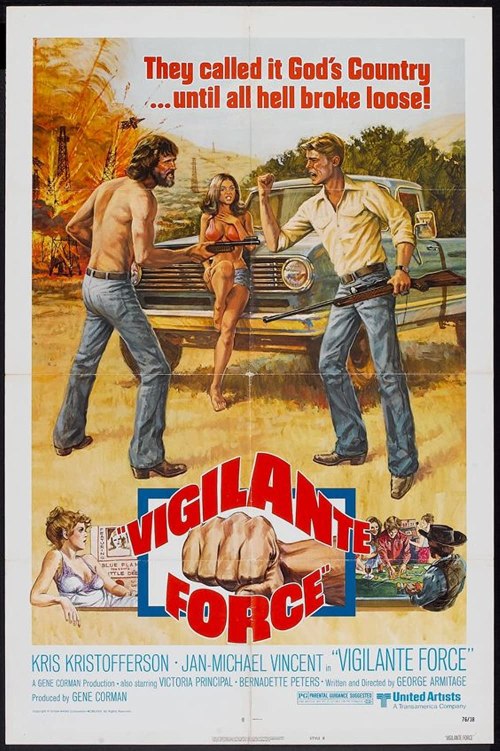
Vigilante Force (1976)

vigilante1

By Richard Winters

My Rating: 4 out of 10

4-Word Review: Veteran takes over town.

After oil is found near a small California desert town many people, including oil workers, move in looking for work. All the new people coming in causes a great deal of  crime in the community and the local police force is too small to handle the influx. Ben (Jan-Michael Vincent), a longtime resident, decides to hire his brother Aaron (Kris Kristofferson), a veteran of the Vietnam War, to help act as a peacekeeper. Aaron then brings along some mercenaries to assist him, but he and his new associates begin acting more like the bullies forcing everyone to submit to their ways of doing things, or face the consequences. This causes Ben to come to the painful realization that his brother is more of a problem than the solution and forcing him to take matters into his own hands in order to rid the town of him.

This was the third film directed by George Armitage, who did Private Duty Nurses and Hit Man before this one and all three being produced within the Roger Corman family, this one by Roger’s older brother Gene, who approached George about the project having only the title in mind and no actual story. Armitage, who had only 30-days to film, decided to make it an allegory of the Vietnam War where a group of strangers would come into a town, much like the American soldiers did when they came upon a small village in Vietnam, and take it over while focusing on the helpless nature of the residents who could do seemingly little about it.

While the concept had lots of potential the execution is rushed making the story come-off as cluttered and unfocused. It’s one of the few films made where there’s violence and action immediately before there’s barely any onscreen credits, but the motivations of why it’s happening is not clear, so it’s more confusing than exciting.  The plot doesn’t make much sense. Why are these new people all resorting to criminal behavior including robbing a bank? Other towns that boast job opportunities don’t necessarily have a  dramatic spike in crime especially if the new people coming in are actually getting employed, which the film intimates they are, so then why the anger and chaos? It seemed to me that there needed to be some sort of crime boss behind it, but there really isn’t. There’s a certain figurehead shown briefly later on, but he seems to be more of a symptom of the crime that’s already had been occurring versus the main orchestrator.

The setting also has a strong country feel with men folk walking around and behaving like blue collar cowboys making Texas a better location for the town than California. Even if for budget reasons is still had to be done in Cali I would’ve at least made it seem like it was the Lone Star state, which is considered a ‘rebel’, redneck state to begin with and thus making the behavior of the townspeople seem a little more organic.

I loved Kristofferson whose laid-back demeanor comes-off as creepy and menacing, but I would’ve liked his dark side to have been played down more at the beginning. The viewer should’ve been roped-in into believing he was a good guy, or hero, and then had the big reveal in the third act that he really wasn’t versus it being obvious right from the start that there was something not right about him.

Bernadette Peters, who plays his on-again, off-again girlfriend, is a delight, but Vincent is not as good. He’s unable to equal Kristofferson’s screen presence and way too naïve. It’s obvious to everyone his brother is trouble, but he remains oblivious for too long making him seem dumb and then when he finally does catch-on he comments that he was aware of his brother’s ‘problematic side’ ever since they were kids, but if that were the case then why did he hire him in the first place?

If you like basic 70’s action, including car chases, fist fights, and explosions, then this may suffice even with the wobbly story. Anyone though expecting anything more will most assuredly walk away disappointed as the script lacks nuance and surprise.

My Rating: 4 out of 10

Released: September 9, 1976

Runtime: 1 Hour 29 Minutes

Rated PG

Director: George Armitage

Studio: United Artists

Available: DVD-R (MGM Limited Edition Collection), Blu-ray

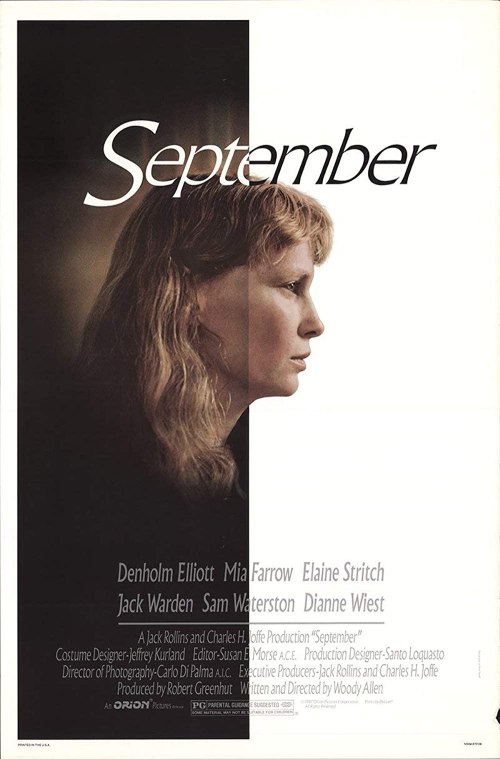
September (1987)

september1

By Richard Winters

My Rating: 7 out of 10

4-Word Review: Drama at summer home.

Layne (Mia Farrow) has decided to spend the summer at the country home of her mother’s (Elaine Stritch) in order to recuperate after a suicide attempt. With her during her stay is her best friend Stephanie (Dianne Wiest). Layne is also madly in-love with her neighbor Peter (Sam Waterston) who is a struggling author who wants to write a book about Layne’s mother’s life, who was at one time a well-known actress, but who also shot her late husband in self-defense though it was reportedly Layne who pulled the trigger. Howard (Denholm Elliott) is Layne’s other neighbor who is smitten with her though she has no feelings for him as all of her emotions are tucked away towards Peter, who is more into Stephanie, a married woman with children. During the course of one night while an electrical storm occurs and the power goes out everyone makes their true feelings for the other known, but not everyone responds to the revelations the way they’d like.

This movie is unusual, or at least the behind-the-scenes production, in that two to three versions of every scene was shot and then writer/director Woody Allen took all the footage and edited it together only to be dissatisfied with the final result and decided to shoot it again, but with different actors. In the original production Charles Durning played Layne’s stepfather, but in the second version he is replaced by Jack Warden, and Maureen O’Sullivan played Layne’s mother. Since Maureen was Mia’s real-life mother it’s ashame she wasn’t kept on for the second version. Granted Elaine is excellent, but seeing a mother and daughter acting together would’ve given an interested added nuance that unfortunately gets lost with the redo.

The scenario has its share of intriguing elements, but Allen’s concept of trying to create a filmed stageplay was a mistake as the whole thing has a very static feel right from the start. The internal conflicts are not apparent right away and the first act comes-off like nothing more than lingering conversations with no idea what connects them until the second act kicks, but by that time some viewers may have already gotten bored with it. In Interiors, which was Allen’s first drama, the story clicked quickly because there was a main nemesis, which helped create the tension that’s lacking here. Having a few more characters including a couple that was invited over, but calls-in when their house gets flooded, could’ve helped enliven things.

The acting is uniformly excellent especially Farrow, who’s always had a gift for playing vulnerable characters though with this one she’s more assertive. Wiest is fabulous too though with her super short brunette haircut she looks too similar to Farrow in Rosemary’s Baby and for that reason she should’ve been given a different hairstyle. The short cut also makes Wiest’s squinty look where she constantly appears like someone who’s just walked into bright sunlight, more apparent. The male cast is overall wasted. Warden gets one poignant moment where he describes the cold, lonely universe, but otherwise doesn’t have much else to say, or do and overall gets dominated and upstaged by the caustic and brassy Stritch as his wife. Elliot has one good line early on, but then disappears for a good chunk of it only to get a walk-on towards the end, but by that point I had quite literally forgotten all about him.

The film would’ve worked better had it had stronger character arcs, but overall not much really happens. There’s brief moments of confrontations, particularly Layne’s arguments with her mother, where things appear to be getting juicy only to have them pull back and become civil again. Same thing happens when Layne catches Stephanie with Peter, a slight blow-up and then back to mundane. The characters don’t really grow, or change and everything gets treated like a minor, little tiff that quickly blows-over making the viewer feel at the end that there wasn’t much point in watching it.

On a side note I was also disappointed to learn that the whole thing was shot on an indoor sound stage. With the title of September and the location being Vermont I was fully expecting sights of beautiful fall foliage as the northeast can be one of the best areas for that during the autumn. Since Allen’s dramas can get quite talky I thought the scenic locale could help at least visually fill-in the slow spots, but we ultimately get none of that. The intention was to shoot it at Farrow’s Connecticut country house, the house had inspired Allen to write the screenplay in the first place, but by the time he was finished with the script it was already winter and thus the autumn look and feel would’ve been lost. Credit though should go to the lighting and set design as you still get a feel of Vermont during the night time scenes where you hear realistic sounds of crickets and night bugs outside. The light coming through the windows certainly looks like actual sunlight, but why would people keep their blinds closed when most anyone would have them open to take in the majestic countryside. Why bother even having a home in the country if the idea is to close the windows off from it? It’s also not logical for the sunlight to be shining through all the windows from any direction in the house as the sun can only be in one place in the sky, so some of the windows should not have had sunlight coming through though here all of them do.

My Rating: 7 out of 10

Released: December 18, 1987

Runtime: 1 Hour 22 Minutes

Rated PG

Director: Woody Allen

Studio: Orion Pictures

Available: DVD-R, Blu-ray (Region B/2), Tubi, YouTube

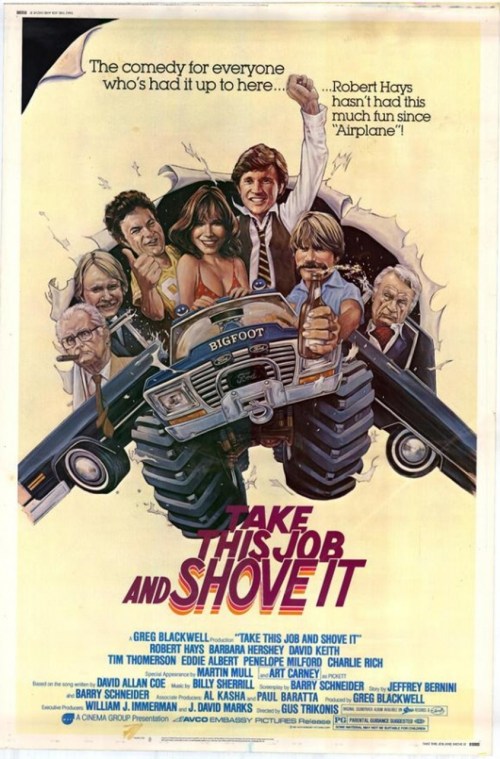
Take This Job and Shove It (1981)

job

By Richard Winters

My Rating: 3 out of 10

4-Word Review: Modernizing a beer factory.

Frank (Robert Hays) is hired by a conglomerate called The Ellison Group to find ways to improve a beer factory that they own and get it in the black. Since Frank is originally from the small town where the factory is located he excitedly takes-on the task, but soon finds himself at odds with many of the workers, some of whom he was friends with in highs school, but who now look at him as a threat to their jobs. While the ideas that he implements are at first resisted the situation in the factory improves and the place begins turning a profit. Unfortunately it becomes such a success that The Ellison Group decides to sell it to a man with a background in the oil business, who doesn’t know the first thing about beer production, which gets everyone in the factory to rebel from the acquisition in very physical ways when the new owner and his cronies arrive for a visit.

The movie was filmed at an actual beer factory, The Dubuque Star Brewery, in Dubuque, Iowa, that is listed in the National Register of Historic Places and although no longer functioning as a brewery it still stands today. The history of the place is similar to the movie as it was bought by Joseph Pickett in 1971 who implemented a massive renovation when he found that it was still using equipment from the 1930’s. The story itself was inspired by the hit country song that sat on top of the country charts for 2-weeks and was performed by Johnny Paycheck and written by David Allan Coe, both of whom appear in the movie.

The production has some nice on-location shooting of not only Iowa, but also the Twin Cities and I really dug the basketball court in the mansion owned by Eddie Albert’s character. The working class issues and the gritty nature of their jobs and lifestyles is basically on-target, but the movie bills itself as a comedy, and the trailer makes it seem almost like it’s going to be a farce, but in reality it’s more of drama with very little action until the end. There’s not much that’s funny either and the thin, predictable premise gets stretched-out longer than it should ultimately making it boring and a strain to sit through.

The main defect is the Robert Hays character. While he performs the part well he’s not enough of a jerk, or nemesis and thus the confrontational drama is missing. Having him from the area originally was a mistake as he seems too different from everyone else around him and creating him as an outsider from the big city that had little to no regard for the people working under him would’ve created the necessary fireworks that this otherwise benign film lacks. It also would’ve made a more interesting character arch where he’d go from arrogant, city-slicker to a humble man who would learn to appreciate those that he initially looked down on instead of having him already a semi-part of the group to begin with. It also hopelessly wastes the talents of Barbra Hershey, who gets cast as an idealistic, pro-labor lady, a perfect part for her, and I was expecting the two to quarrel over their contrasting viewpoints, but it never gels and she’s seen far too little.

The script also suffers from logic loopholes and continuity errors. While a hotel room door may seem like a minor thing to quibble about it became a big deal for me. The scenario starts out funny enough, possibly the only amusing bit in the movie, with Fran Ryan playing the owner of the hotel touring him around the cramped, rundown room and acting like it’s a more ritzy place than it really is. Later though while Hays is asleep, his buddies from the factory rip the door off its hinges by attaching a chain to it that’s connected to a pick-up truck, but there’s no scene showing, or explaining, how the door ends up getting reattached. The door is also apparently always unlocked as both Hershey and the Martin Mull character walk into the room from the outside unheeded, but most if not all hotel room doors automatically lock when they’re closed, so why doesn’t this one? In the case of Martin Mull he walks in on Hays while he’s still asleep, but you’d think Hays definitely would’ve locked the door from the inside and put the security chain on it before going to bed, so again how is Mull able to just open it? He doesn’t even bother to knock, which is absurd too since he’s never been to that hotel before, so how would he even know for sure he had the right room and wasn’t walking in on a stranger?

My Rating: 3 out of 10

Released: April 1, 1981

Runtime: 1 Hour 41 Minutes

Rated PG

Director: Gus Trikonis

Studio: AVCO Embassy Pictures

Available: DVD-R, Blu-ray-R

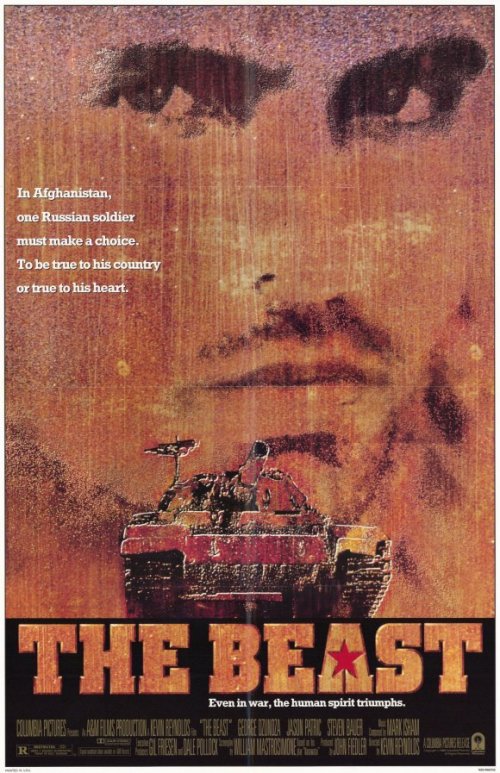
The Beast (1988)

beast1

By Richard Winters

My Rating: 9 out of 10

4-Word Review: Tankers stranded in desert.

During the invasion of Afghanistan in 1981 a group of Soviet tanks roll into a small village and callously bomb every home and building to a cinder. One of the tanks, led by Commander Daskal (George Dzundza), orders his driver Konstantin (Jason Patric) to run over an Afghan man to the shock and horror of everyone else. When Taj (Steven Bauer), who is one of the Afghan fighters, returns to the village and sees all the carnage, including the death of his father and brother, he becomes committed to seek revenge. He assembles a small group of fighters to go out into the desert to search for the tank, which they call the beast, and which has become lost when it takes a wrong turn and thus stranding them in the middle of nowhere with no option but to turn around and go back to where they came from, which they want to avoid. As the gas and rations become scarce the tensions mount particularly between Daskal and Konstantin who share widely different viewpoints as well as with Samad (Erick Avari) an Afghan interpreter who Daskal no longer trusts and now considers to be a traitor.

This film was requested for review by a reader of this blog named Nick (it was requested over a year ago and I do apologize that I got caught up with things and forgot about watching it). What struck me though is how he said it was such a gripping film and one of the best war movies, in his opinion, ever made and yet few people, including myself, had ever heard of it. I figured if the movie was as great as he said it should be better known and feared it might not live up to his billing, but when I watched it I found myself just as caught up in it as he said and impressed with how emotionally compelling it was from beginning to end.

Why this great film fell into obscurity and was dismal at the box office where it managed to only recoup a paltry $161,000 out of an $8 million budget is yet another example of the cruelty of the Hollywood business. It was directed by Kevin Reynolds who had just come-off doing the breezy road comedy hit Fandango and who wanted to follow that up by doing something completely different. He decided to do a filmization to the stageplay ‘Nanawatai’ by William Mastrosimone who was inspired to write the play after witnessing a group of mujahideen fighters capture and execute a Soviet tank crew in 1986. David Puttnam, the then head of Columbia Pictures, loved the script and threw his full support to the project. However, during the course of the filming Puttnam was ousted and Dawn Steel took over. She wasn’t as enthusiastic about the movie and when it was completed it got released to only a few theaters with no promotion. Few people heard or saw it and it went into oblivion only to finally several decades later get the recognition it deserved through the release of the DVD and has now acquired a fairly sizable cult following.

The use of a hand-held camera and graphic violence, including seeing the man get run over by a tank and then afterwards the remains of his mangled body, all help accentuate the harsh realism of war. Having it shot in a desert in Israel helps add to the authenticity as deserts in North America look different and cannot match the distinct topography of a Middle Eastern one. Leonard Maltin in his review, which I didn’t read until after viewing the film, describes the plot as ‘predictable’ and the pace ‘ponderous’ while the characters are in his opinion ‘stereotyped’, which I couldn’t disagree with more. While I haven’t seen every war movie out there I found this one to have many intriguing twists that I wouldn’t have guessed. The characters have distinct personalities and the pace is perfect with each scene and line of dialogue opening up a new story wrinkle.

My only two complaints is that the Afghan townspeople at the beginning are a bit too blissful as after all a war was going around them, which they were aware of, so I’d have thought they’d be more guarded and only cautiously gone outside if completely needed versus behaving as if they’re in a bubble with no worries about the horrors around them until it finally happens. The Russian soldiers are too Americanized. Great effort was put into the Afghans to make them seem authentic including having them speak in their native tongue with subtitles, but actors playing the Russians not only speak in English, but do it with American accents. I’m okay with them talking in English as forcing them all to learn Russian would’ve been too exhausting and requiring the movie to be completely subtitled, so I’m okay with that compromise, which seemed almost necessary. I presume for the project to get financed the studio insisted on American actors to play the parts in order to make it more marketable, so I understand that concession as well, but at least have them sound Russian should’ve been a requirement as many times throughout the movie  I had to keep reminding myself this was a Russian army as outside of George Dzundza’s brilliant performance, the rest hardly seemed foreign in any way.

Alternate Title: The Beast of War

My Rating: 9 out of 10

Released: September 16, 1988

Runtime: 1 Hour 51 Minutes

Rated R

Director: Kevin Reynolds

Studio: Columbia Pictures

Available: DVD, Amazon Video, Tubi

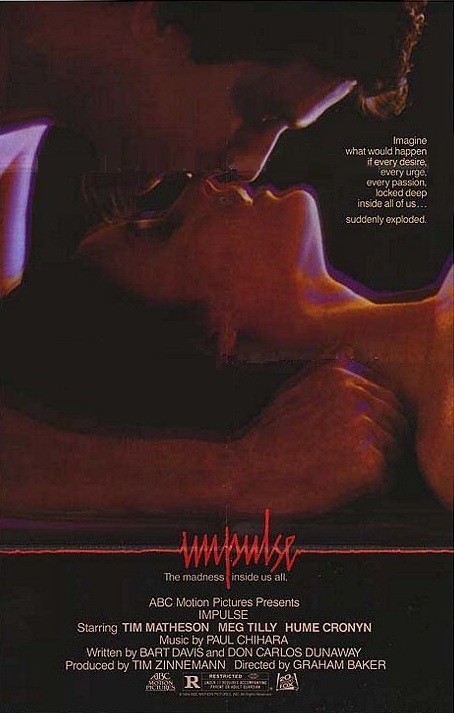
Impulse (1984)

impulse

By Richard Winters

My Rating: 3 out of 10

4-Word Review: The townspeople act crazy.

Jennifer (Meg Tilly) and her boyfriend Stuart (Tim Matheson) return to the small town she grew up in to help care for her mother (Lorinne Vozoff) who suddenly and quite impulsively shot herself in the head while talking to Jennifer over the phone. When they arrive they find the people behaving in strange ways by acting on their inner impulses without any social restraint. Stuart, who is a chemist, believes it may have something to do with what’s in the water, but when he tests it he finds nothing unusual. The people though continue to behave in a more aggressive manner where even the kindly old doctor (Hume Cronyn) who was looking after Jennifer’s mother in the hospital begins showing homicidal tendencies. The couple fear they might not be able to get out of there alive and begin to suspect that the ultimate cause has some connection to the earthquake that shook the town just days before they arrived.

The premise is certainly intriguing and there are a share of weird moments, but director Graham Baker approaches the material in the wrong way. The original screenplay by Nicholas Kazan, which was entitled ‘Animals’, was intended as a horror film and closely inspired by George Romero’s similarly themed The Crazies, which came out 11 years earlier. For whatever reason Baker didn’t pursue it with a horror bent and that in my opinion is where it all goes wrong. It’s hard to actually know what genre to place it in. At times it seems a little bit like sci-fi and other moments like a drama, but either way the tension is lacking. You see the townspeople doing crazy stuff, which initially piques your interest, but then it goes nowhere with it. The weird acts just continue to go on and on until it becomes redundant and ultimately boring until you really don’t care what the explanation is behind it.

Spoiler Alert!

It’s not until 45-minutes in before even gets slightly suspenseful when Jennifer finds herself trapped in a burning garage, but even this goes by too quickly. There was one moment where Jennifer’s former boyfriend, apparently jealous at seeing her with Stuart, decides to bend his own fingers back, as a sort-of self mutilation, until they break, which I found genuinely shocking and cringy. However, there are other moments, which I found to be unintentionally funny making me believe it might’ve worked better as a quirky comedy.

The ending though is the most annoying. The explanation for why this all occurred is that chemicals from a nearby toxic waste dump got into the facility that produced the milk that the townspeople drank. The leak apparently caused by the earthquake that jostled one of the overhead pipes that then leaked the toxins into the milk vat. Since Jennifer didn’t like the milk she wasn’t affected, but I felt it was a stretch that all 900 of the other people in the town did drink it, as there are many folks who aren’t into milk, so there should’ve been others like Jennifer, who didn’t behave nutty instead of her remaining the only normal one.

What I found really stupid though is that the movie acts like 900 people suddenly dying in a town is apparently ‘no big deal’ and the rest of the country just ‘moves-on’, which I found preposterous. There is simply no way the media would let something like this go unchecked and the rest of the nation would be demanding answers and a federal investigation. It would become the news story of the year if not the decade and something that would be heavily talked about.

Somebody would have to be held accountable at some point, which then brings up the final issue of who the hell was the organization that dropped the crop dusting poisons onto the town via airplanes that ultimately is what killed everybody? The movie doesn’t bother to answer this, which is really frustrating making the whole thing a big build-up to nothing and not worth anyone’s time.

End of Spoiler Alert!

On a lighter note I couldn’t end this review without mentioning Tim Matheson. As an actor I found his performance here to be incredibly dull. Granted the character he played was benign to begin with, but he certainly didn’t do anything to make him interesting. However, with that said, his bare ass steals it. Many ass aficionados have felt, and even debated, that Dabney Coleman’s bare behind seen in Modern Problems wins the prize for best ass put onscreen in a Hollywood movie, but Matheson’s exposed tush, seen at the 17:49 mark, definitely deserves honorable consideration.

My Rating: 3 out of 10

Released: September 28, 1984

Runtime: 1 Hour 31 Minutes

Rated R

Director: Graham Baker

Studio: 20th Century Fox

Available: DVD-R, Blu-ray

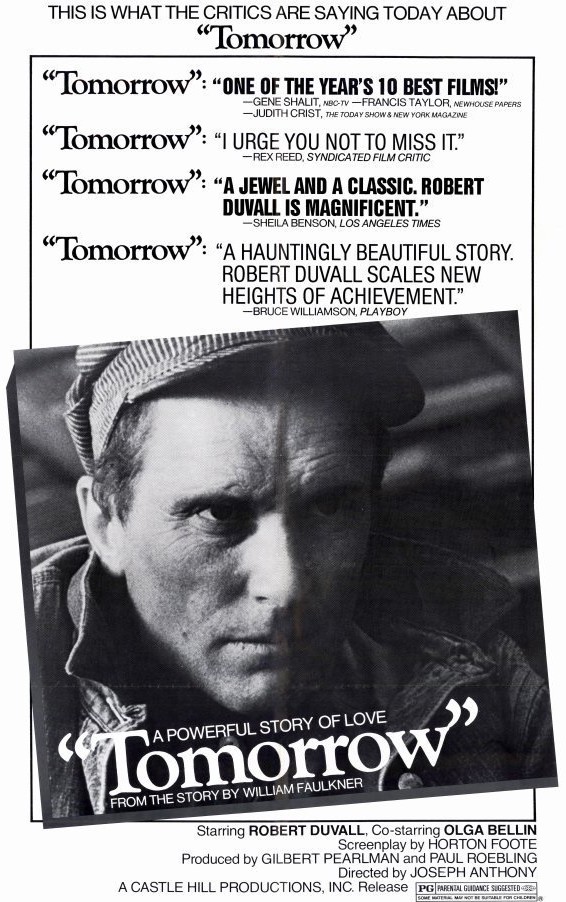
Tomorrow (1972)


tomorrow1

By Richard Winters

My Rating: 5 out of 10

4-Word Review: Aiding a pregnant woman.

Jackson Fentry (Robert Duvall) is a lonely farm-hand who has never married and lives in a tiny shack on the grounds of the farm that he’s been hired to maintain. One day he comes across a pregnant woman named Sarah Eubancks (Olga Bellin) near the property who’s been abandoned by both her husband and his family. He brings her back to his modest shed to warm her up and since she has nowhere to go he eventually agrees, with the help of a local midwife (Sudie Bond), to assist through the birth of her child. Sarah though dies soon after the baby is born, but not before Jackson agrees that he’ll raise the child. For several years Jackson is able to do just that until the brother’s of the boy’s father arrive and take the child away. Then many years later Jackson is called-in for jury duty on a trial that, known only to him, has a connection to the boy he lost contact with. 

There’s been many movies that have tried to recreate the rural 1800’s, but many for the sake of drama, or to make it more relatable to modern audiences, tend to cheat things. They may make it authentic in some areas, possibly even painstakingly so, but then compromise in others due to the entertainment factor. This though is one film that could genuinely be described as being about as minimalistic as any director could possibly make it. Filmed on a farm in rural Mississippi that was owned by the grandfather of Tammy Wynette the movie gives one an authentic taste of life back then with little to no music and no sense of any staging. The bare-bones shack that Jackson must reside in gives the viewer a stark sense of the grim, no frills existence that many dealt with back then. The slow pacing aptly reflects the slower ways of life and having the camera virtually trapped in the shed, or at most the nearby property, symbolized how people of that era had to learn to endure and expect little.

While those qualities hit-the-mark I felt that black-and-white photography detracted from it. By the 70’s most films were shot in color and only a few like The Last Picture Show, Young Frankenstein, and Eraserhead just to name some, were not, but this was more for mood, or style. Here though with everything already at an intentionally drab level the color could’ve at least brought out the beauty of the outdoor scenery of a southern winter and offered some brief striking visuals and a cinematic presence that was still needed, but missing and kind of hurts the movie. 

Surprisingly I had issues with the acting. One might say with Robert Duvall present that couldn’t be the case, but his overly affected accent, he got it from a man he met once in the foothills of the Ozarks, was from my perspective overdone and even borderline annoying. Bellin is alright though behind-the-scenes she created problems by refusing to take any advice from director Joseph Anthony. She had done mostly stage work up until then and was used to having leverage about how she approached her character once she was onstage and considered that once the camera was shooting meant the same thing. It was okay, like with a play production, for the director to give advice during rehearsals, but when the actual filming started she should have free rein over her craft and having Anthony repeatedly reshoot scenes, like in typical film production, or suggest she do things differently as the filming was going on, was all new to her and not to her liking, which caused numerous arguments not only with Anthony, but Duvall as well making them both later admit that they regretted casting her and she never performed in another movie again. Out of the entire cast it was Sudie Bond as the lady who helps with the birthing that I found to be the most memorable. 

While the story has many commendable moments it gets stretched pretty thin especially since it was based on a short story by William Faulkner and then adapted first as a play and then to the big screen by Horton Foote (the first of two collaborations that he did with Duvall with the second one being Tender Mercies 10 years later). Almost the entire third of the film gets spent on Jackson’s conversations with the woman while his relationship with the son takes-up less than 10 giving the pacing and flow a disjointed feel. It’s also a shame that, like with The Owl and the Pussycat, which came out 2 years earlier, the producers compromised on the elements of the original piece as in Faulkner’s story the pregnant woman was black, but here she gets changed to being Caucasian. Had the character remained black then what Jackson does for her would’ve been more profound as he would’ve been taking great personal risk in helping her in an era and region of the country where racism was high and by no longer being a colored woman it lessens the drama and is not as impactful as it could’ve been.

My Rating: 5 out of 10

Released: March 19, 1972

Runtime: 1 Hour 43 Minutes

Rated PG

Director: Joseph Anthony

Studio: Filmgroup Productions

Available: DVD, Blu-ray, Plex, Tubi, Amazon Video


The Hired Hand (1971)

hired1

By Richard Winters

My Rating: 7 out of 10

4-Word Review: Returning to his wife.

Harry (Peter Fonda) and Arch (Warren Oates) having been wandering the American West for many years, but Harry has grown weary of it. He informs Arch and their younger companion Dan (Robert Pratt) that he plans on going back to his wife Hannah (Verna Bloom) whom he abandoned many years before. Arch is not happy with this decision and tries to talk him out of it, but eventually relents and after the untimely death of Dan decides to head back with him to Harry’s former homestead. When they arrive they find that Hannah is still working the farm with her young daughter Janey (Megan Denver). Hannah is not pleased to see Harry as she had informed Janey that her father had died many years earlier. Harry tries to make amends, but Hannah resists only allowing him to stay as long as he agrees to become a hired hand and help with the chores. Both Harry and Arch agree to this, but when Arch decides to eventually head west alone and then gets abducted by a crooked sheriff (Severn Darden) Harry leaves Hannah to help save his friend much to the anger of Hannah who feels he’s again abandoning her.

This film was the product of Universal Pictures’ new policy of allowing independent pictures to be made under the studio system as Easy Rider had done well with a low budget, and no studio meddling, so they hoped to replicate that success with more films like that one. Besides this one the other movies included: Silent Running, Taking Off, The Last Movie, and American Graffiti and were all made with each director given $1 million to work with and then allowed to use his artistic freedom to create the kind of film he wanted without studio interference.

Unfortunately this movie did not do well at either the box office, or with the critics. Variety labeled it as ‘disjointed’ while Time described it as ‘pointless’. With the bad press and poor profits the studio decided to end its ‘independent movie’ division and films like this were no longer made, at least under the Hollywood umbrella. While this movie sat in near obscurity it finally found an audience in 2002 when it was shown at the Sundance Film Festival and has since acquired many admirers.

What I liked about it is how it goes against the western narrative where life in the old west isn’t portrayed as being about gunfights and saloon brawls, but instead quiet and slow paced. Harry and Arch spend their time raising livestock and doing other farm chores as just keeping the crops growing and animals fed was a mighty challenge enough. The acting by the entire cast is superb, but the real stars are Bruce Langhorn and his wonderfully unique music score, Vilmos Zsigmond’s cinematography and Frank Mazzola’s brilliant editing where he mixes in a lot of montages and overlapping still photography.

There are a few gunfights, but unlike shoot-outs in the conventional westerns this isn’t about tough brave men with nerves of steel. Instead the gunfights are seen as happening when goofball idiots, much like today, get their hands on a weapon after being triggered over something insignificant and shooting wildly before killing himself. Most westerns will prolong these moments, but here it’s quick lasting only a couple of minutes, like in real-life, and when it’s over all you see are dead bodies lying about making it seem more like a needless waste of life.

Harry and Arch’s long travels together through the desolate, lonely west are what really stands-out. You get a true sense of what the world was like back then where you might not see other people, or homes for days on end. You also get a good understanding for why Harry becomes so attached to Arch and willing to risk is life at the end to save him because for such long periods during their travels Arch was, at least from his perception, the only other person on the planet with him and this then created an indelible bond.

When it got broadcast on NBC in 1973 a 20-minute deleted scene featuring Larry Hagman as a sheriff was edited back into the film. This segment had gotten cut-out when director Fonda felt, after viewing it in the editing room, it wasn’t needed and didn’t really help propel the story. The footage can be found on the 2003 DVD issues from Sundance as a bonus extra. I watched it and enjoyed Hagman’s performance as, like with everything else in this movie, goes against the grain of the conventional western. Most of the time sheriffs where portrayed as stoic figures, but Hagman comes-off as nervous and jittery and not completely in control of the situation. I would think most lawmen back-in-the-day with dangerous outlaws roaming the countryside and invading small towns would behave much more like Hagman does here, so in that respect I felt these scenes were insightful, but ultimately agree with Fonda that they didn’t add much to the story and the film flows better without it.

My Rating: 7 out of 10

Released: July 16, 1971

Runtime: 1 Hour 30 Minutes

Rated R

Director: Peter Fonda

Studio: Universal

Available: DVD, Blu-ray, Plex