Category Archives: Movies that take place in the South

Dear Dead Delilah (1972)

dear dead delilah

By Richard Winters

My Rating: 2 out of 10

4-Word Review: Greedy family gets hacked.

Delilah (Agnes Moorehead) is the matriarch of a large southern family who brings together the other members to tell them that her deceased husband’s gambling earnings of $600,000 is hidden somewhere on the premises. Desperate and greedy everyone goes on the hunt for it, but find they are being slaughtered one-by-one by an ax-wielding maniac.

As low budget horror movies go this one is about as poorly produced as you can get. This was John Farris’s first and so far last foray behind the camera. He is most famous for authoring ‘The Fury’, which was later made into a hit movie, but as a director he shows no visual ability. The scenes are poorly staged and the sets are illuminated by a bright unfiltered light that makes the center of every room in every scene look like it is under a spotlight. The scenes drone on with over-the-top characterizations of greedy family members and one-dimensional monotonous talk about money. The southern setting seems hooky almost like an amateurish attempt at Tennessee Williams. The scares and tension are non-existent and the film is an embarrassment to anyone having anything to do with it, which includes Bill Justis and his terrible music score.

It doesn’t help matters that the 1986 Embassy VHS issue of this film, which is as of this date the only source where this film can be seen, is terrible. The negative has a lot of scratches and the color is dark and faded making it look almost like someone’s forgotten home movie.

Moorehead, whose last film this was, is the one gem. She wears a brown wig and the only cast member who speaks in a Southern accent that sounds genuine. Her constant frowning facial expression is entertaining and helps enliven this otherwise poor excuse of a film with every scene that she is in.  She shares several scenes with Will Geer who plays her estate attorney. The two co-starred earlier that same year in an episode of ‘Bewitched’ where Geer played George Washington brought back to life by Esmerelda.

The film does boast some graphic murders that seem well ahead of its time in the grisly department. One of the best ones is when a female sitting in a wheelchair gets decapitated and the viewer sees her head lying on the ground next to her still quivering, blood spurting body. The opening sequence has a daughter speaking with her mother while the old lady has an ax sticking out of her head and her severed arm lying on the floor, which the daughter nonchalantly steps over like it is no big deal. The part near the end where a man gets shot through the back of his head and the bullet come out through his right eye socket is impressive as well.

My Rating: 2 out of 10

Released: June 16, 1972

Runtime: 1Hour 37Minutes

Rated R

Director: John Farris

Studio: Southern Star Entertainment

Available: VHS
Squirm (1976)

squirm

By Richard Winters

My Rating: 7 out of 10

4-Word Review:  Worms invade a town.

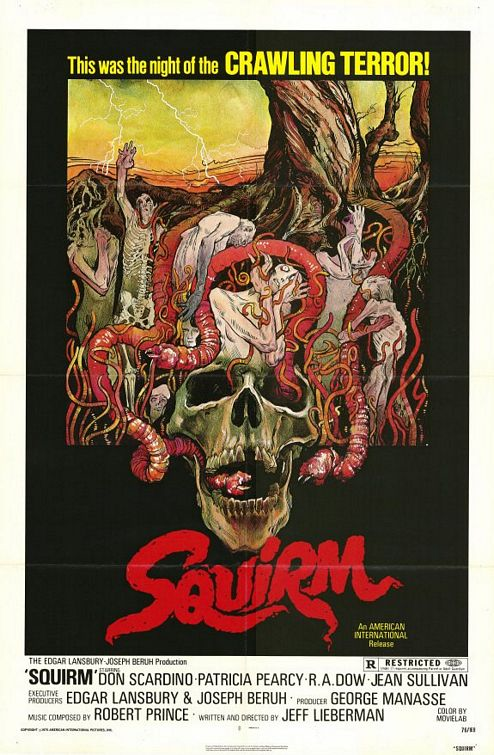
A thunderstorm knocks down some power lines, which creates a surge amongst the worms in the earth and prompts them to come out of the dirt and go on the attack. Thousands upon thousands of them descend onto a small southern town filling up stores and homes and viciously biting those that get in their way.

A bizarre but interesting idea for a horror movie that manages to succeed mainly because it keeps it relatively believable. The worms stay regular size and the rationale behind it has some logical backing. It does take a while to get going and the real scares don’t occur until the very end. The subplot involving the tracking down of some skeletal remains doesn’t add anything, but the film is well crafted enough to build a weird atmosphere. The climax which features a home filled from floor to ceiling with millions of squirming worms is a unique sight.

R. A. Dow, who plays Roger the bad guy, is equally memorable. He looks menacing to begin with, but when he falls into a pile of the worms and gets all sorts of them eating into his face and he starts to look genuinely frightening. He then goes through the rest of the picture as this creepy worm-like man that is enhanced by the excellent make-up effects by the renowned Rick Baker.

Don Scardino makes for an interesting good guy/lead. He is not brawny, good looking, or even cool, but instead brainy and at certain points quite timid. At times he gets a bit too wussy, but he is at least a refreshing change to the blow-dried stud muffin. He resembles the film’s writer/director Jeff Lieberman and may have been cast simply for that reason.

Patricia Pearcy is capable as the love interest. She is a bit too country and certainly no beauty, but manages to be distinctive nonetheless. Fran Higgins as her younger sister Alma possesses one of the homelier looking faces you will ever see. Having her paint her nails and wear high heels so she can look ‘sexy’ seems almost cruelly comical.

The opening storm segment is weak with the falling power lines looking too much like they are miniature replicas. Lieberman’s recreation of the small town southern people is clichéd and stilted. The music is effective except for a part where a child sings a creepy little tune that doesn’t quite work or fit.

The close-ups of the worms are awesome, but I didn’t care for the sound effects used that sounds like squealing pigs. The noise effects created to resemble their squirming comes-off too much like sloshing water.

Overall the film manages to be effective. It’s certainly no classic, but successfully original.

My Rating: 7 out of 10

Released: July 30, 1976

Runtime: 1Hour 30Minutes

Rated R

Director: Jeff Lieberman

Studio: American International Pictures

Available: VHS, DVD

Sex, Lies, and Videotape (1989)

sex lies and videotape

By Richard Winters

My Rating: 5 out of 10

4-Word Review: Sex confessions on tape.

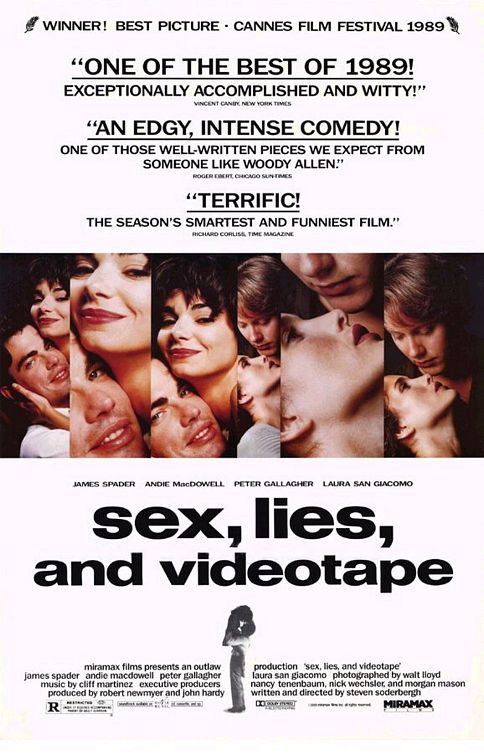
This movie was the critic’s darling when it was released 24 years ago and there didn’t seem to be anyone around that didn’t like it. I remember watching it back then and feeling like it was a bit overrated and although I liked it a little more the second time around I can’t say that my feelings about it have changed all that much. The story is about John (Peter Gallagher) who is married to Ann (Andie MacDowell) and who is having an affair with her sister Cynthia (Laura San Giacomo) due to Ann’s frigidity. In comes Graham (James Spader) an old college buddy of John’s who stays with the couple temporarily while he looks for a permanent residence. Graham has an unusual fetish of recording women confessing to some of their wild sexual moments to the camera to which he records and then gets off to later. Ann is initially attracted to Graham, but when she finds about his habit she is appalled only to later become keen to the idea and agree to do a taped confession herself, which sends everything spiraling out of control.

The movie seems excessively talky with scenes and conversations particularly the dinner one between John, Ann and Graham going on longer than it should. Not a lot really happens and there is little if any action. The production values are pretty basic and don’t seem much different than the ones Graham uses for his taped confessions. For a film that talks so much about sex, which seems to fill pretty much every conversation that the characters have it is not very erotic and the attempts at eroticism is pretty generic. I did like writer/director Steven Soderbergh’s use of editing where conversations from one scene between two characters will be heard overlapping over a shot featuring two different characters. However, the scene where Cynthia gives her confession to Graham is ruined by the sound of a train whistle going off in the background, which became distracting.

I also had a hard time buying into the basic premise. I just couldn’t understand why so many women would freely divulge to a perfect stranger all of their deep dark fantasies and sexual excursions knowing full well that they were being recorded for his own personal gratification with no real assurance that these tapes wouldn’t one day get into the wrong hands and come back to haunt or humiliate them years later. There is also what I considered a glitch when Ann is vacuuming the rug and finds Cynthia’s earring underneath their bed, which was apparently left by her when she had sex with John in the bed a few days earlier, but I kept thinking that after a few days Cynthia would have realized that she was missing her earring and had John go back to retrieve it. It is possible that Cynthia may have intentionally planted the earring there for her sister to find since she seemed to really dislike her, but if that was the case the movie should have confirmed this, which it doesn’t.

MacDowell is great in the lead and looks beautiful. I enjoyed the character and felt her presence in the story made the movie more interesting. I did though have some issues with the opening scene where she is seen talking to a male therapist about her lack of sex drive, which to me wasn’t realistic. I would think that if a woman had sexual problems that she would be reluctant to discuss it with a male and would only talk about it with a female Dr. Also, she sits on his sofa Indian style with her shoes off, which seemed too relaxed a posture for a woman that otherwise is frigid and reserved.

Spader is also likable and conveys a surprisingly sensitive performance. However, I couldn’t understand what type of person in this day and age would leave their door always unlocked especially at night. Gallagher is just too much of a narcissist pretty boy philanderer to have much appeal although seeing how things unravel for him at the end and how he somehow feels morally superior to Graham is interesting.

I didn’t care for the Cynthia character at all. She dresses and behaves too much like a one-dimensional tramp and the only thing that ever comes out of her mouth is a barrage of sarcastic, snarky remarks and at no time ever shows even some remote sensitivity, which might have helped.

Although his part is brief Steven Brill is a hoot as a barfly constantly making feeble attempts to hit on Ann. He is the one amusing part of the movie, which I wished had infused more humor.

My Rating: 5 out of 10

Released: August 18, 1989

Runtime: 1Hour 40Minutes

Rated R

Director: Steven Soderbergh

Studio: Miramax

Available: VHS, DVD, Blu-ray

The Fool Killer (1965)

fool killer

By Richard Winters

My Rating: 6 out of 10

4-Word Review: Kid roams the countryside.

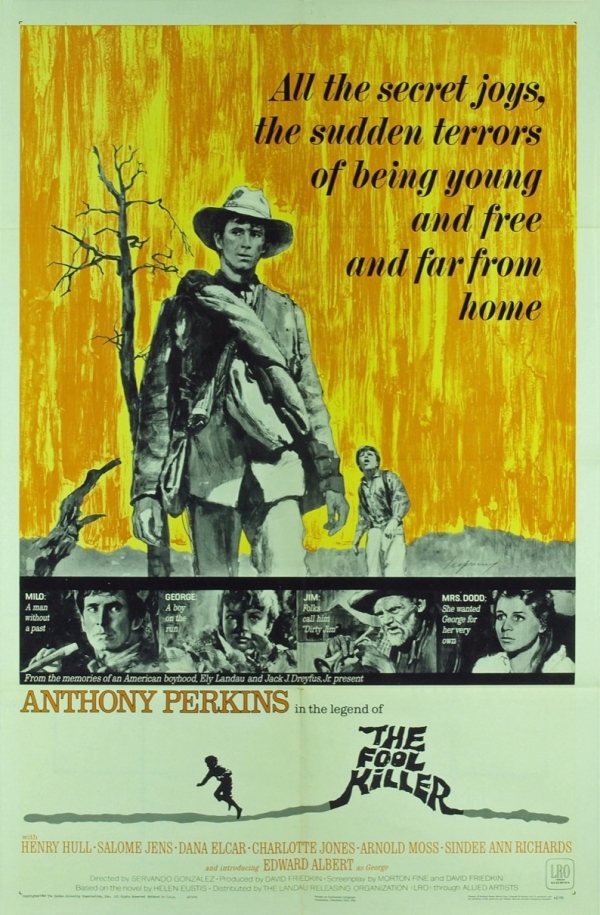
George Mellish (Edward Albert) is a 12-year-old boy who runs away from home after a particularly harsh beating at the hands of his foster parents. As he roams the Tennessee countryside he meets Dirty Jim (Henry Hull) an old man who takes him into his rundown home and fills his head with all sorts of stories about an eight foot ax-wielding man who kills people he deems to be foolish. After a bout of illness George runs away from Jim and late one night meets Milo (Anthony Perkins) a loner who carries an ax and acts strangely. Initially George thinks that he is ‘the fool killer’ Jim described, but the two soon become friends even though strange ax murders begin to occur everywhere they go.

Servando Gonzalez’s direction is excellent and the one thing that keeps this otherwise thin story intriguing. This was his only English language film and he uses a variety of different camera angles and editing styles to create a sort of hypnotic effect. The on-location shooting is vivid and their ability to recreate the look and feel of the late 1800’s is solid including having the characters occasionally speak with poor grammar, which helps with the authenticity.

The only thing about Gonzalez’s direction that I did not like is where they have a nighttime scene that was clearly filmed in the daytime, but done with a darkened lens to ‘fool’ the viewer into thinking it is night. This process has been done many times in the past, but it never works. Even with the dark lens the sky is too bright and you are unable to see any stars. I remember this done a few times on the old ‘Brady Bunch’ TV-show and I always found it disconcerting. The reason is usually because by law child performers are not allowed to work past a certain late hour, so if the script calls for a nighttime scene they try to compensate using this trick, but it always looks tacky. My solution would be to get the parent’s permission to allow the young performer to work late for one night or alter the script to have the scene done in the daytime.

Despite some good production values and an interesting narrative the story itself, based on a novel by Helen Eustis, is limp and doesn’t have enough action. The middle section, which features a lot of conversations between Milo and George, gets boring and the pace comes to a screeching halt. The George character also gets a bit annoying. I realize he is a young and the story takes place in a more innocent era, but the kid falls too easily for anything and everything he is told and seems to have no center, which eventually becomes off-putting.

For what it is worth Albert is good in the lead in what was his film debut and so is Perkins although with this he was risking getting typecast. I thought Henry Hull in one of his last roles was highly engaging and I also really liked Arnold Moss as a bombastic preacher giving a fiery sermon under a tent during a religious revival. Since the movie otherwise does not have much happening this scene tends to be pretty electrifying and vivid particularly the looks on the people’s faces as he preaches to them.

There is a sort-of surprise ending, but it is not that big of a deal and most viewers will probably see it coming long before it happens and they might also say to themselves ‘I sat through two hours of this just for that!’ as well. If the story had been a little richer with more twists or a subplot this might have been memorable, but as it is the final result is empty.

My Rating: 6 out of 10

Released: April 28, 1965

Runtime: 1Hour 39Minutes

Not Rated

Director: Servando Gonzalez

Studio: Allied Artists Pictures

Available: VHS

Pretty Baby (1978)

pretty baby

By Richard Winters

My Rating: 8 out of 10

4-Word Review: He’s robbing the cradle.

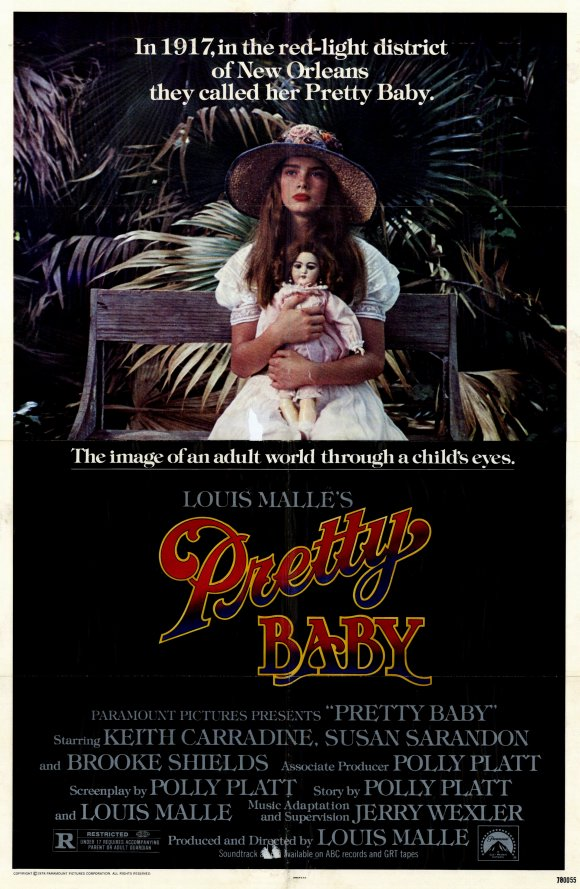
Based on actual accounts of prostitutes living and working in the Storyville area of New Orleans in 1917 the film details the life of Violet (Brooke Shields) the 12 year-old daughter of Hattie (Susan Sarandon) who works as a prostitute and eventually breaks her daughter into the business. Bellocq (Keith Carradine) is a photographer who comes to the brothel to take portraits of the women. He falls in love with the young Violet and the two eventually marry.

Louis Malle’s American film debut is fabulous. He takes a daring subject matter and makes it real and vivid. Sven Nykvist’s cinematography is so detailed that you almost think that you are looking at painted portraits of the era. Malle employs a leisurely European pace to the proceedings, which nicely reflects the slower era. The emphasis is on nuance and in that regard it is brilliant making the viewer feel that they are right there with characters and observing the daily realities around them. The story is certainly shocking, but somehow a strong human element remains making it fascinating and revealing.

The strongest moment comes when a group of middle-aged men bid on Violet to see who will get the honors to take her virginity. Having the camera pan the men’s eager faces, some of whom look to be nearing 50 and even 60 is visually potent as is Violet’s ambivalent expression as she stands on a chair in front of them. The fact that it is approached in a non-sensationalistic matter and instead more like as a slice-of-life makes it all the more disturbing and compelling.

Shields is fabulous. Her facial expressions as she observes the decadence around her is what really makes the movie. She shows a great awareness and creates an intriguing character that cannot read and write and yet acts like having sex with a middle-aged man is ‘no big deal’ and working as a prostitute is completely ‘normal’ way of life. Watching her shift between being very child-like to very jaded is fascinating. I really think this is an actress that is much more talented than she is given credit for and although many other actresses auditioned for the part including Tatum O’Neal, Meg Tilly, Geena Davis, and Diane Lane I really felt the movie wouldn’t have been as effective with them in the role. Shields is really exceptional and should have netted the Oscar, or at least have been nominated.

Sarandon is terrific as her hardened mother and unfortunately is not seen enough, but manages to light up every scene that she is in nonetheless. Singer Frances Faye is also quite good as the head of the brothel. Her old, tired face brings out the difficult, cold lifestyle. Her best moment comes when she is seen staring in a catatonic state into space while everyone else has left the place and all the belongings are being carried out.

Carradine is okay in a restrained performance as a character that is more educated and refined than the rest, which makes for some interesting interactions. The fact that this man ends up getting emotionally stung by such a young girl despite being so much more sophisticated and mature ends up being one of the film’s most definitive moments.

My Rating: 8 out of 10

Released: April 5, 1978

Runtime: 1Hour 50Minutes

Rated R

Director: Louis Malle

Studio: Paramount

Available: VHS, DVD, Amazon Instant Video

All the Way Home (1963)

all the way home 2

By Richard Winters

My Rating: 8 out of 10

4-Word Review: Life must go on.

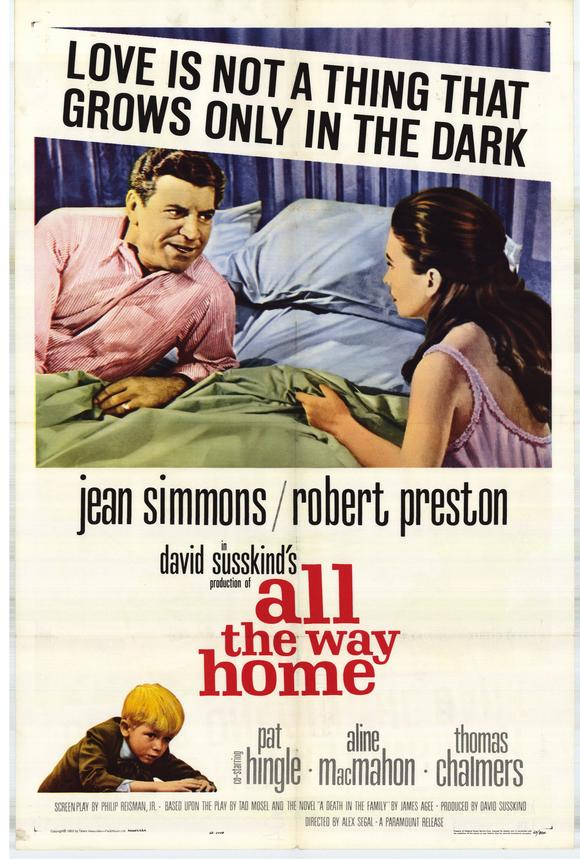
Based loosely on the childhood experiences of writer James Agee who is best known for penning the screenplay to the classic film Night of the Hunter.  The story here looks at how a southern family copes and in particular the young boy Rufus (Michael Kearney) after their father (Robert Preston) is tragically killed in a car accident.

Based on Agee’s unfinished novel ‘A Death in the Family’, which was also made into a stageplay the film makes loving tribute to the era. The sets and even the Model T car driven by the father are all authentic. In fact it was filmed near the exact neighborhood in Knoxville where Agee grew up. The mannerisms and dialogue are true to the period without any compromising for a more modern audience. The revisionism which has become so trendy in today’s period piece films is thankfully missing here. The slower and gentler pace seemed reflective of the era and I found it refreshing.

Preston gives one of his best roles second only to his signature one in The Music Man. He doesn’t get killed until the second half of the film, so the viewer gets to know and like the character and thus feels the pain of the loss along with the family members. We never see the actual accident nor given any explanation for what happened, which is just as well. Too many times filmmakers seemed compelled to have to give a reason for everything even though in life that is not always possible, so it is nice that here they did not fall into that trap. This emphasis instead is on how the family members cope and the emotional impact of the loss, which is something everyone must go through at some point and it ends up being quite compelling.

Kearney gives a terrific performance and one of the best from a child actor that I have seen. He is cute without ever being precocious. Watching him observe everyone else around him are some of the best moments in the film. It also brings up the great point that sometimes children are better at adapting to tragic events than their adult counterparts.

Durable character actor Pat Hingle gives one of his most interesting performances as Preston’s nervous and hyper brother. Preston has a great line in describing him when he says: “Talking to him is like putting socks on an octopus.”

Aline MacMahon is good as the kind, but stern aunt. I particularly liked the moment where Rufus falls to the ground in an emotional tantrum, but she restrains the others from helping him and insists that it is important that he learns to get himself up on his own. Jean Simmons as the mother and wife is also splendid, but seems to get better as the movie progresses particularly in her conversation with Rufus at the end, which is touching.

My Rating: 8 out of 10

Released: October 17, 1963

Runtime: 1Hour 37Minutes

Not Rated

Director: Alex Segal

Studio: Paramount

Available: Amazon Instant Video

The Flim-Flam Man (1967)

flim flam man 2

By Richard Winters

My Rating: 6 out of 10

4-Word Review: Con-man finds apprentice.

Curley (Michael Sarrazin) is a young army deserter living in an over-turned and abandoned freight car in the rural regions of Kentucky. By chance he meets up with Mordecai Jones (George C. Scott) a traveling con-man who decides to use Curly as his apprentice as well as his assistance in some of his more elaborate schemes. At first Curley goes along with it, but when he fall in-love with Bonnie (Sue Lyon) one of Mordecai’s intended victims he decides he wants out much to Mordecai’s reluctance.

Scott really shines and this may be his best comic performance. Although he was only 38 at the time he looks and acts like a genuine old man even though his gray hair looks like it was frosted on much like what is done to white Christmas trees. In some way it might have been more authentic had an older actor played the role, but Scott is so much fun in the part that the movie may not have worked as well.

Sarrazin is solid in support. His quiet demeanor and understated performances never allowed him to get the recognition that he deserved, but he was always effective in these types of roles and having the character walk the moral tightrope and sometimes fall off makes him interesting and believable. Lyon is also good as the romantic interest. Although I felt the romance bogged things down a bit I still enjoyed her natural acting style that is devoid of any pretension.

Harry Morgan is fun as the headstrong sheriff who chases after Mordecai and Curly as is Albert Salmi as his dim-witted deputy. Salmi’s blank looking facial expressions are tops and the car chase that they have with the two culprits features some impressive comical stunt work and seems to tear-up the entire main street of the town.

The soundtrack by Jerry Goldsmith has wonderfully soothing melody with some great harmonica and trumpet solos. The on-location shooting in Kentucky captures the countryside and the hazy late summer sunshine of the region well.  For the most part the film is quite amiable and amusing, but predictable. The script lacks the unexpected twist or unique insight that would elevate it above being just the fluff that it is. The ending, which features Curly rigging the courthouse with dynamite and threatening it blow it up has a touching quality to it, but proves frustrating as it doesn’t show us what ultimately becomes of the characters.

My Rating: 6 out of 10

Released: August 22, 1967

Runtime: 1Hour 44Minutes

Director: Irvin Kershner

Studio: 20th Century Fox

Available: VHS 

The Apostle (1997)

apostle

By Richard Winters

My Rating: 8 out of 10

4-Word Review: Preacher on the run.

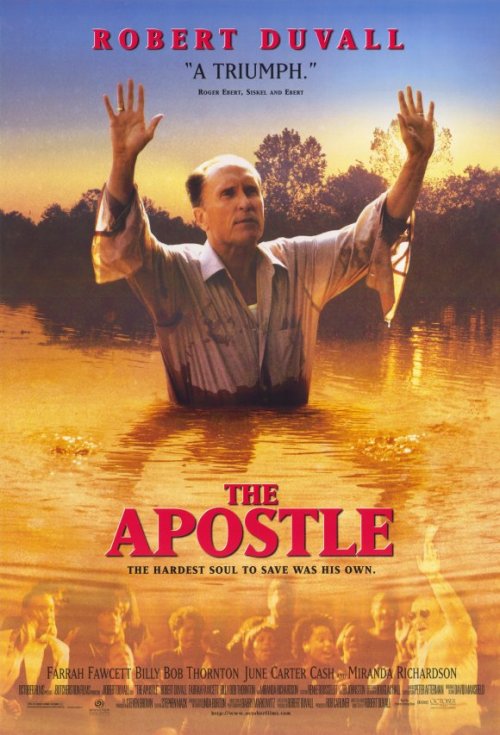
As a would-be screenwriter I find it heartening knowing how many great screenplays there are out there that struggle to find a home no matter who has written or pitched it.  Actor Robert Duvall wrote the solid screenplay for this film in the 80’s only to have it rejected by every major studio and only got made when he decided to put up 4 million dollars of his own money.

The story involves a fiery evangelical minister by the name of Sonny (Duvall) whose volatile ways gets the better of him and he ends up killing his wife’s lover. He then goes on the run to Louisiana where he starts up a new church. There he begins to turn his life around and become loved and admired by the community only to have the police close in on him.

In many ways this is similar to a 1962 episode of the old ‘Alfred Hitchcock Hour’ series that was entitled ‘Bonfire’ and starred Peter Falk as the minister.  Both characters were loud and dramatic preachers.  Both men went on the run after committing homicide while continuing to start up new congregations along the way and both ended up being surrounded by the police as they gave one last fiery sermon. However, the difference comes with the fact that the Falk character was clearly a self-serving fraud while with Sonny that is not so clear, which is what makes this film and character so fascinating.

Sonny has a temper as well as other underlying issues, but he makes a genuine effort to rectify things with his new congregation.  He even brings boxes of groceries to the doorsteps of poor families. It is never clear whether he is simply trying to make personal amends for past transgressions, or just a flawed man with a good heart. The viewer is never allowed to feel sure either way, but ends up empathizing with him nonetheless. Every scene and line of utterance becomes more revealing.

Duvall gives a strong performance. I felt this may be his signature role and that comes after a long line of already brilliant performances.  I enjoyed his running ‘conversations with the Lord’ that he has when he is alone or just walking down the street.  The conversation that he has with the police is amusing as is the final scene that is shown over the closing credits.

The casting is unique.  June Carter Cash plays his mother, which is interesting by the fact that in real-life she was only two years older than Duvall.  Farrah Fawcett plays his wife, and although she was much younger than him, I felt she did a good job and made a perfect fit.  Billy Bob Thornton gets a memorable cameo as a man who initially wants to destroy the church with a bulldozer, but then with Sonny’s help becomes spiritually awakened.  I also very much liked James Beasley in the supporting role as the minister who helps Sonny start up his new church.  His calm and collected manner helped balance Duvall’s intensity.

The supporting players were all amateur actors, some of which had never performed in front of the camera before.  Director Duvall was known during filming to keep the atmosphere loose.  He allowed his cast to ad-lib, which gives the film a more authentic feel.  Just like with other actors who turned to directing, like Paul Newman and Marlon Brando, Duvall has scenes that stretch out much longer than most films.  This is done to give the actors more control over their characters and allow their performances alone to carry the scene.  I also liked the fact that the supporting cast was almost all African-American and the story centered on a white minister preaching to a black congregation.

Duvall has long been known to be an admirer of the south, so it is no surprise that the story takes place there or that the shooting was on-location.  He captures the ambience of the region and people quite well, including the sound of the heat bugs buzzing at night.

The only issue I had with the film involves the scene where Sonny kills his wife’s lover. He does this by hitting him over the head with a baseball bat during a little league game while in front of many onlookers.  In most real-life accounts when something similar to this happens people will usually gang up on the culprit and physically subdue him, or chase after him until the police arrive while here the onlookers allow Sonny to peacefully walk away.  Other than that I thought this was a great character study and I would highly recommend it.

My Rating: 8 out of 10 

Released: October 9, 1997 

Runtime: 2Hours 14Minutes 

Rated PG-13 

Director: Robert Duvall 

Studio: Butcher Run Films 

Available: VHS, DVD, Amazon Instant Video

Inherit the Wind (1960)

By Richard Winters

My Rating: 6 out of 10

4-Word Review: Don’t teach Darwin theory.

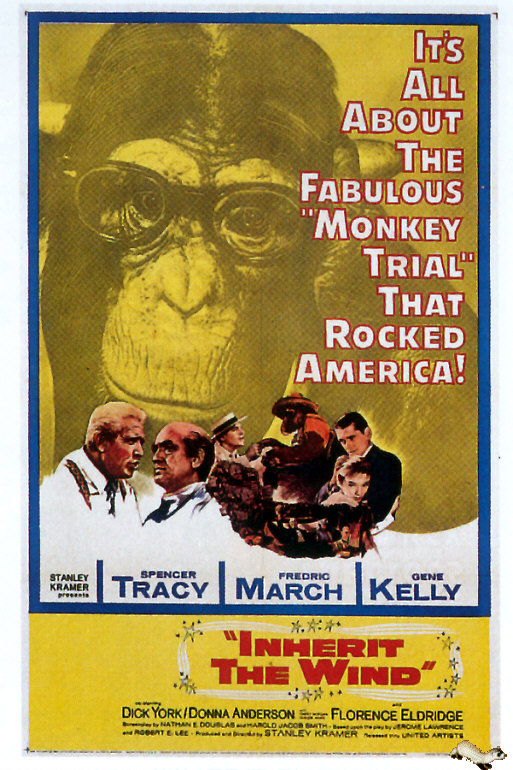
Bertam Cates (Dick York) is a  young school teacher who is put on trial for the teaching the Darwin theory of evolution in the film version of the hit stage play, which in turn was a variation of the famous trial of 1925.

Although labeled a ‘classic’ this film seems awfully stilted and heavy-handed. Everything gets overplayed with too much emphasis on high drama, which in certain instances becomes unintentionally funny. Director Stanley Kramer shows his bias from the beginning and doesn’t allow the viewer to come to their own realization on the issue. The townspeople are the embodiment of every small town cliché you can think of. The buildings that make up the town appear quite obviously to have been built on some studio back-lot. The same goes for the stagy indoor sets as well. Location shooting really helps even if it does go over budget. Just look at this film and then watch Joshua Logan’s Picnic and then decide which one gives you the stronger more lasting impression of small towns.

Fredric March is an accomplished actor, but goes over the top with his performance as the fundamentalist prosecutor Matthew Brady. He plays the character like he is a comical buffoon and uses too many exaggerated gestures and facial tics. Having the character go through a meltdown at the end is almost anticlimactic since he seemed destined for it from the very beginning. George C Scott, who played the same role in the Showtime remake, is much better.

Spencer Tracy as the defense attorney Henry Drummond is great and becomes the film’s main virtue. He is such a master of his craft that he is a joy to watch. He makes it seem all so effortless and natural and yet fascinating at the same time and the character he creates is quite memorable.

The courtroom showdown does allow for some fireworks and the final segment between Gene Kelly and Tracy proves interesting and introspective. The film does have some strong moments, but as a whole it seems kind of clunky.

My Rating: 6 out of 10

Released: July 21, 1960

Runtime: 2Hours 8Minutes

Rated NR (Not Rated)

Director: Stanley Kramer

Studio: United Artists

Available: VHS, DVD, Amazon Instant Video 

Southern Comfort (1981)

By Richard Winters

My Rating: 4 out of 10

4-Word Review: Watch out for Cajuns.

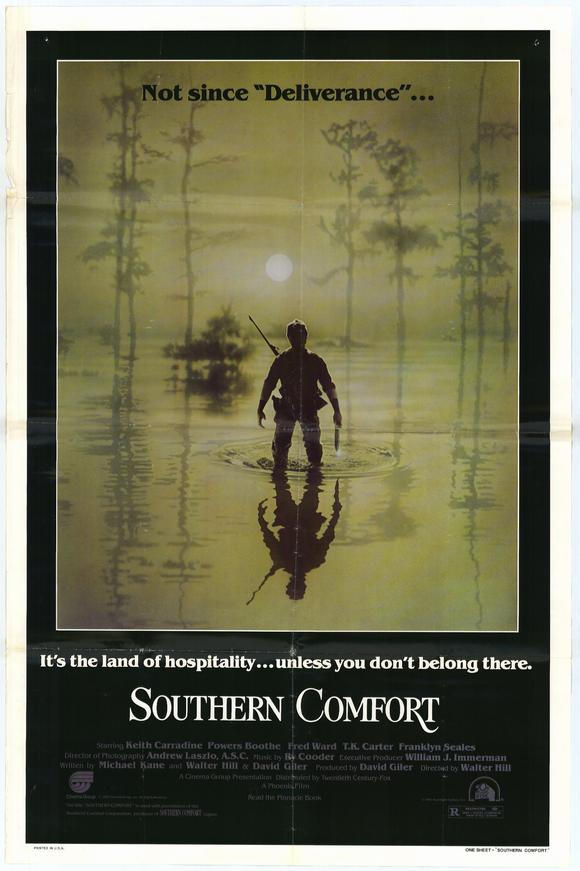
A National Guard unit goes on a training exercise in the Louisiana swamps and finds themselves fighting for their lives from a group of vindictive Cajuns that lurk in the woods.

Just about all the characters are obnoxious, unlikable, and incredibly ignorant. These guys have to be the most undisciplined and poorly managed guard unit out there. It becomes like a comedy of errors and one almost begins to side with the Cajuns. The suspense ebbs and flows poorly and most of the time there is no tension at all. The final sequence takes too long to play out until you end up not caring what happens. It would have been better had the Cajuns not been so hidden and given a face and some distinction. It also would have been a better atmosphere had the story taken place in the summer instead of the winter. The film though is really hurt by the fact that it is too reminiscent of Deliverance which is a better film simply for the fact that it created a more lasting eeriness. Also, the sequence involving the killing and gutting of what looks to be a wild hog is just about as gruesome and graphic as the infamous turtle killing scene in Cannibal Holocaust.

On the positive side there is one good scene involving a very intense attack by a group of vicious dogs as well as a nicely photographed knife fight between actors Powers Booth and Fred Ward. The Cajuns are portrayed as being more cunning and clever than in Deliverance, which makes this a little more of a slick thriller. Ward is very good in his role as one of the surly soldiers and Keith Carradine is surprisingly engaging in his part.

Ultimately this is a grade C Deliverance that despite some good attempts just never comes together. It would be best to just watch the original and avoid this one completely.

My Rating: 4 out of 10

Released: September 25, 1981

Runtime: 1Hour 46Minutes

Rated R

Director: Walter Hill

Studio: EMI

Available: VHS, DVD