Category Archives: Movies from Australia

Celia (1989)

By Richard Winters

My Rating: 8 out of 10

4-Word Review: Revenge for her rabbit.

Celia (Rebecca Smart) is a head-strong 8-year-old living in the suburbs of Melbourne, Australia during the end of the 50’s. She is mourning the recent loss of her grandmother while also fearing the hobyahs, which are mythical creatures she read about in school that she has nightmares about breaking into her bedroom late at night. When Alice (Victoria Longley) and her three children move in next door it allows Celia to get her mind off of things as she becomes fast friends with the kids and even Alice herself, but their relationship is soon hampered when Celia’s father, Ray (Nicholas Eadie), finds out that Alice and her husband are supporters of the Communist Party. Ray forbids Celia from seeing them and offers her a pet rabbit, something she’s wanted for a long time, as a bribe insisting that she can keep the pet as long she no longer socializes with the neighbors. However, this brings up more problems as the Australian government has deemed rabbits to be an invasive species and has outlawed anyone from having one. Burke (William Zappa), the local police Sargent, confiscates the rabbit in the middle of the night and then it’s later found dead while being housed at the local zoo causing Celia to come up with a devious plan in order to exact her revenge.

The film, which was inspired by a news article writer/director Ann Turner read when she was 24 involving the rabbit invasion that plagued Australia during the 50’s, is labeled a horror movie, though in a compromised form as IMDb calls it a ‘folk horror’ while other movie sources call it a ‘horror drama’. In any case fans of the conventional horror film may not take to this or find it off-putting as the typical scares and tension are not present. There are some creepy moments particularly the dream sequences involving the hobyhahs, which I wished had been in it more, and a segment dealing with Celia’s dead grandmother tapping on her bedroom window late one night, but overall, that’s about it. Most of the rest of the film comes-off more like a coming-of-age drama, which is excellent, but the real disturbing part doesn’t come until the very end. It’s effective and well earned, but whether all viewers will be patient enough to wait for it I’m not sure.

With that said it’s still a great movie with characters that are three dimensional, something that Australian cinema does very well, and the viewer gets wrapped up into the drama quite quickly. The best element is that the kid characters are genuine. These are like real children that I knew growing up where they could be cute and precocious one minute and mean and bratty the next. The inner rivalries that Celia has with the other kids in the neighborhood are quite real too. Kids don’t just automatically get along, there can be contrasting egos and personalities that can easily get in the way, just like with adults, that can quickly turn playmates into enemies. It’s rare that I can say this, but I really felt while watching this, that I had been transported back into my own childhood as the encounters and exchanges very closely reflected my own in many ways.

The adults are portrayed much better here too. Usually, movies that revolve around young people have the grown-ups stigmatized in one extreme or the other. Either they’re clueless dimwits that are totally out-of-it or overly controlling. Here though they’re well meaning, but so busy with their own lives that just can’t stay attuned with everything their kids are doing and much of the time is spent with them just trying to catch-up with the drama that they didn’t even know was occurring. Celia’s father isn’t mean here either, he simply has a different perspective of things and doing what he thinks is best for his child even as this gets Celia to hate him but like with many households this type of scenario can and does happen even with the best of intentions.

Spoiler Alert!

The ending should leave you with an unsettling feeling when it’s over. This is the rare time when if fully works too. No loose ends, or loopholes. Everything fits perfectly with the characters fleshed out so it all makes sense. This is also a unique film in that there really aren’t any villains. No one is ‘bad’, or ‘evil’. It’s just people, young and old, with different ideas about things and their inability, through no real fault of their own, to effectively communicate it to the other, or for the other to fully listen and understand, which is ultimately what makes it so horrifying as this could easily and believably happen anywhere.

My Rating: 8 out of 10

Released: March 3, 1989

Runtime: 1 Hour 43 Minutes

Not Rated

Director: Ann Turner

Studio: Seon Film Productions

Available: DVD, Blu-ray
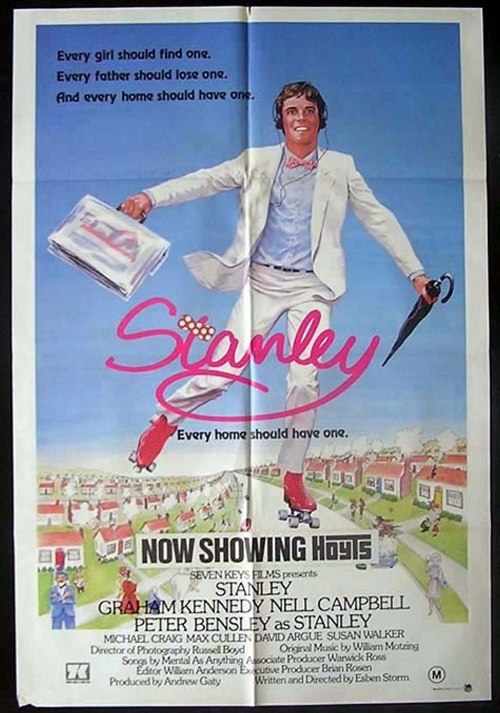
Stanley: Every Home Should Have One (1984)

stanley

By Richard Winters

My Rating: 4 out of 10

4-Word Review: Trying to be normal.

Stanley (Peter Bensley) is a lovable eccentric living on a boat for the past 10 years whose had limited contact with the outside world. His father Sir Stanley (Michael Craig) is a powerful business tycoon who wants his son to take over his company, but after Stanley tries to get the board members to eat dog food his father decides he’s wants his son committed until he can learn to be ‘normal’. Stanley doesn’t want to be put away, so he escapes from his father and moves-in with an adopted suburban family who he hopes can teach him the finer points of normalcy, only to find they are more screwed-up than he is. In the meantime his father hires his butler (Max Cullen), who at one time used to work for the secret service, to track Stanley down and bring him back.

Quirky might be an understatement for this odd comedy with an unusual sense of humor that some viewers might not appreciate, or even get. The script hinges on a lot of non-sequiturs and offbeat situations that are loosely tied together. The emphasis is on odd points-of-view that may appeal to some . For those who are game it kind of works with a fresh indie vibe though by the end it wears itself out.

The main character is likable, but not as unique as he should’ve been. He only acts bizarre at the beginning, but after that becomes pretty normal and only reacts and responds to the goofy people around. The film’s title acts like he’s ‘special’, but really he’s not. In fact Graham Kennedy and Sue Walker, who play the married couple he moves-in with, are far funnier and the movie should’ve centered entirely around them as they’re the only two that get any genuine laughs.

Stanley’s romance with Amy (Nell Campbell), a woman he meets at an employment agency, is a subplot that wasn’t needed. Amy comes-off as cold and prickly and her sister Sheryl (Lorna Lesley) seemed to be a better fit as she conveyed the same wide-eyed optimistic approach to life as Stanley while Amy was the complete opposite. His constant badgering her for a date makes him seem like a creepy stalker who won’t take ‘no’ for answer. Having her eventually cave to Stanley’s unending persistence sends the wrong type of message making it seem like harassment is a ‘good thing’ and can get the other person to eventually ‘fall-in-love’ with them if done right when in reality it almost always leads to a restraining order instead.

The film’s theme is the same as the one in the 60’s cult classic King of Hearts, where the ‘crazy’ people are actually the normal ones while those that are considered ‘normal’ are really screwed-up, but the message here is handled in a heavy-handed way and not particularly insightful. The comedy itself dies-out by the final third culminating in a tired, slapstick chase that doesn’t even include Stanley’s incredibly tiny red car, which was the only interesting element in the film and should’ve been used more for comic effect.

My Rating: 4 out of 10

Released: March 6, 1984

Runtime: 1 Hour 33 Minutes

Not Rated

Director: Esben Storm

Studio: Seven Keys

Available: None

Double Deal (1983)

double1

By Richard Winters

My Rating: 6 out of 10

4-Word Review: Double crossing each other.

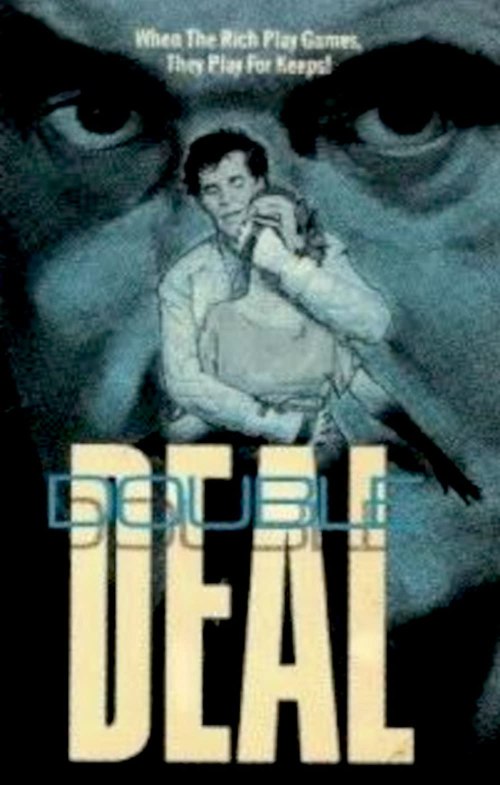
Christine (Angela Punch McGregor) is a young model married to Peter (Louis Jourdan) a much older man. While Peter is rich and they live in a big house their marriage lacks passion and Christine becomes bored with her existence while Peter continues to have a long-running affair with his secretary Miss Stevens (Diane Craig). One day while out shopping Christine meets a handsome young man (Warwick Comber) on a motorbike. Even though she doesn’t know his name she becomes entranced with his good looks and carefree demeanor. He’s the exact opposite of the stuffy and exacting Peter, so she decides to run-off with him. The two go on many quirky adventures including robbing a grocery store while in clown make-up not so much because they need the money, but just for the thrill of it. They then plot a scheme where the man will pretend to have kidnapped Christine and insist that Peter relinquish his prized opal gemstone in order to get her back. Peter complies, but in the process sets off an array of unexpected twists where nothing is as it seems.

Normally I like films with an offbeat slant and this one certainly has its moments, but the characters aren’t well fleshed-out, which makes for a placid experience. A good case-in-point is the way Christine comes upon the young man, which is while she’s in a shopping center parking lot. Having found that someone has double parked their car behind hers she patiently waits for the owner of the vehicle to come out and move it, but in the process the young man comes along, and noticing that the keys of the car are still in the ignition, jumps into the car and drives away with it while also following Christine home. Once there the two proceed to tear up the place before she packs her bags and runs off with him onto the open road without ever even learning what his first name is.

While as an actress McGregor is quite competent she doesn’t have the looks of a fashion model, which she herself admitted to, and her role and that of the secretary should’ve been reversed with Diane Craig looking far more the model type especially with her piercing blue eyes. Comber is a bit off as the handsome stranger as well. He certainly has a hunky build and chiseled face, but his droopy eyelids give him a odd, sad eye appearance. I also got tired of seeing him constantly wearing a silver bike riding suit that seemed to resembled more of an outfit worn by someone on a spaceship.

Jourdan’s presence helps a lot. This was at the twilight of his career where he was no longer getting leading man roles in his home country of France and therefore open to accepting offers abroad, which is what lead to him traveling to Australia to do this. The filmmakers wanted a big name star to help give the production stature and the movie definitely works better with him in it though the scene where he and McGregor are in bed together was reportedly quite awkward for the two stars given their wide age difference of almost 33 years and took many takes to film.

There are a few memorable moments with my favorite being the grocery store robbery, which occurs in a small outback town, where Christine accidentally releases the money they have just stolen into the air as she gets into the getaway car causing the store owners, who had just been robbed, to run out and busily try to recollect the money blowing in the wind. However, the story lacks soul. The twists get thrown in for the sake of being offbeat, but the characters never grow, or resemble real people in any way. The winding plot ultimately burns out and ends with a fizzle.

My Rating: 6 out of 10

Released: September 15, 1983

Runtime: 1 Hour 30 Minutes

Not Rated

Director: Brian Kavanagh

Studio: Roadshow Films

Available: dvdlady.com

Lady, Stay Dead (1981)

lady1

By Richard Winters

My Rating: 3 out of 10

4-Word Review: Handyman obsesses over singer.

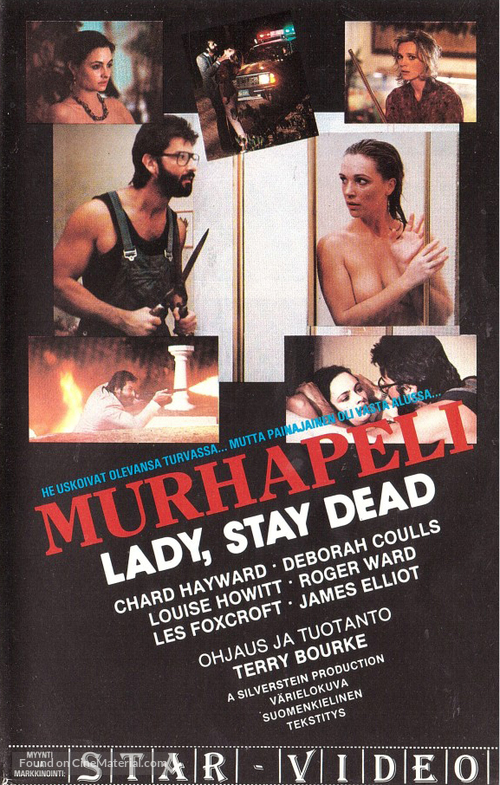
Gordon (Chard Hayward) works as a handyman and is treated poorly by his boss Marie (Deborah Coulls), a famous singer/actress, who routinely berates him as if he were a second-class citizen. Secretly Gordon fantasizes about having sex with her and one day breaks into her home and rapes her. Afterwards he drowns her by shoving her head into a fish tank. When her elderly neighbor Bill (Les Foxcroft) spots Gordon trying to discard her body he then kills him too and his dog, but Gordon fails to realize that Jenny (Louise Howitt), who is Marie’s older sister, is coming for a visit. When she arrives she quickly catches-on to what’s happening and proves to be a formidable challenge to Gordon, who wants to do to her exactly what he did to her sister.

The film was written and directed by Terry Bourke, who was credited with doing the very first horror movie in Australia, Night of Fear, which many consider a precursor to The Texas Chain Saw Massacreand this made him a horror guru in the Down Under and eventually lead to him making this one. This movie is unique in that it’s the first slasher film released in Australia and received okay reviews simply for its production values, which was a step above most other slasher pics.

Initially I was intrigued with the concept as it captures Gordon’s point-of-view and even sympathizes with him over his mistreatment by the callous Marie. It almost seemed to be playing-off the same idea of another Australian cult-hit The Plumberwhere a working-class male takes his animosity out on a female who he believes looks down on him. Had the movie stuck with this idea it could’ve been interesting and I was fascinated to see how both character’s behaviors and insights into each other would evolve as the scenario progressed, but this gets ruined by having Marie killed-off too soon.

Having her sister Jenny, who in no way looks anything like Marie even though they’re supposed to be related, become the main victim is not compelling and the story devolves from being a potentially compelling psychological flick into that of your standard cardboard thriller. Had Jenny, not knowing that Gordon was her sister’s killer initially, fallen in-love with him, could’ve lent a unique twist and might’ve saved it, but it doesn’t go in this direction either. Ultimately I was unsure why the opening bit involving Marie was even needed as it could’ve just started with Jenny as the target of the obsessed handyman and gotten played-out in exactly the same way.

The script also suffers from plot-points being too loosely connected. There’s no cyclical structure like with most stories where what see in the first act connects with what happens later. Instead characters and events get thrown in haphazardly with only the loosest of threads holding it together. The random policemen, played by Roger Ward, jumping in and becoming a major part of the action in the third-act, is a good example of this. Why not have this part played by Billy, the helpful elderly neighbor, who like with Marie gets offed too soon until you wonder why he and Marie were even in it at all.

Spoiler Alert!

The double-ending where you think the policeman has killed Gordon, but really hasn’t was no surprise at all. It’s also impossible to believe that Gordon would’ve been able to drive a squad car around while hunched beneath the dashboard and unable to look a window to see where he was going. Also, the title itself makes no sense as Marie never comes-back to life, so what the meaning of ‘stay dead’ is I don’t know.

Overall the script is too unfocused making what starts out original end-up being quite formulaic and forgettable although the segment where Gordon uses a chainsaw to cut a hole in the front door is genuinely creepy particularly the sound it makes as he does it, which is the only scary moment.

My Rating: 3 out of 10

Released: September 10, 1981

Runtime: 1 Hour 35 Minutes

Director: Terry Bourke

Studio: Ryntare Productions

Available: DVD

Mouth to Mouth (1978)

mouth1

By Richard Winters

My Rating: 8 out of 10

4-Word Review: Two teen girl runaways.

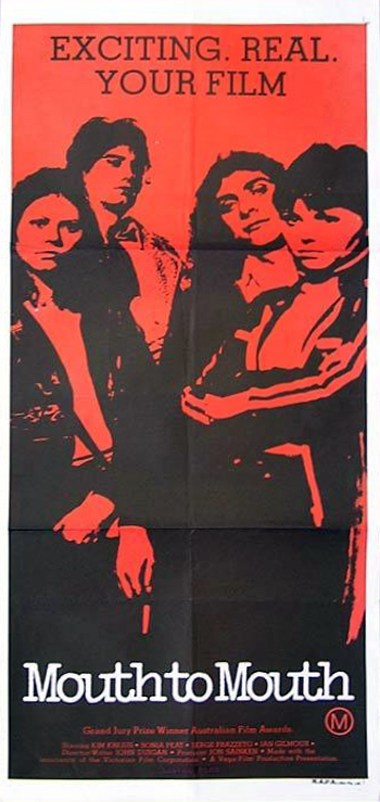
Carrie (Kim Krejus) and Jeanie (Sonia Peat) are two friends living in a juvenile detention center when one of them gets accused of stealing an item. Angered that they’ve been accused of doing something that they didn’t they escape into the night and onto the streets of Melbourne. They manage for find shelter in an abandoned factory building that also has an elderly homeless man named Fred (Walter Pym) living there whom they befriend. They find employment as servers in a cafe and that’s where they meet Tim (Ian Gilmour) and Sergio (Serge Frazzetto) who are two young men who have come to the city looking for employment. They girls bring them back to the factory building and the four create a makeshift home, but Carrie and Jeannie are not happy with the wages that they’re making nor having to shoplift on the side to make ends-meet. Carrie sees an ad in the paper for escorts and convinces Jeannie to join her as they’ll be able to make much more money doing that. Jeannie is reluctant at first, but eventually goes along with it, but after doing it for awhile Carrie becomes increasingly depressed, which eventually leads to her illicit drug use.

Initially I wasn’t excited to watch this as I’d seen many teen runaway movies before and failed to see what new perspective they could put on that would make it interesting, but I was surprised how very compelling it is. A lot of credit for this goes to writer/director John Duigan’s script, which has a nice conversational quality and the characters react the way real teens do where they never articulate how they really feel and go to great lengths to mask their true feelings. The setting, particularly the abandoned building is made all the more stark as a real one was used and not just some prop built on a movie set, which really hits home the kind of squalor some people will be willing to put-up with if their desperate enough and similar to the living conditions in the British film Rita, Sue, and Bob Too. 

Despite the actors having little or no acting experience they manage to give compelling performances and much of this was helped by having the cast room in a house for 2-weeks before the shooting started, which allowed them to bond with each other as well as refined their characters and rehearse their lines until it became almost natural to them. 

The script originally had more of a light-hearted tone, but after 14 rewrites it took on a harsher subject matter as director Duigan wanted to bring to life people that a middle-class movie audience only sees as ‘numbers on unemployment figures, or kids in juvenile court’ and in that regard it’s well-made. The ending is particularly gut-wrenching, but not surprising and yet I was very moved by it and it stayed with me long after it was over. 

On the complaints side it would’ve been nice to have had Fred come-up to their loft to either dinner with the four and see more how he interacted with them. The girls invite him, but he refuses, but for the sake of character development he should’ve agreed. The escort scenes only show Jeannie interacting with her client, but not Carrie with hers, which I found frustrating. Carrie is never seen visiting with her father either during the brief scene when she returns home as he’s not there, but having a conversation between the two could’ve been quite revealing. The film also features a great song entitled “The More You Love the Harder You Fall”, but no credits are given for who sings it, which is a shame.

My Rating: 8 out of 10

Released: July 20, 1978

Runtime: 1 Hour 36 Minutes

Rated M (Australian Movie Rating)

Director: John Duigan

Studio: Victorian Film Cororation

Available: DVD (Region 0 Import)

Emoh Ruo (1985)

emoh1

By Richard Winters

My Rating: 4 out of 10

4-Word Review: New house falls apart.

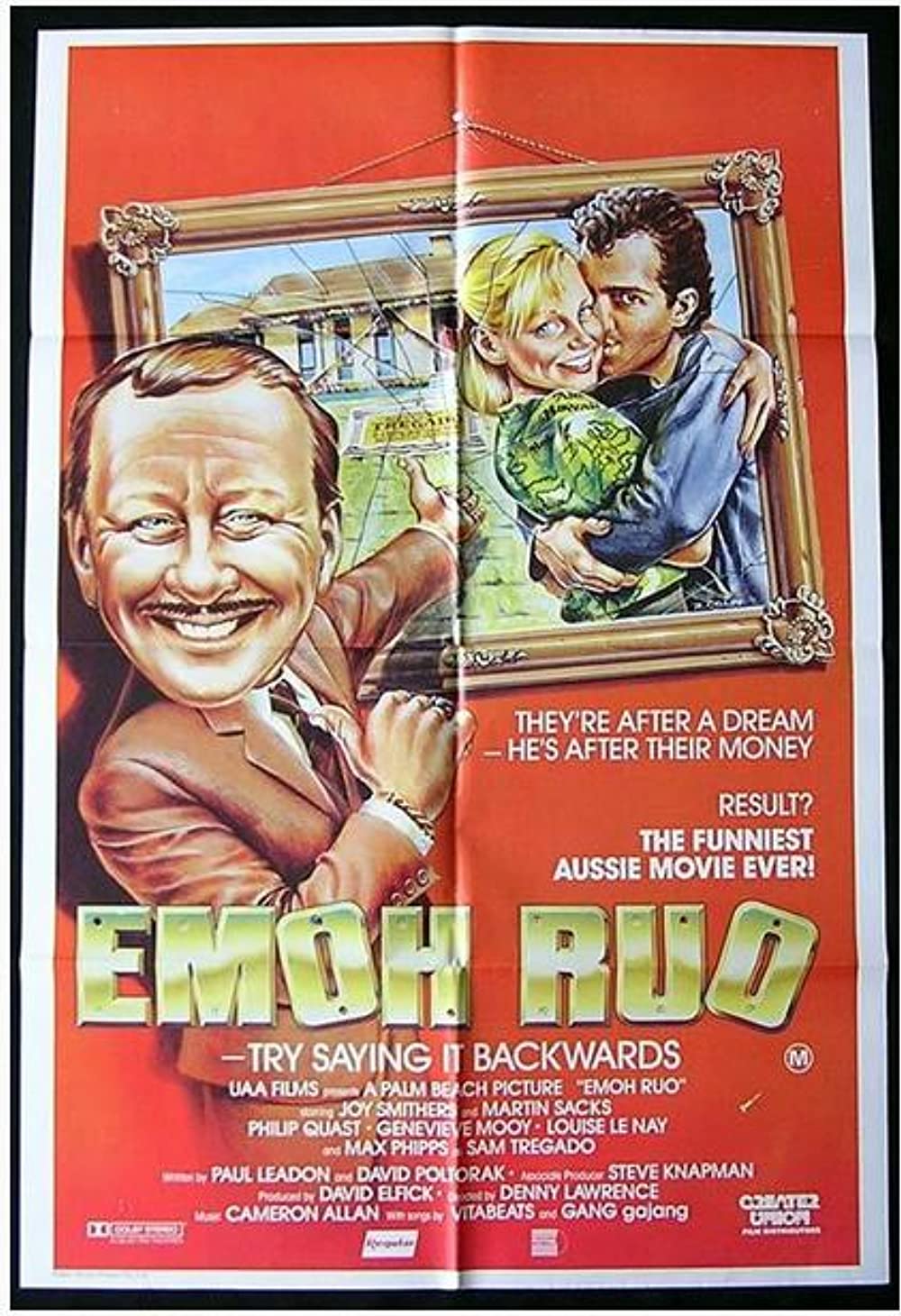
Terri (Joy Smithers) is tired of living in a trailer and begs her husband Des (Martin Sacks) to finally buy a house, so they can live in the burbs and be a part of the middle-class dream. After saving up enough money they put a down payment on a brand new home, but the home begins to have a lot of problems. Both Terri and Des are forced to work longer hours at their jobs in order to keep up with the bills. What seemed like a dream at first soon turns into a nightmare making living in a trailer, which they initially hated, now seem like a good idea.

This film has a lot of similarities to Steven Spielberg’s The Money Pit, which came out a year later, but this one is more amusing, at least at the beginning. Spielberg’s film, which was directed by Richard Benjamin, was too cartoonish and silly and failed to make any broader statement other than wild comical antics. This one takes more of a satirical approach and shows how suburban life may not be as great as advertised and in some ways just plain not worth it. One of the funnier moments is when Terri gets home from her overnight job and the second she walks through the door immediately falls to the floor in exhaustion while her tired husband, who’s getting ready to go to his second job, steps over her while going out the door without so much as giving her a greeting.

I did like too that this movie doesn’t immediately go over-the-top with the problems of the home repairs. The Money Pit, in my opinion, ruined things by having everything go wonky right from the start, which didn’t allow for any buildup while this one keeps the tension by showing things not working as they should and making you interested in seeing if it’s going to get worse. The nightmarish elements aren’t just isolated to the home either as their son Jack (Jack Ellis) must put up with bullies at his new school and the couple also deals with nosy, meddling neighbors.

I was surprised by the abundance of nudity, at least during the first act, which is something you’d never see in a Hollywood movie, where nudity is usually only shown in film’s aimed at adults, or with adult themes, instead of a movie like this that would otherwise be perfect for the general public. I’m not sure exactly why director Denny Lawrence decided to put it in as it doesn’t have anything to do with the plot and could’ve easily been left out, but I can only presume that because Australia is a more secular country they’re less uptight about showing skin and therefore don’t worry, or fear, that putting it into a movie, even one as otherwise innocuous as this, will be a problem, or get backlash.

What I didn’t like though was Joy Smithers as the mother. While she certainly looks beautiful, both with her clothes on and off, she was, at age 22, too young to be portraying a suburban mother of a 10-year-old child. Her acting was problematic too especially her scenes where she’s supposed to be upset that doesn’t convey the subtle comic element that a better actress could’ve brought out.

Spoiler Alert!

The third act, outside of seeing an outrageous looking BBQ pit built by the husband, fails to have much of a payoff. Many of the problems with the house never get properly addressed. For instance the shower knobs blow off the wall and spew streams of water everywhere, but the film cuts away without showing how they managed to get it under control. Having the entire house ultimately collapse isn’t impressive either as it looks too much like a prop house made of cardboard instead of brick and mortar.

I was disappointed too that the dark comical edge gets lost with a sitcom-styled wrap-up that seemed to lose complete sight of the main point, which ultimately makes the film as a whole quite transparent and forgettable.

My Rating: 4 out of 10

Released: September 12, 1985

Runtime: 1 Hour 33 Minutes

Not Rated

Director: Denny Lawrence

Studio: Palm Beach Pictures

Available: DVD (Region 4 Import)

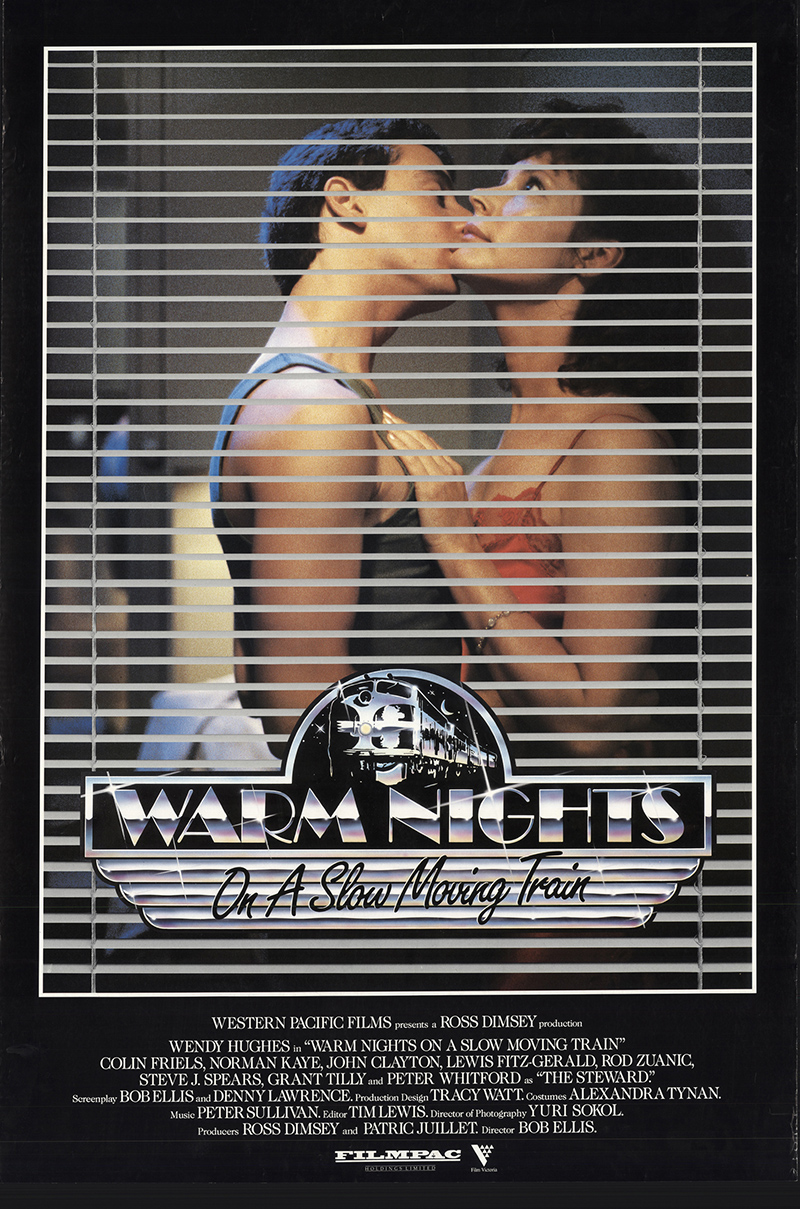
Warm Nights on a Slow Moving Train (1987)

warmnights

By Richard Winters

My Rating: 4 out of 10

4-Word Review: Prostitute on the weekend.

Jenny (Wendy Hughes) is an elementary catholic school teacher during the week, but on weekends she’s a prostitute riding a train that travels across the Australian countryside. She picks up lonely men that she meets at the train’s bar and takes them to her cabin for sex, but makes sure they’ve left by 3 AM. While she’s friendly and conversational with them during the night by the next day she virtually ignores them. She does this to help pay for her handicapped brother’s needs and for many years she’s able to juggle these dual lifestyles without much of a hitch. Then she meets a suave businessman (Colin Fields) who gets her involved in an assassination plot that not only disrupts her routine, but sends her precariously close to losing her freedoms.

Director Bob Ellis said the idea for the film was inspired by a long train ride that he took with actor Denny Lawrence and the two wrote the script during the duration of their trip. In order to get the needed funding it was contingent that Wendy Hughes be cast in the lead, which Ellis felt was wrong for the part, but eventually agreed to simply to get the film made. Ultimately though he and the film’s producer, Ross Dimsey, had a different vision for the story and Dimsey greatly trimmed the final cut turning what Ellis felt was one of the best scripts he had ever written into something he would later disown. The full director’s cut had been stored at his residence and he was hoping to eventually release it to the public, but it got destroyed during a house fire.

The version definitely has issues with the biggest one being the slow, plodding pace. I was also disappointed that it starts with Jenny already a seasoned hooker as I would’ve been more interested in seeing how she came up with the idea and seen the awkward moments she most assuredly would’ve gone through when she first jumped in and did it. The fact that she had no ‘Plan-B’ for the potential times when a male client might get aggressive, or not promptly leave at the agreed to time, was a weak point for me. There’s one scene where one of her johns follows her out of the train and won’t leave her alone, but she calls out to a nearby security officer to get him away from her, but if she’s a seasoned sex worker she should have another line of self-defense to use, like a gun or something, to take out if things got out-of-control and no one else was around to help her and the fact that she doesn’t have this makes it seem like she’s not as streetwise as we’re supposed to believe.

Having Jenny suddenly let down her guard and fall for one of her johns (Colin Friels) didn’t make much sense either. After years of being defensive around her clients why now get all emotional about this one who comes-off just as sleazy and aggressive and just as potentially dangerous? The assassination subplot doesn’t get introduced until 60-minutes in and the way she’s able to off the target by simply scratching the guy lightly on his back with a fingernail dipped in poison seemed much too easy.

I did like the juxtaposition of a catholic school teacher being a prostitute, but the film doesn’t explore this contradiction enough. You’d think after having done this for a long time her superiors might catch-on, or have it filter back to them, which could’ve created more conflict and added tension to a story that for the most part is too leisurely paced to hold one’s sustained attention.

My Rating: 4 out of 10

Released: May 10, 1987

Runtime: 1 Hour 31 Minutes

Rated R

Director: Bob Ellis

Studio: Filmpac Distribution

Available: dvdlady.com

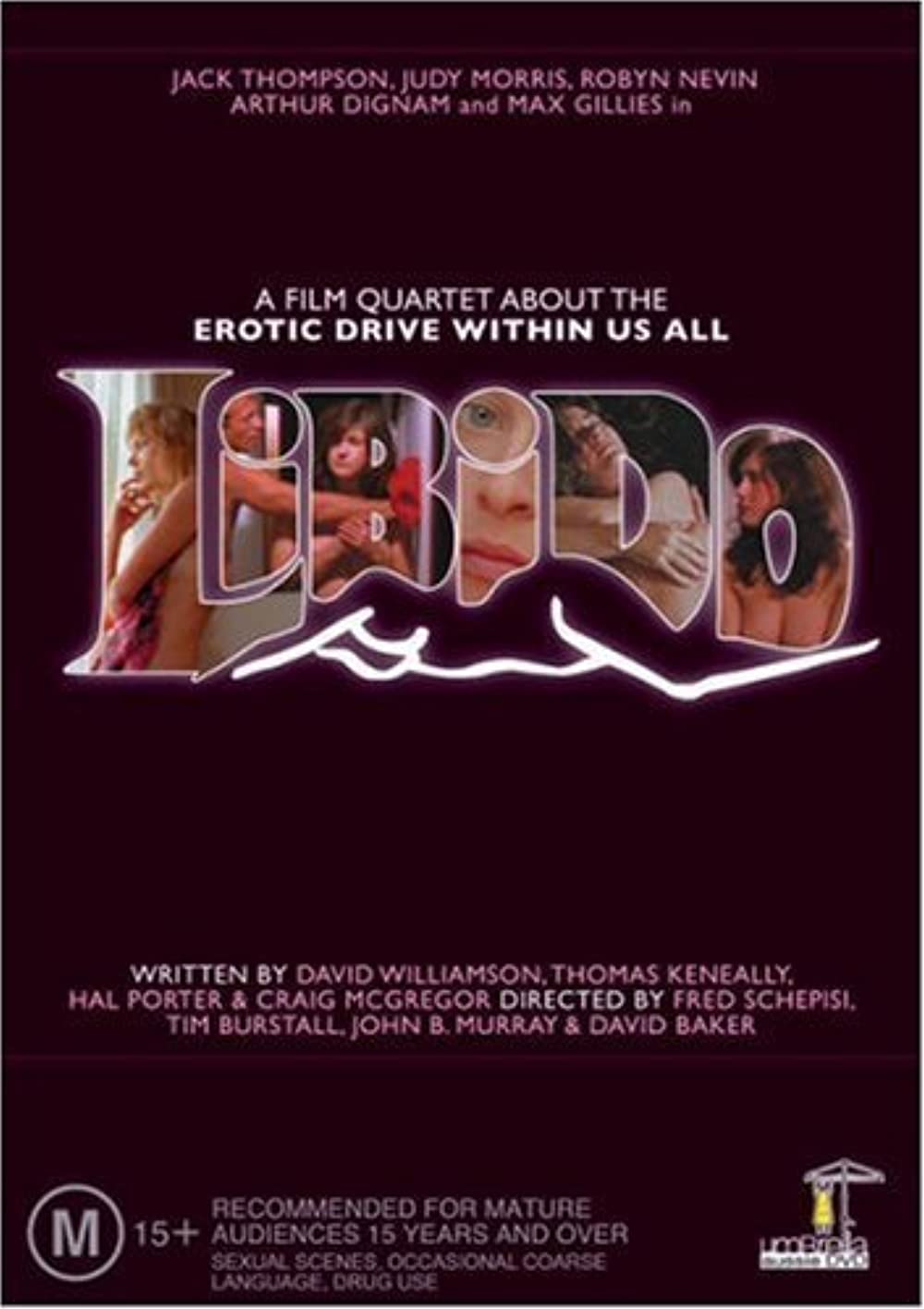
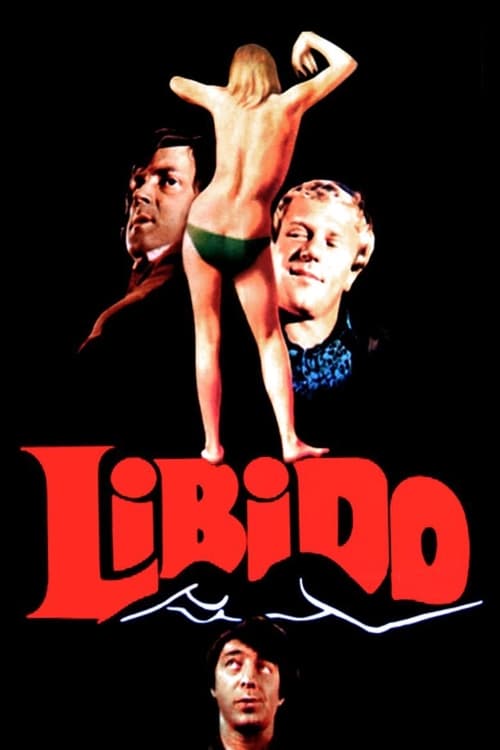
Libido (1973)

libido1

By Richard Winters

My Rating: 5 out of 10

4-Word Review: Four stories about sex.

The genesis for this movie came about during a series of workshops held in southern Australia that was sponsored by directors and producers as a way to help writers craft a good story and create believable characters. The challenge was for each writer to come up with a different story built around a same theme, in this case sex, or the sex drive. Four of the best stories picked were then produced by the Australian Council for the Arts and put into the film. A sequel was planned called ‘The Bed’, which would’ve had 4 stories dealing around the idea of a bed in someway, but ultimately the funding was never able to be attained.

The first segment is called ‘The Husband’ and was written by Craig McGregor and directed by John B. Murray and is the weakest. It details the plight of a husband named Jonathan (Bryon Williams) who becomes jealous when his wife Penelope (Elke Neidhardt) starts to openly fool around with Harold (Mark Albiston) who had been the best-man at their wedding. The segment does have a provocative dream-like moment where Penelope has sex with four different men, but outside of that it’s rather flat. The dynamics of the marriage are confusing and both the characters and relationship needed to be fleshed-out better for the situation to make sense and it relies too heavily on explicit moments thrown in to make it seem more interesting than it really is.

‘The Child’ is the title of the second segment and was written by Hal Porter and directed by Tim Burstall. The setting is the early 19th century and deals with a young boy named Martin (John Williams) whose father dies on the Titanic. His mother (Jill Foster) then begins a relationship with a suitor named David (Bruce Barry), which causes Martin to feel alone and neglected. This though changes when a governess named Sybil (Judy Morris) is brought in to take care of him while the mother is away. Martin grows a special fondness for Sybil and even begins to fall-in-love with her despite their age difference, but he then becomes shocked and upset when he finds her having sex with David in the backyard greenhouse, which ultimately leads to tragedy.

This story has a lot of potential and for awhile had me intrigued. It’s also interesting seeing Morris, who is probably best known as the uptight college professor in The Plumberplaying a polar opposite here as someone who is sexually promiscuous. Unfortunately the story leaves open too many loose ends, which I found frustrating.

The third story, which had to be cut from the Spain release as it was feared it would offend too many people, is called ‘The Priest’. The plot involves Father Burn (Arthur Dignam) who falls for Sister Caroline (Robyn Nevin). Father Burn wants them to both leave the church and get married, but she resists, which causes him to have a nervous breakdown and be sent to an insane asylum. This segment, which was written by Thomas Keneally and directed by Fred Shepisi, has a few insightful moments, but gets bogged down with endless dialogue and an ending that doesn’t offer any type of satisfactory conclusion.

The best segment is the last one, which was written by David Williamson and directed by David Baker. It deals with the story of a womanizer named Ken (Jack Thompson) who chases after women for cheap one-night stands even as his own wife lies in the hospital giving birth to his child. His pal Gerry (Max Gillies), who does not have as much luck with women, looks up to Ken and is impressed with his prowess. Ken decides to show Gerry ‘how it’s done’ by taking him out to a bar where they meet up with two women (Debbie Nankervis, Suzanne Brady) that they eventually take home to Ken’s oceanfront home. Things though start to take a dark turn when the women show more fondness to Gerry than Ken, which causes Ken to lash-out in a jealous rage, which forces Gerry to see an ugly side to his friend that he didn’t know existed.

This segment gets unexpectedly tense, but is played-out in a realistic manner. It’s great too seeing Thompson portray the playboy type, which he seems born to play and honed to an even finer level a year later in the movie Petersen. This story also features a surprise ending, which isn’t bad.

libido2

My Rating: 5 out of 10

Released: April 6, 1973

Runtime: 1 Hour 57 Minutes

Not Rated

Studio: British Empire Films Australia

Available: dvdlady.com

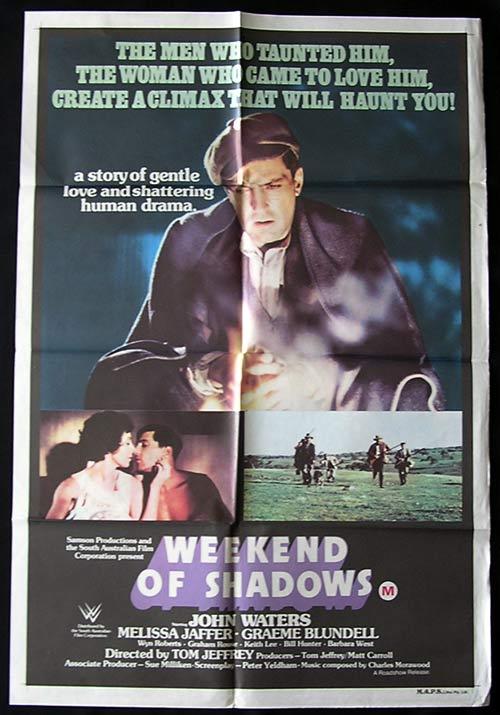
Weekend of Shadows (1978)

weekend1

By Richard Winters

My Rating: 6 out of 10

4-Word Review: Manhunt for murder suspect.

In rural Australia during the 1930’s a farmer’s wife is found murdered inside her home. Suspicions immediately fall on a Polish laborer who had always been deemed ‘peculiar’ by the locals and while there’s no other evidence pointing to his guilt it’s enough to get the men in the community together to form a posse. Sergeant Caxton (Wyn Roberts) hopes that if he can capture the suspect it will help mend his reputation, which had been tarnished while working in Sydney and got him demoted to the small town that both he and his wife (Barbara West) don’t like. Vi (Melissa Jaffer) feels this will be a perfect opportunity for her shy husband, Rabbit (John Waters) to bond with the other men by going along on the hunt, but he resists thinking that the whole thing is just a knee-jerk, mob reaction and wants nothing to do with it, but at the behest of his constantly prodding wife he eventually joins, but learns to regret it.

Out of all of the manhunt movies that are out there this one may be the most unusual in that it doesn’t focus on the suspect at all, in fact you barely ever see him, but instead on the various men in the group. Surprisingly though this manages to be quite effective and I found myself wrapped-up in the various personalities of the participants and how all of them clash with each other at various times. The budget though is quite low, screenwriter Peter Yeldham and director Tom Jeffrey were forced to make many concessions on the script just to get the necessary funding, and while the stark production values will initially be a turn-off, the overall drama, which is based on the novel ‘The Reckoning’ by Hugh Atkinson, will eventually compensate.

I didn’t though like the flashbacks showing Vi and Rabbit’s courtship, which I felt wasn’t necessary and bogged down the tension. The relationship between them is intriguing on a certain level as it shows how wives can have a strong influence over their husbands and get them to do things they wouldn’t otherwise, this same scenario also gets played-out between the constable and his wife, but the scenes showing their dating period offers no further insights and no effort is made to make the actors appear younger even though the courtship had been many years prior.

Spoiler Alert!

While the film was a hit with the critics it sank at the box office recouping only $61,000 of the $495,000 that had been put into it, which soured Jeffrey from directing movies and he helmed only one other, The Last of the Knucklemenafter this one. Ironically Hugh Atkinson was quite impressed with the finished product, which was odd since most of the time author’s of the book which the movie is based are usually not happy with the director’s interpretation of their work, but Atkinon felt Jeffrey ‘got it’ particularly with the ending, which he stated represented the crucifixion. Personally I didn’t see this connection, and neither did Jeffrey, who felt like I did that the story was more about how group dynamics can get out of hand, but Atkinson insisted the crucifixion element was the centerpiece. The ending will be a surprise to many and leaves open many questions, but what you ultimately make of it will be up to your own personal perspective.

My Rating: 6 out of 10

Released: April 12, 1978

Runtime: 1 Hour 25 Minutes

Not Rated

Director: Tom Jeffrey

Studio: The South Australian Film Commission

Available: VHS

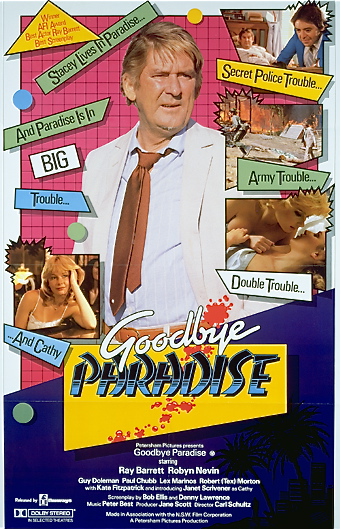
Goodbye Paradise (1983)

goodbye1

By Richard Winters

My Rating: 6 out of 10

4-Word Review: Searching for Senator’s daughter.

Michael Stacey (Ray Barrett) is a retired cop whose written a scathing exposé on the corruption of his former profession, which has gotten him many enemies and, along with his alcoholism, pushed to the very fringes of society. He now lives in a tiny, rundown apartment while playing chess with himself as his only means of companionship. One day he gets a call from a high-ranking Senator (Don Pascoe) who wants Michael to find his runaway daughter as he’s concerned that she’s gotten involved with an underground cult movement, which he fears could be detrimental to both her safety and to his own political career. Have no other means of income Michael takes-up the offer and soon gets immersed with an array of odd people and many twists that ultimately finds him in the middle of a military coup.

This offbeat movie starts out strong, but eventually goes overboard. The original idea by screenwriter Denny Lawrence was to have an ex-cop working as a private investigator who takes on a case of a runaway daughter who joined a religious cult run by a charismatic charlatan that eventually lead to the deaths of many of its members. However, after the Jonestown massacre, which was led by religious cult leader Jim Jones, this idea got nixed and the plot, with the help of co-scripter Bob Ellis who wanted a more political bent, got turned into a completely different direction, which doesn’t work as well.

The whole idea of a parent hiring a down-and-out, aging guy to find his long lost daughter doesn’t make much sense. The father’s a rich senator with lots of connections, so why not use the resources of the police, or a more polished detective to do the searching instead of an old bum more focused on when his next drink will be? Had Michael’s actual job, like in the original script, been as an private investigator then maybe, but in this version Michael was a struggling writer, so why pay someone to do something that they had no practice in doing, or if they did it had been a seriously long time and someone else could’ve been found to do it better?

The protagonist is a lovable loser, a sort of anti-hero who was meant to be a modern-day Philip Marlowe, and the main reason that get me hooked into the movie right away especially with Barrett’s perfect portrayal that is both raw and funny at the same time. However, the supporting characters are dull. The is especially evident with the Senator’s daughter, which due to a case of mistaken identity, he ends up dealing with two different young women, but both of them are stereotyped and cliched to the extreme. The dialogue and conversational exchanges that they have with Michael are flat making these scenes the most boring part of the movie. Nothing is worse than a film that does a excellent job of creating a multi-faceted person in one area, but then cuts-corners with the rest making the viewer like they’ve gotten stuck with only half a movie.

Spoiler Alert!

The climactic sequence, which involves an all-out military coup and lots of warfare-like action, is just too extreme and surreal especially for a story that starts out in a realistic vein. Much of the fault could be blamed on the two script writers with Lawrence wanting it to be a genre piece while Ellis preferring a more political take. The result is an imbalance that gets increasingly more wacky and implausible as it goes on until it becomes too cluttered to make much sense. Whatever statements the writers hoped to make here gets lost in the insanity and leaves the viewer feeling overwhelmed with all of the absurdity.

My Rating: 6 out of 10

Released: July 21, 1983

Runtime: 1 Hour 59 Minutes

Not Rated

Director: Carl Schultz

Studio: New South Wales Film Corporation

Available: DVD (Region 0 Import)