Category Archives: Movies Based on Novels

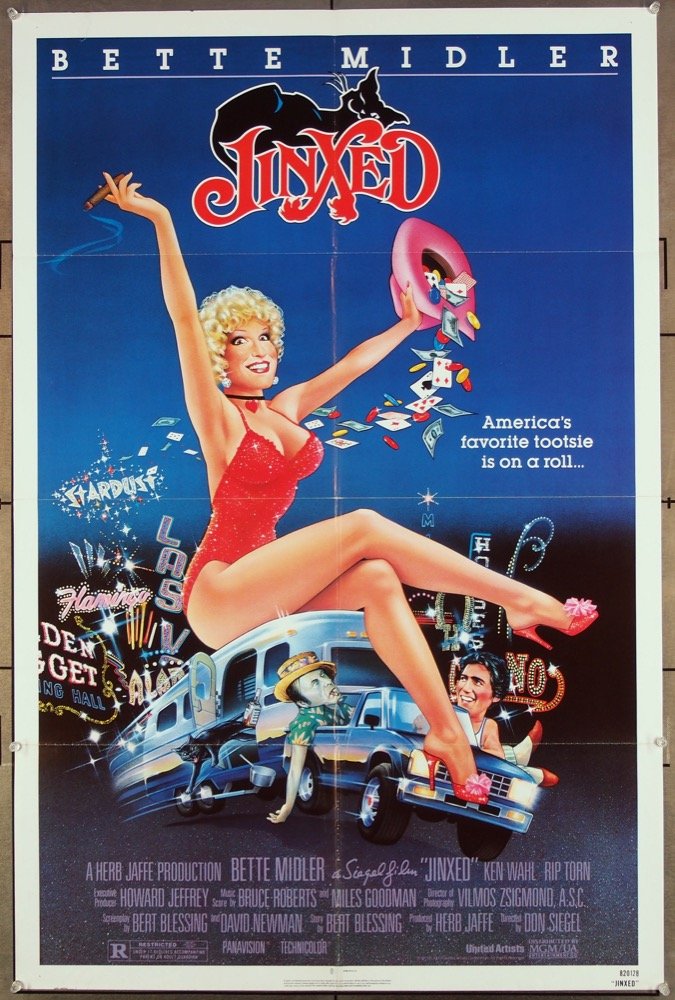
Jinxed! (1982)

Version 1.0.0

Version 1.0.0

By Richard Winters

My Rating: 3 out of 10

4-Word Review: Blackjack dealer is cursed.

Harold (Rip Torn) is a gambler who can never seem to lose whenever he goes up against one Vegas blackjack dealer in particular, Willie (Ken Wahl). In fact Harold’s winning streak versus Willie becomes so extended that it gets him fired and he’s forced to find a similar job in Reno. Harold follows him up there and Willie’s losing ways start all over again. His supervisor (Val Avery) doesn’t think Harold is doing anything unethical and instead becomes convinced that he’s put some sort of jinx on Willie and for Willie to end it he needs to get something of Harold’s. He drives out to Harold’s isolated trailer where he resides and realizes he has a wife named Bonita (Bette Midler) who also happens to be a lounge singer. She’s sick of dealing with Harold’s abusive ways and makes a deal with Willie that they kill him and then spend the proceeds of his life insurance payout afterwards.

The movie is appropriately titled not so much for what occurs onscreen, but more with what happened behind it. The story was based on the Frank D. Gilroy novel ‘The Edge’, which was published in 1980 and then had the screen rights sold for $300,000. While Gilroy wrote the first draft it was then handed over to David Newman who did a second rewrite and from there passed onto Jeremy Blatt who did a third version before director Don Siegal and Bette Midler began doing further revisions until Gilroy finally asked for his name to be taken off the credits as the plot no longer resembled anything from the book.

The real issue though started with Siegel who was at odds with the leading lady and then eventually became stricken with a heart attack where he ceded directing reins to Sam Peckinpah who completed many of the remaining scenes uncredited. Star Wahl also found getting along with Midler to be difficult and the two feuded throughout making no secret of their disdain for each other even after the shooting was long completed.

From my standpoint the biggest problem was the casting. Midler can be a funny lady, but not in this type of role. She’s known for her snarky, brash, and outgoing personality, but here plays someone who’s shy and pensive something that just doesn’t connect with who she is at all. Maybe she wanted to step out of her comfort zone and that’s why she took the role, but she doesn’t play it convincingly and thus it’s hard to get into. Wahl isn’t up to the demands of being a leading man and it’s no wonder he retired from the business in 1996. His delivery is flat and nothing that he says, or does is engaging. He has a few amusing lines here and there, but overall seems to be phoning it in and the romantic moments between him and Midler come-off as clearly awkward and out-of-place.

There were a few elements that I did like. It captures the rustic side of Nevada quite nicely and not just Vegas, but also Reno and the rural portion of the state. You also get to see an actual, in fact there’s two of them, $10,000 bill, which the fed no longer prints making it the coolest moment in the whole movie. Torn also gives a energetic performance and could’ve put on a clinic for the other two if they had paid attention. Though during his character’s death scene he does blink his eyes and make some brief facial gestures when Midler kneels beside him and slaps him making it seem like he really wasn’t dead even though technically he was. There’s also a few too many shots of his hairy butt crack, which I didn’t particularly care for. A funny scene done inside an adult bookstore, where director Siegel gives himself a cameo as the porn shop clerk, which I found to be a highlight.

Spoiler Alert!

Unfortunately the third act veers off in a weird way where Midler goes on a scavenger hunt using cryptic letters that her deceased husband wrote her before he died, which as critic Roger Ebert describes in his review of the film, ‘paralyzes’ the movie. If anything Wahl should’ve gone along with her as they follow the clues, which might’ve strengthened their chemistry and made them seem more like real couple who could work together to solve things instead of these two individuals doing things mostly on their own.

There’s also no explanation for what exactly was causing the whole jinx thing. Supposedly the luck as it were was coming from the cigars that Torn was smoking, and which Midler later does as well, but why would these cigars bring good luck? Normally smoking cigars can’t help one win at blackjack, so what secret cosmic power did they possess, so that it made a difference in this case? There’s no answer either as to who Torn was calling on his pay phone outside of the trailer he lived in after he lost to Wahl and was now broke. It made it seem like he was conspiring, or in connection with someone else, or maybe some sort of behind-the-scenes organization, criminal or otherwise, and the film should’ve made it clear what this was about, but ultimately doesn’t.

My Rating: 3 out of 10

Released: October 22, 1982

Runtime: 1 Hour 43 Minutes

Rated R

Director: Don Siegel

Studio: United Artists

Available: DVD, Blu-ray, Amazon Video

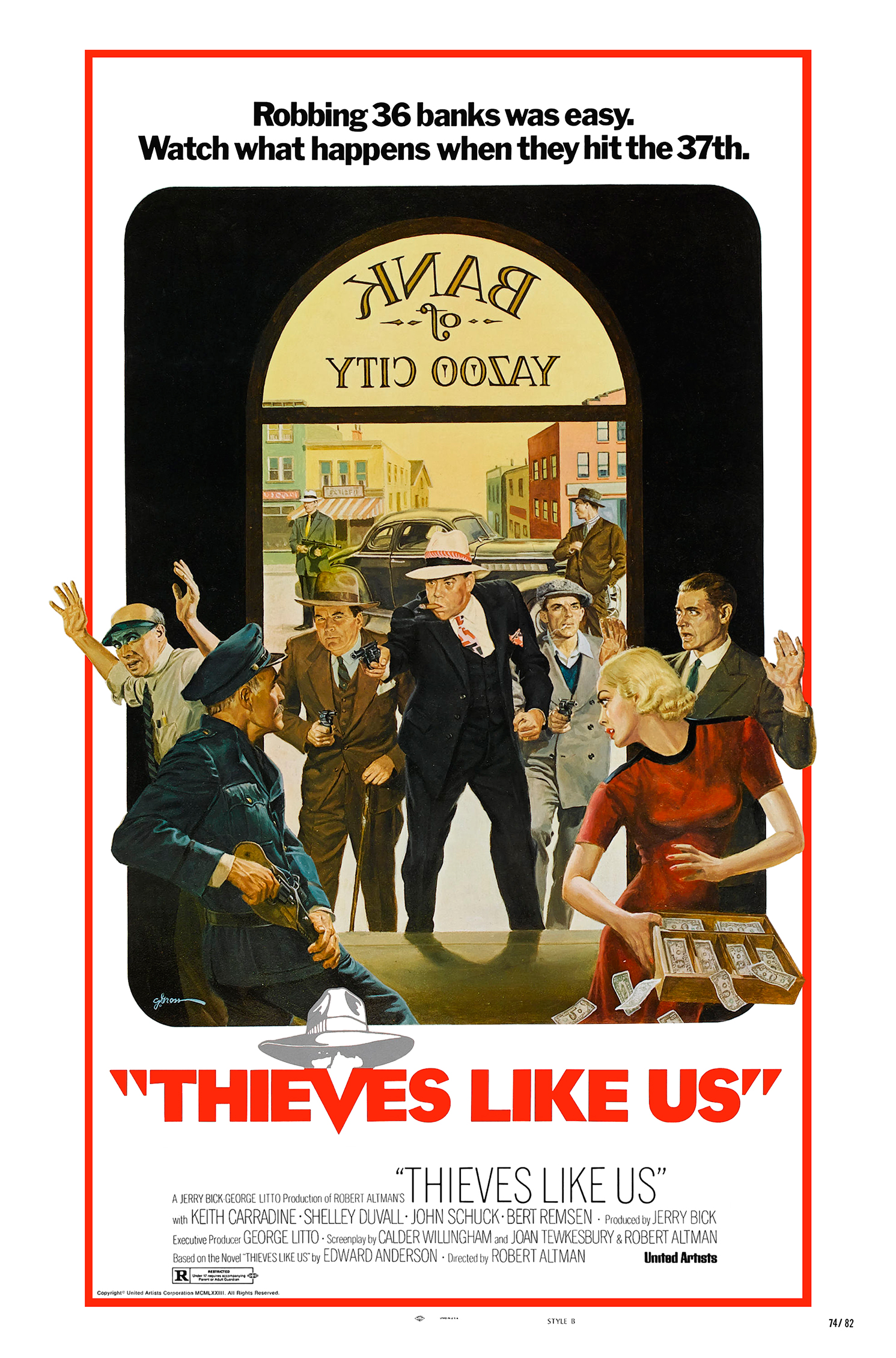
Thieves Like Us (1974)

thieves

By Richard Winters

My Rating: 6 out of 10

4-Word Review: Convicts escape from jail.

Bowie (Keith Carradine) is a young man stuck in jail due to a murder conviction from when he was a teenager. He teams up with Chicamaw (John Schuck) a middle-aged man to escape from prison and meet-up with T-Dub (Bert Remsen) an older man who has them hide-out at a local auto garage where Bowie meets the owner’s daughter Keechie (Shelley Duvall) and the two start-up a relationship. The three men return to their criminal ways by robbing banks, which goes well for awhile until the quick-triggered Chicamaw shoots and kills a bank clerk, which gets him recaptured and returned to prison. Bowie, who has now gotten Keechie pregnant, feels a loyalty to help get Chicamaw out, but Keechie wants him to settle down and get a conventional job while learning to become a family man. Bowie though resists the urge and after leaving Keechie at a motel cabin owned by Mattie (Louise Fletcher) sets out to help Chicamaw break-out for a second time, but this ultimately leads to tragedy.

The film was based on the novel of the same name written by Edward Anderson and published in 1937. The book had been adapted before in 1949 as They Live By Night, which Robert Altman was not aware of before taking on the project. Joan Tewksbury, his longtime screenwriter, adapted the book in a matter of 4-days, but getting it financied proved challenging and it was only after Altman and two of his other producers offered to mortgage their homes to help bring in needed capital that it eventually got green-lit. Unfortunately once it was completed the studio didn’t know how to promote it and ultimately released it without any advertising budget or fanfare. After a brief 3-week stay in the theaters it fell into obscurity before being resurrected by critical acclaim, which made it do well on cable television and has since gained a small cult following.

The atmosphere is probably the best thing as Altman achieves an authentic 1930’s setting. Other films that try to recreate the era always come-off a bit affected and cliched, but because Altman actually grew up during the period he’s able to give it the needed grittiness and I felt right from the start I was being transported to a different time versus feeling like I’m looking back at a bygone era through a modern day lens. The film has two very memorable moments. One of them is when Bowie goes to the prison to help Chicamaw breakout and meets up with the prison warden who’s residing in this country-style house and feasting on a large dinner. The contrast of this home cooked meal prepared by his wife like they were peacefully living out on a rural farm versus stationed right in the middle of a prison with dangerous criminals is something I really loved. The bank robbery game that the three men play with Mattie’s children where they turn their living room into a make believe bank with the children playing bank clerks and then the men proceed to ‘rob it’ is quite cute as well.

The acting is excellent by Carradine who starts to come into his own during his moments with Duvall, who is also good and does her very first fully nude scene. Lousie Fletcher, who’s first movie this was after she took a 10-year hiatus to help raise her kids, is supreme and helps give the proceedings a very definite, no-nonsense attitude and it’s just a shame she wasn’t in it more though the segments she does have she makes the most of. Tom Skeritt turns out to be a delightful surprise here. Normally I’ve found his work to be rather forgettable and under the radar, but here he stands-out as an alcoholic father who’s a pathetic character with darkly amusing lines.

The film though does suffer from Schmuck’s and Remsen’s characters seeming too much alike and I found the rapport between them to be quite unenlightening. Altman also takes a page out of Hitchcock’s directing book where like with what Hitch did in Frenzy he has the camera pull back away from the action going on inside the building and focusing instead on what’s going on outside. He especially does this during the robberies, which is initially kind of interesting, but he does it too much and then when he finally does show a robbery in progress he does solely from a bird’s-eye view with the camera nailed to the ceiling, which causes the viewer to feel too emotionally detached from what’s happening. He also completely skips over the part where T-Dub gets shot and killed and Chicamaw recaptured, the viewer only learns of this by hearing it reported on the radio, but these are pivotal moments to the story and the film is slow enough the way it is, so this is the type of action that should’ve been played-out.

Spoiler Alert!

The climactic sequence where the cabin that Bowie is in gets surrounded by Rangers and shot-up doesn’t work at all. This is mainly because it’s too reminiscent of the same type of shoot-up done in Bonnie and Clyde that was more famous and riveting. Here it comes-off like a second-rate imitation of that one and does nothing but make you want to go back and see that one while completely forgetting about this one in the process.

My Rating: 6 out of 10

Released: February 11, 1974

Runtime: 2 Hours 3 Minutes

Rated R

Director: Robert Altman

Studio: United Artists

Available: DVD, Blu-ray

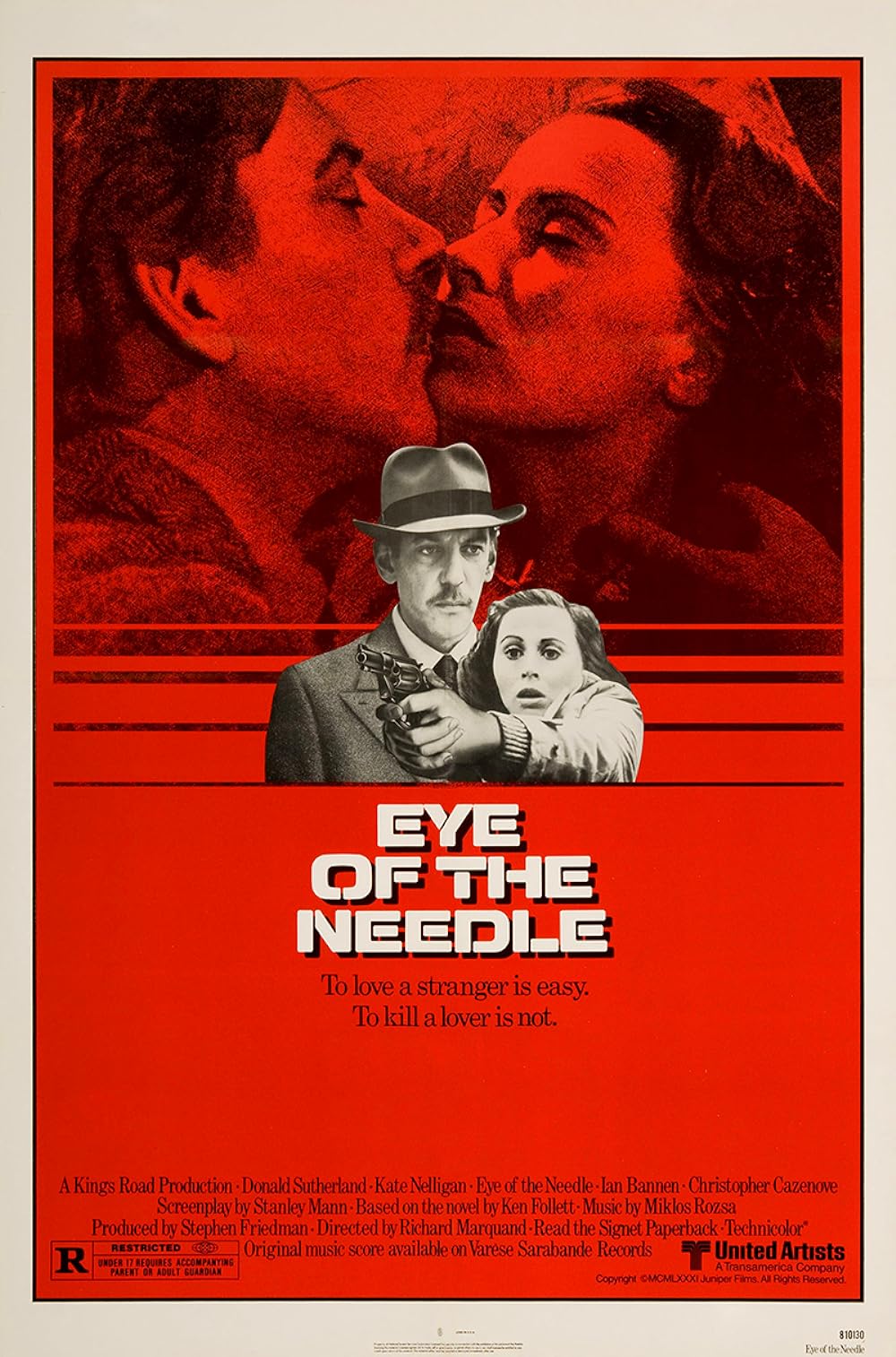
Eye of the Needle (1981)

eye

By Richard Winters

My Rating: 7 out of 10

4-Word Review: Spy infiltrates isolated family.

Henry (Donald Sutherland) is a German spy stationed in England during WWII, who comes upon an airplane site that he thinks is the Allied commandment post for the eventual invasion of Normandy, but upon closer inspection he finds out that the planes are all made of wood and the place is simply a decoy. With this information he tries to charter a U-boat to get back to his homeland, so he can hand his findings directly to Hitler and thus potentially change the course of the war. Instead his boat gets hit by a storm and crashes on the beach of Storm Island. Only four people reside there including Tom (Alex McCrindle), a lighthouse keeper and owner of a 2-way radio, which Henry needs to communicate back to Germany, as well as a young family made up of Lucy (Kate Nelligan), her husband David (Christopher Cazenove) and their 5-year-old son Jo. The family allows Henry to stay in their home while he recovers from his accident.  Lucy is sexually frustrated because on their wedding the couple got into a terrible car accident, which has left David paralyzed and unable to perform in bed. Henry catches onto to Lucy’s despondent situation and soon becomes her lover, but David suspects Henry of being a spy and the two have an ugly confrontation, which sends the situation for all those on the island to go spiraling out-of-control.

The film is based on the 1978 novel ‘Storm Island’ by Ken Follet, with the script staying pretty faithful to its source material. The story though kind of acts like two movies in one. The first half almost fully focuses on Henry’s spy exploits with lots of action and thrills while the second-half settles into being more of a subdued romance. Watching Sutherland playing this cold-blooded killer willing to callously off anyone that even slightly gets in his way without any remorse when for most of his career he played peace-loving hippie types, or at least that’s what he’s best known for, makes for an interesting contrast. It also shows as opposed to James Bond movies how being a spy can be a very lonely and unglamorous endeavor where a person is forced to constantly be on the run and can rely on no one, but themselves.

Spoiler Alert!

The shift during the second act where the tone becomes more of a drama doesn’t work as well. I couldn’t understand why Henry, this spy on-the-run and under extreme stress, would suddenly pick this time to get into a romance with a perfect stranger that he’s known for less than a day. If he wants to try and exploit the situation to feign romance so she will let down her guard and possibly defend him when and if the authorities arrive then fine, or maybe he’s just looking for some cheap sex to unwind him, which I could understand also. However, being in extreme survival mode where the welfare of himself and his top secret film are of the uppermost importance and then suddenly to pick this time to get sidetracked, and put himself in a an evermore and needlessly vulnerable position by trying to start-up and an affair while also simultaneously hiding-out made absolutely no sense.

I couldn’t buy into Lucie openly admitting her painful marriage to a perfect stranger either, which she candidly divulges to Henry less than 24-hours after first meeting him. Most people have pride and ego and thus won’t want to admit the harsh truth about their lives when somebody, in this case Henry, exposes it to them. They instead would want to ‘keep up appearances’ and maybe even become defensive, or resentful of someone they don’t know bursting into their home and openly telling them unflattering things about themselves and yet here Lucie melts completely when Henry confronts her about her flawed union and gushes out all the personal details like he’s her own personal therapist, which happens too quickly to being even remotely believable.

Spoiler Alert!

The affair angle didn’t seem necessary anyways since during the third act when she finds out he’s a spy she goes after him violently without any pause. You’d think if she had been intimate with him she might want to ‘hear his side of things’ or consider escaping with him from her dreary life instead of her immediate response being that he’s the mortal enemy.

With all this said I did like the climactic foot chase where Lucie goes after Henry with a gun alongside this rocky cliff ( in the book she throws a stone at him, but the shooting gun makes it more dramatic). Yet even this and some of the other twists that come about during the third act aren’t as effective as they could’ve been because all of the secrets are given away right from the start and instead having it start out in the cottage, where the relationship between Lucie and Henry could’ve taken more time to be realistic, and where Henry’s true identity wasn’t known upfront would’ve made what happens at the end more riveting, shocking and even profound, which with the way it gets done here doesn’t fully gel.

There’s also some problems on the technical end. The music is way too loud and at times obnoxious to the point it becomes heavy-handed and could’ve easily been left out altogether. The scene showing Henry chasing after Lucie who’s driving away in a car gets badly botched. The faraway shots of him running are okay, but the close-up, showing him from the waist up, looks like he’s jogging on a treadmill. The scene too inside the lighthouse where Lucie unscrews a lightbulb in order to insert a key into the socket and cause the fuse to blow looks phoney because if she were handleling a live bulb bare handed, as she does, she would’ve flinched and even let out a bit of a yelp from the scorching heat, but instead she doesn’t.

My Rating: 7 out of 10

Released: July 24, 1981

Runtime: 1 Hour 52 Minutes

Rated R

Director: Richard Marquand

Studio: United Artists

Available: DVD, Blu-ray, Freevee, Roku, Tubi, Amazon Video

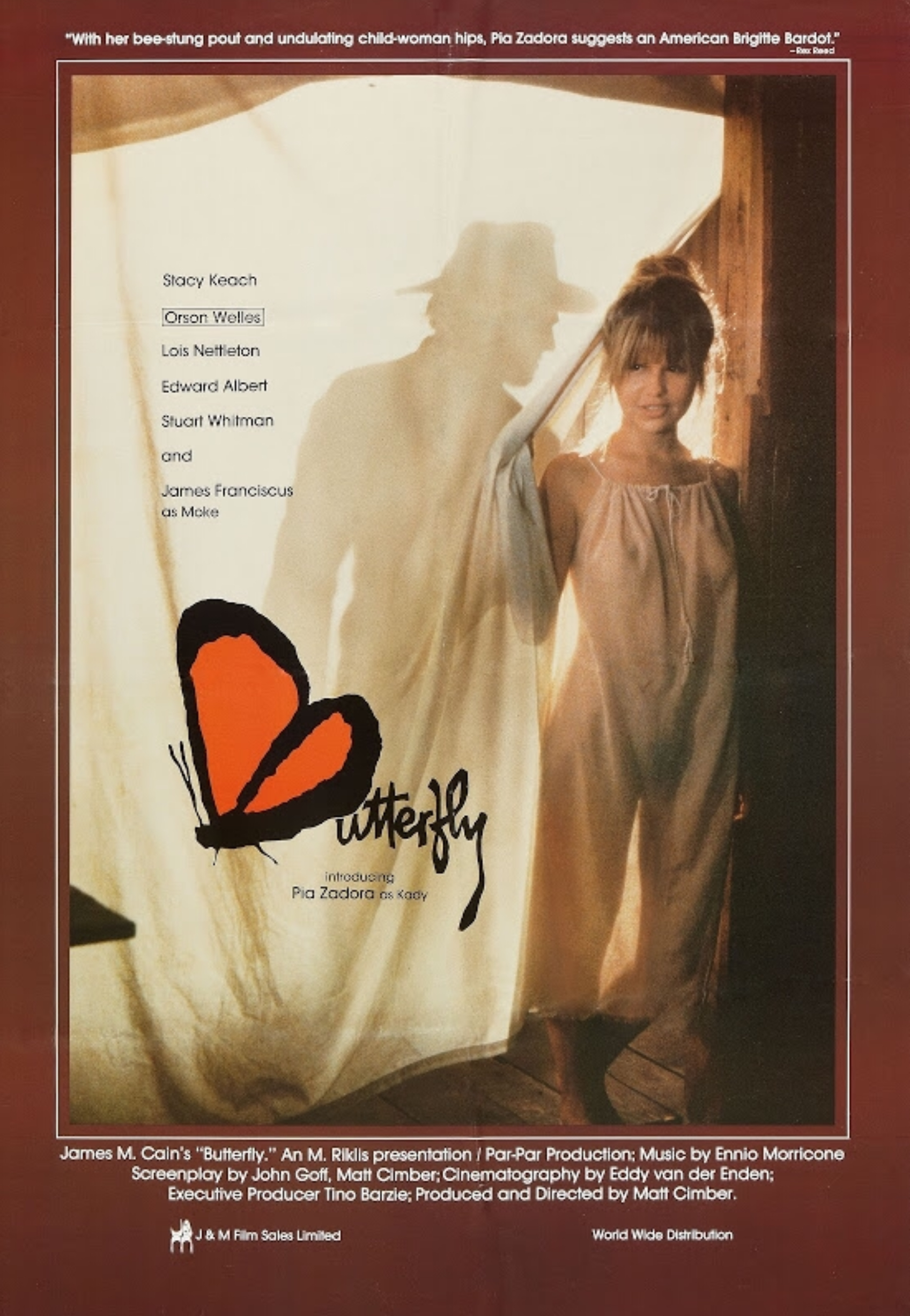
Butterfly (1982)

butterfly

By Richard Winters

My Rating: 0 out of 10

4-Word Review: Family has genetic birthmark.

Jess (Stacy Keach) takes care of an unused mine outside of a small Arizona desert town. One day Kady (Pia Zadora) shows up at his doorstep. Jess doesn’t recognize her at first, but then realizes she’s his 17 year-old daughter the product of his marriage to Belle (Lois Nettleton) who abandoned him 10 years earlier for another man named Moke (James Franciscus). She is pregnant by a man who refuses to marry her, so she  wants to steal silver from the mine that Jess protects in order to help her financially with the child who’s on the way. At first Jess disapproves, but Kady uses her provocative body and looks to essentially seduce him and get him to relent. However, a local man named Ed (George Buck Flower) witnesses their stealing from the mine as well as their lovemaking later on, which gets them arrested for incest.

The story is based on the 1947 novel ‘The Butterfly’ by James M. Cain, who at the time was an immensely popular author, who had many of his books made into movies, but due to the controversial nature of this one it had to wait 35 years until it finally went to the big screen. He was inspired to write the story when years earlier, in 1922, he got a flat tire while driving through a mountainous area in California and a farm family that had moved there from West Virginia helped him fix it, but at the time he speculated that the young daughter they had with them was a product of incest.  The movie makes several deviations from the book. In the book Jess was the overseer of a coal mine and the plot took place in West Virginia while the Kady character was 19 instead of 17.

While the plot has some tantalizing elements, and on the production end it’s well financed, the whole thing comes crashing down due to the really bad performance of its lead actress. Zadora at the time had done only one other film before this one, Santa Claus Conquers the Martians, which was universally lambasted. It probably should’ve killed anyone’s career who had been in that, but she continued to struggle on in the business. Then in 1972 while performing in a small role in a traveling musical show, she caught the eye of a rich businessman named Meshulam Riklis, who was 29 years her senior. The two began dating and eventually married in 1977. Her new husband was determined to make her a star even if it meant buying her way in. He put up the entire $3.5 million budget for the film while demanding that she be placed as the star forcing director Matt Cimber to cast all the other parts around her. Riklis even put up big money to help get her promoted to winning the Golden Globes Newcommer of the Year Award, but all of this didn’t get past the critics, or audiences who rightly saw her as undeserving of all the attention and while she did a few other movies after this, which were equally panned, and even a few music videos and singing ventures, she is overall largely forgotten today and hasn’t been in a movie in 30 years.

To some extent her performance isn’t completely her fault as her character is poorly fleshed-out, which is my main gripe. I just couldn’t buy in that this chick on the verge of adulthood would be so extraordinarily naive that she’d come-on to her own father and not see anything wrong with it. First of all why is she sexually into her dad anyways as majority of girls tend to want to go for guys their own age and if not there has to be a reason for it, which this doesn’t give. In either case she should have some understanding that the rest of society doesn’t condone this behavior nor having her aggressively flirt with literally any guy she meets. The fact that she’s so blissfully ignorant to the effects of her behavior made her not only horribly one-dimensional, but downright mentally ill. Sure there’s people walking this planet that harbor some sick, perverse desires, but virtually all of them know they’re taboo and not dumb enough to be so open about, or if they do they learn real fast. Having her unable to understand this, or never able to pick-up on even the slightest of social cues is by far the most annoying/dumbest thing about it.

Keach, who gives a good performance and the only thing that holds this flimsy thing together, has the same issue with his character though not quite as bad. The fact that he doesn’t even recognize his daughter at first is a bit hard to believe. Sure he left the family 10 years earlier, but that would’ve made her 7 at the time and although she has clearly grown I think she’d still have the same face. He gives into his temptations too quickly as at one point he massages her breasts while she’s in the tub. Now if he weren’t religious then you could say he didn’t care about the taboos and had been living so long alone that he’d be happy to jump at any action he could irregardless if they were related, but the fact that he goes to church regularly should make him feel guilty and reluctant to follow through. In the book he’s portrayed as fighting these internal feelings by turning to alcohol, which is the way it should’ve been done here as well.

The eclectic supporting cast does make it more interesting than it should. Orson Welles caught my attention not so much for his role as a judge, but more because of his wacky combover. James Franciscus, who usually played sterile good guys is surprisingly snarly as the heavy and Stuart Whitman has a few good moments as a fiery preacher though even here there’s some logic loopholes that aren’t explained like how did he know Kady was Jess’ daughter, which he mentions while at the pulpit much to the surprise of Jess as he hadn’t introduced her to anybody.

My Rating: 0 out of 10

Released: February 5, 1982

Runtime: 1 Hour 48 Minutes

Rated R

Director: Matt Cimber

Studio: Analysis Film Releasing Corporation

Available: DVD-R

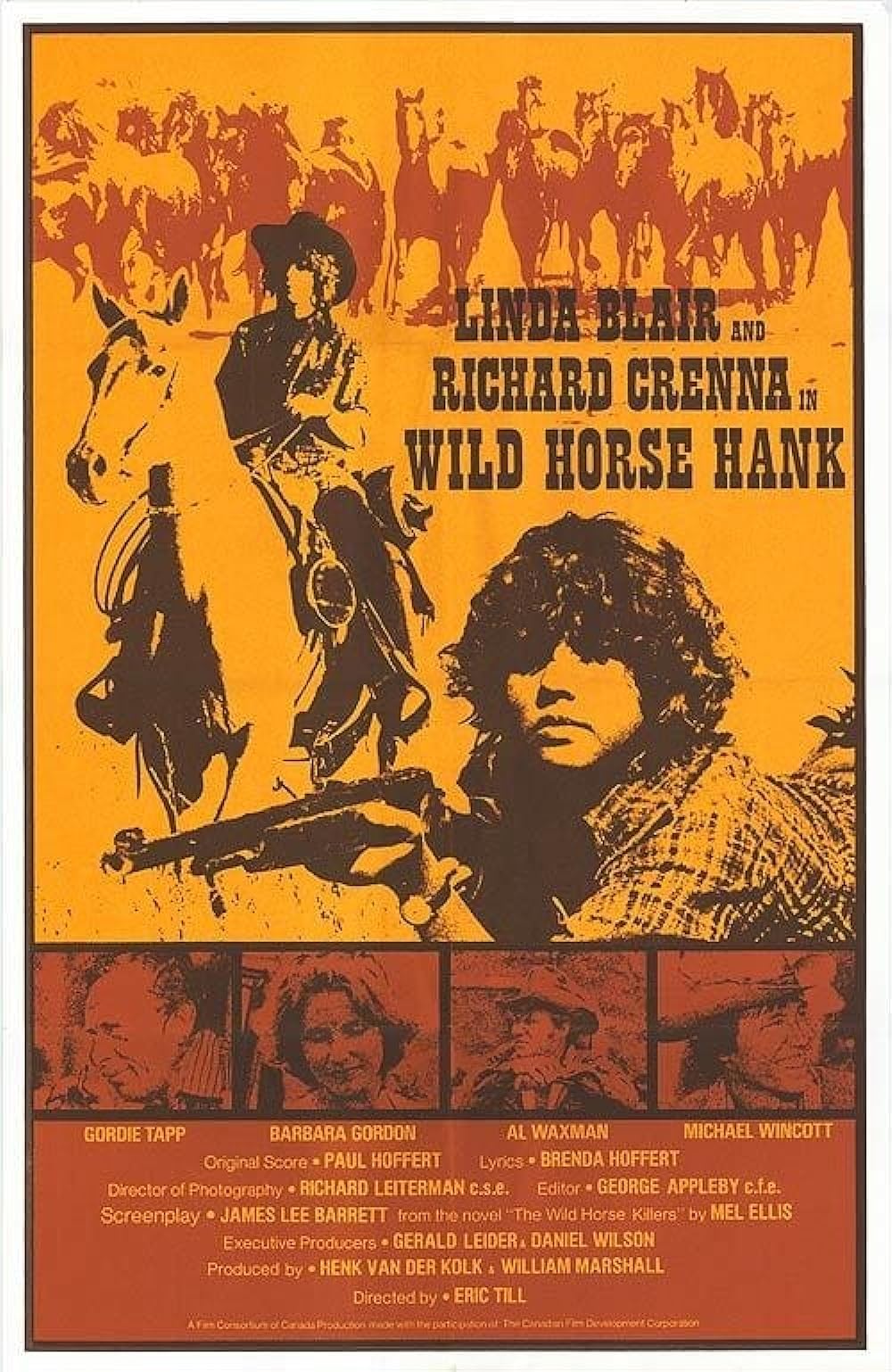
Wild Horse Hank (1979)

wildhorse

By Richard Winters

My Rating: 4 out of 10

4-Word Review: Teen girl saves horses.

Based on the novel ‘The Wild Horse Killers’ by Mel Ellis the story centers around a teen girl named Hank (Linda Blair) who while tracking down her escaped stallion comes upon a group of men abusing some horses. She later learns that these men plan on destroying them in order to resell their meat for pet food. Hank becomes determined to herd them along treacherous terrain to the safety of a federal park where the horses will be free to roam without danger of being hunted. The problem is that it will be 150-mile trek and her father (Richard Crenna) doesn’t feel she’ll be up to the job, but Hank isn’t use to taking no for an answer and decides, with rifle in hand, to take on the challenge.

What stood out for me was the gorgeous western Canadian setting filmed on-location at both Dinosaur Provincial and Waterton Lakes National Park in the province of Alberta. The vast open view gives one a true sense of the outdoors and the rugged elements. The portrayal of the towns folk particularly the girlfriend of one of the bad guys, played by Barbara Gordon, who refers to her toddler son as her ‘popcorn fart’ and allows him to sip beer while complaining to everyone that he’s ‘a burden’ displays in raw fashion the economic hardship of country living and how fringe some in that region are and what levels they’d be willing to resort to in order to try and get out of it. It also gives a motivation for why the men are as savage as they are and it isn’t so much that they’re just ‘evil’, but more because other opportunities in such isolated areas are sadly few and far between.

The men are portrayed differently than in most other films where bad guys are given menacing looks and threatening presence. Here though they’re more like non-descript jobos you might find at the neighborhood bar, who on their own don’t pose much of a threat and like with the culprits in the classic film Straw Dogs don’t really become scary until they band together showing how otherwise benign people can become dangerous through peer pressure and financial insecurity, which in a way ends up making them even scarier.

Blair can certainly be a great actress if given the right material and knowing how much she loves animals I’m sure she took on this project because the theme was close to her heart, but the character doesn’t offer her much acting range. Normally the protagonist is supposed to grow and change in some way during the course of a movie, but here she’s one-dimensional. She’s super head-strong right from the start and remains that way to the end making her personal journey static. Had she been insecure at the beginning and then learned to overcome those feelings would’ve at least given the character a genuine arch.

I was surprised too that Crenna, who’s only adequate in his role and borders on being miscast, doesn’t go along with his daughter on her trek. He argues with her about how dangerous it is and yet ultimately waves her on her way and stays home. Had he tagged with her there could’ve been more opportunity for conversation and learned more about these people instead of long segments of silence, which makes the viewer more emotionally detached from what the character is going through instead of engaged.

I know I’ve complained about other adventure movies that throw in a hooky romance as a subplot, which I usually find annoying and yet this is a rare case where I wish it had been done. There’s a young good-looking guy named Charlie, played by Michael Wincott, who’s related to the poachers, but teeters the fence on whose side he’s on. He has some interactions with Blair during her trek and seemed like he was a potential love interest, but then he disappears only to come back later. He should’ve stayed all the way through as they made an interesting and cute couple with just enough animosity to keep it spicy.

Spoiler Alert!

There is a scene where Blair’s horse gets injured and she’s forced to shoot it, which I found powerful and the climactic sequence in which her father, who conveniently reappears again, gets all the truckers to create a roadblock, which stops the traffic, so the horses can cross the road. Overall though the film lacks subtext. The formula is too simple and straight forward. It may interest preteens especially those who love horses, but the main characters aren’t multi-dimensional.

My Rating: 4 out of 10

Released: May 15, 1979

Runtime: 1 Hour 35 Minutes

Not Rated

Director: Eric Till

Studio: Canadian Film Development Corporation

Available: DVD-R

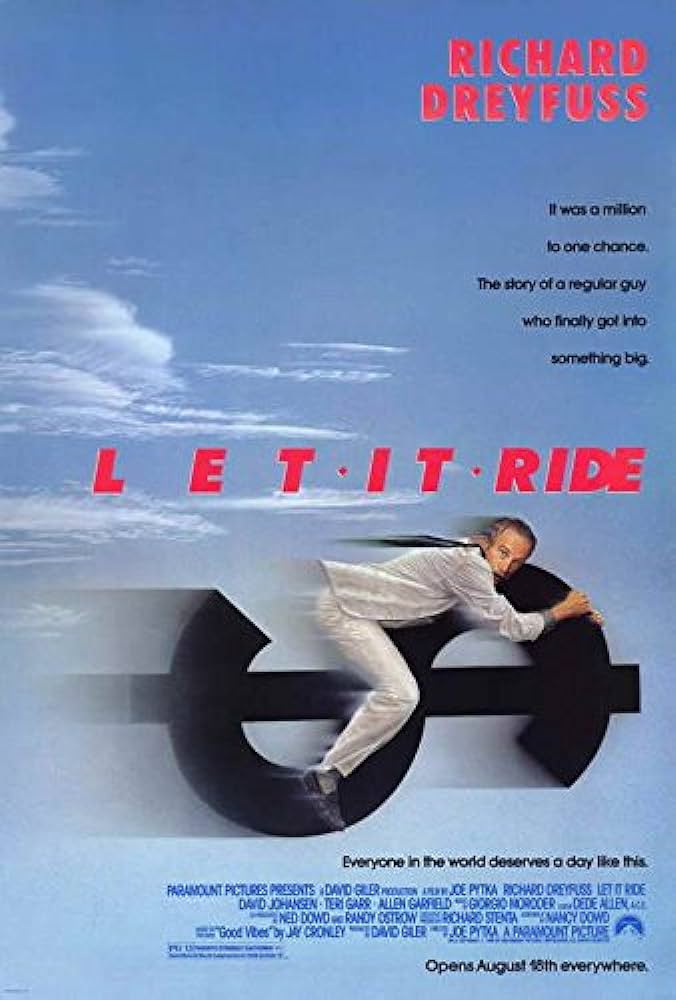
Let it Ride (1989)

let

By Richard Winters

My Rating: 5 out of 10

4-Word Review: Betting at horse racing.

Jay (Richard Dreyfuss) along with his friend Looney (David Johansen) are two struggling Miami cab drivers. One day Looney, who secretly records discussions that his passengers have while in the backseat of his cab, overhears a tip by two men of an upcoming horse race. He passes on the recording to Jay. Jay has not had much success in betting and has even promised his wife Pam (Teri Garr) that he will quit, but he can’t pass up this opportunity and places a wage on the horse that had been discussed. It turns out to being a photo finish in his favor and he spends the rest of the day making more bets by using all of his winnings as his wagering. Soon, he finds himself getting richer and richer even as his wife comes to the track in an effort to get him to stop. Will his luck hold, or run out?

Probably the best thing about the movie is the acting particularly by Dreyfuss, who’s known for playing aggressive, snarky types, but here comes-off as surprisingly sympathetic. You genuinely feel for the guy and his need to win at something and has one comically touching moment where he kneels at the toilet of a grimy bathroom stall and prays/pleads to God for a break. Garr, who reunites with Dreyfuss as the two starred 10 years earlier in Close Encounters of the Third Kind where they also played a husband and wife, is equally engaging though while seen right at the start disappears for quite awhile only to reappear briefly during the second act where it would’ve been better had she remained in it all the way through.

In support Johansen, better known as Buster Poindexter the lead singer of the punk band the New York Dolls, is amusing as Jay’s ever losing friend and Robbie Coltrane has some great reaction moments as the ticket seller. Jennifer Tilly almost steals it as a voluptuous vamp while Allen Garfield gets in a few funny quips as her Sugar Daddy boyfriend. A young Cynthia Nixon, wearing braces, can be seen as a underage girl trying to sneak in a bar with a phoney ID though her part doesn’t have all that much to do with the main plot and Michelle Phillips, singer from the Mama’s and the Papa’s, as a rich women who comes onto Jay at a luncheon.

The story, which is based on the 1979 novel ‘Good Vibes’ by Jay Conley, starts out well. I enjoyed the way it captures the working class life of Miami versus the usual glossy look at the chic neighborhoods of the area. All the actors including the stand-ins and those milling about in the background have a very ordinary, everyday quality, which nicely captures how people, who sometimes have very little money, will still flock to the track in a desperate attempt to ‘make it big’ even though it rarely ever happens. The shooting, done on-location at the famed Hialeah Park Race Track, one of the oldest in Florida, is terrifically done and you feel like you’re right there standing next to the track as the horses go thumping by while kicking up clumps of dirt.

The tone though is inconsistent. Instead of remaining this character study with a slice-of-life quality it instead skewers into becoming a camp comedy. Case in point comes when Jay gets arrested for mistaken identity, but still makes a mad dash to place his bet, which gets filmed in a sped-up fashion including having him crash through a wooden door with a cartoonish flair that’s jarring and out-of-place. It also gets highly exaggerated as in only one day’s time everyone at the track gets to know Jay and cheers him on, which is too quick of a turnaround for such a thing to realistically happen.

Spoiler Alert!

The ending leaves much to be desired as Jay just continues to win and win until his earnings amount to over $600,000 (or $2 million in today’s dollars), but what is causing him to have such a streak of luck? Did God really answer his prayers, or is some other mystic source at play? Everyone knows that you end up losing more than you win at gambling and a winner’s luck will eventually run-out at some point.  Showing a guy who never was good at gambling before without having earned it like learning some special skill, or insight, makes for a flimsy and fanciful movie. Getting lucky on one bet, maybe even a really, really big one that beats long odds, which is how the movie should’ve played it, might happen, but having him just continue to ‘get lucky’ with no explanation is too exaggerated and doesn’t show the harsh downside, which if you’re going to do a story about gambling in any type of realistic way, needs to be shown as well.

My Rating: 5 out of 10

Released: August 18, 1989

Runtime: 1 Hour 27 Minutes

Rated PG-13

Director: Joe Pytka

Studio: Paramount

Available: DVD, Blu-ray, Amazon Video, YouTube

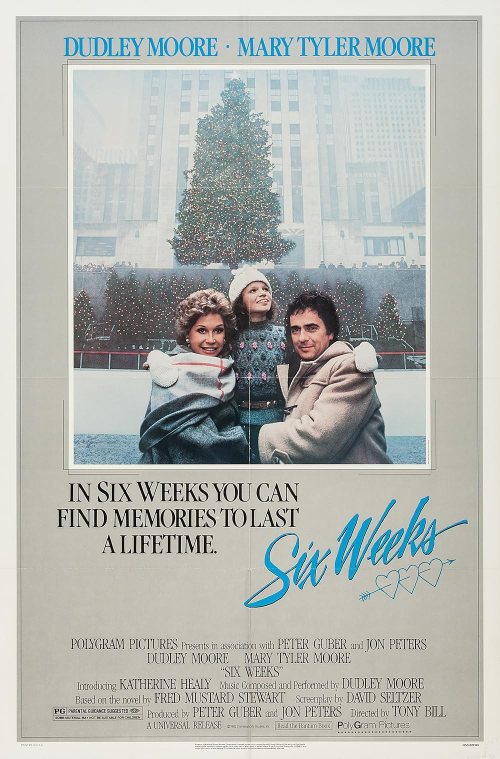
Six Weeks (1982)

sixweeks

By Richard Winters

My Rating: 1 out of 10

4-Word Review: Young girl has leukemia.

Patrick Dalton (Dudley Moore) is running for political office in the state of California when he becomes lost while trying to find his way to a political fundraiser where he is to be the keynote speaker. He stops to ask a young girl, Nicole (Katherine Healy), for directions and the two strike-up a conversation. He invites her to the fundraiser and finds that she’s the daughter of Charlotte (Mary Tyler Moore) who is the wealthy owner of a cosmetic company. Initially Charlotte is frosty towards Patrick convinced he’s just another opportunist politician. Nicole though grows very fond of Patrick and volunteers to work on his campaign. Charlotte, after seeing how much her daughter likes Patrick, even agrees to give him a generous donation, which he initially rejects until he learns that Nicole has been diagnosed with leukemia and has only a short while to live. This causes Patrick to become quite close to Charlotte and Nicole and he begins visiting them frequently much to the concern of his wife Peg (Shannon Wilcox) who thinks he’s having an affair.

Hard to find much to like about this shallow tear-jerker that was based on the novel of the same name by Fred Mustard Steward. I did though like seeing Dudley, who also composed the film’s score, in a rare dramatic turn. He’s best known for his comedy, but even when he was at his goofiness I still detected a serious side to him and this role here brings that out quite well. I did though have issues with the marriage angle as I felt the wife gave up too easily. She does show-up at a party that the three others are at in an attempt to make them uncomfortable, which it does, but I felt she should’ve created more of a scene. This was done in an era where putting up a veneer of civility was expected even when it was with people who shared intense feelings towards each other, but these days there’s jilted women out there that don’t take kindly to those that are out to ‘steal their man’ and could lead to some very public catfights, which could’ve given the film a lively energy as well as making the viewer more sympathetic to Dudley for leaving her as she would be better deemed as a ‘psycho’. Yet the way the film does it here you’re actually sympathetic to the wife and Dudley, as noble as his intentions are, comes off looking a bit like a cad for literally just abandoning her and getting with the other two essentially full-time.

I was confused too why this didn’t hurt him politically. If I’m his opponent and I catch-wind that he’s been seen regularly with another women that’s not his wife I use it to my advantage to crush him in the polls with it, or this is something his wife could’ve done by tipping off to the press that he was seeing someone else in order to ruin his bid and get back at him, yet none of this occurs. What’s the point of having him be in politics if it’s not going to be used to enter in some potentially delicious dramatic conflicts? Might as well have him being a bland accountant since him as a politician doesn’t really add much, or make that much of a difference to what happens.

Healy, who as of this date is the only theatrical film she’s been in and much better known for her ballet work, is fantastic and shows a lot of poise for someone who never acted in a movie before. I enjoyed her worldly-wise character who despite her age shows a keen awareness to many adult topics, which I appreciated. Kids can be far more observant about things than many adults would like to think, so I was glad she wasn’t played-up to being cute, but painfully naive. I did though feel her protruding, poorly spaced teeth should’ve been straightened with braces and was surprised that her mother, being as rich as she was, hadn’t had that done.

Her leukemia that she’s supposedly suffering from is problematic as she goes through the great majority of the film showing absolutely no symptoms of it. She states that she’s refused treatment, so I guess that could explain why her hair doesn’t fall-out, but I’ve known people who’ve suffered from the illness and it takes a toll on one’s energy to the point that they become bedridden as it progresses and yet here she shows nothing but boundless energy and even dances on stage without any signs of exhaustion near the end. It got to the point that I started to wonder if she was faking being sick and I wouldn’t blame anyone for thinking the same thing.

The casting of Mary Tyler Moore, who won the Razzy award for her work here, was a real mistake. Although she was only 45 she looked more like she was 55 and too old to have a daughter that wasn’t yet even in high school. She shows at times quite a cold demeanor making the way she melts away and falls for Dudley seem too quick and forced. Watching the two walk side-by-side where she’s clearly way taller than him makes it resemble a mother walking her son than a couple and thus has the romantic angle visually look even more odd and awkward than it already is.

I was confused too about who this girl’s father was. I have never read the book of which this is based, so maybe it gets talked about there, but here it’s never mentioned. I would think that even if she was a product of a painful divorce her father would still want to see her especially if he knew she was dying. Even if it was just a passing fling that the mother had year’s ago it would be presumed that Dudley would be curious about it and at least ask since he was essentially taking the father’s place with his presence.

Having the Dudley character ‘pull some strings’ in order to get Nicole to perform onstage in the New York Ballet at the last minute was too fanciful to be believed. The other cast members would resent that they would have to rehearse for weeks, even months and years, just to get the opportunity to be on the show and yet this kid gets whisked into the lead, at the sacrifice of someone else, all at the last minute. I admit I liked seeing the Nutrcracker production, but having Nicole already a part of the cast, but afraid due to the onset of the disease she might not be able to do it when it became time for the performance, and having some overly ambitious understudy ready to take over if she couldn’t, would’ve made more sense and been more interesting drama.

Spoiler Alert!

The death scene has got to be one of the lamest I’ve ever seen. Again, she spends virtually the entire movie showing no outward signs of any problem and then while on a subway car she starts feeling ‘weird’ and then a few seconds after that she promptly falls over dead, which was so corny it was almost like the movie makers were begging the viewers to make fun of it.

My Rating: 1 out of 10

Released: December 17, 1982

Runtime: 1 Hour 48 Minutes

Rated PG

Director: Tony Bill

Studio: Universal Pictures

Available: Amazon Video, Tubi, Freevee, YouTube, VHS

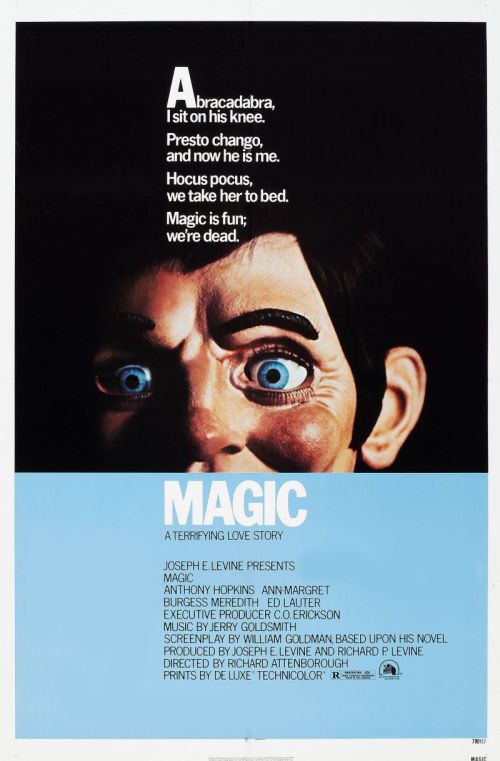
Magic (1978)

magic

By Richard Winters

My Rating: 7 out of 10

4-Word Review: Ventriloquist has split personality.

Corky (Anthony Hopkins) is an aspiring stand-up magician who’s finding it hard to play in front of live audiences. After a particularly disastrous effort he comes upon the idea of adding in a ventriloquist dummy named Fats into his act. The addition helps him become a top act and soon gets him the attention of well known agent Ben Green (Burgess Meredith). Ben wants to get Corky a TV contract, but first Corky must undergo a health physical, which Corky refuses to do. Ben insists that Corky has no other option, so Corky leaves the city and drives via a cab to the Catskills where he grew up and rents a lakeside cabin from his former high school sweetheart Peggy (Ann-Margaret). The romance between the two quickly renews, but then Ben finds out where Corky is staying and catches Corky alone in his cabin having an animated argument with his dummy convincing Ben that Corky has mental issues. Ben tells Corky that he’s going to get him psychiatric care, but Corky fears that if it gets out that he’s mentally ill he’ll never get another job offer and thus resorts to drastic action in order to keep Ben quiet.

The film is based on the novel of the same name by William Goldman who also wrote the screenplay. The novel was unique in that it was told through the voice and point-of-view of the dummy. While there had already been several stories and movies dealing with the ventriloquist/dummy persona including the film Dead of Night starring Michael Redgrave and a famous episode of ‘Twilight Zone’ where actor Cliff Robertson played a ventriloquist that gets tormented by his dummy. This film takes a slightly different approach where upfront the protagonist is clearly shown as having a major personality disorder and thus he’s the real threat while the dummy only symbolizes his inner turmoil between the ego and the id.

The film definitely has some creepy moments especially the dummy, whose spooky appearance is what makes it worth catching. It was modeled after Hopkins with oversized blue eyes, head, and mouth gives it an almost monstrous presence. Supposedly when it was completed and Hopkins first took it home to rehearse he got unnerved by it in the middle of the night and called Goldman to come over and pick-it-up or he was going to destroy it. The placid, gray setting of the isolated cabin, which was actually filmed in California despite it looking like northern New York, is perfect for this type of story and the serenity helps accentuate the suspense.

I really liked too the opening bit where a sweating Corky is seen bombing on stage in front of a apathetic crowd, which realistically hits home how nerve-wracking being up onstage for the first time can be though I wish we could’ve heard what Corky angrily shouted at the audience instead of having the sound of this blotted out by a voice over. It is though hard to believe that a man in his 40’s would get so addicted to his dummy, something he hadn’t used before then, that he couldn’t communicate without it and would have to take it everywhere he went. For a relationship to become this deep seated I’d think he’d have to have been doing a ventriloquist act from childhood on and thus the alter-ego of the dummy became meshed with his own as he grew older.

The acting is excellent by not only Hopkins, but also the supporting cast. Meredith is especially enjoyable playing the caricature of a Hollywood agent, which was modeled after the real-life one of Swifty Lazar, with his best moments coming whenever he takes out one of his expensive cigars, which are each separately incased inside a glass cannister. When he pulls the cigar out he then flings the cannister away, which can then be heard shattering onto the floor. Ann-Margaret known for her beauty and flair plays down her looks here as she wears no make-up and takes on a more earthy persona. Ed Lauter is also interesting playing her husband. Normally he’s a tough guy/bully and I thought this was going to come-out when he takes Corky out on a boat in the middle of a lake where he was going to threaten him to stay away from ‘his girl’, but instead he surprisingly displays a more vulnerable side and makes an emotional appeal to Corky to leave Peggy alone versus a strong-armed one.

Spoiler Alert!

The pacing is slow and the suspense builds very gradually though ultimately there are a few good spooky moments including a brief moment when Fats begins moving itself without the help of an operator and when Corky’s face suddenly begins to resemble the wooden dummy’s. Yet I felt it could’ve gone farther. The segment which has Corky crawling on the floor doing whatever the dummy tells him is certainly unnerving, but could’ve been accentuated more by showing it from Corky’s perspective where the dummy’s head would’ve grown to giant size as it looks down on the meek Corky as it gives him the orders.

The ending, at least when I first saw it, had me confused. The film climaxes with Corky returning to his cabin having stabbed himself and bleeding to death where he and Fats then slowly die together, but outside of the cabin Ann-Margaret appears telling Corky she has now changed her mind and wants to go away with him. Initially though it had been made to seem like Corky had killed her, so seeing her reappear as she does comes-off as almost dream-like. She also begins to speak in the dummy’s voice making it seem like his spirit had transferred to her.

Upon the second viewing many years later I came to the conclusion that this scene was meant to only be ironic. That if Corky had simply held-out longer Peggy would’ve agreed to go with him and thus him killing himself was a horrible waste, but in retrospect since he was suffering from such severe mental issues it was unlikely a long lasting relationship would’ve happened, so having her come back the way she does doesn’t really make much sense since she had been deeply offended by what he had said earlier, via the dummy. It would’ve been more horrifying had he chased her around the house and then killed her and the viewer seeing that get played-out.

My Rating: 7 out of 10

Released: November 8, 1978

Runtime: 1 Hour 47 Minutes

Rated R

Director: Richard Attenborough

Studio: 20th Century Fox

Available: DVD, Blu-ray, Amazon Video, YouTube

Bug (1975)

bug

By Richard Winters

My Rating: 3 out of 10

4-Word Review: Underground insects set fires.

A small, rural California community becomes besieged by a violent earthquake that opens up large cracks in the ground that allows a type of bug to come up through them that can start fires by rubbing its two legs together. Soon fires begin everywhere and there are many casualties. Professor James Parmiter (Bradford Dillman), a local scientist, is put in charge to research these new insects and see if there’s a way to control them. He eventually learns that their time is limited because they can’t handle the low pressure of our climate, but then one of the bugs kills his wife (Joanna Miles) and this creates an obsession in him to save the last of the species and breed it with a cockroach to create a new hybrid, which he successfully does, but with horrifying results.

The film’s greatest achievement, which was the last to be produced by famous horrormeister William Castle, is the photography of the bugs, which is sure to make anyone who is queasy about insects to be squirming in their seats. My favorite moment is when the professor stabs the bug’s underbelly and all of this white puss explodes out of its insides in slow motion. Some may also enjoy the weird electronic score by Charles Fox, but for me its the quiet moments that were far more effective with my favorite part coming right at the beginning during the opening credits where we hear nothing but the wind blowing off the open prairie while a white church can be seen in the background.

The fatal flaw is the fact that the characters are dull and one-dimensional with none of them standing-out, or having any discernable personalities. In order for the viewer to get emotionally wrapped-up in their fate they need to be interesting enough to save and these people clearly aren’t. What’s worse is that the protagonist, whom we are supposed to bond with and root for, begins behaving in stranger and stranger ways until he becomes as creepy as the bugs he’s fighting.

There’s just so many fires one can watch before it becomes redundant, so during the middle of the second act the film takes an awkward transition from being a disaster flick into a mad scientist one, but the way it gets done is confusing. Why would the professor want to keep the bug species alive as they’ve just killed his wife, so you’d think he’d be happy that they were dying off, but instead he saves one by putting it into a pressure chamber and then tries to mate it with another bug species. His motivations though needed to be better explained, but aren’t, which makes the whole second-half off-putting. Some fans of the film in their reviews on IMDb say it’s because the man goes ‘insane’, but why? Some may argue it’s because the death of his wife, which causes a breakdown, but there’s many people who survive the death of a spouse and it doesn’t turn them into a nutjob. If the man does have weak mental state that could collapse under a stressful event then this needs to be eluded to, or hinted at right at the beginning, so the viewer can be clued into the idea that the individual has mental issues, but it never is.

There are also those that say in the novel version, ‘The Hephaestus Plague’ by Thomas Page, which the film is based on, better explains the reason for the professor’s mental decline, which I don’t doubt, but the filmmakers cannot depend on the audience having read the book beforehand, nor should it be needed. The film needs to make the inner-workings of it’s lead character clearer on its own and in that respect the movie fails.

Spoiler Alert!

The way he’s able to create this new type of insect happens too quickly and seamlessly. Normally it should take many generations of breeding for a bug that doesn’t originally have any wings, and neither of the parents do, to finally begin to form them in their offspring and yet here this occurs literally overnight. The bugs are also capable of spelling out words with their bodies, but even a super smart species must learn the English language before they’re able to communicate it. No one has a language imprinted on their minds as they come out of the womb, or in this case the larvae, and yet here that’s exactly what we’re expected to believe.

Personally if I had directed it I would’ve done the storyline in reverse. Started with the professor already  in a secluded room in his house secretly trying to create a new species of bug because he has a God complex and wants to have an insect named after him. Then have the bugs escape from his lab and kill his wife and then go out into the town and start killing everyone else with their fires. I’m not saying this version would be perfect, but at least the narrative would be linear and the action better connected versus here where it comes-off like two different plotlines awkwardly spliced together.

My Rating: 3 out of 10

Released: June 17, 1975

Runtime: 1 Hour 40 Minutes

Rated PG

Director: Jeannot Szwarc

Studio: Paramount

Available: DVD, Blu-ray, Amazon Video, YouTube

End of the Game (1975)

endofgame

By Richard Winters

My Rating: 7 out of 10

4-Word Review: Unable to prove crime.

Richard Gastman (Robert Shaw) makes a bet with his young friend Hans (Martin Ritt) that he can commit a crime in front of him, but Hans will be unable to prove who did it. Later Hans’ girlfriend (Rita Calderoni) plunges to her death from off of a bridge. Hans is convinced Gastman did it, but just like he predicted he cannot prove it. 30 years pass and Hans is now a police commissioner with only a few months to live due to suffering from stomach cancer. His Lieutenant Schmied (Donald Sutherland) is found shot to death inside his police vehicle. He’d been assigned by Hans to keep tabs on Gastman as Hans was still intent on making him pay for what he did to his girlfriend, but he again can’t prove that Gastman killed Schmied though he’s certain that he did. Walter (Jon Voight) gets assigned to the case, but Hans can’t be completely honest with him about the case, so instead he sets Walter up to witness firsthand the brutality of Gastman for himself.

The story is based on the 1950 novel ‘The Judge and the Hangman’ by Frederich Durrenmatt who also wrote the screenplay and has a very amusing cameo as a man who plays chess against himself and always loses. The novel was first adapted into a broadcast for German television in 1957 and then again in 1961 for British TV, and then it got adapted for a third time for Italian television and then a fourth as a TV-movie for French broadcast before finally making it’s way to the big screen with this version, which so far has been the last adaptation to date.

The film was directed by Academy Award winning actor Maximillian Schell who was unable to get along with either of his leading actors with Shaw accusing him of being a ‘clockwatcher’ and ‘pocket Hitler’ while Voight described him as being humorless and overly demanding. The film is well directed for the most part, but an unusual reliance on humor almost kills it. The story itself is certainly not meant to be funny, but Schell implements comedic moments particularly in the first half when they’re not needed and almost a distraction. This is particularly evident during Schmied’s funeral and earlier when Schmied’s body is found and another cop drives the corpse to the hospital with Donald Sutherland, in an unbilled bit, playing the dead man and his body twisting around in weird ways as the car goes down the curvy road, which is humorous, but unnecessary and doesn’t help propel the plot. Initially too the corpse is spotted by some pedestrians who stare at it through the car window and seem amused by it, which isn’t exactly a normal reaction people have when witnessing someone who has just died. Possibly this was meant to show the public’s distrust, or disdain for the police, but if that were the case it should’ve been explained and elaborated.

The casting is unusual as it features Ritt in the lead who’s better known as a director, but here ultimately shines and becomes the film’s only likable character though the way he behaves throughout still makes him seem sketchy like everyone else. Shaw, who complained that he never got paid the $50,000 that he was owed for doing this, is commanding as usual, but Voight who wears a shaggy bleached blonde look comes-off as creepy right away. Technically the viewer is expected to side with his character, at least upfront and consider him a ‘good guy’, but right away Voigt telegraphs it in a way that makes him seem ‘off’ and hence kind of ruins the stories eventual twists.

For those who like complex whodunits this might fit the bill. The plot certainly does constantly unravel in surprising ways and no one should be bored, but the characters are cold and unlikable. There’s no one to root for and therefore the viewer is not as keyed into the outcome as they would’ve had they been more emotionally invested. The editing is also quite choppy and there seems to be certain key elements that get left out, which most likely due to the fact that the original runtime was 106 minutes, but the DVD version, the only one publicly available at this time, runs a mere 92 minutes.

My Rating: 7 out of 10

Released: September 21, 1975

Runtime: 1 Hour 46 Minutes (Director’s Cut) 1 Hour 33 Minutes (DVD Version)

Rated R

Director: Maximillian Schell

Studio: 20th Century Fox

Available: DVD-R