Category Archives: Movies Based on Actual Events

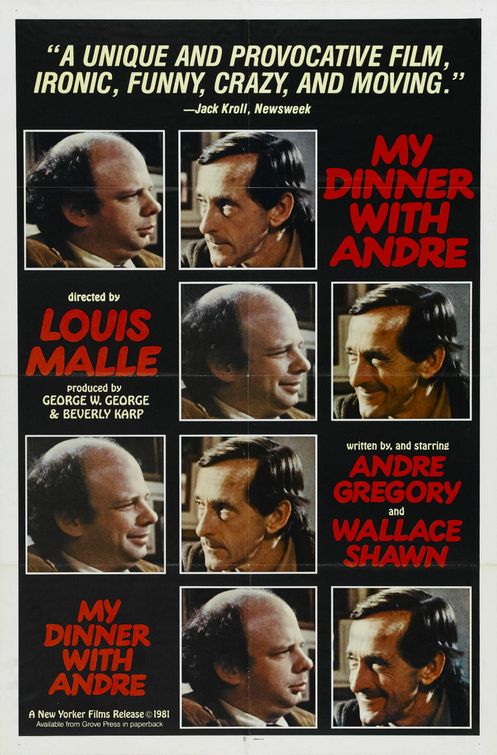
My Dinner with Andre (1981)

my dinner with andre

By Richard Winters

My Rating: 5 out of 10

4-Word Review: Talking can be interesting.

 
Rare is a film that can be categorized as being daring by what it doesn’t do than by what it does yet this is a film that fits that instance. This is a story about two old friends (Wallace Shawn, Andre Gregory) who meet at a fancy restaurant and have a long, pleasant conversation. That’s it. No big revelations, no cutaways, no side story, no fights, no jokes, and certainly no added cinematic effects. The men merely have the same type of conversation that two educated men on the same intellectual level might also have. Then after two hours they call it a night and go home.

Does this mean that this is a poor or boring movie? No, not really. Sometimes the best directing is just the guts to stick with a concept that is unusual. That is what Louis Malle does here and you have to give him credit. On its own simple terms it actually does succeed. One’s mind certainly does wander at times, but somehow you never lose complete interest. The simple framing and editing are actually effective.

The two stars are competent for what they are doing yet they do not seem to be the best of actors. At times they seem to be simply mouthing their lines and there is no nuance in their delivery. Gregory has a nice deep, resonate voice that almost seems like a radio announcers. He does most of the talking so at least he is pleasant to the ears. Shawn is the exact opposite. His voice is screechy and annoying. Yet he does supply an engaging voice-over narrative at the beginning, which is so fun you wished they had kept it going throughout.

The idea of following a real, genuine conversation is a good one. Sometimes it is interesting to observe all the threads a conversation between any group of people takes. However the conversation here isn’t real. It is clearly scripted out and that hurts it. The first hour is especially poor. It consists mainly of Gregory talking about some wild, fantastical experiences of his. It comes-of as forced and extended. Having some cutaways throughout his talking would have helped because a lot of what he talks about is very visual.

The second hour is better because Shawn gets more involved and they have a real discussion. The topics are more expansive and philosophical. They range from how one perceives reality to the very essence of our being. Of course anyone with some existential friends could have the same conversation, but at least it makes the film more stimulating.

In the end this is an interesting experiment that halfway succeeds. It would have helped had the two men, who seem to be playing themselves anyway, been allowed to have a more natural and impromptu discussion. Even adding a few more people into the mix wouldn’t have hurt. They could have also given it just a little bit more of a visual flair. Although watching the very good way that they listen to one another is a sight in itself. Their listening skills are so good that it almost seems unreal. It is unfortunate that everyone can’t have these same types of skills

My Rating: 5 out of 10

Released: October 11, 1981

Runtime: 1Hour 50Minutes

Rated PG

Director: Louis Malle

Studio: New Yorker Films

Available: VHS, DVD (The Criterion Collection), Amazon Instant Video
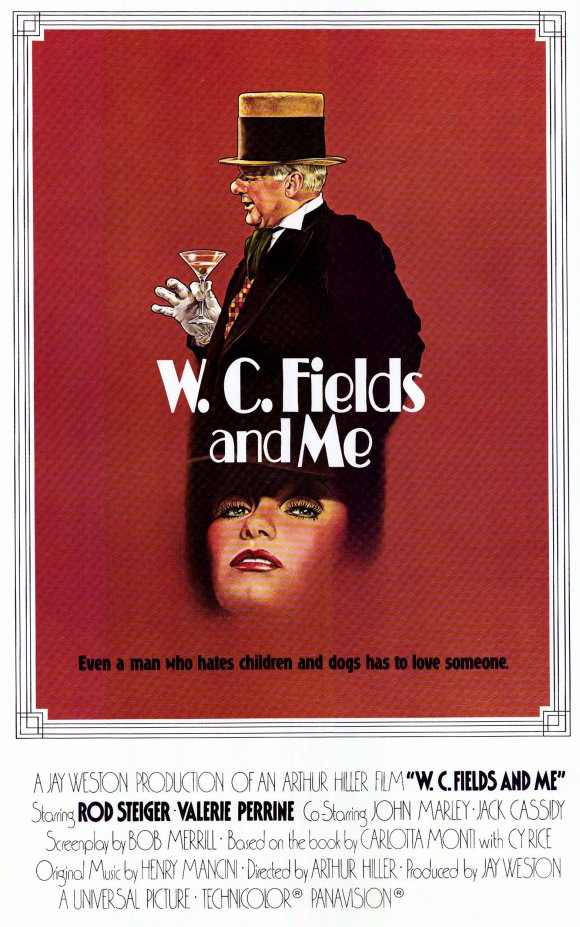
W. C. Fields and Me (1976)

W. C. Fields and me

By Richard Winters

My Rating: 6 out of 10

4-Word Review: Fields had a girlfriend.

Based on the memoirs from Carlotta Monti who was W.C. Field’s (Rod Steiger) companion for 14 years this film looks at their relationship as well as W.C.’s alcoholism and difficult personality.

This biography is highly romanticized and very light on the details. Apparently only one scene from the book is actually used in the movie. If one watches this in hopes of learning more about Field’s the man they will be disappointed. The tone seems similar to Oliver Stone’s The Doors where the intent is more on perpetuating the myth of its subject instead of tearing it down and showing the complete person. Just about everyone is familiar with Field’s drinking and cantankerous behavior, so having the film dwell exclusively in this area for the entire time is not interesting, or captivating.

The story would have been better served if it had been a complete bio beginning with Fields life as a child and then going all the way through to his death. Apparently he was born to an alcoholic father who beat him forcing Fields to run away from home at the age of 11 and live in a hole in the ground where he became dependent on stolen food and clothing for survival. He was in many fights and in and out of jail for most of his youth. Showing this could have been quite revealing, but instead the film skips past all of it and starts instead with Fields already in vaudeville and recreating a lot of corny comedy routines before having him drive off to Hollywood where his ascent to stardom seems much too easy and superficial.

Things improve during the second act when he begins his love-hate relationship with Carlotta (Valerie Perrine). Part of the reason this works is because Perrine is excellent. Her down to earth sensibilities really help balance the flamboyant ego’s around her and fit the character well. She is the one, not Steiger, who carries the movie and it was worthy of an Oscar nomination.

Steiger thought for sure that he would nab his second Oscar for his portrayal here, but instead didn’t even get nominated. His mimicking of Fields voice comes off as too rehearsed and effected. At times it gets annoying and just makes one want to watch a movie with the real Fields instead. His dialogue is too cutesy using lines borrowed from many of W.C.’s famous jokes and punch-lines. As expected he does induce the character with his famous Steigerisms and manages to not make it a complete misfire that it otherwise is. The scene, near the end, where Fields meets his now grown son that he hadn’t seen since he was three is his best moment.

Jack Cassidy is great in support as actor John Barrymore. The scene where he dies and his friends prop his dead body up into a chair and have him holding a liquor glass is amusing. Dwarf actor Billy Barty is good as Ludwig one of Field’s long-time friends. Some of the scenes the two share together are actually quite touching.

The film does a commendable job of recreating the period atmosphere. The music has a nice soothing quality to it and on the charm level it scores a bullseye. Despite my reluctance I found myself entertained by it, but as a biography it is flimsy, fictional and irrelevant.

My Rating: 6 out of 10

Released: March 31, 1976

Runtime: 1Hour 51Minutes

Rated PG

Director: Arthur Hiller

Studio: Universal

Available: Amazon Instant Video

Cattle Annie and Little Britches (1981)

cattle annie and little britches

By Richard Winters

My Rating: 6 out of 10

4-Word Review: She needs a spanking.

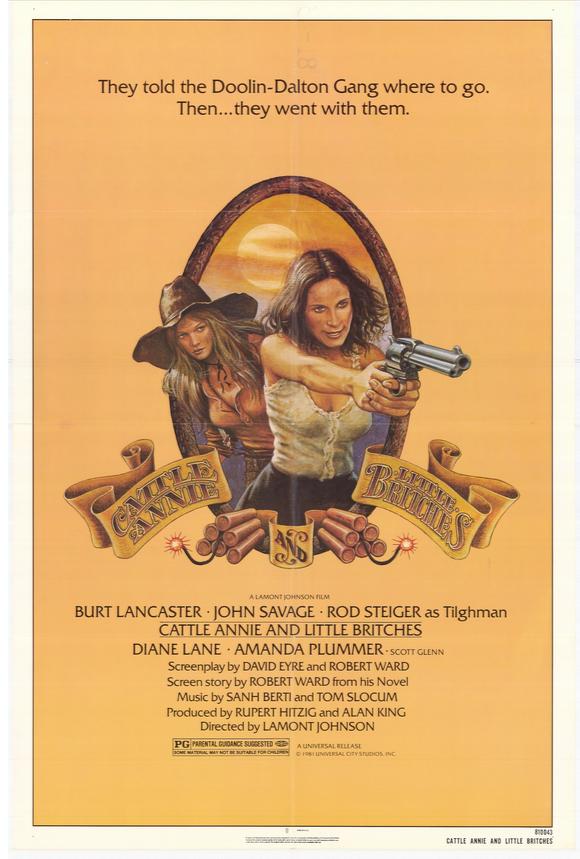
Based very loosely on actual events this film looks at Annie McDoulet (Amanda Plummer) and Jennie Stevens (Diane Lane) two adolescent girls traveling in the Oklahoma Territory of the late 19th century looking for excitement and adventure. Annie becomes transfixed with the stories that she reads about the western outlaws particularly the ones about Bill Doolin (Burt Lancaster), but when they finally do catch up with his gang they find the men to be old, haggard, and tired as well as just one-step ahead of the relentless pursuit of famed western lawmen Bill Tilghman (Rod Steiger).

Plummer, in her film debut, is nothing short of electrifying. She is the daughter of Christopher Plummer and actress Tammy Grimes and she makes her presence strongly felt here. Her vulgarity and tenaciousness are infectious and help propel the film and easily steal every scene that she is in. She has her mother’s distinctively reedy voice and although not beautiful in the conventional sense her facial features still have an alluring quality that she makes the most of.

Lane as her cohort is good as well although not as strong, or riveting. Her plus is the fact that she is simply beautiful with perfect and delicate features of a young lady blooming into adulthood. The fact that her character is more shy and unassuming plays off well against the abrasiveness of Plummer’s and the tussle that the two have near the end is fun.

Lancaster is badly miscast. For one thing the real Bill Doolin was much younger and in fact was shot dead at the young age of 38 and yet here Lancaster was already 66 when he did the part. I also felt that the character was a little bit too good to be true. It just seemed too hard to believe that a rugged western outlaw would be so kind, gentle, understanding and wise. I suppose his fans wouldn’t want it any other way and the part seems to be written to conform to his star status, but the effect hurts the film’s overall authenticity.

Steiger on the other hand is quite strong and director Lamont Johnson makes perfect use of Steiger’s legendarily intense manner. In fact I was disappointed that he wasn’t in more of the film as his presence helps create some much needed tension in a film that at times seems too slow and laid back. His finest moment, and the best part in whole film, comes when he tackles Annie and gives her a nice long hard spanking.

The score, like the film, seems unfocused and creates an unnecessary mish-mash of moods. The vocal ballads done with a minimum of instruments is good as they have a country twang and fit the period, but there are other points when a jazzed up score with modern rock elements is played, which takes the viewer completely out of the setting. There is also too much music played when the natural sound and ambience would have been better especially with a western.

Watching the girls interacting with the gang as well as surprising them with their unexpected toughness is what makes the film interesting. The climatic sequence in which the two decide to go by themselves to get Bill out of jail and the very brazen and clever way that they do it is special. Why Universal decided to abandoned what is otherwise a pleasing little western is baffling. This film is long overdue for a DVD/Blu-ray release and fans of the cast should let the people in charge know as well as taking the studio exec, if he is still around, who decided to put the kibosh on this movie and throw him into a lake.

My Rating: 6 out of 10

Released: April 24, 1981

Runtime: 1Hour 35Minutes

Rated PG

Director: Lamont Johnson

Studio: Universal

Available: None

Inherit the Wind (1960)

By Richard Winters

My Rating: 6 out of 10

4-Word Review: Don’t teach Darwin theory.

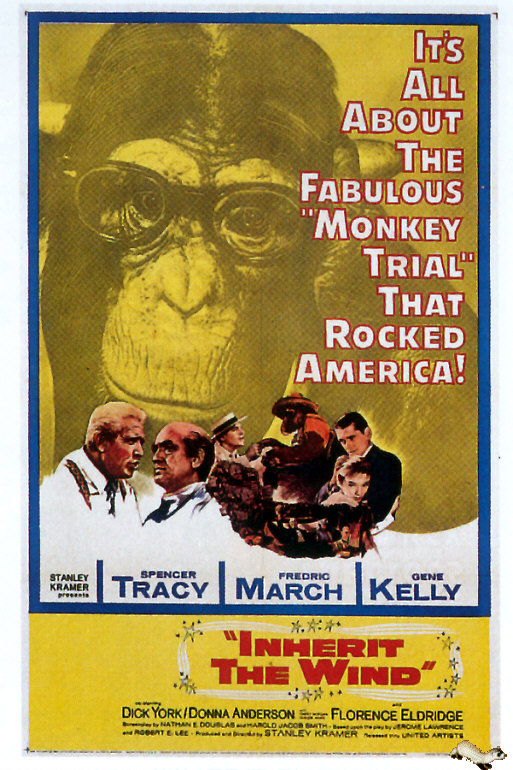
Bertam Cates (Dick York) is a  young school teacher who is put on trial for the teaching the Darwin theory of evolution in the film version of the hit stage play, which in turn was a variation of the famous trial of 1925.

Although labeled a ‘classic’ this film seems awfully stilted and heavy-handed. Everything gets overplayed with too much emphasis on high drama, which in certain instances becomes unintentionally funny. Director Stanley Kramer shows his bias from the beginning and doesn’t allow the viewer to come to their own realization on the issue. The townspeople are the embodiment of every small town cliché you can think of. The buildings that make up the town appear quite obviously to have been built on some studio back-lot. The same goes for the stagy indoor sets as well. Location shooting really helps even if it does go over budget. Just look at this film and then watch Joshua Logan’s Picnic and then decide which one gives you the stronger more lasting impression of small towns.

Fredric March is an accomplished actor, but goes over the top with his performance as the fundamentalist prosecutor Matthew Brady. He plays the character like he is a comical buffoon and uses too many exaggerated gestures and facial tics. Having the character go through a meltdown at the end is almost anticlimactic since he seemed destined for it from the very beginning. George C Scott, who played the same role in the Showtime remake, is much better.

Spencer Tracy as the defense attorney Henry Drummond is great and becomes the film’s main virtue. He is such a master of his craft that he is a joy to watch. He makes it seem all so effortless and natural and yet fascinating at the same time and the character he creates is quite memorable.

The courtroom showdown does allow for some fireworks and the final segment between Gene Kelly and Tracy proves interesting and introspective. The film does have some strong moments, but as a whole it seems kind of clunky.

My Rating: 6 out of 10

Released: July 21, 1960

Runtime: 2Hours 8Minutes

Rated NR (Not Rated)

Director: Stanley Kramer

Studio: United Artists

Available: VHS, DVD, Amazon Instant Video 

Texas Chainsaw Massacre (1974)

By Richard Winters

My Rating: 9 out of 10

4-Word Review: Man can she scream.

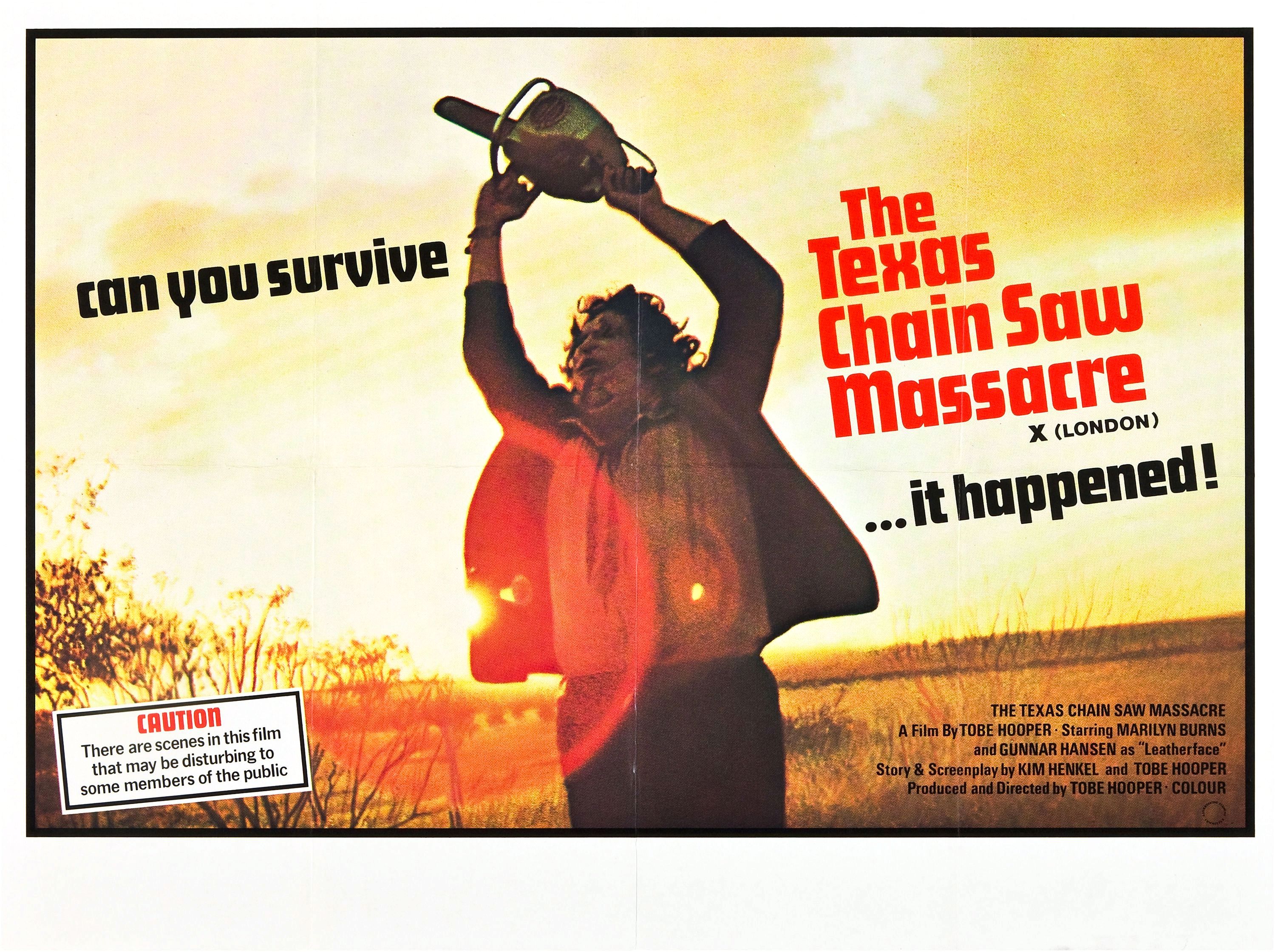
Four young adults on a summer trip inadvertently come into contact with a mutant family and their chainsaws.

This is the type of horror film most others strive to be, but usually never succeed. The tension builds right from the start. It’s slow but consistent and eventually hitting on an almost unparalleled level. Director Tobe Hooper and cinematographer Daniel Pearl make terrific use of the location shooting. Between the music and visuals you are given an otherworldly sense. The atmosphere literally hugs you with the dementia of the situation. You feel as engulfed with it as our heroine Sally Hardesty (Marilyn Burns). It transcends most other horror films simply because of its intensity and grotesque perspective. It blends so many unusual things together and yet everything still works. It’s both artsy and raw, moody and exciting, humorous and ugly and a masterpiece in many ways.

If you are looking for gore you may end up disappointed. Despite its reputation there really is very little if any. Apparently they were going for the ‘PG’ rating, but even so certain scenes become almost laughable with their restraint. One scene in particular features Leatherface (Gunnar Hanson) jumping out at a man in a chair. He jams his chainsaw into him and yet only small droplets of blood can be seen coming out.

There is also the problem of Marilyn Burns running. By most crew accounts she was a slow runner. This caused problems because it would allow the assailants to actually catch up to her even though they weren’t supposed to. Both Hansen and Edwin Neal as the Hitchhiker have to do some goofy things to avoid reaching her. This is obvious in the final chase sequence and it hurts the tension a bit.

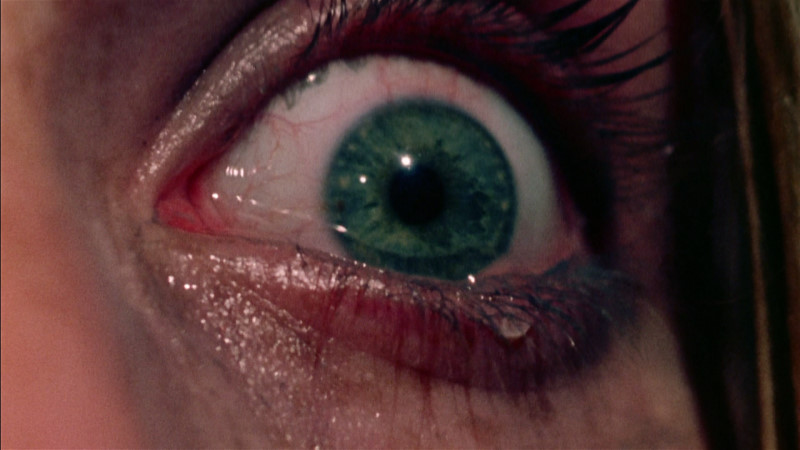
I still feel though that Marilyn was a good choice for the part. Her face holds an authentic look of terror and her screams reach amazing decibels. The graphic close-ups of her eyes are astounding and memorable.

This film makes its sequels look awful. A good companion to this picture is Hooper’s follow-up film Eaten Alive. It has the same atmosphere and intensity and is interesting in an equally odd way with Neville Brand making a unique villain.

My Rating: 9 out of 10

Released: October 1, 1974

Runtime: 1Hour 23Minutes

Rated PG

Director: Tobe Hooper

Studio: Bryanston Distributing

Available: VHS, DVD, Blu-ray 

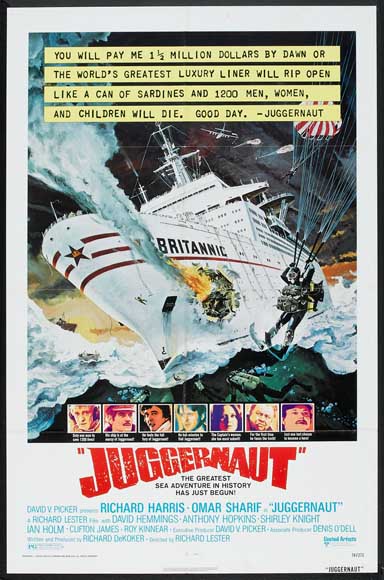
Juggernaut (1974)

By Richard Winters

My Rating: 8 out of 10

4-Word Review: Bomb on a ship.

The Britannic, a luxury liner traveling in the North Atlantic and carrying 1,200 passengers, is threatened at being blown up by a unknown man who calls himself ‘Juggernaut’ and states that he has planted a bomb somewhere on the ship. The British government decides not to give into his demands for a ransom and instead flies in bomb expert Anthony Fallon (Richard Harris) who along with his team is assigned with dismantling the 7 bombs and are given little time to do it before they are set to explode.

This film follows the typical disaster flick formula, but it does it so damn well that I was riveted and entertained from the first minute to the last. Director Richard Lester is known for his comedy and implements it into all of his films even when the genre is action. Sometimes this doesn’t work Superman III is a good example where the campiness became too much, but here it makes for a nice balance. The tension is quite strong. The scenes involving the bomb dismantling are not only gripping, but fascinating as you learn the minute intricacies to the bomb mechanics. The extreme close-ups are excellent and make you feel like you are right there. Watching the demolition experts being dropped from a helicopter and into the cold ocean where they are to swim to the liner are impressively vivid. The story moves well and consistently brings in new twists.

Harris is fantastic as the sort of anti-hero. He is gruff, brash and irreverent yet he is good at what he does and knows how to do it. I found myself captivated with him and pulling for him emotionally. Unlike the cookie-cutter pretty boy heroes of most Hollywood movies this guy is real and rugged. I wish more movies could have this type of character in the lead.

The bad guy isn’t quite up to the same level. I liked how the film keeps his identity a mystery until near the end, which helps elevate the intrigue. His weird Scottish/Irish sounding accent heard over the phone is strange and I actually thought it was actor Harris doing it and I still think it might have been. The elaborate ploys used by the police to track him down as well as the culprits abilities to outfox them at seemingly every turn is engaging. It’s just a shame that when they finally catch him it wouldn’t have been for such a stupid oversight on his part, which ruins the mystic that is created and feels like a letdown. However, the final conversation that he has with Anthony over the phone is a gem.

British character actor Roy Kinnear is funny in his role as the ship’s social director. His vintage moment comes when he insists on having the scheduled masquerade party continue despite the fact that everyone becomes aware that the ship may explode at any minute. Kinnear’s patented nervous grin is put to great use here and practically steals the picture.

The supporting characters are above average. Normally in this genre these types of people end up being cardboard and clichéd, but here they were surprisingly multi-dimensional. The dialogue as a nice existential quality and the scenes where they discuss their potential and impending doom is never contrived or forced. I got a kick out of the two kids who were amusingly much more grounded and aware of things than the hyper adults.

If you are into compact suspense films that are tightly paced and without the loopholes and clichés then this film, which is loosely based on actual events, promises to be an entertaining two hours.

My Rating: 8 out of 10

Released: September 25, 1974

Runtime: 1Hour 49Minutes

Rated PG

Director: Richard Lester

Studio: United Artists

Available: VHS, DVD, Netflix streaming 

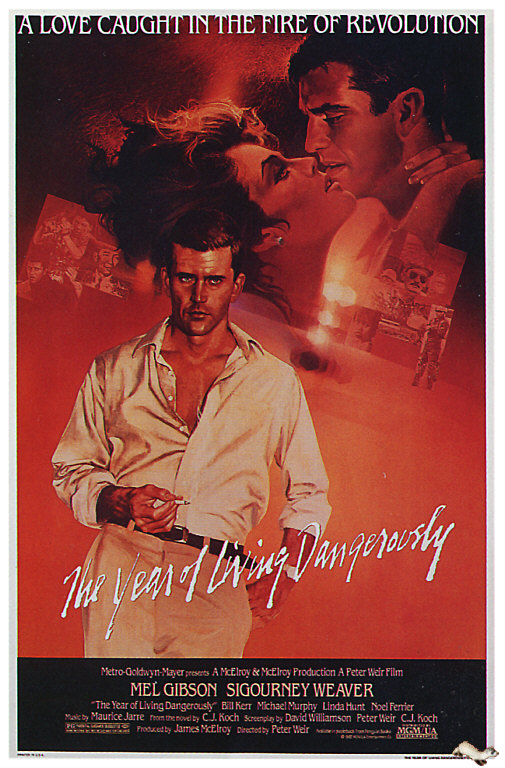
The Year of Living Dangerously (1982)

By Richard Winters

My Rating: 5 out of 10

4-Word Review: Experiencing life in Indonesia.

      Guy Hamilton (Mel Gibson) is a reporter who travels to Indonesia in 1965 just as the government is ready to be toppled. He experiences all the chaos as well as the poverty of the people and apathy from his fellow newsmen. He falls in love with a beautiful diplomat Jill Bryant (Sigourney Weaver) who works with a dwarf photographer named Billy Squires (Linda Hunt in her Academy Award winning performance), and eventually finds himself reluctantly thrust into the middle of the turmoil.

     The film is great at recreating the environment and atmosphere of that period. One gets a very good understanding and feeling at just how poverty stricken and desperate the Indonesian people where. Linda Hunt is unique and memorable as the male dwarf. She also has a great line when a fellow photographer asks her opinion of a picture that he took of a naked woman. He wants to know if she thinks it is art or pornography. Her reply, “If it is out of focus it’s art, if it is in focus it is pornography.” It is also fun to see journeymen supporting actor Michael Murphy playing against type. Usually he is saddled with rather transparent types of roles, but here his character is quite obnoxious.

      It would have been better had the film given the viewers a little bit more of a historical background before it just plopped the characters into a very chaotic and confusing situation. Most people probably have no clue as to the history of Indonesia let alone finding it on a map. It would have also been more interesting had the film been based on real people who really lived through the situation instead of predictable prototypes. A very young Gibson seems a bit overwhelmed with his role. His character seesaws from being boring to exasperating. He gets a huge crush on the Weaver character and chases after her like she is the only thing on his mind and then when she gives him an important piece of information he pounces on it even if it means losing her and their relationship. The pace is hurt by having the film spend too much of its middle section focusing on the romance, which really isn’t all that interesting or diverting. The ending is much too pat for a story that takes place in such a dangerous and complex environment.

      This is a grand idea that becomes too muddled and doesn’t place enough emphasis on the historical background and context. The lead character is boring and the pace is not compelling enough.

My Rating: 5 out of 10

Released: December 17, 1982

Runtime: 1Hour 55Minutes

Rated PG

Director: Peter Weir

Studio: MGM/UA

Available: VHS, DVD, Amazon Instant Video

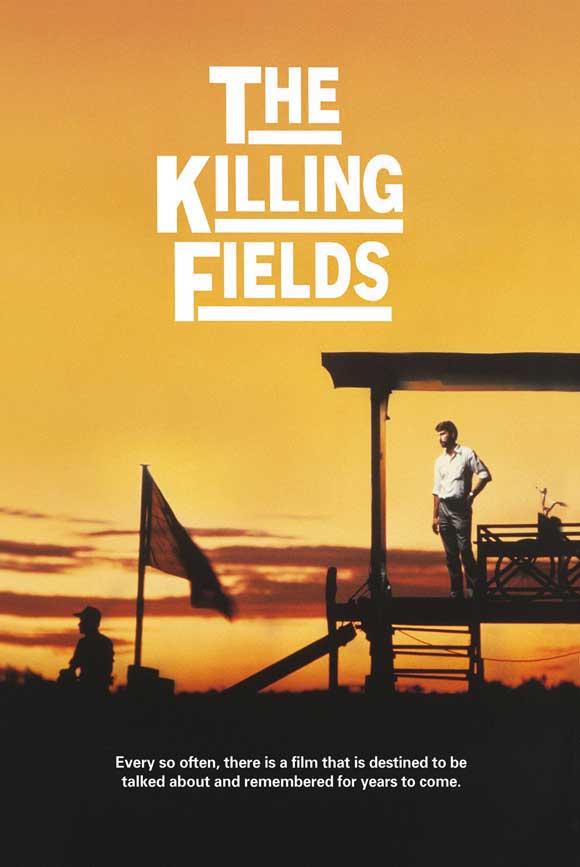
The Killing Fields (1984)

By Richard Winters

My Rating: 9 out of 10

4-Word Review: Journalists trapped in Cambodia.

This is an excellent fact based drama of Cambodian photo-journalist and English interpreter Dith Pran (Haing S. Ngor) who gets swept up in the Khmer Rouge revolution of the 1970’s and forced to survive for four years in their harsh work camps of ‘year zero’.

This film is intense, compelling, and uncompromising. The story stays very close to the true account and it is recreated with a believable atmosphere. Mike Oldfield’s unique music score is fabulous. The music that is played during the evacuation of the U.S. Embassy is one of the creepiest sounding scores that I have ever heard and it is quite effective. Oscar winner Ngor is good in the lead role and creates a tremendous amount of sympathy from the viewer and the ending still has a major emotional impact. Yet the most lasting images of the film are from the children. During one of the battle scenes a close-up of a child is shown holding his ears and crying while another scene has a screaming child in a hospital who is having shrapnel taken out of her spine. This is then correlated with the work camp scenes where the children are protrayed to be the most brainwashed by the party line and become the biggest instigators and purveyors to the torture and mayhem making it even more disturbing. In the end this film makes you ponder and feel the ugly depths of this very bleak and historical event.

On the negative side I felt it could have used some voice-over narration to help connect the scenes especially at the beginning. Some subtitles would have also been helpful during the scenes where none of the characters speak any English. The Sydney Schanberg character, played by Sam Waterston, seems at times to be quite obnoxious. He acts like being a journalist should somehow entitle him to everything and make him above everyone else. Also during scenes when he is photographing and covering the war ravaged victims he is more concerned with getting a nice graphic picture so it will sell more copy then he does with the actual suffering of the victim.

Overall this an extremely powerful and well-staged account of a horrific event that should not be forgotten, but unfortunately probably has for a lot of people.

My Rating: 9 out of 10

Released: November 2, 1984

Runtime: 2Hours 21Minutes

Rated R

Director: Roland Joffe

Studio: Warner Brothers

Available: VHS, DVD (Region 1 and 2), Amazon Instant Video

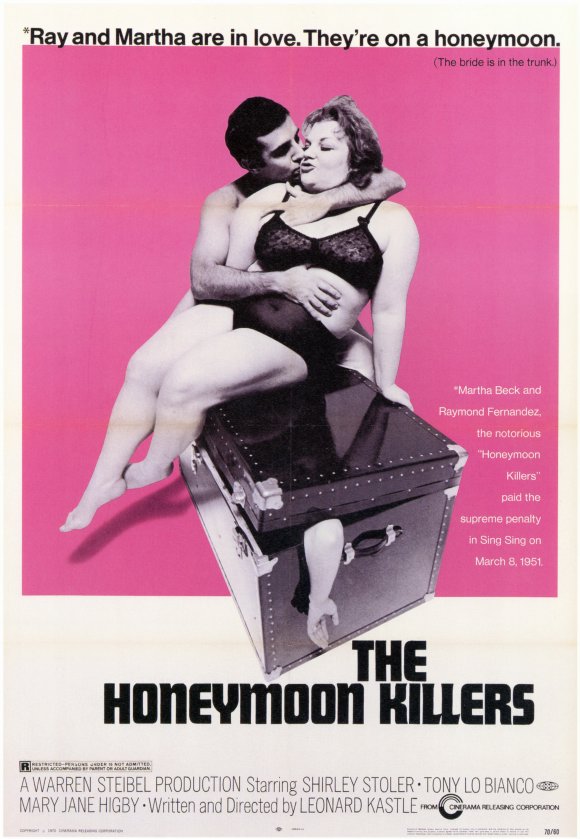
The Honeymoon Killers (1969)

By Richard Winters

My Rating: 7 out of 10

4-Word Review: Kill the old ladies.

A lonely and overweight nurse by the name of Martha Beck (Shirley Stoler) meets and falls in love with the shady Raymond Fernandez (Tony Lo Bianco) through a ‘lonely hearts’ club. As their relationship progresses he confides in her his practice of marrying women and then robbing them of their savings. She decides to get in on the scheme by posing as his sister. Together they roam the countryside and murder and rob lonely old ladies in this darkly humored tale that is based on actual events.

It is impossible to watch this film and not have actress Shirley Stoler imprinted on your mind forever after. The scenes of her working at the hospital make her seem like the ‘real’ Nurse Ratched. Lo Bianco is also perfectly cast in his role as Fernandez when one reads the actual account of the case the face and voice of Lo Bianco’s almost immediately comes to mind even before you’ve seen the film. His slow revelation at finding out just how vicious and cold Martha really is and that she ends up shocking even him is memorable. The crime sequences themselves are more like humorous vignettes. The lady victims are all humorously flawed and portrayed with such a variety of annoyances that you end up finding yourself looking forward at seeing them ‘get it’. The music played over the killings that starts out low as the crime begins and then builds to a loud and intense crescendo is terrific and the black and white cinematography nicely compliments the stark subject matter.

I was disappointed that although this is a story that is based on actual events for whatever reason the film is set in the present day when the actual events took place in the 1940’s.This was possibly done for budgetary reasons, but it would have made it much more authentic had it been kept in its proper time period. It would also have helped the viewer gain a little more understanding to the Martha Beck character had it given us more of a background on her. In real life Beck had been abused by her father and was also the mother of two children and yet the film never even mentions any of this.

The film wonderfully explores the twisted and sometimes pathetic nature of people in both the perpetrators and in the victims. This becomes much more than a simple reenactment of a true crime story and more like a dark expose of our fragmented world and the fringe characters that dwell in it.

Martin Scorsese was the film’s original director, but was fired early on due to creative differences. Leonard Kastle took on the reins and does a fine job. I like his grainy, cinema verite vision and it was a shame that this proved to be his only directorial effort

My Rating: 7 out of 10

Released: September 8, 1969

Runtime: 1Hour 48Minutes

Rated R

Studio: American International Pictures

Director: Leonard Kastle

Available:  VHS, DVD (The Criterion Collection) 

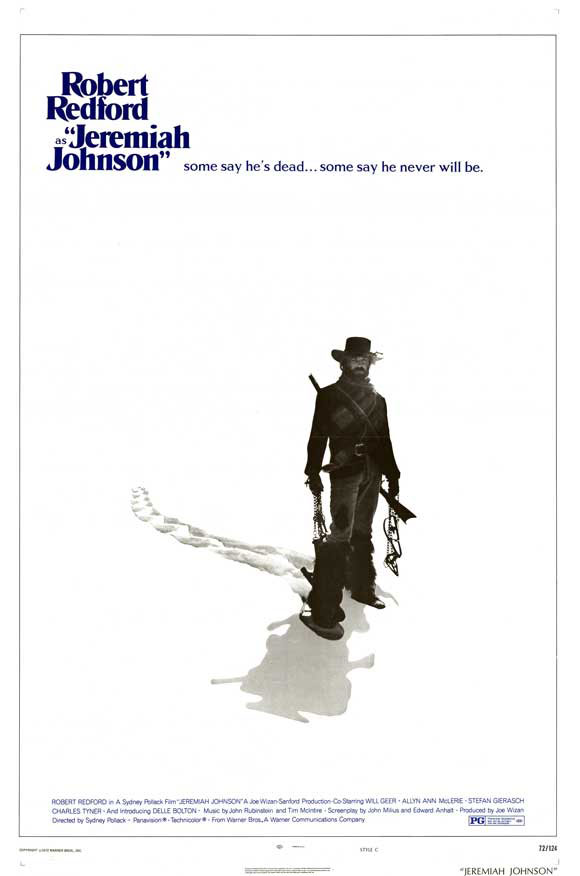
Jeremiah Johnson (1972)

By Richard Winters

My Rating: 6 out of 10

4-Word Review: Man in the wilderness.

            Jeremiah Johnson (Robert Redford) is a man who wishes to live life alone in the snowy mountains. His peaceful existence comes to an end when after riding through a sacred burial ground of the Crow Indian he becomes the target of young male warriors who attack him one-by-one when he is not expecting it to avenge his ‘desecration’. Jeremiah manages to defeat every warrior that challenges him turning him into a legend among the native tribes.

The film’s on-location shooting is outstanding and one of the chief assets in watching the movie. It was shot entirely in the state of Utah and there are many majestic long-shots where all you hear is the wind blowing and makes you feel like you are outdoors yourself alongside the character. The barren, empty winter landscape is well captured and while watching Jeremiah trudge all alone through the snow it was hard for me to imagine that there was actually a film crew present. The ambience of the natural surroundings is breathtaking and grabbed me immediately. I enjoyed the slow, quiet pace at the beginning and wished there had been more of it. One of the most enjoyable scenes is watching Jeremiah trying to catch fish with his hands out of a river, which could have been more entertaining had it been extended.

The story is loosely based on the real life exploits of fur trapper John Johnston who was known to cut out and eat the liver of every crow warrior that he defeated. There is nothing like that here and in some ways that is part of the problem. The ruggedness and reality seem to have been compromised by 70’s sensibilities with too many quirky scenarios and characters thrown in making the film’s structure reminiscent to Little Big Man, which was released just a few years earlier. That film seemed refreshingly cerebral, but here it becomes imitative and derivative.

Robert Redford is high in the looks department, but so-so in acting. He has always had too much of a detached presence and his range of emotions is limited. In some films this may work, but here the part needed more charisma and flair. The character was more like a modern day, touchy-feely male transplanted from Hollywood and into the wild than an actual 18th century hermit. For a man living off the land far from civilization he has to have the whitest most straightest teeth I have ever seen.

The supporting cast fares better. I loved Will Geer as the aging fur trapper Bear Claw. This guy has all the panache that Redford lacked and the movie would have been better had it made him the focus. Allyn Ann McLerie has a small, but riveting role as ‘the crazy woman’ who is unable to cope, or accept the fact that her family has been slaughtered by an Indian attack.  Stefan Gierasch has his finest hour as Del Gue a fur trapper that Jeremiah comes upon. During the first half you see him as bald only to have him return in the second half with a full head of hair. The scene where he is shown buried in sand up to his head is amusing and disconcerting at the same time.

My biggest issue with the film is when Jeremiah starts to fight off all the Indian warriors who attack him. I just could not believe that one man would be able to defeat and kill so many of them. I could understand maybe a few, but eventually odds would have to catch up with him. There is never any special skill shown for why Jeremiah seems to always get the upper hand during these battles. The fights themselves are not exciting as they are much too brief and edited in a way that it is hard to follow the action. It seems like it takes only a few seconds from when the Indian jumps him to when Jeremiah already has him on the ground dead. Jeremiah is also the only person I know of who can have a large spear pierce his body and all he does is pull it out and go on living without any noticeable injury.

The first half is more compelling than the second, which had me feeling bored. The side-story of having him take on an Indian bride as well as a young boy who does not speak has potential, but doesn’t go far enough with it. For an adventure story there is very little action outside of the Indian battles that to me seemed phony. The best sequence is a wolf attack that is nicely edited and graphic. The Crow Indian burial scene is effectively moody and starkly photographed.

The screenplay by John Milius and Edward Anhalt was written using material from two different novels and the lack of cohesion shows. Part of it wants to be a gritty nature drama while the other half plays like a mystical fantasy, but this uneasy mixture never gels, or works.

My Rating: 6 out of 10

Released: December 21, 1972

Runtime: 1Hour 56Minutes

Rated PG

Director: Sydney Pollack

Studio: Warner Brothers

Available: VHS, DVD, Blu-ray, Amazon Instant Video