Category Archives: Movies Based on Actual Events

The V.I.P.s (1963)

the vips2

By Richard Winters

My Rating: 3 out of 10

4-Word Review: Drama at the airport.

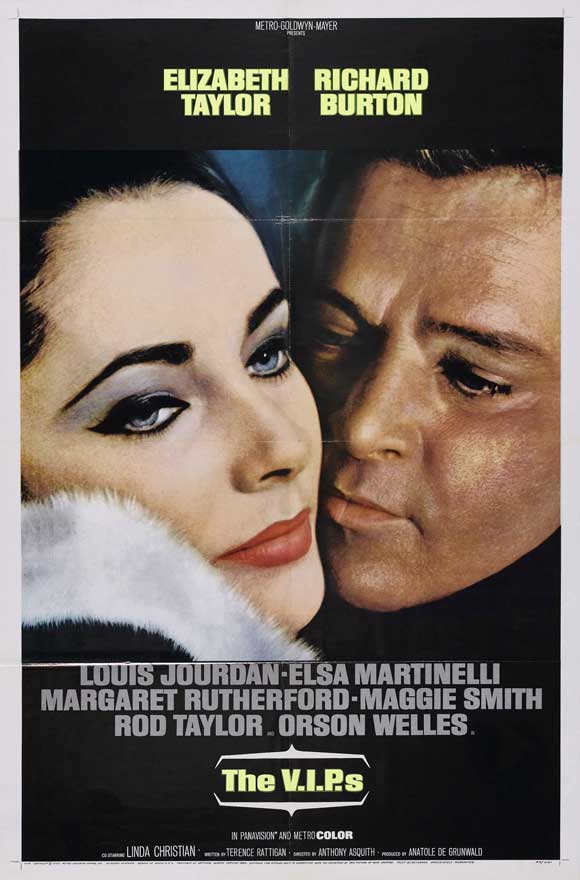
Several diverse characters come together at London’s Heathrow Airport. All have urgent needs that require them to board a certain flight that they hope will take off as soon as possible. Frances (Elizabeth Taylor) is the wife of rich tycoon Paul (Richard Burton) and is secretly having an affair with gambler/playboy Marc (Louis Jourdan). She has left him a ‘dear John’ letter at home and hopes to be well on her way to New York before he reads it. Les (Rod Taylor) is a businessman who also hopes to get to the Big Apple quickly to avoid the hostile takeover of his company. Max (Orson Welles) is a famous movie director traveling with his vapid starlet Gloria (Elsa Martinelli) and hoping to leave England before he is forced to pay an enormous tax penalty. Unfortunately for them a fog rolls in, which delays the flight and sends everyone’s plans into disarray.

The drama has some potential at the beginning, but the 2-hour runtime is much too long for this type of material. Whatever compelling elements the threads may have had when it started become lodged in endless talk and boredom. The scene where Burton smashes Liz’s hand against a mirror is the only time there is any action and Terence Rattigan’s soap opera script is too clichéd. Director Anthony Asquith’s direction shows no visual flair and fails to capture the airport in any type of interesting way. The background sets look like they were built on a soundstage and the fog effects are quite tacky.

Margaret Rutherford won the supporting Oscar for her portrayal of an aging Duchess. She adds some much needed humor particularly in the segment where she has difficulty getting her hat box into the plane’s luggage compartment. However, like with the story thread concerning the Orson Welles character she is seen to briefly and their scenes are spread so far apart that you almost forget all about them.

Spoiler Warning!

There is also another segment where a complete stranger played by actress Maggie Smith approaches the Burton character and asks him for a hundred and fifty three thousand pounds and he gives it to her in the form of a blank check, which had me floored. Men like him don’t become rich by handing out a lot of money to anyone who asks especially people they don’t know. Some may argue that because the character was considering suicide that he didn’t care anymore, but it still seemed too much of a stretch and for me sent this already stale drama into the realm of the absurd and ridiculous.

End of Spoiler Warning

Every story thread gets a nice, convenient happy ending that gives the whole thing a TV-sitcom quality and barely worth the effort to sit through. The production has some glossy aspects and certainly big-name stars, but ends up being a buildup to nothing.
the vips1

My Rating: 3 out of 10

Released: September 19, 1963

Runtime: 1Hour 59Minutes

Not Rated

Director: Anthony Asquith

Studio: MGM

Available: DVD, Amazon Instant Video
Funny Girl (1968)

funny girl

By Richard Winters

My Rating: 6 out of 10

4-Word Review: Fanny’s rise to stardom.

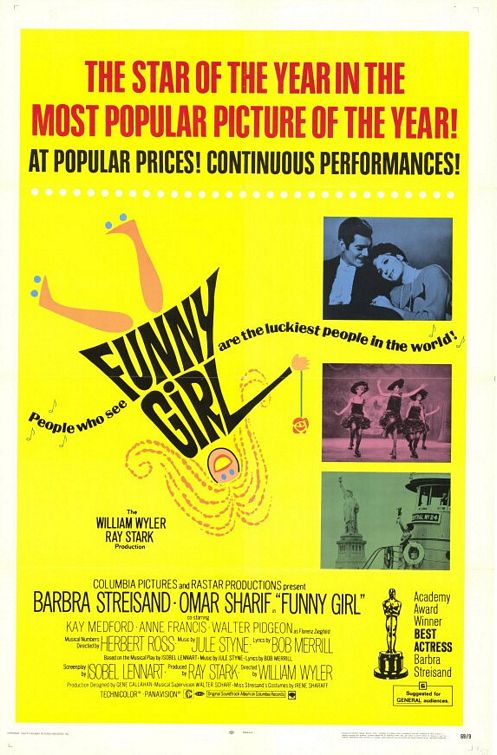
Barbra Streisand, in her film debut, plays Fanny Brice in this loose biography about the Jewish comedian’s rise to stardom in the Ziegfield Follies during the 20’s and 30’s. The story examines how she uses her homely looks to her advantage by honing in her comedic skills to allow her to stand-out. The second half of the film examines her romance and eventual marriage to professional gambler Nick Arnstein (Omar Sharif).

Streisand recreates her Broadway role in grand style and deserved her Oscar win in which she famously tied Katherine Hepburn that year for Best Actress. I’ve always liked her best when she is doing comedy and she has always shown a good knack for timing and delivery. Although stories abound how she was very difficult during the production and showed a tremendous ego, which culminated in the film going through two directors and cinematographers she still plays the very insecure Brice effectively and it’s this appealing ingredient the carries the film and character.

William Wyler’s direction is also outstanding and helps make up for a story that at times seems pretty light. He replaced Sidney Lumet early on and gives the film an added flair with lavish sets. I loved the French-style restaurant and expansive old fashioned New York train station. There is some excellent dance numbers in which Wyler takes full advantage of the visual element including a nifty ballet segment. The recreation of the period is authentic and there are even a few moments of dazzling camera work including the shot showing Fanny singing on top of a tugboat all alone in the New York harbor while the camera circles above her and then careens down.

Kay Medford adds good support as Fanny’s mother and it earned her an Academy Award nomination for supporting actress. Sharif is always solid, but the character seemed poorly fleshed-out and more of a personal background needed to be explored to help explain why he was so infatuated with the extremely insecure and awkward Brice when he could have easily attracted any girl. Walter Pidgeon lacks the commanding presence needed in the part of Florenz Ziegfield and instead comes off as a tired old man getting badly upstaged by Streisand in every scene he has with her.

The songs are pleasing and you may find yourself humming some of them for days afterwards, but I was surprised how few of them there really were with long dramatic intervals in-between. The story itself is placid as Brice’s rise to the top happens too quickly and too much time is spent on the romantic angle making the film seem unbalanced but it manages to be entertaining anyways due mainly to the high production values.

My Rating: 6 out of 10

Released: September 18, 1968

Runtime: 2Hours 30Minutes

Rated G

Director: William Wyler

Studio: Columbia Pictures

Available: VHS, DVD, Blu-ray, Amazon Instant Video

Electra Glide in Blue (1973)

electra glide in blue 2

By Richard Winters

My Rating: 9 out of 10

4-Word Review: Motorcycle cop turns detective.

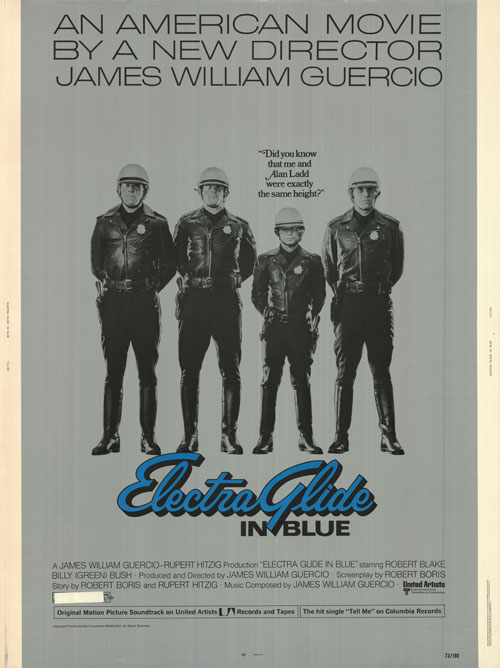
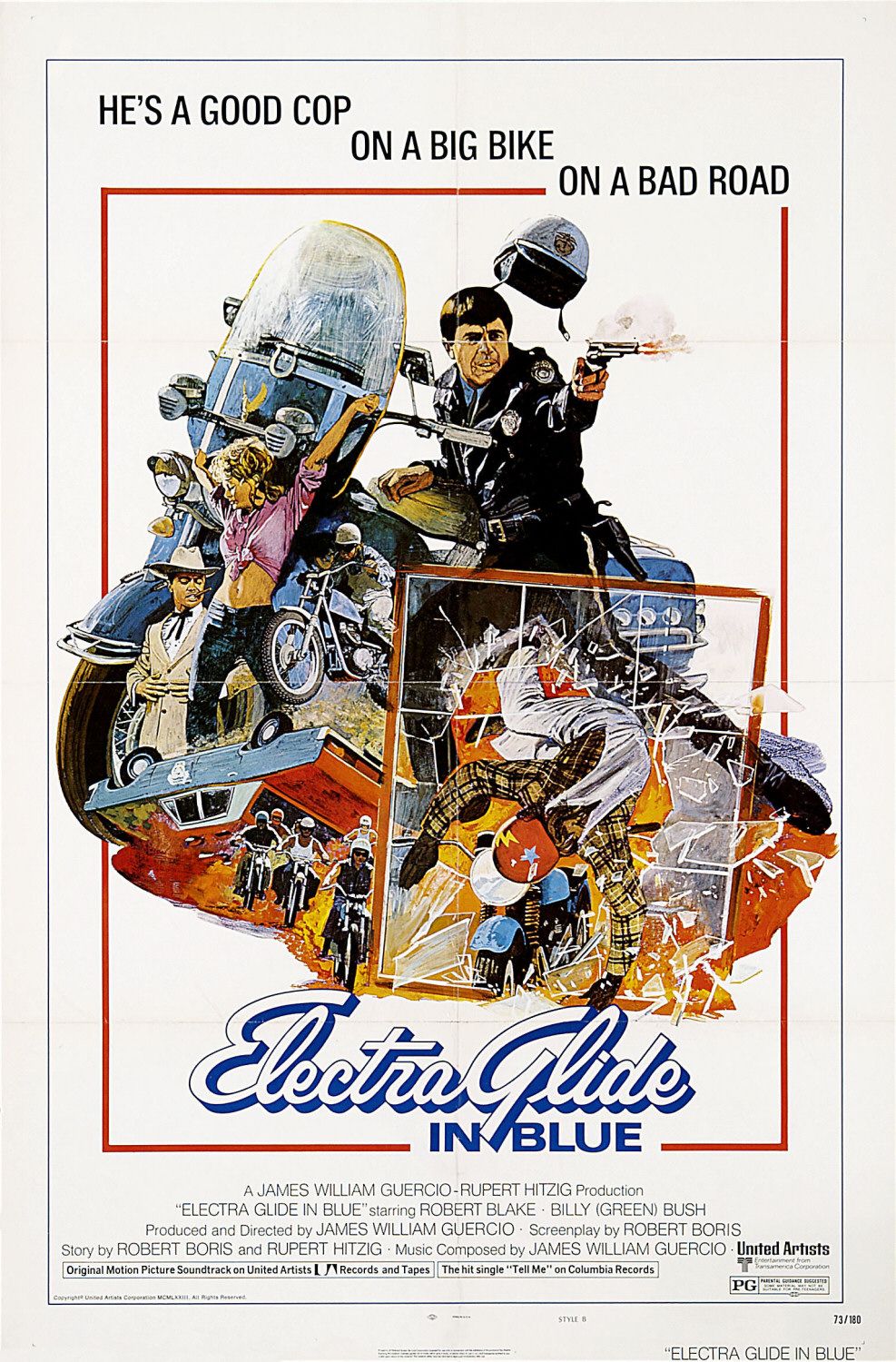
John Wintergreen (Robert Blake) is a motorcycle cop tired of giving out traffic tickets and interested in a more intellectual job like working in the homicide division as a detective. By chance he comes along an isolated desert hut with a dead body in it that appears to have been a suicide, but he is not convinced even though everyone else is. During the coroner’s investigation it is found to indeed have been a murder, which impresses senior detective Harve Poole (Mitchell Ryan) so much that he asks John to become his assistant. At first he is excited about his new opportunity, but finds the position has hidden drawbacks of its own and eventually he becomes just as frustrated with it.

The film shows police work in an offbeat and revealing light. How many cop movies have you seen showing policemen handing out traffic tickets? May sound boring and monotonous, but actually it is just the opposite. The arguments that the drivers give to try and get out of the fine are amusing and very on-target. This film goes well beyond the typical Hollywood prototype of a policeman and instead we get to see real people with a wide variety of personalities that make up the force. There is also a cool motorcycle chase that features wipe-outs done in slow motion.

Director James William Guercio may be better known for his musical contributions, but his directing is spot-on from the first frame until the last. The opening scene has a wonderfully visual style and the photography of the desert landscape is expansive and vivid looking almost like it could have been filmed yesterday. The fact that this is his only film output is a real shame as he has a keen eye for directing that is far better than some veteran directors and it is a waste that he hasn’t done more.

Blake fits into his role solidly and it almost seems like the part was written specifically for him. The visual digs at his short height are cute and I liked seeing the character evolve and the way he becomes disillusioned with Harve, a man he initially admires and eventually tells-off in biting style is well done.

The dialogue has a nice conversational quality to it and John’s exchanges with both and Harve and his police partner Zipper (Billy Green Bush) are excellent. Jeannie Riley who has fallen off the cinematic radar and should not be confused with the singer who sang ‘Harper Valley P.T.A.’ gives quite a good performance as Jolene an alcoholic woman with big Hollywood dreams only to be stuck in a sad little town. The scene where Harve brings John to a bar so can ‘meet his girlfriend’ only to find that John has been sleeping with her too is priceless.

The anger and detachment between the police and the hippies of the day are well captured. The film has a great lyrical quality to it where every shot and scene seems to be a story in itself. The foreshadowing is excellent and the ending scene is not only a bit of a shocker, but also features one of the most amazing tracking shots you will ever see put onto film. A definite classic waiting to be rediscovered.

electra glide in blue 1

My Rating: 9 out of 10

Released: August 19, 1973

Runtime: 1Hour 54Minutes

Rated PG

Director: James William Guerco

Studio: United Artists

Available: VHS, DVD, Blu-ray

Becket (1964)

becket 2

By Richard Winters

My Rating: 7 out of 10

4-Word Review: Betrayed by his friend.

King Henry II (Peter O’Toole) is finding himself at continual odds with the Archbishop of Canterbury (Felix Aylmer) particularly in their disagreement of taxing the church to help fund Henry’s war with France when the elderly Archbishop suddenly dies Henry decides to appoint his longtime friend Thomas Becket (Richard Burton) into the position.  Becket had always shown extreme loyalty towards Henry and many times gotten him out of several jams so Henry expects this will continue in his new role, but finds that Thomas takes his position much more seriously than expected and shifts his loyalty from the king to the almighty, which causes serious conflict between the two.

The film which is directed by Peter Glenville is based on the 1959 stageplay written by Jean Anouilh that starred Laurence Olivier in the role as Becket and Anthony Quinn as Henry. This film version isn’t bad, but not quite the epic spectacle that we are so used to from these types of films from that period. The action is quite minimal and there is a definite staginess. I would have liked more camera movements and even a few scenes with a hand-held to help make it seem a little more authentic and less of a filmed drama. The scene where Henry and Becket are seen riding on horseback appears very corny as it was clearly done in front of a blue-screen. There is also too much music one scene has Henry and Becket running away from a farmhouse after being caught fooling around with a farm girl that has a cartoonish sounding melody that seems completely inappropriate especially for the time period.

Having Henry and Becket go from being friends to bitter enemies seemed to happen too quickly. I got the feeling we were seeing the ‘Cliff Notes’ version of events were they analyze only the important plot points and then quickly moved to the next. I realize the runtime of the film is already long, but spending more time showing the friendship gradually devolve would have been more realistic.

Normally I love Sir John Gielgud and his performance as King Louis VII is amusing, but he is clearly British and speaks with an English accent that doesn’t even come close to sounding French. The part of the Pope is given to an Italian, so the King Louis role should have been done by a Frenchman.

O’Toole is excellent. He has brown hair here instead of his patented blonde and his ability to stay in step with Burton by giving an almost comic performance of a King who is nothing more than an overgrown adolescent is brilliant. The royal food fight is good as are the many putdowns that he gives to both his wife and kids and even his own mother.

Burton is fantastic as expected playing a role different from any of the others that he has done. His piercing blue eyes have never been stronger particularly when he becomes the Archbishop.

The killing scenes done inside the church near the end has some nice camera work and Henry’s final emotional speech as well as his flogging by the monks are all strong and make this worthwhile viewing, but I couldn’t help but feel that we have ‘grown-up’ a bit in the way we do period pieces today and this is one that could use a remake.

My Rating: 7 out of 10

Released: March 11, 1964

Runtime: 2Hours 28Minutes

Not Rated

Director: Peter Glenville

Studio: Paramount

Available: VHS, DVD, Blu-ray, Amazon Instant Video, Netflix streaming

Star 80 (1983)

star 80

By Richard Winters

My Rating: 5 out of 10

4-Word Review: He kills his girlfriend

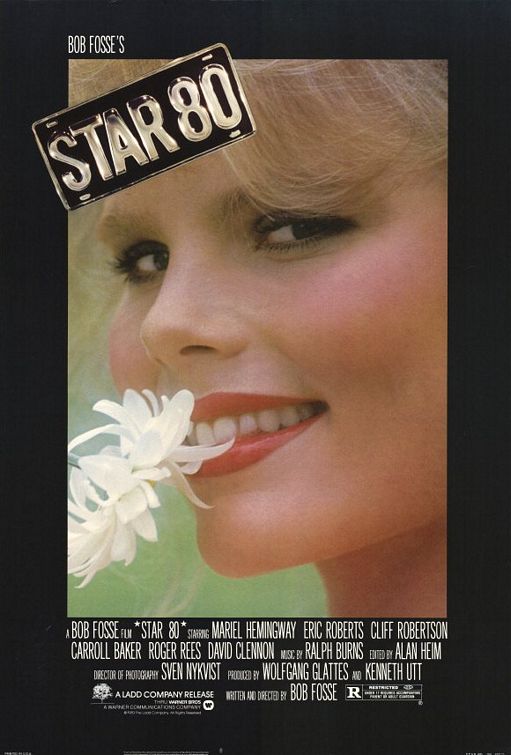
This film looks at the life of Dorothy Stratten (Mariel Hemighway) a teen from Vancouver who with the enticement of her controlling boyfriend Paul Snider (Eric Roberts) came to Hollywood to be a Playboy model. Soon she became a centerfold and budding film actress, but her boyfriend felt left behind and his ensuing jealousy lead to tragic results.

The film takes for granted that you know the story, which is based on fact and has shots from the final tragic scene sprinkled throughout. It was considered quite ‘topical’ and even in vogue at the time and yet for those born later this really won’t have much impact or significance. Stratten was just a young naive girl who got in over-her-head and her husband/manager was much the same way. For today’s audiences Stratten’s cult status has diminished significantly and probably should.

The plot has a sort of excruciating affect because we know what is going to happen and therefore sitting and watching it unfold seems almost tantamount to self-inflicted pain. The conclusion is intense, but leaves you feeling flat afterwards. There seems no reason to have made this film except for the sake of cashing in on its sleazy and provocative elements.

Director Bob Fosse creates a nice look for the movie with shades of soft lighting much like ones used for a photo shoot, which helps give it a distinctive quality.  However his direction is too manipulative and heavy-handed. It is structured like a documentary featuring talking head segments of supporting characters describing their take on the situation. These are spliced in throughout and really hurt the flow of the story and do not seem genuine. If they were going to take this route then they might as well have made it into an actual documentary and used the real people involved.

The two main characters are underwritten and overplayed. Hemingway has a cute young girl voice and her excited inflections are a nice addition to the character. However, her character is too sweet and naive almost to a Chrissy Snow-type extreme. She is also unable to stand up for herself at any time and it is hard for the viewer to sympathize with someone who can never help themselves.

Her boyfriend is just as bad in the opposite way. He is like the son-in-law from hell who wears suits that are so loud even your average pimp wouldn’t be seen in them. Roberts does give a good performance and supplies the film with a lot of its energy. This may be his best work and the film should be viewed for his presence only especially since it emphasizes him over Stratten anyways.

Cliff Robertson seems an odd choice to play Playboy founder Hugh Hefner as he doesn’t resemble him at all and never effectively creates his persona. The fictionalized character of director Peter Bogdanovich is no good either. He was supposedly the man who broke her away from the clutches of her boyfriend and gave her some independence. Yet here he seems just as creepy and controlling. Carroll Baker does the best of the supporting players as Dorothy’s mother a woman who can easily see through the man that her daughter can’t and at 52 she was really looking super.

In the end this film becomes as empty as the characters it is portraying. Even fans of the sleazy side of Hollywood will be disappointed. The disclaimer admits to being only a fictionalized account and therefore puts into question how fair or accurate any of it really is.

My Rating: 5 out of 10

Released: November 10, 1983

Runtime: 1Hour 43Minutes

Rated R

Director: Bob Fosse

Studio: Warner Brothers

Available: VHS, DVD

Lawrence of Arabia (1962)

lawrence of arabia 1

By Richard Winters

My Rating: 9 out of 10

4-Word Review: Lawrence unites the Arabs.

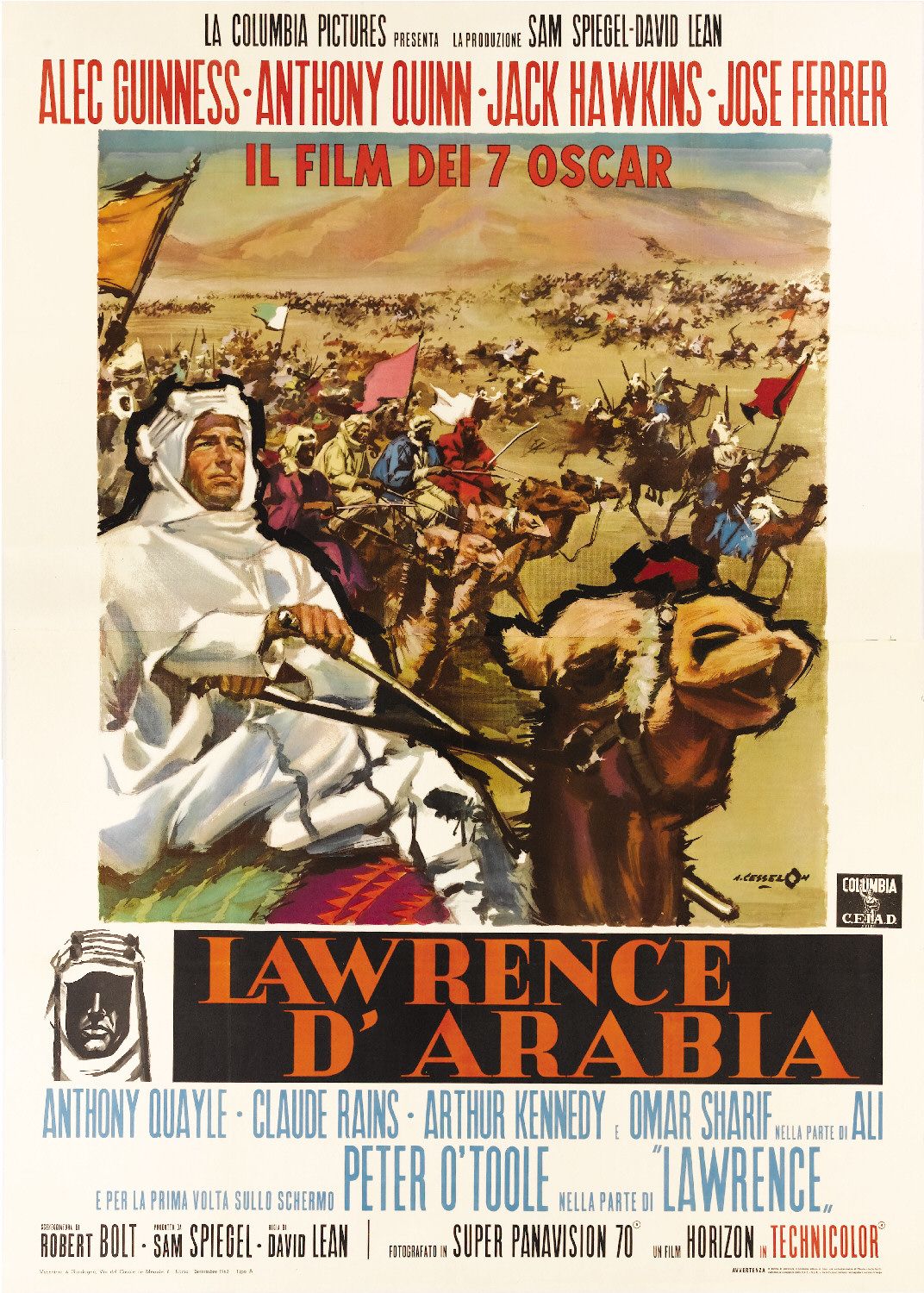
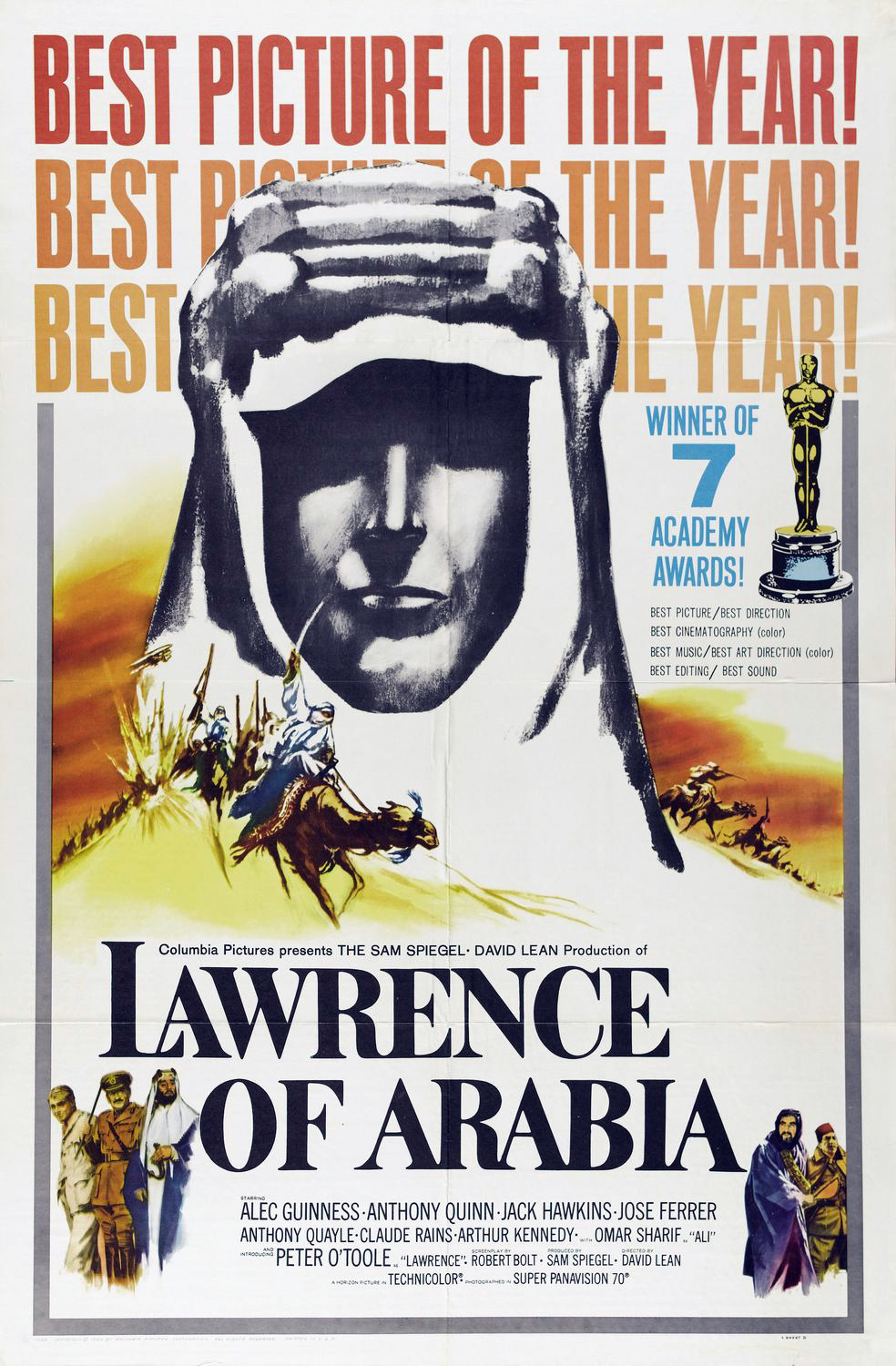
Due to the death of actor Peter O’Toole on December 14 we will be reviewing each Sunday of this month 4 films that he did during the 60’s with this one be his most famous role and one that jettisoned his career into stardom.

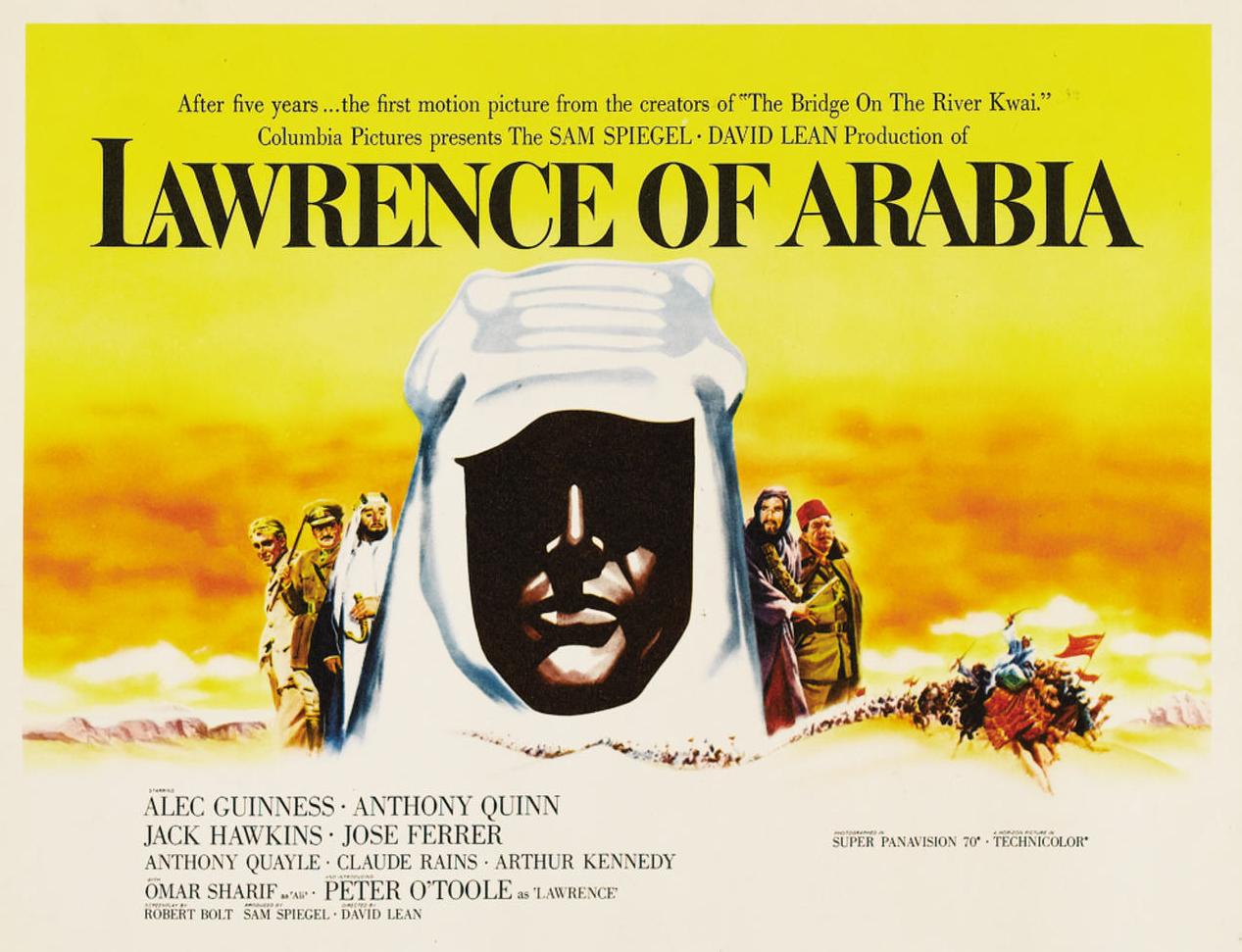
The film chronicles the life of T.E. Lawrence who helped unite the Arab tribes during World War I and allowed them to fight back and eventually overpower the Turks. The film starts out with his motorcycle death in 1935 at the young age of 46 and then flashes back to his days in the army as a young intelligence officer. It examines his unique personality, determined headstrong ways as well as his ability to unite varying warring Arab tribes and get them to work together to defeat a common enemy.

Director David Lean and cinematographer Freddie Young are the real stars here. Filmed mostly in the countries of Morocco and Jordan Lean manages to capture the barren, hot landscape of the desert better than anyone else as he gives it an almost surreal and exotic quality that takes over the rest of the story and leaves the strongest impression. I loved the sun slowly coming up over the horizon and onto the flat terrain. I also liked the longshots showing characters enveloped by the majestic landscape and looking almost nonexistent when seen against some of the towering rocky formations. Omar Sharif’s characters entrance while on horseback and seen from a distance as he rides up through layers of heat that rises from the ground is also excellent.

The action is well captured although there isn’t as much of it as you might think. Their raid on Aquba is for my money the best. I loved the bird’s-eye shot of seeing all these soldiers looking almost like ants scurrying from the desert and into the fortress through the buildings and property and then eventually into the sea that sits on the other side. The bloody battle that they rage against an already weakened Turk army near the end is also a strong visual as is the Lawrence’s visit to an unsanitary hospital housing the wounded Turks.

lawrence of arabia 2

O’Toole’s portrayal of Lawrence was controversial at the time and to some still is. His bright, clear blue eyes makes him look like he is in a trance and the way he says his lines sounds like he was under some sort of spell and gives the character a certain mystique that isn’t quite human. Still I thought the part fit O’Toole’s personality well. My favorite moment of his is when he first tries on the Arab robes that he is given and he goes running around in them in an almost child-like manner. It is also nice seeing a story about a true-life character that isn’t preachy and more open about their flaws particularly his propensity for violence which becomes increasingly more evident as it goes along.

Sharif is excellent is support and in some ways gives the film’s all around strongest performance. I liked the adversarial relationship that his character has with Lawrence. They start out at odds with each other, but slowly become friends and yet continue to have their differences. Arthur Kennedy is good as a glib and detached photojournalist and Alec Guinness was to me initially unrecognizable as Prince Feisal.

The movie does not stay completely accurate to the real life events. Some of these are minor and while others are more major, but are too many to elaborate here. The truth is there is probably no movie pertaining to a true life event that is completely accurate to what really happened and no one should be naïve enough to expect it to be either. On an entertainment and cinematic level this one scores high. My only real complaint is the scene where a character gets swallowed up in quicksand, which in reality is very unlikely to happen, but a prevalent feature in a lot of 60’s movies and the one point where it got a bit too ‘Hollywood’.

lawrence of arabia 4

My Rating: 9 out of 10

Released: December 10, 1962

Runtime: 3Hours 47Minutes

Not Rated

Director: David Lean

Studio: Columbia Pictures

Available: DVD, Blu-ray, Amazon Instant Video

Death Hunt (1981)

death hunt 2

By Richard Winters

My Rating: 7 out of 10

4-Word Review: Running for his life.

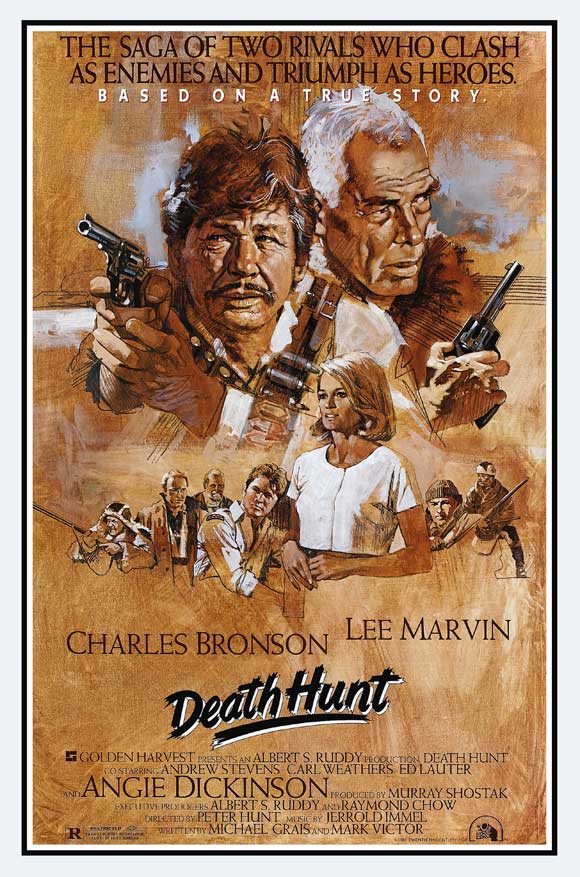
Last year during January we reviewed films Charles Bronson did during the 70’s, so this year we will look at some of the ones he did in the 80’s. This one is based on the true story of Albert Johnson who was a fugitive that sparked one of the largest manhunts in Canadian history.

Bronson plays Johnson a loner who lives by himself in an isolated cabin situated in the corner regions of the Northwest Territories and Yukon. He comes upon a vicious dog fight that has been orchestrated by some of the local men. Feeling sorry for the bloodied animal he tells the dog’s owner Hazel (Ed Lauter) that he will buy the animal, but Hazel refuses and Johnson ends up giving him he money and taking the animal anyways. Outraged Hazel goes to the local sheriff Millen (Lee Marvin) telling him that Johnson ‘stole’ his animal, but Millen knowing that Hazel was part of an illegal dogfight does nothing about it, so Hazel gets some men together to form a posse. A shootout ensues at Johnson’s cabin and when one of the men gets killed a reluctant Millen is forced to go after Johnson who goes on the run in the frozen, snow covered rugged mountains.

The film is an exciting high-grade adventure from the very start. The tension mounts perfectly and Jerrold Immel’s pounding orchestral score keeps the pace going. Director Peter Hunt mounts some great action sequences including the shootout and standoff at the cabin and also a heart-stopping moment where Johnson jumps off a steep cliff and onto a tall pine tree. The character’s ragged personalities perfectly reflect the raw climate and the internal bickering that goes on amongst the men as the chase Johnson creates an interesting subtext.

The film was shot in Northern Alberta, which is good because it gives the viewer a taste of the cold climate. The aerial footage of the mountainous landscape shown over the opening credits is breathtaking. However, it was clearly not filmed in the dead-of-winter as the sun was too high in the sky and although there was snow it was obviously thawing thus making the moments were the men complain about the bitter cold not ring quite as true.

Marvin is excellent and pretty much takes over the film. He looks older and tired here, but it works with the character that seems to be coasting and uninterested in getting involved with anything. Having both the main characters likable and relatable makes the chase more captivating and psychological complex from both ends.

Bronson is good in a role that takes advantage of his stoic nature although he only gets shown intermittently and it is Marvin who gets the most screen time and the best lines. I liked the character’s relentless will to survive and ability to adapt to the circumstances, but I wanted some explanation for how he was able to survive inside his cabin when it gets exploded with dynamite, but unfortunately one never comes.

Angie Dickinson who was 50 at the time and looked to have had a facelift and some work around her eyes is wasted in a completely pointless and forgettable part. Andrew Stevens who has proved effective in bad-guy roles plays a very clean-cut, rule-oriented Mountie here and does okay. Durable character actor Henry Beckman has a great small role as a shifty trapper who sits-in-the-shadows only to come out and get involved at the most surprising moments.

The film takes a lot of liberties with the true-life incident and was highly criticized at the time for being too ‘Hollywoodnized’, but it succeeds at being entertaining although I thought it would have been appropriate to have some denouncement at the end.

My Rating: 7 out of 10

Released: May 22, 1981

Runtime: 1Hour 37Minutes

Rated R

Director: Peter Hunt

Studio: 20th Century Fox

Available: VHS, DVD, Blu-ray

Death Weekend (1976)

death weekend

By Richard Winters

My Rating: 3 out of 10

4-Word Review: She can defend herself.

This Canadian thriller, which is loosely based on actual events deals with a rich playboy named Harry (Chuck Shamata) who invites Diane (Brenda Vaccaro) who is also a model to spend the weekend with him at his isolated lakeside cabin that is miles from anywhere. On their way there they run into a biker gang whose leader (played by Don Stroud) takes an intense disliking to Harry. The gang tracks the two down at their cabin where they proceed to terrorize them before eventually killing Harry and forcing Diane to defend herself alone, which she does valiantly.

In a way this is a poor man’s version of I Spit on Your Grave or Straw Dogs, but not nearly as effective. For one the violent scenes aren’t very intense. This is due mainly to the fact that writer/director William Fruet keeps the camera too removed from the action and never once uses a hand held. There is also no gore as Fruet always cuts away just before anything happens and what little you do see looks tacky. Of course a film doesn’t have to be gory to be scary or intense, but if it is going to have this type of violent theme then it should at least equal it in style. The tension also ebbs and flows and the four hoodlums are too dumb and seem like cardboard cutout caricatures that possess no human qualities whatsoever.
The Harry character does allow for some added dimension, which helps and hurts. I liked the way he sees himself as this ‘refined’ gentlemen and yet views women in the same Neanderthal way as the thugs. He brags of having money and power, but when that gets stripped away from him he becomes amazingly spineless. This makes for a good commentary of the rich and successful, but unfortunately also turns him into being too much of a jerk and when the bad guys proceed to tear his place apart we are not ‘horrified’ at all, but instead enjoy seeing it.

There are actually a few good elements one of which is the music score, which effectively creates an ominous feeling. It was also filmed in Ontario Canada during the autumn and the desolate, bleak landscape helps match the bleakness of the situation and characters. I also loved the morning mist captured during the final chase sequence that gives things a very eerie look. There is also a well-staged car chase at the beginning that was done at high speeds and features some great stunt driving.

The film is saved somewhat by Vaccaro’s interesting performance as a victim. She is independent and self-sufficient and refuses to allow herself to be seen or used as a sex object. This goes along with the film’s overall theme which seems to run on the emergence of the woman in a man’s world and the basic redefining of the female role in society. Yet I felt it would have worked better had the character harbored the old female traits at the beginning and then had these new traits come out as the film progressed.

death weekend

My Rating: 3 out of 10

Alternate Title: House by the Lake

Released: September 17, 1976

Runtime: 1Hour 27Minutes

Rated R

Director: William Fruet

Studio: American International Pictures

Available: VHS

Medium Cool (1969)

medium cool 1

By Richard Winters

My Rating: 9 out of 10

4-Word Review: The 60’s up close.

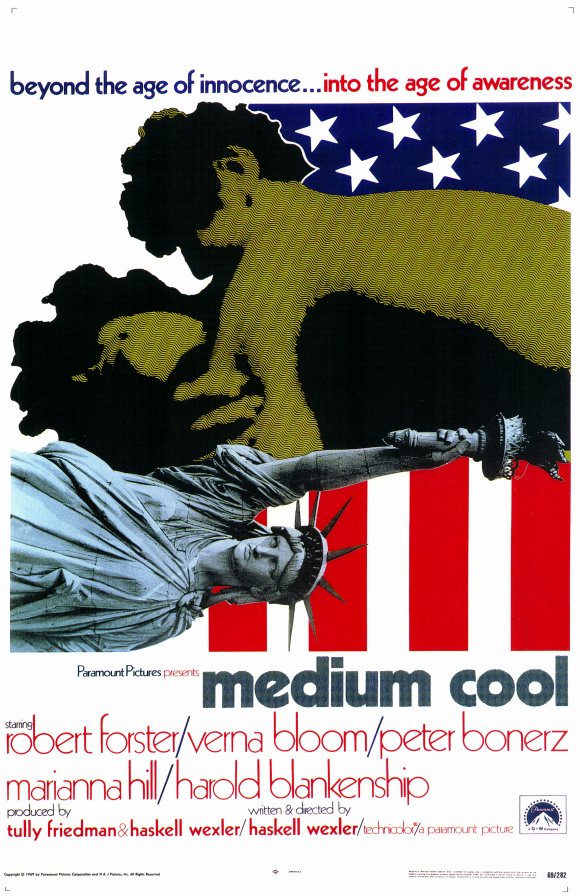
If you ever wanted to travel back in time and take part in the events of the tumultuous 60’s this film comes about as close to that as you can get. Watching this isn’t like viewing a movie, but more like an experience in itself. Acclaimed cinematographer Haskell Wexler who had previously worked in the documentary field heard that demonstrators were going to march at the 1968 Democratic convention in Chicago so he decided to hire a few actors and throw them into the fray while building a thin plot around it and creating a pseudo-reality effect. The story deals with news cameraman John Cassellis (Robert Forster) who meets and starts to date Eileen (Verna Bloom) who has just moved to Chicago from West Virginia with her 11-year-old son Harold (Harold Blankenship). As the convention and protests begin and John begins to cover it Harold runs away from home and Eileen goes into all the chaos to find him.

The scenes from the riots leave a major impact and even though I had already seen this film several times before I was amazed at how compelling it still was. Everything still seemed fresh with a clarity that makes you feel you are right there and a vividness that seems like it was filmed just yesterday. Watching the National Guard with their rifles raised marching down the streets of Chicago threatening crowds of people is incredible as is the sight of army tanks rolling down Michigan Avenue.  The people in the crowds are not actors and you see them getting clubbed by the police only a few feet from the camera. Watching them take the park benches in Grant Park and use them to build a shield from the police is exciting as are actual sound bites of reporters describing the action and at certain points being roughed up by the patrol as well. The look of fear and confusion on Bloom’s face at what she finds herself in the middle of it is authentic and helps build the tension.

Of course these scenes only make up the final fifteen minutes of the film, but the movie is filled with a variety of other unique moments that are all captured with the same vivid style and are equally memorable. The part where John and Eileen go to a roller derby and watch actual female players beat each other up with some even using their fists gets quite vicious. The scene showing hundreds of caged pigeons being set free and flying off in a giant flock that fills the sky is eloquent. There is even some effective erotica as a naked John chases his naked girlfriend Ruth (Marianna Hill) around his apartment before lifting her up by her legs and spinning her around in a circle.

The film also takes a great critical look at television news and the people who cover it. It shows how reporters and cameramen are very detached from the events and people that they are covering and how their need to capture that ‘great’ image or sound bite supersedes the human element.

Forster is perfect for the lead role. I loved his aggressive, blue collar, tough-guy attitude that perfectly reflects the Windy City. Peter Bonerz who plays Gus his sound man is great, but in the opposite way. His character is much more timid and wants to avoid confrontation at every turn and finds it difficult dealing with some black people who make him feel uncomfortable when he visits their apartment and even some young children when they start to climb on his car.

The only negative is that the song ‘Merry-Go-Round’ by Wild Man Fischer is not included in the most recent Criterion Collection DVD/Blu-ray release. The song was in the original release shown in theaters as well as the film’s first VHS version, which I saw. Unfortunately the song’s copyright holders sued Paramount stating that a VHS/DVD release is not the same as a theatrical/television broadcast, which they were under contract for to use and therefore could not include it in any later reissues, which is a real shame. The song has to be one of the strangest things you will ever hear and done by an eccentric one-of-a-kind artist. It has a weird alluring quality to it that gives personality and an extra edge to the film and in later versions gets replaced with ‘Sweet Georgia Brown’ better known as the theme for The Harlem Globetrotters, which is just not as effective.

My Rating: 9 out of 10

Released: August 27, 1969

Runtime: 1Hour 11Minutes

Rated R

Director: Haskell Wexler

Studio: Paramount

Available: VHS, DVD, Blu-ray (The Criterion Collection)

The Trip (1967)

the trip

By Richard Winters

My Rating: 5 out of 10

4-Word Review: He tries some acid.

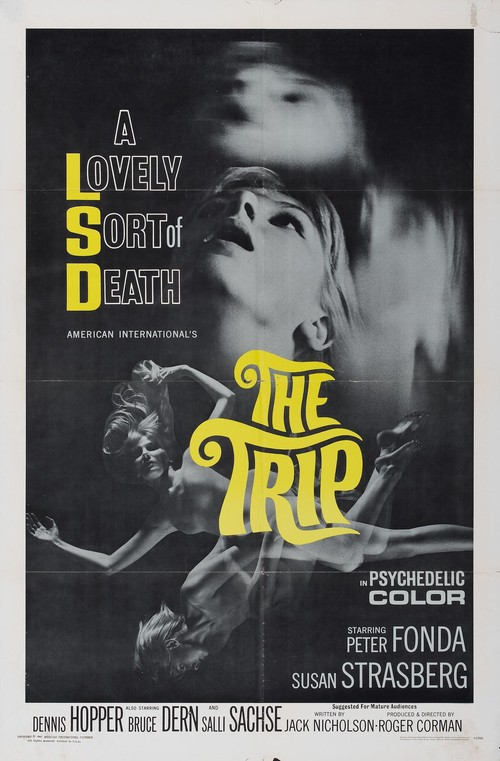
Jack Nicholson wrote the screenplay to this film which is based loosely experiences he had while taking LSD as well as the break-up of his marriage to actress Sandra Knight. The story centers on Paul (Peter Fonda) a director of TV commercials whose marriage to Sally (Susan Strasberg) is on the rocks. He has a need to ‘find himself’ and seeks help from his friend John (Bruce Dern) who is a self-styled acid guru. John gives Paul some acid while promising that he will stay with him during his drug induced trip. The rest of the film then deals with Paul’s experiences both in his mind and in his dealings with the outside world while he is hallucinating.

To prepare for the film Nicholson, Fonda and Dennis Hopper, who appears in a minor supporting role, all took part in a group LSD trip and the various visions that they experienced are incorporated here. Director Roger Corman also tried LSD at a different time to prepare for the film. The only one not to try it was Dern who was staunchly opposed to recreational drug use and in fact even his character doesn’t take any as evidenced by a scene where everyone is taking a puff of some marijuana and when it gets passed to him he simply passes it to the next person without trying even though everyone else does.

The scenes recreating the acid trip are not all that interesting or imaginative. It’s all pretty much what you would expect with a barrage of artsy colorful designs popping up at the viewer in split second intervals that reminded me very much of looking through a kaleidoscope. The images aren’t coherent, nor meant to be, and become vapid in the process. The scene involving Paul sitting on a merry-go-round while trying to justify his existence to Hopper who is dressed in a devil-like costume gets quite tedious.

Things improve during the second half when John, who promised he would stay at Paul’s side during his trip, ends up leaving him momentarily to retrieve some apple juice. During this time Paul escapes from the home he is in and goes out onto the city streets. The editing and effects here are impressive and ahead of its time. Some of the visits he has with the people he meets prove interesting including an offbeat conversation that he has with a lady that he meets inside a Laundromat as well as one he has with a very young girl inside her house.

Although he starts out shaky I felt Fonda’s performance was pretty good and this may be one of the best roles of his career. Strasberg who receives second billing appears just briefly and has very few speaking lines. Dern is always fun when he is playing eccentric or intense characters, but here where he is playing a relatively normal one he is boring. His part was originally written for Nicholson to play and I think he would have done better.

I was expecting some sort of tragic or profound-like ending especially with the opening paragraph that starts the film and is read by a narrator with a very authoritative newsman-like voice describing the ‘horrors’ of drug use and how it is becoming a serious societal problem. However, nothing really happens. The movie just kind of stops and that is it. The weak conclusion hurts what is already a so-so film making it like the drug itself an interesting experiment, but nothing more.

My Rating: 5 out of 10

Released: August 23, 1967

Runtime: 1Hour 25Minutes

Not Rated

Director: Roger Corman

Studio: American International Pictures

Available: VHS, DVD, Amazon Instant Video