Category Archives: Moody/Stylish

Night Watch (1973)

night watch 2

By Richard Winters

My Rating: 3 out of 10

4-Word Review: Murder in the window.

Ellen Wheeler (Elizabeth Taylor) is an emotionally unstable woman recovering from a nervous breakdown. Her first husband died in a car crash along with his young lady lover. Now her second husband John (Laurence Harvey) is fooling around with Ellen’s best friend Sara (Billie Whitelaw). One night Ellen witnesses a murder at the abandoned house next door, but because of Ellen’s past mental state no one believes her. Even the police doubt her story, which starts to send her over-the-edge.

I saw this play about a year ago with a group of friends at a local church. It was written by Lucille Fletcher best known for having done Sorry Wrong Number, which was later turned into a classic film starring Barbra Stanwyck. Although the play started out slowly the twist ending was impressive and something no one in the audience had predicted, but what I liked even better was that when you went back and thought about it, it made perfect sense. I thought at the time that it would make a great movie and was interested in seeing what this film did with it. I felt that there was no way they could screw up such a great story, but somehow they managed to do it.

Director Brian G. Hutton adds a lot of elements to make it more cinematic that should have helped it, but it really doesn’t. I liked the flashback sequences showing the car crash of the first husband as well as Ellen visiting the hospital and identifying the bodies. These segments have a good nightmarish visual quality to them, but Hutton goes back to it too often and eventually wears it out. I also liked that the film shows the police inspecting the inside of the abandoned home, which in the play you never see, but I felt they could have done a lot more to make the place seem more distinct and creepy. There is also a skirmish between two people inside the place at the end that you can hear, but not see because it is too dark and shadowy, which was annoying. The music is effectively creepy, but it also has a ringing quality that quickly becomes irritating and gets way over-played.

This was just one of the many misfires that Taylor did during the 70’s that helped extinguish her otherwise illustrious career long before it should’ve. This one fares slightly better than the others, but not by much. Her affected British accent could seem annoying to some and sounds kind of like the put-on one that Madonna sometimes does although for the record Taylor’s is better than hers. Liz’s emotionalism is a bit too theatrical and may come off as unintentionally funny to certain viewers although seeing her go completely nutty is impressive and fun.

Harvey is all wrong as the husband. His cold, detached presence can work in certain roles, but definitely not in this one. In the play that I saw the actor cast in this part looked more middle-aged with a spare tire stomach, balding head, and graying sideburns, which is what I felt the role called for. This is a character that is overburdened with a stressful job and unstable wife and yet Harvey shows none of this. His slick black hair and turtleneck shirts, which were fashionable at the time, make him look like someone still going out to the trendy nightclubs to pick up young chicks… or guys.

Whitelaw is one of the best British character actresses of all-time, but her talents are wasted with a part that doesn’t allow her to show any range. Her blonde hairdo is nice, but Taylor’s histrionics dominate the proceedings and unceremoniously push Whitelaw into the background.

The play had a lot of humor especially with the Mr. Appleby character played here by actor Robert Lange. Unfortunately the movie turns it into a serious drama making it seem more like a soap opera instead of a mystery. I came away from this feeling that the live production that I had seen was far more entertaining and intriguing. I would suggest to viewers to skip this film and wait for a chance to see it done as a play as the movie does not do the story justice.

night watch 1

My Rating: 3 out of 10

Released: August 9, 1973

Runtime: 1Hour 39Minutes

Rated PG

Director: Brian G. Hutton

Studio: AVCO Embassy Pictures

Available: DVD (Warner Archive), Amazon Instant Video
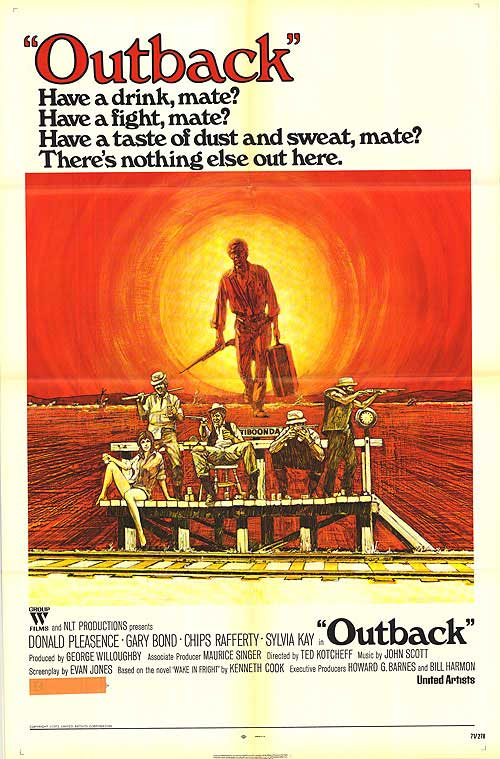
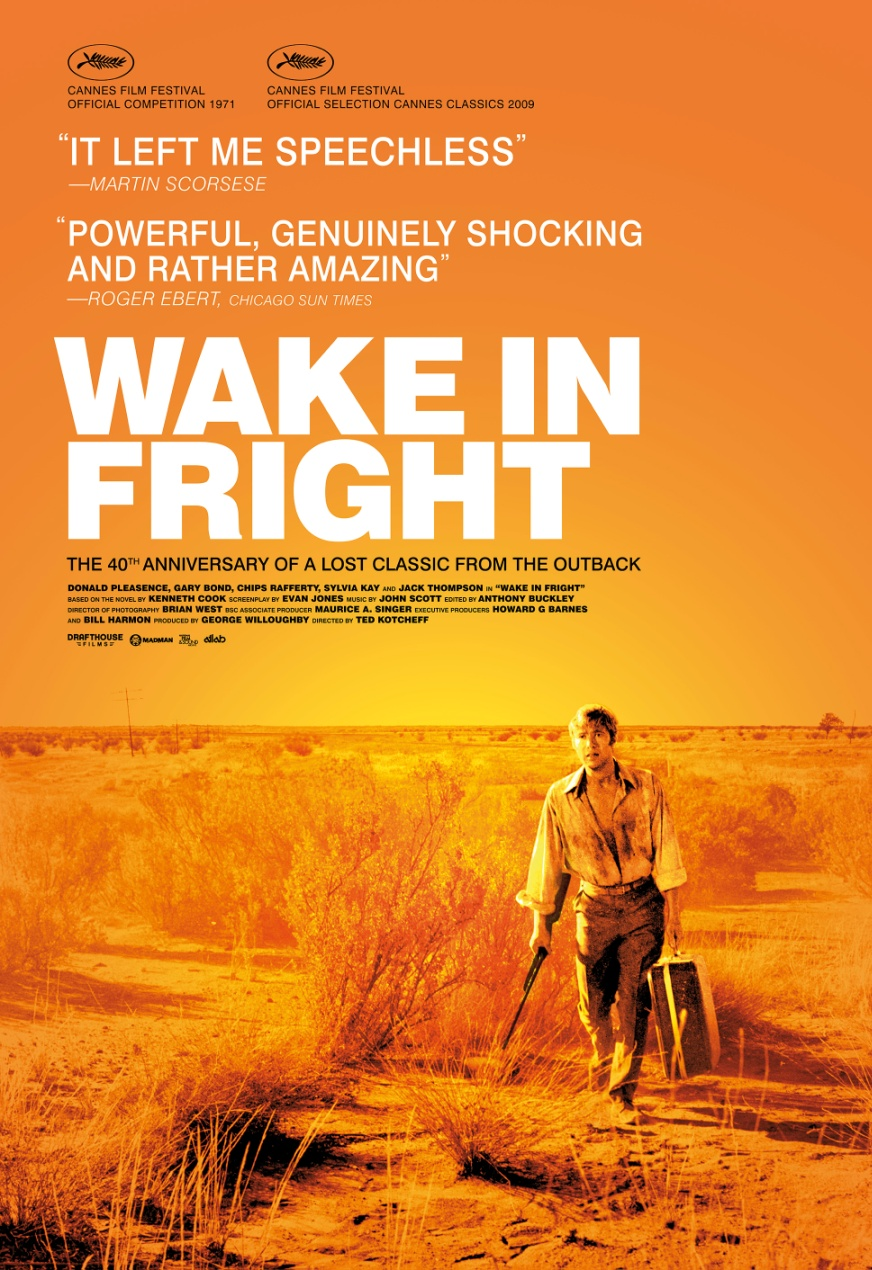
Wake in Fright (1971)

wake in fright 3

By Richard Winters

My Rating: 8 out of 10

4-Word Review: The middle of nowhere.

To an extent this is a one of kind film that is handled in such a raw and unpretentious way that it is like no other film you have ever seen before. The opening shot alone is amazing. You see a birdseye view of an isolated schoolhouse in the outback where our main character teaches. The camera then turns at a full circle and you see that there is absolutely nothing for miles in any direction. The desolation is mind boggling and it’s isolation at its purest.

Not only does this very inspired shot get its point across, but it also becomes the essence of what the film is about by trying to get you to understand the ruggedness of its characters by immersing you into their environment. It’s an uncompromising film full of startling images.

The story deals with a British schoolteacher John Grant (Gary Bond) who, through a loss in gambling, becomes trapped in the isolated outback town of Bundanyabba. He is cultured and educated and his sensibilities can’t mesh with the raw simplistic elements of the people in it.

It’s a highly intriguing viewpoint that not only captures man’s ever daunting task at dealing with nature, but also the overall reality of his existence and even himself. It makes you feel you are right there experiencing the same onslaught with him. There are also some interesting low key scenes proving that one of the biggest hurdles one must fight when in these places is actually just the boredom.

I do have to warn readers that the film has a very prolonged brutally explicit kangaroo hunting scene that features the actual killing of the animals. It even shows the men physically beating up on some wounded kangaroo’s and then viciously slashing their throats in a mocking fashion. Although I do feel that these scenes leave the viewer with the intended strong, raw impact and I like the lighting during the nighttime hunt that allows for a surreal element I still admit this may be a very difficult watch for some and may turn them off from viewing the film altogether. Apparently there were quite a few people that walked out of the film during this scene when it was shown at the Cannes, so be prepared.

Star Bond is excellent. You can relate to his anger and defiance at being somewhere he doesn’t want to be as well as feeling his desperation, exhaustion, and eventual surrender.

For many years this film sat in almost virtual obscurity, but after an exhaustive worldwide search a print of the film was finally found in the back of a Pittsburgh warehouse in a canister with a ‘to be destroyed’ label on it. Fortunately the print was saved and the restoration process is fantastic with colors that are bright and vivid. Director Ted Kotcheff captures the region in all of its rustic, desolate glory including the incredible crystal blue sky.

Reportedly many Aussies dislike the film as they feel it creates a negative stereotype. However, I don’t see it that way. I love the county and people and consider this more of a portrait of what happens when people are stuck in an isolated environment, which technically could be anywhere.

wake in fright 2

My Rating: 8 out of 10

Alternate Title: Outback

Released: October 13, 1971

Runtime: 1Hour 49Minutes

Rated R

Director: Ted Kotcheff

Studio: United Artists

Available: DVD (Region 1 & 2) Blu-ray, Amazon Instant Video

The Night of the Following Day (1969)

night of the following day 4

By Richard Winters

My Rating: 4 out of 10

4-Word Review: Kidnappers can’t get along.

A teenage girl (Pamela Franklin) is kidnapped by a group of professional killers who then demand a large ransom from her rich father (Hugues Wanner). Things deteriorate as the criminals begin fighting amongst themselves and eventually it all goes awry, which leads to ironic results.

Writer/director Hubert Cornfield creates a picturesque setting and a certain new wave look that subtly runs through it. The music has a new age sound, which helps to create a kind of metaphysical mindset. There are also some good camera angles and interesting edits, so it takes you awhile before you realize that this is just a lot to do about nothing.

The caper itself is too general and formulaic and in the end makes it a lame excuse for a movie. The infighting by the criminals is not that interesting. The characters are so one-dimensional that you really don’t care what happens to them. The twist ending is not that clever and in many ways simply signifies what a waste of time this really is.

Marlon Brando overacts with a part that doesn’t require it. He uses the hip lingo of the day like ‘freaky’ and ‘man’, which doesn’t really mesh with the middle-aged man that he was. His blonde wig looks awful and his trendy clothes including his big belt buckle gives him too much of a kitschy appearance. The attempts at making him a sort of anti-hero that is brave, sensitive, and concerned for his victim’s welfare despite being one of the perpetrators doesn’t work and makes the character a cliché like everything else in the movie.

Franklin is wasted. She goes through all the expected emotions of a kidnap victim, but barely utters a word in the process.

The neighboring policeman is put in to help create some tension, but ends up being annoying instead. However, Jess Hahn as Wally is quite good playing the film’s only believable character. He has very much of an average Joe type of looks and seems at the start to have an insignificant role, but ends up being the only one that holds it up together while the rest become whacked out.

Despite an interesting cast that also includes Rita Moreno and Richard Boone I found this to be a very cardboard thriller that runs out of gas after an okay beginning.

My Rating: 4 out of 10

Released: February 19, 1969

Runtime: 1Hour 33Minutes

Rated R

Director: Hubert Cornfield

Studio: Universal

Available: VHS, DVD

Deathwatch (1980)

deathwatch 2

By Richard Winters

My Rating: 8 out of 10

4-Word Review: Everyone watches her die.

Based on the David Compton novel this story deals with Katherine (Romy Schneider) who is living in a futuristic society where almost all diseases can be cured and death is very rare. When she is diagnosed with having a rare and incurable illness Vincent (Harry Dean Stanton) tries to get her to appear on his hit reality show ‘Deathwatch’ in which they film in documentary style a person’s slow and agonizing death, which is a huge TV hit. When Katherine tries to escape the publicity and hide from their cameras Vincent has a small camera surgically implanted into the brain of Roddy (Harvey Keitel) one of his cameramen, which then allows  Roddy to follow Katherine around and record her actions without her knowing it. The two then slowly form a relationship that culminates with tragic results.

Director Bertrand Tavernier is in top form. The movie is nicely paced and Tavernier shows a perfect grasp of the material. His use of music wonderfully accentuates the mood and tone. Filmed on-location in Scotland he captures the old buildings of the region with a stylish flair that gives the film an added personality and memorable image. Showing characters walking all alone in the seemingly abandoned streets hits home their loneliness and having the scenes done in decaying buildings and neighborhoods illustrates the decaying values and morals of the world these characters live in. The gray stormy skies brings out the pictures moodiness and the isolated shack in the middle of a vast empty field that the two hide out in captures visually the characters lost and hopeless desperation. The film becomes like an orchestral ensemble moved along by a talented conductor at the peak of his skill.

This is also a great example of using a hand-held camera sparingly and only to create a certain mood, or emotion. Too many films these days seem to have what I call ‘the shaking camera syndrome’ and it is annoying and loses the original intended effect. Here Tavernier employs it during a scene where Katherine is trying to elude the production crew and the viewer feels her frantic tension with each move that the camera makes as well as getting a great cultural feel by capturing the various street vendors along the way.

The story itself is fascinating and years ahead of its time. The issues it brings out about television, ratings, and the cutthroat ugly world of business of entertainment have never been more on-target. This film may even transcend the classic Network with its dire message and that is not easy to do. What I really liked though was the fact that the twists keep coming in layers and all of them are unexpected, but equally fascinating. The story is riveting and compelling from beginning to end.

Schneider is brilliant and beautiful as always giving another one of her impeccable performances. Her character is easily identifiable and the viewer immediately gains her sympathy. She shows an array of different emotions and traits making her a fascinating three-dimensional person. Her presence is the main ingredient that propels the film and without her none of it would have worked and her gorgeous natural smile is wonderful and manages to come on display briefly despite the ugly difficulties of her character.

Keitel is in fine form as well playing a character who finds that when one works for those who are more than willing to exploit others they themselves will eventually be exploited by them as well. Von Sydow appears near the very end and lends stature to the proceedings.

I hate to bring this up because I love the film’s visual design, but I did find it a bit odd that the story is about the hi-tech future and yet all we are shown are old buildings and other gadgets that look very much like they are from the 1980’s. The computer that Katherine works on is laughably archaic and I felt from that end they could have tried harder to create a little more of a futuristic impression. Also, the name of the network ‘NTV’ sounds a little too much like the cable network that used to show music videos.

The recent Blu-ray release from the Shout Factory is excellent and restores the film to its original runtime of 130 minutes. I highly recommend this to those who enjoy Sci-fi fare that is thought provoking and original.

My Rating: 8 out of 10

Released: January 23, 1980

Runtime: 2Hours 10Minutes

Rated PG

Director: Bertrand Tavernier

Studio: Gaumont International

Available: VHS (1Hour 57Minute Version), DVD, Blu-ray

Unman, Wittering, and Zigo (1971)

By Richard Winters

My Rating: 7 out of 10

4-Word Review: These students are killers.

John Ebony (David Hemmings) leaves his job in advertising to follow his dream of becoming a school teacher. He gets a job at an all-boys private school in rural England replacing a teacher who died accidently by falling off a cliff. His pupils soon tell him that they were the ones who killed the teacher and they will do the same to him if he doesn’t do as they say. John can’t find anyone who believes him even his own wife Sylvia (Caroline Seymour) laughs it off. Soon John finds himself a virtual prisoner of his own students and forced to follow their dictates while he tries to figure out who the ringleader is and bring them to justice.

Director John Mackenzie does a terrific job of building the tension slowly. The film works at a deliberate pace allowing the viewer to see things from John’s point-view-of. The slower pace keeps things realistic and therefore more effective. Geoffrey Unswoth’s cinematography is vivid. I loved the way the steep cliffs are captured at the beginning and a camera is thrown off the cliff making the viewer feel like the victim as they see the landscape swirling on screen before completely submerging in water. A nightmare sequence where John dreams of being accosted by the boys in much the same way as his predecessor is visually exciting. The on-location shooting at an actual private boy’s school in Wales only helps to add to the authenticity.

The students themselves are quite effective and much better than their counterparts in the similar Child’s Play where they came off as too robotic. Here they have more diverse personalities. Their snarky behavior and the taunting both to their weaker peers and to John was so on-target that it made me feel like I was right back in high school. Their polite and formal facades are a thin veil to their sinister side that becomes increasingly more apparent as the film goes on. The pinnacle comes when they lock Sylvia in a darkened gymnasium and threaten to gang rape her. The lighting, done exclusively with flashlights and the frenzied action make this a memorably creepy moment.

John makes for a solid protagonist. The viewer can feel and understand his unique quandary and the character is believable enough to help make the movie engrossing from beginning to end. My only quibble would be near the end when the boys ask him to come with them to look for one of the students that have disappeared and he agrees. I thought this was a little hard to believe as it was right after they had tried to attack his wife and the search was being done near the cliffs, which would put John at a vulnerable risk.

The twist at the end is a bit of a surprise and is overall satisfying. Despite what is stated in the review in Leonard Maltin’s ‘Movie and Video Guide’ there is no revelation of any kind after the closing credits. I have seen this film now twice from two different sources and both times the only thing that comes after the credits is the Paramount logo.

My Rating: 7 out of 10

Released: June 13, 1971

Runtime: 1Hour 42Minutes

Rated PG

Director: John Mackenzie

Studio: Paramount

Available: Amazon Instant Video

La Femme Nikita (1990)

By Richard Winters

My Rating: 8 out of 10

4-Word Review: Don’t mess with her.

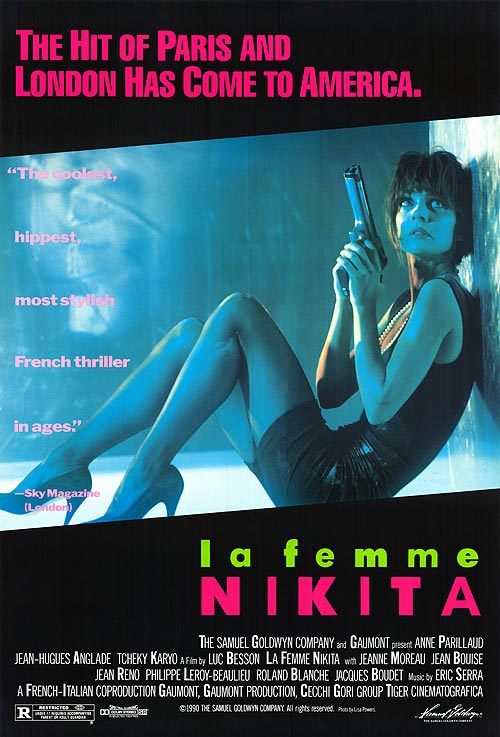
Nikita (Anne Parillaud) is a member of a punk street gang who gets caught by police after a particularly brutal gangland robbery. She gets a light sentence only to be given a chance at becoming a specially trained undercover police agent. She takes it and thus begins a very stylized, action packed variation of Pygmalion.

I do have two grumbles, which I will get out of the way now. First it is hard to believe that such a drug addicted, slender built young thing could be so seasoned in the art of street fighting and gun shooting. It is also hard to believe that these agents can always remember the directions they are given of who to shoot and where to go to escape without it ever having to be repeated or written down. I was sitting on my easy chair and I wasn’t sure I had gotten it all especially since it was said very quickly and quietly. Yet our lady hero gets it all even in the stress of the moment.

Outside of that this it is a very entertaining movie. Actually it is a fun movie, a really fun movie. The action is well choreographed and exciting. The editing is crisp. It makes fun of the action genre and even tries to pull it in different directions and yet still delivers the goods at the same time. Each scene has its own tongue and cheek joke complete with set-up and punchline.

The film also has some unique perspectives. It shows how draining a spy job can be both on the person and their personal life. It also reverses the gender roles by showing the woman as being more assertive and the men (especially her boyfriend) as more passive.

One of the funniest elements of the film is Victor the cleanup guy (Jean Reno). He is similar to the Harvey Keitel character in Pulp Fiction, but far funnier. He takes the flippant, gruff persona to new heights.

My Rating: 8 out of 10

Released: February 21, 1990

Runtime: 1Hour 58Minutes

Rated R

Director: Luc Besson

Studio: Gaumont

Available: DVD, Blu-ray, Amazon Instant Video

Sunday Bloody Sunday (1971)

By Richard Winters

My Rating: 9 out of 10

4-Word Review: A bi-sexual love affair.

Bob (Murray Head) is having a relationship with middle-aged divorcee Alex (Glenda Jackson) as well as a family doctor named Daniel (Peter Finch). He jumps between the two of them whenever the mood hits. Both Alex and Daniel are aware of the other and are not happy about it, but feel if they push the issue Bob will simply leave them. The film focuses on the frustrations and loneliness that Alex and Daniel feel in dealing with Bob and their less than ideal situation.

This film is engrossing from beginning to end. Director John Schlesinger was still in top form as the camera work, cinematography, and editing is first rate. Everything is meticulously orchestrated to the point that every shot seems to tell its own little story. The narrative is done in a fragmented style going back and forth between the present day to scenes from when both Alex and Daniel were younger. Much of it comes off like thoughts going on inside someone’s head and the film’s style is masterful and flawless.

What I really liked about this movie is the fact that it focuses not so much on each person’s time with Bob, but actually more on their time away from him. The points this film makes about the difficulties of communication that people have when they are in a relationship as well the glass wall that sometimes gets created is completely on-target. The film’s subtitles and nuances are perfectly balanced and if you are a viewer with more sophisticated tastes then this will be time well spent.

Things are revealed about the characters through visual and subtle means, which I loved. When Alex drops an ashtray and then proceeds to clean it up simply by rubbing the ashes into her rug, or the precarious way she makes herself on cup of coffee in the morning while rushing off to work nicely reflects her out-of-control life and the topsy-turvy way she approaches it. The scenes where Daniel attends a Bar mitzvah is excellent and for me some of the strongest moments in the movie.

The portrayal of the children here is above average as well. They are not cute and well-behaved, but instead realistically rambunctious and mischievous. I liked the wild, endless energy that they display and how easily chaotic they turn their household into, or how the parents had become immune and deaf to all of it. Having the 4-year-old smoke pot while Alex and Bob, who are babysitting, decide to overlook it may be pushing things a bit far, but I still liked the mod approach the film takes, which reflects nicely the unconventional lives of the characters.

The film’s biggest flaw is Head himself. The man is mainly known for his singing career and his acting ability is clearly limited in comparison to Finch and Jackson who are both excellent. The character is dull and the film does not make much of an attempt to analyze him like it does with the other two. In a way Head’s one-dimensional performance works because the character seems to be used as a ‘pretty boy’ who the other two are attracted to because of his looks and youth and therefore revealing the insecurities that they have about themselves as well as giving a pertinent warning that when one pursues someone solely based on their sex appeal the relationship is doomed.

I liked how at the very end Daniel and Alex do meet and have a brief conversation though I wished it had been just a little more extended. Having Finch talk directly to the camera at the closing is a bit disconcerting though what he says is interesting.

My Rating: 9 out of 10

Released: September 8, 1971

Runtime: 1Hour 50Minutes

Rated R

Director: John Schlesinger

Studio: United Artists

Available: VHS, DVD, Blu-ray (The Criterion Collection), Amazon Instant Video

Seconds (1966)

By Richard Winters

My Rating: 8 out of 10

4-Word Review: Starting a new life.

Arthur Hamilton (John Randolph) is a middle-aged man just going through the paces of life. He is stuck in a marriage that no longer has any spark and a job that is boring. His life is confined to the basic suburban rituals and he is quietly looking for a way out. Then he gets a call from Charlie Evans (Murray Hamilton) who he thought was dead. Charlie tells him that he is very much alive, but with a new identity. Arthur goes to a address that Charlie gives him and there he is told for $30,000 dollars he can be ‘reborn’ and given a completely new identity via plastic surgery as well as a whole new life with new friends and no connection to his dreary past. He would even be given a new set of fingerprints and new teeth while the death of his former self would be created in a way that it would leave no question, or suspicion.

This story is unique and fascinating on many levels. It pinpoints the monotony of middle-aged life and views living in suburbia not as the great American dream, but more as the American trap. I enjoyed the part where one of the Doctors named Davalo (Khigh Dhiegh) tells Arthur who has now been changed into Tony Wilson (Rock Hudson) that his new identity will be that of an established painter and he will no longer have to be quarantined with any responsibility and will instead be able to live the rest of his life pursuing is own individual interests, which is probably what everyone secretly desires.

The second half of the story where Tony tries to adjust to his new ‘dream’ lifestyle is equally as interesting if not more. Tony finds that his new friends and neighbors are other ‘reborns’ who will not allow him to backtrack into his old identity and seem compelled to keep in line with his new environment whether he was completely happy with it or not. During this segment I couldn’t help but think of the characters from Easy Rider and how Tony’s situation wasn’t much different. Both longed for complete personal freedom, but the more they tried to escape the societal strings the more they seemed to be dragged back into it. The part where Tony goes back to visit his wife while under the disguise of being a long lost friend of her late husband is revealing and dramatically the strongest part of the whole film.

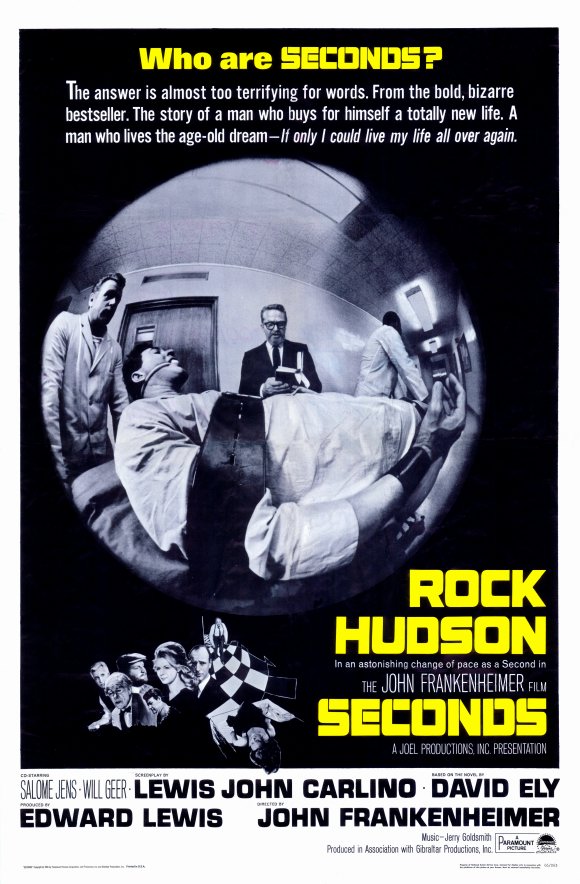
John Frankenheimer’s direction is superb and intoxicating. The opening sequence featuring a lot of distorted imagery is excellent and creates a terrific mood for the story. The dream sequence where Arthur finds himself in a hotel room with another woman is captured in such a way that it looked almost like a Salvador Dali painting. The use of the fish-eyed lens that is put in at certain strategic moments is effective as well as stylish. The black and white cinematography is evocative and the organ playing soundtrack is distinct and moody.

Rock Hudson has always seemed to me as a weak leading man and apparently Frankenheimer considered him ‘lightweight’ as well, but when his first two choices turned down the role he decided to go with him and here it actually worked. I felt Hudson’s blank expression and confused demeanor fit well with the character’s situation. The part where he is shown tied to a bed and struggling to get out while his mouth is gagged is convincing. Veteran actor Randolph is quite good in the beginning playing Arthur a man who seems run over by life. The close-up of his nervous and sweating face leaves a strong impression. Will Geer is also excellent in support as the founder and head of the secret organization.

The twist ending is well done although I saw it coming long before our naïve protagonist did. Unlike the book it is clearer and less vague. This is one case where the film can make a great companion piece to the book, or vice versa. This is a definite sleeper of a movie screaming for more attention and has strong cult potential.

My Rating: 8 out of 10

Released: October 5, 1966

Runtime: 1Hour 46Minutes

Rated NR (Not Rated)

Director: John Frankenheimer

Studio: Paramount

Available: VHS, DVD,  Blu-ray (Criterion Collection) Amazon Instant Video

Texas Chainsaw Massacre (1974)

By Richard Winters

My Rating: 9 out of 10

4-Word Review: Man can she scream.

Four young adults on a summer trip inadvertently come into contact with a mutant family and their chainsaws.

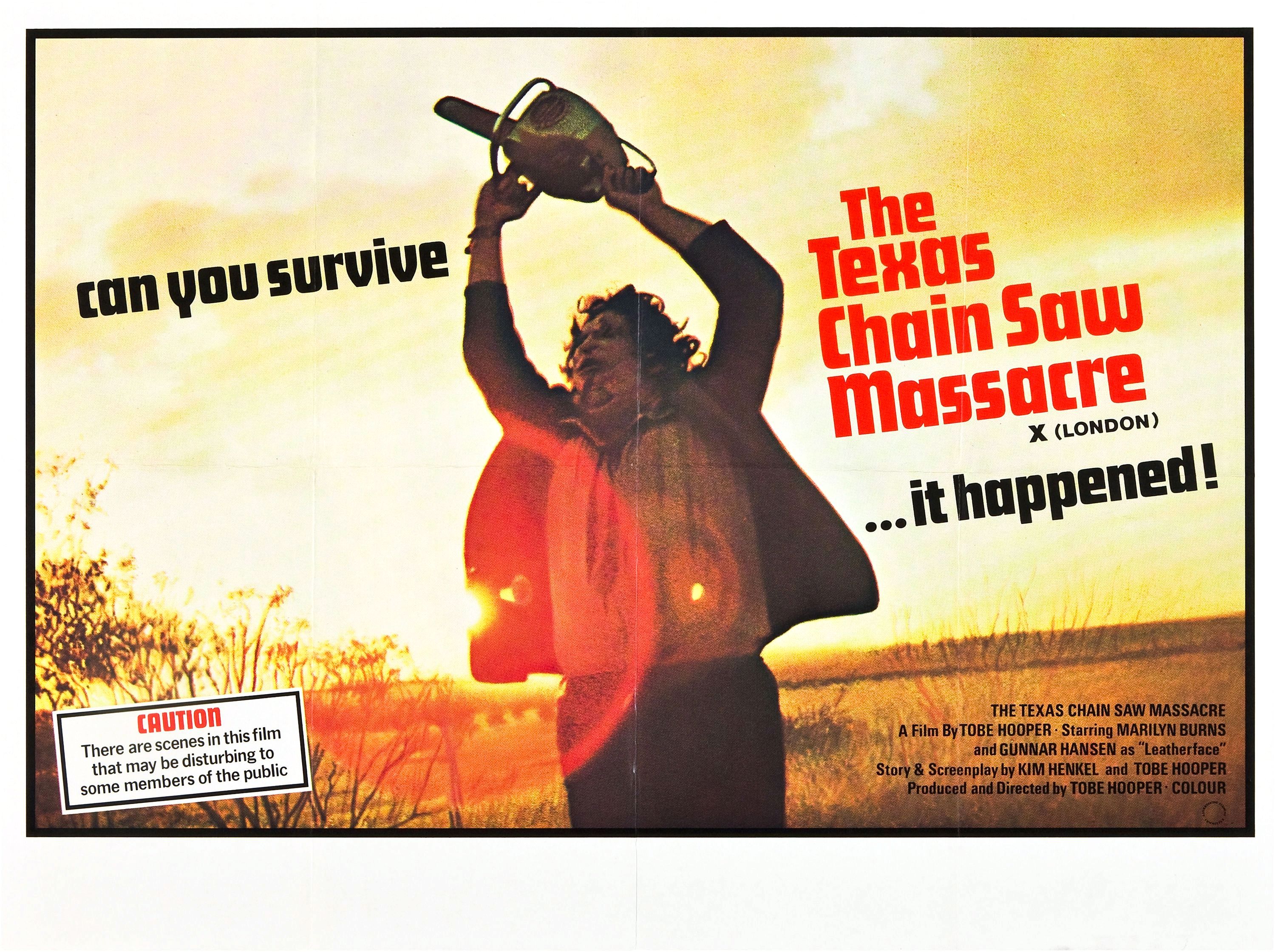
This is the type of horror film most others strive to be, but usually never succeed. The tension builds right from the start. It’s slow but consistent and eventually hitting on an almost unparalleled level. Director Tobe Hooper and cinematographer Daniel Pearl make terrific use of the location shooting. Between the music and visuals you are given an otherworldly sense. The atmosphere literally hugs you with the dementia of the situation. You feel as engulfed with it as our heroine Sally Hardesty (Marilyn Burns). It transcends most other horror films simply because of its intensity and grotesque perspective. It blends so many unusual things together and yet everything still works. It’s both artsy and raw, moody and exciting, humorous and ugly and a masterpiece in many ways.

If you are looking for gore you may end up disappointed. Despite its reputation there really is very little if any. Apparently they were going for the ‘PG’ rating, but even so certain scenes become almost laughable with their restraint. One scene in particular features Leatherface (Gunnar Hanson) jumping out at a man in a chair. He jams his chainsaw into him and yet only small droplets of blood can be seen coming out.

There is also the problem of Marilyn Burns running. By most crew accounts she was a slow runner. This caused problems because it would allow the assailants to actually catch up to her even though they weren’t supposed to. Both Hansen and Edwin Neal as the Hitchhiker have to do some goofy things to avoid reaching her. This is obvious in the final chase sequence and it hurts the tension a bit.

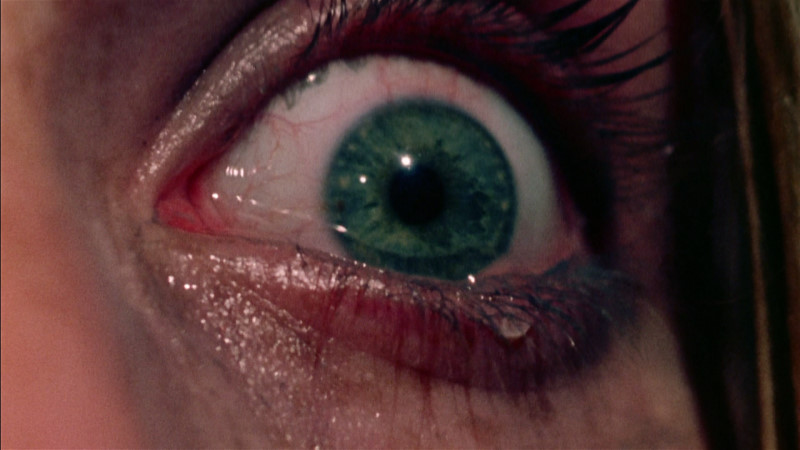
I still feel though that Marilyn was a good choice for the part. Her face holds an authentic look of terror and her screams reach amazing decibels. The graphic close-ups of her eyes are astounding and memorable.

This film makes its sequels look awful. A good companion to this picture is Hooper’s follow-up film Eaten Alive. It has the same atmosphere and intensity and is interesting in an equally odd way with Neville Brand making a unique villain.

My Rating: 9 out of 10

Released: October 1, 1974

Runtime: 1Hour 23Minutes

Rated PG

Director: Tobe Hooper

Studio: Bryanston Distributing

Available: VHS, DVD, Blu-ray 

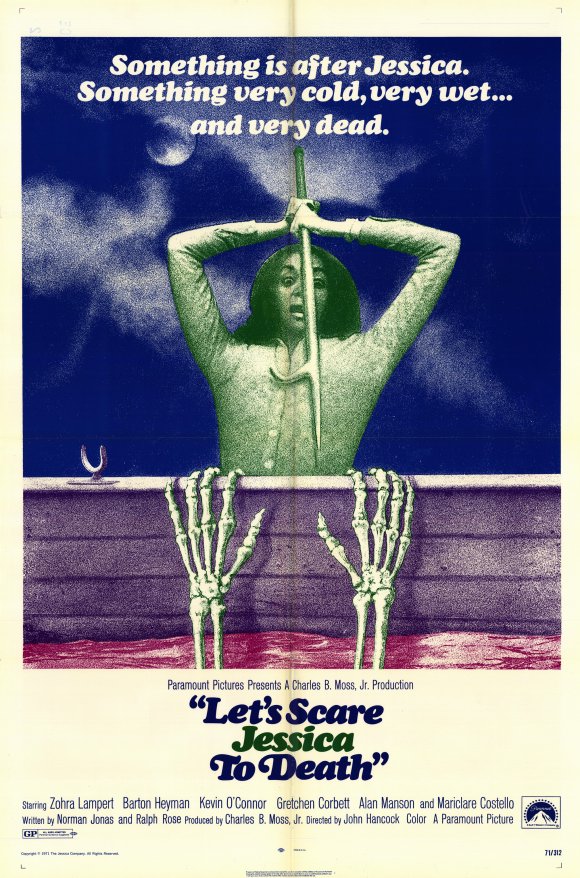
Let’s Scare Jessica to Death (1971)

By Richard Winters

My Rating: 5 out of 10

4-Word Review: Crazy lady versus vampires.

Jessica (Zohra Lampert) is recovering from a nervous breakdown and taken to a secluded Connecticut home for rest and recuperation. Here she starts to see strange visions, but nobody believes her making her the only one aware of the dangers that are brewing around them.

Haunted houses, ghosts, zombies, weird townspeople, madness, vampires, and even a tacky séance this film seems to want to take all the elements from other horror movies and mix it into one. The idea may sound great, but the approach is tepid. This may be due to its low budget, but either way the final result is unexciting. Yes it is creepy and eerie specifically at the beginning, but it never manages to get to the next level with no real scares or even a few minor ones.

The film is also slow with some stodgy drama used as filler. The special effects are minimal and the little that is shown looks unrealistic. Only at the very end do things start to get interesting.

Director John Hancock adds a little flair and had the script been able to reach the level of its scintillating title this film might actually have been special. His framing and photography of the outside of the old house is good. There is also a shot of an early morning sun rising off a foggy lake that makes for a perfect creepy atmosphere. I also like his placement of the howling wind and the whispering voices although he does go to this well a little too often.

One good reason to watch this film is too see Lampert. Although always a supporting player this was to date her only starring vehicle. She has a distinctive look and style that doesn’t match the glamour of a conventional leading lady. Her face exposes a nice fragility to the vulnerable character that she plays and her performance of a tormented person is excellent.

Although she has a pair of unique blue eyes like actress Meg Foster Mariclaire Costello, as the ghost/vampire, is just not frightening. The rest of the characters are boring and seem almost like stand-ins.

I got a kick out of the antique dealer (Alan Manson) who tells Jessica about the death of the original owner of the home that she is now living in. The tale is bland and transparent even though he insists, several times, that it is ‘quite extraordinary’.

Released: August 6, 1971

Runtime: 1Hour 29Minutes

Rated PG

Director: John D. Hancock

Studio: Paramount

Available: VHS, DVD, Amazon Instant Video