Category Archives: Low Budget

The Monitors (1969)

By Richard Winters

My Rating: 3 out of 10

4-Word Review: They are watching us.

            Aliens, who dress in suits, long overcoats, and bowler hats, invade earth and an attempt to police everybody’s thoughts and actions while trying to quell a rebel uprising led by Colonel Stutz (Larry Storch). Working for the uprising is Harry (Guy Stockwell) who falls in love with Barbara (Susan Oliver) who secretly sides with the aliens.

The movie starts out with a lot of potential and piqued my interest with unusual montages and camera work. Unfortunately this subsides quickly and soon we are stuck with drab sets, extraneous scenes, and a film unable to hide its low budget roots. I began to wonder if the reason the rebels had their hideout in an abandoned farmhouse was more because the filmmakers could film there without having to pay for a permit than anything else.

The film should have gone completely for parody and farce and if they had done that this might have worked. Instead it seems to drift into a conventional sci-fi narrative complete with a pseudo philosophical climactic debate between the humans and aliens that we have all heard before and does nothing but slow the film down to a tedious level. Adding in the love interest angle between the two leads is contrived and formulaic.

The aliens aren’t too interesting either. There is never any explanation as to how they were able to take over the planet, but the fact that they are unable to even get through a locked door of an old crumbling warehouse made me wonder how they were able to succeed at anything. Equipping them with a little more sci-fi gadgetry would have helped. I realize they don’t have to be carrying around the proverbial ray-gun, but having them break up an angry mob by using ordinary canisters of pepper spray seemed unimaginative.

Spliced into the story are comical TV ads with famous celebrities of the day such as Stubby Kaye and Xavier Cugat promoting the monitors and convincing the public to support them. These commercials are not funny with the only exception being Alan Arkin playing a foreign man who speaks broken English. In the case of former Senator Everett Dirksen it is almost sad. He was very elderly at the time of the filming and he is clearly reading his lines from cue cards and mouthing the words and looking like he is barely functional, or coherent.

The music is another problem. Initially I really liked it as the opening credits feature a computer with a very robotic voice singing the theme. Singer Odetta sings most of the other songs and some of them have a distinctive sound, but they get overplayed and saturated by the end.

The production was shot on-location in Chicago and I loved the aerial shots showing the skyline. I almost wished there had been a little more of them although I did notice that the exact same skyline shots at the beginning get reused in the second half. I didn’t like the idea that it was filmed in the late fall/early winter as the cast is shown shivering in several shots while forced to wear light clothing and their breath is clearly visible.

Susan Oliver gives another solid performance and shown flying an airplane in one sequence as in real-life she was an avid pilot. Sherry Jackson’s presence is minimal, but she is always appealing to the eyes. Avery Schreiber, a comedian known to overact horribly in just every part he is in, comes off as rather amusing here playing the younger brother of Harry who reluctantly joins up with the resistance. Larry Storch, another notorious ham, is engaging as well especially when he appears in drag and later on dressed as General MacArthur.

This is a failed experiment that should have been a lot better. It seems to want to take on the quirky sentiments of the era, but is either too timid, or too unimaginative to go all the way with it.

My Rating: 3 out of 10

Released: October 8, 1969

Runtime: 1Hour 32Minutes

Rated M

Director: Jack Shea

Studio: Commonwealth United Entertainment

Available: Netflix Streaming
Friday the 13th Part 2 (1981)

By Richard Winters

My Rating: 3 out of 10

4-Word Review: Jason likes to kill.

(This review contains spoilers, but it is such a bad movie, so who really cares.)

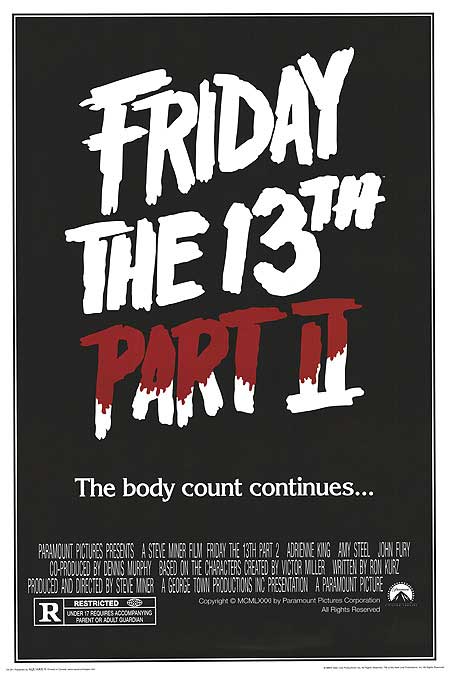
A new campsite near where the massacre from the first film took place and still on Crystal Lake opens for business. Soon the counselors begin receiving the same type of bloody fate.

I was a bit surprised how incredibly derivative this movie was. In many ways it is almost exactly like the first one even to the point of having them killed at night during a thunderstorm. My opinion is that if it says ‘Part 2’ in the title then that should mean some sort of story progression, or evolvement, but instead it’s just the same formula getting repeated. The only real difference is that the young counselors aren’t the only ones who get killed as Crazy Ralph (Walt Gorney) ends up being one of the killer’s victims as well. Although I thought his murder looked a bit fake, I was still glad to see it as the idea of having to hear him say “You’re all doomed” for another ninety minutes seemed more horrifying.

It might have been more intriguing had the story centered on Alice Hardy (Adrienne King) the sole survivor from the first film who is now living by herself many miles away. The film starts out with her, but she is then immediately killed and then it’s back to the campsite for the same old, same old. I also found this opening sequence to be a bit baffling.  Here is a woman living alone and still suffering from nightmares of the attack and yet it is only after she wakes up from one of these bad dreams that she decides to lock her front door and close her kitchen window, which has no screen and wide enough for even a large person to crawl through, even though I would’ve thought she should’ve done that from the very start.

One plus to the movie is that the cast here is more attractive than in the first one. Amy Steel as Ginny Field is pretty and looks great in a bikini. I liked how her face has a very natural quality to it, but still quite appealing without any excessive make-up. Kirsten Baker, who plays another counselor named Terry, is really hot and can been seen fully nude from the front and back. For the female viewers I’d say the male cast has more hunks as well. I also found it interesting how the character of Mark (Tom McBride) who is confined to a wheelchair is still portrayed as being sexy and appealing to the other female characters, which is good. Also, for the trivia buffs, McBride was the first actor to portray one of the counselors to end up dying in real-life.

The killings are a letdown. At times it seems that director Steve Miner is trying to put a satirical spin on the bloodshed, but then pulls back at the last minute. For instance when Mark gets ‘the axe’ he is seen in his wheelchair rolling down a long flight of steps and I thought this may be an amusing homage to the classic Battleship Potemkin where a baby carriage rolls down a long flight of stairs while a battle rages all around it. Instead we see the victim and wheelchair go halfway down and then the shot freezes and cuts away without the expected pay-off. Another part that is similar to a famous scene in Mario Bava’s Twitch of the Death Nerve where a couple has a spear go through them while they are making love. Here Jason attacks the couple, but all we see is the end of the spear going through the bottom of the mattress and touching the floor, which seemed unrealistic. It was hard to believe that there would be a spear long enough and a person strong enough to push it through two bodies and what would probably have been two mattresses to get it to reach the floor.

This also brings up the issue of the Jason character. Supposedly this is a ‘mentally and physically challenged’ individual with limited thinking and social capabilities. Yet in the scene where he murders the couple in bed he then removes their bodies, which would be rather difficult as supposedly they have a big spear going through them, and places them somewhere else in the room so when Ginny comes in he is the one lying in the bed where he then jumps out and attacks her, which seemed too sophisticated and elaborately thought out for someone of his supposed mental state. Also, the opening sequence where he kills Alice doesn’t make sense either. How is Jason, who has been living in a ramshackle shed in the woods most of his life able to track her down and figure out where she is? Also, I would think anyone living alone in the woods would be very intimidated and confused coming to a big city, or any populated community for that matter. There is also the fact that with his deformity, even if he is wearing a mask, he would have called a lot of attention to himself, and it is very unlikely that he would have gotten away with her murder undetected. In addition there is the matter of his mother’s decapitated head, which he keeps on top of a candle lit altar in his shack, but even in a shriveled up state it still doesn’t look anything like actress Betsy Palmer who played the role in the first film.

This is the type of film that gives slasher movies a bad reputation. It is very mechanical and unimaginative. There are a few shocks here and there, but I saw them coming and there is no sustained tension at all. Of course at the very end you do get to see what Jason looks like unmasked and my response to that is ‘whoop-te-do’.

My Rating: 3 out of 10

Released: May 1, 1981

Runtime: 1Hour 27Minutes

Rated R

Director: Steve Miner

Studio: Paramount

Available: VHS, DVD, Blu-ray, Amazon Instant Video, Netflix streaming

Friday the 13th (1980)

By Richard Winters

My Rating: 6 out of 10

4-Word Review: Don’t reopen the campsite.

(This review contains spoilers. Lots of spoilers)

Twenty-two years after two counselors were brutally murdered Camp Crystal Lake reopens, but as the young staff tries to get the place ready they are killed one-by-one by an unknown assailant.

I first saw this film back in 1986 and thought it was alright. I presumed I would dislike it this time, but instead came away entertained and although certainly not a perfect film it does deserve its classic status. Director Sean S. Cunningham shows more flair than a lot of critics give him credit for. I liked the idea that all the murders take place during one stormy night at a remote location. Every murder sequence has its own beginning, middle, and end and filming it at an actual campsite gives it a lot of flavor. In fact I believe that is the main element for why this film became such a big hit because it reminds everyone when they went to camp as kids and tried to frighten each other by telling ghost stories around a camp fire.

Some of my favorite aspects of the film are what most might consider minor stuff, but stands out for me. For instance when Brenda (Laurie Bartram) goes to the archery range during the storm and the killer turns on all the lights and she becomes blinded by them is an interesting visual sequence. It is just unfortunate that she was not slayed with a shooting arrow as this would have corresponded to an earlier scene where she was almost hit by one shot by Ned (Mark Nelson). They were apparently planning to this, but then for whatever reason changed their minds. I equally liked the part where the killer shuts off the power and the viewer can see the lights slowly fading from the campsite at a distance, which has a nice foreboding quality. The part where Crazy Ralph (Walt Gorney) rides off on his bicycle after warning the staff the they are doomed creates an eerie image because there is no music and the lake is amazingly still proving that sometimes less is more when creating an intended impact. Having shots from the killer’s point of view watching the staff from a distance is creepy.

I watched the film closely thinking that there would be a lot of errors due to its low-budget, but found surprisingly little, or at least none that would create any type of major distraction. I know Betsy Palmer, who played Pamela Voorhees and is exposed as the killer at the end, only participated in a few days shooting. The hand that you see that represents the killer’s during the first half of the film was not Palmer’s, so I presumed that seeing a big ring on the third finger of the left hand would prove a mistake, but when Palmer does finally appear a ring is indeed there and the filmmakers prove to be astute. I know some people consider the scene where Alice (Adrienne King) has trapped herself inside a cabin and piling all sorts of stuff in front of the door to keep the killer out is a mistake because the door pushes out instead of in. However, I don’t agree because in her panic she would not be thinking straight and putting chairs in front of the door gave her a false sense of security, which at the time she may have needed emotionally. About the only real annoying mistake I saw is the fake lightning. Clearly it is a bright yellowish light coming from a flashlight that was shown on the performers from a stagehand that was just off- camera. The effect looks stupid and when are filmmakers ever going to realize that thunder and lightning rarely occur at the same time. You will always see lightning first and then the sound of thunder will usually occur several seconds later.

Too much time at the beginning is spent on the crew getting the campsite ready. These scenes don’t build any tension, the characters are vapid and clichéd, and the dialogue is trivial. I also found Ned to be incredibly irritating as the ‘comedian’ of the group whose attempts at humor where lame to the extreme. I found it funny how his murder is one of the few you don’t see and I think that was because the filmmakers feared that viewers would end up enjoying it too much. A little more nudity during this segment would have helped it along. I found it ironic that the one cast member that does end up going topless, Jeannine Taylor, was in real-life a graduate from a conservative Christian college. There is also a part here where they kill an actual snake and it deserves some mention because it is rather gory and has hints of Cannibal Holocaust where the viewer starts to think ‘if they are willing to kill actual animals in front of the camera what’s to stop them from doing it to the people’.

I like Betsy Palmer and the final climatic segment where she terrorizes Alice who is the last remaining survivor is in many ways the best part of the whole film. However, Estelle Parsons had been their first choice and I was a bit disappointed because Parsons has a unique acting style and a more distinctive face, which could’ve given the character more depth. Still, upon my third viewing I must say that Palmer does well. The close-ups of her face are great as is her gray sweater.

The music of course is another plus. I always thought it sounded like ‘chi,chi,chi; ma,ma,ma’, but it is actually supposed to be ki,ki,ki; ma,ma,ma’ and used to reflect the voice of Jason that Pamela hears inside her head instructing her to ‘Kill her Mommy’. Composer Henry Manfredi actually said ‘ki’ and ‘ma’ into a microphone before using sound effects to get the intended distortion.

Despite the film’s reputation the killings seem rather quick and uneventful. The slitting of the throat is a Tom Savini specialty, but was starting to get old even here. The machete through the head is one of the better ones, but the shot of it is too quick. The decapitation of Pamela is far and away the best. I liked how her hands continue to move even when she is headless. Apparently this is unrealistic and would not happen in real-life, but it is a cool visual nonetheless.

My Rating: 6 out of 10

Released: May 9, 1980

Runtime: 1Hour 35Minutes

Rated R

Director: Sean S. Cunningham

Studio: Paramount

Available: VHS, DVD, Blu-ray, Amazon Instant Video, Netflix Streaming

Fore Play (1975)

By Richard Winters

My Rating: 1 out of 10

4-Word Review: This sex goes limp.

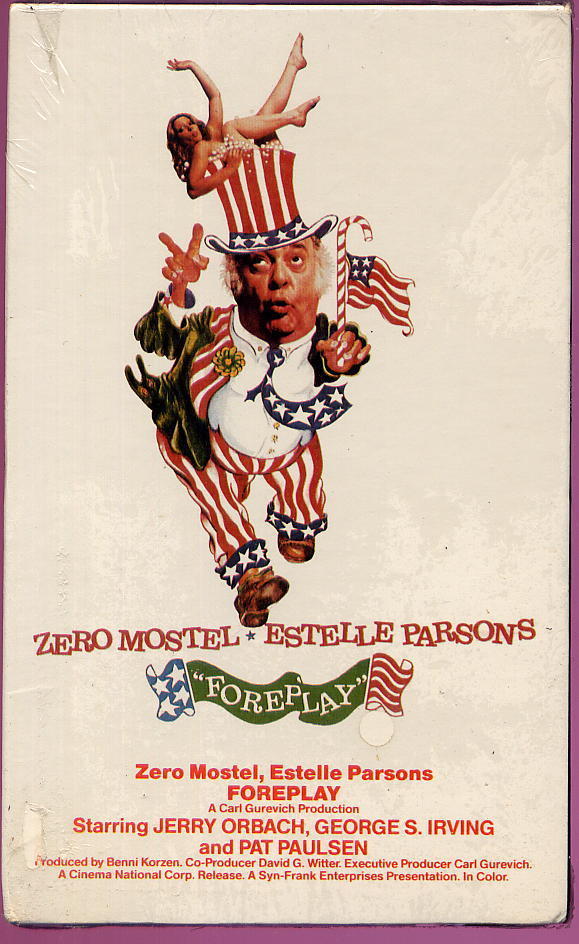
This is a boring, flat, and completely disastrous attempt at sex comedy. This is the type of teaser T & A picture that gives all other T & A pictures a bad name. Out of the entire running time there is less than a minute of any actual nudity. The sex jokes are stupid and a child could watch this and not be overly shocked. It also looks like it was meshed together on the smallest of budgets.

The film is structured much like a horror anthology with three different stories all based on the same theme in this case sex. The first one features comedian Pat Paulsen as a lonely man who buys a realistic looking sex doll (Deborah Loomis). The doll is supposed to be Polish, but her accent sound more like it is Swedish. This segment is somewhat interesting because Paulsen plays against type here. He is much more emotional and hostile. He even ends up swearing at his own mother (Sudie Bond). There is also an amusing bit of seeing him trying to get the doll, with her stiff arms and legs, into a taxi cab. However the segment goes by too fast and the ending is really stupid. Paulsen also sings here and it sounds as bad as you might expect.

The second segment features Jerry Orbach as a writer going through writer’s block. Here you see the film’s one and only offensive sight, which is having to witness George S Irving in a bikini bottom. He plays Orbach’s muse and takes him back into time to reverse certain sexual conquests that he initially bombed at. One amusing bit has him in a game where he must undress a beautiful lady in sixty seconds in order to have sex with her. He does only to find that she is frigid. Like with the first segment this one also has a really stupid ending.

The third and final story sounds like a winner, but fails terribly. It consists of Zero Mostel as the President whose daughter is kidnapped. As ransom he is forced to have sex with his wife (Estelle Parsons) on national television, which ends up being incredibly dull and unsexy. The only amusing bit, and it is a very brief one, is when one of the secret service agents has to frisk the first lady before she is allowed to hug her husband. Both Parsons and Mostel play dual roles neither of which is funny.

The film is sleep inducing. Although many sources list it with a very brief running time it ran a full 90 minutes on the print I saw, which of course only means more minutes of boredom.

My Rating: 1 out of 10

Released: March 24, 1975

Runtime: 1Hour 30Minutes

Rated R

Directors: John G. Avildsen, Bruce Malmuth, Robert McCarty

Studio: Cinema National

Available: DVD (Troma)

The Honeymoon Killers (1969)

By Richard Winters

My Rating: 7 out of 10

4-Word Review: Kill the old ladies.

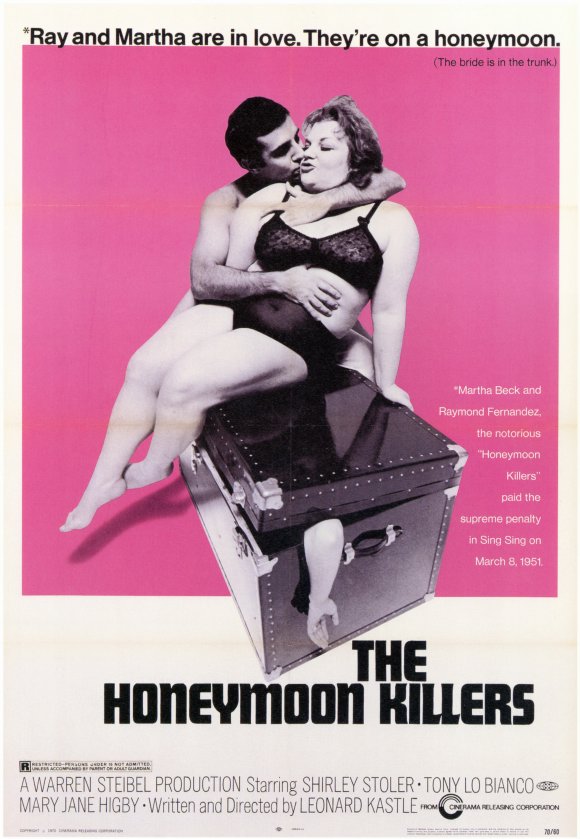
A lonely and overweight nurse by the name of Martha Beck (Shirley Stoler) meets and falls in love with the shady Raymond Fernandez (Tony Lo Bianco) through a ‘lonely hearts’ club. As their relationship progresses he confides in her his practice of marrying women and then robbing them of their savings. She decides to get in on the scheme by posing as his sister. Together they roam the countryside and murder and rob lonely old ladies in this darkly humored tale that is based on actual events.

It is impossible to watch this film and not have actress Shirley Stoler imprinted on your mind forever after. The scenes of her working at the hospital make her seem like the ‘real’ Nurse Ratched. Lo Bianco is also perfectly cast in his role as Fernandez when one reads the actual account of the case the face and voice of Lo Bianco’s almost immediately comes to mind even before you’ve seen the film. His slow revelation at finding out just how vicious and cold Martha really is and that she ends up shocking even him is memorable. The crime sequences themselves are more like humorous vignettes. The lady victims are all humorously flawed and portrayed with such a variety of annoyances that you end up finding yourself looking forward at seeing them ‘get it’. The music played over the killings that starts out low as the crime begins and then builds to a loud and intense crescendo is terrific and the black and white cinematography nicely compliments the stark subject matter.

I was disappointed that although this is a story that is based on actual events for whatever reason the film is set in the present day when the actual events took place in the 1940’s.This was possibly done for budgetary reasons, but it would have made it much more authentic had it been kept in its proper time period. It would also have helped the viewer gain a little more understanding to the Martha Beck character had it given us more of a background on her. In real life Beck had been abused by her father and was also the mother of two children and yet the film never even mentions any of this.

The film wonderfully explores the twisted and sometimes pathetic nature of people in both the perpetrators and in the victims. This becomes much more than a simple reenactment of a true crime story and more like a dark expose of our fragmented world and the fringe characters that dwell in it.

Martin Scorsese was the film’s original director, but was fired early on due to creative differences. Leonard Kastle took on the reins and does a fine job. I like his grainy, cinema verite vision and it was a shame that this proved to be his only directorial effort

My Rating: 7 out of 10

Released: September 8, 1969

Runtime: 1Hour 48Minutes

Rated R

Studio: American International Pictures

Director: Leonard Kastle

Available:  VHS, DVD (The Criterion Collection) 

Carrie (1976)

By Richard Winters

My Rating: 4 out of 10

4-Word Review: Prom was a disaster.

A shy, awkward teen (Sissy Spacek) who is a virtual outcast at her school and has a religious zealot for a mother (Piper Laurie), learns that she has telekinetic powers and uses them in terrifying and deadly ways after falling victim to a cruel prank at her high school prom.

Nothing really seems to mesh here and the pacing is poor. For a great deal of time you feel like you are not watching a horror movie, but instead an annoying, clichéd 70’s drama. The majority of the scares occur at the end while the rest of the film has no tension at all.  It’s visually flamboyant, but empty and unable to hide its low budget roots. Like with director Brian De Palma’s other thrillers his style and heavy-handed Hitchcock-like touches become overpowering and you lose touch with the story. Too much is orchestrated and the movie is never allowed to gel and have its own natural flow. The opening, which takes place in a girl’s shower, looks like a soft core porn flick especially with the choice of music.

The teen-age girls are certainly cruel and their snotty attitudes seem valid, but the actresses are all wrong. Yes, Nancy Allen and Amy Irving are hot to look at, but they were too old for their parts. All of them were in their 20’s and look far more like college girls instead of students in high school. The P. J. Soles character is irritating. In an effort to give the role some distinction they have her constantly wearing a pink baseball cap. She even wears it to the prom with her prom dress and looks ridiculous and yet still has the audacity to laugh at Carrie when she shows up when in reality they would most likely be laughing at her instead.

Miss Collins, the physical Ed. Teacher, which is played by actress Betty Buckley is another problem. She goes beyond the call of duty to give Carrie the individualized and sensitive attention that she needs. It sounds nice, but I couldn’t buy into it because in most cases shy students that don’t otherwise cause problems usually get overlooked even by the best of teachers simply because the school systems are too large with too many students to handle.

William Katt was not very convincing in his part as a dumb jock. John Travolta is good, but only because he is playing an extension of his Vinnie Barberino character from ‘Welcome Back Kotter’. In fact I found his portrayal here to be even funnier than his TV counterpart.

Spacek is the best thing about the movie as she brings the Carrie character to life with a vengeance. The part where she tears up the gymnasium with her powers is genuinely creepy and the way she opens her eyes and moves them around is freaky. The use of the split screen during this segment help to make it a uniquely scary moment in cinema history and saves what is otherwise a forgettable production. The famous ‘surprise’ ending isn’t bad either and even managed to startle me a little and I don’t startle easy.

Unfortunately it’s lacking the necessary ingredients overall to make it a classic. It’s based on the Stephen King novel and yet leaves certain crucial elements from the book out, which only creates more questions and confusion. De Palma takes the most simplistic parts of the story and then glossies over the rest leaving the viewer feeling unsatisfied when it is over.

My Rating: 4 out of 10

Released: November 3, 1976

Runtime: 1Hour 38Minutes

Rated PG

Director: Brian De Palma

Studio: United Artists

Available: VHS, DVD, Blu-ray, Amazon Instant Video 

Killer Klowns from Outer Space (1988)

By Richard Winters

My Rating: 8 out of 10

4-Word Review: Clowns aren’t for kids.

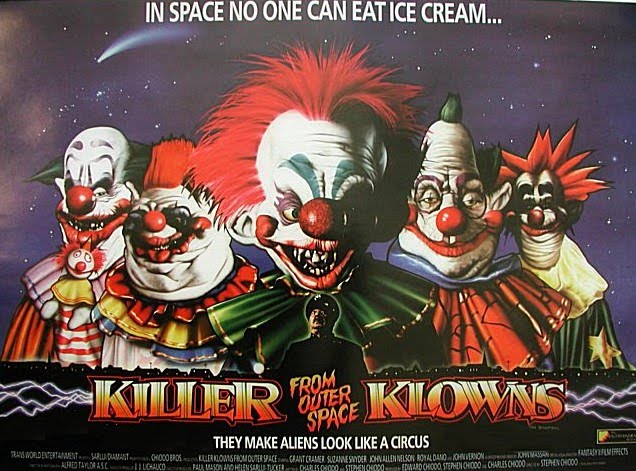
This is a fun and well-crafted sci-fi satire dealing with outer space aliens that resemble clowns and fly in a spaceship that look like a circus tent. They arrive on earth and begin killing everybody, wrapping them up in a cotton candy like cocoon and storing them in a freezer on their spaceship. When these cocoons become ‘ripe’ they stick a straw into them and suck out their blood.

It’s all a very unique parody on clown culture and those old sci-fi movies from the 50’s. There are shades of Invasion of the Body Snatchers, The Day the Earth Stood Still, War of the Worlds, and The Blob to name just a few.  Everything is fast paced with an inventive mind set. All those things that were always considered harmless and childlike have been turned into threatening and scary things here and it’s brilliant. The best one is the balloon dog that becomes a vicious barking little beast.

The special effects are outstanding. For a low budget picture this may actually be the best you will find. The circus tent spaceship is impressive especially when it takes off at the end. The popcorn ray guns and the shadow figure of a hungry tyrannosaurus are also good. You got to love the distorted features of clowns that are made to look genuinely frightening where even their bodies are misshapen and grotesque. You start to believe that these are actual creatures and not people inside a costume.

The only drawback is that it was made in the 80’s and is embedded with very bland looking, bland acting teens as the protagonists that seem like cookie cutouts from the genre. It even starts out with the very clichéd scene of having them making out in their parked cars at a secluded, wooded area. Outside of the clowns John Vernon has the only other interesting part. He plays a hardened and slightly corrupt cop who has seen it all and doesn’t fall for anything. He is both edgy and funny and gives the film some added grit. His death scene is good (like most of the others) but it would have been nice had he been able to carry the picture.

Overall this is clever and creative and sure to click with those possessed with a warped sense of humor.

My Rating: 8 out of 10

Released: May 27, 1988

Runtime: 1Hour 28Minutes

Rated: PG-13

Director: Stephan Chiodo

Studio: Trans World Entertainment

Available: VHS, DVD, Amazon Instant Video

The House That Cried Murder (1973)

By Richard Winters

My Rating: 5 out of 10

4-Word Review: The bride goes nutzo.

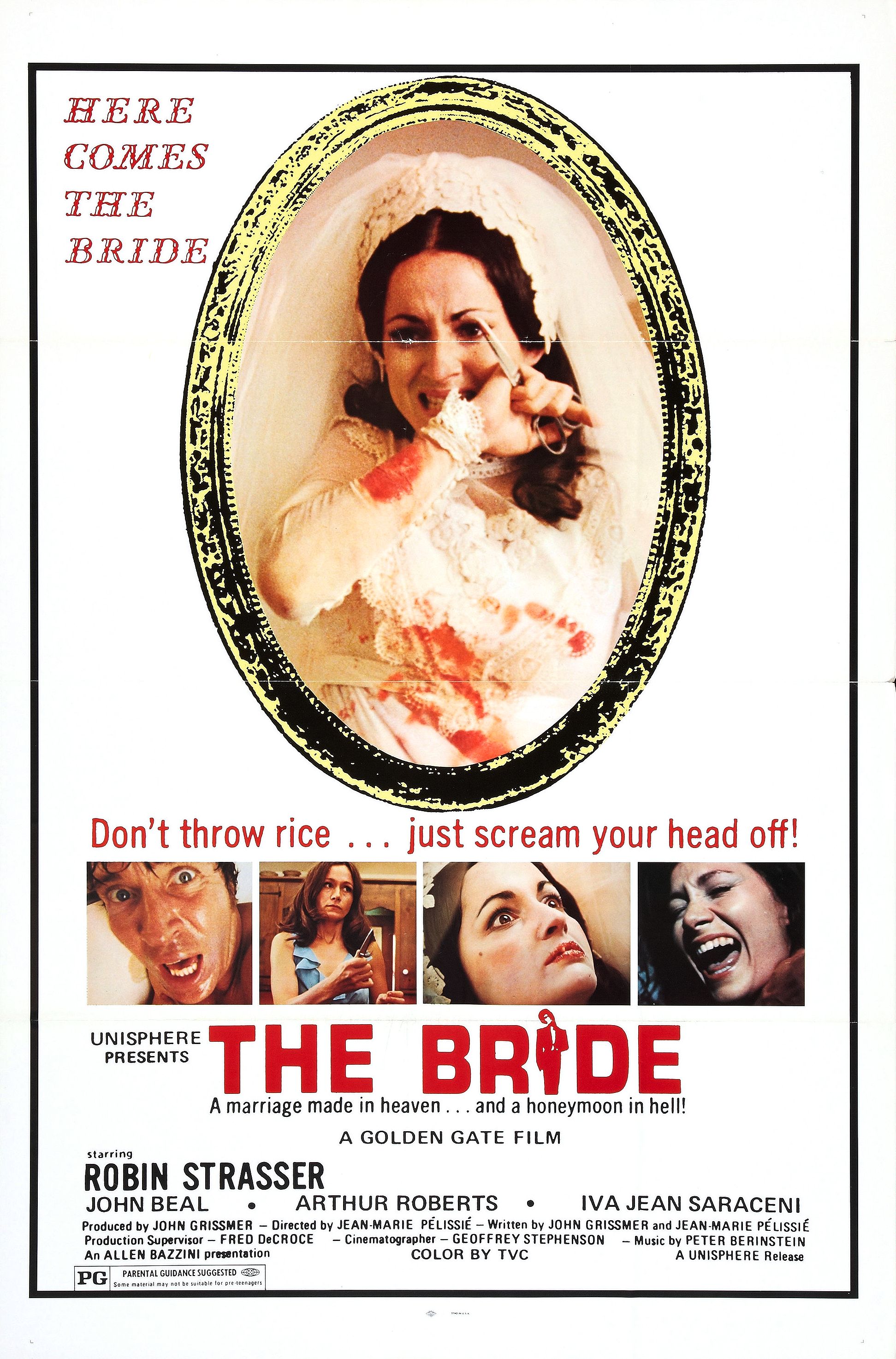
Despite a low budget this is an intriguing horror film with a unique vision. Barbara (Robin Strasser) is a young headstrong woman who designs an ominous looking, modernistic home, which she then has built. She plans on moving into it with her fiancé David (Arthur Roberts) who is caught fooling around on their wedding day, which sends Barbara into reclusion. Soon David begins experiencing strange occurrences, which leads him back to the house where an odd climatic sequence ensues.

This film stands out from the other low budget, cardboard horror movies of the 70’s simply because director Jean-Marie Pelissie shows a good understanding of the genre and how to effectively create eerie sequences. The house itself is an odd spectacle that looks like something designed by Frank Lloyd Wright while drunk. It’s erected in a large, empty field which gives it a very pronounced presence. The inside of the place was unfinished, and Pelisse uses the large windows of the home to casts unusual shadows along its white plastered walls and gives it a spooky look  as the camera goes spinning around it. Some of the imagery used during a nightmare sequence is equally creepy.

Strasser herself is quite frightening and flies into authentic looking rages easily. One good segment has her walking in front of all the wedding guests wearing a blood stained gown while behaving erratically. She then runs off with only hints that she may or may not be lurking in the shadows, which nicely taps into the fear of the unknown and mysterious.

The unfaithful groom is a good character with all the qualities that you love to hate. He is good looking, but amoral. He uses people while climbing the social ladder, but is quite dumb in the process. He tells his bride that he will be gone “for only a minute” and then has the audacity to go to an upstairs room of the house where they are having the wedding party and fools around with his former girlfriend, but doesn’t think to lock the bedroom door. When he gets his eventual comeuppance you have no problem seeing it.

As Strasser’s father John Beal is unimpressive. He is supposed to be a man of money and power, but instead comes off like a wimpy old man. Iva Jean Saraceni,,who portrays David’s old girlfriend Ellen, looks too much like Strasser, which doesn’t help.

Although this film has potential the low production values almost destroy it. The lighting is flat and certain segments are so dark you can barely see what is happening. Many scenes were filmed in small, cramped looking rooms with tacky props in the background. The music used during the scary scenes is good, but the soundtrack played over the rest of the film sounds like a bad rendition of Herb Alpert and the Tijuana Brass.

If you’re into cheap 70’s horror flicks then this is one you should check out. It definitely has some distinctive moments and is an interesting forerunner to A Nightmare on Elm Street since Barbara terrorizes David and his girlfriend through their dreams.

My Rating: 5 out of 10

Alternate Title: The Bride

Released: December 14, 1973

Runtime: 1Hour 25Minutes

Rated PG

Director: Jean-Marie Pelissie

Studio: Golden Gate Productions

Available: VHS, DVD

Maniac (1980)

By Richard Winters

My Rating: 5 out of 10

4-Word Review: He wants their hair.

A loner (Joe Spinell) terrorizes New York City by killing young women and scalping them. He then takes their hair, brings it home, and places it (actually he nails it) onto the heads of some mannequins that he has.

In a lot of ways this is the same old mechanical slasher flick as it has all the predictable characteristics of the others that dominated the early 80’s. The story is simple and strung along by long, drawn-out murder sequences. There is some suspense, but it is minimal since we know exactly what is going to happen. The victims are young, good looking women, who are clueless to the dangers that are lurking until it is too late. One segment in particular features a nurse getting off of work late at night, who mentions her fear of the killer and yet for some reason she still foolishly refuses a ride home from her friend and instead walks down a dark, lonely street and into, of course, eventual carnage.

There are also some rather glaring technical errors. One features a woman (the same one who refused a ride) running from the killer by going into an empty subway. Although isolation is the whole factor here there is one shot, taken from inside a departing subway car that clearly shows a whole bunch of people standing just across from her on the other side of the tracks. There is also a segment where Spinell takes his girlfriend to his mother’s grave. When the car pulls up to the cemetery it is a nice, bright afternoon, but when they reach the actual grave it has become pitch black with a strange unexplained fog that has rolled in. Lastly there is the ending. This is a man that has terrorized a whole city and yet only two policemen in an unmarked squad car come to his residence and when they do they don’t even bother to secure the site.

Despite the low-budget problems there are a few things that raise this slightly above the rest. One is the fact that it actually manages to get inside the killer’s head. You hear the inner conversations between his ‘good’ side and his ‘bad’ side. Of course this only touches the surface of a true schizoid personality, but it does offer a little more depth than most. It also helps create a good portrait of a tormented soul and you end up feeling more sadness than fear for the man. The film also consistently has a dark, grainy look, which helps accentuate the ugly theme. Having it take place in New York City gives it a little more distinction and atmosphere.

The special effects are good. The part where he blows a man’s head off, through a car windshield, looks very realistic and has become the film’s most famous scene. The surreal ending, where the mannequins all come to life and exact a sort of revenge, is also well-handled and imaginative. Makeup artist Tom Savini, who also appears as the character of ‘Disco Boy’, has had a lot of success, but the stuff here may be his best.

Director William Lustig shows some panache and Spinell, who also co-wrote the screenplay, gives a surprisingly strong performance, but their attempts at creating a better understanding of a crazed killer prove placid and simply done for shock value.

My Rating: 5 out of 10

Released: December 26, 1980

Runtime: 1Hour 27Minutes

Not Rated (Graphic Violence, Brief Nudity, Language, Adult Theme)

Director: William Lustig

Studio: Magnum Pictures

Available: DVD, Blu-ray (30th Anniversary Edition)

Bunny O’Hare (1971)

bunny

By Richard Winters

My Rating 2 out of 10

4-Word Review: Bette becomes a hippie.

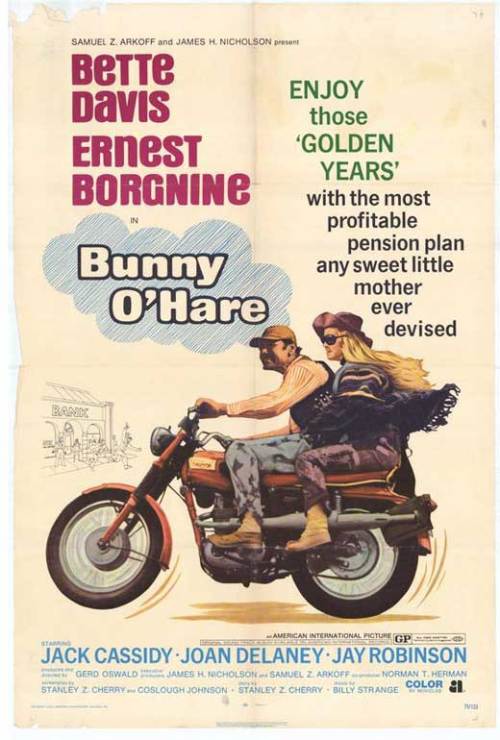
Extremely odd Bette Davis vehicle made in her later years when her career had crested and she was forced to be less choosy about her projects. The story has to do with a lonely widow named Bunny O’Hare (Davis) who losses her home to foreclosure and is rendered homeless. She meets an older man named Bill Gruenwald (Ernest Borgnine) who is an escaped bank robber. Together they dress up as hippies and rob banks throughout the state of New Mexico in order to survive.

Davis is exceptional. Usually she plays cold, manipulative characters, but here she gives a perfect, touching performance as a nice old lady. She is terrific in every scene that she is in and the only bright spot in what is otherwise a misfire. Borgnine though seems wasted and thrown in only as a stock character.

The story really has nowhere to go. The intention was to make the film a mixture of social satire and slapstick, but it fails on either end. The novelty wears off quickly and it soon becomes derivative. Initially their ploy to rob the banks seemed clever as Bill releases a bird into the bank, which causes such a distraction that they are able to rob it without detection, but it becomes tiring when it gets played-out again and again. The police are portrayed as being universally bumbling and making it seem like a six-year old could rob a bank and easily get away with it. I also did not like the banjo music being played as they are trying to get away from the cops as it seems too similar to the much better film Bonnie and Clyde and in fact the original title for this movie was going to be ‘Bunny and Claude’.

The casting of Jack Cassidy as Lieutenant Greely, the policeman who becomes obsessed with capturing them, should’ve worked.  He was very adept at playing cold, cunning, slightly offbeat characters as evidenced by his Emmy Award winning performances on the old Columbo TV-show as well as the cult TV-series He and She. He was the husband of actress Shirley Jones and the father of Shaun and David Cassidy whose career was unfortunately cut short when he ended up dying in a fire in 1976 after falling asleep with a lit cigarette. His unique talent here is stifled because the character is portrayed as being unrealistically dimwitted and saps any possible energy from the scenes that he is in.

Actress Joan Delaney makes a terrific addition as his female counterpart R.J. Hart. She is young, attractive, and hip. She plays off of Greely’s old, regimented ways quite well and it is a shame that, with the exception of a very brief appearance in the 1991 comedy Scenes From a Mall, this ended up being her last film.

The New Mexico landscape is nice, but I got the feeling that the location shooting had not been scouted out sufficiently. The police station didn’t look authentic at all. It seemed like scenes where shot in any building that they were able to attain a film permit. The lighting consists of one bright spotlight put on the subject while the sides of the frame and the background are dark and shadowy. Sometimes, in a good movie, this is done for artistic effect, but here I felt it was more because that was all they could afford. This one is for Bette Davis completest only.

Well known character actors John Astin and Reva Rose appear as Bunny’s two grown children, but are essentially wasted. The then acting governor of New Mexico, David Cargo, plays one of the state troopers.  Larry Linville, who would later become famous for playing Major Frank Burns on the classic TV-series M*A*S*H, can be seen very briefly at the end, but has no lines of dialogue.

My Rating: 2 out of 10

Released: October 18, 1971

Runtime: 1Hour 28Minutes

Rated PG

Director: Gerd Oswald

Studio: American International Pictures

Available: Netflix Streaming