Category Archives: Italian Films

Hitch-Hike (1977)

By Richard Winters

My Rating: 5 out of 10

4-Word Review: Couple picks up killer.

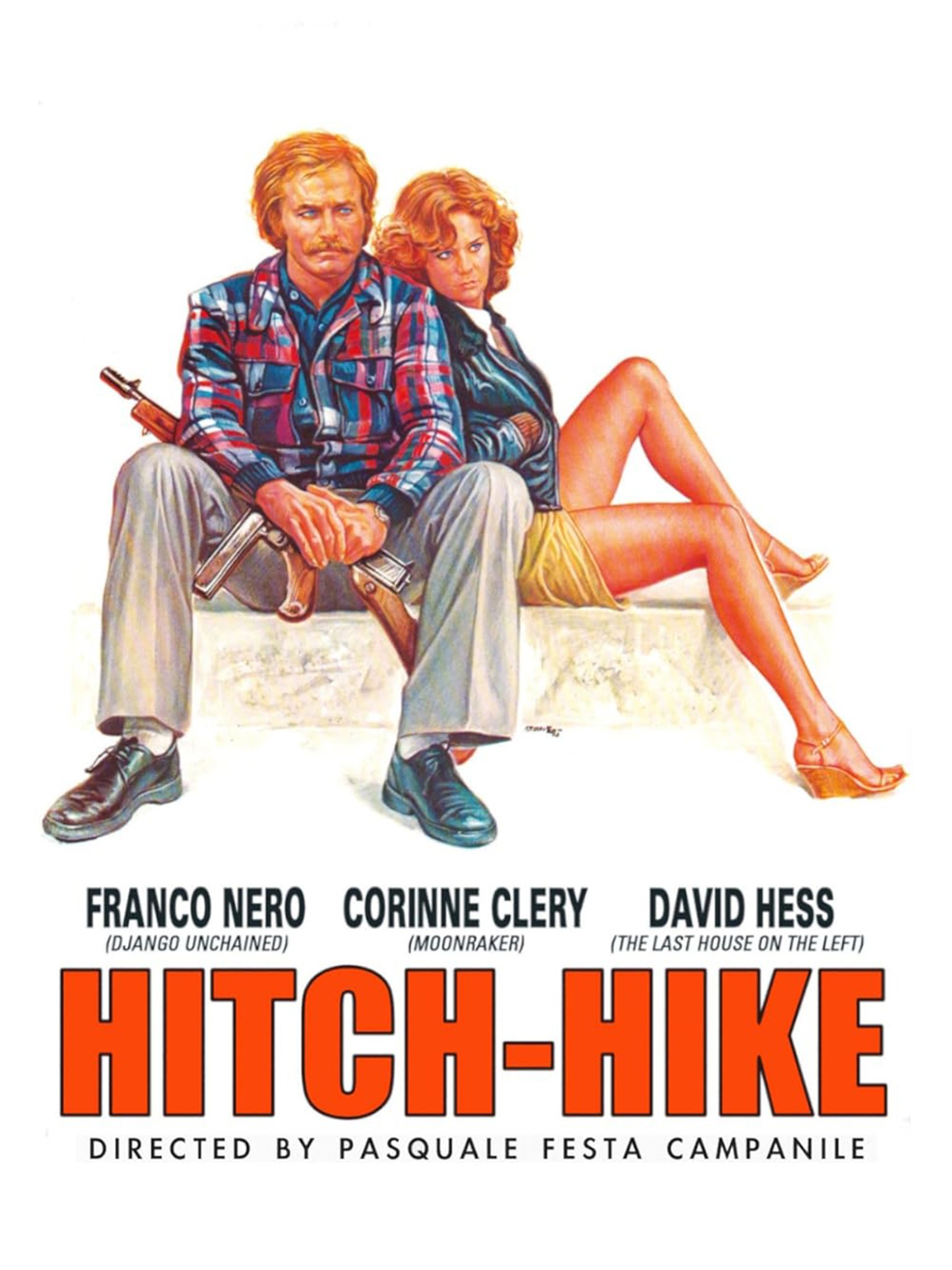
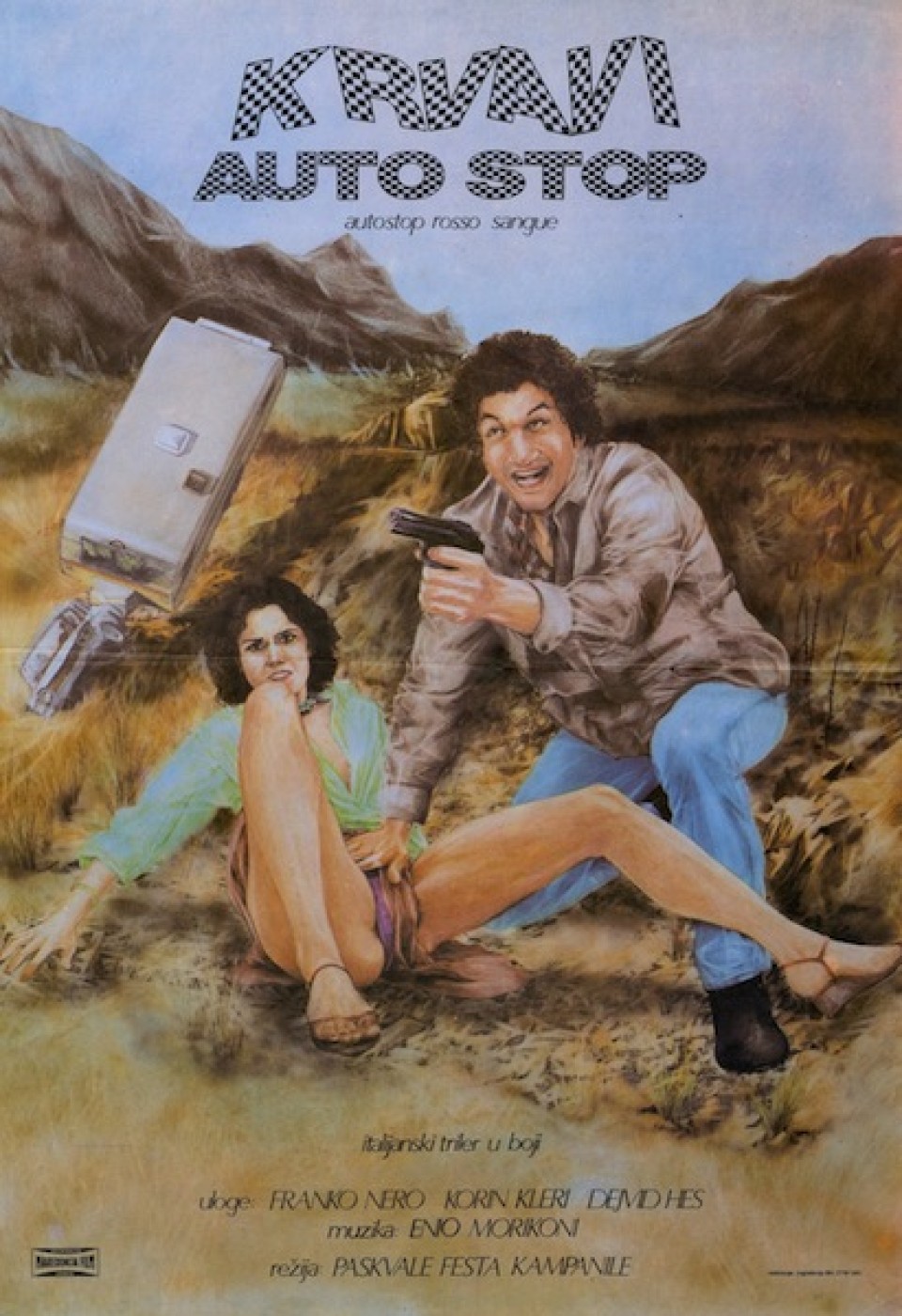
Walter (Franco Nero) and his wife Eve (Corinne Clery) are constantly bickering about Walter’s alcoholism. They go on a trip to Los Angeles and on the way pick-up Adam (David Hess) whose car is stranded on the road. Unbeknownst to them he’s a robber who has doubled-crossed his partners and absconded with a suitcase full of $2 million dollars. It doesn’t take long before Adam has a gun to both of their heads demanding they take him to Mexican border where he plans to escape while also killing them in the process. As the two try desperately to figure a way out they are also being secretly followed by the two young men whom Adam betrayed and who are now intent on extracting a revenge.

One of the biggest problems I had with the movie is that it’s supposed to take place in California but was actually shot in the mountains of Gran Sasso in Italy, which looks nothing like the state. I realize that California has a varied topography but the locales here are screaming southern Europe and the highway signs are done in blue, which anyone living in the U.S. would know is fake as here they’re green, which only accentuates the off-kilter look of the production. Since where they’re driving to makes no real difference to the plot I would’ve just had it be some city in Italy like Rome, which would’ve helped the authenticity.

The other problem I had is that, at least the version I watched, it’s spoken in Italian. Normally I prefer movies that are subtitled versus dubbed, but I could’ve sworn years ago I saw it in English, but what’s available on YouTube, which is the only service currently streaming it, doesn’t offer that, which is a big shame. Not so much because of Nero or Clery, but more Hess as his own voice is not used, which then defeats the whole reason for having him. He’s best known for playing the sadistic killer in The Last House on the Left, and he has an excellent way of being menacing, but because we don’t hear him actually speak in his native tongue all of that gets lost and the creepy energy that was supposed to be there by casting him gets completely wasted.

Spoiler Alert!

The story, which is based on the unpublished novel ‘The Violence and the Fury’ by Peter Kane, doesn’t get off to a good start as it features two people, particularly Nero, who are not likable, and thus the viewer really doesn’t care about their predicament making the tension mediocre at best. There are also elements that are stolen from better known movies like the mysterious truck that keeps chasing them during their drive, with the identity of the driver hidden, that’s taken straight from Duel. Loopholes abound as well as we later learn that Hess is the driver of the truck, but how was he able to avoid being shot by his cohorts earlier with a gun aimed right at him and how was he able to hijack the truck as he had been without any vehicle? Maybe he was able to hitch a ride with a truck driver, just like he did with the couple, and then do away with the driver once inside, but this is stuff that needs to be shown as otherwise it comes-off like the filmmakers are just making up the rules as they go with no concern whether it’s logical.

The twist ending is limp as it features Nero setting the car on fire with his injured wife inside and putting Hess’s dead body next to hers in an attempt to make it look like both he (Nero) and she died in the blaze, but there were such things as dental records back then, so after the coroner examined the charred bodies he/she would determine that it wasn’t really Nero who died and thus the authorities would continue to search for him. Seeing him then become a hitchhiker himself leaves open too many questions and comes off like a cop-out where the filmmakers ran out of ideas and thus decided to just end it there.

End of Spoiler Alert!

The moment where Nero is forced to watch Hess make love to his wife, and witnessing the humiliation and anger in his eyes, is the film’s best moment. Watching Clery, the only person you sympathize with, is entertaining both with her clothes on and off. However, the film lacks any character development, and the plot is quite strained with a lot of moments where the story, much like with the car ride, doesn’t seem to be going anywhere and if anything, just driving itself around in circles.
My Rating: 4 out of 10

Released: March 4, 1977

Runtime: 1 Hour 44 Minutes

Rated R

Director: Pasquale Festa Campanile

Studio: Explorer Film ’58

Available: DVD, Blu-ray, YouTube
Tragic Ceremony (1972)

By Richard Winters

My Rating: 4 out of 10

4-Word Review: Witnessing a black mass.

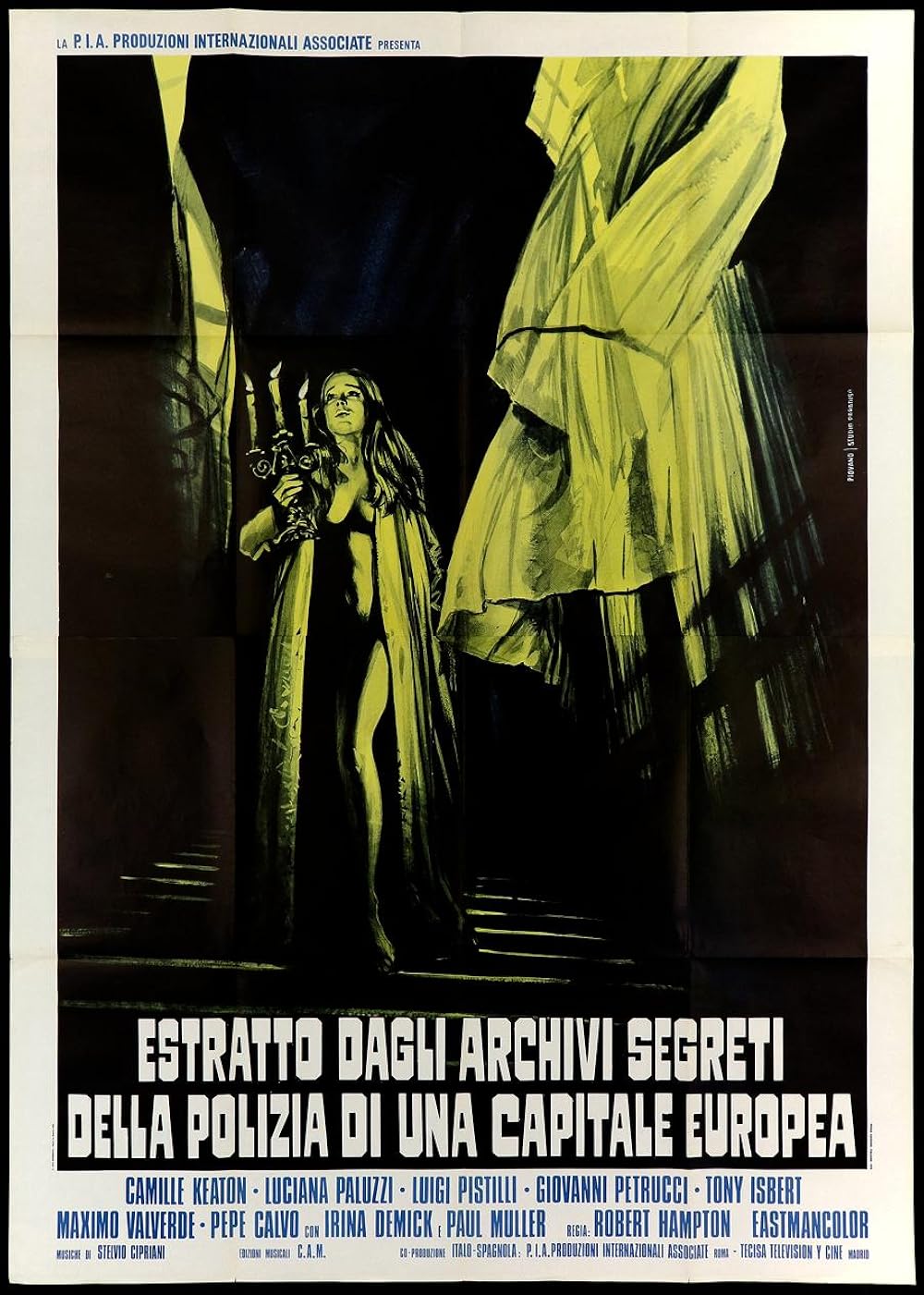
Jane (Camille Keaton), Joe (Maximo Valverde), Bill (Tony Isbert), and Fred (Giovanni Petrucci) are four young adult friends traveling the Spanish countryside in their uncovered jeep. When their car runs out of gas they come upon a large estate whose owner, Lord Alexander (Luigi Pistilli) allows them to stay in order to seek shelter from the rain. During the course of the night Jane starts to hear strange music and chanting coming from another room and when she enters it, she finds a group of people performing a satanic ritual. Jane then realizes she’s the one chosen to be sacrificed, but before they can do it her friends come in to save her, but this leads to more violence and the four attempting to flee only to be followed by grisly mayhem wherever they go. 

Unusual horror opus starts out almost like a dreamy romance with the four riding on a sailboat and soft melodic song played over the credits. The scares and tension don’t come quickly, and the first act has a relaxed direction that doesn’t grab the viewer and is too leisurely paced. The ceremony scenes are done with no imagination and seems to bask in every cliche making it more appropriate for parody. Director Riccardo Freda complained that the project was taken out of his hands and scenes added in by the producer to bolster the runtime. It took all the way until 2004 when a full restoration of the director’s cut was finally made available, but when this got shown at the 61st Venice International Film Festival it was met at the end by a chorus of boos.

The main reason to catch it is for the performance of Camille Keaton. This was the last Italian feature that she was in before moving back to the states and starring in I Spit on Your Grave, of which she’s best known for. Even here though her presence is a bit distorted as she looks beautiful and has a really good topless moment in the bathtub, but her voice gets dubbed by an Italian woman who sounds middle-aged and therefore doesn’t reflect something coming from a delicate young lady that she is.

It’s also never explained why she’s traveling with three guys as normally there should be other female friends riding along in order to keep it an even mix. One lady with a bunch of guys doesn’t make much sense unless she was dating one of them, though that’s not the way it gets portrayed. She does at one point sleep with one of them to the envy of the others, but it’s deemed as a ‘one-off’ moment, which proceeds to make the interpersonal dynamics in the group even more murky and confusing. The guys on the other hand show very little distinction in their personalities and it would’ve worked better had it been simply a couple and let the other two guys written out of it completely. 

Once the violence gets going it is rather impressive in a gory sort of way. The ax cutting through someone’s head was startling, but then the same shot gets replayed 5 different times, as part of a reoccurring nightmare sequence, that makes it very redundant. A good director, even if they are going to show a past event, will, or should, do it from a different angle, or in slow motion, or even an alternative color scheme in order to change it up a bit and not make it seem repetitive and in this case amateurish. 

Spoiler Alert!

The twist ending in which the wife of the homeowner and leader of the black mass ritual, Lady Alexander (Luciana Paluzzi) appears to have completely taken over Jane’s identity to the point that Jane becomes her as the car she’s riding in drives away, which I thought was kind of cool. Granted it does leave open many questions, but I felt a level of mystery in this case helped. Unfortunately producer Jose Gutierrez Maesso, didn’t like this approach as he thought it would cause the viewer too much confusion, so he hired actor Paul Muller to play a psychiatrist who would enter at the very end and essentially explain away all of the loose ends, but this treats the audience like they’re too stupid to figure things out on their own. 

My Rating: 4 out of 10

Released: December 20, 1972

Runtime: 1 Hour 22 Minutes

Not Rated

Director: Riccardo Freda

Studio: Variety Distribution

Available: DVD, Blu-ray, Tubi


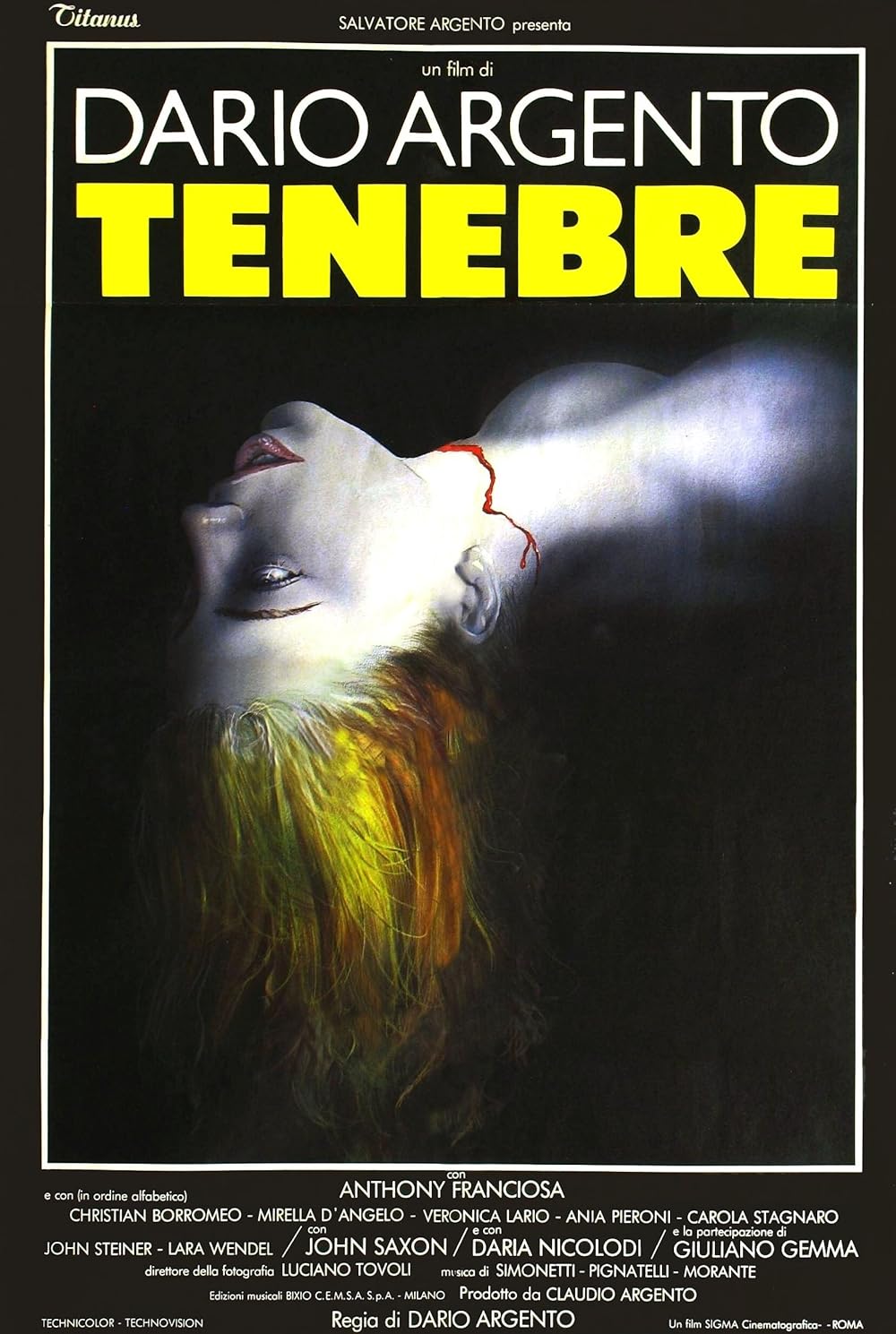
Tenebrae (1982)

By Richard Winters

My Rating: 5 out of 10

4-Word Review: Novelist hounded by stalker.

Peter Neal (Anthony Franciosa) is a successful novelist who travels to Rome, Italy to promote his latest work titled ‘Tenebrae’. Once he arrives, he is soon met by detective Germani (Giuliano Gemma) who advises him that a murder has recently been committed that was done in the style of one that occurred in his book. Neal scoffs that anything he’s written could’ve motivated someone to kill, but soon after he receives an anonymous letter from the murderer detailing how he’s going to commit more killings using methods that Neal described in his book. This then sets Neal off on doing his own investigation convinced that the police have a ‘tunnel vision’ and only he can find the true culprit using his own detective skills that he acquired while doing research on his book.

The film was inspired by writer/director Dario Argento’s own experiences that he had while meeting a fan via the telephone who initially introduced himself as being a great admirer of his work. The calls were friendly in nature at the beginning but became increasingly more menacing as time wore on. Argento eventually was threatened by the fan who claimed that his film Suspiria had affected him mentally and he wanted to harm Argento in the same way his movie had ‘harmed’ him causing Dario to leave the U.S. and return to Italy for his own safety, which is where he began writing the screenplay for this movie.

The sets are atypical for an Argento movie as they lack the garish colors and shadowy interiors most noted in his other films and this was intentional as he wanted to give the film a more ‘futuristic’ look and a one-note color scheme that more closely resembled cop TV-shows, which he felt the story reflected. Visual change is refreshing and helps the action seem more reality based versus in his other movies where everything seemed like it was set in someone’s dark fantasy in some parallel universe though I wasn’t as crazy about the camerawork, which was highly praised by others. Some may find the three-minute tracking shot that goes from one apartment window and across the complex to be captivating, but I found it more dizzying and unnecessary.

The story holds enough adequate suspense to remain moderately riveting and the pounding soundtrack by the rock group Goblin holds the tension. American actor Franciosa is nicely cast though Argento apparently had many behind-the-scenes conflicts with him, but the guy, despite his career decline, looks almost ageless and I was impressed with the opening bit where; despite nearing 60, he’s seen biking down a busy highway amongst tons of traffic with seemingly no worry or sweat. John Saxon though, the only other American in the movie, is badly wasted in a part that doesn’t give him much to do other than make a big deal about his hat that he seems quite fond of. Thankfully though, despite other performers having their voice dubbed, the film was shot in English in order to broaden its American appeal and so both of these actors speak with their actual voices while it’s quite evident with the others that they’re not.

The biggest disappointment for me were the special effects that look cheap and done with no imagination. The blood is bright colored and looks like dye mixed with water. The victims show no actual cuts, or abrasions and the blood appears painted on, or gently poured on via a cup and didn’t look authentic. There are also some ill-advised reaction shots where the film will quickly cutaway and show the victim looking scared with their mouth agape that came off as unintentionally funny. The only real frightening moment comes when a young lady gets chased down a dark street by a large dog who ultimately traps her inside the house of the killer, but other than that I was wanting way more than this film seemed able to give. I did though like one murder scene, which is purportedly one of Quentin Tarrantino’s all-time favorites, that features a woman getting her arm cut off and then proceeding to turn around and paint the walls of her apartment with its spurting blood though even this gets compromised because you can plainly tell it’s a mannequin arm when the ax goes through it.

The story gets a bit convoluted too as it adds in a flashback scene, without telling us it’s a flashback, involving a prostitute, played by Eva Robin’s, who really does spell her name with an apostrophe, and some teen boys that she meets on a beach. Only at the very end does it come into focus what this scene, which gets interspread throughout, means to the story, but until then it’s rather confusing why we’re seeing it and even a bit off-putting. It also features the prostitute as having a perfectly chiseled super model’s body, which I didn’t feel was realistic, and even though it’s supposed to be set decades earlier from the present day no effort was made to make it seem like it was shot in a bygone era.

Spoiler Alert!

The twist ending may be a surprise to some as ultimately, we learn that there wasn’t just one killer, but two of them. One being a TV interviewer named Christiano, played by John Steiner, who kills the first several due to his feelings that the victims were ‘immoral’ and then the last few committed by the protagonist himself. However, I started to suspect Franciosa when he’s found conveniently hit over the head by a rock, which supposedly ‘incapacitated’ him though I thought it was simply a ploy to divert attention away from him, so for me the final reveal was very predictable. Logically it doesn’t completely hold up either as his friend Gianni, played by Christian Borromeo, witness Christiano getting killed by Franciosa, though in disguise, and then runs back to the backyard bushes where Franciosa is supposedly hiding, but it didn’t seem like Franciosa would’ve had enough time to leave the murder scene and get back to the bushes before Gianni got there.

My Rating: 5 out of 10

Released: October 27, 1982

Runtime: 1 Hour 41 Minutes

Rated R

Director: Dario Argento

Studio: Titanus

Available: DVD, Blu-ray, Amazon Video, Plex, Tubi

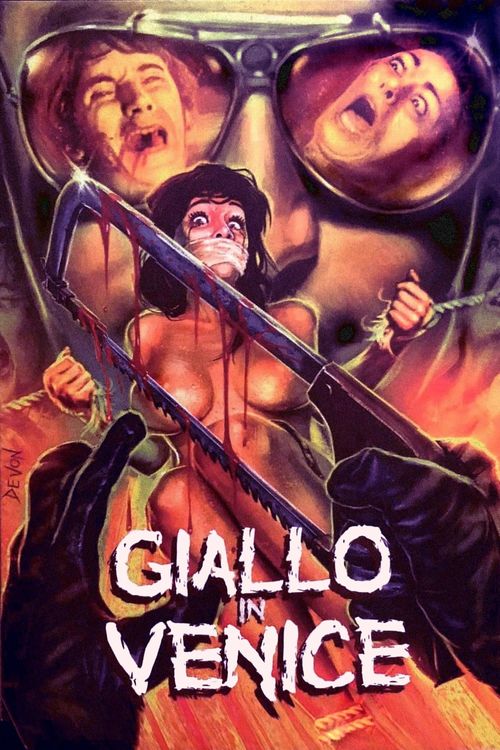
Giallo in Venice (1979)

giallo2

By Richard Winters

My Rating: 5 out of 10

4-Word Review: Investigating a couple’s murder.

Inspector Angelo (Jeff Blynn) heads the investigation of the death of a couple (Gianni Dei, Leonora Fani) who were murdered brutally in broad daylight along the riverside and in full view of the public though only an old man living in a nearby apartment is able to offer any tangible eyewitness testimony. The odd thing is that the killer for some reason saves the woman victim from drowning only to then stab her later once he brings her to shore. To learn more about the couple Angelo speaks with a local prostitute named Marzia (Mariangela Giordana) who confides that Fabio, the male victim, had deep seated sexual perversions that came-out during his marriage to Flavia the female victim. His drive to pursue these dark fantasies, which we see through flashback, and forcing his wife to play into them, she believes in some indirect way is what lead to their deaths.

This film is considered to be the final word in giallo shock cinema that permeated the Italian movie scene all through the 70’s and into the early 80’s. Not only does it contain some remarkably savage deaths, which get captured in explicit detail, but an extraordinary amount of sex, which has made some liken it to a porn film. It was directed by Mario Landi, who got his start in the 60’s making dramas and even spiritual films before moving into the tawdry drive-in fare of the 70’s that featured stories dealing with prostitutes and drugs. It wasn’t until the end of 70’s when he finally ventured his way to horror, but because of his late arrival and because there were so many other bigger names already in the genre he decided in order to draw some attention and have his movie stand-out in a cluttered field by taking things to the most extreme violent and sexual level he could, which in that respect you could say he succeeds valiantly.

Of course this has lead it to be quite controversial even to this day and very hard to find a complete director’s cut. The version currently streaming on Tubi is heavily edited and runs only 1 Hour 15 Minutes, but the full version, which is 1 Hour 39 Minutes, can be obtained through Full Moon Features, which released the DVD with all gore and sex fully intact in 2022 and this review is based on the viewing of that one.

Many commentors on Amazon and IMDb argue whether this is even a horror film as so much is loaded with sex, and a blaring melodic music score that seemed better suited for a blissful romantic flick, that it gets hard to tell. Some will accuse this of being a cheap soft core porn flick, and they have a point while others will insist that because it has a plot to it and mystery that puts it outside of being an adult film as those focus only on the sex and nothing else. Personally I think both sides could be right and this could easily be labeled the first porn horror film.

While the sex is excessive I did find these moments intriguing simply because of Favio, who I suppose could be considered an early example of what we would now call a porn addict who looks at old pictures of perverse sex acts and then forces his wife to play them out, sometimes with him as a participant, or having her do it with strangers. Things become progressively more extreme as that’s the only way he can continue to get-off making these scenes far darker and creepier than the violent ones featuring the killer. In fact this becomes one of those very rare horror films where the killer is quite forgettable and doesn’t stand-out at all while it’s the victims who are memorable.

The film though is most noted for its graphic violence with the highpoint, or low point depending on your point-of-view, being when the killer slices into a naked women’s leg as she’s tied to a kitchen table, which is prolonged and leaves little to the imagination.  While this is certainly gory what I found more disturbing was when the killer burns a man alive and then, once the flames have been stamped out, you see nothing but the victim’s eyes moving back and forth inside his otherwise blackened, charred head.

The story is not as well thought out as the effects. The opening murder happens in the daytime in a public area with the victim’s screaming out loudly as they’re stabbed making it hard to believe it wouldn’t have drawn more attention than just one lonely old man. The police inspector looks like he spent more time on his perfectly blow-dried hair than the case and his constant egg eating and having one always in his hand gets overplayed. The ultimate killer reveal isn’t surprising nor captivating making this one of the weaker giallos case-wise but makes-up for it with the violence if that’s what you’re into.

My Rating: 5 out of 10

Released: December 31, 1979

Runtime: 1 Hour 39 Minutes

Not Rated 

Director: Mario Landi

Studio: Variety Distribution

Available: DVD

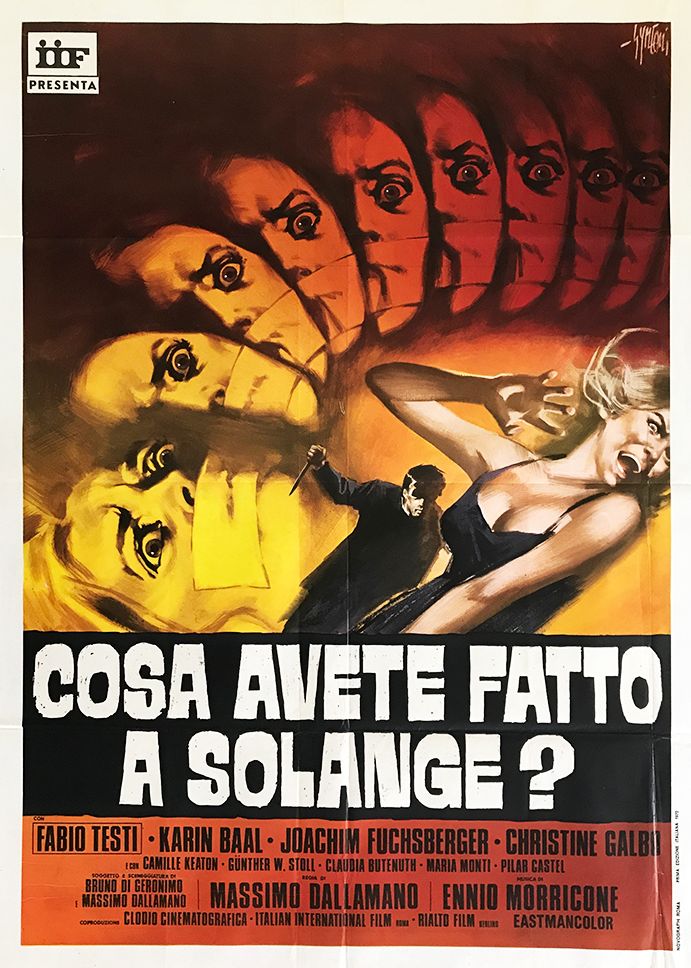
What Have You Done to Solange? (1972)

solange

By Richard Winters

My Rating: 7 out of 10

4-Word Review: Bearded priest murders schoolgirls.

Enrico (Fabio Testi) is a high school teacher who’s having an affair with Elizabeth (Cristina Galbo) who’s one of his students. While making-out with her on a boat at a park Elizabeth spots a shadowy figure murdering a young girl in a nearby wooded area. The girl turns-out to be one of her classmates, but Enrico convinces her not to tell anyone for fear that it could jeopardize his job. Once the murder gets discovered and reported on the news Enrico goes back to the scene to check for clues only to be photographed by the police who are there doing the investigation. Inspector Barth (Joachim Fuchsberger) spots Enrico in the photo and brings him in for questioning. Enrico denies any knowledge of the killing, but comes under suspicion especially after Elizabeth is later found murdered in her bath tub. Enrico then reconciles with his frigid wife Herta (Karin Baal) in order to have her help him do their own investigation, so they can unmask who the real killer is before the police are able to close in on him.

The film is a unique partnership between a West German production company and an Italian one that was filmed on-location in London. While there are many German actors in the cast the film as a whole is modeled after an Italian giallo and has many of the mystery, gore, and sleaze elements that you’d expect from those. The direction, by Massimo Dallamano, who was a cinematographer of Spaghetti westerns during the 60’s, approaches the material with a visual elegance. The photography is crisp and detailed with some evocative camera work and angles as well as a few graphic shots including the murderers modus operandi, which is shoving a large knife up his victim’s vaginas, which not only gets revealed on the corpses, but also in x-ray version, but also a drowning death in a bath tub that gets played-out moderately well. In most slasher flicks the victim goes down easily when they’re attacked by surprise by their killer, but here this one struggles quite a bit making the killing more drawn-out and thus more realistic.

The plot though, particularly the second act, gets stretched too thin. We have an intriguing set-up and a zesty conclusion, but in-between it meanders. The biggest reason for this is that the protagonist and his quandary becomes neutered and thus all the potential drama from his situation evaporates. Having the inspector tell him upfront that he doesn’t think he did it hurts the tension and would’ve been intriguing if they thought he did, or he even became their prime suspect. Having Enrico make amends with his wife, at the beginning they’re at extreme odds and even close to fully hating each other, further moderates things as the wife could’ve been an interesting possible suspect too, killing the school girls and trying to make the hubby look like he did it in order to get back at him for cheating on her, but then having the two team-up just fizzles away a potentially dark undercurrent to their relationship. Showing Enrico working with the inspector ultimately makes him seem more like a side character in his own movie and by the end like he’s not really the star at all as the inspector completely takes over.

The one performer that does stand-out is Camille Keaton. She’s better known for her starring role in the cult hit I Spit On Your Grave, but here in one of her first performances in the front of the camera she’s quite impressive and she does so without uttering a single line of dialogue. She comes-in real late too to the extent I was starting to think she’d have some minor part and be spotted for only a few seconds, but her character comes-on strong despite not saying anything and is an integral component to the whole mystery. What I liked most about her was her trance-like demeanor and glazed over look in her eyes that’s both effective, creepy, and disturbing at the same time.

Spoiler Alert!

The film’s wrap-up could’ve been better done as it elaborates about the motives of the killer and the elements of the case too much saying things that the viewer should’ve been able to pick-up on during the course of the movie. For instance it describes the sex parties that these teen girls attended, but snippets of these orgies should’ve been shown and not just discussed. The film had no qualms with the violence, so why not have a little explicit sex as well. Also, Keaton’s character going in to have an abortion like it’s going to be some ‘fun activity’ didn’t seem believable. The attempt was to show that she was naive about how rough the procedure would be and thus became ‘traumatized’ by it afterwards, but she still should’ve shown some trepidation upfront as just about anybody else would.

My Rating: 7 out of 10

Released: March 9, 1972

Runtime: 1 Hour 47 Minutes

Rated R

Director: Massimo Dallamano

Studio: Italian International Films

Available: DVD, Blu-ray, Amazon Video, CONtv

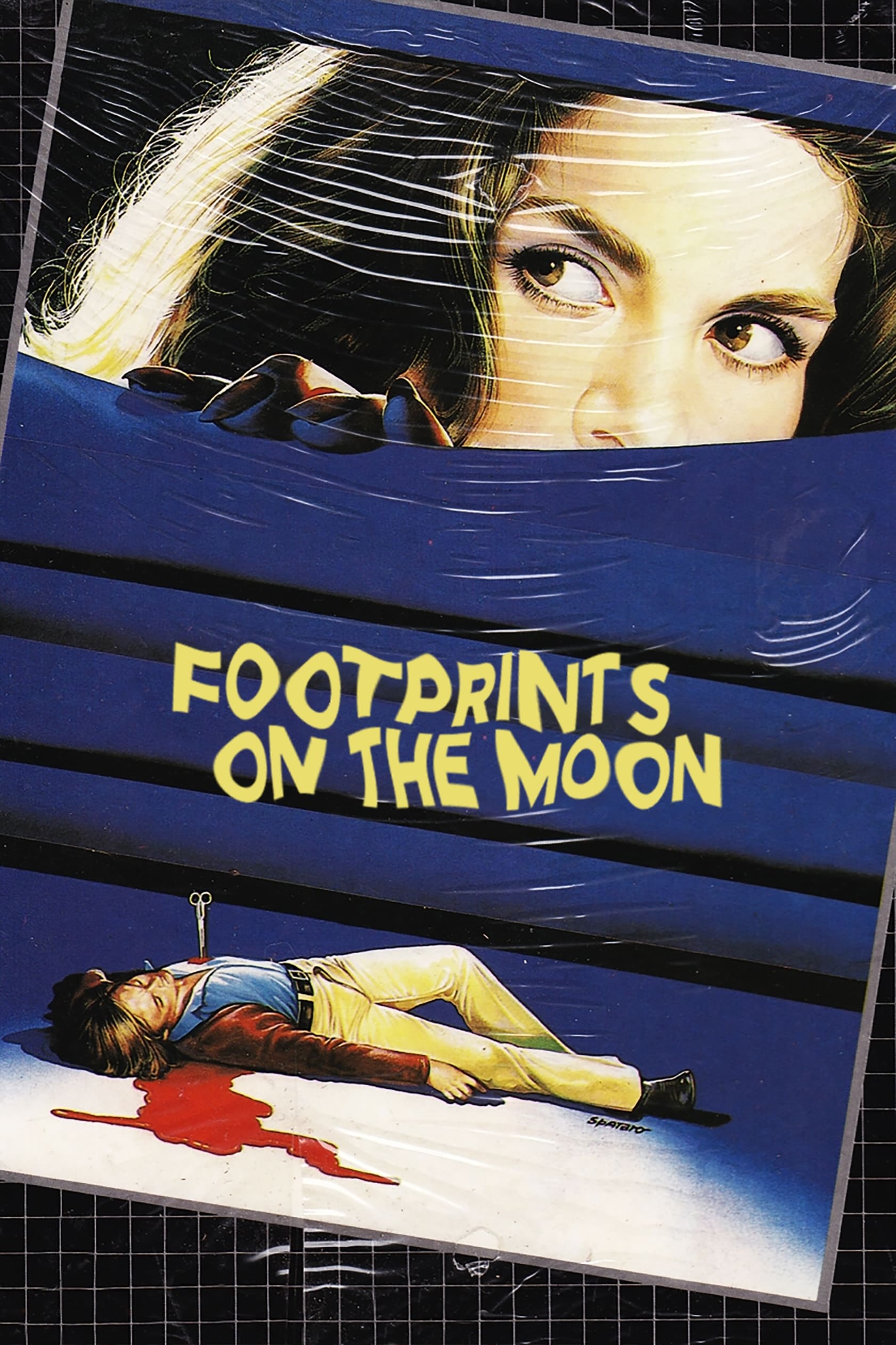
Footprints on the Moon (1975)

footprints5

By Richard Winters

My Rating: 4 out of 10

4-Word Review: Tormented by a nightmare.

Alice (Florinda Bolkan) is tormented by a constant dream involving an old movie she saw when she was younger that dealt with a man being left on the moon to die. She awakens one morning to find that she’s slept for over 2-days and when she arrives at her job she learns that she’s been fired for not showing up and not calling-in. She gets back to her apartment and spots a postcard revealing a hotel, which she vaguely remembers being at. She decides to travel there, which is off the Turkish coast, and meets people who say they’ve seen her before, but while wearing a wig and going by a different name.

The film’s chief asset is the directing by Luigi Bazzone, who had a brief 10-year career where he did 5 films and then inexplicably retired when he was only 46 and never to do another film after this one, which is a shame as he had many more years ahead of him and could’ve helmed a slew of interesting movies in the process. This one definitely relies on a good visual touch. The opening bit done on the moon has certainly a tacky quality, but is also captivating. It doesn’t exactly look authentic, but captured in a way that gives it a dream-like feel and makes it gripping. The island setting that Alice goes to, shot in Phaselis, has such a unique topography that it gives the whole thing a very outer worldly appeal and helps enhance the bizarre story elements.

Bolkan’s presence though does not help. She wears a perpetual scowl, outside of one moment when she smiles to greet a child, that makes her unappealing and hard to sympathize with. She also lost too much weight, reportedly 11 pounds by her own admission, making her look scrawny and like she could tip over with the slightest breeze. She already had a thin frame, so for her to lose anymore, makes her anorexic and not sexy particularly when she goes nude during a shower scene.

Her character is ghost-like and transparent. Some may say this is due to the twist, but for the viewer to get wrapped-up into the character’s quandary they need to see her as a multi-dimensional person. Instead we get someone with no apparent connections to the world around her. Having her go through the plot with some other friend beside her, which she could’ve fed-off of emotionally whenever she got upset, or confused would’ve helped tremendously. Trying to care about a person who’s not fleshed-out doesn’t work and I went through most of it feeling ambivalent about the protagonist’s fate.

Nicoletta Elmi, who plays a young girl that Alice meets while on the island, has far more appeal especially with her striking red hair and clear blue eye, and thus her scenes allow for some intrigue though her conversations with Alice seem to just be repeating themselves. Klaus Kinski is only on hand for a little while and never interacts with anyone making it seem like he’s in some other movie with no connection to this one. In fact his moments could’ve been cut, he only gets shown sporadically anyways, and the movie would not have been hurt by it.

The plot, which was based loosely on the novel ‘Las Huellas’ by Mario Fenelli, doesn’t have enough going on to hold the viewer’s attention. This is yet another example where had it been shortened it would’ve worked perfectly as an episode for the “Twilight Zone’, but here it labors along. It gives out a lot of tantalizing clues at the beginning, but the second act goes nowhere with not enough twists. The concept becomes highly strained with a character that doesn’t interact enough and the few conversations she has are bland and don’t allow the story to progress. The ‘surprise ending’ doesn’t make-up for the lulls and only leads to more questions than answers.

My Rating: 4 out of 10

Released: February 1, 1975

Runtime: 1 Hour 30 Minutes

Not Rated

Director: Luigi Bazzoni

Studio: Cineriz

Available: DVD-R, Amazon Video, Screambox

Strange Shadows in an Empty Room (1976)

strange

By Richard Winters

My Rating: 4 out of 10

4-Word Review: Cop’s sister dies mysteriously.

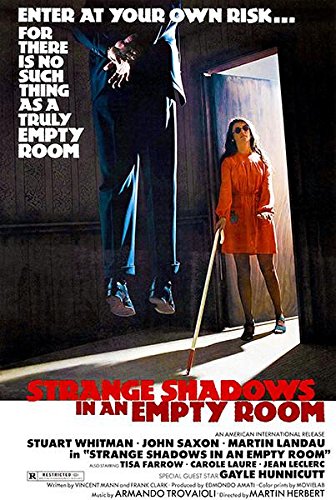
Tony (Stuart Whitman) is a tough-as-nails veteran cop who gets the shocking news that his younger sister Louise (Carole Laure) is found dead at a party she had attended. Initially he presumes it’s George (Martin Landau) a middle-aged doctor whom she’d been having an affair with and who gave her a injection at the party, but later he realizes there might be more to the story than he thought and begins investigating other avenues that leads him to a wild and completely unexpected conclusion.

The film was directed by Alberto De Martino who had done other Italian produced films that were rip-offs of better known Hollywood hits with this one clearly being inspired by Dirty Harry. It was filmed in Montreal and Ottawa, Canada, but done by an Italian film crew making it seem more like an overseas production with very little Canadian elements to it. Overall the quality looks cheap and the story has a lot of twists that don’t make a lot of sense, or are believable.

Two that stood out right away to me is during the party scene where Louise fakes illness simply to get George’s attention to make him come over there and away from his wife. Then when he tries to help her she lets him know it was all a gag. A few minutes later she passes out for real and he responds in a worried way, but you’d think since he got taken advantaged of just moments earlier he’d presume this was just another prank and not take it seriously. Also, at her funeral Tony begins to suspect there’s more to her death than what is known and requests an autopsy be done, but an autopsy is standard procedure that should be done after any unexplained death, especially since the victim was so young, and thus seems absurd that he should have to request it only as her body is already in the casket and ready to be buried.

Whitman, who was nearing 50, looks too old for this kind of thing and it’s hard to imagine he would, in reality, be able to physically keep up with these much younger suspects who force him to chase them around in airports, along crowded city sidewalks, and even in hospitals. He’s not the most ethical guy either as he has no problem drowning one of the men he’s questioning in a sink of water as a method of interrogation, which should normally get an officer in trouble. There’s also no glimpses of his personal life, so we never learn anything about him, or see any other dimension except for his rough cop persona. Most other cop movies, or at least the good ones, do have a few scenes dealing with the policeman’s private side, but here there’s none, which makes the character flat and uninteresting. Having the victim be his sister didn’t make too much sense since she was clearly quite a bit younger than him and making her his daughter would’ve been more believable and more devastating when he has to come to terms with her darker side.

The supporting characters are, just like with Whitman’s, poorly fleshed-out. It’s hard to be intrigued who the suspects are when they all seem alike and say and do nothing that’s interesting. The film does have one long car chase, which has some impressive stunts, but it seemed unnecessary as the man driving away from the cops really didn’t have much to hide and is essentially not interrogated once Whitman catches up to him, and he offers only a little piece to the puzzle, so why tear up the city streets and completely destroy two cars if he’s not in dire trouble? Better to have saved this for the finale with the bad guy who really is the culprit than just some minor player who isn’t seen, or heard of again.

I did enjoy the foot chase through the hospital that comes at the end and even goes through a maternity ward and ultimately onto the roof of the place. The story does feature many twists and I did appreciate the way it shows how policeman can make the wrong guesses on who they think is guilty and go on many long tangents that don’t lead anywhere before they realize their mistake. However, more effort should’ve been made to create unique characters as the ones provided here are wooden and banal.

Alternate Title: Blazing Magnum

My Rating: 4 out of 10

Released: March 9, 1976

Runtime: 1 Hour 39 Minutes

Rated R

Director: Alberto De Martino

Studio: Fida

Available: DVD, Blu-ray, Amazon Video, YouTube

The Devil’s Honey (1986)

devilshoney

By Richard Winters

My Rating: 4 out of 10

4-Word Review: Revenge on a doctor.

Jessica (Blanca Marsillach) is madly in-love with Johnny (Stefano Madia) who’s a famous saxophonist. The two share many kinky moments and have sex in the wildest of places. Wendell (Brett Halsey) is a surgeon who no longer has sex with his wife Carol (Corinne Clery) and instead seeks out prostitutes though even here the arousal is brief as he can’t achieve an erection for any extended period of time. Carol finds out about his philandering and asks for a divorce, which sets Wendell into a panic as he still enjoys having his wife around as a support system even if it isn’t for intercourse. As this is happening Johnny falls unconscious during one of his recording sessions due to a bump he got on his head while falling off his motorcycle earlier. He gets rushed to the hospital where Wendell is on-call, but he’s unable to concentrate on the surgery due to the stress of his marriage and Johnny ends up passing away. Jessica is outraged by this and sets a vendetta on Wendell to punish him for killing her boyfriend. It begins by her calling him constantly, but eventually she kidnaps him by taking him to her place and tying him up. She tortures him sexually, which strangely both of them begins to enjoy.

This was cult director Lucio Fulci’s return to a sex themed film, which he had started his career out as and away from the gory giallos he had become most known for. The attempt is not without merit as the sex is explicit and almost like a porn film with brief interludes of dialogue before it goes right back to the sexual imagery. Unfortunately on the erotic end it’s not all that titillating. The scene where Johnny blows his saxophone up Jessica’s vagina looked more laughable than kinky. The segment where he tries to get her to fondle his penis while they’re riding on a motorcycle, which almost gets them into a bad accident, I found genuinely cringey and not sexy at all. The fact that she’d be so into a guy that’s rather controlling and degrading to her seemed a mystery though it might’ve been meant as a quirk to her personality, but never explained sufficiently.

Outside of the sex the drama is weak. The moment inside the studio where he complains about having a headache, but the producer tells him to keep on playing anyways, so he blows out a few weak notes before tumbling to the floor came-off as unintentionally funny and had me laughing. Jessica’s distraught reaction where she bangs on the glass that separates the control room from the studio was ridiculous as she should’ve run into the studio to try to physically come to his aid, which had a better chance of actually helping him than just pounding on a window. I also got sick of hearing Johnny play the same piece over and over until it became nauseating.

Things improve with the presence of Halsey an American actor who appeared in many B-pictures during the 60’s and 70’s, but eventually went abroad by the 80’s when the film offers here began to dry up. While his face is chiseled and good-looking the hollow look in his eyes perfectly fits the character and thus becomes  a memorable image. Watching Jessica harass the hell out of him is kind of fun though no explanation for what the substance was that she used to knock him out, nor where she managed to attain it.

Spoiler Alert!

The third act has some tension though it gets ruined by all the flashbacks. Wendell’s wife also disappears completely and no scenes showing her reaction to the news that her husband’s been kidnapped. She had figured prominently in the first two acts and therefore we should’ve seen some sort of response from her in the third. Whether she was happy to have him gone, or had a change-of-heart and became upset is something we should’ve seen. There’s also no answer to what ultimately becomes of the new couple who end up liking the abuse that they give to each other. Do they go on cohabitating and if so does Wendell go back to being a surgeon and if not how do they survive financially? There needed to be more of a conclusion and just leaving it all hanging is not satisfying.

My Rating: 4 out of 10

Released: August 21, 1986

Runtime: 1 Hour 23 Minutes

Rated R

Director: Lucio Fulci

Studio: Selvaggia Film

Available: DVD-R, Blu-ray

The Sunday Woman (1975)

sundaywoman

By Richard Winters

My Rating: 6 out of 10

4-Word Review: Murdered by phallic object.

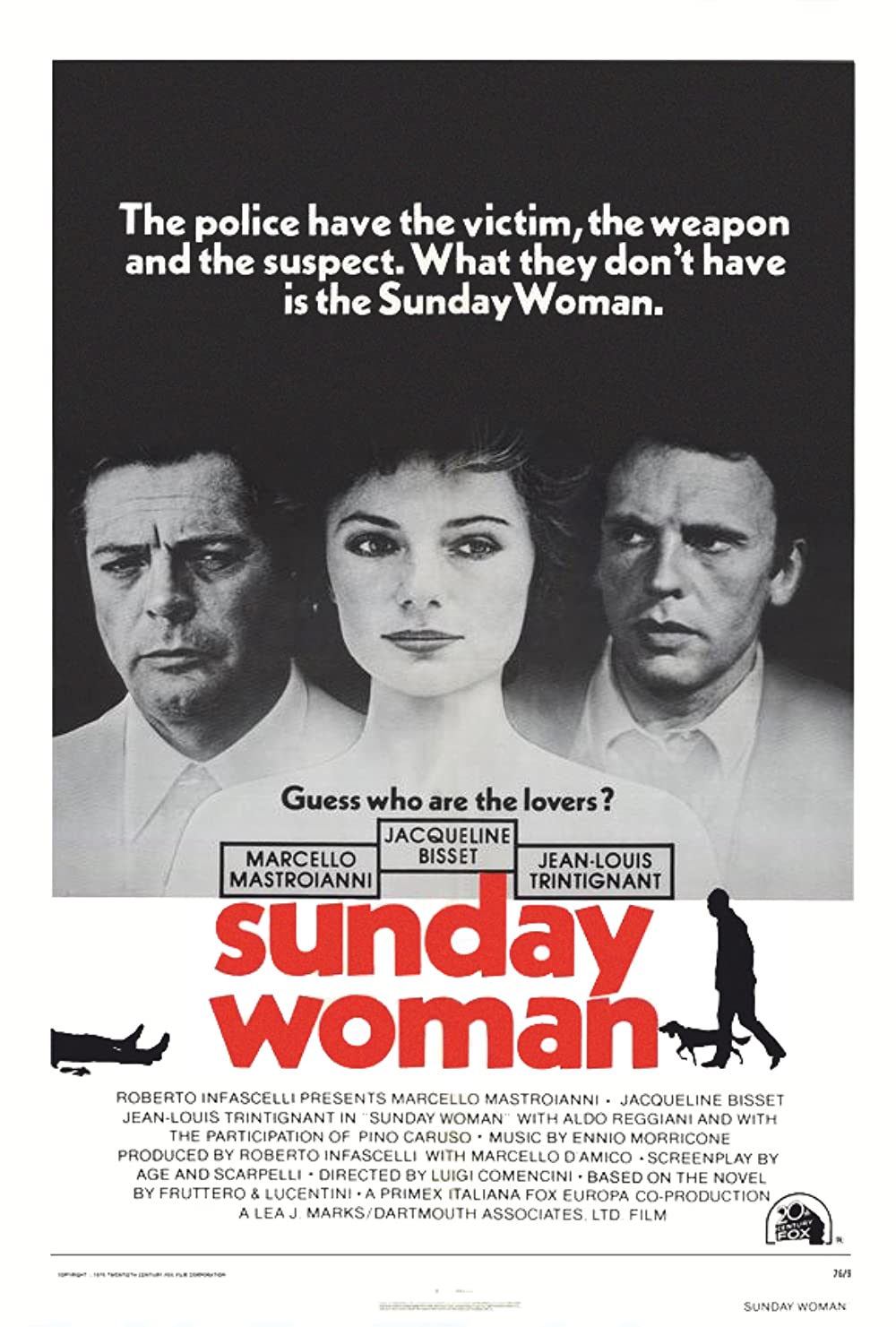
Based on the novel of the same name by Carlo Fruttero and Franco Lucentini, the story centers on the investigation of the murder of Mr. Garrone (Claudio Gora). Garrone is found bludgeoned to death inside his apartment by a giant penis statue. Garrone was a well known architect and a lecherous ladies man who couldn’t help but make unseemly passes at every woman he came by. Commissioner Santamaria (Marcello Mastroianni) is put in charge of the case, which has many suspects. Two of the biggest ones are Anna Carla (Jacqueline Bisset) and her platonic male friend Massimo (Jean-Louis Trintignant). Anna had written a note, found by her hired help the next day, stating her desire to ‘eliminate’ Garrone. Anna, who’s quite wealthy, insists that it was all a innocent misunderstanding and Massimo backs her up, but Massimo, who has an alibi, is reluctant to divulge it because it would require him to admit that he’s gay and at Lello (Aldo Reggiani) his lovers’ house. Santamaria begins looking into other potential suspects as does Lello who wishes to get his boyfriend cleared, but the deeper Santamaria gets into the case the more he connects with Anna and despite their age difference they begin to have a romantic relationship all while she remains at the top of his suspect list.

The film, on the technical end, is well done. Director Luigi Comencini nicely captures the visual beauty of the Italian landscape and the posh older homes of Turin a city in northwest Italy where it was filmed. The soundtrack by Ennio Morricone has a nice bounce that keeps the film moving along even while not a lot is happening. There’s an array of suspects and enough red herrings to keep it intriguing and impossible to guess who’s the true culprit.

The story has its share of offbeat moments though it’s disappointing that the funniest character, Garrone, ends up getting killed as he was amusingly sleazy enough to have kept things consistently comical. While the death by giant penis statue, if memory serves me correctly, had already been used in A Clockwork Orange, it’s still a novel idea and it’s funny how Santamaria visualizes each suspect he meets bashing Garrone over the head with it as he interviews them. Traveling to the shop where the statues are made and being surrounded with hundreds of them is certainly good for a chuckle, but outside of this there wasn’t all that much that stood out, or made this any better than any other murder mystery. The ingredients are good enough to keep sufficient interest, but nothing the makes it really memorable.

I was most disappointed that Bisset wasn’t in it more. She’s fabulous, as she is in most of her movies, and though I suspect that her voice, where she speaks fluent Italian, is dubbed, I still felt she gives a spectacular performance. Mastroianni on the other hand looks tired and worn-out and like his peak years of being a international sex symbol had passed. Yet when he’s together with Bisset it clicks and Jacqueline’s superior acting camouflages their extreme age difference making them seem more like a perfect couple than it should. The two should’ve investigated the case together and become a team, as every second Bisset is not seen it flatlines. Had the two shared the screen this might’ve been special, but ultimately it misses-the-mark and never fully gels.

My Rating: 6 out of 10

Released: December 16, 1975

Runtime: 1 Hour 45 Minutes

Rated R

Director: Luigi Comencini

Studio: Fox-Lira

Available: DVD-R (dvdlady.com) (Italian w/English subtitles), Amazon Video (English subtitles)

The Exorcist: Italian Style (1975)

exorcist3

By Richard Winters

My Rating: 7 out of 10

4-Word Review: Mayor’s family becomes possessed.

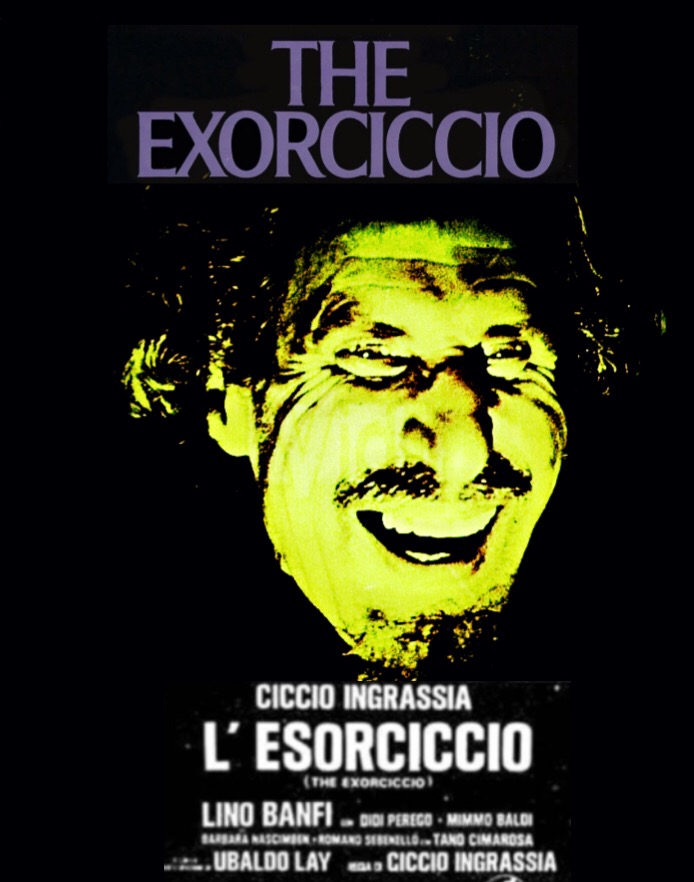
Mimmo Baldi plays a 10-year-old boy named Luigi who comes upon a small amulet lost in a field while playing soccer with his friends. He puts it into his pocket and then begins to behave in unusual ways including assaulting a young woman he meets while walking home. His father is Pasquale (Lino Banfi) who’s the mayor of the town and running for reelection. He and the rest of the family notice the increasingly odd behavior of their son and decide to call-in a doctor (Gigi Bonos), but when he’s unable to do anything they get desperate and ask for the services of a local demon hunter known as L’Esorciccio (Ciccio Ingrassia) who’s reputed to have an ability to exorcise demons, but in reality is a fraud. When he tries to do a fake exorcism on the child nothing initially happens, but when the amulet falls out-of the child’s pocket and onto the ground the child is considered ‘cured’. However, his older sister Barbara (Barbara Nascimben) then retrieves it and soon begins acting in the same dangerous way. Their father wants to keep this issue as far away from the press as he can for fear it will hurt his reelection chances only for him to eventually come into procession of the amulet himself where his wild and shocking behavior gets put on full display for everyone.

While this film has been seen in a better light in recent years it was considered when it first came-out as ‘the worst movie of all-time’ by the Italian public and lambasted as such even decades later. Ciccio Ingrassia, who was a much beloved comedian, who had been starring in comedy films for the past two decades, became shaken by the response and harsh criticism and vowing he’d never direct another movie again and while he did continue to star in them through the 90’s he kept  to his promise and never directed any others.

It’s hard to say where the film, which is clever at times, went wrong for the moviegoers as the comedy is there if you’re patient. I’ll admit the special effects are scant and not too impressive. The film tries to emulate the classic one of which this is a parody by putting-in most of what that one was known for into this story though it does compromise on some of it. For instance during the exorcism the bed that the girl is on begins to levitate, but the projectile vomit is not done. They do have her spit something at them, but in parody it’s always good to go overboard and the film missed a prime opportunity to do something visually hilarious like drowning the exorcist and his assistant in a mound of green muck that flies out of her mouth, or something to that effect. The swivel head doesn’t get done either, at least not with the girl victim, but instead it’s saved for later when the father becomes possessed, but the effects here look cheap and not believable.

In some ways this is a smart movie as it doesn’t just depend on a barrage of gags to keep it going, but instead creates an actual character driven story where they react to the craziness going on with a befuddled amusement, which to me was the best element. Banfi is very funny as the conniving husband/father who’s convinced that these satanic events are just something that his political opponent (Tano Cimarosa) is behind, so that he’ll lose the election. Ingrassia has his moments too and there were some parts that had me laughing-out-loud though the sped-up running, where the son chases the father around their yard looks cartoonish and should’ve been avoided. The soundtrack is also a problem as it’s blaring and doesn’t give-off a creepy vibe. Even if it’s just parody when it involves a famous horror movie it’s good to at least play along and give a spooky facade to it, which with the music selected here doesn’t do that.

Spoiler Alert!

The wrap-up where seemingly everyone in the town, while attending a public event, becomes possessed, at least for a few minutes, as they randomly pick-up the amulet that gets passed around from one person to another becomes dizzying and silly. Having the story center on the family characters was when it worked and that’s where it should’ve stayed. While certain segments could’ve been played-u more there’s enough here to be enjoyed as long as you accept it as a simple comedy done on a shoestring.

My Rating: 7 out of 10

Released: June 11, 1975

Runtime: 1 Hour 39 Minutes

Not Rated

Director: Ciccio Ingrassia

Studio: Dear International

Available: DVD-R (dvdlady.com)