Category Archives: Horror

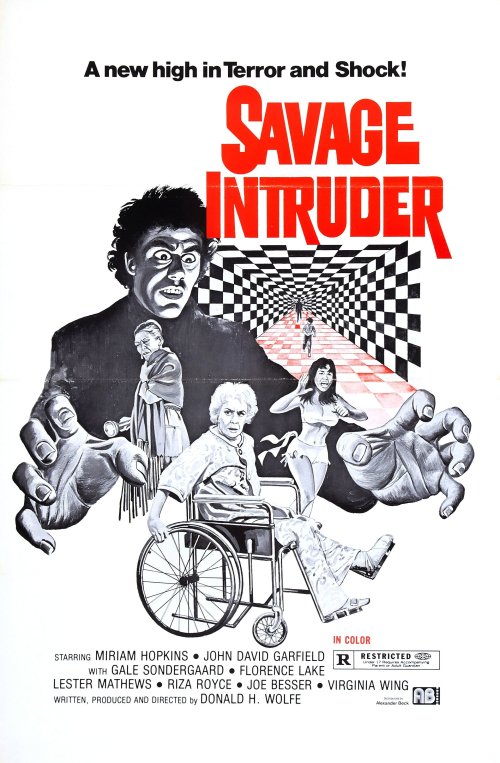
Savage Intruder (1971)

By Richard Winters

My Rating: 3 out of 10

4-Word Review: Aging actress employs psycho.

Katharine Packard (Miriam Hopkins) was once a famous actress, but is now largely forgotten and lives like a recluse in her decaying Hollywood mansion. One day while drunk she falls down the stairs and breaks her hip. Vic (David Garfield) a unemployed vagabond who enjoys cutting off women’s hands after witnessing his mother (Sybelle Guardino) having sex with 5 different men at the same time when he was a child, gets hired as a nurse to help her get around while her hip recovers. Katharine enjoys having a young man around while Vic uses her lust for attention to manipulate her out of her money and live a more privilege lifestyle than he would otherwise. However, Leslie (Gale Sondergaard), who works as Katharine’s personal secretary, is onto what Vic is doing and becomes determined to put a stop to it.

This obscurity does at least offer the chance to see Hopkins, a one time big star of the 30’s and 40’s and at one point a rival to Bette Davies, in her last screen appearance and despite the tawdry material she really puts a lot of energy into it and her presence makes it more fun than it should. Sondergaard, who came out of a 20 year film hiatus to star in this, is quite good too and looks almost like a much scarier version of Morticia from ‘The Addams Family’, especially with her hair down.

David Garfield, who was the son of legendary actor John Garfield, is the only casting choice that doesn’t work. He lacks the same acting skill of his father and comes off like he was stoned and barely into his part at all. His one-dimensional character is dull and why anyone would hire him to take care of an old lady when there’s so many red flags about him right from the start makes the script seem very poorly thought out.

Donald Wolfe, who’s best known for writing a biography of Marilyn Monroe as well as an in depth look at the Black Dahlia murder, lends some interesting touches in his one and only directorial feature. His best bit comes right at the start where the camera captures the Hollywood sign real close-up, focusing on how rusted and tattered it was with no music and only a howling wind blowing while the opening credits appear onscreen.

The violence is more graphic and bloody than you’d expect for a film from that time period, so gorehounds may rejoice, but it also becomes quite redundant as the only thing you ever see are women’s hands getting caught off again and again. The story also lacks any interesting twists and plays itself out in a painfully predictable way with characters that are too dense to figure out what’s going on even after the viewer has already caught on to things way earlier. Shooting it on-location at the sprawling estate of former silent film actress Norman Talmadge is not effective as it doesn’t take full advantage of the large, majestic home by only managing to capture a few of the rooms and doing it with dark, dingy lighting, which despite a few flashes of flair here and there help to ultimately make this a very boring and thankless viewing experience.

My Rating: 3 out of 10

Released: October 4, 1970

Runtime: 1 Hour 40 Minutes

Rated R

Director: Donald Wolfe

Studio: JBA

Available: None at this time.
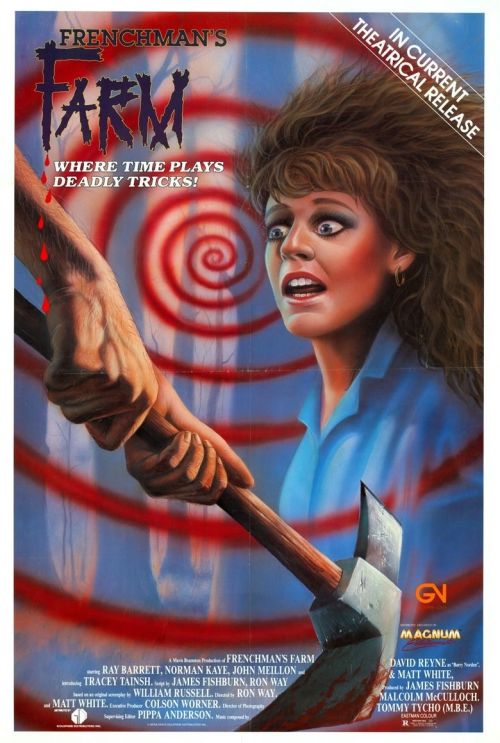
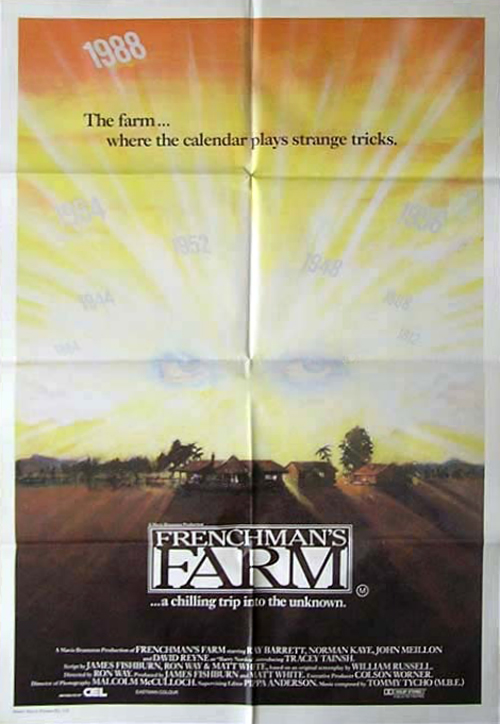
Frenchman’s Farm (1987)

By Richard Winters

My Rating: 3 out of 10

4-Word Review: Witnessing a past murder.

Jackie (Tracey Tainsh) goes traveling in her car throughout the Australian countryside while bush fires rage all around her. When her car breaks down she visits the nearest farmstead for help. It is there that she finds herself suddenly swept back to the year 1944 where she witnesses a murder and then just as quickly she comes back to the present day. When she tries to tell others what happened nobody believes her, but eventually her boyfriend Barry (David Reyne) takes up her cause and with the benefit of old news articles help find the real killer and the secret behind what motivated it.

Although marketed as a horror flick, it seems more like iffy sci-fi and could’ve easily have been targeted to a pre-teen audience since it’s not all that tense, or scary, especially with the majority of it filmed in the bright sunny daytime. When it does finally take place in the darkness of night a cliched thunderstorm gets conveniently put in while the killer is made out to being a ghost who pops in and out like it’s The Ghost and Mrs. Muir.

Initially I kind of liked that that she didn’t stay stuck in the past and was able to be her own detective, which kept me intrigued for awhile yet it started to make me wonder why the time traveling event occurred to begin with, which the movie has no suitable explanation for except to say that the bush fires created some sort of ‘atmospheric disturbance’, but if that was the case why was she the only one affected? The film also does a poor job of recreating a past era, as Jackie and her boyfriend go back to the farm where the murder occurred, but do it in the present day and yet the trees in the backyard where she witnessed the killing 40 years earlier all look the same even though they should’ve either died or grown bigger.

I found it annoying too that the boyfriend, who has a generic ‘surfer dude’ presence, starts to take over the investigation even though it really wasn’t his personal battle to solve. In order for him to take such an interest he should’ve been transported back in time with Jackie, or for a more original touch, it could’ve been Jackie and a female friend who witnessed the killing and then proceeded to becoming amateur sleuths together.

A few veteran Aussie character actors, such as an aging John Meillon, help give it some stature, but the production overall is quite bland and how it ever got considered as being a part of the Ozploitation genre, which stands for Australian exploitation cinema, is beyond me since outside of a brief skinny-dipping minute there’s nothing titillating or shocking about it.

The ‘surprise ending’ is also really dumb and doesn’t even involve the main character who gets phased out of the storyline before the ending even comes about, which is not satisfying for the viewer to follow a character around  for the whole movie only to have her ultimate fate left open to a murky explanation.


My Rating: 3 out of 10

Released: September 9, 1987

Runtime: 1 Hour 38 Minutes

Rated R

Director: Ron Way

Studio: CEL Film Distribution

Available: DVD

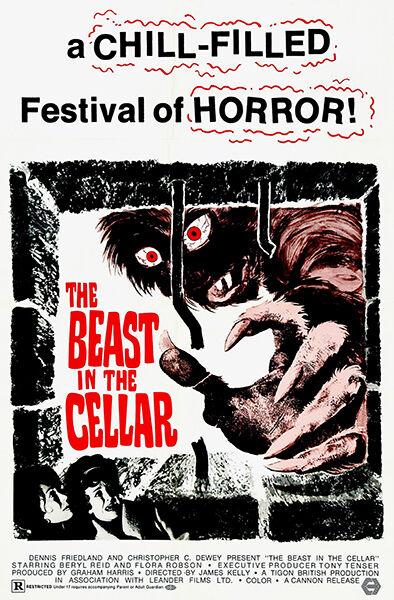
The Beast in the Cellar (1971)

By Richard Winters

My Rating: 4 out of 10

4-Word Review: Elderly sisters harbor prisoner.

Soldiers throughout the English countryside are being gruesomely murdered by what seems to be some wild beast, but the authorities have no idea what type of creature it is, or where it came from. Ellie (Beryl Reid) and Joyce (Flora Robson) are two elderly sisters living together in an isolated rural home, who fear they may know the answer and it has something to do with a dark family secret that lies imprisoned in their basement.

The film’s perceived charm revolves around the casting of two legendary actresses in offbeat roles where they at times come-off both as antagonists and the anti-heroes. Reid is especially interesting because here she’s a child-like individual while just a few years earlier she was a controlling, domineering woman to Susannah York’s child-like one in The Killing of Sister George, so seeing her able to play both parts effectively is fun and impressive.

The banter between the two though needed to be played-up more and I was expecting, given the storyline, more of a campy, dark humored tone, which really never manifests. The dialogue gets too extended, as the women do nothing, but pretty much talk, talk, talk until it seemed to be almost a filmed stageplay with the camera locked in the house and nothing visually stimulating to captivate the viewer.

The scares consist mainly of a handheld camera swinging back and forth  in an apparent attempt to replicate the beast attacking the victim, which ends up being more dizzying and amateurish looking than frightening and the fact that this technique gets done with each attack makes it quite derivative. It would’ve been better had the attacks not been played-out at all, but instead simply revealed the mangled. bloody body afterwards. The film also makes the tacky error of portraying the eyeball, which gets gouged out on one victim, as being shaped like a ping pong ball, which is probably what was used, when in reality it is more oval shaped.

A good horror film should have a frightening image to latch onto, but here that’s lacking despite a few prime opportunities where one could’ve been implemented. Reid’s retelling to the police inspector about the backstory dealing with their basement prisoner has some interesting cutaways making it the best part of the movie, but no shot of the shell-shocked, war weary father even though he’s an integral component to the plot. The ultimate reveal of the beast is highly disappointing in a climactic finish that completely fizzles, which makes sitting through this not worth your time.

My Rating: 4 out of 10

Released: April 14, 1971

Runtime: 1 Hour 28 Minutes

Rated R

Director: James Kelly

Studio: Tigon Film Distributors

Available: DVD, Amazon Video

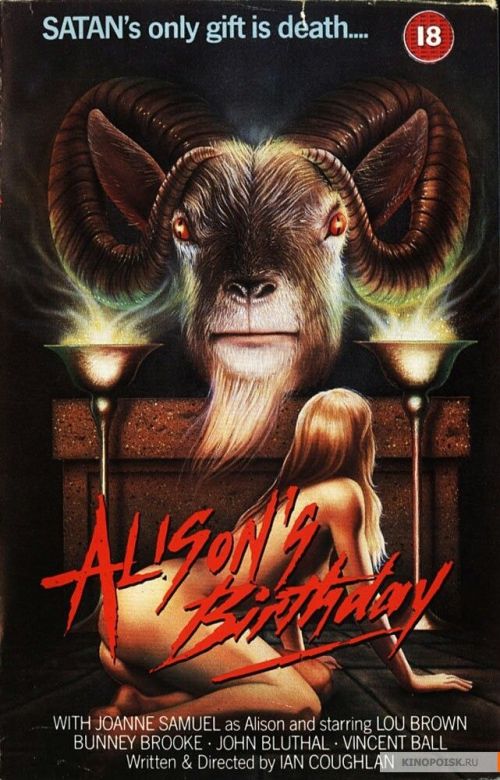
Allison’s Birthday (1981)

By Richard Winters

My Rating: 5 out of 10

4-Word Review: Teen ages very rapidly.

Allison (Joanne Samuel) decides to spend her 19th birthday with her aunt (Bunney Brooke) and uncle (John Bluthal) who live in rural Australia and have been raising her ever since her parents died when she was just a child. However, this visit includes her meeting her elderly grandmother (Marion Jones) for the first time and a mysterious illness that also affects her while she is there. Her aunt and uncle refuse to allow her boyfriend Peter (Lou Brown) to visit causing him to go to great lengths to get her away from them and back to safety as he fears they’ve come under the influence of a cult.

This low budget Australian sleeper managed to become a hit in its own country mainly from its attempts to work against-the-grain of that era by creating a horror film that did not involve blood and gore, but instead relied on good old fashioned creepiness. For the most part it succeeds, but gets hampered by a plot that plays itself out too slowly.

It becomes too obvious that her aunt and uncle have some evil intent in mind and this should’ve been camouflaged better because when the big reveal finally does come about during the third act it’s not surprising at all. The cult that they’re involved with is portrayed in such a cliched way from the tacky black robes that they wear to the Stonehenge-like meeting place that  it seems like high camp. The opening sequence featuring a ouji board and a talking spirit, is equally heavy-handed and almost sinks this thing before it’s barely begun.

Some of the action segments particularly her boyfriend’s attempts to outrun the cult members who try chasing him down is exciting, but he’s in too much of the movie, while Allison remains virtually bedridden making it seem like he’s the main character instead of her. A good protagonist should be able to fight her own battles and in this case she does too little, which doesn’t elicit enough emotion from the viewer to want to cheer her on.

Spoiler Alert!

The film’s twist ending in which, due to the ritual ceremony done by the cult, a young Allison suddenly wakes up to find herself trapped inside the body of her grandmother, is pretty cool and genuinely quite horrifying when you think about it. However, this should’ve occurred during the middle part and the rest of the film spent with her trying to return her spirit back to her youthful body, which could’ve involved a wide array of intriguing and unique elements. Unfortunately this doesn’t happen making the film only a skeletal blueprint of what it could’ve been.

My Rating: 5 out of 10

Released: May 1, 1981

Runtime: 1 Hour 37 Minutes

Not Rated

Director: Ian Coughlan

Studio: Australian Film Institute

Available: VHS

Happy Mother’s Day, Love George (1973)

By Richard Winters

My Rating: 3 out of 10

4-Word Review: Searching for his father.

Johnny (Ron Howard) is a young man who arrives in a small seaside town searching for the identity of his parents. After speaking with the various eccentric personalities that live there he come to the determination that a waitress at a local cafe named Ronda (Cloris Leachman) is his mother, but she refuses to divulge who the father is and he begins to suspect that the secret may lie in the strained relationship that she has with her sister Cara (Patricia Neal).

It’s hard to tell what motivates people to take on certain projects. Darren McGavin had a great career in front of the camera, but this remains outside of a few TV episodes that he did, his only foray as a director. Yet it means little as the story is quite pedestrian and moves at a slow pace making it seem more like a drama and it takes until the third act before there are any chills at all.

The on-location shooting, which was done in the seaside towns of Mahone Bay and Lunenburg that are both situated in the Canadian province of Nova Scotia, is quite scenic and it almost seemed like McGavin and his crew had access to the entire town as the camera follows Howard walking up and down the residential streets while homeowners stare out their windows at him at each house that he passes. If this was a film specializing in the New England vibe it would be a success, but as a horror film the plot progresses too slowly and by the time the mystery finally gets answered you really don’t care  anymore.

The eclectic cast is interesting and really the only reason to watch it. Bobby Darin, in his last film, shows great potential as a feisty short-order cook, but his screen time is painfully limited. Neal gets in a few snarky remarks, but not much else and Leachman essentially channels the same character that she played in The Last Picture Show.

The one that gets the showiest part is Tessa Dahl who was Neal’s daughter in real-life and looks almost exactly like her to the point that I initially thought she was Neal at first. Her British accent helps add some flair as does her knife-wielding finish. Even more ironic is the fact that she has grown in recent years to suffer serious mental health issues much like her character.

As a novelty this film, which was reissued as Run Stranger Run, might be worth checking out just to see Opie with dark brown hair instead of his trademark red, but as a horror flick it lacks punch and has very little scares.

Alternate Title: Run Stranger Run

Released: August 17, 1973

Runtime: 1 Hour 30 Minutes

Rated PG

Director: Darren McGavin

Studio: Cinema 5 Distributing

Available: VHS

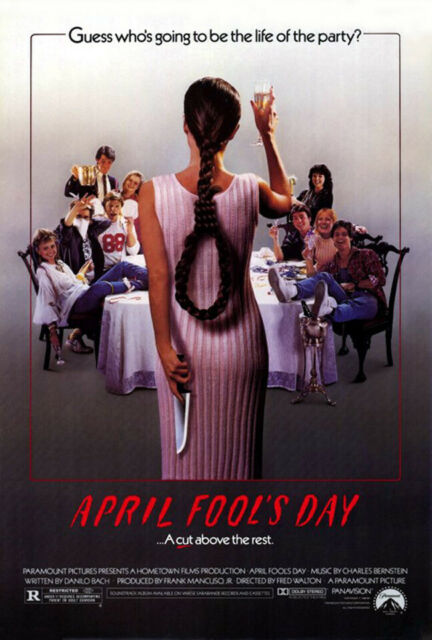
April Fool’s Day (1986)

By Richard Winters

My Rating: 3 out of 10

4-Word Review: It’s all a prank.

A group of college students get together at an excluded island home of one of their friends Muffy (Deborah Foreman) to celebrate their last year in school together. Then as the weekend progresses they find that a killer is knocking them off one-by-one. Will the remaining survivors be able to escape, or is there something more to these murders that no one realizes?

The film was an attempt to revive what at the time was a lost interest in the slasher genre by creating a irreverent tone to the staid formula and in that regard it does an okay job. The main issue though is that it gets too jokey making it seem more like a misguided comedy that losses sight of its intended horror fan audience completely.

I didn’t mind a few of the pranks, but too much time gets spent on them and 40 minutes seemed to be a ridiculous wait (if you don’t count the injury that occurs on the initial boat ride in, which seemed more like an accident) before we even get to the first killing. The pranks bordered on being too elaborate and something a regular person wouldn’t be able to pull off. For instance one deals with Rob (Ken Olandt) turning off one light in a room only to have another one turn on, all to the amusement of his girlfriend (Amy Steel) who apparently (I guess?) rigged the lights to do this, but where did she  get the electrical background or time to wire the room in this manner?

If the pranks are supposed to revolve around the fact that it’s April Fool’s Day then all the action should  take place within a 24-hour period instead of over several days. The scenery doesn’t have a spring-like look either as there should be blossoms and buds on the trees, but instead, since it was filmed in August, it looks more like late summer.

The cast comes-off too much like crude and obnoxious junior high kids whose only topic of conversation is sex instead of young adults ready to enter the working world and their dialogue doesn’t seem genuine.  One dumb bit has Harvey (Jay Baker) trying to make amends with Nikki (Deborah Goodrich) by trying to prove to her he really isn’t as much of a ‘dick’ as she thinks, but then proceeds to tell that he’d like to ‘plow her field’, which would only convince her otherwise.

Spoiler Alert!

The killings are brief and feature virtually no gore at all, which will disappoint those expecting to see at least a little. The ending, which reveals the killings to being just another gag, was novel, but there still needed to be a secondary twist. In the film’s original cut Skip (Griffin O’ Neal) kills Muffy after everyone else has left the island, but the studio execs nixed this opting for an ‘upbeat’ ending instead. Upbeat endings are fine if it’s a comedy, but a horror film should have a dark undertone and the fact that this one doesn’t have one at all makes it woefully undernourished.

My Rating: 3 out of 10

Released: March 28, 1986

Runtime: 1 Hour 29 Minutes

Rated R

Director: Fred Walton

Studio: Paramount

Available: DVD, Blu-ray, Amazon Video, YouTube.

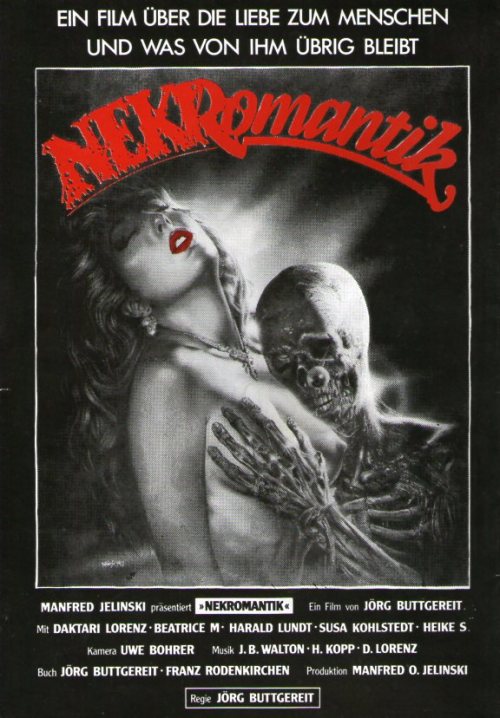
Nekromantik (1987)

By Richard Winters

My Rating: 6 out of 10

4-Word Review: They like dead bodies.

Rob and Betty (Robert Schmadtke, Beatrice Manowski) are a couple into necrophilia. Rob’s job as a street sweeper allows him to steal human body parts, which he brings home and stores in jars. One day he is able to sneak home a decomposed body and his wife makes love to it, which makes him jealous. Then he loses his job causing his wife to leave him and forcing him into an even darker mental spiral.

Director Jorg Buttgereit has stated that he never intended to be a serious filmmaker and made this simply as a means to rebel at the German film rating system, which would routinely edit out violent scenes from their films and ‘to shock as many people as possible.’ In that category it does succeed, but what I got most out of it was how funny it is with the ‘romantic’ sequence where a couple throws a severed head back and forth between each other in  a sort of playful, loving way while soft, romantic music plays in the background being the funniest.

There’s also an interesting film-within-a-film concept here where it makes pointed observations on the effects of horror movies on the general public while using its characters to inadvertently convey that message. The best scene here involves Robert going to a horror movie inside a theater, which shows  a woman onscreen getting ambushed by her attacker and then cut up by his knife, but the camera then cuts back to the movie audience and observes their detached and ambivalent  expressions even as the screams of the woman continue on the screen, which to me was the film’s most frightening and revealing moment.

The gore factor is of course quite high uses the technique first done in Cannibal Holocaust  where it cuts back and forth between an actual animal killing to that of a human getting cut open until you can no longer differentiate the real from the fake. The special effects are quite authentic looking despite the minuscule budget and even features a cat death although thankfully I think that one was improvised.

The acting by Manowski is excellent as she shows no hesitation or restraint with her role in a demanding part most other actresses would’ve refused. Her onscreen presence adds erotic energy and it’s too bad she didn’t remain in it for the whole duration as it’s only when the two leads interact that it gets  the most interesting. In fact a backstory showing how they first met and what started them off into their sick habit would’ve been nice.

If you’re into trashy gore this flick is for you although it’s more sickening than scary and in fact I don’t consider it a horror movie at all, but more a dark comedy, a very dark one. This was followed 4 years later by a sequel, which continues the story right where this one leaves off,  has the same director and star, and I’m told is even more graphic.

My Rating: 6 out of 10

Released: November 19, 1987

Runtime: 1Hour 15Minutes

Not Rated

Director: Jorg Buttgereit

Available: DVD, Blu-ray, YouTube

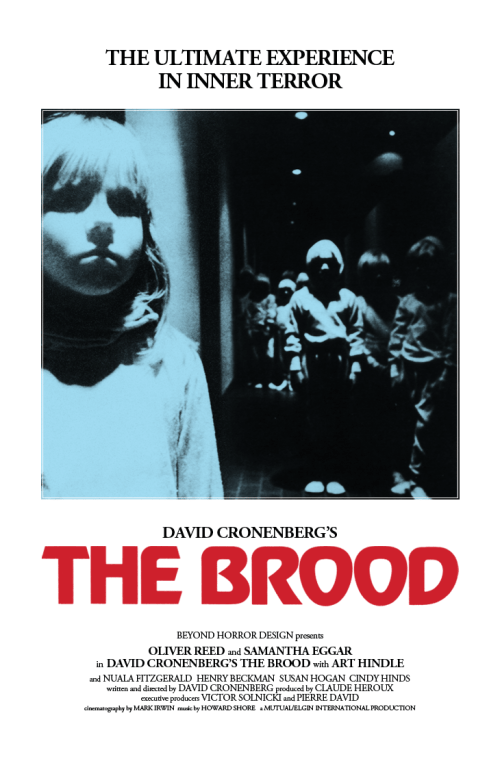
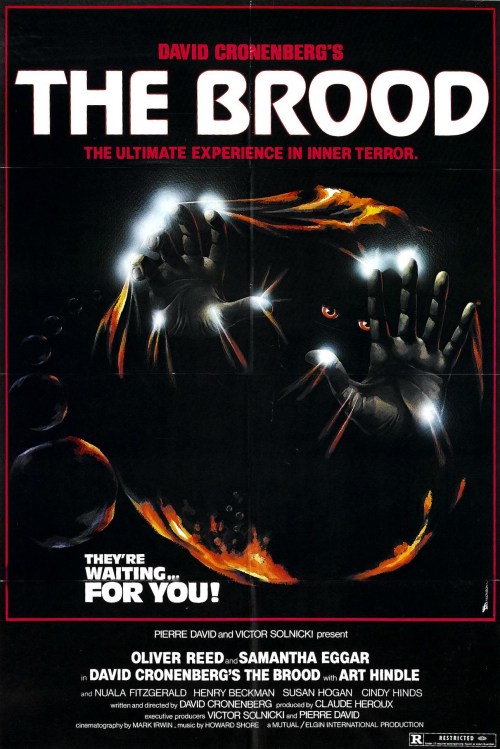
The Brood (1979)

By Richard Winters

My Rating: 6 out of 10

4-Word Review: Wife creates dwarf murderers.

After suffering a mental breakdown Nola (Samantha Eggar) is sent away to a secluded clinic run by Dr. Hal Raglan (Oliver Reed) who uses unorthodox methods to heal his patients. Once she gets sent there strange murderers resembling dwarfs begin to terrorize her family members including her daughter Candice (Cindy Hinds) who they kidnap. Her husband Frank (Art Hindle) is convinced there’s some connection between these strange killers and the institute so he goes there to confront the Dr., but is ill prepared to the secret that awaits him.

Through the years this film has become a staple to director David Cronenberg’s work and is well filmed with shadowy lighting and fluid camerawork that help create an ongoing creepy feel as well as Howard Shore’s pounding score. The film’s ultimate moment though remains Eggar’s bizarre ‘birthing’ scene where she takes a blood drenched embryo and licks it, which apparently was something she improvised on-the-spot. It remains perversely disturbing even by today’s standards, but was cut from the release at the time and only now is intact with the Criterion Blu-ray in all its glory or gruesomeness depending on your point-of-view.

The story though isn’t as clever as the filmmakers think as I was able to figure it out almost immediately and having to watch a protagonist take 90-minutes to come to the same conclusion that took me only 10-minutes makes for a rather annoying and dull plotline. There’s also no explanation for why Nola is able to have the ability that she does. If it’s connect it to the experimental therapy she’s going through then fine, but others in that group should , or at least some of them, be able to do the same thing, but they’re not, so why is that?

There’s also a murder scene that comes in the middle of the movie that to me didn’t seem logical. It entails the dwarf murderers coming into the kindergarten class that Candice is attending and using toy hammers that they pick-up from a nearby table to bludgeon her teacher to death. Normally toy hammers are lightweight,  so no matter how hard or how long a person may swing it at their victim it’s highly unlikely that it would be able to crush their skull. I also thought all of the children who witnessed the crime would’ve run out of the room screaming instead of just one and having them then stand around the body quietly whimpering afterwards sounded forced and fake.

Reed’s dark and commanding presence always helps every movie that he is in although it’s a bit weird that he becomes the ultimate hero especially after the opening scene in which he is emotionally abusive. Eggar, whose eyes look strangely wider and more rounder here, has her acting meddle put to the test by portraying a person that I didn’t think she had the ability to do, but she proves quite qualified.

The young Hinds is surprisingly effective despite her extremely young age, but Hindle is transparent as the protagonist. I realize that he acts as a sort of buffer to the craziness, but he lacks an edge and unable to match the energy of his flamboyant co-stars.

Horror fans should find this thing adequate, but for me the story is too basic and predictable they’re needed to be some sort of secondary angle or side-story. Supposedly Cronenberg was inspired to write this after dealing with the custody battle he had with his own ex-wife, Margaret Hindson, who had worked with him on many of his earlier projects. According to him Eggar’s character reflected many of her same traits.

My Rating: 6 out of 10

Released: May 25, 1979

Runtime: 1Hour 32Minutes

Rated R

Director: David Cronenberg

Studio: Canadian Film Development Corporation

Available: DVD, Blu-ray (Criterion Collection), Amazon Video

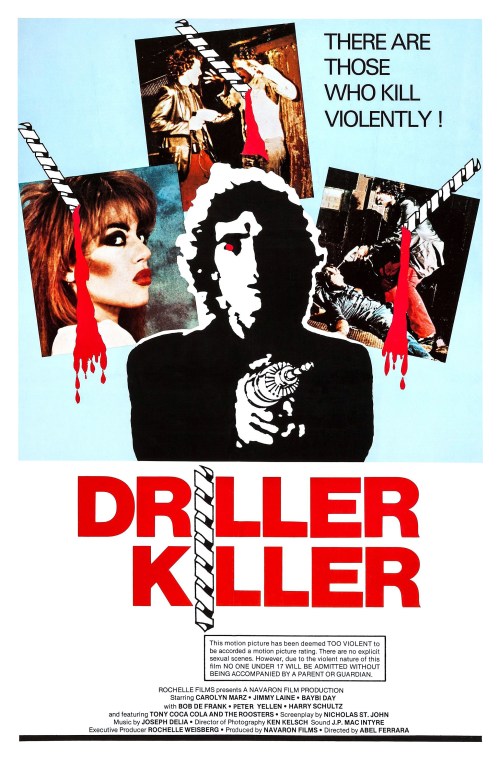
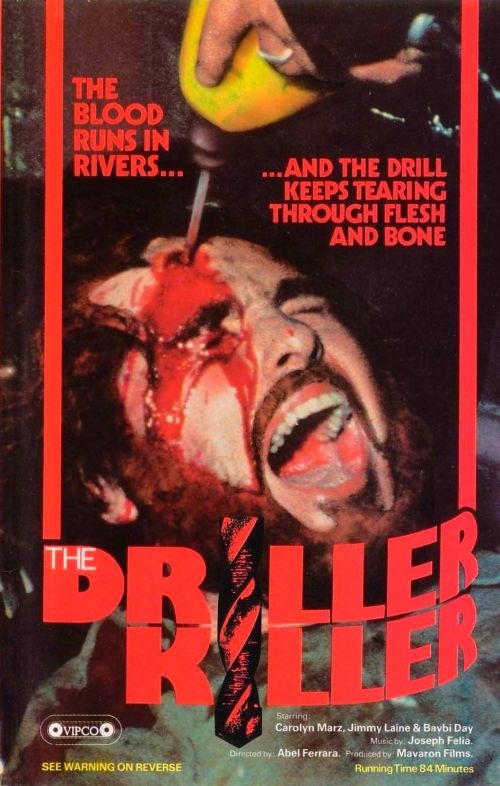
The Driller Killer (1979)

By Richard Winters

My Rating: 6 out of 10

4-Word Review: Electric drill relieves stress.

Reno (Abel Ferrara) is a New York apartment dweller who frets over his inability to pay his bills and the constant noise coming from a punk band next door who perform at all hours of the day and night and to which his landlord (Alan Wynroth) refuses to do anything about. The pressures to finish his latest painting, which he hopes to sell, become too much, so to alleviate the tension he takes a power drill out onto the streets and kills random homeless people with it late at night. For awhile this is enough but he eventually decides to use it on other people in his life who he feels have wronged him, which includes not only his girlfriend,but an art gallery owner (Harry Schultz) who refused to purchase his painting.

This is a definite step above the usual horror fare and seems in many ways like an arthouse film. It’s ability to capture New York’s dark urban underbelly gives the viewer a strong taste of what the main character is going through until you almost feel like you’re trapped there alongside him. The talky segments that come in-between the killings, which are usually the boring parts in most other horror films, are surprisingly captivating as they vividly convey all the reasons why Reno is so angry and give the viewer much the same feeling.

When the killings finally do start to happen it’s not so much the graphic violence that’s disturbing, but the fact that we relate to the man who’s doing it. We’ve understood his pent up rage by seeing how the unrelenting, impersonal urban system continually works against him making the murders act like a stress reliever not only to the killer, but the viewer as well as it breaks both us and him away from the never ending challenges of everyday life, which the film essentially portrays as being the real horror. Instead of being repelled by the bad guy we connect to him sending this movie into a far darker psychological realm than most.

While Ferrara shows a gifted ability as a director the film almost defeats it’s unique edge by dwelling too much on the urban hell hole theme as it makes its point and then drags it out by hitting-it-home again and again. The footage of the punk band becomes excessive too until it almost becomes more like a musical docu-drama. The killings aren’t very imaginative either as one quickly becomes like the other eventually making them seem like throwaway scenes that quickly lose their impact.

The film’s ending is particularly disappointing as it fades out before we know what happens to either the main character or his girlfriend (Carol Slaughter). A good horror film needs a strong finish and this one cops-out like it didn’t know how to end it, so it just leaves it up to the viewer to guess. While I commend its effort to take the genre into a more complex and unusual area I still felt it could’ve gone even further with its warped premise than it does.

My Rating: 6 out of 10

Released: June 15, 1979

Runtime: 1Hour 36Minutes

Not Rated

Director: Abel Ferrara

Studio: Navaron Films

Available: DVD, Blu-ray, Amazon Video, YouTube

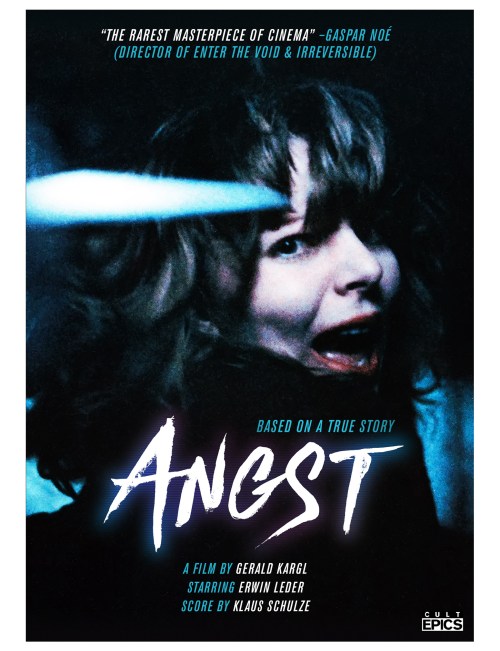
Angst (1983)

By Richard Winters

My Rating: 5 out of 10

4-Word Review: Madman attacks peaceful family.

A serial killer (Erwin Leder) gets released from prison despite still having the urge to kill. He initially tries to strangle a female cab driver (Renate Kastelik), but she throws him out of her car before he can do it. He then goes running through the woods until he comes upon an isolated home. He breaks into it and kills each of the three family members living there one-by-one before eventually taking their lifeless bodies with him in the trunk of his car while he drives aimlessly around Austria.

This film is based on the real-life Austrian case of Werner Kniesek who murdered a family of three in their home on January 16, 1980 shortly after being released from prison. In that case Werner had known one of the victims previously while the movie its portrayed as if the killer has no connection to the occupants at all. In the actual crime Werner also killed the family’s cat where in the movie the pet is a dog, which the killer not only allows to live, but eventually befriends.

I’ve spent years complaining how most horror films aren’t very realistic, so I suppose I really can’t complain when one finally does decide to go all-in with graphic realism and not spare anything. The film certainly succeeds in being like a grisly true-life crime, but in the process it’s not very scary either. You know right from the start where it’s going, which makes the eventual violence come off as agonizingly drawn out and pointless. It’s like footage caught on a closed-circuit camera where you have no emotional bond with the people or action and when it’s over you’re left feeling drained and ambivalent.

Many people have praised the innovative camera work, which is provocative and some have even compared this to Henry: Portrait of a Serial Killer, but that film was more compelling in the way the main character was able to entice regular people to help him with his crimes while here there is virtually no dialogue or character arcs. There’s basically no story either just a graphic dramatization of a random crime that gets excessively drawn-out.

Leder is excellent and I liked how he portrays his character as being nervous, anxious and perpetually frightened as opposed to the stereotypical way of showing psychos who are robotically cold and relentlessly evil.  His voice-over narration allows for moments of insight too particularly when, as he is killing his victims, his thoughts are instead focused on past wrongs that were inflicted onto him from years ago by others, which made me believe this could very well be the thought pattern of most killers who selfishly remain fixated on their own personal injustices even as they callously destroy others.

The acting by the supporting cast is impressive too not so much from what they emote since they’re given very little to say or do, but more with the way they sacrificed  their bodies for the project particularly when the killer drags their lifeless corpses over broken glass (no mannequins or dummies were used) and down several flights of stairs. I also loved the dog and in fact he’s the highlight that allows for moments of levity and even comic relief in an otherwise unrelentingly grim film that will appeal only to a select group of people.

My Rating: 5 out of 10

Released: May 2, 1983

Runtime: 1Hour 27Minutes, 1Hour 15Minutes (Director’s Cut)

Not Rated

Director: Gerald Kargl

Available: DVD, Blu-ray, Amazon Video, YouTube