Category Archives: Horror

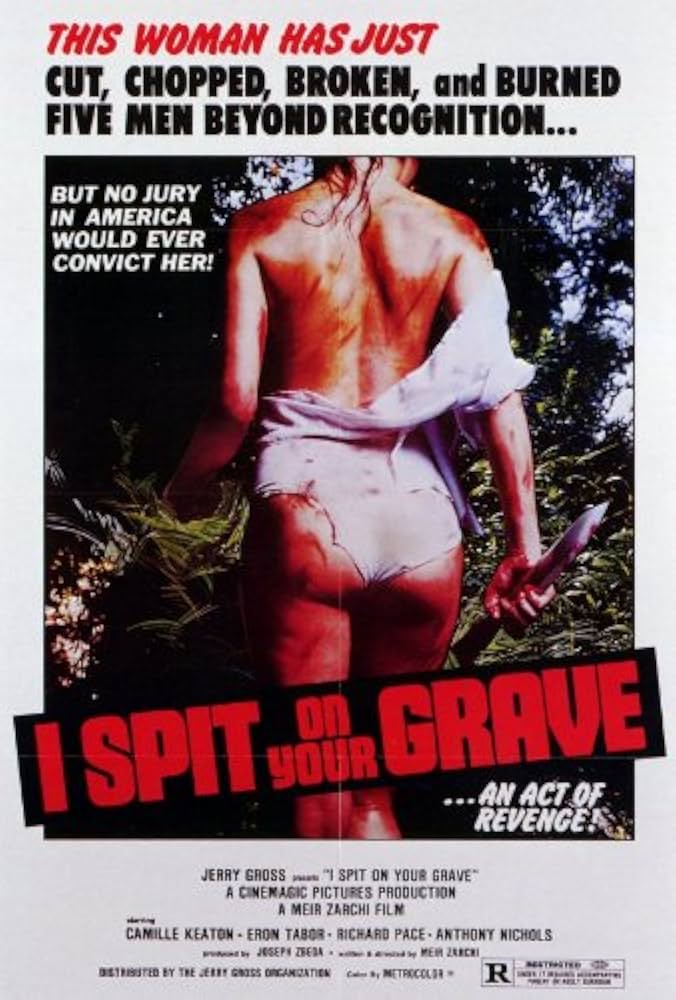
I Spit on Your Grave (1978)

By Richard Winters

My Rating: 7 out of 10

4-Word Review: Assaulted woman gets revenge.

Jennifer Hills (Camille Keaton) is a writer who has decided to get away from the bustle of New York City by renting an isolated cabin by a river that’s just outside of Kent, Connecticut. It’s here that she hopes to finish her novel but finds it hard to do when she inadvertently attracts the attention of Johnny (Eron Tabor) a gas station attendant and two unemployed men named Stanley (Anthony Nichols) and Andy (Gunter Kleeman) who routinely upset her quiet environment with their motorboat. When delivery boy Mathew (Richard Pace), who is mentally disabled and social awkward, comes back to the men describing how when he delivered groceries to her, he ‘saw her breasts’, it gives them the idea to attack her and then ‘offer her up’ to Matthew, so he can finally have sex with a woman. The men chase Jennifer down while she’s relaxing in her rowboat and take her to the backwoods where each of them takes turns raping her over an extended period. Once they finally leave, they give Mathew a knife and tell him to kill her while they wait outside. Mathew though is too afraid to stab her, so he lies and tell them he did when he really didn’t. Eventually, after several weeks, Jennifer recovers from her injuries, both physical and emotional, and decides to seek out the unsuspecting men by killing them off in gruesome ways one-by-one.

This film was and still is highly controversial, some might say it’s the most controversial film ever made and universally condemned by both Roger Ebert and Gene Siskel on their show where they described it as ‘the worst movie ever made’. Ebert even went as far as to write in his review that it made him physically sick to watch it. His review though had a Streisand effect as it garnered it more attention and got people to come to the theater to ‘see what all the fuss was about’ eventually making it quite profitable and a cult classic that’s turned the franchise into marketable one that has given it several sequels and even a 2010 remake.

The inspiration for the story came in October of 1974 when writer/director Meir Zarchi was traveling with his friend and daughter in New York City neighborhood of Jamaican Hills where they came upon a naked, beaten-up woman who told them she had just been raped. When he escorted her to the police, he was appalled at the indifferent treatment she was given and he came home and almost immediately began writing the script.

Almost 2 years later, in August of 1976, he had acquired enough funding so shooting could begin. The argument though was whether this really was a ‘trenchant’ drama meant to expose the brutal nature of rape, versus sanitizing it as other movies at the time tended to do or was simply a cheap way to exploit a difficult subject for money. In a lot of ways, it seems to be the later as gang rapes like the one portrayed here don’t happen too often and it’s usually just one attacker. The fact that the men seem to go away and then suddenly reappear again unexpectedly out of nowhere makes it feel like it’s being played up for tension’s sake and attempting to get the most out of the horror then simply trying to intelligently examine the cruel event.

There’s also no scene showing Jennifer going to the police and being treated poorly, which was supposedly what enraged Zarchi so much during the real event. Without that element it’s harder to justify the plot and there really needed to be a segment showing that.

On the flip side I was impressed with the film’s overall grittiness. It’s like Zarchi had watched Last House on the Left but decided to take out the ill-advised ‘comic relief’ scenes and weird music and just left in the unrelenting tension and to that level it succeeds. Having no soundtrack at all, outside of some organ music that gets played when Jennifer visits a church, helps give it more of a realistic effect almost like we’re watching a documentary where the camera is simply turned-on and whatever terrible things happen is allowed to simply play-out unabated. This along with Keaton’s dynamic performance, where she essentially plays two women, one a victim and the other the perpetrator, is what helps the movie stand out and gives it it’s legs.

Spoiler Alert!

The complaints I had comes more with the third act where Jennifer carries out her revenge. The segment where she entices Matthew to have sex with her again in the woods by the river, so she can put a noose around his neck and hang him, didn’t feel genuine. I would think anyone who had been raped that they wouldn’t want anyone to touch them, or get intimate after such a traumatic event, so allowing herself to get naked and letting a man, one of her former attackers no less, get on top of her, just didn’t seem plausible from a psychological perspective. On the physical end it didn’t seem possible that a young thin woman would be able to pull the rope tight enough to hang someone who clearly weighed more than she.

The second killing where she takes Johnny back to her place and they get naked in her tub had the same problematic issues. She had a gun in her hand when she got out of her car, so why not just shoot him then and get it over with? Why take the chance of bringing him back to her house where he could overpower her? Also, how dumb does this guy have to be that he would completely let down his guard and not think that this woman, who’s assault he happily took part in, could be completely trusted and not try to lure him into a trap?

Her final attack on the two other men is flawed as well as it has her swimming out to the boat that one of them is on, but she comes onboard carrying no weapon. She only gets her hands on the ax when the other guy accidentally drops it into her boat as she tries to side swipe him, but that’s still a very stupid and dangerous way to go about things. If she’s fully intending to kill the guy she should come prepared with something already in hand when she confronts him.

Alternate Title: Day of the Woman

My Rating: 7 out of 10

Released: November 22, 1978

Runtime: 1 Hour 42 Minutes

Rated R

Director: Meir Zarchi

Studio: Cinemagic Pictures

Available: DVD, Blu-ray, PlutoTV, Roku, Tubi, YouTube
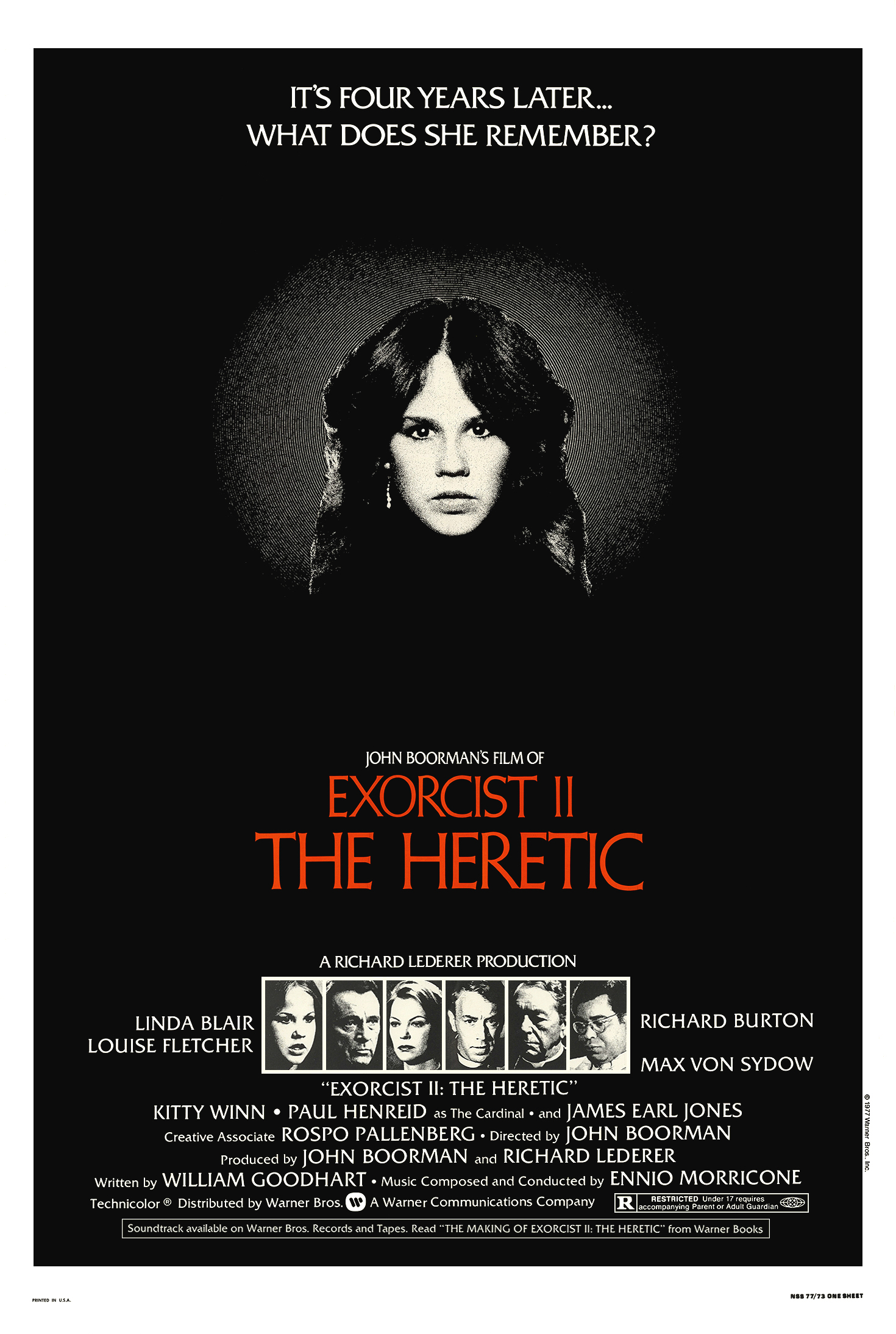
 

Exorcist II: The Heretic (1977)

By Richard Winters

My Rating: 0 out of 10

4-Word Review: A really awful sequel.

It’s been four years since Regan (Linda Blair) had her bout of possession and is now living a seemingly normal life in New York City with her guardian Sharon (Kitty Winn). Regan does still see a psychiatrist, Dr. Tuskin (Louise Fletcher), who despite Regan’s denials that she can’t remember anything, is convinced that she does have some dormant memories that need to come to the surface. Philip (Richard Burton) is a priest who has been assigned to investigate the death of Father Merrin (Max Von Sydow), who was the priest who died while performing the exorcism on Regan. He meets with Dr. Tuskin and Regan and gets hooked up to a machine called the syncronizer, which allows Philip’s and Regan’s brainwaves to be connected, so he can explore the inner depths of her mind. It is here that he learns about the evil spirit Pazuzu, that was the one that inhabited Regan’s body years earlier, and how Father Merrin had rid a young boy named Kokumo of this same spirit while in Africa. When Philip learns that the now adult Kokumo (James Earl Jones) has developed a special power to defeat Pazuzu he travels to the continent to meet him.

Doing a sequel to the hit movie wasn’t a bad idea per say as there were still some open-ended questions like why did Pazuzu choose Regan’s body to inhabit instead of some other girls and what mental issues would Regan have to deal with after going through such a traumatic event? None of those were ever answered in the first film, but intriguing enough to me that I felt a second film was warranted and could’ve been quite compelling. Unfortunately, what we get wouldn’t even qualify as second-rate. Most of the problem lies with director John Boorman, who admitted in later interviews that his biggest crime was that he didn’t give the viewer what they wanted, which is the truth. I don’t mean to bash the guy as he’s helmed some classics in his own right, but when he professes that he was offered the job to direct the first installment but turned it down because he thought it was ‘repulsive’ then that should’ve disqualified him from getting any consideration to doing the second one.

Everything gets botched right from the beginning including a misguided reenactment of the final segment in the first film that honestly comes-off like a cheap parody. For one thing Father Merrin is seen standing at the end of Regan’s bed, when we know clearly from the first film that he was kneeling on the right side of the bed when he died. Also, due to Blair’s insistence that she didn’t want to go through the grueling routine of having to put on the demon make-up, so a stand-in took her place, but the results are clownish. The silly-‘synchonizer’ further hampers things as it appears more like a child’s toy and the cliched idea of simply attaching a few wires to each participant’s foreheads and that would be enough to get their mind’s ‘in-sync’ looks like something straight out of a tacky B-sci fi flick from the 50’s.

Not able to get Ellen Burstyn to sign-on really hurts though I can’t blame her for being reluctant but trying to use Kitty Winn as her replacement bombs. For one thing the Sharon character didn’t have that much of a prominent role in the first one, I barely even remembered her, and she was Burstyn’s secretary who didn’t interact that much with Blair, so for them to now be so ‘connected’ seemed like a stretch and having Winn sporting short hair, in an attempt I presume to make her ‘seem’ like Burstyn, was tacky. Von Sydow suffers a similar fate. He gets portrayed as being a younger version of his character here but only appears in flashbacks and doesn’t have much to say or do making it seem like it wasn’t even worth the effort.

Fletcher is good in that she played a cold, bitchy nurse in her previous film, One Flew Over the Cuckoo’s Nest, but here shows her great acting ability at playing the total opposite and doing it convincingly. However, her character doesn’t help propel the action and is only there to react to things, which ultimately makes her presence one dimensional. Burton, whose talents I have always greatly admired even when he took less than stellar roles, but his appearance here has to be rock bottom. He admitted that he only did this for the paycheck, due to an expensive divorce he was going through with Liz, but the material doesn’t match his ability and it’s a career low even for him as he was known to make some bad project choices during the 70’s, but this was by far the worst.

To top things off there’s James Earl Jones wearing a giant bug outfit that nearly had me laughing out of my seat. The numerous shots of locusts and the sandy African landscape make it seem more like a nature movie, but whatever it is it’s not scary. It’s so convoluted it’s not even good enough to fall into the ‘so-bad-it’s-good’ category. It is cool though at least see a young Dana Plato playing an autistic child in a small but pivotal part.

My Rating: 0 out of 10

Released: June 17, 1977

Runtime: 1 Hour 57 Minutes

Rated R

Director: John Boorman

Studio: Warner Brothers

Available: DVD, Blu-ray, Amazon Video, Tubi, YouTube

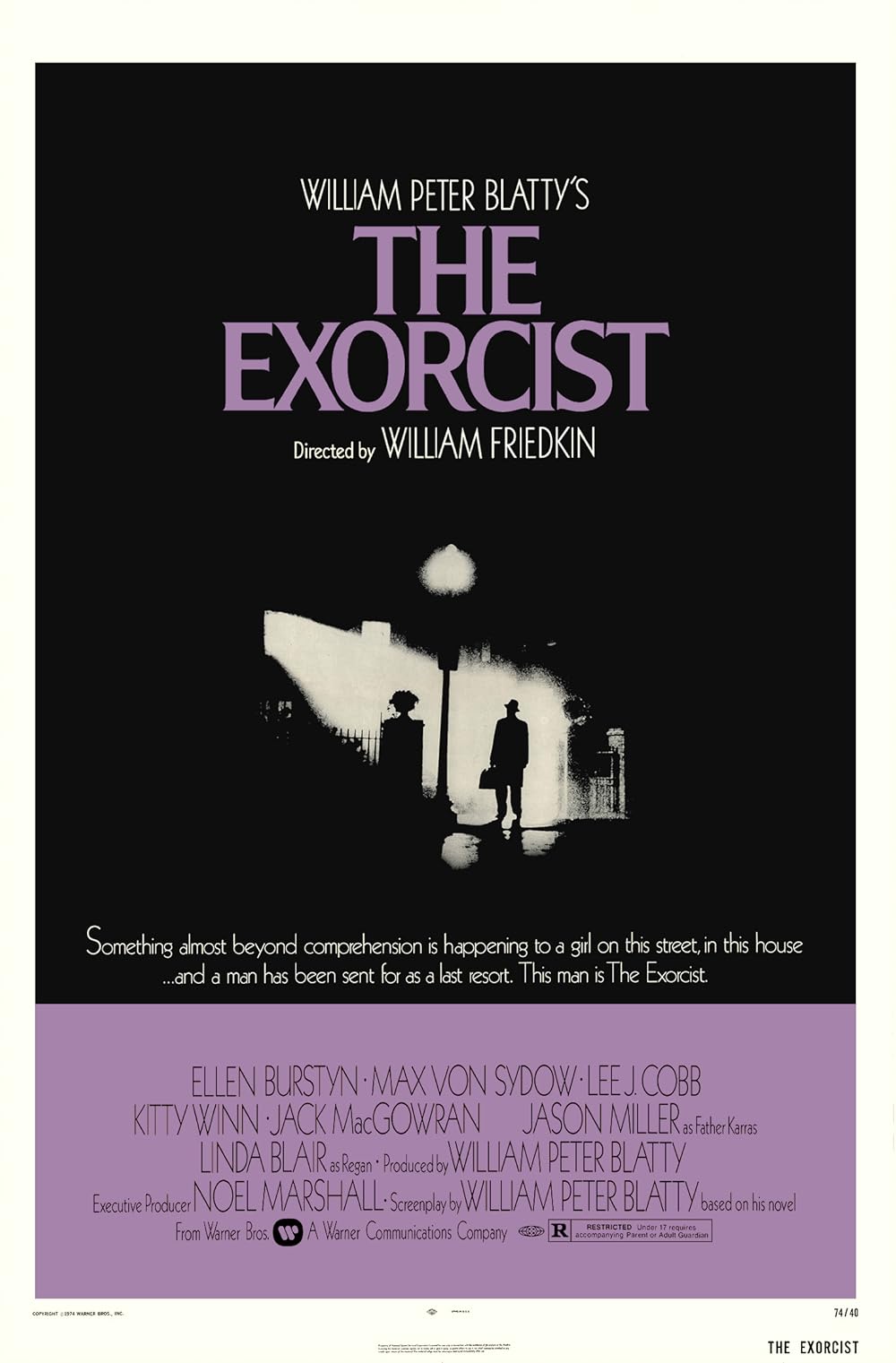
The Exorcist (1973)

By Richard Winters

My Rating: 10 out of 10

4-Word Review: Possessed by the devil.

Chris McNeil (Ellen Burstyn) is a famous Hollywood actress living on location in a neighborhood of Washington D.C. known as Georgetown where the latest movie she’s working on is being shot. She’s renting a posh home along with her two servants (Rudolf Schundler, Willi Engstrom), her secretary Sharon (Kitty Winn) and her 12-year-old daughter Regan (Linda Blair). Things start out fine, but then Regan begins exhibiting odd behaviors. Chris takes her to several doctors as Regan’s anti-social traits continue. The doctors prescribe various drugs, but nothing works. At her wits end Chris, a non-believer, finally resorts to asking a local priest, Father Karras (Jason Miller) if he’ll perform an exorcism on her daughter. Karras though is going through a crisis of faith and doesn’t believe the archaic ritual will help her but becomes more convinced after he visits the girl who displays knowledge of his personal life that she would not have known about otherwise. Eventually he asks the church for permission to conduct one, but under the condition that he do it alongside Father Merrin (Max Von Sydow) an elderly man with a heart condition who had done an exorcism many years earlier in Africa.

The film was based on the bestselling novel of the same name that in-turn was inspired by the true-life event that occurred in 1949 where priests performed an exorcism on a troubled 14-year-old boy named Ronald Edwin Hunkeler. Author William Peter Blatty, read about the incident while a student attending Georgetown University. After having become a successful screenwriter during the 60’s where he wrote mainly comedies for director Blake Edwards, he approached his agent about writing a horror novel about a child possessed but was initially talked out of it. Then in 1968 he watched Rosemary’s Baby, which he felt had a weak ending that he could’ve done better, so he brought up the exorcism concept to a book publisher while attending a cocktail party and he agreed pay him a $25,000 advance to write the book in 10-months. Upon publication the sales were at first sluggish, but then after an appearance on the ‘Dick Cavett Show’ they skyrocketed, which soon lead to a movie rights deal with Blatty commissioned to write the script.

The movie follows the book closely though in a more condense form with scenes that were groundbreaking in its level of explicitness and perversity including an infamous crucifix masturbation moment. However, it’s the angiography that many viewers found the most disturbing. While it’s shockingly explicit it’s also lauded by medical professionals as being highly accurate and for many years afterwards was used in radiological training films. Many critics at the time condemned the scene labeling it ‘irresponsible’ and ‘needless’, but I liked it. A good horror movie should put the viewer in an uneasy state right from the start and then continue to turn the screws tighter as it goes on. This moment clearly telegraphs to the audience that the filmmakers will not shy away from showing something graphic even if it’s outside of good taste and if they’re going to be this brazen with this scene then it makes it all the more unsettling about what’s to come next. 

In many ways, and I don’t believe it was intentional, but the film does become an inadvertent satire on the medical, psychiatric community as their ‘diagnosis’ on Regan are really just guesses and the extreme reliance on prescribing medications, which they feel will somehow ‘resolve everything’. I didn’t really have a problem with this as I think many doctors at the time, and maybe even now, would respond the same way if given such a bizarre case. My one issue though is that eventually one of them, played by Peter Masterson, gets up in front of a roundtable of other doctors and suggests that Chris take Regan to an exorcist. I don’t believe any real medical doctor would ever suggest it or certainly be met with pushback by the other medical professionals in the room. I realize the movie had to find a way to progress to the third act, so the idea of an exorcist needed to be brought up at some point, but it would’ve made more sense had it come from Chris’s servants, who were deeply spiritual already. Chris could’ve scoffed at it at first, but then after thinking and even reading up on it, would eventually relent. 

The performances are uniformly excellent. Burstyn was not the first choice as there were other actresses more famous than her at the time, but her ability to display distraught emotion and continue to do so as it progresses and still keep it fresh and genuine makes her the best person for the role bar none. Blair is quite good too though Mercedes McCambridge does voice the demon during the exorcism moments, which kind of affects things. Don’t get me wrong McCambridge’s deep vocals makes it scarier, but had the lines, which are quite obscene, been recited by Blair herself it would’ve made it more shocking. Plus, it would still allow credence for the doctors to say it was a mental illness and not a possession since whatever was being said was coming from her natural voice. 

The real star though is Father Karras as he’s the one that goes through an actual internal change during the course of the story, from a person who’s had a crisis of faith to ultimately regaining it. Miller, who’s perfect, was not the original choice as Stacey Keach had already been offered the role and signed on, but then director William Friedkin went to watch the play That Championship Seasonwhich Miller had written and afterwards the two met backstage and Friedkin talked about his new project that got Miller to describe his own Catholic upbringing and his quarrels with it, which convinced Friedkin that he’d be the better actor and thus the studio bought Keach out of his contract. As much as I like Keach this was still a good move as Miller’s guilt-ridden face, which gets on full display every time he’s in front of the camera, leaves a lasting visual impression. I also liked the way the character remains skeptical until the very end versus other horror films that would have the people believing in the supernatural right away, or pretty quickly. However, in real-life there’s always going to be cynical people, so allowing in their apprehension through Karras makes the story stronger and more three-dimensional. 

Spoiler Alert!

I felt the ending, in which Chris pronounces Regan to be ‘cured’ and not remembering a thing and then driving away, to be a bit lacking. Chris was portrayed as being secular, but you’d think after what she saw her daughter going through would’ve changed that. This could’ve been done subtly by having her holding a crucifix, something she had despised her staff putting underneath her Regan’s pillow earlier or just shown wearing a small one around her neck. 

I also didn’t like the side-story dealing with the Burke Dennings character, played by Jack MacGowran, being apparently pushed out the window by the demon and falling to his death down a flight of cement stairs as this takes away the impact of when it happens to Father Karras at the end. Instead of Karras’ death being the shocking, unexpected twist that it should’ve it comes off more like a ‘here-we-go-again’ thing. If I had been the director I would’ve removed both Dennings death and Lee J. Cobb character completely as I really didn’t think he added much or helped progress the story forward. I would’ve still had the steps being shown in the early part of the film as a forewarning by having Karras runup them during his early morning workouts and this could’ve been when he first met Chris as they’d bump into each other one day while she was leaving to go somewhere. The head being twisted all the way around, which is described as happening to Dennings, but never shown, could’ve been revealed as occurring with Karras, possibly with his eyes glowing when the pedestrians come running to his aid, which would’ve been a good creepy final horror visual. 

My Rating: 10 out of 10

Released: December 26, 1973

Runtime: 2 Hours 15 Minutes

Rated R

Director: William Friedkin

Studio: Warner Brothers

Available: DVD, Blu-ray, Amazon Video, YouTube

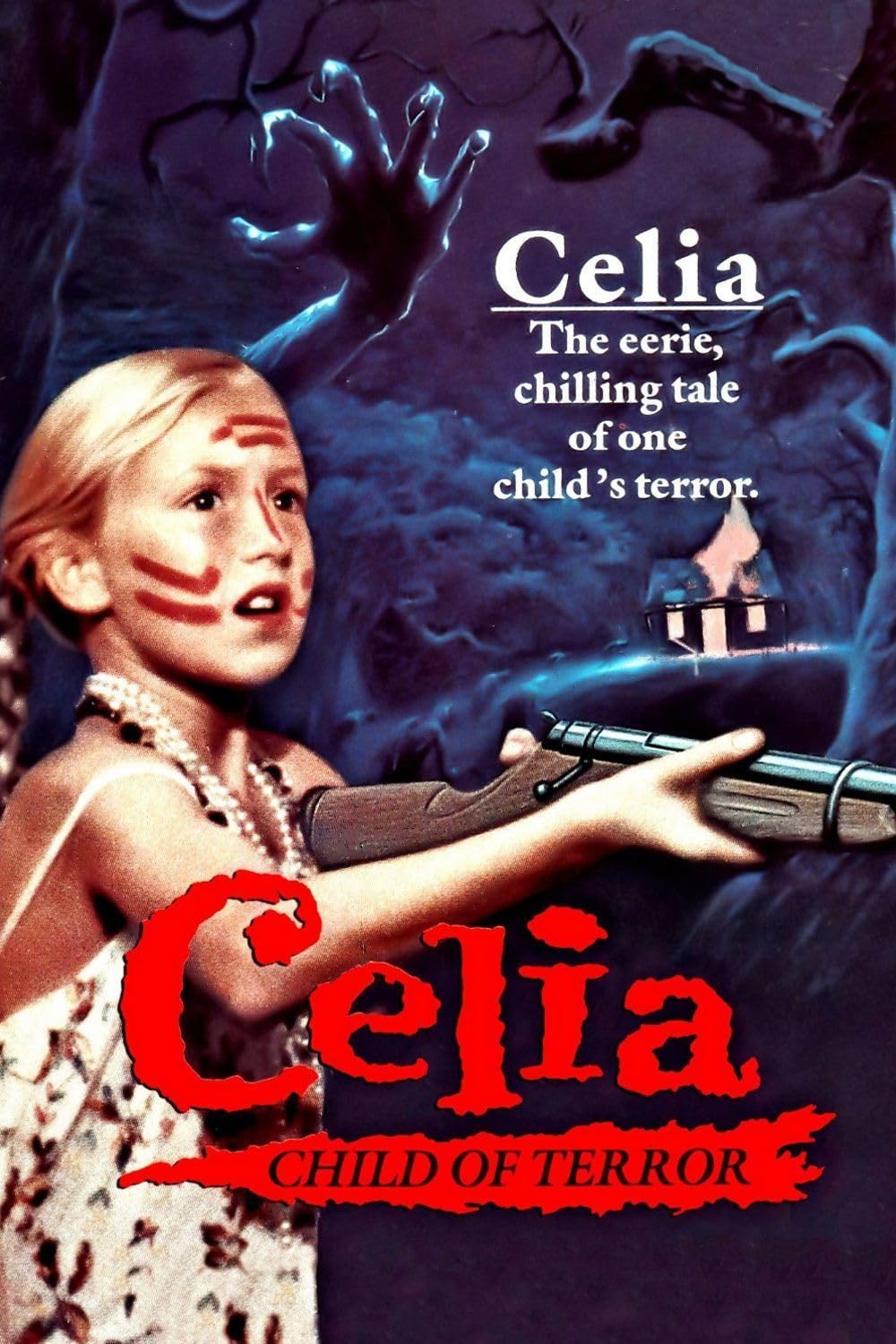
Celia (1989)

By Richard Winters

My Rating: 8 out of 10

4-Word Review: Revenge for her rabbit.

Celia (Rebecca Smart) is a head-strong 8-year-old living in the suburbs of Melbourne, Australia during the end of the 50’s. She is mourning the recent loss of her grandmother while also fearing the hobyahs, which are mythical creatures she read about in school that she has nightmares about breaking into her bedroom late at night. When Alice (Victoria Longley) and her three children move in next door it allows Celia to get her mind off of things as she becomes fast friends with the kids and even Alice herself, but their relationship is soon hampered when Celia’s father, Ray (Nicholas Eadie), finds out that Alice and her husband are supporters of the Communist Party. Ray forbids Celia from seeing them and offers her a pet rabbit, something she’s wanted for a long time, as a bribe insisting that she can keep the pet as long she no longer socializes with the neighbors. However, this brings up more problems as the Australian government has deemed rabbits to be an invasive species and has outlawed anyone from having one. Burke (William Zappa), the local police Sargent, confiscates the rabbit in the middle of the night and then it’s later found dead while being housed at the local zoo causing Celia to come up with a devious plan in order to exact her revenge.

The film, which was inspired by a news article writer/director Ann Turner read when she was 24 involving the rabbit invasion that plagued Australia during the 50’s, is labeled a horror movie, though in a compromised form as IMDb calls it a ‘folk horror’ while other movie sources call it a ‘horror drama’. In any case fans of the conventional horror film may not take to this or find it off-putting as the typical scares and tension are not present. There are some creepy moments particularly the dream sequences involving the hobyhahs, which I wished had been in it more, and a segment dealing with Celia’s dead grandmother tapping on her bedroom window late one night, but overall, that’s about it. Most of the rest of the film comes-off more like a coming-of-age drama, which is excellent, but the real disturbing part doesn’t come until the very end. It’s effective and well earned, but whether all viewers will be patient enough to wait for it I’m not sure.

With that said it’s still a great movie with characters that are three dimensional, something that Australian cinema does very well, and the viewer gets wrapped up into the drama quite quickly. The best element is that the kid characters are genuine. These are like real children that I knew growing up where they could be cute and precocious one minute and mean and bratty the next. The inner rivalries that Celia has with the other kids in the neighborhood are quite real too. Kids don’t just automatically get along, there can be contrasting egos and personalities that can easily get in the way, just like with adults, that can quickly turn playmates into enemies. It’s rare that I can say this, but I really felt while watching this, that I had been transported back into my own childhood as the encounters and exchanges very closely reflected my own in many ways.

The adults are portrayed much better here too. Usually, movies that revolve around young people have the grown-ups stigmatized in one extreme or the other. Either they’re clueless dimwits that are totally out-of-it or overly controlling. Here though they’re well meaning, but so busy with their own lives that just can’t stay attuned with everything their kids are doing and much of the time is spent with them just trying to catch-up with the drama that they didn’t even know was occurring. Celia’s father isn’t mean here either, he simply has a different perspective of things and doing what he thinks is best for his child even as this gets Celia to hate him but like with many households this type of scenario can and does happen even with the best of intentions.

Spoiler Alert!

The ending should leave you with an unsettling feeling when it’s over. This is the rare time when if fully works too. No loose ends, or loopholes. Everything fits perfectly with the characters fleshed out so it all makes sense. This is also a unique film in that there really aren’t any villains. No one is ‘bad’, or ‘evil’. It’s just people, young and old, with different ideas about things and their inability, through no real fault of their own, to effectively communicate it to the other, or for the other to fully listen and understand, which is ultimately what makes it so horrifying as this could easily and believably happen anywhere.

My Rating: 8 out of 10

Released: March 3, 1989

Runtime: 1 Hour 43 Minutes

Not Rated

Director: Ann Turner

Studio: Seon Film Productions

Available: DVD, Blu-ray

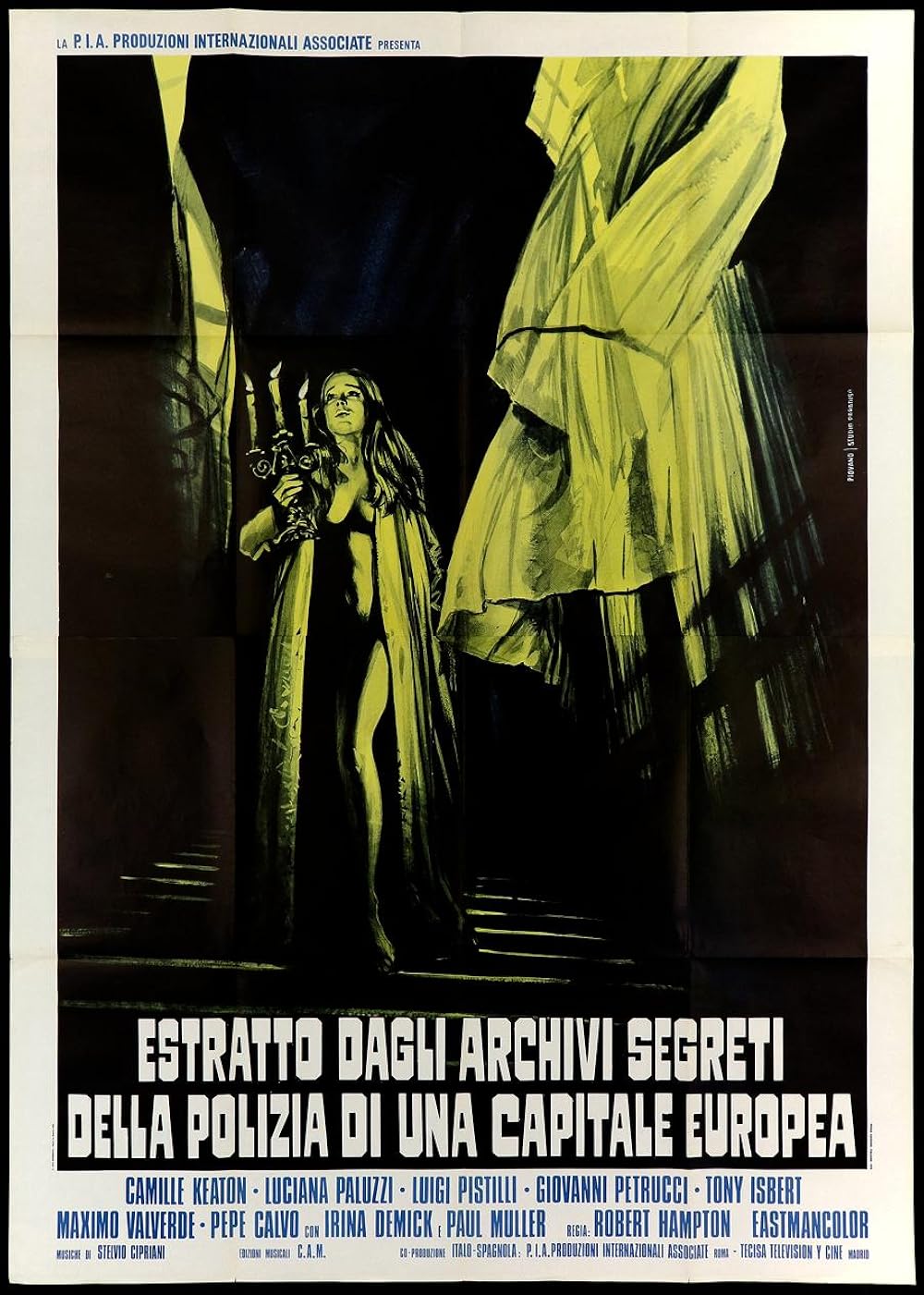
Tragic Ceremony (1972)

By Richard Winters

My Rating: 4 out of 10

4-Word Review: Witnessing a black mass.

Jane (Camille Keaton), Joe (Maximo Valverde), Bill (Tony Isbert), and Fred (Giovanni Petrucci) are four young adult friends traveling the Spanish countryside in their uncovered jeep. When their car runs out of gas they come upon a large estate whose owner, Lord Alexander (Luigi Pistilli) allows them to stay in order to seek shelter from the rain. During the course of the night Jane starts to hear strange music and chanting coming from another room and when she enters it, she finds a group of people performing a satanic ritual. Jane then realizes she’s the one chosen to be sacrificed, but before they can do it her friends come in to save her, but this leads to more violence and the four attempting to flee only to be followed by grisly mayhem wherever they go. 

Unusual horror opus starts out almost like a dreamy romance with the four riding on a sailboat and soft melodic song played over the credits. The scares and tension don’t come quickly, and the first act has a relaxed direction that doesn’t grab the viewer and is too leisurely paced. The ceremony scenes are done with no imagination and seems to bask in every cliche making it more appropriate for parody. Director Riccardo Freda complained that the project was taken out of his hands and scenes added in by the producer to bolster the runtime. It took all the way until 2004 when a full restoration of the director’s cut was finally made available, but when this got shown at the 61st Venice International Film Festival it was met at the end by a chorus of boos.

The main reason to catch it is for the performance of Camille Keaton. This was the last Italian feature that she was in before moving back to the states and starring in I Spit on Your Grave, of which she’s best known for. Even here though her presence is a bit distorted as she looks beautiful and has a really good topless moment in the bathtub, but her voice gets dubbed by an Italian woman who sounds middle-aged and therefore doesn’t reflect something coming from a delicate young lady that she is.

It’s also never explained why she’s traveling with three guys as normally there should be other female friends riding along in order to keep it an even mix. One lady with a bunch of guys doesn’t make much sense unless she was dating one of them, though that’s not the way it gets portrayed. She does at one point sleep with one of them to the envy of the others, but it’s deemed as a ‘one-off’ moment, which proceeds to make the interpersonal dynamics in the group even more murky and confusing. The guys on the other hand show very little distinction in their personalities and it would’ve worked better had it been simply a couple and let the other two guys written out of it completely. 

Once the violence gets going it is rather impressive in a gory sort of way. The ax cutting through someone’s head was startling, but then the same shot gets replayed 5 different times, as part of a reoccurring nightmare sequence, that makes it very redundant. A good director, even if they are going to show a past event, will, or should, do it from a different angle, or in slow motion, or even an alternative color scheme in order to change it up a bit and not make it seem repetitive and in this case amateurish. 

Spoiler Alert!

The twist ending in which the wife of the homeowner and leader of the black mass ritual, Lady Alexander (Luciana Paluzzi) appears to have completely taken over Jane’s identity to the point that Jane becomes her as the car she’s riding in drives away, which I thought was kind of cool. Granted it does leave open many questions, but I felt a level of mystery in this case helped. Unfortunately producer Jose Gutierrez Maesso, didn’t like this approach as he thought it would cause the viewer too much confusion, so he hired actor Paul Muller to play a psychiatrist who would enter at the very end and essentially explain away all of the loose ends, but this treats the audience like they’re too stupid to figure things out on their own. 

My Rating: 4 out of 10

Released: December 20, 1972

Runtime: 1 Hour 22 Minutes

Not Rated

Director: Riccardo Freda

Studio: Variety Distribution

Available: DVD, Blu-ray, Tubi


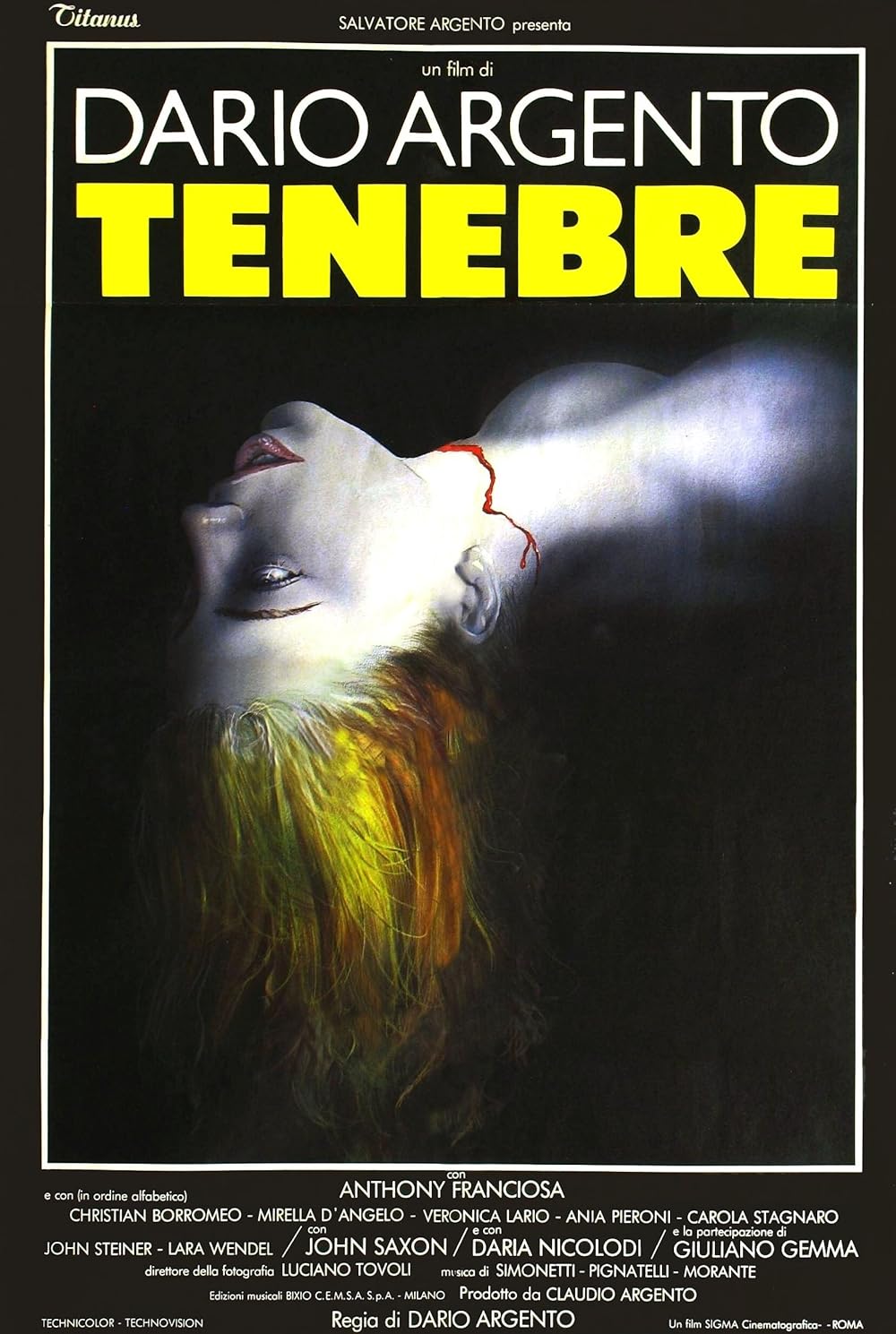
Tenebrae (1982)

By Richard Winters

My Rating: 5 out of 10

4-Word Review: Novelist hounded by stalker.

Peter Neal (Anthony Franciosa) is a successful novelist who travels to Rome, Italy to promote his latest work titled ‘Tenebrae’. Once he arrives, he is soon met by detective Germani (Giuliano Gemma) who advises him that a murder has recently been committed that was done in the style of one that occurred in his book. Neal scoffs that anything he’s written could’ve motivated someone to kill, but soon after he receives an anonymous letter from the murderer detailing how he’s going to commit more killings using methods that Neal described in his book. This then sets Neal off on doing his own investigation convinced that the police have a ‘tunnel vision’ and only he can find the true culprit using his own detective skills that he acquired while doing research on his book.

The film was inspired by writer/director Dario Argento’s own experiences that he had while meeting a fan via the telephone who initially introduced himself as being a great admirer of his work. The calls were friendly in nature at the beginning but became increasingly more menacing as time wore on. Argento eventually was threatened by the fan who claimed that his film Suspiria had affected him mentally and he wanted to harm Argento in the same way his movie had ‘harmed’ him causing Dario to leave the U.S. and return to Italy for his own safety, which is where he began writing the screenplay for this movie.

The sets are atypical for an Argento movie as they lack the garish colors and shadowy interiors most noted in his other films and this was intentional as he wanted to give the film a more ‘futuristic’ look and a one-note color scheme that more closely resembled cop TV-shows, which he felt the story reflected. Visual change is refreshing and helps the action seem more reality based versus in his other movies where everything seemed like it was set in someone’s dark fantasy in some parallel universe though I wasn’t as crazy about the camerawork, which was highly praised by others. Some may find the three-minute tracking shot that goes from one apartment window and across the complex to be captivating, but I found it more dizzying and unnecessary.

The story holds enough adequate suspense to remain moderately riveting and the pounding soundtrack by the rock group Goblin holds the tension. American actor Franciosa is nicely cast though Argento apparently had many behind-the-scenes conflicts with him, but the guy, despite his career decline, looks almost ageless and I was impressed with the opening bit where; despite nearing 60, he’s seen biking down a busy highway amongst tons of traffic with seemingly no worry or sweat. John Saxon though, the only other American in the movie, is badly wasted in a part that doesn’t give him much to do other than make a big deal about his hat that he seems quite fond of. Thankfully though, despite other performers having their voice dubbed, the film was shot in English in order to broaden its American appeal and so both of these actors speak with their actual voices while it’s quite evident with the others that they’re not.

The biggest disappointment for me were the special effects that look cheap and done with no imagination. The blood is bright colored and looks like dye mixed with water. The victims show no actual cuts, or abrasions and the blood appears painted on, or gently poured on via a cup and didn’t look authentic. There are also some ill-advised reaction shots where the film will quickly cutaway and show the victim looking scared with their mouth agape that came off as unintentionally funny. The only real frightening moment comes when a young lady gets chased down a dark street by a large dog who ultimately traps her inside the house of the killer, but other than that I was wanting way more than this film seemed able to give. I did though like one murder scene, which is purportedly one of Quentin Tarrantino’s all-time favorites, that features a woman getting her arm cut off and then proceeding to turn around and paint the walls of her apartment with its spurting blood though even this gets compromised because you can plainly tell it’s a mannequin arm when the ax goes through it.

The story gets a bit convoluted too as it adds in a flashback scene, without telling us it’s a flashback, involving a prostitute, played by Eva Robin’s, who really does spell her name with an apostrophe, and some teen boys that she meets on a beach. Only at the very end does it come into focus what this scene, which gets interspread throughout, means to the story, but until then it’s rather confusing why we’re seeing it and even a bit off-putting. It also features the prostitute as having a perfectly chiseled super model’s body, which I didn’t feel was realistic, and even though it’s supposed to be set decades earlier from the present day no effort was made to make it seem like it was shot in a bygone era.

Spoiler Alert!

The twist ending may be a surprise to some as ultimately, we learn that there wasn’t just one killer, but two of them. One being a TV interviewer named Christiano, played by John Steiner, who kills the first several due to his feelings that the victims were ‘immoral’ and then the last few committed by the protagonist himself. However, I started to suspect Franciosa when he’s found conveniently hit over the head by a rock, which supposedly ‘incapacitated’ him though I thought it was simply a ploy to divert attention away from him, so for me the final reveal was very predictable. Logically it doesn’t completely hold up either as his friend Gianni, played by Christian Borromeo, witness Christiano getting killed by Franciosa, though in disguise, and then runs back to the backyard bushes where Franciosa is supposedly hiding, but it didn’t seem like Franciosa would’ve had enough time to leave the murder scene and get back to the bushes before Gianni got there.

My Rating: 5 out of 10

Released: October 27, 1982

Runtime: 1 Hour 41 Minutes

Rated R

Director: Dario Argento

Studio: Titanus

Available: DVD, Blu-ray, Amazon Video, Plex, Tubi

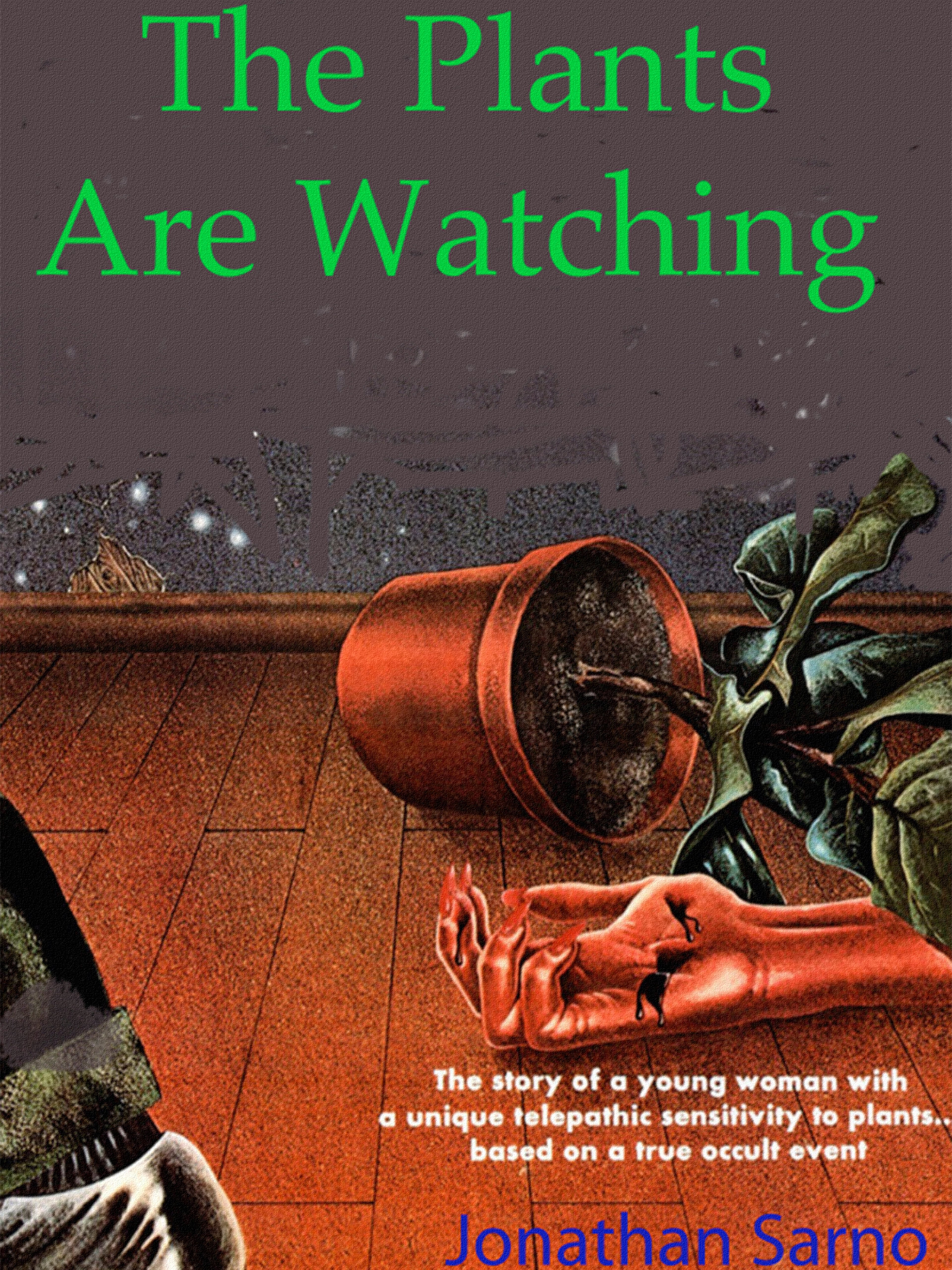
The Plants Are Watching (1979)

By Richard Winters

My Rating: 6 out of 10

4-Word Review: Communicating with a plant.

Laurie (Nancy Boykin) is deeply into plants and has them placed all over her apartment and even feels she has the ability to communicate with them. Directly below her place lives her sister Rilla (Nancy Snyder) along with Rilla’s boyfriend Robert (Joel Colodner). Laurie doesn’t like Robert and the two are continually getting into arguments. One day Laurie is found dead and the police consider it an accident. Rilla though fears that Robert may be responsible and tries on her own to investigate. She reads up on Kirlian photography that can capture electrical discharges from objects including plant life. Her attempt is to see if the plant that was present when Laurie had her ‘accident’ can tell her through its distress signals from its leaves, which can be detected through the photo process, can lead her to what really happened. However, as she’s doing this a new suspect emerges, Dusty (Ted Le Plat), forcing her to have to go through the difficult determination as to who the real culprit is.

Extremely odd idea for a horror film almost works with a really good and creepy beginning and excellent surprise ending. The Kirlian photo technique was one that I was not familiar with, so the movie is educational on that end as it delves into its innerworkings and history and some of the shots that it shows, including the fingerprints of a psycho compared to a regular person and the different colored light charges that it gives off, are quite fascinating as are the variety of discharges that a leaf can emit from one that is under stress, or sick versus a healthy one.

The setting is limited, mainly due to the low budget, where all the action takes place in the apartment building though this does at least give the viewer a good feel for urban New York City living and helps create a certain ambiance. While the plants never do any actual ‘speaking’ you do through the course of the film begin to see them like they’re characters alongside their human counterparts making the moment where Robert throws some of the potted plants against the wall and thus smashing them seem genuinely disturbing like you’ve just witnessed a ‘murder’ and credit goes to the filmmakers for their ability to bring this out.

Despite one good scare, which occurs during a dream sequence, there’s not enough shocks to completely keep it going. The middle drags quite a bit and the main reason is that there’s no real villain. Robert is initially portrayed as being a possible menace, but he’s just too civil to create any adequate tension. Having Rilla break-up with him and move-out only to eventually allow him back into her bed just dilutes everything. A good horror film needs a threatening dark force and this thing tip toes too much around that.

The film cheats too by ultimately having the plant ‘communicate’ with Rilla somehow by showing her a ‘vision’ of what actually occurred though it’s never explained how exactly it does this. I was okay with her hooking the plant up to a machine and monitoring its stress level whenever one of the two men are in the room and thus having her deduct on her own who the killer was from that, but then spelling everything out seemed too easy. The ending twist though is pretty cool and the scene where she’s trapped in the elevator with no escape is nicely intense and surprisingly grisly though it’s a shame that this same kind of tension and violence couldn’t have been carried throughout. 

Alternate Title: The Kirlian Witness

Released: June 14, 1979

Runtime: 1 Hour 12 Minutes

Rated R

Director: Jonathan Sarno

Studio: CNI Cinema

Available: Amazon Video, YouTube

Julie Darling (1982)

By Richard Winters

My Rating: 7 out of 10

4-Word Review: Wanting father to herself.

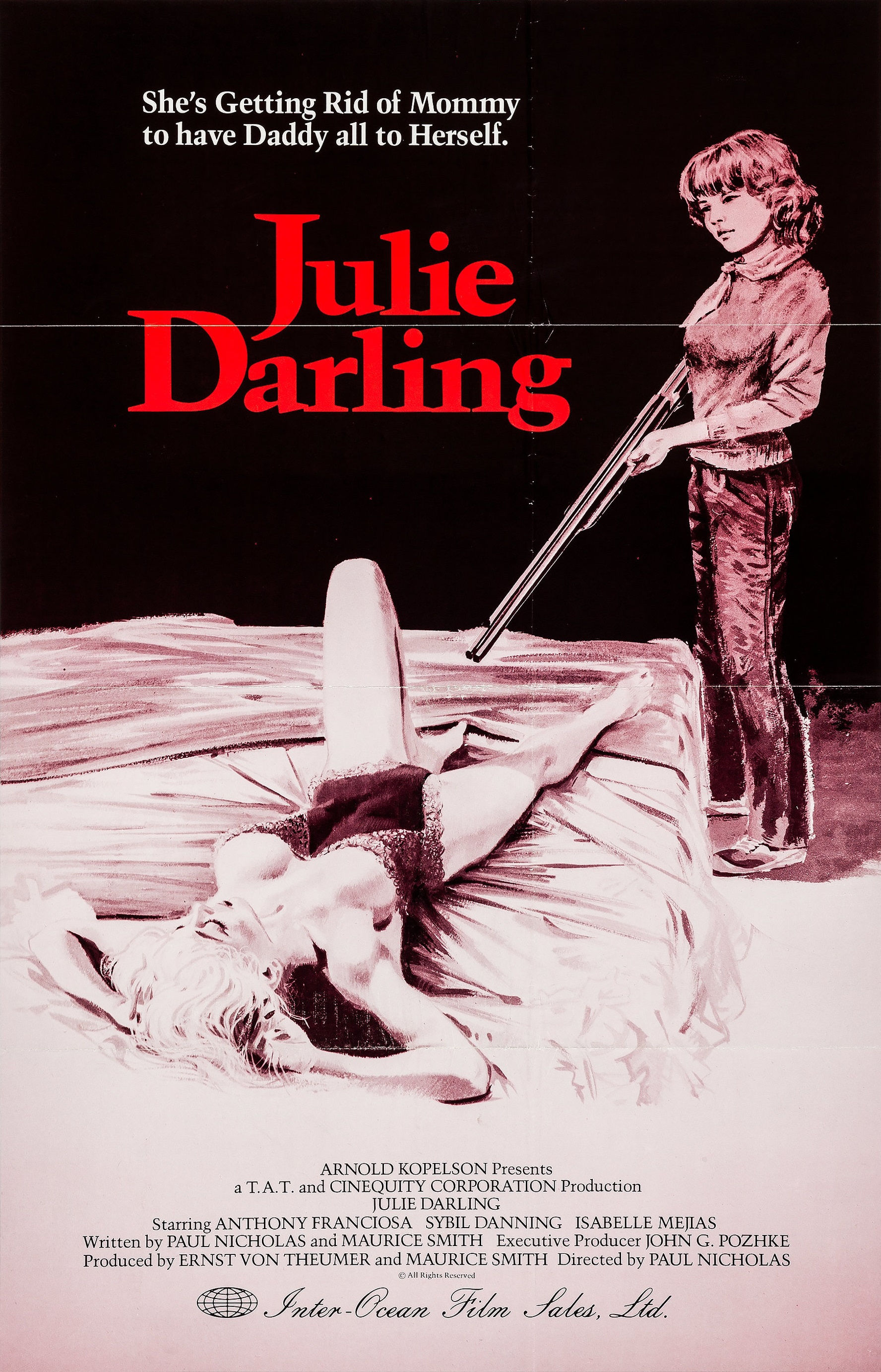
Julie (Isabelle Mejias) is a possessive daughter with weird interests like having a pet snake in which she enthusiastically feeds it live mice much to the shock of her best friend (Natascha Raybakowski). She also shows an unhealthy affection for her father (Anthony Franciosa) even going as far as fantasizing about making love to him. Because of this she hates her mother (Cindy Girling), so when her mom is attacked one day by the delivery boy (Paul Hubburd) she does not make any attempt to stop it despite having a rifle in her hand. Instead, she watches him crush her mother’s head onto the cement floor, which instantly kills her and then later when he is a part of a line-up at a police station she does not identify him and allows him to go free, but she does this for ulterior reasons. As her father has remarried to Susan (Sybil Danning) causing her jealousy to start all over again and motivating her to ‘hire’ the delivery boy to do what he did to her mother to Susan.

This is a surprisingly inventive story that works for the most part despite the majority of the action taking place in one setting, namely the house, which creates a boring visual. I was a bit taken back why this isn’t better known, or at the very least acquired a small cult following, though the fact that it has very little gore, with the exception of the groin stabbing via a glass bottle, it may have been enough to turn off the horror diehards though if you’re a patient viewer the climax should be rewarding.

Unfortunately, there are some eye-rolling moments as well. The mother’s inability to pick-up on the fact that the delivery guy was coming on to her even after making remarks about her ‘nice figure’, until it was too late didn’t jive with me. I’ve found females are very alert to guys making a pass to them, or ‘flirting’ as it were, so having this woman be completely oblivious, especially when the guy was at the age where you’d expect him to make some moves, proved unrealistic. The father’s relationship with Danning needed better fleshing out. Apparently he was already having a hot-and-heavy- relationship with her without the mother or daughter being aware, which is kind of hard to do, but most of the time the other woman doesn’t want to stay in that position forever and usually pushes the guy to get a divorce, so at the beginning of the movie he shouldn’t have been so conciliatory to the wife’s demands like he is, knowing of course that he already had a ‘spare tire’, and instead used that as an opportunity to request a break-up.

Having Danning move in with the father, and even get married to him, so soon after the wife’s murder should’ve created suspicion with the police chief. Normally the husband is always the initial suspect in these types of investigations especially since the daughter states that she didn’t get a good look at the assailant and could not describe any defining features, which means it could very well have been the husband who did it, or hired someone to do it, in order to get her out of the way and bring his new lover in and the fact that the cops never ever consider this makes them quite inept.

Mejias is badly miscast in the lead. Her moody facial expressions signal right from the start that she’s a psycho nutcase and there’s no character arc, or transition making all of her scenes one-dimensional. What’s worse is that she’s supposedly playing someone who’s 10-to-12, but even with being dressed in clothes for a pre-adolescent she still looks to be at least 16 and in fact was actually 20 at the time of filming. Having an actual age-appropriate child actor in the role with a more angelic face would’ve been far more interesting particularly if she were portrayed as being a ‘good girl’ at first and then had her dark side slowly emerge later. 

Despite all this I still found the twists that occur during the final 30-minutes makes up for the most part the other issues. While it’s remained obscure, I feel it has cult potential. Horror fans tired of the same old formula may enjoy its offbeat nature. 

Alternate Title: Daughter of Death

My Rating: 7 out of 10

Released: May 21, 1982

Runtime: 1 Hour 30 Minutes

Rated R

Director: Paul Nicholas

Studio: Twin Continental

Available: DVD, Blu-ray, Amazon Video, Roku Channel

The Other (1972)

By Richard Winters

My Rating: 7 out of 10

4-Word Review: Twin brother causes havoc.

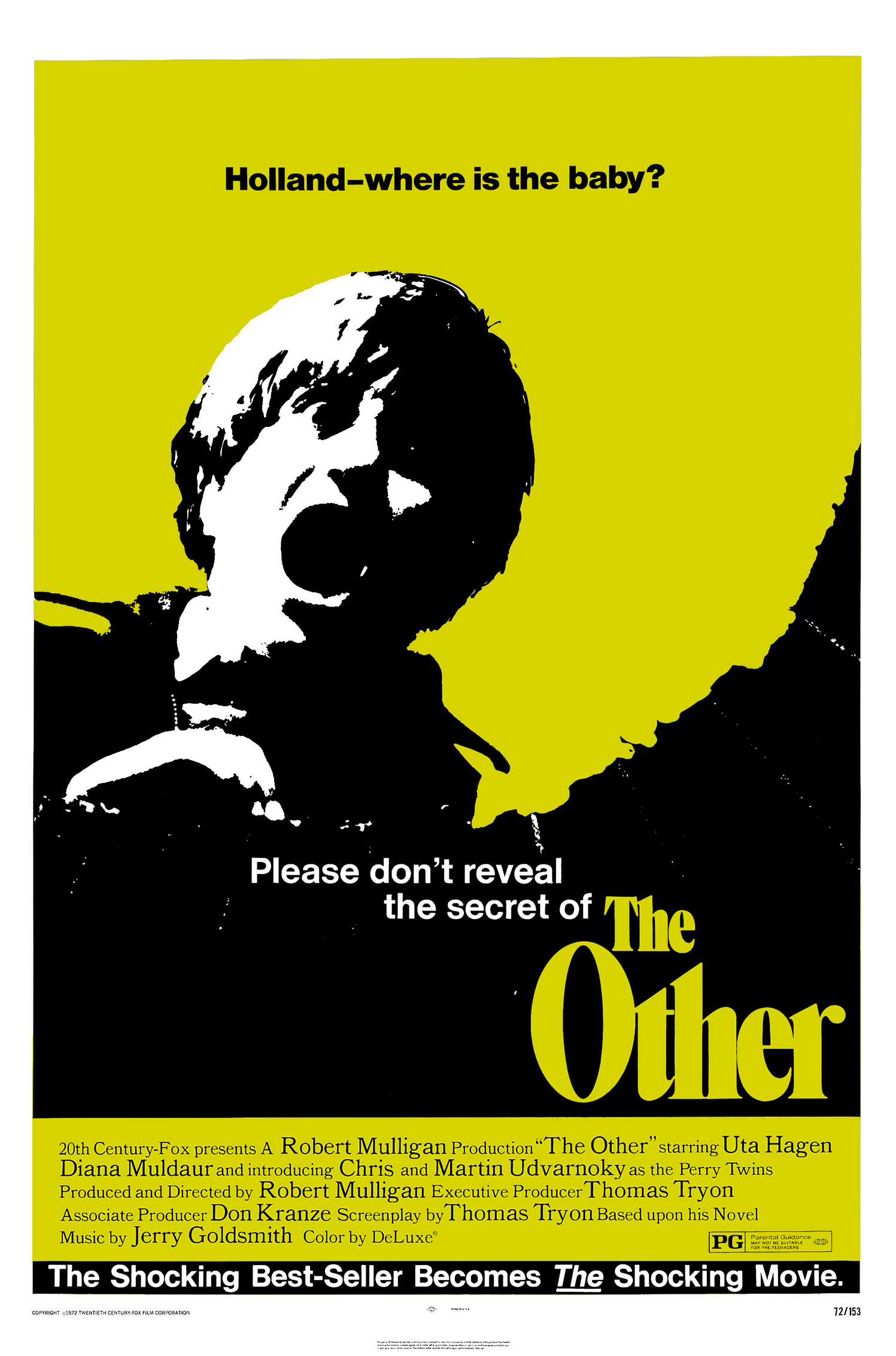
Niles and Holland (Chris and Martin Udvarnoky) are twin brothers living with their mother (Diana Muldaur) and aunt and uncle (Norma Connolly, Lou Frizzell) on an isolated farm. Niles becomes good friends with Ada (Uta Hagen) a neighbor lady who taps into Niles’ special abilities. She teaches him a technique in which he can separate his mind from his body and then have it harbor in another body be it a person, or animal, or even a bird. Ada though fears Niles is using this ability for evil purposes when those around him begin turning up dead. When his mother is found at the bottom of the stairs unconscious and stuck to a wheelchair the rest of her life afterwards Ada tries to convince Niles to give up the game, but Niles insists it’s really his brother Holland that’s committing the acts of violence and not him, but Ada refuses to believe him as she’s in on a secret that Niles is refusing to accept.

Tom Tryon, who had been an actor throughout the 50’s and 60’s, became frustrated at the quality of roles he’d been offered and wanted to try novel writing. After watching Rosemary’s Baby and seeing the reaction it got he decided to write his own horror story basing it on some of the experiences he had gone through while growing up in a small New England town. It took nine different rewrites before he was able to get it published where it became a best seller and allowed him to quit acting and become an author fulltime. When it was bought into a movie Tryon retained the rights to the story, which allowed him to write the screenplay though he later admitted to not liking the finished product and blaming it on the casting and editing, which had cut out a significant portion of the story, over 25-minutes of it, based on feedback from test audiences.

On the surface the film really doesn’t seem much like a horror movie, or at least what modern audiences have come to expect from horror. There’s no gore, several of the killings aren’t even shown and just implied, there’s also no shocks, or scares and the majority of the plot takes place outside in the sunshine versus the darkness of night. Initially viewers didn’t take to it too well and it lost money at the box office with many feeling that Robert Mulligan, best known for having done To Kill a Mockingbird, was not the right choice for this type of material with the biggest complaint being that the movie was ‘too beautiful’ and made more like a drama, which had been my feeling when I first saw it years ago on TV. However, after viewing it again in its complete form without any commercials I was able to get into it more and if one is patient, it can have many benefits.

It still could’ve been played up more, and I didn’t like the setting at all. It was shot in Murphys and Angel Camp, California even though the setting in the book had been a small town in the east. Originally Mulligan had wanted to shoot it in Connecticut, but since the story took place in the summer and they weren’t able to begin production until the fall he felt the leaves changing color would have a negative effect and thus choose to do it in the west, but topography is all wrong as all you get is very dry, brown, parched earth that doesn’t allow for much atmosphere. The eastern autumn foliage would’ve been to its benefit and made it even creepier as it would’ve reminded one of Halloween.

Despite this there are some good moments like the twin’s trip to the circus where they sneak behind the curtains and view the participants of the freakshow including witnessing a fetus floating in a glass jar of liquid, which is a great foreshadowing. Niles ability to view things outside himself like witnessing the point of view of a crow as it flies around the property is well done too though the best moment comes at the end when a baby is found missing during the night that creates a panic and is quite riveting both emotionally and visually.

The Udvarnoky twins was an unusual choice as they hadn’t been in any movies before, nor did anything films afterwards and only became aware of the roles through their grade school teacher who sent in their headshots upon learning that a film was being shot in the area and searching for twins to star in it. Originally the part was meant for Mark Lester, who could’ve done it easily since neither twin is ever in the same shot, but the brothers do admirably especially Chris, who sadly died at the young age of 49 from kidney disease, who’s able to carry the film throughout and in just about every scene though their constant whispering may eventually become irritating to some. Uta Hagen, who was known for being an acclaimed acting teacher as well as for her stage work, but had never been in a movie before, is splendid and the one element that keeps it both compelling and unnerving. Good work too by Victor French in a small, but pivotal bit and a young John Ritter.

Spoiler Alert!

The story was actually given three different endings. In the book we find that Niles is sitting inside a mental hospital as an adult and describing what happened through flashbacks. In the version broadcast on TV Niles is able to escape the fire set by Ada, but then through voiceover is heard talking to his dead brother where he states that they’ll be ‘taken away’ (most likely an institution) and will be able to ‘play the game’ there. In the film though we see Niles looking out his bedroom window before being called down to dinner revealing that he had escaped detection by the others who did not suspect him of committing the killings and thus was still free to kill again, which is the scariest.

My Rating: 7 out of 10

Released: May 26, 1972

Runtime: 1 Hour 41 Minutes

Rated PG

Director: Robert Mulligan

Studio: Twentieth Century Fox

Available: VHS, DVD-R

Giallo in Venice (1979)

giallo2

By Richard Winters

My Rating: 5 out of 10

4-Word Review: Investigating a couple’s murder.

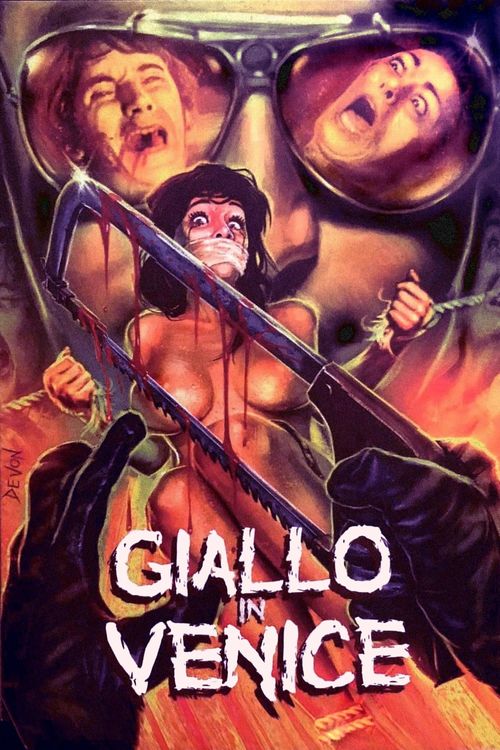
Inspector Angelo (Jeff Blynn) heads the investigation of the death of a couple (Gianni Dei, Leonora Fani) who were murdered brutally in broad daylight along the riverside and in full view of the public though only an old man living in a nearby apartment is able to offer any tangible eyewitness testimony. The odd thing is that the killer for some reason saves the woman victim from drowning only to then stab her later once he brings her to shore. To learn more about the couple Angelo speaks with a local prostitute named Marzia (Mariangela Giordana) who confides that Fabio, the male victim, had deep seated sexual perversions that came-out during his marriage to Flavia the female victim. His drive to pursue these dark fantasies, which we see through flashback, and forcing his wife to play into them, she believes in some indirect way is what lead to their deaths.

This film is considered to be the final word in giallo shock cinema that permeated the Italian movie scene all through the 70’s and into the early 80’s. Not only does it contain some remarkably savage deaths, which get captured in explicit detail, but an extraordinary amount of sex, which has made some liken it to a porn film. It was directed by Mario Landi, who got his start in the 60’s making dramas and even spiritual films before moving into the tawdry drive-in fare of the 70’s that featured stories dealing with prostitutes and drugs. It wasn’t until the end of 70’s when he finally ventured his way to horror, but because of his late arrival and because there were so many other bigger names already in the genre he decided in order to draw some attention and have his movie stand-out in a cluttered field by taking things to the most extreme violent and sexual level he could, which in that respect you could say he succeeds valiantly.

Of course this has lead it to be quite controversial even to this day and very hard to find a complete director’s cut. The version currently streaming on Tubi is heavily edited and runs only 1 Hour 15 Minutes, but the full version, which is 1 Hour 39 Minutes, can be obtained through Full Moon Features, which released the DVD with all gore and sex fully intact in 2022 and this review is based on the viewing of that one.

Many commentors on Amazon and IMDb argue whether this is even a horror film as so much is loaded with sex, and a blaring melodic music score that seemed better suited for a blissful romantic flick, that it gets hard to tell. Some will accuse this of being a cheap soft core porn flick, and they have a point while others will insist that because it has a plot to it and mystery that puts it outside of being an adult film as those focus only on the sex and nothing else. Personally I think both sides could be right and this could easily be labeled the first porn horror film.

While the sex is excessive I did find these moments intriguing simply because of Favio, who I suppose could be considered an early example of what we would now call a porn addict who looks at old pictures of perverse sex acts and then forces his wife to play them out, sometimes with him as a participant, or having her do it with strangers. Things become progressively more extreme as that’s the only way he can continue to get-off making these scenes far darker and creepier than the violent ones featuring the killer. In fact this becomes one of those very rare horror films where the killer is quite forgettable and doesn’t stand-out at all while it’s the victims who are memorable.

The film though is most noted for its graphic violence with the highpoint, or low point depending on your point-of-view, being when the killer slices into a naked women’s leg as she’s tied to a kitchen table, which is prolonged and leaves little to the imagination.  While this is certainly gory what I found more disturbing was when the killer burns a man alive and then, once the flames have been stamped out, you see nothing but the victim’s eyes moving back and forth inside his otherwise blackened, charred head.

The story is not as well thought out as the effects. The opening murder happens in the daytime in a public area with the victim’s screaming out loudly as they’re stabbed making it hard to believe it wouldn’t have drawn more attention than just one lonely old man. The police inspector looks like he spent more time on his perfectly blow-dried hair than the case and his constant egg eating and having one always in his hand gets overplayed. The ultimate killer reveal isn’t surprising nor captivating making this one of the weaker giallos case-wise but makes-up for it with the violence if that’s what you’re into.

My Rating: 5 out of 10

Released: December 31, 1979

Runtime: 1 Hour 39 Minutes

Not Rated 

Director: Mario Landi

Studio: Variety Distribution

Available: DVD