Category Archives: Gay/Lesbian

The Leather Boys (1964)

leather boys 1

By Richard Winters

My Rating: 6 out of 10

4-Word Review: Befriending a gay biker.

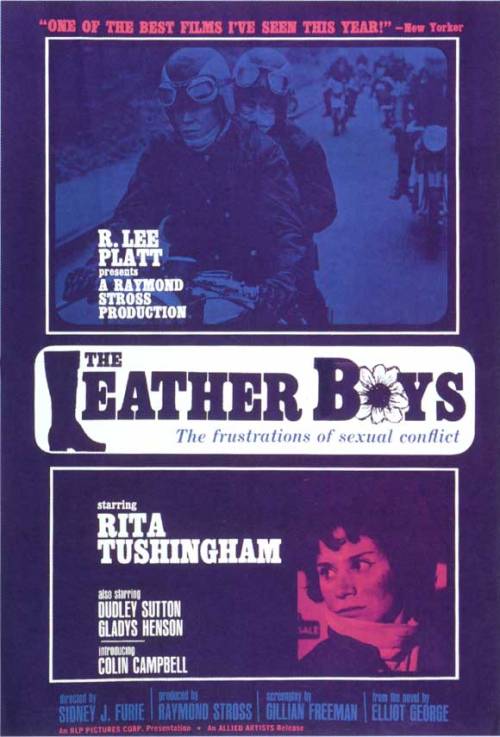
Reggie and Dot (Colin Campbell, Rita Tushingham) are young and in love, at least they think they are. They want to rush off and get married, but Reggie’s father (Lockwood West) feels that they ‘don’t know the meaning of the word’ and he gets proven right as immediately after they tie the knot they are at odds with each other. Reggie begins looking for companionship elsewhere and meets up with a fellow biker named Pete (Dudley Sutton). Pete and Reggie quickly become best friends and begin hanging out together, but Pete is secretly gay and has more of an interest in Reggie than just a friendship.

Director Sidney J. Furie, whose career has now spanned 6 decades, has done a lot of duds in his time, but this isn’t one of them. The stark black-and-white photography helps bring out the bleak working class existence of the characters and the variety of locales used including a nicely captured cross country motorbike race make the story captivating and believable.

The performances are outstanding. Tushingham is especially good at displaying a genuinely nasty side to her character at the most unexpected times. Gladys Henson, who plays the widowed grandmother, is also excellent and the scene where the others argue while right in front of her about how they consider her to be ‘an elderly inconvenience’ who needs to be sent away to a retirement home is downright heart wrenching. Sutton though is the most dynamic in a risky role that helped jettison him to stardom. His distinctive facial features galvanize the viewer’s attention and the ambivalent expressions that he makes particularly when in the presence of Dot are priceless.

Spoiler Alert!

The film though takes too long to get to its obvious conclusion as we have a pretty good idea from the beginning that Pete is gay, so having to wait until the very end for this to finally get revealed seems to be stretching the story out longer than necessary. Most likely Pete would’ve made some sort of pass at Reggie at some point earlier anyways especially since the men shared the same bed. The film also ends with Reggie walking away from Pete and essentially ‘abandoning’ him once he realizes that he is gay. The music that is played over the scene conveys the idea that this is the ‘right’ thing to do and parlays the conventional attitude of the time that there is something ‘wrong’ with Pete, which doesn’t make this as much of a landmark movie as it’s widely considered since its ultimate message is still entrenched with the biases and bigotry of that era.

End of Spoiler Alert!

My Rating: 6 out of 10

Released: March 8, 1964

Runtime: 1Hour 48Minutes

Not Rated

Director: Sidney J. Furie

Studio: Allied Artists

Available: DVD, Amazon Instant Video
 

HealtH (1980)

health 4

By Richard Winters

My Rating: 3 out of 10

4-Word Review: Altman’s take on politics.

Normally I’m a big proponent of the European and independent filmmaking system that allows the director to have complete creative control over their projects, which in Hollywood doesn’t always occur and many times the studios will meddle with the film until it becomes nothing like what the director had originally envisioned. However, this film is a great example of what can happen on the opposite end when a director and his ego are allowed too much leeway until their movies become self-indulgent exercises that appeals to no one except themselves and a few of their most ardent followers.

During the ‘70s director Robert Altman had achieved such heightened celebrity that 20th Century Fox studio head Alan Ladd Jr. gave him the green light on virtually any project or idea he wished to pursue. Ladd was such a big fan of Altman’s stuff that he didn’t even care if the film made money or not, which they usually didn’t. It was during this period that Altman was able to achieve some of his most bizarre onscreen creations like Brewster McCloud, which was brilliantly quirky, while others like this one petered out before they even began.

Here Altman was clearly borrowing from his own well particularly with the way he captured running conversations going on at the same time between different people that 10 years earlier had come off as being fresh and inventive, but by this time was now derivative and distracting. The film’s parade of eccentric characters is not interesting or relatable and Altman’s stab at political satire is too soft and unfocused with no connection at all to the political scene of today.

health 3

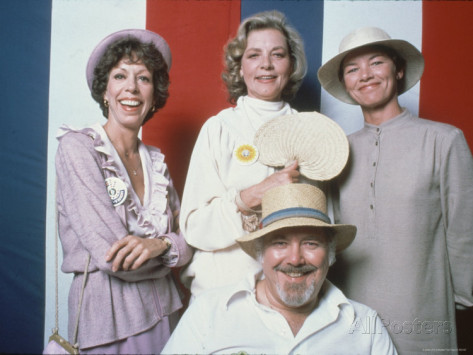
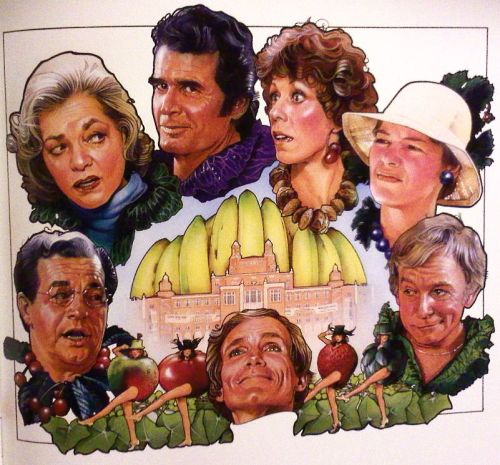
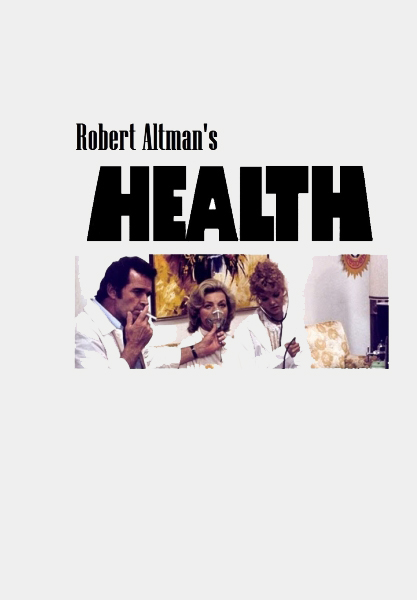
The threadbare plot, which deals with two political candidates played by Glenda Jackson and Lauren Bacall who compete for the presidency of a Florida health food convention, has too much dialogue and not enough action. It manages to be mildly amusing for the first 30 minutes, but then like with a tire suffering from a slow leak it starts to fizzle until it culminates with a dull and pointless conclusion.

It’s almost worth a look just to see Carol Burnett playing a more subdued type of character than she usually does although the part where she becomes ‘shocked’ at the rumor that her favorite candidate had a sex change operation now seems quite dated. Dick Cavett is also engaging playing himself and trying to corral all the nuttiness around him, but it’s Paul Dooley, who is also credited with co-writing the screenplay, that is the real scene stealer playing an independent candidate willing to do anything for attention.

I’m a big fan of Altman’s work, but I found this one to be slow going, uneventful and sloppy. The film’s concept could’ve used a lot more fleshing out as the whole thing plays like it was simply a lark done by a director that was coasting too much on his past successes while not throwing anything new into the mix.

health 1

My Rating: 3 out of 10

Released: September 12, 1980

Runtime: 1Hour 40Minutes

Rated PG

Director: Robert Altman

Studio: 20th Century Fox

Available: None at this time.

The Killing of Sister George (1968)

killing of sister george

By Richard Winters

My Rating: 6 out of 10

4-Word Review: TV character gets axed.

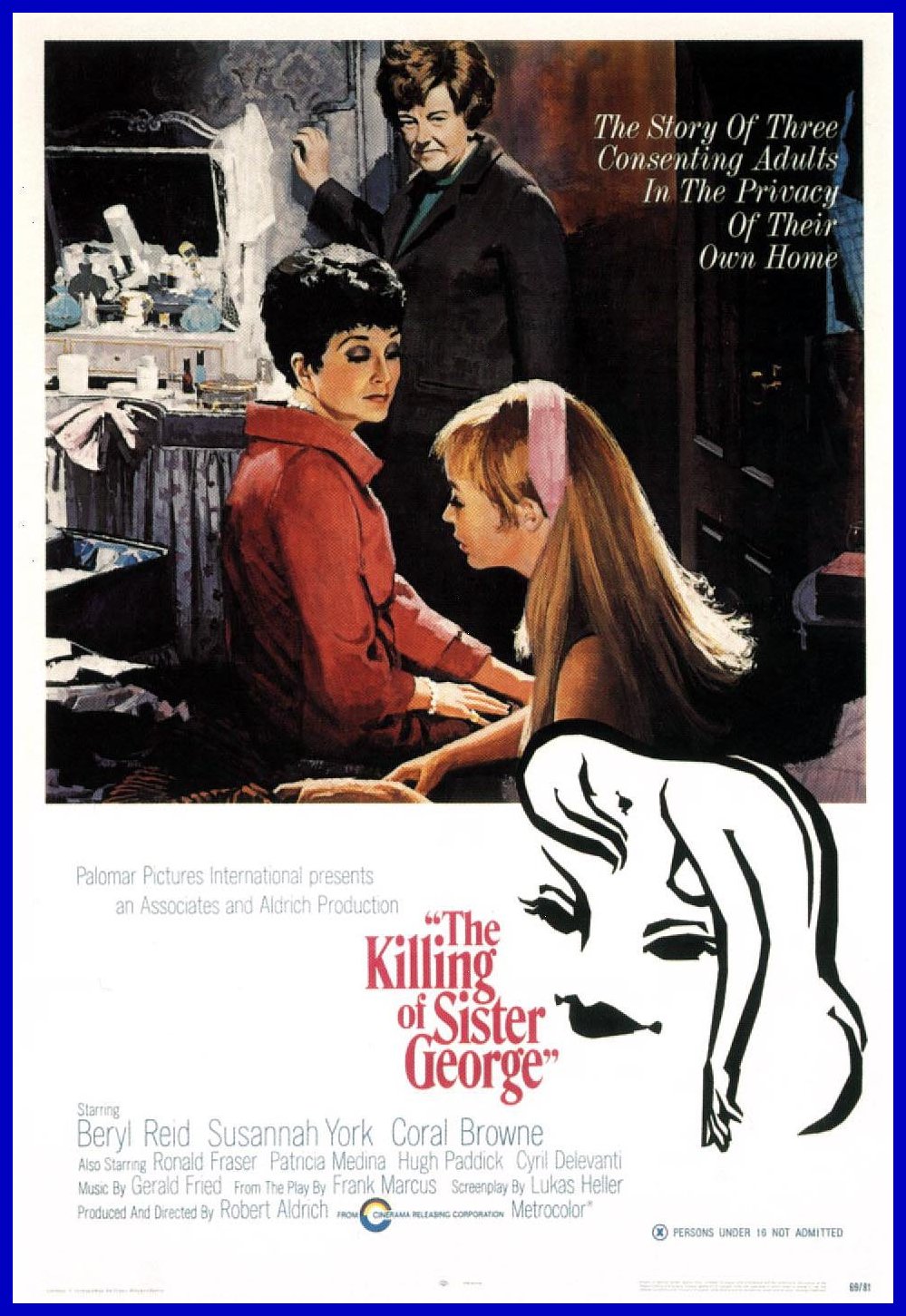
June Buckridge (Beryl Reid) is an aging actress playing the character of Sister George a scooter riding nun in a long running British TV soap opera. Her character no longer has the popularity that it once had and the producers have decided to kill her off by having her die in an ugly road crash with a truck. June is upset with this news as at her age parts are hard to come by and she takes her frustrations out on Childie (Susannah York) her much younger live-in lesbian lover, but she may lose her as well as one of the show’s producers Mercy (Coral Browne) has inklings to lure Childie away from June so she can have her all to herself.

After the immense box office success of The Dirty Dozen writer/director Robert Aldrich was given free rein to start up his own production company and he choose this as his first project. In many ways it is quite similar to his earlier and more well-known film What Ever Happened to Baby Jane?, but with sexual undertones. The film is based on the Frank Marcus play of the same name that ran for 205 performances and was nominated for the 1967 Tony Award. For its time this was considered quite controversial and groundbreaking especially the final scene that features a highly explicit sex scene between two women. It also is the first film to have a character utter the word ‘bullshit’ and one of the first to say the word ‘fuck’. Although the word itself gets drowned out by a car horn you can still clearly tell by reading Reid’s lips what she is saying.

The three female leads and their snarky exchanges with each other are the film’s chief asset especially Reid who recreates the same character that she played in the stage version that netted her a Tony. Her emotional, angry outbursts are entertaining and the scene where she forces Childie to eat and swallow the butt of her cigarette as ‘punishment’ is still quite edgy. Browne is equally good specifically during her provocative love scene with York, which was made all the more daring since she was 30 years older than York at the time.

The film’s overall staginess is a drawback. Many scenes are too talky and should’ve been trimmed while York and Reid’s Laurel and Hardy routine could’ve been cut out completely. Flashbacks showing how they first met would’ve helped and there needed to be an explanation to the weird child-like manner of York’s character, which quite possibly was based on an age-old gay stereotype. I also didn’t like the foreboding quality of the music that gets played just before Browne and York have their lesbian love scene, which seemed to suggest that something ‘creepy’ and ‘unnatural’ was about to take place and convinced me that despite the daring and ahead-of-its-time nature of the subject that the filmmakers themselves still had some very dated ideas about gays much like the majority of people from that era.

My Rating: 6 out of 10

Released: December 12, 1968

Runtime: 2Hours 18Minutes

Rated X (Reissued as R)

Director: Robert Aldrich

Studio: Cinerama Releasing Corporation

Available: DVD

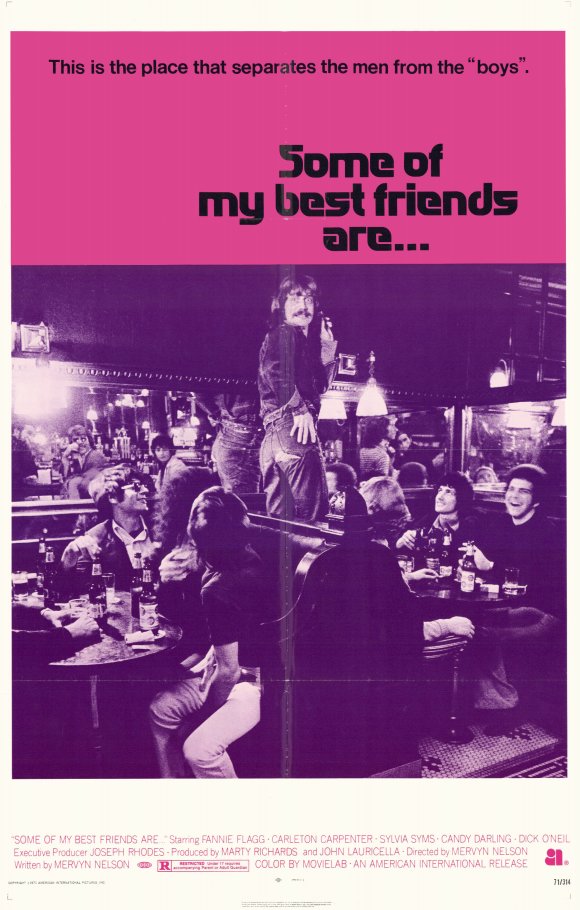
Some of My Best Friends Are… (1971)

some of my best friends are 2

By Richard Winters

My Rating: 3 out of 10

4-Word Review: Patronizing a gay bar.

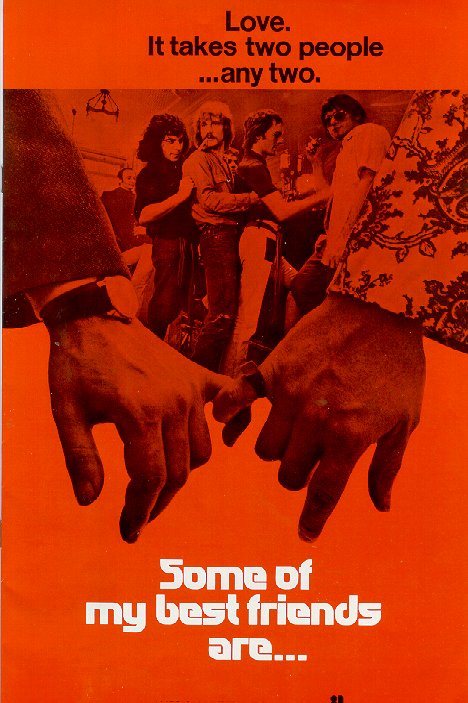
It’s Christmas Eve 1970 and a year and a half after the Stonewall Riots that first brought gay rights issues into the national spotlight. However, the patrons of the local Blue Jay Bar are still feeling like second class citizens where dancing between two men is prohibited and those who have come out about their homosexuality are being rejected by their family and friends.

The film certainly does bring up some great issues, but unfortunately pales badly when compared to The Boys in the Band that came out just a year earlier. The direction lacks style and the dialogue is too generic to be riveting. The film also has no momentum as the camera simply cuts from one group of conversing people to another. The on-location shooting done at the Zodiac Bar gives the production a static, claustrophobic feeling since almost the entire thing takes place in one building. The lighting is also dark and shadowy and at certain points even out-of-focus making it all seem quite amateurish.

The action is minimal in what is otherwise a very talky 110 minute runtime. The best moment is when Gary Sandy, who’s excellent in his film debut, and playing a man in denial about his homosexuality becomes enraged when he finds that the woman he has been dancing with (played by Candy Darling who is also excellent) is actually a man, which causes him to drag her into the bathroom and beat her that in turn creates a huge riot that is genuinely tense and startling. The scene where a mother enters the bar and openly disavows her son after finding out that he is gay is also quite good, but should’ve been extended.

Fannie Flagg gets kudos for her highly engaging performance as a snarky lady who never seems at a loss for words or verbal comeback. The way she dances by giggling her large breasts up and done like they are rubber balls is a crazy sight. Rue McClanahan is also good as a bitchy, aging blonde and so is Dick O’Neill as a conservative old-timer who shows great disdain for the ‘pansy pad’ once he finds out that it is a gay bar, but then strangely is still reluctant to leave it. This also marks the film debut of Gil Gerard who appears briefly in a small role.

The film’s few good moments and overall impactful message are badly outweighed by Mervyn Nelson’s dull direction as well as its rambling narrative that lacks a central character and makes for a flat and tedious viewing experience.

some of my best friends are 1

My Rating: 3 out of 10

Released: October 27, 1971

Runtime: 1Hour 50Minutes

Rated R

Director: Mervyn Nelson

Studio: American International Pictures

Available: Amazon Instant Video

Vanishing Point (1971)

vanishing point 1

By Richard Winters

My Rating: 7 out of 10

4-Word Review: Racing to San Francisco.

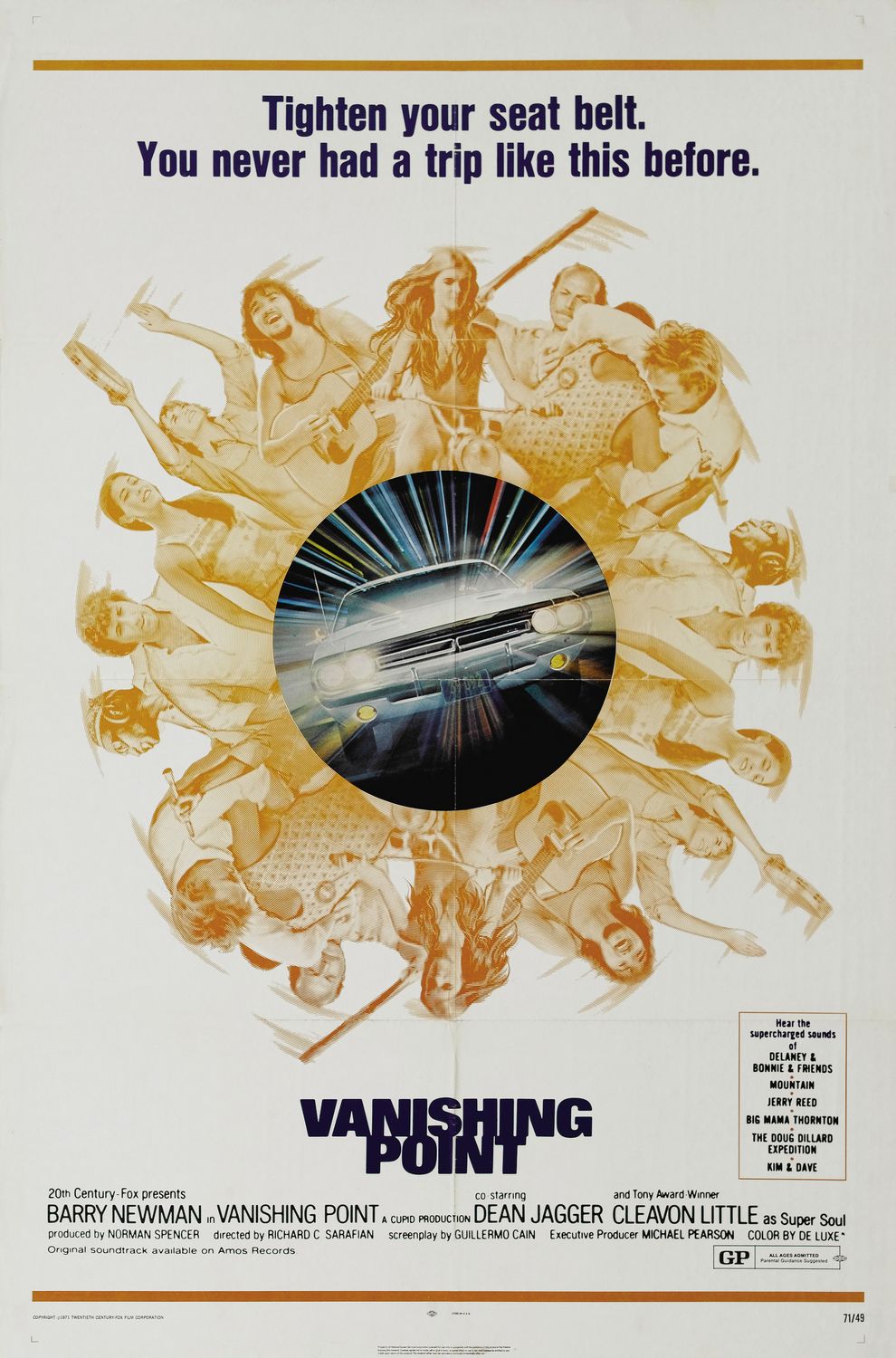
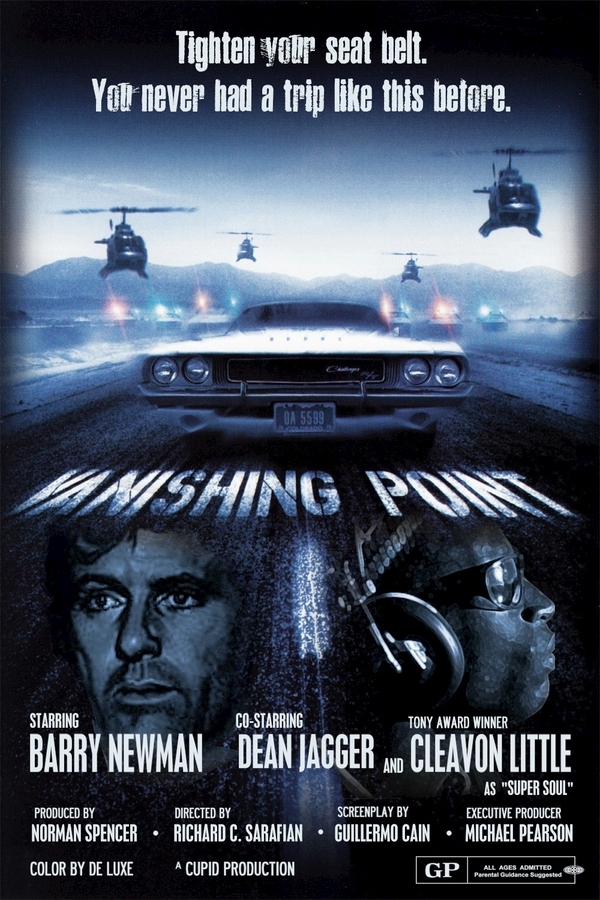
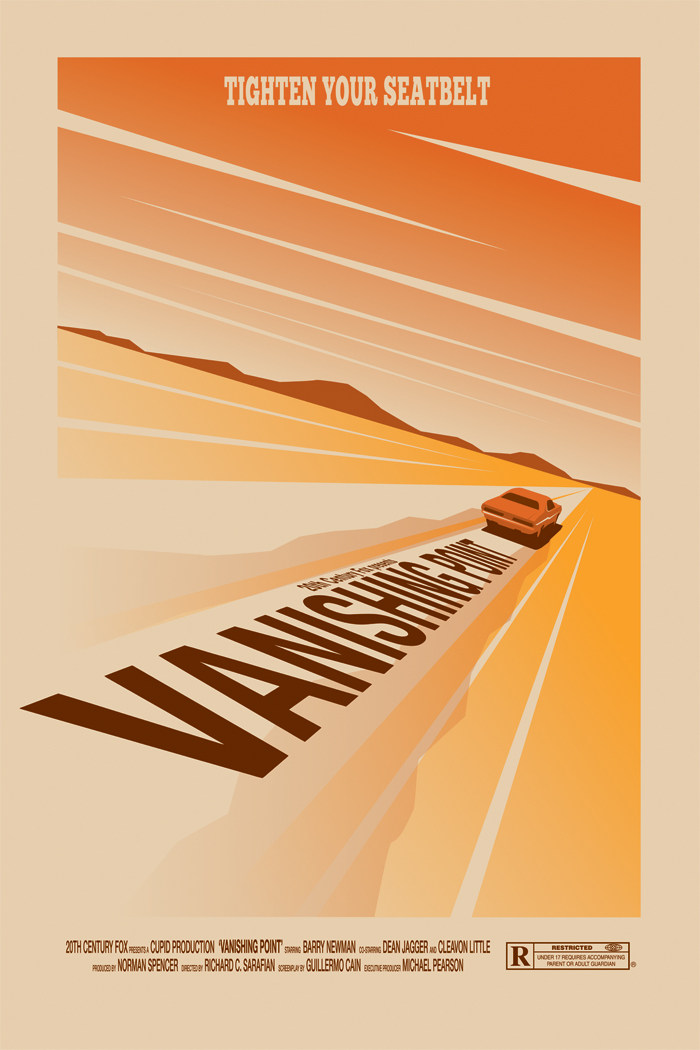
Kowalski (Barry Newman) is a car delivery driver whose next assignment has him driving a white Dodge Challenger R/T 440 Magnum from Denver to San Francisco. He is a former cop who seems disillusioned and detached from the world around him. To give his existence some meaning he decides to ‘challenge’ himself by making the delivery in record time and even makes a bet with a local drug dealer while purchasing some ‘uppers’ that he can get to San Francisco by 3:00 the next day. As his record drive proceeds he gets the attention of the local law enforcement from every state that he drives through, but none of them are able to stop him despite all efforts. He also attracts the attention of a local blind, black DJ named Super Soul (Cleavon Little) who has access to the police radio frequency and able to help Kowalski with his goal.

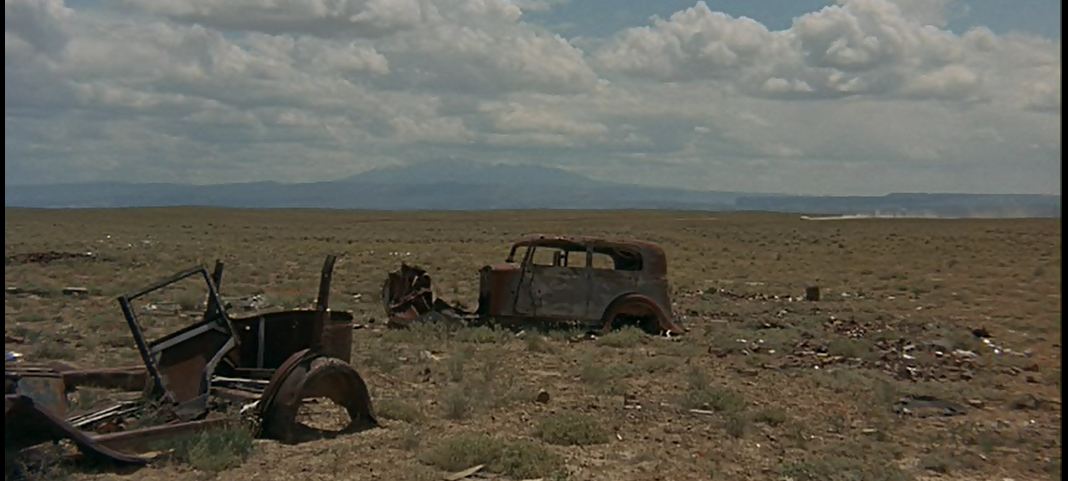
Richard C. Sarafain’s direction and John Alonzo’s cinematography are the real winners here. In fact my favorite scenes from this film are the long distance shots capturing the car driving along the lonely highways to the backdrop of the stunning western skies and its rugged, sandy landscape. This is a movie that will appeal to one’s emotional senses and bypass the need for logic. Certain things aren’t fully explained particularly Kowalski’s past, but the fact that it isn’t makes it more enjoyable. It’s the connection with his need for speed, escape and non-conformity that attracts us and it’s the adrenaline that propels the movie and viewer’s interest forward thus making this one of the quintessential road movies from its era or any other.

Capture 1


Capture 2

Newman seems an unusual casting choice as he really doesn’t have the dynamic star power or all that many lines of dialogue. He is also clearly in his mid-30’s for a part that seems better suited for some renegade, long haired 20-year-old, but in some ways his presence makes the movie more intriguing and distinctive by showing middle-aged people can have a dormant desire to rebel as well and sometimes even more so.

Little is terrific in what is probably the best performance of his career even though it seemed highly improbable and even ridiculous for a black DJ playing soul tunes at a radio station located in a small, isolated town inhabited by conservative, white, racist people. Severn Darden is edgy as a traveling evangelist and Dean Jagger is appealing as an old-time snake hunter. On the flip side of the 20th Century Fox DVD you can see the extended U.K. release that features a brief scene with Charlotte Rampling as a hitch-hiker. This sequence was intended to be allegorical, but really isn’t that impressive even though Rampling is quite attractive with her hair highlighted with blonde streaks.

Spoiler Warning!

The ending, which features Kowalski intentionally driving into some bulldozers parked in the middle of the road, which kills him instantly in a ball of flames, has proved through the years to be quite controversial and filled with many interpretations. I found it to symbolize Kowalski’s ultimate need for escape as he realized that he could never achieve the true freedom that he wanted, so he decided in a way to become a martyr and take his chances in another world beyond this one. The wry smile seen on his face just before he does it signifies the ‘fuck you’ that he gives to the authorities who are convinced that they finally have him cornered but really don’t. It also connects to the death of the counter-culture movement who by that time had realized that their dream of a utopian society filled with complete individual freedom and outside of mainstream control was never going to happen.

End of Spoiler Warning!

vanishing point 4


vanishing_point

My Rating: 7 out of 10

Released: January 15, 1971

Runtime:  1Hour 45Minutes (U.K. Version) 1Hour 39Minutes (U.S. Version)

Rated R

Director: Richard C. Sarafain

Studio: 20th Century Fox

Available: DVD, Blu-ray

Cruising (1980)

cruising2

By Richard Winters

My Rating: 4 out of 10

4-Word Review: Cop infiltrates gay underground.

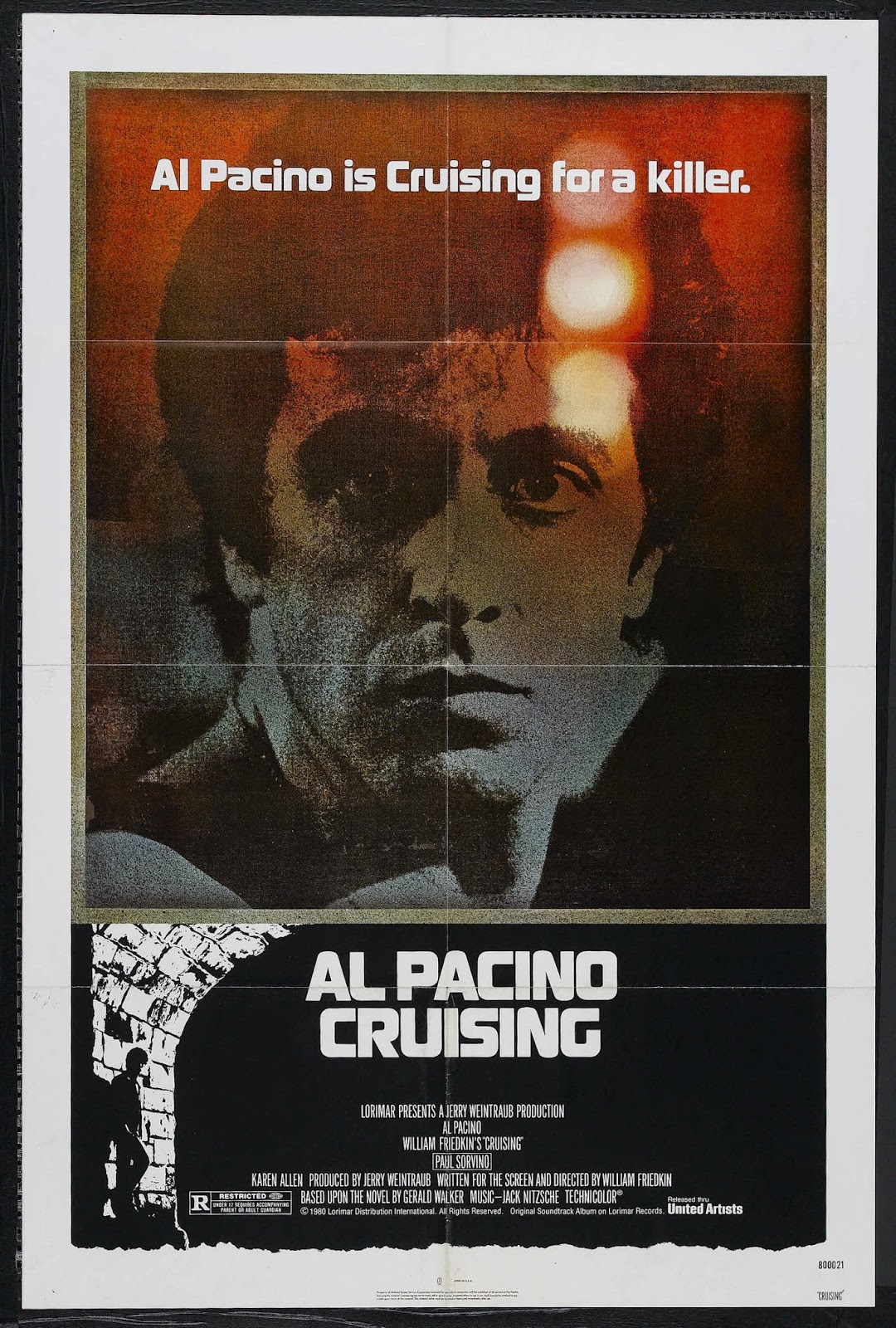
A serial killer is attacking gay men who frequent New York’s S&M bars and young cop Steve Burns (Al Pacino) is chosen to go undercover as a gay and infiltrate these ‘leather clubs’ in order to bring out the killer. However, the job requirements demand that he must be completely isolated from the rest of the force and not carry a gun, which eventually causes a strain on his personal life particularly in his relationship with his girlfriend Nancy (Karen Allen).

The film, which is loosely based on actual events that occurred during the late 70’s and captured in Gerald Walker’s novel of the same name, was considered quite controversial at the time of its production. Protestors who felt the film accentuated the gay stereotype tried to create loud noises during filming and even shine reflective lights on the actors in an attempt to mess up the scenes. In retrospect it is hard to imagine that director William Friedkin is in anyway homophobic as just ten years earlier he did the brilliant adaptation of The Boys in the Band, which remains to this day one of the better films dealing with gay issues. The story certainly does wallow in ugly elements, but also makes the point to describe this as an extreme subculture and  not reflective of the gay lifestyle as a whole, which in my opinion made the film seem more enlightening to New York’s gay underground of a bygone era and less propaganda as its critics ascertained.

To some degree I liked the explicit uncompromising approach, but after a while it became one-dimensional and predictable. The scenes of the killings are unnecessarily prolonged and some of the segments showing large groups of men having sex at a bar come off as overly-stylized and looking reminiscent of a homoerotic scene from a Fassbinder film.

Friedkin does manage to add a few unique touches including having a well-built black man wearing nothing but a jock strap enter the room during police interrogations and violently slap suspects who he felt weren’t telling the truth, which according to one of the film’s advisors was an actual technique used by police at the time.  The way the movie captures the monotony and frustrations of investigating a complex case such as this and leaving open that there may have been more than one killer is also well done and helps elevate this a bit from the usual formulaic cop thriller.

Pacino gives a gutsy performance including one scene showing him tied up in bed naked during some kinky S&M play, but the character’s motivations are confusing particularly the way he so quickly accepts this difficult assignment that most others would be very reluctant to do. The fact that his experiences ends up affecting him psychologically isn’t compelling since that becomes a foregone conclusion right from the start.

Paul Sorvino is perfect as the police captain. His gray hair dye was a little overdone, but his limp was great. Allen has a good moment at the end when she tries on Pacino’s leather hat and coat that he brought home with him and Joe Spinell makes the most of his small role as a corrupt cop who harasses gays only to end up patronizing gay bars on his off hours. You can also spot Powers Boothe in an early role as a hankie salesman and Ed O’Neil as a police detective.

The idea of exposing the dark side of police life is no longer original or interesting and the film’s shock value has lessened through the years and thus failing to leave any type of lasting impression or message.

My Rating: 4 out of 10

Released: February 15, 1980

Runtime: 1Hour 42Minutes

Rated R

Director: William Friedkin

Studio: United Artists

Available: VHS, DVD, Amazon Instant Video
Partners (1982)

partners

By Richard Winters

My Rating: 2 out of 10

4-Word Review: Pretending to be gay.

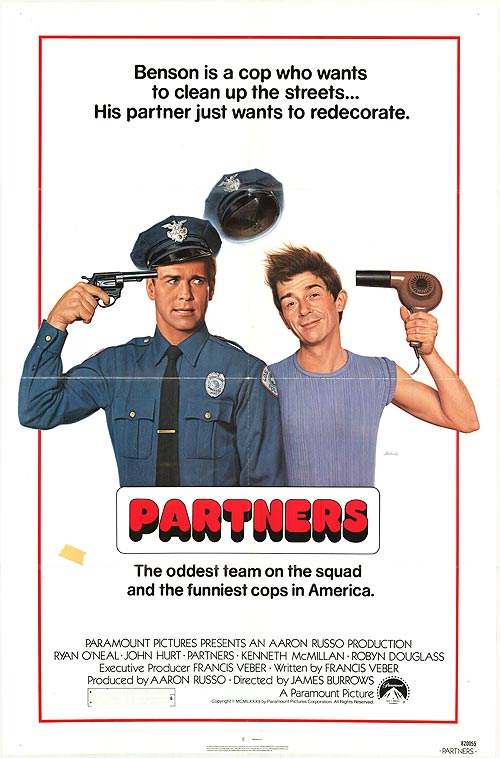
A serial killer targeting gay men is on the prowl. When one of his victims turns out to be the son of an influential politician pressure is put on the police force to find the culprit. The police chief (Kenneth McMillan) feels he has no choice but to pair Sgt. Benson (Ryan O’Neal) a straight cop with Kerwin (John Hurt) who is a gay desk clerk at the station. They are to masquerade as a gay couple in hopes of infiltrating the gay underground and find clues to the elusive killer, but their contrasting personalities and lifestyles threaten to blow their cover before they can make headway.

This film was controversial at the time of its release for its overuse of gay stereotypes and there are indeed some especially at the beginning, but the film’s biggest offense is that it is just plain boring. The idea that two cops could be forced to pretend to be a gay couple or have one of them pose naked for the cover of a gay men’s magazine as part of their investigation is dubious enough, but had it been funny I might have forgiven it. Unfortunately this thing can’t even elicit a few chuckles.

The idea that Kerwin would automatically fall in love with Benson while working together simply because he is another man is absurd and makes about as much sense as a heterosexual male falling for every woman that he meets, which of course doesn’t happen. The Benson character is also quite callous and disrespectful to Kerwin while showing blatant homophobic tendencies and being a confirmed ladies’ man, so I didn’t see what there was about him that Kerwin would have fallen in love with anyways.

Benson’s transformation to being more sensitive to gays and their issues during the course of the story might have been more compelling had it been better written. However, his liberal use of the word ‘faggot’ makes the film seem quite dated and wouldn’t be heard in a movie today especially from a character that is supposedly a protagonist.

Hurt plays the gay caricature well, but the idea of placing someone on such a dangerous mission without having any undercover experience of even knowing how to use a gun seemed stupid and unrealistic. Out of all the characters McMillan’s comes off best and he even manages to be slightly amusing, but unfortunately isn’t seen enough. Character actors Jay Robinson and Sydney Lassick can be spotted very briefly.

This was intended to be a parody of Cruising, which was released 2 years earlier and was a much more serious and graphic look at a true life killer of gay men. That film starred Al Pacino and will be reviewed next Monday.

My Rating: 2 out of 10

Released: April 30, 1982

Runtime: 1Hour 32Minutes

Rated R

Director: James Burrows

Studio: Paramount

Available: VHS, DVD

The Midnight Man (1974)

the midnight man 2

By Richard Winters

My Rating: 4 out of 10

4-Word Review: Security guard solves case.

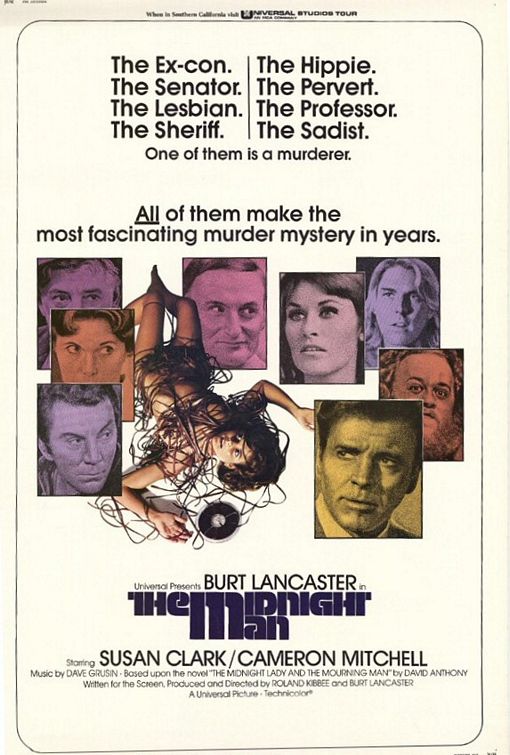
Jim Slade is a 60-year-old out on parole after serving time for killing his wife’s lover. He finds a ho-hum job as a security guard at a local university and soon gets swept up in a murder mystery when a coed (Catherine Bach) is found dead. The local cops nab the town pervert (Charles Tyner) and take him into custody, but Slade is convinced they have the wrong man and goes on a crusade to find the right one only to realize that there are far more suspects than he initially expected and no one no matter who they are is quite innocent.

Many critics at the time and some viewers complained that the mystery was too involved and a bit confusing however I was able to follow it and it manages to remain intriguing enough to be entertaining, but it’s still no better than an average episode of Columbo. The film also doesn’t have enough action although the part where Lancaster finds himself trapped in a rural barn and must use whatever implement he can find to fight off a trio of rednecks and their ferocious dog is nifty.

On the technical end the film is a bore and looks unsuitable for the big screen. Writer Roland Kibbee in his only directorial effort shows no flair for visual style filming scenes in places with dull and ordinary backdrops and fails to capitalize on its South Carolina location where it was shot. The soundtrack though by Dave Grusin is distinctive and the one thing that shows verve, energy and I wished it had been played more, particularly the part at the beginning.

Lancaster, who also co-produced and co-wrote the script, walks through his part in an almost comatose state and the fact that his character seems so very on-top of his game in this investigation leaves little doubt in the viewer’s mind that he will ultimately solve the case, which isn’t as interesting. For a character that is so savvy he does make one glaring error when he finds a dead body in his car and fearing that he will be fingered for it decides to put the body inside a nearby hotel room, which seems foolish. For one thing to check into the room he would have to have faced a hotel clerk who could’ve easily recognized him for the police later and he also doesn’t wear any gloves leaving his fingerprints all over the room when simply dumping the body in a wooded area would have made much more sense.

Out of the entire cast Cameron Mitchell shows the most energy and it certainly is fun to see Bach in her film debut and years before she became Daisy Duke playing a foul-mouthed, snippy college student. Although she has no nude scenes there is a painting of her naked likeness shown at one point, which may be good enough for some viewers.

My Rating: 4 out of 10

Released: June 14, 1974

Runtime: 1Hour 54Minutes

Rated R

Director: Roland Kibbee

Studio: Universal

Available: None at this time.

The Sentinel (1977)

the sentinel 1

By Richard Winters

My Rating: 3 out of 10

4-Word Review: The Gateway to Hell.

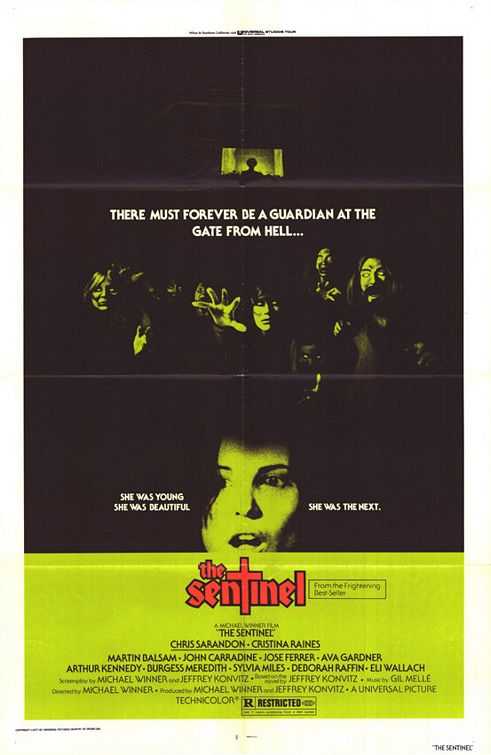
Alison (Cristina Raines) is a fashion model looking for a place of her own. She is dating Michael (Chris Sarandon) and living with him, but has decided she is not ready for marriage and wants her own apartment. She finds an old, but stylish place in the Brooklyn Heights area of New York City that is already furnished and decides to move in, but then strange things begin to occur convincing her that the place may be haunted and when she starts to have physical maladies she is sure that something within the building is trying to possess her and the other residents she sees are really evil demons.

From the very first scene still film reeks of being just another, tired rip-off of The Exorcist. The first hour features no real scares and it is only during the second part that it becomes a full-fledged horror movie giving the film an overall disjointed feel. The much hyped final, which features severely deformed people who are not wearing make-up isn’t that impressive and unable to equal any of today’s horror movies. If anything I wished they had played this part up even more as it is the only time this otherwise generic thing gets even slightly diverting.

Rains, who by her own admission has never ever actually watched the movie, makes for a weak lead. Sure she is beautiful, but the character is dull and ordinary and she gets easily upstaged by co-star Sarandon who clearly shows how to carry a scene and deserves top billing over her for that reason alone. Her characters motivations didn’t make much sense either. Why would such a young woman want to move into a place filled with antique furniture and inhabited by senior citizens that she has nothing in common with? Also, when creepy things start to occur she doesn’t just move out right away like a normal person would, but instead goes back to the place several more times. There is also a moment when she hears strange noises from the upstairs apartment and then gets out of her bed and locks her front door, which seemed crazy because she is living in New York City and should be locking her doors ALL the time to begin with.

The only real interesting thing about this film for me was seeing older stars at the end of their careers in bit parts. Ava Gardner is fun as the leasing agent and Arthur Kennedy is solid as a mysterious priest as well as John Carradine as an older blind priest who lives upstairs and wearing creepy contacts. There is also Sylvia Miles who appears topless and camps it up as a lesbian neighbor with a Russian accent at least I think it was Russian. Christopher Walken can be seen briefly as a detective giving his gum a workout and Beverly D’Angelo plays a nubile lesbian who doesn’t say a single word, but more than makes up for it with her masturbation scene.

My Rating: 3 out of 10

Released: January 7, 1977

Runtime: 1Hour 34Minutes

Rated R

Director: Michael Winner

Studio: Universal

Available: VHS, DVD

The Children’s Hour (1961)

childrens hour

By Richard Winters

My Rating: 4 out of 10

4-Word Review: Ruined by a lie.

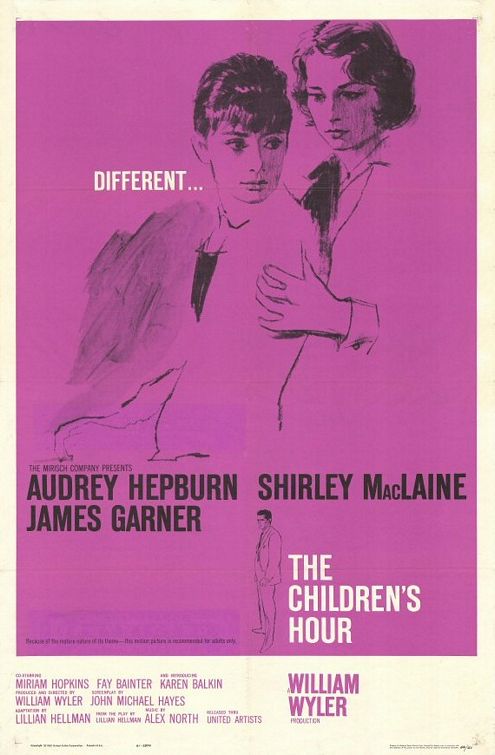
Martha and Karen (Shirley Maclaine, Audrey Hepburn) are two single young women running an all-girl’s school. They have the respect of the community and the parents, but that suddenly changes when one of the students named Mary (Karen Balkin) decides to spread a rumor that Martha and Karen are lovers. This sends everything into an uproar. All the students are moved out and the two women find themselves fighting desperately for their reputations and livelihoods. Karen’s boyfriend Joe (James Garner) remains their staunch supporter, but eventually even he begins to have his suspicions.

The film is based on the landmark play written by Lillian Hellman which ran for 691 performances in 1934 and was based on a true incident that happened in Scotland in 1810. The original film version of the play was made in 1936 and entitled These Three that was also directed by William Wyler and starred Miriam Hopkins as Martha who in this film plays Martha’s Aunt Lily. That film was heavily watered down with the lesbian element completely taken out and instead has the rumor revolve around the two teachers being in love with the same man.

This second film version was supposed to be more like the play, but hardly seems worth the effort. Although Wyler makes some attempts to make it seem more cinematic it still comes off very much like a filmed stage play and a static one at that. Lots and lots of talk with a narrative that is quite plodding and predictable. Having the story work more in a fragmented style might have helped, but either way it is never very engrossing or compelling. It also completely skips over the libel trial, which I thought could’ve given some added drama and it never completely explains why the Aunt Lily character avoided testifying. She comes up with the lame excuse that she was touring with her show, but I felt it was more because she secretly knew Martha was a closet lesbian and didn’t want to have to confront that and the film should’ve made this more clear.

It is also unintentionally funny at times especially the part where actress Fay Bainter’s eyes get bigger and bigger as Mary whispers her ‘shocking’ secret into her ear. Balkin also overdoes the facial expressions, which was probably due to too much coaching on the part of Wyler, but with that said her presence in the film is fun and gives the proceedings a liveliness that is otherwise stagnant.

The film really isn’t all that groundbreaking either and handles the delicate issue in too much of a timid way. For instance there is a scene where Martha admits to her homosexual feelings and states that she feels ‘ashamed’ for having them and Karen counsels her by stating that ‘you did nothing wrong’ because ‘nothing happened’, but what if it had then would it have been wrong? I tend to lean towards the latter making the production seem as stale and prejudicial as the public at the time. I was also confused as to how the two women could remain living at the school when all the students had moved out and they no longer had any income, or how they were still able to have groceries delivered to them.

My Rating: 4 out of 10

Released: December 19, 1961

Runtime: 1Hour 47Minutes

Not Rated

Director: William Wyler

Studio: United Artists

Available: DVD, Blu-ray, Amazon Instant Video