Category Archives: French Films

The Dogs (1979)

dogs

By Richard Winters

My Rating: 4 out of 10

4-Word Review: Canines on the attack!

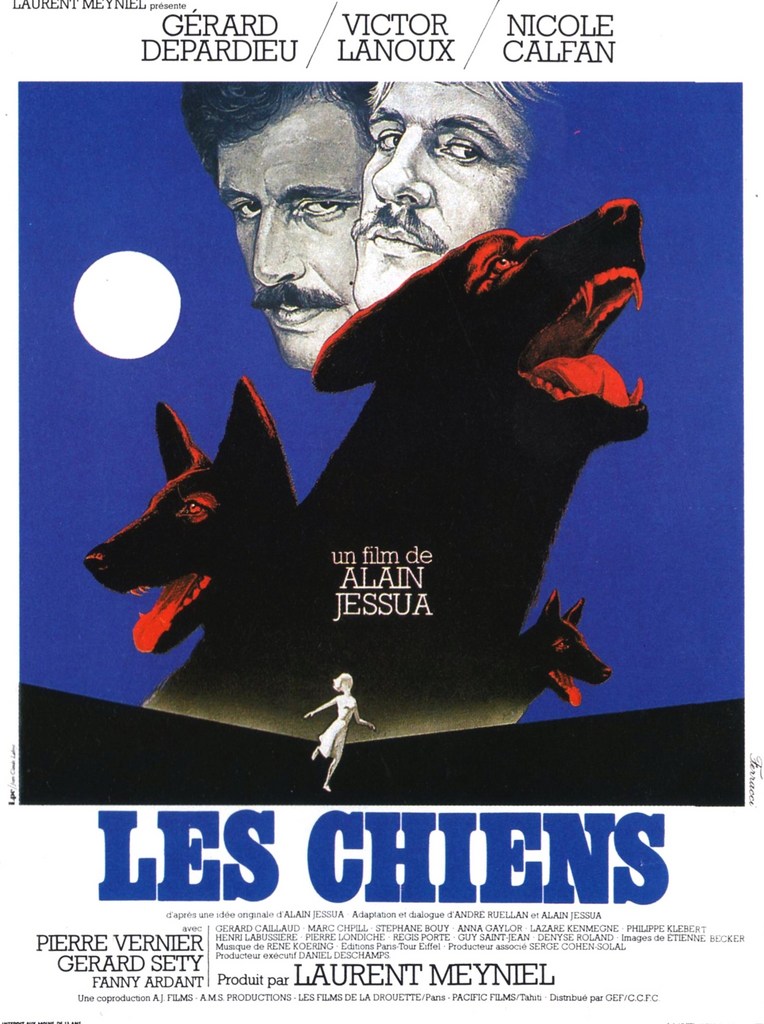
Henri (Victor Lanoux) is a doctor who opens up a clinic in a planned community. He finds to his surprise that many of his patients are coming in complaining about dog bites. He then becomes aware of Morel (Gerard Depardieu) who runs a club were participants learn how to train their dogs to protect them from attacks. However, these same dogs have now become more of a menace that’s putting other citizens in the town in danger including the mayor who becomes a victim. Henri is soon at odds with his girlfriend Elisabeth (Nicole Calfan) who gets a guard dog after she is raped and she is more attached to the dog than him.

The story certainly has some interesting ingredients including the fact that the dogs themselves  aren’t really the threat, but more their owners who train them to be aggressive, which is a nice change of pace from other films from that era that would show animals attacking for seemingly no reason, or that they had become possessed by something evil. Here the set-up is more realistic and plausible and the residents are wealthy living in plush homes helps convey the idea that even ‘nice’ neighborhoods can have evil dwelling underneath and no place is ever completely ‘safe’.

Depardieu goes against type playing the villain and he approaches the part in a fascinating way where he’s not outwardly creepy at the start, but more just an awkward individual who genuinely believes, which is a mindset that he continues to have to the very end, that he’s the ‘good guy’ who’s simply helping vulnerable people find ways to adequately protect themselves. He also has a profound love for his dogs whom he likes more than people, that comes to prominence during a graphic birthing seen where the mother dog isn’t able to come through it. His performance is even more impressive when you factor in that he suffered a dog attack of his own in real-life just a few months before being offered the role and he took the part hoping it would alleviate his pent-up fears and he certainly goes all out here including allowing the dogs to attack and bite him while wearing protective clothing during the training exercises that he conducts.

On the other end, as his adversary, I didn’t find Lanoux to be half as impressive. For one thing he never comes-off seeming like much of a doctor nor ever seen wearing a white physician jacket and works inside a place that resembles a rented out business office than a legitimate clinic. He looks and behaves more like a detached business man walking through his role and never being as emotionally charged as the part demanded.

Calfan, as the girlfriend isn’t convincing either. She leaves her job late at night all alone even though she’s well aware of the crime in the area, which makes it seem like she’s foolishly walking into trouble and the subsequent rape attack gets played-out in a cliched and mechanical way. He recovery is too quick as she’s back to be her normal self again almost instantaneously without showing any of the post traumatic effects that victims of the crime typically do. Her character’s arch offers some intrigue as she at one moment ‘jokingly’ tells her dog to attack Lanoux and then at the last second calls him off, which understandably frightens Lanoux and made me believe she was mentally moving into a dark mindset and she would become the source of danger, but this doesn’t lead to anything. By the end she ‘snaps out of this phase’ and goes back to being her normal self even to the extent turning into the hero, which I didn’t find interesting at all and it would’ve been far more memorable had she slowly became the threat.

The film is too leisurely paced. We know upfront that these dogs, and the people who own them, are something to be feared, but the actual attacks take too long to get going and when they do they’re too quick and ultimately start to play-out in a redundant fashion. The chills and thrills are limited and there’s not enough surprises or twists. There are also some disturbing segments including a dog getting kidnapped and then bound with a muzzle while dangling in the air by a rope as it whimpers, which many viewers including animal lovers will most likely find highly unsettling.

Alternate Title: Les Chiens

My Rating: 4 out of 10

Released: March 7, 1979

Runtime: 1 Hour 40 Minutes

Not Rated

Director: Alain Jessua

Studio: A.J. Films

Available: DVD (French), DVD-R (dvdlady.com)
Hold-Up (1985)

holdup

By Richard Winters

My Rating: 5 out of 10

4-Word Review: Robber disguised as clown.

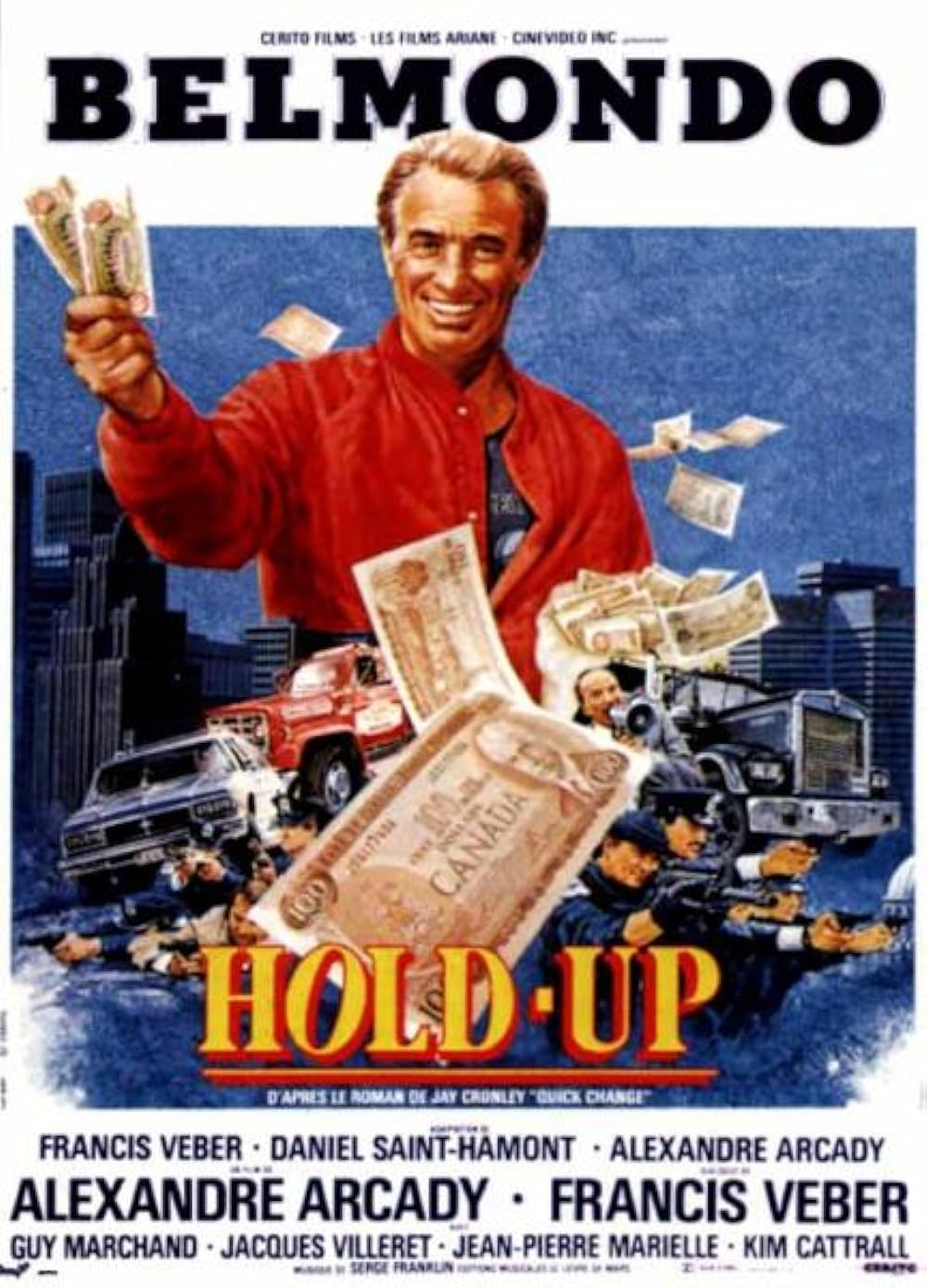
Grimm (Jean-Paul Belmondo) has come-up with what he considers to be an ingenious plan. He will rob a bank disguised as clown with two of his friends, Georges (Guy Marchand) and Lise (Kim Cattrall). While he’ll be a clown the other two will pretend to be bank customers and then when he agrees with the Police Commander Simon (Jean-Pierre Marielle), whom he is negotiating with via phone, to release some hostages he’ll let Georges and Lise ‘go’ and no one will know the difference. Meanwhile Grimm will take-off his clown disguise and put on a new one as an old man while pretending that the clown is still inside holding the rest of the bank employees and customers at gunpoint. By the time the police catch-on that there’s no longer any clown the three hope to have escaped on a plane and be far away. While the robbery works without a flaw the getting on the plane part becomes a major, if not impossible, challenge.

The story is based on the novel ‘Quick Change’ by Jay Cronley, which 5 years later was made into another, better known movie that starred Bill Murray. This was a French production that was filmed on-location in Montreal, Canada and one of the few movies that starred Belmondo that didn’t do well financially back in his home country and in-fact it was the first staring vehicle of his that didn’t crack the top 10 of highest grossing movies of that year, which was the first for him since 1976 when L’Alpagueur achieved only 19th place.

Belmondo is certainly a legendary actor whose long and storied career deserves to be admired, but I didn’t care for him here and felt his presence actually brought down the whole movie. He was apparently quite admired behind-the-scenes amongst the cast and crew and he did all of his own stunts including a scene where he climbs out of a moving car and manages to slither his way, while the vehicle is still going at high speeds, onto a tow truck and he did this while already being in his mid-50’s. However, his character is overly cocky and his glib conversational interplay between he and the police chief does not come-off as funny and more like you side with the chief and want to see this arrogant man caught. You’d think someone who had never pulled-off a robbery before would be much more nervous, or at least display some signs of anxiety, so his unbridled confidence seems completely out-of-place with the situation he’s in.

If anything I enjoyed Marchand and Cattrall far better as these two seemed much more human and displayed the insecurity you’d expect. They were like regular people full of foibles and someone you’d actually want to root for and thus I felt the movie would’ve been greatly improved had it just focused on the couple doing the robbing and cut-out Belmondo’s part completely. I also didn’t think the clown disguise worked as unlike in the American version his whole face isn’t covered with white paint and instead simply uses a red wig, a red clown nose, and some eyebrows, which I didn’t feel would be enough to hide his true identity and witnesses could’ve easily recognized who he was outside of the clown get-up and thus the whole disguise thing ends-up defeating its own purpose.

The first act works pretty well with shades of Dog Day Afternoon and some offbeat moments to the bank robbery theme by having one scene where the hostages are forced to get in a circle and sing a rendition of ‘London Bridges Falling Down’. The second and third acts though become protracted and seem to be the start of a whole different movie altogether. The bank segment has a crafty, sophisticated tone where the humor has a satirical bent and the main characters seem smart, savvy, and cool. In the second half the movie suddenly becomes like a live action cartoon with an abundance of car chases and the three leads, who had seemed so clever at the beginning, quickly become inept at seemingly every turn.

The biggest problem is the Lasky character played by Tex Konig. Konig is a big bearded guy that resembles Bluto from the old Popeye cartoons who’s also a tow truck driver who wants to get his hands on the stolen money and chases the three all around the city, which leads to many car stunts and crashes. Some may enjoy the smash-ups, but it comes across as unimaginative filler by filmmakers that didn’t know how to end the story cleverly, so they came-up with a lot of mindless action in order to keep it going.

The infighting between Cattrall and Marchand seems unnecessarily added in as well. This animosity needed to be introduced right at the start in order to make it consistent with the plot and not just thrown-in later to add some conflict for the sake of conflict. You’d think too that if she really resented the guy she would’ve refused to go ahead with the robbery unless someone else took his place.

Having the story then end with the three going to France and then Italy just furthers dilutes the plot, which no longer resembles a robbery flick at all, but more of a jet setting one. While not perfect the remake, which came-out in 1990, fares better in just about all phases.

My Rating: 5 out of 10

Released: October 23, 1985

Runtime: 1 Hour 54 Minutes

Not Rated

Director: Alexandre Arcady

Studio: Cinevideo

Available: DVD-R (dvdlady.com)

This Sweet Sickness (1977)

sweet2

By Richard Winters

My Rating: 7 out of 10

4-Word Review: Obsessed over childhood friend.

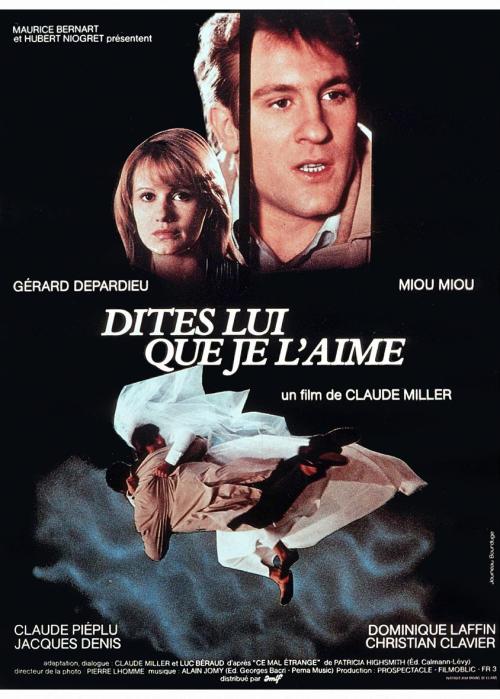
David (Gerard Depardieu) can’t seem to get over Lise (Dominique Laffin) who was a childhood friend of his. Now as adults Lise has married Gerard (Jacques Denis) and even had a child, but David keeps believing that she’s in-love with him and will eventually leave Gerard for him. On weekends he spends his time finishing up with a country house that he has bought, which he plans for he and Lise to live in. He repeatedly calls Lise and meets up with her in public in an effort to beg her to come back to him, but she resists while also advising him that he is mentally unwell and needs to see a psychiatrist. Meanwhile there’s also Juliette (Miou-Miou) who resides in David’s apartment building and has strong feelings for him. David is aware of her presence, but rebuffs her at every turn and yet Juliette persists. She secretly follows David to his country home and when she figures out what he’s doing the two have a confrontation.

While there’s been many movies involving stalkers and jilted ex-lovers that can’t seem to take ‘no’ for an answer this one was done when stalking was still considered an isolated phenomenon and thus there’s a lot of things that work against the modern-day formula, which is what makes it fascinating to watch. For one thing it’s not approached as a thriller, or even a horror, but instead a drama. David is not perceived as threatening, but mentally confused and needing help learning to move-on. Lise does not respond in a frightened way when he approaches, but more just annoyed.

The stalker is three-dimensional as well. One of the most intriguing moments is after Lise’s husband dies in a car accident and David convinces her to come to the country home to check-it-out. Initially she acts impressed with it and gives-off the perception that she might seriously consider moving-in, but David eyes her suspiciously, which is quite revealing. He’s spent the entire time convincing himself and others that she’s truly in-love with him, but now when she actually gives him what he wants he’s not sure he can believe her. This shows subconsciously that he’s aware she doesn’t have the feelings for him like he consciously wants to believe and he actually does know the reality of the situation, but the emotional side of him just doesn’t won’t accept it.

The addition of Miou-Miou  adds another fascinating element. It brings out how stalkers aren’t the way they are simply because they may be lonely and unable to find anyone else, which then supposedly forces them to become so fixated on one person since Miou-Miou is openly interested in him and just as attractive and yet David consistently rejects her. Her stalking on him becomes just as intrusive as David’s to Lise and in some ways just as creepy. The sex scene between her and Gerard, or at least an attempted sex moment, is quite interesting because just a few years earlier the two starred in another film called Going PlacesThere Gerard played the aggressor who rapes Miou-Miou here though she’s the aggressive while Gerard lays virtually frigid, which shows how brilliant these two actors are that they can play such opposite people so convincingly.

Spoiler Alert!

The story was based on a novel of the same name by Patricia Highsmith though there are a few key differences starting with the fact that the novel has the two in a previous, but brief relationship while in the movie they were just friends from childhood. In the book David works as a scientist and purchases the country home under an assumed identity. The Lise character is named Annabelle in the book and her husband Gerard dies after tracking David to the isolated home and getting into a fight with him where in the movie Gerard is killed when his car slides off an icy roadway. In the movie the house burns down when a drunken David knocks over a TV-set, but in the novel he simply sells it and buys a new one that’s closer to where Annabelle lives. The ending is a lot different too with the one in the movie, which takes place at a health spa, being far better and in fact it’s the most memorable moment as the scene is able to balance both an artistic and horrifying elements all at once.

Alternate Title: Tell Her That I Love Her

My Rating: 7 out of 10

Released: September 28, 1977

Runtime: 1 Hour 47 Minutes

Not Rated

Director: Claude Miller

Studio: Filmoblic

Available: DVD-R (dvdlady.com)

Three Men and a Cradle (1985)

threemencradle

By Richard Winters

My Rating: 7 out of 10

4-Word Review: Stuck with a baby.

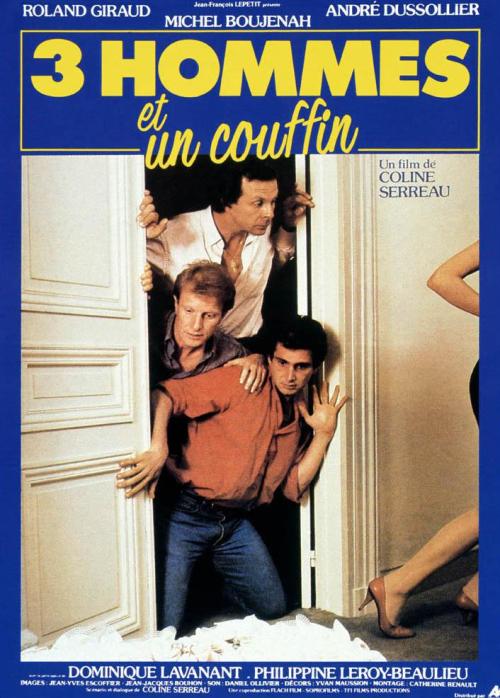
Pierre (Roland Giraud), Michel (Michel Boujenah), and Jacques (Andre Dussollier) are three bachelors living in a swanky apartment who routinely bed hot women and throw wild parties. During a party one of Jacques’ friends informs him that he has a package and wants to have it delivered to their apartment for safe keeping. Jacques agrees and then goes flying off to Japan for a month as an airline steward. Pierre and Michel then find a baby at their doorstep that gets left by Jacques former girlfriend. Thinking this is ‘the package’ they begrudgingly bring her in and try caring for her despite having no idea what they’re doing. Meanwhile the actual package also gets delivered, which is a small box secretly full of heroin, which they think nothing of until the dealers arrive looking to pick it up and mistakenly take the baby instead.

A highly insightful look at bachelors and their ineptness and downright ignorance at infant care is brought splendidly to screen, at least with the first act. There’s many keen moments as they run around to pharmacies not knowing what sized diapers to get the kid, or the type of baby food, thinking it’s ‘all the same’ and needing to constantly go back and speak to the female druggist for clarity.  In fact the first 30-minutes are probably the funniest and could’ve just kept it at that theme and been a success though having Jacques away so much starts to make it seem like the title should’ve just been ‘2 Bachelors and a Cradle’ since the third one is little seen until much later on.

I also really adored the kid who is able to somehow cry on cue. Most infants are understandably hard to control, but this one reacts to the scene and situations perfectly and is in it surprisingly a lot. In most other films dealing with babies they usually get only shown in a crib for a few seconds here and there, with these shots spliced in, but here she’s like a genuine character that’s in it almost as much as the main ones. We also see her grow where at the end she’s doing her first walk and it’s cool that the ‘music’ done over the closing credits amounts to recordings of her baby blabbering.

Where the film starts to fall-off a bit is with the drug dealer side-story. I think the baby chores that the men had to go through could’ve been enough to carry it and adding in the crime thing made it seem unnecessarily exaggerated. It’s also ridiculous that the dealers tear up the entire apartment, and I mean they literally ransack the place cutting up and breaking all the furniture to the point that’s it’s an extraordinary mess. Then suddenly a little later it all goes back to normal, but how could they find the time to clean it all up while also taking care of the kid? This clean-up would’ve quite frankly taken many weeks and buying all new stuff, so this should’ve at least been shown, but instead it gets portrayed like they’re genies who can seemingly turn a trashed place into a clean one with a snap-of-a-finger.

The characterizations are rather weak as Pierre and Michel respond to things too much the same way and have very little distinction between them and could’ve easily morphed into being one person. The idea that these guys could just call off from work for not only days, but weeks at a time without even giving an excuse as to why and not lose their jobs for it seemed implausible. Granted the French culture isn’t a workaholic one like in America, but it’s pushing the bar to the extreme here and might’ve been more amusing seeing the guys taking the baby to their work and trying to somehow still get things done.

Spoiler Alert!

My biggest beef though comes with the girlfriend named Sylvia, played by Philippine Leroy-Beaulieu, who has the audacity to leave a helpless infant on somebody’s doorstep, walks away, and doesn’t think anything of it. What’s to say some stranger couldn’t come along and snatch the kid up before the occupiers of the apartment find it? What’s to guarantee that the guys in the apartment are even going to want to take the baby in, or if they do won’t inadvertently harm the child since they have no training on how to handle it? The fact that she returns months later with this bright beaming smile demanding to see her baby immediately like she’s some loving mother entitled to her kid whenever she pleases makes her seem even more outrageous. In most jurisdictions her behavior would’ve been considered reckless child abandonment and her parenting privileges taken away. Instead of handing over the baby she should’ve received a very stern lecture

Granted the film tries to make-up for this by having her return to the apartment saying she can’t keep up with the mothering duties and agrees to hand the baby over to the men. She also gets shown lying in the baby’s crib in a fetal position in order to symbolize that she’s immature, but still for a playful comedy this has some serious undertones that it glosses over, but are still readily there if you think about it.

My Rating: 7 out of 10

Released: September 18, 1985

Runtime: 1 Hour 46 Minutes

Rated PG-13

Director: Coline Serreau

Studio: Soprofilms

Available: DVD

Garde A Vue (1981)

garde1

By Richard Winters

My Rating: 6 out of 10

4-Word Review: Interrogation of a lawyer.

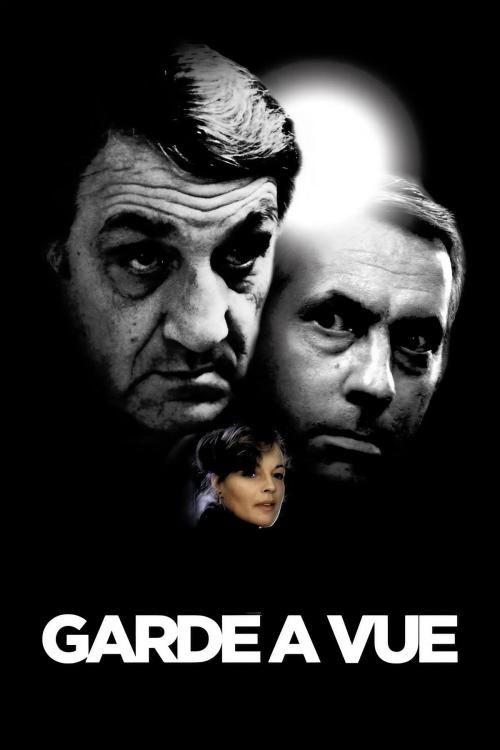
Jerome (Michel Serrault), is a rich and powerful lawyer who is brought into a police station late one night during New Year’s Eve in order to be questioned about the rape and murder of two young girls. Antoine (Lino Ventura) is the lead investigator while Marcel (Guy Marchand) sits in the back and assists him during the interrogation. At first the conversation is light and civil, but as Antoine brings more circumstantial evidence to the forefront Jerome becomes nervous yet insists he’s still innocent. Marcel even implements some physical force against him, but Jerome’s stance never changes. In another room Antoine has a conversation with Jerome’s wife, Chantal (Romy Schneider), who confides to him that she secretly suspected Jerome to be in-love with an 8-year-old girl. Once Jerome gets confronted with this his story soon begins to change.

The film is based on the novel ‘Brainwash’ by John Wainwright and shot entirely in a studio soundstage and in chronological order. Why director Claude Miller would want to film a story that had very little if any cinematic elements to it is a mystery and if anything this might’ve fared better as a stage play. I was initially impressed with the police station room as you’d swear it was an authentic building and not just a prop built for the production. The drenching rain seen pouring down outside the windows is impressive as it gives the viewer a claustrophobic feel and I liked how eventually, when the clock hits midnight, you hear car horns honking outside to represent the New Year. However, every interrogation room I’ve seen, and I watch a lot of confession videos on Youtube from real-life cases, the rooms are very small and with no windows and the film would’ve been better served had it reflected a setting like this as it would’ve brought out better the psychological tension of the suspect and his feelings of the ‘walls closing in on him’, which with here you don’t get.

You can’t help but connect this movie with The Offencewhich starred Sean Connery and was directed by Sidney Lumet. That movie came out 8 years before this one, but had the exact same theme of a suspect being brought in over the murders of some school girls. That movie was well directed but did annoy me for the fact that in that one the suspect, played by Ian Bannen, did nothing, but give off this smirk the whole time.  This one has a much better back-and-forth between the investigator and suspect, which helps keep it compelling as more evidence gets introduced. However, in the Lumet film it had constant shots of this big bright light shining into the camera giving the viewer a point-of-view feeling of what someone in that situation would feel and thus helping hype the sense of urgency of wanting to get out of there, or say anything one needed to in order to stop the pressure, which this film doesn’t do very well. Both films though have cutaways showing the dead girl’s bodies from a distance in a secluded area, which are visually creepy, though again Lumet’s film scores a bit higher in that category too.

Spoiler Alert!

Ultimately the ending is a letdown and rather baffling as it features Jerome caving and admitting to a crime that he really didn’t commit due to the perceived police pressure. For one thing it’s hard to imagine that a seasoned lawyer would be that dumb and wouldn’t just ‘lawyer up’ himself and demand counsel of his own when interrogation got to be too much. I’ve seen a lot of true life interrogations where the pressure put on the suspect was far worse and those people refused to buckle, so seeing the character fall to pieces so relatively quickly especially when he was educated to know better makes the whole thing pathetic.

Didn’t quite get why the wife shoots herself at the end either. Supposedly it’s because she feels guilty about tabbing him for the murder when the real killer eventually gets exposed, but she did it out of honesty as she really felt he had a thing for young girls, so why should she feel tortured about saying something she truly believed? It would’ve been more surprising if she had pulled the gun on Jerome himself as he got into the car and shot him as she would feel, even if he hadn’t been arrested for this crime, that he still had some dark perversions and thus should be killed before he goes and carries out his fantasies on some other girl. Of course if she lied about him having a thing for an 8-year-old in order to get back at him over their contentious marriage then her guilt and suicide would’ve been more plausible, but I didn’t get that from watching it, so if that was ultimately her motivation then the filmmakers should’ve done a better job at intimating it.

This is the rare case where I’d say the Hollywood remake, which came out in 2000 as Under Suspicion and starred Gene Hackman and Morgan Freeman was much better done. It had a better visual balance that didn’t keep the whole thing stuck inside a police room and it better tied-up loose story ends that this one leaves open.

My Rating: 6 out of 10

Released: September 23, 1981

Runtime: 1 Hour 27 Minutes

Not Rated

Director: Claude Miller

Studio: AMLF

Available: DVD, Blu-ray

The Grapes of Death (1978)

grapes

By Richard Winters

My Rating: 7 out of 10

4-Word Review: Zombies created by pesticide.

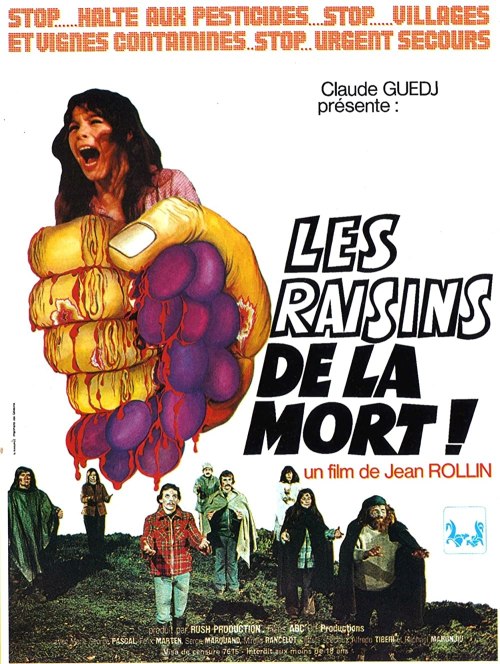
The film opens with a shot of immigrants spraying grapes with a pesticide in a vineyard owned and run by Michel (Michel Herval). One of the men (Francois Pasal) complains of a pain on the side of his neck, but Michel insists he keep working and quit complaining. The film then cuts to two women riding inside a train car, one of them is Elisabeth (Marie-Georges Pascal) who’s the fiancee to Michel and coming to visit him. Once the train stops the man from the vineyards complaining of the pain walks onboard and proceeds to kill Brigitte (Evelyne Thomas) who was inside the train bathroom. He then takes a seat in the train car that Elisabeth is in, but once she notices the growing tumor on the side of his neck and then the dead body of her friend she runs screaming off the train. She then finds herself all alone in deserted town where everyone has the same type of tumors growing on their faces and all seem intent on trying to kill her.

This was the first mainstream horror film directed by Jean Rollin and credited as being the first gore film ever to be made in France. Rollin had made several experimental vampire flicks in the early part of the decade, but they had failed to catch-on and lost him a lot of money, which forced him into directing porn movies under the pseudonym of Michel Gentil. By the late 70’s he had made enough money with those that he was ready to jump back into doing another feature film, which for a zombie story is unique as the zombie’s here are fully conscious and well aware of what’s happening to them and kill out of a sense of rage. The film is also, for a horror movie, very quiet lacking the traditional pounding music score and instead has extended moments of near silence especially during the town scenes, which helps accentuate the creepiness.

Rollin hired an Italian production company to do the special effects, which are quite impressive. Normally I’m on here complaining how fake the effects look in most other low budget horrors, but here I was amazed with how realistic they were. The scene where a woman gets stabbed with a pitchfork while lying on a table and then continues to breath with it still in her really looks like the blades went right through her body. Another scene dealing with the decapitation of a nude woman (Mirella Rancelot) and then having one of the zombies carry the head around is one of the most graphic of its type. I did have some issues with the tumor make-up. On the train car where Elisabeth watches it grow on the side of the man’s head was cool, but on the people in the town it starts to look like smeared pizza and I wanted to see a shot of someone that had it all over their face instead just on a little part of it.

While Rollin stated that he admired the acting of his leading lady I felt she was the weakest link. Her fearful expressions and screams are great, but her performance otherwise is one-note. Part of what made Night of the Living Dead so great was the contrasting personalities of the main characters and I felt there needed to be that here. Having the two men (Felix Marten, Serge Marquand) enter near the end of the second act to help Elisabeth fight of the zombies is a great addition, but I had wished they came in sooner. I also didn’t like the way Elisabeth conveniently finds a gun inside the car she has just stolen, which she is able to use in the nick-of-time to shoot the zombies, but what are the odds? The gun should’ve been introduced earlier, perhaps as something she brought along with her at the beginning for her trip, and not just thrown-in haphazardly.

The twist at the end is not satisfying leaving the viewer feeling down and depressed when it’s over when a robust showdown was needed. I felt too that the reason for why the people were turning into zombies, which was the pesticide, should’ve been kept a mystery until the very end. Instead of opening it with the men spraying we should’ve seen the townsfolk going about their day in a normal fashion, which would’ve made a striking contrast to when Elisabeth gets there and they’re all crazy. Maybe a shot of a man spraying in the background behind the people talking could’ve been done as a little hint, or clue, but as it gets done here it’s too obvious when a subtle approach was needed.

My Rating: 7 out of 10

Released: July 5, 1978

Runtime: 1 Hour 25 Minutes

Rated R

Director: Jean Rollin

Studio: Rush Productions

Available: DVD, Blu-ray

Deadly Games (1989)

game1

By Richard Winters

My Rating: 7 out of 10

4-Word Review: Kid versus Santa Claus.

Thomas (Alain Lalanne) is a 10-year-old who’s a wiz with computers and technology. Not only has he set various booby traps throughout the large mansion that he lives in with his mother (Brigitte Fossey), but he can fix cars and even drive them. Despite being super smart he still believes in Santa Claus while his friend Pilou (Stephane Legros) tries to convince him that he isn’t real. Thomas goes on the computer in an attempt to communicate with Santa, but instead gets a vagrant (Patrick Floersheim) on the other end pretending to be the jolly red fellow. He gets Thomas to give out his address and also reveal that his mother is a rich corporate CEO. The vagrant goes to his mother’s company and gets a job as a Santa, but is soon fired by her when he slaps a child. In revenge the vagrant, still in his Santa costume, goes to Thomas’ house where he plans to kill him, but Thomas uses his technical ingenuity to set a trap.

The film is an unusual hybrid between playful children’s comedy, a holiday film, and a slasher horror, which only could’ve been made in France where filmmakers aren’t under a repressive studio system that forces all scripts to conform to a cookie-cutter formula and here allows them to deviate between genres. Many have labeled this the original Home Alone and in-fact writer/director Rene Manzor threatened to sue John Hughes, who had directed the other one, insisting that he had essentially remade his film without permission. There are though quite a few differences between the movies to the extent that I didn’t think it was an unauthorized remake at all. If anything it reminded me more of another French classic Le Joutabout a rich kid living in a big place with a wide assortment of toys. This is also the best of the killer Santa movies as You Better Watch Out and Silent Night, Deadly Night took themselves too seriously while this one has a playful edge that manages to be both amusing and tense.

The kid certainly has an engaging quality and his love for his elderly grandfather (Louis Ducreux) is quite endearing, but he’s also just a bit too smart. I was okay with him being keen on the gadgetry, but having him get underneath a car and able to not only fix it, but also drive it was going too far. I wasn’t sure that a 10-year-old could reach the pedals with his feet and still be able to see over the dashboard. Part of what makes horror movies intense is having a victim appear vulnerable, but right away with the kid being so incredibly ingenious it makes the odds stacked against the killer and thus their cat-and-mouse game not as intriguing. I also really couldn’t stand the kid’s mullet haircut.

The home is over-the-top as well. It gets referred to as a mansion, but really seems more like a castle that’s bigger than anything I’ve seen anyone else, even the billionaires and celebrities, reside in. It doesn’t even seem like a real place, but instead, in certain shots, a miniature model and at other points a painting. All the secret rooms gets a bit dizzying including the hidden one that can be entered via an old refrigerator (are they really expecting us to believe that a 10-year-old kid, no matter how smart he is, could build that?). Another moment has Thomas getting trapped inside a life sized maze, but who the hell would take the time and effort to build a maze in their very own home, which again ends up getting too creative for its own good and negates the tension instead of enhancing it.

The Santa character is a boring. Usually horror movies make an effort to give the psycho, whether it’s through flashback or dialogue, some sort-of backstory, but here this guy pops-up without any idea of who he is, where he’s from, or why he’s so crazy. There’s also a few segments where he gets caught in a trap, like when he falls through a trap door and stuck in a net, but no shot showing how he got out of the predicament. Seeing how he gets himself out should’ve been shown each time (it’s shown in a few scenarios, but not all) in order to make the plot seem more reality based and less cartoonish.

Overall, despite the over-direction, it’s still a fun, wild ride that could be enjoyed by the whole family. It does get a bit intense at times, but the quick-thinking kid always seems to be pretty much in-control. Outside of the pet dog getting stabbed none of the other killings are seen and only the feet of the dead bodies are captured on camera to represent their demise, which should make it palatable for most kids to sit through without having nightmares afterwards.

Alternate Titles: 36.15 code Pere Noel, Game Over

My Rating: 7 out of 10

Released: March 18, 1989

Runtime: 1 Hour 32 Minutes

Not Rated

Director: Rene Manzor

Studio: Deal

Available: DVD-R (dvdlady.com)

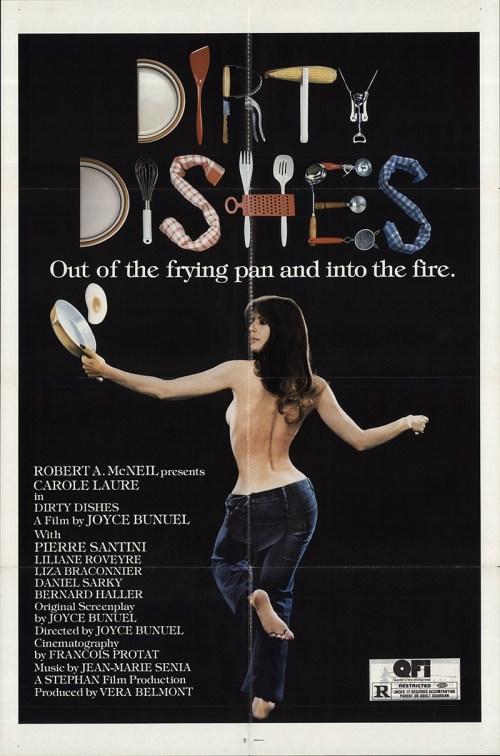
Dirty Dishes (1978)

dirty1

By Richard Winters

My Rating: 5 out of 10

4-Word Review: Housewife has nervous breakdown.

Armelle (Carole Laure) is a full-time housewife taking care of 2 young boys while her husband Marc (Pierre Santini) works a job designing car tires. Armelle is bored with the mundane chores that she must do day after day and looks forward to Thursday evenings, which is the one night that her and husband can go out, but since Marc’s job has become very demanding he can no longer do that, which makes her feel even more shut-in. She occasionally goes out with her two friends (Liliane Rovere, Liza Braconnier), but they’re trapped in the same thankless domestic routine as she is. One day she snaps and has a sexual tryst on her cluttered kitchen floor with an architect (Daniel Sarky) who works across the street, but this doesn’t subside her feelings of rebellion, so she steals a car, which almost gets her in an accident. Eventually her husband realizes her frustrations and promises that things will be different, but will this really bring the change that she wants?

Written and directed by the daughter-in-law of the legendary filmmaker Luis Bunuel, the film is a mixture of Diary of a Mad Housewife that came out 8 years earlier and Women on the Verge of a Nervous Breakdown, which was released 10 years after this one. There’s even a bit of Jeanne Dielman mixed in for good measure. The one thing that this film does do well is focusing on the mundane tasks that she does each day, which gives the viewer a clear impression of her trapped feeling. Unfortunately it doesn’t go deeper than that and ends up just being another feminist comedy that fails to have anything unique to say from the other films from that era with the same theme.

There are a some amusing lines uttered here and there, but the laughs are sporadic and there should’ve been tighter editing, which would’ve given it a frenetic pace and made the absurd moments seem less out-of-place. There’s also a few really weird tangents that come out of nowhere including a psychotic man that invades the families picnic at a park and tries running them down with his car that has no connection to the main story and wasn’t needed as was the segment at a grocery store where Arnelle breaks up a fist-fight between two men only to find that she’s been a victim of a candid camera-like prank.

There are a couple of good poignant moments particularly the scene where the couple is lying in bed and Armelle states to her husband that she feels scared and he replies: “Why, are you afraid something is going to happen to you?” and she responds: “No, I’m afraid nothing will happen and everything will remain the same.”, which hits home the characters quandary perfectly.

Laure’s is radiant and soaking in her beauty helps smooth over the slow spots. The scene where she gets rejected as a model of a dish detergent ad because she’s ‘too beautiful and no one would ever believe she does her own dishes’ is quite funny as that’s all we’ve seen her do since the film began.

The ending however offers no conclusion or answers. The character remains stuck in the same situation that she was at the start with only vague promises from the spouse that things ‘would be different’, but in cases like these that usually means things will eventually just go back to the way things were. The viewer needs to see the change for themselves, or how the character learns to adapt to the problem by finding ways to make the monotony seem more interesting, but the film shows none of this making it feel ultimately like a waste of time as both a satire and character study.

My Rating: 5 out of 10

Released: April 19, 1978

Runtime: 1 Hour 35 Minutes

Rated R

Director: Joyce Bunuel

Studio: Planfilm

Available: VHS

The Track (1975)

track3

By Richard Winters

My Rating: 9 out of 10

4-Word Review: Hunters chase down woman.

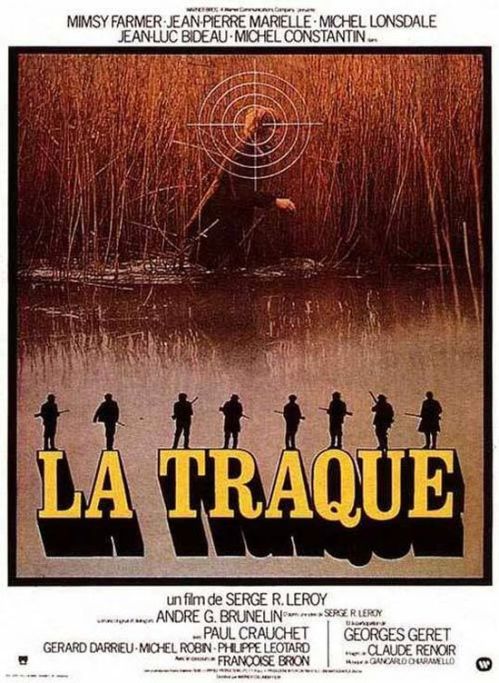
Helen (Mimsy Farmer) is an American who has traveled to rural France in order to teach at a local university. At the train station she meets Philippe (Jean-Luc Bideau) who agrees to take her to the isolated cottage where she is to stay. Along the way they come into contact with Philippe’s boisterous friends who drive them off the road. The men are going out for a wild pig hunt and a few of them particularly Paul (Philippe Leotard) shows a sexual interest in her, but Philippe assures her that they’re ‘harmless’. While Helen moves in to her new place the men go off on their hunt, but when she walks outside to check-out a nearby barn she again comes into contact with Paul along with his brother Albert (Jean-Pierre Marielle) and Chamond (Michel Robin). Paul uses the opportunity to rape her while Albert holds her down and Chamond acts as the lookout. As they are about to leave Helen shoots and critically injures Paul with Chamond’s gun, which he had inadvertently set down, before she goes on the run deep inside the forest. The rest of the group tries tracking her down in an attempt to negotiate some sort of deal, so she won’t go to the authorities, or silence her permanently if she still insists that she will.

Some have labeled this the French version of Straw Dogs, but I consider it much more like Deliverance. In that film you had middle-aged suburbanite males wanting to prove their ‘macho manhood’ by roughing it in the wilderness for a weekend only to find that they weren’t quite as prepared for the harsh elements as they thought. This film works in kind of the same way. The men go hunting to get in touch with their rugged side, but when forced to face tough issues, like helping a woman in distress, they succumb to group pressure and prove ultimately to be wimpy.

Unlike other films in the rape/revenge genre the main character here is shown the least. Farmer does well during the rape segment and screams and fights in a way that elicits genuine horror, but otherwise her facial expressions and mannerisms are quite one-dimensional though I was impressed with the way she did her own stunt work and forced to navigate her way through some difficult and inhospitable terrain.

The main focus is on the male characters who are fascinating and multi-faceted. The most interesting aspect is how they start-out seeming benign and domesticated only to slowly unravel into a aggressively threatening group. The segment where they kill a pig and the animal struggles after being shot will make some animal activists uncomfortable, but like with Jean Renoirs’ Rules of the Game, which had a hunting segment even more graphic than here, it does effectively illustrate that if people are willing to kill an animal for sport; how thin is the line for them to cross-over to a person?

The lack of a soundtrack is a plus. Many thrillers will have a pounding score and sometimes it works to accentuate the tension, but here the natural sounds particularly Helen’s heavy breathing as she runs through the underbrush is far more effective. There’s also no forewarning of what’s going to happen nor buildup. Everything occurs out of nowhere. Most victims who survive a crime will say the same thing that things were peaceful and normal one minute and then all hell broke loose the next.

Spoiler Alert!

The only two things I might’ve done differently had I directed was not showing the rape. As rape scenes go this one is rather mild, but my feeling was it would’ve been creepier had the viewer been in the dark about what occurred as were initially the other men. They’re told the story that the gun went off accidentally and the woman ran in a panic only for them to slowly learn the dark details later on. Having the viewer come to this realization along with the other men would’ve added an extra layer to the story versus it being spelled out.

While the ending is effectively unsettling I still wanted a denouement showing how the strains of this experience changed them, which would’ve added insight. Overall though it’s a brilliant especially for the way it reveals how some of the men considered themselves more ethical than the others only to end up being no better. Everyone likes to feel that they, or their friends, would do the right thing when put in a stressful situation and ‘be the hero’, but this movie expertly examines how that might not always be the case.

Alternate Title: La Traque

Released: May 14, 1975

Runtime: 1 Hour 32 Minutes

Not Rated

Director: Serge Leroy

Studio: Warner Brothers

Available: DVD-R (French with English Subtitles) (dvdlady.com, jfhi.com)

Rape of Love (1978)

rape1

By Richard Winters

My Rating: 7 out of 10

4-Word Review: Assault victim seeks justice.

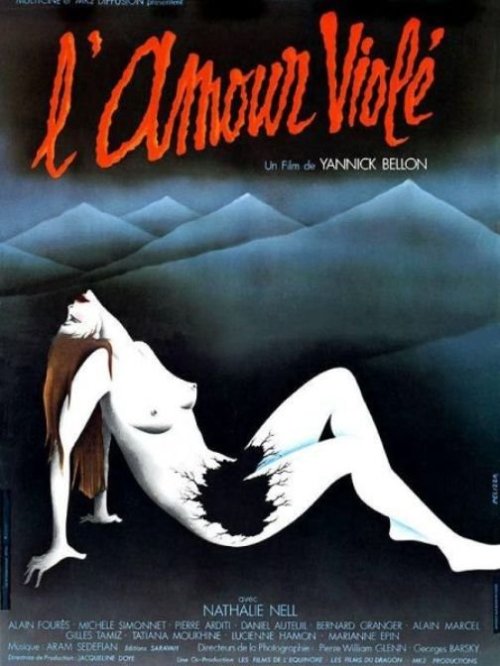
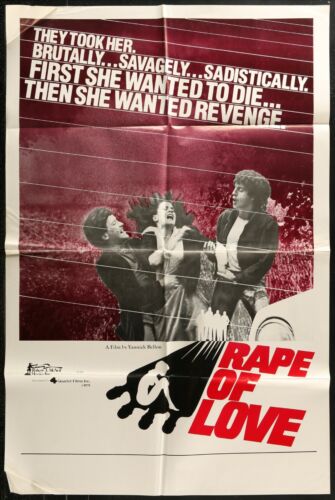
Nicole (Nathalie Nell), a young nurse, goes bike riding one day to a friend’s house. Four men (Marco Perrin, Gilles Tamiz, Bernard Granger, Daniel Auteuil) spot her at a cafe and begin following her in a van. Once she reaches a remote area they drive her off the road and force her into the back of the van where she’s taken to a remote shed and brutally raped and humiliated. Once it’s over she’s brought back to the dark road, thrown to the pavement, and warned not to tell anyone. Initially she feels ashamed and doesn’t want to talk about it, but then while making a house call to one of her patients (Marianne Epin) she sees a picture of one of the rapists on the wall, who’s apparently a married family man living a normal life. She’s enraged that these men can go on living like nothing happened while she remains emotionally and mentally shaken. She becomes motivated to bring them to justice despite both her mother (Tatiana Moukhine) and boyfriend (Alain Foures) advising her not to.

This film was written and directed by Yannick Bellon, a feminist who had  worked on documentaries before doing this one. It bears a striking resemblance to Meir Zarchi’s I Spit on Your Grave, both were filmed around the same time and neither production was aware of the other. Bellon had wanted to make a movie about rape that didn’t sanitize it and would capture it in the most explicit and violent way possible. While Zarchi’s movie has gone on to achieve cult status this one has fallen into obscurity even though despite some flaws it’s easily the better of the two.

The rape scene is quite graphic though I was actually expecting it to go on longer. It lasts for about 10-minutes, which is just enough time to give the viewer a very raw and uncomfortable taste of the crime’s viciousness without exploiting it and then unlike with the Zarchi movie the film shifts back into a drama instead of a revenge horror flick. I liked this transition better as it gives greater depth to the characters including the rapists who aren’t shown as being one-dimensional backwoods thugs like in the other movie, but instead regular citizens who you’d think were nice guys if you didn’t know better. One scene even has them discussing at a bar what they feel would be a suitable punishment for a criminal who had committed another crime, showing how these men, as terrible as they are, still have a warped idea of morality for others.

I also liked the way it focuses on Nicole’s psychological recovery though here I felt it got a bit botched. Having her examined after the incident by a male doctor I didn’t think worked as she’d not trust a male being in that emotional state and insist instead on a female physician. She also expresses later to a friend (Michele Simonnet) that she no longer likes people to touch her even as her friend touches her while she says it, which doesn’t make much sense. She also goes right back to riding her bike even though I’d think it would take her a long time if ever before she’d do that again.

rape2

Her relationship with her boyfriend and the way they no longer have sex, which frustrates him is interesting particularly the scene where he’s shown angrily walking down the street and comes upon a prostitute. I thought the film was going to have him take his frustrations out on her and thus showing how this ‘good guy’ could be, under certain circumstances, just a violent as the rapists he hates, which could’ve brought out an insightful irony, but the film only teases the idea and eventually doesn’t go there.

The reaction of the rapist’s wife who begs Nicole not to take the case to court as it would be stripping her of a ‘fine husband’ and her kids from a ‘wonderful father’ seemed absurd. I would presume most wives would be disgusted to find out what their husbands had done and would want to leave them, or at the very least refuse to believe that they had committed it. Then again I was not living in France during the 70’s, so I can’t say I know how that culture would view rape. I know they consider affairs in a much more liberal way where it’s not always the deal-breaker like it is here, but to frame rape as just being another of his ‘flings’ seemed a bit too open-minded.

Spoiler Alert!

The climactic court battle falls flat. Having the men immediately confess to what occurred once they were questioned by the authorities didn’t seem realistic. After all she didn’t decide to press charges until 6-months later, there was no semen sample, no DNA, and no other witnesses. The men could’ve denied everything and most likely gotten-off. The film ends without the viewer finding out the verdict and never knowing how stiff their penalties were, or weren’t.

I wasn’t so keen about the boyfriend, who left Nicole once she decided to go public about the rape, coming back at the end and rekindling the romance. I felt this sent the wrong message. Sometimes when a person decides to do what they think is right then that means sacrificing everything and learning to live with it including losing friendships with people that don’t agree with what they’re doing. It’s a bridge one crosses that you can’t go back on. Having her adjust to being an independent single woman, or finding a new boyfriend that wouldn’t bail on her during her time of need would’ve been a better resolution.

rape3

My Rating: 7 out of 10

Released: January 11, 1978

Runtime: 1 Hour 55 Minutes

Not Rated

Director: Yannick Bellon

Studio: Les Films de l’Equinoxe

Available: DVD-R (French with English Subtitles) (j4hi.com)