Category Archives: Foreign Films

Don’s Party (1976)

dons party 1

By Richard Winters

My Rating: 8 out of 10        

4-Word Review: This party gets wild.

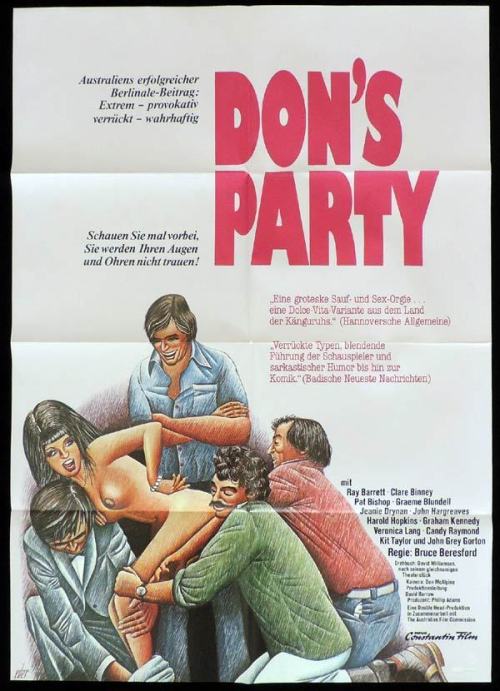
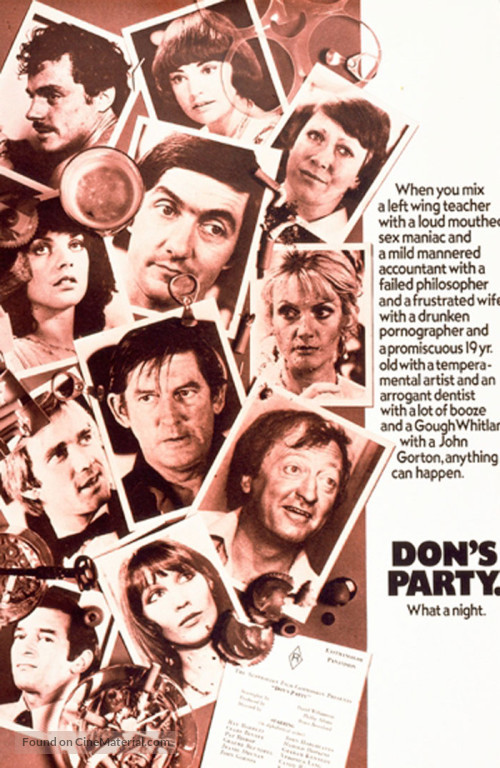
It’s October 25, 1969 and the election for Australian Prime Minister is being broadcast all over the nation. Don Henderson (John Hargreaves) is a Sydney suburbanite hoping that the Labor Party will unseat the incumbent Liberal one and invites his friends over to his home to watch the results. Things start out cordial at first, but as the night wears on and the alcohol takes its toll it heats up. Sexual escapades, arguments and fistfights breakout as the veil of civility comes off and their true selves come out.

This is playwright David Williamson’s most famous work and one that was not only a giant hit in his homeland, but has achieved worldwide acclaim. What I loved about the movie and what makes it so funny is that it cuts out the pretense and shows people as they really are while becoming a scathing indictment on suburbia. Most movies tend to pullback and sanitize things, but this one takes the opposite approach with a crude, in-your-face style that pokes holes at every level of suburban lifestyle that is refreshingly honest and totally accurate. The characters are excessively crass and there’s an abundance of sex and nudity, but sprinkled with a definite grain of truth that makes it more revealing about human nature than shocking.

An actual house was used for the setting, which helps avoid the static feeling and director Bruce Beresford does a good job of taking advantage of all the different rooms in the place and uses a variety of camera angles and shots to give it a nice visual flow. The performances are unilaterally superb and the actors appear genuinely intoxicated making the viewer feel drunk with them as they watch them down one beer after another.

The film’s drawback is that the characters lose their inhibitions too quickly and behave in an unnaturally aggressive way right from the start. It would’ve been more fun had they been overtly civil at the beginning only to watch it slowly deteriorate as the film progresses. There are also a few scenes where the background music is too loud and it’s impossible to hear what the characters are saying, which makes this otherwise slick production come off as a bit amateurish.

I first saw this movie back when I was in college and at the time I just didn’t get it. It seemed excessively profane without any redeeming qualities and filled with characters who were hateful and crude, but then I saw it years later after I’d lived in suburbia and become middle-aged it all suddenly made sense. In fact it made a little too much sense as the message it conveys and portrait it creates is not a pleasant one, but I admire the filmmakers for having the tenacity to bring it to light without compromise or hesitation.
dons party 3

My Rating: 8 out of 10

Released: November 10, 1976

Runtime: 1Hour 30Minutes

Not Rated

Director: Bruce Beresford

Studio: 20th Century Fox

Available: DVD
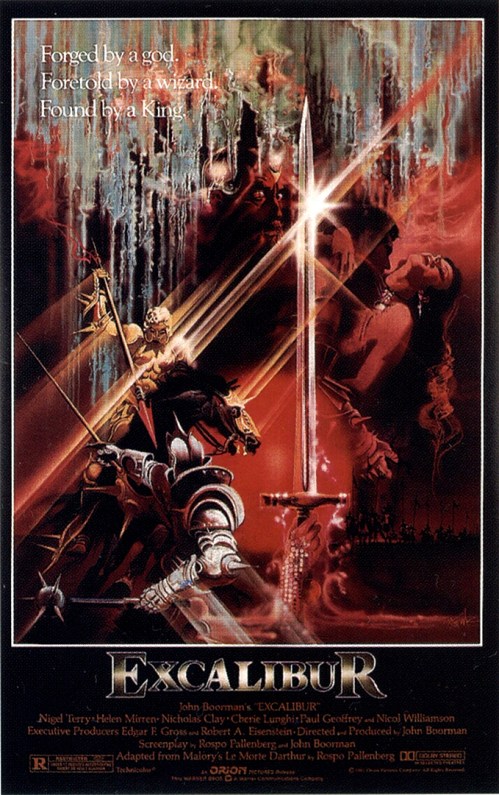
Excalibur (1981)

excalibur 1

By Richard Winters

My Rating: 8 out of 10

4-Word Review: The sword is magical.

The mystical sword named Excalibur gets cast into a stone by Uther (Gabriel Byrne) and the wizard Merlin (Nicol Williamson) proclaims that the next man to be able to remove it will become the King of England. Many try and fail, but years later it is Uther’s illegitimate son Arthur (Nigel Terry) who is able to do it.  Although very young he is able to create the Kingdom of Camelot with the help of Merlin. He also marries Guenevere (Cheri Lunghi) who has an affair with his most trusted knight Lancelot (Nicholas Clay) and then his half-sister Morgana (Helen Mirren) steals away Merlin’s powers and uses them to try and destroy the kingdom.

The story is based on the book by Thomas Malory who supposedly wrote it while he was incarcerated. Although this film is considered a classic now it was not as well received when it was first released. Critic Roger Ebert called it ‘a mess’ and the great Pauline Kael described the dialogue as being ‘atrocious’. For me I found it long, but enjoyable even though I’m not crazy for this type of genre.

One of the things that I didn’t particularly care for, or find all that exciting were the battle scenes. Watching men roll around in the mud with their swords doesn’t come off as too interesting when compared to gun battles. There were also too many of them and all seemed too similar to the others with the final one ruined by having it shrouded in fog. In reality the knight’s armor was also always made by either steel or iron, but for this film they created it out of aluminum, which made it appear too flimsy and clanky. It is also given a bright glow, which was intentional, but I didn’t care for it.

What I did enjoy was the atmosphere particularly when they go off to search for the grail. The scene where the men approach an area that has dead bodies hanging from the trees and a crow sitting on a branch biting off one of the corpses’ eyeballs, which apparently took several days of continuously rolling the camera before the bird did what they wanted, is in one of the best moments in the film. I also liked the magical glow given off by Camelot when it is seen from a distance, but I would’ve liked a shot of the magical kingdom seen up close, which never occurs and was probably due to budgetary restraints, but would’ve been cool.

The performances are all-around excellent. Terry does quite well in the lead playing Arthur at different stages of his life, but I was most impressed at the way he came off as convincingly being only 19 at the beginning even though he was really already 35. Clay, who plays Lancelot, also looks like he was barely over 20 when in reality he was 34. Williamson is amusing as Merlin and Mirren is effectively evil as the villainess. This is also a great chance to see Patrick Stewart and Liam Neeson in some early roles.

The movie moves along briskly and is overall entertaining although some the scene transitions and dramatic arcs were awkward. Those that are into medieval fantasy will clearly enjoy it more.

My Rating: 8 out of 10

Released: April 10, 1981

Runtime: 2Hours 20Minutes

Rated R

Director: John Boorman

Studio: Orion Pictures

Available: DVD, Blu-ray, Amazon Instant Video

The Removalists (1975)

removalists 1

By Richard Winters

My Rating: 6 out of 10

4-Word Review: Cops abuse their authority.

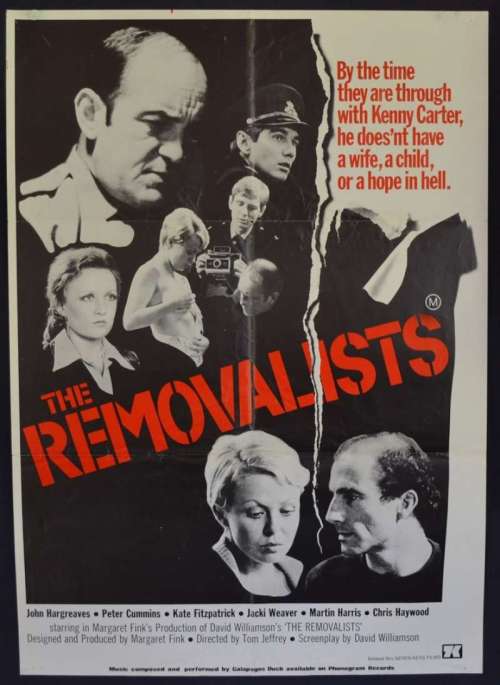
Having just graduated from police training Neville (John Hargreaves) is both excited and nervous about joining the force. His first day on the job working at a small police station with the conservative and boisterous Sargent Dan Simmonds (Pete Cummins) as his new boss gets off to a rocky start and then gets even worse when two sisters arrive to report an incident. Kate (Kate Fitzpatrick) is the older of the two who says that her shy younger sibling Marilyn (Jacki Weaver) has been abused by her husband Kenny (Martin Harris) and will require the services of the two policemen to help move her things out of her apartment and keep Kenny under control while they do it. The two cops oblige, but to everyone’s shock the Sargent immediately becomes physically abusive to the husband when he enters the place and while he has him handcuffed. The beatings escalate throughout the day until Kenny looks to be on the brink of death forcing the two officers into a heated argument over what type of alibi they should use should the victim eventually die.

The film was written by the talented David Williamson and based on one of his stage plays. Williamson is noted, especially in Australia, for his darkly humored subject matter and scathing wit with this one being no exception. It starts out with a caustic tone that just proceeds to get stronger as it progresses. The actions by the Sargent are disturbing and reprehensible, but the fact that the character doesn’t see it that way and expounds on the importance of ‘self-control’ and having a rigid morality shows just how out-of-touch he is with his own contradictions, which makes him quite human and strangely engaging while also making a great commentary on the abuse of police power.

This also marks the film debut of legendary Australian actor John Hargreaves who went on to have a remarkable film career with a wide array of interesting roles before unfortunately dying at age of 50 from AIDS. His portrayal of a nervous and hesitant new recruit is humorously on-target, but the way his character becomes more emboldened as the day wears on is even more interesting.

The film’s downfall is the fact that the sets are visually dull. To some extent this works particularly in the rundown apartment that the majority of the action takes place in because it helps to symbolize how trapped the characters are with their own deteriorating and misguided value system, but it still ultimately gives the film too much of a low budget and unimaginative look. The story itself is predictable and although laced with darkly amusing moments could’ve been funnier and played-up more.

My Rating: 6 out of 10

Released: October 16, 1975

Runtime: 1Hour 33Minutes

Not Rated

Director: Tom Jeffrey

Studio: Seven Keys

Available: DVD (Region 0)

Heatwave (1982)

heatwave 1

By Richard Winters

My Rating: 8 out of 10

4-Word Review: Fighting to save homes.

Stephen (Richard Moir) is an English architect employed by Robert (Bill Hunter) to construct a massive high-rise building in downtown Sydney that will be financed by Peter (Chris Haywood). However, the construction will require the demolition of several row houses and the eviction of those living in them. Kate (Judy Davis) takes up the cause by protesting the development and along with Mary Ford (Carole Skinner) are able to get a temporary block on the building project by getting the local builder’s union to instill a green ban. Stephen tries to fight this by attending the group’s meetings and airing out his side of the issue, but in the process finds himself more and more sympathetic to the residence especially when he finds out that Peter isn’t a completely honorable businessman and has no plans to use Stephen’s building design at all. When Mary mysteriously disappears he joins forces with Kate to try and find her only to unearth even more troubling and dark revelations along the way.

This film is based on a true-life incident and one of two movies made about it with the other one being The Killing of Angel Street, which will be reviewed here next month. The real-life event centers on Juanita Nielsen (1937-1975) who took up the anti-development cause when it was found that her home was pegged to be demolished in order to make way for three high-rise buildings in the Victoria Street neighborhood of Sydney. Her efforts managed to delay the project for three years, but the developer eventually became impatient and hired men to harass the residents who were trying to stop it and in the process kidnapped Nielsen even though her body has never been found and no one has ever been convicted of her murder.

The film here depicts Nielsen through the fictional character of Mary Ford, but what surprised me was that Ford is not the central person. Instead we only see her briefly at the beginning before she disappears and is generally forgotten while writer/director Phillip Noyce adds other fictional characters and story lines around her, which wasn’t as interesting as the actual case and I’m not sure why they didn’t just stick with the facts.

However, this still a highly intriguing thoroughly riveting plot that keeps you on the edge of your seat from the beginning. Part of what I liked about it is the way it shows things from the different perspective of the various characters while bringing out the myriad of complexities where nothing is black-and-white and no one is completely right or completely wrong. The viewer gets torn about whose side to be on, but fascinated with each new rapid-fire twist that comes about.

There are definite shades of L’Avventura here where a main character disappears and is essentially forgotten until it seems almost like she had never existed in the first place. The script offers no easy answers and instead shows in vivid and almost brutal detail how taxing and frustrating fighting for social change can be and the hopelessness one feels when they realize that all of their efforts may have made little or no difference.

My Rating: 8 out of 10

Released: March 8, 1982

Runtime: 1Hour 32Minutes

Rated R

Director: Phillip Noyce

Studio: Roadshow Film Distributors

Available: VHS, DVD (PAL, Region 0)

The Music Lovers (1971)

music lovers 1

By Richard Winters

My Rating: 6 out of 10

4-Word Review: Madness has no bounds.

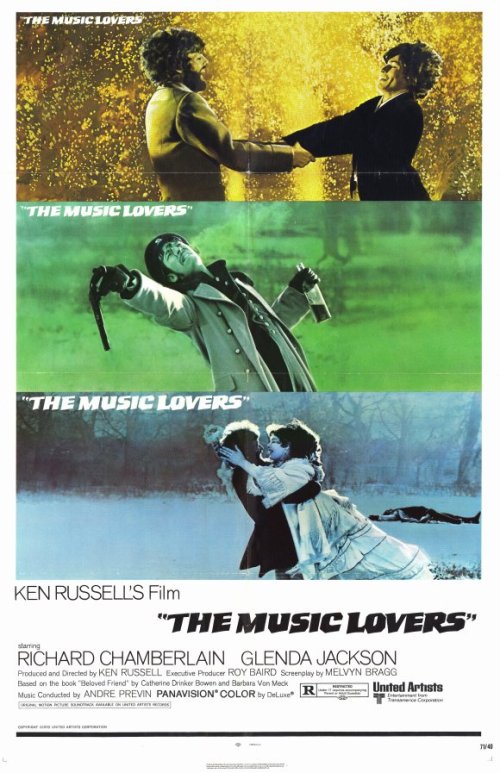
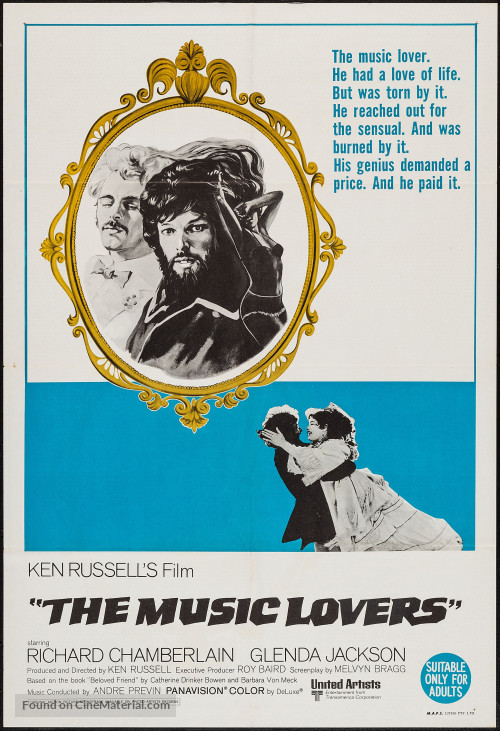
This is a revealing look at Russian composer Pyotr Ilyich Tchaikovsky (Richard Chamberlain) and based on his own personal correspondences as he fought his homosexual tendencies by marrying Nina (Glenda Jackson) a woman he really did not love. Her nymphomania becomes something he cannot satisfy and he eventually abandons her where they then both go on to suffer their own personal forms of madness.

Pianists and composers were like what rock stars are today and I liked how director Ken Russell handles the concert sequence by infusing in the thoughts of the people as they listen to the music and therefore allowing the viewer to visualize the experience of a concert goer.

The scenes with Nina in the asylum are a good example of the grotesque imagery, but they are also well orchestrated and quite memorable. However at times it also gets overdone and unintentionally comical especially the sequence involving Chamberlain’s ill-fated attempt at lovemaking to Jackson on a shadowy, bouncing train car.

Russell shows no feeling for the subject and seems more interested in using it only as an excuse to show off his flashy style. The viewer is never allowed to get emotionally attached to the characters as we are only given a fragment of what these people were like and never the whole picture. The emphasis seems exclusively on their dark and self-destructive sides and watching their descent into madness is not very inspiring or insightful.

The casting of Chamberlain was a poor choice as the guy seems to have a very limited acting range. He is good looking, but lacks the charisma and his facial expressions rarely change while he shifts badly from underplaying the part to overplaying it.

Jackson fares far better and this could be considered a real find for her fans because she plays a type of character that she has never done before, or since. Usually she plays strong willed people, but here her character is weak allows herself to be dominated and exploited shamelessly even by her own mother while also taking part in a very provocative nude scene.

Overall if you like Russell’s style then you will enjoy it more than others. Otherwise it comes off as shallow, moody, and fragmented with some real slow spots during the middle half.

music lovers 2

My Rating: 6 out of 10

Released: January 24, 1971

Runtime: 2Hours 4Minutes

Rated R

Director: Ken Russell

Studio: United Artists

Available: DVD, Amazon Instant Video

Money Movers (1979)

money movers 2

By Richard Winters

My Rating: 8 out of 10

4-Word Review: Employees become the thieves.

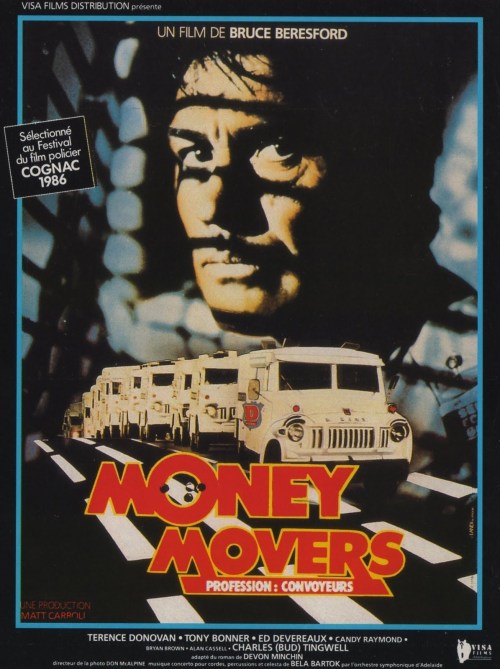
Lionel Darcy (Frank Wilson) runs an Australian armored truck business that transports payroll funds from one location to the other. After there is a robbery to one of his trucks he tries to increase security measures in order to prevent another one from occurring unaware that his own employees, with help of a local crime boss (Charles ‘Bud’ Tingwell) are planning an even bigger attack and everyone, even the police detective hired in to investigate the first crime, are in on it in one or the other.

The film is based on a novel by Devon Minchin, who worked as head of security for The Beatles when they were on tour in Australia and also owned at one time Australia’s largest armored car security company. The story itself is based on two real-life robberies that occurred in Sydney during the summer of 1970.

To me what stands out most about this film is how everyone, with the sole exception of Darcy, is thoroughly corrupt. There is no ‘good-guy’ in this movie, but instead of that being a turn-off it becomes almost like a running-joke where the viewer waits to find out what dark vice each new character will reveal to have. Fortunately they and their vices remain strangely engaging and this is mainly because none of them are portrayed as being inertly ‘evil’, but instead people sucked into an already screwed-up system and simply trying to make a living and doing it in the only way they know how.

Ed Devereaux , who plays a retired cop named Dick Martin, becomes the film’s reluctant protagonist although his presence gets refreshingly underplayed while having him look worn, aged and genuinely overwhelmed yet still remaining dedicated to his cause and ultimately managing to put a monkey wrench into the proceedings. Darcy, the only other non-corrupt character, is equally engaging albeit in an unconventional way as his utter cluelessness as just how criminally overrun his own company is, is a perfect comical testament to how many business owners and CEOs are thoroughly detached from the companies they run and the people they supposedly control.

The violence is graphic and impactful and one of the most memorable elements of the movie particularly during the final shootout that occurs inside the garage of the armor car company. There is none of this staged nonsense where the men have ‘manly’ fistfights that always get coupled with that annoying smacking sound-effect. Instead it gets captured in quick, ugly ways where the men desperately do whatever ugly tactic they can to stop the other one. The action is stark and unglamorous while given a bestial quality like starving animals fighting over a last piece of meat that leaves the viewer feeling like they’ve just witnessed an actual crime as it happened.

The film’s beginning is admittedly confusing and there should’ve been some backstory given before it jumps right away into the crime that features a dizzying array of shootings and double-crossings before the viewer is even able to figure out who is who. Yet after this awkward first part it manages to settle down while becoming a rapid-paced, in-your-face crime thriller that has proven to be highly influential and years-ahead-of-its-time.

money movers 1

My Rating: 8 out of 10

Released: February 1, 1979

Runtime: 1Hour 32Minutes

Rated R

Director: Bruce Beresford

Studio: Roadshow Film Distributors

Available: VHS, Amazon Instant Video 

It Rained All Night the Day I Left (1980)

it rained all night 1

By Richard Winters

My Rating: 2 out of 10

4-Word Review: Stuck in the desert.

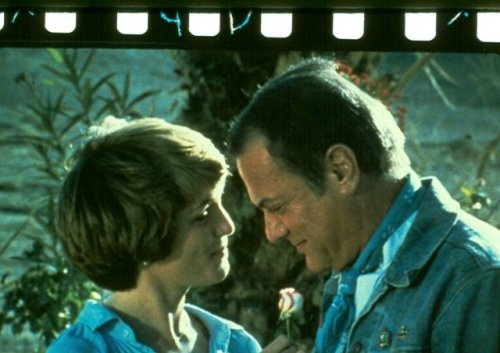
Robert and Leo (Tony Curtis, Louis Gossett Jr.) are two losers working as gun runners who transport their goods in an old beat-up VW that looks to be seriously on its last leg. They meet up with The Colonel (Sally Kellerman) who is the widow of an actual Colonel that fought during WW II. She is now living alone with her nineteen year-old daughter Suzanna (Lisa Langlois) in an isolated ranch in the middle of the African desert. She hires Robert and Leo to help her oversee the water that she pumps to a nearby village. Since she feels that the members of this village had something to do with her late husband’s murder she has cut off their supply to it and only lets them have access to it at certain times of the day, which the two men feel is harsh. They do some investigating on their own and believe that it is neighboring rancher Killian (John Vernon) who is the real culprit to the murder, but trying to convince The Colonel of this, who has a romantic interest in Kilian, is another matter completely.

This obscure, low budget film is pretty much a botched mess from the get-go. Too much emphasis is put on comedy, but filmed by people who have no idea what is funny which forces the actors to carry-on with broadly written banter and insipid slapstick-like scenarios that is intended to be humorous, but falls resoundingly flat instead. The story and setting has some potential, but resorts to contrived, uninspired romance that becomes completely boring.

I’ll give Kellerman credit for lasting over six decades in the business, but her acting never seems to be effective. Her character is supposed to be a domineering, tough-as-nails lady, or at least that is how she is introduced as she even insists that the men refer to her as ‘sir’, but this quickly evaporates until she becomes just another aging, lonely female looking for love and companionship, which isn’t compelling, or original. Langlois as the daughter is equally transparent while delivering her lines as if she were half asleep. Why an attractive young lady such as herself would ever fall for a struggling 55-year-old man like the one Curtis plays here makes little sense and is pretty dumb.

The film is saved to a minor degree by the presence of Curtis. He was a top billed star during the ‘50s and 60s, but by the ‘80s his career had plummeted severely to the point that he was accepting minor, supporting roles in direct-to-video fare that next to no one saw. This film isn’t much better than those, but here at least he retains his engaging persona and helps lift the dead material to a somewhat tolerable level and his pairing with Gossett is odd enough to make it semi-intriguing.

This is a sad, almost embarrassing follow-up project for director Nicolas Gessner who had achieved critical acclaim with the Jodie Foster hit The Little Girl Who Lives Down the Lane. Why he would choose this oddball thing to tackle next is a mystery as I’m sure he must’ve been offered better scripts, but in either case it’s a misfire that never manages to click at all.

My Rating: 2 out of 10

Released: August 6, 1980

Runtime: 1Hour 24Minutes

Not Rated

Director: Nicolas Gessner

Studio: Gaumont

Available: None at this time.

The Last Wave (1977)

last wave 2

By Richard Winters

My Rating: 6 out of 10

4-Word Review: Suffering from strange premonitions.

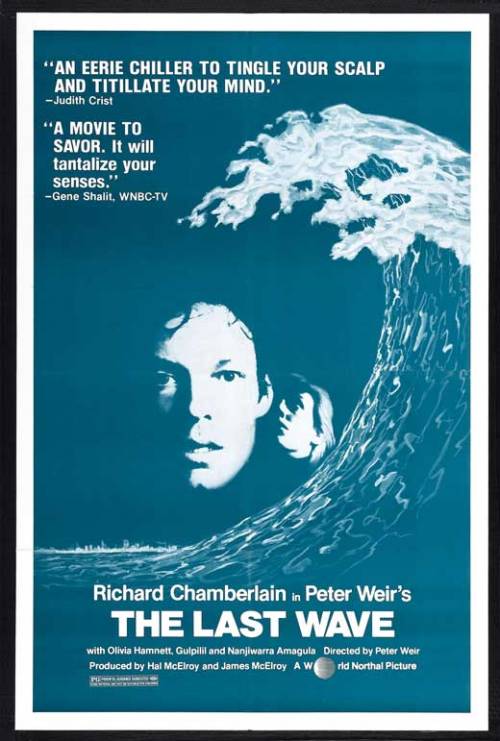
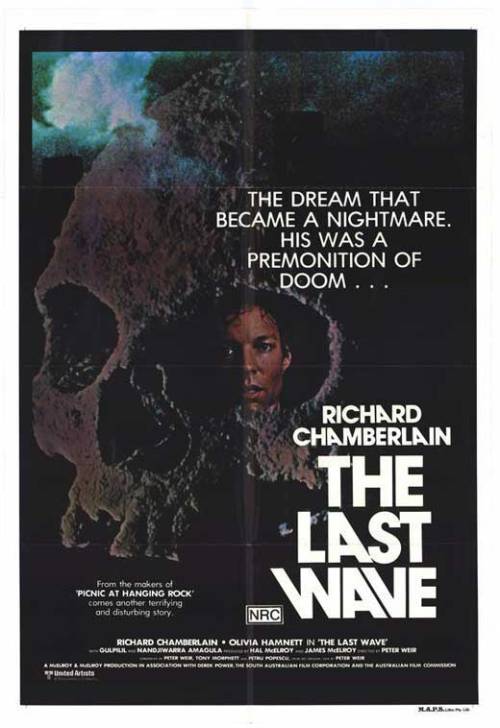
David Burton (Richard Chamberlain) is a lawyer working in Sydney, Australia who is hired to defend some aborigines that have been accused of murder. David’s specialty is taxation law and he feels overwhelmed in this new role, but still takes it on with an earnest dedication, but in the process begins to experience strange dreams and even sees one of his clients, Chris (David Gulpilil), in them. This coincides with weird weather events that begin occurring all over the continent including the phenomena of black rain. David can’t help but feel that somehow this is all connected and after doing extensive research finds that tribal aborigines have a belief system involving what they call dreamtime in which spirits from another world communicate with us through our dreams and David has been the chosen recipient due to his lifelong ability to dream of events in his sleep that eventually occur later in real-life.

The film, which is directed by the gifted Peter Weir, has terrific imagery that almost makes-up for its other shortcomings. There have been a lot of movies that have tried to create creepy nightmare segments, but the ones here work much better than most and gave this viewer an effectively spooking feeling. The silhouette of the aborigines in the pouring rain, the shots of a large seismic wave and use of tribal music all get used to ultimate effect. Even the rain storms become fascinating to watch. None of them were actual ones, but instead large firehoses were employed along with giant fans to create a sort-of surreal stormy effect that actually looked better than the real thing.

The story though borders on being convoluted and would’ve worked better had the movie been given a longer runtime. The first hour is spent with the viewer seeing a lot of strange events that make no sense and are given no explanation. It is only after about an hour in that some expert, who’s given no formal distinction to what their line of study is or degree, explains to David the importance that dreams have to the aborigine culture, which helps tie things together, but this should’ve occurred earlier as some viewers will probably find it too confusing and off-putting otherwise.

Chamberlain is his usual bland self, but okay in this type of role as it doesn’t demand anyone who is colorful. The character though is supposed to be this very pragmatic individual, but he seemed to buy into the mystical qualities of the aborigine belief system much too quickly. A person with a practical approach to life would most likely be quite cynical to the events as they first occurred and even reluctant to base any value on his own nightmares, at least initially.

The ending is a major letdown. For one thing we have the main character inside an ancient sacred site beneath a sewer system where he suddenly has to start ‘thinking out loud’ by explaining what he is seeing on the drawings along the wall even though the viewer could’ve figured this out for themselves without the ‘narration’. The ambiguous conclusion is frustrating and makes sitting through the rest of it feel like a big waste of time.

last wave 1

My Rating: 6 out of 10

Released: November 13, 1977

Runtime: 1Hour 45Minutes

Rated PG

Director: Peter Weir

Studio: Cinema International Corporation

Available: DVD (Criterion), Blu-ray (Reg. B), Amazon Instant Video

Fever (1989)

fever 1

By Richard Winters

My Rating: 6 out of 10

4-Word Review:  Suspense in the desert.

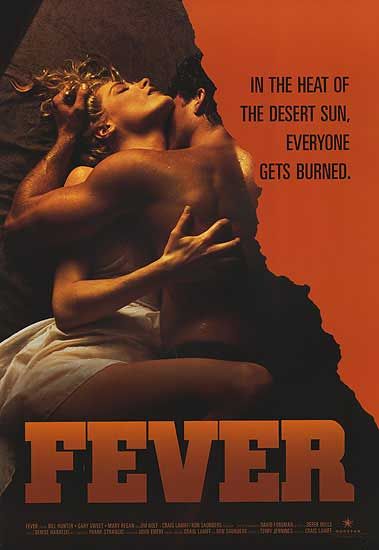
This review will be a first in a series in which we celebrate Australian cinema by reviewing one film each week from Down Under. Today’s movie centers on Jack Welles (Bill Hunter) who comes upon a suitcase full of money after a shootout with a drug dealer. He decides to keep the loot and take it home to his lovely wife Leanne (Mary Regan) unfortunately when he gets there he finds that she is in bed with another man named Jeff (Gary Sweet). The enraged Jack attacks Jeff, but Jeff and Leanne manage to fight him off while knocking him out in the process. Thinking that they’ve killed him they take his body out to the desert and dump it into a vat. The problem is that Jack isn’t dead and he proceeds to relentlessly chase the two while also being followed by a busy-body deputy named Morris (Jim Holt) who thinks that Jack is hiding something and who in-turn is also being followed by criminal kingpin Mr. Tan (Lawrence Mah) who is out to retrieve his drug money.

For the most part this film works pretty well and has a story that is compact and original and will keep the viewer guessing all the way through to the end. It also has some particularly novel camera angles including seeing the inside of a car, with the driver still at the wheel, as it flips over.

The film manages to avoid most of the expected loopholes that you usually see in these types of stories, but there are still a few discrepancies. The biggest one is that Jack recovers from the blow to his head a bit too quickly and magically. There is no dried blood, or bandages needed despite the fact that he does initially bleed when he is first hit. In fact there is no sign of even a cut and no after effects like headaches, swelling or dizziness that most assuredly would affect anyone else after being hit over the head with a vase and knocked unconscious. There is also a scene near the end where, in an effort to find his wife, Jack barges into a lady’s washroom and kicks open all the stall doors before finding a woman sitting on the toilet, but for some reason she doesn’t scream or react at all when he does this, which is weird.

The casting is another issue. Hunter is way older than the actress who plays his wife and it doesn’t look right or make sense. Why would such a young beauty settle for some tubby middle-ager? It clearly wasn’t for love or money and the actor playing her lover has too much of the chiseled male model features of a soap opera star. The solution would’ve been to cast performers to play the wife and lover that were of the same age and looks range as Hunter.  Average looking, middle-aged people have sex and affairs in real-life, so why can’t characters on the big screen ever reflect this?

The story also suffers by having characters that are not likable and nobody to root for. Any screenwriting coach will tell you that no matter how clever, or creative the plot may be if it does not have three dimensional characters then it won’t work.

However, with all that said there are still enough unexpected twists to keep it interesting particularly the ones that occur during the final ten minutes. The last one is especially good and one I would never have guessed, nor seen done in any other film, so the movie gets kudos for that.

My Rating: 6 out of 10

Released: February 1, 1989

Runtime: 1Hour 23Minutes

Rated R

Director: Craig Lahiff

Studio: Genesis Films

Available: VHS

Laughter in the Dark (1969)

laughter in the dark

By Richard Winters

My Rating: 6 out of 10

4-Word Review: Man obsesses over teen.

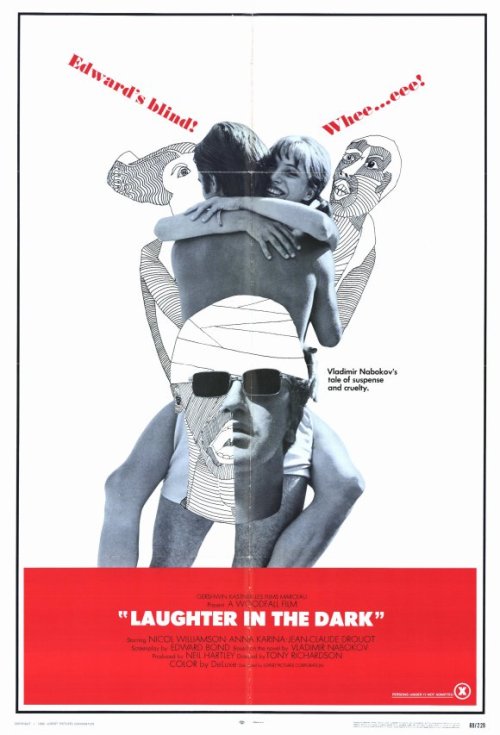
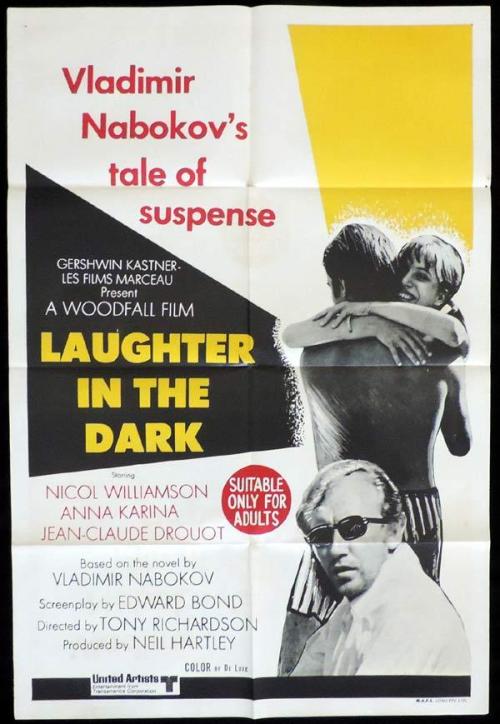
This film is based on an early novel by Vladimir Nabokov, who is more famous for writing Lolita and the story here has a similar theme to that one. The plot revolves around Edward (Nicol Williamson) who is a successful middle-aged art curator, but bored with his marriage and looking for an escape. While watching a film inside a theater one day he spots the beautiful Margot (Anna Karina). While she is only 18 he becomes madly obsessed with her and tries to start-up a relationship. She initially resists, but then realizes that he has a lot of money and decides to play-him. On the side she has a passionate relationship with Herve (Jean-Claude Drouot) who begins to work for Edward as his assistant. Initially Edward has no clue that Herve and Margot are cavorting around behind his back, but eventually he catches on and plots a dark revenge only to find himself as the victim.

While the story has its share of intriguing moments it suffers from featuring a main character that is not relatable.  Fantasizing about having sex with a beautiful, younger woman is fine, but he shouldn’t expect her to automatically reciprocate those same feelings and even if she does he should be concerned that it is only because of his money, which are thoughts that he never once seems to consider. He also spouts out right from the beginning of how much he ‘loves’ her like a lovesick 14-year-old, but a man his age would normally be wise enough to realize that there is a big difference between that and sexual attraction, which is all that this really is.

It also takes way too long for Edward to catch on to the affair occurring between Herve and Margot even though anyone else would’ve seen the red flags a mile-away. It is for these reasons and the way he gets taken advantage of time and again that makes the character come off as suffering from some serious mental defect that is not in any way a normal for even a halfway intelligent person.

It all would’ve worked much better had Richard Burton remained on as the film’s star. He was the original choice for the part and even filmed a few scenes before being kicked off the project due to repeatedly showing up drunk. Williamson is a fine actor and has an impressive resume, but he’s rather benign here while Burton would’ve been able to bring in an extra dimension and because he was older would’ve made the contrasting age difference between him and Margot even stronger.

Karina on the other hand is stunning and an absolute beauty to behold. She was much older than what the part called for, but her wicked, conniving performance more than makes up for it as she eats up every scene that she is in and everyone else in it.

It was filmed on the island of Majorca, which allows from some exotic Mediterranean scenery and Raymond Leppard’s harpsicord soundtrack is pleasing. I also, for the most part, enjoyed the story, which manages to remain intriguing all the way up until its unsatisfying conclusion. The drama though, particularly at the beginning, is clumsy and the whole thing ultimately comes off as a good director’s weakest work.

laughter in the dark 2

My Rating: 6 out of 10

Released: May 11, 1969

Runtime: 1Hour 44Minutes

Rated X

Director: Tony Richardson

Studio: Lopert Pictures Corporation

Available: None at this time.