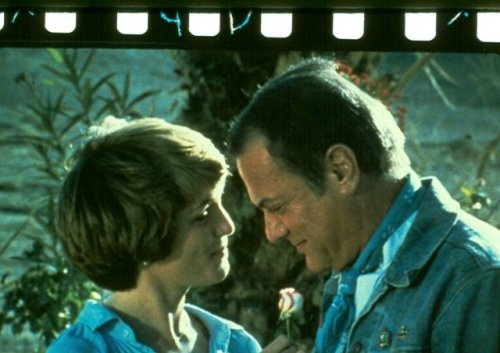
Category Archives: Foreign Films

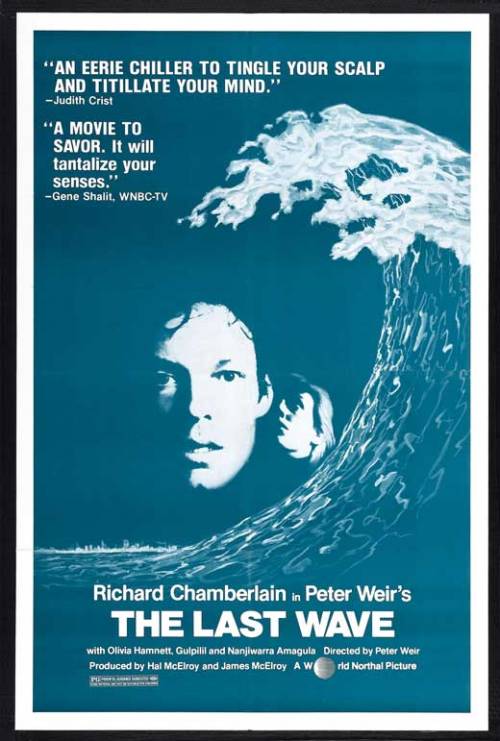
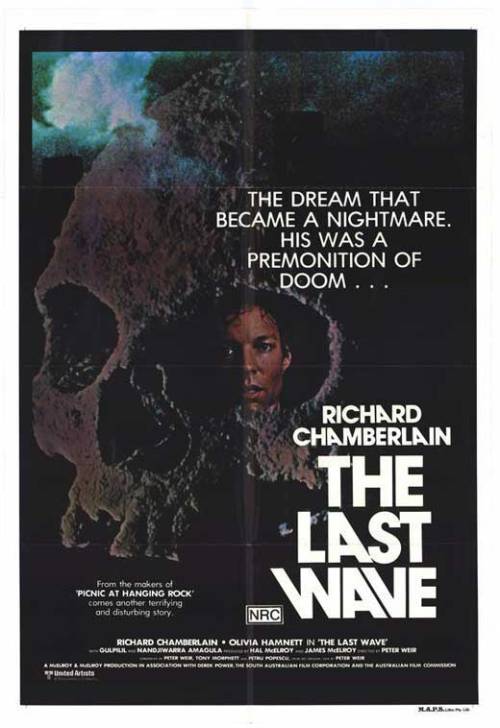
The Last Wave (1977)

last wave 2

By Richard Winters

My Rating: 6 out of 10

4-Word Review: Suffering from strange premonitions.

David Burton (Richard Chamberlain) is a lawyer working in Sydney, Australia who is hired to defend some aborigines that have been accused of murder. David’s specialty is taxation law and he feels overwhelmed in this new role, but still takes it on with an earnest dedication, but in the process begins to experience strange dreams and even sees one of his clients, Chris (David Gulpilil), in them. This coincides with weird weather events that begin occurring all over the continent including the phenomena of black rain. David can’t help but feel that somehow this is all connected and after doing extensive research finds that tribal aborigines have a belief system involving what they call dreamtime in which spirits from another world communicate with us through our dreams and David has been the chosen recipient due to his lifelong ability to dream of events in his sleep that eventually occur later in real-life.

The film, which is directed by the gifted Peter Weir, has terrific imagery that almost makes-up for its other shortcomings. There have been a lot of movies that have tried to create creepy nightmare segments, but the ones here work much better than most and gave this viewer an effectively spooking feeling. The silhouette of the aborigines in the pouring rain, the shots of a large seismic wave and use of tribal music all get used to ultimate effect. Even the rain storms become fascinating to watch. None of them were actual ones, but instead large firehoses were employed along with giant fans to create a sort-of surreal stormy effect that actually looked better than the real thing.

The story though borders on being convoluted and would’ve worked better had the movie been given a longer runtime. The first hour is spent with the viewer seeing a lot of strange events that make no sense and are given no explanation. It is only after about an hour in that some expert, who’s given no formal distinction to what their line of study is or degree, explains to David the importance that dreams have to the aborigine culture, which helps tie things together, but this should’ve occurred earlier as some viewers will probably find it too confusing and off-putting otherwise.

Chamberlain is his usual bland self, but okay in this type of role as it doesn’t demand anyone who is colorful. The character though is supposed to be this very pragmatic individual, but he seemed to buy into the mystical qualities of the aborigine belief system much too quickly. A person with a practical approach to life would most likely be quite cynical to the events as they first occurred and even reluctant to base any value on his own nightmares, at least initially.

The ending is a major letdown. For one thing we have the main character inside an ancient sacred site beneath a sewer system where he suddenly has to start ‘thinking out loud’ by explaining what he is seeing on the drawings along the wall even though the viewer could’ve figured this out for themselves without the ‘narration’. The ambiguous conclusion is frustrating and makes sitting through the rest of it feel like a big waste of time.

last wave 1

My Rating: 6 out of 10

Released: November 13, 1977

Runtime: 1Hour 45Minutes

Rated PG

Director: Peter Weir

Studio: Cinema International Corporation

Available: DVD (Criterion), Blu-ray (Reg. B), Amazon Instant Video

Fever (1989)

fever 1

By Richard Winters

My Rating: 6 out of 10

4-Word Review:  Suspense in the desert.

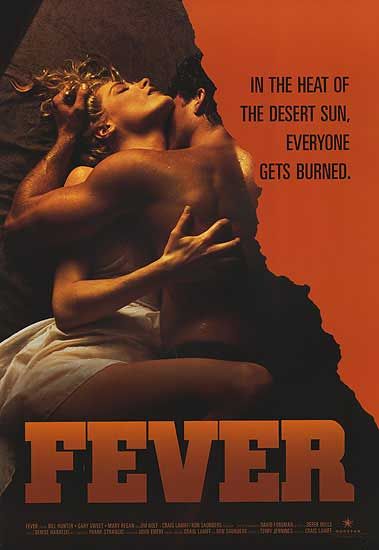
This review will be a first in a series in which we celebrate Australian cinema by reviewing one film each week from Down Under. Today’s movie centers on Jack Welles (Bill Hunter) who comes upon a suitcase full of money after a shootout with a drug dealer. He decides to keep the loot and take it home to his lovely wife Leanne (Mary Regan) unfortunately when he gets there he finds that she is in bed with another man named Jeff (Gary Sweet). The enraged Jack attacks Jeff, but Jeff and Leanne manage to fight him off while knocking him out in the process. Thinking that they’ve killed him they take his body out to the desert and dump it into a vat. The problem is that Jack isn’t dead and he proceeds to relentlessly chase the two while also being followed by a busy-body deputy named Morris (Jim Holt) who thinks that Jack is hiding something and who in-turn is also being followed by criminal kingpin Mr. Tan (Lawrence Mah) who is out to retrieve his drug money.

For the most part this film works pretty well and has a story that is compact and original and will keep the viewer guessing all the way through to the end. It also has some particularly novel camera angles including seeing the inside of a car, with the driver still at the wheel, as it flips over.

The film manages to avoid most of the expected loopholes that you usually see in these types of stories, but there are still a few discrepancies. The biggest one is that Jack recovers from the blow to his head a bit too quickly and magically. There is no dried blood, or bandages needed despite the fact that he does initially bleed when he is first hit. In fact there is no sign of even a cut and no after effects like headaches, swelling or dizziness that most assuredly would affect anyone else after being hit over the head with a vase and knocked unconscious. There is also a scene near the end where, in an effort to find his wife, Jack barges into a lady’s washroom and kicks open all the stall doors before finding a woman sitting on the toilet, but for some reason she doesn’t scream or react at all when he does this, which is weird.

The casting is another issue. Hunter is way older than the actress who plays his wife and it doesn’t look right or make sense. Why would such a young beauty settle for some tubby middle-ager? It clearly wasn’t for love or money and the actor playing her lover has too much of the chiseled male model features of a soap opera star. The solution would’ve been to cast performers to play the wife and lover that were of the same age and looks range as Hunter.  Average looking, middle-aged people have sex and affairs in real-life, so why can’t characters on the big screen ever reflect this?

The story also suffers by having characters that are not likable and nobody to root for. Any screenwriting coach will tell you that no matter how clever, or creative the plot may be if it does not have three dimensional characters then it won’t work.

However, with all that said there are still enough unexpected twists to keep it interesting particularly the ones that occur during the final ten minutes. The last one is especially good and one I would never have guessed, nor seen done in any other film, so the movie gets kudos for that.

My Rating: 6 out of 10

Released: February 1, 1989

Runtime: 1Hour 23Minutes

Rated R

Director: Craig Lahiff

Studio: Genesis Films

Available: VHS

Laughter in the Dark (1969)

laughter in the dark

By Richard Winters

My Rating: 6 out of 10

4-Word Review: Man obsesses over teen.

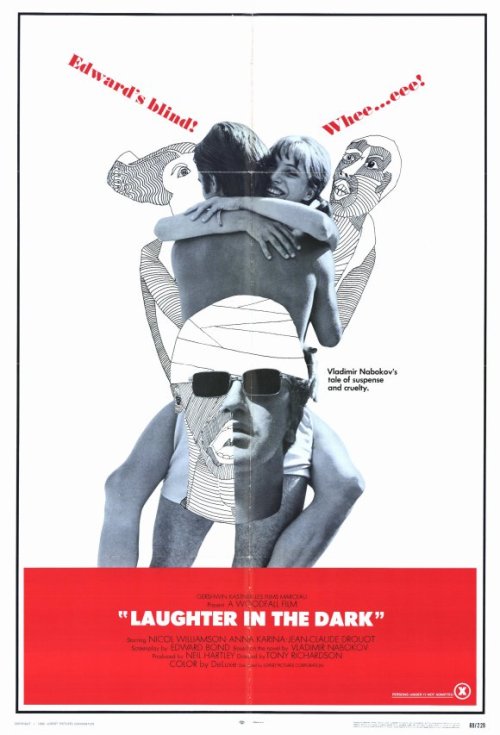
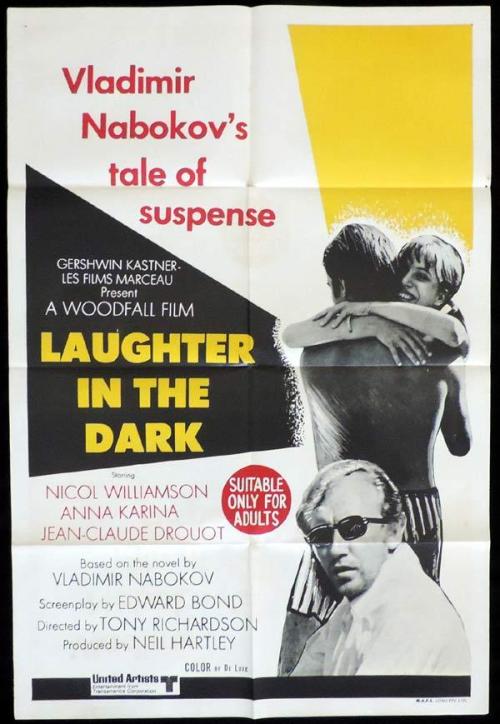
This film is based on an early novel by Vladimir Nabokov, who is more famous for writing Lolita and the story here has a similar theme to that one. The plot revolves around Edward (Nicol Williamson) who is a successful middle-aged art curator, but bored with his marriage and looking for an escape. While watching a film inside a theater one day he spots the beautiful Margot (Anna Karina). While she is only 18 he becomes madly obsessed with her and tries to start-up a relationship. She initially resists, but then realizes that he has a lot of money and decides to play-him. On the side she has a passionate relationship with Herve (Jean-Claude Drouot) who begins to work for Edward as his assistant. Initially Edward has no clue that Herve and Margot are cavorting around behind his back, but eventually he catches on and plots a dark revenge only to find himself as the victim.

While the story has its share of intriguing moments it suffers from featuring a main character that is not relatable.  Fantasizing about having sex with a beautiful, younger woman is fine, but he shouldn’t expect her to automatically reciprocate those same feelings and even if she does he should be concerned that it is only because of his money, which are thoughts that he never once seems to consider. He also spouts out right from the beginning of how much he ‘loves’ her like a lovesick 14-year-old, but a man his age would normally be wise enough to realize that there is a big difference between that and sexual attraction, which is all that this really is.

It also takes way too long for Edward to catch on to the affair occurring between Herve and Margot even though anyone else would’ve seen the red flags a mile-away. It is for these reasons and the way he gets taken advantage of time and again that makes the character come off as suffering from some serious mental defect that is not in any way a normal for even a halfway intelligent person.

It all would’ve worked much better had Richard Burton remained on as the film’s star. He was the original choice for the part and even filmed a few scenes before being kicked off the project due to repeatedly showing up drunk. Williamson is a fine actor and has an impressive resume, but he’s rather benign here while Burton would’ve been able to bring in an extra dimension and because he was older would’ve made the contrasting age difference between him and Margot even stronger.

Karina on the other hand is stunning and an absolute beauty to behold. She was much older than what the part called for, but her wicked, conniving performance more than makes up for it as she eats up every scene that she is in and everyone else in it.

It was filmed on the island of Majorca, which allows from some exotic Mediterranean scenery and Raymond Leppard’s harpsicord soundtrack is pleasing. I also, for the most part, enjoyed the story, which manages to remain intriguing all the way up until its unsatisfying conclusion. The drama though, particularly at the beginning, is clumsy and the whole thing ultimately comes off as a good director’s weakest work.

laughter in the dark 2

My Rating: 6 out of 10

Released: May 11, 1969

Runtime: 1Hour 44Minutes

Rated X

Director: Tony Richardson

Studio: Lopert Pictures Corporation

Available: None at this time.

Life Size (1974)

life size 1

By Richard Winters

My Rating: 5 out of 10

4-Word Review: A sex doll obsession.

Michel (Michel Piccoli) runs a successful dental practice, but finds that his life is empty and his marriage to his wife Isabelle (Rada Rassimov) is no longer working. He has cheated on her before, but those affairs left him with the same empty feeling, so this time he decides to take a different route by purchasing a life size sex doll that looks so real that she almost seems human. He takes her everywhere and even brings her along to a visit with his mother (Valentine Tessier) so she can meet his new ‘girlfriend’.  The doll becomes the centerpiece of his very existence and he spends every waking moment he can with her until he sees footage, from a closed circuit camera that he has set-up in his house, of one of friends having sex with her while he was away. He becomes outraged at her ‘betrayal’ and decides that her punishment will be ‘death’.

The film, which can best be described as an early, distant cousin to Lars and the Real Girl, definitely has its share of unique and memorable moments. Writer/director Luis Garcia Berlanga does an admirable job of analyzing just what might happen if sexual fantasy gets taken to its most extreme level. The scenes showing Michel taking the doll to a clothing store in order to be measured and fitted with the latest fashions and marrying the doll in a makeshift wedding are by far the film’s two best segments.

However, it’s Michel’s scenes with his wife that I found to be the most unsettling. The scene where he fondles his wife’s naked breasts late at night as she sleeps while looking at a picture of the doll is quirky enough, but then later on, in the film’s most disturbing moment, she tries immersing completely into his sexual fantasy by pretending to be a sex doll herself in a desperate attempt to win him back.

What is initially considered the sexual substitute to the real thing soon becomes the preferable choice here and it reminded me of an article I read in a science journal a few years back about young men in their 20’s forced to be prescribed Viagra because they were no longer able to achieve erections with their wives/girlfriends because the proliferation of porn on the internet had somehow dulled their senses to real sex to the point that they found it to be a ‘turn-off’. Now, if you are a fan of porn then that’s great and I don’t mean to be appear like I’m trying to knock it, but I did find it fascinating that elements of that article correlated to what this film was showing and how successful this movie was at foreshadowing the phenomenon’s that we are now seeing in our modern day culture.

Although the film is adequately directed and more of a psychological study than a perverse sleaze feast it’s still not an overall success. The main issue is that the main character acts overtly freaky about the doll from the very beginning without enough backstory to tell us why and simply saying it’s due to a unhappy marriage is not enough. A far more compelling concept would’ve been to portray the main character as being more ‘normal’ by having him feel awkward about the doll and even a bit embarrassed only to grow increasingly more obsessed as the film progresses until his ultimate infatuation with it shocks even him.

Alternate Titles: Grandeur Nature, Love Doll, Tamano Natural

My Rating: 5 out of 10

Released: August 21, 1974

Runtime: 1Hour 41Minutes

Rated X

Director: Luis Garcia Berlanga

Studio: Cinema International Corporation

Available: None at this time.
The Tenant (1976)

tenant 1

By Richard Winters

My Rating: 10 out of 10

4-Word Review: He loses his identity.

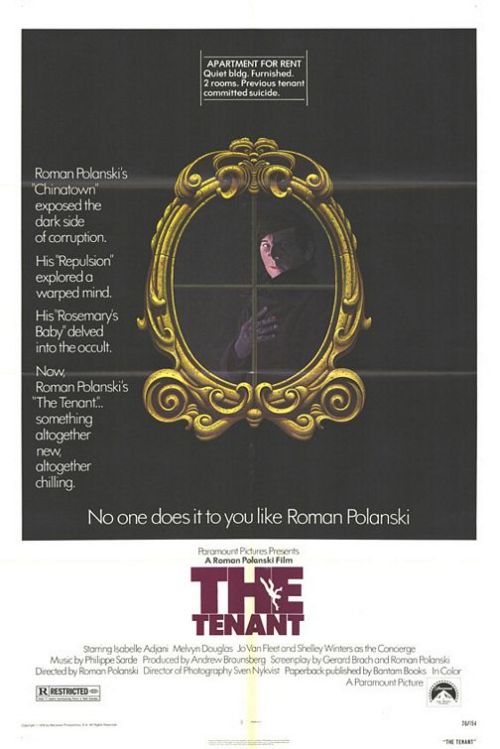
This intriguingly odd horror film may well be Roman Polanski’s best work and even better than Rosemary’s Baby as it manages to be scary in a unique way while also bringing to light many of the subtle ugliness of everyday life. Here Polanski plays a tenant who moves into an apartment were all the residents, and even the landlord (Melvyn Douglas), act slightly peculiar. The woman who lived in the apartment before him killed herself by jumping out the window and as he continues to live there he starts to feel a connection towards her while also getting the idea that somehow the other residents are in a conspiracy against him.

The film’s brilliance comes from the fact that the horror and tension is not based on any of the usual devices.  No ghosts, monsters, or psychos here. Instead the viewer gets sucked into the harsh realities of the modern urban world. The feelings of isolation, people who are cold and impersonal and apartments that are bleak and small as well as showing how these urban jungles swallow up our identities until we’re just another face-in-the- crowd.

This amazingly deep and penetrating study gets astutely underplayed with no action and little or any true scares. The tension comes through its psychological implications and the paranoia that only the Polanski character feels. Are these people really out to get him, or is it all just in his head? There are no definite answers, but theme and ideas are quite real. It’s a sort of twisted version of Rear Window and extension of Repulsion that may require a second viewing in order to completely appreciate.

Polanski scores on all levels as his performance is interesting and his ability as a director to make you feel the smallness and bleakness of the character’s apartment is also amazing. You are given a very real sense of the room’s dimensions without any inclination that it was done on a stage, or with the presence of a film crew. The eerie segments are subtle but successful with imagery that is both strange and lasting.

My Rating: 10 out of 10

Released: May 26, 1976

Runtime: 2Hours 5Minutes

Rated R

Director: Roman Polanski

Studio: Paramount

Available: DVD, Amazon Instant Video, YouTube

Rats: Night of Terror (1984)

rats 1

By Richard Winters

My Rating: 2 out of 10

4-Word Review: Rats rule the world!

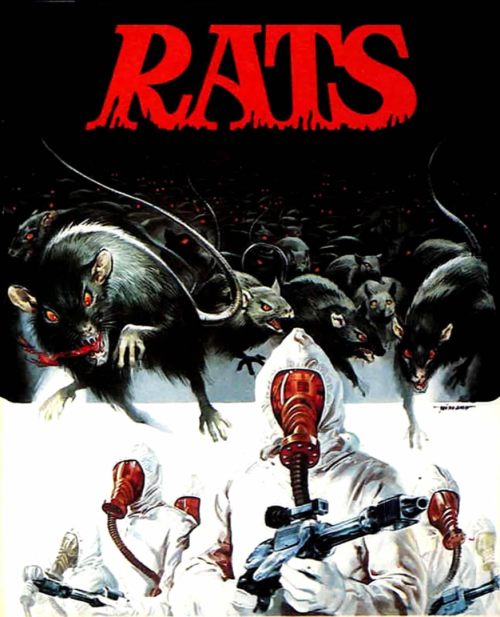
Years after a nuclear holocaust has turned the earth’s surface into a scorched wasteland, a group of bikers known as scavengers descend into an abandoned building for shelter. Little do they know that the place is infested with large rats that, in their desperate need for food, have become particularly keen to human flesh and attack the group and devour each member one-by-one.

The film was written and directed by Bruno Mattei who was known as the Italian version of Ed Wood. The low-grade production values and uninspired dialogue quickly become apparent, which sucks the viewer into a listless and joyous experience from the get-go. The biggest issue are the rats and although I was happy to see that real ones where used this to a degree is what kills the tension because they are never seen attacking anyone. All they do is go about their normal rat behavior, which is scavenging for food while the rest of the cast, wearing tacky outfits like they are leftover members of an ‘80s punk band, make total fools of themselves trying to act frightened.

In some ways though this is the one thing that I liked, which was watching these rats scurrying around as it looks like hundreds of them were thrown onto the set forcing them to climb over each other and even climb up things, which to a strange degree is fascinating to watch. The movie would’ve been far better had it dumped its whole cheesy premise, as well as the human characters, and just turned itself into a nature documentary focusing on how rats behave and forage for food. Some are actually kind of cute and I was upset to see that a few were set on fire as no animal of any kind should’ve lost their life for this stupid thing.

In the end though the plot goes nowhere and the majority of the action takes place in what looks to be a dingy, grimy basement of a warehouse, which visually makes things quite static. The acting is atrocious and the twist that comes at the very end is quite predictable and something most viewers will see coming long before it finally does.

My Rating: 2 out of 10

Released: August 3, 1984

Runtime: 1Hour 37Minutes

Not Rated

Director: Bruno Mattei

Studio: Artist Entertainment Group

Available: DVD, Amazon Instant Video

Coup de tete (1979)

coup de tete

By Richard Winters

My Rating: 6 out of 10

4-Word Review: Soccer player gets revenge.

Francois (Patrick Dewaere) plays soccer (football) for the local amateur team in the French town where he lives. One day, while the rich owner of the team (Jean Bouise) watches, Francois has a physical altercation with the team’s star player Berthier (Patrick Floersheim), which immediately gets the owner and the rest of his teammates to turn on him. Not only does Francois get kicked off the squad, but he loses his factory job too. Francois then gets accused of rape in a crime that was actually committed by Berthier, but the police manipulate the evidence so Francois goes to jail instead. It’s only later when the team bus gets into an accident that Francois is released from prison so he can help them win, which he does, but he also has a very creative plan that he enacts on those who wronged him.

After directing the highly successful Black and White in Color, which won the Academy Award for best foreign film for 1976, director Jean-Jacques Annaud decided to take another stab at social satire. For the most part the film works well and is filled with a lot of intriguing elements. The best part is the way it pokes fun at the fans, who are just regular people that become so obsessed with their team winning that they lose sight of everything else that is important while clinging to the misguided notion that if their team achieves victory then that will somehow make up for all of life’s other transgressions.

Dewaere excels in his usual outsider role and watching him climb up some precarious apartment building walls and at one point even pull his way up a scaffold in his effort to visit his lady friends is entertaining in itself. Dorothee Jemma is attractive as the woman who initially accuses him of rape then retracts it and the side-story dealing with the quirky romance that ensues between them is enjoyable and better than the main one.

However, like with Annaud’s first film, I didn’t find this to be quite as entertaining as all the other critics seemed to. There are certainly some amusing moments and the script by Francis Veber is highly unpredictable, but in the end it doesn’t pack the intended punch. I think the main reason for this is the fact that the townspeople who screw Francois over are just too one-dimensional. They behave like unbridled jerks without ever realizing how hypocritical they really are, which makes their ultimate comeuppance not as satisfying because I could never believe that they were real people and instead just poorly crafted caricatures.

Alternate Title: Hothead (American reissue)

My Rating: 6 out of 10

Released: February 14, 1979

Runtime: 1Hour 29Minutes

Not Rated

Director: Jean-Jacques Annaud

Studio: Gaumont International

Available: VHS (Dubbed), DVD (Region 2), Blu-ray (Multi-region) (Subtitled)

Il Piccolo Diavolo (1988)

il piccolo 2

By Richard Winters

My Rating: 6 out of 10

4-Word Review: Priest befriends a demon.

Father Maurice (Walter Matthau) is a tired and aging priest who is beginning to question both his faith and existence. One day he is called to exorcise a demon from an older woman and when he does so out pops a funny looking man named Giuditta (Roberto Benigni) who claims to be the demon. At first Father Maurice does not believe him, but after seeing that Giuditta’s reflection does not appear in a mirror he begins to realize that he is dealing with some spirit from another realm. His attempts at trying to get rid of him are futile and eventually he learns to enjoy the companionship that Giuditta offers and even considers him to be a strange blessing in disguise.

There have been many parodies done of The Exorcist, but this one manages to be one of the better ones because it doesn’t stick with the formula. Instead it takes the possession angle and gives it a whole new spin while avoiding the clichés and becoming more like a whimsical character study instead of a horror rip-off.

Benigni, who also directed, is in top form and his naïve, child-like character is quite engaging and helps make him a solid scene stealer throughout. He even manages to do the impossible and upstage the always reliable Matthau, although for the record Matthau is still good and it’s fun seeing these pros with extremely contrasting acting styles work together with a chemistry that is surprisingly strong.

The film features many funny and original moments. One of my favorites is when Giuditta goes into a long, detailed conversation about being ‘inside’ the old woman for days on-end much to the shock of the staid priests at the dinner table who think he is referring to sex. Giuditta’s reliving himself late at night in a park in which his pee shoots out like water from a garden hose is hilarious as well as his over-infatuation with a the alarm on a man’s wristwatch while riding on a train.

Why this charming little gem of a movie has never been released in America despite its big name stars is hard to understand. The film’s only real drawback is that it inserts a romantic angle during the second-half in which Giuditta falls in-love with Nina, which is played by Nicoletta Braschi who later married Benigni in real-life. Although Braschi is amusing and shares Benigni’s child-like, offbeat persona, the camaraderie between Matthau and Benigni is what makes the film work and that is where the focus should’ve stayed.

My Rating: 6 out of 10

Released: July 3, 1988

Runtime: 1Hour 43Minutes

Not Rated

Director: Roberto Benigni

Studio Yarno Cinematografica

Available: VHS (English Subtitles), DVD (Italian Language only) (Region 0)

The Burglars (1971)

burglars 1

By Richard Winters

My Rating: 5 out of 10

4-Word Review: Corrupt cop hounds thief.

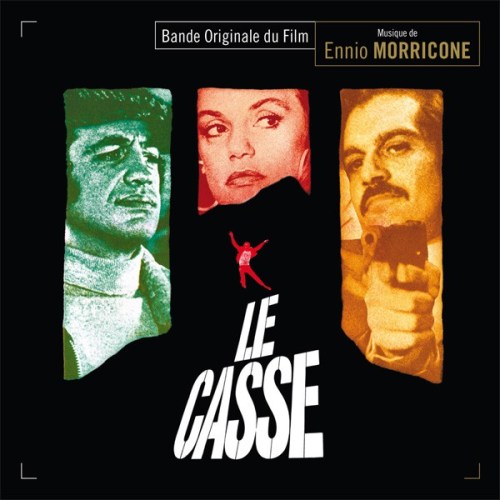
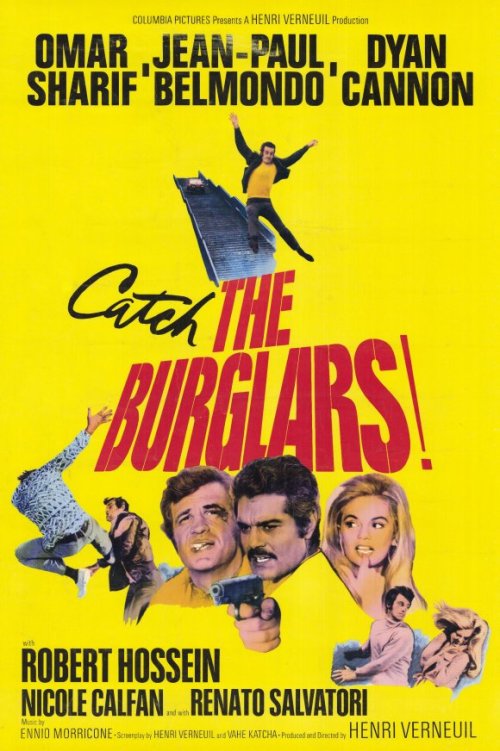
Azad (Jean-Paul Belmondo) and his cohorts pull off a daring heist by robbing a gem collector of his emeralds in his home by using a state-of-the-art machine that is able to create a key to the safe on the spot by simply entering in the safe’s serial number. However, things go awry when Abel (Omar Sharif), a corrupt police captain, becomes suspicious of their activity after seeing the gang’s car parked on the road. Initially he lets them off, but only so he can follow them later and then blackmail them for the jewels, or threaten them with prison otherwise.

The film, which is based on the novel by David Goodis and made 14 years earlier as The Burglar, which starred Jayne Mansfield, has all the trappings for being a classic heist film. I enjoyed watching the intricate way they are finally able to crack open the safe, which takes up much of the first half-hour. I also liked the creative action, stunt work, story twists, luscious Greek scenery and musical score by the legendary Ennio Morricone. Unfortunately none of this is able to overcome a rather plodding pace and a lingering feeling that you’ve seen it all before.

The film’s biggest claim-to-fame is its two chase sequences. The first is similar to the one done in The Italian Job as two small compact cars drive all over Athens, including on sidewalks, stairwells, and through crowds of people, which is exciting to watch. However, the fact that no one gets injured and no other automobiles are damaged even as the cars drive straight into on-coming traffic is hard to imagine. The camera also cuts to a close-up shot of the lead car driving on its rim, but somehow the vehicle is still able to continue to go several more miles on rough surfaces and high speeds, but why have a shot like that inserted if it ultimately doesn’t mean anything?

The second chase works better, which involves Belmondo hanging onto the side of a bus as it travels speedily down a crowded city street while he tries to kick shut the door of a police car that is following, which is quite realistic looking especially since it appears to be Belmondo himself and not a stunt double doing it. This one culminates with Belmondo being tossed from a dump truck and down a steep hill while other large rocks roll with him, which again is impressive, but the fact that he doesn’t even receive a scratch from it is hard to believe.

Sharif is outstanding in a rare turn as a bad guy. He commands every scene that he is in and in the process makes co-star Belmondo seem forgettable and unable to equal the same strong presence. Dyan Cannon, who is the only American in the cast, gets a pointless part as a pin-up magazine model that catches Belmondo’s eye. Her character doesn’t appear until an hour in and is not all that integral to the plot. Her voice is also clearly dubbed in the French version, which makes her acting here limited and probably not worth signing up for to begin with.

The climactic finish that entails a man being drowned inside a grain elevator is novel as is the final moment inside a giant, mobile chicken coop with thousands of loud, clucking chickens, but overall the film fails to illicit much tension and would’ve been better had the runtime been trimmed and the scenes shortened.

burglars 2

Alternate Title: Le Casse

My Rating: 5 out of 10

Released: October 24, 1971

Runtime: 1Hour 57Minutes

Rated PG

Director: Henri Verneuil

Studio: Columbia Pictures

Available: DVD-R

Quest for Fire (1981)

quest for fire

By Richard Winters

My Rating: 6 out of 10

4-Word Review: Cavemen search of fire.

After their tribe is attacked by another one and their only source of fire put out three male members from the group (Everett McGill, Ron Pearlman, Nicholas Kadi) set out to find fire from somewhere else and bring it back to the others.  Their quest is not easy as they are forced to travel through harsh terrain, escape from man eating tigers, and fight off a tribe of cannibals. They also meet up with Ika (Rae Dawn Chong) who comes from a more advanced tribe where the members live in huts instead of caves and who also harbors the secret to starting a fire, which she just might share with the others.

Filmed on-location in Canada, Scotland, and Kenya this film brings to life the true nature of prehistoric times in vivid detail and better than any other movie that has dealt with the same subject. The male actors were fitted with masks that gave them ape-like features and except for one brief moment there is no discernable line of dialogue and communication is spoken through grunts and groans as well as words not connected to modern day language. Some DVD issues do have subtitles, but to me this is taking the viewer out of the experience as the whole idea is to allow one a true sense of how things where like back then and therefore forcing one to try to understand things through the primitives means of communication during that period is the only way to do it and I’m thankful that the theatrical version and the streaming version that I saw did not offer them.

While I applaud the filmmaker’s commitment to keeping things close to the true form as possible and not willing to compromise it simply to make it more accessible to a mainstream audience I still found it to be confusing at spots and even at times boring. The opening battle between the two tribes seemed almost unintentionally funny and the loud, booming music played over most of the movie is a bit off-putting as there was clearly no music at the time of the setting, so silence or natural sounds would’ve kept it truer to the authentic tone.

There is also a scene where the men come upon the remains of some meat left from another tribe. The men are hungry and begin eating the remains only to realize that what they are chewing on is human flesh, which sickens them and they spit it out, but I wasn’t so sure that genuine Neanderthals such as the ones portrayed here would be so ‘civilized’ and instead more concerned with simply satisfying their hunger needs.

Rae Dawn Chong’s presence is a major plus and the movie gets more interesting when her character appears. She remains fully nude at all times while covered in body paint, but isn’t as erotic as you might think. The scene where she gets raped by the men late at night is brutal, but authentic to the animalistic level that I would assume sex would be approached with during that time period. The way her character ends up bonding and even forming a romantic attachment to the one of them as the film progresses is genuinely touching.

The film has a lot of lulls and may be just too unique for some. I found myself intrigued at certain parts and bored at others, but the scene where the men watch in amazement when Chong creates a fire for the first time is a surprisingly exhilarating moment where the viewer feels the same emotion that people back then must’ve felt, which to be able to convey such a feeling to a modern audience is an achievement in itself and a sign of astute filmmaking at its finest.

My Rating: 6 out of 10

Released: December 16, 1981

Runtime: 1Hour 40Minutes

Rated R

Director: Jean-Jacques Annaud

Studio: 20th Century Fox

Available: DVD, Blu-ray, Amazon Instant Video, YouTube